




Abstract
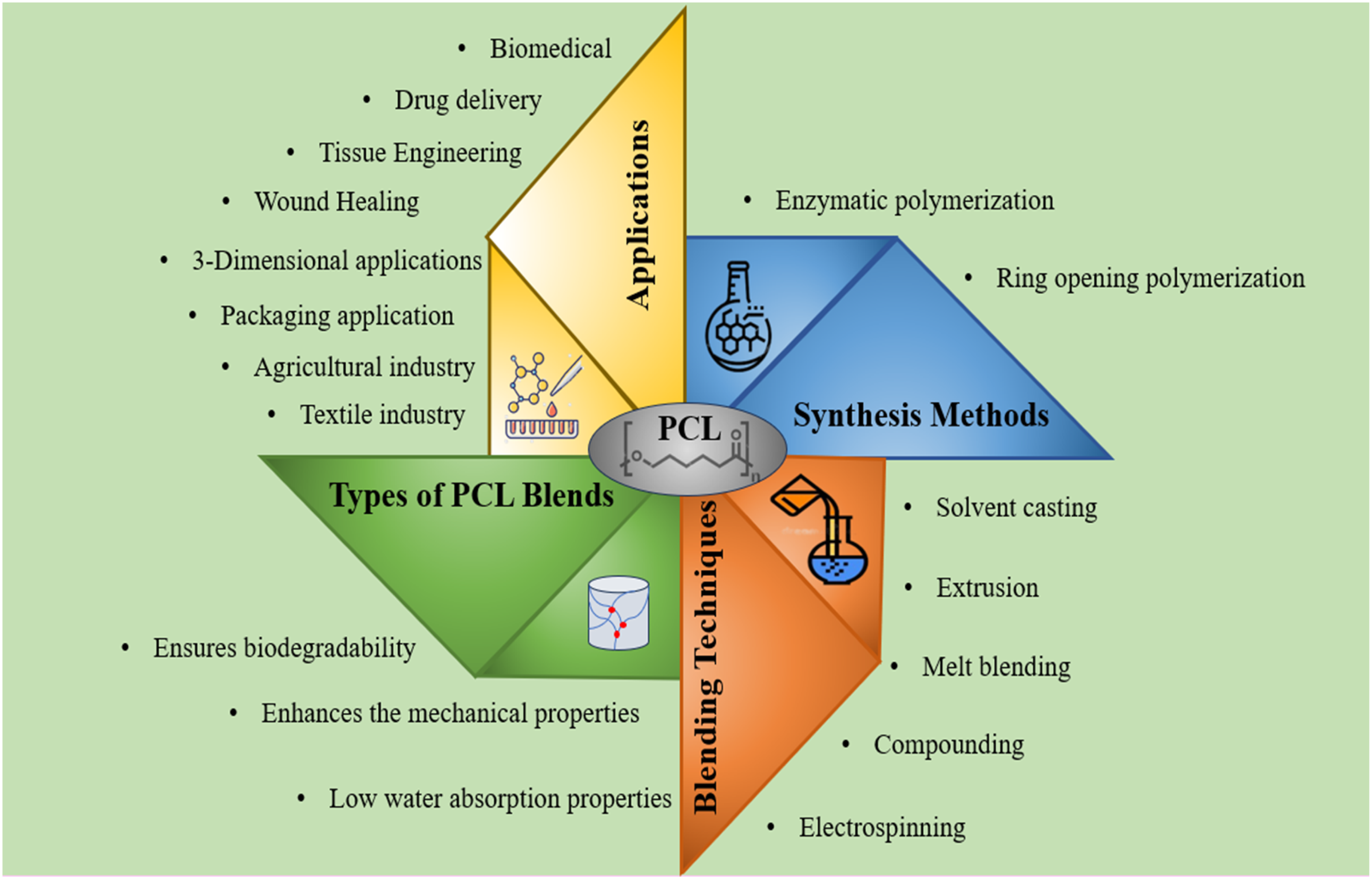
Polycaprolactone (PCL) is a biodegradable polyester with a wide range of applications in the biomedical field, environmental field, and sustainable packaging sector. Due to the continual improvements being made to PCL, this review article aims to consolidate these developments and provide direction for future research. It provides an overview of contemporary advancements in the preparation and modification of PCL as well as some of the innovative techniques that have been introduced. In addition, innovative techniques for preparing PCL via the use of ring-opening polymerization of advanced catalysts and the use of blending techniques (i.e., solvent casting, extrusion and melt blending) to enhance the properties of PCL with other biopolymers are discussed. Safety and regulatory issues were also addressed, including information on the potential for nanotoxicological side effects, in vivo inflammatory responses, and compliance with European Union (EU) and US Food and Drug Administration (FDA) regulatory requirements. Limitations of PCL include mechanical properties, hydrophobicity, slow degradation and scalability, and methods of overcoming these limitations are also discussed. Valued from an economic, environmental, and regulatory standpoint, PCL has potential as a sustainable material for the production of medical devices. Further research should target improving multi-functionality, biocompatibility, and performance of PCL in specific applications. The goal of this review is to combine recent technical accomplishments with the necessary elements for researchers and commercial users to move forward toward the development of high-value and sustainable applications of PCL.
Keywords
Get full access to this article
View all access options for this article.