




Abstract
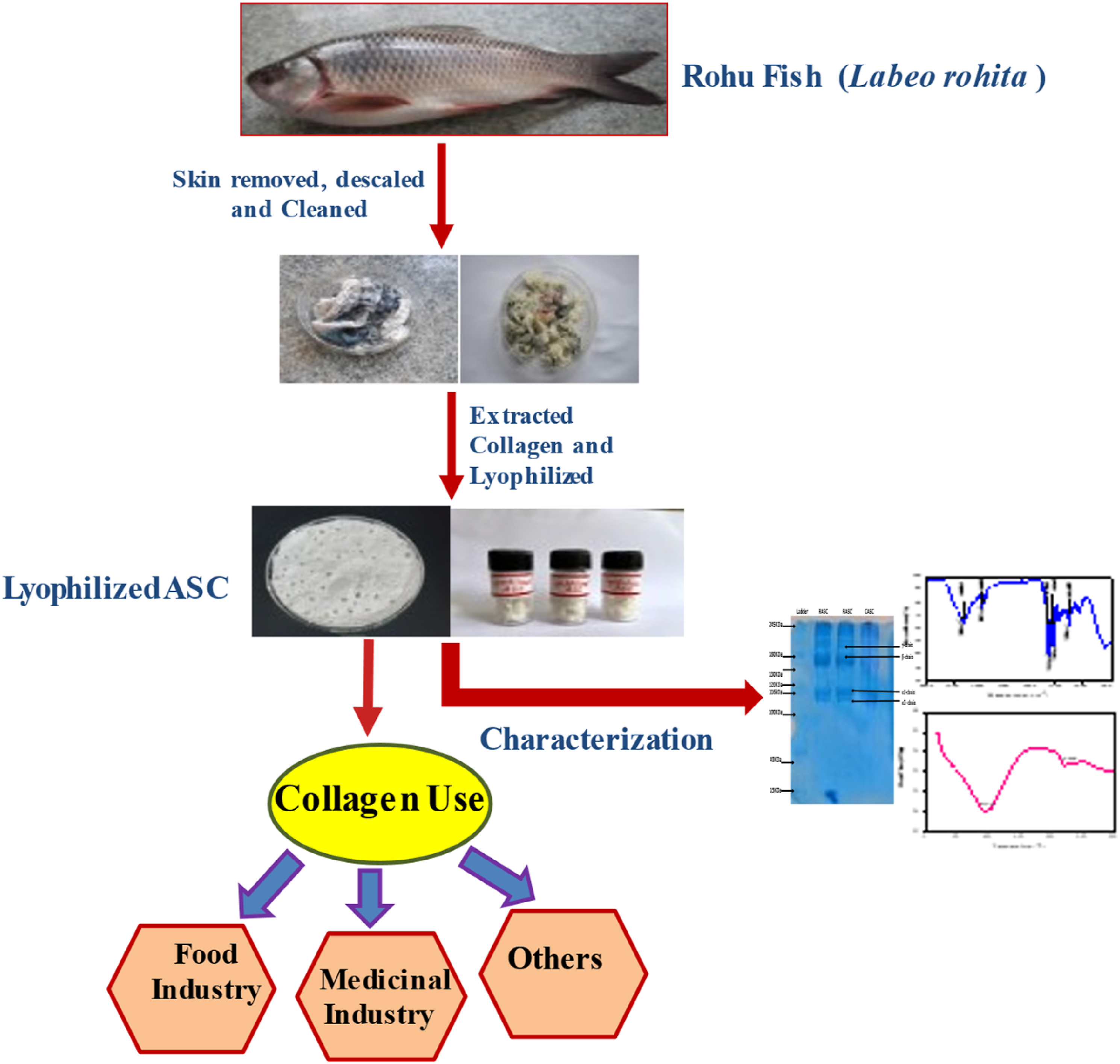
Present study encompasses the extraction and characterization of type-I collagen from the skin waste of Rohu fish. One Variable at a Time (OVAT) and Response Surface Methodology (RSM) employing Box-Behnken Design (BBD) were utilized to optimize the extraction conditions. The observed optimal conditions during experimentation were: 0.6 M of acetic acid, 2.20 M of NaCl, 4°C of temperature, and 50.30 h of processing time. The above conditions allowed the highest collagen yield of 744.50 ± 20.05 mg/g of the wet fish skin. All selected variables indicated significant interactions throughout the collagen extraction process, as was concluded from the contour plots and analysis of variance. The interaction was investigated by employing various models among which the quadratic model got the most significant F-value along with a p- value of <.0001. The collagen was further thoroughly characterized by electrophoresis, fourier transform infrared spectroscopy (FTIR), differential scanning calorimetry (DSC) and amino acid analysis. The denaturation temperature (Td) of 97.80°C observed was comparably higher than the earlier studies, so extracted collagen is expected to have better thermal stability. The significant presence of an imino acid proline (117 residues /1000 residues), contributed positively to its thermal stability so confirming its reliability as a collagen source. The extracted collagen contained glycine as the major amino acid (334 residues/1000 residues) as indicated by amino acid analysis.
Get full access to this article
View all access options for this article.
References
Supplementary Material
Please find the following supplemental material available below.
For Open Access articles published under a Creative Commons License, all supplemental material carries the same license as the article it is associated with.
For non-Open Access articles published, all supplemental material carries a non-exclusive license, and permission requests for re-use of supplemental material or any part of supplemental material shall be sent directly to the copyright owner as specified in the copyright notice associated with the article.
