




Abstract
Antimicrobial hybrid polymer composites are developed for application in floating solar power plants. To avoid the degradation of the floater because of microbes living in the water as well as possible biofouling, zinc oxide (ZnO) is used as an antimicrobial agent, varying the weight percent (1, 2, and 3 wt%) within the high-density polyethylene (HDPE) matrix, along with carbon black (CB) as a reinforcing agent (1, 1.5, 2, and 2.5 wt%). Escherichia coli (facultative anaerobic) and Pseudomonas aeruginosa (aerobic-facultatively anaerobic) gram-negative bacteria formed a biofilm on HDPE in a 96-well plate for 5 days. In vitro, biofilm formation was determined by measuring absorbance (A420) in crystal violet dye, and the colony-forming unit (CFU) was determined by the spread plating technique. The biofilm formation and disruption are observed through a scanning electron microscope (SEM), where both the CFU and the SEM revealed uniform formation of biofilm onto neat HDPE. The best performance in terms of reduced biofilm formation and biofouling onto HDPE floaters was achieved for E. coli (ZnO: 2 wt% and CB: 2 wt%), whereas for Pseudomonas aeruginosa (ZnO: 3 wt% and CB: 2 wt%). Application of greener polymers and nanoparticles for future studies is highly recommended.
Keywords
Introduction
Over the past two decades, a great deal of effort has been made by academia and industry to apply more renewable materials,1–3 sustainable technologies,4,5 and renewable energy resources.6,7 In this regard, there has been a continued attempt to respond to worldwide demand for renewable energy targeted at electricity generation. Estimates predict that the electric power sector’s demand for electric energy will rise from 43% in 2017 to almost 47% in the next two decades. Therefore, the number of renewable energy source installations has increased by 8% in the last 10 years. The renewable energy resource mainly depends on solar energy, as the main sources are land-based and floating solar power plants. Typically, floating solar power plants enjoy a number of privileges compared to land-based solar, such as saving land, decreasing water evaporation, and generating more energy. In this sense, polymers and nanomaterials have been widely used for the sake of storage and heat and mass transfer. 8 In general, it is accepted that the use of bacteria can make some polymers biodegradable, depending on circumstances and formulation. 9 Pseudomonas aeruginosa is the most ideal type of species in view of its considerable strains, large population on the surface of plastic, and effectiveness as an organism for biodegrading plastics such as polyethylene (PE), polypropylene, polystyrene, and polyphenylene sulfide. 10 However, the efficiency of biodegradation depends on multiple parameters, necessitating engineering the whole process.
The biodegradation of PE (polyethylene) has been comprehensively reviewed. 11 When it comes to microorganism-assisted degradation, the diversity of mechanistic microbial degradation as well as the lack of detailed information about biodegradation circumstances have to be considered. 12 High-density polyethylene (HDPE) is a commodity plastic with a wide range of applications, such as agriculture, household goods, packaging, flexible pipes, and bottles. More specifically, HDPE was used as a floating block in floating solar panels for support structure. 13 The genus pseudomonas and its sub-families are well-known species used for the biodegradation of plastics through the formation of a biofilm around the plastic material. 14 HDPE can be degraded by using Pseudomonas aeruginosa bacteria under different environmental conditions. 15 For instance, Pseudomonas aeruginosa has been used to compare the biodegradability of chiton, polybutylene adipate terephthalate, and non-biodegradable HDPE based on the OECD 301D aerobic biodegradation test method. 16 Biofilm formation onto the surface of chitosan was observed quickly, whereas band rupture took place slowly in the case of HDPE, as per microscopic and spectroscopic analyses. Similar studies reveal biodegradation of HDPE depending on the applied condition. 17 In these studies, Ranan et al. reported that the microbes reduced the molecular weight of HDPE, and the microscopic and spectroscopic analyses also revealed structural changes and the absence of functional group. Plastic bag degradation reported by Sinosh et al. shows that different microbes were taken for the study of the biodegradation of plastic bags, but the most effective species were found to be Pseudomonas spp. 18 In total, 248 microbes were taken for the study of HDPE biodegradation. On the basis of weight loss, viability, and microscopic analysis, spectroscopic analyses revealed that Bacillus spp. and Pseudomonas spp. were most effective for the degradation of HDPE. 19 In view of the mechanistic explanation of the biodegradation pathway, the effects of fungi and microbes on different types of PE have been reported, concluding that microbes such as Bacillus and Pseudomonas aeruginosa were the most effective. 20 The biodegradation of PE-based bags and caps was also evaluated using Pseudomonas aeruginosa microbes. In a comparative study, the degradation of HDPE by Pseudomonas species and Arthrobacter species was evaluate. 21 The losses after a month of incubation were approximately 15 wt% and 12 wt%, respectively. The bacterial adhesion of the former was indeed higher indeed.
Incorporation of antimicrobial nanoparticles into plastics for biodegradation was also considered a technique by many researchers. 22 ZnO nanoparticles have taken credit for their antimicrobial and antibacterial characteristics and are widely used for packaging, antifouling, and biomedical purposes.23–25 The effect of ZnO as an antimicrobial agent on the semiconductor material was investigated using a biofilm reactor with and without ZnO coating. 26 It was observed that bacterial biofilm growth was reduced by ZnO coating application. Several studies also reported the effects of ZnO nanoparticles on microbes like Staphylococcus aureus and Escherichia coli. It was reported that the addition of ZnO concentration increased the effectiveness; moreover, the antibacterial effect of ZnO on S. aureus was greater than that of Escherichia coli. 27 It was also concluded elsewhere that ZnO acts as an excellent antimicrobial agent against Gram-negative bacteria such as Pseudomonas aeruginosa and Escherichia coli. It is promising that the addition of ZnO to polymers can enhance the mechanical properties of the resulting composites.28–30 The biofilm and microbial secretion were responsible for forming the fouling membrane over a long period of time under service before converting into macro biofouling. 31 Otherwise, the biofouling increases the cost of cleaning, and when we plant it on the water bed, it is also difficult to clean on site from the floater. Biofouling also causes the sinking of the floater by decreasing the buoyancy of the material.32–34
Graphene and its derivatives worked as promising antimicrobial agents for Gram-negative bacteria such as Pseudomonas aeruginosa and Escherichia coli,35–38 but carbon black does not show antimicrobial properties to avoid microbial effect. 39 On the other hand, carbon black is known as a commodity filler in the polymer industry, with reinforcing effects on mechanical, thermal, and electrical properties.40,41
In this study, a floater material was first developed, which is a characteristic of non-degradable plastic with resilience against short-domain degradation by microbes in marine or aquatic environments. Then, it was attempted to prevent the developed material from forming biofouling from the biofilm. A series of polymer composites based on HDPT, ZnO, and carbon black are prepared to study biofouling under variable conditions. 42 Escherichia coli (facultative-anaerobic) and Pseudomonas-aeruginosa (aerobic-facultatively anaerobic) gram-negative bacteria were used to monitor biofilm formation on HDPE. It was attempted to evaluate the effect of ZnO as an antimicrobial agent, avoiding the formation of biofilm by the microbes, considering the complexity of the system when using carbon black additionally.
Material and method
Preparation of composite material
The composite of floater material was made from a commercial type of HDPE polymer (grade 156A200) supplied by GAIL India PVT with a density of 960 kg/m3 without additives. The virgin HDPE was compounded with zinc oxide (ZnO) with size of 40 nm and carbon black (size 40–48 nm) with different percentages in lab mixture for 15 min and then mix powder fed to the twin screw extruder for processing into granules composite. Processing of composite had been done at temperatures 190, 200 & 210°C. Here, we had taken 1, 2 & 3% of ZnO and 1, 1.5, 2 & 2.5% of carbon black in the composite. 30
Preparation of inoculum
Microbes were taken from glycerol stock and kept at normal temperature because it was stored stably at −80°C glycerol stocks. When we kept it in room temperature, it was converted into liquid form. 10 μL of microbes was added to 10 mL of Nutrient broth (NB). Here, we had taken two types of microbes
Producing microbial biofilm on polymer composite
Total 13 batches of samples have been taken for the development of biofilm. We prepared 13*2 = 26 tubes for each bacteria or microbe so a total of 52 test tubes were prepared. Prepared Nutrient Broth (NB), added 13 gm of Nutrient Broth powder in 1 L of distilled water mix and dissolved completely. 10 mL of NB was added to the test tube and prepared 52 test tubes for the microbes after adding 30 granules into each test tube and a cotton plug was used to close the mouth of the test tube. Autoclaving for all test tubes at 121°C 15 psi pressure for 20 min is done for sterilization of media.
Inoculate the broth culture by using inoculum which was prepared after that inoculate 10 μL culture from each inoculum in every test tube respectively. All test tubes incubate at 37°C shaker in incubator for 2 h. Shift all test tubes from shaker to static condition in the incubator for 3 days at 37°C. After 3 days, remove all test tubes from the incubator and take out the only 15 granules which were totally sunk then put granules into 2 mL of Eppendorf tube and prepare 52 Eppendorf for further process. Add Crystal Violet Dye to all 52 Eppendorf to stain the granules. Incubate all Eppendorf at room temperature to stain all microbes with biofilm for 30 min. Throw away excess dye from granules.
Then add tap water in the same Eppendorf tube and keep it for 5 min. After 5 min, throw away excess water and stain each Eppendorf. Add 33% glacial acetic acid in all Eppendorf 1 mL or maximum 2 mL to dissolve Crystal Violet Dye from microbes and keep it for 5 min at room temperature. Once removed all granules from Eppendorf only dye, microbes and biofilm will be available in Eppendorf. Transform 200 μL of each sample in a 96-well plate. Read each plate containing the sample in UV spectrophotometer at 420 nm and prepare the observation table for all batches from UV spectrophotometer to get the reading in the form of Optical density or absorbance. 43 Calculated the Colony Forming Unit (CFU) by the spread plate technique. 44
Result and discussion
Efficacy of Zinc Oxide (ZnO) in Presence of Carbon Black in reducing E. coli Microbes and its Biofilm
Some of the oxides like calcium oxide, magnesium oxide, and zinc oxide used are very good antimicrobial agents27,28 so that we have used ZnO (zinc oxide) as an antimicrobial agent in the weight percentage of 1, 2 & 3%. With carbon black. The carbon black is used to enhance the properties of the polymer (HDPE).
30
A total of 13 batches were prepared including pure HDPE and all were put into E. coli culture for 5 days and the results obtained from the UV spectrophotometer are shown in Figure 1. Here, we observe in vitro by measuring the absorbance. Variation of absorbance with increase of percentage of ZnO.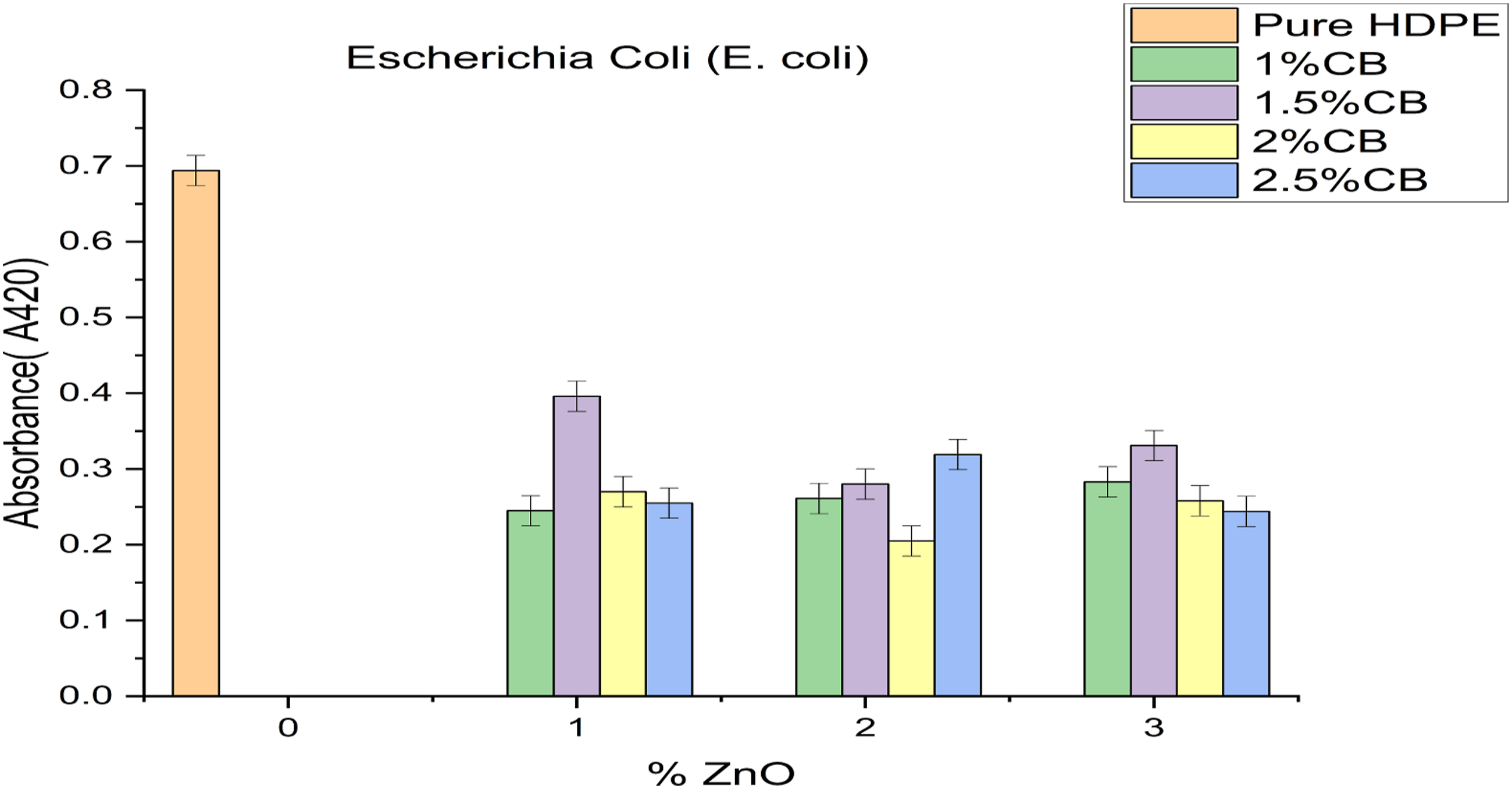
All the batches significantly show some value of absorbance in Figure 1, but E. coli at 2% of ZnO and 2% of carbon black was most effective to avoid the generation of microbes and biofilm compared to the pure form of polymer composite. When we considered 1% carbon black and 1, 2 and 3% of ZnO, we got less formation of biofilm at 1% of ZnO, and after that, the bar chart shows the higher formation of biofilm. If we see that 1.5% of carbon black and 1, 2 and 3% of ZnO, the bar chart shows that till 2% of ZnO, the formation of biofilm was reduced because the zinc oxide,45,46 but after 2%, the effect of ZnO was reduced. Similarly, for 2.5% carbon black, the bar chart shows that ZnO was effective at 1% and 3%. It was observe that the ZnO (zinc oxide) shows excellent anti-biofilm and antimicrobial property comparing to the other antimicrobial agent like CuO and Fe2O3 NPs on E. coli and Pseudomonas aeruginosa, etc. 47
The further effect of ZnO doped with CB was tested for inhibition of microbes like E. coli and its biofilm on HDPE with 0,2 and 3% (only selected batches taken with respect to the result obtained in absorbance) of ZnO. The pathogen population on HDPE is calculated as Scanning electron micrographs (SEM) of Escherichia coli and its biofilm on HDPE at (a) Pure HDPE material, (b) HDPE treated with 2% of ZnO, (c) HDPE treated with 3% of ZnO.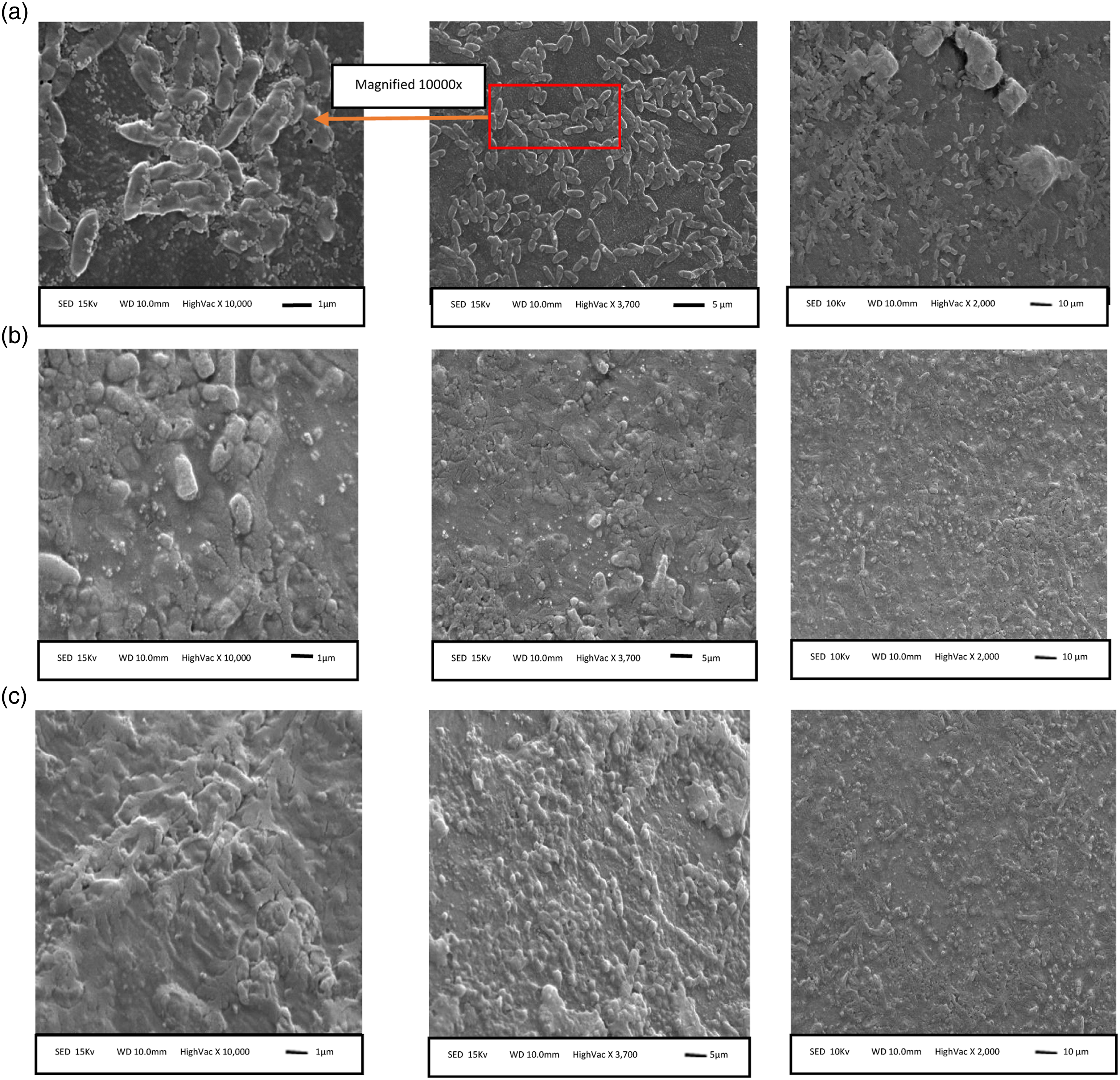
Efficacy of ZnO (Zinc Oxide) in presence of Carbon black in reducing Pseudomonas aeruginosa microbes and its biofilm
Pseudomonas aeruginosa is a microbe used to degrade microplastic polymers in aquatic systems and soil.13–20 So, here we have also considered these bacteria for the study. Now form Figure 3 which shows the quantity of Pseudomonas aeruginosa forming biofilm in the form of absorbance. Here all batches were put into Pseudomonas aeruginosa culture. The result shows that the absorbance value for ZnO at 3% and carbon black at 2% was the most effective compared to pure HDPE. When we consider 1% CB and 1,2,3% of ZnO at 1% of ZnO shows effective nature but as ZnO increases the population of pathogens decreases shows in bar chart and at 2% of ZnO the absorbance value increases. If 1.5% of carbon black is considered the absorbance decreases but after 2% of ZnO it again increases. When 2% of CB is considered, the value most effective goes down from 1 to 3% ZnO. So, here, we had considered the 2.5 of CB for Different percentages ZnO so till 2% it was effective and after that absorbance again increases. Variation of absorbance with increase of percentage of ZnO.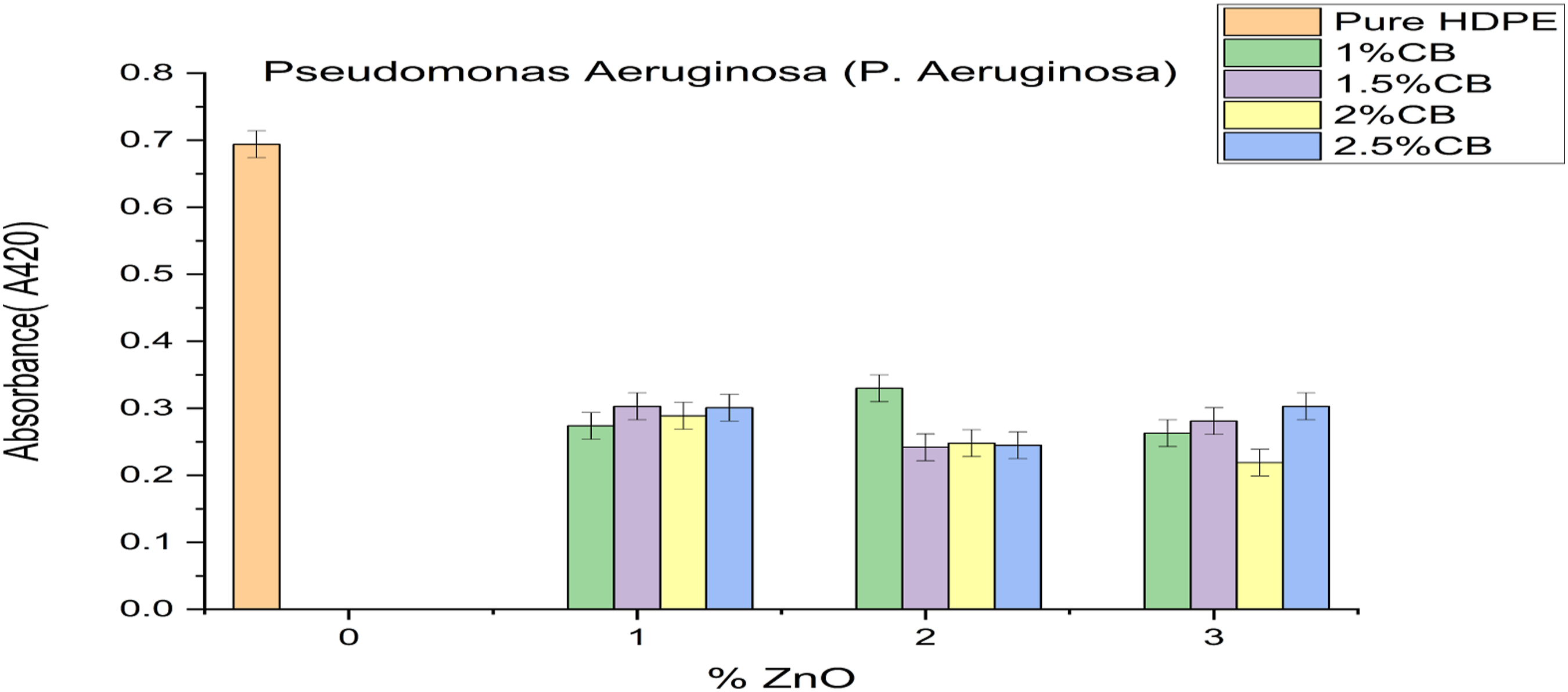
The further effect of ZnO doped with CB was tested for inhibition of microbes like Pseudomonas aeruginosa and its biofilm on HDPE with 0,2 and 3% (only selected batches taken with respect to the result obtained in absorbance) of ZnO. The pathogen population on HDPE is calculated as Scanining electron micrographs of Pseudomonas aeruginosa and its biofilm on HDPE at. (a) Pure HDPE material, (b) HDPE treated with 2% of ZnO, (c) HDPE treated with 3% of ZnO.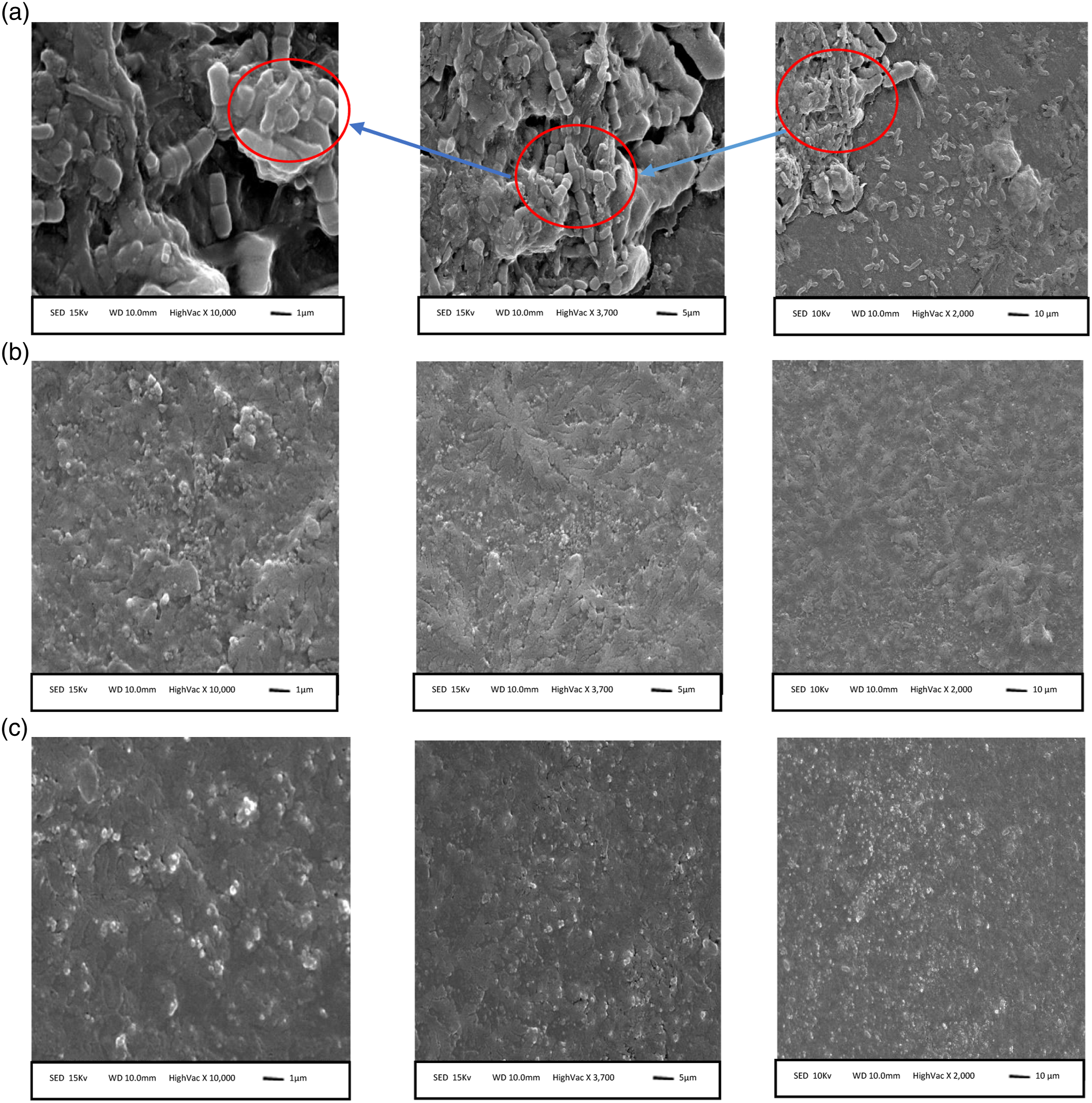
Comparison of E. coli and Pseudomonas aeruginosa with respect to ZnO and carbon black
Due to differences in bacterial cell structure and susceptibility to ZnO’s mechanisms of antibacterial action, different bacteria, including Pseudomonas aeruginosa and E. coli, can respond differently to zinc oxide (ZnO) nanoparticles 50 and its composite used to make the floater using the floating solar power plant, so it will be exposed to sunlight, hence the ZnO nanoparticle produces reactive oxygen species (ROS). The reactive oxygen species also damage the bacterial cell membrane and biomolecules, leading to the death of the cell. 51 Pseudomonas aeruginosa is more susceptible to reactive oxygen species due to differences in its cell membrane composition and metabolic processes.52,53 Insoo et al. (2009) reported that ZnO was a superior antimicrobial for Pseudomonas aeruginosa when compared to E. coli. 54 The study also shows that Pseudomonas aeruginosa microbes used to degrade the polymer (HDPE) had higher absorbance and colony-forming units than E. coli bacteria in the pure form of HDPE, but in the composite form, ZnO in the presence of CB (carbon black) showed a greater effect on Pseudomonas aeruginosa compared to E. coli.47,55 So, we can say that ZnO with CB has a good effect on Pseudomonas aeruginosa bacteria, which is mainly responsible for the degradation of the polymer. By doing so, we can increase the life of the floater, which is used in floating solar power plants, and avoid the excess maintenance cost due to biofouling cleaning. When zinc oxide is doped with carbon black in HDPE matrix, the carbon black alone does not have any anti-microbial effect 39 on the polymer composite, but carbon black is added to HDPE to increase the mechanical properties of the polymer composite because, during exposure to sunlight, the UV light degrades the HDPE, and carbon black works as an anti-UV (ultra-violet) additive to avoid degradation of materials.30,56,57 But here in these studies, we have focused only on the antimicrobial properties of materials, so only the ZnO effect was elaborated.
Conclusion
In this study, the ability of ZnO in the presence of carbon black to reduce the growth of pathogens such as E. coli and Pseudomonas aeruginosa within their biofilm was demonstrated. The pathogen population on HDPE is calculated as
Footnotes
Acknowledgements
I express my gratitude to DBT ICT centre for providing facility to conduct the research on antimicrobial activity. I am thankful to Mr Mohammed Khalid and Mr Israr for their support in the process of experimentation which supported to complete this study. I am also thankful to Prof. M.S.Balasubramani from THEEM COE for his continuous support in proofreading my manuscript.
Declaration of conflicting interests
The author(s) declared no potential conflicts of interest with respect to the research, authorship, and/or publication of this article.
Funding
The author(s) received no financial support for the research, authorship, and/or publication of this article.
