




Abstract
The present article inquires on the approach to labour rights that has characterized the development of the EU. First, it analyses the way in which the EU policy making refers to social and labour standards and to their function within the process of EU integration. Subsequently, the article turns to the CJEU interpretation of workers' rights, by taking the Directive on transfers of undertaking as case study. The concluding findings are that there is a certain degree of convergence between the CJEU's reasoning and the policy documents. In both cases, it is possible to identify a gradual change in the approach to labour rights, which are more and more considered from a market-oriented perspective. The article concludes observing that this has led to the progressive weakening of the protective function of the analysed labour norms.
Keywords
1. Introduction
Since its creation in 1957, the European Communities have undergone a profound process of maturation, from the establishment of a tariff and customs-free space, to a single market and monetary union with competences in other policy fields. This appears clearly from the changes to the Treaties and from the evolving spirit of the policy documents that have accompanied them, which show that the original primary focus on market integration has been enriched with growing attention towards, beside other matters, the social dimension of European integration.
If initially EC law had no (apparent) aspiration to directly impact national social or labour legislation, employment matters and social policy got progressively attracted, albeit limitedly, into the sphere of competence of the EC (and, after, of the EU), and consequentially, of the Court of Justice of the EU (hereinafter CJEU). However, and despite the expansive approach of the EU towards social and labour matters, the EU has often been held responsible for a certain dismantlement of national labour standards, and their protective connotation. 1 In particular, a generalised criticism is that national discretion in defining social standards might be limited by the eventual incompatibility of those standards with the general principles of EU law, whereby the fundamental freedoms of movement and market integration are of core importance. Certain CJEU decisions have indeed contributed to strengthen the understanding of social and labour rights as subject to the limitations imposed by market-oriented concerns. It suffices to recall the so-called Laval quartet, 2 the Alemo Herron, 3 or the Iraklis 4 cases to note that national labour law can suffer from the application of EU law.
In light of these preliminary observations, one may wonder whether the process of EU integration has been characterised by a specific understanding of the role of social and labour policy and, eventually, to what extent such understanding has influenced the protective function of labour law within the EU. In other words, it is quite unclear whether labour rights, even when they appear per se compatible with EU law, have been affected by the prevalent market rationale which underpins the EU.
Such an inquiry might be conducted from different angles, and this article proposes a possible perspective, as it intends first to define how social and labour matters have, in time, emerged from primary law and policy documents, and subsequently, to analyse the rulings of the CJEU, to see how the CJEU approaches EU labour rights and those national labour norms whose compatibility with EU law is questioned. The aim is to get insight into whether there is a degree of correspondence between the interpretation of the CJEU and the policy-level delineation with respect to (the function of) labour standards.
In this article, the analysis of the CJEU’s interpretative approach will be limited to one labour norm, namely Directive 2001/23/EC on transfer of undertakings. This Directive appears indeed a quite interesting instrument to assess the CJEU’s vision vis-á-vis labour rights as it enshrines a protective function, as is typical of labour law measures, by conferring substantial rights to employees whose undertaking is the object of a transfer, and by limiting the freedom of contract of the employer. 5 Moreover, the Directive was first adopted in 1977, thus marking the origins of labour legislation at the European level, and, despite a revision 20 years later, it has remained substantially unaltered since then with respect to the rights it confers. The fact that the Directive has maintained more or less the same content in the past 40 years facilitates the identification of eventual trends in the interpretative reasoning of the CJEU.
In the light of the foregoing, this article addresses the following research question: to what extent does the approach towards labour rights characterising the EU institutional and policymaking level emerge from the CJEU’s reasoning on the Transfer of Undertakings Directive?
At first, paragraph 2 delineates the (evolution of the) approach towards social and labour rights which characterises the EU policy documents. Then, paragraph 3 provides an overview on the scope and content of Directive 2001/23/EC. Paragraph 4 illustrates the analytical framework through which the decisions of the CJEU have been analysed and focuses on the CJEU interpretation of the Directive, with particular attention for its scope and conferred rights. Finally, paragraph 5 presents concluding reflections on the CJEU’s interpretative attitude towards the content of the Directive, and on its degree of similarity with the evolution of the approach on labour standards resulting from the policymaking documents, as defined in paragraph 2.
2. Social and labour standards in the making of the EU
This paragraph illustrates that the evolution of the European Communities (first) and Union (subsequently) has been characterised by divergent approaches towards labour and social standards.
2.1. The origins: dual polity
The Treaty of Rome of 1957 leaves no doubt about its prevailing (if not exclusive) market-oriented nature, as it created the foundations for a customs and, in a second stage, an economic Community. 6
However, it would be incorrect not to acknowledge the broader societal design that the six original Member States had in mind. The founding fathers of the European Community were indeed clear in their intention to connect the establishment of the common market with the “constant improvement of the living and working conditions of the(ir) people”, as stated in the Preamble of the Treaty of Rome.
It is meaningful to note that Mr. Petrilli, member of the first Hallstein Commission in charge of Social Affairs, indicated that, despite the scarcity of explicit social references in the Treaty, the Community had a raison d’être that went beyond mere economic interests, and that trade intensification was not to be considered in isolation from social implications. 7 Community economic policy was defined with consciousness of its social impact and was grounded in the idea that the progress towards economic integration (balanced and liberalised trade, monetary stability, fair competition, freedom of movement) would lead to national economic growth, which, in turn, would result in social progress. This concept reflected Jean Monnet’s functional interpretation of European integration, where social welfare was expected to constitute a spill-over effect of the correct functioning of the common market. 8
The abstention from Community intervention in social matters was however not absolute, and it was acknowledged that in some cases fair social progress would not result automatically from the economic expansion, 9 but rather required the Community to promote the upward harmonisation of living and working conditions. 10 Therefore, despite the fact that originally the Community was not expected to play anything but a marginal role in the social field, the Commission began to advocate for more coordination among national policies, in order to achieve greater harmonisation. 11 Far from aiming at depriving the Member States of their competences in social policy, the Commission argued that a reconciliation of national divergences (also referred to as the establishment of ‘equivalent guarantees’) 12 in an uplifting direction was desirable, as it would produce positive effects not only on the Common Market, but on the general welfare of society as a whole.
The vagueness of Article 117 TEEC in defining the social objectives of European integration, and the absence of solid Community competences in the social field did not prevent the Commission from attempting to promote the definition of a Community social policy, aimed at protecting working and living conditions from the risks descending from an economic integration. 13 The necessity of a balanced relationship between economic progress and social values emerged from the declarations of Mr Levi Sandri, Commissioner for Social Affairs in the early 1960s. He stressed that the Treaty provisions addressing social policy should not be considered as serving a purely economic aim. 14 In particular, he held that Article 118 TEEC, prescribing a close collaboration between Member States in the social field in order to stabilise the level of competition among national systems, should be read not only in light of its economic relevance, but also in light of its other goal, namely the realisation of upward harmonisation of social and living conditions. 15
It thus appears that, despite the Commission’s support for convergence of national social and labour policies, this first period of European integration was characterised by a dual polity: an economic policy sphere at the supranational level, and a social and labour policy sphere as competence of national legislatures. This division of concerns and policy areas recalls the paradigm of the ordoliberal ideology, 16 which was the predominant socio-economic theory among economists in the post-war period in West Germany and, more precisely, it can be associated with the notion of ‘social market economy’ as theorised by Muller Armack. 17 In particular, Muller Armack departed from the ordoliberal thinking that economy should be regulated only to the extent necessary to prevent market failure, and argued that the establishment of a social market economy implies a step further. In his view, society should aim at the realisation of social justice, and the market is to be considered only one – although essential – of the elements that govern a community of people. In other words, social progress can be attained only if the functioning of the market and the exercise of individual (economic) freedoms are counterbalanced by states’ policies directed at social redistribution and equilibration. 18
2.2. Parenthesis of upward convergence
The fair balance between economic growth and social progress conceptualised by the founding fathers of the Treaty of Rome seemed slightly utopic when it became clear that the realisation of social progress would not automatically descend from the advancement of the market integration process, and that Member States’ policies would not converge as the Commission wished. 19
In October 1972, during the Paris Summit, the heads of state and government of the Member States declared that economic expansion was not an end in itself, and conferred to the Commission a mandate for the definition of a common strategy to face the (common) social challenges. 20 The result was the drafting of a Social Action Programme that delineated a strategy aimed at realising harmonisation towards higher standards. 21 In its Resolution, which marked the adoption of the Programme, 22 the Council committed to the future approval of different binding measures directed at the equalisation in an upward direction of aspects of national social policy, among which a Directive on workers’ acquired rights in case of transfer or merger – now consolidated in Directive 2001/23/EC.
The Social Action Programme was therefore oriented to attain a twofold purpose. On the one hand, it intended to support a (upward) convergence of social standards, especially in situations of business restructuring, whose rate was growing as a result of market integration. 23 On the other hand, the harmonisation of working conditions was conceived to reduce the regulatory differences within the Community. Economic integration and social progress appeared to be strictly interwoven, 24 and actual growth on both sides was deemed not only possible, but even necessary to reach the objectives of the Rome Treaty and to pursue social justice. 25
In this period, the Community made a step forward towards the realisation of a fair balance between economic growth and the safeguard of social prerogatives. This brief experience of convergence towards higher standards can still be read through the Muller Armack concept of social market economy, even though the original Community-market policy and Member States-social policy dualism was for the first time challenged.
2.3. New challenges and completion of the internal market
During the mid-1970s, economic expansion gave way to a long period of stagnation: price inflation and wages went up, triggering concern for the employment situation and for social stability. 26 Moreover, new challenges, such as fast technological changes, increased competitiveness 27 and rapid rearrangement of industrial production, led to even more diffuse business restructurings 28 and exacerbated a situation already aggravated by global recession. 29
This steered the focus of the Community policymaking toward the restoration of better market conditions (price stability, full employment and economic growth), 30 and in this context social policy appeared to assume new relevance. As Mr. Hillery, Commissioner for Social Affairs from 1973-1976, argued, ‘future social and economic policies must be closely linked if they are to be effective” as “in general terms, the only sound framework for future social and economic progress must surely be based on the development of social institutions’. 31 Similarly, his successor Mr. Vredling, supported the view that a stronger convergence between social and economic policies would contribute to restore growth within the Community. 32
The result was that the Community’s policymaking turned to social policy with the aim of supporting its adaptation to the increasingly challenging and dynamic economic context. For instance, in order to prevent further recession and boost productivity, measures for the promotion of income guarantees and more flexible types of labour contracts were, for the first time, considered. 33 It is interesting to note that during the second half of the 1970s and the first half of the 1980s references to upward social convergence and to the ultimate aim of social justice were less and less present in policy documents, and that social matters had become somehow subordinate, and in a way conditional, to productivity and competitiveness.
The transformed economic and social context, and the need for the adaptation of labour policies induced the Council to adopt in 1984 a new medium-term Social Action Programme. 34 Even if the goal of improving working conditions was still present, the spirit was remarkably different from that of the Social Action Programme of 1974. Indeed, this time the focus was on how to restore economic growth and on how to face the challenges of higher unemployment, technological innovation and increased world-wide competition. Social and economic policies were presented as necessarily interwoven means to boost productivity, and there was an emphasis on the importance to adopt social policy measures that are not only compatible with, but also supportive of, economic targets. In contrast to the previous Social Action Programme, no mention was given to the Community’s goal to attain upward harmonisation of national social standards. For instance, on the one hand it was acknowledged that national welfare had an essential role as a counterpart of economic integration, on the other hand it was asserted that it should increase its efficiency, and ‘contribute to the strengthening of competitiveness of European economies in the face of international competition’. 35
This rhetoric was present also in the White Paper for completing the internal market that the Delors Commission adopted in 1985. 36 This policy document announced the full liberalisation of the European economic space by the end of 1992, and represented a reaction to the protectionist attitude that Member States had shown during the period of economic and financial recession. Remarkably, and in contrast to the active efforts for the enhancement of market integration, the Commission was clear in its intention to limit legislative harmonisation in the social policy field, which would concern only health and safety matters. 37 It is interesting to note that national social standards were depicted as a possible threat to optimal competition (especially in the area of the freedom of provision of services), rather than as a possible ground for EU intervention in the spirit of upward convergence. 38 When, in 1986, the Single European Act amended the Rome Treaty, it basically transposed the White Paper into primary law, and while the advancement of the economic and monetary union marked a further stage in the process of European integration, the Community’s competences in social matters remained unaltered.
The analysis of the policy documents adopted in the 1980s indicates that labour and social standards started being considered merely through the lens of the (predominant) market-oriented and integrationalist perspective. 39 Labour and social matters became increasingly relevant for the Community, as they were deemed to adapt and accommodate to economic growth. 40 The prevailing understanding of the relationship between economic and social progress appeared quite distant from the one that had characterised the previous decade and from the (rather holistic) societal aspirations that underpinned the initial period of existence of the Community. 41
2.4. Social policy as a dimension of the internal market
During the end of the 1980s and in the 1990s, the described acceleration in the completion of the internal market brought about the consolidation of a Community’s social policy as a dimension of the internal market.
Social policy was indeed consistently referred to as a tool for the creation of social and economic cohesion, which was deemed to be an essential condition for the successful development of the single market and for the common monetary policy. 42 It is quite meaningful in this regard that the Commission, in a working paper of 1988 on the social dimension of the Community, 43 wanted to trigger a reflection on the ‘social policy measures for the realization of the internal market’ and stated that an effort to define a Community social dimension would help to maximise the economic gain of market integration. 44
It is rather clear that the tendency to abandon the upward harmonisation of labour standards found its justification in mere economic considerations. The idea was that the approximation of labour standards could force some businesses in certain countries to close or to relocate, and that therefore both national and European legislation should refrain from establishing rules in social matters which could ‘slow down the completion of the internal market’. 45
This approach also characterised the 1989 (non-binding) Community Charter of Fundamental Social Rights of Workers, 46 which was drafted on the premises that social and labour rights should be defined in a way to support the maximisation of gain from the market integration 47 and to create social consensus that would foster the competitiveness of undertakings and lead to economic growth. 48 In the Charter and in the implementing Social Action Programme that followed, there is no reference to labour standards; priority was rather given to the functioning of the labour market and to the strategies to increase its efficiency. 49
In 1992, the adoption of the Maastricht Treaty extended the Union’s competences in the social policy area and, at the same time, reinforced the progress towards economic and monetary Union. However, despite the more central role that social concerns appeared to have acquired into primary law, the policy documents suggested that the changes in the treaty were still rooted in an understanding of social and labour matters as being mostly functional to the realisation of economic growth. Indeed, in the same year, the Commission published a Green Paper on European social policy, 50 where the advancement of social standards was considered merely from a market-oriented perspective and where it was argued that ‘high social standards are a vital part of building a competitive economy’. 51
Similarly, the medium-term Social Action Programme for the years 1995-1997 further pursued the strategy of tightening the connection between the Union’s economic competitiveness and its social dimension and, for this purpose, advocated a stronger coordination of national policies in the direction of the flexibilisation of the labour market. 52 In particular, the Action Programme supported national convergence through the definition of a common set of rights in areas such as part-time, fixed-term and temporary work, individual dismissal and working time. Quite unsurprisingly, the harmonisation of workers’ rights to a higher level did not appear among the objectives of the Programme.
The predominant strategy consisted in the non-legislative promotion of convergence of national policies. This approach was further advanced with the adoption of the Treaty of Amsterdam in 1997, 53 and with the launch of the Luxembourg Process, 54 that defined a periodical system of coordination and monitoring of national governments’ efforts to adapt and modernise their labour markets. 55 It is in this context that the Commission introduced the concept of flexicurity as a model for national systems to strike a balance between the interest of the enterprises to lighten the cost of labour on the one hand, and the workers’ demands concerning the quality the terms and conditions of employment on the other hand. 56
What emerges is that the EU policymaking had dismissed social and labour matters from being autonomous objectives of EU integration, as they rather started to be considered as a dimension of the internal market. 57 The accent was placed on the need to tighten the connection between economic and social progress, as two essential components of the same strategy. This perspective did not reflect an equal balance, but an uneven relationship where social policy is subordinate and functional to economic growth. National labour and social legislation not only had to be adapted in order to not obstruct market integration, but also had to support the economy. This appears to be increasingly distant from the original premise of a more socially embedded common market. 58
2.5. The EU concept of ‘social market economy’
The years 2000-2010 have seen the ‘normalisation’ of the functional role of the EU social dimension of the EU with respect to the imperatives of economic growth, and of the recourse to non-legislative methods of rule-making, such as policy coordination (so-called governance), to shape labour and employment matters. However, it is interesting to note that, at the same time, and at first glance contradictorily, the political discourse started referring to social concerns with a renewed emphasis.
In 2000, when the European Council gathered in Lisbon, the heads of state and government agreed to a new political agenda (the Lisbon Strategy) whose aim was to transform the EU in ‘the most competitive and dynamic knowledge-based economy in the world capable of sustainable economic growth with more and better jobs and greater social cohesion’. 59 This ambitious project was to be realised through the open method of coordination (OMC), 60 a soft-law mechanism whereby national governments are provided with guidelines and benchmarks and are confronted with best practices, in order to attain common economic, employment and social objectives. 61 In the attempt to remedy its rather disappointing results, five years after its launch the Lisbon Strategy was re-energised through the adoption of a new set of integrated economic and employment guidelines. 62 This had the effect to reinforce the macroeconomic relevance of social and labour policies, which were indeed considered necessary in order to attain the objectives of growth and competitiveness. This is quite evident when considering that the employment guidelines stressed the importance to implement measures in the direction of ‘flexicurity’ and to modernise labour contracts and national social welfare systems, in order to reduce the burdens on businesses. 63
The narrow relationship between economic and social concerns which depicted EU action in labour matters was also reflected in the – never ratified - Treaty Establishing a Constitution for Europe (2004), even if with a different connotation. Indeed, the attainment of a ‘highly competitive social market economic’ appeared among the objectives of EU action and, whether the conventionalists meant to evoke the theory of Muller Armack or not, the reference to a market economy which should also be social was probably intended to create the impression of a more holistic, and therefore less market-driven, EU. 64
However, the policy papers adopted by the Commission did not show signs of discontinuity with the past and maintained their economic outlook on social policies. A telling example is the 2006 Green Paper on Modernising Labour Law to Meet the Challenges of the 21st Century, 65 where flexbilisation of labour standards was presented as an opportunity to allow labour markets to adapt to the exigences of an increasingly dynamic economy, with beneficial effects for business’s competitiveness. 66
The entry into force of the Treaty of Lisbon in 2009 did not mark a new phase for EU labour and social policy. The conferral of binding force to the Charter of Fundamental Rights (CFR), the possibility for the EU to accede to the European Convention of Human Rights, and the inclusion of a ‘competitive social market economy’ among the objectives of the EU in Article 3 (confirming the previous attempt of the abortive Constitution) seemed to indicate that the Lisbon Treaty would provide solid foundations for a more socially embedded European integration. 67 Instead, those promising signs were not translated in the policy initiatives that followed. For instance, the soft-law system of national policy coordination was re-launched under the label of the Europe 2020 Strategy, whereby social matters appeared subordinated to economic targets. 68
It is nevertheless interesting to note that the inclusion of a ‘social market economy’ among the Union’s objectives could have had a repercussion on the rhetorical approach through which EU social and labour policies were addressed. Indeed, the official documents began to stress the importance of a EU market economy able to maintain a social dimension. 69 However, when looking at the content of the policy papers, labour and employment standards remained predominantly conceived within a market-oriented framework, and in function of economic objectives. It was like if the socio-economic concept of Muller Armack had been extracted from its original context and deprived of its connotation. Quite representative is the Commission Communication ‘Towards a single market act for a highly competitive social market economy’, where it was asserted that while ‘the affirmation of the concept of a “highly competitive social market economy” […] requires us to adopt a more all-embracing view of the single market, […] the social market economy [shall be realized] by putting businesses and Europeans back at the heart of the single market in order to restore confidence’, 70 and that social policies and welfare are to be conceived as ‘key factors in global competitiveness’. 71
These considerations do not seem to be (yet) contradicted by the most recent developments in EU social policy. In November 2017, the EU institutions adopted the Pillar of Social Rights, 72 a non-binding instrument containing a list of 20 policy objectives which should guide the EU and the Member States to shape their social and labour systems. This initiative is intended to reach the goal of a Union with a ‘social triple A’ status 73 and to support the attainment of a competitive social market economy whereby ‘social policy’, the Commission held, ‘should also be conceived as a productive factor’. 74
It should be recognised that the Pillar’s emphasis on transparency and information rights of workers, and its commitment to advance the social protection for certain atypical forms of work reflect a (positive) acknowledgment of the need to cope with the societal effects of market convergence and labour market flexibilisation. 75 Accordingly, in the past months the Commission has released proposals for a Directive on Transparent and Predictable Working Conditions, for a Council Recommendation on Access to Social Protection for Workers and Self-Employed, and for a Regulation Establishing a European Labour Authority, which seem to indicate a more socially responsible approach to economic growth. 76 However, and in line with the previous policy documents, the Pillar appears to take into consideration social and labour rights only as far as they are compatible with economic priorities. This might explain the lack of initiatives stemming from the Pillar aimed at granting more substantive protection to working standards. For instance, there is no reference to binding measures to support workers’ positions in case of individual or collective dismissals, to foster workers’ participation in managerial decision-making, or against the improper use of atypical work. Instead, the Pillar includes the principle of flexible and secure labour contracts, which promotes the ‘necessary flexibility for employers to adapt swiftly to changes in the economic context’. 77
The analysis of this last phase of EU integration indicates that the adoption of a different rhetoric on social and labour policy, exemplified by the incorporation of ‘social market economy’ as an objective of the Union, and by the launch of the Social Pillar, does not per se deviate from the market-embedded perspective on social and working rights. 78 EU policies still reflect only a partial and biased understanding of the relationship between social and economic progress, and it seems that only those measures which arguably have a positive effect on businesses and economic growth are considered. Therefore, the mere qualification of the Union’s market economy as ‘social’ is not enough to prevent the progressive weakening of the protective function of labour norms, especially in a context where business freedoms result, conversely, strengthened.
This overview shows that, since the beginning, social and labour standards were acknowledged to have a relevant role in the process of European integration. However, the official policy documents indicate that the approach towards social and labour matters has evolved throughout the past 50 years. At first, the European Community was characterised by a dual polity system, where national governments had broad discretion in social affairs, and that appeared compatible with the notion of social market economy defined by Muller Armack, and with the ideal of social justice implied by it. A brief period of upward convergence of national labour norms followed but, subsequently, EU action in labour and social field emerged as closely entrenched with, and dependent from, the EU economic strategy.
3. Directive 2001/23/EC on Transfers of Undertakings
This article focuses on whether the described EU policymaking approach on labour matters is reflected into the interpretation of workers’ rights. For that purpose, Directive 2001/23/EC on acquired rights in case of transfers of undertakings has been analysed. This Directive represents an interesting analytical tool as it confers substantive rights on workers by directly constraining the freedom of the transferor and (especially) of the transferee in pursuing their economic interests. Moreover, the Directive does not define with precision the degree of the protection that, before and after the transfer, the employees can claim vis-à-vis their employer, 79 and the necessity for clarity on those interpretative uncertainties has led to an extensive jurisprudence of the CJEU.
In addition, the Directive has been part of the European legal system - and therefore subject to the interpretation of the CJEU - for the past 40 years, thus providing a rather long time span to study the (evolution of the) CJEU’s reasoning.
The Directive was initially adopted in 1977 (in the so-called ‘golden period’ of European labour law) 80 and it was intended to have a beneficial impact on the functioning of the internal market 81 and, at the same time, to create upward convergence of working and living conditions within the Community. 82 Indeed, it establishes minimum standards of protection for workers in the event of a transfer of a business. In the original formulation, the directive applied in case of ‘transfer of an undertaking, business or part of a business to another employer as a result of a legal transfer or merger’. 83 In 1998 an amending Directive narrowed the scope of application with the intent of incorporating the case law of the CJEU. 84 The current text not only indicates that there must be a ‘legal transfer’, but also that the transferred business has to be an economic entity, ‘meaning an organised grouping of resources which has the objective of pursuing an economic activity’, 85 and that such an economic entity has to maintain its identity after the transfer.
As for its content, the Directive essentially establishes two core rights.
First, in case of a transfer of an undertaking or business (or part of it), the employment relationships of the employees who are working in the transferred entity are automatically taken over by the transferee. This implies that all rights and obligations arising from the transferred employment relationships shall pass from the transferor to the transferee. 86 Similarly, also the terms and conditions of the collective agreement that bound the transferor continue to apply after the transfer, until the date of termination or expiry of such collective agreement, or the entry into force or application of another collective agreement or, if Member States so establish, for a minimum period of one year subsequent to the transfer. 87
Second, the Directive imposes on both the transferor and the transferee a prohibition to dismiss for reason of the transfer; only dismissals justified by economic, technological or organisational reasons are legitimate. 88 Moreover, if after the transfer an employee decides to terminate his employment relationship because of significant detrimental changes to his working conditions, the transferee shall be considered responsible for the resignation. 89
Lastly, it should be noted that, coherently with its objective of providing minimum harmonisation, 90 the Directive explicitly allows Member States to implement measures that are more favourable to workers.
4. The analysis of the CJEU’s interpretation of the Directive
4.1. Premise on the Analytical Framework
The aim of this paragraph is to analyse how the CJEU’s approach on labour rights in case of transfers of undertakings has developed over time. To that end, all CJEU decisions on the Directive, for a total of 64 cases between 1985 and 2017, have been closely studied. For reasons of consistency and for the limited space that this contribution can take, the analysis of the CJEU’s interpretation has been restricted to two main matters: one matter is the scope of application of the Directive, both in relation to the concept of ‘legal transfer’ and to the notion of undertaking or business (sub-paragraph 4.2), and the other matter concerns the rights that the Directive confers to workers (sub-paragraph 4.3).
4.2. Scope of application
The wording of the Directive does not specify how to qualify the concept of ‘legal transfer’, nor the characteristics that the transferred business shall present. It is however important to note that both a ‘legal transfer’ and a ‘transferred business’ are necessary for the application of the Directive.
In order to harmonise the implementation of the Directive into national systems, the CJEU has provided criteria whose fulfilment determines the inclusion (or rather the exclusion) of business operations in the scope of application of the Directive. This implies that broadly formulated criteria correspond to a more extensive applicability of the Directive. On the contrary, narrowly defined criteria indicate a more narrow and selective approach to the Directive’s scope of application.
4.2.1. The notion of ‘legal transfer’
The notion of ‘legal transfer’ has been interpreted by the CJEU in 27 of the 64 cases analysed, and in 24 of these cases the CJEU has adopted the same definition: ‘legal transfers’ take place ‘where there is a change in the natural or legal person who is responsible for carrying on the business and who, by virtue of that fact incurs the obligations of an employer vis-à-vis the employees of the undertaking, regardless of whether or not the ownership of the undertaking is transferred’. 91 This formula reflects a quite broad understanding of the scope of application, as it includes a wide range of transactions between the transferor and the transferee, and is not anchored to national requirements connected to the transfer of the property of the business’s assets. In the other three decisions, the CJEU has come to conclusions which confirm and specify such extensive interpretation. Indeed, in the Temco case, it has ruled that the existence of a contractual relationship between the transferee and the transferor is not a necessary condition and that, in case of a contract for the provision of services, the Directive applies ‘even if [there are] no contractual relationships between the transferor and the original contract’, as ‘it is sufficient [that the transfer of the business]is part of the web of the contractual relations, even if they are indirect’. 92 In the same spirit, in the Jouini case the CJEU indicated that the transfer could take place even on the base of a tacit agreement between the transferor and the transferee. 93 Moreover, in the Collino case, it held that the transfer of the (part of undertaking concerned with the) provision of a service can simply be the effect of an administrative concession by a public body, without further accords being necessary. 94
In other words, throughout its jurisprudence the CJEU has tended to not give consideration to the fact that the circumstances at stake did not appear to be, at first glance, a case of transfer of undertaking. Rather, the CJEU has shown the effort to look at the broader picture and at the general purpose of the restructuring operations.
In this respect, it is interesting to note that, in practice, transfers of undertaking are often put into effect by companies that intend to improve or retrieve their business. For instance, companies may want to externalise a task or a service in order to displace the related costs. Similarly, transfers of undertaking might be organised in the context of insolvency procedures, with the aim to save the business conducted by an insolvent company, and to consent its continuation with another legal person. Therefore, the CJEU’s rather broad interpretative approach with regard to the scope of application of the Directive interferes with the efficiency of these strategical operations. For example, in the Albron case 95 the CJEU had to face a situation where, as a result of a secondment, certain employees were working for company A but contractually they had an employment relationship with company B, part of the same holding. The business of company A, where the employees were working, was transferred to a third company (external to the holding) and both the transferor (company A) and the transferee (the third external company) contested the application of the Directive on the basis of the fact that the workers were not formally employed by the transferor. The CJEU instead ruled that the expression ‘legal transfer’ covers also the change of legal person who establishes a working relation as employer with the staff, despite the absence of contractual relations with those employees. 96 Therefore, the CJEU held that the Directive could find application even when one of the parties involved in the transfer (in this case company A) is a non-contractual employer.
In a similar fashion, the CJEU has consistently ruled 97 that a legal transfer can be excluded from the scope of application of the Directive when the transferor is subject to an insolvency proceeding, but provided that such insolvency proceeding is aimed at the liquidation of the assets under the supervision of a judicial authority. 98 In order to assess whether the restructuring operation at stake is a genuine case of insolvency falling into the exception, the CJEU has tended to look at the purpose of the insolvency proceeding. In particular, when the purpose is to continue the business, 99 to retrieve the economic or financial situation, 100 or to preserve jobs 101 the operation cannot escape the application of the Directive’s rules. The most recent example is the Smallsteps case, 102 where the CJEU ruled that the derogation concerning insolvency proceedings does not apply in case of a transfer of assets that was prepared before the declaration of insolvency of the transferor, and that was put into effect immediately after such declaration, and where the transferee was the only buyer that was contacted to take over the assets. Indeed, the CJEU considered that such operation was aimed at guaranteeing the continuation of the business, and not a genuine insolvency proceeding in the meaning of the Directive.
In conclusion, it appears that the CJEU has been rather coherent in its extensive interpretation of the definition of ‘legal transfer’, which implies that the scope of application of the Directive potentially covers a wide variety of business operations.
4.2.2. The notion of ‘transferred business or undertaking’
The qualification of the concept of ‘legal transfer’ is not the only element on which the CJEU has focused to determine the scope of application of the Directive. Indeed, it is necessary that the `legal transfer' concerns a business, and the CJEU has, over time, identified specific characteristics that such business shall present. In particular, when considering the 30 cases on this matter, it is possible to distinguish two different types of CJEU reasoning. The first type (Group 1) addresses the notion of ‘undertaking or business (or part of it)’. The second type (Group 2) instead focuses on those elements that indicate that the undertaking or business has been transferred.
As for Group 1, since the entry into force of the Directive, ‘undertaking or business (or part of it)’ has been defined by the CJEU in the following ways: A stable economic entity whose activity is not limited at performing one specific works contract. An economic entity which has sufficient structure and autonomy (or with a sufficient degree of functional autonomy). An economic entity with a certain degree of independence. An organised group of persons and assets facilitating the exercise of an economic activity which pursues a specific objective. An operational grouping sufficient in itself to provide services. In a labour intensive business (where the contribution of assets is minimal with respect to manpower), a group of workers engaged in a permanent basis. In a labour intensive business, an organised group specifically assigned to a common task.
In relation to Group 2, in order to assess whether a transfer had taken place, the CEJU has, in time, formulated the following considerations: The transferred entity shall maintain its identity after the transfer. It is relevant to look at the presence of the so-called Spijkers criteria (which shall not be considered in isolation, but as single factor in the overall assessment): relevance of the type of undertaking or business, transfer of tangible assets, value of the intangible assets at the time of the transfer, transfer of the majority of the employees, transfer of the customers, degree of similarity between the activities carried on before and after the transfer, period for which the activities were suspended. The transfer of a body of assets enabling the activities is necessary. The degree of importance attached to each of the Spijkers criteria varies according to the pursued activity. In labour intensive businesses it is crucial that the majority of employees are transferred, while in asset-based businesses it is crucial that the majority of assets are transferred. An entity is not reduced to the activity entrusted to it, and the mere fact that the service provided first by the old and then by the new awardee of a contract is similar is not relevant. The transfer of the operating methods (and of the managerial staff and of operational resources) is relevant. The transfer of the financing, organisation, and applicable legal rules is relevant. The retention of a functional link of interdependence and complementarity between the transferred assets and personnel is relevant.
The analysis and the graphic elaboration of the case law suggest a division of the CJEU's decisions in three periods.
4.2.3. The first period
In the first period, which runs from the Spijkers case in 1986 103 until the Schmidt case in 1994, 104 the CJEU indicated no characteristics that an undertaking or business (or part of it) should possess in order to be covered by the Directive. Therefore, none of the reasonings of Group 1 were used. As for the reasonings in Group 2, the CJEU has consistently relied only on two elements to assess whether an undertaking or business has been transferred: the identity of the transferred entity shall be retained (H), and such identity should be assessed on the basis of the so-called Spijkers criteria (I) [fig. 1].

Cases decided between 1986 and 1994.
This case law reflects a quite broad understanding of the scope of application of the Directive; the CJEU appeared keen to take into consideration all the circumstances of a given situation and provided quite a flexible interpretation of the concept of transferred business. For instance, the CJEU ruled that the Directive applies even if movables are not transferred, 105 or if only one employee is affected by a transfer of a labour intensive service (such as cleaning) that he/she alone was providing, 106 or even if after the transfer the activity is carried under a different name, from different premises, with different facilities, and notwithstanding the fact that less than the majority of personnel is transferred. 107
4.2.2. The second period
In the second period, which runs from 1994 until around 2007 [ fig. 2 ], the CJEU began to associate the notion of undertaking or business with the -mandatory - presence of certain characteristics. Indeed, the definitions enumerated in Group 1 started to appear in the reasonings of the Court. In particular, the CJEU held that the transaction between the transferor and the transferee should concern a stable economic entity, whose activity is not limited at performing one specific works contract (A), and should present a certain degree of autonomy (B), an organisation (D) and, in case of a labour intensive business, it should concern a group of workers permanently engaged in performing a specific task (F and G).
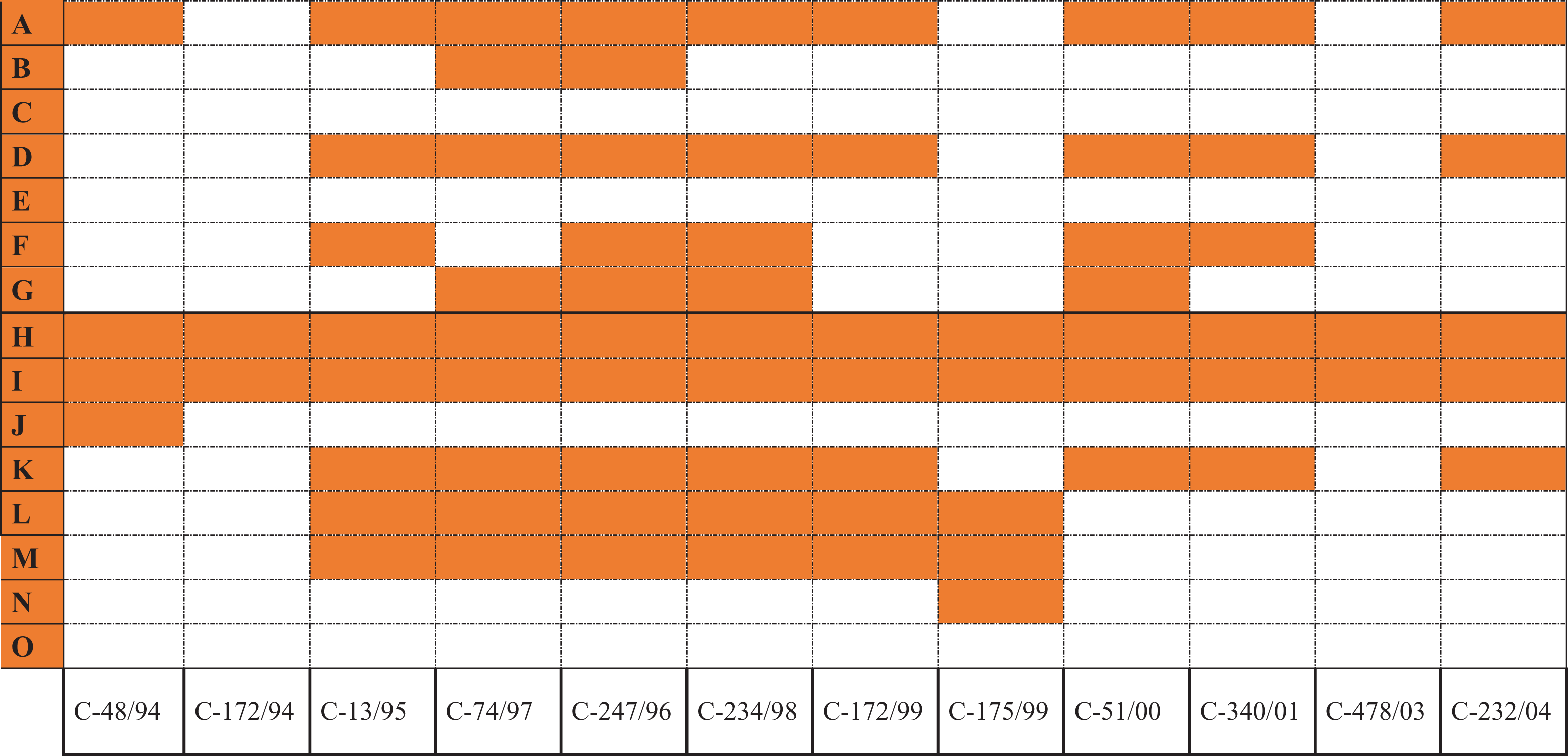
Cases decided between 1995 and 2005.
Looking at the reasonings of Group 2 - on the circumstances that indicate that a transfer has taken place -, the CJEU went beyond the assessments on the identity of the transferred entity (H) and on the Spijkers criteria (I). Rather, it started to focus on additional requirements and to define the concept of the transferred entity quite narrowly. At first, the CJEU indicated that the Directive applies only when a body of assets is transferred (J); then it also specified that when the business is labour intensive (a business that can be performed without the use of material assets, such as cleaning services) it is crucial that the majority of the personnel is taken over (K). The retention of the business’s organisation, of its managerial staff (M) and of its legal rules (N) were also referred to as relevant elements.
Most remarkably, the CJEU started to hold that the mere similarity of the activities carried before and after the transfer does not support the conclusion that an economic entity has been transferred (L). It is important to note that this interpretation departs from previous rulings, where the CJEU had explicitly relied on the degree of similarity of the performed activity before and after the transfer to determine whether the identity of the business was maintained. 108
As a result of this second period, it became more difficult for workers to argue that a transfer of undertaking had been put into effect. It is then legitimate to wonder what had triggered this quite radical change in the CJEU's approach.
A possible explanation is that this change of attitude was determined by the CJEU’s pragmatism. In other words, and differently from what emerged from the definition of ‘legal transfer’, the Court might have started to take into consideration the evolving business strategies of companies, which were increasingly characterised by outsourcings or externalisations, and by the establishment of a complex and dynamic web of corporate relations and operations. 109 The CJEU appeared to be more sensitive to the fact that an extensive interpretation of the notion of ‘transferred entity’ might have the effect of interfering too extensively with the profitability of business operations. 110 As a matter of fact, the broad interpretation of the scope of the Directive had encountered opposition especially from those companies whose business consisted in the provision of services for other legal entities. 111 By stipulating that, for example, the mere similarity of the performed economic activity is not sufficient to configurate a transfer, the CJEU avoided that the change of contractors for the provision of a service automatically leads to the application of the Directive. 112
Another, and not unrelated, possibility is that the change of approach of the CJEU was influenced by the criticisms that were raised, especially in Germany, 113 concerning the intrusion of the CJEU into the national legislature’s discretion in the field of labour law.
Finally, it is also interesting to note that the CJEU jurisprudence seems to reflect the content of the Commission’s initial (abortive) proposal for amending the Directive, submitted in 1994, which indeed aimed at excluding the mere transfer of an economic activity from the scope of application of the Directive. 114 The convergence between the Commission’s draft and the CJEU’s interpretation is quite striking, especially when considering that the Commission withdrew its proposal after it was strongly criticised during the legislative process by the European Parliament, 115 the Committee of Regions 116 and the Economic and Social Committee 117 for not correctly transposing the CJEU case law.
4.2.4. The third period
In the third period, from 2006 on, the CJEU has shown a quite erratic interpretative attitude with respect to the characteristics that a transfer of a business must present. Indeed, it has alternated the previous rather restrictive approach with a more flexible one and has enriched its argumentations with new definitions (C, E, O) [ fig. 3 ].
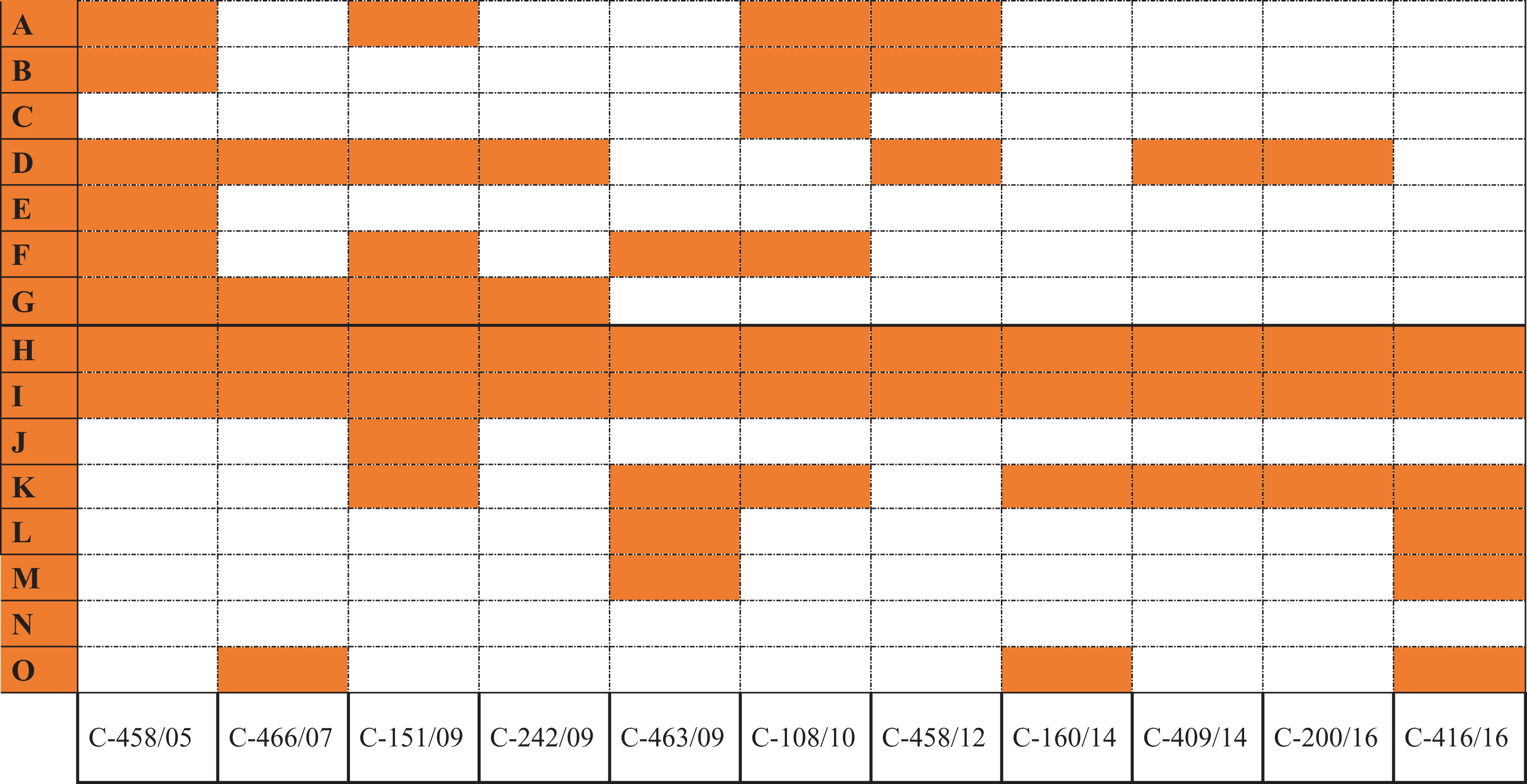
Cases decided between 2006 and 2018.
With respect to the reasonings from Group 1 on the notion of undertaking or business, the CJEU has focused less often on the stability of the transferred entity (A) and on the characteristics of the personnel’s organisation in case of labour intensive business (F, G). Instead, it has formulated new conditions, such as a certain degree of independence (C), or the presence of an operation grouping sufficient in itself to provide services (E). Similarly, with regard to the reasoning from Group 2 on the circumstances indicating the presence of a transfer, the CJEU has decreased the references to the need to maintain the organisation (M), operativity and financing (N) of the transferred entity, and it has rather referred to the retention of a functional link between the assets and personnel (O).
The adoption of new definitions has led to a certain degree of confusion on the elements that define the scope of the Directive. For instance, in the Jouini case the CJEU seemed to contradict itself, by first indicating that the transferred entity must be an organised group of assets and persons (D), and then holding that an organisational structure is actually not decisive, and that rather is important to have an operational grouping of assets and workers (E). 118 Similarly, in the Scattolon case 119 the CJEU specified that the transferred entity must present not only a certain degree of autonomy (B), but it should also be independent (C), without explaining the difference between autonomy and independency.
In this last period, the reasoning of the CJEU has allowed the application of the Directive in situations where the transferred entity did not present organisational autonomy nor stability, thus providing a more flexible interpretation of the scope of application of the Directive. However, the CJEU’s approach appears quite fragmented, and ambiguous definitions have created a certain degree of uncertainty.
4.3. Workers’ rights
The CJEU has interpreted the rights that the Directive confers to the transferred employees in 24 cases (from 1986 to 2017), and its reasoning has not been uniform throughout these years. In particular, it is possible to identify two types of interpretative approach: one characterised by a rather rigid understanding of the employees’ rights (and can be referred to as the ‘high level of protection’ approach), and another whereby those rights are read as quite flexible and employers’ interests are explicitly taken into consideration (‘lower level of protection’ approach).
The following arguments relate to the ‘high level of protection’ approach: The protection provided by the Directive is a matter of public policy and is independent from the will of the parties of the employment contract. The Directive’s rules are therefore to be considered mandatory. The transfer of the employment relationship and of the related rights is an automatic consequence of the transfer and does not require further agreements or stipulations. It is not allowed for the transferred workers or their representatives to waive or alter the rights that the Directive confers them. With respect to the transferred workers, the transferee shall not apply from the day of the transfer the collective agreement which is already in force in his business. The transferred employees are protected against any changes (whether substantial or not) in their working conditions taking place because of the transfer.
These are the arguments that characterise the ‘lower level of protection’ approach: From the date of the transfer, the transferee can impose on the transferred employees the collective agreement which is already in force in his business. With respect to the employment conditions of the transferred workers, the transferee must be in the position to make the adjustments and changes necessary to carry his business operations. Provided that the changes are not substantial, the transferee is allowed to modify the working conditions of the transferred workers. When the transferee alters the working conditions of the transferred employees making substantial changes, he is not required to compensate those employees in case they decide to resign because of such changes.
As with the case law on the notion of transferred business or undertaking, it is possible to distinguish three periods with respect to the CJEU’s reasoning.
4.3.1. The first period
During the first period, from 1987 until 1996, the CJEU cases are characterised by the ‘high level of protection’ approach [ fig. 4 ]. The protective rules of the Directive were consistently considered as mandatory (A) and the taking over of the employment relationships of the workers of the transferred entity was deemed to automatically descend from the transfer (B). Therefore, the workers (or their representatives) and the transferee could not stipulate an agreement whereby the transferee would take over only a part of the workforce employed in the transferred business. 120 Moreover, the Court argued that the employment conditions of the transferred workers cannot be altered, neither unilaterally by the transferee, nor with the consent of the workers (C, E). For instance, the CJEU ruled that no modification to the working conditions is valid, 121 even if the overall result is not worse than the situation before the transfer. 122

Cases decided between 1987 and 1996.
4.3.2. The second period
In the second period, from 1997 until 2011, certain decisions of the CJEU started to reflect the ‘lower level of protection’ approach [ fig. 5 ]. On some occasions the CJEU has indeed ruled that non-substantial alterations to the employment conditions can be permitted as a consequence of the transfer (H). Moreover, with regard to substantial changes in the working conditions followed by the resignation of the transferred employees, the CJEU decided that it is not required that the transferee is subject to the compensation rules applicable in case of unlawful termination of the employment contract (I). It is also quite striking that in the Werhof case 123 the CJEU for the first time referred to the necessity to preserve the transferee’s ability to make the adjustments and changes necessary to carry his business operation (G), thus adopting a perspective which is conflicting with the one that was dominant in the previous period. 124 These reasonings suggest that the CJEU started to read the Directive not exclusively from a worker-oriented viewpoint, and that market-related concerns were emerging.
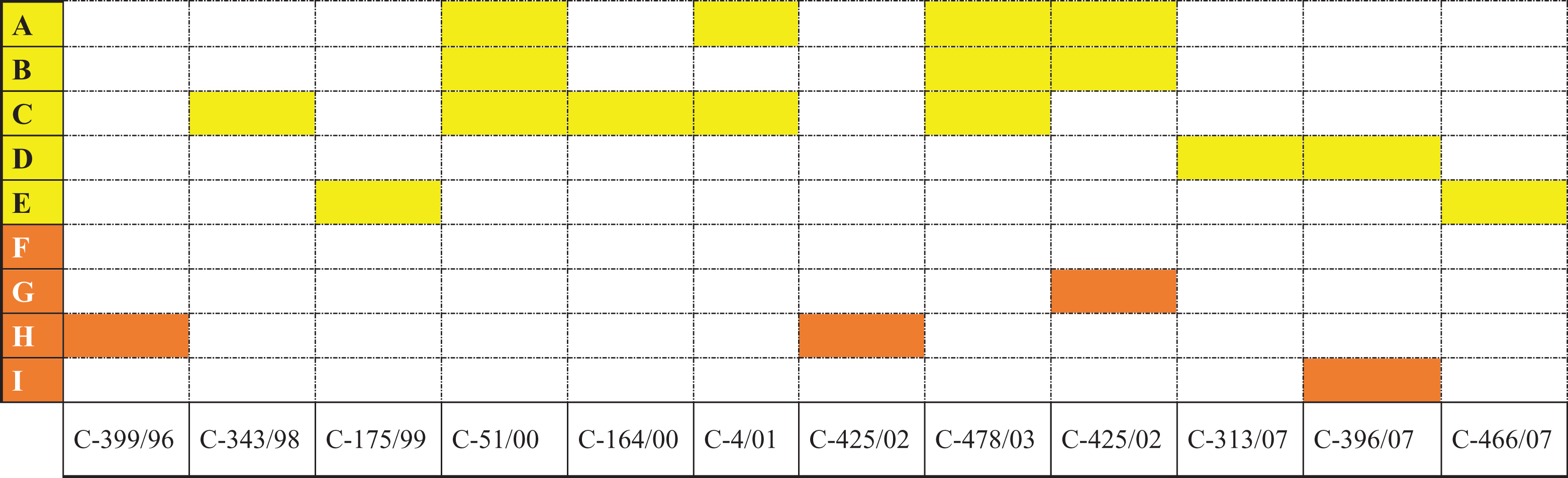
Cases decided between 1997 and 2008.
4.3.3. The third period
During the third period, from 2011 onwards, the CJEU has basically substituted the references to the mandatory nature of the protection of the workers’ rights with considerations on the importance of safeguarding the transferee’s ability to alter the employment conditions of the transferred workers [ fig. 6 ]. The CJEU appeared keen to guarantee a sufficient margin of manoeuvre to the transferee, in order to allow him to implement the changes necessary for his future economic activity (G), including the possibility to (immediately) impose on the transferred employees the collective agreement already in force in his business (F). It is also quite telling that the CJEU started to hold that the contractual freedom of the transferee should be balanced against the employees’ rights, 125 with contextual reference to Article 16 of the Charter of Fundamental Rights of the EU (CFR) on the freedom to conduct a business, in order to underpin this argumentation. 126
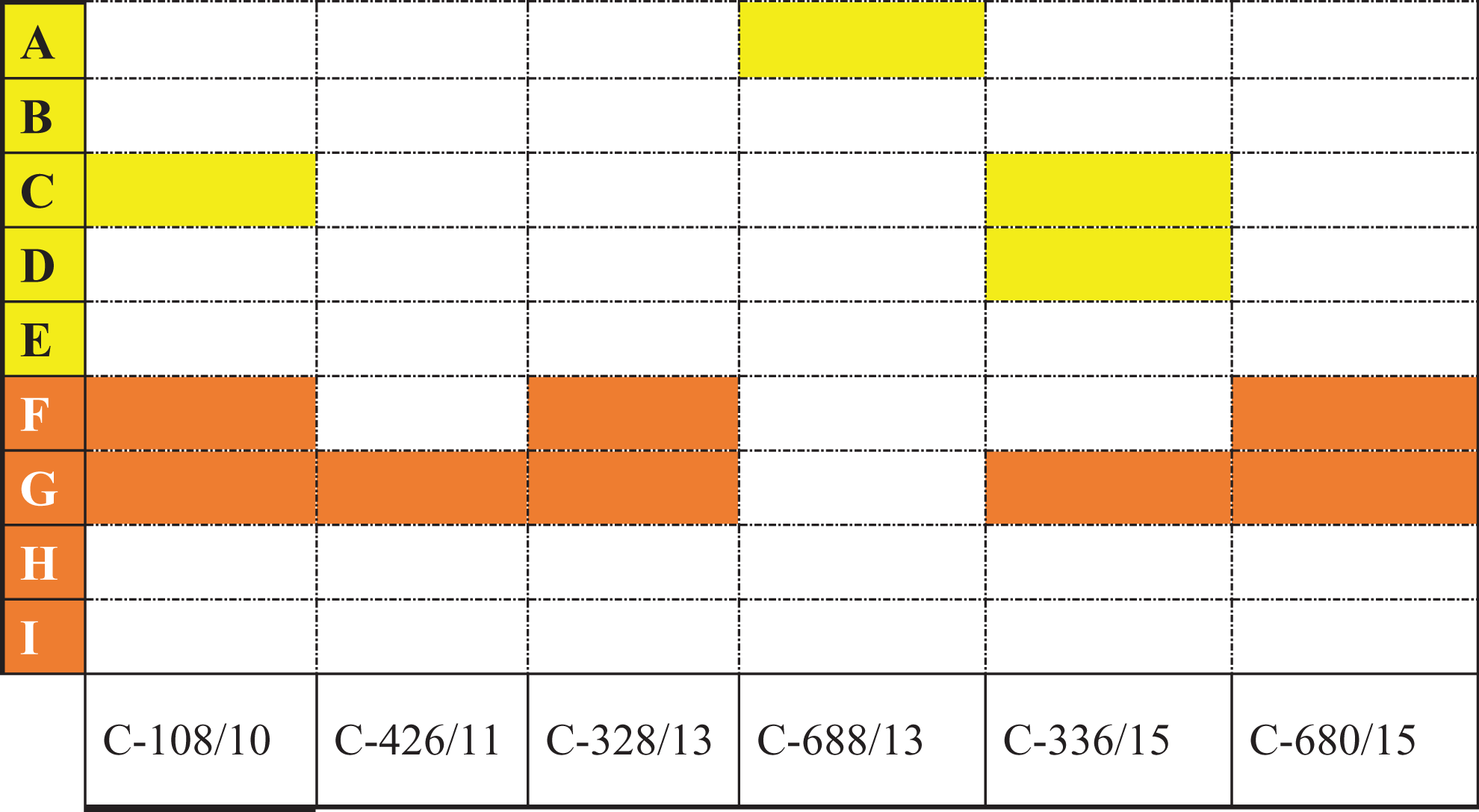
Cases decided between 2009 and 2017.
In conclusion, over the years the CJEU has departed from its initial rather rigid understanding of the rights of the transferred workers, with the result that it has gradually conferred a lower level of protection. It is interesting to note that the evolution of the CJEU’s approach is mirrored in its interpretation of the purpose of the Directive. Indeed, for 20 years the CJEU has consistently indicated that the Directive’s aim is to provide protection to the workers against potentially unfavourable consequences of transfers, without any consideration for the repercussions that such protection entailed for the transferee. Since 2006, with the Werhof case, the CJEU instead started to read the Directive as seeking to ensure a fair balance between the employees’ need for protection and the transferee’s interests, and to corroborate this argument with reference to the employer’s freedom of contract and to conduct his business. Moreover, the explicit mention of these freedoms 127 seems to indicate that Article 16 CFR has played, and will play, a relevant role in the definition of (the limits of) workers’ rights.
As fig. 7 shows, the CJEU’s valorisation of the freedom of contract and to conduct a business of the transferee began since the adoption of the CFR, and has intensified since the CFR acquired binding force. Significantly, the cases where the CJEU has referred to those freedoms are all characterised by reasonings that reflect the ‘lower level of protection’ approach. The contrast with the past is striking when considering that in 1991, in the D’Urso case, the CJEU held that ‘curtailing the freedom to carry on business […] is inherent in the very purpose of the Directive’. 128
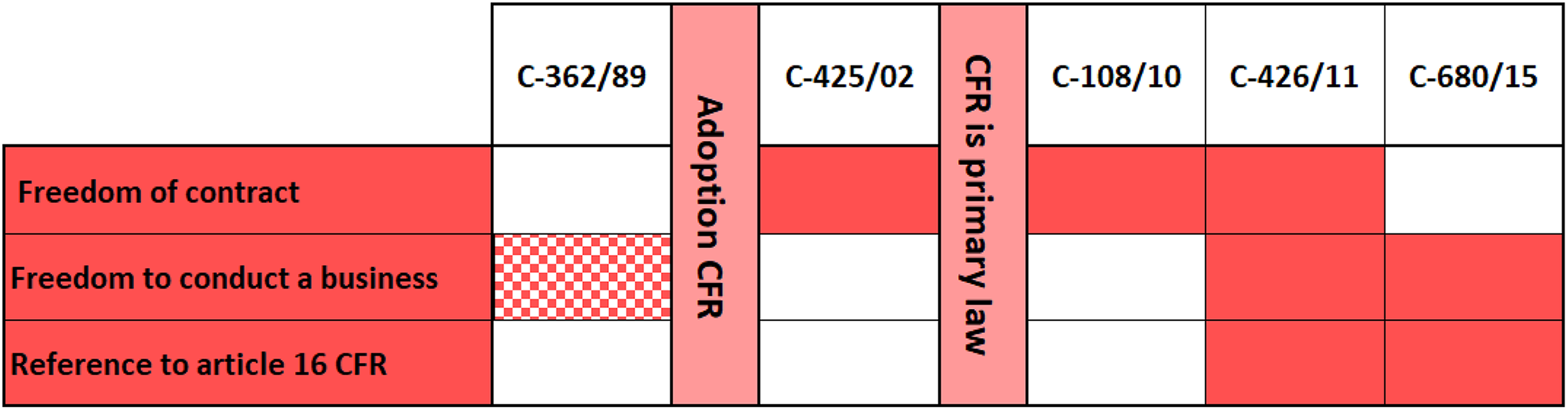
Freedom of contract and to conduct a business in CJEU case law.
5. CJEU and EU policymaking on labour rights
The analysis conducted so far was aimed to cast light on whether the understanding on the role of labour standards that emerges from the EU policy documents is reflected in the CJEU’s approach to the labour rights established in the Transfer of Undertakings Directive.
Looking at the case law on the scope of application, two sets of rather conflicting observations can be advanced.
The first observation concerns the definition of ‘legal transfer’, where the CJEU has consistently maintained a broad interpretation and has included business operations of different nature within the scope of the Directive. The CJEU’s broad interpretation of the notion of ‘legal transfer’ has widened the circumstances in which the workers’ rights conferred by the Directive might find application. This approach appears coherent with the expansive tendency of the EU internal market, which is indeed positively affected by the convergence of national rules on (the cost of) labour rights in case of transfer of undertaking, as harmonisation of standards implies reduced grounds for regulatory competition within the EU. 129 However, it should be kept in mind that the presence of a ‘legal transfer’ implies only a potential application of the Directive, which ultimately requires also the existence of a ‘transferred entity’.
The second observation relates indeed to the case law that has defined the concept of ‘transferred undertaking or business', where it is possible to notice an evolution in the CJEU’s reasoning. The earlier jurisprudence reflected quite a broad understanding of the notion of transferred entity, as the CJEU focused primarily on whether the activity performed before and after the transfer was similar. This entailed that the protection of workers’ rights was likely to find application in a wide range of business operations, for instance when a company succeeded another in the provision of a service, 130 thus imposing quite high labour cost to business operations. 131 It therefore appears that in the first period of case law the CJEU conceived the relationship between social and economic progress in a way which recalls the approach of the early policymaking documents, whereby business interests and social concerns were supposed to coexist.
From 1995 on, the CJEU began to identify more stringent conditions and criteria to determine the characteristics that the transferred business shall possess. 132 In particular, by conferring core relevance to the transfer of both material assets and the majority of personnel, the CJEU has given consideration to business-oriented concerns: companies could avoid the application of the Directive by employing less than the majority of the staff (in labour intensive companies), or by not acquiring the majority of the material assets (in capital intensive companies). 133 The evolution of the CJEU’s interpretative approach has therefore marked a departure from an understanding where social and economic progress could proceed hand in hand and rather recalls the attitude that has characterised the economic growth-centric EU policymaking since the late 1970s. The trend of general adaptation of labour prerogatives to the exigences of business is also confirmed in the third period of case law, where the CJEU’s fluctuating definitions are more likely to cause confusion rather than a re-adjustment of the Court’s approach.
A comparable, and even more evident, metamorphosis of the CJEU’s interpretation is reflected in the jurisprudence on the workers’ rights conferred by the Directive. Also in this case, the spirit of the early policy documents prevailed, basically uncontested, until the second half of the 1990s: the protective rules on workers’ rights were rigidly interpreted and the interests of the transferee were not taken into consideration. Subsequently, the CJEU started, at first sporadically and then more consistently, to assess the effect of the protection of the transferred workers on the transferee’s ability to carry on his business. Workers’ rights began to be conceived as flexible and derogations were deemed possible when the transferee would be too seriously affected in his freedom to pursue his economic activity. 134
Quite evidently, the progressive weakening of the protection provided to the transferred workers is aligned with those policy documents that since the end of the 1970s have gradually subordinated social and labour matters to the imperatives of economic growth.
The combined analysis of the CJEU’s jurisprudence on workers’ rights in case of transfer of undertaking on the one hand, and of the EU policymaking documents on the other hand, indicates a certain degree of convergence. In fact, when the Directive was first adopted, the prevailing approach towards EU integration reflected an understanding of social and economic progress as mutually supporting each other, and a similar understanding has characterised the CJEU’s reasonings during the first ten years of interpretative activity. From the mid-1990s, the CJEU instead started considering the effect of the Directive’s rules on the employer’s ability to carry his business and began to adapt its interpretation accordingly.
What emerges is that labour rights appear predominantly conceived through an economically-oriented perspective: they can only limitedly interfere with the priorities of economic integration and growth, at the policymaking level, as well as in the reasoning of the CJEU.
6. Conclusion
The CJEU's expansive interpretation of the notion of ‘legal transfer’, the rather selective definition of the characteristics that a transfer of a business shall present, and the trend towards a lower level of protection of workers’ rights reflect the spirit of the policy documents that have defined the last phase of EU integration. It is indeed curious to note that the considerations that the Commission advanced in its 2010 Communication, ‘Towards a Single Market Act for a Highly Competitive Social Market Economy' – mentioned above in par 1 – could fit quite well with the recent CJEU interpretation: ‘a “highly competitive social market economy” […] requires us to adopt a more all-embracing view of the single market” and “the social market economy [shall be realized] by putting businesses and Europeans back at the heart of the single market in order to restore confidence’. 135
In conclusion, it appears that the economic understanding of labour rights which has characterised the EU policy development since the end of the 1970s has gradually emerged from the case law of the CJEU. The process of upward convergence of social and economic progress seems to be part of the past and the predominant interpretation of labour standards as strictly interwoven with business concerns has led to a progressive weakening of the protective nature of the analysed labour norms.
Footnotes
Declaration of Conflicting Interests
The author(s) declared no potential conflicts of interest with respect to the research, authorship, and/or publication of this article.
Funding
The author(s) received no financial support for the research, authorship, and/or publication of this article.