




Abstract
In most countries, a standard (or core) model of employment relationship (i.e. full-time work under an open-ended employment contract) typically receives the greatest labour and social security protection, with divergent work arrangements receiving less protection in correlation to the magnitude of the differences between the former and the latter. However, recent developments concerning non-standard forms of work may question this dynamic.
In this article, we examine the nature and current evolution of the standard employment relationship, then analyse how other forms of work deviate from this standard. In order to do so, we draw on the conclusions of the numerous studies recently published by scholars and international organisations in the wake of the growing public debate on the ‘new world of work’. Afterwards, we analyse the situation of non-standard workers under certain social security systems, in order to determine how those systems have approached the divergent character of these forms of work. This leads us to identify the main challenges that social security systems experience when faced with non-standard forms of work. The article concludes by addressing the need to adapt the basic principles of social security to the atypical features of non-standard work.
Introduction
In most countries, there is a standard (or core) model of employment relationship that receives the greatest labour and social security protection, with divergent work arrangements receiving less protection in correlation to the magnitude of their differences with this model. 1
However, two trends are questioning this dynamic. First, there is a weakening of the features of the standard model as a result of the increasing flexibilisation of the labour market. Second, the forms of work that deviate from this standard are increasing both in importance 2 and in diversity, 3 occupying often a grey area between employment and self-employment. 4
In this article, we will examine the nature of this standard, as well as its current evolution, then we will complete an analysis on how other forms of work deviate from this standard. In order to do so, we will draw on the conclusions of the numerous studies recently published by scholars and international organisations in the wake of the growing public debate on the ‘new world of work’. Afterwards, we will approach the situation of non-standard workers under certain social security systems, based on an examination of social security legislation and comparative literature, in an attempt to determine how those systems have taken into account the divergent features of non-standard forms of work. This will lead us to a series of conclusions on some of the consequences that the use of non-standard work may have in social security systems, drawing upon previous research concerning the adaptation of neutral principles of social security to the specific nature of non-standard employment.
Typical work: The meaning of a standard
During Fordism, the full-time permanent employment relationship became the standard for the regulation of the male labour market, 5 as the securities linked to it (stable income and employment, as well as the full range of labour and social security protection) were a strong incentive for middle-skilled workers to seek and maintain employment, 6 while at the same time it provided companies with national consumers. 7 The mere name ‘standard’ refers both to its use as a regulatory model 8 and to the fact that such a model is expected to be the norm (with, in turn, non-standard forms of work being expected to be atypical). 9 And, in fact, it is still the most common form of work in the EU28, where 58% of persons in employment work under the standard full-time permanent employment contract. 10 Examples of the standard employment contract are the Spanish contrato indefinido, the French contrat à durée indéterminée, the Belgian arbeidsovereenkomst van onbepaalde duur and the Italian contratto di lavoro a tempo indeterminato.
To be more specific, the standard employment relationship 11 may be defined as a ‘stable, open-ended and direct arrangement between a dependent, full-time employee and their unitary employer’. 12 Thus, a worker in a standard employment relationship fulfils the usual criteria to be considered an employee, which in EU countries generally are ‘control, integration, dependence, financial input or risk and mutuality of obligations’. 13 At a more qualitative level, what separates the standard worker from other types of employees (such as fixed-term employees and part-timers) is the labour stability and income security which traditionally derivate from their full-time, permanent character.
Employment relationship
Determining whether a person performing work falls within the scope of the notion of ‘employee’ has become increasingly difficult due to the complexity of work arrangements in the grey area between employment and self-employment. 14 In order to ensure a more stable definition of the concept of employment relationship and to guarantee its protection, the International Labour Conference, in its 95th session (2006), 15 issued Recommendation 198. In this section, we will draw on this instrument, 16 as well as on the work of authors such as Freedland, to provide an overview of the first set of features of what constitutes a standard employment relationship.
The primary element is the personal subordination of the employee in relation to the employer. Subordination has been traditionally defined as control and direction of the worker by the employer. 17 This ‘hierarchical power’ of the employer comprises the authority to deliver orders, to control the compliance with them and to sanction their improper observance. 18 It is important to note, however, that there are significant differences in the degree of autonomy at work depending on the type of work. Thus, while blue-collar workers usually have low control over the work environment, more skilled workers have a significant autonomy on determining the pace and organisation of work, 19 particularly as technological advancements and greater specialisation have hindered employers from closely supervising the performance of work. 20 As more skilled work is involved, subordination is understood more as a functional coordination than as a command, 21 also taking into account other factors such as whether the employee is integrated into the employer’s organisational structure 22 and whether the tools are provided by the employer. 23
Related to this element of subordination is the second feature, the bilateral character of the employment relationship, 24 which derives from the contractual nature of the employment relationship. 25 In this regard, Freedland and Countouris suggest that the notion of unequal bargaining power as the traditional normative basis for labour law is intrinsically related to the subordinate, bilateral and contractual character of the standard employment relationship. 26
Furthermore, in some countries there is an extra feature referring to the relationship between employer and employee, called mutuality of obligations. 27 This aspect has been commonly understood as the obligation of the employee to be available to work, and of the employer to provide work. 28
Fourth, salary is paid in exchange for work performed for the benefit of the employer. In other words, the employee leases his working capacity for a certain period and will receive remuneration as compensation for the work delivered to the commissioner. 29
This results in the fifth feature of the notion, the economic dependency of the employee towards the employer, as the employment relationship is the main source of income of the worker, and thus he is unable to spread risks. 30
Sixth, the work is usually performed on the employer’s premises, a characteristic which derives from the Fordist industrial model on which the standard employment relationship was based. 31 However, this is a contested element of the standard. In fact, in countries like France and Belgium, the fact that work is performed outside the employer’s premises does not change the employment status by itself (although it does provoke a greater protection). 32
Labour stability
Labour stability is a key aspect of the social function of the standard employment relationship, as it allows firms to rely on a stable framework within which employees will cooperate in exchange for security. 33 It encompasses two elements. First, the employment relationship has an indefinite duration, meaning that it may only be terminated under certain conditions or for specific reasons such as incompetence, misconduct or economic circumstances. This long-term commitment between the employee and the employer is reflected in, inter alia, the training of workers 34 and greater autonomy of the worker within the company. 35 Second, the work is performed full-time and within a known schedule (also referred as ‘standardised working time’, which also notes statutory holidays and leave provisions).
Income security
Income stability is understood as receiving a salary which is sufficient to ensure livelihood, as well as an expectation of an adequate level of social insurance, aspects that in the standard employment relationship are derived from the labour stability and its full-time character. 36 This income security is another aspect of the aforementioned social function of the standard employment relationship, as it enables individuals to consume and plan for the long term 37 (also enabling long-term investments, which in turn fuels the economy), and thus becoming one of the pillars of the post-war economic system. 38 Furthermore, it has provided governments with a reliable income through taxes, thus allowing the construction and maintenance of the welfare state. 39
Protected by labour legislation, and collective agreements 40
When all these criteria are fulfilled, an employment relationship will be fully covered by statutory law and collective agreements. 41 Standard workers are usually the main recipients of the protection provided by trade unions on enforcing legislative standards (through, for example, information and legal representation). 42 Apart from labour law, standard workers will enjoy comprehensive protection in social security. Moreover, the standard worker has been traditionally used as a reference for work-related social insurance schemes in western social security systems. 43
Internal challenges to the essential features of the standard employment relationship
There have been significant claims regarding the decline of the predominance of the standard employment relationship. 44 One of the aspects of this decline is the gradual weakening of the essential characteristics of the standard, so eventually ‘it takes on the character of [atypical employment] in all but name’. 45 This process of reconstruction of the standard model has affectedmost of its elements.
Control and direction, as mentioned before, have become increasingly difficult to practice by the employer due to advancements in technology and greater specialisation of tasks (with workplaces deviating considerably from the blue-collar worker and the pyramidal organisation of work on which the standard was based). 46
Furthermore, working times are becoming more flexible, sometimes the flexibility being justified from a work-life balance perspective, such as in countries like the Netherlands and the United Kingdom (UK), where workers have a right to flexible working hours in specific circumstances (e.g. in the latter country for workers caring for a family member). 47 At the same time, there has been a progressive reduction in the number of hours worked by full-timers (e.g. in Denmark full-time may be 37 hours), while part-timers have increased the average hours they work (e.g. in Denmark it may be up to 30 hours). 48 Consequently, it becomes more difficult to differentiate between traditional full-time work and atypical part-time work arrangements.
Labour relations are also increasingly organised in forms that transcend the traditional bilateral work relationship between employer and employee, as, for example, the growing popularity of agency work in most European states demonstrates. 49
However, it is in respect of labour and income stability where the changes are felt most significantly. In this regard, there has been a general decrease in employment protection legislation in Europe, 50 some of these measures, reducing labour protection, even strongly supported by international organisations such as the OECD and IMF in order to bring standard work again at cost-competitive levels and consequently to curb the increasing use of non-standard work. 51 Similarly, workers within a standard employment relationship enjoy training from their employers less frequently and, in general, lack a long-term employment perspective; the focus is more upon the mere ‘work for pay’. 52
External challenges to the essential features of the standard employment relationship
Although, as it has been mentioned before, the standard employment relationship continues to be the most common form of work, there is significant evidence showing a decrease in its prevalence. 53 Temporary work, part-time work and self-employment represent a third of all employment in OECD countries, and half of new jobs created since the 1990s have been in one of these three modalities. 54 In fact, in the Netherlands, part-time employment represented 50% of its labour force in 2015. 55 Furthermore, in Italy, France, Germany and the Netherlands, the percentage of persons aged 15 to 24 years in permanent employment fell by 30-40 percentage points between 1985 and 2010. 56 In the United States, alternative work arrangements (which includes temporary agency workers, on-call workers, contract company workers and independent contractors) rose from representing 10.1% of the labour force in 2005 to 15.8% in late 2015. 57 This implies that the net employment growth of 9.1 million experienced in those years in the United States was produced because of non-standard forms of work (with a drop in the number of standard employment arrangements of 0.4 million in the same period). 58
These work arrangements lack to some degree certain essential characteristics of the standard employment relationship, while at the same time they fulfil others. 59 In this section, we will analyse which features of the standard employment relationship are put into question by these non-standard forms of work. These non-standard forms of work may be divided in two groups: those that are not considered employment relationships because they lack one of the core features of the notion, such as subordination; and those who, being an employment relationship, lack the full-time or permanent character that characterises the standard employment relationship. 60
Lack of direct employment relationship
Lack of (or lesser) personal subordination
Although there are numerous elements used at national level to differentiate between an employment relationship and a civil relationship, personal subordination is undoubtedly the main criteria in all European countries. 61 In this regard, it has been a common struggle among countries how to classify those work arrangements that lack personal subordination but at the same time present other elements of the employment relationship such as the bilateral character of the relationship, or the fact that the work is performed on the employer’s premises. This is the case of the economically dependent self-employed, self-employed persons performing work personally (thus without employees) under a contract for services for only one client, 62 on whom they are dependent for all or most of their income. 63 Thus, although they have in common with the standard employment relationship that they are economically dependent on one person or company, dependent self-employed are also assuming the entrepreneurial risk (i.e. variability on the amount of business depending on the economic situation of the main client) without having the possibility of spreading this risk among various clients (something that a regular self-employed person with several clients would be able to do). 64 In other words, the economically dependent self-employed assume most risks of both employees (i.e. one source of income) and the self-employed (i.e. insecure income and greater responsibility on ensuring outcome). 65 Some countries tackle this through a careful analysis of the employment status, sometimes (as is the case in Greece and Hungary) by starting from the assumption that persons providing work mostly for one client (and thus in economic dependency) are in fact employees. 66 Others, however, have created a specific legal category with a diverse treatment for social security purposes compared to the general regime for the self-employed. 67 In this regard, in Germany, persons who are economically dependent on one client but not personally subordinated to him 68 are subject to statutory pension insurance. 69 In Austria, a ‘free service contract worker’ 70 receives similar treatment in social security law to that of an employee, being covered by old-age pensions, unemployment and health insurance, as well as being entitled to parental leave. 71 In Denmark, certain provisions designed specifically for the economically dependent self-employed, 72 together with the universal character of certain schemes (including invalidity) lead to a situation where the eventual social protection for this group reaches levels similar to the social security protection of employees. 73
Also lacking personal subordination in relation to their commissioners are freelancers, who are also self-employed without employees but who are not necessarily economically dependent on one employer. Compared to the group of ‘dependent self-employed’, freelancers face another kind of economic dependency: income insecurity caused by the irregular nature of income accrual in combination with the overall low levels of income earned at the end of the day. Often this leads to a situation of non-insurance, as the income levels do not reach the minimum thresholds imposed by the social security system. The use of this form of work is very significant among members of the creative industry. 74 For example, 57% of professionally active artists in the Netherlands are self-employed (as opposed to 12% of the labour force). 75 Some countries have established special measures concerning the social security of freelance artists. In this regard, in Germany freelance artists and journalists earning more than €3,900 per year are obliged to be insured through a specific insurance (Künstlersozialversicherung) covering old-age pension, healthcare and nursing care. In Sweden, three organisations paid by the State (‘alliances’, for actors, musicians and dancers) provide freelance artists with an income when unemployed, as well as insured them as employees. 76 In Austria, the previously mentioned ‘free service contract workers’ are linked with the so-called ‘new self-employed’ (Neue Selbständige), often used by artists or freelance journalists, and who are subject to compulsory insurance covering accidents at work and old age if they earn beyond a certain amount per year 77 (€4,988.64 for 2016 78 ). Other EU countries that have taken specific measures to include freelancers who are members of the creative industry in their social insurance schemes are Belgium, Estonia, France, Georgia, Hungary, Lithuania, FYR of Macedonia, the Netherlands, Serbia and Slovenia. 79
It is interesting to note how, nevertheless, freelance work has been appearing lately through so-called crowdwork 80 in a range of different sectors. While this is not a novelty in itself 81 (as outsourcing has been a quite common practice over the years), it becomes so if taking into account the extreme segmentation of tasks and the diversification of workers and clients that are enabled by current technology. 82 Examples of crowdworking platforms are Amazon Mechanical Turk (completion of tasks online), TaskRabbit (completion of tasks offline), Uber (transport of individuals) and Deliveroo (food delivery). There has been significant discussion about the employment status of persons performing work through these platforms, as the platforms usually classify them as self-employed, while they often argue that they are in fact employees. The presence or absence of personal subordination has understandably played an important role in this discussion, which presents challenging questions on how to classify situations in which the human supervisor has been replaced by an algorithm. 83 The issue remains a greatly contested one for the moment, with numerous ongoing legal challenges. 84 Currently, it is normal that crowdworkers are in a certain form of self-employment (although this is not the only possibility, as there are also online platforms treating providers of services as employees). 85 Due to the special characteristics of this form of work, and in order to combat tax fraud, Belgium has recently established an exemption from the payment of social security contributions for individuals 86 with earnings under €5,000 derived from approved digital platforms 87 (as well as a reduced tax rate for that income of 10%, instead of the regular 30%). 88 However, this is an isolated case, as in most countries the normal regulation on taxes and contributions also applies to these situations.
When specific provisions such as the ones analysed above do not apply, however, the economically dependent self-employed (who nevertheless do not qualify as employees) and freelancers are subject to the general regime on social security purposes for the self-employed. The coverage of this regime varies greatly among EU Member States and the different contingencies and situations range from exclusion to mandatory or voluntary inclusion in the scheme. In this regard, in the great majority of Member States it is compulsory for self-employed to be covered by old-age and sickness insurance. 89 In contrast, in nine EU Member States (including Belgium, 90 France, the Netherlands and Italy) the self-employed are excluded from the scope of unemployment insurance, and in another six their inclusion in unemployment insurance schemes is voluntary. 91
Finally, owner-managers of incorporated enterprises is another form of work in which the element of personal subordination as generally understood is missing. These persons perform work as managers of a company in exchange for a salary, while at the same time controlling (fully or partially) ownership of the company, having authority to act on its behalf as regards contracts with other organisations and the hiring and dismissal of workers, subject only to the law and the decisions of the board of directors. 92 In these situations, it may be possible for the owner-manager to fix his own salary to an amount that lets him pay very low or no contributions, receiving the rest of his income through dividends. 93
Lack of salary for work performed
Salary is understandably a key element for both the concept of ‘worker’ in general and social security systems in particular (as contributions are indeed based on it). Two situations, however, are often on the border of being work while often not receiving a salary: apprenticeships and prosumers.
By apprenticeships, we refer to work arrangements in which the principal aim is teaching or learning. 94 Differences are often made between, on one hand, those situations where the work is performed as part of a formal and systematic education (usually to seek professional qualification) based on an employment contract, and in which labour conditions (including financial compensation and coverage by social insurance schemes) are regulated at the statutory and tripartite level; and on the other, those performed in the open market after graduation, not linked to formal studies and significantly less regulated (often lacking remuneration or an employment contract). 95 Apprenticeships in the open market often present a high risk of abuse by employers, who may use them for purposes beyond training, often offering entry-level positions that were previously filled by regular employees. 96
By prosumers we refer to persons who perform work in the process of consumption. 97 Facebook and other social media platforms present an excellent example of the new model of ‘prosumption’. Users provide content, which generates income to the platform in two ways: it is sold to companies to target ads to a concrete audience, and it increases traffic, providing a space where companies may position their ads. 98 There are also examples where online prosumption enters the physical world. LEGO Digital Designer software, for example, enables users to construct and share products with digital LEGO bricks, receiving other users’ opinions and being able to buy a material version of their creations. Sometimes, LEGO may manufacture one of these designs for its distribution in toy stores, in return for which the consumer/designer is acknowledged but does not receive any financial compensation. 99
The discussion on the concept of work might have great reach, as a significant amount of what users do online may be monetised thanks to current technology by turning them into crowdwork, sometimes even without the knowledge of the crowdworker/prosumer. Although this is an ongoing discussion, some judicial decisions (mostly from the United States) may shed some light on this issue. 100 In this regard, the Rojas-Lazano v. Google 101 case was of great significance. In it, the plaintiff challenged the use by Google of CAPTCHAs 102 (small sections of text embedded in images that sometimes must be recognised and written by the user of Google products in order to prove, for security purposes, that he is indeed a human being) to transcript books for Google. The point at issue was whether Google, by using such work (i.e. text recognition) for profit without informing the user, was liable for damages as a result of ‘extracting free labor from its users’. 103 However, the Court considered that the fact that Google profited did not necessarily mean that there was any damage to the user, stating that the ‘plaintiff has not alleged any facts that plausibly suggest the few seconds it takes to type a second word is something for which a reasonable consumer would expect to receive compensation’. 104 As current trends point towards a progressive fragmentation of work, it is almost certain that more courts in the future will have to decide which amount of work deserves compensation.
This is significant, as one of the main reasons not to consider prosumers as workers is the absence of any kind of remuneration for the activity provided on the platform. Yet there are examples indicating that there is a tendency where the contributions of consumers are starting to become remunerated. Google, for example, rewards users who create content which in turn produce traffic through a distribution of part of the benefits generated by advertisement. 105 In this same line of thought, Steemit is a website which rewards users who produce content in the website through a blockchain-based bitcoin-like coin, the Steem-Dollar, 106 whose value has increased enormously in recent months, making it the third most valued blockchain-based currency (with a market-cap which increased from $2,000 to $300 million). 107 If its success continues (or other similar platforms appear), it may disrupt the current status-quo of mostly unpaid prosumer work. However, while the potential impact of prosumption individual online prosumption may be very important (taking into account the volume of current users who share content), it remains difficult to qualify this activity from a labour law and social security law perspective. Platforms do generate income from the activities of the prosumers; they even start to compensate them for their on-line activities. Yet is this, legally speaking, sufficient to have the activities considered as labour activities in order to have them regulated by social law? The legal qualifications that are used by social legislations will need to be adapted in order to bring these online activities of prosumers under the personal scope of social security.
Lack of economic dependency
While economic dependency has been a key factor in broadening the social protection of standard workers to (some weaker groups of) the self-employed, this does not seem to be the case for portfolio workers, a group characterised by work arrangements in which the worker has several employers simultaneously. Portfolio workers are common in the creative sector, 108 where professionals often combine self-employment with work as a wage earner. 109 However, recently the practice has been extending to other sectors. This is the case with the combination of crowdwork as a self-employed with a regular employment relationship. 110 In a survey performed by the ILO on 686 crowdworkers of the platforms Amazon Mechanical Turk and Crowdflower from the United States, 111 35% declared that they do this work to complement their income and for 40% the crowdwork their first occupation. The great majority of those for whom crowdwork was their main occupation (over 90%) did not make contributions to social security, and a similar rate did not contribute to a pension fund. In contrast, 77% of those for whom crowdwork was a secondary source of income paid social security contributions (in most cases as a result of their main job, as more than 80% of them were classified as employees through it). 112 Also, a higher proportion of persons in crowdwork as a side-activity were covered by health insurance. 113
Finally, it is worth noting the creation in 2013 of the British Employee Shareholder Status, an employee status in which the worker opts to trade in his protection for unfair dismissal and statutory redundancy pay for a share in the company (amounting to at least £2,000). 114 Besides the allotment of shares in the company, which may reduce the economic dependence of the worker on his work and enable his participation in the decisions of the company through voting rights, the work arrangement is identical to a regular part-time or indefinite employment contract. The new status thus exposes labour rights to freedom of contract. 115 Furthermore, the unprotected position against dismissal may put the worker in a similarly insecure position as temporary workers concerning reaching the required minimum of paid social security contributions. Apart from putting the economic dependency at stake, this new status loosens the ties between work and income, as the latter is becoming increasingly dependent upon the economic performance of the company (and less upon the individual performance of labour activities). This may put a strain on traditional labour related social security systems where the financing (on the basis of contributions) and benefit compositions are still strongly linked to the previously performed labour activities of the worker.
Lack of a bilateral employment relationship
The increasing need for flexibility by firms in the late 1960s and early 1970s provoked the growth in triangular work relationships, 116 in which the employee is employed by a company which in turn lend this worker to another firm. These forms of work enable companies to adapt to unstable economies with quickly varying market demands. 117 Agency work is the most common variety of triangular employment, and it has been regulated in most EU countries since the 1970s. 118 A particular form of agency work is voucher-based work, in which the payment is made through vouchers acquired by the employer from a third party (usually a governmental authority), rather than by cash. 119
While temporary agency work was illegal in several EU countries before the 1970s due to being perceived as a greatly precarious form of work, since then it has been accepted and regulated. 120 There has been a trend among EU countries of aiming to avoid the lack of a bilateral relationship from impacting negatively on their social security protection, and in some countries (such as the Netherlands, France Belgium and Italy) specific provisions have been created for agency workers aiming to compensate for difficulties reaching the thresholds which enables access to social security benefits (something that does not exist for regular temporary workers). 121
However, it would be a mistake to believe that issues deriving from a deviation from the traditional bilateral relationship are a thing of the past. In this regard, crowdwork is currently presenting major issues on the identification of the employer, due to the multiplicity of parties involved exercising the different functions of the employer. 122
Work not performed on the employer’s premises
Work performed outside the employer’s premises without the performer being self-employed has been generally referred to as homework. Manufacturing (making products, such as shoes or clothes) has historically been performed at home, and even after the onset of the industrial revolution, companies still used persons living in rural areas (with lower cost of living) who were willing to complement their main income from agriculture with the manufacturing of small objects such as clothes or shoes. 123 For companies, homework was not only attractive because of a labour force who usually required lower income, but also because it fell outside the scope of: initially, homeworkers avoided their scope, and even when they became covered by labour law in most countries, the implementation and control remained problematic. 124 These same advantages have made a variant of homework, telework, 125 attractive for companies. 126
Lack of labour and income stability
Lack of permanent employment
Temporary workers are persons performing work under fixed-term, seasonal or task-based employment contracts, whether part-time or full-time. In theory, temporary forms of work should only be used in specific and limited circumstances, as an exception to the indefinite employment contract, which is the general form of work. 127 In this regard, EU countries have established a list of objective grounds in which to do so (e.g. apprenticeships, substitutions, project-based or probationary periods, among others, in the case of Germany) 128 or limitations on the duration and number of successive fixed-term contracts with the same employer (as is the case in Italy 129 and Belgium). 130 However, employees on fixed-term contracts make up 14.6% of the workforce in EU28 countries, rising to over one fifth of the workforce in Spain and Poland, and over one quarter in the Netherlands and Portugal. 131 In general, this rate has remained stable in the last 15 years, with notable exceptions such as Poland (which rose from 4.7% in the year 2000 to 27.9% in 2015). 132
An extreme example of temporary work is the so-called zero-hours contract, a modality of on-demand work in which the employer may call the worker to perform work, but is not obliged to do so, while the worker may, in turn, refuse to take up the work. 133 It has been argued that, in countries like Slovenia 134 or the UK, 135 the low level of social security contributions is one of the reasons behind the attractiveness of this form of an employment contract for employers. 136 A significant debate on the employment status of workers under these types of contract is being carried out currently in the UK, where 744,000 people were in zero-hour contracts as their main employment between April and October 2015. 137
Whatever the variety, temporary workers are at a disadvantage in respect of accessing social security benefits, as their instability may hinder them in reaching the required minimum period of insurance to access certain benefits. 138 In this regard, a recent study for the European Commission noted that at least half of all temporary workers in ten Member States of the EU risk not being entitled to unemployment insurance benefits, a percentage which rises to over 70% in the case of the UK, Slovakia, Estonia and Latvia. 139
Even if they are entitled to a certain benefit, a person who has not been in full-time employment almost uninterruptedly will struggle to draw a full pension in certain EU countries. 140 Furthermore, temporary workers not only experience earning instability but also lower and slower-growing wages, 141 which in turn may reflect in the level of their benefits (the increasing correlation between benefit levels - particularly concerning pensions - and contributions have exacerbated this problem). 142
As a way to combat the negative effects of labour market fragmentation, it is interesting to note measures introduced by certain countries to take into account periods outside employment for accessing social security benefits. In this regard, since 2014 France has been promoting the validation of all periods of apprenticeship for increasing entitlement to pensions, as well as periods of study (the latter with a limit of two trimesters, in exchange for a reduced contribution). 143
Finally, regarding freelancers, specific provisions have been made in some countries concerning the social security protection of artists in fixed-term forms of work. Thus, in France, persons in the entertainment business (whether entertainers, labourers or technicians providing support) under a fixed-term contract of employment and their employers pay double the contribution to unemployment insurance on top of the general one. In exchange, they are entitled to receive higher (minimum) unemployment benefits for a longer duration and for a shorter period of contributions. 144
Lack of full-time employment
Part-time work has grown constantly in the EU28 countries, going from representing 15.9% of the labour force in 2003 to 19.6% in 2015, and reaching 50% of the labour force in the Netherlands. 145 Moreover, 22.2% of part-time work in the EU28 has been involuntary (4.5% of the labour force), a number which rises to 70.1% in the case of Greece and falls to a mere 4% of part-time work in the Netherlands. 146
An extreme case of part-time work is marginal work (also called mini-jobs). In most countries, work performed for a length of time under a certain threshold is not considered relevant for labour and social security law. In Germany, workers in mini-jobs (who make up two fifths of the labour force in the domestic sector) 147 must be covered by statutory insurance against labour accidents, but they may choose whether or not to be covered by health insurance. 148 In Slovakia, persons performing a task or service with a duration of fewer than 350 hours per year may do so under a work performance agreement rather than under an employment contract 149 (thus they are excluded from the protection granted to employees). In the UK, employees earning £157 or less per week, but £113 or more per week, do not have to pay any social insurance contributions (nor do their employers) but their entitlement to benefits is increased as though they were paying contributions (through the so-called National Insurance credits). Employees earning less than £113 per week do not pay contributions but, as opposed to the previous case, they do not accumulate periods of contributions. 150
Reactions to labour and income instability
As noted above, different flexible forms of work may place workers in a situation of disadvantage for acquiring entitlement to social insurance benefits. Some countries have reacted by lowering thresholds required for accessing social insurance entitlement.
In this regard, since 2014, France has reduced the level of contributions necessary to access pensions 151 (from 200 hours needed to reach one trimester to the current 150-172 trimesters which are necessary to raise a pension for those born after 1973). 152 This measure is expected to benefit in particular the 3.5 million women performing part-time work and the 100,000 existing independent workers. 153 Furthermore, employers may agree through collective bargaining to pay extra for social security contributions so part-timers will be able to accumulate equivalent pension entitlements to full-time workers. 154
Furthermore, in 2013, the Italian government introduced the ASPI and mini-ASPI schemes (the latter, aiming to include workers in employment of short duration, required lower contributions but it also provided lower and shorter benefits), two unemployment schemes which replaced the former plethora of programmes and increased the generosity of the system, 155 as well as expressly including apprentices and freelance artists. 156 In 2015 a new system (NASPI) was again introduced, replacing ASPI and mini-ASPI, and which extends coverage by providing a much lower requirement of previous work performed before unemployment (one month within the last year). 157
Figure 2 displays the main elements of the standard employment relationship that each form of non-standard work studied above typically presents, 158 based on the study of the literature performed. 159 A striped rectangle with an orange circle beside it indicates that the relevant feature may or may not be present.
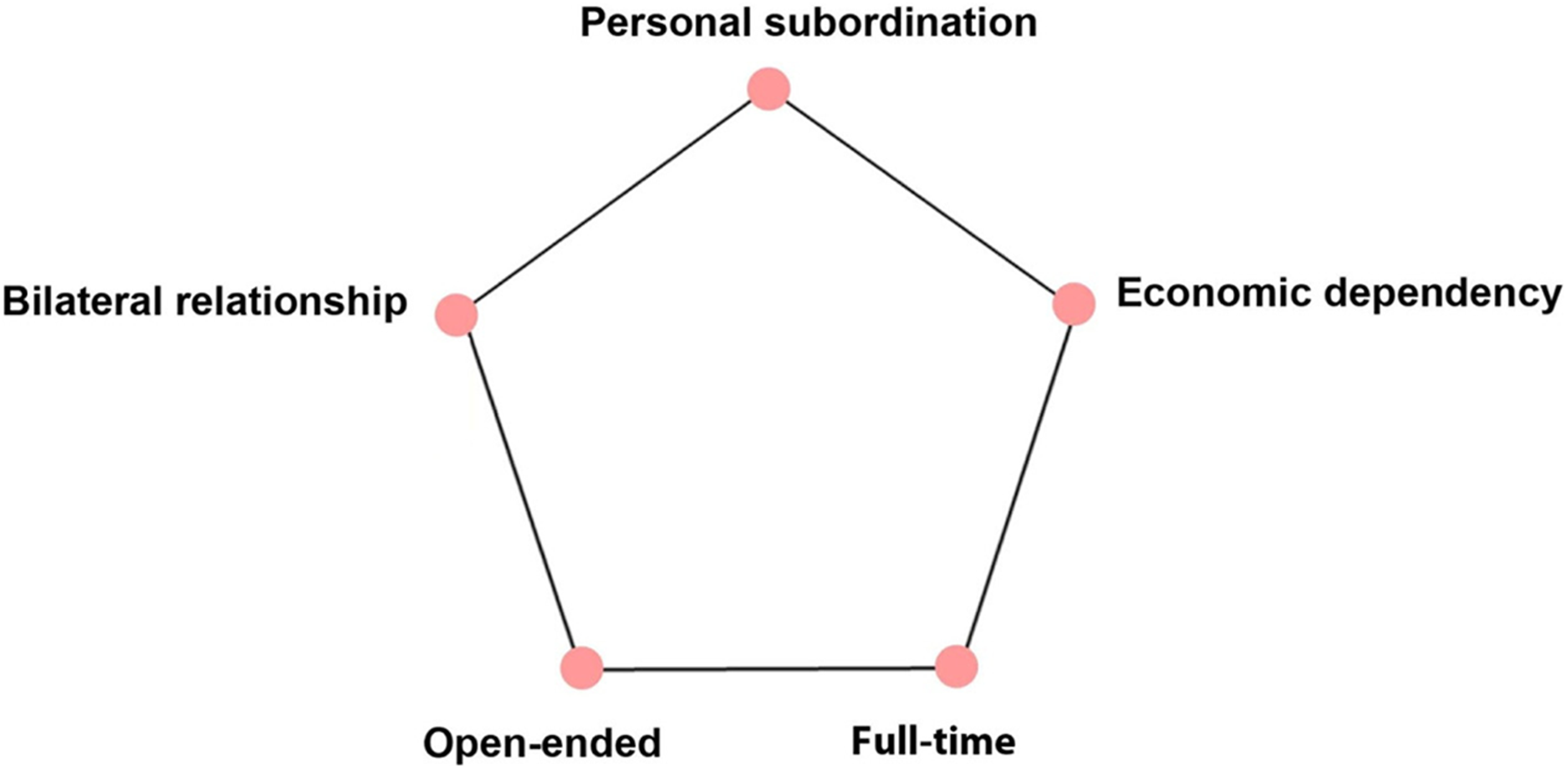
Figure 1 displays a selection of key features of the standard employment relationship, as explained above.
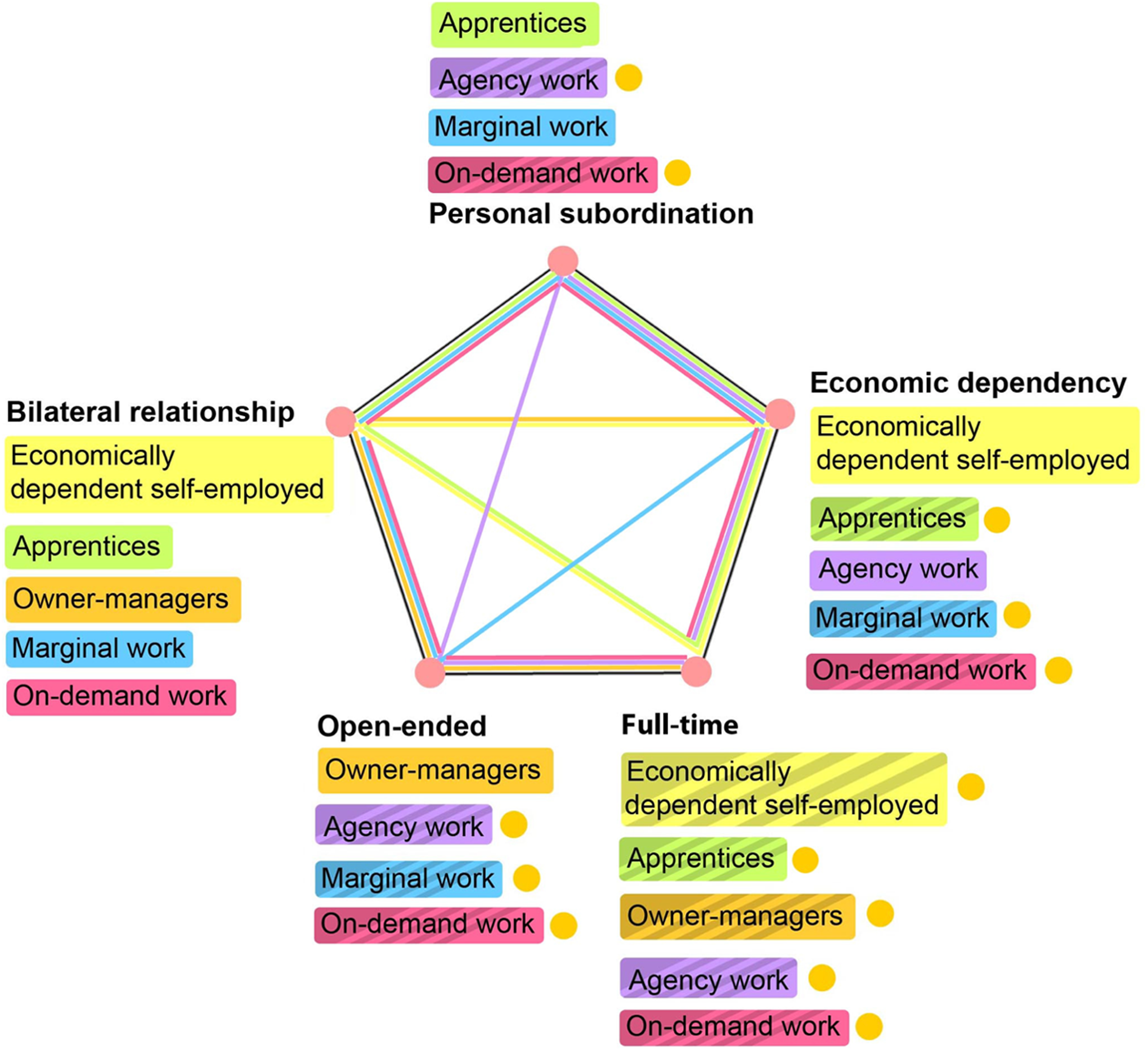
Figure 2 displays the main elements of the standard employment relationship that each form of non-standard work typically presents (a circle on the side indicates that the feature may or may not be present).
Non-standard work and consequences for social security
Challenges
As was mentioned at the beginning, the standard full-time permanent employment contract has acted as the prevalent model for regulating work, while non-standard forms of work have been presented as exceptions to the norm and, as such, they often have received different treatment. This has also spilled to the field of social security, which has grown dependent on certain elements of standard employment. Consequently, when non-standard forms of work have grown in relevance, they have started to clash with the fundamental building blocks of social security systems. Some of these challenges are merely of a technical nature, while others demand a more profound policy response.
The first challenge is to determine what is considered ‘work’, an issue which is fundamental for social security purposes for two reasons
Many social security systems are composed of income replacement schemes, constructed under the presumption that ‘standard’ work is the main source of income. The schemes are designed in such a way that they generate income replacement in case the worker cannot continue to perform his traditional work activities. In these work-related schemes, workers are insured against the risk of income loss that is due to the ceasing of labour activities. Similarly, the financial basis for these schemes is traditional work from which employee and employer contributions are withheld.
The evolution towards non-standard work forms generates some challenges. We name four of them: when does an activity become a labour activity, and when can it be considered to be traditional work? Which of the generated income is work related and from what moment is the work activity of a significant enough size to be taken into account for social security purposes?
A first question relates to the nature of work. When moment does an activity turn into a work activity? With a growing number of non-standard forms of work, the question becomes more difficult to answer. Particularly in relation to the apprentices, trainees, prosumers, and groups alike, systems face a growing number of qualification problems. Are these activities to be taken into account for the application of our (work related) social security schemes? A popular policy is to answer positively when it comes to the benefits side, especially when the activities come close to traditional work activities (such as in the case of the apprentices). Most systems have a built-in clause granting decision makers powers to extend the coverage of work-related social security schemes to persons working like traditional workers. Yet a simple extension to these groups will not address all the application problems: some schemes need further fine-tuning in their application, e.g. in case of unemployment when addressing the conditions under which redundancy takes place and the conditions addressing labour market availability. Active labour market policies are increasingly common, requiring those receiving unemployment benefits to actively seek work and/or to accept work offers. In order to do so, the definition of what is considered ‘work’ is fundamental.
Furthermore, a mere extension at the benefits side leaves aside the financing issue, as often these groups do not generate a stable income (such as a wage). Extending coverage without addressing the financial side will put the financial sustainability of social security systems at greater risk. Alternative financial sources will have to be explored.
Coming close to the previous question is that of how to delineate traditional work from other types of work (atypical work forms). The question is important, especially due to the fact that, in traditional social security schemes, the traditional wage-earnership is taken as default situation. Professional activities that are not performed in a traditional wage-earnership way will disqualify the application of the work-related schemes, often in turn leading to a growing number of qualification issues (like who is a wage-earner and who self-employed?). Here as well, a mere extension of the schemes to these groups of non-traditional workers will only be a short-term solution, as these schemes have been designed with the traditional workers as a starting basis. Both with regard to financing and benefit delivery, the schemes will be in need of appropriate adaptation and fine-tuning addressing the specific needs of the atypical worker (i.e. in which they differ from the traditional worker). 160
The two remaining issues refer to the relationship between work and income: what is to be done when income is no longer work-related as such yet more capital based? And should social security take into account work income which is only of a marginal level (issue of the income threshold)? Most work-related schemes still start from income that is strictly related to work. Additional income sources (such as income in nature, capital-related income) do not qualify as the (income) source for social security purposes. Yet we notice that, in many non-standard forms of work, the distinction between work-related income and other income sources is becoming blurred (especially in the case of the prosumers, the employee shareholders, self-employed shareholders performing also professional activities within the ambit of the company in which they are shareholders, etc.). In the design of modern social security schemes, one can no longer neglect this situation, as it becomes more difficult to draw a line between traditional work and economic risk taking. The emphasis should shift more towards income taken from a position of work overall, and be placed less on income in relation to performed units (hours) of work. This calls for a rethinking of many social security financing schemes. By the same token, the calculation of benefits will need a close review.
Finally, there are work arrangements that are (mostly) excluded from social insurance schemes because they are deemed too marginal. This is usually the case concerning the self-employed without employees, whether they are economically dependent on one employer or provide work for several employers for a small income. 161 But can we still work with these income thresholds in the wake of a growing number of non-standard forms of work? Most systems seem to be inclined to do so, taking into account some recent initiatives addressing the growing importance of the shared economy generating non-standard work forms such as crowdwork, prosumers, and portfolio workers. Minimum income levels have been introduced below which no levies are to be paid to social security contributions. 162 Yet minimum thresholds are introduced under declarations of work (income). They reflect still the old thinking in social security that small amounts of income are, administratively speaking, to be neglected (as too costly to process). However, can this kind of approach still be defended, taking into account the possibilities a modern IT-driven administration can bring?
A policy choice taken in some countries has been to compensate these workers through subsidies, often indirectly by granting exemptions to the payment of social insurance contributions, by opening up social insurance schemes that traditionally were designed for the group of wage-earners (e.g. unemployment schemes) or by granting assimilated insurance periods (such as study periods) during which no contributions were paid. However, the question in the future may be whether it can still be justified to have some groups of persons doing unpaid (digital) work supported by social security, when the sole reason for the subsidy is the fact that the system has not been well enough adapted to the new (non-standard) working situation.
The second challenge is to identify the employer
Determining the (main) employer is a key aspect for social security, in order to identify who is responsible for both paying contributions (financing), deciding on redundancy (unemployment) and of granting the income replacement (work incapacity). Nevertheless, doing so is not always straightforward in several non-standard forms of work. Temporary agency work is a field in which a great deal of effort has been put into overcoming this problem, mostly through ensuring that agency companies remain responsible for satisfying the obligations of the employer concerning contributions. 163 However, this challenge hass not yet been overcome, and it has reappeared with significant force concerning the situation of platform workers (e.g. Uber drivers), an on-going discussion (on whether they are employed by the users of the platform or the platform itself) whose result undoubtedly will have significant consequences. Finally, it should be noted that, in the case of forms of work such as flexible as platform work, the same person is often active on several platforms almost simultaneously (while at the same time the person is not necessarily active on all the platforms he is registered), 164 and these platforms may be based in different countries, making it extremely difficult to track employers and work performed.
The third challenge is to operate with the labour instability that characterises most non-standard forms of work
This problem is particularly clear in the case of thresholds to access certain social insurance schemes, i.e. the requirement of having paid contributions for a certain duration within a specific period. 165 As a consequence persons in atypical work forms are pushed out of social insurance schemes, even though they may accumulate over time a multitude of fixed/part-time work assignments, each of these assignments too little to be taken into account for social insurance purposes.
Again, regulations on temporary agency work have attempted to tackle this issue, and in some European countries (such as the Netherlands, France Belgium and Italy) employers, agencies and trade unions have collaborated to create particular provisions to compensate for some of the periods of inactivity which characterise the fragmented careers of temporary agency workers. 166 Another approach (e.g. taken by Italy), is to lower considerably the threshold for accessing the (unemployment) insurance scheme (to the point even of now being one of the lowest in Europe). 167 The labour instability may also hinder the tracking of periods of employment, as in some cases the person may perform work for a few hours in a row with one employer, after which long periods of inactivity may follow. Greatly flexible forms of work such as on-call work are fairly common in various sectors within certain countries (the case of the UK is a clear example), 168 but digital platforms offering work have the potential to increase this instability even more by falling outside regular working times 169 (and thus workers may come across situations in which they may work a great number of hours in some periods and remain inactive in others, while social security systems are often only equipped to take into account regular working times). Social security schemes should be redesigned to accommodate these irregular work patterns where active periods are followed by periods of inactivity and/or work periods generating low income alternate with high income work assignments. If not, schemes may lose out a large group of work activities that do not coincide with the traditional work organisation, characterised by full-time work assignments within fixed working time period (9 to 5 jobs).
Questions ahead
A threat only to Bismarckian systems?
Most non-standard forms of work are characterised by greater career fragmentation and lower salaries. Therefore, benefits closely related to contributions paid, which characterise Bismarckian systems, often reflect in low access (and low benefits) for non-standard workers (as was mentioned above referring to thresholds). 170
However, this does not necessarily mean that Beveridgean systems, with flat-rate benefits, are better equipped to deal with the effects of a more prevalent use of non-standard forms of work. First of all, while it is true that universal basic schemes offer a greater coverage, in most countries they are complemented by occupational and private schemes for which non-standard workers may sometimes not qualify. 171 Second, in several systems characterised by universalism, there have been attempts to establish residence requirements or other limits that in practice restrict access to social security benefits for migrant workers, even from the EU. 172 Third, it is questionable whether social security might be financed only through budget allocations, without support from work contributions. 173 This, furthermore, leads us to the next issue: financing. Workers have interest in a decent universal based (first) pillar. This interest may diminish if among the workers only the traditional standard workers are called to (co-) finance the basic universal schemes of the first pillar.
Are subsidies for non-standard kinds of work the solution?
While not always apparent, in several countries there has been an implicit subsidisation of these forms of work. This may occur through eliminating social security contributions in certain cases (e.g. mini-jobs), with a correlative lesser protection in social insurance. When confronted with a social risk, the social assistance scheme will have to take care of these groups of atypical workers in the end. But it can also be done by lowering the thresholds for accessing social insurance benefits, as a result of which non-standard workers are more easily covered but the cost may be at least partially financed through budget allocations. Both forms will encourage employers to use these work arrangements 174 while at the same time endangering the sustainability of the social security. In the end, they may undermine the overall support for social security when the justification grounds for subsidising some groups of workers (at the detriment of other groups) are not chalked out clearly.
A more capital-based social security?
Following the available research, this article has often highlighted that non-standard workers may risk lacking entitlement to certain social insurance schemes. Nevertheless, it is also important to not lose perspective of the other side of the discussion, which is the correlative reduction in social security contribution. The main challenges that non-standard work presents for social security systems (an increasingly bogus definition of work and employer) have a greatly disruptive effect on the financing of social security as we know it, in which both employees and employers play a crucial role. A possible solution may be to place the focus on profit or capital rather than on salary earned.
Conclusion: Social Security has to adapt to the changing concept of work
‘Se vogliamo che tutto rimanga come è, bisogna che tutto cambi’ (‘if we want all to remain as it is, it is necessary to change all’): this was one of the main conclusions from a series of interviews of social security CEOs on the future of our social protection schemes. 175 Social security is to a large extent still the solution that proposed fifty years - and sometimes a century ago - to the problems of that time. Social security, if it is to stay, will have to be adapted in order to solve to today’s major social problems and those of the future. 176 This means that we have to reflect on the sense of maintaining certain social security schemes as such. If social security is to be reformed, it is also because a number of preconditions and presuppositions upon which the social security arrangements were built are no longer present. This way of forward thinking applies as well to the emerging challenges atypical work forms generate for the design of social security.
Far too often, work-related social security schemes still start from the idea of the ‘normal’ or ‘default’ form of work, which boils down to the standard working relationship. This image, of course, no longer corresponds to the reality, but often social security still considers other work patterns as kind of ‘exceptions’ to this ‘default position’. It is important for social security to take into account the fundamental changes in society, and to construe the social security arrangements in such a way that they reflect the present plurality. The following delicate question should be faced as well: does social security have to take a ‘neutral’ stance towards these phenomena, or is it to promote certain work patterns over others?
Whatever the answer to this question (more of a social policy kind), the taking into account of new forms of work in social security calls for a re-thinking of social security itself. Some years ago, when studying the social security position for self-employed, we already called for a differentiation between status neutral basic principles and a specific adaptation of these neutral principles in relation to the specific working situation of the atypical worker. In essence, this means that the basic principles of social security are similar for all persons performing work (employees, self-employed, flexible workers, etc.) but, when developing and implementing these basic principles, it is necessary to take into account as much as possible their different features.
We call here again to take this as a starting point when introducing the non-standard forms of work into our (work-related) social security schemes. It calls for brave social policy and an inventive legislator willing to understand what is so typical about the non-standard worker he wants to cover in social security. Only by doing so, can one create a social security of equal value for all, supported by all.
Footnotes
Declaration of Conflicting Interests
The author(s) declared no potential conflicts of interest with respect to the research, authorship, and/or publication of this article.
Funding
The author(s) disclosed receipt of the following financial support for the research, authorship, and/or publication of this article: is part of the project “Grenzen aan atypische arbeid, flexwerk en zelfstandige arbeid getoetst aan Europese beginselen van het socialezekerheidsrecht”, supported by Instituut Gak.