



Abstract
Background
The growing interest in functional foods and nutraceuticals has brought attention to natural products with therapeutic promise, including quail egg powder—a concentrated form of quail eggs recognized for its rich nutritional and bioactive profile.
Objectives
This review evaluates the nutritional value, therapeutic benefits, and pharmaceutical applications of quail egg powder, while also considering its sustainability and potential for clinical use.
Methods
A systematic review was conducted following PRISMA 2020 guidelines. Four electronic databases (PubMed, Scopus, Web of Science, Google Scholar) were searched for peer-reviewed articles published between 2010–2024. Studies focusing on quail egg powder's nutritional composition, therapeutic applications, pharmaceutical innovations, and sustainability were included. Data synthesis was conducted narratively due to study heterogeneity, with quality assessment using JBI Critical Appraisal Tools and evidence certainty evaluated using GRADE framework.
Results
Sixty-four studies were included in the qualitative synthesis. Quail egg powder is rich in proteins, essential amino acids, vitamins, minerals, and bioactive compounds. Evidence indicates its antioxidant, anti-inflammatory, and immunomodulatory effects, supporting its potential in managing oxidative stress, chronic inflammation, and immune-related disorders. Additionally, the powder's physicochemical characteristics may enhance bioavailability and support innovative drug delivery systems. The review also examines sustainable quail egg farming practices, positioning quail egg powder as an environmentally favorable alternative.
Conclusions
Despite its promising attributes, clinical applications and large-scale production remain limited. Further well-designed clinical trials are needed to validate its efficacy and safety, and to optimize production methods. This review consolidates existing evidence, identifies research gaps, and emphasizes the diverse potential of quail egg powder as a nutraceutical and therapeutic agent that aligns with sustainability objectives.
This is a visual representation of the abstract.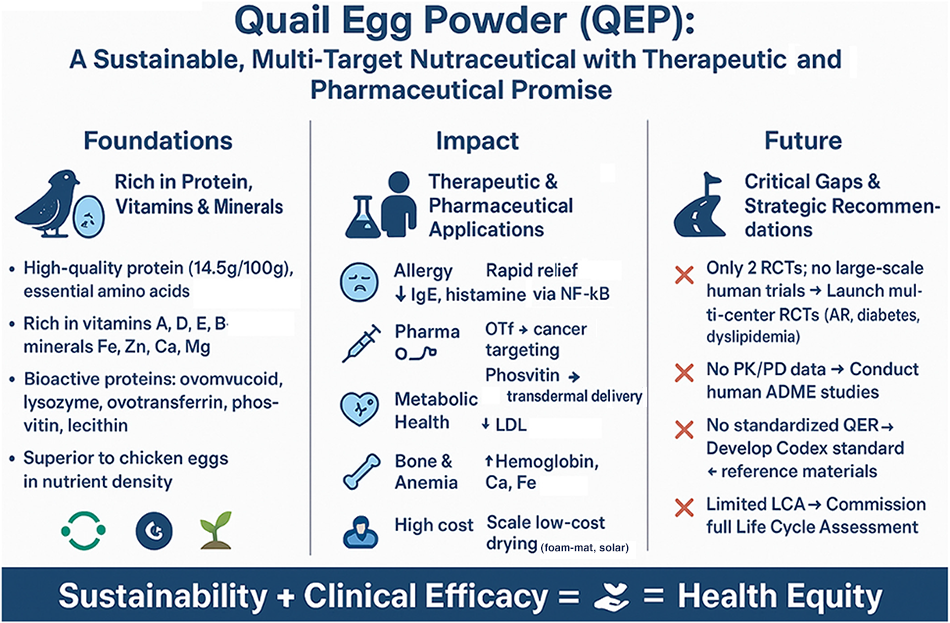
Keywords
Get full access to this article
View all access options for this article.
References
Supplementary Material
Please find the following supplemental material available below.
For Open Access articles published under a Creative Commons License, all supplemental material carries the same license as the article it is associated with.
For non-Open Access articles published, all supplemental material carries a non-exclusive license, and permission requests for re-use of supplemental material or any part of supplemental material shall be sent directly to the copyright owner as specified in the copyright notice associated with the article.
