



Abstract
Most adults want to change aspects of their personality, but little is known about whether adolescents want to and are capable of such intentional personality changes. In this study, 245 German adolescents (Mage = 15.71, 61.22% girls) participated in a guided self-reflection focused on socially oriented traits (extraversion, emotional stability, agreeableness). Participants identified the personality aspect they wanted to change most, reported their perceived value and implementation success over 14 days, and indicated trait changes across 2 months. Findings revealed that most adolescents wanted to become more confident, sociable, or composed. Change intentions primarily focused on school contexts and were driven by a desire to build social connections. Although we observed few significant personality changes, adolescents who reported higher levels of composure and confidence at first measurement felt more successful in their change efforts. This research lays the groundwork for understanding adolescent personality change intentions.
Across the globe, most adults want to change some aspect of their personality—i.e., their general pattern of thoughts, feelings, and behaviors (Baranski et al., 2021). Indeed, research shows that adults can actively shape their personality through intentional efforts, termed volitional personality change (VPC; Allemand & Flückiger, 2022; Hudson, 2021). However, VPC research to date has focused exclusively on young, educated adults. What about VPC in adolescence, a pivotal developmental phase with the task of forming a clear identity at its core (Klimstra, 2013)? So far, it remains unclear if, how, and why adolescents want to change their personalities.
Understanding VPC in adolescence is important for several reasons. First, adolescence is a period of heightened personality malleability (Borghuis et al., 2017) with substantial individual differences in the timing and extent of personality changes (Bleidorn et al., 2022; Mõttus et al., 2019). This developmental diversity raises questions about whether adolescents form clear change intentions and how these intentions contribute to different personality development trajectories. Second, many parallel developmental changes (hormonal changes, identity formation, autonomy from parents, peer relationships) make adolescence a period of opportunity and vulnerability (Blakemore, 2019). Personality traits can function as resources for adapting to these changes (Israel et al., 2022), suggesting that helping adolescents identify and pursue desired personality changes could promote well-being (cf. Allemand & Flückiger, 2017; Hudson & Fraley, 2016). Third, so far it is unclear to what extent VPC intentions and processes differ across age groups: While adolescents may be motivated to change their personalities to meet daily challenges like adults, they face unique constraints including legal restrictions, parental dependency, and lower self-regulatory capacities essential for effective VPC. Below, we review VPC processes and potential adolescent-specific characteristics.
VPC: If, How, and Why?
At the beginning of the VPC process, individuals need to formulate a change intention, that is, which personality aspects they want to change. To illustrate, Lea might want to become more sociable, a facet of extraversion. Adults are particularly interested in changing socially relevant traits such as emotional stability and extraversion (Stieger et al., 2021). Adolescents, seeking closer peer relationships (Smetana et al., 2006), could have similar change intentions. Importantly, individuals may have several change intentions simultaneously (e.g., wanting to become more sociable and tidier), but pursuing several goals at once is often unrealistic. Accordingly, VPC interventions typically concentrate on one personality characteristic at a time, allowing individuals to prioritize their most desired change intention (Stieger et al., 2020).
The next question is how change intentions can be realized. Theoretical perspectives suggest that personality changes are driven by bottom-up processes, where repeated momentary personality states build new habits that gradually change stable traits (Wrzus & Roberts, 2017). For Lea, talking to strangers at parties could be a first step to becoming more sociable. To form a habit, Lea must show this new behavior repeatedly and potentially even across different situations (e.g., talking to strangers at the shop). Over time, repeated behavior becomes habitual, and Lea’s sociability increases.
To achieve VPC, individuals need to identify specific trait-related behaviors and develop tailored change plans (Allemand & Flückiger, 2017). However, because personality traits (e.g., extraversion) and specific behaviors (e.g., talking to strangers) are at different abstraction levels, changing a behavior may not always lead to changes at the trait level (Olaru et al., 2022). For instance, Lea might successfully increase her sociability by initiating conversations with strangers, yet her overall extraversion may remain unchanged. Therefore, this study explores personality changes at both trait and facet levels, providing a more nuanced understanding of adolescent VPC.
Although changing personality traits seems straightforward in theory, adopting new behavioral habits is challenging. Theoretical frameworks on self-regulated personality change (Hennecke et al., 2014; Magidson et al., 2014) propose two motivational elements for successful VPC: valuing specific changes and believing that changes are attainable. Lea might be motivated to become more sociable if she wants to make new friends at her school and believes that she is able to show sociable behaviors in daily life. Importantly, adult research suggests that general beliefs about one’s ability to change are less relevant; instead, perceiving specific changes as feasible is more important for fostering commitment and following through with change efforts (Hudson, 2021; Hudson et al., 2019).
Beyond motivation, the success of VPC depends on implementing behavioral changes in daily life. Two factors may differentiate adolescent VPC from adults: access to opportunities to practice behaviors in daily life and the ability to use these opportunities effectively (cf. Hennecke et al., 2014). Adolescents often encounter external constraints (e.g., financial resources, limited mobility) that could restrict their access to specific social contexts: If Lea is not allowed to attend parties, she will have fewer opportunities to practice interacting with strangers. In addition, self-regulatory skills relevant for realizing and sustaining behaviors (Harkin et al., 2016) are still developing during adolescence (Steinberg et al., 2018): Even when opportunities arise, Lea might struggle to seize them effectively. Adult research shows that implementation success of change intentions varies across domains, with some behaviors (e.g., self-discipline) being easier to implement than others (Stieger et al., 2020).
The Present Research
In this study, we followed adolescents (14–18 years) who participated in a self-reflection task to address three research aims. First, we investigated if adolescents express clear intentions to change their personality and what they want to change most. Focusing on socially relevant traits, we assumed that, like adults, adolescents mostly want to change facets related to extraversion and emotional stability, rather than agreeableness. Second, we examined how change intentions are linked to actual personality changes—specifically, whether personality traits moved in the intended direction after the task and whether perceived value and behavioral implementation moderated these changes. Examining both traits and facets, we assumed that personality would change in the intended direction and that greater perceived value and successful behavior implementation would lead to more pronounced changes. Finally, we explored why adolescents wanted to change by analyzing their open-ended responses about the situations in which they aimed to implement new behaviors and the perceived benefits of these changes.
Importantly, the current study is a first step toward a more diverse perspective on VPC. We did not implement a classic change intervention but an age-appropriate, low-intensity task in which adolescents share their desired changes and reflect on related motivational factors in daily life. While we explore actual personality changes, our primary aim is to balance scientific curiosity with ethical responsibility when working with participants in this sensitive developmental phase.
Method
Transparency and Openness
The preregistration, data, and code are available on OSF (https://osf.io/x4wur/). The initial preregistration for this project was written for a bachelor thesis and updated to include additional analyses. Table S1 in the Supplementary Online Materials (SOMs) provides an overview of deviations from the preregistration.
Participants
Initially, 473 adolescents completed the first personality questionnaire (T1), where 89.17% indicated that they wanted to participate in a self-reflection task focusing on VPC. Following this initial assessment, 245 participants continued with the study and completed the self-reflection task and the daily diary period (Mage = 15.71, SD = 1.26, range: 14–18, 61.22% girls). Supplementary Figure S1 shows detailed information on dropout and attrition analyses.
Procedure
Adolescents across Germany were recruited via student job portals and social media from May to December 2021. The study was implemented online and included three key elements: (a) three personality questionnaires over 2 months (T1, T2, T3), (b) a self-reflection task to identify personality change intentions following T1, and (c) an implementation phase with a daily diary between T1 and T2 (Figure 1).
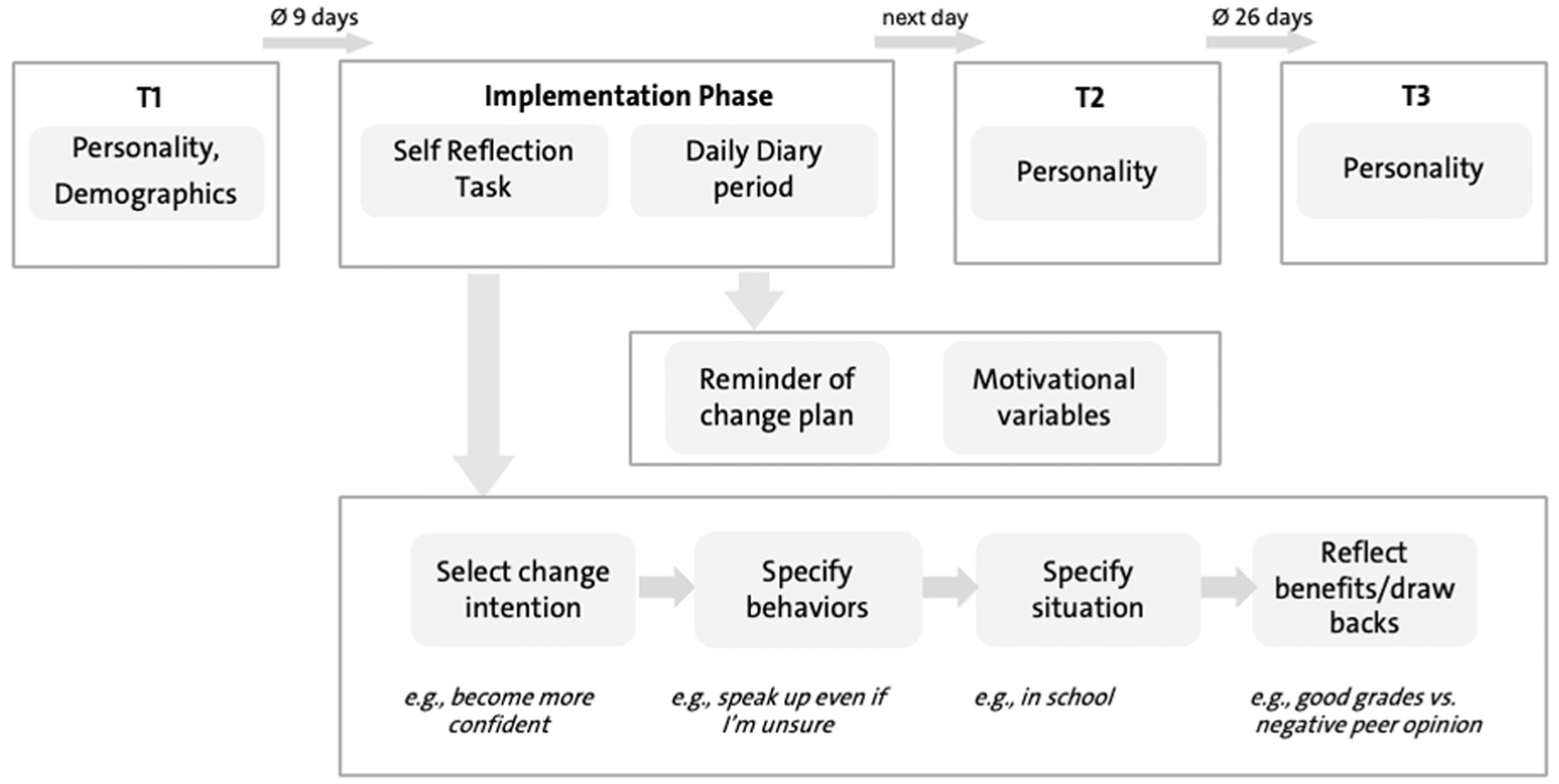
Study Design and Timeline
At T1, participants completed a baseline questionnaire assessing sociodemographic variables and personality characteristics. At the end of the questionnaire, they scheduled a Zoom session during which they completed the self-reflection task. 1 The sessions were arranged on a rolling basis based on participants’ availability. Consequently, the interval between T1 and the self-reflection task varied across participants (M = 9 days, Mdn = 5 days).
The self-reflection task comprised four steps (Figure 1). Participants (a) chose one of six personality facets they wanted to change most; (b) identified two specific behaviors that they wanted to show more often in daily life; (c) specified situations in which they could practice these behaviors; and (d) reflected on benefits and drawbacks of implementing these changes (see Supplementary Table S2 for instructions and Stieger et al., 2021 for a similar design). The data from the self-reflection task were used in two ways: The change intentions from Step 1 served as predictors of personality changes across T1–T3. The open-ended answers from Steps 3 and 4 were coded for exploratory analyses to understand why adolescents wanted to change their personality.
The day following the self-reflection task, participants entered a 14-day daily diary period. Every morning, they received reminders of their behavior-change plans on their smartphones. Every evening, adolescents reported on the success of implementing their plans. The completion rate was high (M = 12.3 entries; SD = 2.93, range = 2–16), 2 totaling 3,033 daily diary entries. 3 The second questionnaire (T2) was administered 16 days after the self-reflection task (on average 26 days after T1). The final questionnaire (T3) was completed 27 days after T2. Overall, the study spanned around 52 days (roughly 2 months). Questionnaires were implemented with formr (Arslan et al., 2020).
Measures
Personality Characteristics
Personality was measured at T1, T2, and T3 with a German self-report version of the Big Five Inventory-2 (Danner et al., 2016) on a scale from 1 (strongly disagree) to 7 (strongly agree). We assessed two facets each of extraversion (assertiveness, sociability), agreeableness (compassion, respect), and negative emotionality (anxiety, volatility), with 12 items per trait (four items per facet). We reverse-coded emotional negativity items to reflect emotional stability, labeling the facets confidence and composure, so all Big Five traits were scored in a positive direction. Internal consistencies were high (ω > .72 for all characteristics, see Supplementary Table S3).
Intention to Change
Participants’ change intention was assessed in the self-reflection task. Participants could choose between facets related to either extraversion, agreeableness, or emotional stability. Participants selected the facet they wanted to change most. We computed several binary variables that indicated whether a person chose a specific facet (1 vs. 0) and whether the chosen facet belonged to a specific trait (e.g., change intention belonging to extraversion; yes [1] vs. no [0]). Adolescents also answered a broader personality change goal (PCG) questionnaire on all Big Five traits at T1 for comparison (Hudson & Roberts, 2014; see Supplementary Table S4 for items).
Perceived Value of Change and Implementation Success
Participants reported the perceived value of their change intention by answering “How useful are the new behaviors to you?” and their perceived implementation success during the daily diary period by answering “Were you able to show your planned behavior today?” Both items were rated on a scale from 1 to 10. The ratings were averaged across all days of the daily diary period to yield a mean perceived value and implementation score for each person. The reliabilities of these averaged scores were good (intraclass correlation coefficient, ICC[2] = .87–.96; Lüdtke & Trautwein, 2007).
Control Variables
At T1, participants reported their age and gender (0 = female, 1 = male).
Analyses
Our analysis followed three steps. First, we descriptively looked at adolescents’ selections in the self-reflection task to identify the frequencies of change intentions (Aim 1). Second, we used multilevel models focusing on the predictive effects of adolescents’ change intentions, perceived value of change, and perceived implementation of change in daily life on personality changes (Aim 2). Third, we coded open-ended responses from the self-reflection task to gain insights into why adolescents want to change (Aim 3). The data were cleaned, structured, and analyzed with R (R Core Team, 2025).
Multilevel Models Focusing on Adolescents’ Personality Changes
The multilevel models featured two levels: within-person (Level 1) and between-person (Level 2) and were estimated separately for each personality trait and facet. At Level 1, time (T1, T2, T3; coded as 0, 1, 2) predicted changes in self-reported personality. At Level 2, change intention (coded as 0 vs. 1) was included as a predictor of the intercept and slope. In addition, either perceived value or implementation success (centered at their respective sample means) was included to predict the intercept (intercept) (e.g., sociability at T1) and the slope (e.g., change of sociability over time). The models also included three cross-level interactions: an interaction term between time and change intention, time and perceived value (or implementation success), and change intention with perceived value (or implementation success). A three-way interaction between time, change intention, and perceived value or implementation success was also included, which assessed whether a specific change intention (e.g., increasing sociability) combined with high perceived value would predict greater changes in sociability. All models included control variables (age, gender) and were specified with a random intercept and a random slope for time. Further model specifications are detailed in the OSM. We report exact p-values and robustness checks, including false discovery rate (FDR) adjustments with the Benjamini–Hochberg (BH) procedure (Benjamini & Hochberg, 1995), 4 as well as R2 values to indicate the proportion of variance explained in each model (Rights & Sterba, 2021).
To test the robustness of our results, we took two additional steps. First, we conducted a power simulation for a two-level model, which indicated good statistical power (> 80%) for detecting effect sizes of 0.15 at Level 1, 0.17 at Level 2, and 0.15 for cross-level interactions (see OSM “Power Analysis”). Second, we assessed the robustness of our findings through several analyses: we ran models with both the full sample and participants whose behaviors aligned with their change intentions (see OSM “Coding Procedure”), fitted a combined model with perceived value and implementation success, and explored the inclusion of standard deviations of these predictors across the daily diary period, as we assumed that both average perceived value or implementation success and also their consistency might impact change patterns.
Coding of Open Answers on Implementation Context and Perceived Benefits
To understand why adolescents wanted to change their personality, two research assistants coded open-ended responses from the self-reflection task. First, the contexts in which participants planned to implement their change intentions were categorized into six domains: (a) school, (b) family, (c) leisure with friends, (d) leisure with unfamiliar others, and (e) no social context/unclear. Inter-rater agreement for the codings ranged from Cohen’s κ = 0.55 to 0.63, with a third person resolving disagreements. Next, we explored perceived benefits of change intentions based on common motivational themes (Schüler et al., 2019), including achievement/competence, affiliation/relatedness, power over others/influence, and autonomy. Participants indicated one benefit for each of the two behaviors they aimed to practice. The two coders achieved an inter-rater agreement of Cohen’s κ = 0.76, with discrepancies settled by a third person. Further details, including the coding scheme and specific examples, are available in the OSM.
Results
Table 1 presents descriptive statistics and correlations among the study variables. Perceived value was generally unrelated to personality traits or facets at T1. In contrast, implementation success was associated with nearly all personality characteristics at T1: Adolescents scoring higher on extraversion, agreeableness, or emotional stability perceived greater success in changing their behaviors during the daily diary period.
Correlations Between Personality Traits and Facets at T1, Motivational Variables, and Control Variables
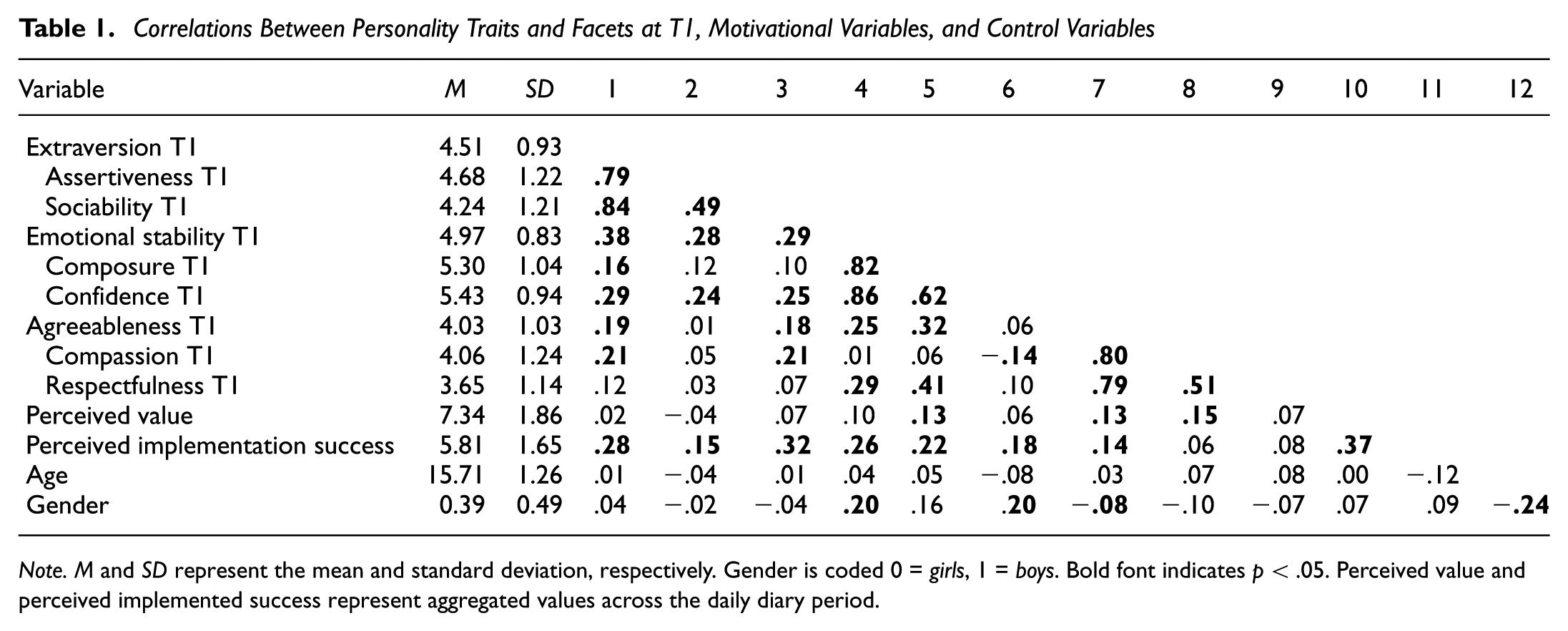
Note. M and SD represent the mean and standard deviation, respectively. Gender is coded 0 = girls, 1 = boys. Bold font indicates p < .05. Perceived value and perceived implemented success represent aggregated values across the daily diary period.
Adolescents’ Change Intentions
Table 2 shows the frequencies of adolescents change intentions (i.e., what they wanted to change most). Supporting our assumptions, most adolescents intended to change aspects related to emotional stability (58.37%) or extraversion (32.66%). At the facet level, most participants wanted to become more confident (39.59%), sociable (20.82%), or composed (18.78%). In contrast, few adolescents selected change intentions related to agreeableness (8.89%), which is why we excluded these aspects from further analyses (see Supplementary Table S1).
Absolute and Relative Frequencies of Selected Change Intentions in Self-Reflection Task
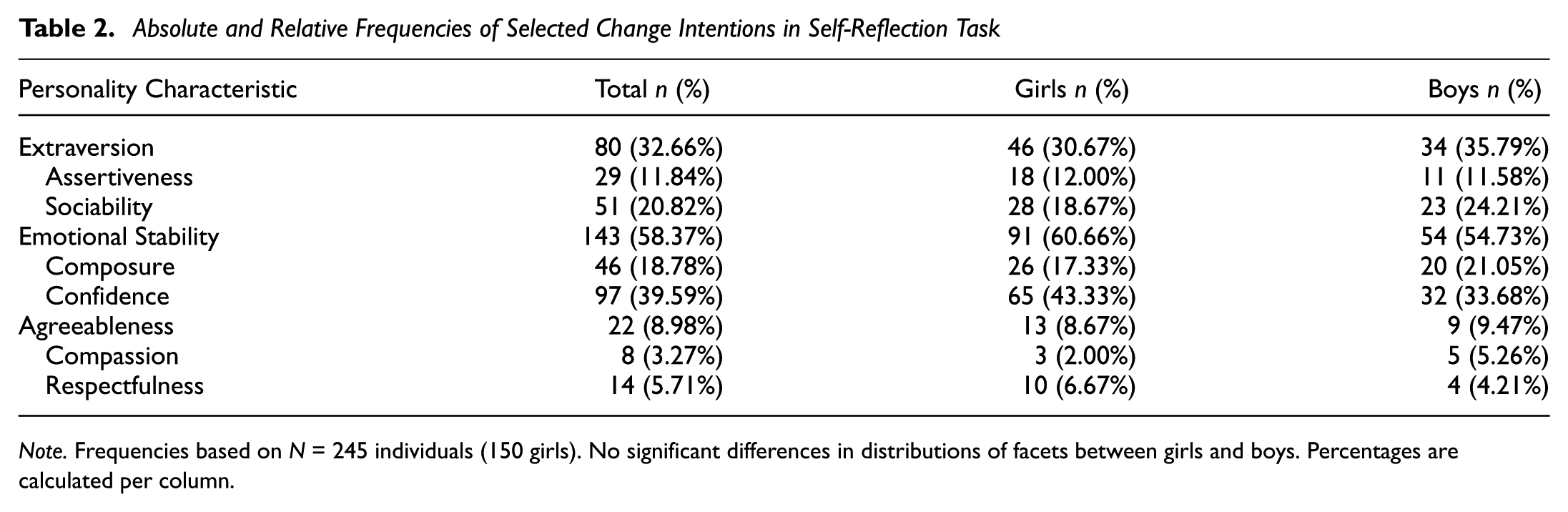
Note. Frequencies based on N = 245 individuals (150 girls). No significant differences in distributions of facets between girls and boys. Percentages are calculated per column.
Comparing adolescents’ change intentions with their responses on the PCG questionnaire at T1 revealed a similar pattern: Emotional stability and extraversion were among the most desired changes, along with aspects of conscientiousness (i.e., overcome difficulties in starting tasks). In contrast, changes in agreeableness were desired the least (Supplementary Table S3). Correlations indicated that adolescents with a strong goal to increase on emotional stability were more likely to select a change intention in this domain in the self-reflection task. For extraversion, only those who wanted to take on more leadership showed a slight preference for extraversion as their primary change intention in the self-reflection task (Supplementary Table S5).
Actual Changes in Personality
Table 3 details the observed changes in extraversion and its facets. At the trait level, extraversion remained stable, with no significant mean-level changes across the three measurement points and high rank-order stabilities (r = .81 – .84, Supplementary Table S2). At the facet level, assertiveness did not change over time, but adolescents reported slight increases in sociability (b = 0.08, p = .009), which remained robust across models. This increase occurred independently of adolescents’ change intentions, as indicated by the non-significant cross-level interaction between time and change intention. Interestingly, individuals who wanted to become more sociable reported lower sociability scores at T1 (b = −0.52 to −0.61, p = .001–.004) compared to adolescents with other change intentions.
Extraversion, Assertiveness, and Sociability Predicted by Time, Change Intention, Perceived Value or Implementation Success, and Control Variables
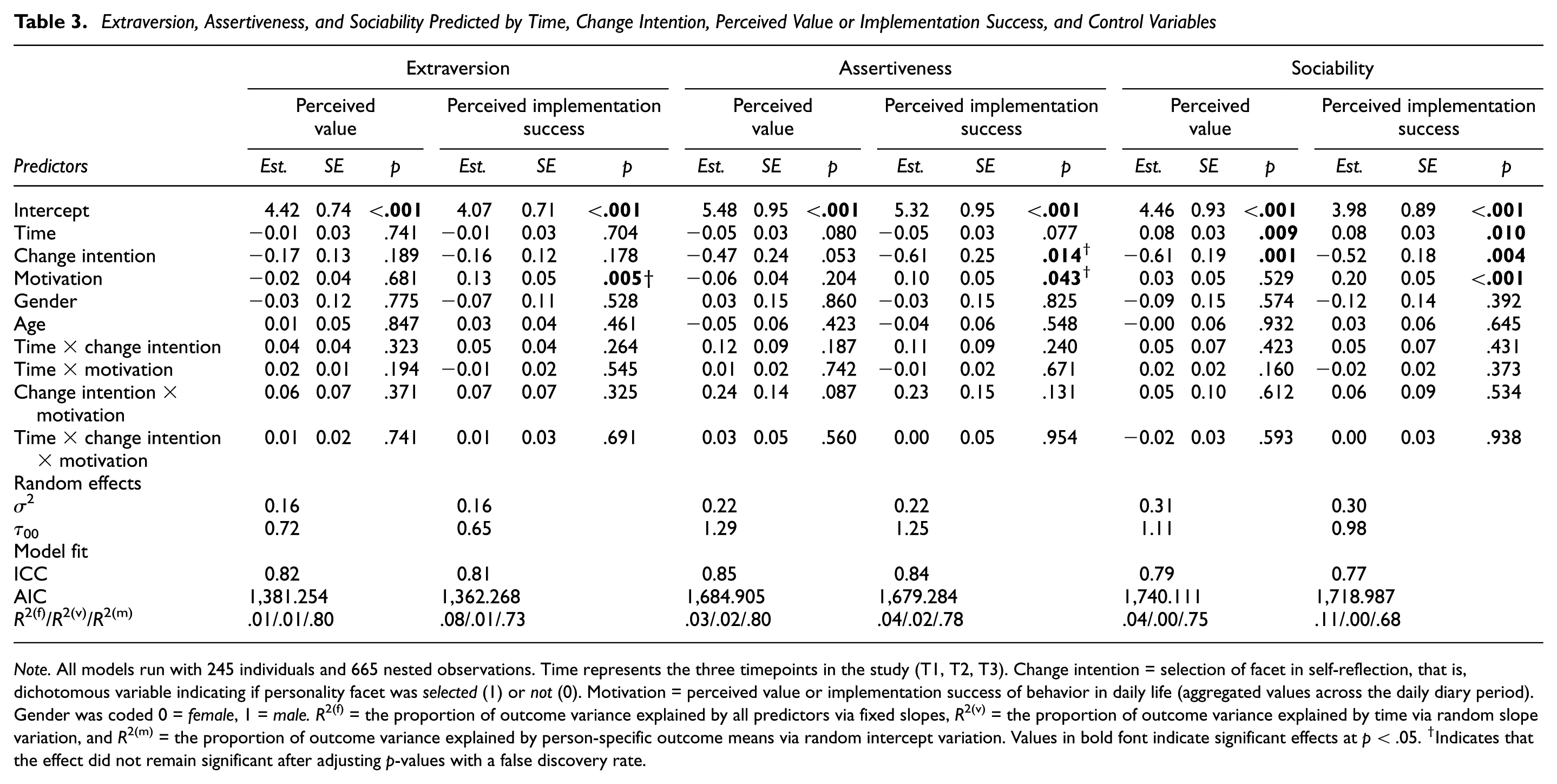
Note. All models run with 245 individuals and 665 nested observations. Time represents the three timepoints in the study (T1, T2, T3). Change intention = selection of facet in self-reflection, that is, dichotomous variable indicating if personality facet was selected (1) or not (0). Motivation = perceived value or implementation success of behavior in daily life (aggregated values across the daily diary period). Gender was coded 0 = female, 1 = male. R2(f) = the proportion of outcome variance explained by all predictors via fixed slopes, R2(v) = the proportion of outcome variance explained by time via random slope variation, and R2(m) = the proportion of outcome variance explained by person-specific outcome means via random intercept variation. Values in bold font indicate significant effects at p < .05. †Indicates that the effect did not remain significant after adjusting p-values with a false discovery rate.
Results for emotional stability and its facets are shown in Table 4. Similar to extraversion, no significant mean-level changes and high rank-order stabilities (r = .85 – .87) were observed at the trait level. At the facet level, no significant mean-level changes emerged for either composure or confidence. There was no significant cross-level interaction between time and change intention, indicating that wanting to become more composed or confident was not linked to changes in the respective facets. However, change intentions in the domain of emotional stability were negatively linked to emotional stability at T1 (b = −0.63, p < .001). At the facet level, this effect appeared for both composure (b = −0.79 to −0.86, p < .001) and confidence (b = −0.35 to −0.37, p = .14): Adolescents wanting to become more composed or confident reported lower levels of composure and confidence at T1, respectively, compared to those with other change intentions.
Emotional Stability, Composure, and Confidence Predicted by Time, Change Intention, Perceived Value or Implementation Success, and Control Variables
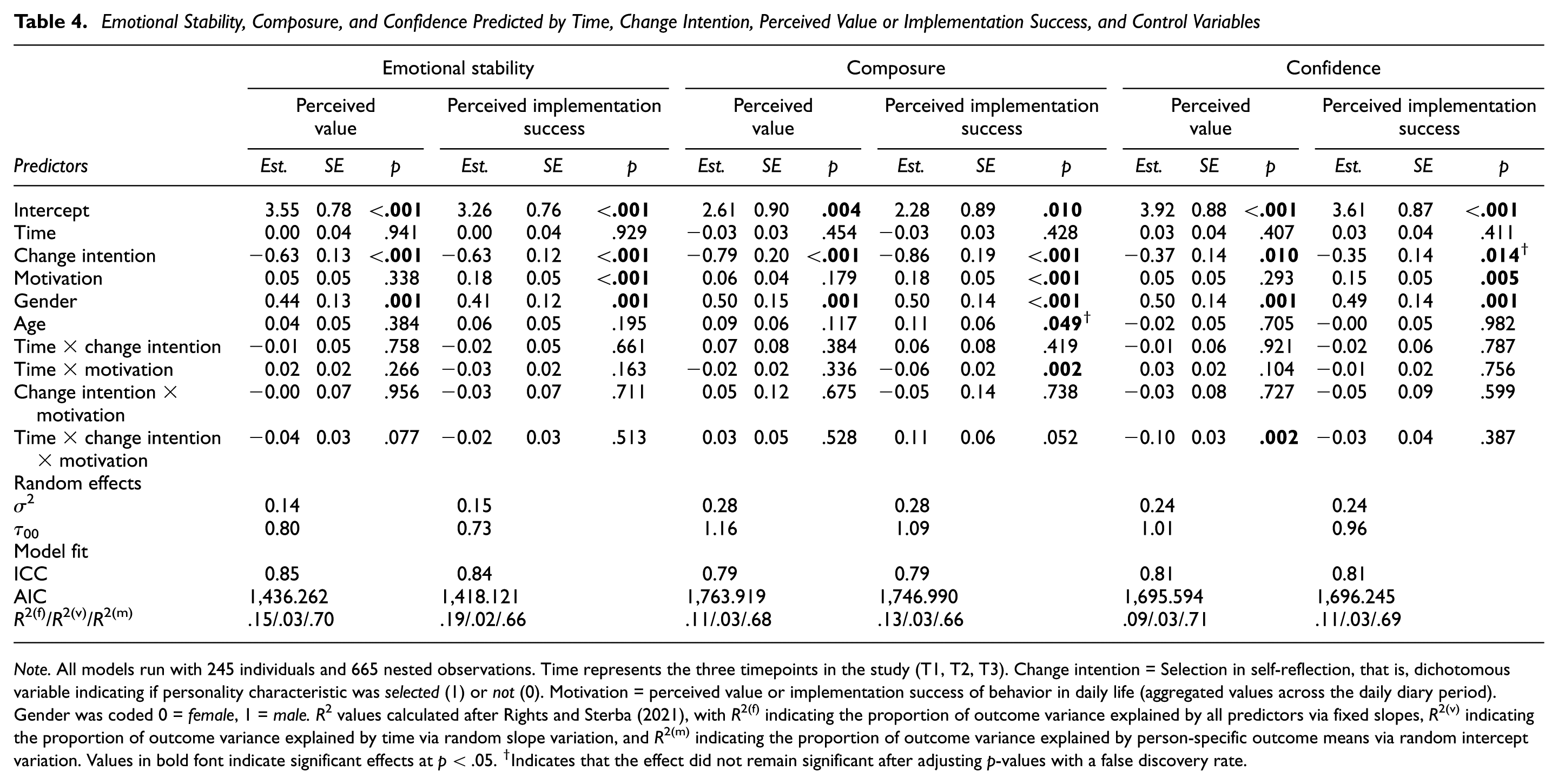
Note. All models run with 245 individuals and 665 nested observations. Time represents the three timepoints in the study (T1, T2, T3). Change intention = Selection in self-reflection, that is, dichotomous variable indicating if personality characteristic was selected (1) or not (0). Motivation = perceived value or implementation success of behavior in daily life (aggregated values across the daily diary period). Gender was coded 0 = female, 1 = male. R2 values calculated after Rights and Sterba (2021), with R2(f) indicating the proportion of outcome variance explained by all predictors via fixed slopes, R2(v) indicating the proportion of outcome variance explained by time via random slope variation, and R2(m) indicating the proportion of outcome variance explained by person-specific outcome means via random intercept variation. Values in bold font indicate significant effects at p < .05. †Indicates that the effect did not remain significant after adjusting p-values with a false discovery rate.
The Role of Perceived Value and Implementation Success
Perceived value of change averaged across the daily diary period was not associated with extraversion at T1 or its two facets. In contrast, perceived implementation success was positively linked to extraversion, although this effect did not meet the stricter significance criterion (adjusted p-value with BH procedure). At the facet level, perceived implementation success was positively associated with both facets, with a more robust effect for sociability: Adolescents higher in sociability at T1 perceived themselves to be successful in implementing their behavior-change plans (b = 0.20, p < .001). Beyond these main effects, neither perceived value nor implementation success moderated changes in extraversion in the main analyses or robustness checks (Supplementary Tables S6, S8, and S10).
Regarding emotional stability, perceived value was not linked to the trait or facet level at T1. In contrast, perceived implementation success was positively associated with emotional stability at the trait level (b = 0.18, p < .001), with composure (b = 0.18, p < .001), and confidence (b = 0.15, p = .005). These effects suggest that individuals who successfully implemented their change plans showed higher emotional stability, specifically greater composure and confidence at T1. A non-significant interaction between change intention and perceived implementation success suggested that this relationship persisted regardless of the personality aspect participants wanted to change. Robustness analyses including the standard deviation of perceived implementation success suggested that adolescents with less variability in their implementation success reported to higher composed at T1 (b = −0.35, p = .001; Supplementary Table S8).
Two interesting findings emerged regarding the moderation effects on changes in emotional stability facets (Table 4). First, individuals who perceived lower implementation success experienced slight increases in composure over time (b = −0.06, p = .002; Supplementary Figure S2). Second, a significant three-way interaction between time, change intention, and perceived value (b = −0.10, p = .002) suggested that adolescents wanting to become more confident struggled to achieve those changes despite perceiving value in their change intentions. Conversely, those who valued change but had different intentions experienced slight confidence increases, possibly indicating a spillover effect where perceiving value in behavior changes led to greater overall confidence (Supplementary Figure S3). While this effect remained significant after applying stricter criteria, it was small and not consistently robust across analyses (Supplementary Tables S7, S9, and S11) and should be interpreted with caution. Finally, all models focused on stability included gender effects (b = 0.41–0.50, p < .001), indicating that boys, on average, reported higher emotional stability, composure, and confidence at T1 compared to girls.
Frequencies of Implementation Context and Perceived Benefits (Exploratory)
To complement the quantitative analyses, we analyzed adolescents’ open-ended responses about the situations where they aimed to realize their change intentions and their expected benefits. Figure 2 provides the frequencies of coded situations by change intention. The most frequently mentioned context across 940 coded situations was school (28.09%), followed by meeting new people (17.87%), family (14.68%), and social contexts outside of school (13.72%).
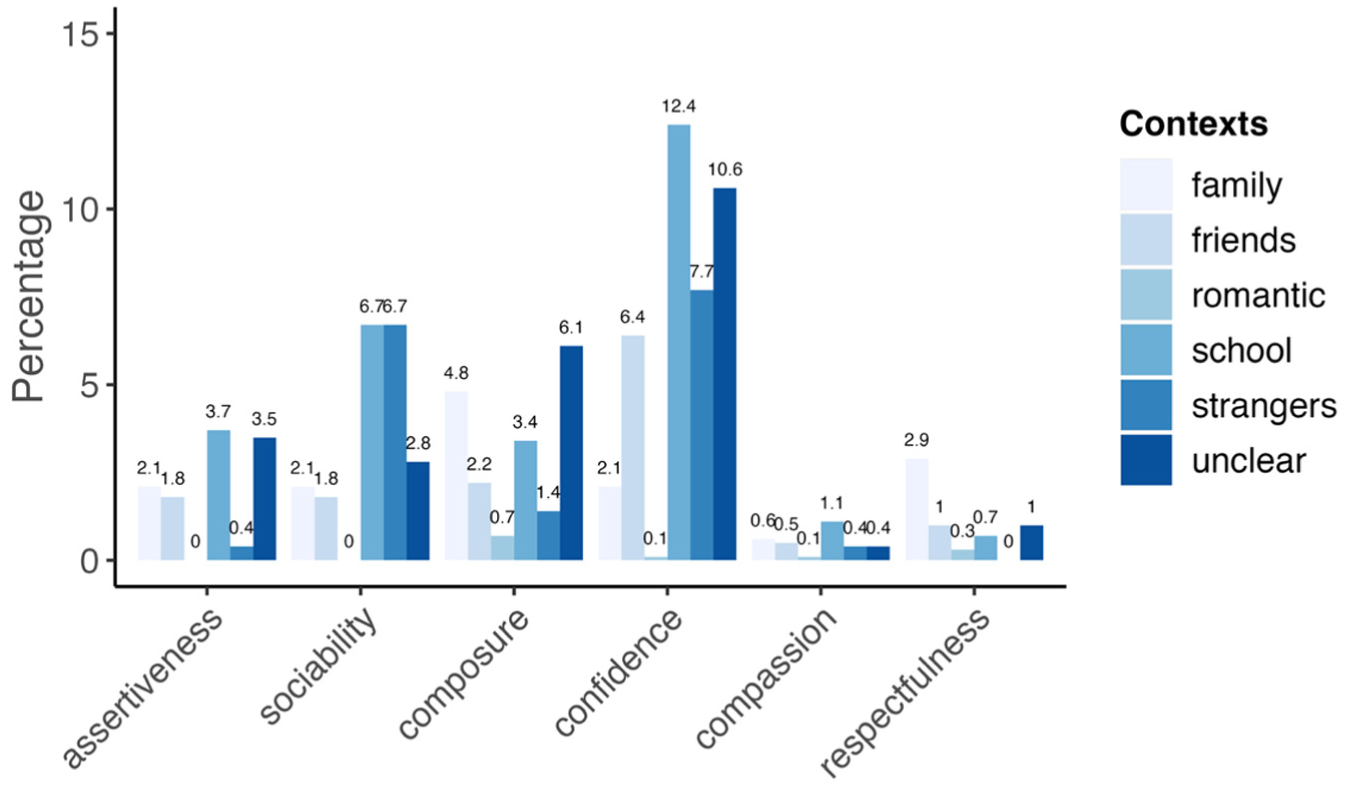
Codings of Implementation Context Indicated in Self-Reflection Task
A considerable proportion (24.36%) of situations was categorized as “unclear” because there was no clear interaction partner or situation (e.g., “If I have an argument with someone”). When assertiveness was the change intention, the school context was most frequently selected; for sociability, it was interacting with unfamiliar others. The family context was most common for wanting to be more composed, while confidence was primarily associated with school. For increasing compassion, the family context was most frequently mentioned, and for respect—although rarely selected—school was again selected as the main context.
Figure 3 shows the perceived benefits behind adolescents’ change intentions. The most common perceived benefits were to connect with others (41.88%) achieving autonomy over one’s own behaviors and feelings (39.96%) when implementing behavioral changes in their daily lives. Adolescents aiming to increase their assertiveness mostly perceived autonomy-related benefits, while those wanting to become more sociable or composed primarily saw benefits related to affiliation. Individuals who wanted to become more confident frequently perceived benefits in gaining autonomy. These exploratory findings illustrate that motivations and implementation contexts vary considerably among adolescents and change intentions.
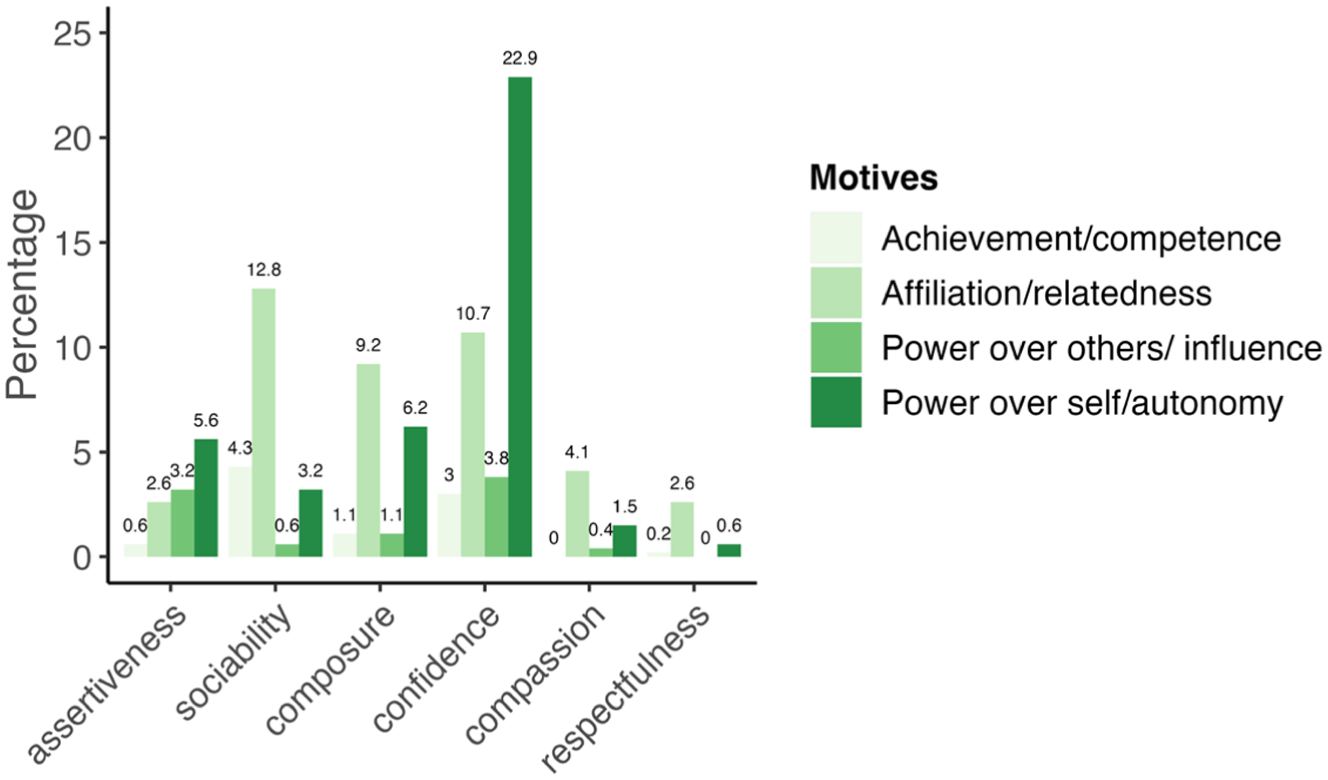
Codings of Motives Indicated in Self-Reflection Task
Discussion
This study explored if, how, and why adolescents want to change their personalities. Three key insights emerged: First, most adolescents who participated in a voluntary self-reflection task focused on social personality traits and formulated intentions to become more confident, sociable, or composed. Second, despite these change intentions, no meaningful changes in personality traits were observed over the study period. Third, adolescents primarily identified the school environment as a context for realizing change intentions, followed by interactions with unfamiliar others, family, or friends. Change intentions were mainly driven by a desire to build social connections and gain autonomy over own behaviors and thoughts.
Compared to prior VPC research, two central similarities between adolescents and young adults emerge: First, adolescents and young adults seem to desire similar changes, particularly regarding traits like emotional stability and extraversion (e.g., Robinson et al., 2015). Second, adolescents with lower levels of emotional stability are especially interested in increasing this trait, mirroring findings in adult samples (Baranski et al., 2021; Quintus et al., 2017). Do these similarities reflect a general, age-independent desire for personality change? Theoretical and empirical notions suggest that while there are similarities, age and developmental stage likely shape specific change desires and underlying motivations. For example, personality development frameworks suggest that personality changes serve to better adapt to one’s environment and external expectations (Hennecke et al., 2014; Hutteman et al., 2014). Consequently, age-related developmental challenges, roles, and contexts likely play a role in what and why a person wants to change. For instance, an adolescent’s goal to boost emotional stability may primarily relate to navigating peer relationships and independence, whereas an adult’s motivation may stem from family or workplace demands.
Tying into this theoretical assumption, empirical evidence indicates age-specific differences in the intensity of change goals, with younger individuals wanting to change more strongly than older adults (Quintus et al., 2017). A greater desire for change could stem from experiencing more prominent role and context changes in young adulthood (e.g., entering a new job, becoming a parent), which may intensify the desire for personality change to adapt to these new roles. Similarly, developmental features in adolescence, like the typical decline in emotional stability (Borghuis et al., 2017), along with the task of identity formation and the pursuit of autonomy, may drive stronger change desires in this domain compared to adults. To explore these open questions, integrating a developmental perspective into VPC research can shed light on both similarities and differences in personality change desires across age groups.
Regarding actual personality changes, our results revealed a high degree of personality stability over 2 months, with few mean-level changes in traits or facets. Thus, despite having the desire to change, most adolescents’ personality self-concepts remained unchanged during the study period. This lack of change could be due to three reasons. First, the low-intensity nature of the self-reflection task might have been too unstructured, limiting its potential to induce observable changes. Successful VPC interventions with adults typically involve more structured activities to foster active habit formation, including smartphone apps with behavioral challenges or coaching sessions (e.g., Allemand & Flückiger, 2017; Hudson et al., 2019). Second, the 2-month period may have been too brief to observe trait changes. While previous adult VPC studies typically included longer intervention periods (Haehner et al., 2024), short implementation periods of 2 weeks have resulted in observable changes (Stieger et al., 2020). Nonetheless, there remains limited evidence regarding the specific mechanisms underlying VPC and the timeframes needed to achieve lasting effects (Haehner et al., 2024). To better understand VPC mechanisms, future research should combine long-term trait assessments with daily or situational assessments. Our aggregated daily diary data already revealed substantial individual differences in how adolescents perceive the value and success of implementing intended changes. Investigating whether days with higher perceived value and successful implementation lead to increases in personality states—and if these short-term fluctuations accumulate into enduring personality changes—could clarify the link between daily behaviors and long-term personality change.
Third, conducting the study during the COVID-19 pandemic likely constrained opportunities to practice targeted behaviors (e.g., meeting friends or attending parties). This environmental barrier could explain the overall lack of change by limiting the ability to translate change intentions into real-world action. Interestingly, sociability increased for all participants regardless of their change intentions, suggesting that the easing of restrictions over the study’s course provided an external “push” for this specific personality change. While it remains unclear how lasting this change in sociability was beyond the study period, this finding suggests that future VPC research should consider explicitly integrating contextual factors (e.g., changes in daily routines) into study designs to distinguish voluntary, self-directed change from context-driven, non-volitional change.
Summarizing, the present study represents a first step toward understanding the potential of VPC in adolescence. We illustrate that adolescents report similar change intentions as young adults, but that realizing these intentions requires more than a low-intensity self-reflection task. Given adolescents’ lower self-regulatory capacities and the developmental variability in personality and social contexts inherent in this age group (Collins & Laursen, 2004; Denissen et al., 2013), younger individuals may particularly benefit from additional guidance to effectively translate change intentions into action. This likely requires more structured support and longer implementation periods to allow for the effective practice of new behaviors. In addition, our results show that adolescents with higher initial levels of sociability, confidence, and composure valued change more and perceived greater success in implementing their behavior-change plans. Accordingly, these personality characteristics may serve as valuable resources for supporting self-directed change processes.
Before adopting adult intervention strategies for youth, much work remains. First, future research should evaluate the ethical implications of promoting VPC in younger populations. That is, before evaluating intervention effectiveness, we should carefully consider how volitional changes might contribute or hinder long-term development (e.g., successfully mastering developmental tasks). Accordingly, researchers must weigh potential benefits and risks, including the possibility of placing increased pressure on adolescents to self-optimize during a pivotal stage of identity formation.
Strengths, Limitations, and Outlook
Our study offers a first exploration of VPC in adolescence by combining longitudinal personality assessments, aggregated daily self-reports of motivational factors, and open-response analyses to uncover why adolescents want to change their personality. However, several limitations warrant further investigation. First, the self-reflection task did not contain an intervention, and the absence of a control group limits comparisons with adolescents who did not participate. Second, the self-reflection task concentrated on facets of extraversion, agreeableness, or emotional stability. However, adolescents also expressed interest to change other personality aspects (e.g., conscientiousness facets) in their responses to the PCG questionnaire at T1. Future research with adolescents should include a broader range of personality traits and facets to determine which aspects adolescents wish to change.
Third, the framing of change intentions in the self-reflection task varied; while most intentions were positively framed (e.g., “become more sociable”), composure change intentions used negative framing (“react less irritated”). This variation warrants further investigation into how framing (approach vs. avoidance) affects change goal selection. In addition, our use of binary indicators to assess change intentions may have limited variability in responses. Finally, to enhance generalizability, future studies should collect larger, more diverse samples that include adolescents from various cultural backgrounds, as societal influences can impact change intentions (Baranski et al., 2021).
Conclusion
Do adolescents want to change their personalities? The answer seems to be yes: Adolescents in this study wanted to become more confident, sociable, and composed. Change intentions mainly centered on the school context and were driven by a motivation for connecting with others and gaining autonomy. Despite wanting to change, few actual personality changes were observed within a 2-month timeframe. However, our results revealed that high initial levels of sociability and composure might serve as a resource for perceived successful change implementation in adolescents’ daily lives. Our study lays the groundwork for understanding adolescent personality change intentions.
Supplemental Material
sj-docx-1-spp-10.1177_19485506261416957 – Supplemental material for Volitional Personality Change in Adolescence: Understanding If, How, and Why Adolescents Want to Change Their Personality
Supplemental material, sj-docx-1-spp-10.1177_19485506261416957 for Volitional Personality Change in Adolescence: Understanding If, How, and Why Adolescents Want to Change Their Personality by Eva Bleckmann, Riana Baas, Larissa L. Wieczorek and Jenny Wagner in Social Psychological and Personality Science
Footnotes
Handling Editor: Rodica Damian

Funding
The authors disclosed receipt of the following financial support for the research, authorship, and/or publication of this article: The data used in this manuscript originate from a research project for which Jenny Wagner received funding from the Landesforschungsförderung Hamburg (LFF-GV 79-2019; P4).
Declaration of Conflicting Interests
The authors declared no potential conflicts of interest with respect to the research, authorship, and/or publication of this article.
Supplemental Material
The supplemental material is available in the online version of the article.
Notes
Author Biographies
References
Supplementary Material
Please find the following supplemental material available below.
For Open Access articles published under a Creative Commons License, all supplemental material carries the same license as the article it is associated with.
For non-Open Access articles published, all supplemental material carries a non-exclusive license, and permission requests for re-use of supplemental material or any part of supplemental material shall be sent directly to the copyright owner as specified in the copyright notice associated with the article.
