




Abstract
This work integrates personality theory with the Social Identity Approach to Health (SIAH), examining the interplay between personality, local community group identification, perceived support, and well-being. Three studies investigated: (a) latent personality profiles based on the five-factor model (N = 49,692); (b) the relationships between local community identification, perceived support, and well-being across personality profiles (N = 1,254); and (c) whether personality moderates the indirect effect of salient personal vs. local community group identities on well-being through support (N = 167). Study 1 identified two profiles, respectively, high vs. low ego-resilient. Study 2 found no moderation but positive associations among local community identification, support, and well-being. Study 3 found no moderated mediation, although the high ego-resilient reported greater perceived support when personal vs. local community group identity was salient. These findings advance theoretical integration and inform community-based intervention by addressing the role of personality in the SIAH.
Keywords
Introduction
Social identity, the aspect of self-concept derived from group memberships (Tajfel & Turner, 1979), is a key psychological resource that influences individuals’ mental and physical health (C. Haslam et al., 2018, 2021). Research shows that social identity helps reduce loneliness, anxiety, and depression across vulnerable populations (Charles et al., 2023; Cruwys et al., 2022). Recent studies have particularly focused on local community groups and neighborhoods, highlighting the protective and cumulative effects of membership and identification with these groups on loneliness, stress, and well-being (Kellezi et al., 2019; McNamara et al., 2021).
Social identity theory (Tajfel & Turner, 1979) provides a theoretical explanation for these effects. Tajfel’s (1978) early work defined social identity as a stable perception that stems from individuals’ awareness of belonging to one or more groups, along with the personal significance and emotional value that individuals associated with those memberships. The theory originally considered identity along a continuum, with personal identity at one extreme, and social identity at the other (Tajfel & Turner, 1979). Later, Turner et al.’s (1987) reformulation through self-categorization theory proposed that contextual cues can influence the salience of different types of identity, thereby shaping individuals’ readiness to adopt specific categories at a given time, depending on the extent to which these categories align with personal vs. group norms. When social, rather than personal identities are salient, individuals are more likely to define themselves as group members by integrating group stereotypes into their self-concept (Tajfel & Turner, 1979), prioritize group norms over personal standards, and regulate behaviors to align with the salient identities (Reynolds & Turner, 2006). To investigate both stable and situationally contingent aspects, social identity research typically integrates survey-based methods and experimental manipulations of identity salience (Hornsey, 2008).
More recently, the Social Identity Approach to Health (SIAH; C. Haslam et al., 2018) has framed and evidenced the role of social identity in acting as a “social cure” across a wide range of contexts, specifically by facilitating individuals’ adjustment, coping, and resilience (Jetten et al., 2011). Findings from both survey-based and experimental research have shown that identifying with groups unlocks key psychological resources, primarily perceived group support (Jetten et al., 2011; Junker et al., 2019; McNamara et al., 2021). In turn, perceived support facilitates the satisfaction of individuals’ psychological needs, primarily self-worth, belonging, control, and meaning, thereby influencing how individuals appraise and respond to stress (Greenaway et al., 2016; S. A. Haslam et al., 2004, 2005).
However, individuals differ in the extent to which they would typically prioritize personal vs. social identities and perceive group support, with personality playing a major role in regulating this balance (Tamir & Nadler, 2007; Witkin & Goodenough, 1981). Social identifications are generally enhanced when individual and group norms, values, and practices align (Bizumic et al., 2012). Nevertheless, the interplay between SIAH dynamics and personality has thus far been examined in a fragmented or uncertain manner, largely due to the historical divide between the relevant research traditions (Hogg, 2008; Tamir & Nadler, 2007). For instance, personality is often treated as a control variable to account for confounding effects on social identity processes (Steffens et al., 2016). This may have overlooked potential interactions between personality and social identity, especially in terms of how individuals perceive and use available support to enhance their well-being. Furthermore, in the last two decades, traditional trait theories, often criticized for their static and deterministic perspective on human behavior (Bandura, 1999; Hogg, 2008), have been superseded by more dynamic frameworks that emphasize the interplay between personality traits, states, and goals (Di Sarno et al., 2021). This shift presents a clear opportunity to bridge the gap between SIAH and personality research by exploring interactions between personality and contingently salient personal vs. social identities in enhancing individuals’ well-being, with the clear potential to enrich both research areas.
In particular, recent SIAH research conducted in community settings has shown that multiple local community group affiliations foster a stronger sense of perceived support through identification, which in turn, predicts lower levels of loneliness and better mental health (Kellezi et al., 2019; McNamara et al., 2021; Stevenson et al., 2020). Consistently, interventions that facilitate identification processes with local community groups seek to harness individuals’ perceived support to improve well-being, with research providing compelling evidence for these effects (Cooper et al., 2022; Kellezi et al., 2019). At the same time, greater perceived support has been linked to personality traits, including higher emotional stability (Swickert et al., 2010), social effectiveness (Udayar et al., 2020), openness to experience, agreeableness, and conscientiousness (Barańczuk, 2019) from the five-factor model (FFM) of personality (Goldberg, 1981; John & Srivastava, 1999; McCrae & Costa, 1987). While both social identity and personality appear to be linked to enhance perceived support, to date, their interplay on well-being remains insufficiently understood.
The FFM (Goldberg, 1981; John & Srivastava, 1999; McCrae & Costa, 1987) conceptualizes personality structure through five broad traits defined as consistent patterns of thought, emotion, and behavior. Person-centered FFMs have typically derived sets of discrete profiles underlying two dynamic functions of ego-resilience and ego-control (Fisher & Robie, 2019; Yin et al., 2021). Ego-resilience enables flexible adaptation, while ego-control regulates behavior (Block & Block, 1980). Optimal psychological functioning is associated with higher ego-resilience, fostering individual adjustment, positive social interactions, and life satisfaction (Rossi et al., 2021; Yin et al., 2021). This framework presents several theoretical and applied advantages. First, it is based on evolutionary theory, linking personality to life history strategies and principles that favor socially adaptive trait profiles (Montag & Panksepp, 2017; van der Linden et al., 2016, 2024). Second, it offers a parsimonious person-centered FFM solution associated with variations in ego-resilience and ego-control, which, in turn, were found to be linked with social effectiveness (Dunkel et al., 2021; van der Linden et al., 2016). Third, it highlights individuals’ capacity to leverage local resources for their benefit, promoting optimal health and well-being (Block, 1965; Dunkel et al., 2021).
Although the original model by Block and Block (1980) considered three profiles (resilient, overcontrolled, and undercontrolled), recent meta-analyses have highlighted variations in the number of profiles identified across the FFM literature (Fisher & Robie, 2019; Yin et al., 2021). These meta-analyses pointed out several studies consistently identifying at least one profile characterized by higher scores in emotional stability, extraversion, conscientiousness, agreeableness, and openness to experience, indicative of high ego-resilience. In contrast, additional profiles appear as varying combinations of low- to mid-level trait scores, reflecting different balances between ego-resilience and ego control.
The present work integrates this theoretical framework on personality with the SIAH perspective. Drawing on evidence from both research traditions, we hypothesized that the effect of local community group identity on well-being through perceived support is moderated by individual differences in ego-resilience. In other words, variations in ego-resilience may not only shape how individuals perceive and respond to stressors but also influence their capacity to leverage social support derived from local community group identification, ultimately enhancing well-being (Figure 1).
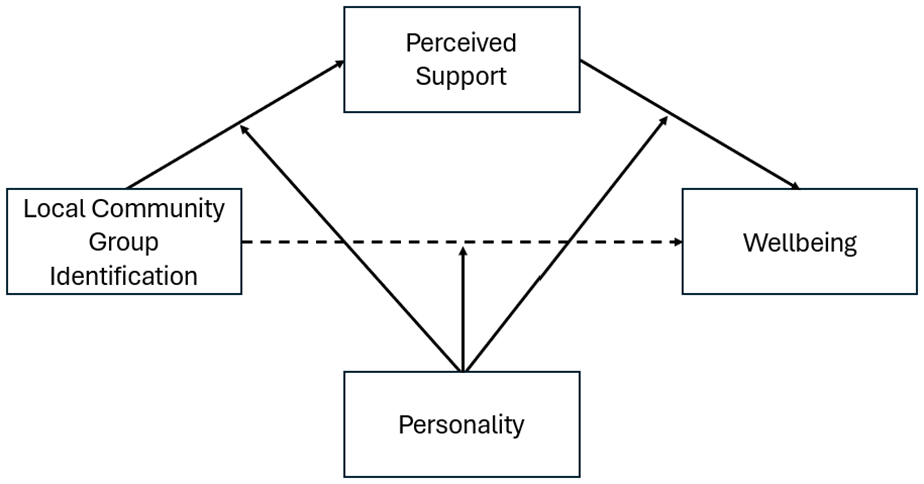
Conceptual Model
The work is structured in three studies. Study 1 used data from a large representative sample of U.K. residents to derive a person-centered FFM. This aimed to primarily capture variation in ego-resilience, expecting at least one profile to be characterized by high scores across all FFM traits (high ego-resilient). Differences in individual functioning were hypothesized between the high ego-resilient and other profiles, with higher mean values expected in the former compared to other profiles (H1). Study 2 examined differences in the paths linking local community identification, perceived support, and well-being. Specifically, based on previous research on the impact of personality on support perception and uptake (Bizumic et al., 2012; Ellemers et al., 1999; Spears et al., 1997), and literature on the role of local community identifications on perceptions of support and well-being (Junker et al., 2019; McNamara et al., 2021), those with a high ego-resilient profile were expected to show comparatively greater associations between local community identification and support (H2a) and between support and well-being (H2b), assuming a greater capacity for these individuals to harness psychological resources available in local community groups. Study 3 adapted the model from Study 2 to incorporate an experimental manipulation from S. A. Haslam et al. (2016) and provide more robust evidence of the impact of personality on SIAH processes. Rather than considering generic local community identification, this study focused on two ends of the continuum characterized by two poles of personal vs. specific local community group identities. In particular, the study tested the hypothesis that the personality profiles predicted from Study 1 would moderate the indirect effect of perceived support between salience of personal vs. local community group identity and well-being. The leading hypothesis considered the effect of community group rather than personal identity to be mediated (H3i), further expecting greater indirect effects in the high ego-resilient vs. any other profiles, in line with literature suggesting a link between ego-resilience and social effectiveness (Dunkel et al., 2021; van der Linden et al., 2016). Furthermore, Study 3 explored whether personality would moderate the effect of salient personal vs. local community group identities on support (H3a), the effect of support on well-being (H3b), and the effect of salient personal vs. local community group identities on well-being (H3c).
Study 1—Method
Participants and Procedure
Study 1 used data from Understanding Society (University of Essex, Institute for Social and Economic Research, 2022), a longitudinal survey launched in 2009 to track social and economic trends in the United Kingdom, using a representative sample by region, age, education, and social background. Although the data set currently includes 13 annual waves, this study focuses on cross-sectional data from Wave 3 (January 2011–July 2013), the only wave including all the measures of interest. Data were collected via telephone and computer-assisted personal interviews. The sample includes 49,692 residents: 26,924 women (54.18%) and 22,768 men (45.82%), aged 15–103 (Mage = 47.14, SDage = 18.51).
Measures
Fifteen items from the Big Five Inventory (BFI; John & Srivastava, 1999) measured FFM traits. Participants rated items on a 1–7 scale (does not apply to me at all-applies to me perfectly). The Short Form, 12-item Mental Component Summary (SF-12 MCS) (Ware et al., 2001) was used to validate the latent profiles identified through latent profile analysis (LPA), assuming higher individual functioning in the high ego-resilient profile across four subdimensions: Mental health, vitality, social, and emotional functioning.
Analytical Plan
The study used LPA (Lazarsfeld & Henry, 1968; Nylund et al., 2007). LPA models unobserved heterogeneity to derive a set of discrete profiles based on response similarities to observed variables (Muthén, 2004). Two parameterizations were tested: (a) equal variances with covariances fixed to zero (diagonal, equal volume, equal shape; EEI) and (b) free variances and covariances (ellipsoidal, varying volume, shape, and orientation; VVV) (Scrucca et al., 2016). The resulting solutions were evaluated using information criteria (Akaike Information Criterion, AIC; Bayesian Information Criterion, BIC; Sample-size-adjusted-BIC; SABIC), entropy, classification probabilities, whereas the decision on the final model to retain was supported by visual inspection methods and theoretical considerations (Marsh et al., 2009; Nylund et al., 2007).
Transparency and Openness in Research
Total scores were calculated by averaging item responses. Sample size, exclusion criteria, and all methods followed Journal Article Reporting Standards (JARS) guidelines (Kazak, 2018). Data, code, and supplementary materials are available at https://osf.io/smy2f/, along with details on statistical software, tables, and figures. The research design and analytical plans are not preregistered.
Study 1—Results
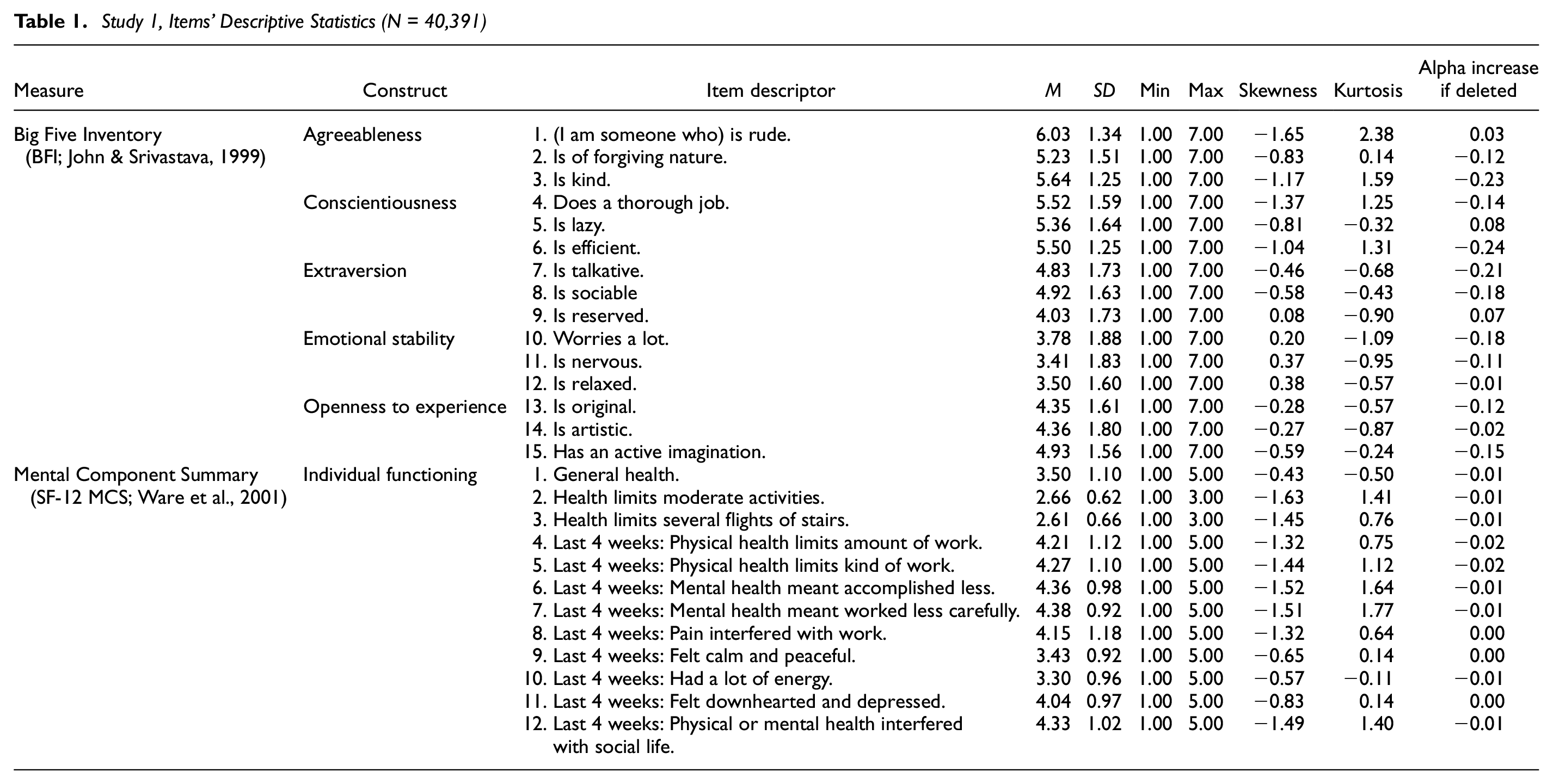
Table 1 reports items’ descriptive statistics. There were 9,099 fully missing cases, one with 80%, three with 60%, six with 40%, and 39 with 20% missing data. Little’s test rejected the hypothesis of data missing completely at random (
Study 1, Items’ Descriptive Statistics (N = 40,391)
Study 1, Descriptive Statistics and Correlations (N = 40,391)
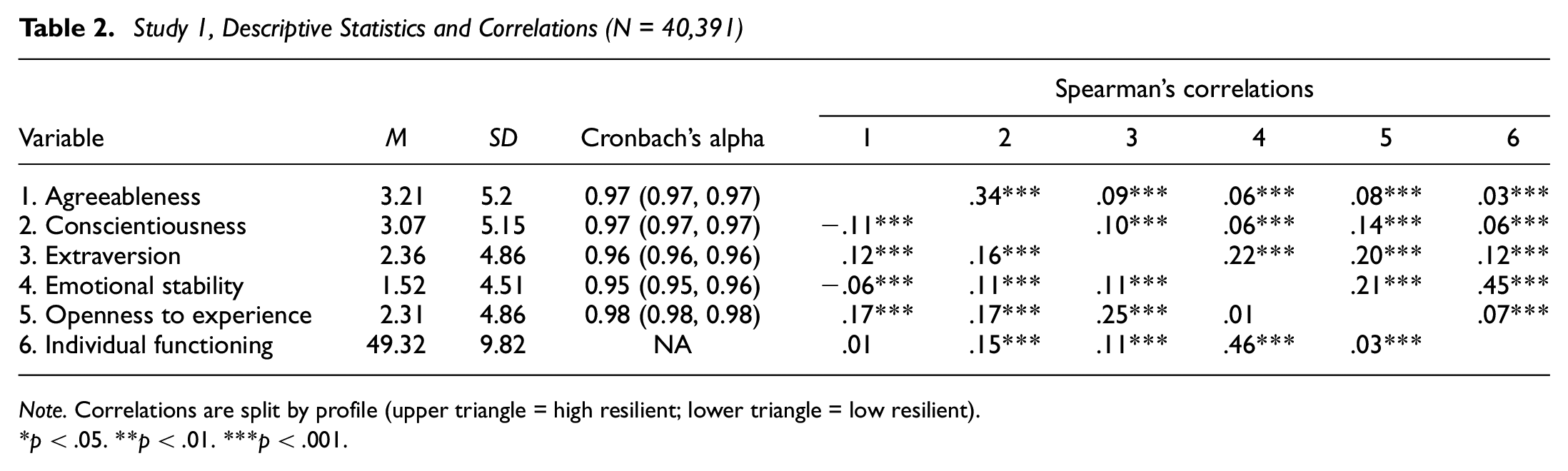
Note. Correlations are split by profile (upper triangle = high resilient; lower triangle = low resilient).
p < .05. **p < .01. ***p < .001.
The three-profile solution under the VVV parameterization (VVV-3; AIC = 634,651.79, BIC = 635,185.39, SABIC = 634,988.35, BRLT = 1,409.16, p = .01) showed the best fit, followed by the two-profile solution (VVV-2; AIC = 636,018.95, BIC = 636,371.81, SABIC = 636,241.51, BLRT = 5,645.38, p = .01). VVV-2 indicated better minimum and maximum probabilities (min = .85, max = .90, entropy = .58) than VVV-3 (min = .61, max = .82, entropy = .49; Table 3).
Study 1, Latent Profile Analysis, Fit Indices (N = 40,391)
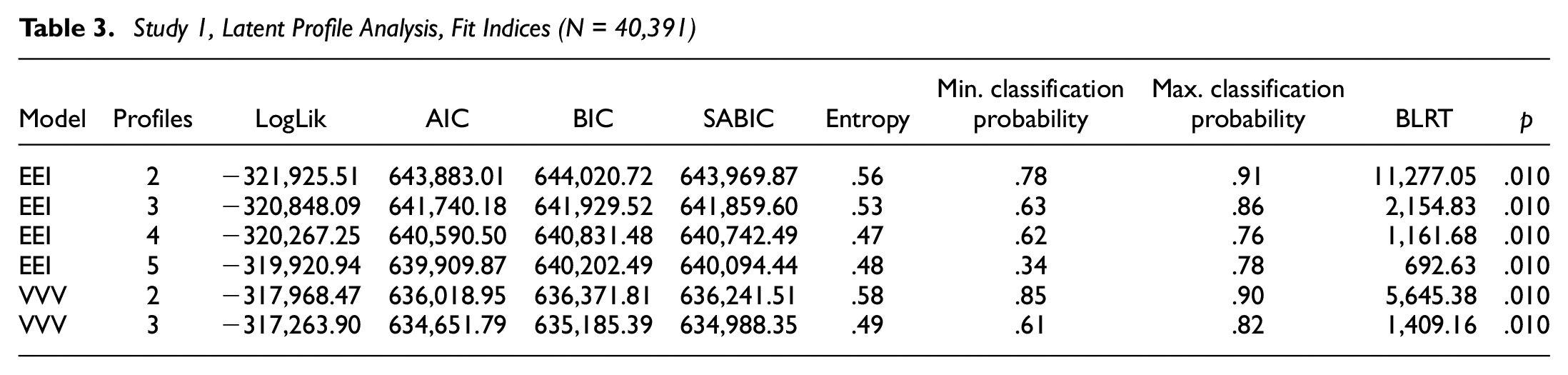
Visual inspection confirmed that VVV-2 provided better interpretability than VVV-3, reflecting a parsimonious solution capturing contrasting poles of ego-resilient levels: High vs. low ego-resilient personality (Figure 2).
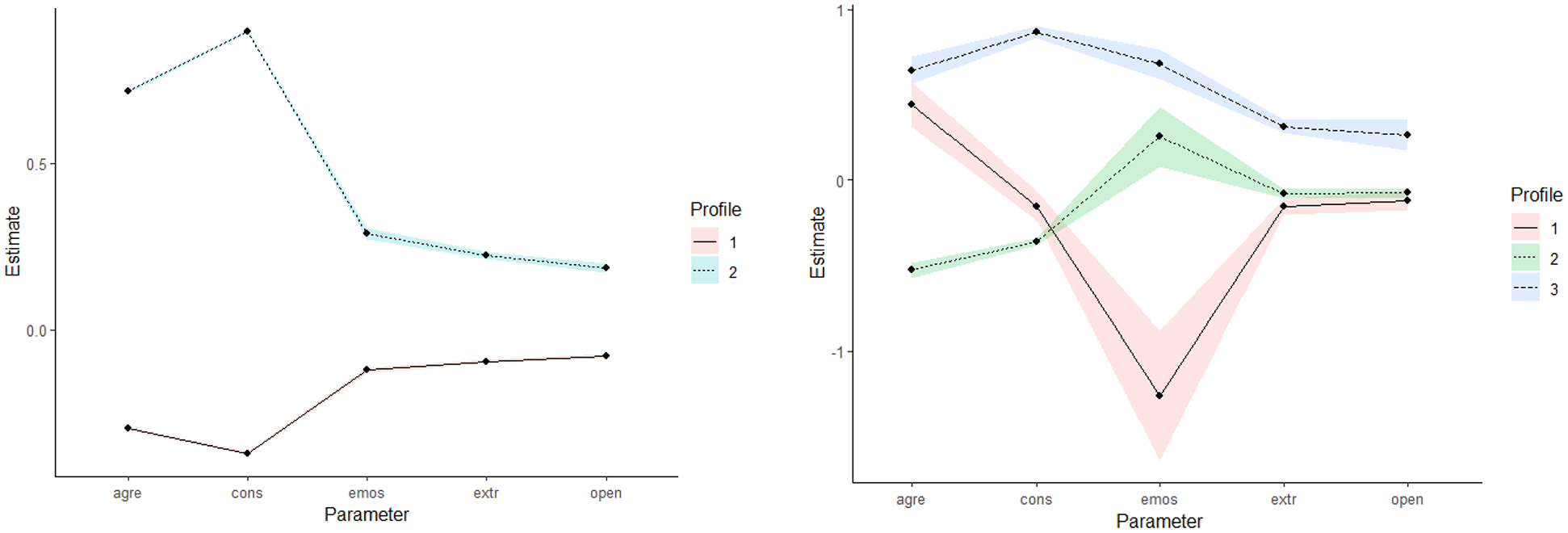
Study 1, Latent Profile Analysis, Top-Performing Models (N = 40,391; VVV Parameterization)
There were 25,559 cases (63.28%) classified as low ego-resilient, and 14,832 cases (36.72%) classified as high ego-resilient. A t-test confirmed higher individual functioning in the high ego-resilient (t(40,326) = 34.44, p < .001, d = 0.36), assuming unequal variances (F(1, 40,326) = 391.50, p < .001). These findings streamline the traditional three-profile theoretical framework (resilient, overcontrolled, undercontrolled Block & Block, 1980) into a two-profile solution, capturing opposing poles of ego-resilience related to individuals’ stability, adaptiveness, and social effectiveness, in line with evidence from recent literature (van der Linden et al., 2016). While the broadband FFM measures might have missed facet-level complexity (see Kowalski, 2001), the two-profile solution was parsimonious and highly interpretable, and it was retained for subsequent studies.
Study 2—Method
Participants and Procedure
Study 2 used secondary data from two samples (N1 = 455; N2 = 800) totaling 1,255 individuals aged ≥ 18. Participants were recruited for a study on personality, local community identification, and residential mobility. Inclusion criteria were residency in England (first sample) vs. birth in England with a history of residential mobility (second sample). Data were collected through Prolific (prolific.com), using Qualtrics (qualtrics.com). The study received ethical approval and funding from the first and fourth authors’ institution (QUB Agility Fund). Respondents were aged 18–90 (M = 41.33, SD = 13.42) including 756 (60.24%) females, 486 (38.73%) males, and 13 (1.04%) who did not report their gender.
Material and Measures
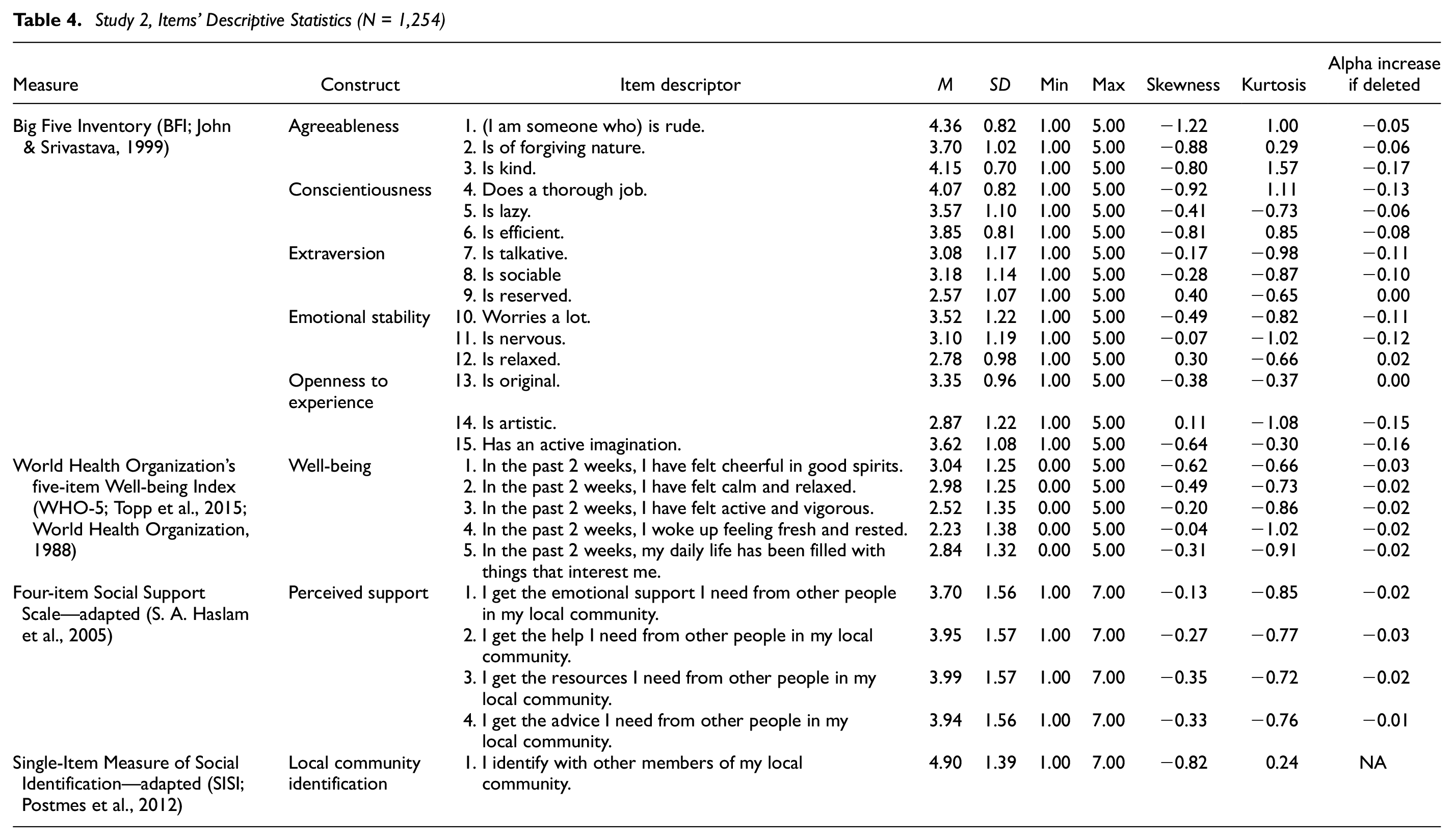
The same BFI items from Study 1 were used for personality. An adapted version of Postmes et al.’s (2012) single item social identity measure (SISI) rated 1–7 (strongly disagree-agree) measured to what extent individuals identify with their local community. Perceived support was measured through an adapted version of S. A. Haslam et al.’s (2005) four-item Social Support Scale, with items rated 1–7 (do not agree at all-agree completely). Well-being was measured through the WHO-5 Well-being Index (Topp et al., 2015; World Health Organization, 1988), with items rated on a 1–5 scale (at no time-all the time; Table 4).
Study 2, Items’ Descriptive Statistics (N = 1,254)
Analytic Approach
Study 2 used Spearman’s correlations and multiple-groups structural equation modeling with latent variables. Maximum Likelihood estimation with robust standard errors and Satorra-Bentler (1994) scaled test statistic (MLM) estimation was used to address violated multivariate normality (b1, p = 1.50, p < .001). Given the observational study design, no direct or indirect effects were hypothesized. Model fit was evaluated using the AIC, the root mean square error of approximation (RMSEA) (90% confidence interval [CI]), and the comparative fit index (CFI), evaluating and comparing models with and without the grouping variable (personality profiles). Latent variables included perceived support (emotional, help, advice, resources) and well-being (cheerfulness, calmness, vigor, restfulness, fulfillment). Monte Carlo 95% CIs were used for inference (5,000 repetitions). Personality profiles were predicted through the predict.Mclust function (Scrucca et al., 2016), based on the model from Study 1.
Study 2—Results
Multivariate outlier detection removed one case (Mahalanobis’D, Alpha = .001; final N = 1,254). LPA classified 958 cases (76.40%) as low and 296 (23.60%) as high ego-resilient (Table 5).
Study 2, Descriptive Statistics and Correlations (N = 1,254)
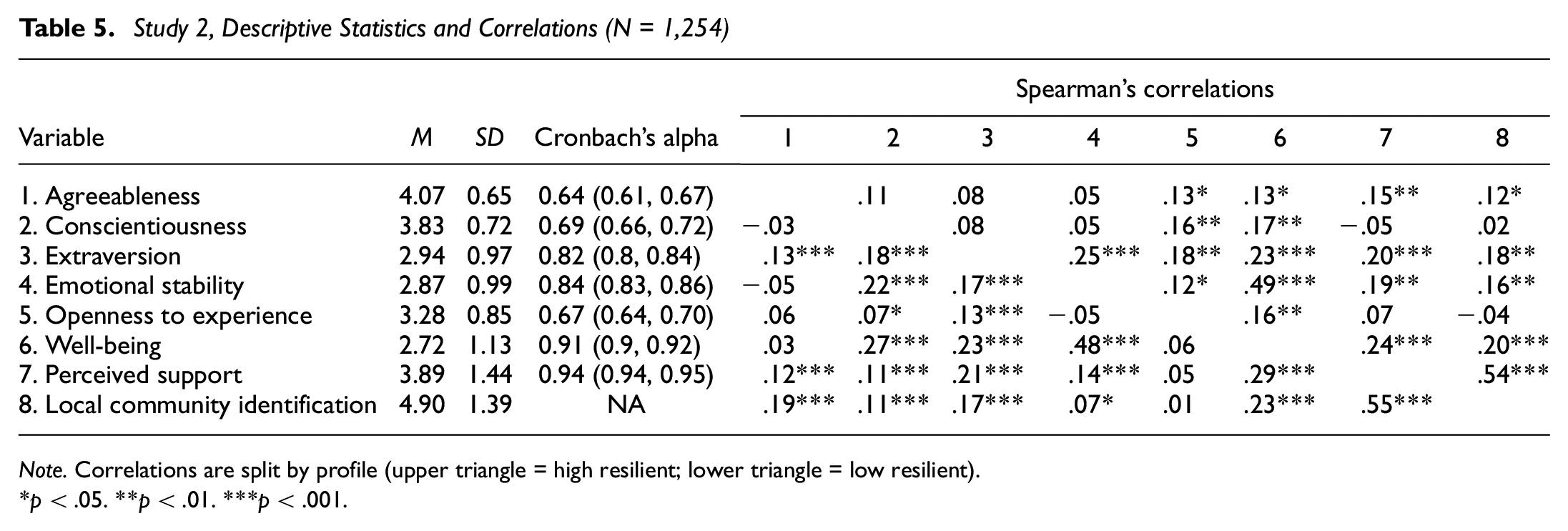
Note. Correlations are split by profile (upper triangle = high resilient; lower triangle = low resilient).
p < .05. **p < .01. ***p < .001.
Both profiles showed significant regression weights for path a (low resilient: b = 0.55, β = 0.57, 95% CI = [0.50, 0.61]; high resilient: b = 0.68, β = 0.58, 95% CI = [0.52, 0.82]) and path b (low resilient: b = 0.21, β = 0.26, 95% CI = [0.15, 0.28]; high resilient: b = 0.15, β = 0.23, 95% CI = [0.04, 0.26]), but no differences were found between profiles, thus not supporting H2a or H2b. Local community identification significantly predicted well-being for the low resilient (b = 0.07, β = 0.09, 95% CI = [0.01, 0.13]) but not the high resilient (b = 0.06, β = 0.08, 95% CI = [−0.05, 0.18]) (Table 6).
Study 2, Results of Path Analysis (N = 1,254)
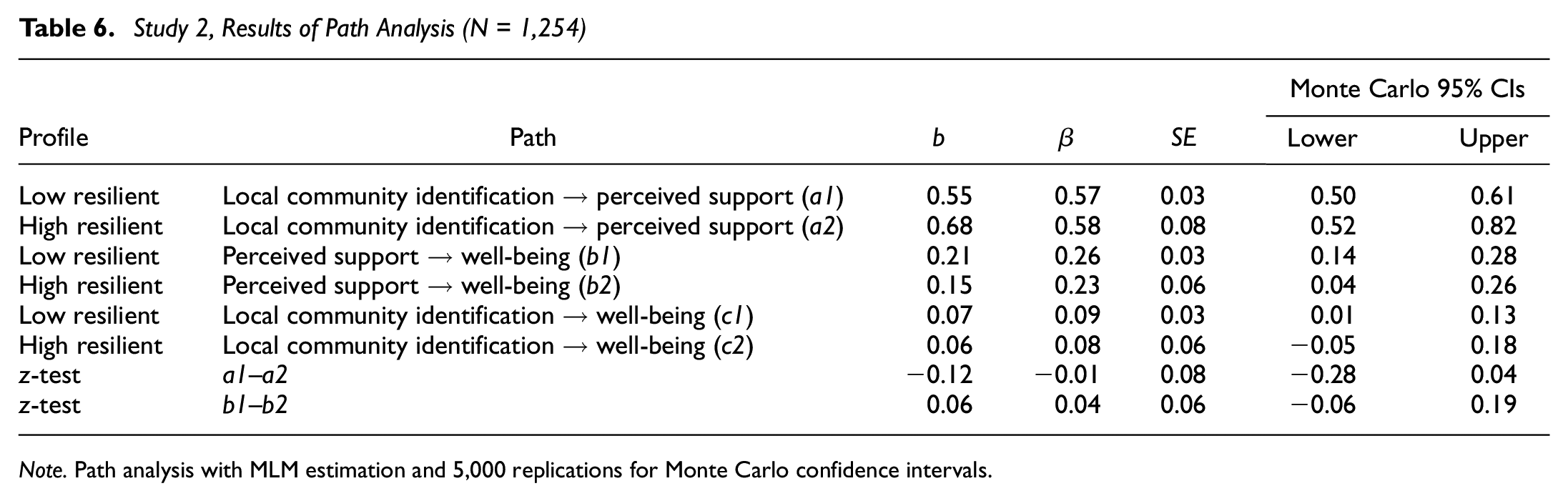
Note. Path analysis with MLM estimation and 5,000 replications for Monte Carlo confidence intervals.
Fit indices showed no significant improvement when accounting for personality (AIC: 30,518.81 vs. 30,590.13 for the baseline model; RMSEA: 0.09 [0.08, 0.10] vs. 0.09 [0.08, 0.09]; CFI: 0.96 vs. 0.97). It is important to note that local community identification was examined as a single entity, whereas previous research indicated that memberships of specific community groups can have a pronounced effect on well-being (Charles et al., 2023; Kellezi et al., 2019). To address these limitations, Study 3 tested the model from Study 2 after incorporating a manipulation of identity to better unpack its causal effects on perceived support and well-being, focusing on salient local community group identity in contrast to personal identity. Furthermore, it tested the moderating role of personality profiles in the indirect effect of support on the path between type of identity and well-being.
Study 3—Method
Participants and Procedure
Study 3 recruited 167 U.K. adults (aged 18–70, M = 42.19, SD = 13.09) through Prolific, including 91 females (54.49%) and 76 males (45.51%). Participants completed a 15-min online questionnaire using Qualtrics. Inclusion criteria were being ≥ 18, U.K. residents and fluent in English. The study received ethics approval from the faculty ethics committee of the second and third authors.
Material and Measures
The manipulation of salient personal vs. local community group identities was adapted from S. A. Haslam et al. (2016) and involved four steps: (a) participants were asked to identify a meaningful local community group; (b) were randomly assigned to reflect on either themselves as individuals vs. their local community group; (c) selected traits describing themselves or their community group from a list of 84; and (d) completed three self-reported items on ease of trait selection, expected agreement with other group members, and importance of personal or community group traits. Participants then rated the importance of belonging to a community group on a 1–9 scale (not at all-very much).
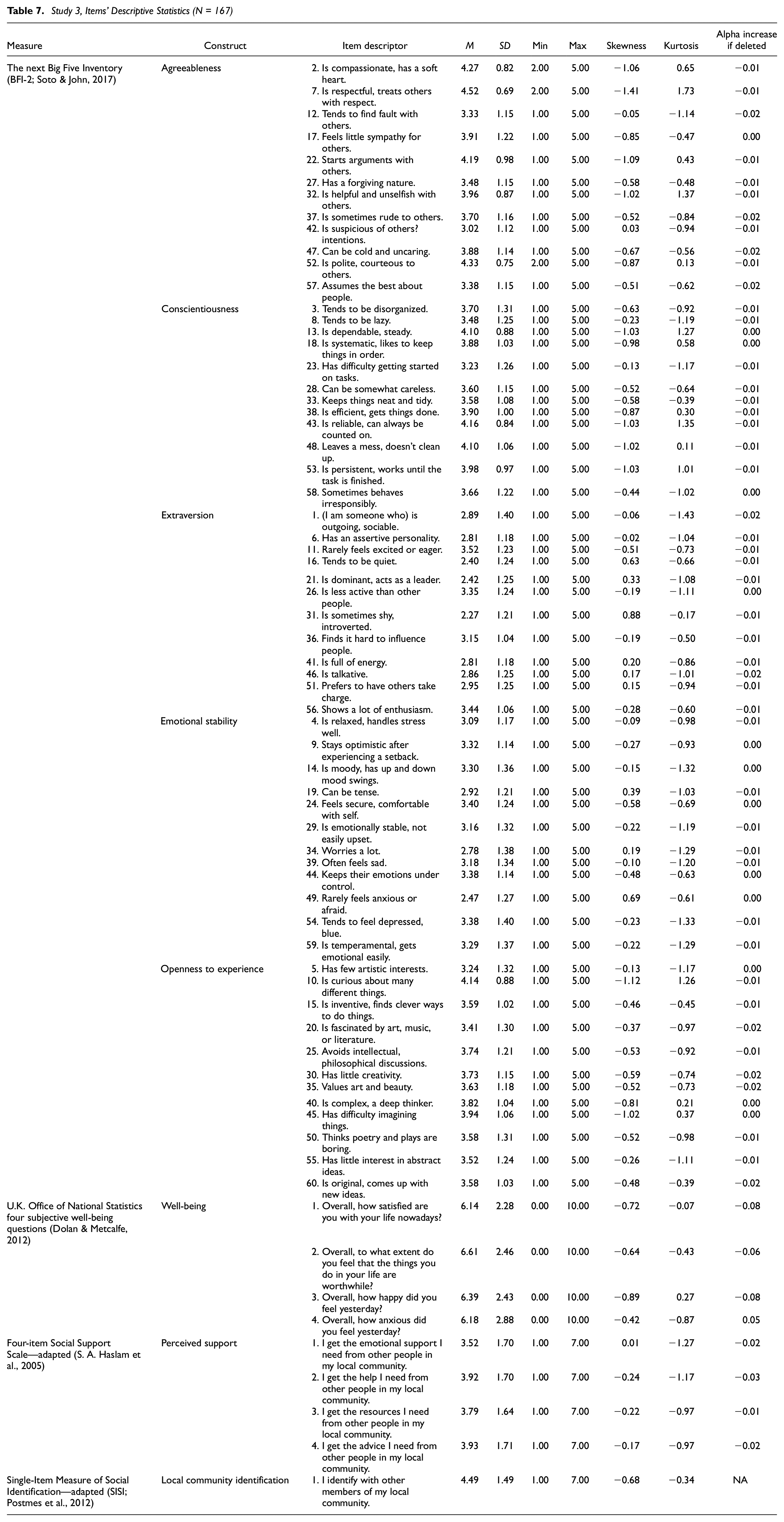
Individual well-being was measured using the U.K. Office for National Statistics 4-item wellbeing measure (ONS-4; Dolan & Metcalfe, 2012), summarizing facets of life satisfaction, sense of purpose, happiness, and anxiety on a 0–10 scale (not at all-completely). Personality was measured using the 60-item BFI-2 (Soto & John, 2017), a more comprehensive version of the measure used in Studies 1 and 2. Perceived support was assessed using the same measure as in Study 2 (S. A. Haslam et al., 2005), while the SISI (Postmes et al., 2012) served as a manipulation check (Table 7).
Study 3, Items’ Descriptive Statistics (N = 167)
Analytical Plan
Study 3 employed the same methods as Study 2, including MLM estimation for violated multivariate normality (b1,p = 6.57, p < .001).
Study 3—Results
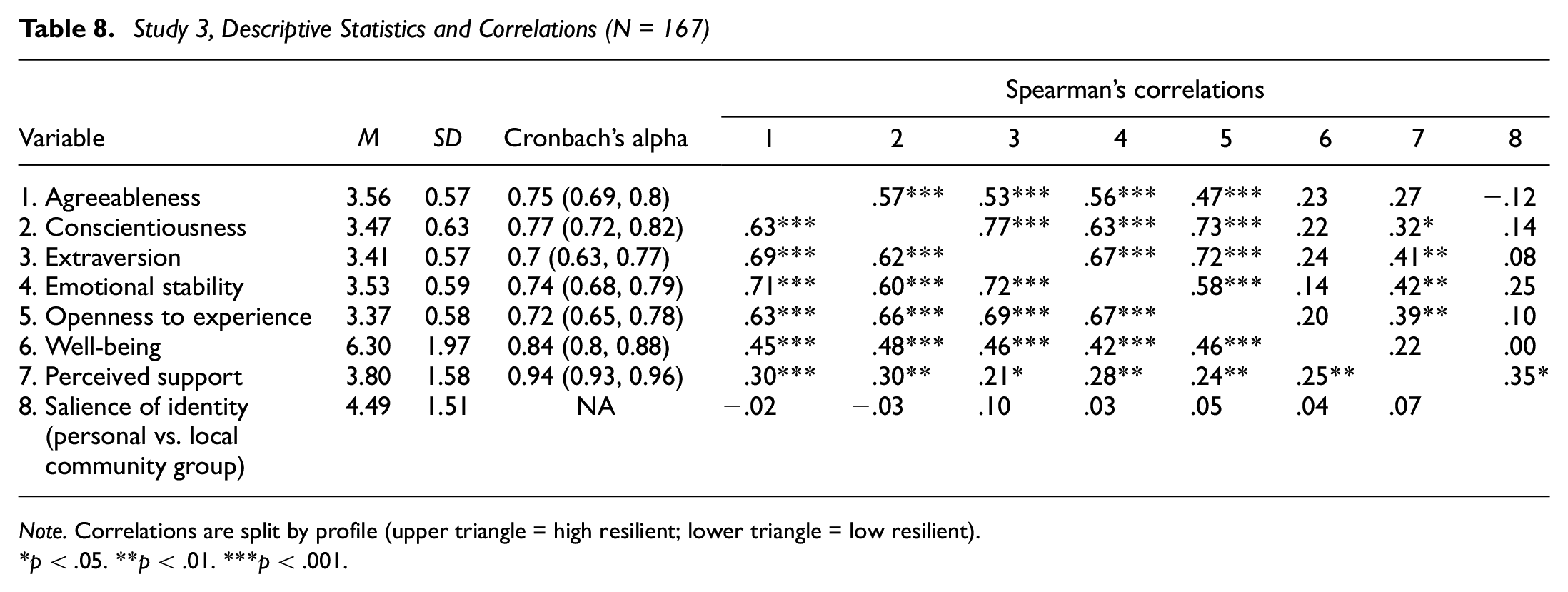
Two outliers were removed. A one-tailed t-test (equal variances assumed) showed significant differences in SISI scores (F(1, 163) = 0.02, p = .877), with lower scores for personal vs. local community group identity (t(139.39) = −1.69, p = .046). LPA classified 46 participants (27.88%) as high- and 119 (72.12%) as low ego-resilient. Table 8 reports descriptive statistics.
Study 3, Descriptive Statistics and Correlations (N = 167)
Note. Correlations are split by profile (upper triangle = high resilient; lower triangle = low resilient).
p < .05. **p < .01. ***p < .001.
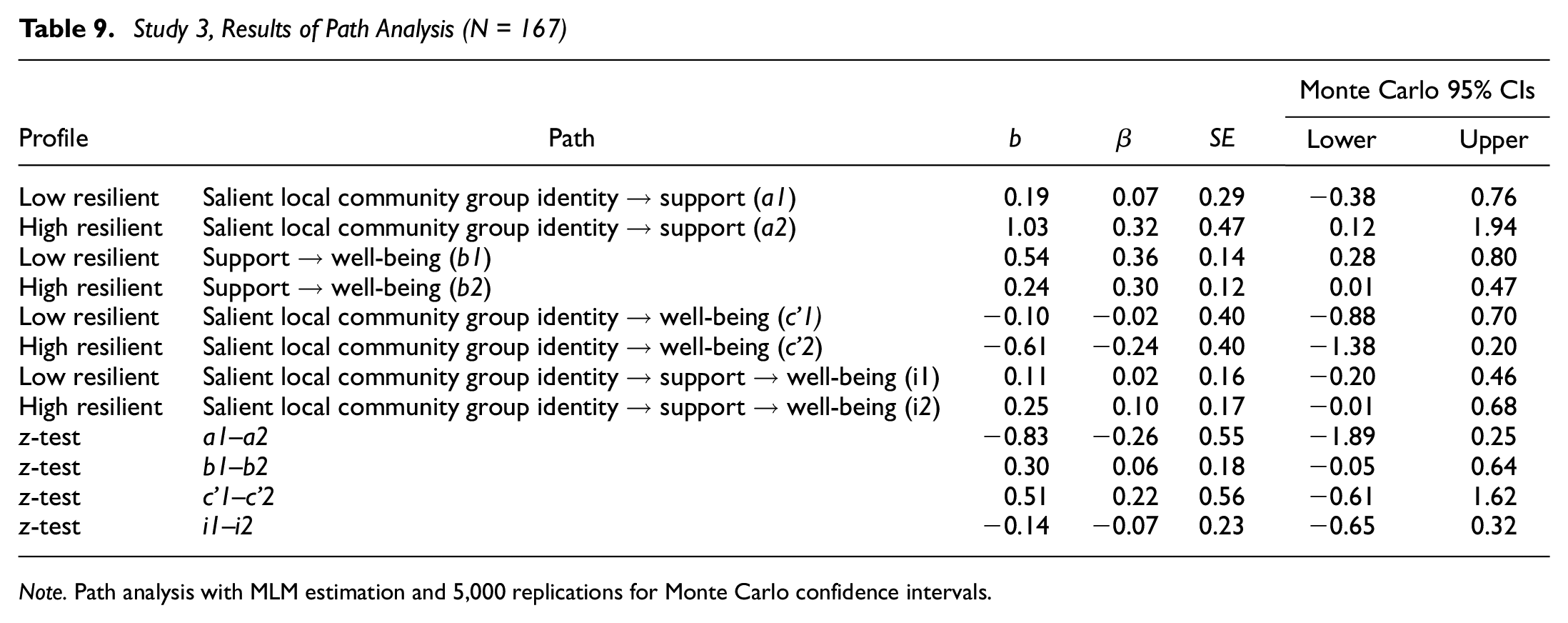
Path analysis found no moderated mediation (H3i), indirect effects, or significant differences between paths, not supporting H3a, H3b, or H3c. For path a, the high ego-resilient showed significantly higher support in personal vs. local community group identity conditions (b = 1.03, β = 0.32, 95% CI = [0.10, 1.92]), while low ego-resilient participants did not (b = 0.19, β = 0.07, 95% CI = [−0.37, 0.75]). Both profiles showed positive b paths (high: b = 0.24, β = 0.30, 95% CI = [0.01, 0.47]; low: b = 0.54, β = 0.36, 95% CI = [0.27, 0.81]) (Table 9). Although the interaction plot displayed higher well-being at below-average support levels for the low ego-resilient and at above-average support levels for the high ego-resilient, those differences were not significant (Figure 3). The multiple-group model showed better fit (AIC = 4617.85, CFI = 0.98) compared with the baseline model (AIC = 4679.77, CFI = 0.96), except for the RMSEA, which was only slightly higher for the multiple-group model (0.10, 95% CI = [0.07, 0.13] vs. 0.07, 95% CI = [0.03, 0.10]).
Study 3, Results of Path Analysis (N = 167)
Note. Path analysis with MLM estimation and 5,000 replications for Monte Carlo confidence intervals.
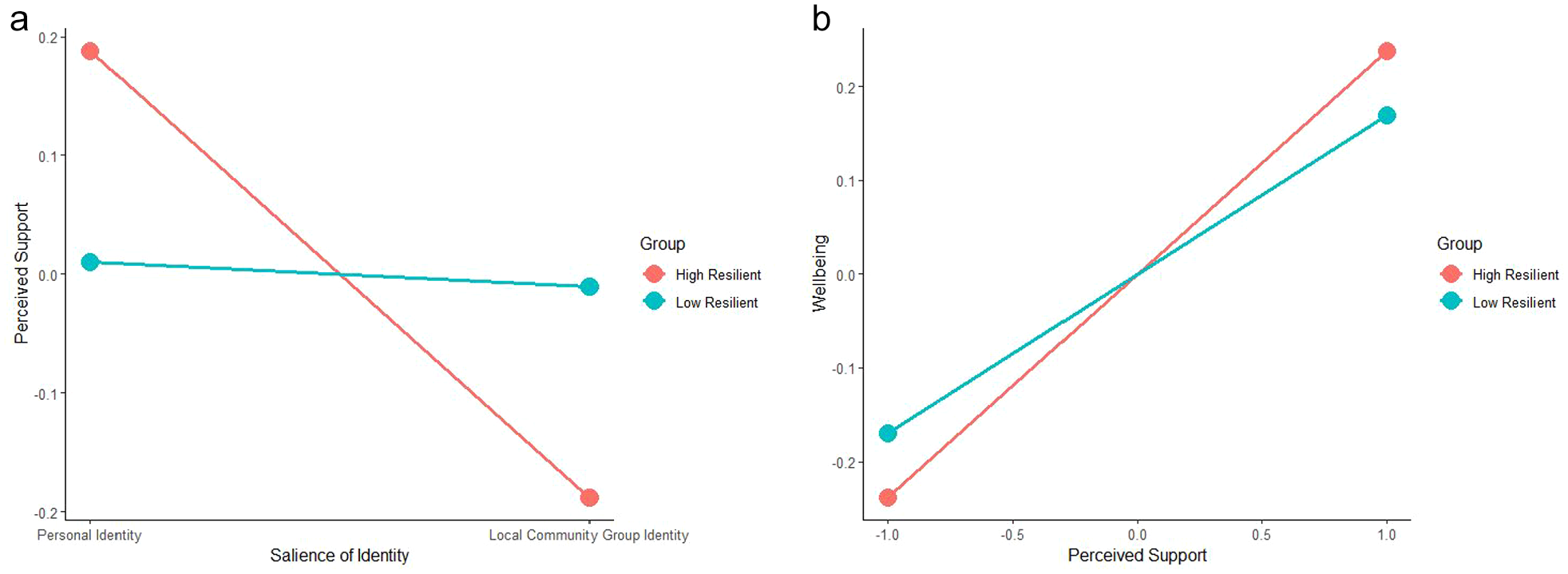
Study 3, Moderation Analysis, Tumble Graphs for Paths a (Salience of Identity → Perceived Support) and b (Perceived Support → Well-being), respectively (N = 167)
These results highlight distinct pathways through which different types of salient identity relate to perceived support across personality profiles, particularly in the interplay between identity type and support. Variations in ego-resilience may influence individuals’ readiness to access these resources to satisfy their psychological needs (Barańczuk, 2019; Olesen, 2011; Vukasović Hlupić et al., 2023). Thus, although the hypothesized moderated mediation was not supported, the findings underscore the nuanced role of ego-resilience in shaping how individuals perceive, engage with, and benefit from identity-based sources of support.
General Discussion
The originality and innovation of this research lie in integrating personality theory with SIAH through a multi-methodological approach, demonstrating the protective role of local community group identity and the consistent link between support and well-being across diverse designs, data sets, and measures. Study 1 used a person-centered approach to model unobserved heterogeneity in FFM trait scores. A large, representative U.K. sample yielded a two-profile solution, reflecting low and high ego-resilience, consistent with established personality theory (Block & Block, 1980; Dunkel et al., 2021; van der Linden et al., 2016). Study 2 found positive relationships in both profiles from local community identification to perceived support and from support to well-being, confirming findings from previous SIAH research on the benefits of local community identifications (S. A. Haslam et al., 2024; Junker et al., 2019; McNamara et al., 2021; Stevenson et al., 2020). Finally, Study 3 tested the model from Study 2 after incorporating a manipulation of salient personal vs. specific local community group identities and examined ego-resilience’s moderating role in the indirect effect of identity on well-being via support. No moderated mediation or indirect effects were found. High ego-resilient individuals showed greater perceived support in the personal identity condition than in the local community group identity condition. Importantly, the relationship between perceived support and well-being was replicated across two studies, in line with research showing that perceived support can help individuals satisfy their psychological needs (Greenaway et al., 2016) and optimize stress appraisal to enhance their well-being (C. Haslam et al., 2021).
These results suggest that individual differences in personality play a role in regulating the impact of different types of salient identity on individuals’ perceptions of support. In particular, personality may influence individuals’ readiness to avail of these resources and use them for their own benefit. Given that lower ego-resilience is typically associated with reduced emotional stability, extraversion, and openness, individuals low in ego-resilience may find it particularly difficult to recognize and use available emotional social support for their own benefit, which better aligns with findings from recent research on the relationships between personality and social support (Barańczuk, 2019). Moreover, the interaction plot showed high ego-resilience as linked to lower perceived support when local community group identity was salient and higher support when personal identity was, though these effects were not statistically significant. If replicated, this pattern may suggest that individuals high in positive affect, emotional expressiveness, openness to social interaction, and goal orientation experience greater fulfillment of psychological needs, regardless of social identifications (Olesen, 2011; Vukasović Hlupić et al., 2023). Previous research also found higher normative trait scores being associated with stable internal working models and interpersonal security (Iliceto et al., 2020), which may explain the greater perceived support observed in the personal identity condition. In addition, ego-resilient individuals, being socially competent and attuned to interpersonal dynamics, may develop higher expectations for meaningful interactions (Taylor et al., 2014), as well as receive and more positively evaluate support offers (Barańczuk, 2019). Conversely, low ego-resilient individuals may be more sensitive to social exclusion, which could in turn affect their ability to recognize available support (Abrams et al., 2005). These results do not rule out the possibility that local community group identity unlocks other psychological resources or individual needs’ satisfaction, such as social connectedness (Mehrpour et al., 2024), which traditional support measures do not capture. Moreover, Study 3 found no indirect effects, suggesting that perceived support only partly explains the link between local community group identification and well-being, which is consistent with findings from recent research (Kellezi et al., 2019; McNamara et al., 2021).
Importantly, the present research used multiple and diverse measures of personality and SIAH-related constructs. Nevertheless, the person-centered approach to personality was consistently replicated across both more comprehensive and briefer Big Five inventories in three distinct data sets. Moreover, two studies supported the protective effect of local community group identity on well-being. These findings support a large corpus of evidence obtained through diverse definitions and operationalizations of local groups, across several studies (Charles et al., 2023; S. A. Haslam et al., 2024; McNamara et al., 2021; Stevenson et al., 2020). Likewise, findings related to the relationship between support and well-being were reproduced across two data sets despite different definitions and operationalizations of well-being being used, specifically, those entailed by the WHO-5 (Topp et al., 2015), a measure of general well-being through positive emotions, and the ONS-4 (Dolan & Metcalfe, 2012), which more specifically targets life satisfaction, happiness, worthwhileness, and anxiety.
Despite the novelty of these findings, research is still needed to examine whether, how, and to what extent individuals’ norms, values, and goals influence their tendencies to join multiple and diverse groups, identify with them, and perceive their support. Individuals high in ego-resilience may be better equipped to regulate the impact of different types of salient identity onto their self-concept, including deriving greater perceptions of support and well-being (Dunkel et al., 2021; van der Linden et al., 2016). This also opens to the possibility that high ego-resilient individuals are more likely to gravitate toward groups whose norms emphasize individual autonomy and self-regulation, which in turn, may enhance their perception of available support (Postmes & Jetten, 2006). On the contrary, individuals with low ego-resilience may seek group affiliations that reinforce their tendency toward dependency and conformity, deriving limited benefits. Nevertheless, when a group fails to align with individual priorities, feelings of marginalization may arise, reducing perceived access to shared resources, as evidenced through recent research (Bizumic et al., 2012).
The current work has limitations. Studies 1 and 2 did not investigate moderated mediation as they did not meet the fundamental assumptions of causal mediation analysis (Imai et al., 2010). Study 3 involved a randomized allocation of participants into two groups to manipulate the salience of personal vs. community group identity, although it is important to note that this approach does not eliminate confounding bias in causal inference. Approaches that go beyond personality structure and employ longitudinal methods to capture their interplay with states and goals (e.g., ecological momentary assessments and intensive longitudinal designs) could help improve the understanding of the interplay of personality and SIAH variables, allowing for targeting within-person fluctuations in personality processes and group dynamics and differentiating them from stable individual differences. Consistently, future research may also benefit from exploring SIAH dynamics in relation to personality processes and development. The patterns discussed in the present work may indeed disguise more nuanced and subtle fluctuations and developmental trajectories that shape personality across the lifespan.
Despite its limitations, the present work has important implications. Specifically, the findings provide a conceptual bridge between personality theory and the SIAH, offering trait-level insights that can inform the design and implementation of community-based interventions. While the health impacts of community-level group-based interventions are well established (Cruwys et al., 2022), future applied research may benefit from testing whether the fit between individuals’ personality traits and the characteristics, goals, and values of the groups they engage with plays a role in shaping perceived support and its impact on well-being. Interventions such as those based on “social prescribing”, that is, an intervention method relying on community resources to improve the residents’ well-being (see Kellezi et al., 2019), could use assessments personality assessments to ascertain the profiles who may benefit the most from a group-based intervention, potentially, those with low ego-resilient personality profile. Conversely, for those high in ego-resilience, helping set realistic goals and expectations might favor greater community engagement, perceptions of support, and, in turn, subjective well-being.
Conclusions
This work integrates personality theory and the SIAH by shedding light on their complex interplay on support and well-being. Grounded in evolutionary theory and solid empirical evidence, the proposed integrative model not only advances the theoretical understanding of these processes but also provides avenues for the development of both fields. Future research should expand on this work by examining the extent to which personality structure, processes, and development function as facilitators or barriers to local community group identification and perceived support. Such insights could aid in profiling individuals and identify those who may require additional support or scaffolding to fully benefit from group-based approaches. In turn, this could inform the design of interventions that acknowledge and leverage individual differences in personality to enhance their effectiveness.
Footnotes
Handling Editor: Shenel Husnu
Declaration of Conflicting Interests
The author(s) declared no potential conflicts of interest with respect to the research, authorship, and/or publication of this article.
Funding
The author(s) disclosed receipt of the following financial support for the research, authorship, and/or publication of this article: Study 2 received ethical approval and funding from the first and fourth authors’ institution (Agility Fund).

Supplemental Material
Supplemental material for this article is available online.