



Abstract
Gratitude expressions provide shared warmth benefits to both the thanker and the helper. Little work has explored how gratitude expressions shift how observers see these individuals on another important dimension: their relative rank. We consider how the magnitude of gratitude expressions shapes observers’ perceptions of the thanker’s and helper’s relative status and power. Seven studies find that thankers who expressed more, compared to less, intense gratitude than expected made their helpers seem relatively higher rank, though this pattern was inconsistent across metrics of gratitude in studies using real-world expressions. These effects emerged across a range of contexts and relationships. Mechanism analyses yielded several null results, while underscoring the role of perceptions of agency. Observers may make their inferences directly, based on intuiting the real association between a thanker’s gratitude and their helper’s power and status. Our findings demonstrate that gratitude signals rank relationships, qualifying current recommendations to express gratitude publicly.
Experts agree you should express thanks (Algoe, 2012; Algoe et al., 2010; Wood et al., 2010), and corporations encourage gratitude through physical “gratitude walls” and gratitude-themed chat groups (e.g., on Slack; Algoe, 2023). Gratitude feels good (Locklear et al., 2022), though it can also come bundled with indebtedness and guilt (Layous et al., 2017; Morgan et al., 2014). Separate from experiencing it, expressing gratitude broadcasts that the expresser—and the receiver—are good, responsive people (Algoe & Chandler, 2023; Algoe et al., 2020). Thus, gratitude, like other emotions (e.g., Stearns & Parrott, 2012; Van Doorn et al., 2012), can serve as a social signal (Hareli & Hess, 2012).
Much research examines gratitude as a signal of communion, or how well people get along with others (Abele et al., 2021). Less has explored what gratitude expressions signal about agency, or how well people get ahead of others. Agency includes competence and assertiveness, which observers often assume corresponds with high rank in the social hierarchy, or holding more power and status than others (Anderson & Kilduff, 2015; Fiske & Berdahl, 2007; Magee & Galinsky, 2008; Paulhus & Trapnell, 2008). Drawing from literature on emotion expression and social perception, we hypothesize that gratitude, when expressed intensely, can deflate observers’ perceptions of thankers’ rank relative to their helpers.
Gratitude as a Signal of Communion
Gratitude is a positive emotion individuals can experience when upon appraising that another person intentionally benefited them (Algoe et al., 2008; Emmons & McCullough, 2003; Tsang, 2006). It can co-occur with indebtedness and is the converse of ingratitude (see Table 1 for construct comparison). Like other emotions, gratitude can be an internal trait or state (Rosenberg, 1998), and people express it behaviorally. Gratitude expressions are cues—physical, facial, nonverbal, or verbal—that signal, sometimes accurately and sometimes disingenuously, that one is grateful (Bello et al., 2010; Elfenbein, 2007; Locklear et al., 2022). In keeping with most literature, we focus on verbal expressions of gratitude, conveyed orally or in writing, as these most clearly impact interpersonal dynamics and play a role in relationship building and strengthening (Algoe, 2012).
Contrasting Gratitude With Associated Constructs
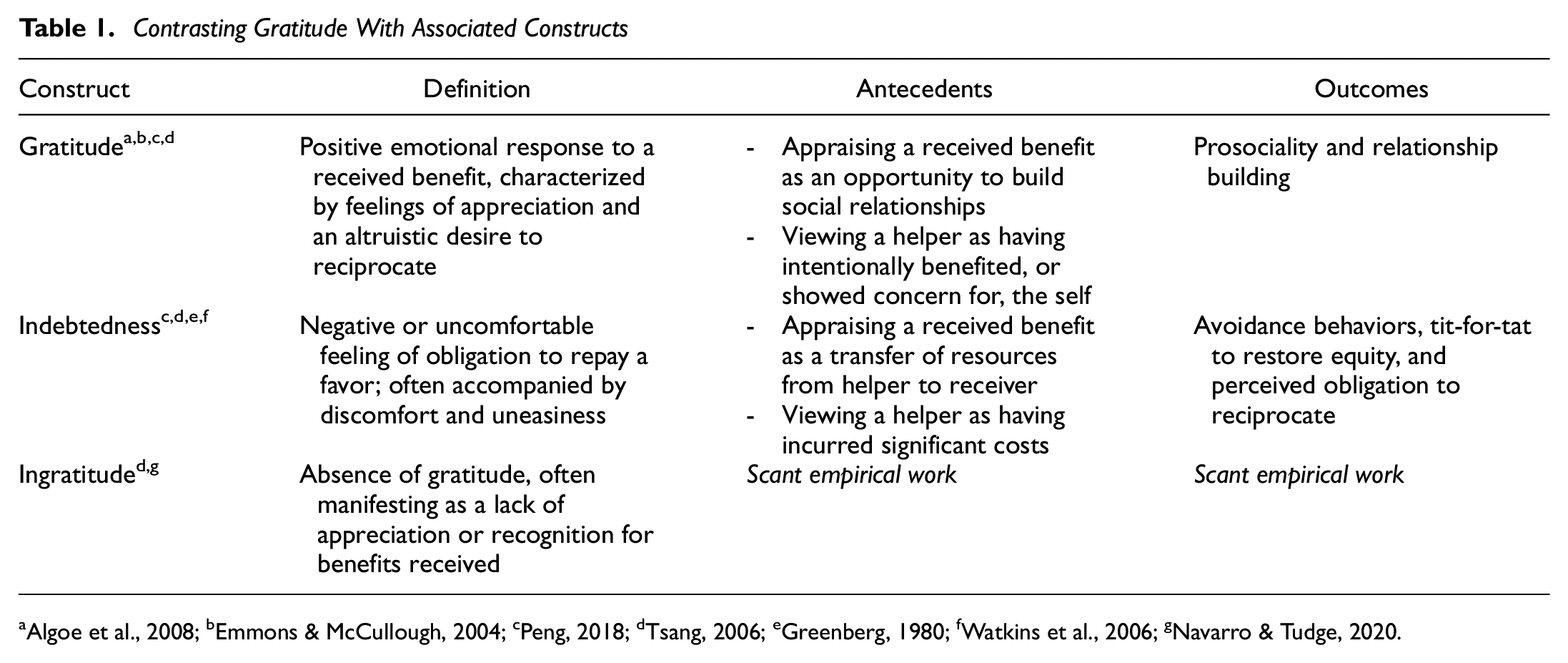
Algoe et al., 2008; bEmmons & McCullough, 2004; cPeng, 2018; dTsang, 2006; eGreenberg, 1980; fWatkins et al., 2006; gNavarro & Tudge, 2020.
The Emotions as Social Information model states that observers attend to others’ emotions in making important judgments (Van Kleef, 2009). Importantly, observers can only access behavioral expressions, so it is they, not the expresser’s internal feelings, that serve a signal function. For example, observers use expressed guilt to judge the morality of transgressors (Stearns & Parrott, 2012), pride to judge people’s status (Martens et al., 2012), and anger to judge situations’ cooperativeness (Van Doorn et al., 2012).
Combining this idea with social functionalism (Keltner & Hait, 1999), theorists argue that gratitude expressions evolved to strengthen relationships (Algoe et al., 2008): Gratitude signals that the helper was responsive, and that the thanker is thoughtful enough to acknowledge this. These communal signals improve thankers’ and helpers’ dyadic relationship (e.g., Algoe et al., 2008; Bartlett et al., 2012; Lambert & Fincham, 2011), and make them more attractive partners to observers (Algoe et al., 2020).
Gratitude as a Signal of (Relative) Rank?
We argue gratitude might also send an agency-related signal. Observers frequently make judgments of others’ rank (e.g., Kraus & Keltner, 2009), which we operationalize in two related ways (Magee & Galinsky, 2008): status (the respect granted to a person by their social network; Anderson & Kilduff, 2015; Paulhus & Trapnell, 2008) and social power (the control a person has over valued resources and outcomes; Fiske & Berdahl, 2007).
Gratitude’s Magnitude
Social signaling work typically compares the presence of emotion expressions to their absence. Although useful, this research can miss important nuances. For example, whereas expressing happiness generally has positive consequences (e.g., Barger & Grandey, 2006), expressing extreme happiness conveys naivete (Barasch et al., 2016). Strong social norms regulate gratitude (e.g., Eibach et al., 2015), so bluntly comparing its presence to its absence may mislead: Not expressing expected gratitude may carry the broad consequences of a norm violation, or convey ingratitude (Tsang, 2006). We therefore consider the implications of gratitude expressed on a continuum of intensity, in other words, gratitude’s magnitude: What observers infer about rank from an intense statement like, “Thank you so much for being so generous doing this for me. I’m incredibly grateful. You have no idea how much I appreciate it,” compared to a milder and less obvious, “Thanks,” sandwiched between other communications.
Whereas no work tests whether gratitude’s magnitude causally influences perceived rank, existing work finds that actual social rank influences gratitude’s magnitude. Help from higher rank others (e.g., from one’s supervisor rather than from one’s peer) elicits more gratitude (Anicich et al., 2021; Okamoto & Robinson, 1997), and thankers’ express more gratitude when seeking to confer rank (Ouyang et al., 2018). Because more intense gratitude expressions co-occur with helpers outranking their thankers, observers may infer that the former must indicate the latter. Thus, in contrast to its shared communal benefits, we connect to a nascent literature examining gratitude’s potential dark sides (e.g., Gulliford & Morgan, 2021; Morgan et al., 2014) in predicting that gratitude induces relatively worse rank perceptions of thankers relative to helpers.
Potential Mechanisms
Observers may use gratitude expressions to judge relative rank simply due to an awareness that the two tend to correlate. That is, if they have observed that higher ranked helpers often elicit more intense gratitude, they may take gratitude’s magnitude as a probabilistic marker of relative standing.
Alternatively, observers might apply lay theories to understand relative standing, attempting to recreate the thanker’s state of mind (e.g., Ames & Johar, 2009; Hareli & Hess, 2010). We considered three versions of this possibility. First, observers may infer that more intense gratitude means the thanker feels they reaped subjectively greater benefits, suggesting they had greater need or that their helper provided more resources. This imbalance portrays the thanker as beneath the helper. Second, observers may infer that more intense gratitude means the thanker wants a deeper relationship (Algoe et al., 2020; see Gulliford et al., 2019, on disingenuous gratitude expressions as ingratiation displays). This desire to affiliate could mean the thanker is trying to benefit from a superior helper’s presumably ample resources (Eastwick et al., 2013). Third, observers may infer that less intense gratitude means the thanker felt they could take the helper’s assistance for granted: They expected the help and thus did not think it warranted much acknowledgment. This may suggest the thanker knew that their subordinate helper would feel obligated to provide.
The Present Research
Seven studies examine how gratitude’s magnitude shapes judgments of thankers’ and helpers’ relative rank. People express gratitude to partners in various relationships, from close familial bonds to near strangers. They do so in various contexts, including workplace, family, and social situations. Our core hypothesis applies across a range of contexts and relationships, which we vary for generalizability. However, we include only cases where thankers and helpers are acquainted, since the expression of gratitude between complete strangers is often perfunctory and guided by conversational norms, rather than meaningfully reflecting a hierarchical dynamic.
In all studies, observers saw thankers expressing more or less intense gratitude to helpers. Studies 1a and 1b measured status; remaining studies also measured power. Studies 2a and 2b tested potential mechanisms; Studies 3a to 3c used real-world gratitude expressions. Survey materials, pilot studies, additional exploratory measures, data, R code, and Supplementary Online Material (SOM) are here: https://osf.io/yzcgf/.
Studies 1a and 1b
Observers estimated relative rank before and after a thanker expressed intense versus mild gratitude to a helper. We hypothesized intense thankers would lose relative rank. These studies were not pre-registered, but used the same design and analysis plan with nearly identical results.
Method
Participants
Each study targeted 400 American participants from Mturk. Tables 2 and 3 report power, demographics, and participant exclusions.
Demographics for All Studies
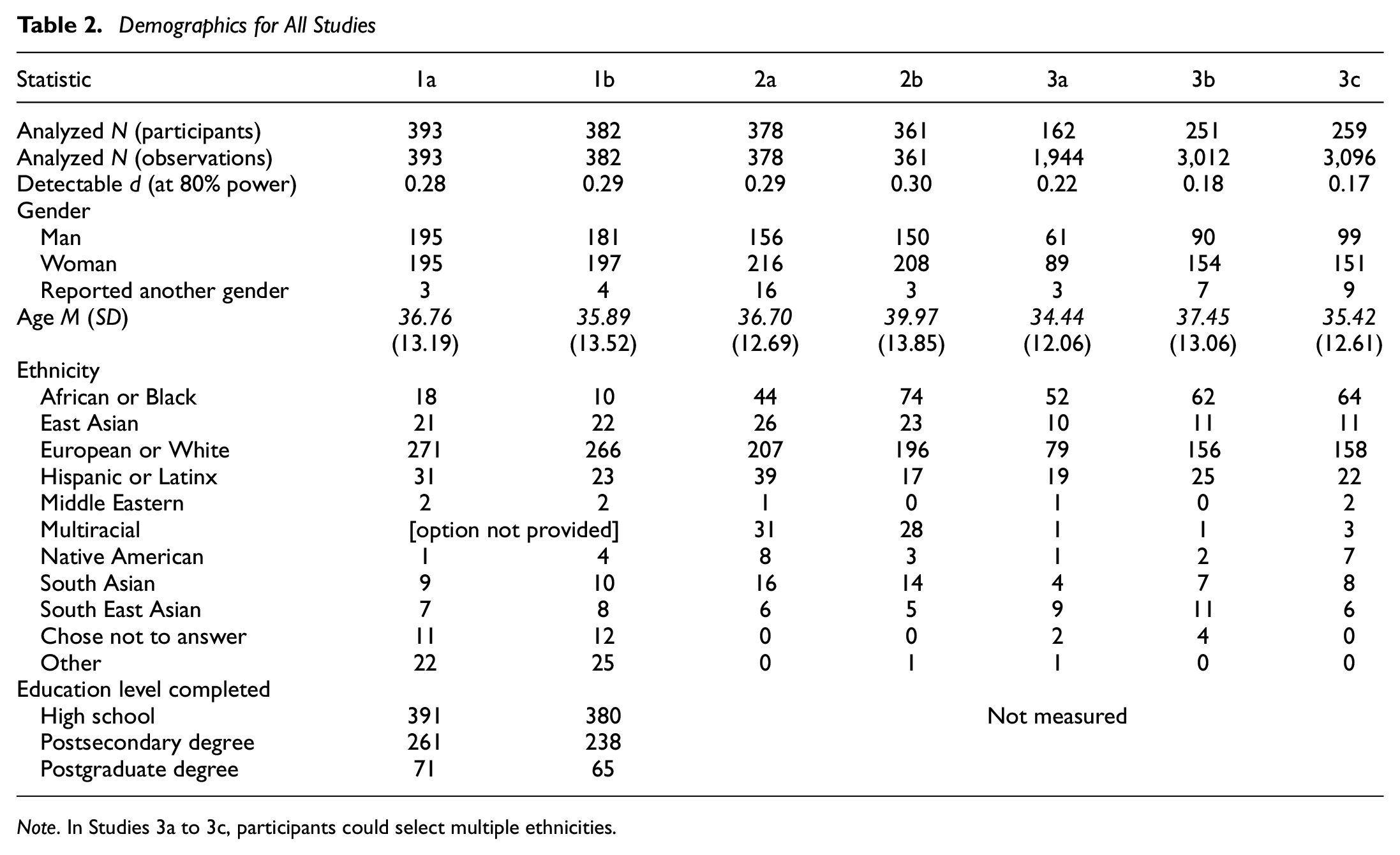
Note. In Studies 3a to 3c, participants could select multiple ethnicities.
Participant Exclusions for Studies 1a to 2b
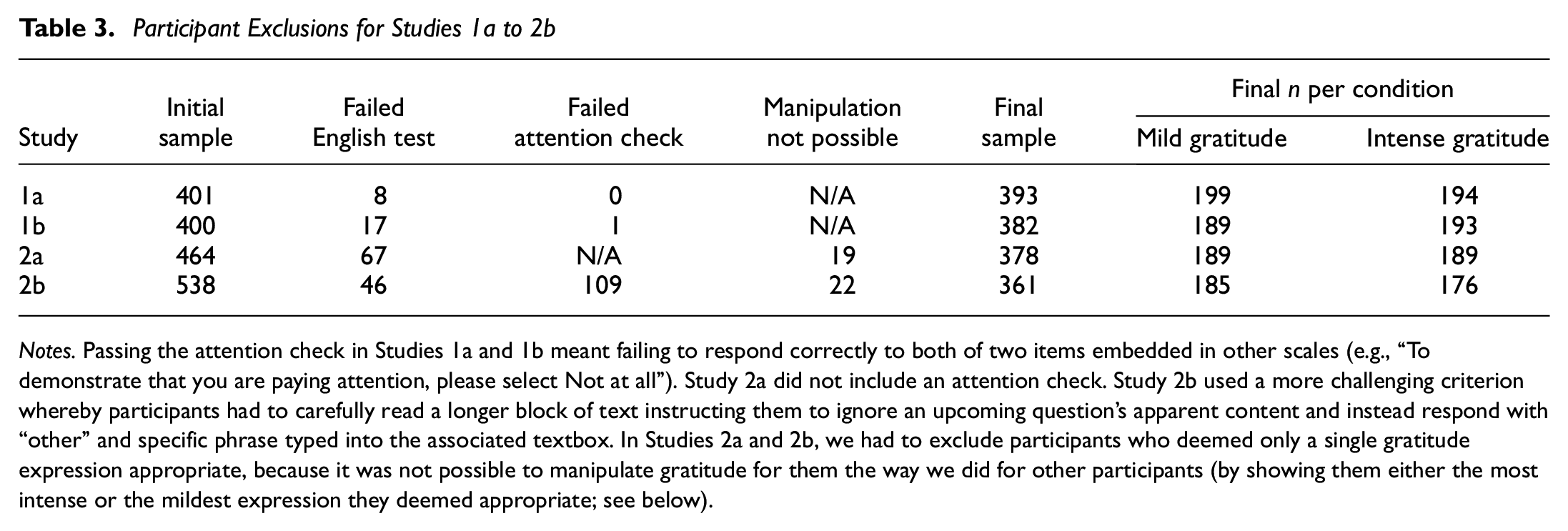
Notes. Passing the attention check in Studies 1a and 1b meant failing to respond correctly to both of two items embedded in other scales (e.g., “To demonstrate that you are paying attention, please select Not at all”). Study 2a did not include an attention check. Study 2b used a more challenging criterion whereby participants had to carefully read a longer block of text instructing them to ignore an upcoming question’s apparent content and instead respond with “other” and specific phrase typed into the associated textbox. In Studies 2a and 2b, we had to exclude participants who deemed only a single gratitude expression appropriate, because it was not possible to manipulate gratitude for them the way we did for other participants (by showing them either the most intense or the mildest expression they deemed appropriate; see below).
Procedure
Participants read one of three vignettes wherein one colleague did a professional favor for another; for example: (Thanker Name) has just run into (Helper Name) in the hall. (Thanker Name) has been trying to meet with (Helper Name)’s manager for some time. (Helper Name) mentions that he/she reached out to his/her manager about arranging a meeting with (Thanker Name).
We included a photo of each colleague to randomly vary gender (man or woman) and race (Black or White). 1 Participants reported baseline perceptions of the relative status between the thanker and helper, based merely on knowing the helper did the thanker a favor (Table 4 describes all measures). Higher scores favored the helper. Participants also reported perceptions of the thanker’s communion. We included this variable alongside relative status both to replicate prior findings that gratitude boosts perceived communion (e.g., Algoe et al., 2020) and to test whether any rank penalty for intense gratitude was contingent on that communion boost (e.g., Cuddy et al., 2007).
Studies 1a and 1b Measures
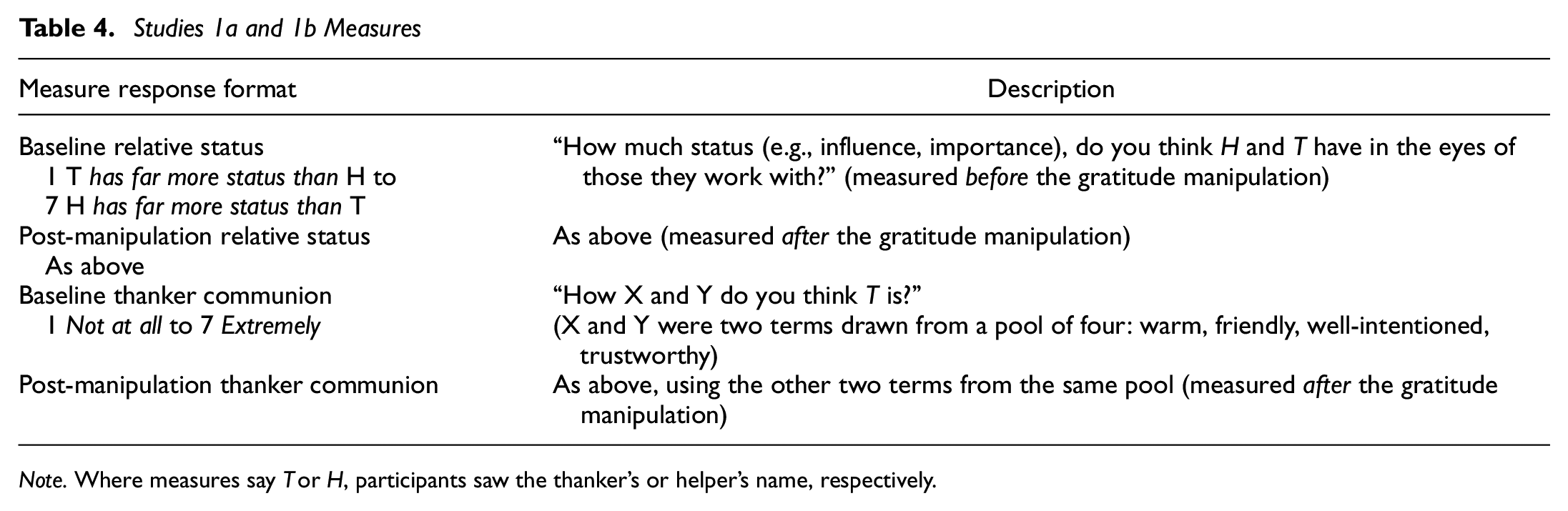
Note. Where measures say T or H, participants saw the thanker’s or helper’s name, respectively.
Next, participants reported expected gratitude, choosing the response the thanker should convey from a list of options (see Table 5), arranged in increasing intensity (for pre-testing, see SOM). We manipulated the intensity of gratitude by norming against this expectation: Participants saw a thanker’s response either two levels either above (intense gratitude condition) or below (mild gratitude condition) their personal expectation. Participants who expected response 1 or 2 (or 6 or 7) saw an even more extreme response that had not appeared earlier.
Gratitude Manipulation and Modal Statements Per Condition in Studies 1a and 1b
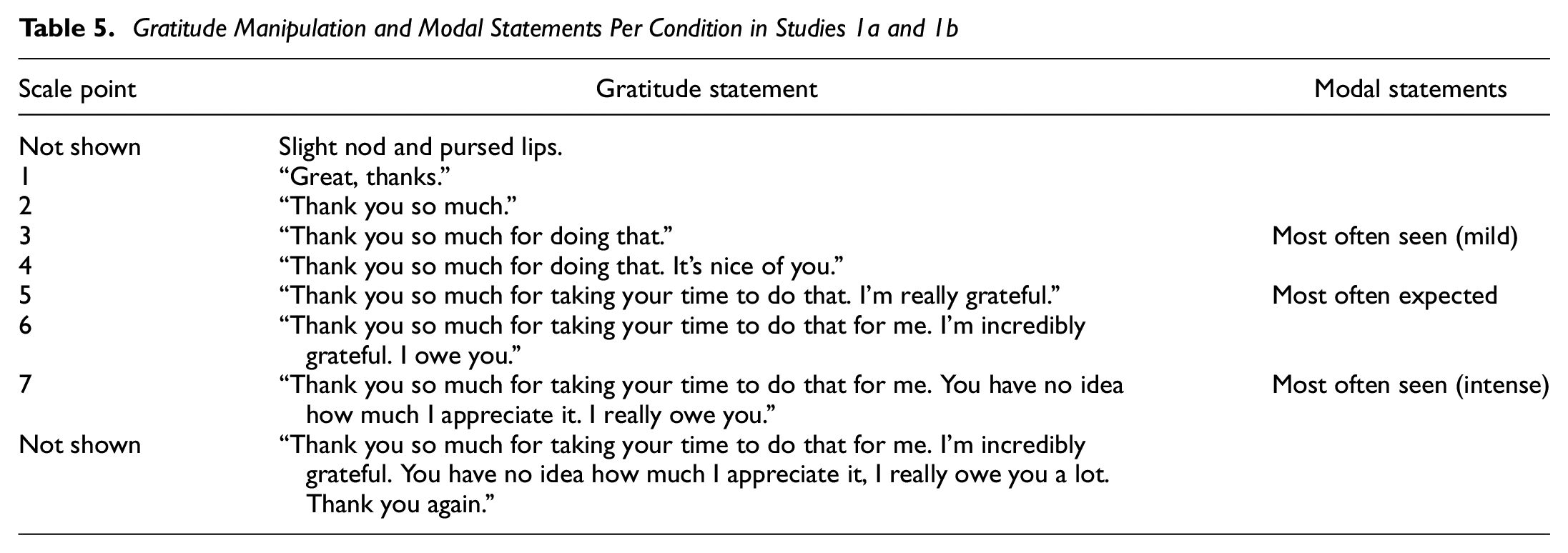
Finally, participants reported post-manipulation perceptions of relative status and thanker communion. Our key DV was the change in relative status: post-manipulation minus baseline status; positive scores indicated a change favoring the helper. In a parallel manner, we computed change in thanker communion.
Results
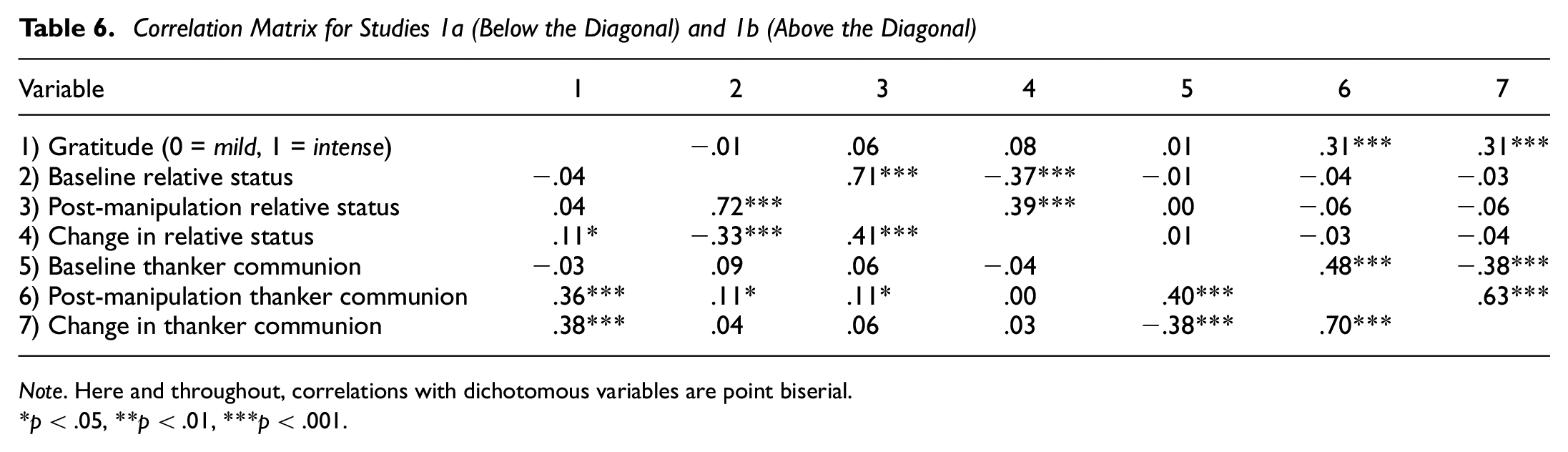
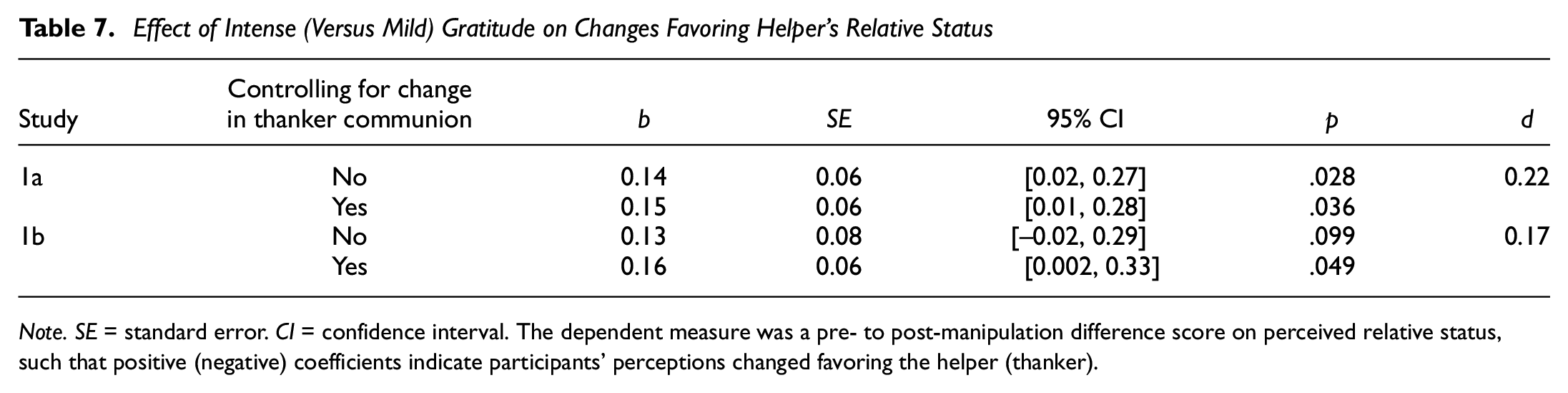
Table 6 presents correlations. More intense gratitude expressers were perceived as more communal; we therefore report effects on changes in relative status both with and without controlling for changes in communion. Analyses in Table 7 used multilevel modeling functions from the lme4 and lmerTest packages (Bates et al., 2015; Kuznetsova et al., 2017), and nested observations within vignette and within thanker-helper racial composition (e.g., Black helper/White thanker).
Correlation Matrix for Studies 1a (Below the Diagonal) and 1b (Above the Diagonal)
Note. Here and throughout, correlations with dichotomous variables are point biserial.
p < .05, **p < .01, ***p < .001.
Effect of Intense (Versus Mild) Gratitude on Changes Favoring Helper’s Relative Status
Note. SE = standard error. CI = confidence interval. The dependent measure was a pre- to post-manipulation difference score on perceived relative status, such that positive (negative) coefficients indicate participants’ perceptions changed favoring the helper (thanker).
More intense gratitude shifted relative status perceptions to favor helpers. We unpacked this by comparing baseline to post-manipulation perceptions within high and low gratitude conditions separately. For brevity, we collapsed across both studies, without controlling for changes in communion. When thankers conveyed intense gratitude, observers upgraded the helper’s relative status from baseline (M = 4.18, SD = 1.01) to post-manipulation (M = 4.26, SD = 0.88), b = 0.08, 95% confidence interval (CI) = [0.01, 0.15], p = .025. When the thanker conveyed mild gratitude, observers directionally (not significantly) downgraded the helper’s relative status from baseline (M = 4.21, SD = 0.93) to post-manipulation (M = 4.16, SD = 1.01), b = −0.05, 95% CI = [−0.12, 0.02], p = .152. Figure 1 depicts these effects. Participants overall saw the helper as relatively higher in status (i.e., scores were above the scale midpoint of 4, representing equal status between the two).
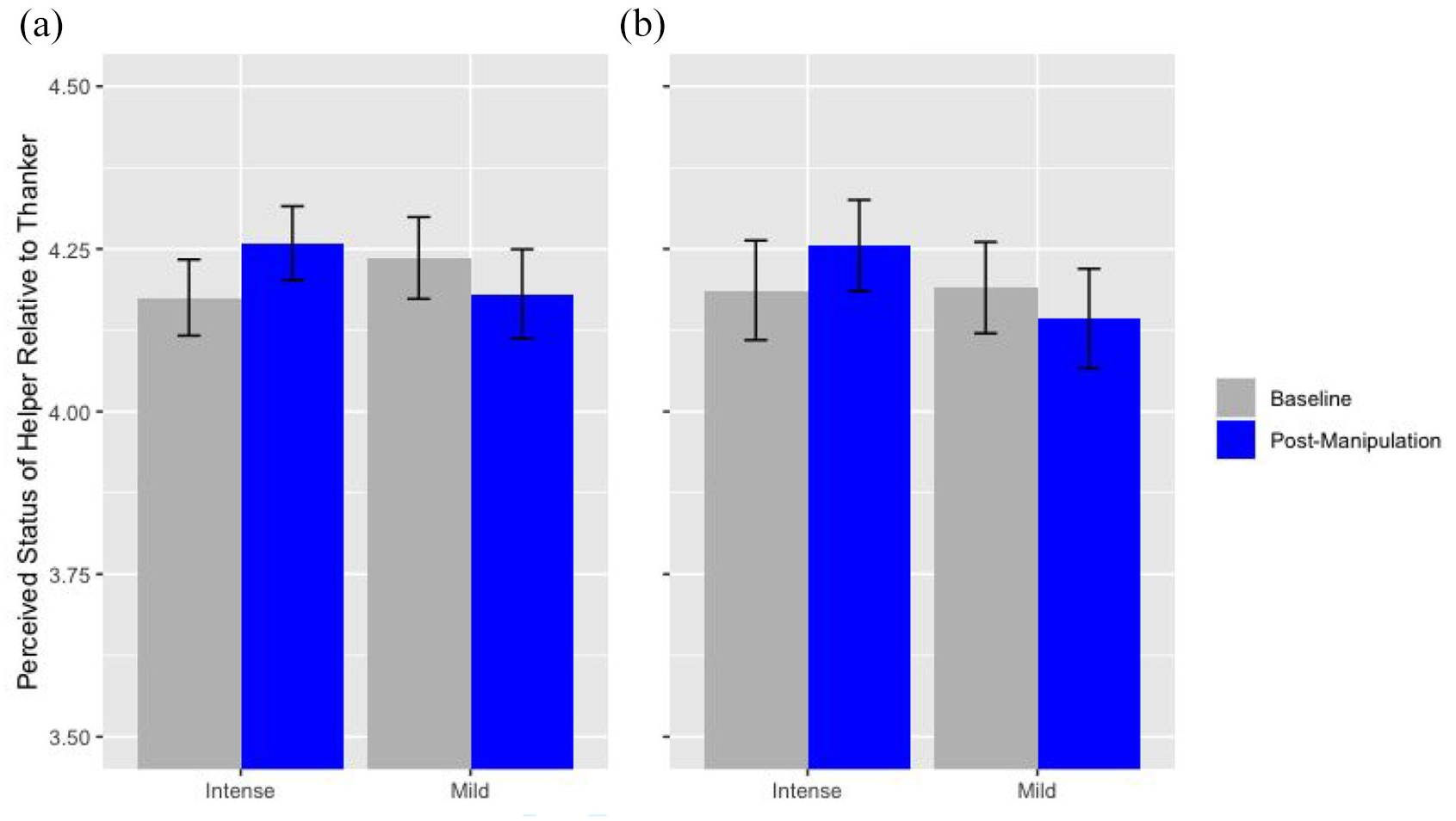
Perceptions of Relative Status Before and After Intense Versus Mild Gratitude, Studies 1a and 1b
Discussion
In Studies 1a and 1b, observers downgraded the relative status of thankers who conveyed intense versus mild gratitude. This effect was small, perhaps due to the subtlety of the manipulation. Even in the mild condition, the most frequently viewed response was rather polite: “Thank you so much for doing that.”
These initial studies’ analyses were not pre-registered and we measured perceptions of only status, omitting power as another form of social rank. Also, we did not investigate mechanisms, and all three vignettes portrayed gratitude in a single relationship and context (colleagues at work, where it is possible gratitude is perceived as less genuine). Two potential confounds also plague our manipulation. First, it did not distinguish intense or mild from inappropriate or counter normative gratitude expressions. In particular, mild gratitude expressions might be norm-violating ingratitude. Second, the three most intense gratitude expressions also included some expressions of indebtedness, which gratitude can imply (Bartlett & DeSteno, 2006), but which has otherwise different antecedents and outcomes (Mathews & Green, 2010; Tsang, 2006; Watkins et al., 2006). The more intense expressions also differed in gratitude content (e.g., “Thank you so much for taking your time to do that for me. You have no idea how much I appreciate it” vs. “Thanks so much for doing that”), but the confound means gratitude and indebtedness are both plausible causal drivers of Study 1’s findings.
Studies 2a and 2b
Studies 2a and 2b (pre-registered here: https://osf.io/q3knh/) addressed these limitations with three methodological improvements. First, vignettes varied in context and relationship. Second, the gratitude manipulation removed the potential confounds of ingratitude and indebtedness. Third, we added measures of relative power, three potential mechanisms, and a manipulation check. Participants sorted gratitude expressions into three categories: not enough, appropriate amount, and too much. They then saw the most intense or most mild expression they deemed appropriate.
Method
Participants
Tables 2 and 3 above provide participant demographics and exclusions (final Ns 378 and 361, from Prolific). As pre-registered (2b), we excluded from both studies participants who deemed only one gratitude expression acceptable, because we could not assign them mild or intense gratitude.
Procedure
Participants read one of four vignettes (characters had randomly assigned gender neutral names). One was adapted from Studies 1a and 1b (the helper connected the thanker with their manager). The other three took place in school, in a café, and on social media, respectively (see SOM). For example, You know from social media that [Thanker name] was involved in a minor accident. After a visit to the hospital, [Thanker name] has been prescribed some physiotherapy to make a full recovery. As you’re scrolling through social media, you view this thread: [Thanker name]: Hey. Anyone know a good provider for physical therapy? [Helper name]: I haven’t been to one before, but I did a quick search and asked around for you. Here are a couple names. They both are less than 15 miles from where you live. (Pivot PT and PT Solutions)
Participants reported baseline perceptions of the relative status and power dynamics between the thanker and helper (Table 8 describes all measures). They then categorized a list of potential gratitude expressions, arranged in increasing intensity (see Table 9), into three categories labeled “definitely not enough gratitude,” “could be an appropriate amount of gratitude,” and “definitely too much gratitude.” We used this to benchmark the manipulation while avoiding norm violations: Participants saw either the most intense or mildest gratitude expression they assigned to the appropriate category. As noted, this meant excluding the few participants who deemed only one expression appropriate.
Study 2 Measures
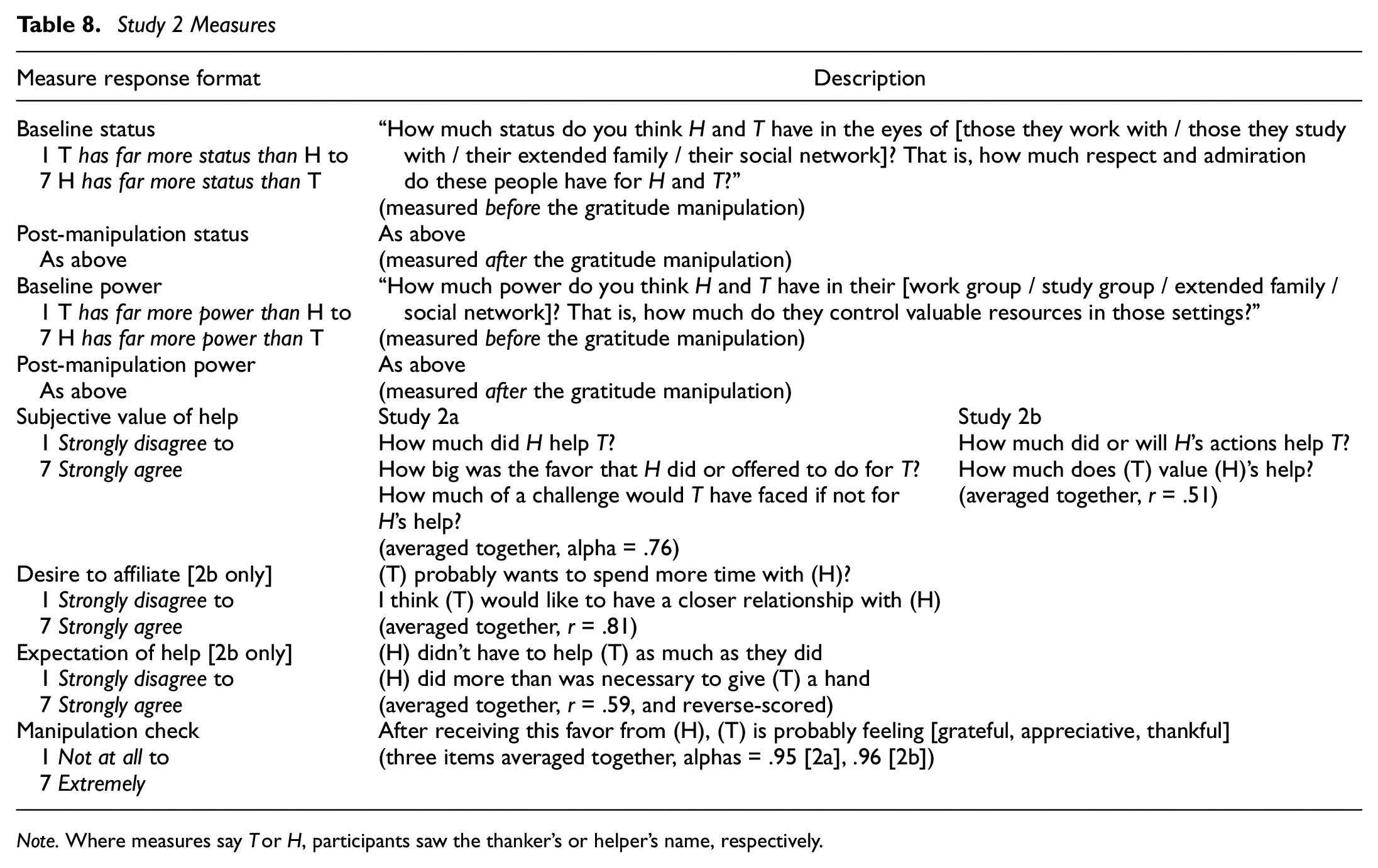
Note. Where measures say T or H, participants saw the thanker’s or helper’s name, respectively.
Gratitude Manipulation and Modal Statements Per Condition in Study 2
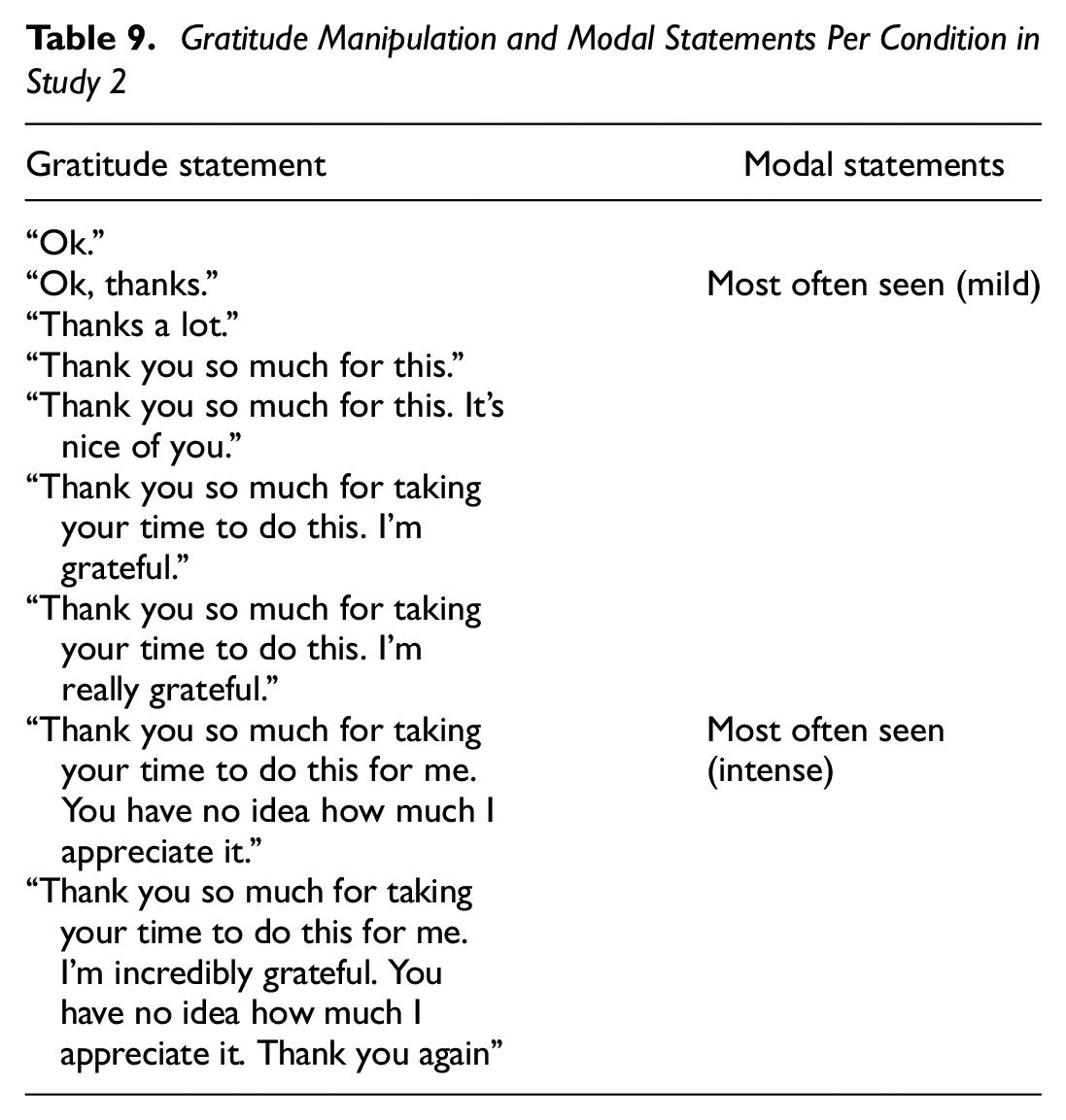
Participants then reported post-manipulation perceptions of status and power, and answered questions related to three potential mechanisms (Study 2a included only the first): the thanker’s subjective benefit, desire to affiliate, and expectations of help. Finally, a manipulation check assessed perceptions of the thanker’s felt gratitude. 2
Results
Table 10 presents correlations. Table 11 reports results from pre-registered multilevel analyses nesting observations within vignette.
Correlation Matrix for Studies 2a (Below the Diagonal) and 2b (Above the Diagonal)
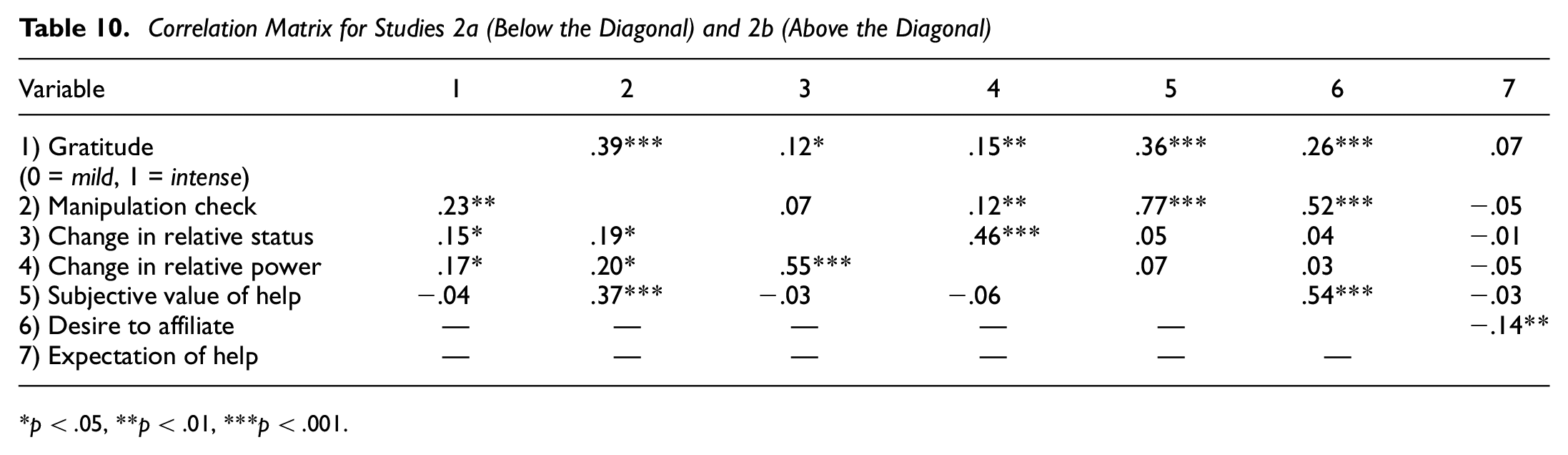
p < .05, **p < .01, ***p < .001.
Effect of Intense Versus Mild Gratitude on Study 2 Variables
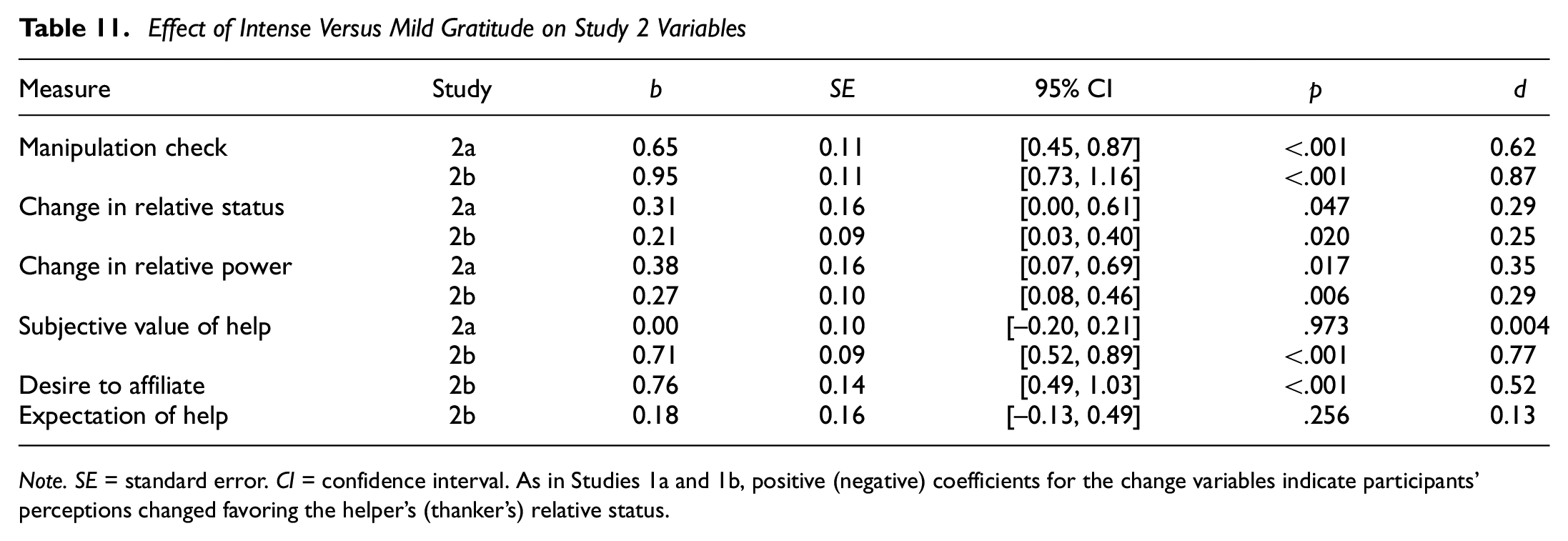
Note. SE = standard error. CI = confidence interval. As in Studies 1a and 1b, positive (negative) coefficients for the change variables indicate participants’ perceptions changed favoring the helper’s (thanker’s) relative status.
Participants reported the thanker felt more grateful in the intense compared to the mild gratitude condition. More substantively, more intense gratitude again shifted relative rank perceptions to favor helpers. We compared baseline to post-manipulation rank perceptions within the high and low gratitude conditions separately; for brevity, we collapsed across the two studies (Figure 2 presents means separately for each study). When the thanker conveyed mild gratitude, observers downgraded the helper’s relative rank from baseline (status: M = 4.63, SD = 0.98; power: M = 4.71, SD = 1.09) to post-manipulation (status: M = 4.29, SD = 1.11; power: M = 4.30, SD = 1.19), bstatus = −0.20, 95% CI = [−0.33, −0.08], p = .001, bpower = −0.26, 95% CI = [−0.39, −0.13], p < .001. When the thanker conveyed intense gratitude, observers’ perceptions did not change, bstatus = 0.04, 95% CI = [−0.06, 0.14], p = .436, bpower = 0.01, 95% CI = [−0.08, 0.11], p = .808.
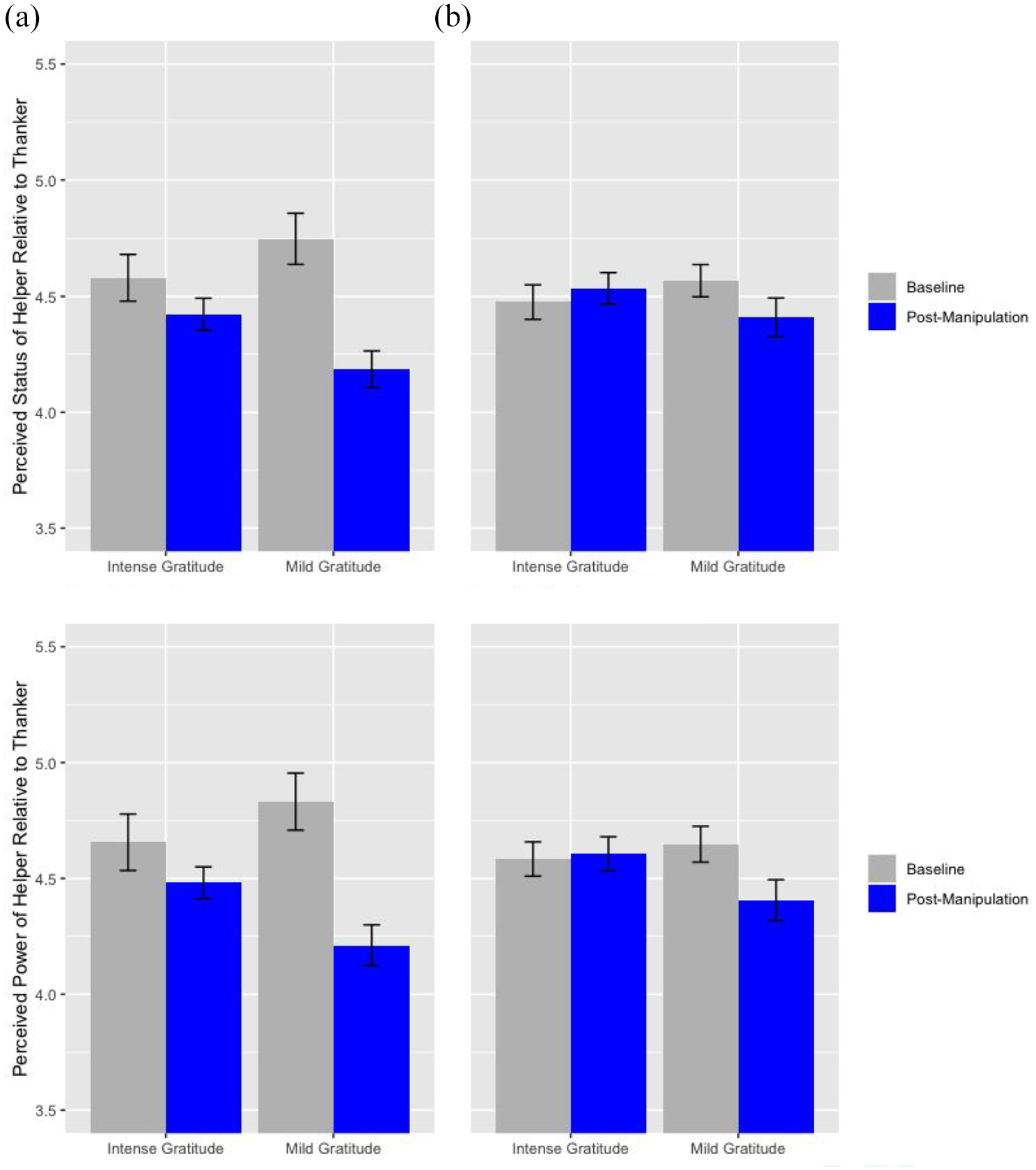
Perceptions of Relative Rank Before and After Intense Versus Mild Gratitude, Studies 2a and 2b
This differs somewhat from Studies 1a and 1b, where the shift occurred in the intense but not the mild condition. This may be due to the actual statements participants saw. In Studies 2a and 2b, where the mild condition shifted perceptions, the modal mild expression was “Ok, thanks.”—even milder than the modal mild expression in Studies 1a and 1b (“Thank you so much for doing that”). In these latter studies, where the intense condition shifted perceptions, the modal intense expression was “Thank you so much for taking your time to do that for me. I’m incredibly grateful. You have no idea how much I appreciate it, I really owe you a lot. Thank you again.”—even more intense than the modal intense expression in Studies 2a and 2b (“Thank you so much for taking your time to do this for me. You have no idea how much I appreciate it”).
Turning to potential mechanisms, we examined observers’ inferences about thankers. Some effects appeared promising (Table 11): Observers thought intense gratitude expressers valued the help they had received more (Study 2b only) and wanted to affiliate more with the helper. However, no mediator variable correlated with either rank variable (Table 10 above), so tests using the lavaan package (Rosseel, 2012) indicated no significant mediation. Even models including all three Study 2b variables simultaneously returned direct effects on status, b = 0.32, z = 2.04, p = .042, and (marginally) on power, b = 0.37, z = 1.92, p = .055. Thus, gratitude influenced perceptions of relative rank, even controlling for the subjective size of the favor, thankers’ desire to connect, and thankers’ expectation of help.
Discussion
Study 2 provided stronger evidence that the intensity of gratitude that thankers express shifts observers’ perceptions of relative rank—status and power—using a range of contexts and an unconfounded manipulation. However, our efforts to explore lay theories that might account for this effect yielded null results. Our final studies extended our findings into the real world, while also measuring perceptions of communion and agency, to further explore mechanism.
Studies 3a to 3c
In Studies 3a to 3c (3b: https://osf.io/6uda8; 3c: https://osf.io/j6r9f/), participants provided perceptions of thankers’ and helpers’ relative rank, based on screenshots of work-related messages. These messages were provided by real working adults and all contained gratitude content that trained coders scored for magnitude and potential confounds (indebtedness and positive reinforcement).
Method
Participants
Table 2 above provides demographics and power. As pre-registered for Studies 3b and 3c, analyzed samples excluded participants who failed an English comprehension check that redirected them from the survey (n3a = 36; n3b = 48; n3c = 69), and whose responses showed low variance between messages, n3a = 16; n3b = 49; n3c = 41). Final samples were N3a = 162, N3b = 251, and N3c = 259 (from Prolific).
Procedure and Measures
Participants saw 12 gratitude messages, drawn without replacement from a set of 346. The SOM describes the source of these stimuli. Blind coders scored each message on three metrics of gratitude (see Table 12), as well as two related constructs: Indebtedness (which senders rarely expressed), and positive reinforcement (e.g., telling the recipient they did a fantastic job, which might accompany an expression of gratitude particularly when the sender has authority over the recipient). We planned to control for these constructs to isolate the specific effects of gratitude (the pre-registration for 3b did not anticipate these covariates; results without them were similar, see SOM).
Study 3 Coded Gratitude Metrics
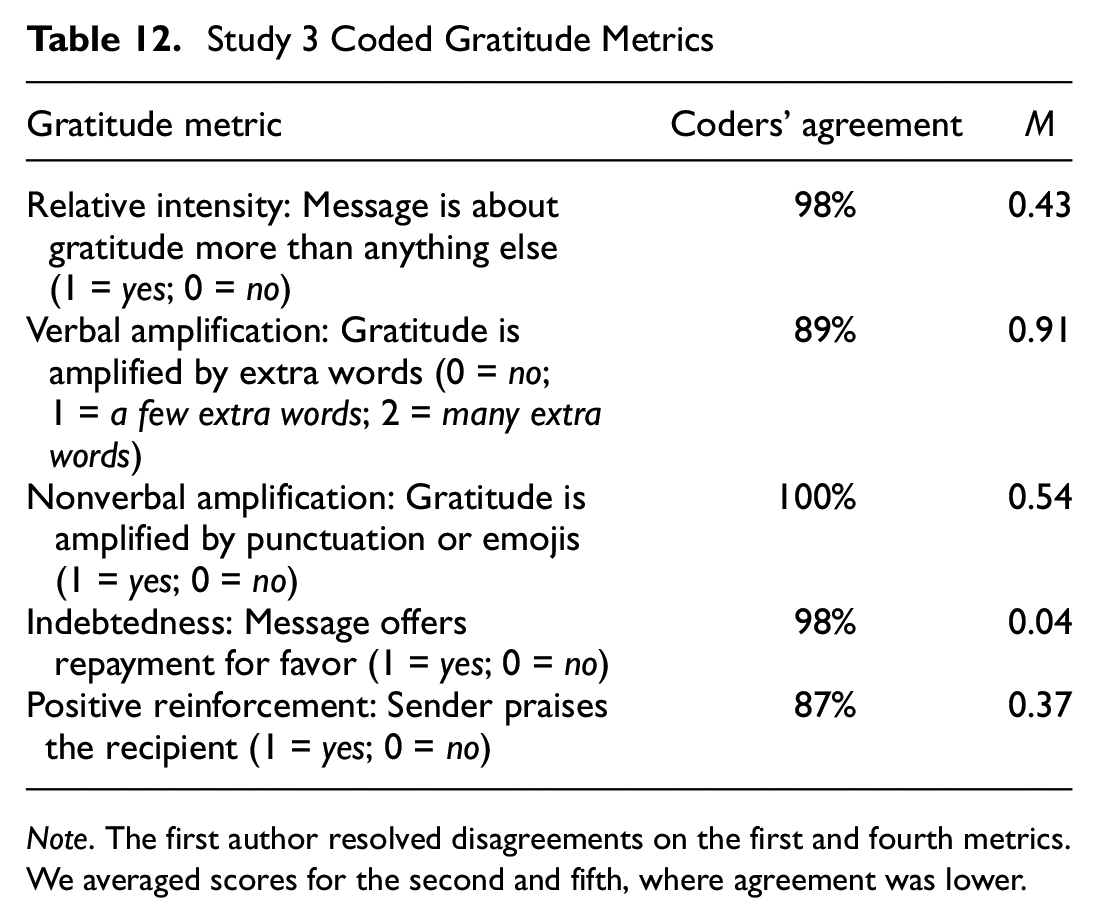
Note. The first author resolved disagreements on the first and fourth metrics. We averaged scores for the second and fifth, where agreement was lower.
For each message participants saw, they rated their agreement with four statements (see Table 13).
Study 3 Measures
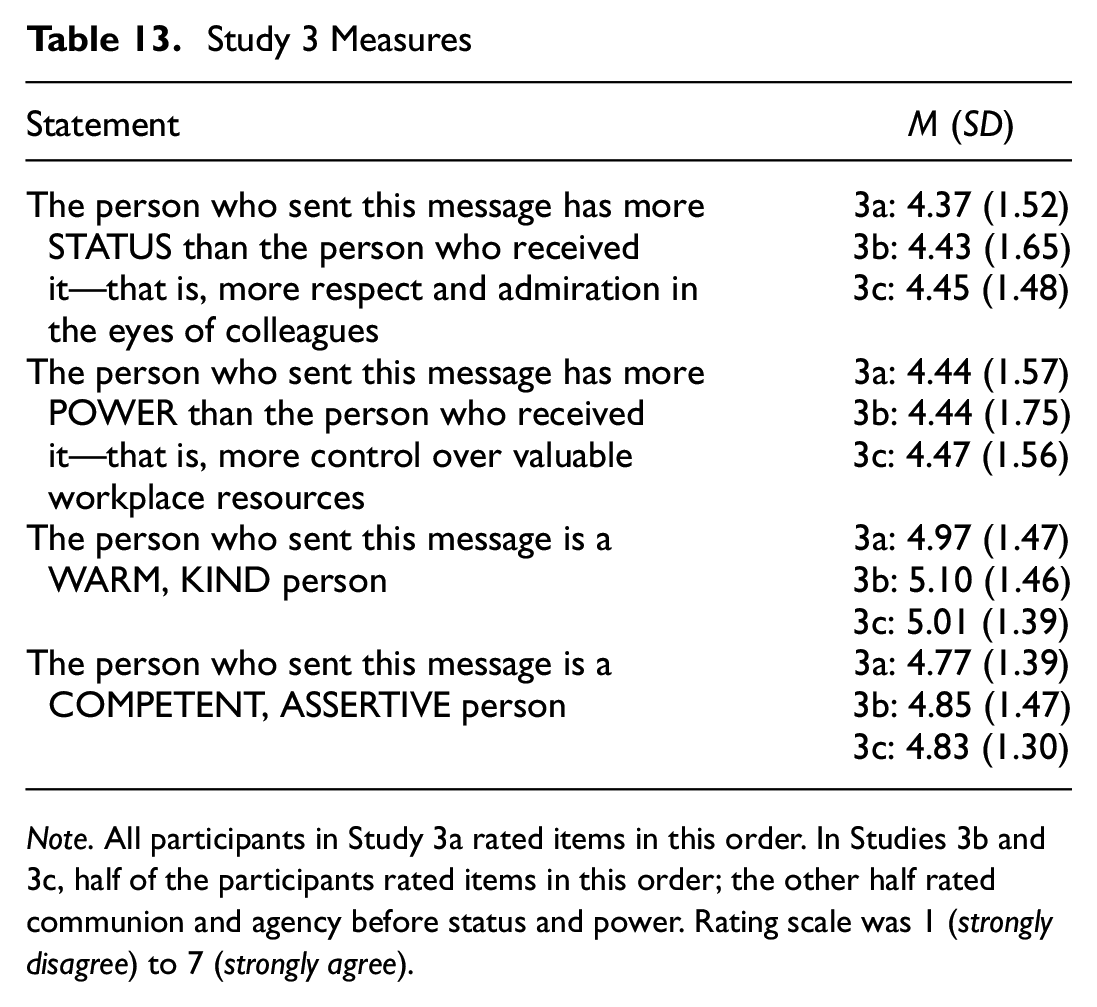
Note. All participants in Study 3a rated items in this order. In Studies 3b and 3c, half of the participants rated items in this order; the other half rated communion and agency before status and power. Rating scale was 1 (strongly disagree) to 7 (strongly agree).
Results
Multilevel models nested observations within participant and message, and controlling for both indebtedness and positive reinforcement (Table 14).
Effect of Three Metrics of the Magnitude of Gratitude
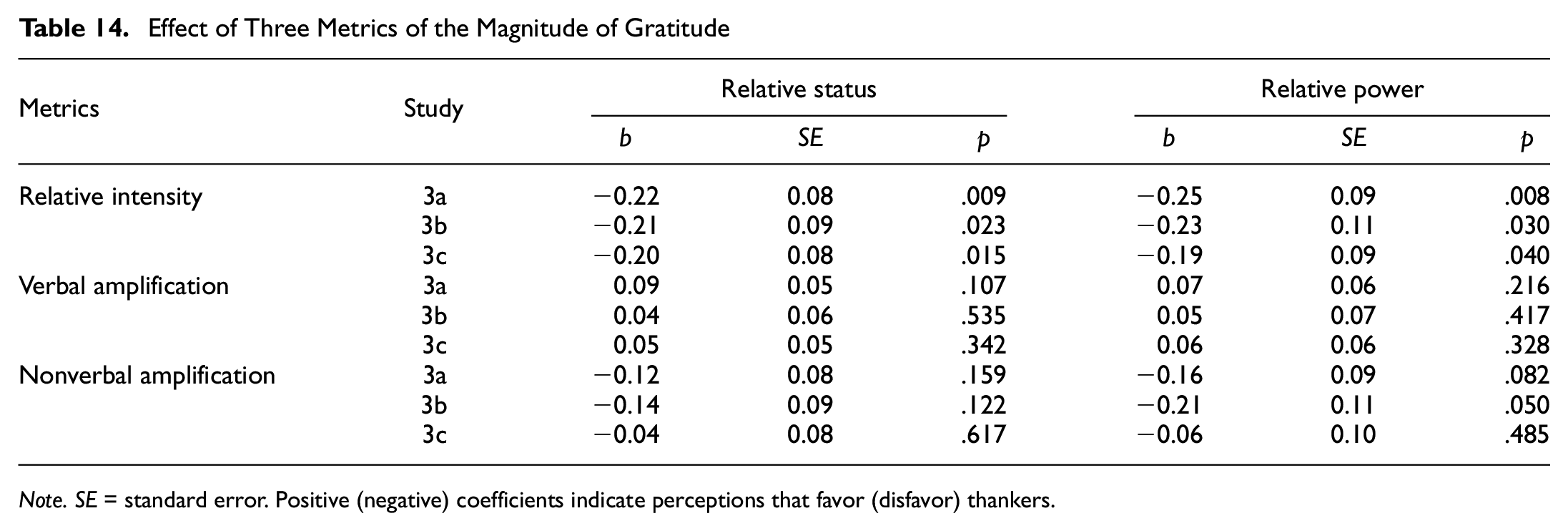
Note. SE = standard error. Positive (negative) coefficients indicate perceptions that favor (disfavor) thankers.
The three metrics yielded somewhat different results: Senders whose gratitude was intense in relative terms were consistently perceived as lower in rank (as were those who amplified their gratitude nonverbally, though these effects were directional rather than significant). Senders who amplified their gratitude verbally were perceived no differently than those who did not. To investigate these differences further, exploratory analyses tested communion and agency as mediators (Table 15).
Mediating Effects of Gratitude on Perceived Relative Status and Power
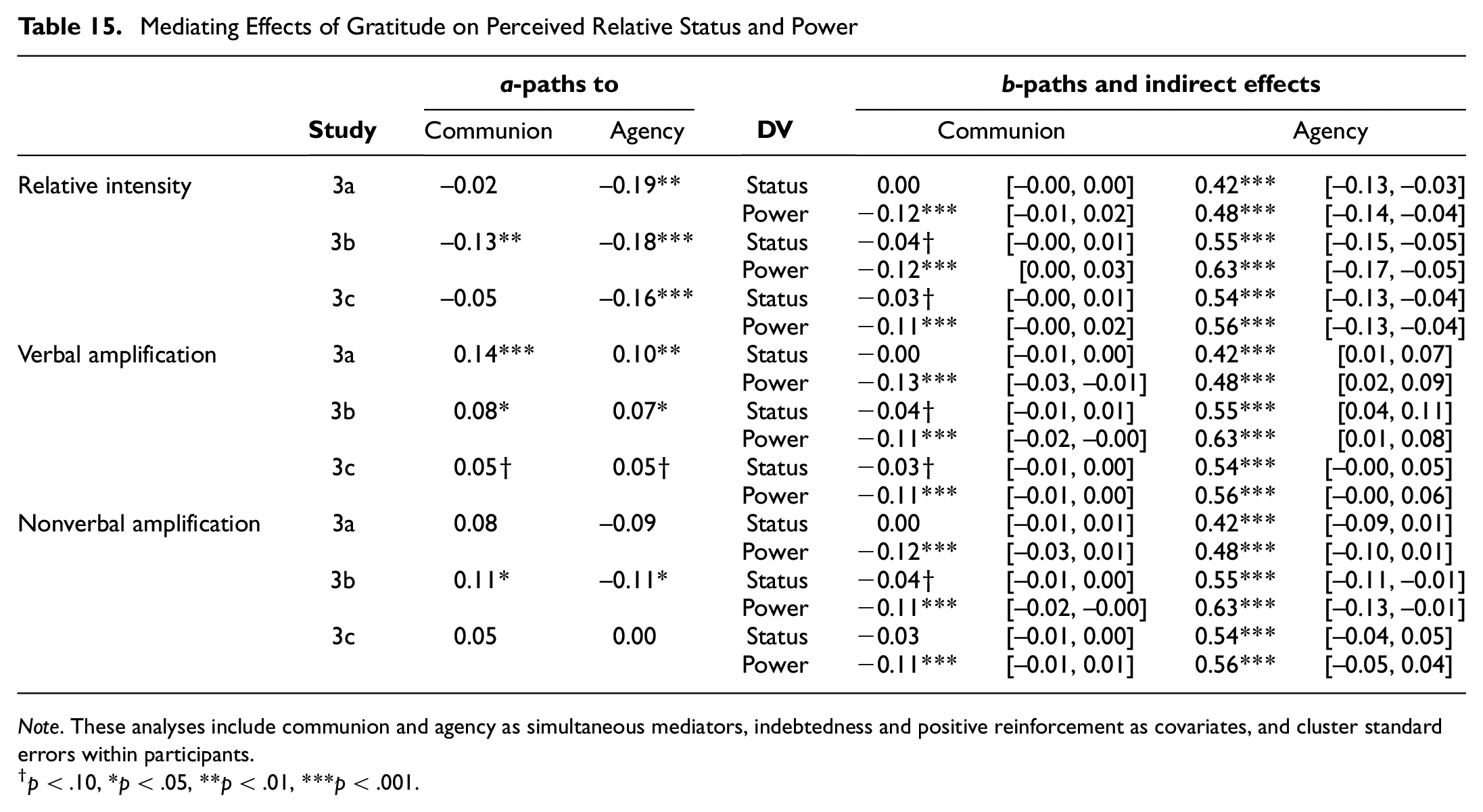
Note. These analyses include communion and agency as simultaneous mediators, indebtedness and positive reinforcement as covariates, and cluster standard errors within participants.
p < .10, *p < .05, **p < .01, ***p < .001.
Agency was a key mediator: Senders whose gratitude was relatively intense seemed less agentic (as did those who amplified their gratitude nonverbally, though again these effects were not consistent). In turn, agency was strongly related to perceived rank. Interestingly, those who amplified their gratitude verbally were seen as more agentic (and also more communal). Positive reinforcement was more common among these verbally amplified messages, r = .26, p < .001 (but not among the relatively intense or nonverbally amplified ones, rs < .01). We wondered whether the binary variable we used to control for positive reinforcement was too imprecise: In spite of our efforts, participants may have interpreted many of the verbally amplified messages as managers providing encouraging feedback to their employees, muddying any effect of the gratitude.
Discussion
Some findings from Studies 3a to 3c supported those of earlier studies: Thankers whose gratitude was more intense in relative terms—in that it was the most obvious thing being conveyed, as opposed to an afterthought—appeared lower rank, and also less competent and assertive. This finding from a different, reality-based paradigm adds converging support to our hypotheses.
At the same time, using the metric of magnitude closest to that used in earlier studies—the amplification of gratitude through additional words—we found no such pattern. In fact, thankers who verbally amplified seemed more agentic. This may be related to these messages containing more positive reinforcement and thus more likely to come from evaluators in positions of authority. As well, participants in previous studies knew what helpers had done, whereas here participants often had no information about this. Perhaps it was thus difficult for them to gage the intensity of gratitude from verbal amplification: Different levels of favor might normatively warrant more or fewer words of thanks.
General Discussion
The current cultural zeitgeist, supported by existing scientific literature, portrays expressing gratitude as almost exclusively positive for both thankers and their helpers, emphasizing its role as a signal of communion. Our findings help complete the picture by examining what gratitude signals about agency and in particular social rank. We should note that our results may be culture-specific given our American-only samples. Nonetheless, these preliminary findings suggest that gratitude—an oft-promoted emotion in society—may sometimes have unforeseen relational costs for thankers.
When individuals expressed intense, obvious gratitude, observers perceived them as lower in status and power in comparison to the person on the receiving end of their gratitude. This emerged across seven studies that directly replicated each other’s findings and/or used pre-registered analysis plans. Moreover, it emerged across different relationships and contexts, as well as different operationalizations of social rank. Our studies using stimuli from real organizations yielded more mixed results, indicating a need for future contextualized research that exists beyond the norms of hierarchical structures.
Studies 1a to 2b measured perceived relative rank both at baseline and post-manipulation, enabling us to untangle whether helpers benefited from thankers’ more intense gratitude, or thankers benefited from their own less intense gratitude, or both. Results varied, but suggested an intriguing possibility: More and less intense gratitude expressions may each have opposing effects, effects that exist outside of certain absolute thresholds. This could explain why Studies 2a and 2b’s especially mild expression significantly boosted thankers’ relative rank, while Studies 1a and 1b’s less mild one did so only directionally. Likewise, this theorizing may explain why Studies 1a and 1b’s especially intense expression significantly diminished thankers’ relative rank, while Studies 2a and 2b’s less intense one did so only directionally. Alternatively, we must consider the possibility that Studies 1a and 1b’s intense expression diminished thankers’ relative rank because it explicitly indicated their indebtedness, rather than let observers presume it as they might have in Studies 2a and 2b (Bartlett & DeSteno, 2006).
We found little evidence as to the attributional mechanisms of these effects. Although participants did perceive more intense thankers as having benefited more and as wanting to affiliate more with their helpers, these factors did not appear related to judgments of relative rank. It may be that gratitude sends additional signals we have not considered about thankers or their helpers, and that these underlie observers’ perceptions of relative rank. For example, perhaps participants make different assumptions about indebtedness or guilt from more intense versus mild gratitude expressions, and these may be linked to inferences about rank. Alternatively, there may be no such mechanisms: If most people intuit that higher ranked helpers elicit more intense gratitude (Anicich et al., 2021; Okamoto & Robinson, 1997; Ouyang et al., 2018), from that empirical correlation they may assume that more intense gratitude likely came in response to a higher ranked helper. Findings in Studies 3a to 3c, where perceptions of rank went hand in hand with perceptions of competence and assertiveness, are consistent with this idea.
Hierarchical Dynamics and Help-Seeking
Our findings echo work showing that helping, like gratitude, can exacerbate status differences (Nadler & Halabi, 2006). Higher status groups can offer to help lower status groups to keep them dependent (Nadler & Chernyak-Hai, 2014); our findings hint that, independent of the actual help received, if a lower status group expresses gratitude, this may similarly entrench status differences. Perhaps for this reason, the work on help also documents how lower status groups can resist help-seeking to avoid looking weak (Nadler & Halabi, 2006). Future research might investigate whether, in interpersonal rather than intergroup contexts, people similarly sometimes resist expressing gratitude when competing for status.
Costs in Relative Rank Versus Communion Benefits
The effects of gratitude on perceived relative rank emerge against a backdrop of its well-known benefits for communion perceptions (e.g., Algoe et al., 2013; Williams & Bartlett, 2015). This raises the question of how relative rank and communion effects relate or interact. These effects might occur in parallel, independent of each other: Effusive thankers appear more communal even as they appear lower in relative rank. A more intriguing possibility is that communion-related benefits for thankers occur in part because of what more intense gratitude costs them in relative rank. If highly grateful thankers appear (relatively) lower rank, social exchange theory (Hardy & Van Vugt, 2006; Henrich & Gil-White, 2001; Tooby & Cosmides, 1996) predicts this would make them especially attractive partners to high-status or status-motivated observers. Put differently, many people might want to affiliate with someone who has publicly signaled deference and boosted their helper’s rank, precisely because they hope to receive this same treatment in the future. In turn, attractive partners are often described as communal (e.g., Carrier et al., 2019).
Implications for Thankers
The effects we report here could have potential negative consequences for thankers’ impression-management goals, particularly if they hold hierarchical ambitions (Leary & Kowalski, 1990). Studies 3a to 3c (and A and B, in the SOM) indicate that more intense gratitude can have costs that are absolute, not only relative. Ultimately, intense thankers could lose social standing in their group, given that this is often contingent on group members choosing to grant it (Bales et al., 1951; Berger et al., 1972; Ridgeway, 1984), as status is conferred (Anderson et al., 2015). While Studies 3a to 3c’s mixed findings caution us against strong practical conclusions, we might at least advise that thankers express their gratitude while communicating about unrelated topics, for lower relative intensity.
The potential negative consequences of intense gratitude may be amplified in contexts marked by intergroup inequalities in status and power. In these contexts, expressions of gratitude—which underscore that help has taken place and may imply that one group is dependent on another (Nadler & Halabi, 2006)—can further consolidate already lower ranked groups in an unfair hierarchy. This is particularly problematic when societies instill gratitude norms in their citizens (see Eibach et al., 2015) and justify societal inequities with paternalistic narratives where a lower-status minority is grateful for ongoing help from the high-status majority (Durrheim et al., 2014). Our findings document one psychological mechanism that may consolidate this justification (e.g., Jackson, 2016; Ksenofontov & Becker, 2020).
Conclusion
Efforts to increase how much gratitude people publicly express to others have proceeded without attention to what this expression signals, if anything, about the thanker’s and helper’s hierarchical relationship. Specifically, how do they compare relative to one another? Our research suggests that expressing more intense gratitude can make thankers appear lower in power and status in comparison to their helpers. These findings qualify current recommendations to always appear grateful. When one feels pressure to express gratitude, sometimes less can be worth more.
Supplemental Material
sj-docx-1-spp-10.1177_19485506251320427 – Supplemental material for Does Saying “Thanks a Lot” Make You Look Less Than?
Supplemental material, sj-docx-1-spp-10.1177_19485506251320427 for Does Saying “Thanks a Lot” Make You Look Less Than? by Kristin Laurin, Kate W. Guan and Ayana Younge in Social Psychological and Personality Science
Footnotes
Handling Editor: Eranda Jayawickreme
Declaration of Conflicting Interests
The author(s) declared no potential conflicts of interest with respect to the research, authorship, and/or publication of this article.
Funding
The author(s) received no financial support for the research, authorship, and/or publication of this article.

Supplemental Material
The supplemental material is available in the online version of the article.
Notes
Author Biographies
References
Supplementary Material
Please find the following supplemental material available below.
For Open Access articles published under a Creative Commons License, all supplemental material carries the same license as the article it is associated with.
For non-Open Access articles published, all supplemental material carries a non-exclusive license, and permission requests for re-use of supplemental material or any part of supplemental material shall be sent directly to the copyright owner as specified in the copyright notice associated with the article.
