




Abstract
Existing literature has explored the impact of social support (SS) on life satisfaction (LS). However, the reciprocal relationship—that is, the influence of LS on SS—remains understudied, despite extant theoretical support. In addressing this gap, the present study employed bivariate latent growth modeling to examine bidirectional associations between SS and LS trajectories among 8,449 middle-aged and older adults in Singapore, over seven waves spanning almost 6 years. Results provided evidence supporting the notion of bidirectional associations. Specifically, baseline SS positively predicted subsequent changes in LS, and baseline LS positively predicted subsequent changes in SS. Findings underscore the potential for interventions and policies aimed at enhancing well-being among older individuals to capitalize on this bidirectional relationship. By targeting either LS or SS, interventions could potentially trigger positive feedback loops, amplifying their collective impact on overall well-being.
Against the backdrop of a globally aging population, maintaining the life satisfaction (LS) of older adults is critical given its association with mental health, protective health behaviors, and physical well-being (e.g., Fergusson et al., 2015; Siahpush et al., 2008). Extensive literature has established the role of social support (SS)—the extent to which an individual’s essential social needs are satisfied through engaging and interacting with others (Kaplan et al., 1977; Thoits, 1982)—in shaping LS (e.g., Adams et al., 2016; Bryson & Bogart, 2020). However, possibility of the reverse relationship—the impact of LS on SS—remains understudied, despite existing theoretical support (e.g., Ajzen, 1991; Ryan & Deci, 2000; Thibaut & Kelley, 1959) and potentially profound implications.
An Aging Population and LS
LS represents a fundamental dimension of subjective well-being, encapsulating the cognitive appraisal of an individual’s overall life circumstances, experiences, and self-perceptions (Diener, 1984; Tov, 2018). During the transition to older adulthood, where individuals confront shifts in social roles, health changes, and adverse life events, LS assumes heightened significance; it reflects not only an individual’s evaluative judgment of life but also their adaptive capacity and resilience in the face of adversity (Baltes & Baltes, 1990; Cohn et al., 2009; Rossi et al., 2007). Importantly, higher levels of LS tend to correlate with better mental health outcomes, including reduced levels of depression and anxiety (e.g., Fergusson et al., 2015). Individuals reporting higher LS also tend to exhibit better physical health outcomes, engage more frequently in proactive health behaviors, and report an overall higher health quality (e.g., Siahpush et al., 2008). Evidently, LS is a construct intimately connected to the experience of holistic well-being, and elucidating predictors of LS presents opportunities for enhancing well-being among older individuals, with SS being one such predictor.
SS as a Facilitator of LS
SS has frequently been posited as an important antecedent of LS (e.g., Adams et al., 2016; Bryson & Bogart, 2020). At its core, SS acts as a crucial buffer against stressors and adversities (stress-buffering hypothesis; Cohen & Wills, 1985). Supportive interactions, such as empathetic listening during challenging periods, foster feelings of acceptance and care, mitigating the negative effects of stress on LS (Krause, 1997; Semmer et al., 2008). In addition, SS may assuage feelings of loneliness (Holt-Lunstad, 2017; Lasgaard et al., 2010; Zhang & Dong, 2022), another known negative-correlate of LS (e.g., Goodwin et al., 2001; Salimi, 2011). From the cognitive perspective, loneliness stems from the perception of inadequacies in one’s social relationships, such as a lack of support (de Jong Gierveld, 1998; Peplau & Perlman, 1982; Rokach, 2011). Thus, when individuals perceive the presence of supportive connections, feelings of loneliness typically diminish (de Jong Gierveld, 1998; Rokach, 2011). Beyond mitigation of negative affect (e.g., stress and loneliness), SS may fulfill fundamental psychological needs (e.g., Ryan & Solky, 1996; Shin & Park, 2022), which enhance well-being (e.g., Ryan & Deci, 2000; M. Tang et al., 2020). From the perspective of self-determination theory (SDT; Ryan & Deci, 2000), SS may satisfy the need for relatedness by fostering a sense of connectedness and the development of intimate relationships (Ryan & Solky, 1996; Van den Broeck et al., 2010). It may also facilitate the fulfillment of autonomy and competence needs (Ryan & Deci, 2000; Ryan & Solky, 1996). For instance, SS may encourage emotional expression and self-disclosure, facilitating reflective decision-making and fulfilling one’s sense of autonomy (Ryan & Solky, 1996). Access to instrumental forms of SS, such as tangible aid or practical assistance, may equip individuals with the ability to navigate challenges more effectively, fulfilling their need for competence and positively influence LS (e.g., Angley et al., 2015; Cohen & Wills, 1985; Huang et al., 2023).
LS as a Facilitator of SS
While ample evidence underscores the benefits of SS on LS (e.g., Adams et al., 2016; Bryson & Bogart, 2020; Ryan & Solky, 1996), the exploration of the reciprocal relationship—wherein heightened LS potentially acts as a catalyst for the perception or cultivation of SS—remains understudied. The limited focus on the reciprocal impact of well-being on SS may reflect the pervasive assumption that links between social relationships and well-being are largely unidirectional (Lucas et al., 2008; Lyubomirsky et al., 2005; Saphire-Bernstein & Taylor, 2013). However, extant literature suggests that LS may influence perceptions of SS and support accessibility—that is, the ability to receive SS as determined by the structure and size of social networks.
From the top-down perspective, between-person variation in LS may be a function of individual differences in positivity (i.e., personological; Diener et al., 2000; Heller et al., 2004). For instance, individuals who report greater LS tend to be more extroverted and lower on neuroticism (Darvill & Johnson, 1991; Schimmack et al., 2004), report more positive and less negative emotions (Heller et al., 2004; Schimmack et al., 2004), and are more optimistic in general (Darvill & Johnson, 1991; Leung et al., 2005). As such, this predisposition toward positivity and the expectation of positive outcomes may, in turn, translate to greater perceptions of available support (e.g., Carver & Scheier, 2001; Schweizer et al., 1999). In other words, as compared with those lower on LS, individuals with greater LS may be predisposed to a positivity bias.
Greater perceived support among individuals predisposed to positivity may also arise from higher levels of actual support. Individuals higher on LS tend to exhibit greater self-esteem and self-efficacy (Diener & Diener, 1995; Miller et al., 2019), which may facilitate the formation and maintenance of social relationships, and thus, translate to increased access to SS (e.g., Harris & Orth, 2020; Marshall et al., 2014). For example, greater self-esteem may give rise to more adaptive responses toward interpersonal conflict—such as more accommodating and constructive responses to partner transgressions, and engagement in positive behaviors to mitigate escalation of conflict (Diamond et al., 2010; Harris & Orth, 2020)—contributing to the maintenance of a broader SS network (e.g., Harris & Orth, 2020; Marshall et al., 2014). On the other hand, individuals predisposed to negativity, partially indexed by lower LS, may be more susceptible to the development of depressive symptoms (e.g., Koivumaa-Honkanen et al., 2004; Milas et al., 2021), characterized by pervasive feelings of despondency, cognitive distortions, and diminished interest in daily activities (e.g., Buchwald & Rudick-Davis, 1993). These symptoms may, in turn, foster a proclivity to withdraw from social engagements (e.g., Joiner & Timmons, 2009), reducing one’s access to SS (Goldberg et al., 1985; Shouse et al., 2013). As such, as compared with those who are highly satisfied, individuals low on LS may have reduced accessibility to SS, owing to potential smaller networks.
While greater LS may signify individual differences in positivity (e.g., Diener et al., 2000; Heller et al., 2004) and contribute to greater perceptions of (Carver & Scheier, 2001; Schweizer et al., 1999) and access to SS over time (e.g., Diener & Diener, 1995; Harris & Orth, 2020), it may also enhance support through other bottom-up processes (i.e., situational influences). For example, while people may feel empathetic toward dissatisfied individuals experiencing situational distress or hardship (Batson, 1987), willingness to offer help may vary based on the supporter’s self-perceived ability to alleviate the distress (Ajzen, 1991; Buckley et al., 2010; Wang et al., 2021). When someone with higher LS seeks support, they may be perceived as facing more tractable challenges (e.g., Cohn et al., 2009; Rossi et al., 2007), which supporters may believe they can address more effectively. In contrast, individuals with lower LS may be perceived as facing difficulties that are ongoing or chronic, which could lead to feelings of helplessness in potential supporters, reducing their willingness to render support. As such, while individual differences in LS may influence the perception of SS, other bottom-up influences may also be plausible.
Of note, some previous studies have examined the reciprocal associations between individual differences in personality traits and SS. For instance, Hill and colleagues (2024) observed longitudinal between- and within-person associations among personality traits and SS, and findings by Pfund and Allemand (2024) indicated concurrent changes between personality traits and SS. However, studies directly examining reciprocal associations between individual differences in well-being and SS longitudinally have been pauce. Among the few studies that have explored the influence of well-being on SS—wherein happier people tend to report better relationships and support—the majority of these studies have been cross-sectional (e.g., Lyubomirsky et al., 2005; Pinquart & Sörensen, 2000), precluding conclusions about the direction of influence (Diener et al., 1999; Saphire-Bernstein & Taylor, 2013). Furthermore, previous studies typically involved exclusively Western samples (e.g., Diener & Seligman, 2002; Lyubomirsky et al., 2005; Staw et al., 1994), bringing into question the generalizability of previous findings (Lucas et al., 2008; Saphire-Bernstein & Taylor, 2013).
As such, despite theoretical support for the influence of LS on SS and proximal evidence from some studies (e.g., Diener & Seligman, 2002; Lyubomirsky et al., 2005; Pfund & Allemand, 2024), direct evidence involving more robust methodologies is needed (e.g., Diener et al., 1999; Lucas et al., 2008; Saphire-Bernstein & Taylor, 2013).
The Present Study
Understanding LS among older individuals holds significant interest for both researchers and policymakers (e.g., Adams et al., 2016; Siahpush et al., 2008). While SS has been recognized as a key predictor of LS (e.g., Bryson & Bogart, 2020; Ryan & Solky, 1996), limited attention has been given to exploring how LS impacts SS, despite theoretical support (e.g., Harris & Orth, 2020; Lyubomirsky et al., 2005) and the potential for sustained LS through a feedback loop between the two constructs. To this end, the present study employed Bidirectional Bivariate Latent Growth Modeling (BBLGM) to investigate reciprocal longitudinal associations between SS and LS among 8,449 middle-aged and older adults in Singapore. BBLGM estimates growth trajectories of two variables simultaneously, allowing for the exploration of associations between these variables, accounting for their respective intra-individual changes over time.
While other alternate analytical methods may be employed to investigate bidirectional associations between SS and LS (Orth et al., 2021), we chose BBLGM as it allowed us to explore links between growth trajectories in support and satisfaction. Previous research has suggested developmental trends in both satisfaction and support. For example, some studies suggest that SS can increase or decrease with age (Coventry et al., 2004). Other studies observed a U-shaped pattern in well-being across age groups—declining in middle age and increasing among older adults in Western, English-speaking countries (Steptoe et al., 2015). An important limitation of this previous literature is reliance on cross-sectional comparisons across age groups instead of longitudinal data that document within-person trajectories. This study examines longitudinal trends in LS and SS in a Southeast Asian sample of older adults.
Method
Transparency and Openness
Analyses were conducted in R (4.3.3; R Core Team, 2024). The analysis code can be accessed at https://osf.io/75dqc/. The data supporting the findings of this study can be obtained from the Centre for Research on Successful Ageing (ROSA) at Singapore Management University, but certain restrictions apply to the availability of this data; due to the data being used under license for the specific purposes of this study, it is not publicly accessible. ROSA will provide access to data for the purposes of verifying the results of this study upon written request (
Participants
The present research sample was drawn from the Singapore Life Panel (SLP), a population-representative monthly survey of adults aged 50 years and above in Singapore. Commencing in 2015, the SLP recruited participants through a randomized selection from 25,000 households across Singapore (see Vaithianathan et al., 2018, for details). The present sample consisted of 8,449 middle-aged and older adults (baseline age: M = 59.13, SD = 5.81; 52% female). Sample characteristics are summarized in Table 1.
Descriptive Statistics of Study Sample
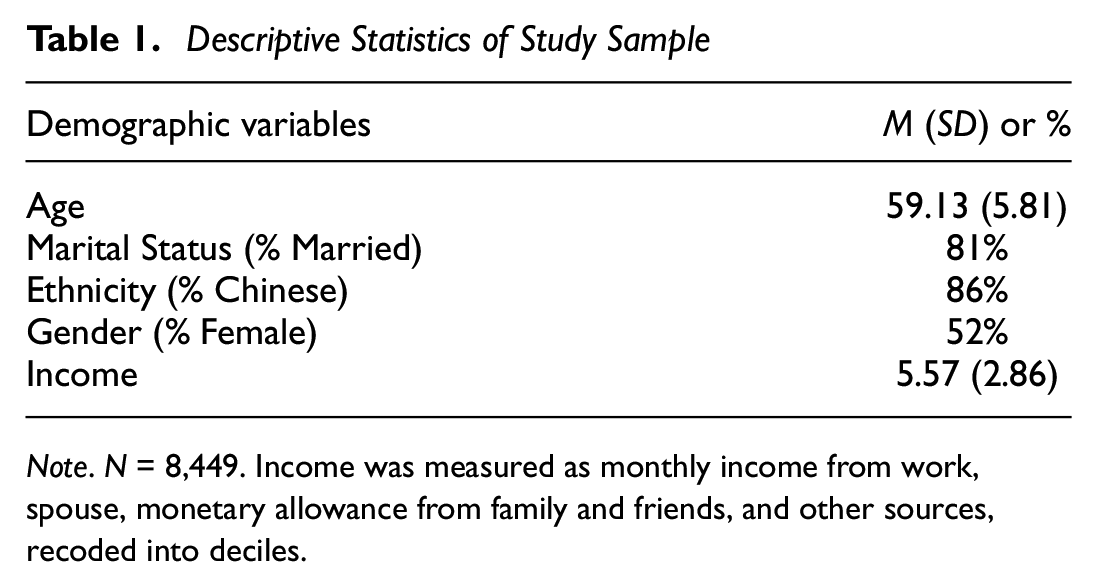
Note. N = 8,449. Income was measured as monthly income from work, spouse, monetary allowance from family and friends, and other sources, recoded into deciles.
Measures
SS
SS was assessed through a four-item scale (i.e., “someone you can count on to listen to you when you need to talk,”“someone to confide in or talk to about yourself or your problems,”“someone you can count on for help in a time of need,”“someone to show you love and affection”;
LS
A single-item was used to assess LS (“Taking all things together, how satisfied are you with your life as a whole?”). Responses were rated from 1 (Very satisfied) to 5 (Very dissatisfied), and reverse-coded such that higher scores reflected greater LS. Single-item evaluations of LS, as utilized here, have been common in research studies (e.g., Galatzer-Levy et al., 2010; Heybroek et al., 2015) and have demonstrated validity and comparable correlations with multi-item assessments (Cheung & Lucas, 2014). While this LS measure was administered more frequently to the SLP, only data from waves corresponding to our measure of SS were utilized. In doing so, we were able to estimate trajectories of LS and SS trajectories concurrently, and the temporal order of latent growth factors would be appropriate for the estimation of bidirectional relations. That is, it would be theoretically and statistically inappropriate to regress a slope growth factor on an intercept growth factor that theoretically and temporally proceeds it (Muniz-Terrera et al., 2017). Hence, as with SS, LS data used in this study were collected in waves 30, 42, 54, 66, 78, 90, and 99 of the SLP, from January 2018 to October 2023.
Covariates
The intraclass correlation coefficients (ICCs) for SS and LS were .60 and .69, respectively, suggesting a large amount of variation between persons. Thus, several covariates at the between-person level were considered. Given their potential impact on LS and SS, covariates included in this study were as follows:
Income;
Personality traits;
Disposition to positive (PA) and negative affect; and
Trait optimism.
Income has been linked to both SS (e.g., Diener & Fujita, 1995) and LS (e.g., Tay & Diener, 2011). One potential explanation for the association between income and SS appears to be the increased capacity for social interaction. For instance, higher (vs. lower) income individuals may have greater financial means to invest into social relationships, both directly and indirectly (e.g., purchase of time; Feng et al., 2020; Mogilner et al., 2018; Tay et al., 2018) allowing for increased social interactions and the facilitation of supportive connections. In terms of LS, income may enhance it through the fulfillment of physiological needs (Tay & Diener, 2011), mitigation of the impact of negative events (i.e., safety net; Tay et al., 2018), and through the purchase of enriching experiences (Chia et al., 2024; Gilovch & Kumar, 2015). Indeed, the robust association between income and well-being has been well-documented (e.g., Tay & Diener, 2011; Veenhoven & Vergunst, 2014). Hence, to ensure that estimations of the association between LS and SS were not confounded by income levels, income was treated as a covariate in this study.
As explicated earlier, individual differences in positivity may influence both LS and SS (e.g., Carver & Scheier, 2001). Therefore, by controlling for variables such as personality, disposition to PA and NA, and trait optimism, results from subsequent analyses may inform us if associations between LS and SS were beyond these personological influences, or indeed solely driven by individual differences in positivity.
Personality was measured using the Big Five Inventory (John et al., 1991), measured in wave 49 of the SLP (August 2019). Respondents rated their agreement to several trait descriptors (1 = Disagree Strongly, 5 = Agree Strongly), where higher scores indicating greater levels of a trait. To assess disposition to positive (i.e., “During the past 30 days, how much of the time have you been a happy person?”) and negative affect (i.e., “Overall in the last 30 days, how much of a problem did you have with feeling sad, low or depressed?”), two single-items measures were used, administered quarterly from waves 3 to 27 of the SLP (October 2015 to October 2017) and averaged across waves for two separate indexes. Trait optimism was assessed using the shortened Personal Optimism and Self-Efficacy Optimism scale (Gavrilov-Jerković et al., 2014; for example, “I am facing my future in an optimistic way”), assessed in and averaged across waves 32 and 43 of the SLP (March 2018, February 2019). Reponses were rated from 1 (Strongly Disagree) to 5 (Strongly Agree), higher scores indicating greater optimism. Income was measured at Wave 0 of the SLP (May to July 2015) as total monthly income from work, spouse, monetary allowance from family and friends, and other sources, recoded into deciles.
As one of the seven timepoints (i.e., Timepoint 4; January 2021) was during the course of the COVID-19 pandemic, subsequent analyses were conducted with and without this timepoint of data. Results observed were largely similar (see Supplementary Material).
Analytic Plan
Analyses were conducted in two main steps. First, to ascertain their optimal functional forms across time, linear and quadratic latent growth trajectories were estimated for SS and LS separately (i.e., Latent Growth Curve Modeling; LGCM). Factor loadings of timepoints were set to 0, 1, 2, 3, 4, 5, and 5.75, reflecting equidistance between measurement timepoints one to six (i.e., yearly) and unequal distance with timepoint seven. Second, to examine the hypothesized bidirectional association between SS and LS, their trajectories—according to the optimal functional forms identified in the previous step—were estimated in parallel (e.g., Barboza et al., 2017). This simultaneous growth modeling of two variables (bivariate latent growth modeling; Muniz-Terrera et al., 2017) allows for the investigation of bidirectional associations. Specifically, growth factors of one variable (e.g., SS) may be regressed onto growth factors of another (e.g., LS), and vice versa (BBLGM). To ascertain if potential bidirectional associations were beyond the influence of the aforementioned covariates (i.e., income, personality traits, disposition of PA and NA, trait optimism), latent growth factors were regressed onto these covariates (Figure 1). LGCM and BBLGM were conducted using the lavaan package (Rosseel, 2012). Robust maximum likelihood (MLR) estimator and full information maximum likelihood (FIML) were used to address nonnormality and missing data, respectively. Third, we examined the rate of change in SS and LS over time at different baseline levels of LS and SS, respectively. Alpha level used for this study was p = .05.
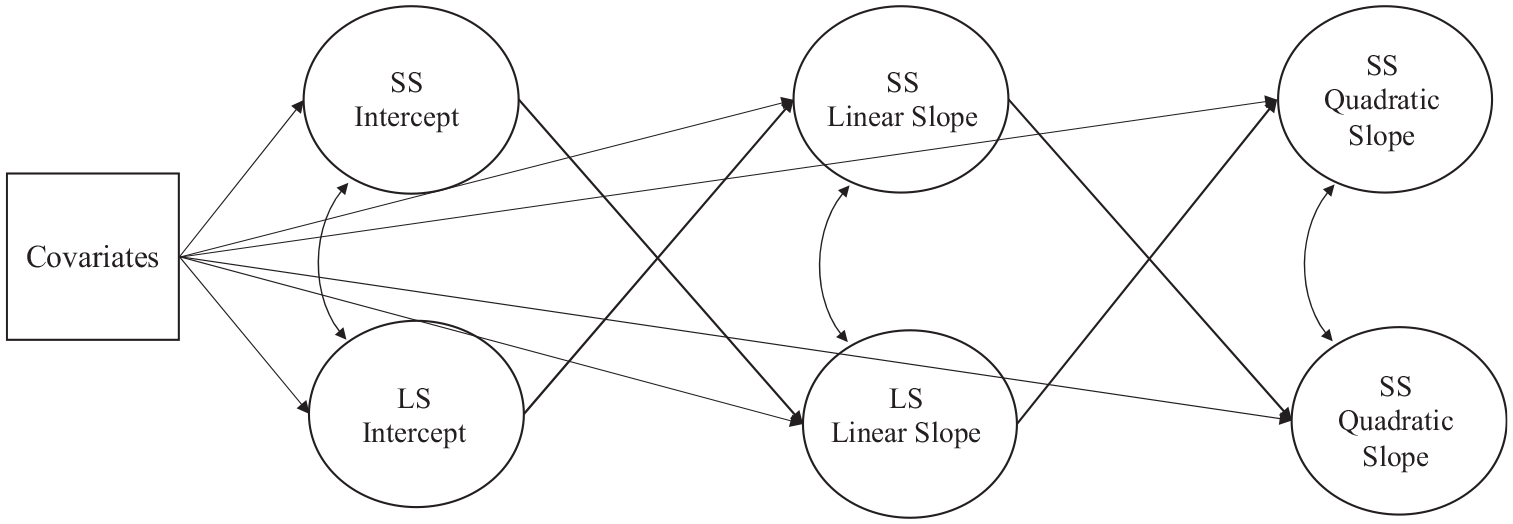
Simplified Diagram of Adjusted BBLGM Model of Social Support and Life Satisfaction
Results
Changes in LS and SS Over Time
To identify their optimal functional form across time, models with a linear slope and intercept were first specified for SS and LS separately. After which, models with an additional quadratic slope were specified. Both linear and quadratic models for both variables fitted the data well (Table 2). Chi-square difference tests comparing the linear and quadratic models for SS and LS suggested that the quadratic model had better fit for both variables (Table 2). Unadjusted for covariates, results indicated decreases in LS (blinear slope = −.019, p < .001) with a slowing rate of decrease over time (bquadratic slope = .002, p = .009). However, the linear and quadratic growth components both varied significantly across individuals (p < .001). SS was observed to increase (blinear slope = .111, p < .001) at a slowing rate over time (bquadratic slope = −.008, p < .001). Significant variance in linear and quadratic growth were also observed (p < .001).
Univariate Latent Growth Models for Social Support and Life Satisfaction
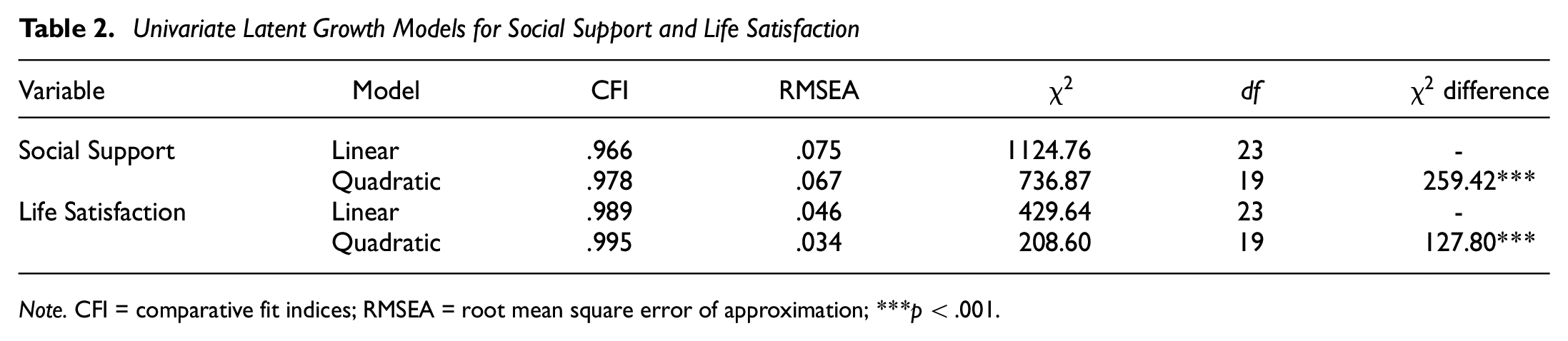
Note. CFI = comparative fit indices; RMSEA = root mean square error of approximation; ***p < .001.
Bidirectional Associations Between LS and SS
To investigate bidirectional associations between SS and LS, BBLGM models were specified according to the optimal functional forms identified in the previous step (i.e., quadratic), unadjusted for (CFI = .978, RMSEA = .047) and adjusting for covariates (i.e., personality, disposition to PA and NA, trait optimism; CFI = .980, RMSEA = .034; Figure 1). Parameter estimates of growth factors for the unadjusted BBLGM model may be found in the Supplementary Material (Table S5). After adjusting for covariates, the average change in SS over time remained positive (blinear slope = .103, p < .001), but the average change in LS did not differ from zero (blinear slope = .007, p =.446; Table 3). However, significant variance in LS slopes was observed (
Key Parameter Estimates of the Adjusted BBLGM Model of Social Support and Life Satisfaction
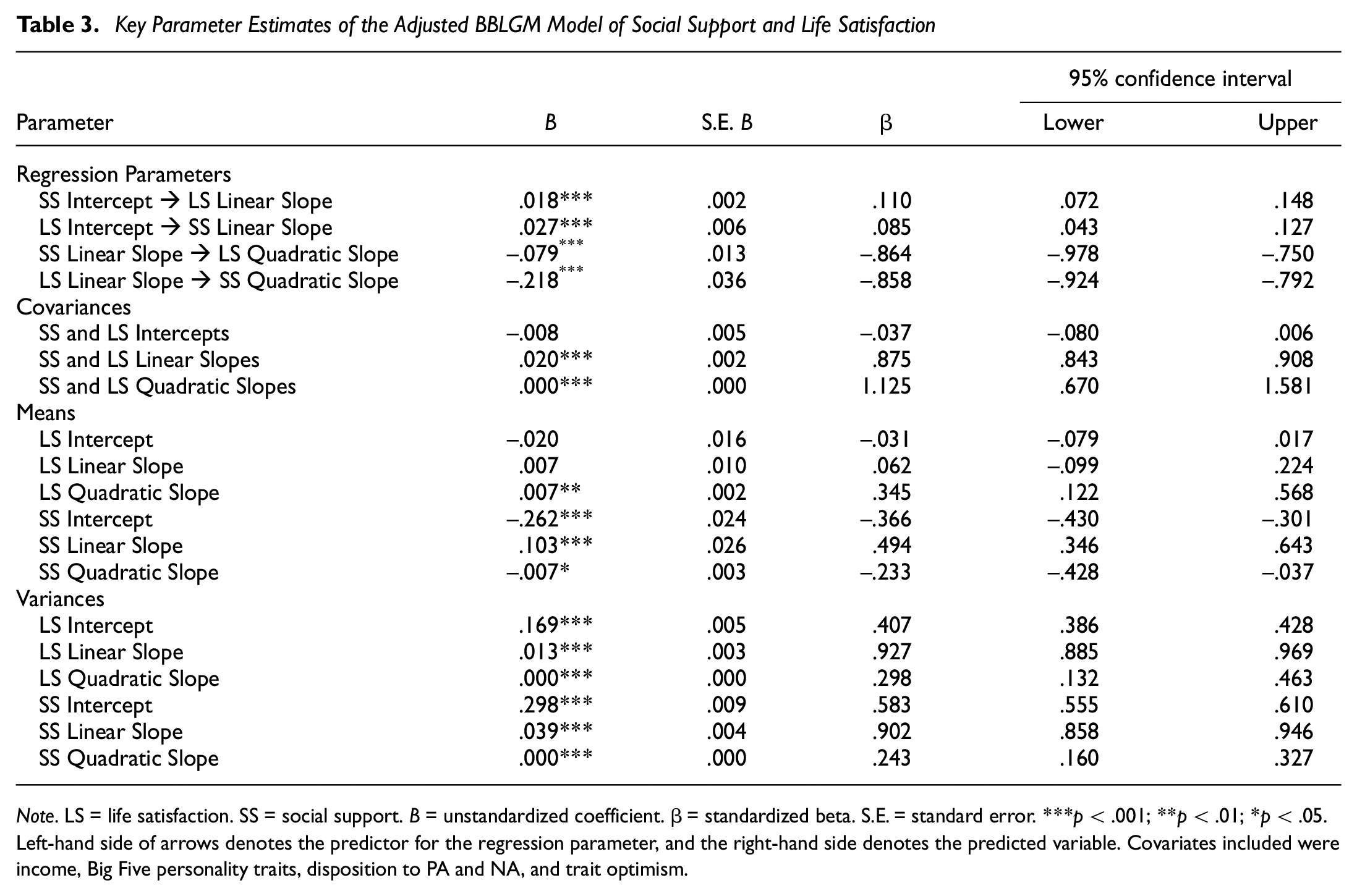
Note. LS = life satisfaction. SS = social support. B = unstandardized coefficient. β = standardized beta. S.E. = standard error. ***p < .001; **p < .01; *p < .05. Left-hand side of arrows denotes the predictor for the regression parameter, and the right-hand side denotes the predicted variable. Covariates included were income, Big Five personality traits, disposition to PA and NA, and trait optimism.
Baseline SS was observed to positively predict LS changes over time (b = .018, p < .001; Table 3). Although changes in LS were negative at lower levels of baseline SS (e.g., at −1SD of SS,
Estimated Conditional Effects of Baseline Life Satisfaction and Social Support on Changes in Social Support and Life Satisfaction Over Time
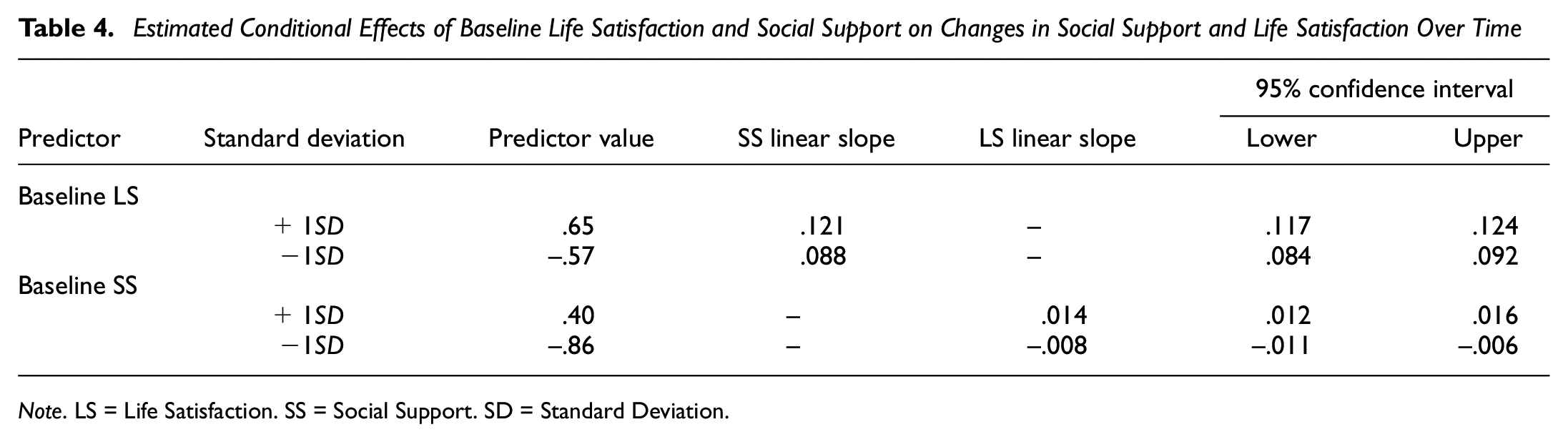
Note. LS = Life Satisfaction. SS = Social Support. SD = Standard Deviation.
Individual difference factors correlated significantly with both baseline LS and SS changes in general. For instance, trait optimism and neuroticism correlated with baseline LS at .49 and −.32, and with SS changes at .09 and −.25, respectively (p < .001; see Table S4 in Supplementary Materials). Nevertheless, results suggest that the influence of baseline LS on support changes were above and beyond these effects.
Results also indicate a significant positive covariance between the linear slopes of SS and LS was observed (p < .001; Table 3), indicating that those who experienced more (less) positive changes in SS generally experienced more (less) positive changes in LS over time, and vice versa. Altogether, these results suggest that there may be bidirectional associations between SS and LS.
Discussion
Given aging population trends and associated well-being challenges, together with potential implications for sustained well-being, this study investigated bidirectional links between SS and LS among middle-aged and older adults living in Singapore. To begin with, the association between initial levels of SS and LS seemed to be underpinned by factors such individual differences in positivity and income. Specifically, in the covariates-unadjusted model, initial levels of SS and LS were significantly associated (Table S5 in Supplementary Material), but this association was no longer observed after accounting for covariates (Table 3). This finding appears to align with our previous postulations of the role of top-down influences on SS and LS (e.g., Carver & Scheier, 2001; Schweizer et al., 1999), and with previous literature on the role of income in both of these variables (e.g., Diener & Fujita, 1995; Tay & Diener, 2011). Yet, the longitudinal dynamics of SS and LS appear to be beyond these factors.
Baseline SS positively predicted LS changes over time; these effects persist even after accounting for individual difference factors and income. To wit, individuals with higher (vs. lower) SS at baseline tend to experience greater increases (decreases) in LS over time. This finding corroborates with extant literature on well-being benefits of SS. For instance, SS may increase LS by serving as a buffer against stressors (e.g., Cohen & Wills, 1985; Krause, 1997) and fulfilling innate psychological needs (e.g., Ryan & Deci, 2000; Ryan & Solky, 1996). In the other direction, baseline LS positively predicted changes in SS, even after accounting for important individual differences such as Big Five personality traits, disposition to positive and negative affect, as well as trait optimism. Individuals with higher (vs. lower) baseline LS tend to experience greater (lesser) increases in SS over time. This observation appears to align with literature on the role of bottom-up influences of LS on SS. For instance, when individuals with higher (lower) LS seek support, potential supporters may be more (less) inclined to render assistance (e.g., Ajzen, 1991; Rossi et al., 2007). Altogether, findings from this study revealed a bidirectional association between SS and LS.
The observed bidirectional relationship between LS and SS in this study represents a significant departure from the traditional unidirectional focus in prior research, which predominantly emphasized the impact of SS on LS. Although distinct in its bidirectional approach, results from this study corroborate and supplement previous models emphasizing the importance of SS for LS (e.g., Adams et al., 2016; Bryson & Bogart, 2020). However, the present study also suggests the possibility for a dynamic feedback loop between an individual’s satisfaction with life and the nurturance of supportive social networks. This shift in perspective offers a more complex perspective on how LS and SS continuously shape and reinforce each other over time.
Aside from expanding theoretical understanding, findings from this study hold important practical implications. Future policies and interventions aimed at promoting lasting well-being among older individuals may wish to leverage the bidirectional relationship between SS and LS. Targeting either construct may not only exert influence on the other, but potentially magnify their collective impact on overall well-being. Furthermore, as theoretical underpinnings of the bidirectional relationship between SS and LS are not specific to older adults (e.g., Ajzen, 1991; Ryan & Deci, 2000), introducing interventions and policies in earlier stages of life to enhance LS and SS could prove beneficial. The positive feedback loop experienced by some and negative feedback loop by others may result in increasingly contrasting aging experiences in older age, exacerbating well-being disparities over time. Hence, targeting these constructs earlier may prevent the development of negative feedback loops, potentially mitigating disparities in well-being and enhancing it as individuals age. Nonetheless, future studies are needed to ascertain if the observed bidirectional relationship in this study translates to younger individuals. Future work should also expand on the present findings by more closely examining the processes by which support and satisfaction levels mutually influence their development over time. In the Supplementary Material, we explored the possible role of activity engagement as a mediator but did not find a significant mediating effect. However, we hope the present work stimulates more theory on the co-development of support and satisfaction over time.
Although the present study has notable strengths such as its longitudinal design and large sample, there were several limitations. First, while this study examined associations between SS and LS, it does not discriminate across different types of SS nor across various sources of support. It may be that different forms of SS (e.g., informational, emotional, instrumental, appraisal; Tardy, 1985; objective vs. perceived; Brissette et al., 2002; George et al., 1989) and differing sources of support (e.g., friends, family, partners; Zimet et al., 1988) vary in their association with LS, and vice versa. Likewise, while this study examined LS, a cognitive domain of well-being, it is uncertain how findings from this study would translate to other well-being constructs, such as flourishing (e.g., Diener et al., 2010) and emotional well-being (e.g., Watson et al., 1988). Although extant theoretical accounts suggest a similar bidirectional association across different forms of support and well-being (e.g., Ajzen, 1991; Thibaut & Kelley, 1959), more research is needed. Second, some covariates used in this study were not measured at baseline and were only available at later waves of the SLP (i.e., disposition to PA and NA, trait optimism, personality). While these variables were conceptualized as time-invariant traits expected to remain stable over time, using their average levels as covariates may not fully reflect their role in the temporal dynamics of SS and LS. As such, interpretation of their prospective influence on SS and LS warrants some caution. Third, as eluded to in the previous section, a limitation of this study pertains to its focus on middle-aged and older adults. Although a key objective of this study was to identify a mechanism for sustained LS in older individuals, generalizability to other age-groups remains uncertain and future research is warranted. Fourth, along a similar vein, as this study featured a Singaporean sample, more research is needed to ascertain the generalizability of these findings across other cultures and countries. It is possible that variances in cultural beliefs and practices may influence the manner in which LS influences SS, and vice versa.
Supplemental Material
sj-docx-1-spp-10.1177_19485506241283584 – Supplemental material for Supporting Satisfaction, Satisfying Support: Bidirectional Associations of Social Support and Life Satisfaction
Supplemental material, sj-docx-1-spp-10.1177_19485506241283584 for Supporting Satisfaction, Satisfying Support: Bidirectional Associations of Social Support and Life Satisfaction by Jonathan L. Chia, Andree Hartanto and William Tov in Social Psychological and Personality Science
Footnotes
Handling Editor: Eranda Jayawickreme
Declaration of Conflicting Interests
The author(s) declared no potential conflicts of interest with respect to the research, authorship, and/or publication of this article.
Funding
The author(s) disclosed receipt of the following financial support for the research, authorship, and/or publication of this article: This research was supported by The Ngee Ann Kongsi, and by the Ministry of Education, Singapore, under its Academic Research Fund Tier 3 programme (Award reference number MOE2019-T3-1-006).

Supplemental Material
Supplemental material for this article is available online.
Author Biographies
References
Supplementary Material
Please find the following supplemental material available below.
For Open Access articles published under a Creative Commons License, all supplemental material carries the same license as the article it is associated with.
For non-Open Access articles published, all supplemental material carries a non-exclusive license, and permission requests for re-use of supplemental material or any part of supplemental material shall be sent directly to the copyright owner as specified in the copyright notice associated with the article.
