



Abstract
The complexity of societal risks such as pandemics, artificial intelligence, and climate change may lead laypeople to rely on experts and authorities when evaluating these threats. While Siegrist and Cvetkovich showed that competence-based trust in authorities correlates with perceived societal risks and benefits only when people feel unknowledgeable, recent research has yielded mixed support for this foundational work. To address this discrepancy, we conducted a direct-replication study (preregistered; 1,070 participants, 33 risks, 35,310 observations). The results contradict the original findings. However, additional non-preregistered analyses indicate an alternative perspective aligning with compensatory control theory and the description-experience framework: experiences with insufficient personal control over a threat may amplify individuals’ dependency on powerful others for risk mitigation. These findings highlight the need to reevaluate how trust shapes risk perceptions. Recent societal and technological shifts might have heightened the desire for control compared to subjective knowledge in why people resort to trust.
People encounter a growing number of risks throughout their lives, ranging from daily threats like road traffic to catastrophic incidents such as pandemics and environmental disasters. Given the uncertainty and complexity surrounding these societal risks, laypeople may derive risk evaluations from heuristics, particularly by drawing on trustworthy opinions from and expectations about people and organizations (Earle & Cvetkovich, 1995; Freudenburg, 1993; Norris, 2022; Siegrist, 2021). Moreover, the likelihood and societal consequences of hazards often depend on powerful decision-makers who steer risk management, with one notable example being the pivotal position of governments in mitigating and adapting to climate change-related disasters (Intergovernmental Panel on Climate Change, 2014; Mazzucato, 2021). This dependency of risk perceptions on trust plays a vital role in inciting societal stability and change (Brick et al., 2021; Siegrist, 2021; Slovic, 1993). For instance, trust in experts and decision-makers 5 months before the Fukushima nuclear accident predicted subsequent public risk responses (Visschers & Siegrist, 2013), and trust fueled extensive behavioral change during the COVID-19 pandemic (Chambon et al., 2022; Siegrist & Bearth, 2021).
Trust refers to a tendency to “accept vulnerability based upon positive expectations of the intentions or behaviors of another” (Rousseau et al., 1998, p. 395). Based on this notion of trust as a means to reduce uncertainty in forming beliefs and actions, Siegrist and Cvetkovich (2000) showed that competence-based trust in authorities correlates with perceptions of societal risks and benefits of hazards only when people experience a knowledge deficit. This foundational work proposed that feeling unknowledgeable about a risk prompts compensatory reliance on heuristic cues, such that laypeople may form risk and benefit perceptions by relying on accessible information like beliefs about trustworthy others and their opinions (Earle et al., 2010; Siegrist, 2021; Siegrist & Cvetkovich, 2000). An example for this assertion is that individuals may perceive trustworthy labels as helpful information in evaluating the efficiency of an unfamiliar type of FFP2 face mask. Extensions of the model suggest that morality-based trust attributions (such as regarding a person’s benevolence) play a more important role in the trust-knowledge interaction compared to competence-based trust attributions (like confidence in a person’s ability), albeit with marginal statistical differences due to the strong correlation between these trust facets in risk responses (Earle et al., 2010; Earle & Siegrist, 2008; Siegrist, 2021). Altogether, the literature suggests that subjective knowledge moderates the effect of trust in predicting risk and benefit perceptions across trust attributions.
Recent research found mixed evidence on the interaction between subjective knowledge and trust in conceptual replications of Siegrist and Cvetkovich (2000)’s influential model. Three studies by See (2009) conceptually replicated the trust-knowledge interaction effect on policy support as an outcome in the contexts of study loans and environmental pollution. Similarly, Sailer et al. (2022) observed the interaction effect on self-reported compliance with COVID-19 safety measures. Other research examined the interplay of trust and knowledge perceptions in response to societal threats without testing for an interaction effect and by shedding light on mechanisms such as information processing (e.g., Holland & Cortina, 2017; Katsuya, 2002; Miller et al., 2016; Shepherd & Kay, 2012).
In contrast, studies examining COVID-19 safety behavior obtained mixed evidence for the interaction between trust and knowledge (Granados Samayoa et al., 2021; Zhu et al., 2022), while studies on COVID-related panic behavior (Sailer et al., 2022) and judgments of governmental performance (Thomson & Brandenburg, 2019) yielded nonsignificant interaction effects. Likewise, Pauer, Rutjens, and van Harreveld (2022) failed to obtain evidence for the interaction in three studies in the domains of COVID-19, meat consumption, and climate change. Notably, these authors found an alternative moderation by personal control over a risk. More specifically, trust in authorities (but not in the industry or consumers) predicted risk evaluations only in people who experienced a lack of personal control over outcomes, which is in line with compensatory control theory (Kay et al., 2009; Landau et al., 2015). That is, individuals often depend on powerful others to manage a threat, and relying on them affords individuals to regain a sense of structure and predictability to compensate for a lack of personal control (Ma et al., 2023; Rutjens et al., 2010).
One potential explanation for these mixed findings is cross-temporal changes in the phenomenon reported by Siegrist and Cvetkovich (2000) due to societal shifts (Muthukrishna et al., 2021). Their data were collected before the widespread availability of information through the internet and the growing public awareness of the climate crisis, along with the current populist and anti-democratic surges in right-wing ideologies (Norris & Inglehart, 2019). Although the current study does not aim to investigate the impact of specific societal shifts, such changes might have altered the relationship between trust attributions and subjective knowledge in predicting perceived risk. For example, the public’s direct access to recordings of police brutality on the internet could diminish the perceived dependence on secondhand information or generic trust attributions.
Moreover, publication bias and false-positive results may contribute to the mixed findings, as many studies that probe interaction effects are underpowered (Sommet et al., 2023). The sample in the original study by Siegrist and Cvetkovich (2000) consisted of 90 students. Crucially, however, they utilized 25 risk domains, whereas later conceptual replication attempts of the trust-knowledge interaction (e.g., Pauer, Rutjens, & van Harreveld, 2022; See, 2009) employed only a single risk domain per study. This discrepancy could possibly give rise to mixed findings due to domain-specific boundary conditions and other motivational drivers of the trust-risk association than subjective knowledge. The current study therefore attempted a direct replication of the original study.
Exploratory Extension Attempts
In addition to the direct-replication attempt, our study extended the original study by examining (a) a conceptually related moderation by personal control and (b) potential boundary conditions. As our preregistration described these extension attempts only vaguely, they should not be treated as confirmatory but exploratory.
Given that each of the conceptual replication studies of the trust-knowledge interaction only employed a single risk domain, one could argue that previous failed conceptual replications (e.g., Sailer et al., 2022) might have emerged in a subgroup of domains where subjective knowledge is less relevant than other conceptually related variables, like personal control, in determining the effect of trust on perceived risk. By the same token, however, those variables could have confounded the trust-knowledge interaction Siegrist and Cvetkovich (2000) reported across 25 risk domains (Pauer, Rutjens, & van Harreveld, 2022). For instance, the desires for knowledge and personal control are distinct but intertwined: Knowledge deficits can lead to feeling a loss of control, and conversely, a desire to gain control can drive the pursuit of knowledge (Antonovsky, 1996; Landau et al., 2015; Shepherd & Kay, 2012; Whitson et al., 2022). These considerations underscore the importance of exploring a broader set of factors in the trust-risk association.
The impact of subjective knowledge and variables such as personal control on whether people draw on trust attributions in evaluating risk varies across different risk domains (Earle & Siegrist, 2008). Earle and Siegrist (2008) argued that individuals who feel an aversive lack of knowledge are more likely to rely on trust attributions when evaluating societal risks that they perceive as personally relevant, such as pesticides. For risks that appear more distant, like asteroid impacts, the interaction between trust and knowledge might be still relevant, albeit to a smaller extent; this attenuation is presumably due to the increased difficulty that individuals face in accessing domain-relevant information about trustworthy others (Earle & Siegrist, 2008). Our study therefore included exploratory analyses of possible boundary conditions of the trust-knowledge interaction, focusing on two prominent themes from the risk literature: psychological distance to a risk (Keller et al., 2022; McDonald et al., 2015; Trope & Liberman, 2010) and whether people learn about a risk through descriptive information or experiential exposure (Hertwig & Wulff, 2022; Slovic, 1987; Weber, 2006). We explored their potential roles in explaining why previous studies yielded mixed findings on the interaction between trust and subjective knowledge in risk perceptions.
One possibility could be, for example, that the need for gaining knowledge about a risk is more central to domains that require descriptive learning, like nuclear power, whereas experiential exposure to a risk could give precedence to the motivational consequences of personal control in moderating the trust-risk association, such as in bicycling (e.g., McDonald et al., 2015). This exemplifies one possibility of how the roles of subjective knowledge and personal control in the trust-risk association could differ by the mode through which people learn about a risk (i.e., descriptive and experiential learning). However, both descriptive and experiential learning about a risk domain may decrease its perceived distance (Keller et al., 2022; McDonald et al., 2015; Trope & Liberman, 2010), and psychological distance to a risk could reflect another boundary condition of the interaction between trust and subjective knowledge (Earle & Siegrist, 2008). Our study presents non-confirmatory analyses of these possible boundary conditions, which were not reported in our preregistration. To this extent, the study explores whether boundary conditions account for the mixed findings in previous literature on the interaction between trust and subjective knowledge.
Overview of the Current Study
Preregistered Replication Attempt
We conducted a close direct replication of Siegrist and Cvetkovich (2000)’s finding of an interaction effect between subjective knowledge and competence-based trust in authorities on perceived societal risks and benefits. These authors reported a stronger negative (positive) correlation between trust and risk (benefit) perceptions the less knowledgeable people felt about a risk domain. Given mixed findings from recent research (e.g., Pauer, Rutjens, & van Harreveld, 2022; See, 2009), a replication of the original findings would bolster a fundamental assumption about risk perception and the epistemic value of trust.
Non-Preregistered Extensions
A non-replication, however, would necessitate more comprehensive insights into why trust predicts risk perceptions. For this reason, our study includes a second set of non-preregistered analyses, which we therefore treat as non-confirmatory. First, exploratory tests examined whether the mixed findings from previous research emerged due to boundary conditions of the moderating effect of knowledge across risk domains. Second, given that the original study measured solely competence-based trust in authorities, we also explored the role of benevolence-based trust in Siegrist and Cvetkovich (2000)’s model. Third, we explored a possible moderation by personal control as an alternative model, in line with our preregistered “plan to investigate the conditions under which either knowledge or control moderate the effect on risk perceptions.” Overall, our non-confirmatory extension attempts aimed at substantiating and qualifying why people derive risk evaluations from trust.
We report all measures, sample size decisions, and exclusions. The data, preregistration, questionnaire, R code, and Supplemental File are openly accessible on OSF: https://osf.io/gn9vp/?view_only=f4b3cfa9efa448f6a2cb863ad359e13a.
Method
Sample
As outlined in the preregistration, we retained a final sample of 1,070 participants (65.3% identified as female, 33.6% male, 1.1% selected “none of the above”) with a mean age of 26.6 (SD = 11.0). Each participant completed 33 repeated measurements, resulting in 35,310 observations. The sample included 446 Prolific workers from the United States (41.7%), and students from three university subject pools in Germany and the Netherlands.
We determined the target sample based on feasibility given the complexity of power simulations for multilevel analysis, and therefore exceeded the recommended number of observations many times (Gabriel et al., 2019). Following the preregistered procedures, students completed the survey up until May 25, 2022, and after this date, we recruited workers from Prolific to reach 1,070 participants. Eventually, 1,256 people completed the questionnaire, and the remaining 115 people who dropped out before completing it (8.4%) were not included in any analyses as preregistered. We excluded 186 participants (14.8%) who failed at least one of two simple attention checks (e.g., “select strongly disagree”) or responded to the questionnaire with a median speed per item below 0.75 seconds, as per the preregistered exclusion criteria.
Procedure and Analytic Strategy
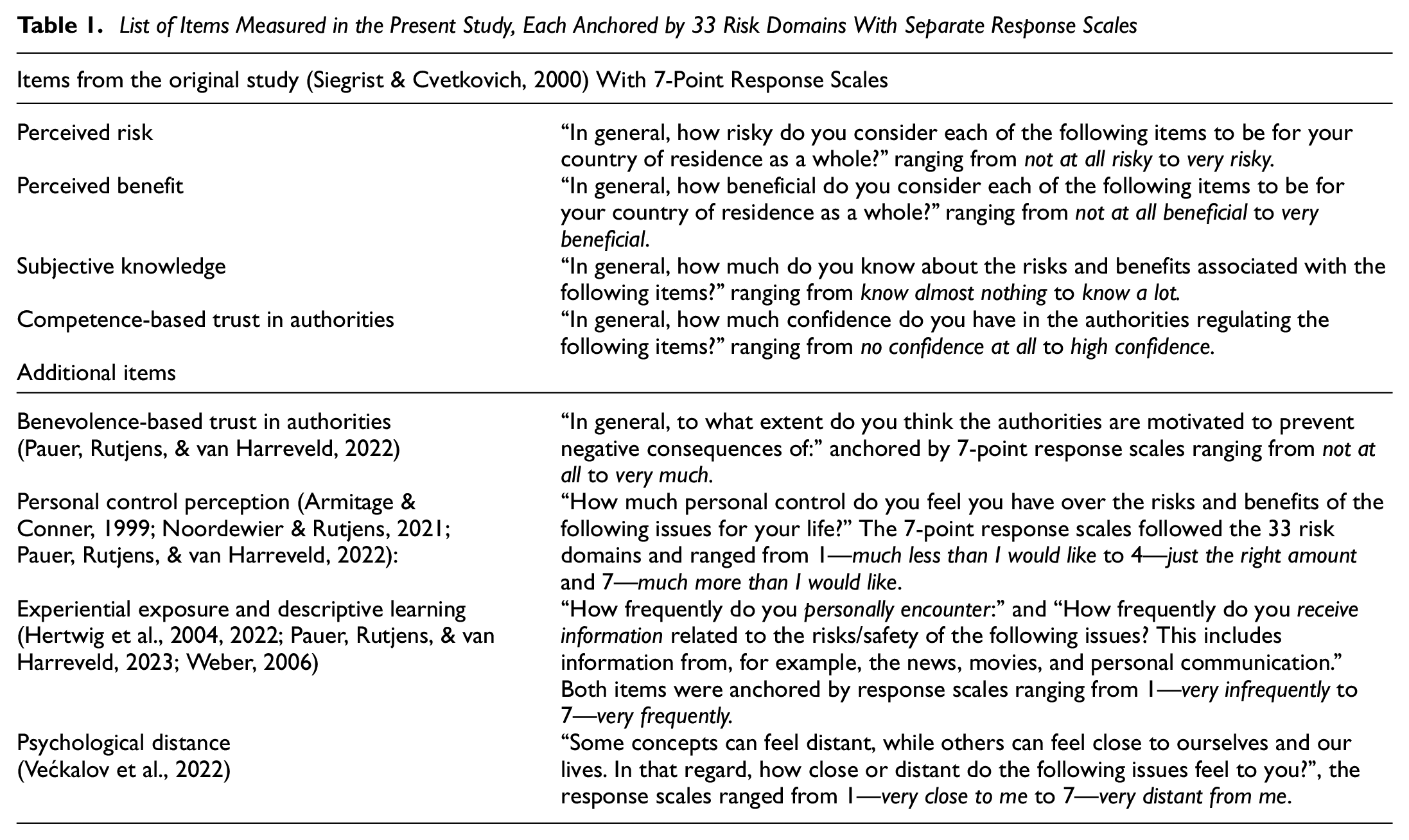
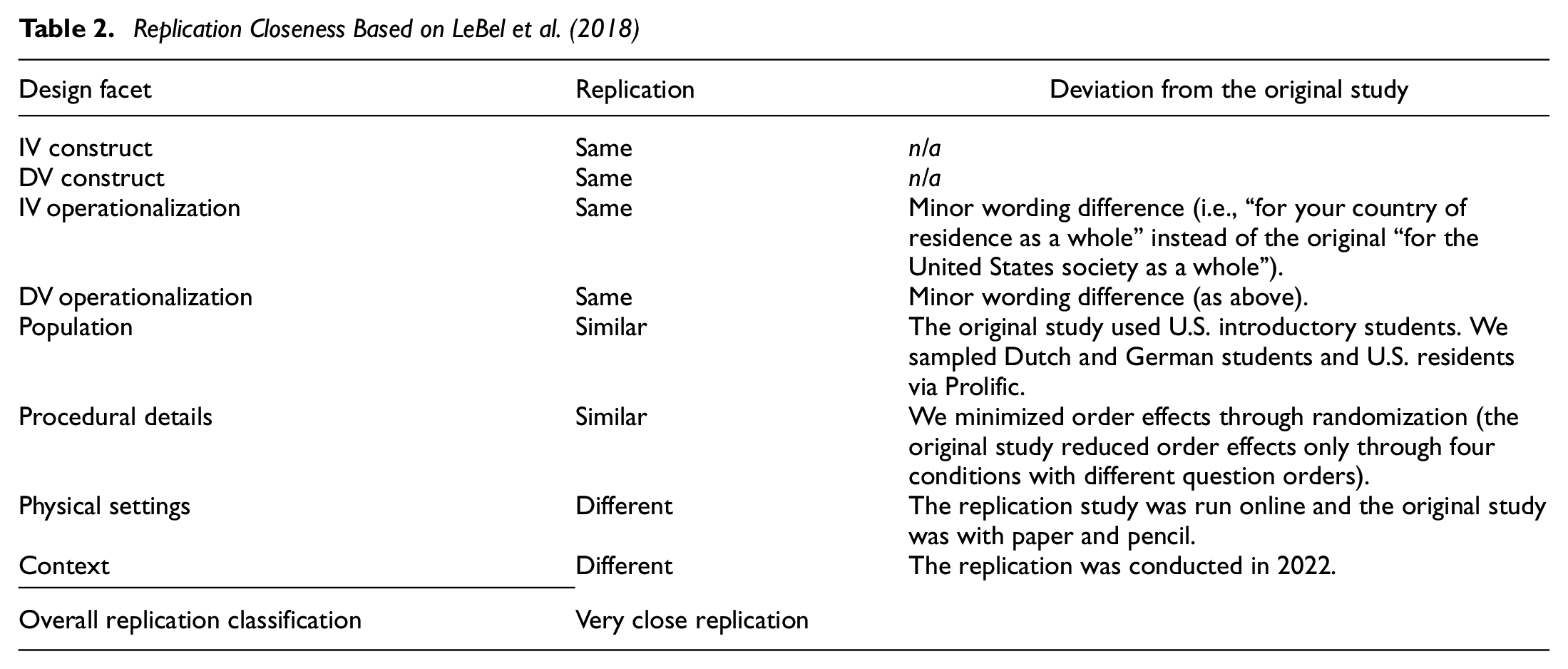
Participants received payment or research credits for completing an online study on “attitudes related to different risks.” They first provided informed consent and answered sociodemographic questions, that is, age, gender, education, and conservatism. The first block of four randomized variables assessed the original items on perceived risk, benefit, knowledge, and trust on separate pages (see Table 1). Each of the items anchored a list of 33 risk domains that were presented in randomized order. The 33 domains covered the 25 items from Siegrist and Cvetkovich (2000) who selected from a list employed by Alhakami and Slovic (1994). In addition to the 25 original items, we added eight items from the same list from Alhakami and Slovic (1994) and from the U.N. Human Development Report (United Nations Development Programme, 2020) to improve statistical power and construct space (see Figure 1). Afterward, a second randomized block assessed a total of five additional items for the same 33 risk domains. Overall, the study adhered to very close replication standards (see Table 2; LeBel et al., 2018).
List of Items Measured in the Present Study, Each Anchored by 33 Risk Domains With Separate Response Scales
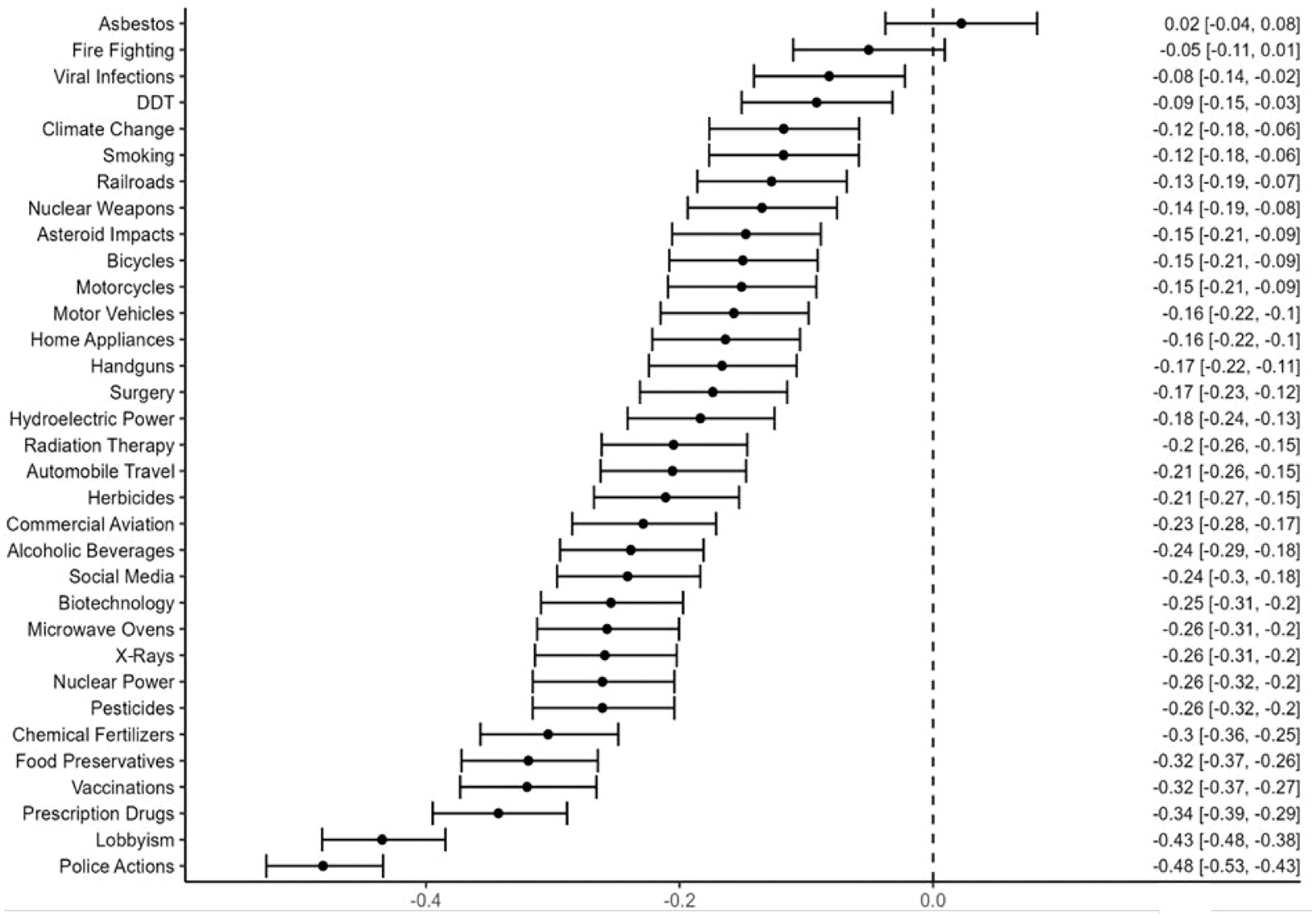
Trust-Risk Correlation Coefficients by Domain with 95% Confidence
Replication Closeness Based on LeBel et al. (2018)
Unless stated otherwise, we employed a multilevel framework using the lme4 package (Bates et al., 2014) in R and ancillary packages to account for subject- and domain-specific variance by nesting individual responses on level 1 variables in participants and risk domains (Brown, 2021; Hox, 2018). The level 1 predictors were person-mean centered in multilevel analyses (C. K. Enders & Tofighi, 2007). We did not include random slopes for which the variances were zero (Gabriel et al., 2019; Hoffman & Walters, 2022; Hox, 2018) and reported any exclusions of random slopes. We report standardized coefficients, calculated as described in Hox (2018), by multiplying the unstandardized coefficient and the standard deviation of the predictor, divided by the standard deviation of the outcome. As preregistered, alpha was .05. In our multilevel models, p-values were obtained using Satterthwaite-Approximation in lmerTest (Kuznetsova et al., 2017). In addition to our primary analyses, we ran non-preregistered robustness checks (a) to control for sociodemographic variables (at level 2 as they remain constant across risk domains for each participant) and (b) using the statistical approach and the subset of 25 risk domains from the original study, along with a corresponding multilevel model specification.
Results
We report (1) an interaction effect between competence-based trust in authorities and subjective knowledge on perceived societal risk and benefit across 33 domains within a multilevel framework, as preregistered, since it reflects the most informative and adequate statistical approach for nested data (Hox, 2018). The remainder of this section reports (2) non-preregistered replication tests and (3) exploratory extension attempts of the original study. This includes (3.1) tests of boundary conditions to investigate whether the original pattern of findings emerges in a systematic subset of risk domains. We also present (3.2) analyses of a conceptually related moderation of the trust-risk association by personal control, as well as (3.3) its boundary conditions.
Non-Preregistered Preliminary Analysis
To evaluate the value of multilevel modeling, we first calculated intraclass correlations and decomposed the sources of variability in perceived societal risk using a random intercept-only multilevel model (Hox, 2018; see Tables 3 and 4 for descriptive data). Participants and domains explained 15.9% and 29.4% of the variance in risk ratings, respectively. Lai and Kwok (2015) suggested that a multilevel framework is warranted if the design effect index (deff) exceeds 1.1 as an indicator of substantial variability by the cluster variables. This was confirmed in the case of participants and domains as cluster variables, deff = 6.1 and 315, respectively. For converging evidence, we compared the random effects model with a baseline model without random effects for participants or domains. Including the random effects resulted in significantly better model fit, χ2(2) = 18,251, p < .001. Therefore, the multilevel framework was warranted.
Means of Key Variables Ranked Across 33 Risk Domains, With Dotted Lines Indicating the Grand Mean
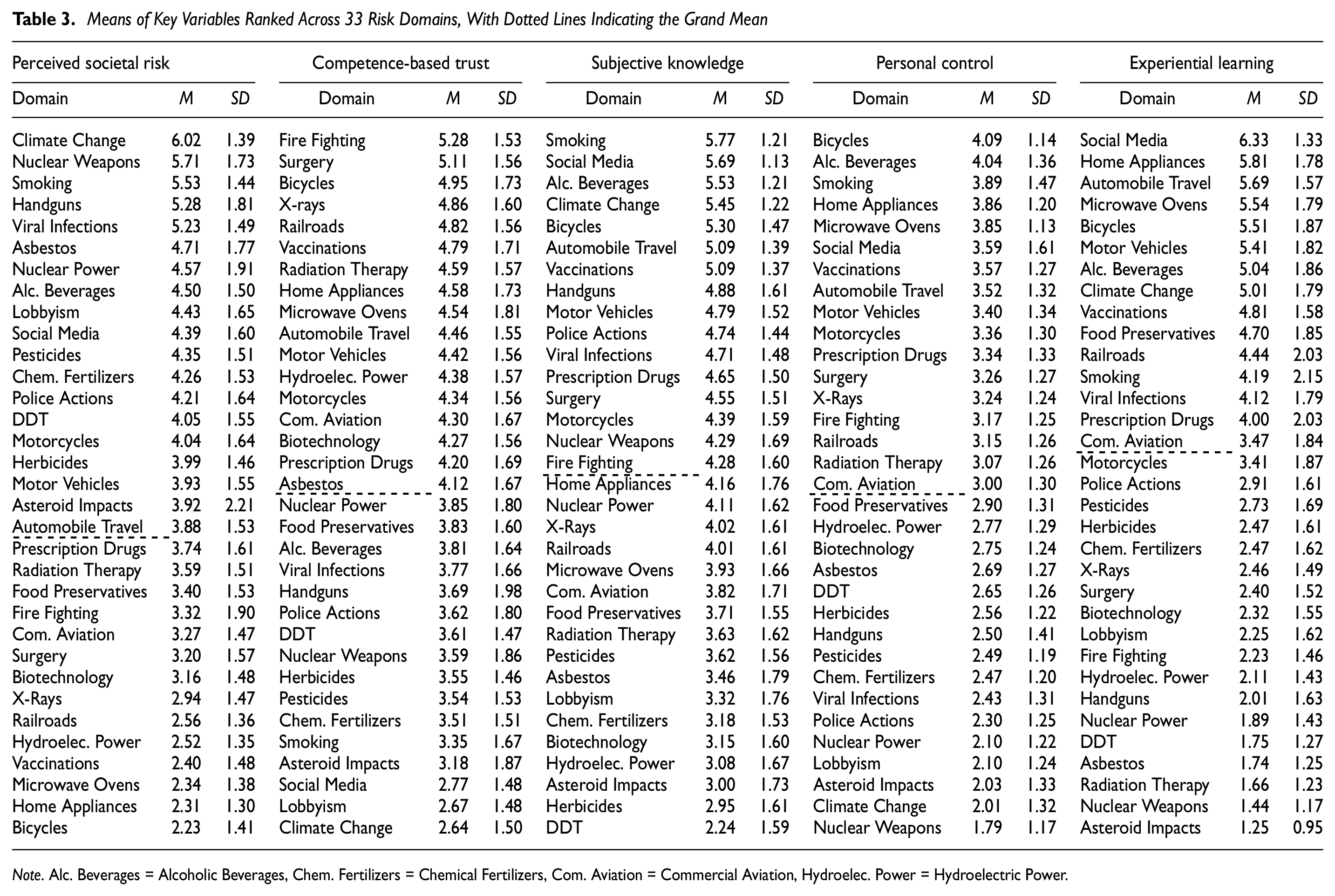
Note. Alc. Beverages = Alcoholic Beverages, Chem. Fertilizers = Chemical Fertilizers, Com. Aviation = Commercial Aviation, Hydroelec. Power = Hydroelectric Power.
Summary Statistics Including Means, Standard Deviations, and Pearson Correlations (N = 1,070)
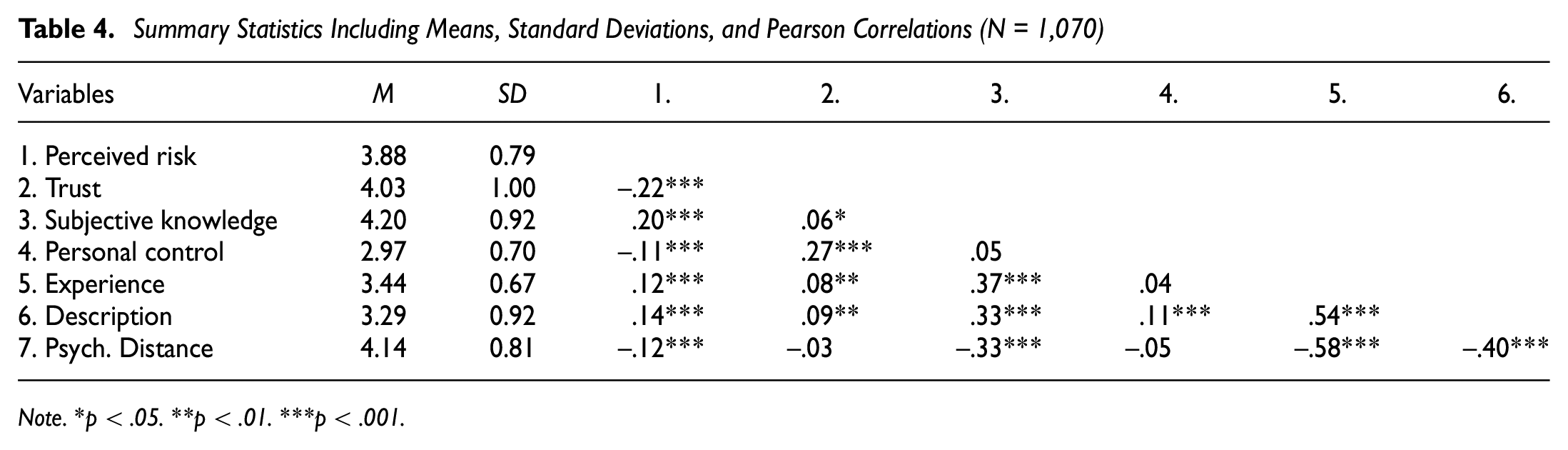
Note. *p < .05. **p < .01. ***p < .001.
Competence-based trust in authorities was significantly associated with perceived risk (see Table 4), corroborating Siegrist and Cvetkovich (2000)’s replication of prior work (Freudenburg, 1993; Siegrist, 1999, 2021). There was considerable heterogeneity in the correlation coefficients as a function of risk domain (see Figure 1). This variability indicates a potential dependency of the trust-risk association on domain-specific features of a risk, which could moderate the trust-risk association.
Preregistered Replication Tests
We utilized a multilevel analysis for our replication attempt of Siegrist and Cvetkovich (2000)’s interaction model of subjective knowledge and competence-based trust in authorities predicting (1) risk and (2) benefit perceptions, as preregistered. First, the data revealed that the trust-risk association was significantly stronger at high compared to low levels of knowledge (see Table 5 and Figure 2), such that the interaction pattern was the opposite of the original study.
Multilevel Model Predicting Risk Perceptions From Trust, Subjective Knowledge, and Their Interaction Terms Across 33 Risk Domains
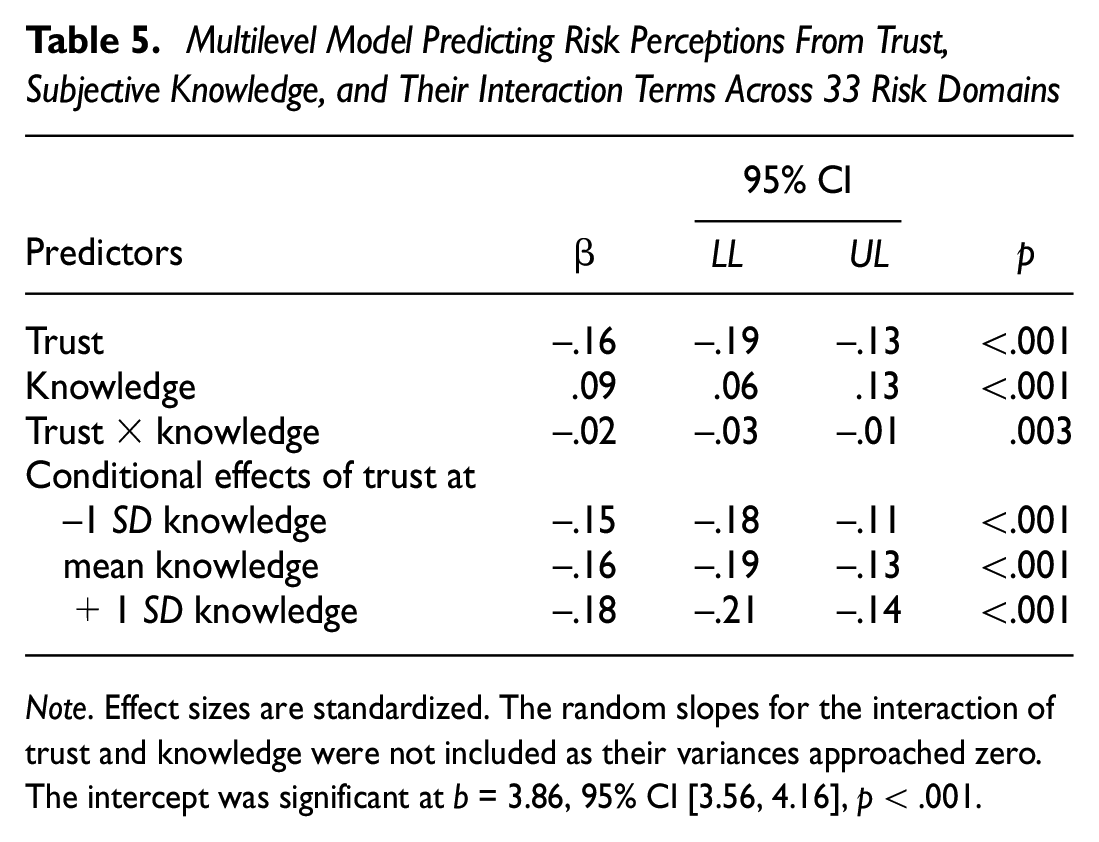
Note. Effect sizes are standardized. The random slopes for the interaction of trust and knowledge were not included as their variances approached zero. The intercept was significant at b = 3.86, 95% CI [3.56, 4.16], p < .001.
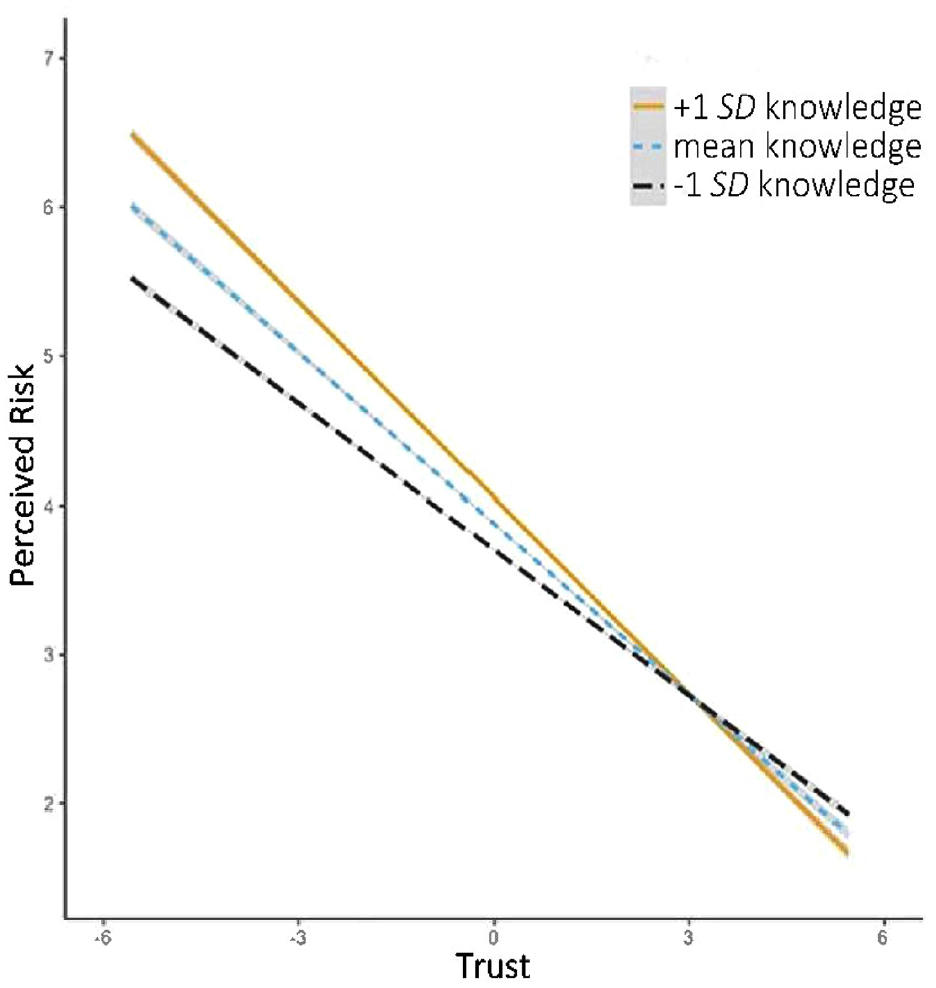
Illustration of the Conditional Effects of Trust on Risk Perceptions by Subjective Knowledge
Second, we tested whether subjective knowledge interacted with competence-based trust to predict benefit perceptions. The interaction effect was nonsignificant, β < .01, 95% CI [.00, .01], p = .282 (see Table 6). Notably, the trend of the effect was opposite to the original study, such that the simple slope of trust on perceived benefit was non-significantly smaller at low (compared to high) knowledge.
Multilevel Model Predicting Benefit Perceptions From Trust, Subjective Knowledge, and Their Interaction Terms Across 33 Risk Domains
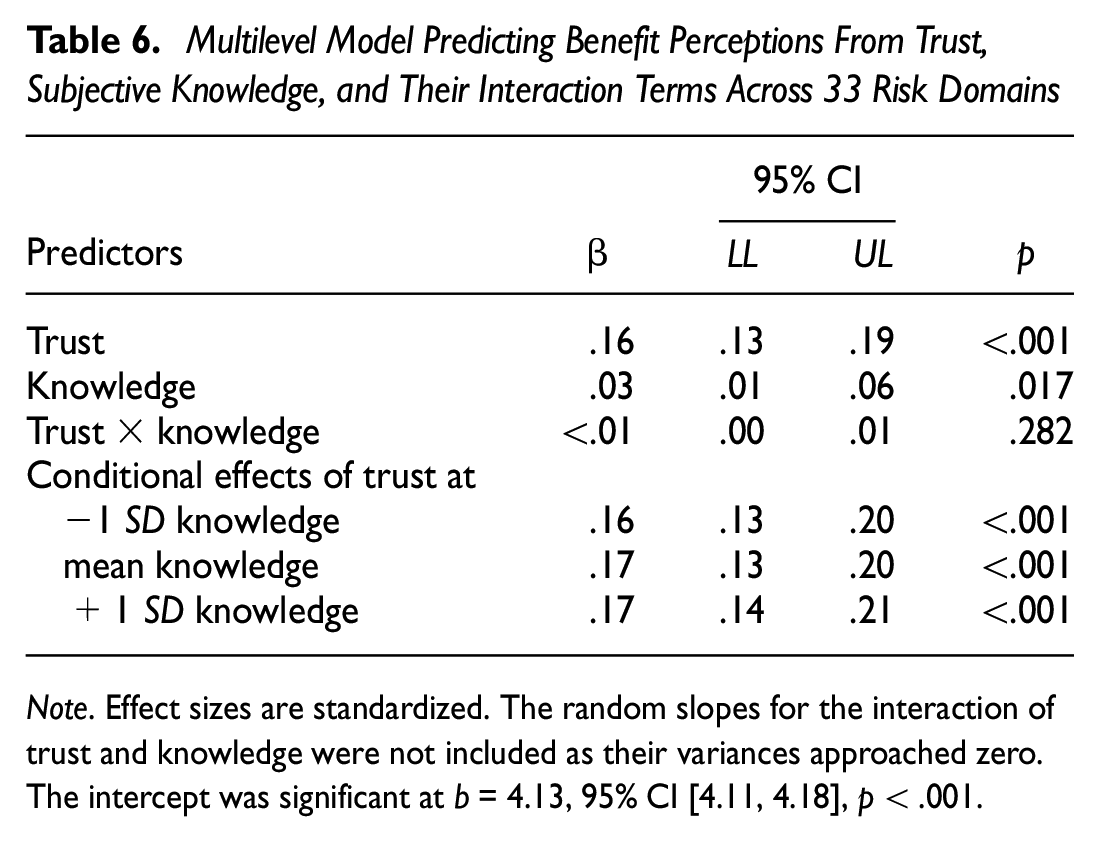
Note. Effect sizes are standardized. The random slopes for the interaction of trust and knowledge were not included as their variances approached zero. The intercept was significant at b = 4.13, 95% CI [4.11, 4.18], p < .001.
Exploratory Analyses
As the remainder reports non-preregistered analyses to further explore the interaction effects between trust and subjective knowledge and between trust and personal control, we treat these analyses as non-confirmatory.
Non-preregistered Replication Tests and Robustness Checks
Given that the sample of the current study is less homogeneous than the original sample of U.S. students, we explored whether the interaction effect between competence-based trust and subjective knowledge on perceived risk persisted when adding sociodemographic variables to the model (i.e., age, conservatism, education, gender, and U.S. residence). The trust-knowledge interaction term remained significant in this non-preregistered model, β = −.01, 95% CI [−.02; .00], p = .005. Moreover, the same pattern of findings resulted from robustness checks with higher replication closeness by using the 25 risk domains from the original study instead of 33 (see Supplemental Table S1), when discarding domain as a cluster variable (Supplemental Table S2), and in the original and non-multilevel correlation analyses employed by Siegrist and Cvetkovich (Supplemental Figure S1). Also, an alternative model exploring the interaction between benevolence-based trust and subjective knowledge on perceived risk revealed an inverse direction for the interaction effect, β = −.02, 95% CI [−.03; −.02], p < .001.
Likewise, when exploring perceived benefits as an outcome of the interaction between competence-based trust and subjective knowledge, the interaction effect remained inconsistent with the original study in multiple robustness checks, including (a) adding sociodemographic variables to the model (i.e., age, conservatism, education, gender, and U.S. residence; β < .01, 95% CI [−.01, .01], p = . 486), (b) using the original number of 25 risk domains (see Supplemental Table S4), (c) discarding domain as a cluster variable (see Supplemental Table S5), and (d) employing the original correlation approach (see Supplemental Figure S1). Test (c) revealed a significant trust-knowledge interaction effect on perceived benefits, and its direction again contradicted Siegrist and Cvetkovich (2000). Similarly, when exploring an interaction effect between benevolence-based trust and subjective knowledge on perceived benefits, its direction significantly contradicted the original study, β = .01, 95% CI [.01; .02], p = .008. Overall, our non-preregistered analyses further corroborate a pattern opposite to the direction of the trust-knowledge interaction reported by Siegrist and Cvetkovich (2000).
Non-preregistered Boundary Conditions of the Moderation by Subjective Knowledge
While the present data revealed an absence of the original pattern of findings, the interaction effect between subjective knowledge and competence-based trust on perceived risk that Siegrist and Cvetkovich (2000) reported might still emerge in a subset of people and domains. Simple interaction analyses per domain revealed considerable heterogeneity in terms of the direction of the trust-knowledge interaction effects (see Figure 3). To explore potential systematic variation in the interaction, we conducted secondary tests on boundary conditions, that is, psychological distance and experiential and descriptive learning about a risk.
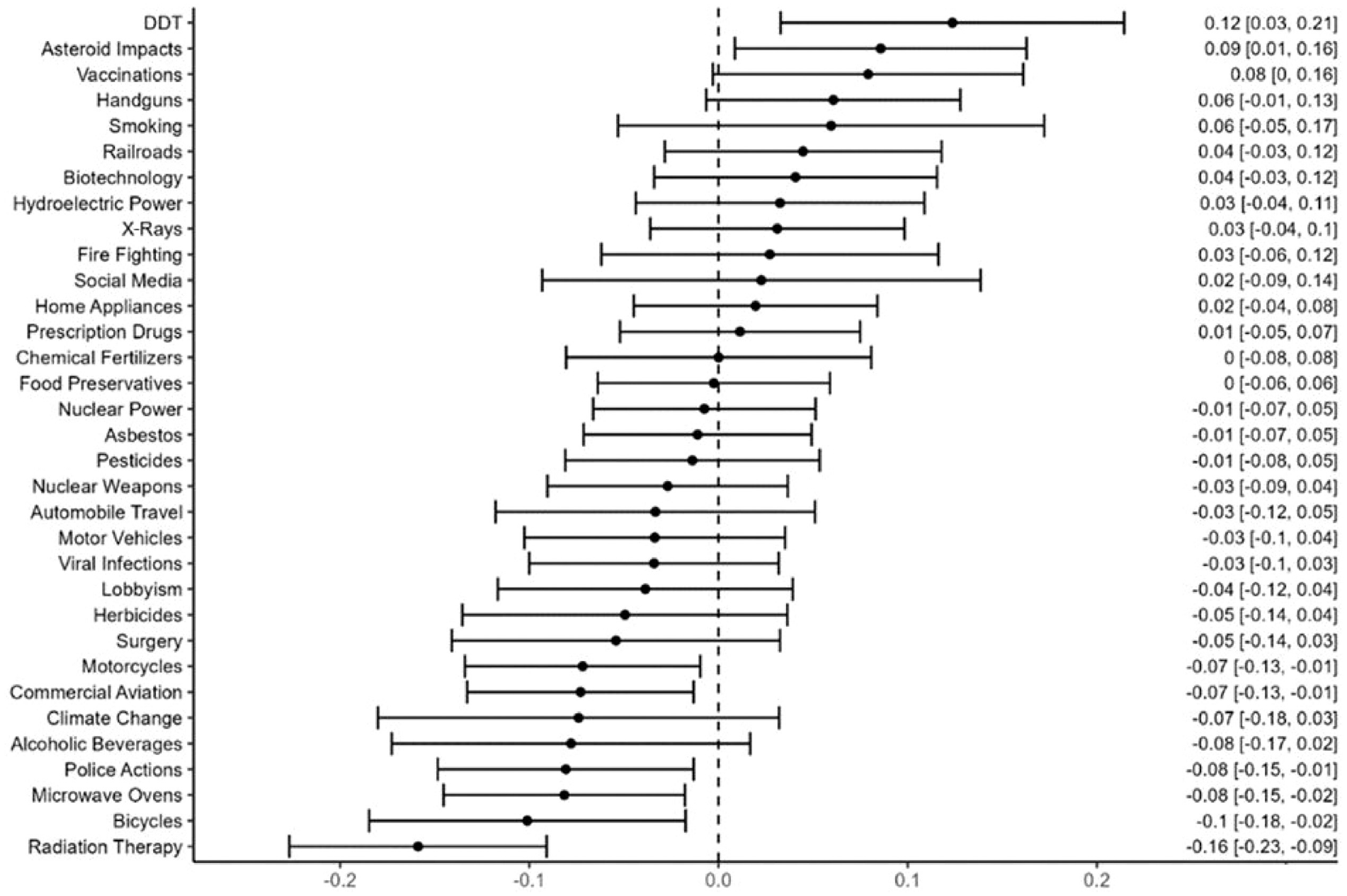
Standardized Interaction Effects Between Trust and Subjective Knowledge on Perceived Risk by Domain With 95% Confidence Intervals
Psychological Distance
We first ran a multilevel model that explored a potential boundary condition by psychological distance to a risk. The three-way interaction effect between trust in authorities, subjective knowledge, and psychological distance on perceived societal risk was nonsignificant, β < .01, 95% CI [.00, .00], p = .561.
Descriptive and Experiential Learning
We explored whether the modes through which people learn about a risk impact on the moderating role of subjective knowledge. A multilevel model with a three-way interaction effect between trust in authorities, subjective knowledge, and descriptive learning on perceived societal risk reached significance, β > −.01, 95% CI [−.01, .00], p = .024. While the moderating effect of knowledge was more pronounced at higher descriptive learning (see Supplemental Table S6), the direction of the interaction term of trust and knowledge was still negative and thus contradicted the pattern observed in Siegrist and Cvetkovich (2000). A separate model showed that the three-way interaction between trust, knowledge, and experiential learning about a risk was nonsignificant, β < .01, 95% CI [.00, .00], p = .888. Taken together, we found no systematic conditions under which the model proposed by Siegrist and Cvetkovich (2000) was supported.
A Non-Preregistered Alternative Perspective: Personal Control
The failed replication of Siegrist and Cvetkovich (2000)’s findings on the interaction effect between trust and subjective knowledge on perceived risk raises the need to explore alternative explanations for the trust-risk association. In an exploratory alternative interaction model, we observed a significant positive interaction between competence-based trust in authorities and personal control on perceived risk, such that trust was more predictive of risk perceptions at lower personal control (see Table 7 and Figure 4). The Johnson-Neyman test indicated that the slope of trust on risk was significant for all observed values of personal control. Adding personal control and its interaction with trust explained 24.8% of variance in the trust-risk association (calculated following Hoffman, 2015; Hox, 2018). Finally, simple interaction analyses per domain revealed considerable heterogeneity in the direction of the interaction effects (see Figure 5), indicating potential higher-order moderators, which we explored next.
Multilevel Model Predicting Perceived Risk From Trust, Personal Control, and Their Interaction Terms
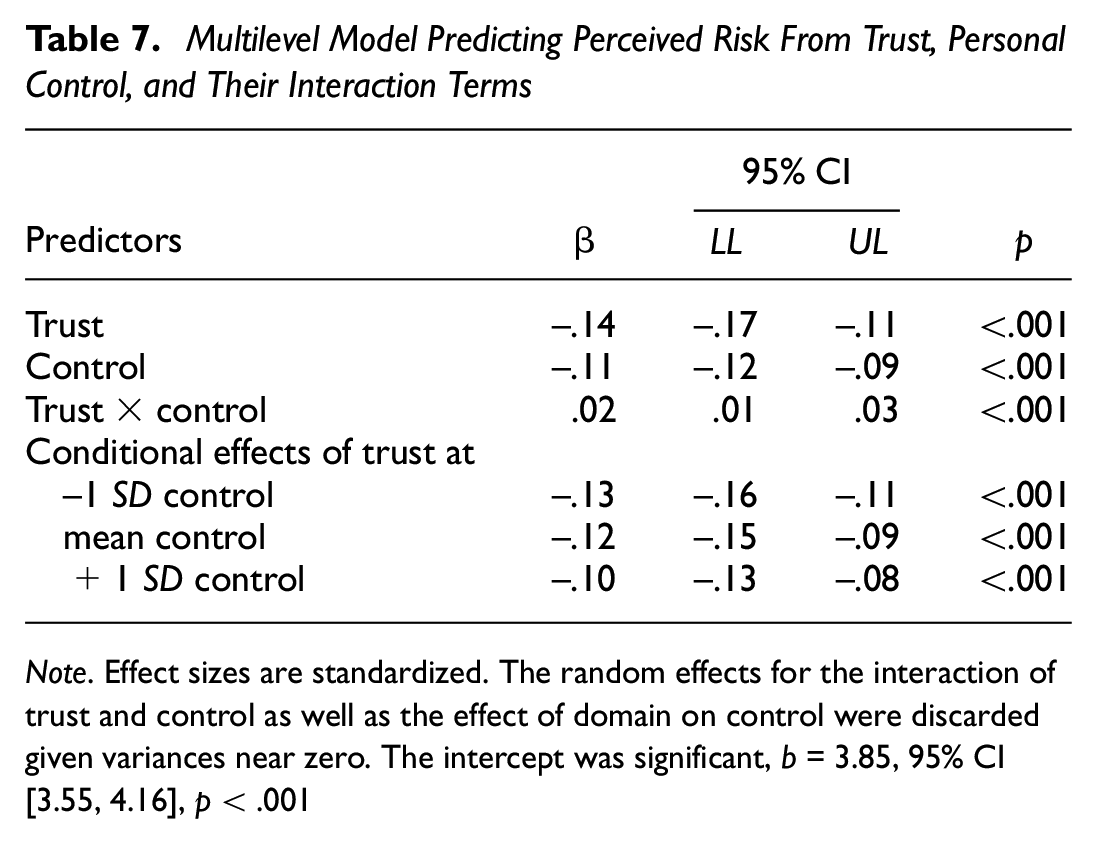
Note. Effect sizes are standardized. The random effects for the interaction of trust and control as well as the effect of domain on control were discarded given variances near zero. The intercept was significant, b = 3.85, 95% CI [3.55, 4.16], p < .001
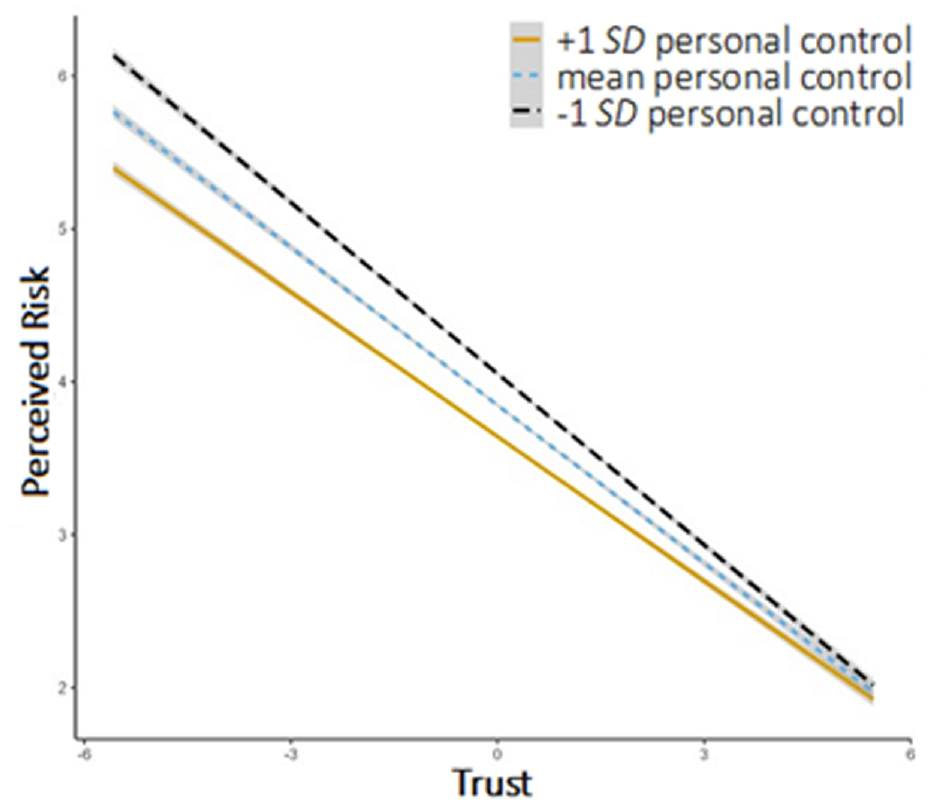
Conditional Effects of Trust on Risk Perceptions at the Mean of Personal Control and 1 SD Below and Above
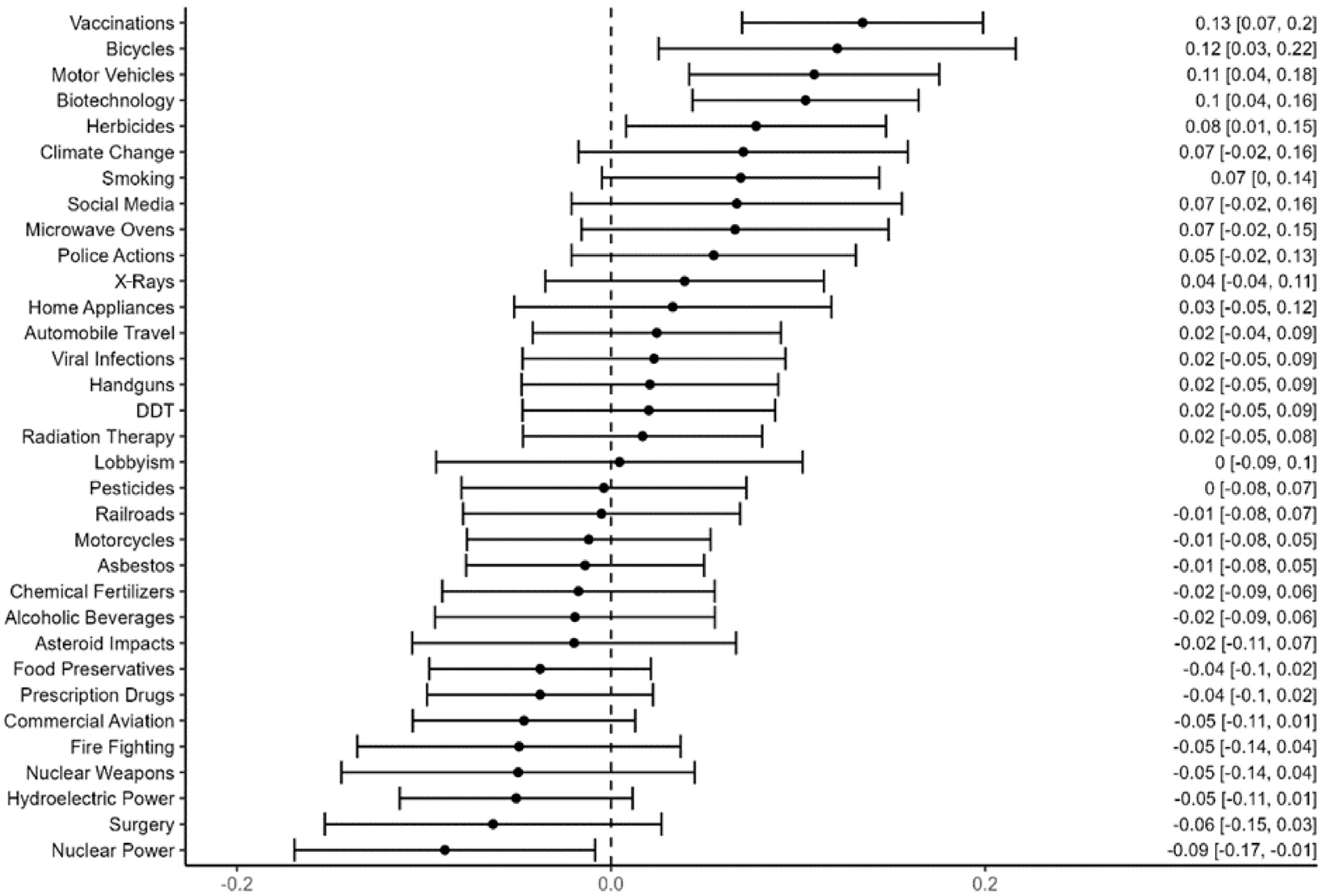
Standardized Interaction Effects Between Trust and Personal Control on Perceived Risk by Domain With 95% Confidence Intervals
Non-Preregistered Boundary Conditions of the Moderation by Personal Control
Finally, we report analyses of whether the interaction effect between personal control and trust on perceived risk depends on higher-order moderators.
Experiential Learning
We explored whether the frequency of people’s experiences with a risk influences whether personal control qualifies the trust-risk association. There was a significant three-way interaction effect on perceived risk by trust, control, and experiential learning (see Table 8 and Supplemental Figure S2). That is, at high levels of experiential learning, the interaction between trust and control was more pronounced: trust became more predictive of perceived risk at low control. In contrast, at low experiential learning the conditional effects of trust were the same at low and high control. The three-way interaction term remained significant when adding sociodemographic variables to the model (i.e., age, conservatism, education, gender, and U.S. residence; see Supplemental Table S7), β = .01, 95% CI [.00; .01], p = .006.
Multilevel Model Predicting Risk Evaluations From Trust, Personal Control, Experience, and Their Interaction Terms
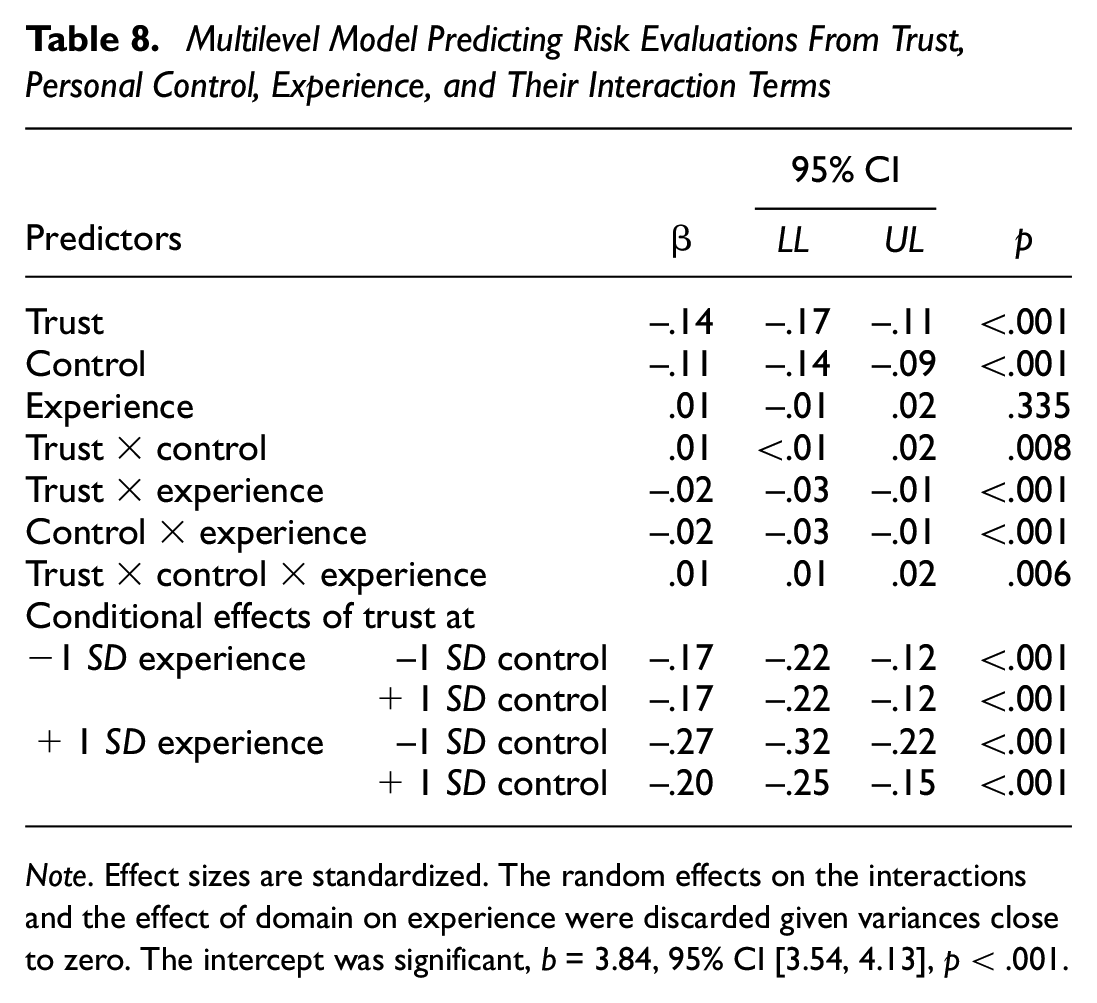
Note. Effect sizes are standardized. The random effects on the interactions and the effect of domain on experience were discarded given variances close to zero. The intercept was significant, b = 3.84, 95% CI [3.54, 4.13], p < .001.
As the direction of the correlation between experience and personal control was heterogeneous across risk domains (see Supplemental Figure S3), despite the nonsignificant overall correlation (see Table 4), we explored whether the magnitude of the trust-control interaction differed by levels of personal control. We ran a multilevel model that probed the interaction term of trust and the quadratic effect of control (Hayes, 2017), which was nonsignificant, β < .01, 95% CI [.00, .00], p = .418. These findings indicate that people draw on trust in evaluating a risk especially if they have formed perceptions of personal control through experiential learning about the risk.
Descriptive Learning and Psychological Distance
In contrast, two separate exploratory models revealed nonsignificant three-way interactions of trust and control with either descriptive learning, β < .01, 95% CI [.00, .01], p = .400, or psychological distance, β > −.01, 95% CI [−.01, .00], p = .172.
General Discussion
The contingency of perceptions of societal risks on trust is a foundational assumption in psychological research (Rousseau et al., 1998; Rutjens et al., 2018; Siegrist, 2021; Slovic, 1993). A leading explanation for the association is that individuals compensate for perceived knowledge deficits by deriving risk and benefit evaluations from trust (Earle & Siegrist, 2008; Siegrist, 2021; Siegrist & Cvetkovich, 2000). The present data failed to directly replicate Siegrist and Cvetkovich (2000)’s finding of a stronger effect of trust in authorities on perceived societal risks and benefits at lower subjective knowledge. Instead, we observed the reverse pattern, with trust being significantly more predictive of perceived risks (and non-significantly so for perceived benefits) at higher subjective knowledge. Additional analyses that we treat as non-confirmatory revealed a moderation by personal control, indicating an alternative model: People rely on trust attributions, especially when they lack a sense of personal control over a risk. An exploratory three-way interaction between trust, control, and experience with a risk indicates further insight into the moderating effect of control. Specifically, the mode through which people learn about a risk could determine the role of personal control, such that risk domains that people have personally encountered involve a stronger role of personal control.
One reason for the failed replication of the trust-knowledge interaction might be that the original study obtained a false-positive finding due to an underpowered sample of 90 students. Considering that psychological phenomena can fluctuate due to historical changes in societal dynamics over time (Muthukrishna et al., 2021), another explanation could be that the phenomenon described by Siegrist and Cvetkovich (2000) has changed over the last decades. People might have become less dependent on resorting to their trust in authorities for evaluating risks and benefits, for example, due to openly accessible information through the internet and societal shifts toward more intuitive rather than rational thinking styles (Scheffer et al., 2021). As such, it is possible that people are overconfident and rely on their own intuitive assessments rather than those of authorities (Caddick & Feist, 2022; Motta et al., 2018; Rutjens & van der Lee, 2020). It is even possible that the interaction between trust in authorities and subjective knowledge has reversed. Accordingly, Miller et al. (2016) found that the interplay of high knowledge and low trust in institutions is associated with conspiracy endorsement, and the internet may increase the spread of conspiracies (Dow et al., 2021; A. M. Enders et al., 2023).
These temporal fluctuations in the trust-knowledge interaction pattern would increase variation in the interaction due to the extent to which information about a specific risk is openly available, which may differ for nuclear weapons, lobbyism, health risks, or commercial aviation, as an illustration. In line with this claim, our data revealed considerable heterogeneity in the directions of the interaction effects across risk domains. For instance, the domain of asteroid impact showed a trust-knowledge interaction effect, as predicted by Siegrist and Cvetkovich (2000), whereas the context of bicycles showed the opposite pattern. Congruently, a non-confirmatory analysis indicated that the extent to which people learn about a risk through descriptive information qualified the moderating role of knowledge. The direction of the trust-knowledge interaction nonetheless remained opposite to the original pattern of findings at both low and high exposure to descriptive information. Future research could use historical data to explore longitudinal trends in the interactions between knowledge and trust in institutions, experts, and opinion leaders as a function of societal shifts like the spread of the internet.
While individuals’ perceived dependence on knowledgeable experts might have declined since the rise of the internet, there could be divergent societal shifts in the desire to control risks. For instance, recent debates on risks around climate change, digitalization, war, and pandemics have presented people with a lack of primary control and a need for governmental regulation (Fritsche, 2022; Hamann et al., 2023; Mazzucato, 2021). On the other hand, the increased focus on behavioral insights and other individual-level action to mitigate societal challenges (Chater & Loewenstein, 2022; Gainsburg et al., 2023; Pauer, Gainsburg, et al., 2023) might have increased the salience of personal control perceptions, just as the increased amount of available information through the internet (e.g., Pauer, Rutjens, Ruby, et al., 2022; Shockley & Fairdosi, 2015). For example, people search for medical advice through online search engines in response to illness (Carneiro & Mylonakis, 2009), which could entail feelings of empowerment but also choice overload (Chernev et al., 2015; Landau et al., 2015; Shepherd & Kay, 2012). These societal shifts could contribute to why the association between trust and risk perceptions depends on personal control. While we treat this analysis as non-confirmatory, it indicates that people who lack a sense of personal control derive risk evaluations from their confidence in powerful others managing the risk on their behalf.
In line with the notion that experiences with a risk reinforce the consequences of personal control perceptions (e.g., McDonald et al., 2015), our non-confirmatory analyses revealed that the interaction between trust and personal control on risk perceptions is most pronounced in risk domains that people frequently experience. This could be because individuals overly rely on the outcomes of personal experiences with a risk over descriptive information in evaluating its probability (Hertwig et al., 2004; Hertwig & Wulff, 2022; Wachinger et al., 2013). Specifically, when people perceive they have acquired sufficient experiences with (a lack of) personal control over, for example, viral infections or climate change, their perceived (in)ability to control the risk may become more important. In particular, experience with control deficits about a risk could increase the desire for control compared to a hypothetical loss of control.
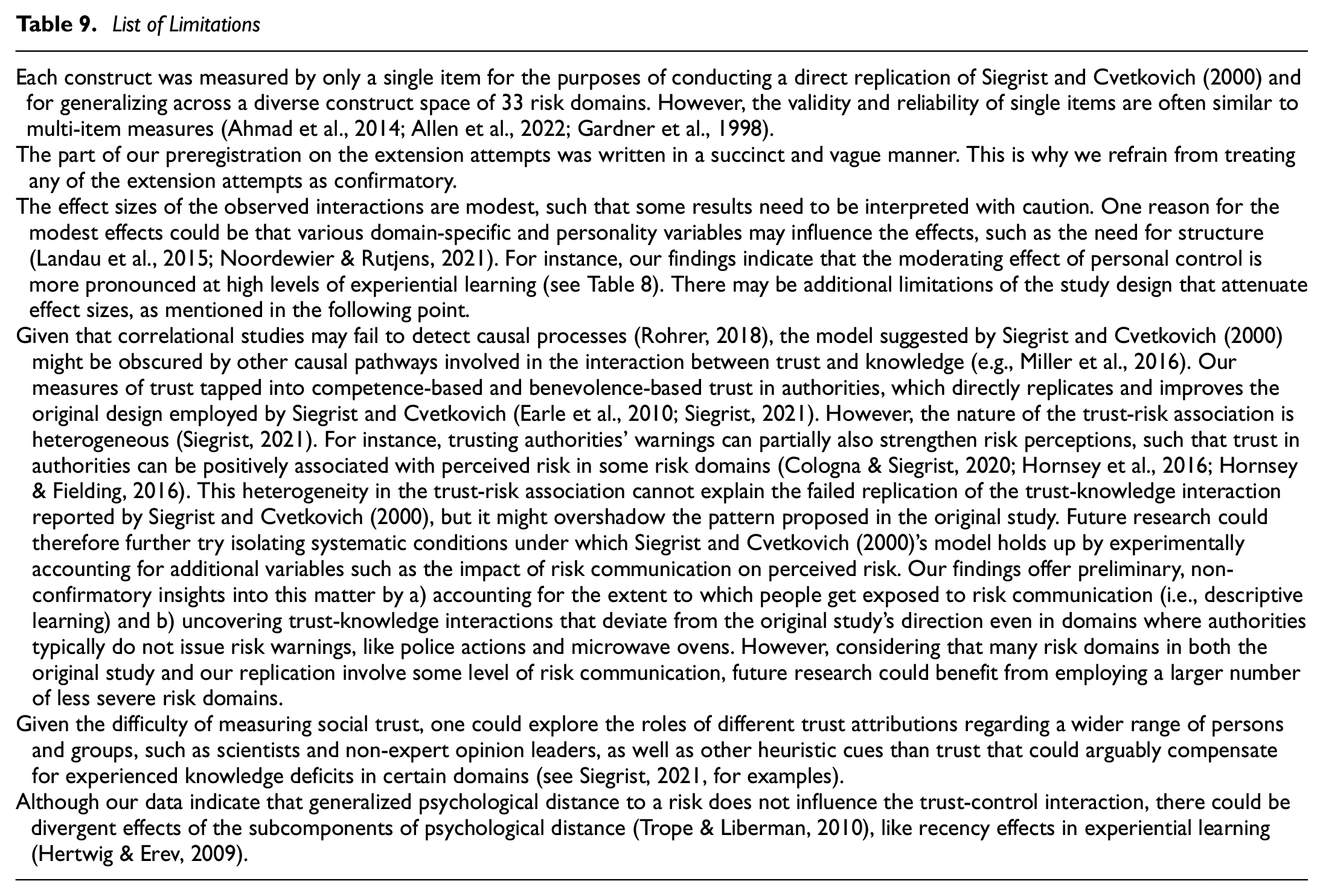
The findings of the present study are limited in several ways. This includes the way the target constructs were measured, modest effect sizes, limited causal inferences, and inconclusive insights into the processes underlying the observed patterns (see Table 9). Future research could therefore search for conditions under which the original model holds up by employing experimental, meta-analytic, and longitudinal methods along with observations in daily life for higher ecological and temporal validity (Hofmann & Grigoryan, 2023; Pauer, Linne, & Erb, 2024; Pauer, Rutjens, et al., 2024).
List of Limitations
The present research provides novel insights into why trust predicts how people respond to societal risks (Siegrist, 2021). The failed replication of a prevailing model of the epistemic value of trust suggested by Siegrist and Cvetkovich (2000) raises a need to reconsider the conditions under which people are motivated to resort to trust attributions in evaluating societal risks. We offer an alternative perspective by indicating that individuals use trust attributions to assess whether a powerful decision-maker will manage risks that are beyond personal control. Understanding this motivational nature of trust in perceptions of societal risks may be pivotal in navigating today’s globalized world, which exposes individuals to an ever-increasing number of risk warnings.
Footnotes
Acknowledgements
The authors are grateful for constructive feedback from Prof. Dr. Michael Siegrist.
Declaration of Conflicting Interests
The author(s) declared no potential conflicts of interest with respect to the research, authorship, and/or publication of this article.
Funding
The author(s) disclosed receipt of the following financial support for the research, authorship, and/or publication of this article: S.P. was supported by a grant from Studienstiftung (German Academic Scholarship Foundation).

Supplemental Material
Supplemental material is available in the online version of the article.
Handling Editor: Alexa Tullett