



Abstract
Approximately 200 million people consume cannabis annually, with a significant proportion of them using it chronically. Using experience sampling, we describe the effects of chronically getting high on emotions, motivation, effort, and self-regulation in everyday life. We queried chronic users (N = 260) 5 times per day over 7 days (3,701 observations) to assess immediate effects of getting high and longer term, between-person effects. Getting high was associated with more positive emotions and fewer negative emotions. Contrary to stereotypes, we observed minimal effects on motivation or objective effort willingness. However, getting high was associated with lower scores on facets of conscientiousness. Surprisingly, there was no evidence of a weed hangover. Relative to less frequent users, very frequent users exhibited more negative emotions dispositionally, but they were more motivated. They also reported less self-control and willpower. As attitudes about cannabis are changing, our findings provide a rich description of its chronic use.
Introduction
People like to get high. With nearly 200 million people worldwide having used cannabis in the past year, cannabis is the fourth most used recreational drug after caffeine, alcohol and tobacco (United Nations, 2020). Despite its wide use and increasing legal and societal acceptance, surprisingly little is known about its effects among habitual users in everyday life. Instead, research on cannabis tends to treat it as a drug of abuse, focused mostly on the health risks of overuse and dependence. Here, we focus on what is missing, describing the everyday experience of getting high among habitual users, examining reasons they get high, its possible salutary emotional effects, and its surprising lack of costs to motivation and industriousness.
The Chronic
People have been getting high for millennia: First cultivated in the Neolithic period 12,000 years ago, written records of humans using cannabis for its mind-altering properties date back to 2,800 BC in Dynastic China (Abel, 1980). Today, jurisdictions in Canada, Uruguay, Thailand, and 24 U.S. States have legalized cannabis for recreational use and retail sale; and cannabis has been decriminalized even more widely. According to the U.S. data, 18% of Americans used cannabis at least once in 2019 (Centers for Disease Control and Prevention, 2021). In Canada, where cannabis is fully legal, 25% of Canadians used cannabis at least once in 2021, with 35% of those ingesting 3 or more times per week (Statistics Canada, 2021). Habitual use of cannabis is thus common, accounting for about 9% of Canadian adults.
Despite popular stereotypes of the lazy stoner depicting chronic cannabis users as low-achieving ne’er-do-wells, chronic users come from all walks of life. While there are demographic differences between chronic users and nonusers—for example, chronic use is higher among men, younger people, Black, Latino, and Indigenous populations, and the unmarried (Jeffers et al., 2021)—most chronic users are employed, conscientious, and have stable incomes (Hart, 2022; Jeffers et al., 2021). Recreational cannabis use in places where it is legal is now normalized and widely accepted: users are perceived as diverse and indistinguishable from nonusers; and cannabis is recognized to have benefits and harms (Kilwein et al., 2022).
But even with this broad destigmatization, much research treats cannabis as a medical problem involving substantial risk. These hypothesized risks include structural and functional changes to the brain’s reward network (Volkow et al., 2017), personality change (Winters et al., 2022), and so-called amotivational syndrome (Pacheco-Colón et al., 2018). This work, however, typically yields mixed results especially among adult users. For example, studies suggest that regular cannabis users are both less (Winters et al., 2022) and more agreeable (Vigil et al., 2022); while other studies suggest that chronic users have both low (Looby & Earleywine, 2007) and normal levels of motivation (Skumlien et al., 2023). We cannot help but wonder if one of the reasons for these mixed results is the implied goal of this research: to reduce use. Here, we start with the premise that cannabis is widely used for recreational purposes and that it might yield both positive and negative effects.
Emotions, Motivation, and Self-Regulation
To understand what drives chronic users to get high, we start by exploring phenomenology, looking at how cannabis intoxication makes people feel. Given the high prevalence of cannabis use, including chronic use, we should expect that getting high feels good for many people. However, aside from passing mentions of euphoria, scholarly descriptions of cannabis intoxication are dominated by negative symptoms including anxiety, paranoia, social withdrawal, and dysphoria (American Psychiatric Association, 2013). Chronic users get high for a reason, and we suspect it’s because it is positively reinforcing, making many, if not all, people feel good (Sznitman et al., 2022). Moving beyond good or bad moods, here we wonder how cannabis changes people’s discrete emotions (Fredrickson, 2009)—for example, awe, gratitude, and love. By appreciating the emotional profile of frequent cannabis intoxication, we might better understand what drives use and possibly identity novel applications for cannabis, say in therapeutic contexts (Earleywine et al., 2022).
We next explore how cannabis intoxication affects motivation. Despite long-standing stereotypes depicting chronic users as lazy and unmotivated, the literature presents a messy picture. While numerous studies suggest that chronic use is associated with apathy and low motivation (Pacheco-Colón et al., 2018), many of these associations disappear once analyses control for influential third variables like personality, depression, and alcohol use (Petrucci et al., 2020). Some studies find no relationship between chronic cannabis use on one hand and apathy and objective effort willingness on the other hand (Skumlien et al., 2023). Remarkably, other studies suggest that chronic users are more—not less—motivated, when motivation is assessed via objective behavioral tasks and not simply subjective self-report (Vele et al., 2022). Motivation is a multidimensional construct with important sources of variability accounted by the source and quality of motivation (Ryan & Deci, 2000). Thus, while cannabis intoxication might not undermine motivation globally, it might affect specific sources of motivation.
We can’t help but wonder if some of this lack of clarity is due to the conflation of motivation with self-regulation—perhaps getting high does not impact drive or a willingness to work but instead undermines people’s ability to regulate themselves. Self-regulation is the dynamic process of determining what goals to pursue and then steering behavior toward those goals (Inzlicht et al., 2021), and at the trait level is associated with conscientiousness and (lack of) impulsivity (Roberts et al., 2014). At the state level, there is good reason to believe that cannabis intoxication can undermine the regulation of goal pursuit. While not affecting all executive functions uniformly, lab studies consistently indicate that being high impairs planning and decision-making and increases risk-taking and impulsivity (Crean et al., 2011). Whether, and to what extent, cannabis intoxication among chronic users undermines self-regulation in the real world is unknown.
Current Study
Here, we use experience sampling to understand the effects of getting high among chronic users going about their everyday lives. Here, we repeatedly probe whether chronic cannabis users are high (or not) and then examine whether within-person changes in cannabis intoxication are related to discrete emotions and specific states of motivation and self-regulation (see Figure 1). We also examine how between-person differences in how frequently chronic users get high relate to dispositional differences. While our approach relies on self-report, retrospective biases are limited given that participants are asked about what they are experiencing in that very moment. Furthermore, we move beyond self-report by examining participants’ objective willingness to exert mental effort. Finally, because this approach examines changes within a person—asking, for example, how willing a person is to exert effort when they are high compared with when they are not high—it controls for nuisance third variable problems and thus allows for better approximations of causal claims (Rohrer & Murayama, 2023). Despite these strengths, a major limitation is that our sample was selected for being both chronic cannabis users and users willing to participate in a time-consuming longitudinal study. Our results, therefore, might not generalize to broader populations.
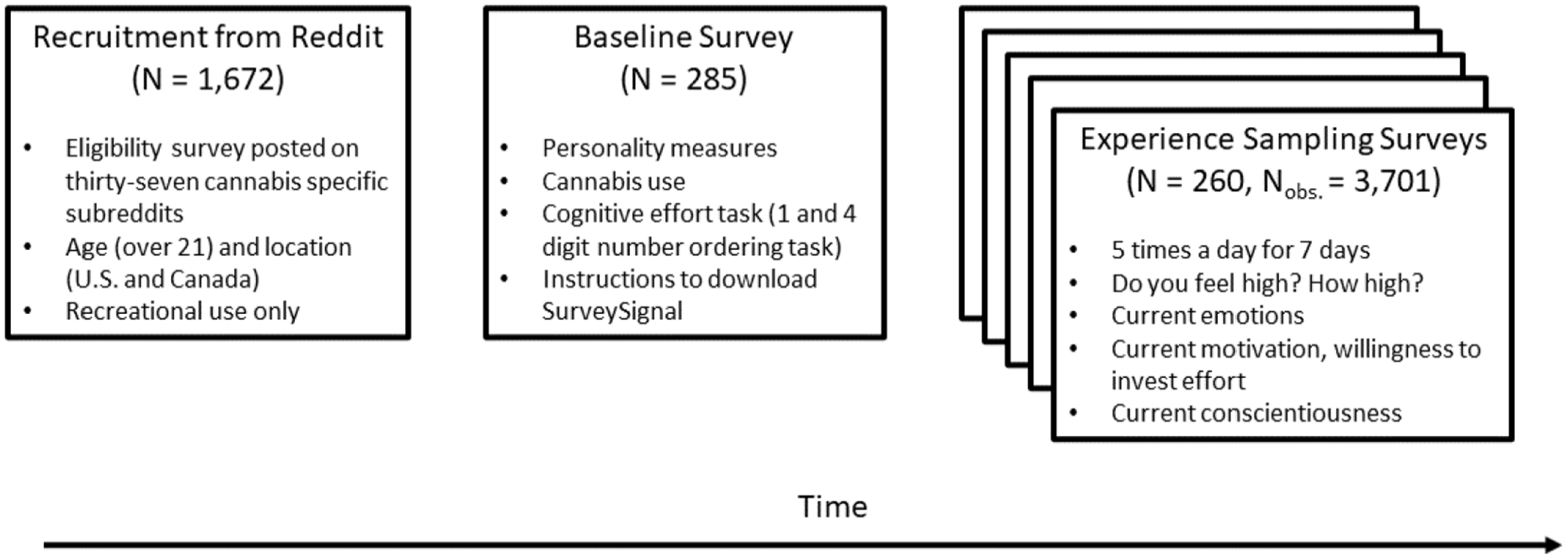
Flowchart of Procedure
Methods
Participants and Procedure
Participants were recruited from Reddit, an online discussion board with many sub-communities or “subreddits” focused on specific interests. Participants were considered eligible if they were over 21, resided in the United States or Canada, and used cannabis at least 3 times a week for recreational but not medical purposes. Participants completed the 30-minute baseline survey and an experience sampling period where they were sent brief surveys 5 times a day, between the hours of 10 a.m. and 11 p.m., for 1 week (see Figure 1). 1
In total, our final sample contains 260 participants who completed both the baseline questionnaire and at least one experience sampling survey, resulting in a sample of n = 3,701 surveys (see Figure 2 for a histogram of experience sampling response rates) taken from the daily lives of chronic cannabis users. A sensitivity analysis suggests that with 260 participants and an average of about 15 observations per person, we have 80% power to detect within-person effects as small as r = .08 and between-person effects as small as r = .17. This study was not preregistered. All materials and data are available here: https://osf.io/xtzfs/?view_only=93a237aca68543a0a3f0cd53a2138986.
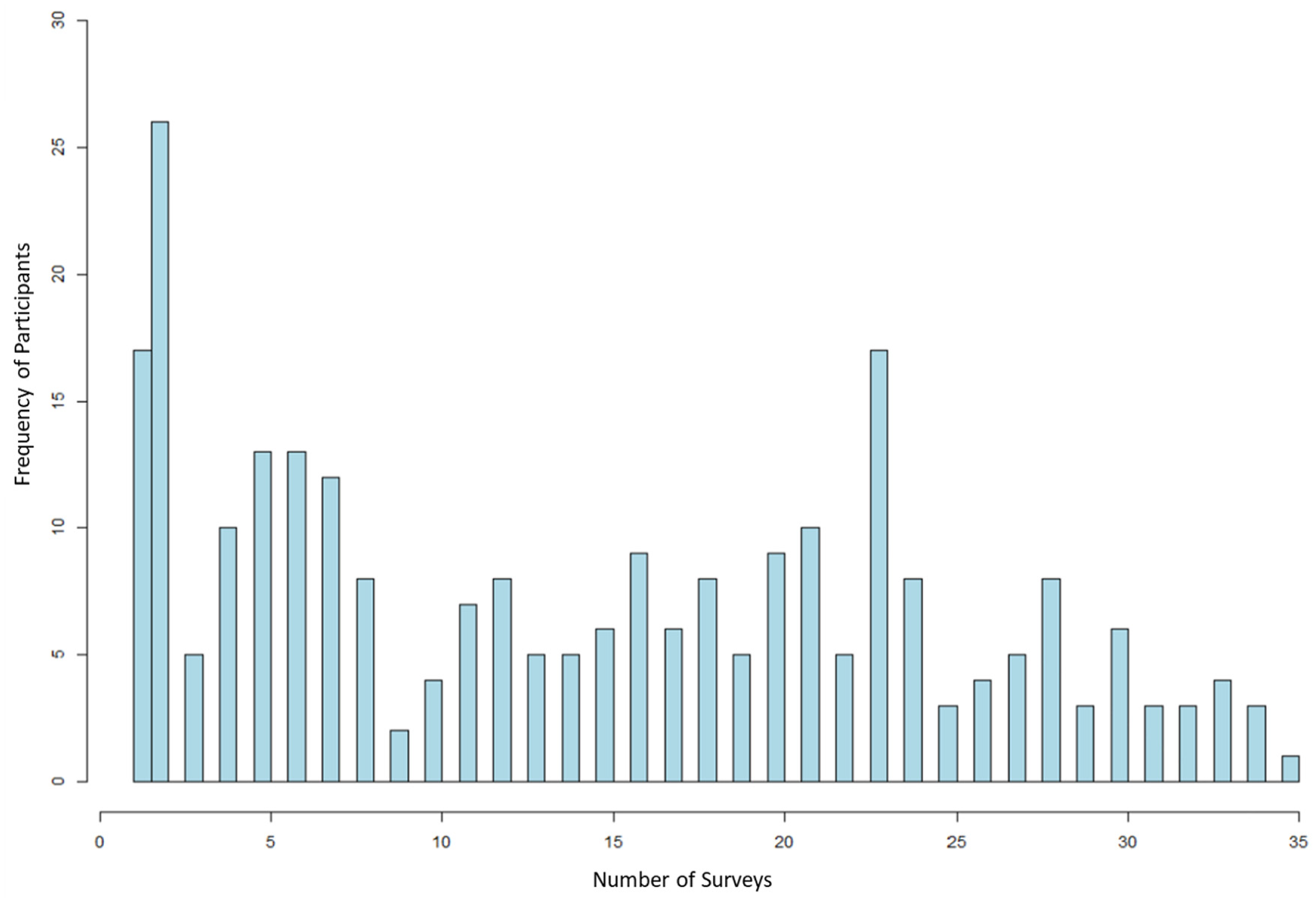
Histogram of Experience Sampling Surveys Completed by Each Participant
Baseline Survey
As part of the baseline, we administered a frequency of cannabis use measure (Cuttler & Spradlin, 2017), as well as measures of individual differences (see Table S1a in Supplemental Materials for a complete list of baseline measures). Included in this was the 50-item International Personality Item Pool five-factor model as a Big 5 measure of personality (Ehrhart et al., 2008). Participants in our sample were fairly similar to data from N = 10,019 online respondents (ipip.ori.org means shown in brackets) in terms of Conscientiousness, M = 3.4, SD = 0.61 (3.38), Extraversion, M = 3, SD = 0.67 (3.05), and Neuroticism, M = 3.2, SD = 0.7 (2.98)—but were slightly lower with regard to Openness, M = 3.7, SD = 0.56 (4.05), and Agreeableness, M = 3.5, SD = 0.59 (3.84).
We also administered a modified version of the cognitive effort discounting paradigm (Westbrook et al., 2013), both at baseline and during each experience sampling survey (see Figure 3). In our version of the task, participants made a series of 7 choices about which of two tasks to perform: an easy number-sorting task for little compensation or a harder number-sorting task for more compensation (Cuevas Rivera et al., 2020). We calculated effort discounting by taking the value of the final decision and subtracting it from 200; this corresponds to the number of tickets participants are willing to forego to do the easier task. At baseline, our participants were willing to forego an average of 64.21 lottery tickets (SD = 85.05) to avoid doing the more effortful version of the number-ordering task.
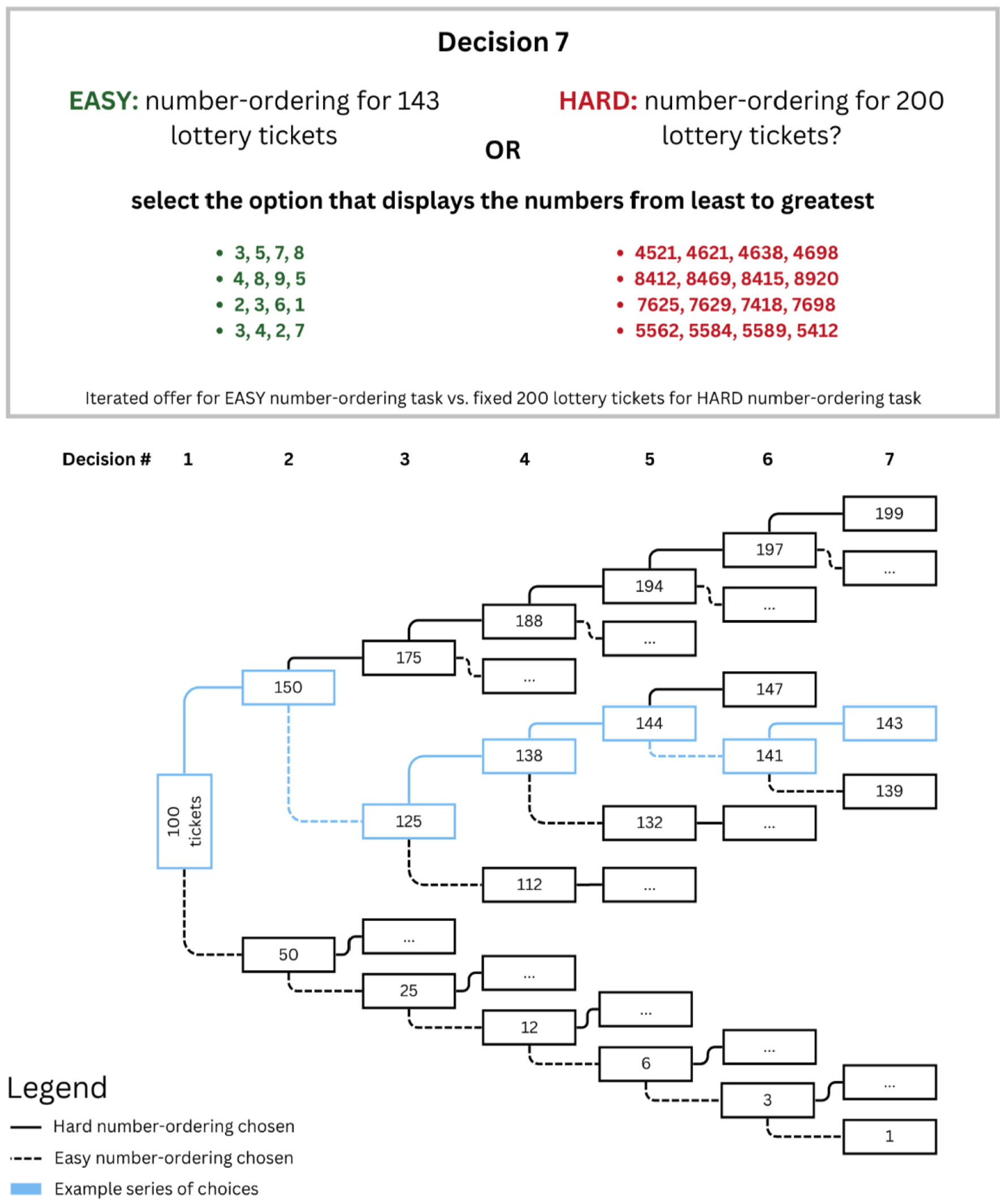
Effort Discounting Procedure
Experience Sampling
To get a representative sample of people’s experience, the experience sampling surveys were sent 5 times a day for 7 days between 10 a.m. and 11 p.m. at random times with an interval of at least 2 hours between surveys (see Table S1b in Supplemental Materials for a complete list of measures used in experience sampling). The surveys were sent via text message with SurveySignal (Hofmann & Patel, 2015) and distributed via Qualtrics. Participants had up to 30 minutes to answer the survey before the link expired. In these surveys, participants were asked if they currently felt high (yes/no). Participants who indicated that they were not currently high were provided with filler questions about cannabis craving so that the survey would have the same length had they reported being high. If participants reported feeling high, we asked them how they ingested (smoking, vaping, edible, or other) and to select all the reasons they got high by checking one or more reasons why they used cannabis (e.g., because I liked the feeling, to forget my worries), which was a measure we adapted from the Marijuana Motives Measure (Benschop et al., 2015). Next, we measured our main dependent variables.
Emotions
To assess current emotional experiences, we administered the modified Differential Emotions Scale (Fredrickson, 2009). This scale assesses the extent to which participants felt 20 specific emotions (10 positive and 10 negative) at the current moment on a scale from 1 (not at all) to 5 (very much). The 10 positive emotions included awe, contentedness, and gratitude; the 10 negative emotions included anger, disgust, and embarrassment.
Motivation
We next assessed participants’ current levels of motivation using a self-determination theory lens to classify different types of motivation (Ryan & Deci, 2000). According to self-determination theory, the quality of motivation—and not just quantity—varies and ranges from amotivation (lack of caring), external motivation (being motivated by external demand or reward), introjected motivation (internalized motivation, yet driven by guilt and obligation), and identified motivation (autonomous and personally important). Participants read a single item for each motivation type, taken from a global motivation scale (Guay et al., 2003), and then rated their agreement “right now” with each statement on a 1 (Strongly Disagree) to 7 (Strongly Agree) Likert-type scale. In each experience sampling survey participants also completed the same effort discounting task as in the baseline survey (Westbrook et al., 2013).
Conscientiousness
To assess broad self-regulatory capacity, each experience sampling survey included state measures of willpower and conscientiousness. To assess the current level of willpower, we administered a brief five-item version of the State Self-control Capacity Scale (Lindner et al., 2019). This scale assesses participants’ current levels of energy and focus, with statements like “Right now, I feel sharp and focused.” Participants rated how much they agree with each statement on a scale from 1 (not true) to 7 (very true). We also assessed current levels of the six different facets of conscientiousness taken from the Chernyshenko Conscientiousness Scale (Green et al., 2016): self-control (thoughtful and deliberate), orderliness (organized), industriousness (hard working), traditionalism (rule-following), responsibility (keeping promises), and virtue (honesty). These facet scales were shortened (2–3 items per facet) and modified to reflect current states. Participants rate how much they agreed “right now” with various statements on a 1 (Strongly Disagree) to 5 (Strongly Agree) Likert-type scale.
Analysis
Given the nested nature of our data (surveys nested within days, nested within people) we used a multilevel approach in our analysis, including a random intercept for participant and day in each model. Data were analyzed in R using the lmer and glmer functions from the lme4 (Bates et al., 2015) and lmerTest packages (Kuznetsova et al., 2017). For continuous measures, we used linear mixed effects models fit by restricted maximum likelihood, calculating t-tests via Satterthwaite’s method. Within-subject B estimates indicate the change in Y associated with a 1-unit change in X (i.e., being high vs. not being high); whereas between-subject B estimates show the change in Y associated with people 1 standard deviation above the mean of X (i.e., being high on 96% of experience samples) versus those 1 standard deviation below the mean of X (i.e., being high on 32% of experience samples).
In our models, we assessed both between and within-subject sources of variance by including both participant-centered (for continuous measures) and grand-mean centered versions of our fixed-effect predictors in the model. We also included time minus 1 version of each fixed-effect predictor, as well as the time minus 1 version of the variable being predicted, to control for prior levels of both the dependent and independent variables in the model, and to test for lagged effects of cannabis use:
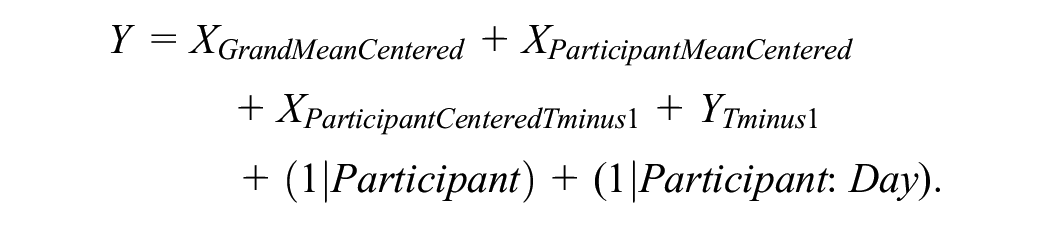
Using this modeling approach, we can partial out between- and within-subject sources of variance. We care mostly about within-subject variance, as this examines state changes within a person, keeping all between-person variables constant (e.g., what is the emotional profile of being high vs not being high). But we also examine between-person variance, which addresses differences between people (e.g., what is the emotional profile of people who use cannabis daily versus weekly). Note, however, that our study cannot compare cannabis users to nonusers, but instead compares very frequent users to less frequent, but still regular users. Critically, we control for prior levels of the predicted variable, thereby allowing us to distill changes in that variable since the last survey (e.g., being high leads to an increase in awe relative to previous levels of awe). Similarly, we control for prior levels of the predictor variable to control for any possible carryover effects from the last survey (e.g., being high now relates to an increase in awe controlling for previous states of cannabis intoxication).
We predicted each variable in a separate model, correcting p-values for each fixed-effect term grouped by a specific research question. Specifically, the p-values for differential emotions were corrected together, as were motivation and effort measures, and conscientiousness and willpower measures. We followed the Benjamini and Hochberg (1995) procedure to control the false discovery rate. To calculate effect sizes, we used a validated effect-size r for fixed effects in multilevel models derived from R 2 (Edwards et al., 2008). This approach has previously been used in the literature for effect sizes in a multilevel modeling context (Depow et al., 2022).
We did not collect a sample of representative cannabis users. Instead, ours was a convenience sample of frequent cannabis users who self-selected into a weeklong experience sampling study. Even though our baseline measurements suggest that our participants were not especially conscientious, they might be particularly conscientious for chronic cannabis users, who tend to be low in conscientiousness (Winters et al., 2022). This means that our results might not generalize to the broader population of cannabis users, where associations could differ (e.g., Berkson’s Paradox; Rohrer, 2018).
Results
Sample Demographics
In line with patterns of use (Jeffers et al., 2021), our sample was primarily male (76% male); primarily young (M = 27.98, SD = 4.70); majority White (56%) but with a large Black subgroup (38%), and with smaller number of East Asian (1%), South Asian (1%), Bi-racial (3%), and other (<1%) participants. Participants in our sample were from the United States (65%) and Canada (35%). As part of the baseline, we administered a frequency of use measure (Cuttler & Spradlin, 2017), which revealed that on average our participants used cannabis a little more than 5–6 times a week.
Frequency and Reasons for Cannabis Use
Overall, participants reported feeling high in 64% of the surveys (see Figure 4A). Participants ingested cannabis through several modes, with smoking (54%), vaping (22%), and eating (21%) particularly common. When participants reported feeling high, we next asked them why. Participants used cannabis for many different reasons, and often for a combination of reasons (see Figure 4B). Overall, participants claimed liking the feeling as the main reason driving use, but the ability to be creative and to forget one’s worries were also endorsed frequently. Surprising to us, many people also reported using cannabis to help them focus and concentrate.
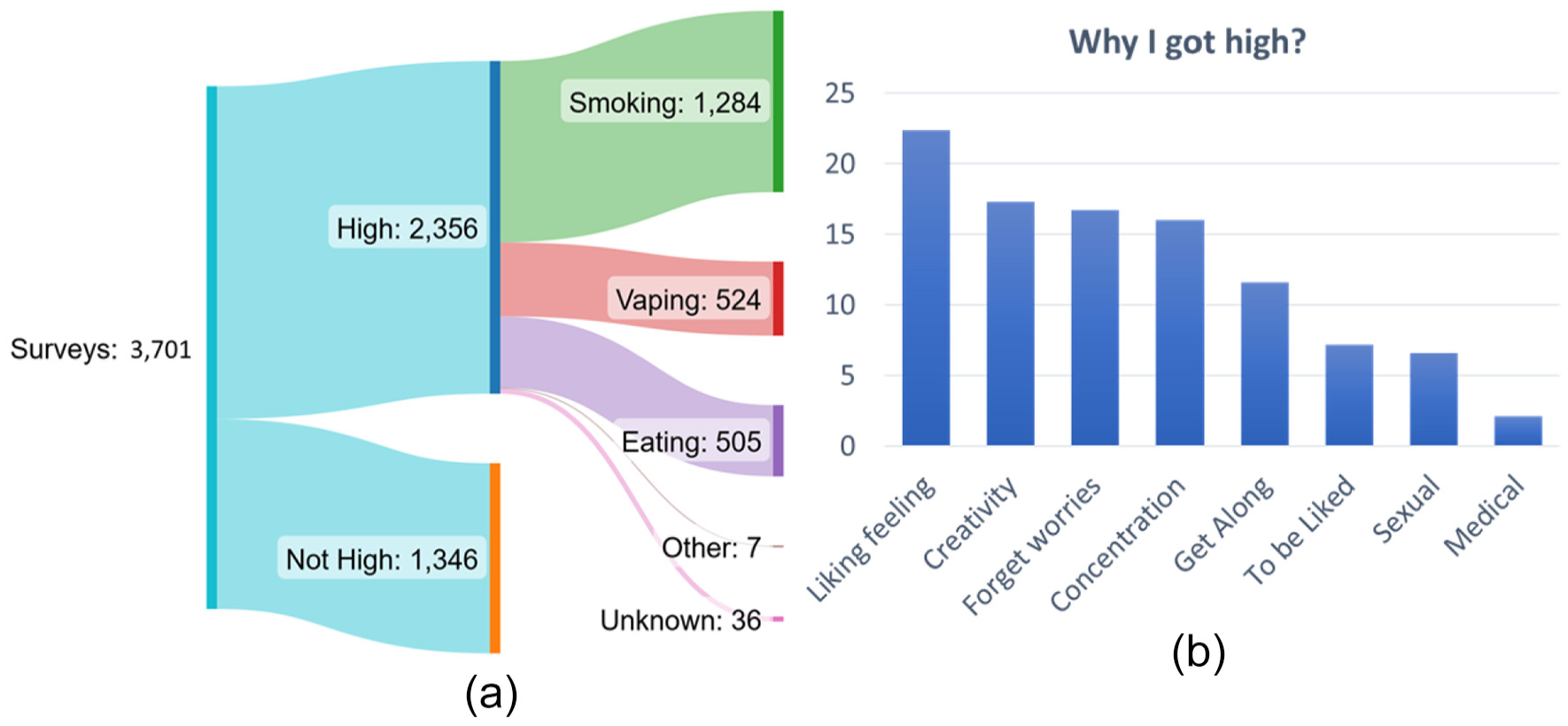
Frequency of Cannabis Use, Mode of Use, and Reasons for Use. (A) Participants Were High 64% of the Time; and They Got High by Smoking Cannabis Flower (54%), Vaping Dried Flower or Cannabis Concentrates (22%), or Eating Cannabis Edibles (21%). (B) In Total, Participants Gave 5,847 Reasons for Ingesting Cannabis, Which Comes Out to 2.48 Reasons Per Time They Got High. The Most Frequent Reasons for Use Were Because Participants Liked the Feeling (22%), Because It Helped Them Feel Creative and Perceive Things Differently (17%), to Forget About Worries (17%), and to Help Concentrate (16%)
Cannabis Use and Emotions
Feeling High in the Moment
When regular cannabis users are high, 2 they report feeling less fearful and less stressed compared with when they are not high (see Figure 5A). More dramatic is how being high increases positive emotions across the board (see Figure 5B). Relative to when habitual cannabis users are not high, being high increases all positive emotion, notably awe, silliness, happiness, and inspiration (see Table S2 in Supplemental Materials for full statistics). While effect sizes were modest in size, they ranged from r = .21 for awe to r = .11 for love. Note that all effects above and throughout are reported as statistically significant after correction for multiple comparisons.
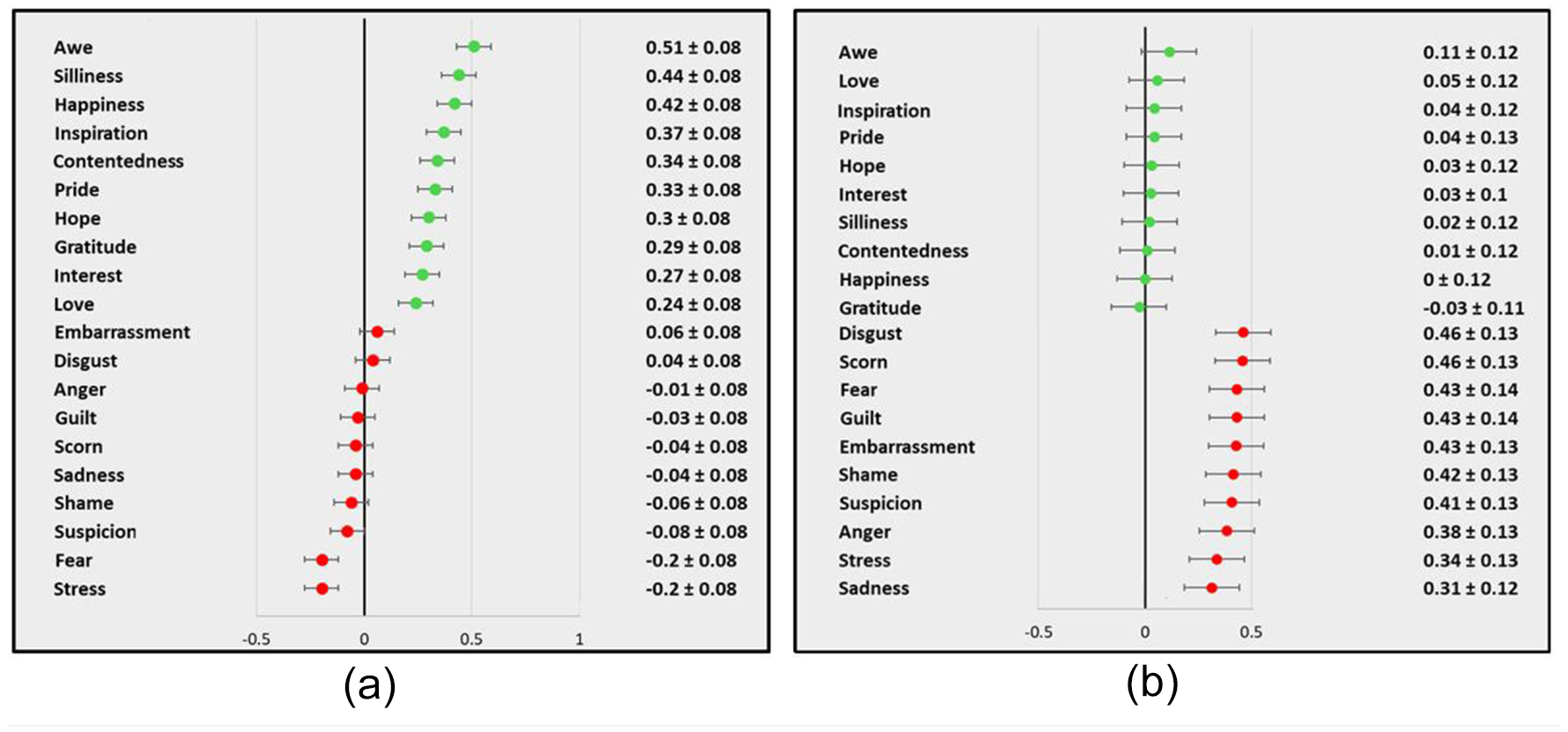
Within-Person and Between-Person Effects of Feeling High on Discrete Emotions (A) Within-Person Effects (B and Standard Errors) Indicate That Cannabis Intoxication Is Associated With an Increase in All Positive Emotions and a Slight Decrease in Stress and Fear, With Modest Effect Sizes Ranging From r =.21 to r =.09. (B) Between-Person Effects (B and Standard Errors), in Contrast, Indicate That People Who GET High Very Frequently (96% of the Time) Have Higher Trait Levels of All Negative Emotions Compared With Those Who Get High Relatively Less Frequently (32% of the Time)
People Who Get High Very Frequently
Our data allow us to also describe the emotional profile of very frequent users relative to less frequent (but sill frequent) ones. Here, the emotional picture looks much less positive. Compared with those who get high less frequently, people who get high very frequently report greater negative emotions across the board, for example, feeling more disgust, scorn, fear, and embarrassment (see Table S3 in Supplemental Materials). All these were medium-to-large effect sizes ranging from r = .28 to r =.39. Note that everyone in our sample was a chronic user, meaning that our between-person comparisons are comparing people who are high often (i.e., high on 32% of experience samples, high 4–6 times per week) to people who are high exceptionally often (i.e., high on 96% of experience samples, high multiple times per day).
Cannabis Use, Motivation, and Effort
Feeling High in the Moment
In contrast to the stereotype of the stoned slacker who is apathetic and unmotivated, we found little evidence for an association between being high and a lack of motivation among cannabis users (see Figure 6A). Results indicate that being high was not associated with any facet of motivation, save for introjected motivation, which had a very small (r = .05) negative effect, b = −0.17, SE = 0.06, t(2,926) = −2.79, adj. p = .027 (see Table S4 in Supplemental Materials for full statistics). When frequent cannabis users get high, in other words, they are no more apathetic, nor less extrinsically or intrinsically motivated to pursue their goals. They are, however, slightly less motivated to do things when they are high because they would be upset with themselves if they did not do them.
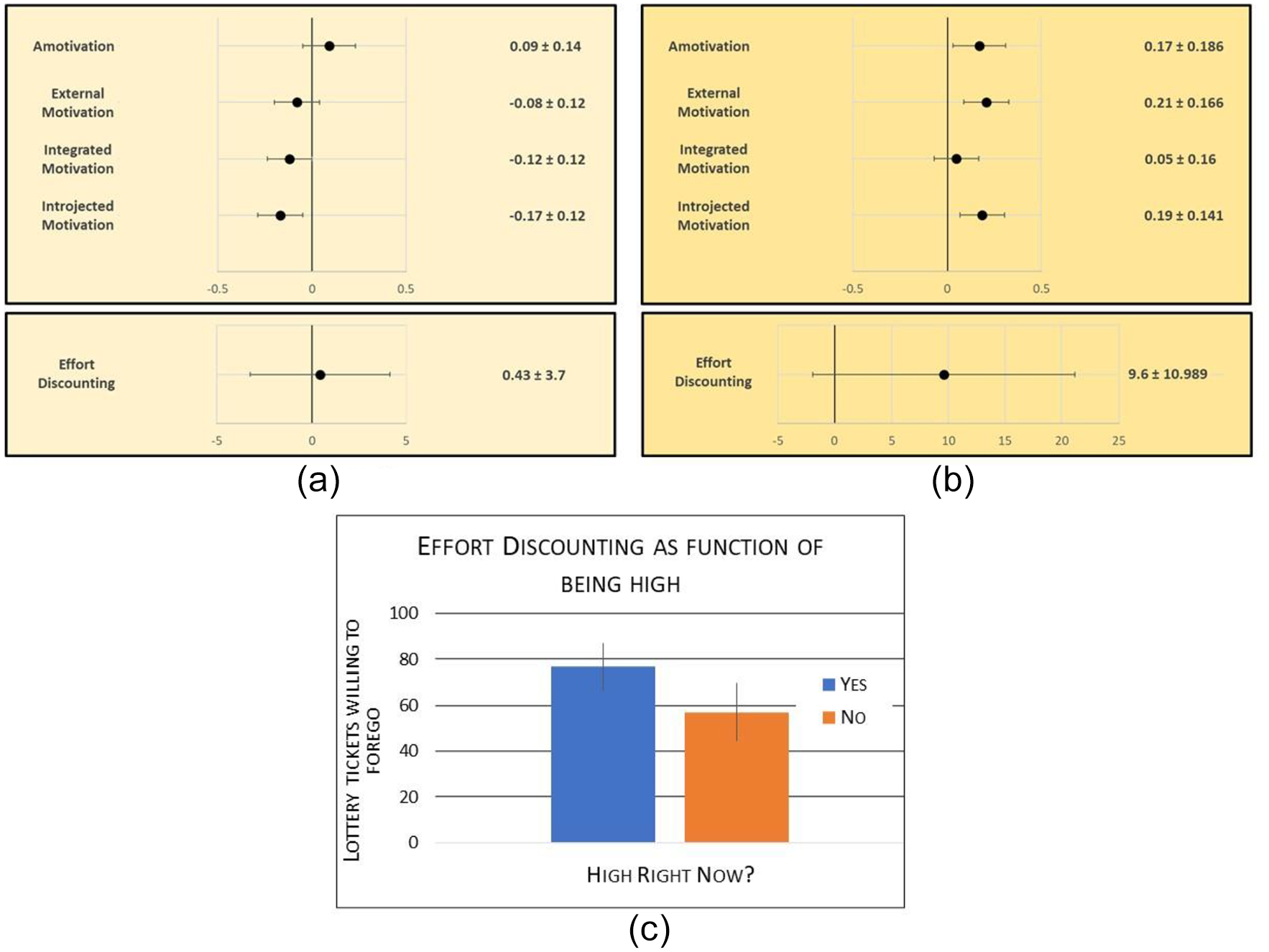
Within-Person and Between-Person Effects of Feeling High on Motivation (A) Within-Person Effects (B and Standard Errors) Indicate That Getting High Undermines Introjected Motivation but Leaves Every Other Facet of Motivation Intact. (B) Between-Person Effects (B and Standard Errors) Indicate That People Who Get High Frequently (High 96% of Time) Have Higher Levels of Both External and Introjected Motivation Relative to Those Who Get High Relatively Less Frequently (High 32% of Time). (C) Predicted Effort Discounting (±SE) Indicates no Difference in the Number of Lottery Tickets a Person Is Willing to Forego to Do the Easier Versus Harder Task When They Are High or Not
Beyond self-reported motivation, we found little evidence that being high was related to people’s willingness to exert actual mental effort. Specifically, chronic cannabis users discount mental effort—voluntarily foregoing lottery tickets to do the easier instead of harder number-sorting task—at about the same rate when they are high, M = 76.90 (SE = 5.09), compared with when they are not high, M = 57.10 (SE = 6.32) (see Figure 6C). Whereas being high was associated with less motivation to do things out of guilt for chronic users, it had no impact on their broader motivation, including feelings of amotivation, and it had no impact on their actual willingness to exert mental effort.
People Who Get High Very Frequently
Again, countering the stereotype of the lazy stoner, people who get high multiple times per day are not less motivated than those who get high multiple times per week (see Figure 6B). In fact, in some instances, they are more motivated. Compared with those who get high less frequently, people who get high exceptionally often have higher levels of external and introjected motivation, though these effects are small, r between .13 and .15, see Table S4 in Supplemental Materials. Very frequent users, that is, are more motivated than less frequent users to complete things to obtain rewards and social approval and to avoid feeling guilty. Frequently getting high was not linked with amotivation or integrated motivation, nor was it predictive of willingness to exert actual mental effort.
Cannabis Use and Conscientiousness
Feeling High in the Moment
In contrast to our motivation findings, we found robust evidence that cannabis intoxication was negatively related to certain aspects of conscientiousness (see Figure 7A). While getting high did not impact chronic users’ momentary reports of willpower, responsibility, and industriousness, it did hurt numerous other aspects of momentary conscientiousness. When chronic users get high, they report being more impulsive (lower self-control), less organized and neat (orderliness), more willing to lie to get their way (lower virtue), and less willing to follow societal rules (traditionalism). All effect sizes are small, ranging from r = .10 to r = .16 (see Table S5 in Supplemental Materials for full statistics). Thus, chronic users are somewhat less conscientious when they get high, even as they remain focused, responsible, and industrious.
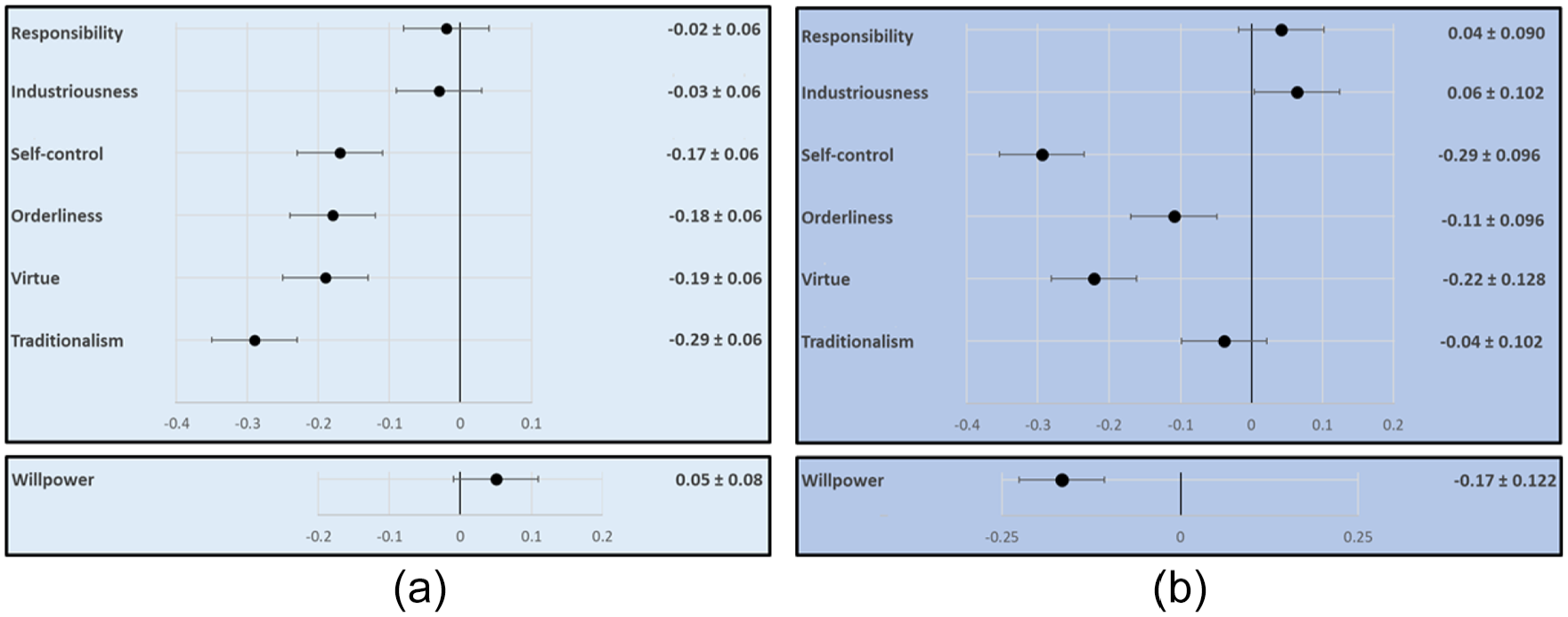
Within-Person and Between-Person Effects of Feeling High on Conscientiousness (A) Within-Person Effects (B and Standard Errors) Indicate That Getting High Undermines Self-Control, Orderliness, Virtue, and Traditionalism Aspects of Conscientiousness. (B) Between-Person Effects (B and Standard Errors) Indicate That People Who Get High Frequently (High 96% of Time) Have Lower Levels of Self-Control, Orderliness, and Virtue Aspects of Conscientiousness, and Lower Willpower Relative to Those Who Get High Less Relatively Frequently (High 32% of Time)
People Who Get High Very Frequently
The between-person effects on self-regulation more-or-less mirror the within-person effects. People who get high multiple times per day report being lower in self-control, virtue, orderliness, and willpower than those who get high relatively less frequently. They are no different from less frequent users in terms of responsibility, industriousness, and traditionalism, however (see Figure 7B). All effects are small, rs between .13 and .20, except for the effect on self-control that is large in size, r = .34 (see Table S5 in Supplemental Materials).
What Weed Hangover?
Anecdotally, some users report feeling different the day after or hours after being high, akin to a hangover after drinking. To address this, we examined if feeling high during the last (lagged) survey was related to current states, controlling for currently feeling high, both within one day and across to the next day. 3 While currently feeling high was associated with a host of emotional changes, feeling high at the last survey measured hours earlier was surprisingly not associated with current levels of emotion. We also failed to find any next-day emotional effects (all adj. ps > .05), meaning that being high on the last completed survey of the day was unrelated to emotions on the first completed survey of the very next day. Similarly, there were no significant effects of feeling high at the last survey on current levels of motivation or effort willingness both within and across days (all adj. ps > .05). Finally, there were no significant lagged effects of feeling high at the last survey on current assessments of conscientiousness both within and across days (all adj. ps > .05). Thus, at least among chronic users, the effects of cannabis intoxication in the real world are short lived, with little indication of any sort of cannabis hangover a few hours later or the next day.
General Discussion
Cannabis is the fourth most widely used recreational drug in the world after caffeine, alcohol, and tobacco, yet our understanding of its recreational use and effects are surprisingly myopic. Much of this myopia comes from its historical criminalization, preventing a neutral and clear-eyed evaluation of cannabis’s harms and benefits alike. This led to a distorted view of cannabis and cannabis users, to the point where contemporary ethicists seriously claim that recreational cannabis use is unethical, morally illicit, and never warranted (Sullivan & Austriaco, 2016). Such moralization helps clarify why cannabis users are stereotyped as lazy, uneducated, and possibly criminal (Reid, 2020).
Societal views and laws are changing, however. As an increasing number of jurisdictions around the world have legalized cannabis, people are using cannabis more regularly, with some using it very frequently, chronically even (Statistics Canada, 2021). Our goal here was to understand this not insubstantial population more fully by nonjudgmentally describing chronic cannabis use and chronic cannabis users in everyday life. We took a micro-longitudinal experience sampling approach to capture the real-life experience of chronic cannabis users, specifically interrogating how getting high influences how they feel, self-regulate, and motivate themselves. Our data reveal both expected and surprising findings.
Not surprisingly, compared with not feeling high, feeling high for chronic users was associated with a host of increased positive emotions such as awe, inspiration, and gratitude, as well as reduced stress and fear at the within-person level. Interestingly, getting high was not associated with increased suspicion/paranoia among chronic users, contrary to popular depictions and even medical symptom lists (American Psychiatric Association, 2013). We note, however, that paranoia might be more common among younger and more inexperienced users (Mackie et al., 2021), something that we are unable to explore with our nonrepresentative sample of chronic cannabis users.
These emotional results shed some light on the main reason chronic users report using cannabis—because they like the feeling. In contrast, people who get high very frequently experience more negative emotions overall than people who still get high frequently, but relatively less frequently.
More surprising is what we discovered about motivation. We tested a broad range of motivation variables, ranging from self-reported apathy and intrinsic motivation to the actual exertion of mental effort, and overall found few negative effects of cannabis among chronic users. Other than a small reduction in people doing things to avoid feeling upset with themselves (introjected motivation), when chronic users got high, they were no more amotivated, no less motivated for extrinsic or intrinsic reasons, and no less willing to objectively push themselves. Likewise, people who get high very frequently (e.g., daily) are not less motivated dispositionally than those who also get high frequently, but relatively less frequently (e.g., weekly); if anything, they are more motivated (at least for external and introjected reasons). We caution, however, that selection effects could introduce a collider bias (Rohrer, 2018) that prevent these and other results from generalizing to broader populations.
Results with conscientiousness are decidedly less mixed. Getting high and being a person who very frequently gets high is associated with mostly small, yet robust reductions in people’s conscientious behaviors and traits. Interestingly and against popular depiction, chronic users who are momentarily high or who get high daily are no less responsible or industrious than chronic users who are not high or who get high weekly.
We were also surprised by the lack of any hangover effects. When we examined previously being high on current emotional, motivational, and conscientiousness states (controlling for currently being high), we found no robust associations. This was the case within the same day or across to the next day. Our results are consistent with a recent systematic review of studies examining next-day cannabis effects, which found limited support for next-day cannabis effects on performance (McCartney et al., 2023). For chronic cannabis users at least, there appears to be little weed hangover.
While we think the research here is a real advance over past work given its use of experience sampling, micro-longitudinal design, and a large and diverse sample, it is not without limitations. The biggest challenge has to do with our sample. Our participants were recruited from online forums that cater to cannabis enthusiasts and growers, meaning our results might not generalize to novice or to less frequent users. Not only were our participants very heavy users, but they also needed to show diligence and care to complete an effortful study protocol over 7 days. It is possible, therefore, that our sample was quite conscientious and not representative of the broader population of chronic cannabis users, meaning that effects might be very different in broader samples. Furthermore, as our study did not compare cannabis users to nonusers, or even frequent to infrequent users, our analyses can only speak to the experience of chronic cannabis use.
Cannabis is currently having a moment, and we expect it to only become more popular as laws and attitudes shift. We hope the research community will rise to the challenge of these societal shifts by attendant shifts in research philosophy that has been too quick to pathologize use.
Supplemental Material
sj-docx-1-spp-10.1177_19485506241245744 – Supplemental material for Chronic Cannabis Use in Everyday Life: Emotional, Motivational, and Self-Regulatory Effects of Frequently Getting High
Supplemental material, sj-docx-1-spp-10.1177_19485506241245744 for Chronic Cannabis Use in Everyday Life: Emotional, Motivational, and Self-Regulatory Effects of Frequently Getting High by Michael Inzlicht, Taylor Bridget Sparrow-Mungal and Gregory John Depow in Social Psychological and Personality Science
Footnotes
Acknowledgements
The authors thank Emily Zohar, Victoria Oldemburgo de Mello, Aidan Campbell, Angela Smith, Laura Bustamante, Cypress Hill, Jeffrey Lebowski, and Naomi Sarah Ball for valuable insights.
Handling Editor: Rodica Damian
Author Contributions
M.I. and T.B.S.-M. conceived and designed the study, T.B.S.-M. ran and implemented the study, G.J.D. analyzed the data, M.I. and G.J.D. wrote the manuscript, and M.I. and G.J.D. edited the manuscript.
Declaration of Conflicting Interests
The author(s) declared no potential conflicts of interest with respect to the research, authorship, and/or publication of this article.
Funding
The author(s) disclosed receipt of the following financial support for the research, authorship, and/or publication of this article: We would like to acknowledge generous support from grant #435-2019-0144 from the Social Sciences and Humanities Research Council (SSHRC) of Canada to M.I. and a SSHRC Doctoral Fellowship to G.J.D.

Supplemental Material
The supplemental material is available in the online version of the article.
Notes
Author Biographies
References
Supplementary Material
Please find the following supplemental material available below.
For Open Access articles published under a Creative Commons License, all supplemental material carries the same license as the article it is associated with.
For non-Open Access articles published, all supplemental material carries a non-exclusive license, and permission requests for re-use of supplemental material or any part of supplemental material shall be sent directly to the copyright owner as specified in the copyright notice associated with the article.
