




Abstract
Anonymity is widely available in online environments, yet more needs to be understood about why people seek it out. In three studies (N = 677), we used a novel dictator game to assess how financial motivations, cost, Machiavellianism, and psychopathy influence people’s choice to seek anonymity. We found that: (1) People sought anonymity to keep more money for themselves or to give more money to their partner. (2) Those high in Machiavellianism viewed anonymity as valuable and were motivated to keep more money for themselves only when they were anonymous. (3) Those high in psychopathy viewed anonymity as less valuable and were less likely to pay to be anonymous to achieve their goals. Our findings shed new light on the complex interplay of individual differences, motivations, and situational affordances in shaping people’s behavior.
People typically behave in ways that align with their goals (Roberts, 2009). Some situations make achieving these goals easier—or more challenging (Reis, 2008). For instance, anonymity is an affordance of certain situations whereby people feel less accountable for their actions (Evans et al., 2017). Being anonymous may be useful for achieving one’s goals; therefore, some people seek it out (Nitschinsk et al., 2023). Through social media platforms and online communication, people can often choose when to be anonymous; however, despite its known gratifications, little research has assessed why people seek anonymity.
Due to its disinhibiting effects, anonymity can influence human behavior as it reduces pressure to follow social norms (McKenna & Bargh, 2000). Social norms are critical for cooperation (Jung et al., 2014). When people are identifiable, their concern for reputation and favorable self-image encourage cooperation (Nowak & Sigmund, 2005; Raihani & Power, 2021; Taylor et al., 2022). When people are anonymous, they are less likely to be held responsible for their actions, as others do not know what they are doing (Thielmann et al., 2016). This can lead to antisocial behaviors such as trolling and contributing less to the public good, and also excessively generous behaviors, such as above-average donations, which are often perceived as self-serving (Andreoni & Petrie, 2004; Kawamura & Kusumi, 2020; Nitschinsk et al., 2022a; Nitschinsk et al. 2022b; Pleasant & Barclay, 2018; Raihani, 2014; Rockenbach & Milinski, 2011; Sisco & Weber, 2019).
There is a trade-off when choosing anonymity or identifiability. Anonymity offers people the freedom to behave with fewer social constraints but mitigates reputation-building opportunities. Furthermore, whereas anonymity is attainable on most online platforms, its accessibility can vary (Wondracek et al., 2010). Therefore, seeking anonymity may be dependent on how much one values anonymity in achieving certain goals. People may place greater value on anonymity when it is detrimental to pursue a goal when identifiable. Alternatively, if the cost of attaining anonymity is too great, people may shift their goals or accept the negative consequences of remaining identifiable.
Functionalist approaches to personality and social behavior can be used to understand why people seek anonymity (see Figure 1 for a conceptual model and an explanation of this approach). People high in socially malevolent traits—such as psychopathy and Machiavellianism—often use exploitative tactics to achieve self-beneficial goals (Bereczkei et al., 2015; Gunnthorsdottir et al., 2002; Malesza & Kalinowski, 2021). However, the strategies to achieve these goals differ. A fundamental difference between Machiavellianism and psychopathy is the emphasis on caution when engaging in reputationally risky behavior (Jones & Mueller, 2021). Psychopathy is typified by impulsivity, fearlessness, and low empathy, whereas Machiavellianism is typified by strategic deception, cautiousness toward long-term consequences of their behavior, and reputational importance (Jones & Paulhus, 2017). As such, those high in psychopathy may view anonymity as less valuable, as they do not fear the negative consequences of their behavior. On the contrary, those high in Machiavellianism may view anonymity as valuable in achieving their goals. Indeed, people high in Machiavellianism are less likely to assist others when they are anonymous and only behave selfishly when the potential for negative repercussions is low (Bereczkei & Czibor, 2014; Bereczkei et al., 2010; Lyons & Aitken, 2008; Malesza, 2020).
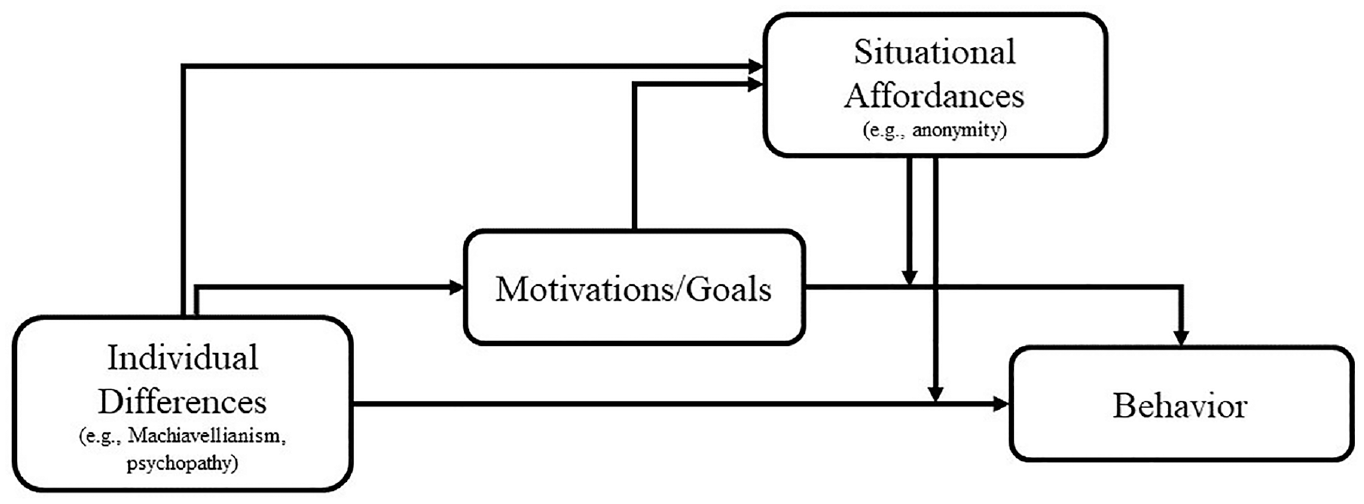
A Conceptual Model of How Individual Differences, Motivations and Goals, and Situational Affordances Influence Behavior
Current Research
Across three studies, we assessed how financial motivations and cost influence people’s choice to seek anonymity, and how this choice influences behavior. We used a hypothetical version of the dictator game. In the game, one player allocates money between themselves and their partner. The allocator then decides if they want to be anonymous or identifiable. Anonymity is either free or costs 20% of their initial endowment. We predicted that people would seek anonymity if they perceived anonymity as beneficial for achieving their goals. Conversely, people would be less likely to seek anonymity if they perceived identifiability as more beneficial.
We targeted motivations through both social norms and individual differences. In Studies 1 and 2, we used contextual constraints to manipulate participants’ behavior. This allowed us to test how engaging in normative and nonnormative behavior influenced people’s choice to seek anonymity. In Study 3, we gave participants freedom to choose how they allocated their money. This allowed us to assess how Machiavellianism and psychopathy influenced people’s financial motivations, the choice to seek anonymity, and money allocations. All studies received ethics approval. Focal analyses for all studies were preregistered. Deviations and exploratory analyses are noted within the article. Furthermore, preregistrations, deviations from the preregistration, and all research materials can be accessed here: https://linktr.ee/prereg_anonymity. We recruited Prolific workers in the USA, Canada, Australia, and New Zealand. We conducted all power analyses using the R package Superpower (Lakens & Caldwell, 2021). We analyzed all data using R, version 4.2.1 (R Core Team, 2022).
Study 1
Study 1 investigated how financial behavior and cost influence people’s choice to seek anonymity. By using an experimental design, we had participants adopt either normative (fair) or extreme nonnormative (prosocial or self-beneficial) behaviors to investigate whether people seek anonymity or identifiability to best accomplish each behavior. Furthermore, we were interested in how Machiavellianism and psychopathy potentially moderate these effects.
We predicted that people would be more likely to seek anonymity when it was free than when it cost 20% of their initial endowment. We also predicted that people would be more likely to seek anonymity when they had been told to behave in a way that was self-beneficial (keep all money) or prosocial (give all money) and less likely to seek anonymity when they had to split the money equally.
For the interactions between the cost of anonymity and financial behavior, we predicted that when people were told to behave in a way that was self-beneficial, they would seek anonymity irrespective of the cost. In contrast, when people were told to behave prosocially, by paying to be anonymous, they would be leaving less money to their partner, which goes against the goal of being prosocial. As such, they would be more likely to seek anonymity when it was free but not when it was costly.
Past research suggests that people high in Machiavellianism may perceive anonymity as valuable in achieving their goals (Jones & Mueller, 2021). As such, we hypothesized that Machiavellianism would be positively associated with seeking anonymity in fair and self-beneficial conditions. Alternatively, we also speculated that people high in Machiavellianism may prefer to be identifiable in the prosocial condition, as being perceived as prosocial may give them manipulative power in the future. As people high in psychopathy are more fearless and impulsive (Jones & Paulhus, 2017), they may perceive anonymity as less valuable in achieving their goals. As such, we explored (not preregistered) whether those high in psychopathy would be more sensitive to cost when deciding whether to be anonymous.
Method
Participants and Design
A power analysis for a 2 (cost: between-groups) × 3 (financial behavior: within-groups) × 2 (personality: between-groups) mixed design revealed that 216 participants would provide over 90% power to detect small to medium effect sizes (ηp2 = .04) for our predicted two-way and three-way interactions. We recruited 230 participants. Thirty-one participants were excluded for either failing to pass an attention check or a comprehension check (final N = 200, 112 women, 85 men, and 3 nonbinary, Mage = 36.1, SD = 12.4, Range = 18.71). With this sample, we still achieved over 90% power. Sixty percent of participants were white, 26% were Asian, 5% were African/African American, 4% were Hispanic/LatinX and 5% were other ethnicities.
Measures and Procedures
After providing consent, participants were asked to imagine the following scenario: Imagine you are currently an entry-level employee at the company
After reading these instructions participants were then told that one of the psychologists running the training day had put a note on their table, unbeknownst to their partner. The note conveyed one of three financial behaviors that the participants had to follow: (1) You are not able to give any money to your partner (self-beneficial), (2) You are not able to keep any money for yourself (prosocial), or (3) You are to divide the money equally between yourself and your partner (fair).
Participants were then given the option to participate identifiably or anonymously. If participants chose to be anonymous, their name was not attached to their allocation, meaning their partner would not know whom they were playing the game with. Participants were randomly assigned to one of two conditions where anonymity was either $ 0.00 or $4.00 (20% of their initial endowment). Participants were told that this money would be removed from the game, and neither player would receive it.
Participants were also asked to respond to two statements on whether being anonymous or identifiable while playing this game was important. These were answered on a 7-point (1 = Strongly disagree—7 = Strongly agree) scale. However, as continuous agreement measures in a hypothetical scenario are more prone to acquiescence, we only report the dichotomous dependent variable in the main text of the article (Brown, 2016; Rivera-Garrido et al., 2022). The results for these continuous variables—for both Studies 1 and 2—are included in the supplemental materials. Participants then completed a comprehension check where they were asked to verify which set of instructions they were given at the beginning of the round. If participants failed this comprehension check, they were excluded from the study. Participants were also asked two additional general motivation questions that are included in the supplemental materials.
Participants then completed two additional rounds of the dictator game. For each round, participants were asked to imagine that they had been partnered with a new colleague. At the start of each round, participants received a new note from the researcher indicating how they would divide the money for that round. Participants were given all notes across the three scenario rounds in a randomized order. The cost of anonymity remained the same across all three scenarios.
At the end of the scenario, participants were asked what the cost of anonymity was in the game. Finally, participants completed demographic questions, including gender, age, ethnicity, language, and education. Participants then completed the 27-item Short Dark Triad, which assesses Machiavellianism, Psychopathy, and Narcissism on a 5-point scale (1 = Strongly disagree, 5 = Strongly agree; Jones & Paulhus, 2014).
Data Analysis
We preregistered to perform mixed-effects logistic regressions to assess the effects of the cost of anonymity, financial behavior, and Machiavellianism or psychopathy on choosing to be anonymous. As some confidence intervals were wider than expected, we performed Bayesian mixed-effects logistic regressions with a normal prior using the blme package to improve model fit (Dorie et al., 2021). Regressions that do not include a normal prior are available in the supplemental materials. Both cost of anonymity (0 = $ 0.00 and 1 = $4.00) and financial behavior (self-beneficial, prosocial, and fair) were included as categorical predictor variables. Either Machiavellianism or psychopathy were included as continuous predictor variables. Our dependent variable was whether participants chose to be anonymous (0 = identifiable, 1 = anonymous). We included participant ID as a random effect for all models. We performed Tukey adjustments on follow-up tests for significant interactions and between financially beneficial and financially fair behavior to control for Type 1 error.
Results and Discussion
Participants were more likely to seek anonymity when it was free. Participants were most likely to seek anonymity when they engaged in financially self-beneficial behaviors, compared to fair (p < .001) or prosocial behaviors (see Tables 1, 2 and Figure 2). Presumably, this was to mitigate the negative consequences of their selfish behavior. Participants were also more likely to seek anonymity when they behaved prosocially, compared to fairly. Overly generous behaviors can be viewed negatively, meaning people may seek anonymity when violating social norms, even if the behavior is generous (Parks & Stone, 2010). People were least likely to seek anonymity when asked to split the money equally. This behavior is likely to be evaluated as both generous and normative, making it more beneficial to remain identifiable.
Mixed-Effects Logistic Regression for Cost of Anonymity, Financial Behavior, and Machiavellianism as Predictors of Choosing to be Anonymous in a Dictator Game Scenario (Study 1)
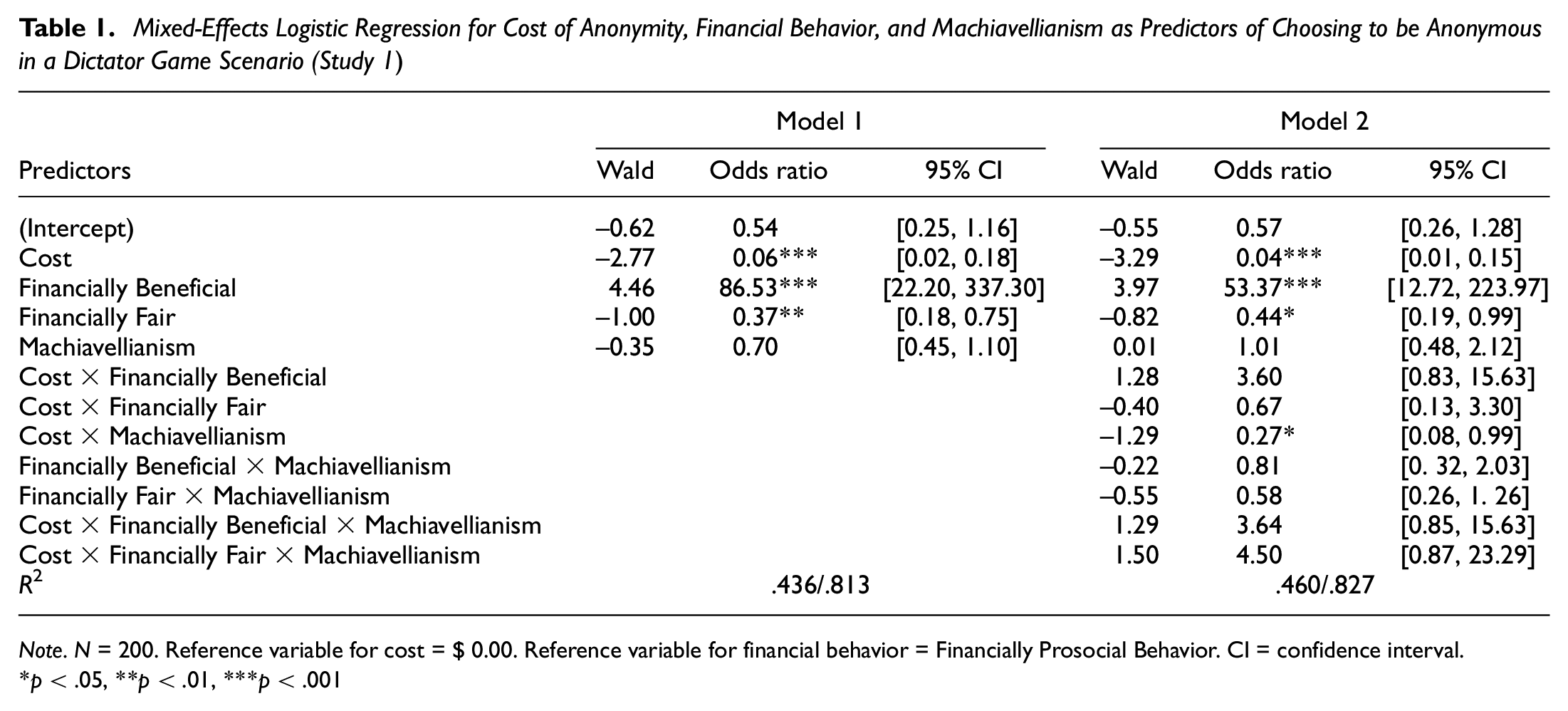
Note. N = 200. Reference variable for cost = $ 0.00. Reference variable for financial behavior = Financially Prosocial Behavior. CI = confidence interval.
p < .05, **p < .01, ***p < .001
Mixed-Effects Logistic Regression for Cost of Anonymity, Financial Behavior, and Psychopathy as Predictors of Choosing to Be Anonymous in a Dictator Game Scenario (Study 1)
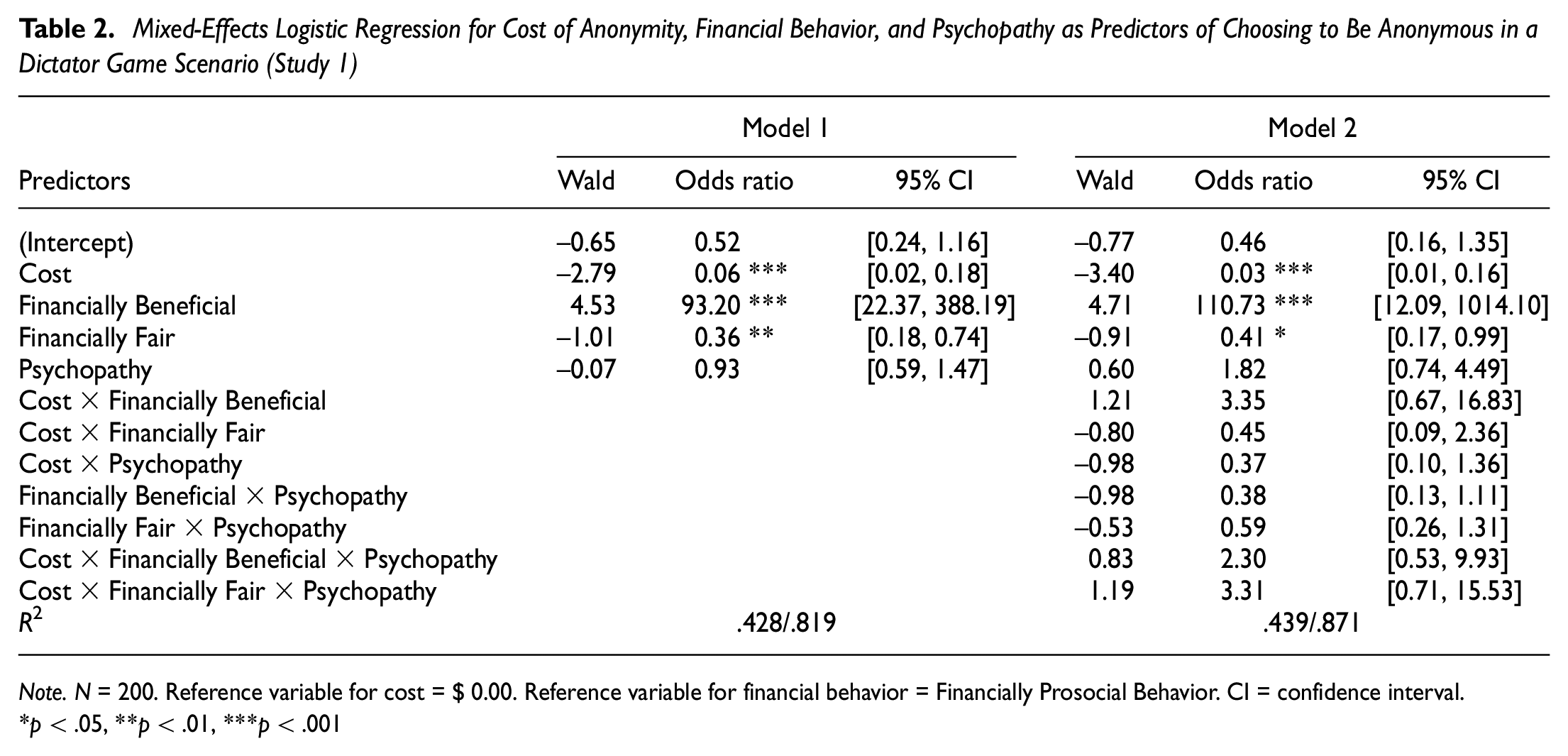
Note. N = 200. Reference variable for cost = $ 0.00. Reference variable for financial behavior = Financially Prosocial Behavior. CI = confidence interval.
p < .05, **p < .01, ***p < .001
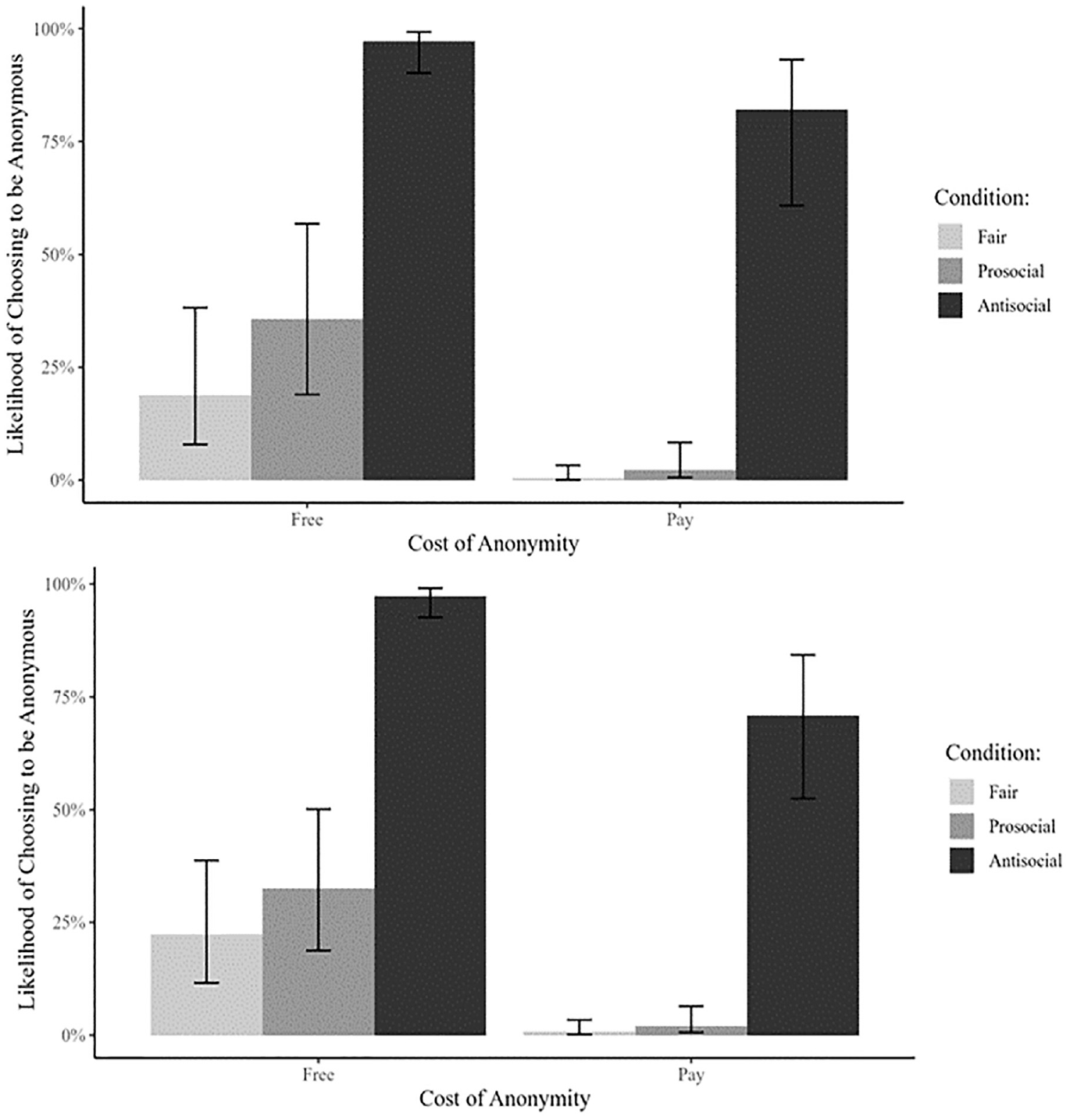
The Interaction Between Cost of Anonymity and Financial Behavior on the Likelihood of Choosing to be Anonymous (Study 1—Top, and Study 2—Bottom)
We did not find the predicted interaction between the cost of anonymity and financial behavior. By manipulating the cost of anonymity, we can infer how valuable anonymity is in certain situations. Although people showed an overall sensitivity to cost, the effects of behavior on the choice to be anonymous did not depend on cost, suggesting that anonymity holds value, especially when people have motives that violate social norms.
In addition, Machiavellianism and psychopathy were not associated with choosing to be anonymous and did not moderate the relationship between financial behavior and the cost of anonymity (see Tables 1 and 2). 1 Potentially, since this study constraints how participants can behave and the financial behaviors used in this scenario are extreme, whether people decide to seek anonymity or identifiability may be more dependent on their behavior, rather than individual differences. Finally, we found a small interaction between cost of anonymity and Machiavellianism; however, follow-up analyses found no difference in the likelihood of seeking anonymity for people high and low in Machiavellianism when anonymity was free or costly.
Study 2
One potential reason that the cost of anonymity did not differentially influence people’s decisions to seek anonymity in Study 1 is that the dictator game was played with a small amount of money. The nominal amount of money used may have also limited the extent to which individual differences influence the choice to seek anonymity. In Study 2, we investigated whether the pattern of findings changes when participants begin the game with more money.
Method
A power analysis revealed that 320 participants would provide 95% power to detect small to medium effect sizes (ηp2 = .03) for the predicted two-way and three-way interactions. We recruited 329 participants. Fifty-eight participants were excluded for either failing to pass an attention check or a comprehension check (final N = 271, 130 women, 135 men, and 6 nonbinary, Mage = 36.9, SD = 13.3, Range = 18–78). We still achieved over 90% power. Sixty-eight percent of participants were white, 19% were Asian, 4% were African/African American, 5% were Hispanic/Latinx, and 4% were other ethnicities. The design, procedure, and analytic approach were identical to Study 2. However, participants received an initial endowment of $100.
Results and Discussion
Study 2 replicated the results of Study 1 (see Tables 3 and 4 and Figure 2). Even with a larger initial endowment, the effects of motivation on the choice to be anonymous did not depend on cost. Anonymity was still most valuable when people were pursuing nonnormative goals, such as having exceptionally selfish motivations. However, when interaction terms were included, we found that people were not more likely to seek anonymity when engaging in financially prosocial behaviors, compared to financially fair behaviors. Further research may therefore be necessary to understand the robustness of this effect. Likewise, Machiavellianism and psychopathy did not moderate the relationship between financial behavior and the cost of anonymity. Again, having participants engage in extremely prosocial or self-beneficial behaviors during the scenario may mean that the choice to seek anonymity or identifiability is most dependent on the behavior, rather than individual differences.
Mixed-Effects Logistic Regression for Cost of Anonymity, Financial Behavior, and Machiavellianism as Predictors of Choosing to Be Anonymous in a Dictator Game Scenario (Study 2)
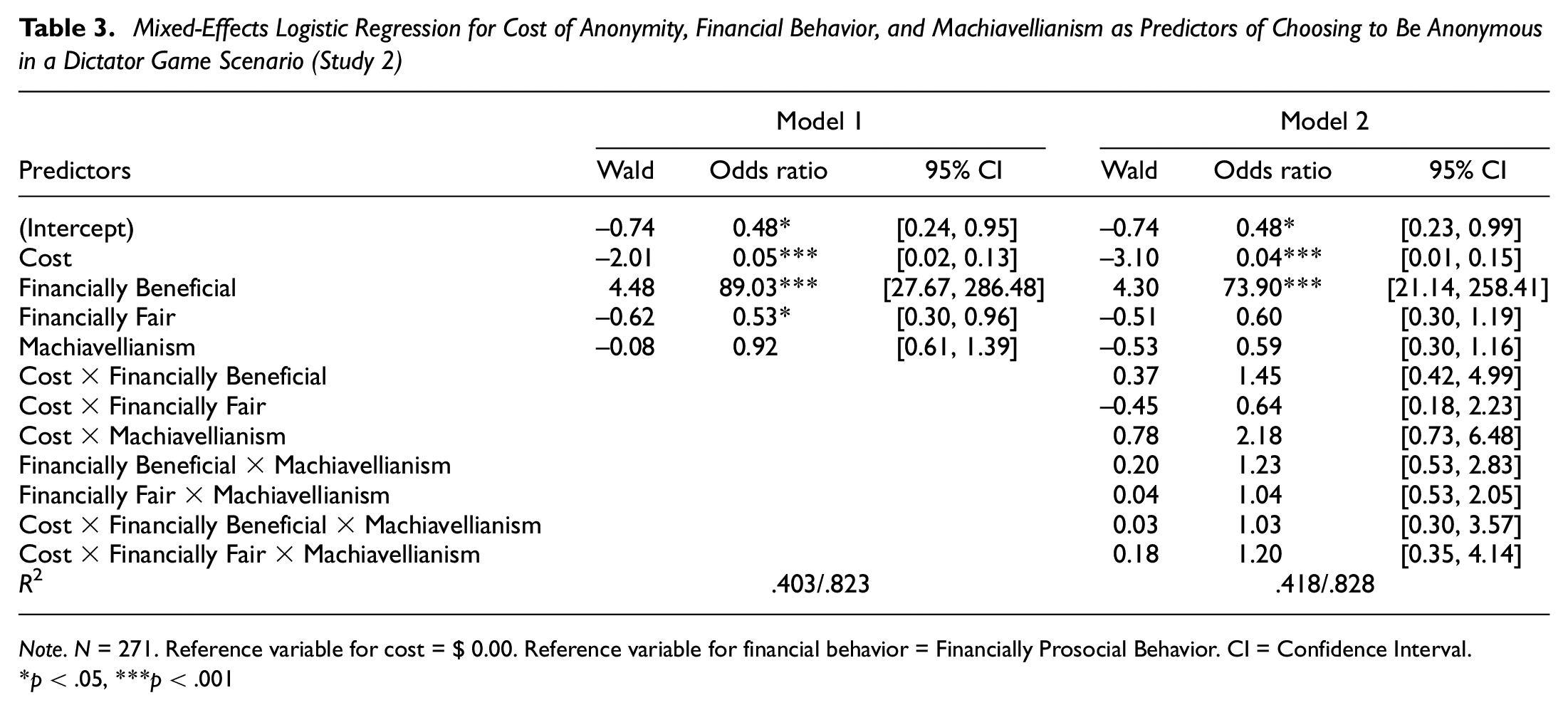
Note. N = 271. Reference variable for cost = $ 0.00. Reference variable for financial behavior = Financially Prosocial Behavior. CI = Confidence Interval.
p < .05, ***p < .001
Mixed-Effects Logistic Regression for Cost of Anonymity, Financial Behavior, and Psychopathy as Predictors of Choosing to Be Anonymous in a Dictator Game Scenario (Study 2)
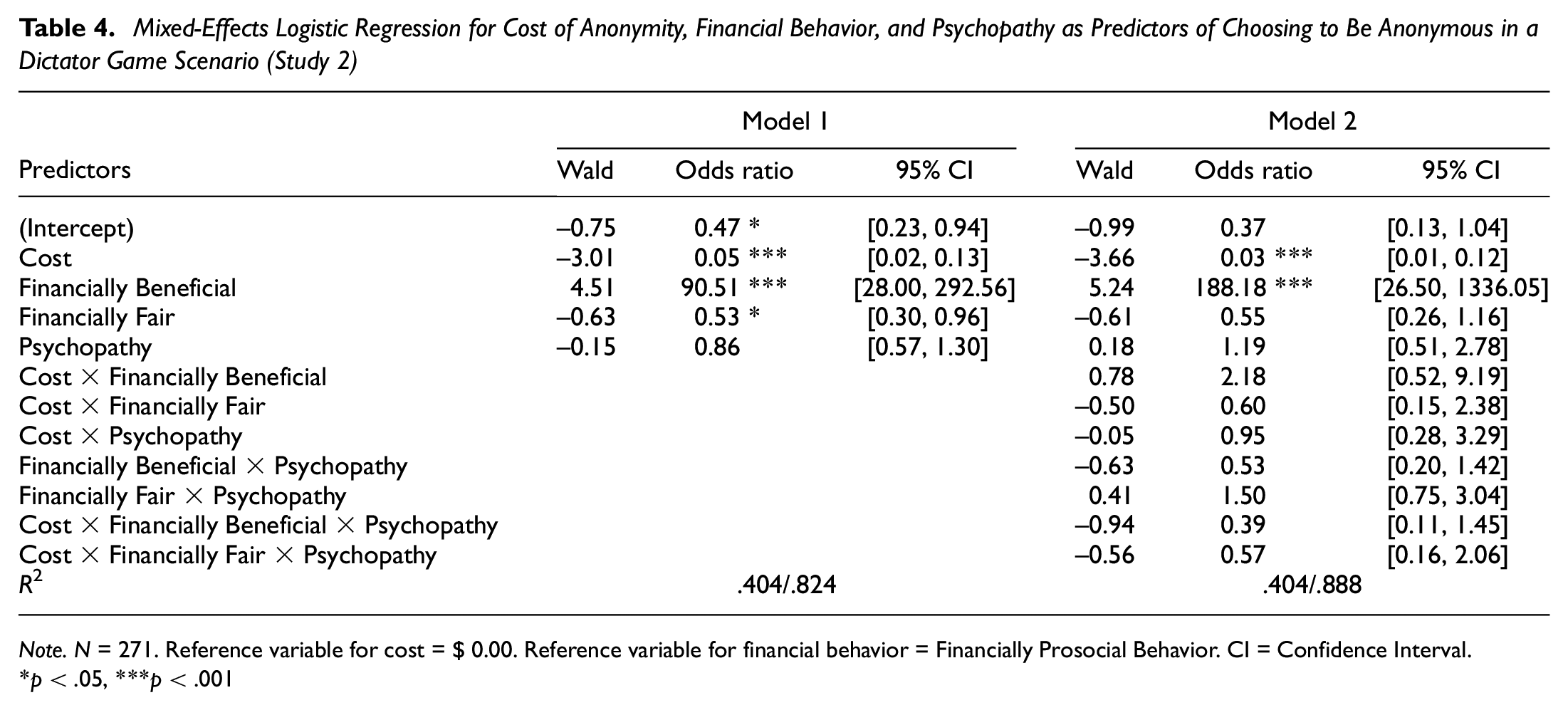
Note. N = 271. Reference variable for cost = $ 0.00. Reference variable for financial behavior = Financially Prosocial Behavior. CI = Confidence Interval.
p < .05, ***p < .001
Study 3
In Study 3 we removed contextual constraints in our design, telling participants how they could allocate money in the dictator game. By doing so, we aimed to more effectively investigate how Machiavellianism and psychopathy were associated with seeking anonymity when anonymity was free or cost 20% of their initial endowment. We also investigated participants’ financial motivations and how participants allocated their funds after choosing to be anonymous or identifiable. We predicted that Machiavellianism and psychopathy would be positively associated with having financially beneficial motivations and keeping more money for themselves. However, we predicted that people high relative to low in Machiavellianism would be more likely to seek anonymity to achieve their financial motivations, regardless of cost. In contrast, we predicted that people high in psychopathy would be less likely to seek anonymity to achieve their financial motivations when they had to pay for it compared to when it was free.
Methods
Participants and Design
A power analysis (between-groups, four conditions) revealed that 180 participants would provide 90% power to detect a medium effect size (ηp2 = .06). We recruited 200 participants. Three participants were excluded for failing to pass an attention check (Final N = 197 107 women, 86 men, and 4 nonbinary, Mage = 33.6, SD = 11.3, range = 18–71). Fifty-nine percent of participants were white, 22% were Asian, 5% were African/African American, 5% were Hispanic/LatinX, and 9% were other ethnicities.
Measures and Procedures
Participants read a similar scenario to Studies 1 and 2. In this scenario participants were able to freely distribute the money between themselves and their partner. Participants were also asked to rate how likely it was that they would decide to be anonymous or identifiable if they were in this scenario on a 7-point (1 = very unlikely, 7 = very likely) scale. The results for the continuous dependent variables, along with a difference score for the likelihood of choosing anonymity versus identifiability are included in the supplemental materials.
Participants were also asked if they were aiming to keep more money for themselves (financially beneficial motivations), give more money to their partner (financially prosocial motivations), or divide the money equally (financially fair motivations). These were answered on a 7-point scale (1 = Strongly disagree, 7 = Strongly agree). We also measured additional motivations, which are included in the supplemental materials. At the end of the scenario, participants were asked how much anonymity cost.
Participants also completed an attention check where that had to select Strongly Agree for a question that appeared during the Short Dark Triad questionnaire. This attention check was used in all studies. Finally, participants completed assessments of Short Dark Triad (Jones & Paulhus, 2014) and demographic questions, including gender, age, and ethnicity.
Data Analysis
We calculated point biserial and bivariate correlations between choosing to be anonymous, money allocation, behavioral motivations, and individual differences. We then ran two hierarchical regressions to assess the effects of the cost of anonymity and Dark Triad traits on choosing to be anonymous and on money allocation between the participant and their partner. At step one, the cost of anonymity (0 = $ 0.00, 1 = $4.00) and mean-centered Machiavellianism, psychopathy, and narcissism were included as predictors. In addition, for our second regression, the choice to be anonymous was included as a predictor variable. In step two, we included interaction terms between the cost of anonymity and Machiavellianism/psychopathy. For our first regression, the dependent variable was whether participants chose to be anonymous (0 = Identifiable, 1 = Anonymous). For our second regression, the dependent variable was the percentage amount of money participants chose to keep for themselves. If participants chose to be anonymous in the paid condition, the denominator was adjusted from $20 to $16. We additionally explored significant interactions that were not preregistered. We performed Tukey adjustments to control for Type 1 error when assessing the simple slopes of significant interactions.
Results
Correlations
Machiavellianism, financially beneficial motivations, and keeping more money for oneself were positively associated, and financially fair motivations were negatively associated with seeking anonymity. All other predictors were not significant. We additionally compared the correlation strengths of Machiavellianism and psychopathy on seeking anonymity. The difference between correlation scores was not significant (p = .194). Furthermore, Machiavellianism, psychopathy, and financially beneficial motivations were positively associated, and fair and prosocial motivations were negatively associated with keeping more money for oneself (see Figure 3).
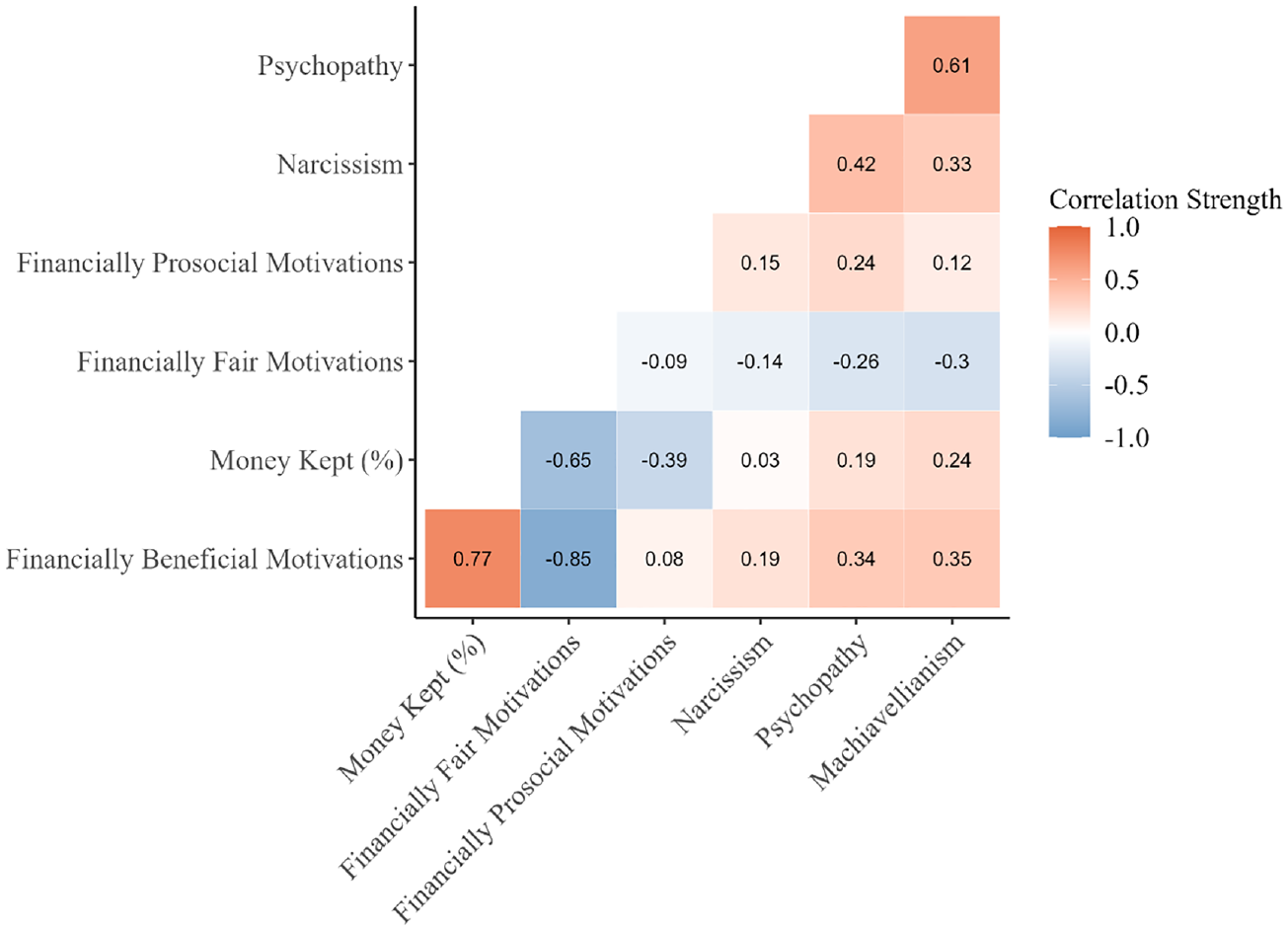
Bivariate Correlations Between Continuous Focal Predictors
Choosing to be Anonymous
We found that participants were more likely to choose anonymity when anonymity was free. In addition, Machiavellianism was positively associated with choosing to be anonymous. We also found a significant interaction between psychopathy and the cost of anonymity. Specifically, people high in psychopathy were less likely to choose to be anonymous when they had to pay for it than when it was free (p < .001). People low in psychopathy were no more likely to choose to be anonymous in either cost condition (p = .424). 2 See Table 5 and Figure 4.
Logistic Regression for the Cost of Anonymity and Dark Triad Traits as Predictors of Choosing to Be Anonymous in a Dictator Game Scenario
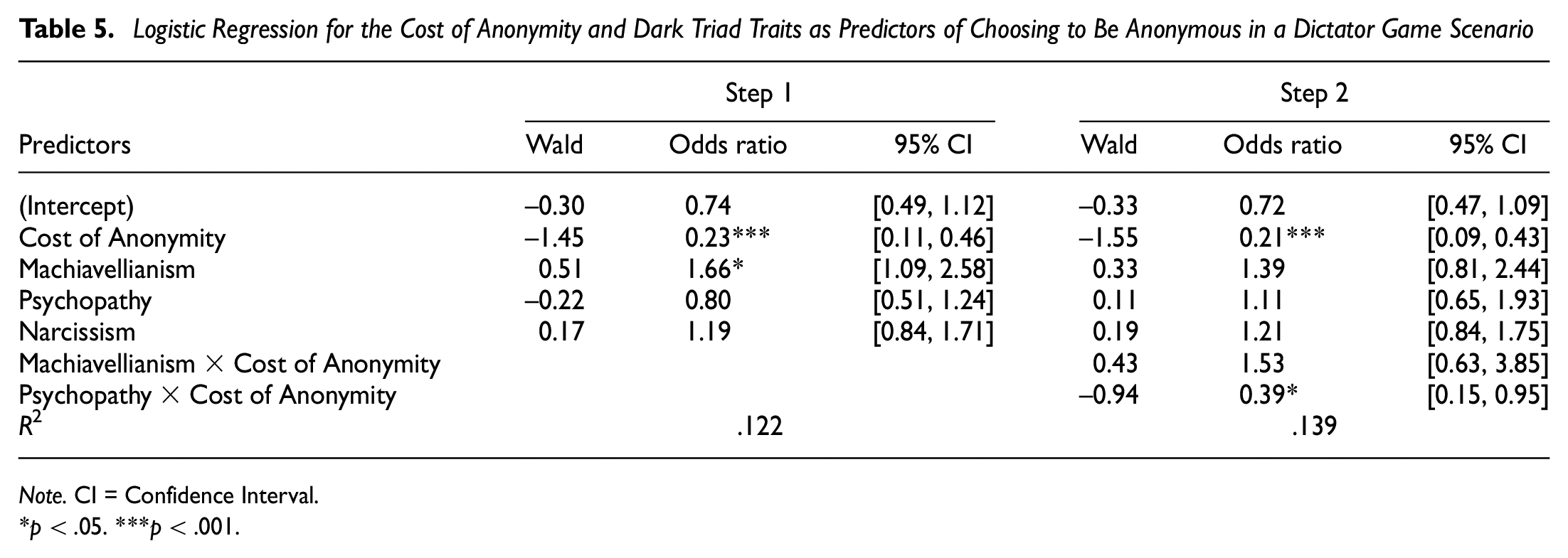
Note. CI = Confidence Interval.
p < .05. ***p < .001.
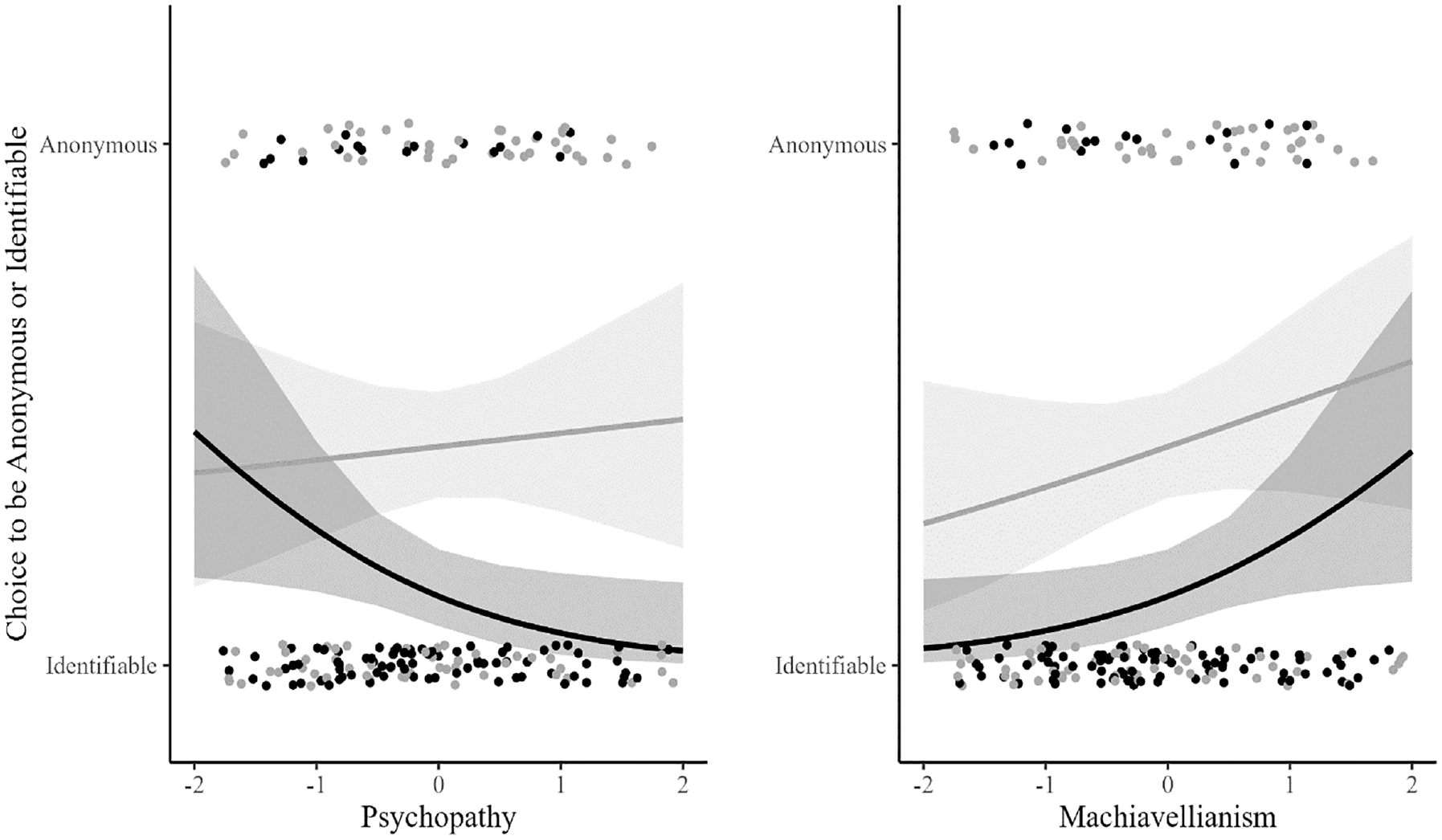
The Interaction Between Both Psychopathy and Machiavellianism and the Cost of Anonymity on Choosing to Be Anonymous
Money Allocation
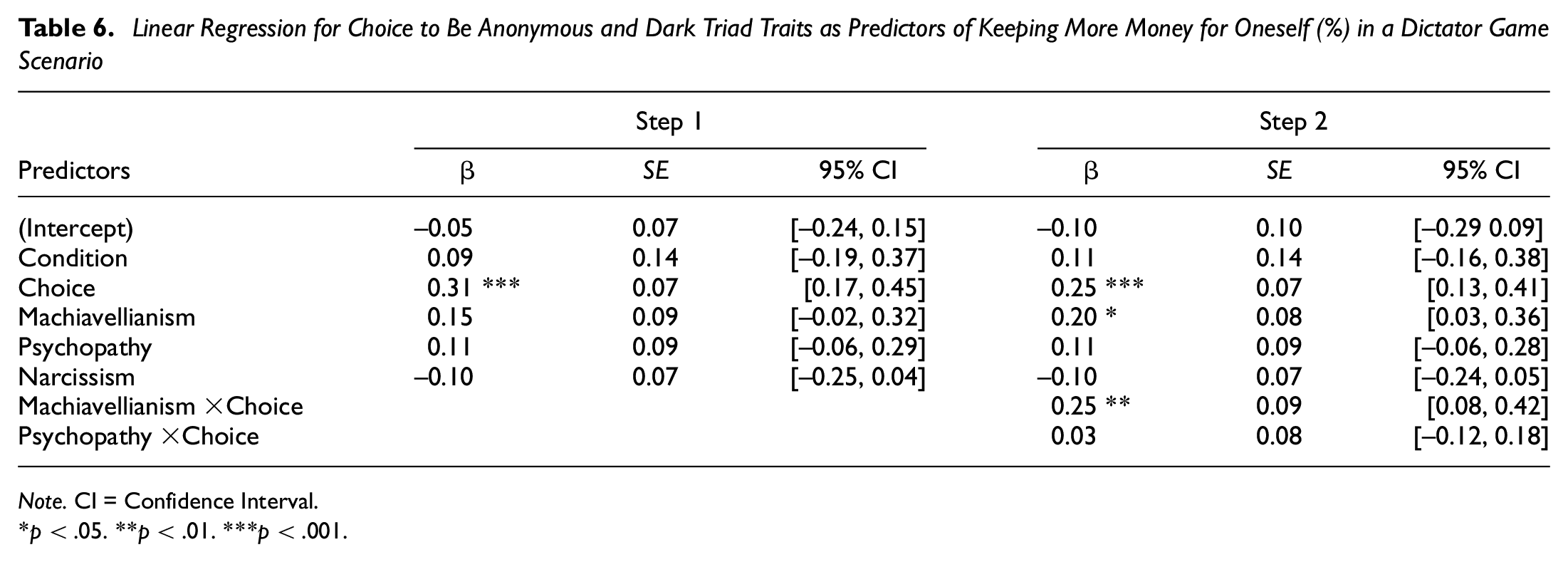
We found that choosing to be anonymous was positively associated with keeping more money for oneself when entered simultaneously with all Dark Triad traits (see Table 6 and Figure 5). We also found a significant interaction between Machiavellianism and choosing to be anonymous. Specifically, when people were anonymous, Machiavellianism was positively associated with keeping more money for oneself (p < .001). When people were identifiable, Machiavellianism was not associated with money allocation (p = .911).
Linear Regression for Choice to Be Anonymous and Dark Triad Traits as Predictors of Keeping More Money for Oneself (%) in a Dictator Game Scenario
Note. CI = Confidence Interval.
p < .05. **p < .01. ***p < .001.
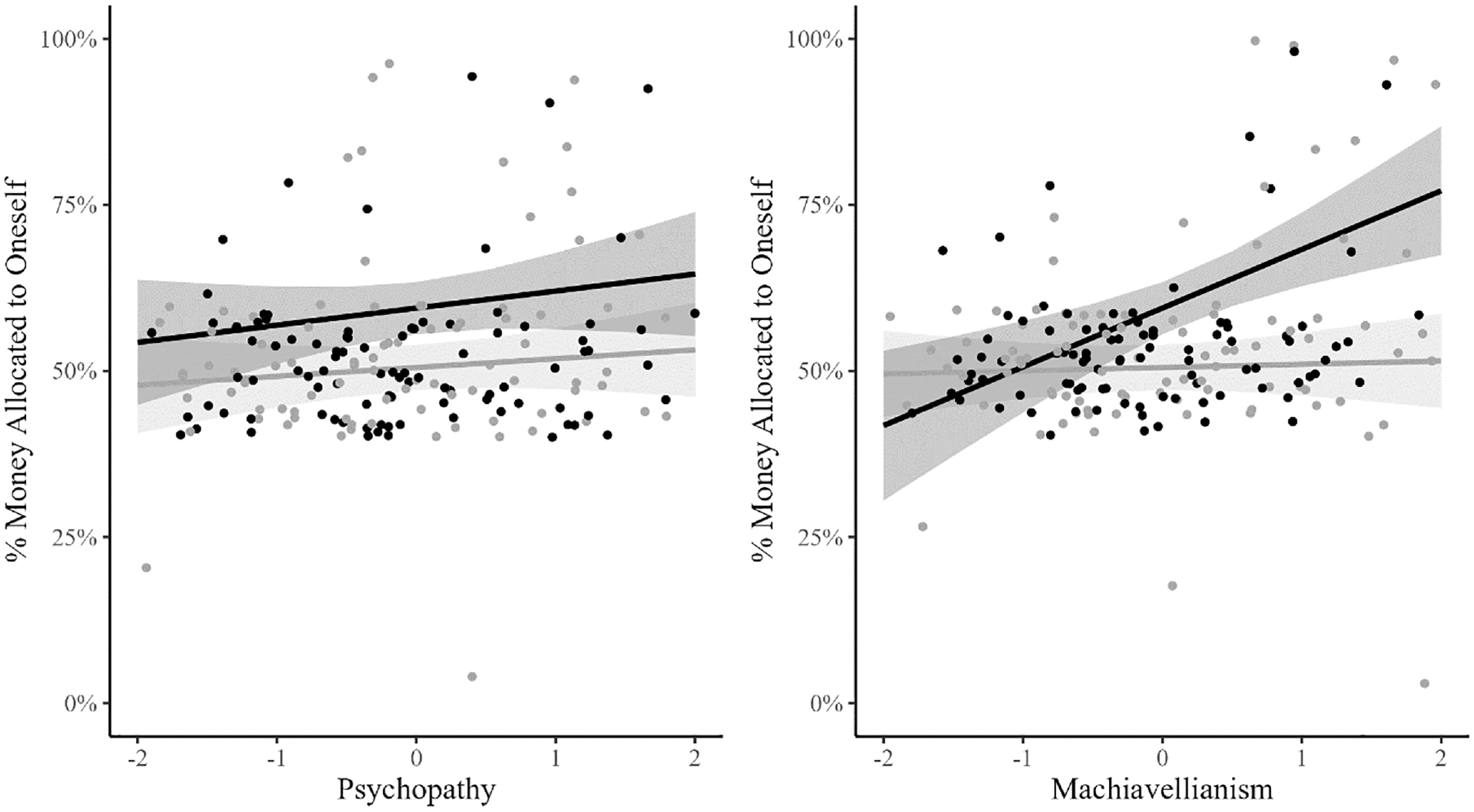
The Interaction Between Both Psychopathy and Machiavellianism and Choosing to be Anonymous on the Percentage of Money Allocated to Oneself
Discussion
More participants sought anonymity when it was free. At no cost, more people elect to be anonymous for various reasons. As predicted, psychopathy was positively associated with having financially self-beneficial motivations, allocating more money to oneself, but not seeking anonymity. Instead, we found that people high in psychopathy were more likely to seek anonymity when it was free than when they had to pay for it. Potentially, as people high in psychopathy are often unfazed by the potential negative repercussions of their behavior, when anonymity is costly, they instead remain identifiable and face any repercussions that may come from their behavior (Jones & Paulhus, 2017). As these results are exploratory in nature, future research should be conducted to confirm the robustness of this effect.
Psychopathy was also associated with financially prosocial motivations. Psychopathy is typified by some adaptive features, including charisma and social prowess (Lilienfeld et al., 2018; Welsh & Lenzenweger, 2021). Combined with their impulsivity, people high in psychopathy may make different decisions to keep more money or charm their partner with generosity. Nonetheless, the desire to be selfish seems to be more pertinent.
Machiavellianism was positively associated with financially self-beneficial motivations. However, it was only positively associated with keeping more money for themselves when they were anonymous, and not identifiable. Anonymity allows people to remain unaccountable for their actions, and therefore, Machiavellians are likely to seek anonymity to achieve their nefarious goals (Jones & Mueller, 2021). We also found that people high in Machiavellianism are more likely to seek anonymity, with the cost of anonymity not influencing this relationship. This suggests that anonymity is valuable to people high in Machiavellianism for maintaining their reputation while achieving selfish goals. However, as we only had the power to detect interactions with a medium effect size, it is possible that a small interaction effect does exist. As a result, more research is necessary to further analyze this relationship.
Together, these findings support our functionalist approach, which aims to explain why individuals choose to be anonymous. By removing contextual constraints on how participants could allocate their money, we show that both Machiavellianism and psychopathy influence a person’s motivations and how someone uses situational affordances—like anonymity—to achieve their goals.
General Discussion
Using a novel dictator game paradigm, we investigated how individual differences, motivations, and cost influence when people seek anonymity. In Studies 1 and 2, we investigated whether people seek anonymity to pursue more extreme, nonnormative goals. We found that people seek anonymity to engage in extremely selfish or prosocial behaviors when anonymity is both free and costly, indicating that anonymity is more valuable when pursuing nonnormative goals. The psychological importance of anonymity strongly depends on the goals and motivations of a person. Anonymity can reduce the likelihood of being punished for deviating from societal norms, thus making it easier to engage in nonnormative behavior (Yoeli et al., 2013). Conversely, identifiability is essential for social influence and reputation building, making it more beneficial to engage in normative behaviors in identifiable environments (Taylor et al., 2022).
Neither Machiavellianism nor psychopathy influenced seeking anonymity to pursue extreme goals. Functionalist approaches to personality and social behavior argue that motivations and behaviors stem from dispositional characteristics. However, if people are told to behave in a certain way—perhaps in a way that is more extreme than they typically would behave—then their decision to seek anonymity may be mostly driven by the behavior itself, rather than their goals.
In Study 3, we allowed participants to freely allocate their money in the dictator game. By removing the contextual constraints of Studies 1 and 2, we were able to better assess how Machiavellianism and psychopathy influence one’s desire to seek anonymity. As expected, both traits were associated with selfish motivations, but how they used anonymity to achieve this goal differed. People high in Machiavellianism sought anonymity and kept more money for themselves when they were anonymous, but not identifiable. Anonymity seems to carry value for those high in Machiavellianism, presumably because anonymity is beneficial in maintaining one’s reputation while achieving selfish goals. Machiavellianism is also associated with environmental flexibility; their behavior depends on person-situation interactions (Bereczkei et al., 2010, 2013; Jones & Mueller, 2021). In some situations, people high in Machiavellianism may realize their initial goal is no longer worth pursuing. Instead, the best reward may be to cooperate.
Those high in psychopathy sought anonymity to the extent that they had financially beneficial motivations. They did not seek anonymity when it was costly or change their money allocations. People high in psychopathy are not fearful of others and consequently place little value on anonymity when pursuing their goals (Jones & Paulhus, 2017). They also struggle to adjust their behavior to different reward-based approaches (Blair et al., 2006), meaning they are less likely to adjust their goals depending on the availability of affordances. These findings empirically support distinct theoretical differences (e.g., cautiousness toward long-term consequences) between Machiavellianism and psychopathy (Jones & Mueller, 2021).
The outcomes of anonymity have long interested social and personality psychologists (McKenna & Bargh, 2000; Postmes & Spears, 1998). More broadly, due to the antisocial behaviors that occur in anonymous environments, their place in society is often debated by technology companies and world leaders (van der Nagel & Frith, 2015). With the ubiquity of online spaces, it is essential to understand the outcomes of anonymity and why people seek them out. We show that people use anonymity to better pursue their goals. Furthermore, we show that specific individual differences potentially drive people’s motivations and goals and their desire to seek anonymity or identifiability. In sum, this research emphasizes the importance of a person-situation approach to anonymous behavior. It clarifies how individual differences, motivations, and situational affordances shape people’s behavior.
In this research we used a novel experimental paradigm. By allowing participants to choose whether they want to be anonymous, we can test a unique aspect of the decision-making process. However, one limitation was the use of hypothetical scenarios. Although hypothetical scenarios are used frequently in psychological research, they have been shown to overestimate effect sizes (Thielmann et al., 2020). As such, future research should look to use this paradigm in a nonhypothetical setting. A second limitation of our study is that people seek anonymity for more reasons than making financial decisions. Future research should assess how people seek anonymity for other prosocial and antisocial behaviors, such as promoting social or political causes, offering emotional support, or engaging in toxic behaviors like online trolling. In addition, future research should investigate other individual differences to understand better why people seek anonymity.
Conclusion
People seek anonymity to engage in behaviors that may be viewed as nonnormative. Self-centered and excessively generous behaviors can incur social costs, so people seek anonymity to mitigate the negative consequences of these behaviors. Furthermore, in line with a functionalist approach, individual differences—such as Machiavellianism and psychopathy—likely drive these motivations and the desire to use situational affordances to achieve their goals.
Supplemental Material
sj-docx-1-spp-10.1177_19485506231217523 – Supplemental material for A Functionalist Approach to Seeking Anonymity: Examining the Role of Motives, Cost, and Individual Differences
Supplemental material, sj-docx-1-spp-10.1177_19485506231217523 for A Functionalist Approach to Seeking Anonymity: Examining the Role of Motives, Cost, and Individual Differences by Lewis Nitschinsk, Stephanie J. Tobin and Eric J. Vanman in Social Psychological and Personality Science
Supplemental Material
sj-docx-2-spp-10.1177_19485506231217523 – Supplemental material for A Functionalist Approach to Seeking Anonymity: Examining the Role of Motives, Cost, and Individual Differences
Supplemental material, sj-docx-2-spp-10.1177_19485506231217523 for A Functionalist Approach to Seeking Anonymity: Examining the Role of Motives, Cost, and Individual Differences by Lewis Nitschinsk, Stephanie J. Tobin and Eric J. Vanman in Social Psychological and Personality Science
Supplemental Material
sj-docx-3-spp-10.1177_19485506231217523 – Supplemental material for A Functionalist Approach to Seeking Anonymity: Examining the Role of Motives, Cost, and Individual Differences
Supplemental material, sj-docx-3-spp-10.1177_19485506231217523 for A Functionalist Approach to Seeking Anonymity: Examining the Role of Motives, Cost, and Individual Differences by Lewis Nitschinsk, Stephanie J. Tobin and Eric J. Vanman in Social Psychological and Personality Science
Supplemental Material
sj-docx-4-spp-10.1177_19485506231217523 – Supplemental material for A Functionalist Approach to Seeking Anonymity: Examining the Role of Motives, Cost, and Individual Differences
Supplemental material, sj-docx-4-spp-10.1177_19485506231217523 for A Functionalist Approach to Seeking Anonymity: Examining the Role of Motives, Cost, and Individual Differences by Lewis Nitschinsk, Stephanie J. Tobin and Eric J. Vanman in Social Psychological and Personality Science
Footnotes
Handling Editor: Veronika Job
Declaration of Conflicting Interests
The author(s) declared no potential conflicts of interest with respect to the research, authorship, and/or publication of this article.
Funding
The author(s) received no financial support for the research, authorship, and/or publication of this article.

Supplemental Material
Supplemental material is available in the online version of the article.
Notes
Author Biographies
References
Supplementary Material
Please find the following supplemental material available below.
For Open Access articles published under a Creative Commons License, all supplemental material carries the same license as the article it is associated with.
For non-Open Access articles published, all supplemental material carries a non-exclusive license, and permission requests for re-use of supplemental material or any part of supplemental material shall be sent directly to the copyright owner as specified in the copyright notice associated with the article.
