




Abstract
In modern Western cultures, gender is largely viewed as binary, and individuals who challenge the gender/sex binary face discrimination and marginalization. Across three preregistered studies (N = 1,096), we examine gender discrimination against gender-nonconforming people. Studies 1 and 2 show that behavioral and appearance-based gender nonconformity leads to the misgendering of cisgender and transgender women and men. This was true for the gendered perception of these targets and the binary assignment to gender/sex-based spaces and policies (e.g., access to bathrooms or gender/sex-based leadership training). Surprisingly, whether the target was transgender or cisgender did not affect these results. Study 3 replicated findings for transgender targets and showed that adherence to gender stereotypes is seen as a necessity for transgender individuals who want their gender identity recognized by others (e.g., on official documents or through pronoun use).
In modern Western cultures, gender is largely viewed as binary and stemming from binary biological sex (i.e., female or male), a belief system known as the gender/sex binary (Ansara & Hegarty, 2014; Hyde et al., 2019; Morgenroth & Ryan, 2021; van der Toorn et al., 2020). The gender/sex binary dictates which genders exist (woman and man), their interrelations (oppositional, complementary, and heteronormative), and their source (through biological sex).
To categorize others to one of these two genders, people use cues such as behavior and appearance (Howansky et al., 2020; Morgenroth & Ryan, 2021). For example, if the only information you only know about an individual is that they wear dresses and enjoy crafts, you may assume this person is a woman. However, such cues can lead to miscategorization, as they are not inherently tied to gender or sex—men or nonbinary individuals can also wear dresses or enjoy crafts. When such miscategorization is explicitly expressed (e.g., through the use of incorrect pronouns), it is termed misgendering (Ansara & Hegarty, 2014). People often misgender individuals who do not strictly adhere to the gender/sex binary (e.g., transgender people; Howansky et al., 2022), and any mismatch between gender identity and behavior or appearance (i.e., gender nonconformity) is argued to increase the chance that an individual will be misgendered (Morgenroth & Ryan, 2021).
Misgendering can be seen as an instance of identity denial, which occurs when others’ perceptions of one’s social identity (e.g., gender identity) contradict how one perceives oneself. By misgendering others, for example, via incorrect pronouns or by questioning their presence in gender/sex-segregated spaces, perpetrators communicate to targets that their identity is invalid. Research into identity denial initially focused on race and ethnicity (e.g., Albuja et al., 2019; Cheryan & Monin, 2005; Wang et al., 2013) but more recently has examined the experiences of bisexual and transgender people (Maimon et al., 2021; McLemore, 2015; Parr & Howe, 2019). This literature has mainly focused on targets’ experiences of identity denial, illuminating the adverse consequences of such experiences for mental health (McLemore, 2015; Parr & Howe, 2019). However, it is equally important to understand the perceiver’s perspective: What factors lead to acts of identity denial?
The literature on gender miscategorization and misgendering has taken this perspective, showing that transgender (vs. cisgender) women and men are misgendered more often partially because they are viewed as less feminine or masculine, respectively (Gallagher & Bodenhausen, 2019, 2021; Howansky et al., 2020, 2022); In addition, previous work shows that gender-nonconforming and transgender targets are perceived to threaten the distinction between men and women (Broussard & Warner, 2019). We build on this literature by examining multiple acts of identity denial for cisgender and transgender people who do or do not conform to gender norms, highlighting how policies and practices that reflect the gender/sex binary disadvantage not only gender minorities but also cisgender people who violate gender norms.
We further examine whether identity denial is unintentional, that is, based on an incorrect perception of the target’s wishes, or intentional, that is, carried out despite knowledge the target’s wishes. For example, when seeing a man wearing make-up and a dress entering the men’s restroom, a perceiver may direct him to the “right” restroom because they believe that he would want to go to the women’s restroom (e.g., because they may incorrectly assume that he is a transgender woman); in this case, the identity denial would be unintentional. However, if the perceiver knew his identity as a man, the same act could be viewed as intentional identity denial.
The Current Project
This project examines how transgender status and gender nonconformity influence whether and why people deny others’ gender identity. We test the following hypothesis: Behavioral (H1a) and appearance-based (H1b) gender nonconformity will lead to others denying the identity of the target. This will be particularly pronounced for transgender targets (H1c).
We further examine whether misgendering is intentional by exploring whether participants assign targets to gender categories in line with the targets’ perceived wishes, and we explore whether gender misperceptions mediate the effect of gender nonconformity on identity denial. We use “identity denial” to refer to any act that would directly communicate a denial of the target’s identity (e.g., incorrect pronoun use or denial of access to a gender/sex-segregated space) and “misperception” to refer to the target’s perceived gender, which may, in itself, not have negative consequences unless it translates into acts of identity denial.
In all three studies, participants provided their perception of a target in terms of gender (gender misperception) and indicated to which binary category (woman/man) the target should be assigned in the context of gender/sex-segregated spaces, groups, and policies (identity denial). In Study 1, participants read about a transgender or cisgender woman or man described as exhibiting feminine or masculine behavior (i.e., in terms of gendered traits and interests). In Study 2, participants saw a transgender or cisgender woman or man with either stereotypically-feminine or stereotypically-masculine gender presentation (i.e., in terms of hair style and make-up use). Study 3 focused on transgender targets and examined additional forms of identity denial specific to transgender individuals’ experiences.
It is possible that the target’s gender may qualify these effects. For example, manhood is more easily lost than womanhood (Vandello et al., 2008), and thus the effects of gender-nonconformity on identity denial may be more pronounced for men targets. However, to keep our design from becoming overly complex, we decided not to include target gender in our predictions and did not power our studies to examine its effects. Exploratory analyses for Studies 1 to 2 can be found in the online supplement (Supplemental Tables S2 and S13). In Study 3, we explore the effects of target gender in our main analyses.
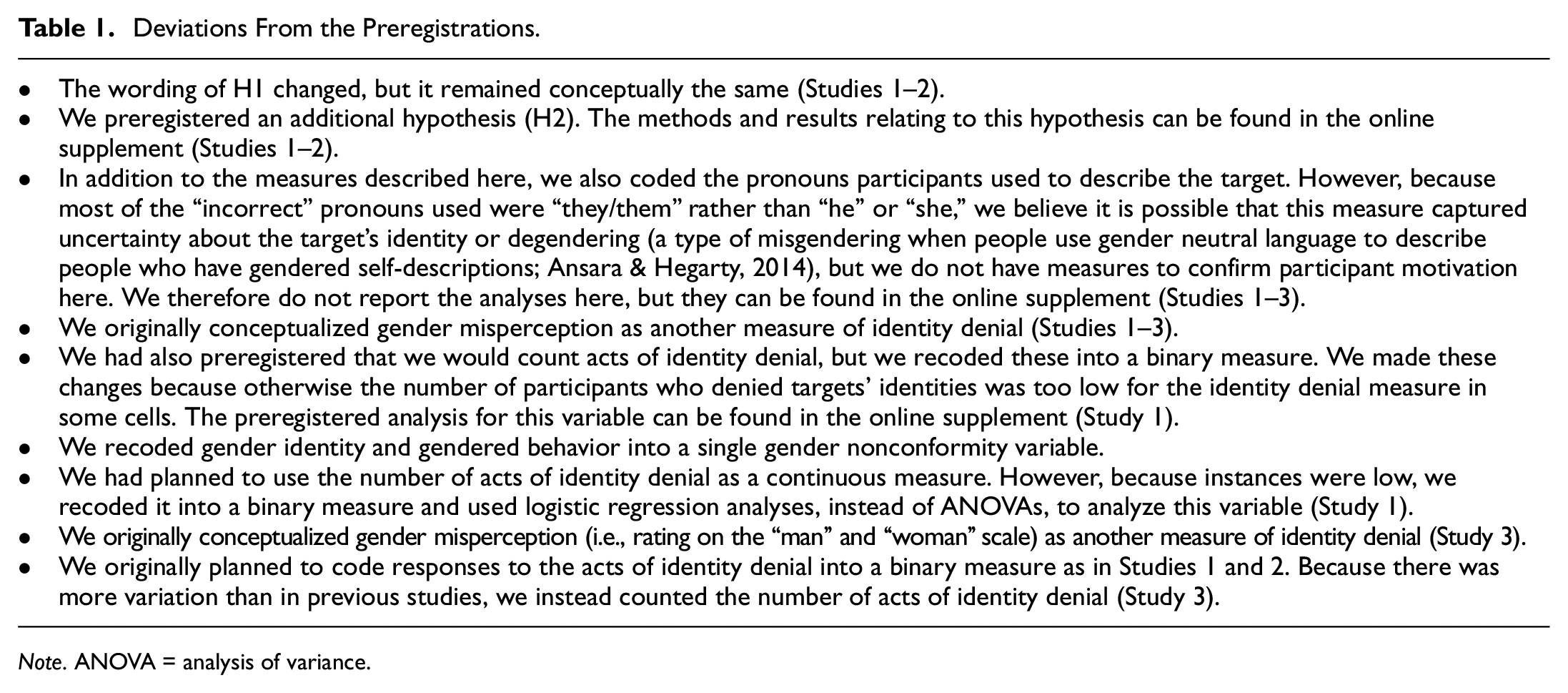
All three studies were preregistered (see Table 1 for deviations from preregistrations). Materials, data, and syntax for all studies can be found at https://osf.io/gje3y/. In addition to our focal variables, we also tested the manipulations’ effects on target liking and attractiveness and explored the moderating role of heterosexist beliefs, essentialism, categorization difficulty, political ideology, participant gender, and target gender (see Sections 1–3 in online supplement).
Deviations From the Preregistrations
Note. ANOVA = analysis of variance.
Study 1
The study’s preregistration can be found at https://aspredicted.org/5hd8g.pdf.
Method
Participants
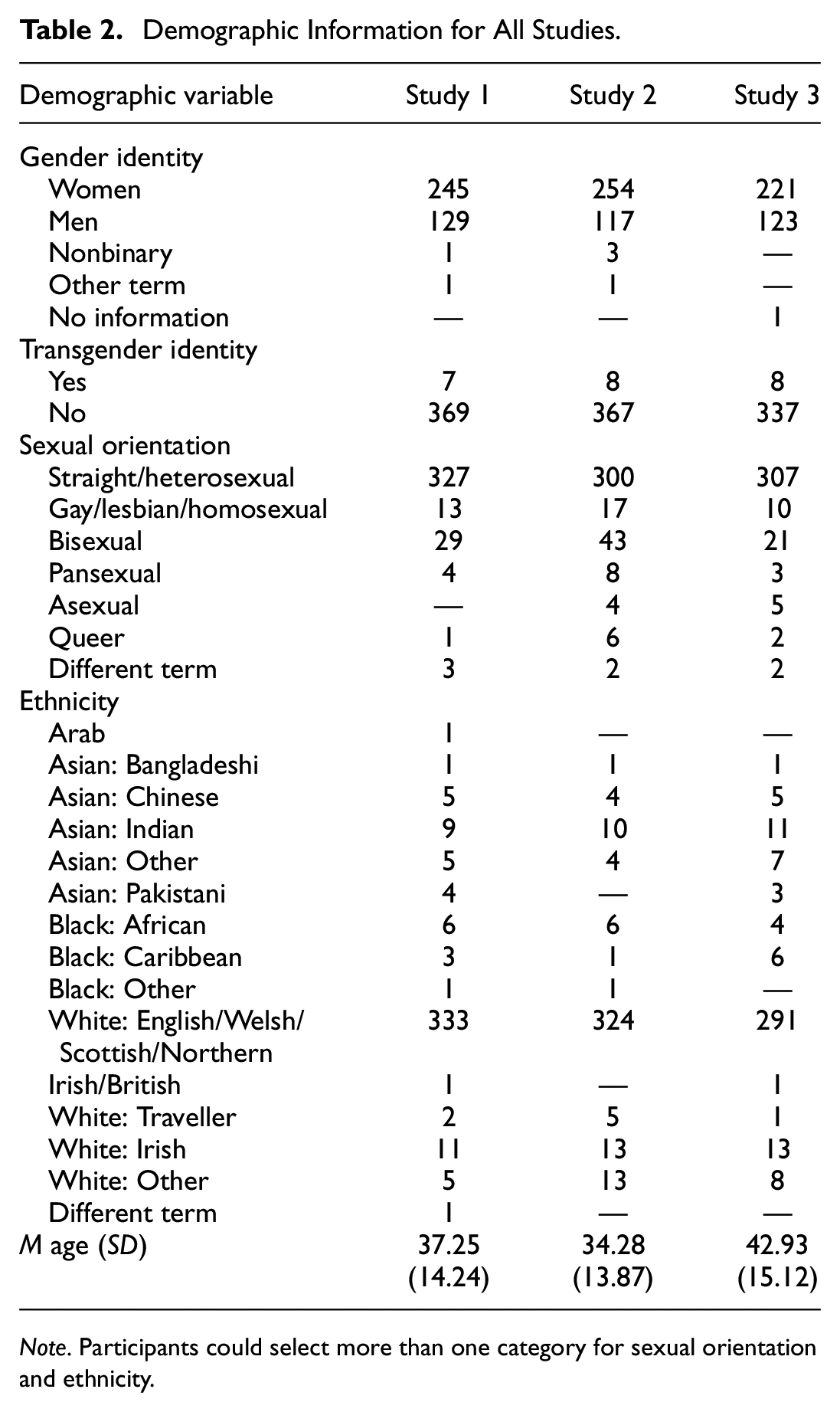
We recruited ideologically diverse British participants via Prolific (www.prolific.co). We aimed at 351 participants, based on a power analysis using GPower (Faul et al., 2009), specifying small to medium effect sizes (
Demographic Information for All Studies
Note. Participants could select more than one category for sexual orientation and ethnicity.
Design and Procedure
The study was advertised as examining impression formation. Participants first saw a grid of 12 names, ages, and locations, including the name of the target person, and were told they would be randomly assigned to read about one of these individuals. Participants then read one of eight profiles in a 2 (Gender identity: Woman vs. Man) × 2 (Behavior: Feminine vs. Masculine) × 2 (Trans identity: Trans vs. Cis) between-participants design. We recoded the gender identity and behavior conditions into a new binary variable (Gender nonconformity: conform vs. nonconform). Most of the information provided (e.g., that the person lived in Manchester) was the same across conditions. We manipulated gender identity using the target’s name (Jessica vs. James), and gendered behavior using attributes and hobbies that are seen as feminine or masculine (see Carothers & Reis, 2013). In the feminine condition, the target was described as understanding, helpful, and affectionate, and enjoyed arts and crafts, dancing, and watching talk-shows. In the masculine condition, the target was described as competitive, decisive, and standing up under pressure, and enjoyed weightlifting, video games, and watching football. We manipulated trans identity by including the following: “I am transgender. I was born as biologically female/male and was raised as a girl/boy, but that does not match my identity. I identify and live as a man/woman.”
After reading the profile, participants responded to the outcome measures, provided demographic information, and were debriefed.
Measures
We measured gender misperception by asking participants to place the target on a 7-point bipolar scale from “man” to “woman.” We reverse-coded this measure for targets who were women so that in the resulting scale higher numbers indicate a closer placement to the incorrect gender.
Next, to measure acts of identity denial, participants responded to five questions with binary response-choices corresponding to the target’s correct gender and the other binary gender. More specifically, they were asked which toilet the target should use, which gym changing room they should use, which sex-segregated sports team they should join, whether they should be allowed to attend women’s leadership training, and to which prison they should be sent if convicted of a crime. We chose these as they represent issues often discussed in the context of trans inclusion. Because instances of incorrect group assignment were generally low, we created a binary variable (0 = no identity denial; 1 = at least one act of identity denial).
To examine whether the identity denial measure captured unintentional (i.e., responding as they assumed the target would want to be treated) or intentional (i.e., assigning targets to spaces and policies against the assumed wishes of the target) identity denial, we asked participants which group they believe the target would want to be assigned to for each policy (e.g., which bathroom the target would want to use). We then coded whether their assignment differed from the target’s perceived wishes at least once.
Results
Figure 1 illustrates the means for the two dependent variables across conditions.
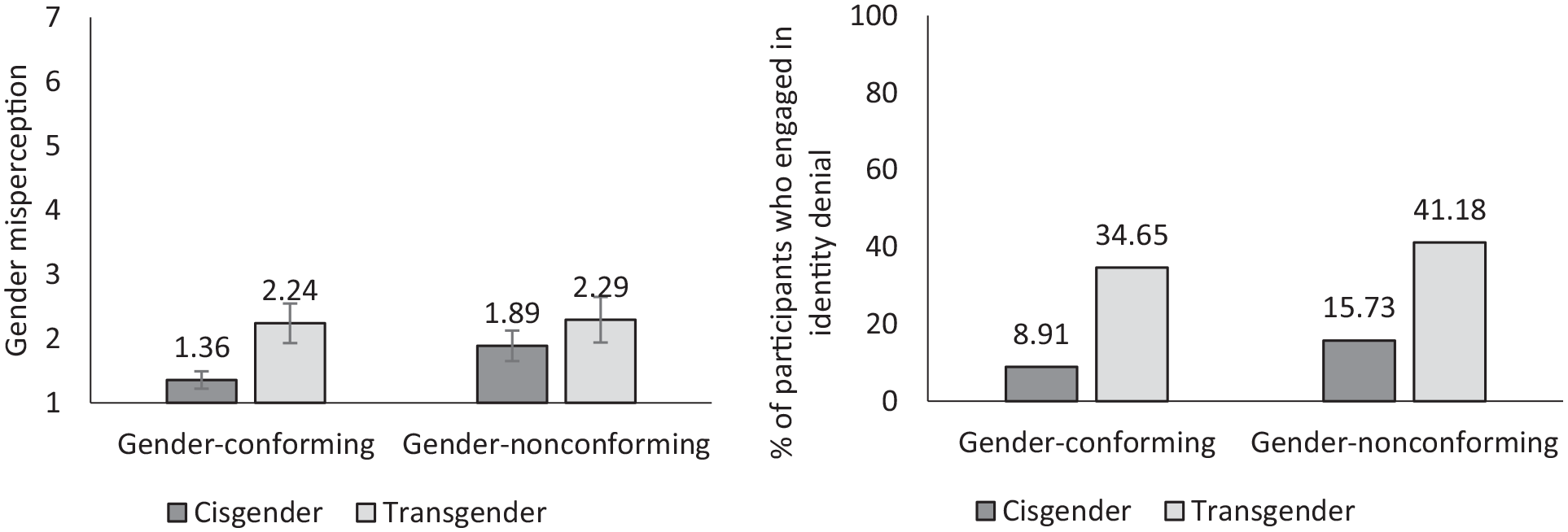
Gender Misperception and Acts of Identity Denial Across Conditions (Study 1)
Test of Hypothesis
To test whether gender nonconformity would lead to identity denial (H1a), particularly for transgender people (H1c), we ran a logistic regression using the PROCESS macro for SPSS (v3.2, Model 1; Hayes, 2018) with gender nonconformity as the predictor, trans identity as the moderator, and identity denial as the outcome (see Table 3 and Figure 1). We found a significant effect of trans identity. Contrary to our predictions, this effect was not moderated by gender nonconformity, and gender nonconformity alone did not affect incorrect group assignment.
Logistic Regression Results for Identity Denial (Study 1)
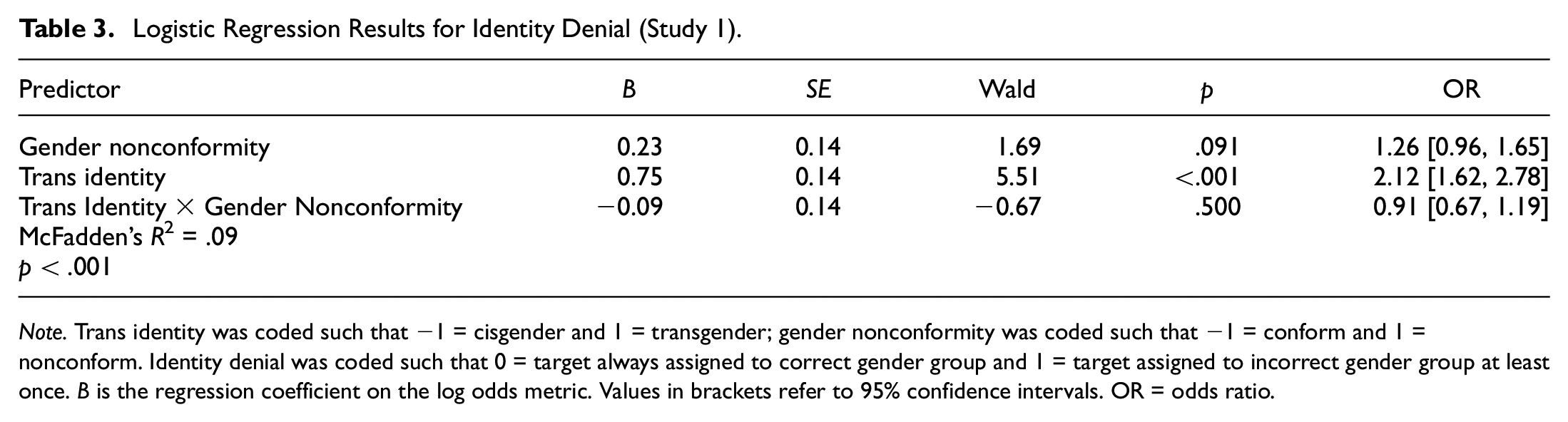
Note. Trans identity was coded such that −1 = cisgender and 1 = transgender; gender nonconformity was coded such that −1 = conform and 1 = nonconform. Identity denial was coded such that 0 = target always assigned to correct gender group and 1 = target assigned to incorrect gender group at least once. B is the regression coefficient on the log odds metric. Values in brackets refer to 95% confidence intervals. OR = odds ratio.
Exploratory Analyses
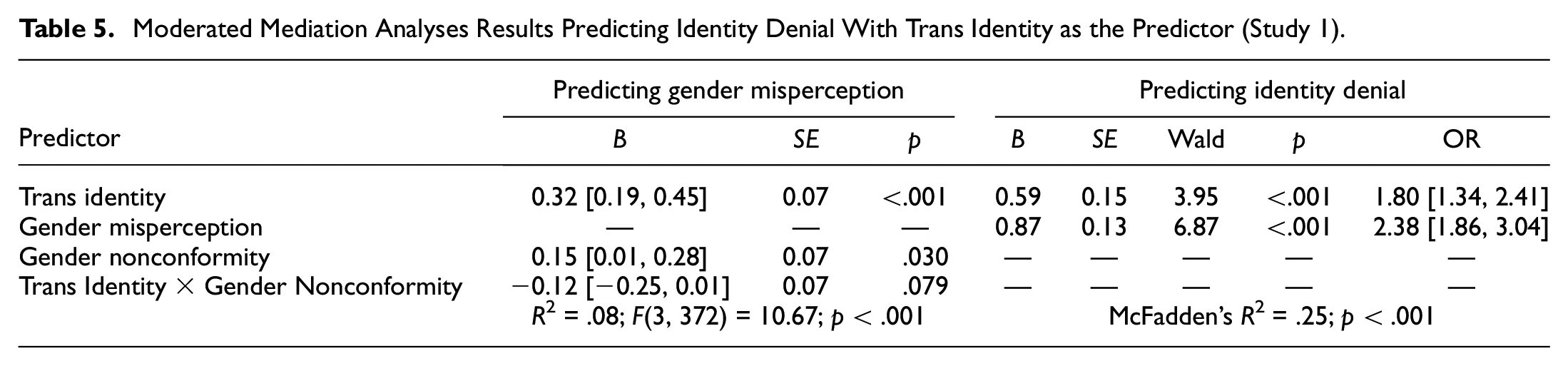
Next, we explored whether gender misperception explains the relationship between gender conformity and identity denial, such that individuals deny the identities of people who are gender nonconforming because they misperceive these people’s gender, and whether this was more likely to occur for trans people.
To this end, we ran two moderated mediation logistic regression models (PROCESS v4.0, Model 7; Hayes, 2018): one with gender nonconformity as the predictor and trans identity as the moderator of the path from the predictor to the mediator and one swapping these (see Tables 4 and 5 for the results). We found no evidence of moderated mediation in either model. However, the indirect effect of gender nonconformity on identity denial was significant for cisgender targets, but not for transgender targets, such that gender misperception was higher for gender-nonconforming cisgender targets compared with gender-conforming cisgender targets, which in turn was associated with greater likelihood to deny the target’s identity. In addition, the indirect effect of transgender identity on identity denial through gender misperception was significant for gender-nonconforming and gender-conforming targets. Thus, regardless of gender-norm adherence, transgender targets, more than cisgender targets, were perceived like the other binary gender and, in turn, more likely to face identity denial.
Moderated Mediation Analyses Results Predicting Identity Denial With Gender Nonconformity as the Predictor (Study 1)
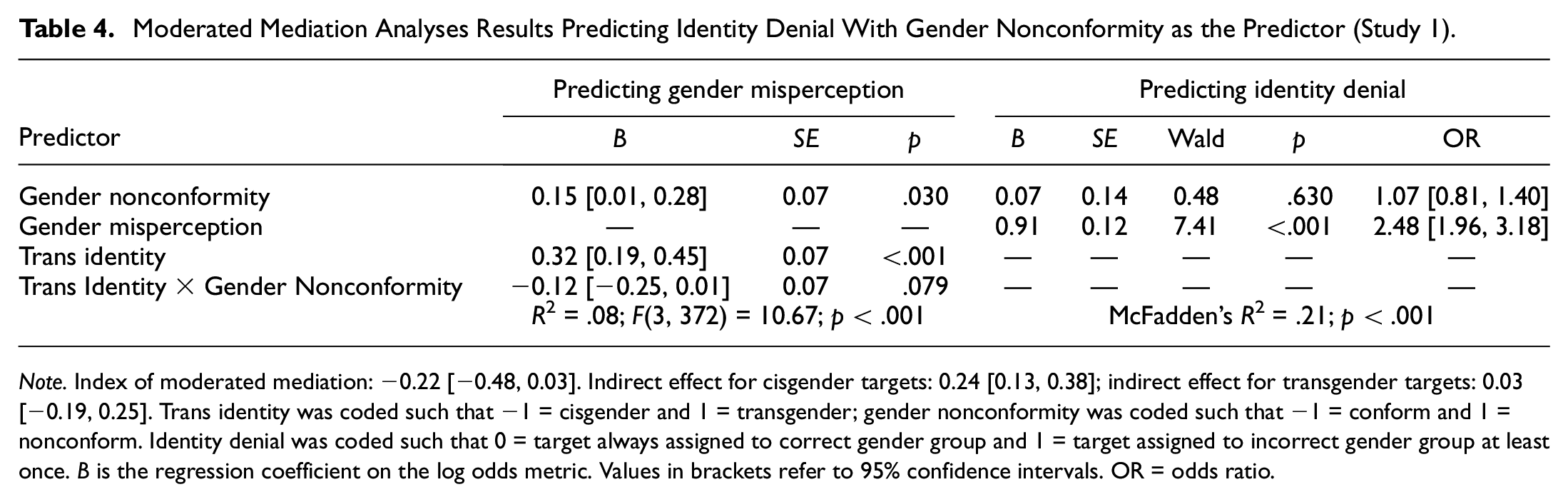
Note. Index of moderated mediation: −0.22 [−0.48, 0.03]. Indirect effect for cisgender targets: 0.24 [0.13, 0.38]; indirect effect for transgender targets: 0.03 [−0.19, 0.25]. Trans identity was coded such that −1 = cisgender and 1 = transgender; gender nonconformity was coded such that −1 = conform and 1 = nonconform. Identity denial was coded such that 0 = target always assigned to correct gender group and 1 = target assigned to incorrect gender group at least once. B is the regression coefficient on the log odds metric. Values in brackets refer to 95% confidence intervals. OR = odds ratio.
Moderated Mediation Analyses Results Predicting Identity Denial With Trans Identity as the Predictor (Study 1)
Finally, we examined whether identity denial was intentional, restricting analyses to those who misgendered targets at least once. For 74.19% of these participants, identity denial was intentional for at least one act of identity denial, suggesting that gender identity denial is often due to intentional decisions rather than misunderstanding what targets prefer.
Discussion
In this study, we examined whether gender-nonconforming behavior leads to identity denial and whether this is particularly pronounced for transgender individuals. Our preregistered analyses did not support this hypothesis. Instead, only transgender identity predicted identity denial. However, our exploratory mediation analyses suggested that for cisgender targets, gender nonconformity can affect gender misperceptions and, in turn, identity denial, lending some support for H1a. Given this finding’s exploratory nature, it should be interpreted with caution. Our data further suggested that participants largely misgendered targets knowingly.
We found no evidence that gender nonconformity would lead to more frequent identity denial of transgender (vs. cisgender) people. However, identity denial was overall more pronounced for transgender targets, suggesting that regardless of how transgender people act, their identity will more likely be denied.
As some evidence suggests that appearance-based gender nonconformity may lead to more negative effects than trait-based nonconformity (see Stern & Rule, 2018), we investigate our hypothesis in this context next.
Study 2
The study’s preregistration can be found here: https://aspredicted.org/qk6yp.pdf.
Method
Participants
We used the same recruitment strategy and target sample size as in Study 1 and did not need to exclude any participants. Our final sample was 375, giving us enough power to detect an effect of
Design and Procedure
The study was advertised as examining first impressions. Participants were randomly allocated to one condition in a 2 (Gender identity: Woman vs. Man) × 2 (Gender presentation: Feminine vs. Masculine) × 2 (Trans identity: Trans vs. Cis) between-participants design. We manipulated the three factors using a picture and a brief introduction, allegedly by the target person. We used images categorized as men and women from an artificial intelligence (AI)-generated face database (https://generated.photos/faces). We initially selected pictures of women and men with short hair who did not wear makeup and edited out any jewelry, where present, for the masculine presentation condition. We then used the GIMP graphics editor to create the feminine pictures by adding long hair, make-up, and earrings and editing facial hair (beard stubble and eyebrows) and clothing color to be more in line with stereotypically feminine appearance. We did not edit facial shape. Images of transgender individuals thus represent their appearance prior to potential gender affirming procedures such as hormone-replacement therapy or facial-masculinization/feminization surgery.
This resulted in images categorized as women and men who we edited to present as feminine or masculine (see Figure 2) but looked completely identical otherwise. We used stimulus sampling with three different images (one Asian, one Black, and one White target) per condition to increase the generalizability of our findings.
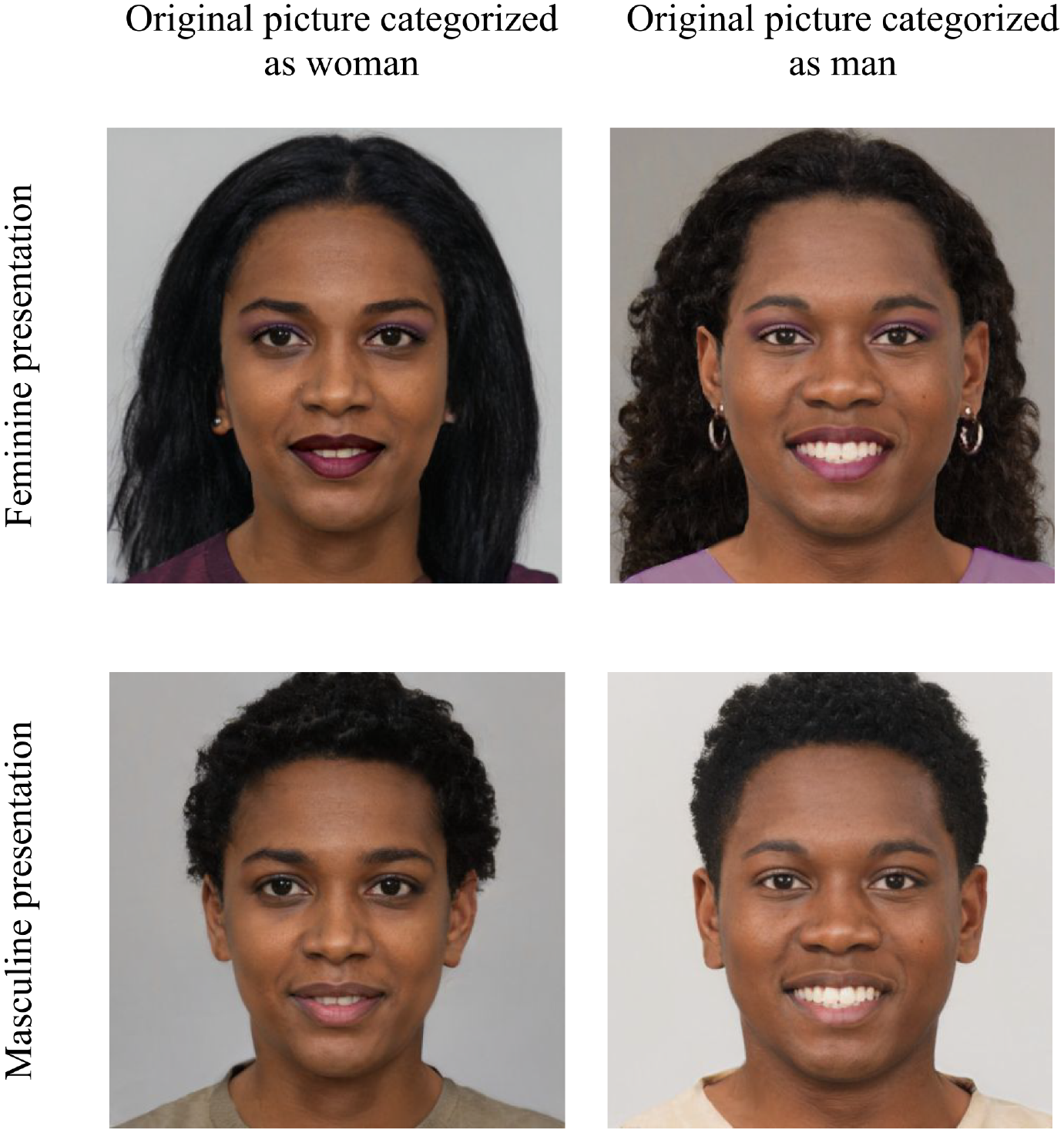
Example Stimulus Pictures (Study 2).
We manipulated gender identity with the following text: “Hi, I’m Jessica [James], I live in Manchester, and a fun fact about me is that I’m the kind of woman [man] who will spend an hour on public transport just to get the best coffee in the city.” Trans identity was manipulated via the picture (i.e., cis targets were those whose gender matched the gender their image was originally categorized as, with the opposite for transgender targets). We also added “I’m transgender” after the targets’ names for transgender targets. For example, the profile of a transgender man could include either picture in the left column of Figure 2 and the profile of a cisgender man could include either picture in the right column of Figure 2, regardless of their gender presentation.
After viewing the profile, participants responded to our measures and provided demographic information.
Measures
We used the same measures as in Study 1.
Results
Figure 3 illustrates the means for the two dependent variables across conditions.
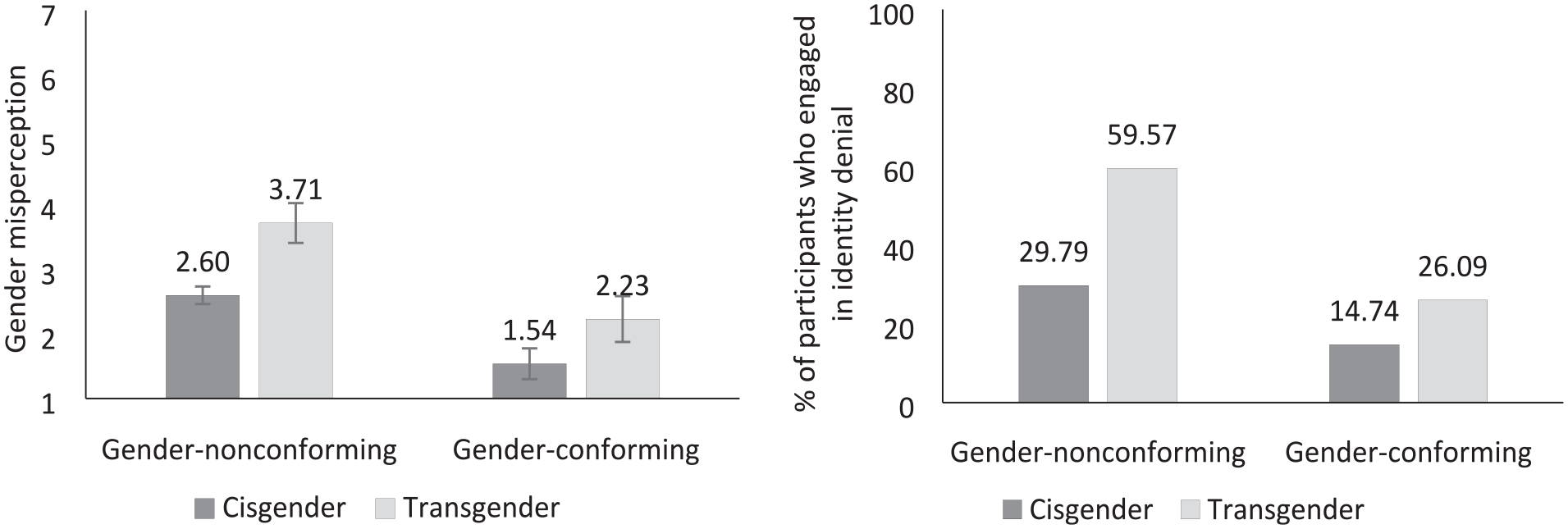
Gender Misperception and Acts of Identity Denial Across Conditions (Study 2).
Preregistered Analyses
We used the same analytic strategy as in Study 1.
First, we tested whether appearance-based gender nonconformity would lead to identity denial (H1b), particularly for transgender people (H1c). In line with H1b, we found a significant effect of gender nonconformity (see Table 6 and Figure 3). For gender-conforming targets, only 20.23% of participants misgendered the target at least once, but 44.8% did so for gender-nonconforming targets. This effect was not moderated by trans identity, lending no support to H1c. As in Study 1, trans targets’ identities were more likely to be denied and identity denial was mostly intentional (61.98%).
Logistic Regression Results for Acts of Identity Denial (Study 2).
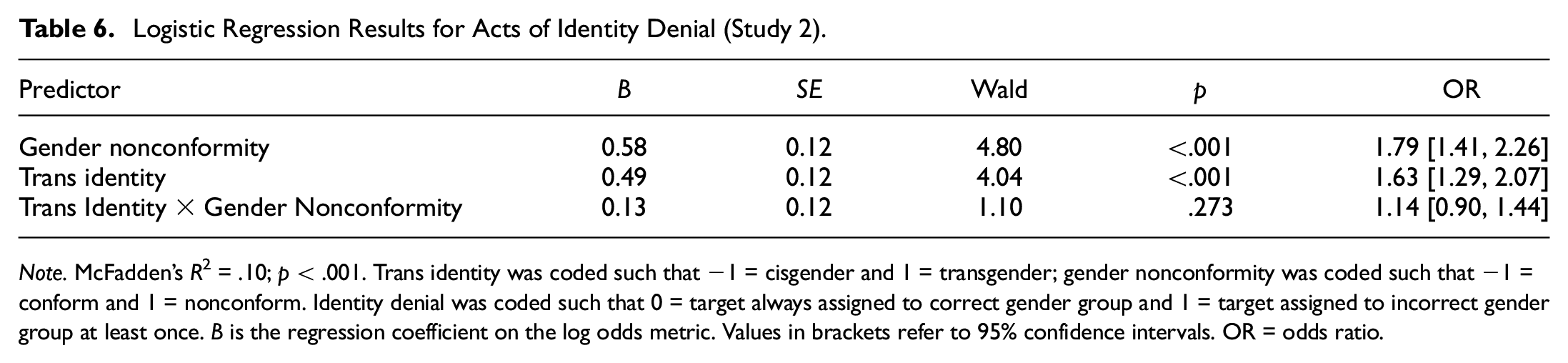
Note. McFadden’s R2 = .10; p < .001. Trans identity was coded such that −1 = cisgender and 1 = transgender; gender nonconformity was coded such that −1 = conform and 1 = nonconform. Identity denial was coded such that 0 = target always assigned to correct gender group and 1 = target assigned to incorrect gender group at least once. B is the regression coefficient on the log odds metric. Values in brackets refer to 95% confidence intervals. OR = odds ratio.
Exploratory Analyses
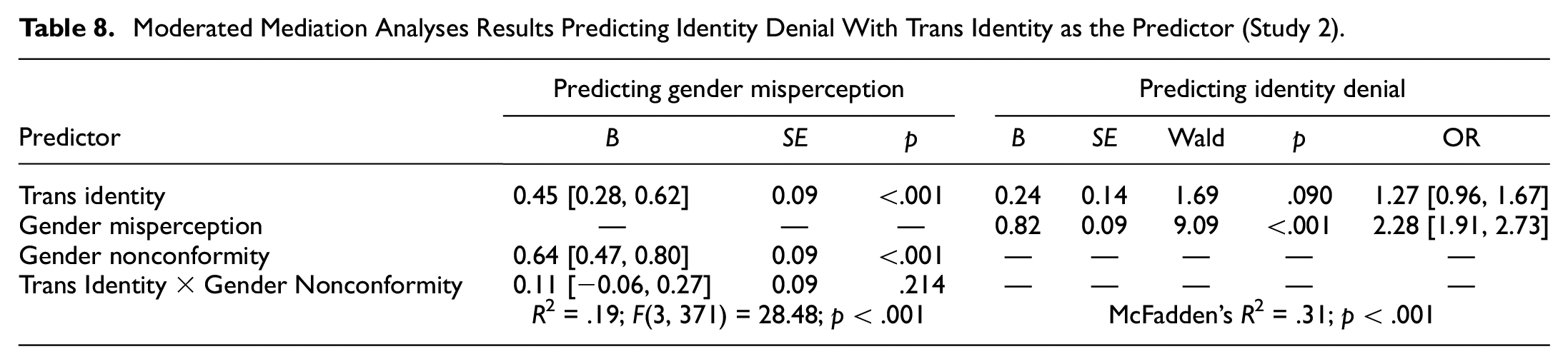
We ran the same moderated mediation analyses as in Study 1 (see Tables 7 and 8 for results). We found no evidence of moderated mediation. However, gender misperception was higher for gender-nonconforming targets than gender-conforming targets, and this was associated with greater likelihood of identity denial, for both transgender and cisgender targets. Replicating Study 1, the indirect effect of transgender identity on identity denial through gender misperception was also significant.
Moderated Mediation Analyses Results Predicting Identity Denial With Gender Nonconformity as the Predictor (Study 2).
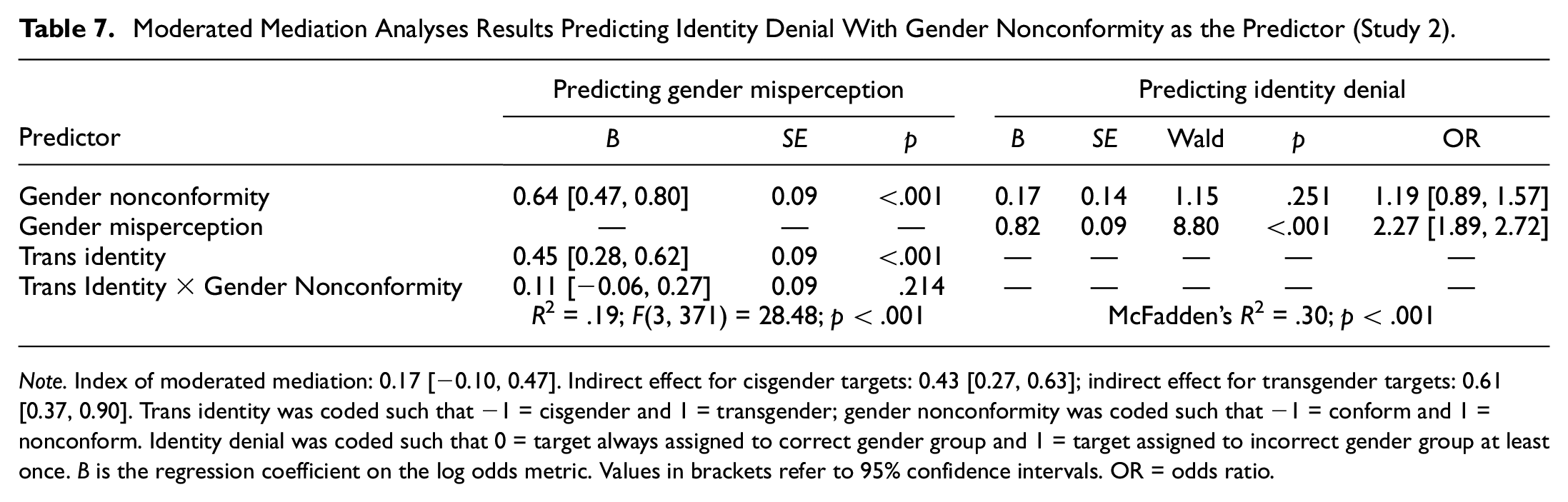
Note. Index of moderated mediation: 0.17 [−0.10, 0.47]. Indirect effect for cisgender targets: 0.43 [0.27, 0.63]; indirect effect for transgender targets: 0.61 [0.37, 0.90]. Trans identity was coded such that −1 = cisgender and 1 = transgender; gender nonconformity was coded such that −1 = conform and 1 = nonconform. Identity denial was coded such that 0 = target always assigned to correct gender group and 1 = target assigned to incorrect gender group at least once. B is the regression coefficient on the log odds metric. Values in brackets refer to 95% confidence intervals. OR = odds ratio.
Moderated Mediation Analyses Results Predicting Identity Denial With Trans Identity as the Predictor (Study 2).
Discussion
In this study, we found the predicted effect of gender nonconformity on identity denial. However, we again found no evidence that this effect is stronger for transgender targets.
Across Studies 1 to 2, we used a scale from “woman” to “man” for the gender misperception measure. However, it is unclear what the middle of this scale represents and to what extent the midpoint can be interpreted as misperception. For example, a participant may perceive a masculine-presenting woman as 100% a woman but also as somewhat manly, and thus choose a value of 5 rather than 7. Separate scales for “woman” and “man” speak to misperceptions that may lead to identity denial more directly as they enable us to understand the extent to which gender-conforming and nonconforming targets are perceived as both their own gender and the other binary gender. We designed Study 3 with this concern in mind.
Study 3
In this study, we focused exclusively on transgender targets, as trans identity did not moderate the effects of gender nonconformity in Studies 1 and 2. We added a new measure of gender misperception and an additional measure of identity denial that focused on identity denial faced specifically by transgender individuals. This study was also preregistered (https://aspredicted.org/4tv32.pdf).
Method
Participants
We used the same recruitment strategy and target sample size as in Studies 1 and 2. Because we simplified the design by focusing exclusively on transgender targets, this gave us enough power to examine whether the effects of gender nonconformity are moderated by target gender. Of the 350 participants recruited, five were excluded for failing our attention check. The final sample was 345, giving us enough power to detect an effect of
Design and Procedure
The design and measures were largely identical to Study 2 with some exceptions. First, we omitted the cisgender conditions, resulting in a 2 (Gender identity: Woman vs. Man) × 2 (Gender presentation: Feminine vs. Masculine) between-participants design.
Second, because some open responses in Study 2 indicated participant confusion about the gender-nonconforming transgender targets’ identities, we added clarifying information. Instead of stating “I’m transgender,” the text now read, “I’m transgender. I was assigned female [male] at birth and raised as a girl [boy], but I identify as a man [woman] and use he/him [she/her] pronouns.”
Third, we replaced the gender misperception scale with two separate scales, asking to what extent the participant would say the target was a man and to what extent the participant would say the target was a woman, both on 7-point scales from not at all to very much.
Fourth, we added several additional items to the identity denial measure used in Studies 1 and 2 (see full materials). Because this resulted in more acts of identity denial (i.e., eight), we counted the number of times (from 0 to 8) the target was assigned to the wrong category rather than coding it into a binary variable.
Finally, we added a new identity denial variable that focuses specifically on issues faced by transgender people (trans-specific identity denial). Participants indicated their agreement with four items (e.g., “How appropriate would it be for this person to change their gender to ‘female’/‘male’ on official documents such as their birth certificate or passport?”α = .93) on a scale from 1 (not at all appropriate) to 7 (very appropriate). We reverse-scored this measure so that higher numbers indicate more identity denial.
Results
Preregistered Analyses
In line with our preregistration, we ran a series of 2 (Gender nonconformity: Conform vs. Nonconform) × 2 (Gender identity: Woman vs. Man) ANOVAs on the two measures of identity denial, examining whether gender nonconformity led to identity denial and whether this effect was moderated by target gender (see Table 9 for results).
ANOVA Results for Identity Denial Measures (Study 3).
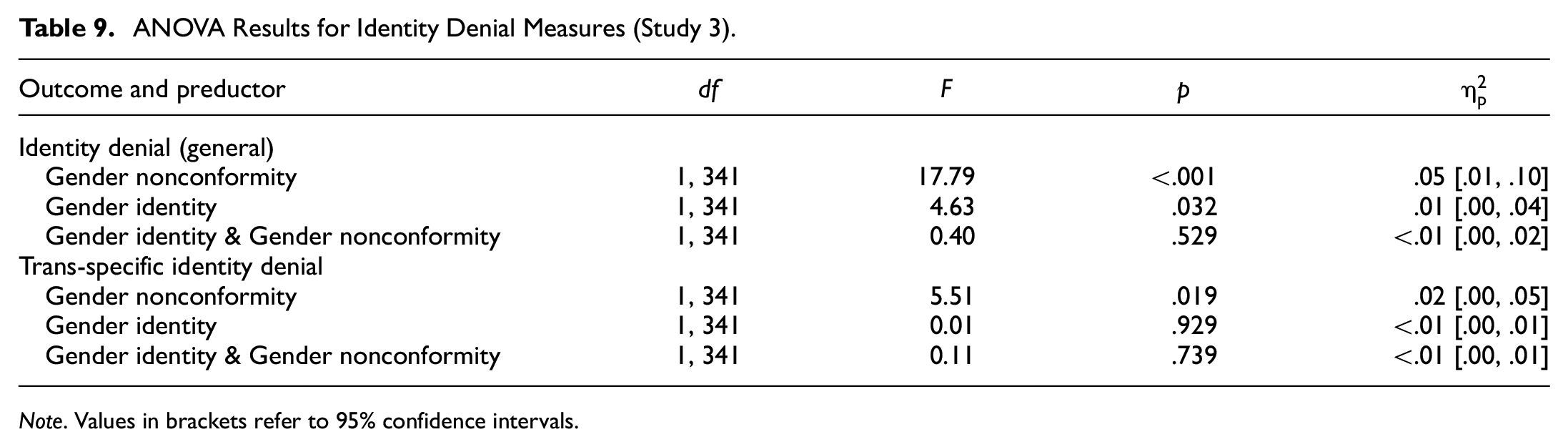
Note. Values in brackets refer to 95% confidence intervals.
For the general identity denial measure, we found the hypothesized main effect of gender nonconformity such that gender-nonconforming targets (M = 3.87, SD = 3.35) were assigned to the incorrect gender category more often than gender-conforming targets (M = 2.46, SD = 2.88). In addition, men (M = 3.49, SD = 3.17) were assigned to the incorrect category more often than women (M = 2.78, SD = 3.19). 1 For 88.99% of participants, at least one instance of identity denial was intentional.
For trans-specific identity denial, only the predicted main effect of gender nonconformity was significant. Nonconforming targets (M = 2.87, SD = 1.85) faced more acts of identity denial than conforming targets (M = 2.49, SD = 1.67). 2
Exploratory Analyses
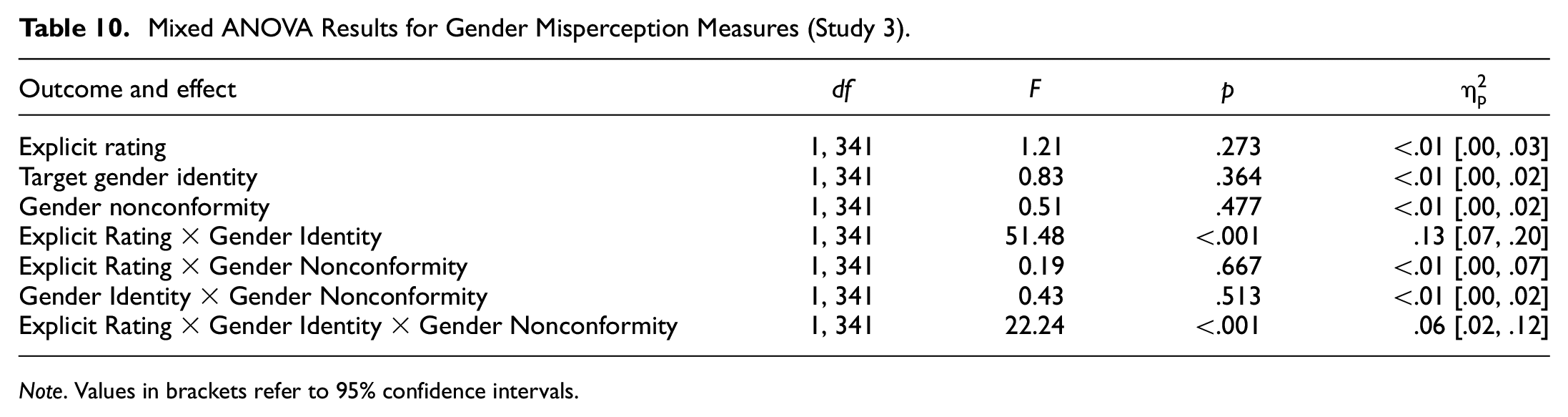
To better understand participants’ gender misperceptions, we ran a 2 (Gender nonconformity: Conform vs. Nonconform) × 2 (Gender identity: Woman vs. Man) × 2 (Explicit rating: Woman vs. Man) mixed ANOVA with explicit ratings as a repeated measure (see Table 10 and Figure 4 for results).
Mixed ANOVA Results for Gender Misperception Measures (Study 3).
Note. Values in brackets refer to 95% confidence intervals.
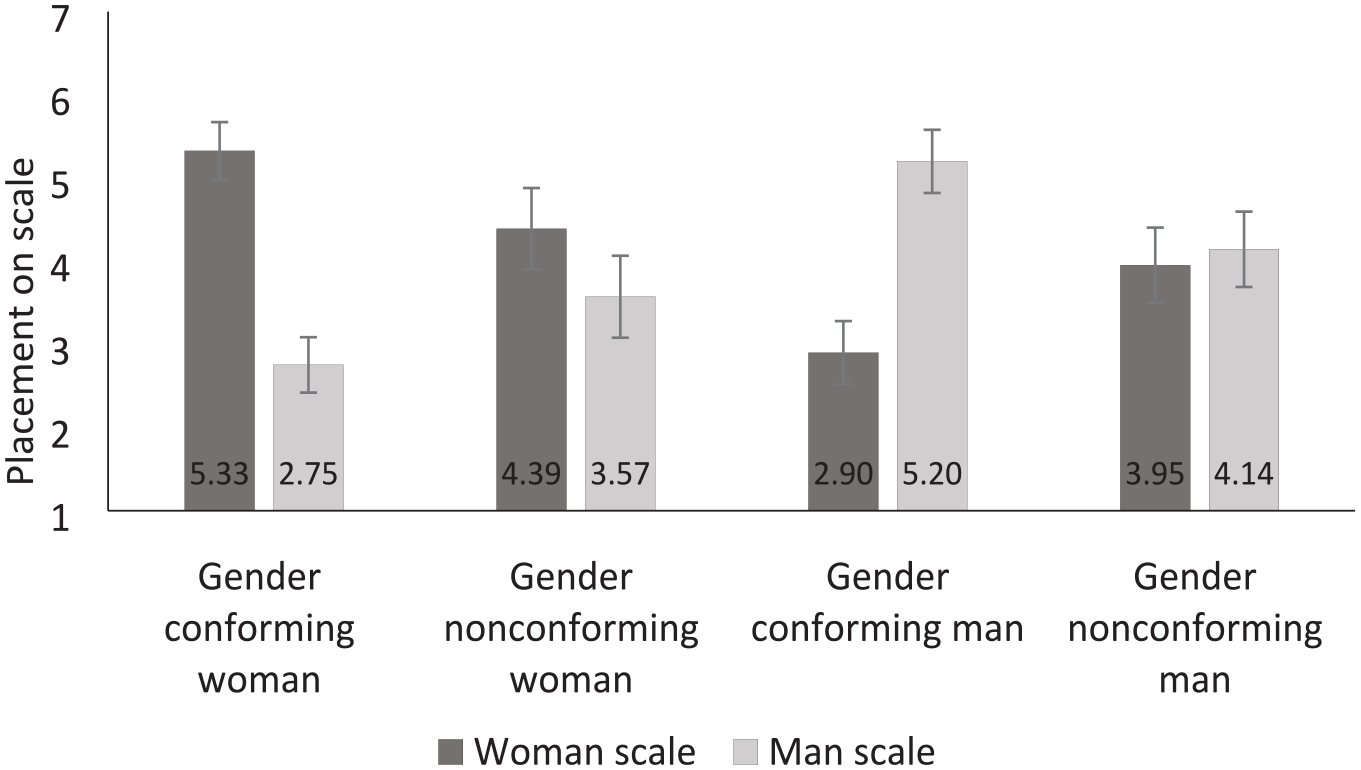
Placement of Targets on “Woman” and “Man” Scale Across Conditions (Study 3).
Unsurprisingly, gender identity and the explicit rating factors interacted, with simple effects analyses revealing that women targets were rated higher on the “woman” scale than men targets, p<.001, whereas women were rated lower than men on the “man” scale, p<.001. Similarly, women were rated higher on the “woman” scale than on the “man” scale, <.001, while the opposite was true for men, p<.001.
Importantly, this two-way interaction was qualified by a significant three-way interaction. Simple effects analyses revealed that these findings were driven by ratings of the gender-conforming targets. Gender-conforming women were rated higher on the “woman” than the “man” scale, p < .001, but gender-nonconforming women were not, p = .053. Similarly, gender-conforming men were rated higher on the “man” than the “woman” scale, p<.001, but gender-nonconforming men were not, p = .646. In other words, nonconforming targets were perceived as equally woman-like and man-like, regardless of their gender identity.
Similarly, gender-conforming men were rated higher on the “man” scale than gender-conforming women, p<.001 and gender-conforming women were rated higher on the “woman” scale than gender-conforming men, p<.001, but gender-nonconforming women were rated no different from gender-nonconforming men on the woman scale, p = .147, and the man scale, p = .060. The difference between gender-conforming and nonconforming targets of the same gender was significant for all comparisons (all ps<.007).
Finally, to test whether gender-perception differences mediated the effect of gender nonconformity on identity denial, we ran two moderated mediation models using PROCESS (v4.0, Model 59), one for each identity denial measure (general and trans-specific) as the outcome. The two gender scales served as parallel mediators and target gender as a moderator for all three pathways (see Tables 11 and 12 for results).
Moderated Parallel Mediation Results for General Identity Denial (Study 3).
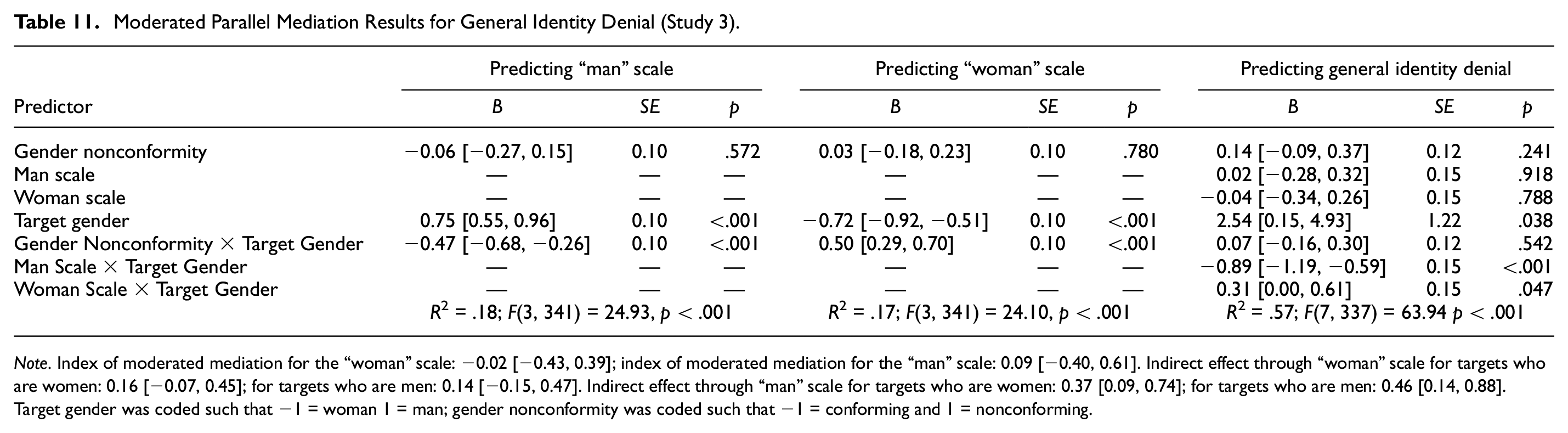
Note. Index of moderated mediation for the “woman” scale: −0.02 [−0.43, 0.39]; index of moderated mediation for the “man” scale: 0.09 [−0.40, 0.61]. Indirect effect through “woman” scale for targets who are women: 0.16 [−0.07, 0.45]; for targets who are men: 0.14 [−0.15, 0.47]. Indirect effect through “man” scale for targets who are women: 0.37 [0.09, 0.74]; for targets who are men: 0.46 [0.14, 0.88]. Target gender was coded such that −1 = woman 1 = man; gender nonconformity was coded such that −1 = conforming and 1 = nonconforming.
Moderated Parallel Mediation Results for Trans-Specific Identity Denial (Study 3).
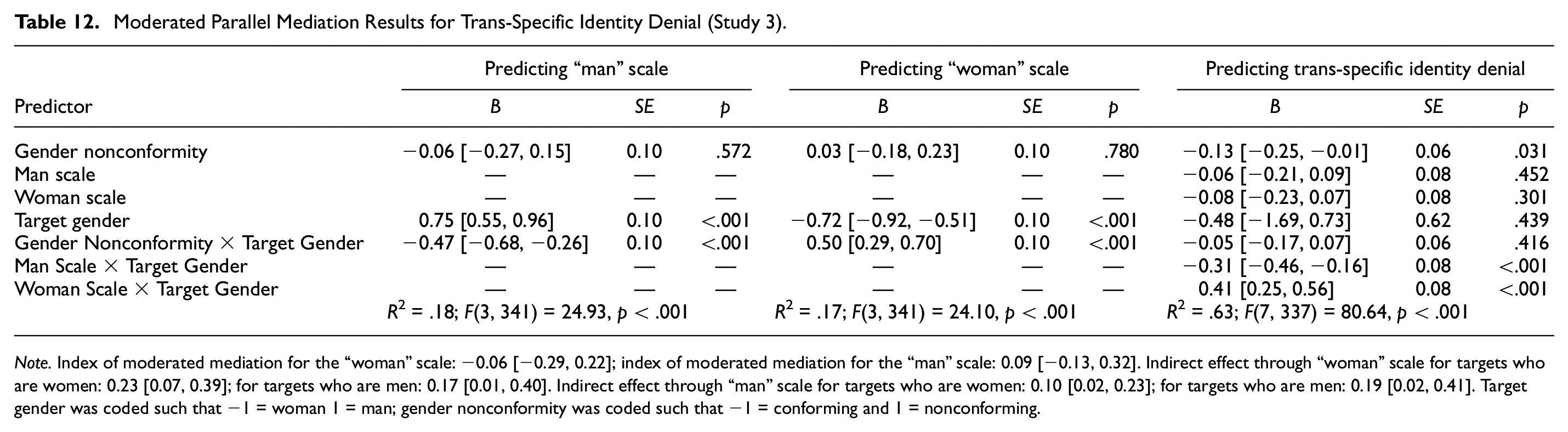
Note. Index of moderated mediation for the “woman” scale: −0.06 [−0.29, 0.22]; index of moderated mediation for the “man” scale: 0.09 [−0.13, 0.32]. Indirect effect through “woman” scale for targets who are women: 0.23 [0.07, 0.39]; for targets who are men: 0.17 [0.01, 0.40]. Indirect effect through “man” scale for targets who are women: 0.10 [0.02, 0.23]; for targets who are men: 0.19 [0.02, 0.41]. Target gender was coded such that −1 = woman 1 = man; gender nonconformity was coded such that −1 = conforming and 1 = nonconforming.
For general identity denial, the indirect effect of gender nonconformity through ratings on the “man” scale was significant for women and men targets. The indirect effects through the “woman” scale were not significant, not because gender nonconformity did not affect these ratings, but because these ratings were not associated with identity denial, neither for women nor for men. For trans-specific identity denial, both the “woman” and the “man” scale emerged as mediators.
Discussion
In this study, we replicated findings from Study 2 for transgender targets and found evidence that gender nonconformity also leads to trans-specific forms of identity denial (e.g., changing one’s names on official documents). We also found an unexpected effect of gender identity such that men were assigned to the incorrect category more often than women. On one hand, this could reflect participants’ feelings that transgender men should have access to female-only spaces and policies rather than excluding them from male-only spaces. On the other hand, this could also reflect the fact that manhood is harder to obtain and more easily lost than womanhood (see Vandello et al., 2008). As all of our targets were transgender, it may thus indicate that transgender men have not won their manhood and are in turn incorrectly categorized as women.
Study 3 yielded evidence for degendering, a type of misgendering where people avoid assigning transgender people to a gender category (Ansara & Hegarty, 2014). Nonconforming targets were not perceived in line with their gender identity, but instead equally as men and women. Indeed, gender-nonconforming men and gender-nonconforming women were not perceived as different from each other, suggesting that gender nonconformity wiped out any effect of gender identity in participants’ minds, in line with previous findings that transgender men and women are not strongly differentiated from one another (Gallagher & Bodenhausen, 2019, 2021).
Interestingly, for the general identity measure, only perceptions of targets as men mattered for identity denial. This was true for women and men targets, suggesting that even if a transgender woman’s womanhood is acknowledged, she will have issues gaining access to women-only spaces and policies as long as she is still also perceived as man. This has important implications for trans advocacy, as debates mostly focus on definitions of womanhood, largely ignoring manhood. On the flipside, this suggests that transgender men may be able to gain access to men-only spaces as long as they have their manhood acknowledged, regardless of perceptions of their womanhood. However, as manhood needs to be won and is easily lost (Vandello et al., 2008), this may also place them in a precarious situation.
General Discussion
Across three studies, we found evidence that (especially appearance-based) gender nonconformity leads to identity denial. Contrary to our predictions, trans identity did not qualify this, but identity denial was overall higher for transgender targets, in line with previous findings in the literature (Howansky et al., 2020, 2022);
Notably, acts of identity denial were fairly infrequent across our studies. Although this is in line with previous findings (e.g., Howansky et al., 2022) and may seem promising for transgender and gender-nonconforming people, we would caution against too much optimism. Clearly, anti-trans sentiments are abundant, as evidenced by the more than 250 anti-trans bills that have been proposed in the United States this year alone (American Civil Liberties Union [ACLU], 2022). Indeed, we find that among some people, for example, more conservative individuals and those who hold stronger heterosexist beliefs, identity denial was considerably higher (see Supplemental Tables S6, S8, S12 and S20 in the online supplement). In addition, even infrequent acts of identity denial can have important consequences for individuals’ mental health, including suicidality (e.g., McLemore, 2018; Parr & Howe, 2019). Thus, low numbers across these studies do not indicate the lack of a problem.
Our research has several limitations. First, participants were all from Western, educated, industrialized, rich, and democratic (WEIRD) cultures (Henrich et al., 2010). Given that gender and sex are culturally constructed, it is unlikely that these findings would generalize across all cultures, particularly given the fact that many cultures conceptualize gender as much less binary (Best & Puzio, 2019; Herdt, 1993). Future research should examine to what extent these findings can be observed across cultures, and in what way cultural differences affect their magnitude and nature.
Moreover, the very clean and controlled manipulations we employed give us confidence in our conclusions, but do not reflect real life, where people draw on a range of cues such as voice, gait, and body shape to determine others’ gender/sex (Johnson & Tassinary, 2005; Lagos, 2019). Future research should therefore replicate these findings using more naturalistic stimuli, allowing for a more comprehensive comparison of the impact various gender-related cues have on identity denial.
Finally, although our findings point to the role of gender misperception in identity denial, they cannot speak to what motivates these effects. Across studies, we included several moderators (i.e., gender essentialism, heterosexist beliefs, and categorization difficulty) to better understand whether identity denial is a motivated process aimed to reinforce gender/sex ideologies or the result of perceptual difficulty. However, although heterosexist beliefs and gender essentialism were associated with gender misperception and identity denial, there was no evidence of moderation (see, Supplemental Tables S6, S12, S16, S17 in the online supplement).
One reason we found no evidence of moderation may be that the acts of identity denial we examined were so heterogenous, including name changes, assignment to gender/sex-segregated spaces, and participation in gender/sex-based affirmative action. It’s possible that, for example, essentialism underlies some forms of identity denial, social identity threat other forms, and need for closure yet other forms (see Broussard & Warner, 2019; Morgenroth et al., 2021). Future research should investigate these questions further.
Despite these limitations, our research has important theoretical and practical implications. First, psychologists have thus far studied identity denial primarily in the context of race and ethnicity (e.g., Albuja et al., 2019; Cheryan & Monin, 2005; Wang et al., 2013) and sexual orientation (see Kirby et al., 2021; Maimon et al., 2021; Morgenroth et al., 2022), identifying a range of its negative consequences for individuals’ well-being. We have extended this work to gender, showing that even for cisgender individuals, not adhering to gender norms can lead to gender identity denial.
This finding also has important practical implications. In modern Western cultures, binary gender/sex affects not only individuals but also structures the physical and cultural context, including sex-segregated spaces (e.g., restrooms; changing rooms; see Morgenroth & Ryan, 2021). Access to these spaces is hotly debated, particularly in the context of transgender women’s access to women-only spaces (Morgenroth, Axt, & Westgate, 2022; Schilt & Westbrook, 2015). We show that the policing of sex-segregated spaces also affects cisgender individuals who do not conform to gender norms, emphasizing the deleterious effects the gender/sex binary has for a wide range of people. This challenges the usefulness of sex-based (or indeed gender-presentation-based) spaces, which may be well-intentioned, but can serve as a tool for the marginalization and discrimination of anyone who does not adhere to gender norms.
Footnotes
Handling Editor: Jennifer Bosson
Author’s Note
The first author of this paper uses they/them pronouns. The second, third, and fourth authors use she/her pronouns.
Declaration of Conflicting Interests
The author(s) declared no potential conflicts of interest with respect to the research, authorship, and/or publication of this article.
Funding
The author(s) disclosed receipt of the following financial support for the research, authorship, and/or publication of this article: This work was partially funded by a grant-in-aid from the Society of the Psychological Study of Social Issues (SPSSI).

Supplemental Material
Supplemental material for this article is available online.
Notes
Author Biographies
References
Supplementary Material
Please find the following supplemental material available below.
For Open Access articles published under a Creative Commons License, all supplemental material carries the same license as the article it is associated with.
For non-Open Access articles published, all supplemental material carries a non-exclusive license, and permission requests for re-use of supplemental material or any part of supplemental material shall be sent directly to the copyright owner as specified in the copyright notice associated with the article.
