




Abstract
Like face-to-face interactions, evidence shows that interacting on social media is rewarding. However, the rewards associated with social media are subject to unpredictable delays, which may shape how they are experienced. Specifically, these delays might enhance the subjective desirability of social rewards and subsequent reward-seeking behavior by sensitizing people to the presence of such rewards. Here, we ask whether thinking about a recent social media post or conversation influences the subjective value of monetary and social rewards. Across two studies, we find that individuals who are thinking about a recent social media post are more likely to sacrifice small financial gains for the chance to see a genuine smile (a social reward) compared with those who are thinking about a recent conversation. This suggests that rather than satisfying social needs, thinking about social media interactions enhances the subjective value of social rewards, potentially explaining the incentive value of social media.
Regardless of race, age, gender, or socioeconomic status, social media has become omnipresent in people’s lives with about 72% of North Americans reporting that they are social media users (Pew Research Centre, 2021; Statistics Canada, 2021). One reason for its popularity is that it targets people’s need for social connection and desire to build social relationships (Ahn & Shin, 2013; Sheldon et al., 2011). Indeed, social media has extended the capacity for human social connection by allowing people to establish, maintain, and promote social ties in situations where face-to-face interactions are not possible.
Despite its utility, there is ongoing debate regarding the consequences of social media use (e.g., Huang, 2022; D. Liu et al., 2019). On the one hand, social media enhances wellbeing by allowing people to focus on social connection and building and maintaining relationships (Burke & Kraut, 2016; Clark et al., 2018; Deters & Mehl, 2014; Lee et al., 2013; C. Y. Liu & Yu, 2013; Marzouki et al., 2021; Verduyn et al., 2017; Wenninger et al., 2019). This is especially true when people receive positive feedback that aligns with their expectations (Greitemeyer et al., 2014; Grinberg et al., 2017; Valkenburg et al., 2006). On the other hand, there is concern that frequent use may cause social withdrawal (Kraut et al., 1998), addictive behavior patterns (Hou et al., 2019), and decreased wellbeing (Kross et al., 2013). Specifically, a focus on the passive consumption of others’ content (D. Liu et al., 2019; Tosun & Kasdarma, 2020; Verduyn et al., 2015, 2017) and/or negative feedback that poorly aligns with expectations may lead to problematic outcomes (Greitemeyer et al., 2014; Grinberg et al., 2017; Valkenburg et al., 2006)
One reason for social media’s ubiquitous influence may be that it activates reward circuitry in the brain (Meshi et al., 2015) similarly to face-to-face interactions (Sherman et al., 2018). For example, in face-to-face interactions, people find social cues such as smiles and praise to be highly rewarding (Bhanji & Delgado, 2014; Furl et al., 2012; Hammerschmidt et al., 2018; Shore & Heerey, 2011; Zernig et al., 2013). Likewise, broadcasting and observing information, giving and receiving feedback, and comparing oneself to others also trigger reward networks (Fareri & Delgado, 2014; Meshi et al., 2015). Thus, interacting on social media may be intrinsically rewarding.
One difference between the rewards obtained on social media and those associated with face-to-face interactions is their timing. Specifically, rewards in real-time conversation occur immediately and predictably (Heerey & Crossley, 2013), whereas rewards on social media are delayed by pseudorandom time increments. Specifically, people must revisit a social media post for anticipated likes, shares, and comments, which are variably delayed depending on when followers respond. This delay might affect reward responsiveness. For example, dopamine neurons in many brain regions are sensitive to reward timing and predictability (e.g., Ballard & Knutson, 2009; Bermudez & Schultz, 2014; Estle et al., 2007; Kable & Glimcher, 2007; Roesch et al., 2007; Wanat et al., 2010). Dopaminergic responses to unpredictable and delayed rewards subsequently shape how those rewards are experienced (Berns et al., 2001; de Lafuente & Romo, 2011), potentially leading to reward sensitization (Berridge & Robinson, 2016; Hellberg et al., 2019; Konova et al., 2018). Thus, social media use may sensitize the reward system to the presence of social rewards, thereby enhancing their value. Accordingly, for some people, social media use is associated with heightened sensitivity to reward magnitude and reduced sensitivity to risk (Meshi et al., 2019, 2020).
If social media use does indeed affect people’s sensitivity to social rewards, at least temporarily, we would expect people actively considering a recent social media post and the social feedback they have received to show heightened incentive salience (i.e., wanting; Berridge, 2007) and sensitivity to social rewards, relative to those considering a recent face-to-face conversation. Indeed, the “social snacking” hypothesis (Gardner et al., 2005) is well aligned with this idea. Specifically, people seek out makeshift ways to satisfy their need for social connection when they cannot engage in meaningful interactions. Because these proxy interactions are less adept at satisfying social connection needs (Gardner et al., 2005), they may enhance social reward seeking (Baumeister & Leary, 1995; Krämer et al., 2018). Thus, while social media is momentarily rewarding, it may fail to fulfill social connection needs.
Current Research
The current research addresses this possibility by investigating whether the salience of social media use influences the subjective value of social rewards. We operationalize social rewards with images of genuine smiles, which differ in form and function from polite smiles. Genuine smiles activate the orbicularis oculi and zygomaticus major muscles, whereas polite smiles only activate the latter (Ekman et al., 1990, 2002; Frank et al., 1993). Genuine smiles convey the presence of positive emotion in senders and elicit the same in receivers (Ekman, 1992; Ekman et al., 1990; Ekman & Friesen, 1982; Geday et al., 2003; Gunnery & Hall, 2015; Surakka & Hietanen, 1998). In addition, genuine smiles are perceived more positively than polite smiles in both real conversations and laboratory tasks (Averbeck & Duchaine, 2009; Gunnery & Ruben, 2015; Heerey & Crossley, 2013; Scharlemann et al., 2001; Shore & Heerey, 2011). Polite smiles, in contrast, are important social tokens, but do not tend to be associated with positive affect or social reward (Ambadar et al., 2009; Bogodistov & Dost, 2017; Martin et al., 2017).
Here, we ask whether thinking about a recent social media post impacts the subjective utility of social rewards by examining the degree to which participants are willing to give up monetary for social rewards and how these findings compare with thinking about a recent synchronous conversation. Importantly, we only ask about the incentive salience (i.e., wanting) of social rewards and not their hedonic value (i.e., liking), which is thought to be independent (Berridge, 2007; Tindell et al., 2009). In two studies, we expect that individuals who are currently thinking about a recent social media post will demonstrate greater subjective utility for genuine smiles, compared with those who have posted recently but are not specifically thinking about their post and to those who held a real-time conversation. Exploratory analyses examine the impact of overall social media use on the utility of social rewards, and whether results are moderated by need to belong (Knowles et al., 2015).
Study 1
Methods
Participants
Participants were recruited for the study on Prolific Academic in exchange for £2.50 GBP, as well as a small performance-based monetary bonus. We estimated a required sample size of 412 participants using a G*Power analysis for a MANOVA (global effects model) with 4 groups and 3 response variables (Faul et al., 2007). Estimate parameters included α = .05, 1 − β = .90, and estimated effect size f2(V) = .01626 (based on Pillai V = .048), based on pilot study data (see Supplementary Materials). Knowing that we would need to delete cases due to data quality issues, we recruited a sample of 441 participants, for this online study. We subsequently excluded 21 participants for inattentive and/or invariant responding. Inattention was classified as responding faster than 225 ms on at least 40% of trials and invariant responding was classified as responding with the same response option on 90% or more of trials. We also removed one statistical outlier (+4.5 SDs from the mean of genuine smile utility). 1 Our final sample included 420 participants (235 male, 6 nonbinary; Mage = 32.94, SD = 11.26). All participants gave informed consent and the University’s Ethics Committee approved all study procedure (likewise for Study 2).
Procedures
After participants consented, they received a message asking them to either make a post on their preferred social media platform or have a “face-to-face conversation with a friend.” Participants in the conversation condition were told that due to pandemic restrictions, they could have their conversation over a video-chat application (e.g., Zoom, FaceTime) if necessary. Approximately 24 h later, they received a reminder to complete the post or conversation and a link to the study. The link opened a Qualtrics survey (https://qualtrics.com) that randomly assigned them to either answer questions about their post/conversation before the smile valuation task (https://pavlovia.org) or immediately afterward.
Smile Valuation Task
This task has two phases, an exposure phase, in which participants learned to associate both a monetary and a social value with each of six computerized players, and a test phase, in which they used this information in the context of a choice task. On each exposure trial, participants viewed one player, depicted by a photograph of an actor in a neutral pose, in the center of the screen. Flanking the actor on either side, participants saw images of the heads and tails side of a coin (Figure 1A). Participants attempted to guess the side of the coin the player had chosen on that trial. Participants received immediate feedback from the player about whether their choices were correct. Specifically, they were told that some of the players would smile to show a correct response, and some would give text feedback. They also knew that each time they received “correct” feedback they earned a small financial bonus ($0.02GBP), which they would receive at the end of the study.
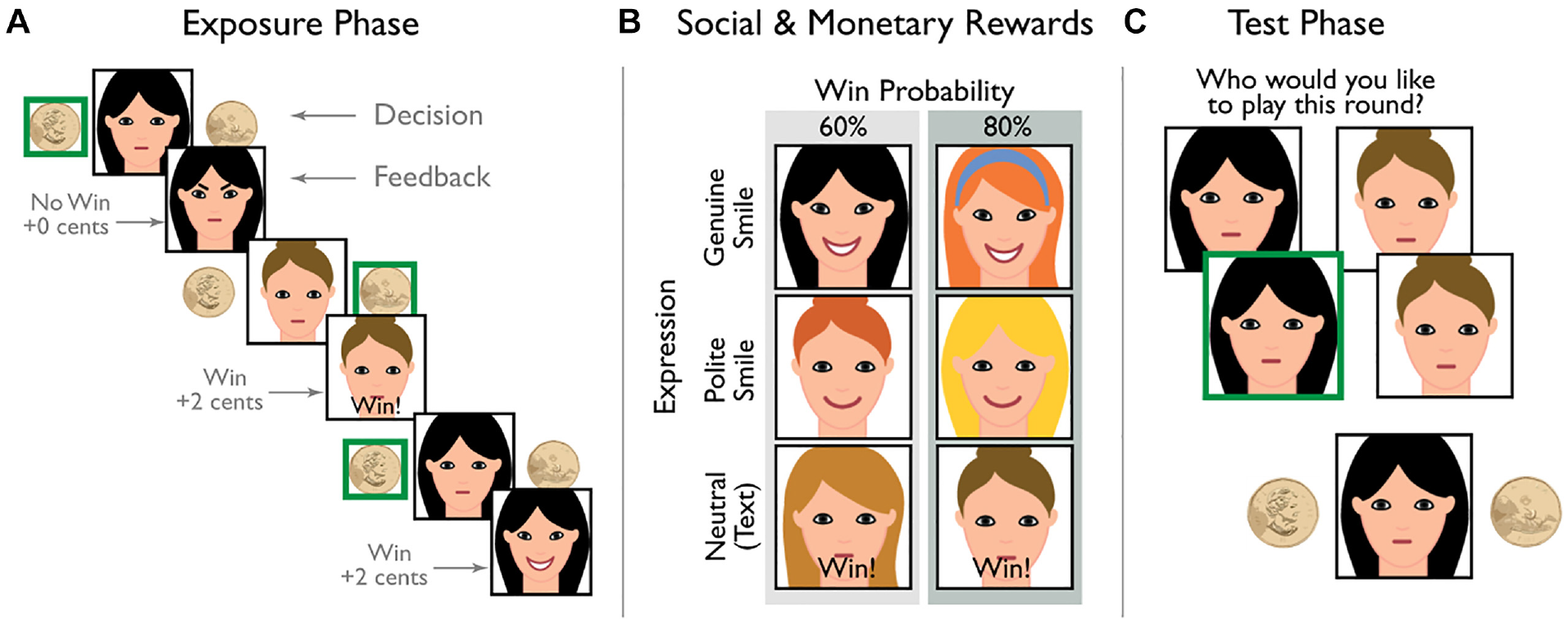
Smile Valuation Task. (A) Exposure Phase in Which Participants Learned to Associate Players With Social and Monetary Outcomes. (B) Social and Monetary Reinforcements Across the Face Set (the Dark-Gray Background Tile Indicates High Monetary Value, and the Light Gray Tile Indicates Low Monetary Value). (C) Test Phase in Which Participants Selected a Player Before Playing Each Round. In the Game Participants Played, They Viewed Real Photographs of Faces Rather Than Cartoons.
In reality, feedback was not associated with participants’ choices in the exposure phase. Instead, three players provided rewards on 80% of trials and the remaining players provided rewards on 60% of trials, regardless of participant’s choices (see Figure 1B). In addition, two players (one 80% player and one 60% player) provided reward feedback by smiling genuinely at participants, two players smiled politely at participants (one 80% and one 60% player), and the remaining players’ feedback was presented with a text overlay that displayed the trial outcome value (“Win!”; “Non-win.”). The four players who had smiled to indicate reward feedback indicated nonreward feedback with lowered eyebrows, whereas those that had provided text feedback remained in the neutral pose throughout the trial. There was no response time limit on the trials and feedback lasted 1.5 s. To ensure that specific player-value pairings did not systematically affect the outcome, the computer randomly assigned players to both monetary and social feedback conditions at the start of the task. Half the participants, randomly assigned, viewed female faces and half viewed male faces. Participants completed 120 exposure trials, 20 trials per player, in a fully randomized order. Participants had a rest break after each block of 40 trials.
Once participants had completed the exposure phase of the task, they began the test phase. Test trials began with a choice (Figure 1C). Participants viewed a pair of neutrally posed players and selected the one they wanted to play on that trial. Thereafter, trials continued as in the exposure phase. Participants chose between all possible player pairs (15 possible pairings) in random order. Each possible pairing appeared eight times (120 test-trials). Within pairings, each face appeared on the left and the right sides of the screen with equal frequency.
Participants’ decisions in the test phase (which player they selected, given the monetary and social values of the players within a pairing) served as the dependent variable in the task. These choices allowed us to estimate how much genuine and polite smiles and monetary feedback shaped choice behavior. For example, participants with a strong affinity for genuine smiles might prefer a genuinely smiling player with a lower monetary value over a higher monetary value neutral player. In other words, a participant’s choice behavior allowed us to quantify the extent to which that participant was willing to sacrifice the chance to earn money for the chance to see a genuine smile. This value indicates the subjective utility of genuine smiles in monetary terms for that participant (see Heerey & Gilder, 2019; Shore & Heerey, 2011). Here, we are interested in the utility of genuine smile, polite smile, and monetary feedback, and how these change as a function of social media salience.
Smile Stimuli
Smile stimuli in the task were obtained from 20 male and 20 female, 18- to 24-year-old actors. To elicit polite smiles in a video-recorded procedure, actors watched an experimenter pose the smile and imitated the action. Genuine smiles were elicited using an emotion induction paradigm. All actors reported experiencing positive emotion during the selected genuine smiles. Still photos were clipped from the peak of each expression. We recorded a minimum of five polite and five genuine smiles per actor. These were validated in a subsequent pilot study in which 88 participants discriminated genuine from polite smiles across the set of 400 photographs. Actors and images were selected such that the smiles were discriminable by at least 70% of the sample.
Salience Manipulation
Either immediately before, or immediately after completing the smile-valuation task, participants answered a set of questions regarding their social media post or conversation. For example, those who posted on social media were asked to reflect on the type of post they had made and how it had been received (e.g., “how many likes/comments did you receive?” and “to what extent was the feedback that you received positive?”), whereas those who had a conversation were asked to reflect on their experience talking to a friend (e.g., “the conversation made me feel positive” and “the quality of the conversation met my expectations”). These questionnaires (along with the rest of the study materials, data, and analysis code) are available on the Open Science Framework (https://osf.io/db2j9/?view_only=73a30f781b2440e1823b432494ee5d86). The primary purpose of these questionnaires was to manipulate post/conversation salience by calling the relevant interaction to mind. Participants in the post-task salience conditions answered the questions for completeness after the smile valuation task.
Questionnaires
After completing the smile valuation task and answering questions specific to their post/conversation, participants completed a modified version of the Social Networking Time Use Scale (SONTUS; Olufadi, 2016), which measures social media use in different contexts to generate an estimate for how much time an individual spends on social media. For our purposes, we used a shortened version of the original questionnaire that consisted of 19 items (e.g., “when watching TV,”“when you are shopping,”“when you are at work”) measured on a 5-point scale ranging from 1 (“Never in the past week in this situation/place”) to 5 (“I used it every time I was in this situation/place during the past week”).
Participants also answered questions about their general social media use. For instance, we asked how frequently participants logged onto social media platforms and how frequently they posted. These items served to gauge participants’ typical social media usage. Finally, they responded to the Big Five Inventory (John & Srivastava, 1999) and the Need to Belong Scale (Leary et al., 2013) to explore relationships between task variables and extraversion and need for social belonging.
Data Analysis
To examine the degree to which social and monetary rewards shape choice behavior within the smile valuation task, we individually modeled each participant’s choices using a logistic model. The model estimated the probability that a participant would select the face on the left (PLeft Face), given relative differences in the type and frequency of social and monetary rewards within the face pairing. We used a standard logistic model to fit the choice data:
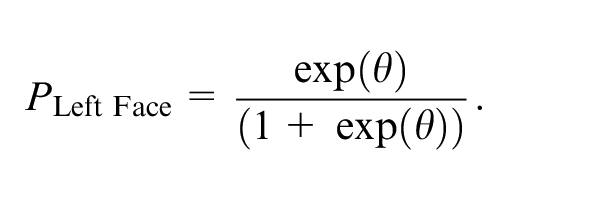
The parameter θ in the logistic regression was estimated as
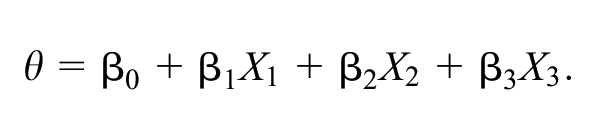
In this equation the βs are the estimated regression weights for each term in the model. β0 refers to the intercept; β1 is the degree to which monetary rewards influenced choice behavior; β2 is the degree to which genuine smiles influenced choice behavior; and β3 estimates the influence of polite smiles on choice behavior. The Xs in the equation represent the difference between the player on the left and the player on the right. X1 codes the difference in the expected monetary value (the probability of winning money multiplied by the amount of a win; that is, 1.6 cents for the 80% faces vs. 1.2 cents for the 60% faces) between the players within a pair. For example, X1 received a score of .40 if the player on the left rewarded more frequently. X1 received a score of -.40 if the player on the right had higher monetary value. If both players had the same monetary value (e.g., a pair of 80% players), X1 was equal to 0. X2 coded for genuine smiles such that if the face on the left smiled genuinely and the face on the right did not, X2 received a score of 1. If the smiles were reversed, X2 was coded as −1. If both or neither face smiled genuinely, X2 was coded as 0. X3 coded for the presence of polite smiles in similar fashion.
The model used an iteratively re-weighted, least squares algorithm to obtain the maximum likelihood estimate for each of the terms (O’Leary, 1990). Importantly, we determined the model coefficients on a participant-by-participant basis because that allowed us to ask whether participants for whom the social media post was salient showed enhanced sensitivity to social rewards, in the context of general individual variability in social reward utility. The model coefficients for each participant became the dependent variables in the hypothesis tests below. Insofar as a model coefficient differs from 0, that model term influences choice behavior.
Results and Discussion
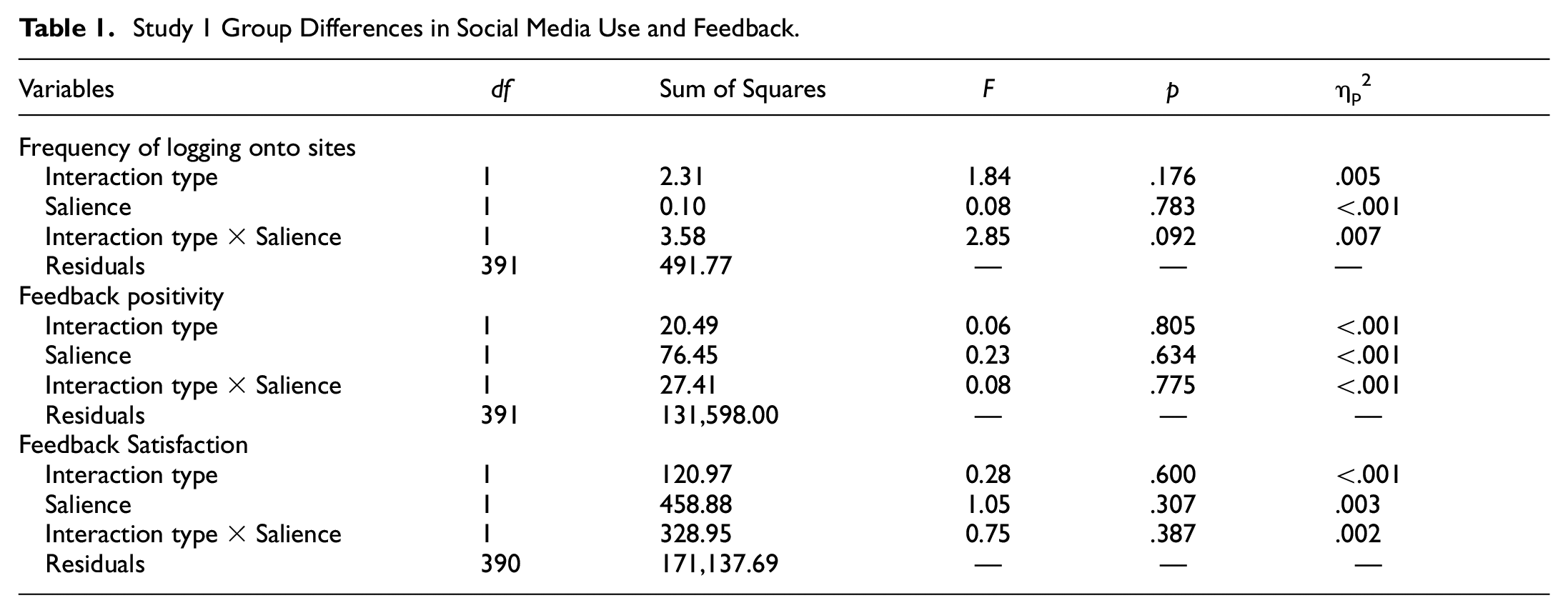
Before testing our hypotheses, we conducted a 2 × 2 ANOVA to test for group differences in social media use. There were no significant effects of interaction type, social media versus conversation; F(1, 416) = 3.30, p = .070, ηp2 = .008; salience, pre- versus post-task, F(1, 416) = 0.58, p = .447, ηp2=.001; or their interaction, F(1, 416) = 3.48, p = .063, ηp2 = .008. Likewise, there were no group differences in terms of how frequently participants logged on to social media sites, the positivity of feedback they receive, or how satisfied they are with the feedback they receive (Table 1).
Study 1 Group Differences in Social Media Use and Feedback.
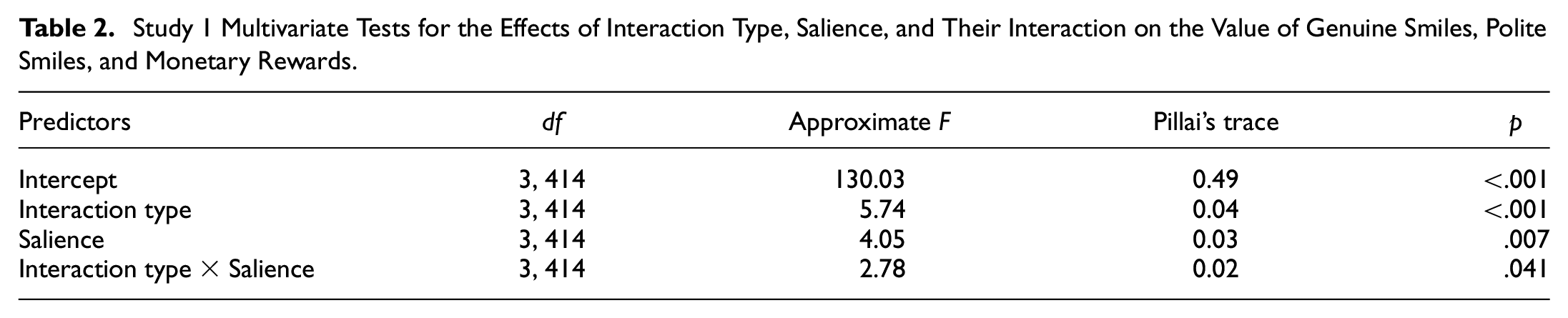
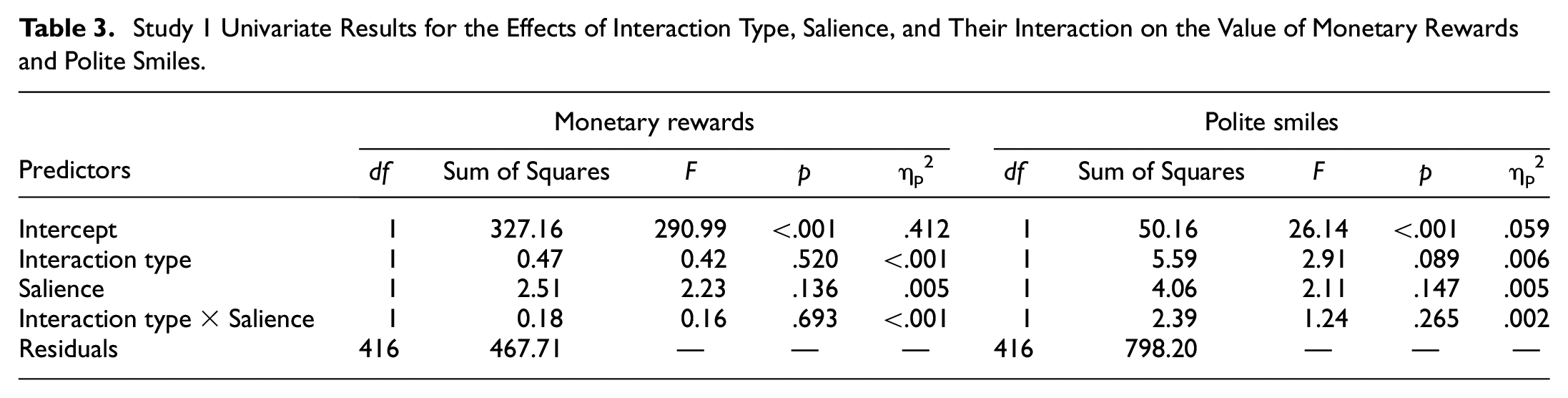
To test whether social media and conversation salience influenced the subjective value of social and monetary rewards, we conducted a 2x2 MANOVA with salience (pre-task, post-task) and interaction type (social media, conversation) as fixed factors and the individually estimated regression weights for monetary rewards, polite smiles, and genuine smiles as the dependent variables. The multivariate tests for the interaction condition (social media vs. conversation) and salience (pre- vs. post-task) and their interaction were all significant (Table 2). There were no significant main effects or interactions for monetary rewards or polite smiles (Table 3). However, there were significant main effect of interaction type, F(1, 416) = 12.78, p < .001, ηp2 = .03, and salience, F(1, 416) = 7.07, p = .008, ηp2 = .02, and a significant interaction, F(1, 416) = 6.09, p = .014, ηp2 = .02, for the value of genuine smiles (Figure 2).
Study 1 Multivariate Tests for the Effects of Interaction Type, Salience, and Their Interaction on the Value of Genuine Smiles, Polite Smiles, and Monetary Rewards.
Study 1 Univariate Results for the Effects of Interaction Type, Salience, and Their Interaction on the Value of Monetary Rewards and Polite Smiles.
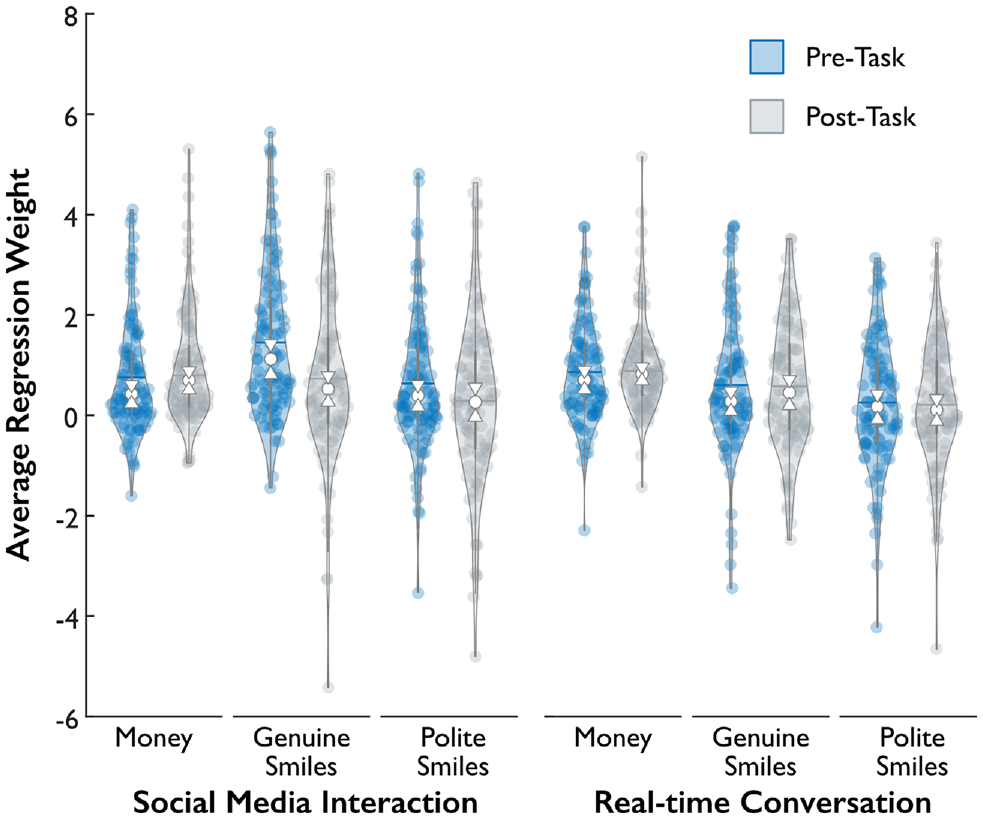
Study 1 Results.
Consistent with expectations, a post hoc Tukey test revealed that those in the pre-task social media condition valued genuine smiles more highly than did individuals in any other condition (post-task social media: MDifference = 0.72, 95% CI = [0.208, 1.23], t = 3.63, pTukey = .002; pre-task conversation: MDifference = 0.85, 95% CI = [0.334, 1.362], t = 4.25, pTukey < .001; post-task conversation: MDifference = 0.87, 95% CI = [0.363, 1.384], t = 4.41, pTukey < .001).
Figure 3, included for descriptive purposes, shows how participants in each condition made decisions, given the relative differences in reward type and frequency within a given pair. For example, across conditions participants preferred high- to low-value faces; and participants in the social media salient (pre-task) condition preferred the genuinely smiling player, even when that choice was associated with financial loss.
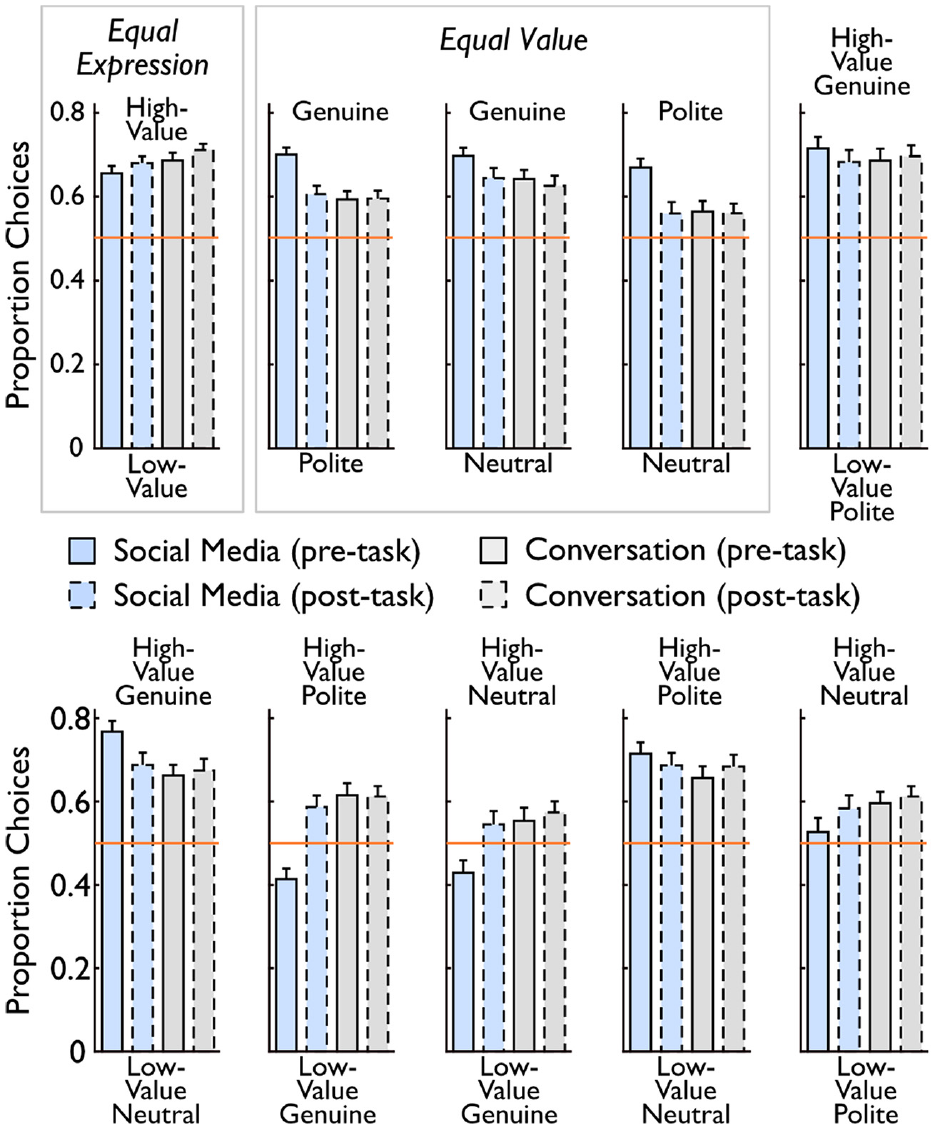
The Proportion of Choices Participants Allocated to a Particular Face, Given Relative Differences in Reward Type and Frequency Within a Given Pair in Study 1.
We also conducted exploratory tests to investigate possible moderators of the relationship between social media salience and genuine smile value. Previous research has shown that need to belong is predictive of social media use (Knowles et al., 2015) and although we found evidence of this association, it did not affect the relationship between the genuine smile utility and social media salience (see Supplementary Materials). Together, these results suggest that social media salience is the important factor in these results and that the mere salience of social interaction, as measured in the conversation condition does not appear to promote this effect. To corroborate our findings, Study 2 is a pre-registered replication and extension of Study 1 that allowed us to rule out several alternate explanations for these results (https://osf.io/7d6hx?view_only=3670331dfe2b480d8c2488eac4371155).
Study 2
Methods
Participants
Participants were recruited for the study on Prolific Academic in exchange for £3.00 GBP and a small performance-based monetary bonus (£1.00–£2.00 GBP). We used G*Power to conduct an ANOVA fixed effects, special, main effects, and interactions power analysis, with an estimated effect size f = 0.196, α = .05, 1 − β = 0.95, numerator df = 1, and groups = 4 (Faul et al., 2007). According to this analysis we would need 341 participants to achieve 95% power. However, because this is a replication of Study 1, in which we collected 440 participants before exclusions, we aimed to collect 440 participants (actual N = 442) for Study 2 rather than the 341 suggested by the power analysis. We excluded 20 participants for inattentive and/or invariant responding and one participant who was a statistical outlier (+4.5 SDs from the mean of monetary reward utility) 2 . Our final sample included 421 participants (187 males, 7 nonbinary; Mage = 38.26, SD = 12.64).
Procedures
Participants completed the same procedure as above with several additions. We included the Revised UCLA Loneliness Scale (Russell et al., 1980), post-game ratings of each player examining how “good” they were to play (1 = worst to play; 6 = best to play), and a smile discrimination task in which participants viewed photos of smiling faces (including the faces they viewed in the task) and identified whether each smile was genuine or polite. Finally, we included a short manipulation check at the end of the study in which participants estimated the frequency of their conversations and social media posts in the past 48 h, rated these for positivity and satisfaction. They also rated the degree to which they had had a conversation and social media post on their mind when they began the main task.
Results and Discussion
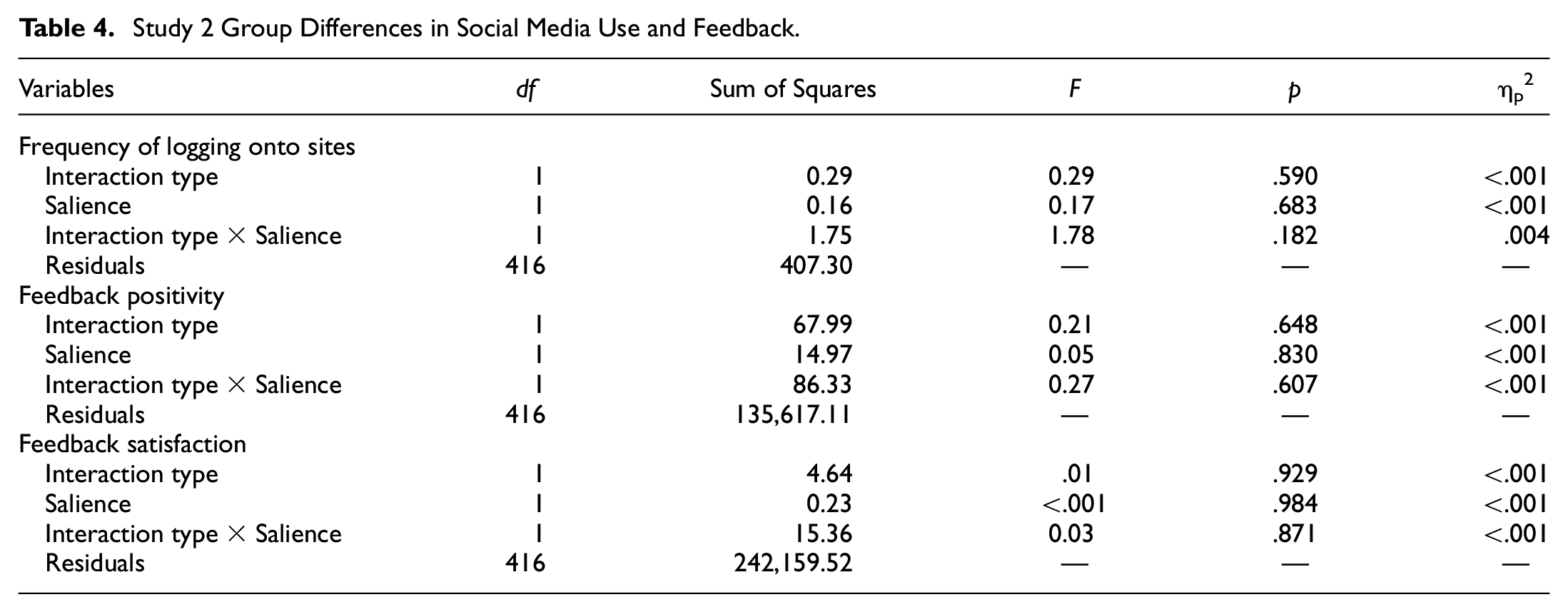
As in Study 1, we conducted a 2x2 ANOVA to test for group differences in social media use prior to testing our hypotheses. There were no significant effects of interaction type, F(1, 416) = .99, p = .321, ηp2 = .002; salience, F(1, 416) = 0.14, p = .707, ηp2 < .001; or their interaction, F(1, 416) = 2.73, p = .099, ηp2 = .007, on overall social media use. There were also no significant group differences in terms of how frequently participants logged on to social media sites, feedback positivity, or satisfaction with feedback (Table 4). Manipulation check data showed that participants who answered questions pre-task reported thinking a lot about their post or conversation (depending on the condition) and less about the other condition, whereas those in the post-task conditions were less occupied with the post or conversation (Table 5). These results suggest that our manipulation had its intended effect.
Study 2 Group Differences in Social Media Use and Feedback.
Manipulation Check for Social Media Versus Conversation Salience.
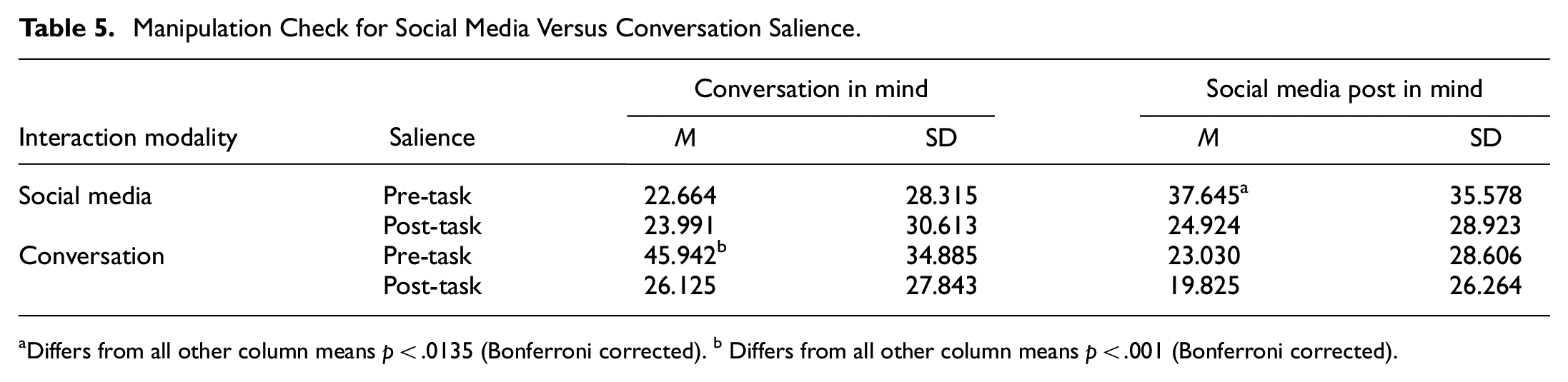
aDiffers from all other column means p < .0135 (Bonferroni corrected). b Differs from all other column means p < .001 (Bonferroni corrected).
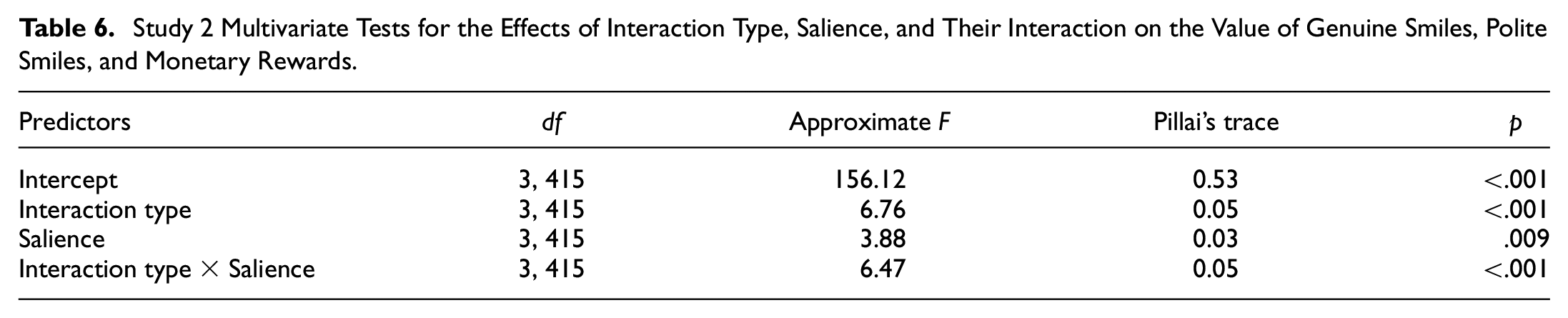
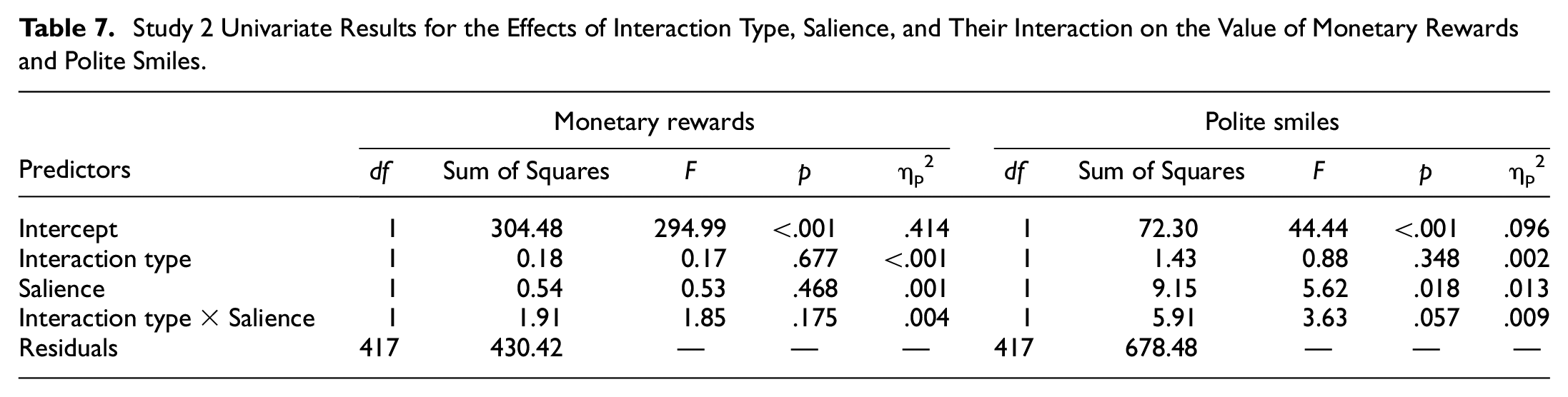
We then tested our hypothesis using a 2 × 2 MANOVA with the individualized regression weights for monetary rewards, polite smiles, and genuine smiles as the dependent variables and interaction type (conversations, social media) and salience (pre, post) as the independent variables. The multivariate tests for the interaction condition and salience and their interaction were all significant (Table 6). Follow-up investigations of the univariate tests revealed that there were no significant main effects or interactions for monetary rewards, whereas the value of polite smiles was only influenced by salience, such that those in the pre-task conditions valued polite smiles more than those in the post-task conditions (MDifference = 0.29, 95% CI = [0.049, 0.538], t = 2.36, pTukey = .019, ηp2 = .013) (Table 7). Because polite smiles are important social cues, this finding is consistent with the notion of increased desire for social rewards, however, because it was not statistically significant in Study 1, we do not discuss it further.
Study 2 Multivariate Tests for the Effects of Interaction Type, Salience, and Their Interaction on the Value of Genuine Smiles, Polite Smiles, and Monetary Rewards.
Study 2 Univariate Results for the Effects of Interaction Type, Salience, and Their Interaction on the Value of Monetary Rewards and Polite Smiles.
Genuine smile utility, was significantly influenced by interaction type, F(1, 417) = 15.37, p < .001, ηp2 = .035; salience, F(1, 417) = 10.48, p = .001, η2 = .024; and their interaction, F(1, 417) = 15.62, p < .001, ηp2 = .036, (Figure 4). Consistent with expectations, a post hoc Tukey test revealed that those in the pre-task social media condition valued genuine smiles more than those in any other condition (post-task social media: MDifference = 0.96, 95% CI = [0.473, 1.448], t = 5.08, pTukey < .001; pre-task conversation: MDifference = 1.05, 95% CI = [0.564, 1.539], t = 5.56, pTukey < .001; post-task conversation: MDifference = 0.95, 95% CI = [0.463, 1.440], t = 5.02, pTukey < .001).
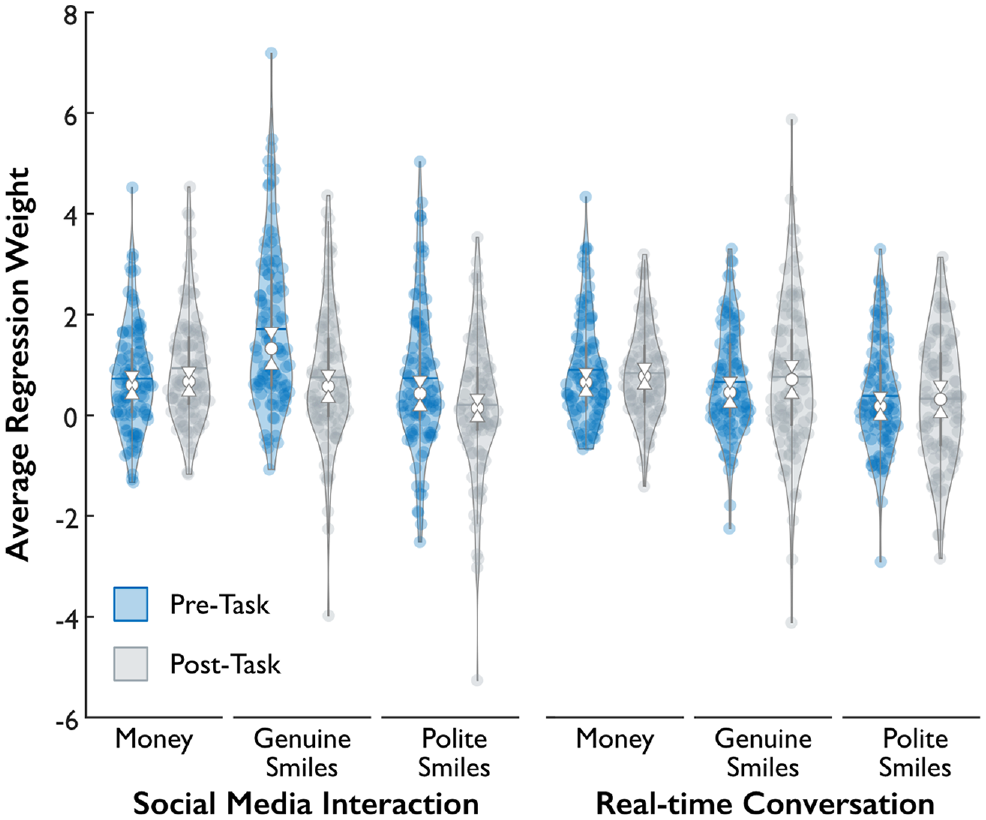
Study 2 Results.
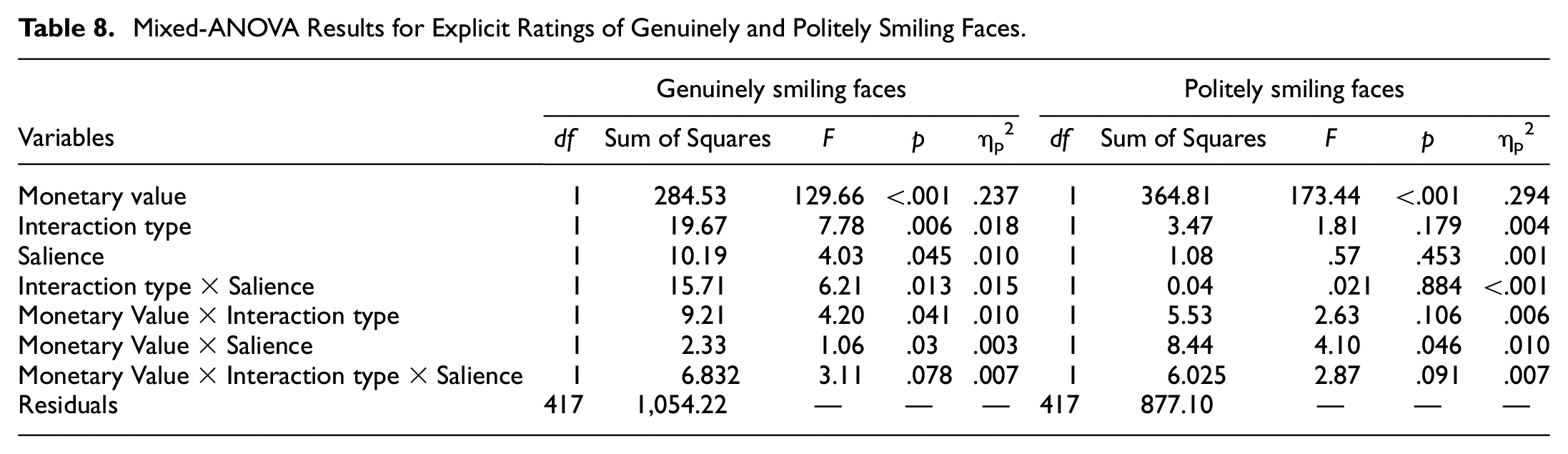
Figure 5 describes participants’ decisions strategies across the player pairs for visualization. Figure 6 shows participants’ explicit ratings of the faces across conditions. We expected that participants in the high social media salience condition would rate genuinely smiling faces as “better” compared with other participants. To examine this, we conducted a salience (high/low) × interaction-type (social media/conversation) × monetary value (high/low) mixed ANOVA, with ratings of the high- and low-value faces as the dependent variables (Table 8). Importantly, the interaction-type × salience interaction was significant, showing that participants in the high social media salience condition rated genuinely smiling faces more highly than any other group (post-task social media: MDifference = 0.49, 95% CI = [0.084, 0.903], t = 3.19, pTukey = .008; pre-task conversation: MDifference = 0.57, 95% CI = [0.169, 0.988], t = 3.75, pTukey = .001; post-task conversation: MDifference = 0.52, 95% CI = [0.115, 0.936], t = 3.40, pTukey = .004). A similar analysis involving politely smiling faces showed no significant interaction (Table 8).
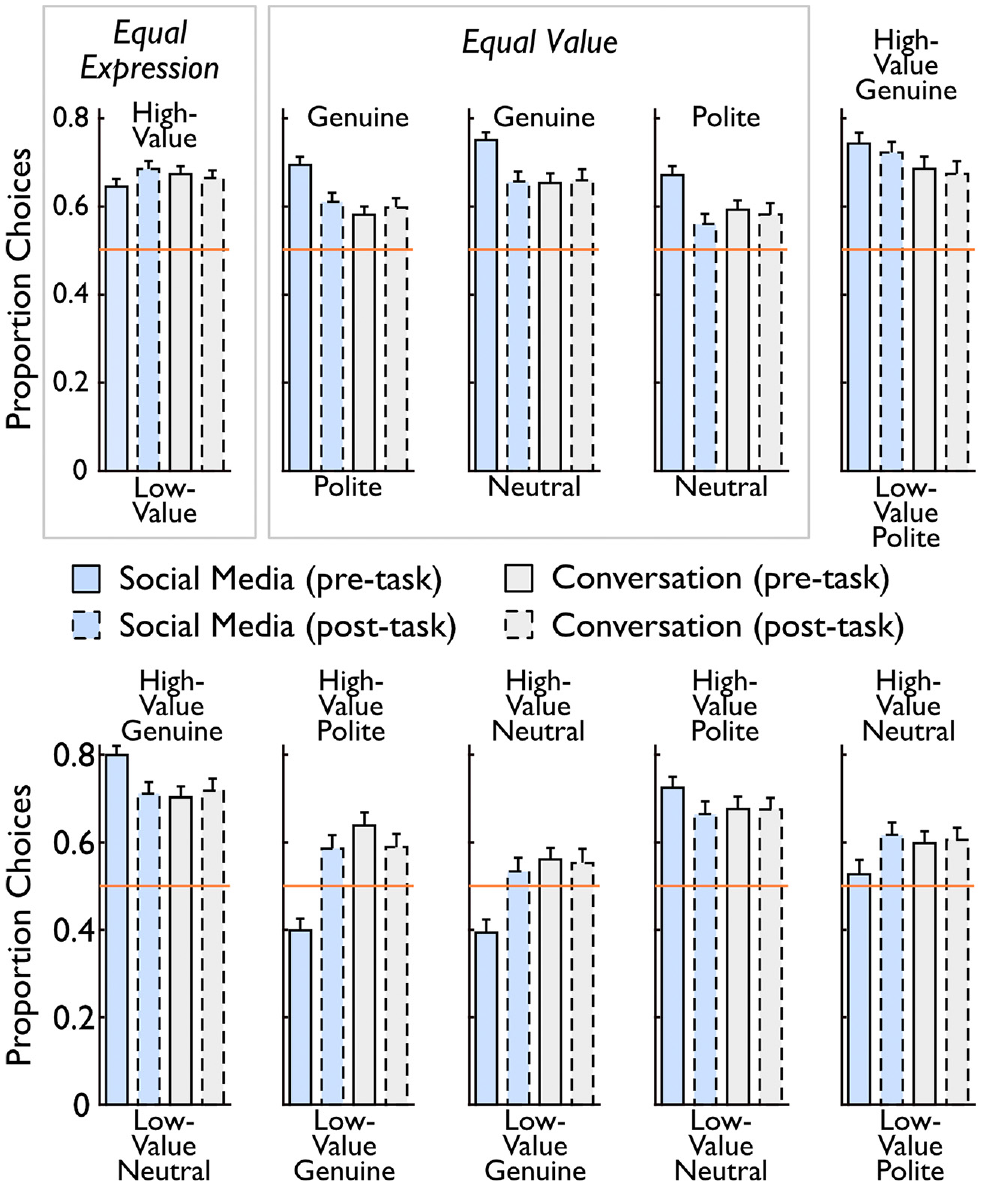
Study 2 Choice Behavior.
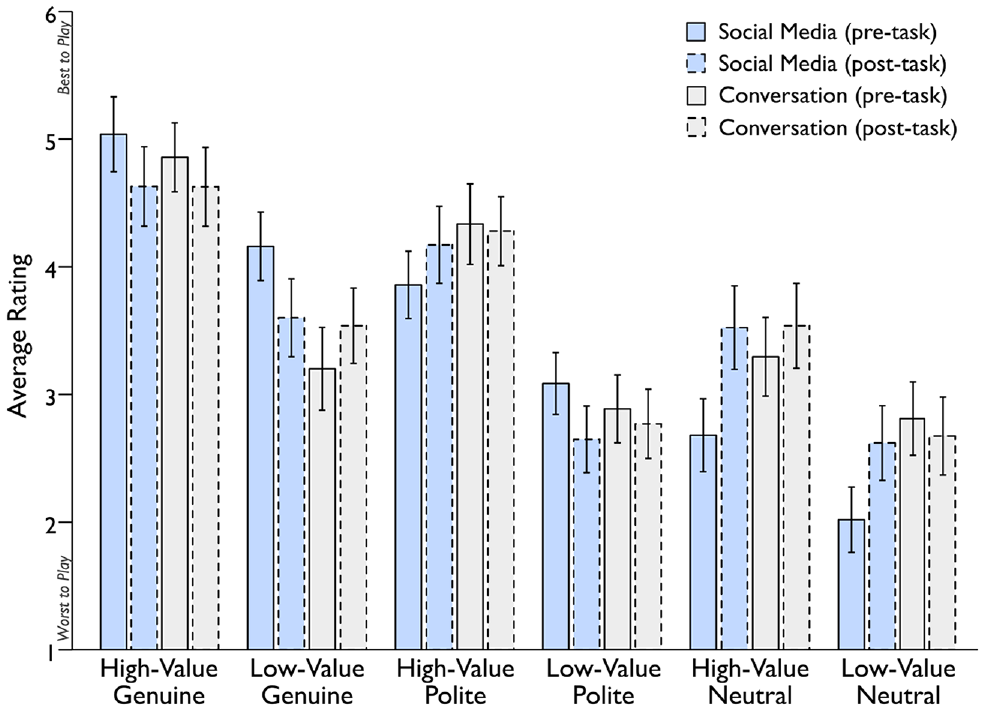
Player Ratings Across Groups
Mixed-ANOVA Results for Explicit Ratings of Genuinely and Politely Smiling Faces.
We conducted exploratory analyses to investigate possible moderators of this effect. We found no significant moderators of this relationship. However, we did find that need to belong correlated significantly with social media use and that active forms of social media use were associated with decreased loneliness. None of these findings were related to genuine smile utility (see Supplementary Materials).
General Discussion
Results from these studies suggest that individuals for whom social media use is salient demonstrated greater subjective desire for genuine smiles than did those for whom social media use was not currently in mind. Indeed, across both studies, participants in the high social media salience condition were willing to give up an average of .85 cents (SD = .82) per trial, relative to their peers in the other conditions (M = .32 cents/trial, SD = .63). They also rated genuinely smiling players more favorably than did other participants (Study 2). Furthermore, individuals who answered questions about a real-time conversation before versus after the smile valuation task did not differ in the extent to which the possibility of seeing genuine smiles shaped their choice behavior, meaning that this effect is driven by social media salience, rather than the simple act of making a social media post or thinking about social interactions more generally. This idea is consistent with research showing that reward context modulates subjective reward utility (Louie & Glimcher, 2012).
These results suggest that, when salient, social media interactions increase the subjective utility of social rewards to a greater degree than salient face-to-face conversations. Participants’ choice behavior in the subsequent task demonstrated the enhanced incentive salience (Berridge, 2007) of social rewards. This finding may explain why people find it difficult to stop scrolling a social media feed once they get started and why cues that enhance the salience of social media (e.g., alerts from social media apps) may pull people to return to it.
As we have suggested throughout this article, social media use and its effects on people’s wellbeing is controversial (e.g., Clark et al., 2018; Hou et al., 2019; Knowles et al., 2015; Lee et al., 2013). Here, we asked participants to focus on the more interactive outcomes of social media (likes, shares, and comments), rather than on the experience of social connectedness per se. This focus might have heightened social reward salience in the present participants. Future research should seek to disentangle the influence of these specific outcomes from a focus on general social connectedness, which may be more sustaining.
This work, however, is not without limitation. First, although we discuss the effects of social media on social reward utility, stimuli in the smile valuation task (photographs of smiling actors) are limited in their ability to serve as real-world social rewards. Indeed, it is unlikely that photos of smiling faces are as powerful as the smile of a friend in a face-to-face interaction. Second, although we tried to make the questions assessing the social media post and the conversation as similar as possible, subtle differences in the outcomes of these interaction modalities may have affected task results. Third, our study design does not allow strong conclusions about the mechanism responsible for this effect. For example, social media salience may stimulate a need for social connection (Clark et al., 2018), thereby sensitizing people to social reward cues. Alternately, as we have suggested, the timing of reward delivery (Kable & Glimcher, 2007) may be the central factor driving this result. Future work should seek to disentangle these effects by manipulating both feelings of social connectedness and reward delivery. Finally, we make no inferences about the longevity of this effect. Because data were collected at a single time point, it is unclear how long social media salience enhances desire for social reward.
Conclusion
Taken together, our findings suggest that when social media use, but not social interaction more generally, is salient, people show enhanced utility for social rewards. Although we did not examine this specifically, social reward salience may have subsequent consequences for outcomes such as mood and behavior. It is likely the case that this effect plays a role in explaining the persistence and popularity of social media. It may also provide a partial explanation for prior reports noting divergent outcomes of social media use (e.g., Burke et al., 2010; Clark et al., 2018; Seabrook et al., 2016). Finally, this finding suggests that one way to reduce the pull of social media, might be to make alerts, followers, and feedback less salient, thereby reducing people’s desire to engage in this domain.
Supplemental Material
sj-docx-1-spp-10.1177_19485506221130176 – Supplemental material for The Impact of Social Media Salience on the Subjective Value of Social Cues
Supplemental material, sj-docx-1-spp-10.1177_19485506221130176 for The Impact of Social Media Salience on the Subjective Value of Social Cues by Alexa S. Clerke and Erin A. Heerey in Social Psychological and Personality Science
Footnotes
Handling Editor: Yoav Bar-Anan
Declaration of Conflicting Interests
The author(s) declared no potential conflicts of interest with respect to the research, authorship, and/or publication of this article.
Funding
The author(s) disclosed receipt of the following financial support for the research, authorship, and/or publication of this article: Data collection was funded by an internal grant (start-up fund) awarded to Dr. Erin Heerey from Western University.

Supplemental Material
The supplemental material is available in the online version of the article.
Notes
Author Biographies
References
Supplementary Material
Please find the following supplemental material available below.
For Open Access articles published under a Creative Commons License, all supplemental material carries the same license as the article it is associated with.
For non-Open Access articles published, all supplemental material carries a non-exclusive license, and permission requests for re-use of supplemental material or any part of supplemental material shall be sent directly to the copyright owner as specified in the copyright notice associated with the article.
