



Abstract
In the quest to identify the key sources of subjective well-being, self-determination theory (SDT) has proposed that three basic psychological needs—autonomy, competence, and relatedness—are fundamental to well-being across cultures. To understand their influence on well-being, we analyzed data from European Social Survey on 27 European countries (n = 48,550) using structural equation modeling with alignment invariance that allowed us to get comparable indicators across the countries. Both across Europe, and within each of the 27 countries, SDT’s basic psychological needs—both when examined alone and when examined together—were strongly related to key indicators of well-being (happiness, life satisfaction, and meaning in life) and a key indicator of ill-being (symptoms of depression), even controlling for demographic factors and socio-economic position. Moreover, basic needs substantially and sometimes fully mediated the effects of socio-economic position on well-being, underscoring their status as crucial to human well-being.
What makes people happy? The subjective well-being (SWB) of citizens has increasingly become a central policy goal, leading to several national and cross-national efforts to measure how well people within various countries are doing (Diener & Seligman, 2004; Organization for Economic Co-Operation and Development [OECD], 2013; Stiglitz et al., 2009; Veenhoven, 2002). Simultaneously, we have seen a significant increase of research into subjective indicators of well-being within psychology (Diener et al., 1999; Veenhoven, 2014), economics (Clark, 2018; Kahneman & Krueger, 2006), and developmental studies (Graham & Nikolova, 2015). This has led to a quest to identify the factors that contribute to well-being across cultures (e.g., Diener et al., 2010; Inglehart et al., 2008).
Within this quest, one focus has been on the identification of basic psychological needs, the satisfaction of which is consistently connected to well-being indicators across individuals, cultures, and economies (Baumeister & Leary, 1995; Deci & Ryan, 2000; Gough, 2017; Ryan & Deci, 2017). Indeed, one proposed explanation for the regularly observed declining marginal utility of money for well-being is that money influences well-being only to the extent it is associated with fulfillment of basic sustenance needs and psychological needs (Howell & Howell, 2008; Tay & Diener, 2011). Thus, an especially interesting research question is whether psychological needs could explain variance in the well-being that has been associated with socio-economic factors that have been the traditional focus of research on national-level well-being (Fellner & Goehmann, 2020; W. Ng & Diener, 2014). Accordingly, more research examining psychological need satisfaction on a national level has been called for (Diener et al., 2018; Martela & Ryan, 2021; Martela & Sheldon, 2019; Tay & Diener, 2011).
The idea of universal needs has seen a resurgence in recent decades (Gough, 2017; Tay & Diener, 2011; Vansteenkiste et al., 2020). Within self-determination theory (SDT; Ryan & Deci, 2000, 2017), three such needs—autonomy, competence, and relatedness—have been extensively researched both as regards life in general (Deci & Ryan, 2000) and in relation to various contexts ranging from work (Van den Broeck et al., 2016) and education (Ryan & Deci, 2020) to health promotion (see J. Y. Y. Ng et al., 2012). Autonomy, competence, and relatedness have each been shown to be essential to well-being (e.g., Martela & Ryan, 2016; Reis et al., 2000; Sheldon & Niemiec, 2006), also in cross-cultural studies (Chen et al., 2015; Sheldon et al., 2001; Tay & Diener, 2011). The satisfaction of the three psychological needs have also been shown to mediate the relations between various environmental conditions and well-being (see Martela & Sheldon, 2019), such as those between social class and well-being (Zhang et al., 2021), and perceived societal capabilities and wellness (DeHaan et al., 2016). While independently important, much past research has summarized need satisfaction into a single variable based on SDT’s organismic model in which a fully functioning person is at once volitional, competent, and socially connected (Ryan & Deci, 2017). The needs are highly correlated, and lacking any one of these psychological need satisfactions typically interferes with the satisfaction of the others, especially when need satisfactions are subjectively aggregated over time in general evaluations. Together, these three needs for autonomy, competence, and relatedness have been able to explain a significant proportion of variance in well-being indicators at situational, domain, and general levels (Ryan & Deci, 2017; Vansteenkiste et al., 2020).
Building on these past efforts, in the present study, we focus on examining how the three psychological needs of SDT together predict subjective indicators of well-being across Europe, and fare in comparison with more traditional predictors of well-being such as material prosperity and socio-economic status. Our main hypothesis is that the three needs—autonomy, competence, and relatedness—will have substantial and practically relevant relations with well-being and ill-being indicators, even when controlling for the effect of participants’ socio-economic situation, religiosity, and demographic factors. Given the high intercorrelations between the three needs and all three being implicated in SDT’s organismic model of full functioning (Ryan & Deci, 2017), the main analysis will examine the relation of aggregate need satisfaction on well-being indicators, but we will complement this with an analysis of the relation of individual needs to well-being. We will test this hypothesis in each of the 27 countries utilizing alignment method that allows us to get comparable indicators across a large number of countries (Asparouhov & Muthén, 2014), which represents a methodological improvement compared with traditional invariance testing. Given the proposed universality of these needs, we also predict that there will not be substantial cross-cultural differences in their association with well-being and ill-being indicators—We predict them to be roughly equally important in all countries studied. Although Europe is sometimes treated as one cultural group, it includes considerable variety as regards gross domestic product (GDP) per capita, quality of democracy, generalized social trust, individualism, power distance, and other institutional and cultural factors potentially important for well-being (e.g., Beilmann et al., 2018; Taras et al., 2012).
We also go beyond existing research on psychological need satisfaction and well-being by responding to recent calls for using a wider set of indicators of well-being in research on national well-being (e.g., Clark, 2016; Martela & Ryan, 2021; Ryff, 2018; Steptoe et al., 2015). In accordance with most existing cross-cultural research, we will examine life satisfaction and happiness as two key components of SWB (Diener, 1984; Diener et al., 1999). Yet there are important indicators of well-being not covered by previous cross-cultural research on psychological needs and well-being. In particular, meaning in life has been argued to be a key independent indicator of human wellness and flourishing (Heintzelman & King, 2014; Martela & Steger, 2016), with research on national levels of well-being often recommending using it as a key proxy for eudaimonia (Graham et al., 2018; Hicks et al., 2013; OECD, 2013). The only existing examination of predictors of meaning in life across several separate countries showed that, unlike SWB, it is negatively correlated with Gross Domestic Production per capita (Oishi & Diener, 2014), underscoring its potential importance as a separate well-being outcome. Within-nation research has shown the importance of the three psychological needs for meaning in life (Martela et al., 2018), but the present study represents the first cross-cultural work to examine this relation.
Several researchers have also emphasized the importance of treating well-being and ill-being as two inversely correlated yet independent dimensions of wellness (e.g., Bradburn, 1969; Diener et al., 2010; Keyes, 2005; Vansteenkiste & Ryan, 2013). In particular, major depressive disorder is seen as a significant public health concern across the world (Bromet et al., 2011) as depression is the second leading cause of years lived with disability globally (Global Burden of Disease Study 2013 Collaborators, 2015), and has been shown to be a significant factor for mortality risks such as suicide and ischemic heart disease (Ferrari et al., 2013). However, no cross-cultural study has examined psychological needs as predictors of symptoms of depression. Accordingly, we examine how basic psychological needs and socio-economic position are related to symptoms of depression across various countries.
Finally, in addition to examining basic psychological needs and socio-economic position as predictors of well-being, a further hypothesis is tested: Whether need satisfaction mediates the relations between socio-economic position and well-being. Researchers have suggested that a primary way through which income contributes to well-being is through allowing the individual to satisfy their physical and psychological needs (Di Domenico & Fournier, 2014; Diener et al., 2010; Tay & Diener, 2011). Lack of socio-economic resources can constrain one’s autonomy, allow less opportunities to exhibit competence, and inhibit social relationships (Ryan & Deci, 2017; Zhang et al., 2021), with some research showing that the three needs mediate the relations between socio-economic status and physical and mental health (González et al., 2016) and self-reported indicators of physical health (Di Domenico & Fournier, 2014). The fact that beyond a certain income most of one’s basic needs are already satisfied has been used to explain the declining marginal utility of money for well-being (Howell & Howell, 2008). Accordingly, we test whether the psychological needs mediate the relations between socio-economic status and well-being, while acknowledging that mediational tests utilizing cross-sectional data cannot rule out alternative explanations (Fiedler et al., 2011; Lemmer & Gollwitzer, 2017) and thus should be replicated with more robust methods when data for that become available.
All in all, the present work makes five key contributions to the research on psychological needs and well-being. Using cross-sectional data from European Social Survey (ESS) on 27 European nations, we first provide a test of the relations of the three psychological needs for autonomy, competence, and relatedness (as a composite and as taken separately), and socio-economic status on well-being, and examine their relative predictive values. Second, we provide the first test of how psychological needs are related to meaning in life cross-culturally. Third, we provide the first study to examine how the three psychological needs and socio-economic status are associated with symptoms of depression cross-culturally. Fourth, we test psychological needs as mediators between socio-economic status and well-being indicators, the first time this has been done using large-scale survey data. Fifth, methodologically, instead of traditional invariance testing that has its limits when dealing with a large number of groups, we utilize the alignment method that allows us to get comparable indicators across a large number of countries (Asparouhov & Muthén, 2014).
Method
Sample
We used the ESS for our study, which is a representative cross-sectional survey conducted biennially since 2001, with the data available at https://www.europeansocialsurvey.org/. In each country, the ESS uses random probability sampling of all persons aged 15 and over living in private households. The data of the current analysis are drawn from round six (ESS6) which took place in 2012–2013 covering 29 countries (ESS, 2012), and included a Personal and Social Well-Being module containing questions related to the psychological needs and SWB. The final sample for the current analysis consisted of 48,550 respondents aged 15 years or older. The mean sample size of each nation was 1,885 respondents. For more details on the sample, see ESS (2012, 2016).
Measures
Demographic Factors
We included age (M = 48, SD = 18.59), gender (54.4% female; 45.6% male), and religiousness as control variables, as religion and spirituality are often associated with well-being (Poloma & Pendleton, 1990; Witter et al., 1985). Three items captured religious identity as well as public and private religiosity, for example, “How religious are you?” on a scale from 1 = not at all religious to 10 = very religious (M = 2.44, SD = 1.19, α = .805).
Indicators of Well-Being
Happiness was measured with three questions from the well-being module (Huppert et al., 2009), for example, “How often were you happy past week,” answered on a 4-point scale, and “How happy are you?” on a scale ranging from 0 = extremely unhappy to 10 = extremely happy (Cronbach’s α = .76). Life satisfaction was measured with a single question, “How satisfied with life as a whole are you?” on a 11-point scale ranging from 0 = extremely dissatisfied to 10 = extremely satisfied. Meaning was measured with one question from the well-being module (Huppert et al., 2009): “Do you feel what you do in life is valuable and worthwhile?” measured on a 5-point scale from 1 = agree strongly to 5 = disagree strongly. Symptoms of depression were measured with five questions from the well-being module (Huppert et al., 2013), for example, “How often did you feel depressed past week?”“How often did you feel everything you did was an effort past week?” answered on a 4-point scale ranging from 1 = none or almost none of the time to 4 = all or almost all of the time (α = .80).
Basic Psychological Needs
Need satisfaction was measured with items relating to the satisfaction of the needs for autonomy, competence, and relatedness included in the well-being module (Huppert et al., 2013). As in previous research interested in the overall effect of need satisfaction rather than in the contribution of individual needs (e.g., Di Domenico & Fournier, 2014; González et al., 2016; Thibault Landry & Whillans, 2018), the scores for the three needs were combined to form an overall need satisfaction factor (see Ryan & Deci, 2017). The nine questions used were “Do you make time to do things you really want to do?” on a scale from 1 = not at all to 10 = completely; “Are you free to decide how to live your life?” on a 5-point scale ranging from 1 = disagree strongly to 5 = agree strongly for autonomy (α = .36); “Do you feel accomplishment from what you do?”“Do you have chance to show how capable you are?” and “There are lots of things you are good at?” on a 5-point scale ranging from disagree strongly to agree strongly for competence (α = .47); and “How often do you socially meet with friends, relatives or colleagues?” measured on a 7-point scale ranging from never to everyday; “How many people do you have with whom you can discuss intimate and personal matters?” measured on a scale from “0” to “10 or more”; “Do you take part in social activities compared with others of same age?” on a 5-point scale ranging from much less than most to much more than most; and “Do you receive help and support from people you are close to?” on a scale from 0 = not at all to 6 = completely for relatedness (α = .54). Omega reliability for this combined need satisfaction scale was .73.
Socio-economic Position
The ESS variables about household income and subjective experience of one’s place in a society were used to define participant’s socio-economic position. The household total net income was measured with a decile approach, based on deciles of the actual household income range in the given country. The place in a society factor was measured with a single question, “Your place in a society,” on a 10-point scale ranging from bottom to top of our society (M = 5.4, SD = 1.87).
Data Analysis
Given that we had data from 27 countries and thus traditional invariance tests are unlikely to yield satisfactory results, we utilized a new method for getting comparable indicators called the alignment method (Asparouhov & Muthén, 2014). Here patterns of loadings and intercepts are estimated such that the overall latent constructs are approximately equivalent across countries. It does this by finding the “optimal measurement invariance pattern” (Asparouhov & Muthén, 2014, p. 496). Asparouhov and Muthén specifically highlighted ESS as a survey likely to benefit from alignment methods, and accordingly we chose to use it. The analysis strategy is described in more detail in the Supplementary Document. Models were estimated in Mplus (L. Muthén & Muthén, 2016) for alignment and the Lavaan Package (Rosseel, 2012) in R for hypothesis testing, with the codes of the analyses available at: https://osf.io/gytj4/
Results
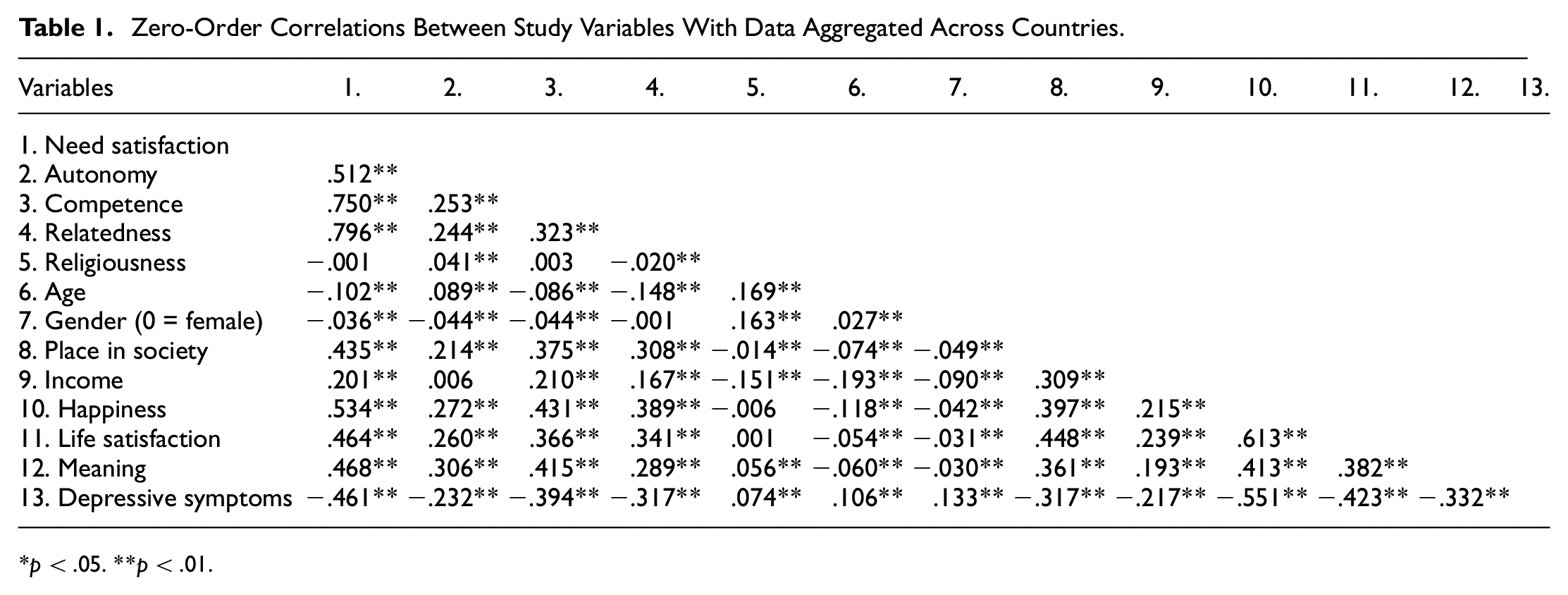
Table 1 shows the correlations between psychological need satisfaction and other study variables across the whole data (Table S1 displays the individual scores of each country on need satisfaction and well-being indicators). As can be seen, satisfaction of all three needs is positively correlated with place in society, income, happiness, life satisfaction, and meaning, and negatively with symptoms of depression, as expected.
Zero-Order Correlations Between Study Variables With Data Aggregated Across Countries.
p < .05. **p < .01.
Measurement of Latent Variables
Our latent variable confirmatory factor analysis (CFA), consisting of need satisfaction, symptoms of depression, happiness, and religiosity factors was fit to the total sample. This has an acceptable fit to the data for the configural model (χ2 = 2,925, df = 164, root mean square error of approximation [RMSEA] = .018 [.017, .018], comparative fit index [CFI] = .94, Tucker–Lewis index [TLI] = .93). We then explored this model via measurement invariance. Given the number of countries, invariance was run using a mixture model approach with countries specified as known classes. Here traditional evidence of invariance via fit indices is not possible. Rather we relied on Akaike’s information criterion (AIC), Bayesian information criterion (BIC), and log-likelihood ratio tests (see Table 2). As expected, these pieces of evidence suggested that the model was not invariant across nations. This was particularly the case for scalar invariance—indicating that the item intercepts of the variables were not equivalent across countries. Results, however, suggested reasonable evidence for metric invariance—indicating that the factor loadings were roughly similar across countries. As such, we ran the alignment method using the FIXED specification in Mplus. This option is suggested when there is reasonable evidence for invariance in factor loadings but not for intercepts (B. Muthén & Asparouhov, 2013).
Measurement Invariance.

Note. AIC = Akaike’s information criterion; BIC = Bayesian information criterion.
We then extracted factor scores from this model, using them along with the other single indicator constructs to estimate the hypothesized path model. We ran two models: (a) a model in which all regression paths were free across countries and (b) a model in which regression parameters were fixed to be equal across countries. The free model fit the data perfectly as it was fully saturated. The fit of the fixed model was χ2 = 7,654, df = 812, RMSEA = .085 [.083, .087], CFI = .945, TLI = .912. This suggested that a model in which all regression estimates were constrained to be equal across countries fit the data far less well than one were the estimates were allowed to be freely estimated across nations. Accordingly, we use this free model to examine study hypotheses.
How Need Satisfaction Is Associated With Indicators of Well-Being
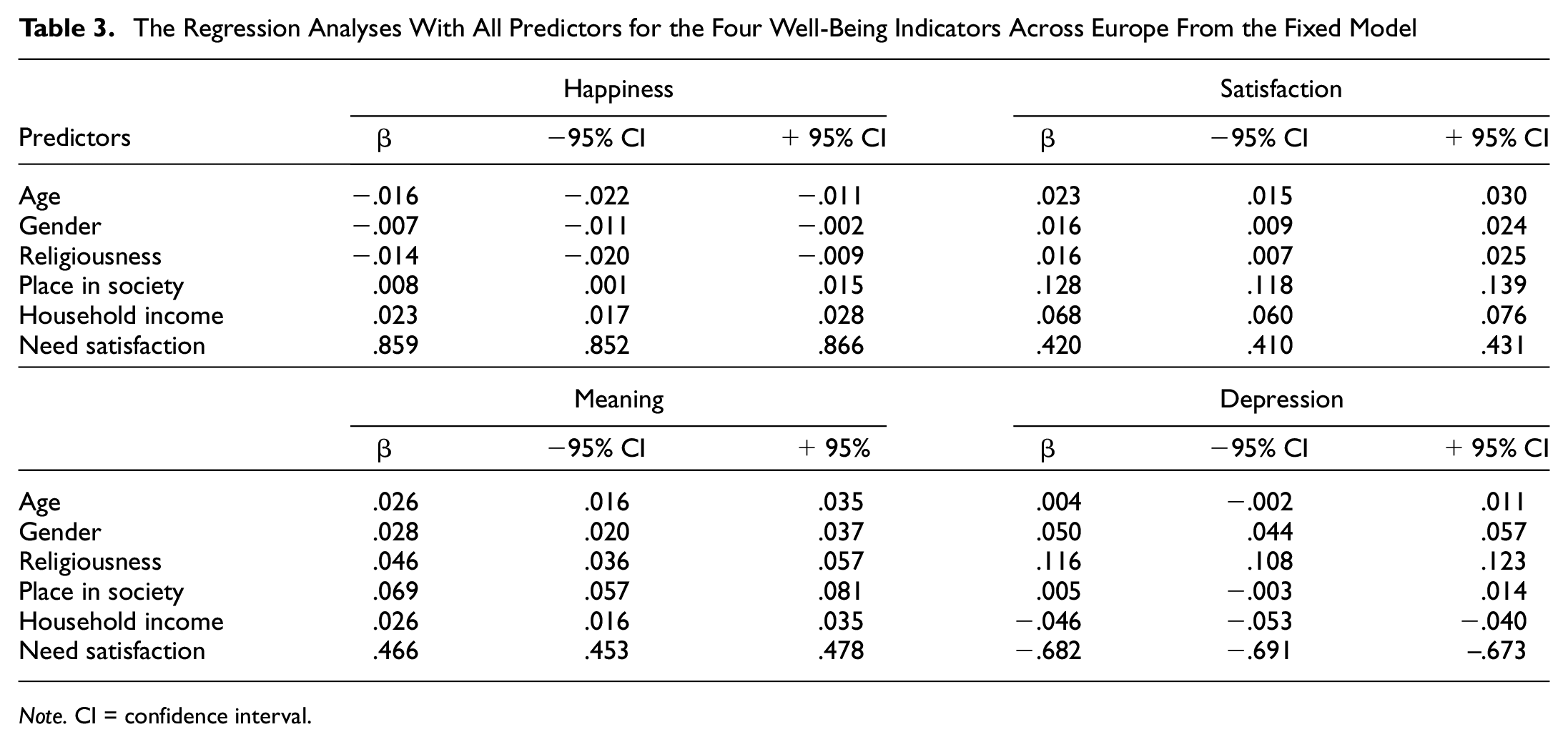
Looking at the average results across Europe (see Table 3), psychological need satisfaction had strong standardized beta associations with happiness and symptoms of depression and significant associations with meaning and life satisfaction. The effect size of need satisfaction was also clearly larger than the effect of any of the other variables. Although the effect of place in society and household income was positive and significant for happiness, life satisfaction, and meaning, in practice, the size of these effects was quite marginal, < .03 for happiness, < .07 for meaningfulness, and < .13 for life satisfaction. Regarding depressive symptoms, place in society had no significant association, but household income yielded a small effect of –.046. Age and gender also had significant but small effect sizes, in all cases < .03, except for symptoms of depression where gender had an effect size of .05 (women > men). The effect of religiousness on life satisfaction and happiness was marginal, but it was associated with not only somewhat higher meaning (.046) but also higher sense of depressive symptoms (.116). All in all, these results underscore the importance of need satisfaction to both well-being and ill-being in Europe across nations.
The Regression Analyses With All Predictors for the Four Well-Being Indicators Across Europe From the Fixed Model
Note. CI = confidence interval.
Turning to an examination of the individual results within each country, the results for need satisfaction and income as predictors of well-being outcomes are represented in Figures 1 to 4, with regression estimates and correlations, and the results for the other constructs are presented in Supplementary Document. In general, results were surprisingly consistent across Europe with need satisfaction being considerably more strongly associated with well-being outcomes than other predictors. Even though the model in which regressions were fixed across countries fit the data less well than a model in which these parameters were free, there was considerable consistency across countries in the association of need satisfaction with outcomes, without noteworthy outliers. Need satisfaction was associated with higher levels of happiness, life satisfaction, meaning and lower levels of depressive symptoms in each of the 27 countries, both when looking at zero-order correlations and when examining analysis where socio-economic status and other factors were controlled. This thus provides robust evidence for the importance of need satisfaction for well-being across Europe.
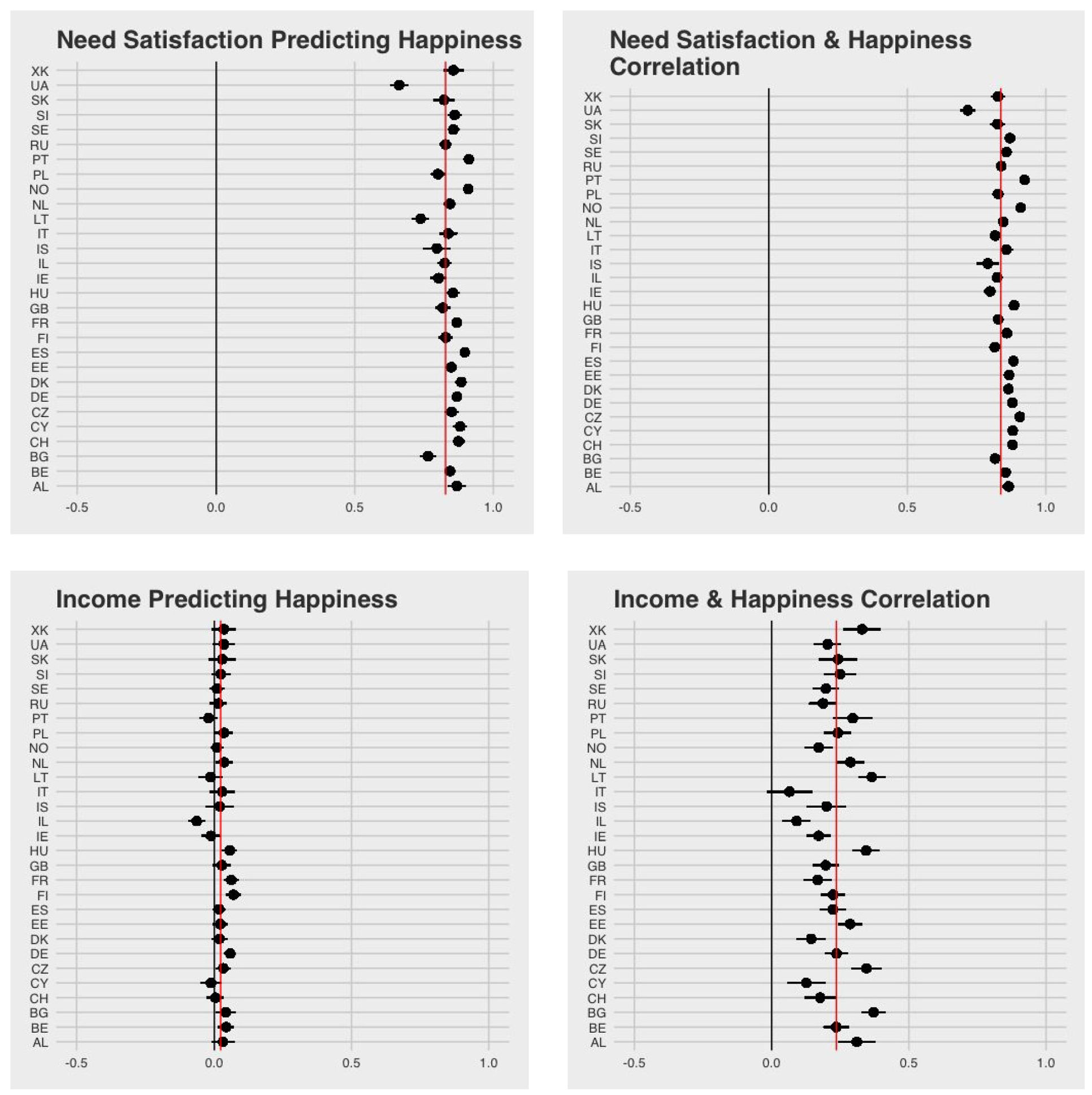
Psychological Need Satisfaction and Income: Zero-Order Correlations and Regression Estimates as Predictors of Happiness Across 27 Countries.
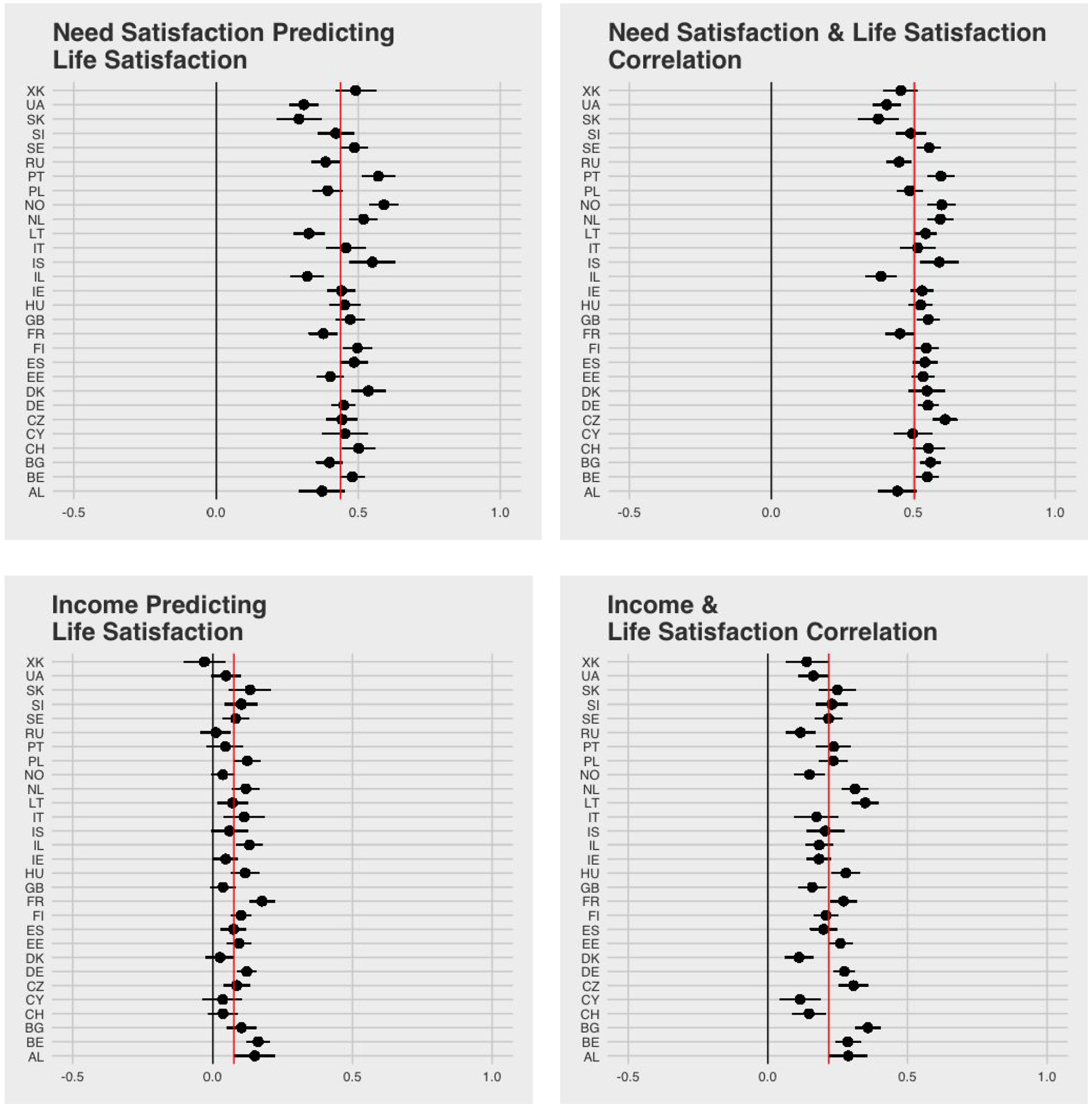
Psychological Need Satisfaction and Income: Zero-Order Correlations and Regression Estimates as Predictors of Life Satisfaction Across 27 Countries.
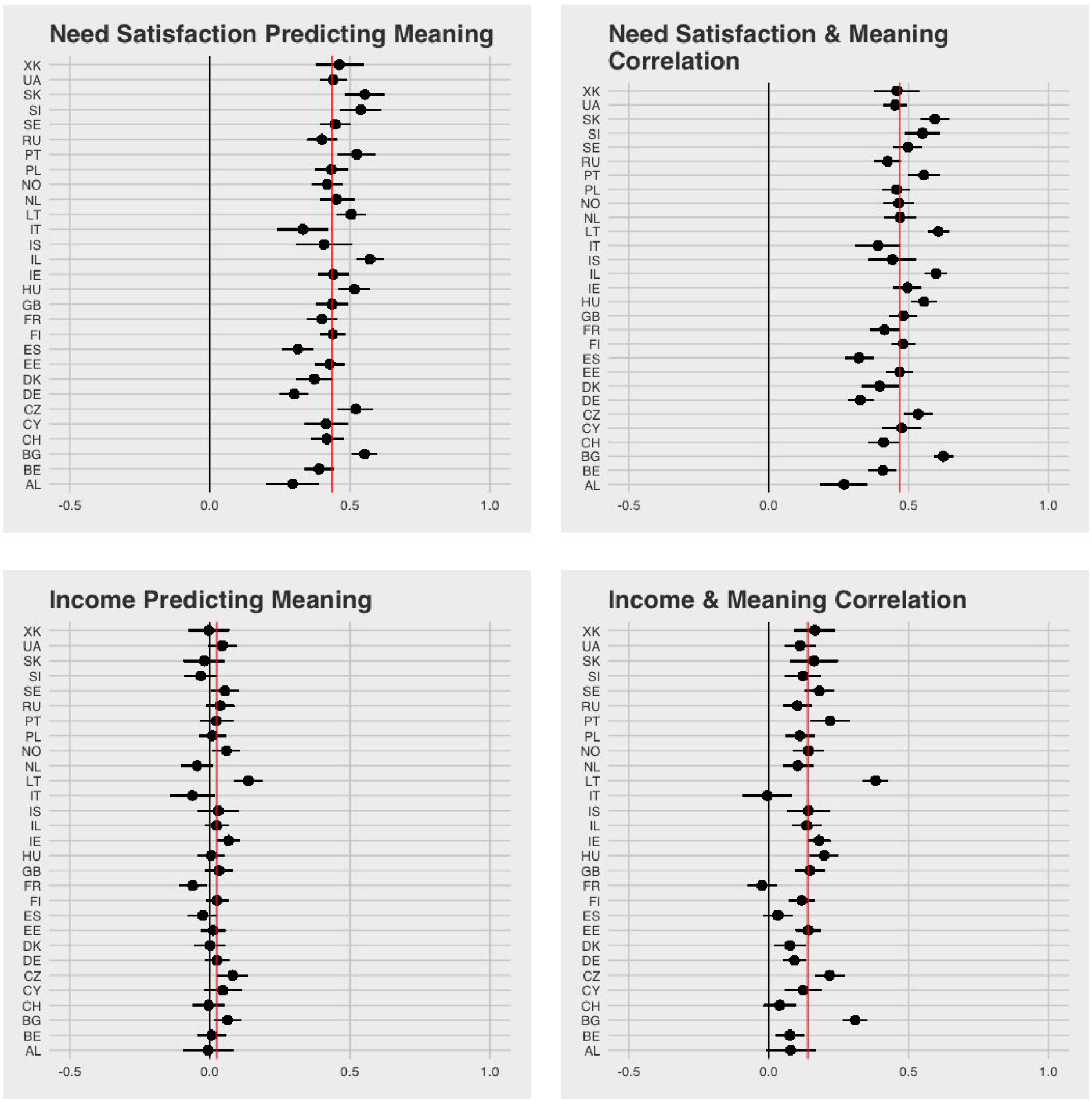
Psychological Need Satisfaction and Income: Zero-Order Correlations and Regression Estimates as Predictors of Meaning in Life Across 27 Countries.
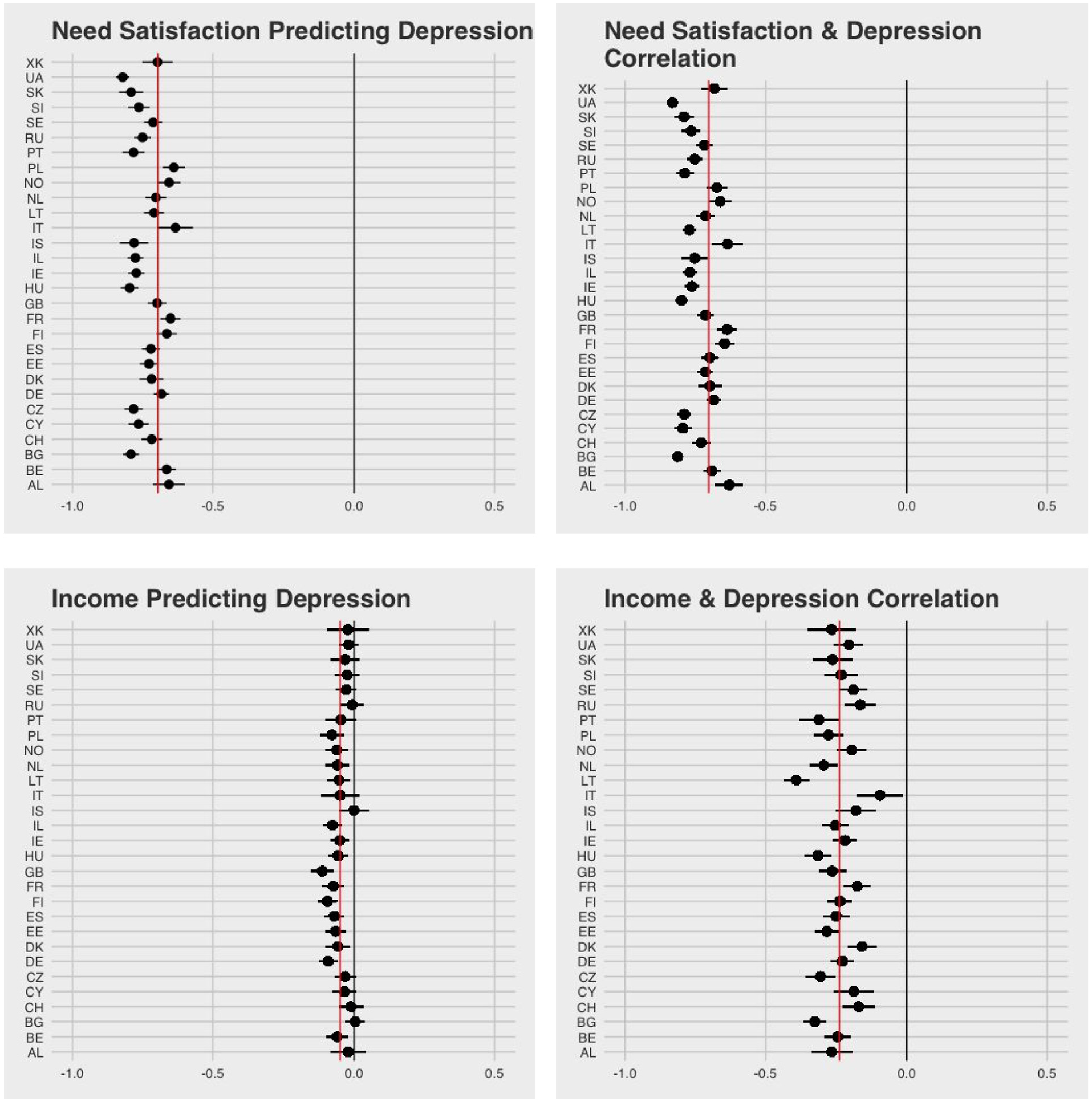
Psychological Need Satisfaction and Income: Zero-Order Correlations and Regression Estimates as Predictors of Depression Across 27 Countries.
The Contribution of Each Individual Need for Well-Being
Although the main focus was on the role of need satisfaction as a whole, we also wanted to explore the role of autonomy, relatedness, and competence as separate predictors of well-being in the same model. A model in which the relationships between these three needs predicted well-being differently for each country (i.e., the free model) would not converge. A fixed model (where the unstandardized estimates were constrained to be equal across countries) did converge but with poor fit (see Table S2). This suggests considerable differences between countries; although this is likely due to the complexity of the model when including all needs together. Nevertheless, the results from the fixed model (Table S2) suggested that autonomy was most strongly associated with happiness, life satisfaction, and symptoms of depression. All three needs had significant relations in the expected direction with happiness, satisfaction, and depressive symptoms, while only competence emerged as positively associated with meaning in life. However, given convergence and fit concerns, readers should consider these results with a significant degree of caution.
Due to non-convergence, we also fit fixed and free models where each of the need was assessed separately as a predictor of well-being. In all cases, the free model fit the data significantly better (see Table S3 for fit statistics), but an exploration of the results suggested country to country variations in these relationships were relatively small. The overall pattern of results was consistent across countries and for all three needs: Autonomy, competence, and relatedness were positively related to happiness, life satisfaction, meaning in life, and (lack of) depressive symptoms in each of the 27 countries (see Figures S1–S3). Finally, as an additional robustness check, we replicated main analyses examining association between need satisfaction and happiness, life satisfaction, and meaning, while controlling for depression, finding that the relations remain strong in each of the 27 countries even in these models (see Figure S4).
Mediation
To test our hypothesis about mediation, we used the fixed regression model, calculating the degree to which need satisfaction mediated the influence of income and perceived place in society on well-being. We used the fixed regression model, given the lack of practically significant variation in estimates between countries. Table 4 provides the estimates of the total, indirect, and direct effects with confidence intervals derived via the delta method. These estimates reflect the average estimate across countries weighted by sample size. The indirect effects were statistically significant in all cases, and the total effects were significant in almost all cases. Furthermore, in all cases, except for satisfaction in life, need satisfaction explained all or almost all of the total effect of income and perceived place in society on well-being. Even for life satisfaction, need satisfaction explained a substantial part of these effects. As regards the relation between place in society and well-being, in some cases, the indirect effect was larger than the total effect, suggesting compensatory direct effect. However, these effects were so small that not much should be read into them.
Total, Indirect, and Direct Effect Estimates of the Relations Between Income and Place in Society and Well-Being Indicators, Mediated by Need Satisfaction (Average Across Nations).
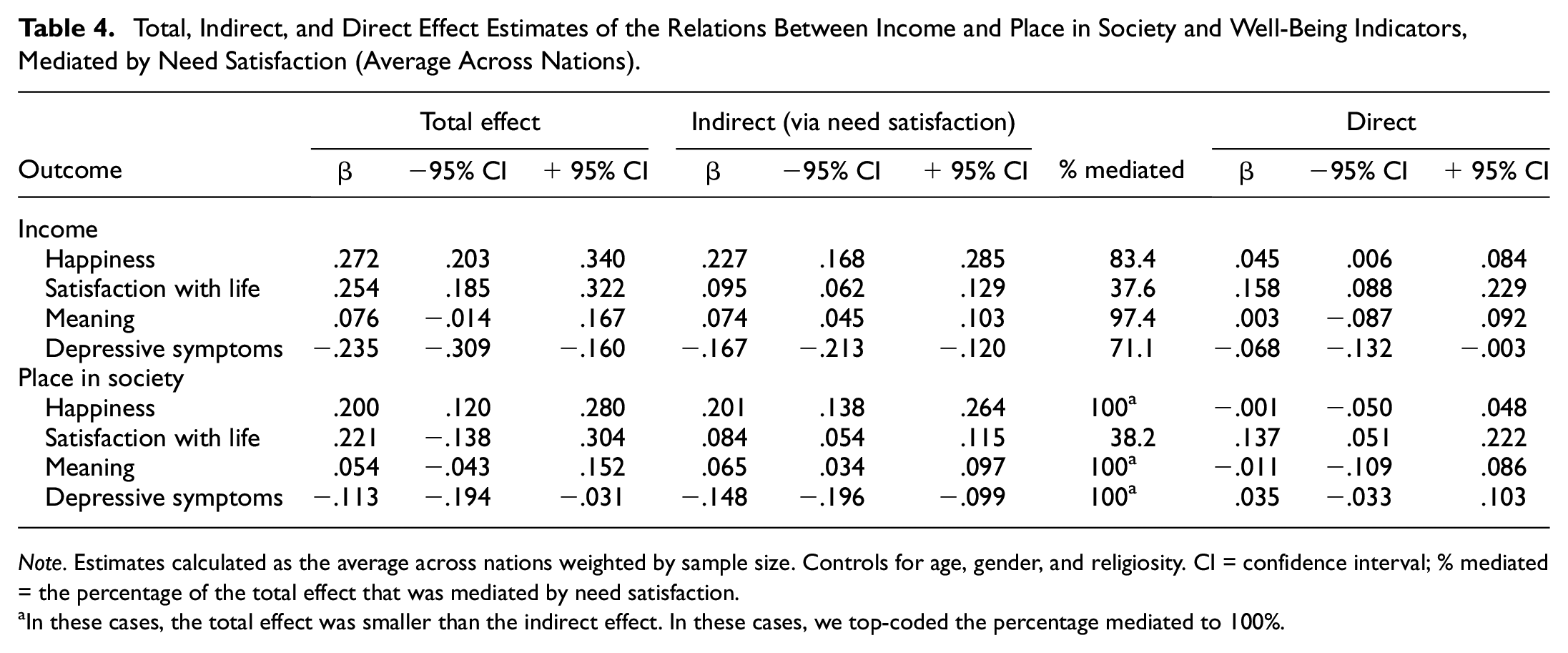
Note. Estimates calculated as the average across nations weighted by sample size. Controls for age, gender, and religiosity. CI = confidence interval; % mediated = the percentage of the total effect that was mediated by need satisfaction.
In these cases, the total effect was smaller than the indirect effect. In these cases, we top-coded the percentage mediated to 100%.
Discussion
We set out to examine how well the basic psychological need satisfactions posited within SDT predict well-being (happiness, life satisfaction, and meaning) and ill-being (symptoms of depression) across Europe. The results from 27 European countries provided robust evidence for the importance of the three needs for well-being. First, in examining data across Europe, aggregated need satisfaction proved to have substantial positive associations with happiness, life satisfaction, and meaning, and substantial negative associations with depressive symptoms, even when controlling for the well-known influence of socio-economic status and various demographic factors. In fact, need satisfaction was more strongly associated with well-being than any of the other factors considered. This key result was replicated when the analysis was performed separately in the 27 European countries: In all countries, need satisfaction was more strongly associated with happiness, life satisfaction, meaning, and lack of depressive symptoms as compared with socio-economic status and demographic factors. We supplemented this main analysis with three separate analyses, examining autonomy, competence, and relatedness as predictors of well-being, finding that each need taken individually was significantly associated with happiness, life satisfaction, meaning, and lack of depressive symptoms in each of the 27 countries.
Together, these results contribute to research on SDT’s three basic psychological needs for autonomy, competence, and relatedness by demonstrating that across Europe, need satisfaction is not only associated with happiness and life satisfaction but also with lack of depressive symptoms and greater meaning in life. Thus, it adds to the existing cross-cultural examinations of SDT’s three needs as predictors of well-being (e.g., Chen et al., 2015) and expands the generalizability of these results by examining them in the European context, and by including a broader set of well-being indicators than previously examined. The present results are also important for research on meaning in life (see King et al., 2016; Martela et al., 2018), as predictors of meaning have been rarely examined cross-culturally.
In addition, we examined whether the impact of socio-economic indicators on wellness is explainable by the positive effects that income and status have on the basic psychological need satisfactions. Results demonstrated that the three needs explained a large degree of these often observed relations between socio-economic status and well-being, in several cases explaining all or almost all of the total effect. Although cross-sectional mediational analyses should be interpreted with caution, this finding thus adds to previous research showing that the three needs are crucial mediators between various external factors, such as income and well-being (Di Domenico & Fournier, 2014; Martela & Sheldon, 2019). Future studies should utilize more robust study designs to examine whether need satisfaction mediates the well-being effect of various national-level factors such as GDP per capita, regulation of the labor market, or welfare benefits.
It is worth noting that the effects of country, age, gender, and religiousness (see Supplementary Document for observations on the latter) tended to be quite marginal on all study variables, thus suggesting that they do not seem to hold much explanatory power within Europe as regards SWB.
Certain limitations need to be acknowledged when interpreting the results. Most importantly, these results are based on cross-sectional data that make it impossible to determine the direction of causality between the variables. Although there are experimental studies demonstrating the impact of the three psychological needs on indicators of well-being (e.g., Sheldon & Filak, 2008), the present data do not allow to eliminate the possibility of reverse causality or third-factor explanations. While previous research has tended to examine the influence from need satisfaction to well-being (Ryan & Deci, 2017), it can also be suggested that high levels of well-being could contribute to improved social relations and sense of relatedness, as well as increased sense of competence and autonomy. Thus, the present study can ultimately just demonstrate that need satisfaction and well-being are highly connected, but other types of research are needed to infer the direction of influence. This means also that the mediational analysis should be interpreted with caution, as cross-sectional mediation analyses have well-known weaknesses (Fiedler et al., 2011; Lemmer & Gollwitzer, 2017). The present mediational analysis should thus be seen as a first cross-cultural test of a conceptual model that needs to be replicated with more robust methodologies. This underscores the importance of including need satisfaction variables in longitudinal national-level panel data that would allow for more robust tests of the direction of influence between socio-economic factors, need satisfaction, and well-being (Martela & Ryan, 2021).
Another limitation of the present analysis is that it examines psychological need satisfaction as one variable rather than treating the three needs for autonomy, competence, and relatedness as separate. This is the standard approach utilized in studies interested in the overall effect of need satisfaction (e.g., DeHaan et al., 2016; Di Domenico & Fournier, 2014; Wang et al., 2017; Zhang et al., 2021), and it was also necessitated by methodological reasons, given the non-convergence of the model, when examining separate needs. We supplement our main analysis with an examination of the contribution of each individual need. The model where estimates were constrained to be equal across countries showed that when the three needs were pitted against each other in a regression analysis, all three needs were independent and significant predictors of happiness, life satisfaction, and lack of depressive symptoms, but only competence positively predicted meaningfulness. This latter finding goes against previous research demonstrating the simultaneous importance of all three needs for meaningfulness (Martela et al., 2018) but is hard to interpret given poor model fit and potential for multicollinearity or underlying country differences. Accordingly, we call for future research and methodological advances that would be able to more reliably examine the simultaneous effects of the three needs independently.
In addition, research has shown that need frustration tends to be more closely related to indicators of ill-being than need satisfaction (Vansteenkiste et al., 2020), but the items available in the ESS survey allowed us to only examine need satisfaction in the present study. Furthermore, it is important to note that there might be linguistic and cultural differences in how constructs such as meaning or happiness are interpreted in various countries, which could affect the results (see Hadler et al., 2015).
Overall, the results underscore the importance of the psychological needs for autonomy, competence, and relatedness on well-being, demonstrating significant and substantial associations of need satisfaction with wellness indicators in all parts of Europe. Need satisfaction was also able to explain a significant proportion of the influence of socio-economic factors on well-being. This highlights the potential importance of measuring basic psychological needs in future studies of the SWB across nations, which can contribute to a richer understanding of the psychological underpinnings of well-being around the globe.
Supplemental Material
sj-docx-1-spp-10.1177_19485506221113678 – Supplemental material for Needs and Well-Being Across Europe: Basic Psychological Needs Are Closely Connected With Well-Being, Meaning, and Symptoms of Depression in 27 European Countries
Supplemental material, sj-docx-1-spp-10.1177_19485506221113678 for Needs and Well-Being Across Europe: Basic Psychological Needs Are Closely Connected With Well-Being, Meaning, and Symptoms of Depression in 27 European Countries by Frank Martela, Annika Lehmus-Sun, Philip D. Parker, Anne Birgitta Pessi and Richard M. Ryan in Social Psychological and Personality Science
Footnotes
Handling Editor: Veronika Job
Declaration of Conflicting Interests
The author(s) declared no potential conflicts of interest with respect to the research, authorship, and/or publication of this article.
Funding
The author(s) received no financial support for the research, authorship, and/or publication of this article.
Data Accessibility Statement
The study materials and data are available at: https://www.europeansocialsurvey.org/. The scripts of the analyses are available at: 
Supplemental Material
The supplemental material is available in the online version of the article.
Author Biographies
References
Supplementary Material
Please find the following supplemental material available below.
For Open Access articles published under a Creative Commons License, all supplemental material carries the same license as the article it is associated with.
For non-Open Access articles published, all supplemental material carries a non-exclusive license, and permission requests for re-use of supplemental material or any part of supplemental material shall be sent directly to the copyright owner as specified in the copyright notice associated with the article.
