




Abstract
Many daily decisions require estimates of the inherently indeterminate probability of future events. We propose that people rely on heuristics instead of formal reasoning to come up with such estimates and that processing fluency may serve as a heuristic cue. Across seven experimental online studies that use random samples of MTurk workers as participants, statistical mediation analyses provide support for the notion that manipulating the fluency of utopic city pictures (presentation duration: 300 vs. 900 ms), statements about future societal developments (prior exposure: no vs. yes), and election promises made on Twitter during the 2020 U.S. presidential race (presentation size: small vs. large) has an indirect effect via subjective fluency on estimated probabilities of future occurrences. However, the total effects of the experimental manipulations on probability judgments show no consistent pattern, being negative in one study, positive in two studies, and not different from zero in the remaining four studies.
Many of our everyday judgments entail uncertainty. Although often treated as a unitary construct, uncertainty can be differentiated into (a) random (aleatory) and (b) knowable (epistemic) uncertainty (Ülkümen et al., 2016). The first type applies when judging the subjective likelihood of future events—although individuals may assign a subjective likelihood of occurrence to such events, they entail a random component that precludes accurate prediction. The second type applies when judging the truth of a factual statement that is in principle knowable but where missing information or expertise induces uncertainty. Importantly, individuals can intuitively discriminate between these two types of uncertainty in their reasoning and their natural usage and understanding of language (Ülkümen et al., 2016), indicating the epistemic relevance of a clear differentiation between them in psychological studies on uncertainty.
When individuals who experience knowable uncertainty judge the truth of factual statements (e.g., “Osorno is in Chile”), statements that have been shown before or that are printed in an easy-to-read color (e.g., blue) are more likely to be judged as true compared with statements not shown before or printed in a difficult-to-read color (e.g., yellow; Hasher et al., 1977; Reber & Schwarz, 1999; for a meta-analysis see Dechêne et al., 2010). This “truth effect” is attributed to processing fluency—the metacognitive experience of ease when processing information (for reviews see: Alter & Oppenheimer, 2009; Schwarz et al., 2021). The experience of processing fluency may be misattributed to memory as it increases the subjectively felt familiarity of stimuli, “leading participants to feel that they have heard or seen this before, suggesting that it is probably true” (Reber & Schwarz, 1999, p. 342). Reber and Zupanek (2002) extended the idea of the “truth effect” to subjective judgments of probability and frequency for the occurrence of previously observed contingencies between a prime and a target. They observed that experimentally induced fluency leads to higher judgments of probability and frequency, respectively. Importantly, in the studies reported by Reber and Zupanek (2002), participants guessed the probability/frequency of events in an experimental task they had previously completed. This is conceptually similar to judgments about factual statements such that these studies can be classified to study knowable uncertainty (Ülkümen et al., 2016).
In contrast, judging the likelihood of future events differs from judging past events or factual statements by exhibiting random uncertainty. Such judgments are required in many areas of human life and constitute a relevant and impactful field of study. For instance, judgments of the subjective likelihood of future events pervade our lives as consumers (e.g., concerning claims about future benefits that may arise from obtaining and utilizing a product), citizens (e.g., concerning the likelihood of societal/political developments), or patients (e.g., concerning the likelihood of side effects from different treatment options). As prior research did not study the potential role of processing fluency for these types of judgments, we examine whether fluency effects observed for knowable uncertainty extend to random uncertainty.
Two theoretical accounts would predict that fluency effects should also occur in the context of random uncertainty. On one hand, perceived familiarity may explain such fluency effects. As it seems unreasonable to attribute familiarity with random future events to preexisting memory as postulated for the “truth effect” (Reber & Schwarz, 1999), future probability judgments may instead be influenced by fluency-induced familiarity that is misattributed to previous encounters with similar events or previous media coverage about the future event. On the other hand, a central feature of random uncertainty is that it relates to future (and hence psychologically distant) events. While individuals generally judge psychologically distant (vs. close) events as being less probable (Wakslak & Trope, 2009), perceptions of processing fluency have been shown to reduce the psychological distance (Alter & Oppenheimer, 2008). Hence, processing fluency may influence future probability judgments also by altering perceptions of psychological distance.
Overview of the Empirical Studies
We examined the link between fluency and estimated future probability in seven experimental studies and one pretest. In particular, we conducted one study on utopic future cityscapes (Study 1), a pretest and four studies on descriptions of positive and negative future (societal) events (Studies 2a–2d), and two studies on election promises made by Joe Biden and Donald Trump during the 2020 election campaign (Studies 3a and 3b). The first study in each of these three series of studies was preregistered on AsPredicted, while the subsequent studies in each series were variants of the original study protocols with minor adaptions to the stimulus materials and procedures, omitting formal preregistrations. All studies were approved by the authors’ Institutional Review Board and followed common ethical guidelines for studies on human participants. Full information on all studies and the stimulus material, data, codes of all statistical analyses, and preregistrations are provided in the Online Appendix and on OSF: https://osf.io/skwjb/.
Study 1
Method
Study 1 employed a one-factorial within-subjects design that manipulates presentation duration (short vs. long) as a determinant of processing fluency. We exposed participants to six images of utopias of potential future cities (i.e., images showing the possible architecture of future cities). Three stimuli were randomly selected to be presented for 300 ms (low fluency) and three to be presented for 900 ms (high fluency; based on Landwehr & Eckmann, 2020) during an evaluation phase, in which participants evaluated the images on 7-point scales in random order: First, regarding probability, second regarding fluency, and third regarding hedonic value (see Online Appendix for the exact wording of the scales). We used the latter measure as a control variable in our analyses to account for any hedonic consequences associated with fluently processed stimuli (Landwehr & Eckmann, 2020). Afterward, participants conducted a memory test that showed all six test images and six distractor images. Participants had to indicate which images they had seen during the study. Finally, we collected demographical data, and participants had the opportunity to provide remarks, were debriefed, thanked, and paid.
Participants
We recruited 250 adult U.S. residents (sample size based on Graf et al., 2018) via CloudResearch on Amazon MTurk (52% female; Mage=39.47). 1
Results and Discussion
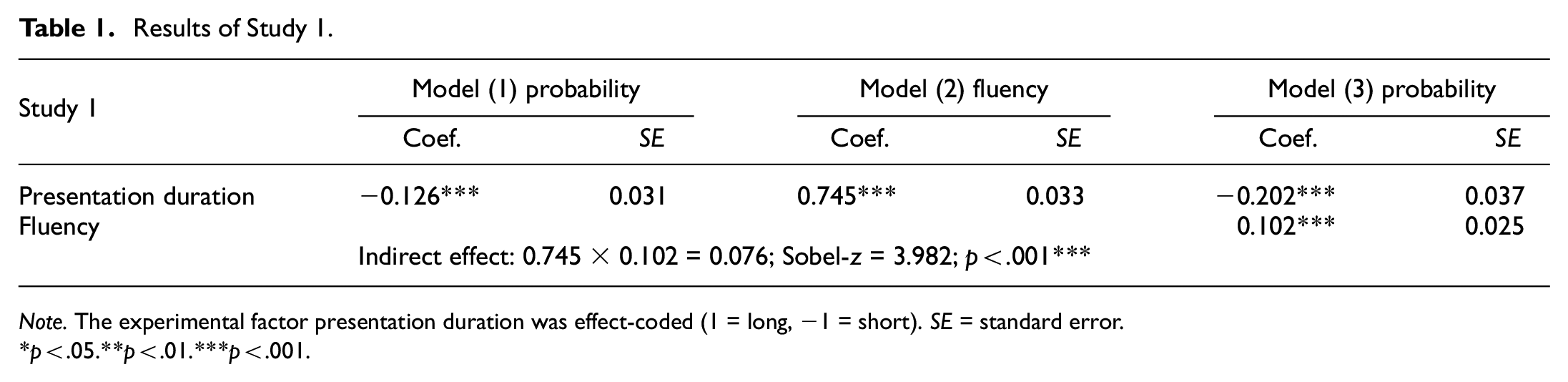
To test whether presentation duration influences estimated probability via the experience of processing fluency, we estimated the three regression equations required for establishing statistical mediation (Muller et al., 2005). To account for the repeated measurement structure of the data (i.e., six evaluations per participant) and the random sampling of stimuli, we used linear mixed models (LMM) for the analyses that contained one random intercept per participant i and one crossed random intercept per stimulus j (Westfall et al., 2014):



with b indicating the fixed effects, u the random effects, and e the residuals. Duration (1=long, −1=short) was effect-coded. We used the “lmerTest” library (Kuznetsova et al., 2017) of the statistical software R for all analyses. Table 1 provides an overview of all model estimates.
Results of Study 1.
Note. The experimental factor presentation duration was effect-coded (1 = long, −1 = short). SE = standard error.
p < .05. **p < .01. ***p < .001.
Model 1 showed an unexpected negative total effect of presentation duration on estimated probability (p < .001). Model 2 showed the predicted positive effect of presentation duration on subjective fluency (p < .001). Model 3 showed an unexpected negative effect of presentation duration (p < .001) and an expected positive effect of subjective fluency on estimated probability (p < .001). A Sobel test indicated that the indirect effect via processing fluency was significant (p < .001). The results remained robust when participants with a bad performance in the memory test were excluded from the analyses or when hedonic value was included as a control variable in Models 1 to 3.
When interpreting the results of this and all subsequent mediation analyses, it is important to note that only the effects of the experimentally manipulated variable (i.e., duration) can be considered to provide strong evidence for a causal relationship. The relationship between the mediator variable “fluency” and the dependent variable “probability” in the third model is, however, only correlational and provides, therefore, only weak evidence for a causal relation (Otter et al., 2018).
Studies 2a to 2d
The second series of studies was intended (a) to test whether the link between fluency and estimated probability depends on the valence of future events and (b) to generalize the findings of Study 1 to written statements referring to events potentially happening in the remaining part of the year and to different manipulations of fluency (readability in Studies 2a and 2b; exposure in Studies 2c and 2d). The valence of future events has been found to influence peoples’ likelihood judgments in that positively valenced events are perceived as more likely than negatively valenced ones, all else equal (Lench & Ditto, 2008). Manipulating event valence thus enabled us to study the effects of two implicit processes that potentially relate to future probability judgments simultaneously. By shortening the time frame (approximately 10 months in Study 2 vs. 30 years in Study 1) and by using descriptions of more likely events (a pretest indicated estimated probabilities between 4.43 and 5.08 on a 7-point scale), we also intended to assess the stability of the negative direct effect of the fluency manipulation observed in Study 1.
Studies 2a and 2b: Design and Procedure
Studies 2a and 2b employed a 2 (readability: low vs. high) ×2 (valence: positive vs. negative) within-subjects design with three stimulus replicates per experimental cell. To manipulate readability, half of the positive and half of the negative statements were shown in blue (= readability high), the other half in yellow (= readability low) against a white background throughout the evaluation phase of the studies (see Graf et al., 2018).
Studies 2c and 2d: Design and Procedure
Studies 2c and 2d employed a 2 (number of prior exposures: 0 vs. 1) × 2 (valence: positive vs. negative) within-subjects design with three stimulus replicates per experimental cell. To manipulate prior exposure, half the positive and half the negative statements were randomly selected to be presented before evaluation. Following Hasher et al. (1977), participants first saw six distractor statements, followed by the six target statements, and another six distractor statements. Each statement was displayed for 3 s, followed by a 2 s blank page. Participants were instructed to pay attention to the presentation and informed that their memory would be tested at the end of the study.
Stimulus Material and Measures
We required 12 statements for the procedures of Studies 2a to 2d that were selected based on a pretest such that six statements were relatively positive and six were relatively negative. As explained in the Online Appendix, we slightly adjusted the assortment of statements between the four studies. In all four studies (2a–2d), participants evaluated the 12 statements in random order on 7-point scales, first regarding probability, second regarding fluency, 2 and third regarding hedonic value. Afterward, participants performed a memory test that showed four previously shown statements and four distractor statements, and participants had to indicate which statements they had seen during the study. Finally, we collected demographical data, participants had the opportunity to provide remarks, were debriefed, thanked, and paid.
Participants
Participants for Studies 2a to 2d were recruited via CloudResearch on Amazon MTurk and restricted to adult U.S. residents. For Study 2a, we collected data from 250 participants (48% female; Mage=39.61; MDemocrats=4.77 3 ; sample size based on the study on perceived truth of statements by Graf et al., 2018). For Study 2b, we recruited 251 participants (51% female; Mage=39.04; MDemocrats=4.40). For Study 2c, we recruited 250 participants (49% female; Mage=40.85; MDemocrats=4.39). Finally, for Study 2d, we intended to increase the statistical power and doubled the sample size to 499 participants (56% female; Mage=41.76; MDemocrats=4.57) in case the effect is smaller than a priori expected.
Results and Discussion
Analogous to Study 1, we estimated the following three equations for each of the four studies (2a–2d) using LMM (both experimental factors were effect-coded; “manipulation” refers to the readability manipulation in Studies 2a and 2b and to the exposure manipulation in Studies 2c and 2d):
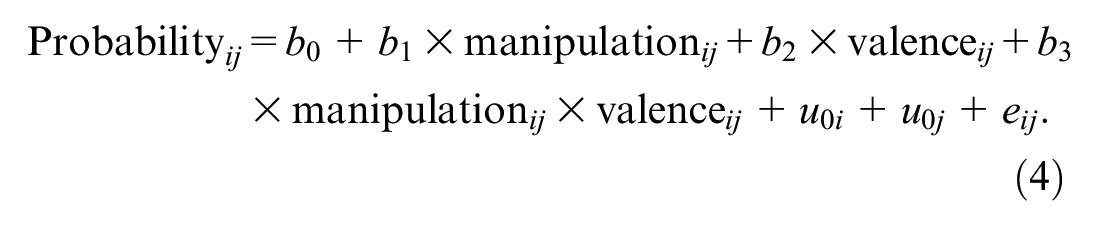
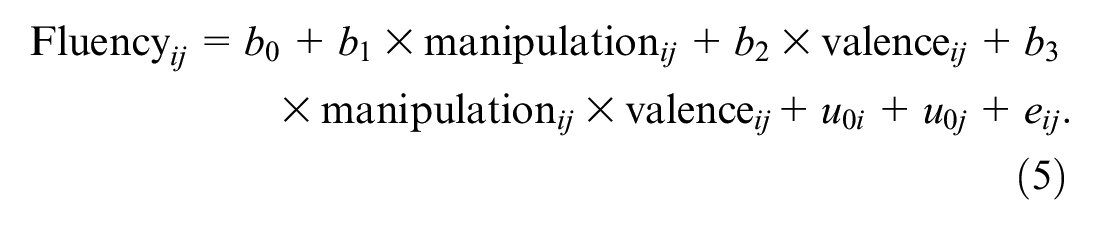
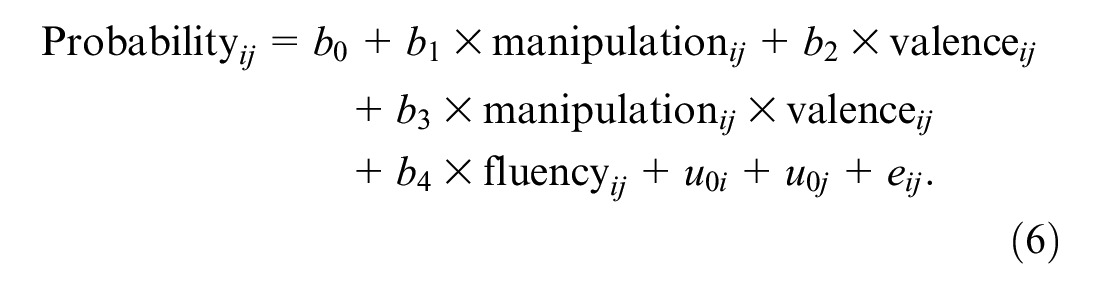
Table 2 summarizes the results for Models 4 to 6 and Sobel tests of the indirect effects of manipulated fluency on probability judgments via subjective fluency for Studies 2a to 2d. An inspection of the results for Model 4 revealed nonsignificant effects for Studies 2a (p > .271) and 2b (p > .264). In contrast, in Studies 2c (p < .001) and 2d (p < .001), a positive total effect of manipulated exposure on probability occurred that was in Study 2d additionally qualified by a positive interaction between exposure and valence (p = .037). Model 5 indicated that in Studies 2a, 2b, and 2d, the manipulation of readability/exposure had significant positive effects on subjective fluency (all p < .001). In Study 2c, in which we accidentally used an inadequate measure of subjective fluency, the effect of exposure on subjective fluency was nonsignificant (p = .196). Model 6 showed that in Study 2a only a positive effect of subjective fluency on probability was significant (p=.006), in Study 2b no effect was significant (p > .203), in Study 2c only a positive effect of the exposure manipulation was significant (p < .001), and in Study 2d the effects of the exposure manipulation (p < .001), the interaction between exposure and valence (p=.034), and the effect of subjective fluency (p < .001) were significant and all positive. Sobel tests indicated that the indirect effect was significant in Studies 2a (p=.006) and 2d (p=.002) but not in Studies 2b (p=.203) and 2c (p=.295). The reported results for Studies 2a to 2d remained robust when participants with a bad performance in the memory test were excluded from the analyses or when hedonic value was included as a control variable in Models 4 to 6.
Results of Studies 2a to 2d.
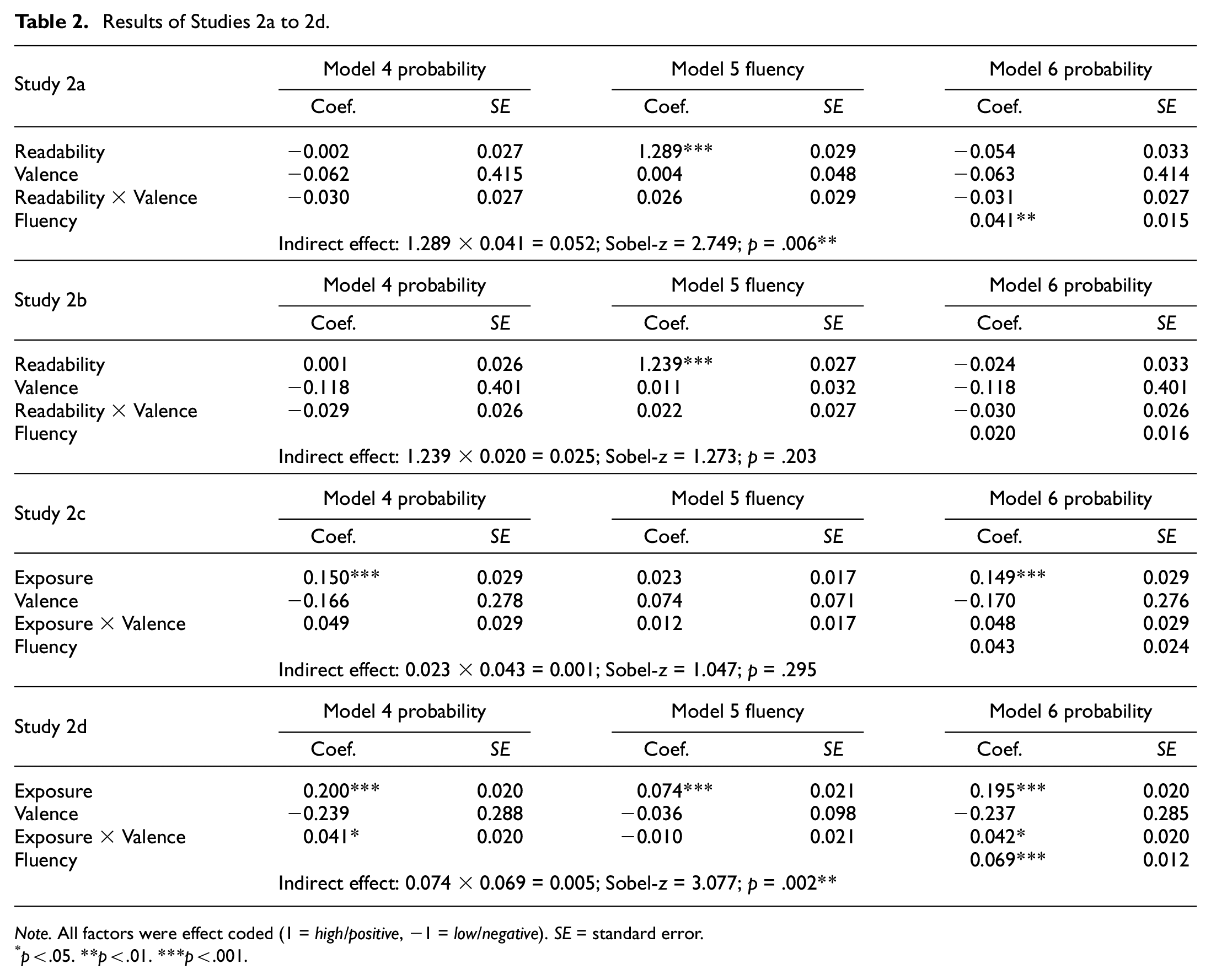
Note. All factors were effect coded (1 = high/positive, −1 = low/negative). SE = standard error.
p < .05. **p < .01. ***p < .001.
In sum, the results indicate that the exposure manipulation of Studies 2c and 2d was capable of producing a total experimental effect on probability judgments. When fluency is adequately measured (Study 2d), the indirect effect via subjective fluency may partially explain the total effect. However, it is important to note that the direct effect of the experimental manipulation remained significant, which inhibits a clear interpretation of the mediating process. The readability manipulation of Studies 2a and 2b did not produce a total effect and only an unstable indirect effect via subjective fluency that occurred in Study 2a but disappeared in Study 2b. In all four studies, valence did not show the expected positive direct effect on probability (Lench & Ditto, 2008) but only an interactive effect with exposure in Study 2d such that probability judgments were highest when positive valence and exposure coincided.
Studies 3a and 3b
Studies 3a and 3b employed stimulus size as another manipulation of fluency to further test the generalizability of the findings observed so far. Moreover, to underline the practical relevance of the link between fluency and estimated probability, both studies examined the effect of processing fluency on the perceived probability of campaign promises made on Twitter during the U.S. Presidential election campaign 2020. The designs and procedures of both studies were almost identical, with the only differences being that Study 3b used a larger sample size, additionally measured hedonic value, and was conducted immediately before the presidential election.
Method
Both studies employed a 2 (stimulus size: small vs. large) × 2 (sender: Biden vs. Trump) within-subjects design with three stimulus replicates per experimental cell. Six Biden tweets and six Trump tweets of comparable length that each made a concrete preelection promise served as stimuli. To manipulate stimulus size as a determinant of fluency (Landwehr & Eckmann, 2020), half the Biden and half the Trump tweets were randomly selected to be shown either in a large presentation size (800 × 212 pixels) or a 50% reduced size (400 × 117 pixels). All 12 tweets were evaluated on 7-point scales in random order, first regarding probability, second regarding processing fluency, and third regarding the hedonic value of the election promises. 4 Afterward, participants performed a memory test that showed three previously presented tweets and three distractor tweets, and participants had to indicate which tweets they had seen during the study. Finally, we collected demographical data, and participants had the opportunity to provide remarks, were debriefed, thanked, and paid.
Participants
We recruited participants for both studies via CloudResearch on Amazon MTurk. For Study 3a, we collected data from 252 adult U.S. residents (44% female; Mage=38.99; MDemocrats=4.78; sample size based on the study on perceived truth of statements by Graf et al., 2018). For Study 3b, we intended to increase the statistical power and doubled the sample size to 501 adult U.S. residents (50% female; Mage=39.97; MDemocrats=4.48) in case the effect is smaller than a priori expected. Importantly, data collection for Study 3b took place the day before the U.S. Presidential election (November 2, 2020).
Results and Discussion
Analogous to the previous studies, we estimated the following three equations for both studies using LMM (both experimental factors were effect-coded):

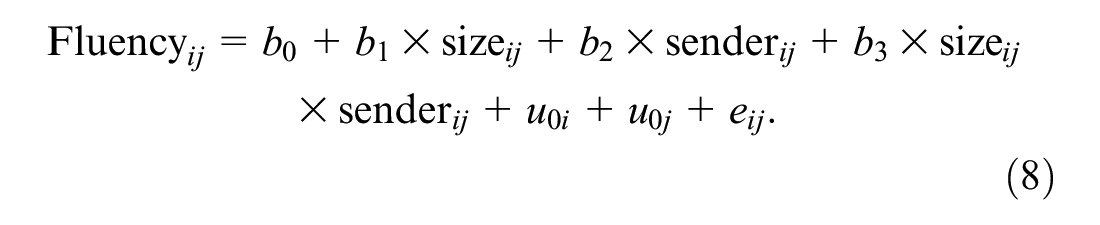
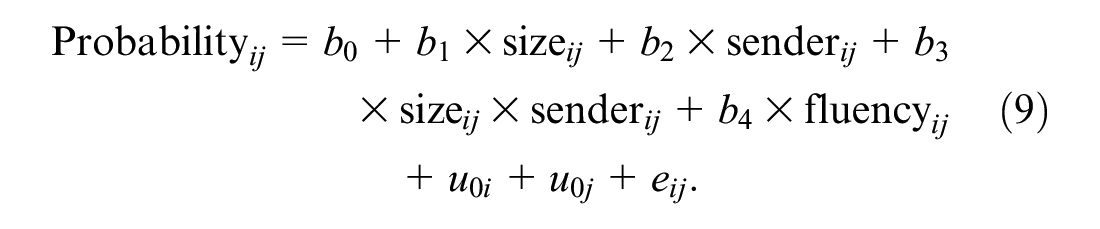
Table 3 summarizes the results for Models 7 to 9 and for Sobel tests of the indirect effects of the size manipulation on probability judgments via subjective fluency for both studies. Model 7 revealed positive total effects of sender on estimated probability (3a: p < .001; 3b: p=.002; i.e., Biden tweets were judged more probable than Trump tweets). Model 8 revealed for both studies positive effects of stimulus size (3a: p < .001; 3b: p < .001) and of sender (3a: p < .001; 3b: p=.002) on perceived fluency. Model 9 demonstrated for both studies significant negative effects of stimulus size (3a: p=.013; 3b: p < .001), positive effects of sender (3a: p < .001; 3b: p=.007), and positive effects of fluency (3a: p < .001; 3b: p < .001) on estimated probability. Sobel tests indicated that the indirect effect of stimulus size on estimated probability via processing fluency was significant in both studies (3a: p < .001; 3b: p < .001). The results remained robust when participants with a bad performance in the memory test were excluded from the analyses or when hedonic value was included as a control variable in Models 7 to 9.
Results of Studies 3a and 3b.
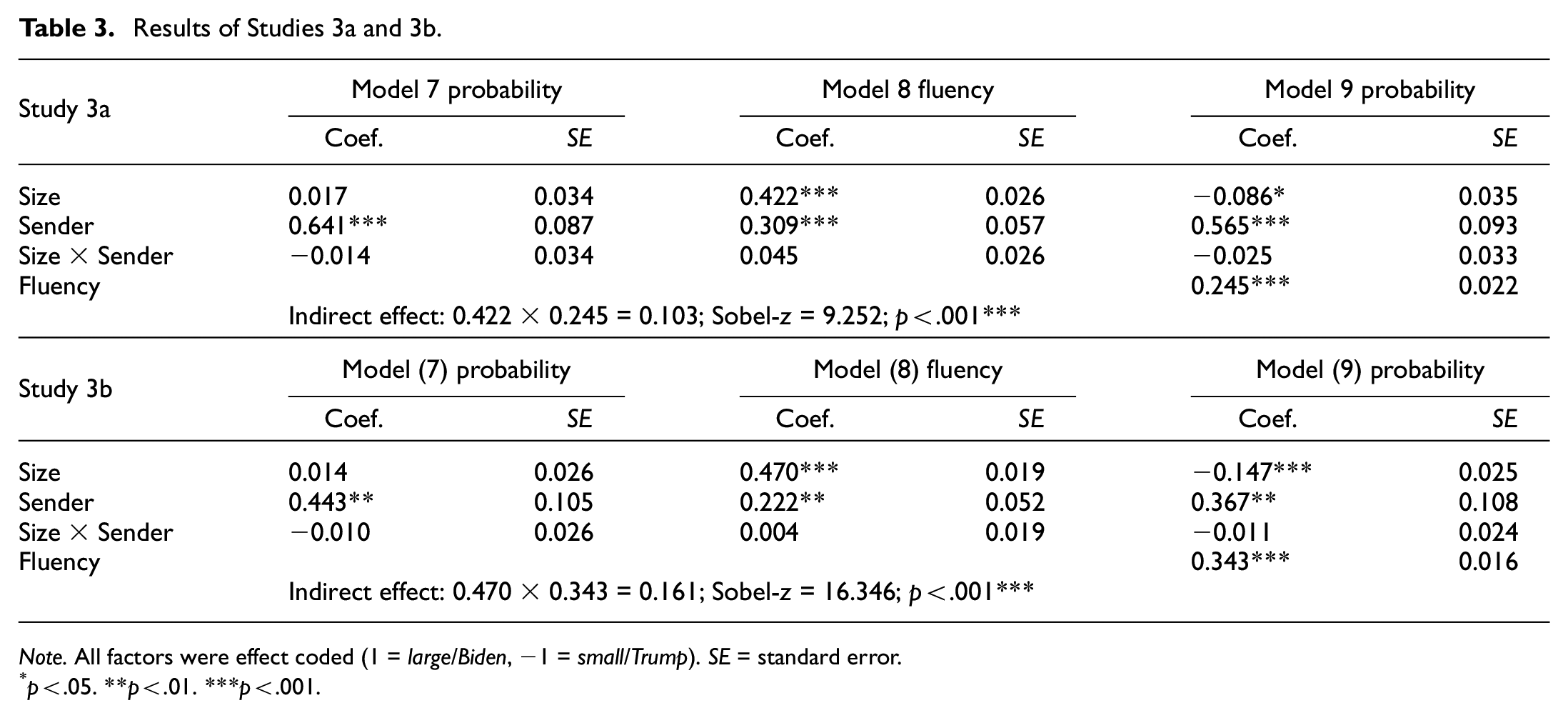
Note. All factors were effect coded (1 = large/Biden, −1 = small/Trump). SE = standard error.
p < .05. **p < .01. ***p < .001.
In sum, Studies 3a and 3b support the observation that size and direction of the total effect of manipulated fluency on probability judgments depend on the specific empirical setting. When fluency was manipulated by presentation size in the context of election campaigns, a total effect of the experimental manipulation could not be detected. However, an indirect effect via subjective fluency occurred in both studies, which is subject to a mere correlative interpretation as outlined in the description of Study 1. We also observed total and direct effects of the sender on probability and perceived fluency in both studies such that tweets from Biden were perceived as more probable and more fluent. To explain this pattern of results, it is important to note that our samples tended toward supporting the Democratic rather than the Republican party (Median ≥ 5 on a preference scale from 1=Republican party to 7=Democratic party). Preference for the sender has been shown to increase truth evaluations for messages by the sender (Chaxel & Laporte, 2020), which explains the positive direct effect of the sender on probability. Moreover, positive information has been shown to facilitate processing (Unkelbach et al., 2008), which could explain the positive direct effect of the sender on fluency.
Results Summary and Single-PaperMeta-Analysis
The results summary focuses on the cumulative evidence across all seven studies for a total effect of the experimental manipulations of processing fluency on judgments about future probability and the evidence for an indirect effect via subjective processing fluency. Figure 1 shows the distribution of the probability judgments conditional on the experimental manipulation of fluency for all seven studies. The statistical analyses reported earlier revealed that a total effect of the experimental manipulation only occurred in Studies 1, 2c, and 2d. In Study 1, longer presentation durations decreased judgments of future probability, which is the opposite pattern than expected based on the fluency framework. In contrast and in line with the fluency framework, Studies 2c and 2d showed that prior exposure increased judgments about future probability.
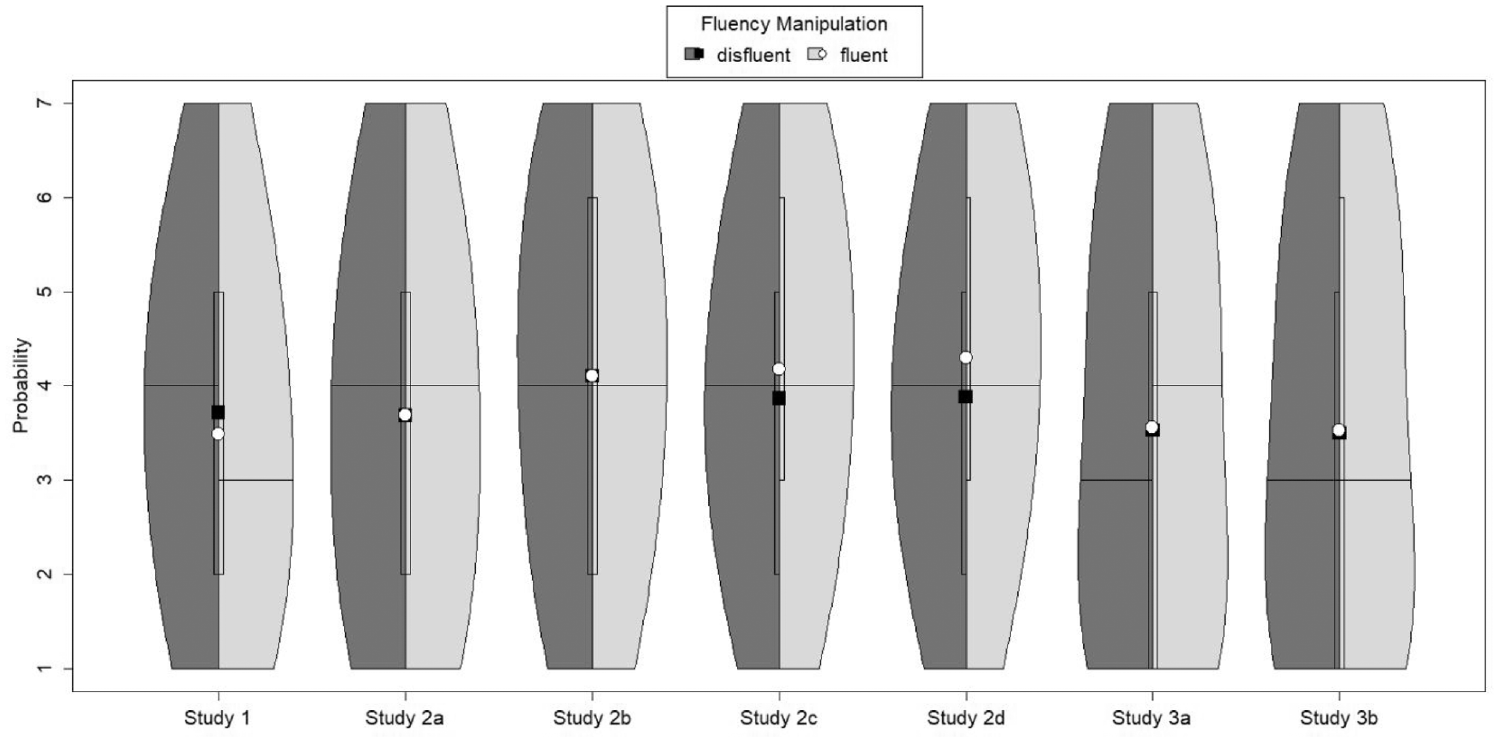
Probability Judgments by Experimental Fluency Manipulation for All Seven Studies.
To check the overall evidence for a total effect, we conducted a single-paper meta-analysis using the R function “rma” from the “metafor”-package (Viechtbauer, 2010). Specifically, we focused on the total effects of the experimental fluency manipulation on probability judgments estimated in the first statistical model of each of the seven studies and entered the respective beta coefficients and their squared standard errors into the “rma” function. In line with the mixed empirical pattern shown in Figure 1, we observed a nonsignificant meta-analytical estimate for the total effect (b=0.037; SE=0.041; z=0.914; p=.361). Yet, the meta-analytical estimate for the heterogeneity between the studies was significant (p < .001), which indicates that there is more heterogeneity between the studies than would be expected based on sampling variability alone (Viechtbauer, 2010).
The other effect of interest is the indirect effect of the experimental fluency manipulations on probability judgments via subjective processing fluency that was statistically significant in five of seven studies (i.e., it was nonsignificant in Studies 2b and 2c). To check the cumulative evidence for this indirect effect, we conducted a single-paper meta-analysis by entering the estimates of the indirect effects and the squared Sobel-estimates of the standard errors of the indirect effects into the “rma” function. We observed a significant meta-analytical estimate for the indirect effect (b=0.060; SE=0.023; z=2.682; p=.007). Again, the meta-analytical estimate for the heterogeneity between the studies was significant (p < .001).
General Discussion
Compared with the rich literature on judgments of truth (for a review, see Brashier & Marsh, 2020) and on the role of processing fluency in contexts of knowable uncertainty (Dechêne et al., 2010), research on judgments involving random uncertainty is far less extensive. Across seven experimental studies, this research provides mixed results for the link between processing fluency and judgments of future probability. Regarding the total effects of the experimental fluency manipulations on judged probability, only two (2c and 2d) of the seven studies indicated that fluency increases judged probability, one study (Study 1) showed the opposite, and four studies (2a, 2b, 3a, and 3b) did not show any total effects of the experimental fluency manipulation. Accordingly, our single-paper meta-analysis finds no evidence for a total effect in our studies. At the same time, the meta-analysis indicated substantial heterogeneity between the studies suggesting that there may be systematic factors that make a total effect more or less likely. Accordingly, we regard it a priority for future research to identify these factors. The two studies that showed a significant positive total effect (2c and 2d) differ from the other studies by (a) being the only two studies that used prior exposure as a manipulation of fluency; (b) using stimuli that were judged slightly more probable than the stimuli in the other studies (see Figure 1); (c) using verbal statements that differed slightly from the verbal statements in Studies 2a and 2b and considerably from the utopias (Study 1) and the politician tweets (Studies 3a and 3b 5 ); and (d) evoking a time frame 6 (i.e., events to happen within the next 10 months) that was considerably shorter than in Study 1 (utopias to become a reality in 30 years) or in Studies 3a and 3b (election promises to be implemented within 4 years of office). We suggest that future research systematically examines whether these four factors moderate the potential effects of fluency on future probability judgments. In this regard, we also note that our observation that a total effect only occurred for exposure-induced fluency aligns with recent research showing that the “truth effect” is stronger for exposure-induced fluency than for manipulations of perceptual fluency (Vogel et al., 2020).
Besides the mixed results for the total effect, the indirect effect via processing fluency was robust and occurred in five of seven studies. Accordingly, the single-paper meta-analysis indicates that there is cumulative evidence for the existence of an indirect effect (yet, there is also significant heterogeneity between the studies). Although this finding suggests that the subjective experience of fluency may be a component to explain future probability judgments, it is important to note that even in the only study that showed a significant positive total and a significant indirect effect (Study 2d), the mediation via processing fluency was only partial and a strong direct effect remained significant. Given that mediation analyses suffer from a correlational relationship between the mediator and dependent variable such that alternative causal relations cannot be excluded (especially when conditional independence could not be established by a full mediation; Otter et al., 2018), we explicitly recommend a cautious interpretation of the observed indirect effects. At the same time, we suggest that future research digs deeper into the causal mechanism of the link between manipulated fluency and future probability judgments with methods that facilitate causal interpretations (Spencer et al., 2005).
From a theoretical perspective, it would be interesting to better understand why (or why not) fluency influences future probability judgments. In the context of knowable uncertainty, the “truth effect” is usually explained by a misattributed feeling of familiarity (Reber & Schwarz, 1999). In the present context of future probability judgments entailing random uncertainty, another process variable could additionally or alternatively play a role: people’s perceived psychological distance (Trope & Liberman, 2010). The temporal distance inherent in judgments about future probability constitutes a critical determinant of an abstract construal level and a lower perceived probability (Wakslak & Trope, 2009). Interestingly, Alter and Oppenheimer (2008) adopt this construal level reasoning to processing fluency and show that a high (low) level of processing fluency triggers the inference that an event is psychologically closer (more distant), leading to a more concrete (abstract) mental representation of that event. This link between processing fluency and construal level suggests that in the context of future probability judgments, the perceived psychological distance could act as a process variable that warrants further examination. Accordingly, we hope that the present paper inspires future research on the role of processing fluency in judgments involving random uncertainty that are omnipresent in everyday life and, accordingly, an important research topic in many scientific disciplines.
Supplemental Material
sj-docx-1-spp-10.1177_19485506221105375 – Supplemental material for Feeling the Future? Mixed Empirical Evidence for a Link Between Processing Fluency and Judgments About Future Probability
Supplemental material, sj-docx-1-spp-10.1177_19485506221105375 for Feeling the Future? Mixed Empirical Evidence for a Link Between Processing Fluency and Judgments About Future Probability by Jan R. Landwehr, Svenja Winkler and Torsten Bornemann in Social Psychological and Personality Science
Footnotes
Declaration of Conflicting Interests
The author(s) declared no potential conflicts of interest with respect to the research, authorship, and/or publication of this article.
Funding
The author(s) received no financial support for the research, authorship, and/or publication of this article.

Supplemental Material
Supplemental material for this article is available online.
Notes
Author Biographies
Handling Editor: Yoav Bar-Anan
References
Supplementary Material
Please find the following supplemental material available below.
For Open Access articles published under a Creative Commons License, all supplemental material carries the same license as the article it is associated with.
For non-Open Access articles published, all supplemental material carries a non-exclusive license, and permission requests for re-use of supplemental material or any part of supplemental material shall be sent directly to the copyright owner as specified in the copyright notice associated with the article.
