




Abstract
Based on dual-pathway models of collective action, this research examines how social movements’ proximity to their stated goal affects potential supporters’ willingness and motivations to engage. Across three experimental studies in two different contexts, and for members of both the disadvantaged ingroups and advantaged outgroups (total N = 1,102), we find consistent support for two counteracting indirect effects of goal distance on collective action. When movements are closer to their goals, potential supporters perceive less injustice, which reduces their willingness to engage in collective action for the movements’ cause via the emotion-focused pathway. At the same time, perceptions of political efficacy increase, bolstering engagement via the problem-focused pathway. We conclude that while goal proximity does not seem to affect overall intentions to engage in collective action, it does affect the motivational paths to it, which makes it a relevant factor to consider in both research and social justice contexts.
Keywords
“It’s not ‘Yes we can’, it’s ‘Yes we will’”—this assessment from a 2008 marriage equality rally conveys complete faith in the power of collective action to achieve its goals (McKinley, 2008). However, social movements usually have a long way to go from their first formation until such success, and change is unlikely to appear inevitable, or even probable, from the start. The social psychological study of collective action has established the importance of both appraising the status quo as unjust and the belief that changing it is possible as antecedents of action, but we do not yet know how these motivations are affected by a movement’s proximity to its goal.
This research sets out to empirically test the idea that as movements approach their goals, participants’ engagement shifts from being driven by perceptions of injustice toward being motivated by perceptions of efficacy. Across three studies and two different contexts, we manipulate the goal proximity of fictionalized initiatives aiming to increase the number of women university professors or immigrant journalists and investigate how this affects willingness to engage in supportive collective action in both members of the disadvantaged (women and immigrants) and advantaged groups (men and non-immigrants). Based on dual-pathway models of collective action (Stürmer & Simon, 2004; van Zomeren et al., 2004), we propose that as goal proximity increases, it will decrease participation intentions via reduced injustice appraisals while simultaneously increasing them via growing efficacy beliefs.
Goal Distance and Pathways to Collective Action
The term collective action refers to actions such as protests usually taken in the interest of maintaining or improving the status of a social group (van Zomeren & Iyer, 2009; Wright et al., 1990). Collective action goals can include anything from raising awareness for an issue, to building a movement, to affecting specific policies or achieving large-scale social change (Hornsey et al., 2006). The type of goal can affect both who is motivated to participate and how they are motivated (Hornsey et al., 2006) as well as the kind of actions most likely to succeed (Feinberg et al., 2020). However, little is known about how goal proximity, that is, how close the movement is to achieving its stated goal, affects collective action engagement and shapes participants’ motivations. In the following sections, we will present our reasoning for the expectation that goal proximity should have an impact on two important factors: first, the pathways that motivate people to engage in collective action and second, the overall willingness of advantaged group members to take part in actions on behalf of a disadvantaged group (Becker, 2012; Droogendyk et al., 2016; Kutlaca et al., 2020).
We propose that goal distance versus proximity should motivate engagement in collective action by heightening the importance of perceptions of injustice and efficacy, respectively. These perceptions correspond to the predictors identified by dual-pathway models of collective action (Stürmer & Simon, 2004; van Zomeren et al., 2004, 2012), which show two distinct but complementary pathways to collective action engagement. The emotion-focused pathway is derived from relative deprivation theories (Runciman, 1966) and social identity theory (Tajfel & Turner, 1979), and is based on appraising the group’s position and societal status as unjust (Gamson, 1992; Smith et al., 2008; van Stekelenburg & Klandermans, 2013). The problem-focused pathway to collective action is based on resource mobilization theory (Jenkins, 1983) and explains how collective action engagement is determined by the belief that a movement has the resources and capacity to achieve the desired outcomes (Bandura, 2000). The literature distinguishes between different types of efficacy, but here we are primarily concerned with political efficacy, which refers to the belief that collective action is likely to bring about its political goal (Saab et al., 2015; van Zomeren et al., 2008).
While both the emotion-focused and the problem-focused pathway predict collective action participation or intentions and show additive rather than interactive effects (Stürmer et al., 2003), their importance varies across different circumstances (Ayanian et al., 2020; Tausch et al., 2011) and they are influenced by different emotional primes (Miller et al., 2009), mobilization strategies (van Stekelenburg et al., 2009), and types of support (van Zomeren et al., 2004). With regard to goals, it has been argued that the effect of efficacy, and particularly political efficacy, on collective action participation is strongest when aims are specific and achievable (Hornsey et al., 2006). We propose that, similar to specificity and achievability, goal proximity should also increase the importance of political efficacy. This is in line with motivation research, which has found that setting proximal goals increases self-efficacy in individuals (Bandura & Schunk, 1981). Similarly, greater goal proximity has been shown to increase performance via greater perceived task ease (Stern et al., 2013) and motivation via greater perceived marginal impact of goal-directed actions (Koo & Fishbach, 2012), two mechanisms that closely resemble efficacy beliefs.
On the other hand, goal proximity should have the opposite effect on the emotion-focused pathway. This pathway depends on individuals adopting an injustice frame (Gamson, 1992), meaning they agree with the social movement’s appraisal of the group’s current situation as unjust and its goal as just. As a result, the further a movement is from achieving its goal, the higher its supporters’ injustice appraisals should be, whereas with increasing goal proximity, the indirect effect via injustice should decrease. Therefore, we theorize that both greater distance from and greater proximity to a movement’s stated goal can motivate collective action intentions through different mechanisms. We expect that with increasing goal proximity, a tradeoff takes places whereby injustice appraisals decrease while political efficacy beliefs increase, resulting in counteracting indirect effects on collective action intentions.
Goal Distance and Advantaged Group Support
Members of advantaged groups can engage in collective action to support disadvantaged groups and their causes (Iyer & Achia, 2020; Radke et al., 2020; Selvanathan et al., 2020). The motivations of advantaged group members are complex because, while they can be supporters of social change, they also benefit from the status quo and tend to have more of an interest in preserving it (Becker & Wright, 2021; Jackman, 1994; Sidanius & Pratto, 1999). Thus, they are more likely to engage in system-supporting collective action than disadvantaged group members (Jost et al., 2017; Osborne et al., 2019).
Previous research has shown that advantaged group members are more willing to support disadvantaged groups in collective action when they are more aware of their group-based privileges (Leach et al., 2006; Swim & Miller, 1999) but less willing to do so when they feel like these privileges are under threat (Becker et al., 2022; Kosakowska-Berezecka et al., 2020; Radke et al., 2018; Stefaniak et al., 2020). If a social movement has the goal of improving the situation of a disadvantaged group, greater goal distance should make status differences more obvious and thus increase privilege awareness while decreasing privilege threat. Therefore, we expect that members of advantaged groups will be more likely to support disadvantaged groups when goal distance is greater than when goal is within close reach.
The Present Research
The present research aims to address a gap in the existing literature on collective action by considering the effect of proximity to versus distance from a movement’s goal on the emotion- and problem-focused pathways to collective action. It also examines the influence of this factor on the overall willingness of advantaged group members to participate. We investigate these questions across three experimental studies. We expect that increasing goal proximity will positively affect willingness to engage in collective action via increased political efficacy and negatively affect it via decreased injustice appraisals (Figure 1) and that these mechanisms will apply to members of both advantaged and disadvantaged groups. However, given that goal proximity implies a potential loss of privileges for the advantaged group, we expect that our manipulation might interact with group membership, with members of the advantaged but not the disadvantaged group less willing to engage in collective action as goal distance decreases.
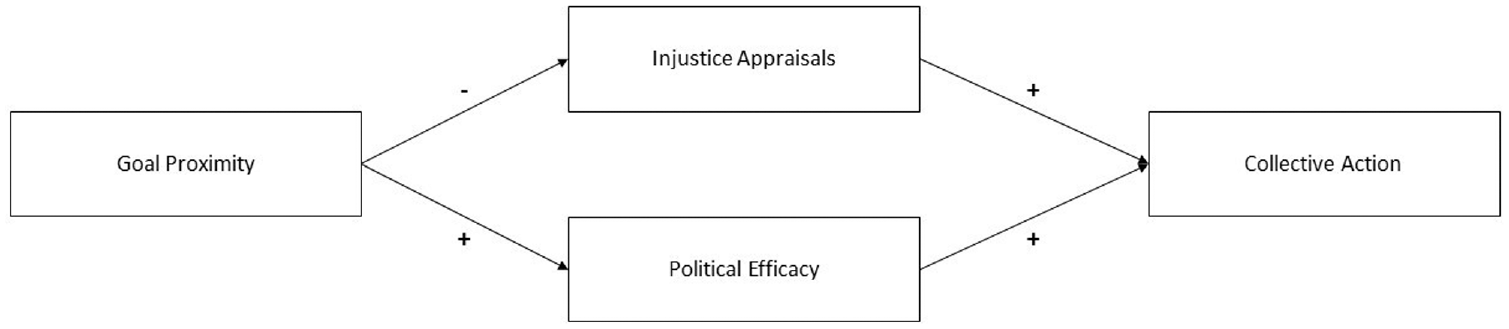
Proposed Model of the Indirect Effects of Goal Proximity on Collective Action Intentions.
This research was approved by the Institutional Review Board at the first author’s university. Study 3 was preregistered at https://aspredicted.org/1DQ_MCM. Materials, data, syntax, supplementary analyses, and detailed sample descriptions are available on the Open Science Framework (OSF, https://osf.io/uqw8z/).
Study 1
In Study 1, we used the context of gender equality in academia. Participants read about an initiative aiming to raise the percentage of professorships held by women at a German university to 50%. Goal proximity was manipulated through the information participants received about the current percentage of women professors at the university. We expected that increasing goal proximity would lower collective action intentions via decreased injustice appraisals but increase them via heightened perceptions of the initiative’s political efficacy. We further expected that while advantaged group members (i.e., men) should be less willing to engage in collective action supporting the initiative than disadvantaged group members (i.e., women) in all conditions, this effect should increase with increasing goal proximity.
Method
Participants
Power analysis for this 4 × 2 design, set to detect a small effect (f = .10, 1−β = .80, α = .05), suggested a sample of 489 participants. Based on this, we recruited 514 members of a medium-sized German university. After excluding those who failed a manipulation check or did not report their gender, the final sample consisted of 496 participants (47% women, Mage = 24, SD = 5.01, 91% students). Sixty-nine participants reported having engaged in activism for gender equality before.
Manipulation
Participants were randomly allocated to one of four conditions informing them about an initiative to raise the share of women in professorships to 50% from currently 10% (N = 128), 20% (N = 128), 30% (N = 122), or 40% (N = 118). 1 We included a manipulation check at the end of the questionnaire asking participants what percentage they had been told.
Measures
All items were answered on scales from 1 (“strongly disagree”) to 7 (“strongly agree”). After reading the manipulation text, participants were presented with the measures for mediators and dependent variables:
Political efficacy beliefs were assessed with one item (Ayanian et al., 2020; Saab et al., 2015). Participants were asked whether they believed that the initiative would succeed in raising the share of female professors to 50% within the next 5 years.
Injustice appraisals were measured with three items (e.g., “I believe the current number of women professors is unjust”; α = .88).
Collective action intentions were measured with five items (e.g., “I would join a demonstration urging the university to adopt the initiative’s goal and raise the share of female professors to 50%”; α = .93). Previous research has shown that behavioral intentions are a useful proxy for actual collective action (De Weerd & Klandermans, 1999; Webb & Sheeran, 2006). 2
Results and Discussion
Means, standard deviations, and intercorrelations between the variables are shown in Table 1. Injustice and efficacy were not correlated which is in line with previous research (Saab et al., 2015). Analysis of variance (ANOVA) (Table 2) showed no main effect of the goal proximity manipulation on collective action intentions which were similar in the 10% (M = 2.68, SD = 1.61), 20% (M = 2.50, SD = 1.45), 30% (M = 2.79, SD = 1.57), and 40% conditions (M = 2.33, SD = 1.37). As expected, goal proximity increased efficacy and decreased injustice appraisals. There were main effects of gender on collective action intentions, political efficacy beliefs, and injustice appraisals, but, against our expectations, there were no interactions with goal proximity.
Descriptive Statistics and Correlations (Study 1).
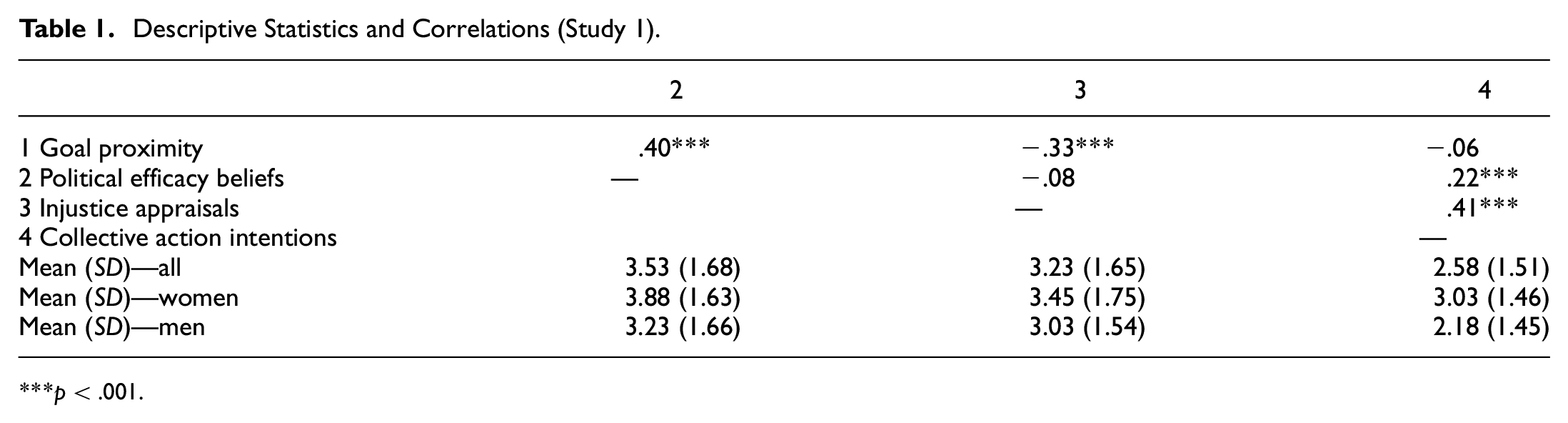
p < .001.
ANOVA Results for Collective Action Intentions, Political Efficacy, and Injustice Appraisals (Study 1).
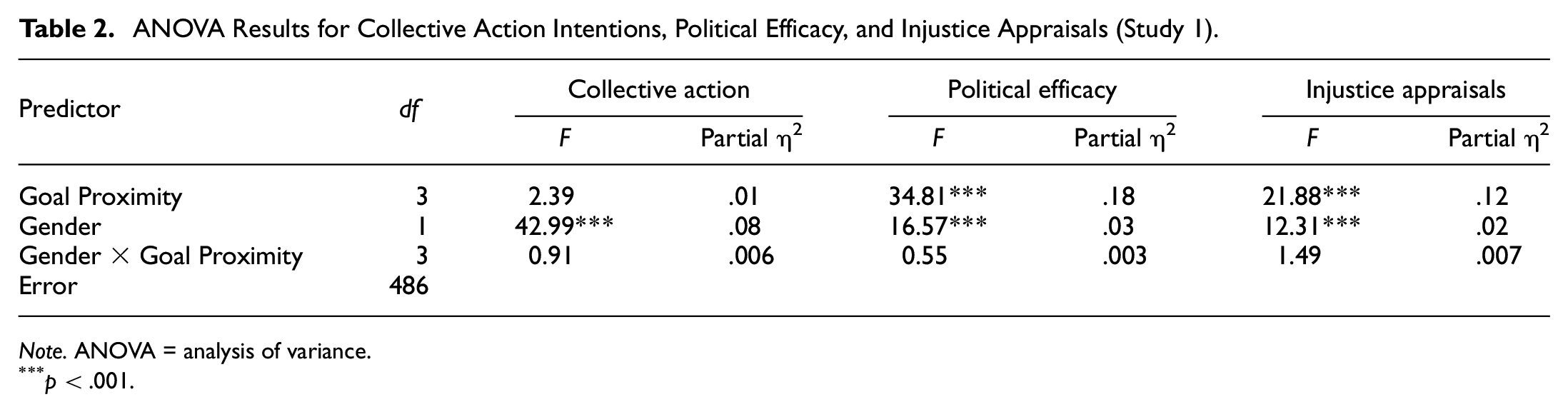
Note. ANOVA = analysis of variance.
p < .001.
Parallel mediation analysis was employed to test whether the counteracting effects on political efficacy and injustice explained the absence of a main effect of the manipulation on collective action intentions. Examining the effects of the multicategorical independent variable on the mediators revealed that the difference in political efficacy beliefs did not reach significance between the 10% and 20% conditions (Figure 2) and the difference in injustice appraisals did not reach significance between the 20% and 30% conditions (Figure 3). For this reason, we pursued a strategy similar to the extreme groups’ approach (Preacher et al., 2005) and included only the 10% and 40% conditions in the main analysis, with comparisons between all conditions available on the OSF. The results showed that there were indeed two opposing indirect effects of goal proximity on collective action (Figure 4): a positive one via political efficacy, b = .13, β = .13, SE = .04, p = .001, 95% confidence interval (CI) [.06, .22] and a negative one via injustice appraisals, b = −.19, β = −.19, SE = .05, p < .001, 95% CI [−.26, −.12]. 3
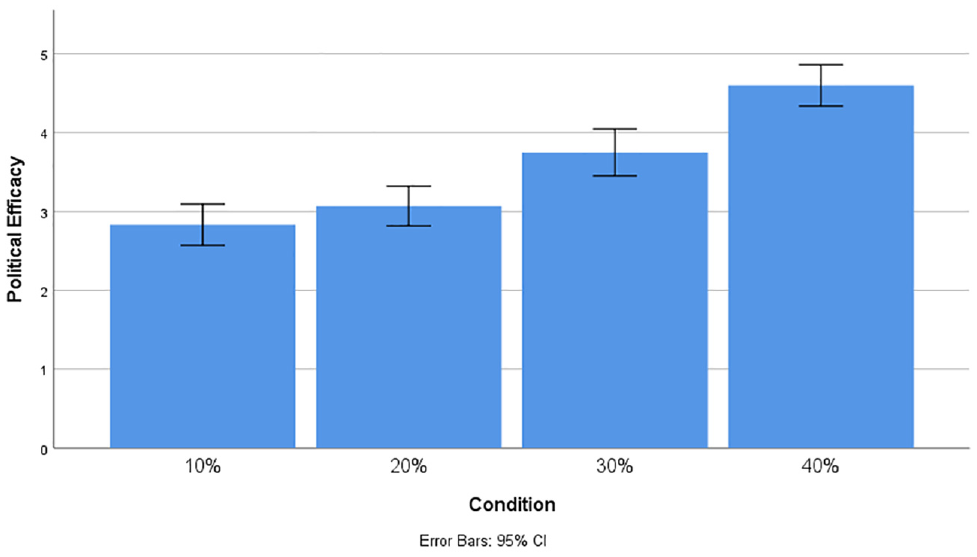
Mean of Political Efficacy by Condition (Study 1).
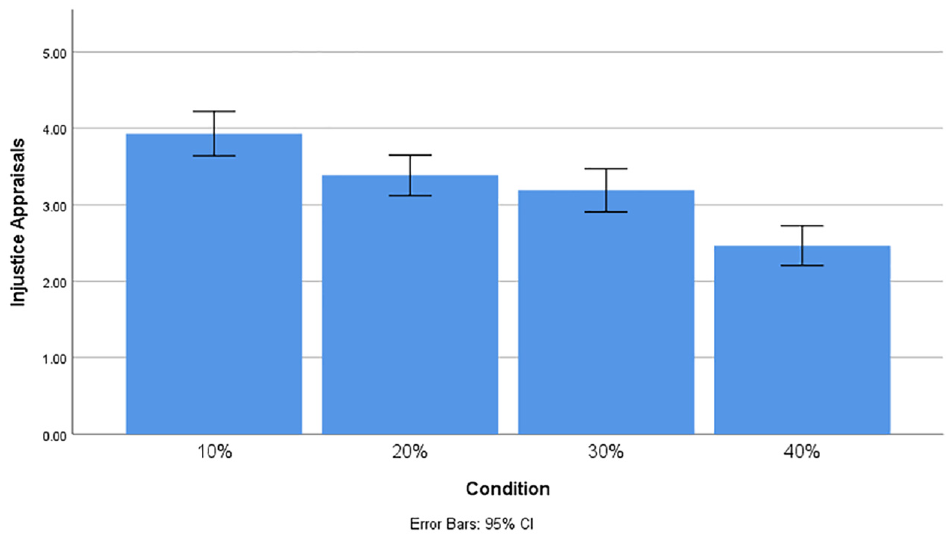
Mean of injustice Appraisals by Condition (Study 1).
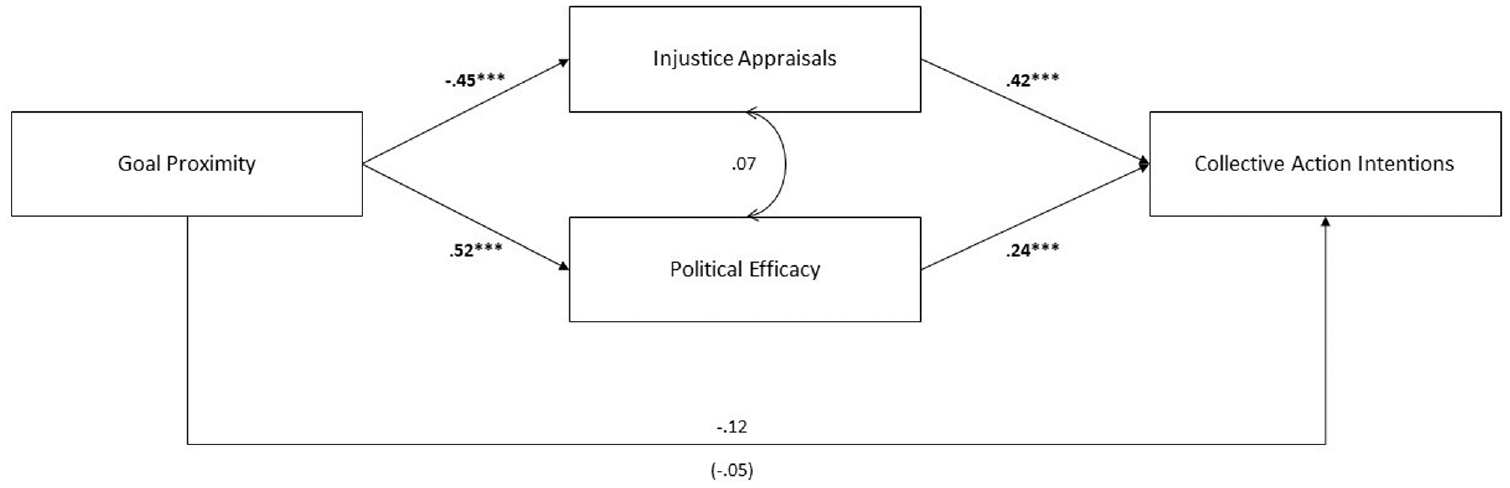
Effect of Goal Proximity on Collective Action Intentions Mediated by Injustice Appraisals and Political Efficacy (Study 1).
The results of Study 1 provided support for our hypothesis regarding the counteracting effects of goal proximity on the injustice and efficacy pathways to collective action. Thus, despite the absence of a direct effect, these findings indicate that goal proximity still plays an important role in collective action because it affects the pathways that motivate people to engage. On the contrary, our hypothesis regarding the effect of goal proximity on collective action intentions in advantaged group members was not confirmed. Men were overall less willing to support the initiative than women, but this effect did not differ across conditions.
Study 2
The 10% increase in goal distance did not consistently produce significant effects in Study 1; therefore, we conducted a second study to replicate the results with a more parsimonious design including only the 10% and 40% conditions. We expected to find the same indirect effects via injustice and political efficacy but no direct effect of goal proximity on collective action intentions. Based on the results from Study 1, we still expected a main effect of group membership on collective action and we reinvestigated the interaction with goal proximity.
Method
Participants
Monte Carlo power analysis (1,000 replications, 1−β = .95) for parallel mediation analysis based on the correlation matrix from Study 1 indicated that a minimum of 220 participants would be required. We recruited 300 university members and after excluding those who failed a manipulation check, did not report their gender, or had already participated in Study 1, the final sample consisted of 274 participants (67% women, Mage = 24, SD = 3.73, 94% students).
Manipulation and Measures
The same measures and manipulation from Study 1 were used; however, this time, only the 10% (N = 134) and 40% conditions (N = 140) were included. 4
Results and Discussion
Means, standard deviations, and correlations between variables are shown in Table 3. ANOVA largely replicated the findings from Study 1 (Table 4). Again, we found no main effect of goal proximity on collective action intentions, but political efficacy beliefs were significantly higher (M = 4.79, SD = 1.59 vs. M = 3.44, SD = 1.66) and injustice appraisals significantly lower (M = 2.78, SD = 1.46 vs. M = 3.87, SD = 1.47) in the 40% condition compared with the 10% condition. We found main effects of group membership on collective action and efficacy in the expected direction, but the effect on injustice appraisals did not reach significance. No interactions were found.
Descriptive Statistics and Correlations (Study 2).
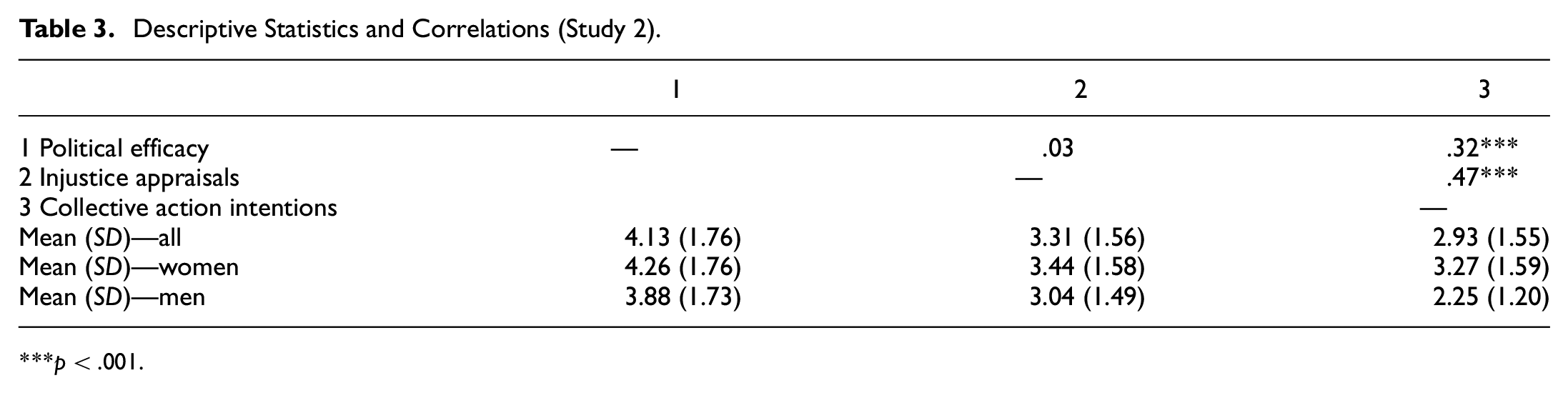
p < .001.
ANOVA Results for Collective Action Intentions, Political Efficacy, and Injustice Appraisals (Study 2).
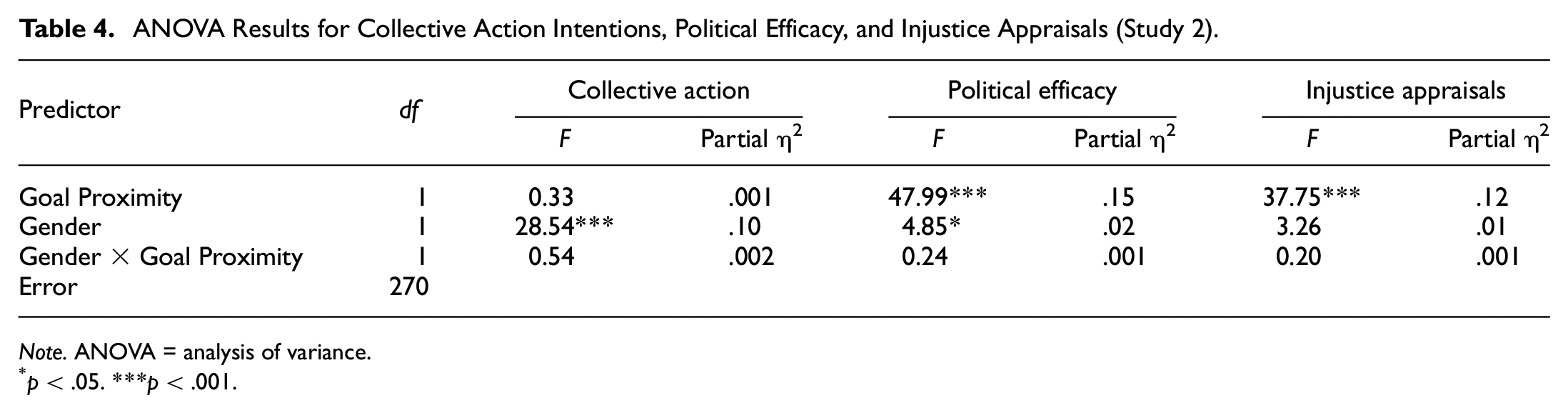
Note. ANOVA = analysis of variance.
p < .05. ***p < .001.
Parallel mediation analysis showed two counteracting indirect effects of goal proximity on collective action intentions (Figure 5) via efficacy, b = .35, β= .12, SE = .10, p < .001, 95% CI [.15, .57], and injustice, b = −.50, β = −.16, SE = .11, p < .001, 95% CI [−.75, −.35]. 5 Study 2 thus replicated the results of Study 1 and supported the reasoning that goal proximity does not directly affect collective action intentions because of two counteracting indirect effects. Again, we did not find an effect of goal proximity on advantaged group members’ willingness to engage in collective action.
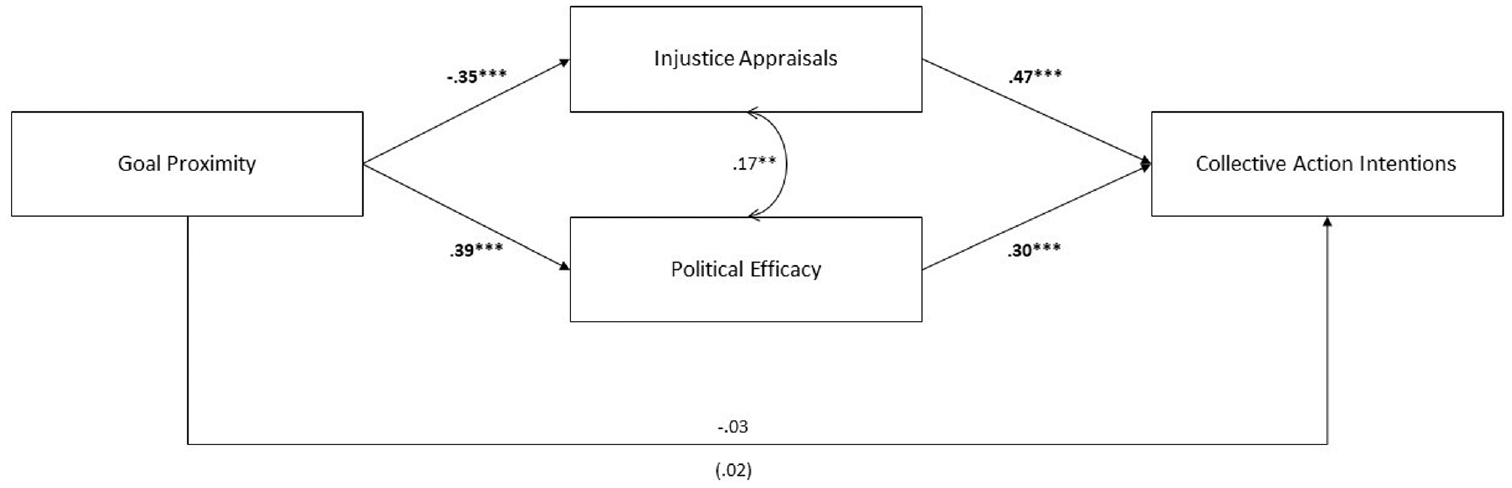
Effect of Goal Proximity on Collective Action Intentions Mediated by Injustice Appraisals and Political Efficacy (Study 2).
Study 3
To examine whether the results from the first two studies are generalizable across different contexts, we conducted a third study, this time focusing on the underrepresentation of journalists who are immigrants or direct descendants of immigrants in German media, a topic that was receiving increased attention at the time (Boytchev et al., 2020). Rather than parity, the goal of the initiative in this study is proportional representation, that is, increasing the percentage of immigrant journalists to reflect the composition of German society as a whole.
Method
Participants
Monte Carlo power analysis (1,000 replications, 1−β = .95) for parallel mediation analysis indicated that a minimum of 320 participants would be required. We used the respondi panel to recruit a sample of 332 participants (42% women, Mage = 45, SD = 14.90) that was equally comprised of target group and advantaged group members. Consequently, half the sample (51%) was born outside of Germany or had a least one parent who was born outside of Germany, a standard measure of migration background in Germany. The most frequently listed countries of origin were Poland, Russia, Kazakhstan, and Turkey.
Manipulation
Participants were randomly allocated to one of two conditions informing them about an initiative to raise the share of immigrant journalists in German media to a representative 25% from currently either 2% (the actual percentage; N = 162) or 18% (three quarters of the way to the goal to be consistent with the previous study; N = 170).
Measures
All items were answered on scales from 1 (“strongly disagree”) to 7 (“strongly agree”). After the manipulation, participants were presented with the measures for mediators and dependent variables.
Political efficacy was assessed with three items (e.g., “I believe the new initiative will reach its goal of convincing German media outlets to increase the number of immigrant journalists to 25%”; α = .94)
Injustice appraisals were measured with a three items (e.g., “I believe the current number of immigrant journalists is unjust”; α = .90).
Collective action intentions were measured with seven items (e.g., “I would join a demonstration to raise awareness of the initiative and its goals”; α = .94).
Results and Discussion
Means, standard deviations, and correlations between variables are shown in Table 5. Unlike in the previous studies, political efficacy beliefs and injustice appraisals were correlated. ANOVA (Table 6) largely replicated the findings from Studies 1 and 2.
Descriptive Statistics and Correlations (Study 3).
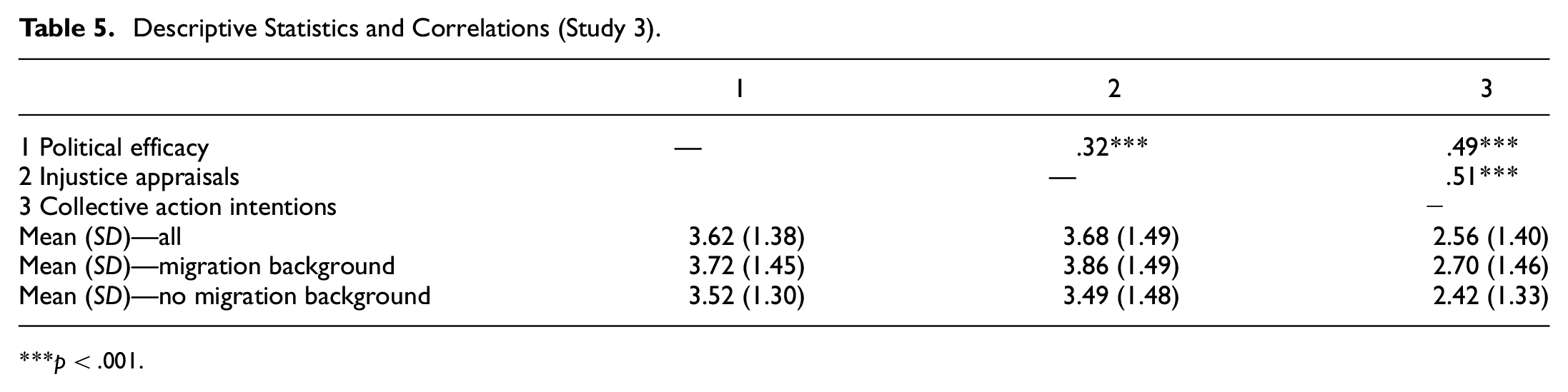
p < .001.
ANOVA Results for Collective Action Intentions, Political Efficacy, and Injustice Appraisals (Study 3).
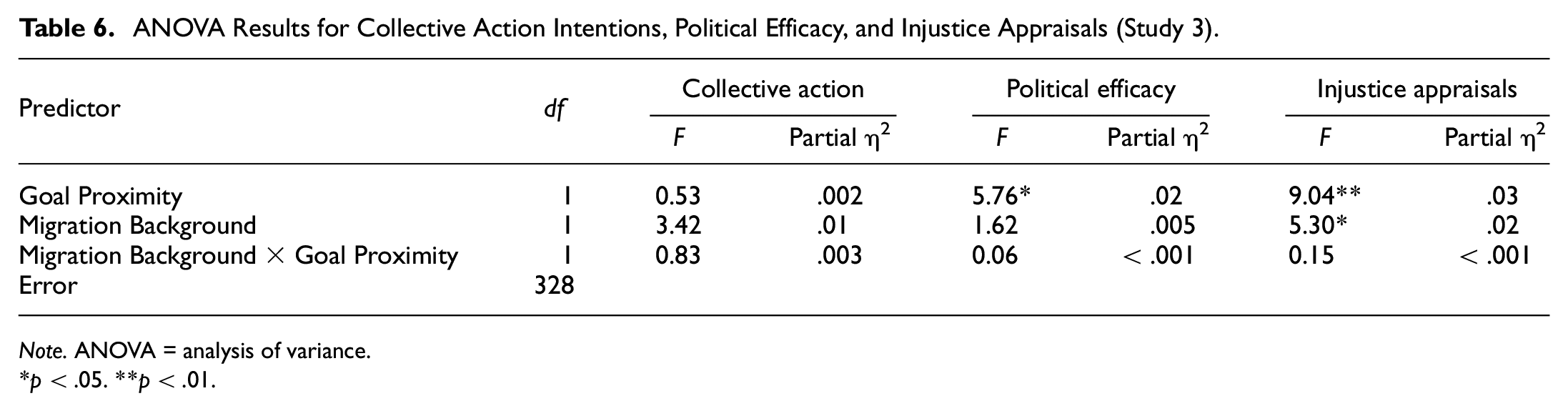
Note. ANOVA = analysis of variance.
p < .05. **p < .01.
Goal proximity did not affect collective action intentions, but political efficacy was significantly higher (M = 3.80, SD = 1.41 vs. M = 3.44, SD = 1.33) and injustice appraisals significantly lower (M = 3.44, SD = 1.50 vs. M = 3.93, SD = 1.45) in the 18% condition compared with the 2% condition. Injustice appraisals, but not political efficacy or collective action intentions, were significantly higher for participants with a history of migration than for those without.
Because research has shown that immigrants from the European Union (EU) and their descendants report significantly fewer experiences of discrimination in Germany than those from outside the EU (SVR-Forschungsbereich, 2018), we reran these analyses with only those with a migration background from outside the EU classified as disadvantaged group members. As a result, the main effect of group membership on collective action reached significance, F(1, 328) = 18.27, p = .009, η2 = .02, with disadvantaged group members more willing to engage than advantaged group members (M = 2.96, SD = 1.44 vs. M = 2.46, SD = 1.37). The effect on injustice appraisals was increased, F(1, 328) = 18.27, p < .001, η2 = .05, but the effect on political efficacy remained nonsignificant, F(1, 328) = 1.55, p = .214, η2 = .005. No significant interactions were found.
Path analysis (Figure 6) found the same two counteracting indirect effects of goal proximity on collective action intentions via efficacy, b = .06, β = .05, SE = .03, p = .020, 95% CI [.03, .15], and injustice, b = −.09, β = −.07, SE = .03, p = .006, 95% CI [−.18, −.03]. 6 The results from Study 3 show that the effects of goal proximity on collective action intentions are consistent across different contexts. Initiatives to advance the interests of women and immigrants both received increased support via the injustice path when they were still far from reaching their goal and via the political efficacy path when the discrepancy between the status quo and the goal was smaller.
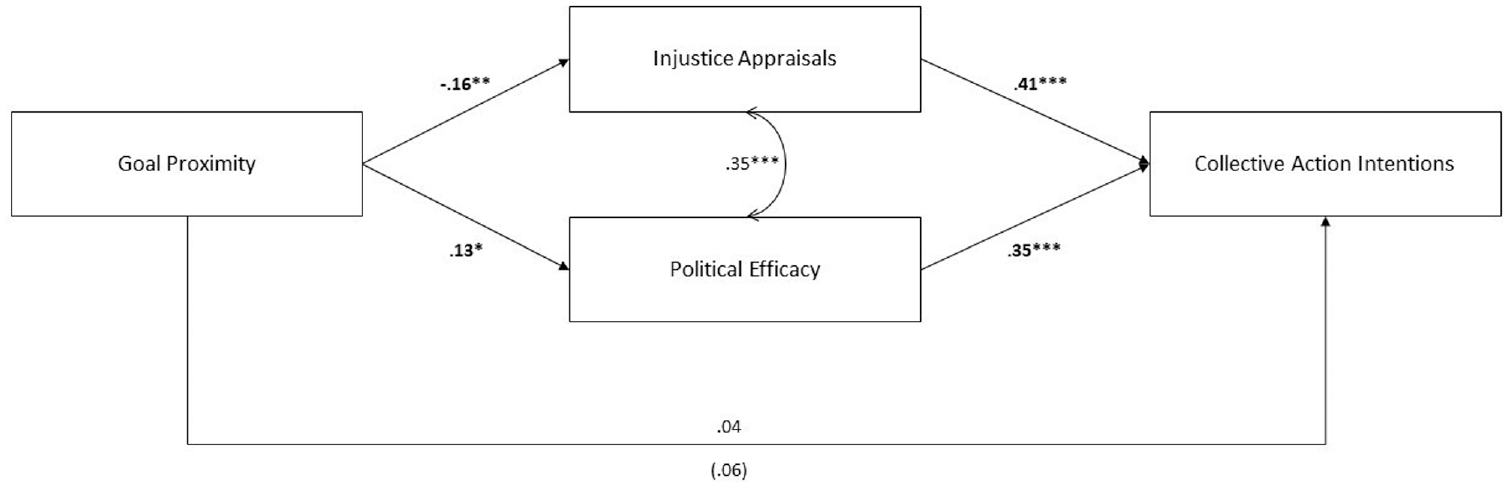
Effect of Goal Proximity on Collective Action Intentions Mediated by Injustice Appraisals and Political Efficacy (Study 3).
General Discussion
Across three experimental studies, we were able to demonstrate that a movement’s proximity to its stated goal does not affect overall willingness to engage in collective action to support it but that it does significantly affect the pathways leading up to such action. Our findings suggest that as a movement approaches its goal, injustice appraisals decrease, reducing collective action intentions via the emotion-focused pathway. Simultaneously, political efficacy beliefs grow, increasing collective action intentions via the problem-focused pathway. The mechanisms we discovered extend the existing research on dual pathways to collective action (Stürmer & Simon, 2004; van Zomeren et al., 2004, 2012) and their relative importance under different circumstances (Ayanian et al., 2020; Tausch et al., 2011; van Stekelenburg et al., 2009). They also add to the literature on the changes in politicization and identity that activists undergo over the course of their engagement with social movements (Turner-Zwinkels et al., 2015, 2017) by suggesting that their sense of injustice and efficacy, too, shifts with time and progress. In addition, the finding that both goal proximity and distance can fuel collective action motivations shows similarities to a study showing that both pride over previous success, via increased efficacy, and anger over previous setbacks, which is closely related to injustice appraisals, can motivate future collective action intentions (Tausch & Becker, 2013).
In Study 1, where we included not only high and low goal proximity conditions but also two more in between, willingness to engage in collective action was consistent across all conditions, indicating that it is not only at the extremes of the goal distance spectrum that engagement levels are similar. This also suggests that the tradeoff between the two routes via injustice and efficacy is a gradual and continuous phenomenon. This tradeoff, specifically the existence of the injustice pathway counterbalancing lower efficacy, distinguishes collective action goal proximity from personal goal proximity. While the increase in action intentions via efficacy when the goal is close is consistent with research on the effects of personal goal proximity found in the motivation literature (Bandura & Schunk, 1981; Koo & Fishbach, 2012; Stern et al., 2013), the absence of a direct effect of goal proximity is not. For example, based on the goal gradient hypothesis which originated in animal behavior research (Hull, 1932), studies have found that unless the goal is negative or ambivalent (Brandstätter et al., 2019), people put more effort toward it as goal proximity increases (Kivetz et al., 2006; Mutter & Kundisch, 2014).
Contrary to our predictions, we found only a main effect of group membership on willingness to engage in collective action but no interaction with goal proximity. There are several possible explanations for this. It might be a result of the experimental design, although the fictional initiatives and their goals were based on current public discourse to ensure relevance and believability. It is also possible that the increased share of disadvantaged group members in academia and journalism was not experienced as threatening enough to the advantaged group’s status, given that the potential privilege loss was not explicitly made salient. In any case, the question of whether there are conditions under which threat or system-justifying motivations undermine advantaged group supporters’ willingness to engage in collective action on behalf of the disadvantaged group remains an interesting issue to address.
Beyond the academic context, our findings might be particularly relevant to organizations and movements working to bring about social change through collective action. They suggest that while perceptions of injustice and political efficacy are affected by a movement’s proximity to its goal or the ambitiousness of that goal, overall willingness to engage in collective action is not. Therefore, it seems that even when a goal is very far out of reach and, as a result, perceived political efficacy is low, people can still be motivated via the emotion-focused route as long as injustice frames are successfully created around the issue (Gamson, 1992). This is crucial because greater goal distance or inequality as an objective condition differs from subjective injustice appraisals (Runciman, 1966; van Zomeren et al., 2008) and those who do not adopt injustice frames may defend group-based inequalities based on system-justifying or meritocratic beliefs (Knowles & Lowery, 2012; Ledgerwood et al., 2011; McCoy & Major, 2007). Reversely, even as the acute sense of injustice is reduced as the goal comes within sight, focusing on the high chance of impeding success can act as a strong motivator in its stead. Thus, a switch from more injustice-focused communication toward an emphasis on political efficacy might be a promising strategy as campaigns get closer to realizing their goals.
Limitations and Directions for Future Research
Our findings were consistent across three studies, but, although we varied the context, the manipulations we used in these studies were still relatively similar. They all involved goals for the representation of disadvantaged groups based on proportionality to the ratio in the general population. Other common types of collective action goals, including equal rights, access, or opportunities, share important characteristics with representation, such as often being framed around what would be fair to the disadvantaged group in a way that is intuitively understandable to the audience. However, while there are good reasons to think that the mechanisms we discovered are not unique to one type of goal, these findings would be strengthened by replications with different types of goals.
Similarly, future research might confirm the validity of these mechanisms by manipulating the stated goal itself rather than the information about the status quo that participants receive. While this does not affect the actual goal proximity, different goals may have different degrees of perceived legitimacy or appropriateness, which might influence collective action engagement and the pathways leading to it.
Moreover, we used experimental designs to manipulate goal proximity, allowing us to rule out other influences. Additional longitudinal studies may be able to investigate the changes that take place as a movement gets closer to its goal in a more naturalistic setting. This applies particularly to the reactions of advantaged group members whose support was not affected by the manipulation in our studies. It is possible that they would be influenced more strongly by witnessing the disadvantaged group gaining status over time and, in the process, experiencing greater threat to their own privileged position.
Conclusion
This research addresses a gap in the collective action literature by investigating the effect of goal proximity on willingness to participate in collective action. We are able to show that as a movement gets closer to achieving its goal, injustice appraisals decrease but political efficacy beliefs increase, meaning that motivation via the emotion-focused path is reduced but this is balanced out by higher motivation via the problem-focused path. We conclude that a movement’s progress or goal setting does not affect collective action engagement per se but the motivational processes at work at different stages shift significantly.
Footnotes
Handling Editor: Danny Osborne
Declaration of Conflicting Interests
The author(s) declared no potential conflicts of interest with respect to the research, authorship, and/or publication of this article.
Funding
The author(s) disclosed receipt of the following financial support for the research, authorship, and/or publication of this article: This work was supported by a grant from the German Research Foundation (DFG BE4648/4-2).
