



Abstract
Americans disagree about many things, including what threats are most pressing. We suggest people morally condemn and dehumanize opponents when they are perceived as rejecting the existence or severity of important perceived threats. We explore perceived “threat rejection” across five studies (N = 2,404) both in the real-world COVID-19 pandemic and in novel contexts. Americans morally condemned and dehumanized policy opponents when they seemed to reject realistic group threats (e.g., threat to the physical health or resources of the group). Believing opponents rejected symbolic group threats (e.g., to collective identity) was not reliably linked to condemnation and dehumanization. Importantly, the political dehumanization caused by perceived threat rejection can be soothed with a “threat acknowledgement” intervention.
Humans evolved to be attuned to threats in their physical and social environments (Stephan et al., 2009). People are driven to protect themselves (and their group) from realistic threats to physical well-being and economic livelihood (Esses et al., 2001) and from symbolic threats to their values and identity (Kachanoff et al., 2020). But not everyone agrees on what threats are most important—some prioritize physical safety while others prioritize protecting sacred symbols. People even deny the magnitude of another threat, such as when some conservatives deny climate change-based threats held by liberals. Here, we examine the impacts of perceived threat rejection—whether people condemn and dehumanize opponents when they believe their opponents reject the threats (realistic or symbolic) they care most about.
Perceived Threats—And Rejection of Threats
We explore threat rejection through the lens of COVID-19 which is both a realistic and symbolic threat (Kachanoff et al., 2021), and in artificial contexts. COVID-19 has killed millions and pummeled economies (realistic threat). But the existential threat of the virus, the uncertainty of its long-lasting effects on society, and the strategies to mitigate this threat—including social distancing which suppresses people’s ability to express cultural identity through social gatherings, religious services, and political rallies—all cause symbolic threats (Stein et al., 2021). Debates about pandemic policies are tied to emphasizing the realistic or symbolic threat of COVID-19. While many experience realistic and symbolic threat to COVID-19 simultaneously, those most concerned with realistic threats are most supportive of social distancing, while those most concerned with symbolic threats are most resistant of social distancing (Kachanoff et al., 2020). People often see opponents as rejecting the threats they care about (e.g., pro-social distancers see antisocial distancers as rejecting the lethality of COVID-19, whereas antisocial distancers see pro-social distancers as rejecting the importance of American liberties).
We operationalize perceived threat rejection as perceiving opponents disregard a threat, either by dismissing it entirely or ranking it as less severe relative to other threats. Vice President Harris, who supported social distancing policies, condemned former President Trump who opposed social distancing policies as “an individual who is not concerned about the health, safety and well-being of the American people” (Ember, 2020). Simultaneously, President Trump called governors who supported social distancing, “dictators” who seek to destroy Americans’ amendment rights (Shear & Mervosh, 2020).
The Perils of Threat Rejection
We hypothesize that people morally condemn opponents they perceive to reject important group threats. One adaptive function of moral judgment is to guard ourselves and our groups from harm (Shweder et al., 1997), and moral judgment is influenced by perceptions of harm (Schein & Gray, 2018). Therefore, perceiving policy opponents as rejecting imminent threats should foster moral condemnation (Moore-Berg et al., 2020). But does perceiving an opponent as rejecting a realistic versus symbolic threat lead to the same magnitude of condemnation?
Harms associated with realistic threats are concrete and pertain to immediate physical, psychological, or economic damages. In contrast, harms associated with symbolic threats to a group’s identity are abstract and less immediate (Schein & Gray, 2018). Symbolic threats can indirectly manifest in realistic harms by reducing psychological well-being (Kachanoff et al., 2019) or disrupting group cohesion or the economy (Abrams & Vasiljevic, 2014; Ritzen et al., 2000). But this causal chain is indirect and might not always be salient. Given these differences, we tested two competing hypotheses: The symmetry hypothesis predicts realistic and symbolic group threat rejection equally drives moral condemnation. This argues that even though symbolic threats are less concrete than realistic threats, they are still viewed by group members as harming important group needs tied to identity (Greenaway et al., 2016) and are thus morally condemned like realistic threats. This is supported by findings that symbolic (like realistic) threats influence attitudes and behaviors (Gamez-Djokic & Waytz, 2020; Kachanoff et al., 2020; Stein et al., 2021). In contrast, the asymmetry hypothesis predicts realistic threat rejection is more potent than symbolic threat rejection in eliciting condemnation because the harms associated with realistic threats are more concrete and immediate. This is supported by research showing people condemn an action more when it causes realistic harm (e.g., hitting a child) versus symbolic harm (disrespecting the American Flag; Gray & Wegner, 2011; Schein & Gray, 2018).
If perceived threat rejection leads people to morally condemn, then it likely causes people to dehumanize. The relation between condemnation and dehumanization is robust (e.g., Bastian et al., 2013; Pacilli et al., 2016). People view morality as a defining quality of “humanness” (Haslam et al., 2012) and animalistic qualities are associated with immoral behavior (Bandura, 1999). Thus, it is not surprising that during the COVID-19 pandemic, moral condemnation and dehumanization went hand-in-hand when people felt opponents rejected threats caused by the pandemic. For example, critics called Republican politician Joe Borelli a “selfish” (i.e., immoral) “monster” (i.e., not human) when he defied social distancing guidelines (Moran, 2020). However, in keeping with our distinction between the symmetry versus asymmetry hypothesis, it is an open question whether perceived realistic threat rejection leads to greater dehumanization than symbolic threat rejection—if moral condemnation is heightened for realistic versus symbolic threat rejection, then the resulting dehumanization should also be magnified for realistic versus symbolic threat rejection. Supporting this, people condemn and dehumanize those they perceive pose a realistic threat of physical danger (e.g., terrorists; Kteily et al., 2015) or economic harm (Louis et al., 2013). In contrast, people may be less likely to condemn and dehumanize those who reject symbolic threats.
The Promise of Acknowledging Threats
If perceived threat rejection inflames moral conflict, then perhaps perceived threat acknowledgment can mitigate it. We developed a “hybrid threat acknowledgement intervention,” whereby people explained how their position is motivated by concerns about both realistic and symbolic threats. By expressing concerns about both threats, opponents can validate the perceived threats of opponents while staying true to their position—consistent with other successful perspective-taking interventions for intergroup conflict (Bruneau & Saxe, 2012; Galinsky et al., 2005). For example, moral framing research (Feinberg & Willer, 2013, 2015; Kidwell et al., 2013) finds partisans are supportive of opponents’ policies when opponents acknowledge their own values.
A COVID-19 Hybrid Threat Acknowledgment for pro-social distancers would justify their position by mentioning both COVID-19’s realistic threat to health and also explaining how failing to protect American lives is a symbolic threat to the American value of unity. Similarly, antisocial distancers would argue against social distancing by raising concerns over symbolic threats to civil liberty and also explaining how symbolic threats are psychologically damaging (realistic threat).
Overview of Present Research
We tested our hypotheses across three studies and five samples (including one quasi-representative sample), using correlational and experimental methods examining COVID-19 and a novel threat. Primary analyses controlled for people’s own threat concerns and their political ideology, which both predict the policies people support (e.g., Clinton et al., 2021; Gollwitzer et al., 2020). Results remain robust without covariates—see Supplemental Material. Data, materials, and pre-registrations for studies are available at: https://osf.io/25buh/?view_only=48faedfd66b7442bad26b34735d12cb8. 1
Study 1
We hypothesized people who supported social distancing most would see opponents as rejecting realistic threats, while people who were less supportive of social distancing would see opponents as rejecting symbolic threats. We had competing hypotheses (i.e., symmetry and asymmetry hypotheses) for whether realistic more so than symbolic threat rejection would promote condemnation and dehumanization.
Sample
We recruited 326 American Mechanical Turk workers through CloudResearch on June 16, 2020. Participants not born in the United States or who failed attention checks were excluded: 281 participants, 51.96% male, Mage = 38.31 years, SD = 11.79 years. 2 See Supplemental Table 1 for demographic information.
Procedure and Measures
Participants responded to a survey about the COVID-19 pandemic, see Table 1.
Measures in Study 1
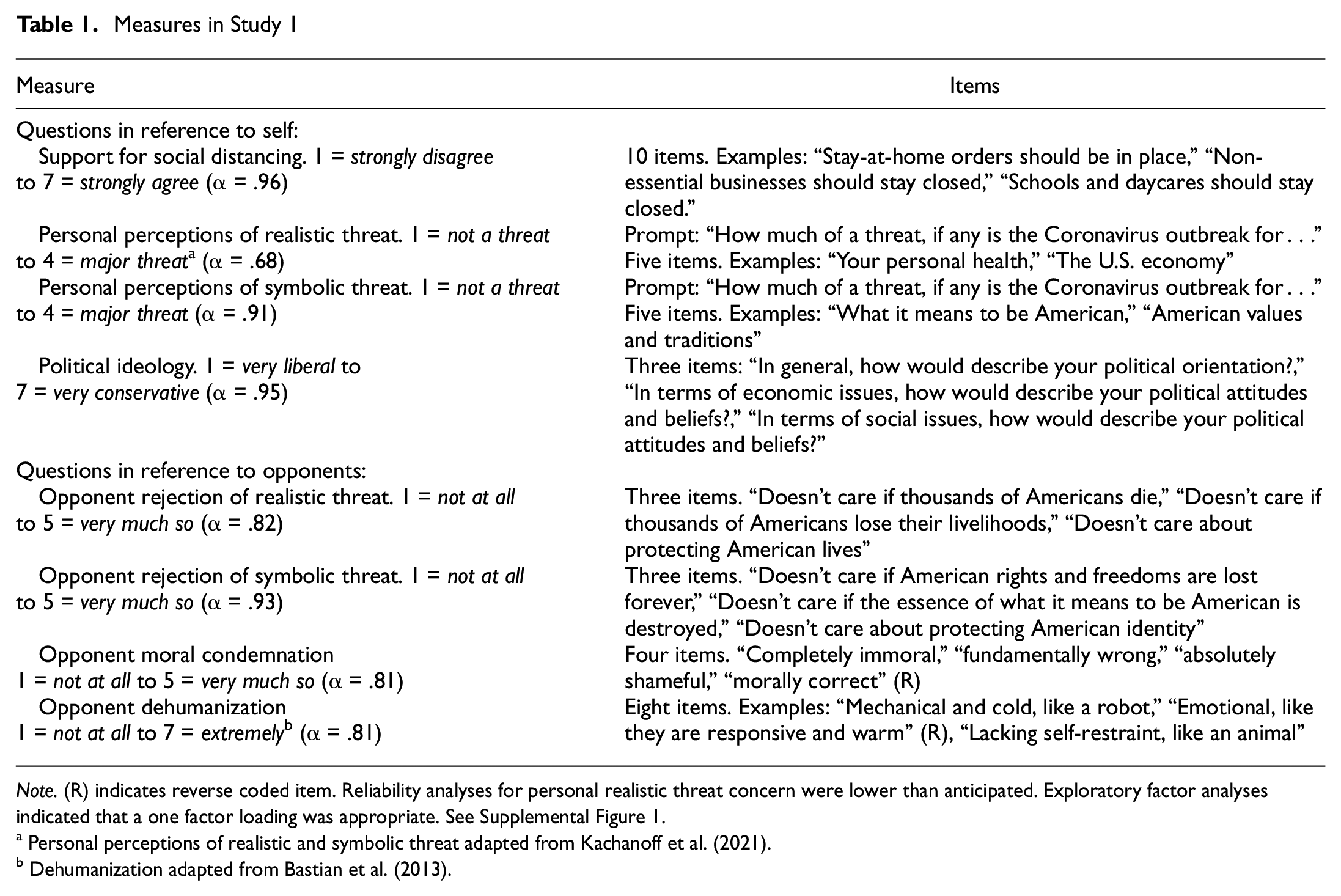
Note. (R) indicates reverse coded item. Reliability analyses for personal realistic threat concern were lower than anticipated. Exploratory factor analyses indicated that a one factor loading was appropriate. See Supplemental Figure 1.
Personal perceptions of realistic and symbolic threat adapted from Kachanoff et al. (2021).b Dehumanization adapted from Bastian et al. (2013).
Results
Replicating Kachanoff and colleagues (2021), personally perceiving COVID-19 as a realistic threat was associated with greater social distancing support while perceiving COVID-19 as a symbolic threat was associated with less social distancing support (see Table 2). Personal symbolic and realistic threat concerns were positively associated with each other, and the partial correlations between social distancing support and personal symbolic (r = –.31, p < .001) and realistic (r = .47, p < .001) threat concerns increased in magnitude, when accounting for the other type of threat concern.
Means, Reliabilities, and Inter-Correlations for Study 1
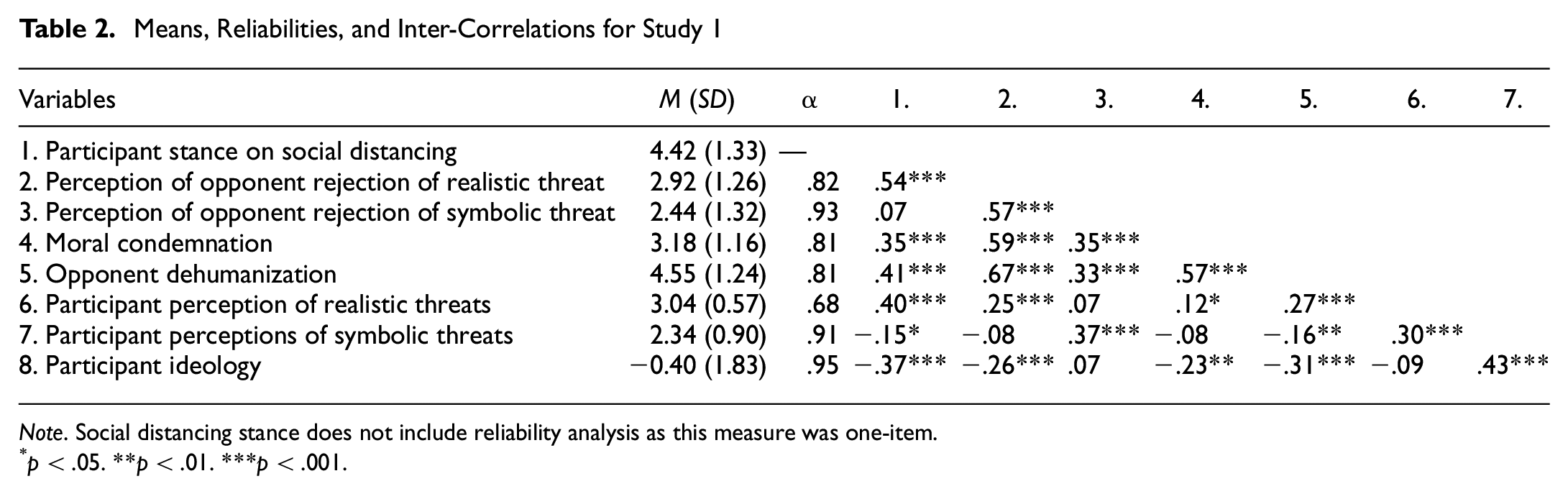
Note. Social distancing stance does not include reliability analysis as this measure was one-item.
p < .05. **p < .01. ***p < .001.
Supporting social distancing predicted beliefs that opponents rejected realistic threats. However, social distancing support was unrelated to symbolic threat rejection. Supporting social distancing predicted greater moral condemnation and dehumanization of opponents.
Threat Rejection, Condemnation, and Dehumanization
Structural Equation Modeling (SEM)-path modeling examined whether differences in moral condemnation and dehumanization based on social distancing stance were due to differences in perceived realistic versus symbolic threat rejection. We tested a serial mediation model where social distancing stance predicted perceptions of realistic and symbolic threat rejection, which in turn predicted moral condemnation and dehumanization. Effects for paths are summarized in Figure 1 (Supplemental Material, p. 4).
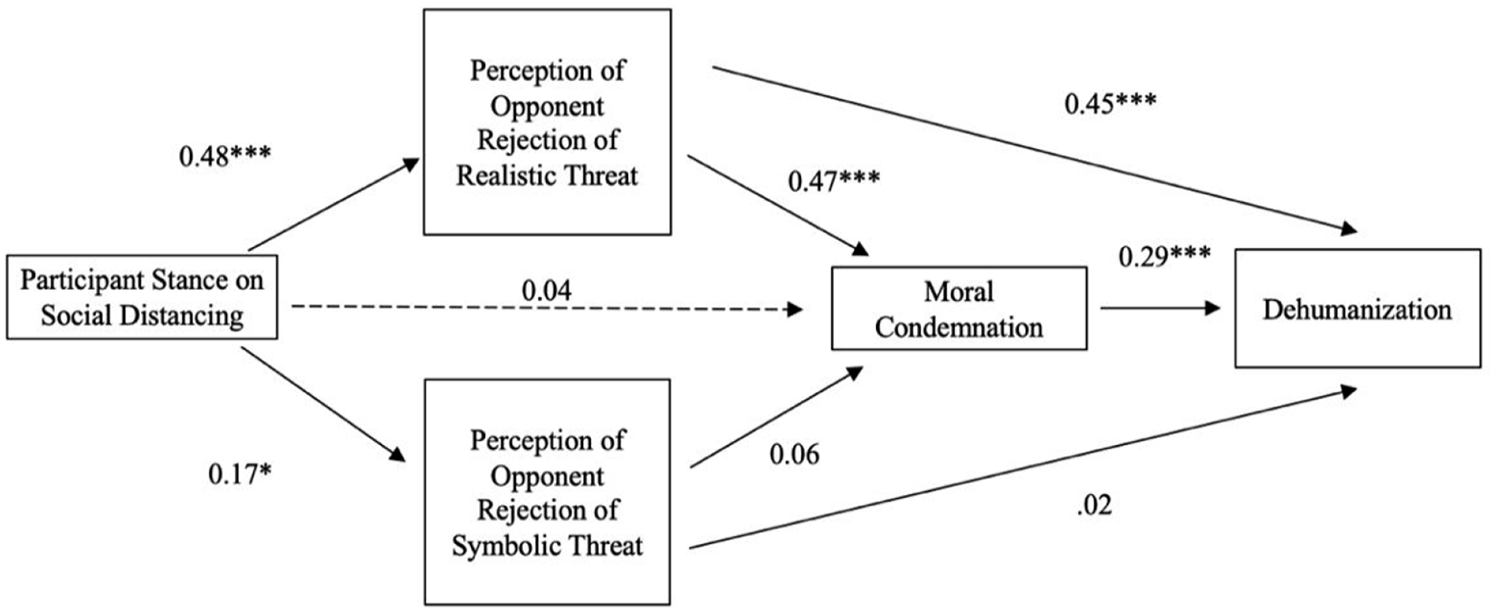
SEM Analyses for Study 1
Support for social distancing was associated with greater perceived realistic threat rejection, which predicted greater moral condemnation and dehumanization, serial indirect effect = 0.07, SE = 0.02, 95% confidence interval (CI) = [0.03, 0.12]. 3 Supporting social distancing also predicted greater perceived symbolic threat rejection (i.e., the nonsignificant zero-order relation became significant accounting for ideology and people’s own belief that COVID-19 posed a realistic/symbolic threat). There was no indirect effect of social distancing stance on dehumanization through symbolic threat rejection and moral condemnation (serial indirect effect = 0.003, SE = 0.005, 95% CI = [−0.01, 0.01]). This is because symbolic threat rejection did not relate to condemnation or dehumanization. The total effect (B = 0.24, SE = 0.005, 95% CI = [0.11, 0.37]) of social distancing stance on dehumanization was significant while the direct effect was not (B = −0.05, SE = 0.05, 95% CI = [−0.15, 0.05]).
Discussion
Study 1 indicated perceived threat rejection increased moral condemnation and dehumanization but only for those who perceived rejection of realistic threats by opponents, supporting the asymmetry hypothesis. Moral condemnation mediated the link between perceived rejection of realistic threats and dehumanization. Social distancing support was associated with less personal concern for symbolic threat but was unrelated to perceiving opponents as rejecting symbolic threat (zero-order correlation). This relationship became significant and positive when accounting for covariates. It is possible that people who support social distancing perceive people who are less supportive of social distancing as disregarding the American value of protecting American lives (i.e., symbolic threat rejection; Whiting, 2020).
Study 2: A Novel Case of Realistic(vs. Symbolic) Threat Rejection
Study 1 revealed how perceived (realistic) threat rejection predicts moral condemnation and dehumanization during the COVID-19 pandemic. However, because this issue is tied to ideology (Clinton et al., 2021), it is important to rule out the effect of party-identity that can also drive moral condemnation and dehumanization (Cassese, 2020; Martherus et al., 2021). In addition, in the COVID-19 context, realistic threat rejection involved denying the extreme harm of death. Thus, the unique effect of realistic threat rejection driving condemnation and dehumanization might have been due to an imbalance in the magnitude of the realistic versus symbolic threat. Finally, the COVID-19 pandemic simultaneously elicited two forms of realistic threat—the physical threat of disease and the material threat of economic collapse (Kachanoff et al., 2021). Thus, it remains unclear whether both physical and material threat rejection promote condemnation and dehumanization. To address these concerns, we created a novel context that (1) was less tied to political party affiliation, (2) balanced in the magnitude of realistic and symbolic threats, and (3) considered whether the realistic threat was to physical health or material resources.
Participants imagined they were town members whose cultural identity was tied to the cultivation of a flower, but that growing it caused severe allergies and asthma (i.e., physical realistic threat less severe than death; Study 2a) or economic hardship (i.e., material realistic threat; Study 2b). Participants chose between mitigating the realistic threat (protecting health/economy by banning the flower) or the symbolic threat (protecting identity and customs by keeping the flower). We tested whether policy position predicted perceptions that policy opponents rejected realistic versus symbolic threats, and in turn, moral condemnation and dehumanization. 4
Sample
Study 2a
We recruited 404 American Mechanical Turk workers through CloudResearch on June 23, 2021. Participants who failed attention checks were excluded: 363 participants, 39.39% male, Mage = 41.63 years, SD = 13.73 years. See Supplemental Table 2 for demographic information.
Study 2b
We recruited 405 American Mechanical Turk workers through CloudResearch on June 29, 2021. Participants who failed attention checks were excluded: 372 participants, 45.16% male, Mage = 40.34 years, SD = 13.57 years. See Supplemental Table 4 for demographic information.
Procedure and Measures
Participants read about the cultural significance of the flower and the debate to ban flower cultivation after it was linked to severe allergies and asthma (Study 2a, see Supplemental Material, p. 7) or after climate change made flower cultivation so expensive it caused financial hardship (Study 2b, see Supplemental Material, p. 13). Participants rated their stance on whether the flower should be banned from 1 (strongly oppose) to 6 (strongly support), and then rated threat rejection, moral condemnation, and dehumanization of a person with an opposing view on the ban. Finally, participants rated their perceived threat of the dilemma, and their political ideology. See Supplemental Table 3 and 5 for all scale items, reliabilities, and descriptive statistics across both sub-studies. In Study 2a, 210 participants opposed banning cultivation (57.85%) and 153 supported banning it (42.15%). In Study 2b, 189 participants opposed banning cultivation (50.81%) and 183 supported banning it (49.19%).
Results
Participants’ concern of realistic threats was associated with support for the cultivation ban, while participants’ concern for symbolic threats was associated with opposing the ban. In Study 2a, those who supported the ban were more likely to be liberal—though this was a small correlation, r(353) =–.13, p = .015. Stance was not related to ideology in Study 2b, r(360)=–.02, p=.74, suggesting a politically neutral context (see Supplemental Table 3 and 5).
People viewed opponents as rejecting the threats they cared about. Participants most supportive of the ban believed opponents rejected realistic threats, while those most opposed believed opponents rejected symbolic threats. Supporting the ban was positively associated with condemnation and dehumanization (see Supplemental Table 3 and 5).
Threat Rejection, Condemnation, and Dehumanization
A SEM-path model examined whether differences in perceived realistic and symbolic threat rejection explained differences in condemnation and dehumanization among supporters versus opposers of the cultivation ban. We tested whether people’s stance on the ban predicted perceptions of realistic and symbolic threat rejection, and subsequently moral condemnation and dehumanization. Effects for paths are summarized in Figure 2 (see Supplemental Material, pp. 9, 15).
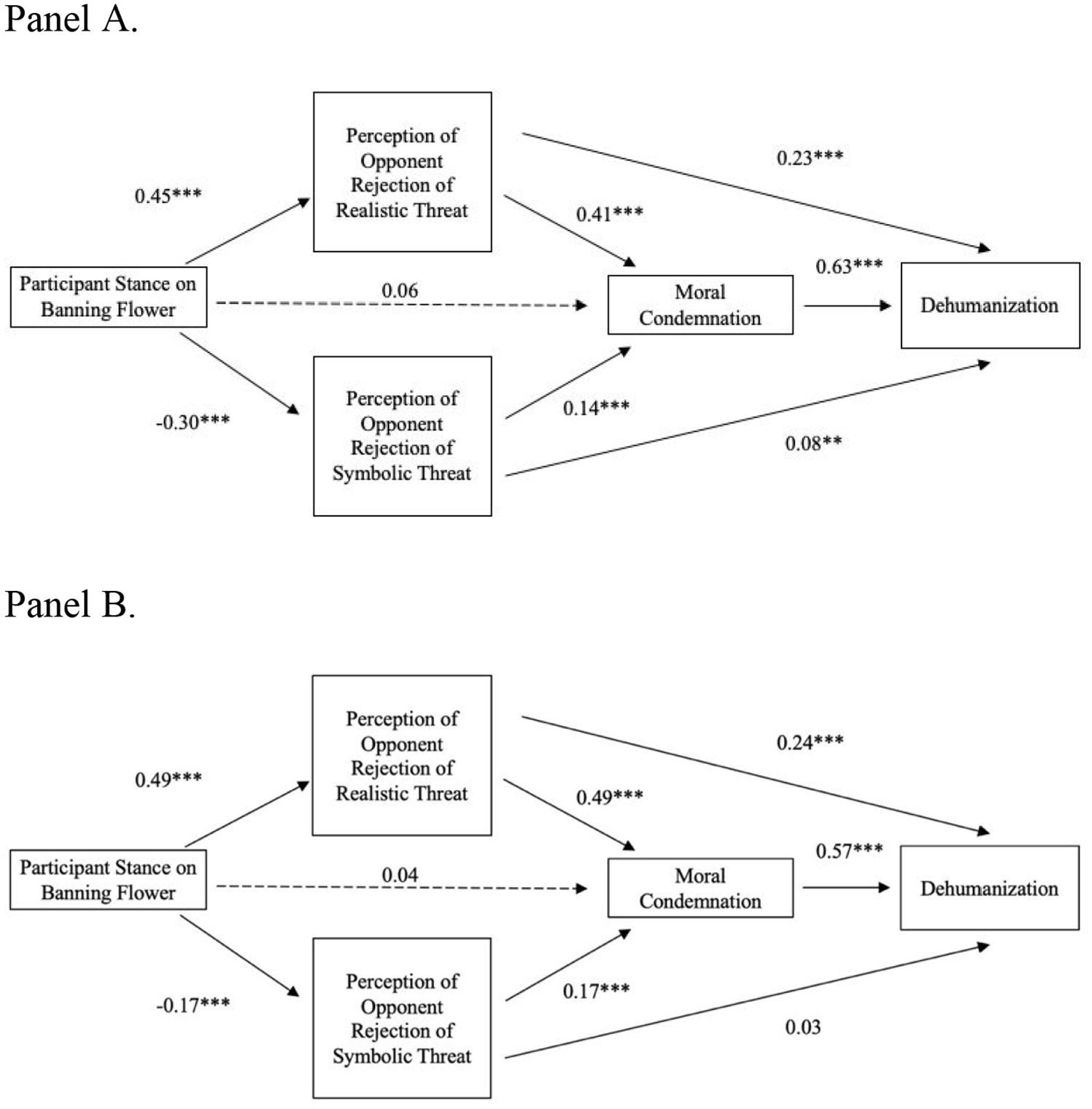
SEM Analyses for Study 2a (Physical Realistic Threat; Panel A) and Study 2b (Material Realistic Threat; Panel B)
Supporting the cultivation ban was associated with greater perceived realistic threat rejection, which predicted greater moral condemnation and dehumanization (serial indirect effectStudy 2a=0.12, SE=0.02, 95% CI=[0.08, 0.16]; serial indirect effectStudy 2b=0.14, SE=0.02, 95% CI=[0.09, 0.18]). In contrast, opposing the ban predicted greater symbolic threat rejection leading to greater condemnation and dehumanization (serial indirect effectStudy 2a =−0.03, SE=0.01, 95% CI=[−0.05, −0.009]; serial indirect effectStudy 2b =−0.02, SE = 0.006, 95% CI = [−0.03, −0.007]).
Supporting the asymmetry hypothesis, the condemnation and dehumanization pathway was significantly smaller for symbolic versus realistic threat rejection (serial differenceStudy2a = 0.09, SE = 0.02, 95% CI = [0.04, 0.14; serial differenceStudy2b = 0.12, SE = 0.02, 95% CI = [0.08, 0.17]). This explains why there was a significant total effect of supporting the ban on dehumanization (Study 2a: B =0.25, SE=0.05, 95% CI = .0.16, 0.35; Study 2b: B = 0.21, SE = 0.04, 95% CI = 0.13, 0.29. The direct effect of stance on dehumanization when accounting for threat rejection was not significant (Study 2a: B = 0.05, SE = 0.05, 95% CI = −0.05, 0.14; Study 2b: B = −0.05, SE = 0.04, 95% CI = −0.12, 0.03).
Discussion
Results replicated Study 1 within a novel context that reduced the potential influence of political identity. People more willing to sacrifice their group’s culture (symbolic threat) to protect against realistic threat (either to the group’s physical health or resources) were more likely to assume their opponents rejected realistic threat, leading to greater condemnation and dehumanization. Unlike Study 1, people more willing to endure realistic threats to protect their culture assumed their opponents rejected symbolic threat, which was also positively associated with moral condemnation and dehumanization. However, still supporting the asymmetry hypothesis, the relative effect of realistic (vs. symbolic) threat rejection on condemnation and dehumanization was significantly stronger.
Study 3: A Threat Acknowledgment Intervention to Reduce Dehumanization
In Study 3, we returned to the COVID-19 context to test our threat acknowledgment intervention. We showed people an opponent’s rationale for their social distancing stance that was either motivated by concerns about symbolic and realistic threat (i.e., the Hybrid Threat Acknowledgment condition)—which we predicted to be more effective at reducing condemnation and dehumanization—versus only one type of threat concern that is commonly linked to the oppositions’ stance (i.e., a Typical Threat condition in which anti-social distancers were concerned about symbolic threats and pro-social distancers were concerned about realistic health threats). We also considered a No Rationale condition where the opponent provided no reasoning for their stance.
Using a moderation framework, we tested whether the threat acknowledgment intervention was effective for people who were relatively pro (vs.) anti-social distancing. Because Studies 1 and 2 suggested that the perceived rejection of realistic (vs. symbolic) threat was most likely to predict condemnation and dehumanization, we suspected the Hybrid Threat Acknowledgment may be most effective for people most supportive of social distancing as they were most likely to condemn and dehumanize opponents.
Sample
Study 3a
We recruited 609 American Mechanical Turk workers through CloudResearch on September 29, 2020. Participants not born in the United States or who failed attention checks were excluded: 570 participants, 44.56% male, Mage = 38.96 years, SD = 18.23 years. See Supplemental Table 6 for demographic information.
Study 3b
We collected a quasi-representative sample of 1,350 5 American participants (40% Republican, 40% Democrat, and 20% Independent) from October 28 to November 16, 2020, using Lucid Panels. Those not born in the United States or who failed attention checks were excluded: 818 participants, 33.74% male, Mage = 50.08 years, SD = 16.30 years. See Supplemental Table 9 for demographic information.
Procedure and Measures
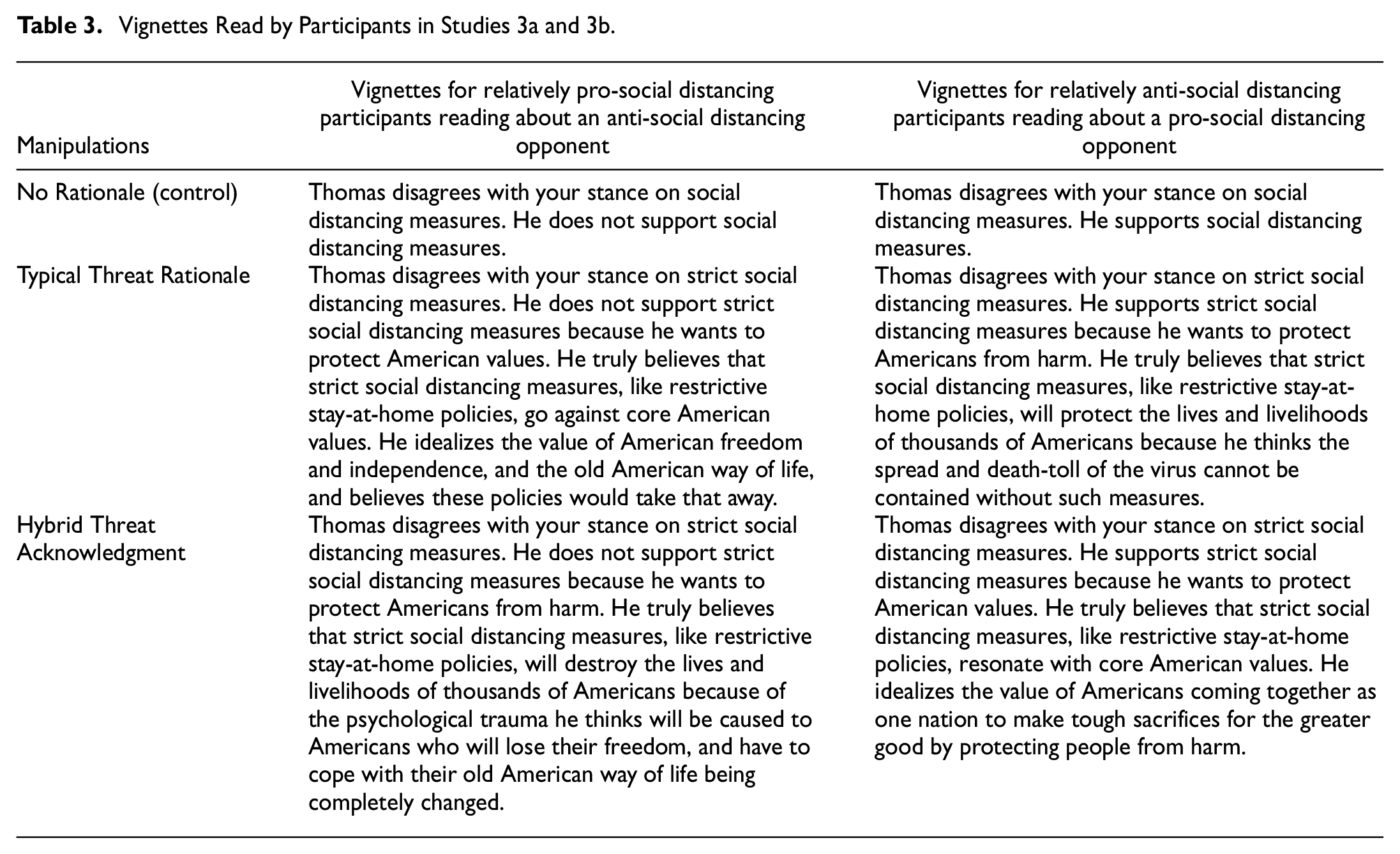
Participants reported their agreement with the following statement, “Social distancing rules should be strict (i.e., schools, bars, and gyms should be closed) until we have a vaccine,” using a 6-point scale from 1 = Strongly Disagree to 6 = Strongly Agree. Participants scoring 1 to 3 learned about a pro-social distancer whereas participants scoring 4 to 6 learned about an anti-social distancer. Participants were randomly assigned to one of the three rationale conditions (see Table 3).
Vignettes Read by Participants in Studies 3a and 3b.
Results
Intervention Effectiveness for Pro and Antisocial Distancers
Using the PROCESS macro (Hayes, 2018; Model 1), we tested whether the Hybrid Threat Acknowledgment intervention had differential effects for people who were relatively supportive of versus against social distancing (see Figure 3, Table 4; and Supplemental Table 12). 6 Stance moderated the effect of receiving Hybrid Threat Acknowledgment (vs. receiving no threat rationale) on all outcomes in both studies, with the exception of symbolic threat rejection in Study 3a (see Table 4 for interaction effects and Figure 3 for simple effects). We also found some support of moderation when comparing the Hybrid versus Typical Threat conditions: Interactions were significant for the realistic threat rejection and dehumanization outcomes in Study 3b, and the symbolic threat rejection outcome in Study 3a.
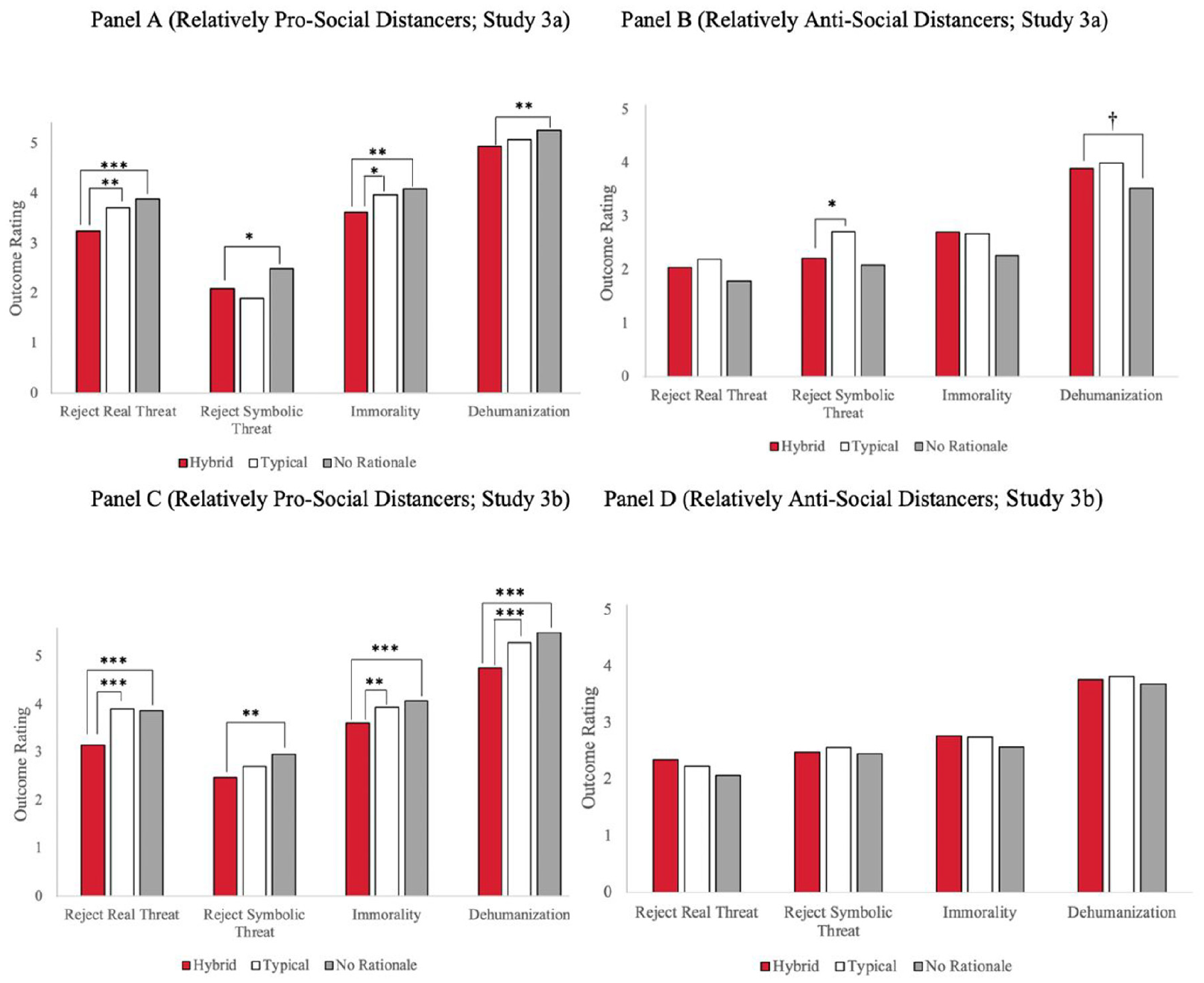
Estimated Marginal Means by Condition and Participant Stance on Social Distancing
Moderation Analysis Testing the Condition × Participant Stance Interaction on Outcomes in Study 3
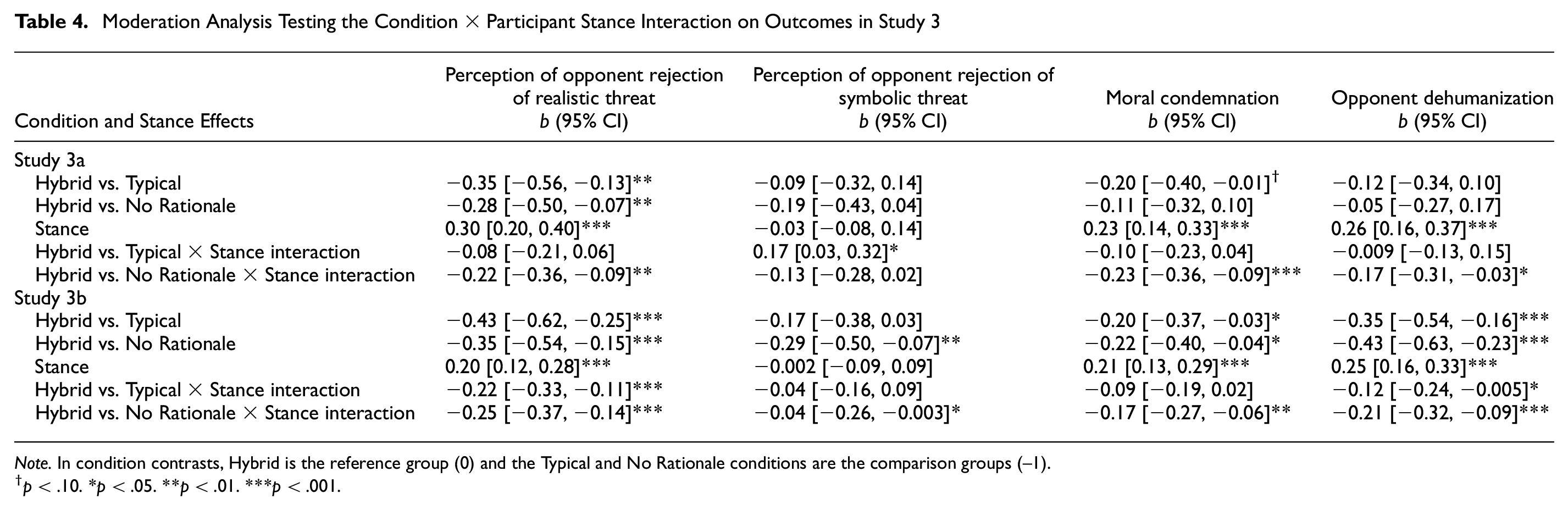
Note. In condition contrasts, Hybrid is the reference group (0) and the Typical and No Rationale conditions are the comparison groups (–1).
p < .10. *p < .05. **p < .01. ***p < .001.
Following Hayes (2018), we estimated the simple effects of condition for people equal to the 16th percentile in support for social distancing (i.e., relatively anti-social distancing) and for people equal to the 84th percentile in support for social distancing (i.e., relatively pro-social distancing). Importantly, all participants operationalized as “relatively anti-social distancing” learned about a “pro-social distancing” opponent, while all participants operationalized as “relatively pro-social distancing” learned about an “anti-social distancing” opponent.
People Relatively Pro-Social Distancing
The intervention was effective for participants relatively pro-social distancing: Relative pro-social distancers in the Hybrid Threat Acknowledgment (vs. No Threat Rationale) condition were less likely to see opponents as rejecting realistic threat, and were less likely to morally condemn and dehumanize. Relative pro-social distancers were also less likely to think opponents rejected symbolic threat in the Hybrid vs. No Threat rationale condition—this was expected because opponents described symbolic threat concerns (along with realistic threat) in the Hybrid condition, but no threat concerns in the No Threat condition.
Relatively pro-social distancers in the Hybrid Threat Acknowledgment (vs. Typical Threat Rationale) condition were less likely to morally condemn opponents in both studies, and less likely to dehumanize opponents in Study 3b (effect trending in Study 3a). Also, as expected, relatively pro-social distancers in the Hybrid vs. Typical Threat condition were significantly less likely to view opponents as rejecting realistic threat (but did not differ in perceptions of symbolic threat).
People Relatively Anti-Social Distancing
The intervention was less effective for people relatively opposed to social distancing: There were no significant differences between relatively anti-social distancers assigned to the Hybrid Threat Acknowledgment versus No Threat Rationale condition on any outcome. When comparing the Hybrid and Typical Threat conditions, effects were nonsignificant with the exception that relatively anti-social distancers in the Hybrid Threat condition perceived less symbolic threat rejection in Study 3a.
Threat Rejection, Condemnation as Mediators of Intervention
We examined whether reductions in threat rejection explained the effectiveness of the Hybrid Threat Acknowledgment intervention in reducing moral condemnation and dehumanization among those relatively pro versus anti-social distancing. Using a custom PROCESS model, we tested a moderated serial mediation model in which the Hybrid Threat Acknowledgment Intervention (vs. the other conditions) indirectly impacted dehumanization by reducing realistic and/or symbolic threat rejection (entered in parallel), and in turn, moral condemnation. We included social distancing stance as a continuous moderator of the paths between condition and both types of threat rejection, the paths between condition and moral condemnation, and the paths between condition and dehumanization, as well as the paths in which realistic/symbolic threat rejection impacted condemnation and dehumanization (see Supplemental Figure 9 for conceptual model). 7
People Relatively Pro-Social Distancing
We found a significant serial indirect effect of condition on dehumanization via the realistic threat rejection and moral condemnation pathway when comparing the Hybrid Threat Acknowledgment condition to the Typical Threat Rationale condition (serial real indirect effectStudy 3a = −0.11, SE = 0.05, 95% CI = [−0.22, −0.03]; serial real indirect effectStudy 3b = –.23, SE = 0.05, 95% CI = [−0.35, −0.15]) and the No Threat Rationale condition (serial real indirect effectStudy 3a = −0.16, SE = 0.05, 95% CI = [−0.26, −0.07]; serial real indirect effectStudy 3b = −0.22, SE = 0.06, 95% CI = [−0.34, −0.13]).
When exploring the serial indirect effects of condition on dehumanization via the symbolic threat rejection and moral condemnation pathway, we found one significant effect. In Study 3a, the Hybrid Threat Acknowledgment (vs. No Threat condition) reduced perceptions of symbolic threat rejection, but symbolic threat rejection was associated with less moral condemnation, perhaps because symbolic concerns about identity inflamed people relatively pro-social distancing who saw this as a barrier to protecting against realistic threat. Thus, the symbolic component of the hybrid manipulation indirectly increased dehumanization among relative pro-social distancers by reinforcing beliefs about opponents’ concern for symbolic threat (serial real indirect effectStudy 3a = 0.02, SE = 0.01, 95% CI = [0.001, 0.05]).
People Relatively Anti-Social Distancing
We did not find any significant serial indirect effects of condition through either realistic threat rejection or symbolic threat rejection in Study 3a. In Study 3b, the serial path through realistic threat rejection was also nonsignificant yet being exposed to the Hybrid versus Typical Threat condition significantly reduced dehumanization among people relatively opposed to social distancing via the serial symbolic threat rejection pathway (serial real indirect effectStudy 3b = –.08, SE = 0.04, 95% CI = [−0.17, −0.01]). See Supplemental Table 14 for indirect effects. See Figure 4 for path coefficients of these models.
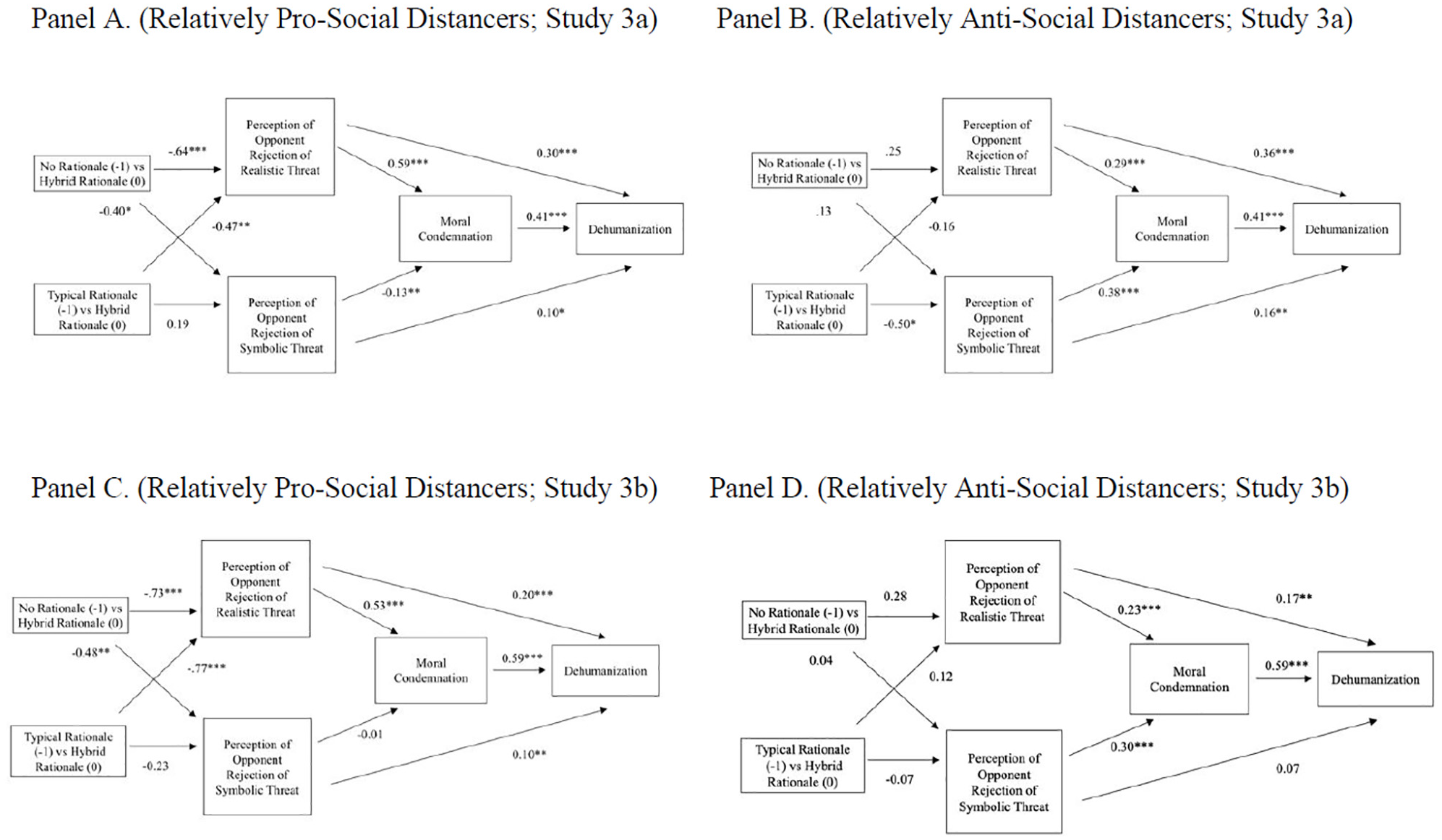
Moderated Mediation Analyses for Study 3a and Study 3b. Panel A: Relatively Pro-Social Distancers, Study 3a; Panel B: Relatively Anti-Social Distancers, Study 3a; Panel C: Relatively Pro-Social Distancers, Study 3b; Panel D: Relatively AntiSocial Distancers, Study 3b.
Discussion
Study 3 suggests that acknowledging both realistic and symbolic threats reduces condemnation and dehumanization between policy opponents in contexts where protecting the group against realistic threat is perceived to involve the symbolic threat of cultural restriction. During COVID-19, people relatively pro-social distancing (who tend to prioritize realistic health concerns) were less likely to morally condemn and dehumanize anti-social distancers (who tend to prioritize the symbolic expression of American identity) when anti-social distancers described their fear that losing American identity might be psychologically damaging (a realistic threat). These effects were mediated by reductions in perceived realistic threat rejection.
Our intervention did not reliably reduce moral condemnation and dehumanization among people who relatively opposed social distancing. This may be because people who oppose social distancing tend to be lower in realistic threat rejection (as observed in Studies 1 and 2) than people supportive of social distancing (which all our studies indicate most inflamed dehumanization)—thus they stood less to profit from the intervention. However, our intervention also did not reliably reduce symbolic threat rejection among anti-social distancers. Further work is needed to explore other avenues for interventions to improve anti-social distancers attitudes toward opponents.
General Discussion
Does perceived threat rejection sow political divisions? Results suggest perceiving the “other side” as rejecting realistic (more than symbolic) threat increases moral condemnation and dehumanization, lending support to the asymmetry hypothesis. During COVID-19, those who relatively favored social distancing saw opponents as rejecting realistic threats and morally judged and dehumanized them. In contrast, support for social distancing did not reliably relate to perceiving the other side as rejecting symbolic threat—and symbolic threat was not robustly associated with moral judgment or dehumanization.
Within a novel threat context, people who were more willing to sacrifice their group’s culture to prevent realistic threats to health or resources viewed opponents as rejecting realistic threats and in turn morally condemned and dehumanized them. Similarly, people who were more willing to endure realistic threat to protect their culture, viewed opponents as rejecting symbolic threats, in turn morally condemning and dehumanizing them, yet these effects were significantly weaker than for realistic threat rejection. Our findings are consistent with research suggesting people condemn behaviors which are perceived as causing concrete (realistic) harm rather than abstract (symbolic) harm (Schein & Gray, 2018).
Using a threat acknowledgment intervention, we decreased the tendency of people who tended to prioritize protecting the group from realistic threat (i.e., those who tended to support social distancing) to morally judge and dehumanize opponents who prioritized protecting the group from symbolic threat (i.e., those who tended to resist social distancing). Our intervention did not require opponents to compromise their stance—this intervention worked by simply having opponents acknowledge both realistic and symbolic threats when providing a rationale for their position.
Implications
Our research suggests that when people disagree about important policy issues—like how their nation should respond to a global pandemic—people most driven to defend against realistic threat tolerate their opponents more when they believe their opponents are driven by the same concerns for realistic threats.
Our research is the first to consider people’s beliefs about whether out-group members reject realistic or symbolic threats. We contribute to the dehumanization literature by introducing realistic (and to a lesser extent symbolic) threat rejection as novel antecedents of this destructive intergroup process (Kteily & Bruneau, 2017). Our findings also extend past work on intolerance, by showing that not only differences in people’s moral values (e.g., Graham et al., 2009; Skitka et al., 2005) but also differences in perceived concern for group threats cause intergroup conflict.
Limitations and Future Directions
All studies used online self-report surveys. Four samples were convenience samples of MTurk workers (although Study 3b recruited a quasi-representative sample). In addition, all studies were conducted in the United States, meaning it is unclear whether such effects are generalizable cross-culturally, especially given differences in lockdown strictness globally, shifting citizens’ evaluations of real and symbolic threats. Future research should use a greater variety of contexts (e.g., field and lab studies), behavioral measures (e.g., discussions between opponents) and replicate these effects in other countries beyond the United States. Relatedly, our intervention artificially informed people about opponents’ policy rationale—something that may not occur in real interactions. Future research should develop trainings encouraging acknowledgment of the threats opponents care about, an avenue supported by other acknowledgment-based resolution strategies (Huo et al., 2005).
Our intervention focused on comparing a hybrid realistic/symbolic threat rationale to the typical realistic (health) threat or symbolic threat rationales often associated with opposing views on social distancing (Kachanoff et al., 2021). Future work should test whether including realistic (economic) threats in interventions is similarly beneficial. Economic threats seem to resonate with both pro and anti-social distancers: Anti-social distancers argued restrictions would hurt the economy (by closing businesses) whereas pro-social distancers argued they would protect the economy (by preventing the need for larger shut-downs; Enwemeka, 2020; Rosman et al., 2020). This approach might be helpful for anti-social distancers who were not impacted by the hybrid threat intervention tested here and may need an alternative intervention.
Conclusion
This research provides a valuable first step for understanding how beliefs about threat rejection shape perceptions across policy lines. Our findings reveal the first step for bridging divides may be for people to signal that the reason they so strongly disagree on policy is because they hold the same concern for lives and livelihoods.
Supplemental Material
sj-docx-1-spp-10.1177_19485506211068922 – Supplemental material for Threat Rejection Fuels Political Dehumanization
Supplemental material, sj-docx-1-spp-10.1177_19485506211068922 for Threat Rejection Fuels Political Dehumanization by Emily Kubin, Frank J. Kachanoff and Kurt Gray in Social Psychological and Personality Science
Footnotes
Authors’ Note
Emily Kubin is now affiliated to The University of North Carolina at Chapel Hill, USA and Frank J. Kachanoff is now affiliated to Wilfrid Laurier University, Canada.
Declaration of Conflicting Interests
The author(s) declared no potential conflicts of interest with respect to the research, authorship, and/or publication of this article.
Funding
This work was supported by the Charles Koch Foundation (Center for the Science of Moral Understanding).

Supplemental Material
The supplemental material is available in the online version of the article.
Notes
Author Biographies
Handling Editor: Danny Osborne
References
Supplementary Material
Please find the following supplemental material available below.
For Open Access articles published under a Creative Commons License, all supplemental material carries the same license as the article it is associated with.
For non-Open Access articles published, all supplemental material carries a non-exclusive license, and permission requests for re-use of supplemental material or any part of supplemental material shall be sent directly to the copyright owner as specified in the copyright notice associated with the article.
