



Abstract
A range of studies have sought to understand why people’s compliance with social distancing varied during the COVID-19 pandemic. Recent theory suggests that pathogen avoidance behavior is based not only on perceived risk but on a trade-off between the perceived costs of pathogen exposure and the perceived benefits of social contact. We hypothesized that compliance with social distancing may therefore be explained by a trade-off between pathogen avoidance and various social motives such as mate-seeking. Two studies conducted during the COVID-19 pandemic showed that social distancing was positively associated with disease avoidance motives but negatively associated with social motives, especially mating motives. These associations remained after controlling for predictors identified by previous research, including risk perception and personality. Findings indicate that people who are more interested in seeking new romantic partners (e.g., young men) may be less inclined to socially distance and be more at risk of pathogen transmission.
As COVID-19 reached pandemic status in March 2020, governments rapidly sought to implement social distancing (e.g., staying at home) and hygiene (e.g., hand washing) policies on their populations. These nonpharmaceutical interventions are the most effective way to reduce infection spread especially when vaccination availability is limited (Hsiang et al., 2020; Warren-Gash et al., 2013). However, the success of nonpharmaceutical measures depends on the public adhering to them (Maharaj & Kleczkowski, 2012). A range of research has therefore sought to explain variation in people’s adherence with social distancing and hygiene guidelines (e.g., Pedersen & Favero, 2020; Pfattheicher et al., 2020; Van Bavel et al., 2020).
Multiple studies have shown that individual differences in motives to avoid infection are an important predictor of social distancing and hygiene behavior (Shook et al., 2020). Individual difference measures of germ aversion (Makhanova & Shepherd, 2020) and pathogen disgust (McKay et al., 2020; Olivera-La Rosa et al., 2020) are positively associated with adherence to social distancing. Moreover, people who fear catching COVID-19 specifically (Harper et al., 2020), as well as diseases during other pandemics (Leppin & Aro, 2009; Tang & Wong, 2003; Xu & Peng, 2015), are more likely to adopt social distancing and hygiene behaviors.
However, recent theory and evidence suggest that pathogen avoidance behavior is not only dependent on perceived risks of infection but on a trade-off between the perceived costs of pathogen exposure and the perceived benefits of social contact (Kenrick et al., 2010; Tybur et al., 2013; Tybur et al., 2020). Therefore, we hypothesize that people’s compliance with social distancing can be explained by a trade-off between pathogen avoidance motives and social motives such as mate-seeking.
The Costs and Benefits of Disease Avoidance
Avoiding of potentially infectious individuals can increase survival and reproductive success, but, at the same time, avoiding others entails the loss of fitness-relevant benefits such as sharing food, looking after kin, and romantic interactions (Tybur et al., 2020). Research on the behavioral immune system (e.g., Schaller et al., 2017), disgust (e.g., Tybur & Liebermann, 2016), the fundamental social motives framework (Kenrick et al., 2010), and pathogen avoidance among nonhuman animals (e.g., Poirette & Charpentier, 2020) converges on the idea that avoidance behavior is the product of a trade-off between the perceived threat of pathogen transmission and the perceived benefits of social contact. 1 Our aim was to test the hypothesis that the trade-off between pathogen avoidance motives and various social motives predicts adherence to social distancing during the COVID-19 pandemic.
Studies conducted during the COVID-19 pandemic, and during other pandemics, revealed that men and younger adults are less compliant with social distancing recommendations (Brouard et al., 2020; Moran & Del Valle, 2016; Pedersen & Favero, 2020; Tomczyk & Schmidt, 2020). Previous findings suggest that young males are less compliant because they are less averse to risk in general (Baker & Maner, 2008; Oksuzyan et al., 2008) or less sensitive to risks of infectious disease in particular (Oosterhof & Palmer, 2020). However, we suggest that these demographic patterns of adherence to social distancing can be explained by the trade-off between social motives and pathogen avoidance motives because intensity of social motives, and the trade-offs faced by investing effort in them, depend on life history variables such as age and sex (Ko et al., 2019; Neel et al., 2016). Next, we outline how various social motives should relate to social distancing and hygiene adherence and their relationship with age and sex.
Social Motives and Social Distancing
Mate-Seeking
Seeking new mating opportunities requires proximity and physical contact. People who are highly motivated to seek mates should therefore be expected to tolerate risks of pathogen exposure and be more opposed to rules that deny them the opportunity to seek new mates. Some existing evidence supports the idea that mating motives can trade-off against disease avoidance. For instance, individuals who are more inclined toward casual sex report lower disease avoidance motives (Murray et al., 2013; Neel et al., 2016; Tybur et al., 2015), and sexual arousal leads men to show reduced disgust, reduced judgments of disease risk, and enhanced willingness to have sex with opposite-sex targets (Oaten et al., 2019). Adhering to social distancing policies such as staying at home would interfere more with mating goals than would adhering to hygiene practices such as hand washing, as the latter wouldn’t necessarily obstruct social interaction. We therefore predicted that mating motives would be more strongly negatively associated with social distancing adherence than with hygiene adherence.
A wide range of research has shown that humans engage in mating strategies in a gender divergent manner (Buss & Schmitt, 1993; Gangestad & Simpson, 2000). Men on average have higher mate-seeking motives (Ko et al., 2019), and report more desire for casual sex, whereas women report more interest in committed long-term relationships (Buss & Schmitt, 1993; Clark & Hatfield, 1989; Gangestad & Simpson, 2000; Kenrick et al., 1993; Schmitt, 2005). Thus, men’s lower compliance with social distancing may result not only from lower pathogen avoidance motives but also from greater interest in seeking new romantic or sexual partners. Moreover, younger people (e.g., colleague students) also report more interest in mate-seeking than older adults (Ko et al., 2019; Neel et al., 2016), which may explain lower adherence to social distancing among young people.
Social Affiliation
People vary in their desire to affiliate with others by, for example, initiating and maintaining friendships or engaging in group activities (Neel et al., 2016). Socializing typically entails proximity or contact with others, but people who are highly motivated to affiliate may show less avoidance of potentially infectious others. Accordingly, evidence shows that individuals who are temporarily (Sacco et al., 2014) or dispositionally (Kupfer & Tybur, 2017) more motivated to affiliate with others show lower pathogen avoidance motives. We therefore predicted that affiliation motives would be negatively associated with social distancing adherence. However, we anticipated that adherence to hygiene practice would be more weakly associated with social affiliation motives because behaviors such as hand washing do not interfere with social affiliation to the same extent. In addition, negative associations between affiliation and social distancing may be stronger among younger individuals, because older people report less concern about social exclusion (Neel et al., 2016), possibly because as people age, their relationships become more stable and long-lasting, making social exclusion a less salient concern (Ko et al., 2019).
Overview of Studies
In two studies conducted between April and June 2020 during the COVID-19 pandemic (Study 1: N = 266 participants from Turkey, Study 2: 498 participants from Western countries), we tested our proposal that people’s compliance with social distancing and hygiene practices results from a trade-off between pathogen avoidance and social motives such as mate-seeking. To examine the strength of any associations, we measured and controlled for psychological variables that have been argued to influence compliance, namely Big-5 personality and risk-taking traits (Brouard et al., 2020) and risk aversion (Van Bavel et al., 2020). All questionnaires, data, and analysis scripts are publicly available on Open Science Framework (https://osf.io/tg592/).
Study 1
Method
Participants
Inputting a small effect size (r = .30 or f2 = .09) into G*Power determined a sample size of 239 at 80% power for an 18-predictor multiple regression analysis. The recommended sample was increased by approximately 30% to allow for exclusions based on incomplete responses. A snowball sample of 300 consenting individuals from Turkey were recruited from a Turkish university (for course credit) as well as researchers’ social network (no compensation). The survey was distributed in Turkish after translating the study materials from the English original to Turkish by the authors who are bilingual speakers. Excluding 44 participants who did not pass the two simple attention checks left data from 266 participants used in the analyses (200 women, 66 men; age range: 18–74 years, M age = 31.80, SD age = 13.87). All outcomes of null hypothesis significance testing (i.e., p < .05) remain when no exclusions were made.
Measures and Procedure
Adherence to Social Distancing and Hygiene Behavior
Respondents indicated how much they performed 19 different health-protective behaviors in response to the COVID-19 outbreak during the past 4 weeks on a 1 (not at all) to 7 (very much) scale. These behaviors consisted of social distancing behaviors (12 items, e.g., “avoided meeting with friends,” “avoided going to public areas,” “maintained at least 1 m distance from people”), hygiene behaviors (five items, e.g., “washed my hands more often and longer than usual,” “used sanitizing hand gel or other products to clean your hands more often than usual”), and two additional items (e.g., “worn a face mask when going out in public,” “worn gloves when going out in public”). 2
When items were entered into a principal-axis factor analysis with oblique rotation, the scree plot indicated a two or three-factor solution (eigenvalues = 5.87, 1.90, 1.21, and 1.10). After excluding two items (mask and glove wearing), and setting the number of factors extracted at two, the items formed two interpretable groups, which were consistent with the a priori predicted two-factor structure: social distancing and hygiene behavior. Loadings for the first factor (12 social distancing items) ranged between 0.31 and 0.80, and loadings for the second factor (five hygiene behavior items) ranged between 0.39 and 0.65. All had cross-loadings below .32. We created composite measures of compliance with social distancing (α = .83) and hygiene behavior (α = .77) by averaging the respective items. We analyzed the mask and glove wearing items separately as additional analyses in the Online Supplementary Materials.
Social Motives
Participants’ motivation to avoid disease, mate-seeking, and affiliation-related motives (group affiliation and social exclusion concern) were measured using the motivational domains from the Fundamental Social Motives Inventory (FSMI; Neel et al., 2016). Each Motive subscale included six items, and items were rated on a 1 (strongly disagree) to 7 (strongly agree) scale. Example items were “I avoid places and people that might carry diseases” (disease avoidance; α = .75), “I am interested in finding a new romantic or sexual partner” (mate-seeking; α = .77), “Being part of a group is important to me” (group affiliation; α = .80), and “I would be extremely hurt if a friend excluded me” (social exclusion concern; α = .87). FSMI measures additional social motives including self-protection, mate retention, kin care (family), and kin care (children). We report the results on these motives in the Supplementary Materials.
Sociosexual Orientation
As an additional measure of mate-seeking motivation, we used the 9-item Sociosexual Orientation Inventory–Revised (SOI-R; Penke & Asendorpf, 2008) which measures the extent to which participants are interested in seeking uncommitted sexual relationships. Ratings were done on 9-point scales. Based on a principle-axis factor analysis, we divided the nine items into two subscales—one containing three items regarding past sexual experience (SOI behavior, α = .79) and the other containing six items relating to sociosexual attitudes and sexual fantasies (SOI attitudes, α = .85). We also obtained global sociosexual orientation by computing the mean of all nine items (SOI total, α = .86). Higher scored indicate a higher interest in seeking casual sexual relationships.
Pathogen Disgust Sensitivity
As an additional measure of disease avoidance, we used the 7-item pathogen domain of the Three Domain Disgust Scale (Tybur et al., 2009), which asks participants to rate seven items (e.g., “Stepping in dog poop”) on a 0 (not at all disgusting) to 6 (extremely disgusting) scale (α = .69). Higher scores correspond with greater motivations to avoid exposure to pathogens.
Demographic and Control Variables
Participants reported demographic information (e.g., sex, age, relationship status) and completed two items measuring perceived risk of being infected (r s = .61) and two items measuring perceived level of knowledge about the COVID-19 pandemic (r s = .56). We also measured participants’ Big-5 personality traits with the 10-item TIPI (Gosling et al., 2003; for Turkish translation, see Atak, 2013) and trait risk-taking (α = .67) with the six items taken from the Risk-Taking Scale of the Jackson Personality Inventory—Revised (JPI-R; Jackson, 1994). Each Big-5 personality trait was measured with two items. The two items used for extroversion showed sufficient degree of correlation (r s = .55), but the correlations between items for neuroticism (r s = .19), agreeableness (r s = .07), openness to experience (r s = .22), and conscientiousness (r s = .33) were weak, therefore a single-item scales were used for traits except extroversion. These measures were used as control variables in testing our predictions as studies have found each of these variables to be related to compliance with social distancing (Brouard et al., 2020; Clark et al., 2020). 3
Results
We first examined zero-order correlations among all variables included in this study. A correlation matrix is shown in Figure 1 (see Table S1 in Supplementary Materials for the exact p values), and descriptive statistics are presented in Table 1.
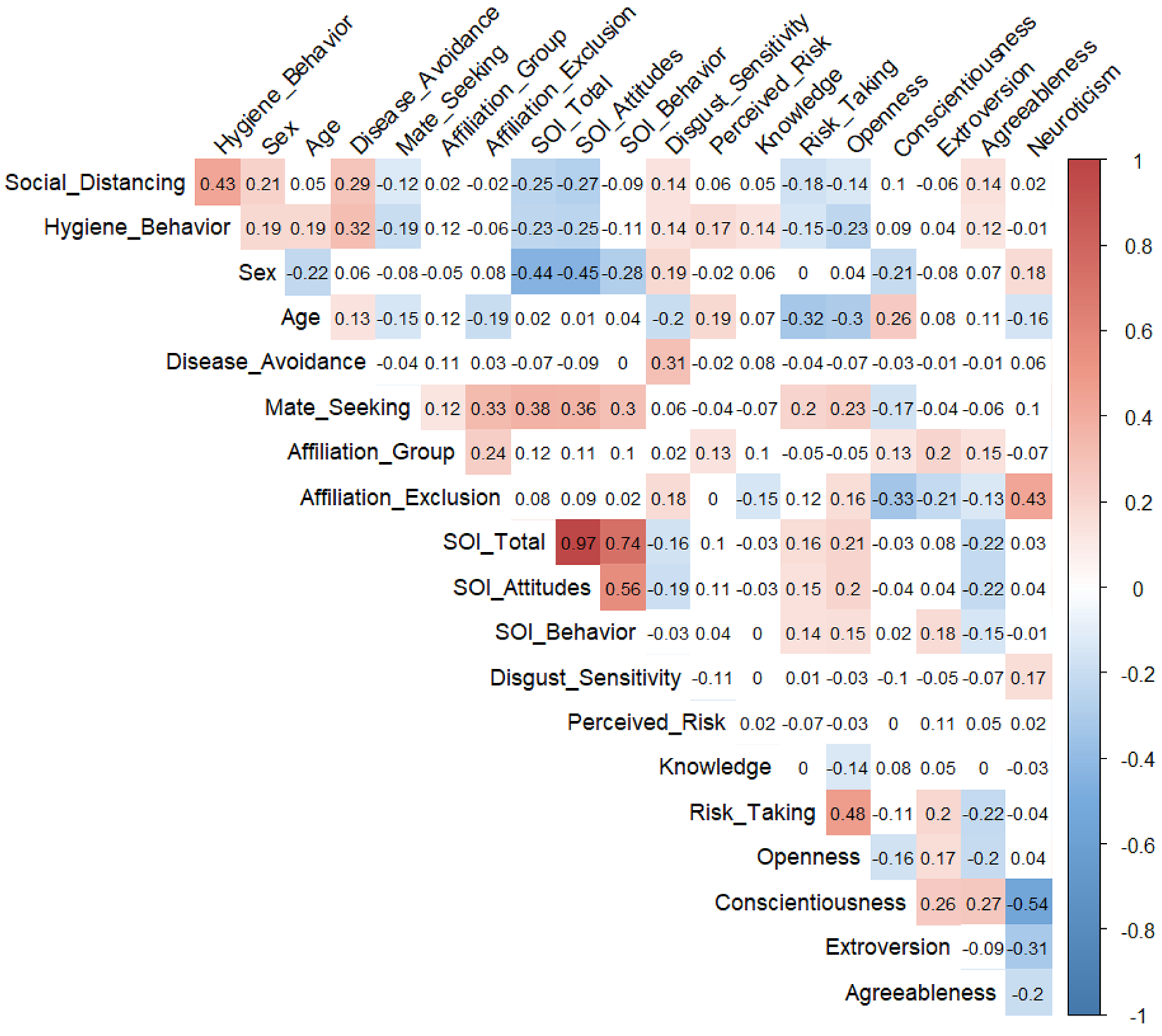
Correlation matrix indicating zero-order correlations (N = 266 [200 women, 66 men]). Note. Positive correlations are displayed in red and negative correlations in blue. The intensity of the color is proportional to the correlation coefficient so the stronger the correlation, the darker the boxes. A white box in the correlation matrix indicates that the correlation is not significant at p = .05. Sex is coded as 1 = male and 2 = female. SOI = sociosexual orientation (i.e., willingness to engage in uncommitted sex). See the online article for color version.
Study 1 (Turkish Sample): Means and Standard Deviations in the Total Sample and by Participant Sex.
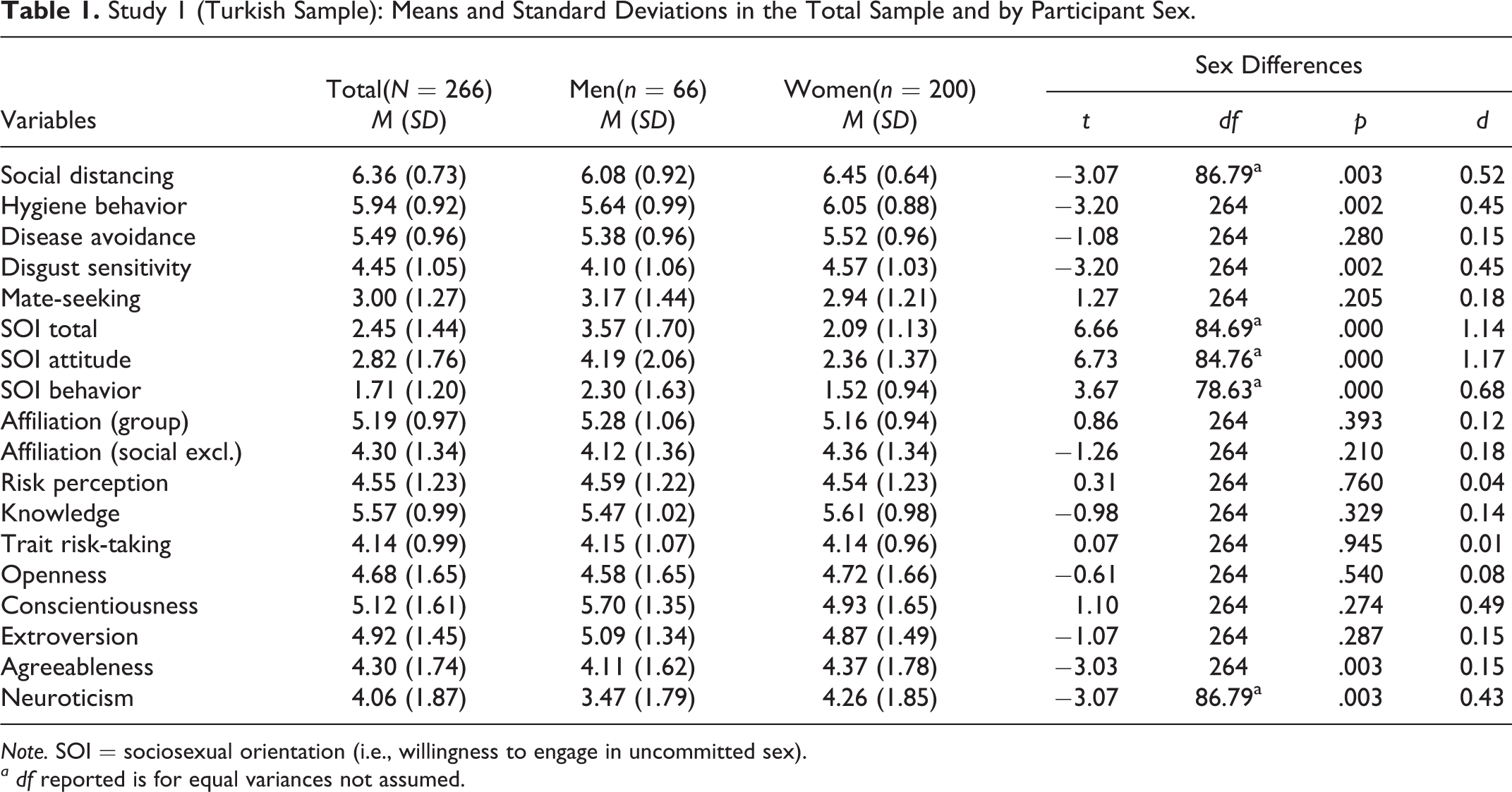
Note. SOI = sociosexual orientation (i.e., willingness to engage in uncommitted sex).
a df reported is for equal variances not assumed.
As expected, adherence to social distancing and hygiene practices were positively associated with disease avoidance motives and disgust sensitivity and negatively associated with mate-seeking motives and interest in uncommitted sex (SOI). However, adherence to social distancing and hygiene practices was not significantly associated with affiliation motives. 4
As shown in Table 1, men were less likely to adhere to both social distancing and hygiene practices. Men were also less disgust sensitive and more willing to engage in uncommitted sex. Regarding age differences, younger individuals were lower in disease avoidance, but higher in mate-seeking, and social exclusion concern and were more disgust sensitive. Younger people were less likely to adhere to hygiene practices, but no association was found with social distancing (see Figure 1). 5
Next, we conducted hierarchical regression analyses to test whether social distancing and hygiene measures were associated with disease avoidance and social motives even after controlling for various other variables that have been shown to predict social distancing and hygiene, including personality and risk-taking. We added the control variables in Step 1 and social motives, SOI, and disgust sensitivity in Step 2. As expected, disease avoidance motives predicted higher compliance, and willingness to seek uncommitted sexual relationships (SOI) predicted lower compliance with social distancing (Table 2A) and hygiene measures (Table 2B), above and beyond personality traits, perceived risk of infection and knowledge. 6
Study 1 (Turkish Sample): Hierarchical Regression Results on Adherence to (A) Social Distancing and (B) Hygiene Practices.
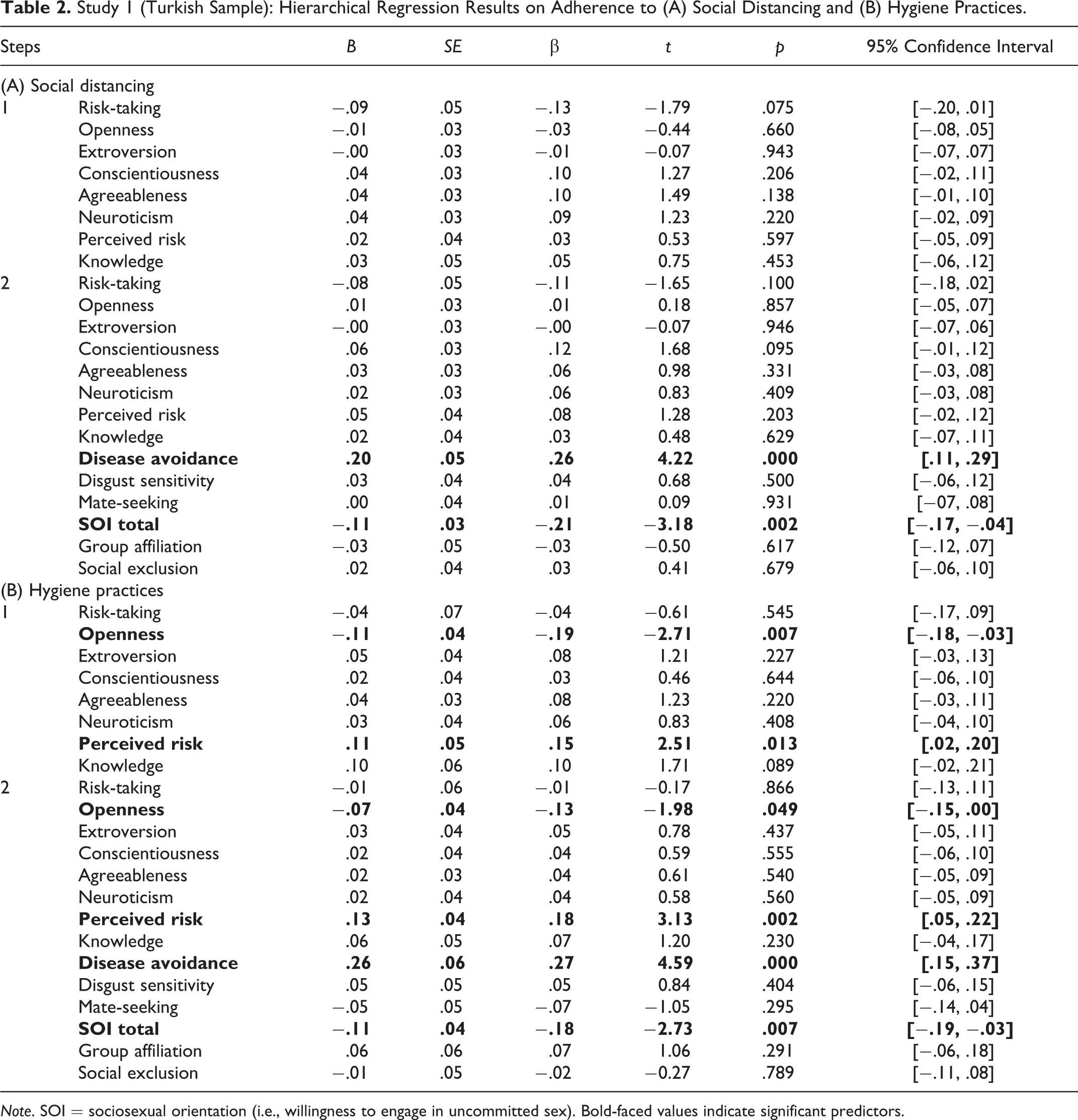
Note. SOI = sociosexual orientation (i.e., willingness to engage in uncommitted sex). Bold-faced values indicate significant predictors.
Study 2
The primary aim of Study 2 was to replicate Study 1 findings with a Western sample and to recruit a larger sample to test whether people’s compliance with social distancing and hygiene practices results from a trade-off between pathogen avoidance and social motives, especially mate-seeking. Again, we explored whether men’s (vs. women) and younger (vs. older) individuals’ lower compliance with social distancing and hygiene behavior are related to these groups’ lower disease avoidance and higher mate-seeking motives.
Method
Participants
A sample of 498 consenting individuals from Western countries were recruited from the researchers’ and participants’ social network through social media, Social Psychology Network (no compensation), a Dutch university (in return for course credit), and Prolific Academic (monetary compensation). The survey was distributed in English. Excluding 11 participants who did not pass the two simple attention checks left data from 487 participants used in the analyses (219 men, 268 women; age range: 16–83 years, M age = 29.52, SD age = 11.16; location: 62.8% UK, 22.8% Europe; 13.4% North America; and 1% Other). All outcomes of null hypothesis significance testing (i.e., p < .05) remain when no exclusions were made. 7
Measures and Procedure
Participants rated the same items as in Study 1: disease avoidance (α = .86), self-protection (α = .86), mate-seeking (α = .92), group affiliation (α = .82), social exclusion concern (α = .86), sociosexual orientation (SOI-total: α = .85; SOI attitude: α = .78; SOI desire: α = .87; and SOI behavior: α = .79), 8 pathogen disgust sensitivity (α = .74), compliance with social distancing measures (α = .86), and compliance with hygiene measures (α = .76). 9 Again, for use as control variables, we measured perceived risk of being infected (r s = .63), perceived level of knowledge about the COVID-19 pandemic (r s = .56), risk-taking (α = .80), openness to experience (one item used due to weak correlation), extroversion (r s = .55), conscientiousness (r s = .42), agreeableness (one item used due to weak correlation), and neuroticism (r s = .51).
Results
First, we examined the zero-order correlations among all variables included in this study. A correlation matrix is shown in Figure 2 (see Table S2 in Supplementary Materials for the exact p values), and descriptive statistics are presented in Table 3.
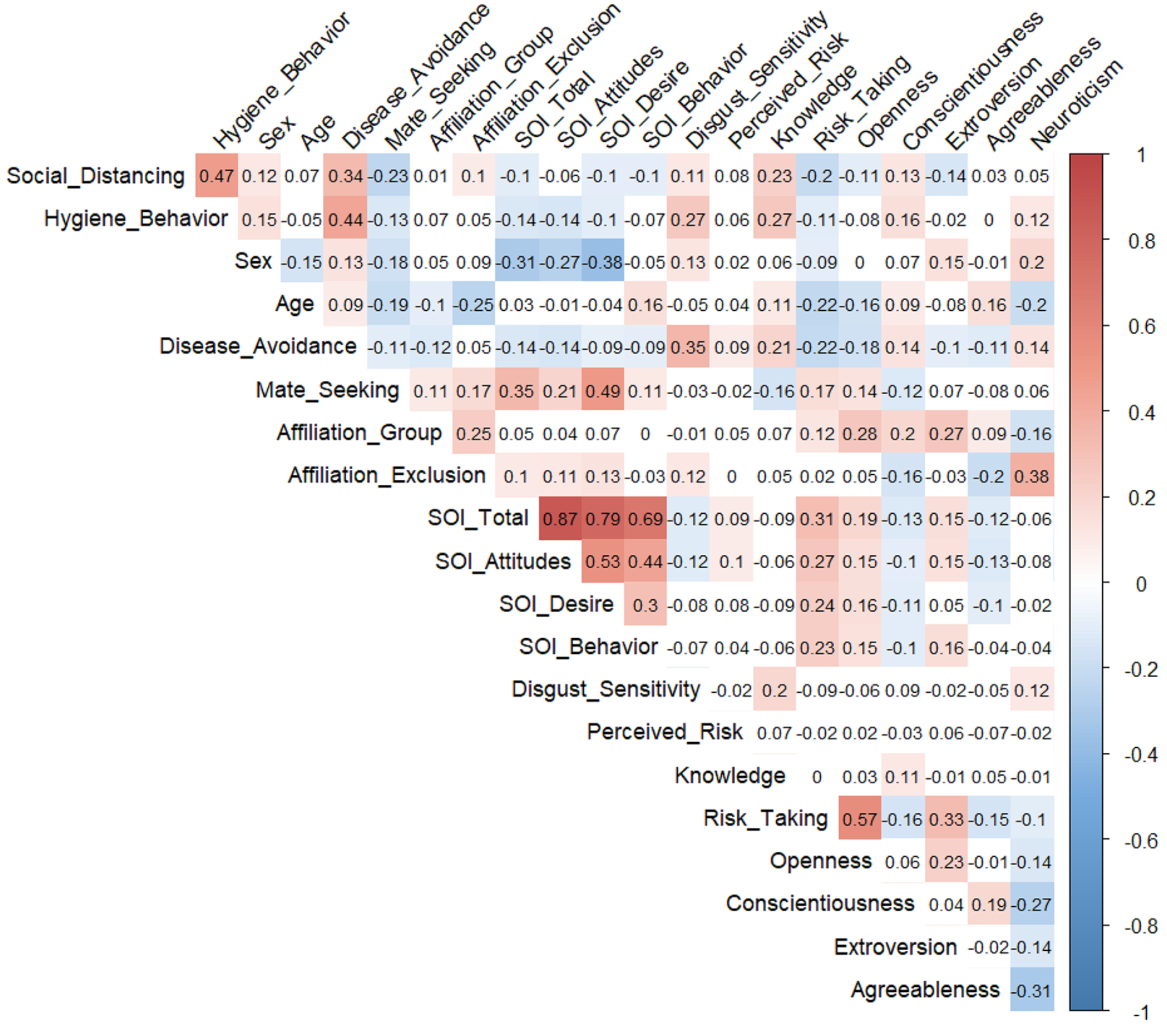
Correlation matrix indicating zero-order correlations (N = 487 [219 men, 268 women]). Note. Positive correlations are displayed in red and negative correlations in blue. The intensity of the color is proportional to the correlation coefficient so the stronger the correlation, the darker the boxes. A white box in the correlation matrix indicates that the correlation is not significant at α = .05. Sex is coded as 1 = male and 2 = female. SOI = sociosexual orientation (i.e., willingness to engage in uncommitted sex). See the online article for color version.
Study 2 (Western Sample): Means and Standard Deviations in the Total Sample and by Participant Sex.
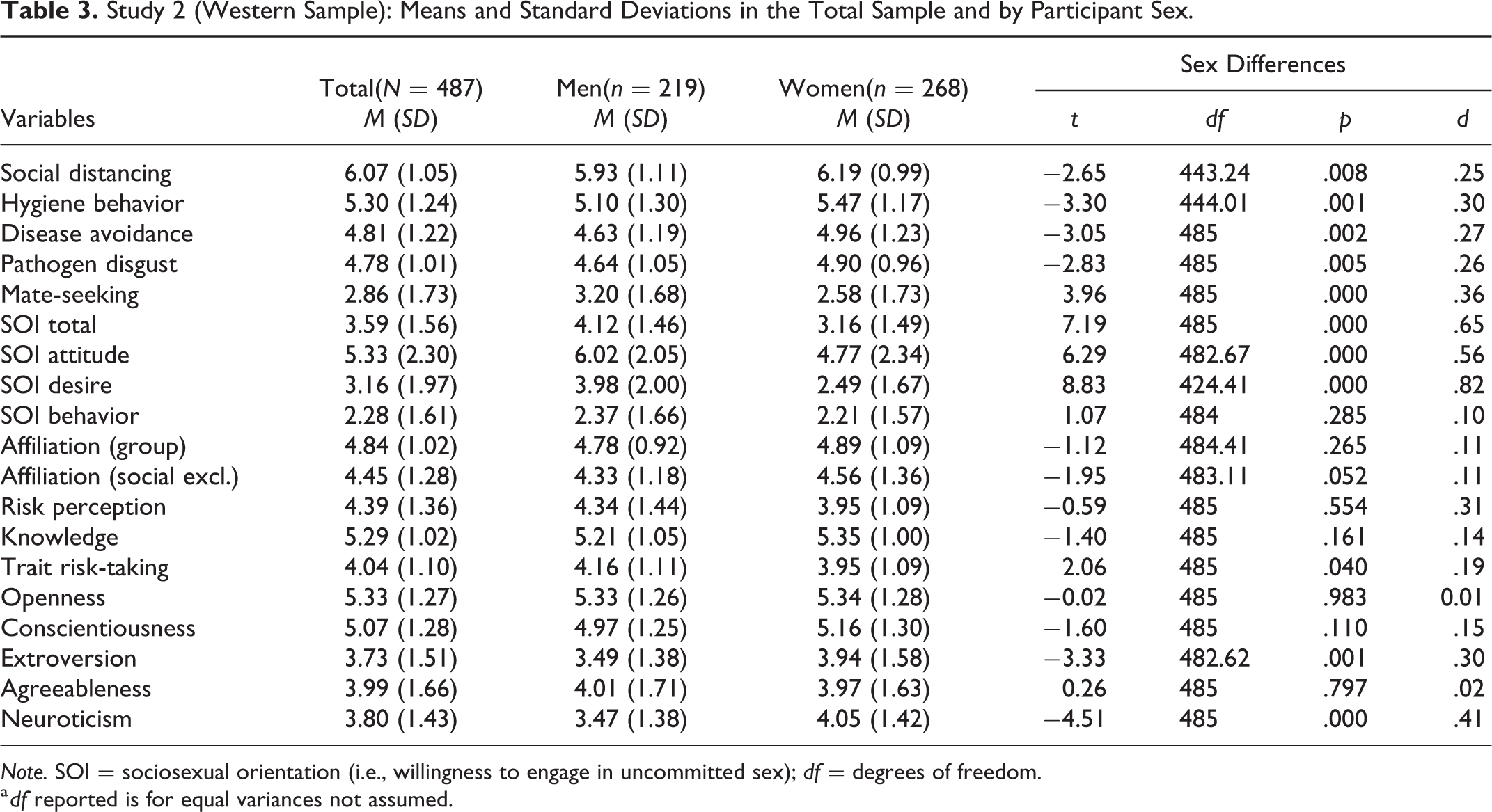
Note. SOI = sociosexual orientation (i.e., willingness to engage in uncommitted sex); df = degrees of freedom.
a df reported is for equal variances not assumed.
As expected, and replicating Study 1, adherence to social distancing and hygiene were positively associated with disease avoidance motives, and disgust sensitivity, and negatively associated with mate-seeking motives and interest in casual sex (SOI). 10 Social exclusion concerns were positively related to social distancing, which was not significant in Study 1.
As in Study 1, men were less likely to adhere to both social distancing and hygiene practices. Similar to Study 1, age was not related to social distancing, but unlike in Study 1, age was also not related to hygiene practices. 11 As in Study 1, men (vs. women) were less disgust sensitive and more willing to engage in uncommitted sex. Furthermore, new to this sample, men had lower disease avoidance, but higher mate-seeking motives. Similar to Study 1a, younger individuals had lower disease avoidance motives, but higher mate-seeking, group affiliation, and social exclusion concerns (but unlike in Study 1, age was not related to disgust sensitivity).
Next, we conducted hierarchical regression analyses to test whether social distancing and hygiene measures were predicted by disease avoidance and mate-seeking motives even after controlling for multiple other variables. We added the control variables in Step 1, and social motives, SOI, and disgust sensitivity in Step 2. Results mainly replicated Study 1: Disease avoidance motives predicted higher, and mate-seeking motives predicted lower compliance with social distancing (although mate-seeking motives, rather than SOI, emerged as the significant predictor). New to this sample, social exclusion concerns also predicted higher compliance with social distancing (Table 4A). As in Study 1, compliance with hygiene practices was predicted by higher disease avoidance, but unlike in Study 1, mate-seeking motives did not predict hygiene practices. New to this sample, disgust sensitivity and group affiliation motives also predicted higher compliance with hygiene practices (Table 4B). 12, 13
Study 2 (Western sample): Hierarchical Regression Results on Adherence to (A) Social Distancing and (B) Hygiene Practices.
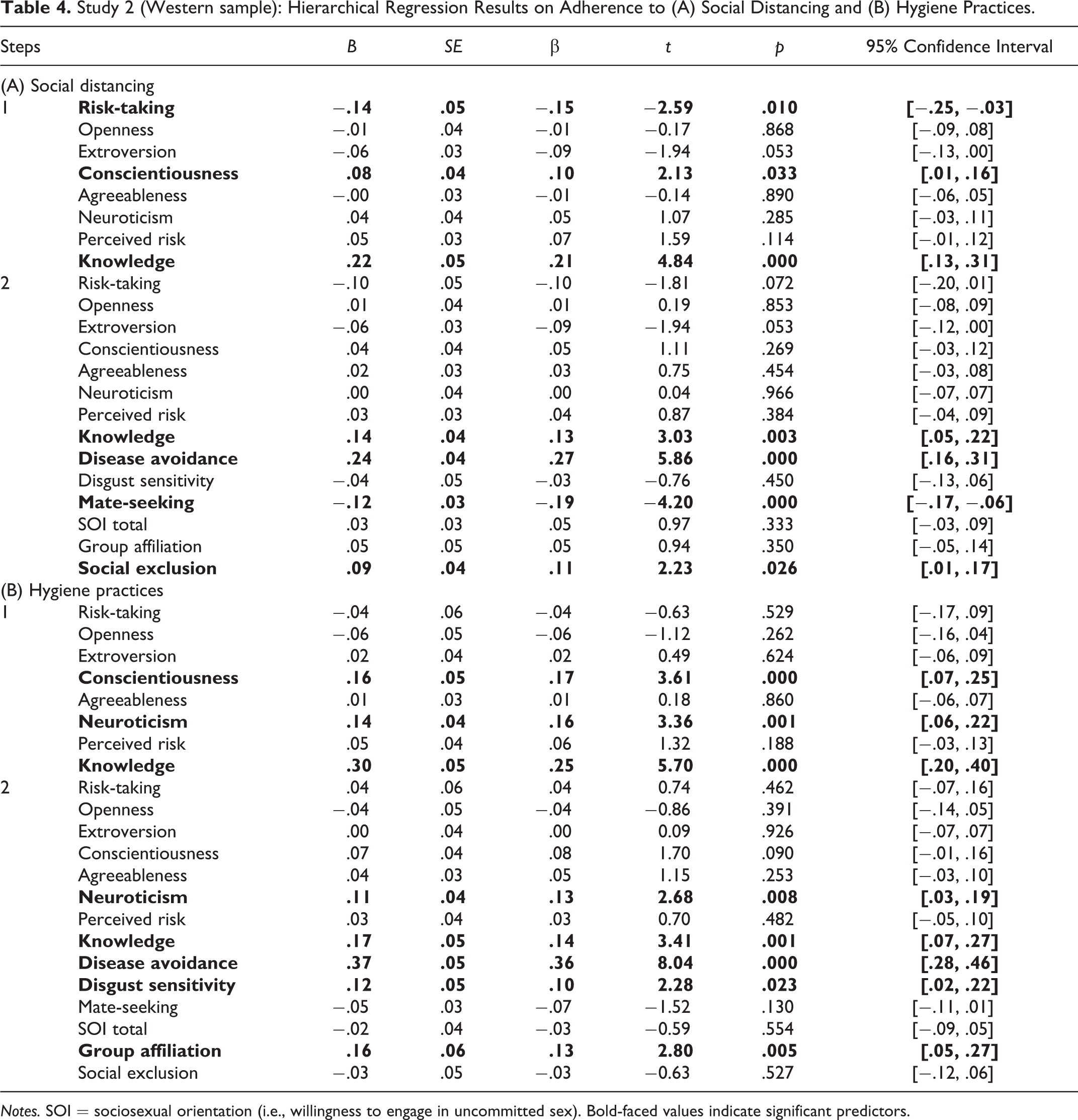
Notes. SOI = sociosexual orientation (i.e., willingness to engage in uncommitted sex). Bold-faced values indicate significant predictors.
General Discussion
We hypothesized that adherence to social distancing and hygiene behavior during the COVID-19 pandemic is the result of a trade-off between motives to avoid infection and social motives. As expected, disease avoidance motives were positively associated, and mating motives negatively associated, with adherence to social distancing and hygiene behavior in two studies. However, other social motives, namely group affiliation and concerns about social exclusion, were not associated with social distancing or hygiene behavior. Moreover, after conducting regression analysis to control for a range of individual differences (e.g., personality and general risk perception), disease avoidance motives were the only consistent positive predictor, and mating motives were the only significant negative predictor, of social distancing. Overall, these findings suggest that mating motives are the most important of the social motives we measured in shaping social distancing behavior.
Mating motives and disease avoidance motives vary across sex and age (Ko et al., 2019). We therefore also explored whether the trade-off between these motives could be related to findings that men and young people adhere less with social distancing. We explored our hypothesis regarding age differences in both studies. But, due to small sample size of men in Study 1, we could explore our hypothesis regarding gender differences only in Study 2. Regarding age differences, indirect effects analyses in Study 1 revealed that only disease avoidance motives was associated with younger (vs. older) peoples’ compliance with social distancing, whereas in Study 2, consistent with our trade-off suggestion, younger peoples’ lower compliance with social distancing was associated with both their lower disease avoidance motives and their higher mate-seeking motives. The nonsignificant indirect effect via mating motives (SOI) in Study 1 could be due to the sample being predominantly women, who on average have lower desire for casual sex than men. Regarding sex differences, Study 2 similarly showed that men’s (vs. women’s) social distancing was associated with their lower disease avoidance and higher mate-seeking motives. Despite the sample size limitation in Study 1, these findings support the hypothesis that the trade-off between disease avoidance and mate-seeking shapes social distancing behavior, which can in turn shape demographic patterns of adherence with social distancing rules.
Following hygiene guidelines is not subject to the disease avoidance and mating trade-off to the same extent as social distancing because, compared to social distancing (e.g., staying at home) hygiene (e.g. hand washing) interferes less with social contact. This may explain why, in Study 2, adherence with social distancing was associated with mate-seeking motives but not with hygiene practices in the regression analyses. In both studies, affiliation motives were not as strongly associated with social distancing as mating motives were. One possible reason is that compared to mating, nonromantic socializing may be more easily satisfied while socially distancing via, for example, social media and virtual meeting platforms.
One limitation is that the two measures of mating motives we employed were not equally predictive across Studies 1 and 2. In Study 1, regression analysis revealed that socio-sexuality (SOI) was the only significant negative predictor of social distancing, whereas in Study 2, the Mate-Seeking Scale from FSMI was the only significant negative predictor. It could be that cultural or linguistic differences might explain this discrepancy, but future research would be needed to see if the discrepancy replicates with other samples. Regardless, in both studies, both mate-seeking motives and SOI negatively correlated with social distancing, and in both studies, one of these two mating motive measures was the only significant negative predictor after controlling for multiple other individual difference variables in regression analyses.
Our findings have important theoretical implications. It is well-documented that some individuals are more “disgust sensitive” than others—experiencing a stronger emotional response to pathogen cues (Haidt et al., 1994; Tybur et al., 2009). This emotional response has been theorized to motivate avoidance of certain objects and people heuristically associated with disease (Curtis et al., 2004; Faulkner et al., 2004; Shook et al., 2019). The present research emphasizes that avoidance behavior can be better explained when competing motives are also taken into account. Recent perspectives on the functioning of the human behavioral immune system (Tybur & Lieberman, 2016) and human fundamental social motives (Kenrick et al., 2010) have emphasized that pathogen avoidance motives and behavior are the outcome of a trade-off between the costs of pathogen exposure and the costs of avoiding pathogen exposure. Our findings extend these accounts by emphasizing the importance of mating motives in the trade-off with pathogen avoidance and by showing that the trade-off can explain social distancing behavior in addition to other outputs such as affective responses (Case et al., 2006) and discomfort with physical contact (Tybur et al., 2020).
Our findings also have implications for the design of policies and interventions to promote social distancing adherence. People who are more interested in seeking romantic partners (e.g., young men) may find it harder to follow social distancing rules and be more likely to spread pathogens. Our research may inform policy makers to increase commitment to help specific groups of people (e.g. young people) to manage competing motives to comply with infectious disease prevention behaviors. One avenue could be to develop public health campaigns to encourage people to fulfill their mating motives while maintaining social distancing, for example, by using virtual romantic or sexual interactions (see, e.g., British Columbia Center for Disease Control, n.d.; Dutch National Institute for Health and Environment, n.d.). In sum, we hope that our research will help to inform policy makers and the general public to address competing motives between adhering between infectious disease prevention behaviors and affiliative motives. Eventually, this may help to establish cultural and social practices whereby infectious diseases can be kept at a safe distance while at the same time helping people to remain intimately close.
Supplemental Material
sj-docx-1-spp-10.1177_19485506211046462 – Supplemental material for Disease Avoidance Motives Trade-Off Against Social Motives, Especially Mate-Seeking, to Predict Social Distancing: Evidence From the COVID-19 Pandemic
Supplemental material, sj-docx-1-spp-10.1177_19485506211046462 for Disease Avoidance Motives Trade-Off Against Social Motives, Especially Mate-Seeking, to Predict Social Distancing: Evidence From the COVID-19 Pandemic by Pelin Gul, Nils Keesmekers, Pinar Elmas, Fatma Ebru Köse, Tolga Koskun, Arnaud Wisman and Tom R. Kupfer in Social Psychological and Personality Science
Footnotes
Author Contributions
P.G. and T.R.K. conceived the research idea. P.G. designed and conducted the study, collected and analyzed the data, and drafted the Intro, Methods, and Results. T.R.K. drafted the General Discussion, provided critical comments and revisions, and funds to collect the Study 2 sample via Prolific. A.W. provided critical comments and revisions. N.K. helped collect the Study 2 Western sample and prepare the tables. P.E., E.A., and T.K. helped collect the Study 1 Turkish sample, prepare the tables and references. All authors gave final approval for publication.
Declaration of Conflicting Interests
The author(s) declared no potential conflicts of interest with respect to the research, authorship, and/or publication of this article.
Funding
The author(s) disclosed receipt of the following financial support for the research, authorship, and/or publication of this article: The research was supported by a European Research Council grant to Tom R. Kupfer (MSCA-IF-2017-800096-EmoPun).

Supplemental Material
The supplemental material is available in the online version of the article.
Notes
References
Supplementary Material
Please find the following supplemental material available below.
For Open Access articles published under a Creative Commons License, all supplemental material carries the same license as the article it is associated with.
For non-Open Access articles published, all supplemental material carries a non-exclusive license, and permission requests for re-use of supplemental material or any part of supplemental material shall be sent directly to the copyright owner as specified in the copyright notice associated with the article.
