




Abstract
Little is known about the effects of substance use on changes in broad personality traits. This 10-year longitudinal study sought to fill this void using a large, representative sample of the Dutch population (N = 10,872), which provided annual assessments of drug use (tobacco, alcohol, sedatives, soft drugs, ecstasy, hallucinogens, and hard drugs), Big Five personality traits, life satisfaction, and self-esteem. Using multilevel models, we examined the longitudinal associations between drug use and personality both between and within persons. Results indicated that individuals with low levels of conscientiousness, life satisfaction, and self-esteem, as well as high levels of neuroticism, used more drugs on average (between-person effects). In contrast, we found little evidence for personality change following substance use (within-person effects). We discuss these findings in the context of previous empirical and theoretical work and highlight opportunities for future research.
There is ample evidence for the negative consequences of drug use on physical and mental health. Illicit drug use has been linked to cardiovascular pathology, liver disease, and increased overall mortality (Degenhardt & Hall, 2012), as well as various mental health outcomes including depression, anxiety disorders, and schizophrenia (Lai et al., 2015; Marconi et al., 2016). In contrast to the broad literature on drug use and health outcomes, comparatively little is known about the implications of drug use for changes in normal personality characteristics.
To address this void, we examined the longitudinal associations between usage of various substances and broad personality traits in a large representative sample of the Dutch population. Specifically, we focused on both the between- and within-person links between drug use and the Big Five personality traits (Goldberg, 1992). To gauge potential effects, we also examined the implications of drug use for life satisfaction and self-esteem, which have been found to be less stable and more malleable to external influences than the Big Five (Anusic & Schimmack, 2016; Denissen et al., 2019).
Personality Trait Change
Most people undergo substantial changes in their personality traits throughout their lives (Roberts et al., 2006). Although the normative trends are in the direction of greater psychological maturity, people differ in their individual change trajectories (e.g., Roberts & Mroczek, 2008; Schwaba & Bleidorn, 2018). Despite an overwhelming body of evidence showing that personality traits change, little is known about the sources of change. Here, we explore drug use as a broad mechanism that may elicit changes in personality. From a theoretical perspective, the effects of drug use on personality change could be biologically mediated (Costa et al., 2019). However, similar to other proposed sources of personality development, they could also be attributable to the reenactment of behavioral patterns (Wrzus & Roberts, 2017) or changes in social roles (Roberts & Wood, 2006) accompanying substance use. Thus, multiple pathways exist through which substance use may affect people’s typical way of thinking, feeling, and acting.
Research on Drug Use and the Big Five, Life Satisfaction, and Self-Esteem
Cross-sectional associations between personality traits and various forms of drug use have been well established. For example, lower levels of conscientiousness and higher levels of neuroticism have been associated with use of various drugs including tobacco, alcohol, marijuana, ecstasy (XTC), sedatives, and heroin, with most studies reporting small- to medium-sized effects (Hakulinen et al., 2015; Malouff et al., 2007; Nicholas & Hammond, 1992; ter Bogt et al., 2006; Terracciano et al., 2008). In addition, several studies reported associations between specific personality traits and drugs. For instance, high extraversion has been associated with more tobacco (Hakulinen et al., 2015) and XTC use (ter Bogt et al., 2006) as well as less sedative use (Nicholas & Hammond, 1992). Low agreeableness has been associated with alcohol and marijuana (Malouff et al., 2007; Terracciano et al., 2008), and high openness has been linked to marijuana (Terracciano et al., 2008). Moreover, smoking, alcohol, sedatives, and hard drugs have been related to lower life satisfaction (Abrahamsson et al., 2015; Strine et al., 2008; Zullig et al., 2001). Findings for self-esteem have been less clear, with most studies finding inconsistent or absent effects (e.g., Kokkevi et al., 2007; Lee et al., 2018; Walther et al., 2012).
Cross-sectional correlations provide important evidence for an overall association between drug use and personality differences. However, longitudinal data are needed to examine the temporal nature of these links; perhaps most importantly, whether personality traits change following the use of drugs. In a recent meta-analysis, risky alcohol use predicted decreases in conscientiousness and agreeableness and increases in extraversion and neuroticism across an average time interval of 6 years (Hakulinen & Jokela, 2019). High levels of alcohol consumption have also been related to decreases in life satisfaction (Koivumaa-Honkanen et al., 2012). Results for tobacco use are less conclusive, with some studies reporting changes in neuroticism following tobacco use, but these results did not generalize across assessments and subsamples (Littlefield & Sher, 2012; Malmberg et al., 2013). Soft drug use has been associated with decreases in extraversion and increases in openness (Klimstra et al., 2014) as well as reduced life satisfaction (Fergusson & Boden, 2008), while longitudinal effects of hard drugs, XTC, and sedatives have been rarely studied. Finally, experimental evidence suggested that use of psychedelics increased participants’ openness levels (Carhart-Harris et al., 2016; MacLean et al., 2011), albeit in small samples.
The aforementioned studies made important contributions to our understanding of drug use and personality change. However, most of them were restricted in their conclusions due to important methodological limitations. First, most studies did not separate within- from between-person associations (Hamaker et al., 2015), suggesting that longitudinal associations derived from previous research might reflect both effects of stable individual differences between persons (e.g., less conscientious people take more drugs) and changes within persons (e.g., drug use decreases conscientiousness). Second, individual differences in the effects of drug use on personality change remain largely unexplored. Past research has highlighted that individuals differ in personality change following life experiences (Bleidorn et al., 2018; Denissen et al., 2019). However, little is known about the degree to which people differ in their responses to drug use. Third, most studies have focused on specific forms of drug use and/or personality traits in specific populations, but longitudinal research investigating various types of drugs and personality traits in large representative samples is lacking.
This Study
The purpose of this 10-wave longitudinal study was to address the aforementioned limitations to further our understanding of the links between drug use and personality change. To do this, we examined the associations between usage of seven types of drugs (tobacco, alcohol, sedatives, soft drugs, XTC, hallucinogens, and hard drugs) and the Big Five personality traits, life satisfaction, and self-esteem in a representative sample of the Dutch population. Consistent with a strategy used by Jokela et al. (2018), we used multilevel modeling (MLM) to examine two broad questions: First, do individuals who report higher drug use on average (i.e., across measurement waves) report higher or lower levels of certain personality traits (e.g., conscientiousness)? Second, do deviations from one’s typical substance use behavior (e.g., consuming a new substance or terminating substance use) predict changes in personality at the subsequent measurement occasion (within-person effects)? This modeling strategy distinguishes between- and within-person effects and conceptualizes within-person effects as reversible (e.g., terminating use could facilitate a return to one’s baseline personality).
Specific hypotheses for this study were explicitly based on previous empirical findings and allowed us to assess their replicability. In line with the empirical literature discussed above, we made 19 predictions for between-person effects of substance use on personality and nine predictions for within-person effects. Our hypotheses are summarized in Table 1 and justified in more detail in our preregistration (https://osf.io/xmsd9/).
Hypotheses for the Between- and Within-Person Effects.
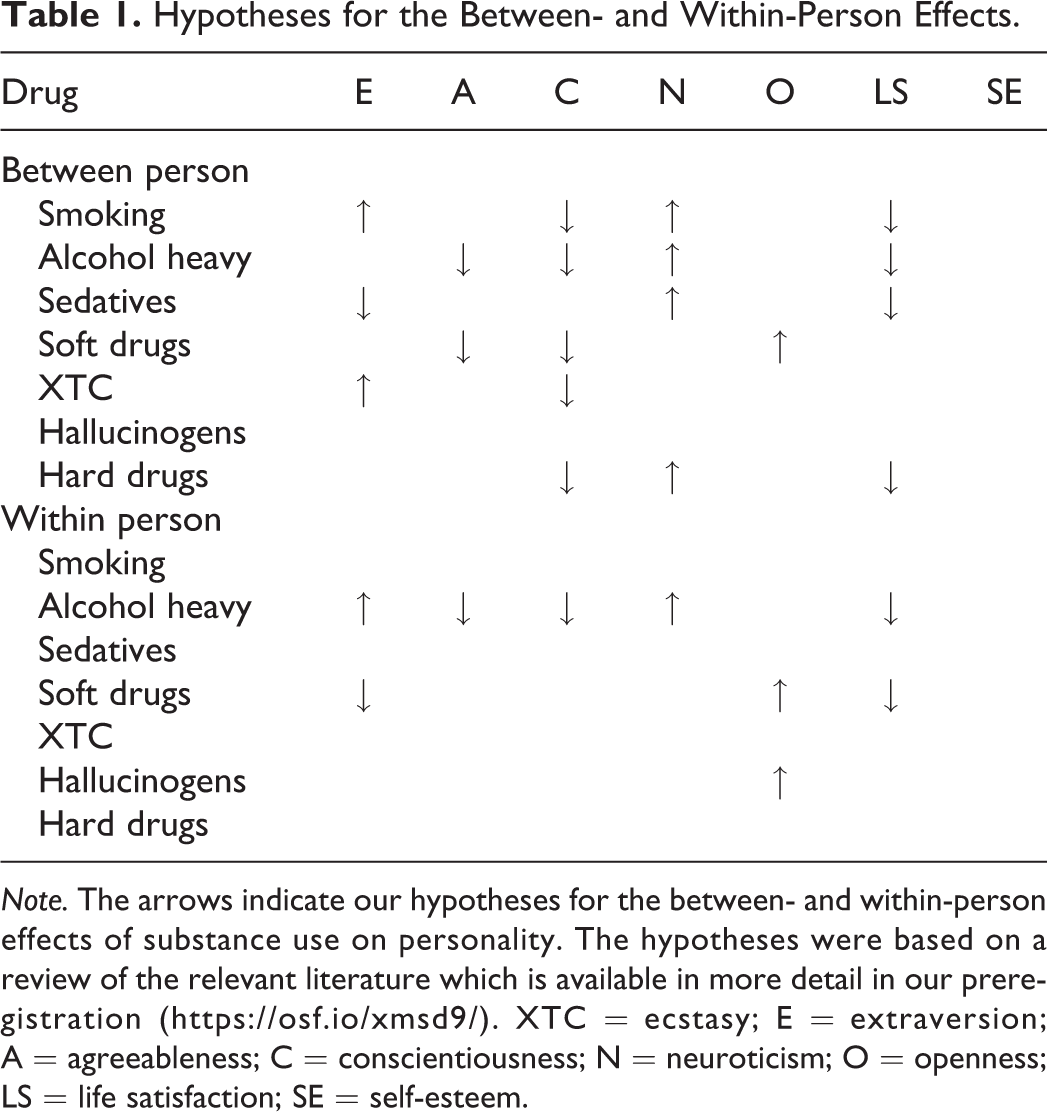
Note. The arrows indicate our hypotheses for the between- and within-person effects of substance use on personality. The hypotheses were based on a review of the relevant literature which is available in more detail in our preregistration (https://osf.io/xmsd9/). XTC = ecstasy; E = extraversion; A = agreeableness; C = conscientiousness; N = neuroticism; O = openness; LS = life satisfaction; SE = self-esteem.
Method
Sample and Procedure
Data came from the Longitudinal Internet Studies for the Social Sciences (LISS) panel (Scherpenzeel & Das, 2010), an ongoing representative survey of the Dutch population, in which monthly Internet questionnaires are administered to participants. The panel is based on a random household sample from the population register. Data collection began in 2007, and the latest wave of personality data reported here was completed in 2018. We did not obtain ethics approval from an institutional review board because we only used existing data.
A battery of personality questionnaires (Big Five, life satisfaction, self-esteem) were administered yearly in May, except for 2014 and 2015 when they were administered in November. Questionnaires on substance use were administered yearly in November, except for 2015, when they were administered in July. Participants who did not complete the surveys in the focal month were given the opportunity to complete them in a following month. The LISS panel utilizes planned missingness such that, by design, some questionnaires were not administered in certain years for certain cohorts. Furthermore, new cohorts entered the LISS panel each year, except for 2016, to counteract attrition.
Over the course of the study, the personality survey was completed by 13,614 participants (who filled out a total of 59,467 assessments, M per person = 4.37). The substance use questionnaire was completed by 13,490 participants (who filled out a total of 58,103 assessments, M per person = 4.31). Given our focus on longitudinal effects of substance use on personality change, we structured our data such that each personality assessment was preceded by a substance use assessment. We only included cases for which the time interval between the substance use and personality assessment did not exceed 2 years. This left us with N = 10,872 participants (M age = 50.1 years, SD = 17.2; 53.9% female) with a total of 32,952 personality and substance use assessments. The average time interval between substance use assessments and subsequent personality assessments was 214 days (SD = 90.6). The average participant had 3.03 eligible (consecutive) personality and substance use assessments (SD = 1.91, min = 1, max = 7). The average study period between the first and last assessment used in this study was 4.25 years (SD = 3.62). Frequencies of substance use reports and number of participants reporting at least one instance of substance use are summarized in Table 2.
Frequencies of Substance Use Reports.
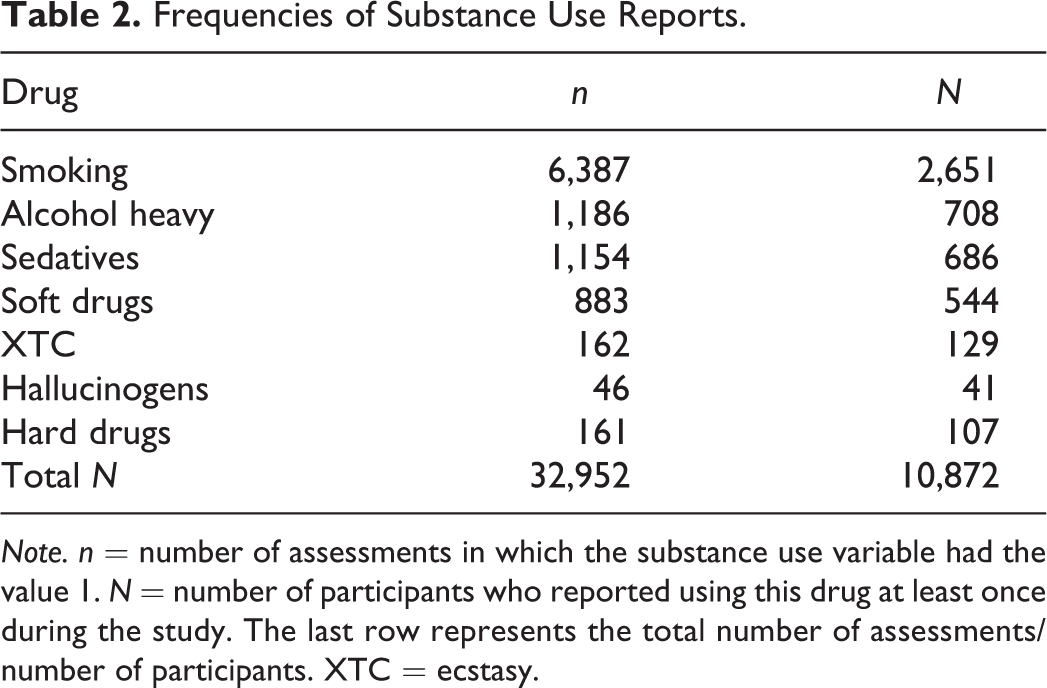
Note. n = number of assessments in which the substance use variable had the value 1. N = number of participants who reported using this drug at least once during the study. The last row represents the total number of assessments/number of participants. XTC = ecstasy.
Measures
Personality
The Big Five were assessed using a 50-item version of the International Personality Item Pool Big-Five inventory (Goldberg, 1992) as part of the yearly personality assessment. Cronbach’s αs (across waves) were .87, .81, .78, .88, and .76 for extraversion, agreeableness, conscientiousness, neuroticism, and openness, respectively. Life satisfaction was assessed using the Satisfaction With Life Scale (Diener et al., 1985; α = .89). Self-esteem was measured using the 10-item Rosenberg Self-Esteem Scale (Rosenberg, 1979; α = .90). All personality measures were z-standardized across all participants and assessments prior to analysis.
Substance use
The surveys included questions about the use of seven types of substances: tobacco, alcohol, sedatives (e.g., valium), soft drugs (e.g., marijuana), XTC, hallucinogens (e.g., LSD or magic mushrooms), and hard drugs (e.g., stimulants, cocaine, heroin). Note that in the Netherlands, soft drugs are tolerated for recreational use. Sedatives can be prescribed, whereas XTC, hallucinogens, and hard drugs are illegal.
Smoking status was dummy coded (1 = current tobacco smoker, 0 = otherwise) for the purpose of this study. To code heavy alcohol use, we combined information on participants’ drinking frequency and the occurrence of heavy drinking episodes. 1 Drinking frequencies were considered high if participants reported drinking on 5 or more days per week over the last 12 months. A heavy drinking episode was defined as the consumption of 60 or more grams of pure alcohol in one sitting (World Health Organization, 2014). Heavy alcohol use was indicated if participants reported both high drinking frequencies in the last 12 months and a heavy drinking episode during the last 7 days.
Finally, participants indicated how often they had used the following substances over the last month: sedatives, soft drugs, XTC, hallucinogens, and hard drugs on a 3-point scale: (1) never, (2) sometimes, and (3) regularly. We coded substance use for each of these as “1” if participants indicated that they had consumed the substance sometimes or regularly in the last month and “0” if otherwise.
Control variables
Consistent with previous work on the LISS data set and personality change (Denissen et al., 2019), we included the following control variables: age (in years, centered), age 2 (divided by 100), sex (0 = male, 1 = female), and a testing effect. Age, age 2 , and sex were included because previous research has shown age-related mean-level changes in personality traits as well as systematic gender differences. The testing effect indicated the number of the personality assessment (i.e., 0 for first assessment, 1 for second assessment, etc.). This variable was included to control for potential response biases due to repeated completion of the same questionnaire (cf. Denissen et al., 2019).
Assumption Checks
Measurement invariance
We examined whether the personality trait, life satisfaction, and self-esteem measures were invariant across waves using confirmatory factor analyses and model comparison tests (Chen, 2007). Results indicated that models with equal factor loadings and intercepts across assessment waves did not lead to substantial decrements in model fit (▵CFI > −.003, ▵RMSEA < 0), suggesting strict measurement invariance. That is, mean levels in personality traits, life satisfaction, and self-esteem could be compared meaningfully across assessment waves (see Table S58 in the Supplemental Online Material [SOM]).
Latent state-trait models
We fit bifactor latent state-trait models (Steyer et al., 1992) with correlated residuals for the same items across time to ensure that all measures showed reliable variation across waves. The amount of reliable state and trait variance was computed for each item, divided by the sum of state and trait variance, and averaged across items. Our results suggest that all measures had reliable occasion-specific variance (M = 21.84%; range: 12.97% for extraversion to 32.65% for self-esteem, all ps <.001), indicating substantial variation in personality across measurement points (for full details, see Table S59 in the SOM).
Attrition analyses
We performed a series of attrition analyses by comparing participants who provided only one personality and/or substance use assessment with those who contributed two or more personality and substance use assessments. Results indicated that participants who contributed only one personality and/or substance use assessment were more extraverted, less conscientious, more neurotic, had lower life satisfaction, and lower self-esteem with effect sizes of |d| ≦ .17. They were also more likely to smoke, use soft drugs, and XTC with Φ coefficients of .04, .04, and .03, respectively. No other significant associations with drug use emerged (see Table S1 in the SOM).
Main Analyses
Main analyses were implemented using the open source software R (R Core Team, 2018). The code is available on our Open Science Framework (OSF) project page (https://osf.io/xmsd9/). We analyzed our data using MLM with measurement occasions (Level 1) nested within participants (Level 2). MLMs take into account the dependencies introduced by our repeated measurements design and allowed us to separate between- and within-person effects of drug use.
We fitted one MLM for each Personality × Substance type combination. In each model, we predicted a personality variable (z-standardized across participants and assessments) by previous levels of tobacco, alcohol, sedative, soft drug, XTC, hallucinogen, or hard drug use (total of 49 models). The regression equations had the form:
Level 1:

Level 2:


in which y ij represented the personality assessment for person i at measurement occasion j, and x ij represented the previous drug assessment, which occurred on average 214 days before the respective personality assessment. β0i represented the person-specific intercept in personality, and β wi represented the within-person effect of drug use on personality. To separate within- from between-person effects, we first computed person-means for each participant across all available substance use assessments (μ i ). Then, we calculated deviations around the person-means for each person and measurement occasion (x ij − μ i ). Within-person effects indicated whether higher than typical substance use at each measurement occasion was associated with year-to-year fluctuations in the respective personality trait. For instance, a positive effect would indicate that an occasion-specific increase in drug use predicted an occasion-specific increase in the respective personality measure. Given that the effects of drug use on personality might differ between individuals, we included random slopes for the within-person effects, denoted by the subscript i (β wi ).The variance of the slopes captured the amount of individual differences in the within-person effects. 2 On the between-person level (Level 2), the intercept in personality was predicted by the person-specific mean of drug use (μ i ). A positive effect would indicate that individuals who took a given drug more frequently (averaged across all occasions) also reported higher levels of the respective personality trait (across all measurement occasions). These effects constituted the between-person effects (β b ).
Finally, we modeled the interaction between within-person effects and time interval between substance use and personality assessment (not shown in the formula). The interval was centered at 200 days such that β wi indicated the within-person effects of substance use on personality 200 days later. The interactions indicated whether the effect of drug use on personality differed as a function of the time interval. 3
Sensitivity Analyses
To investigate the robustness of our results, we included three sets of exploratory follow-up analyses. First, we investigated whether within-person effects of substance use were different for participants reporting repeated usage. Participants were classified as repeated users (“1”) if they reported using a given substance at two consecutive drug assessments, and as “0” otherwise. Second, we examined whether within-person effects of substance use differed between emerging adults (24 years or younger) and older adults, as emerging adulthood has been associated with increased interindividual differences in personality development (Schwaba & Bleidorn, 2018). Third, we investigated the effects of an overall substance use index for the consumption of less common substances (i.e., sedatives, soft drugs, XTC, hallucinogens, and hard drugs, excluding smoking and alcohol use). This index was coded as “1” if participants reported using at least two of the less common substances at the same measurement occasion, and as “0” otherwise.
Multiple Hypothesis Testing
P values were corrected for false discovery rate using the approach suggested by Benjamini and Yekutieli (2001). This was done separately for (1) the 98 within- and between-person effects, (2) the 49 interaction effects with time interval, and (3) the 49 random slopes. 4 For effects that represented a preregistered hypothesis, the two-tailed p values were transformed into one-tailed p values. A similar approach was taken in the sensitivity analyses for interaction effects of substance use with repeated user status and age-group. P values for sensitivity analyses testing within- and between-person effects of substance use (multiple use index and models including emerging adults only) were not adjusted and interpreted with respect to the significance threshold from the corresponding main analyses to ensure consistency.
Power Analysis and Preregistration
This project was preregistered on OSF (https://osf.io/xmsd9/) in two steps. First, we preregistered our specific hypotheses and analytic strategy. Second, after conducting descriptive analyses, we provided an addendum in which we preregistered more detailed analyses. The preregistration included a simulation-based power analysis for between- and within-person effects of varying magnitude. In particular, we simulated regression coefficients (corresponding to d given the z-standardization) of .10, .30, .50, and .80. For all within-person effects (except for hallucinogens), power was higher than 80% for effects of B = .30 or larger. For B = .10, power was lower than .80 for less frequently consumed substances (i.e., soft drugs, XTC, hallucinogens, and hard drugs). Statistical power was generally lower for between-person effects. For all substances except XTC, hallucinogens, and hard drugs, it was higher than 80% for effects of B = .30 or larger (see Table S2 in the SOM). Deviations from the preregistration are summarized in a second addendum and described in this article.
Results
Control Variables
Consistent with previous studies (e.g., Denissen et al., 2019), women reported higher levels of agreeableness, neuroticism, and conscientiousness and lower levels of openness and self-esteem than men. There were no significant sex differences for extraversion and life satisfaction. We found significant linear or curvilinear links between age and personality traits, life satisfaction, and self-esteem. Testing effects were mostly negative, suggesting that participants reported lower trait levels with every additional measurement occasion (see Tables S3–S51 for more details). Results of the main analyses are summarized in Figures 1 and 2 and Tables 3 and 4.
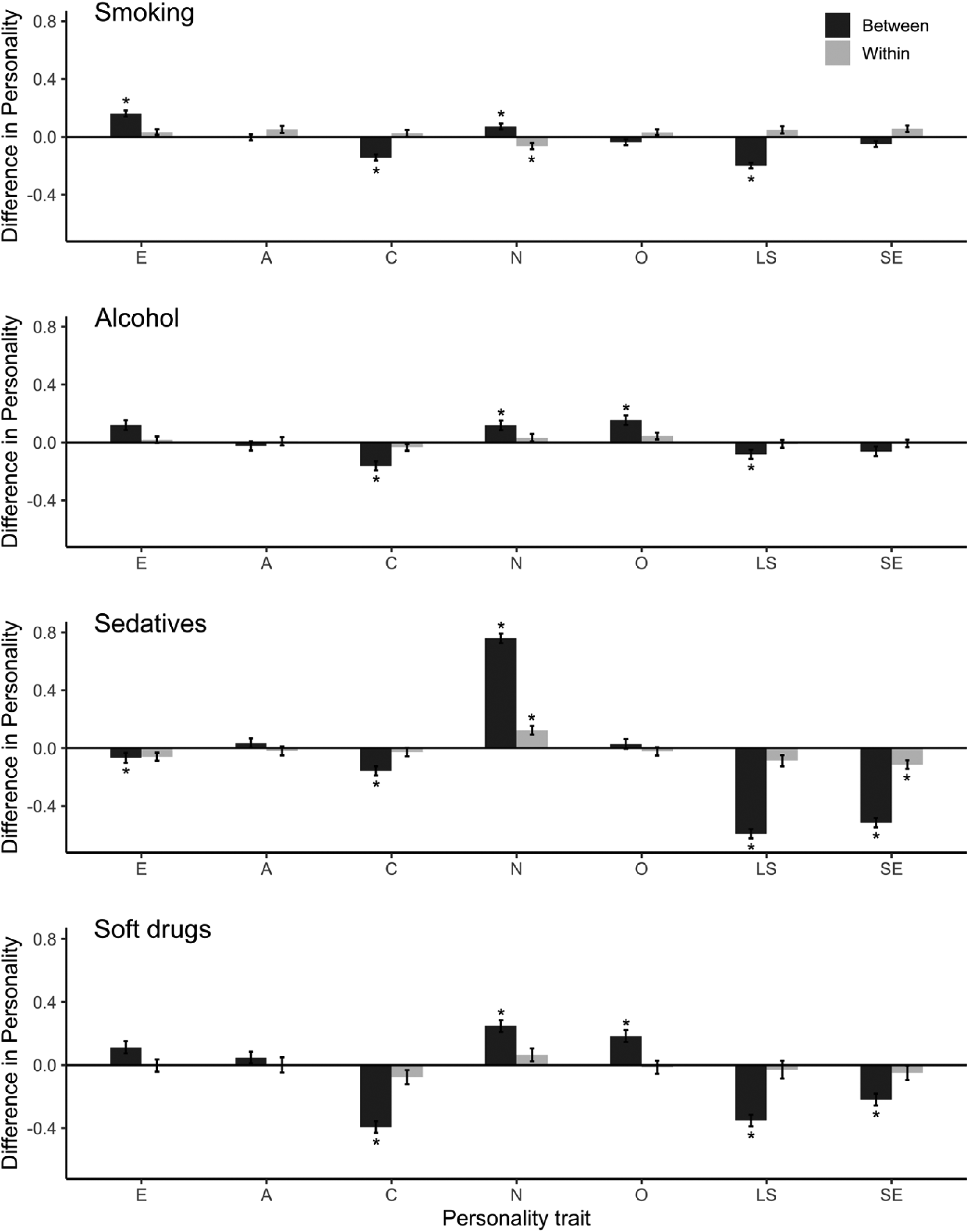
Between- and within-person effects of substance use on personality. For the between-person effects, we calculated the difference in average personality scores between participants who did and did not report substance usage during the study period. For the within-person effects, we calculated the difference in personality scores subsequent to use/nonuse for participants with valid data on both. All effects were calculated after residualizing personality on our control variables. Error bars represent standard errors. *Significant in the main analyses. E = extraversion, A = agreeableness, C = conscientiousness, N = neuroticism, O = openness, LS = life satisfaction, SE = self-esteem.
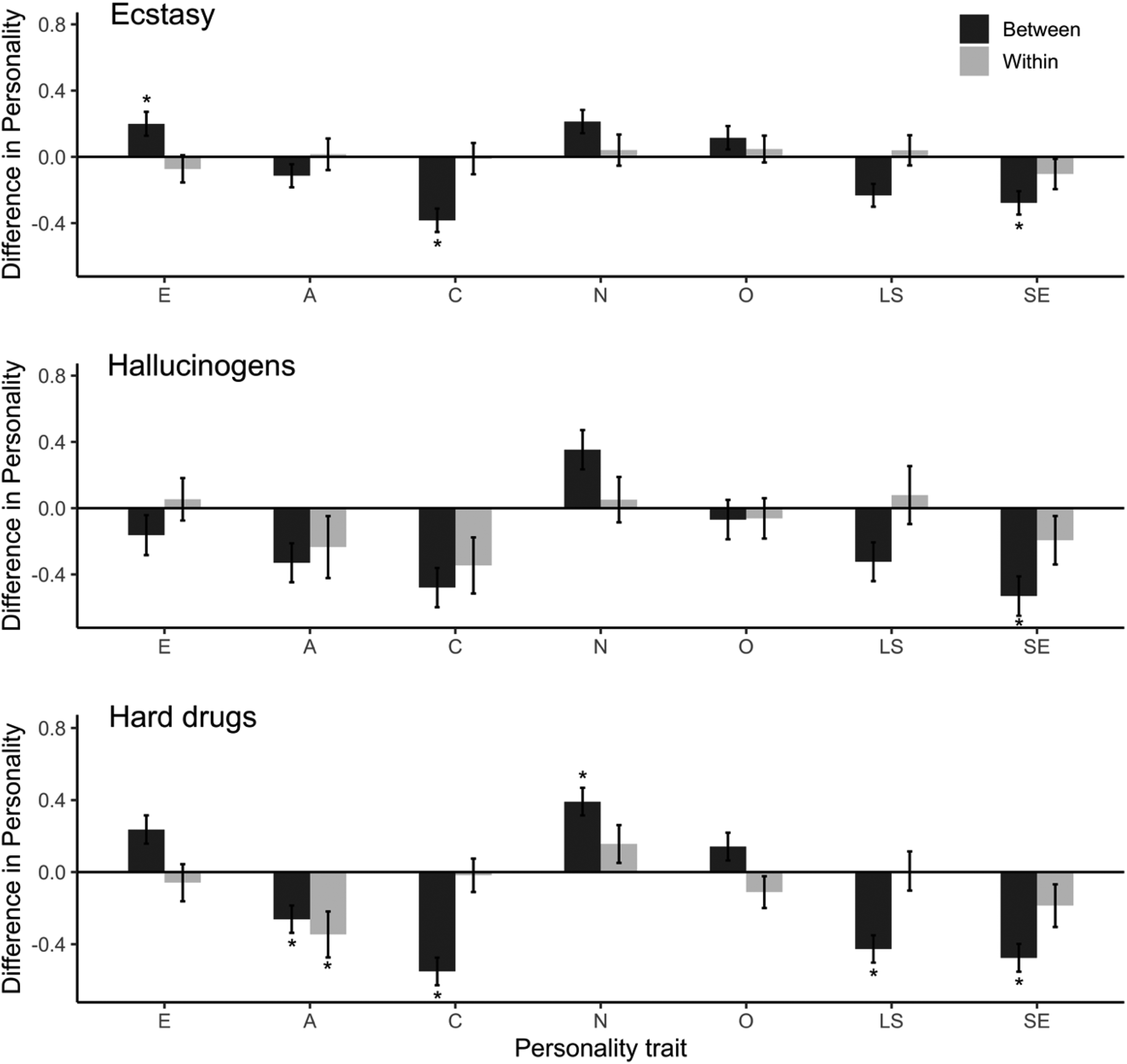
Between- and within-person effects of substance use on personality. For the between-person effects, we calculated the difference in average personality scores between participants who did and did not report substance usage during the study period. For the within-person effects, we calculated the difference in personality scores subsequent to use/nonuse for participants with valid data on both. All effects were calculated after residualizing personality on our control variables. Error bars represent standard errors. *Significant in the main analyses. E = extraversion, A = agreeableness, C = conscientiousness, N = neuroticism, O = openness, LS = life satisfaction, SE = self-esteem.
Between-Person Effects of Substance Use on Personality.
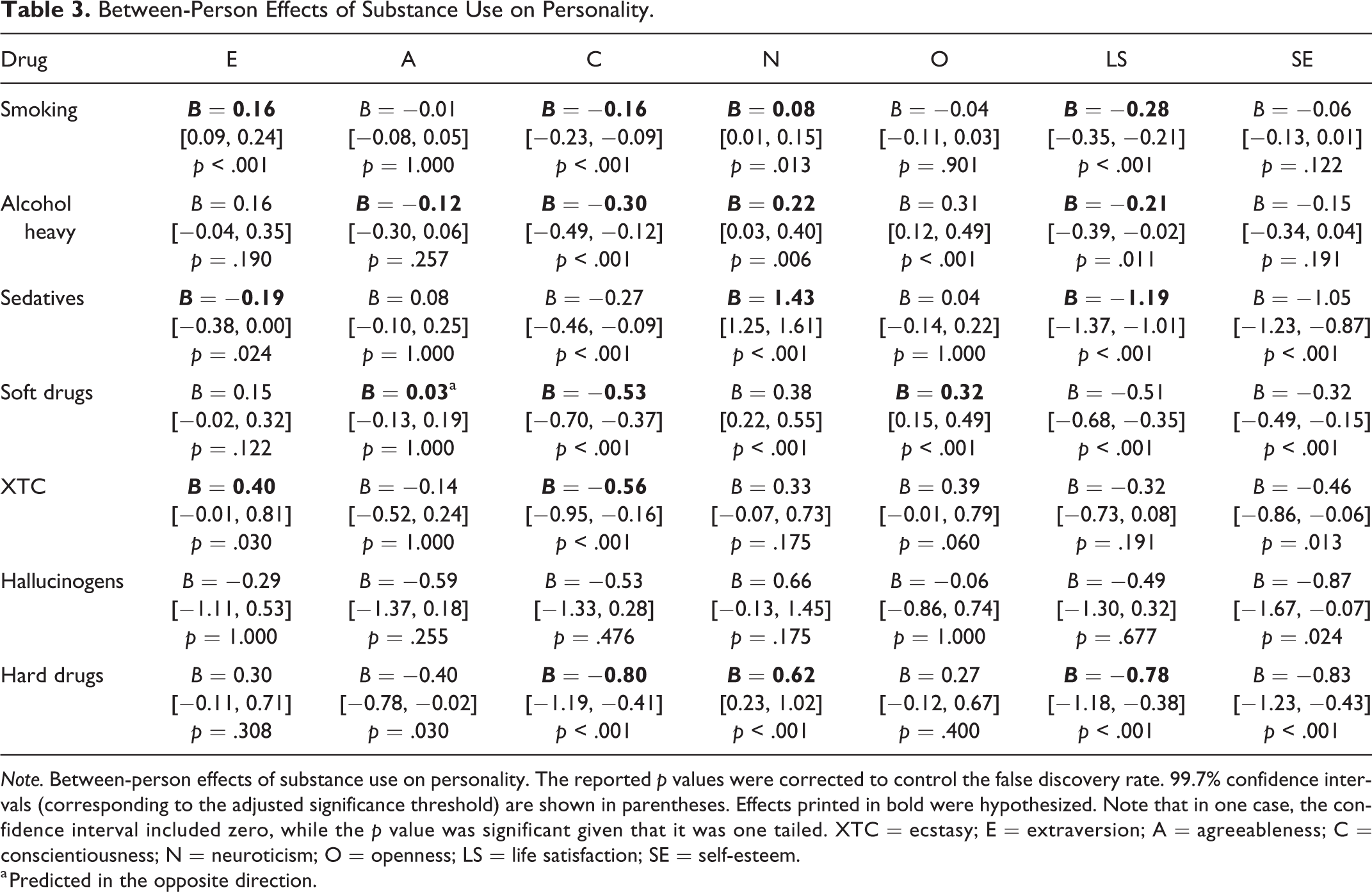
Note. Between-person effects of substance use on personality. The reported p values were corrected to control the false discovery rate. 99.7% confidence intervals (corresponding to the adjusted significance threshold) are shown in parentheses. Effects printed in bold were hypothesized. Note that in one case, the confidence interval included zero, while the p value was significant given that it was one tailed. XTC = ecstasy; E = extraversion; A = agreeableness; C = conscientiousness; N = neuroticism; O = openness; LS = life satisfaction; SE = self-esteem.
a Predicted in the opposite direction.
Within-Person Effects of Substance Use on Personality.
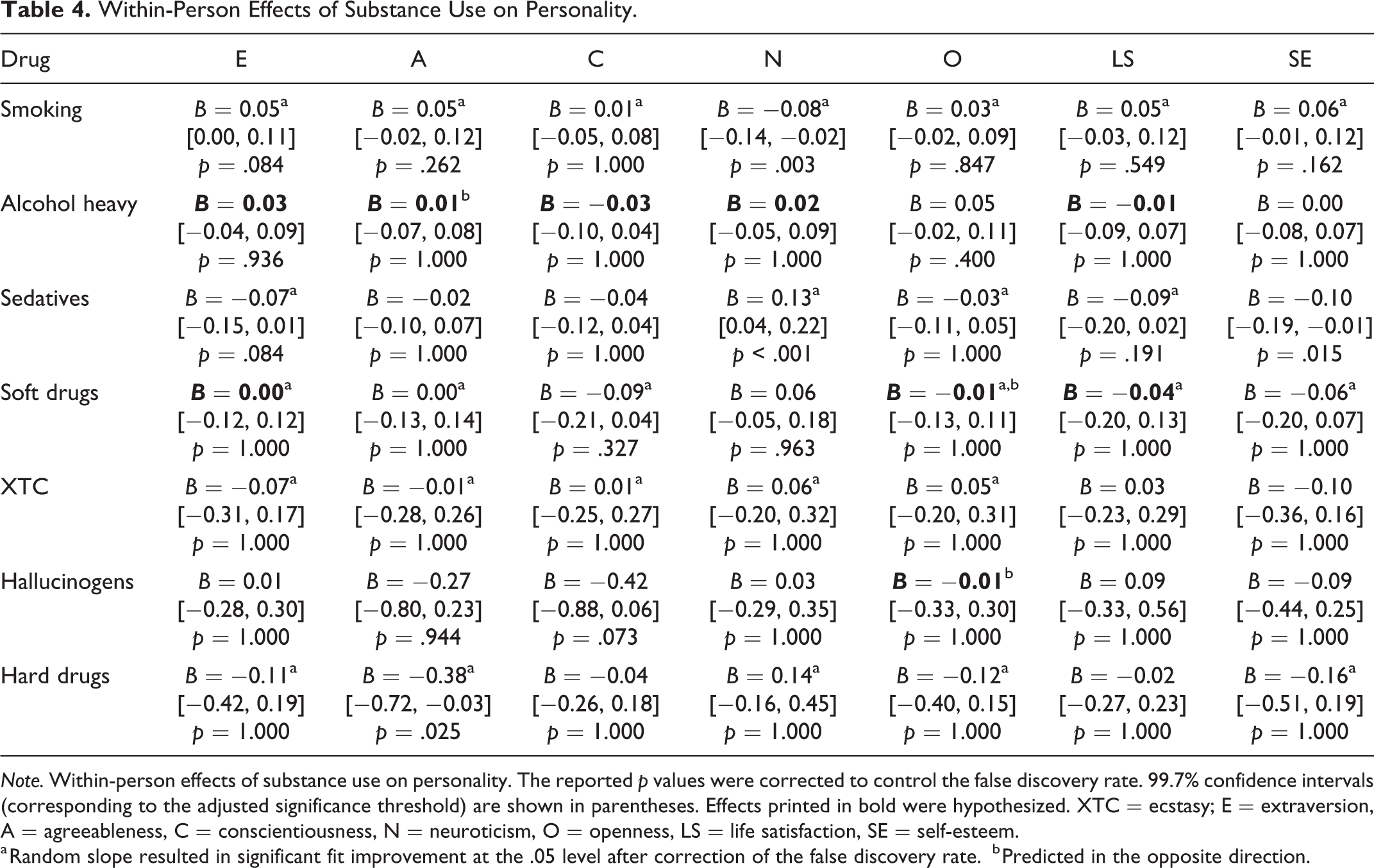
Note. Within-person effects of substance use on personality. The reported p values were corrected to control the false discovery rate. 99.7% confidence intervals (corresponding to the adjusted significance threshold) are shown in parentheses. Effects printed in bold were hypothesized. XTC = ecstasy; E = extraversion, A = agreeableness, C = conscientiousness, N = neuroticism, O = openness, LS = life satisfaction, SE = self-esteem.
a Random slope resulted in significant fit improvement at the .05 level after correction of the false discovery rate.
b Predicted in the opposite direction.
Between-Person Effects
Overall, 17 of our 19 (89%) between-person hypotheses were confirmed. Usage of most substances was significantly associated with lower levels of conscientiousness and higher levels of neuroticism. Results were less consistent for agreeableness, openness, and extraversion. Agreeableness was negatively associated with hard drug use, but not with any of the other substances. Openness was positively associated with heavy alcohol use and soft drug use. Finally, extraversion was positively associated with smoking and XTC use, but negatively with sedative use.
Some associations were large in magnitude. For instance, participants who used sedatives at every measurement occasion scored 1.43 SD higher on neuroticism than participants who did not use sedatives. The average absolute between-person associations ranged from B = .20 (agreeableness) to B = .53 (neuroticism). We found more pronounced associations between personality and use of less common substances (e.g., sedatives or hard drugs as opposed to alcohol or smoking; see Figures 1 and 2).
Life satisfaction and self-esteem were significantly negatively associated with using substances. The average absolute between-person associations were B = .54 and B = .53 for life satisfaction and self-esteem, respectively.
Within-Person Effects
None of our nine within-person hypotheses were confirmed. Regarding the Big Five, only three within-person effects were significant and none of them were predicted. Specifically, smoking was associated with subsequent decreases in neuroticism, using sedatives was associated with subsequent increases in neuroticism, and using hard drugs was associated with subsequent decreases in agreeableness. These effects were small to medium in size. For instance, those who indicated that they smoked reported a 0.08 SD decrease in neuroticism at the subsequent assessment wave, while those who used hard drugs reported a 0.38 SD decrease in agreeableness. The average absolute within-person associations were small, ranging from B = .04 (openness) to B = .10 (agreeableness).
Findings for life satisfaction and self-esteem were similar: The only significant effect that emerged was not predicted. Specifically, sedative use was associated with a subsequent decrease in self-esteem. The average absolute within-person effects were again small, with B = .05 and B = .08 for life satisfaction and self-esteem, respectively. No significant interactions between the within-person effects of substance use and the time interval between the respective personality and substance use assessment emerged (see Tables S3–S51 in the SOM).
Random Effects
Standard deviations of random slopes were significant in 27 (55%) cases, with significant standard deviations ranging from SD = 0.23 (within-person effect of smoking on openness) to SD = 0.66 (within-person effect of hard drug use on self-esteem; for full details, see Table S52 in the SOM). This suggested that the statistical effects of substance use on subsequent personality varied significantly across persons.
Sensitivity Analyses
As part of the sensitivity analyses, we investigated whether the within-person effects of substance use on personality traits, life satisfaction, and self-esteem were different for participants reporting repeated (consecutive) usage. However, none of the interactions between user status and the within-person effects of substance use were significant after correction of the false discovery rate (all adjusted p values = 1).
Moreover, we investigated whether within-person effects of substance use differed between emerging adults (24 years old or younger) and older participants. None of the interactions between the within-person effects and age-group were significant (all adjusted p values > .25). We also examined within-person effects separately in the subgroup of emerging adults (n = 3196 assessments, n = 1601 participants). None of the within-person effects surpassed the adjusted significance threshold (all unadjusted p values > .003).
Lastly, we calculated an overall usage index for the consumption of less common substances. Significant between-person associations emerged with lower conscientiousness, higher neuroticism, lower self-esteem, and lower life satisfaction (all unadjusted p values < .003). Thus, the overall usage index produced very similar results to the individual indicators. No within-person effects reached the adjusted significance threshold of the main-analyses, however (all unadjusted p values > .003). All sensitivity analyses are reported in the SOM (see Tables S53–S57).
Discussion
This research examined the 10-year longitudinal associations between broad personality traits, life satisfaction, and self-esteem and use of different legal and illegal substances in a representative sample of the Dutch population. The purpose was to disentangle stable between-person effects from within-person associations to advance our understanding of the sources that may drive personality change. In what follows, we discuss our findings with respect to the previous literature and highlight their implications.
Consistent with our preregistration and past research, we found evidence for moderate between-person associations between drug use and personality traits. Specifically, individuals who were high in neuroticism and low in conscientiousness were more likely to consume drugs. These findings were mirrored by associations with life satisfaction and self-esteem (participants lower in life satisfaction and self-esteem were more likely to report substance use). As expected from our power analysis, even small to moderate effects (B > .30) were typically significant, except for infrequently consumed substances.
The fact that conscientiousness was related to use of nearly all substances is consistent with its association with a wide range of health behaviors (Bogg & Roberts, 2004). The relationships between substance use and neuroticism may indicate attempts of self-medication among neurotic individuals in an effort to decrease negative affective states (e.g., Khantzian, 1997). Interestingly, these between-person effects were more pronounced for less frequently consumed substances.
Regarding personality change, our study is among the first to fully disentangle between- from within-person effects and hence represents a more conservative test for the hypotheses at hand. Contrary to previous studies, we found few within-person effects of drug use on subsequent personality change. Even when significant, these effects were considerably smaller than the between-person effects, and none of the effects were predicted based on the existing literature. The within-person effects for the more malleable variables life satisfaction and self-esteem were also small and rarely significant, highlighting the robustness of the results. Below, we will discuss several possible reasons for the lack of predicted within-person effects.
First, our study was limited by selective attrition and somewhat lower power for rarely consumed drugs. Importantly, our power for relatively frequently consumed drugs was adequate even for small within-person effects. As such, the null findings for those effects are unlikely to represent Type II errors.
Second, we investigated whether a drug was consumed during the last month, but we did not measure substance use over longer periods of time, neither did our measures account for intensity and context of usage. We tried to control for these limitations (e.g., by investigating the effects of repeated use), but future studies should replicate our results using alternative measures of drug use.
Third, the intervals between personality and drug use assessments were relatively long, preventing us from examining transitory effects (less than 200 days). Our analyses were also restricted by the limited number of assessments per person. Future studies should include more measurement points and examine both the bivariate trajectories of substance use and personality and the effects of certain substance use life events (e.g., first onset of use) on personality trajectories.
Our findings have important theoretical implications. First, drug use has been proposed as a candidate mechanism for changes in personality that may be mediated via biological pathways (Costa et al., 2019) as well as behavioral or social mechanisms. Although theoretically plausible, we found little evidence for such effects. Second, we observed large variability in the associations between substance use and personality (i.e., random effects), indicating that, despite the lack of strong main effects, there are significant individual differences in within-person associations between substance use and personality. In other words, substance use might have negative effects for some people but no effects or even positive effects for others. Future studies should examine which moderator variables explain these different trajectories.
To our knowledge, this is the first large-scale study examining the impact of a wide range of drugs on the Big Five personality traits, life satisfaction, and self-esteem. We analyzed data from more than 10,000 individuals that were collected over a period of more than 10 years with an average of three assessments for each participant, using highly reliable personality measures. In addition, we used statistical models that effectively distinguished between- and within-person effects. Overall, our study provides strong evidence for between-person relationships between substance use and personality differences but little evidence for within-person changes in personality following substance use.
Supplemental Material
Supplementary_File_(1) - How Does Substance Use Affect Personality Development? Disentangling Between- and Within-Person Effects
Supplementary_File_(1) for How Does Substance Use Affect Personality Development? Disentangling Between- and Within-Person Effects by Lara Kroencke, Niclas Kuper, Wiebke Bleidorn and Jaap Denissen in Social Psychological and Personality Science
Footnotes
Author Contributions
Jaap Denissen developed the initial idea. Lara Kroencke and Niclas Kuper conducted the literature search, wrote both preregistrations and analyzed the data under the supervision of Jaap Denissen. Lara Kroencke and Niclas Kuper drafted the manuscript. Jaap Denissen and Wiebke Bleidorn provided critical revisions. Lara Kroencke and Niclas Kuper contributed equally to this work.
Declaration of Conflicting Interests
The author(s) declared no potential conflicts of interest with respect to the research, authorship, and/or publication of this article.
Funding
The author(s) received no financial support for the research, authorship, and/or publication of this article.

Supplemental Material
The supplemental material is available in the online version of the article.
Notes
References
Supplementary Material
Please find the following supplemental material available below.
For Open Access articles published under a Creative Commons License, all supplemental material carries the same license as the article it is associated with.
For non-Open Access articles published, all supplemental material carries a non-exclusive license, and permission requests for re-use of supplemental material or any part of supplemental material shall be sent directly to the copyright owner as specified in the copyright notice associated with the article.
