



Abstract
The purpose of this descriptive study was to examine enrollment in string orchestra instruction across Texas. Three central research questions guided the investigation: (a) How well is orchestra represented in districts and schools across the state of Texas? (b) What are the characteristics (FRPL eligibility, locale, student race/ethnicity, size/UIL classification) of schools with orchestra programs in Texas? and (c) How do program enrollment and UIL participation vary among these characteristics? Using 2015–2016 enrollment data collected by the Texas Education Agency, we examined string enrollment within secondary traditional public schools in the state. Major findings were that more than two-thirds of schools offering strings were Title I eligible campuses and enrollment on urban, Title I eligible, and African American or Hispanic majority campuses had lower string enrollments than their suburban, non-Title I, and White majority counterparts.
The enrollment demographics of string classes in public schools serve to inform researchers, educators, and administrators about trends and assist them to better serve future string students. In comparison with band and choral programs, school orchestras in the United States have consistently enrolled the smallest proportion of students (e.g., Abril & Gault, 2008; Alegrado & Winsler, 2020; Elpus, 2017). There is evidence that the number of string programs has been steadily growing since the late 1980s (e.g., Gillespie & Hamann, 1998; Leonard, 1991; B. P. Smith et al., 2018); however, variance in measurement and data collection make comparisons difficult.
Status of Strings in the United States
At the end of the 20th century, survey results showed that string instruction was offered in approximately 16% to 18% of school districts (Doerksen & Delzell, 2000; C. M. Smith, 1997). In 2010, the National String Project Consortium (2010) reported that 29% of districts across the United States offered string instruction, indicating that the number of public-school orchestra classes may have increased between 1997 and 2009.
The increases may be misleading though because the National Center for Education Statistics (2021) reported a total of 14,928 school districts in the United States in the 1999–2000 school year and only 13,588 school districts in the 2010–2011 school year. The same organization reported that, due to a trend toward larger schools, the number of students steadily increased over the same years while the number of schools and districts decreased (National Center for Education Statistics, 2012). District sizes vary throughout the United States and are unique to each region and community. District data may indicate community embrace of string instruction but do not capture string program growth within school districts or in individual schools.
Other possible indicators of growth involve examinations of individual school programs and teaching assignments. Leonard (1991) reported that 42% of middle schools with more than 500 students and 36.9% of high schools with more than 1,000 students offered string orchestra. Similarly, yet more than two decades later, Elpus (2017) found that strings were offered at 41% of middle schools and 36% of high schools, representing a potential decline in orchestra instruction nationwide. He also found that only 2% of high school students enrolled in orchestra, which is a figure that has remained fairly constant (e.g., Alegrado & Winsler, 2020).
Hamann (2002) examined the size of string programs and found there was an average of 67 middle school and 51 high school string students per program nationwide. Gardner (2010) found that, nationwide, only 62.7% of music teachers held full-time teaching positions and these small program numbers may indicate that many string teachers were itinerant or part-time. Similarly, Gillespie and Hamann (1998) reported that the number of string teaching positions in the United States had remained constant even if ensemble numbers were rising, indicating a general lack of support for growth. However, two decades later, teachers reported a growth in string enrollment and increased district support for programs, creating a need for more qualified string teachers (B. P. Smith et al., 2018).
Program demographics provide important status information that lends insight into equity of student access. Research based on national data indicates that string ensembles are most often offered in large, suburban, higher-income schools or school districts in which the majority of students are White (Elpus & Abril, 2011, 2019; Gillespie & Hamann, 1998; Ihas, 2019; Schmidt et al., 2006; C. M. Smith, 1997; B. P. Smith et al., 2018; Tast, 2014). Hispanic 1 students, specifically, have been cited as the most under-served population in instrumental music education (Elpus & Abril, 2011, 2019). Similarly, Lorah et al. (2014) reported that English Language Learners (ELL) participated in school music ensembles at a lower rate than their non-ELL peers but attributed this to fewer opportunities rather than lack of interest. B. P. Smith and colleagues (2018) indicated that the majority of string students were White, although only 12% of respondents were from the Southwestern region (AR, CO, KS, NM, OK, TX), a group of states with larger Hispanic populations.
There is scant research regarding the status of string programs located in racially and ethnically diverse or high-poverty communities. However, select music research indicates that students in high poverty schools and/or with a racially minoritized student majority have less access to music instruction than those in low poverty and White student majority schools (Salvador & Allegood, 2014; Shaw, 2021; Woodworth & Park, 2007) and that orchestra students were significantly different racially/ethnically than non-orchestra students (Elpus & Abril, 2019). In addition, student poverty status has been identified as a predictor for instrumental music enrollment and retention, with students qualifying for free or reduced-priced lunch (FRPL) benefits being half as likely to enroll in strings as non-FRPL students (Alegrado & Winsler, 2020; Chappell, 2013). Furthermore, Alegrado and Winsler (2020) found that in string ensembles, Black students were less likely to enroll in orchestra than those of other races or ethnicities.
However, national data may not reflect the most accurate profile of music programs within our unique communities. Salvador and Allegood (2014) found national averages can conceal information about the access that students of color have to music education in urban settings. Similarly, Tast (2014) suggested state-level data may provide a more complete picture of music programs rather than generalized data gathered at the national level.
Status of Strings at the State Level
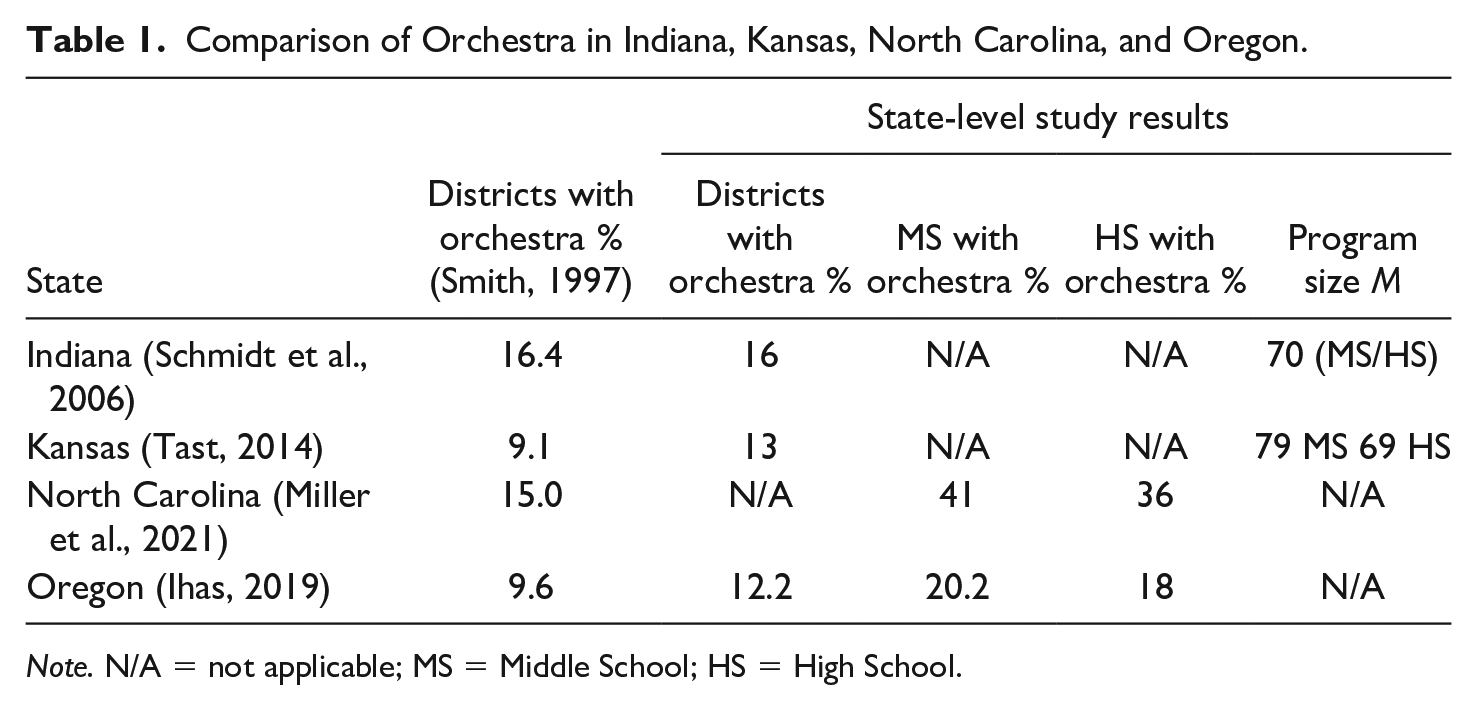
In 1997, C. M. Smith (1997) conducted a comprehensive survey that examined orchestra program access across the United States and data were provided for each state. In state-level status studies conducted after 1997, string music education access and enrollment varied significantly among communities (see Table 1). Results from Kansas, North Carolina, and Oregon indicated moderate growth among districts offering orchestra whereas results from Indiana showed a slight decline (Ihas, 2019; Miller et al., 2021; Schmidt et al., 2006; Tast, 2014). Other measures of state-level program status included the percentage of secondary schools offering string classes, the percentage of secondary students that participated in orchestra, and the average orchestra program size among schools offering orchestra (see Table 1).
Comparison of Orchestra in Indiana, Kansas, North Carolina, and Oregon.
Note. N/A = not applicable; MS = Middle School; HS = High School.
Only two of the state-level studies, Indiana and Oregon, investigated student demographics and they found seemingly contrasting results (Ihas, 2019; Schmidt et al., 2006). Schmidt and colleagues (2006) found that the majority of Indiana string students were White and did not qualify for FRPL. Ihas (2019) found that although White students were in the majority, Hispanic students were more likely than White students to attend a school that offered orchestra and 51% of orchestra-offering schools had a notable number of students who qualified for FRPL. It seems that these state results offer more in-depth knowledge about string programs than national data can provide and more state-level studies are needed to understand the landscape of string music education in the United States.
Strings in Texas
An examination of Texas orchestra programs is warranted considering the number of students in the state, student demographics, and the state’s reputation for robust string programs. In 2015, Texas had more than 1,000 school districts with 10 of those districts serving over 65,000 students (Ramsey, 2015). In the 2015–2016 school year, roughly 10% of public-school students in the United States were educated in Texas (De Brey et al., 2021) and of those students, 51% reported to be of Hispanic origins (Texas Education Agency [TEA], 2016a). In addition, over 5 million students were enrolled in Texas public schools, second only to California’s enrollment of 6,226,737 students (De Brey et al., 2021).
In 1949, Texas reorganized and consolidated 4,500 school districts into 2,900 districts (Estaville et al., 2015). In 1970, 38 school districts offered orchestra in Texas (Bell, 1970), so it is likely that only 1% to 4% of Texas school districts offered orchestra at the time of that study. Data showed an increase to nearly 8% of Texas school districts offering orchestra over the next three decades (C. M. Smith, 1997).
Since the 1990s, the Texas Music Education Association (TMEA) has documented ensemble participation using student enrollment data. TMEA found that between 1997 and 2002, orchestra enrollment increased by about 4,000 students at the middle school level and 2,000 students at the high school level (Floyd, 2003). By 2004, middle school orchestra enrollment was up by 2.6% and high school by 10.9% from the previous year, while both band and choir enrollment declined during that time (Floyd, 2005).
Another aspect of music education in Texas is normative participation in University Interscholastic League (UIL) Concert and Sight-Reading Contest. In Tucker’s (2023) study of Texas band director agency, she found that not only did each of her participants compete in UIL events as a norm, but they also spent a large proportion of their instructional time and resources preparing for the events. However, researchers have found that teachers in Title I campuses may experience greater challenges when participating in large-ensemble adjudications (Nussbaum, 2022).
Purpose of the Present Study
Given the unique educational landscape of Texas, the purpose of this descriptive study was to examine enrollment in string orchestra instruction across the state. Three central research questions guided the investigation:
Method
Data Sources
The Texas Music Education Association (TMEA) maintains a database of music enrollment across the state based on the Public Education Information Management System (PEIMS). We obtained a data set for the 2014–2017 school years, which included the enrollments for all fine arts courses for the entire state (N = 190,304). From this data, we isolated only those entries pertaining to orchestra and chose 2015–2016 for analysis, as this year offered the most complete listing. We removed charter schools from this data set to focus specifically on traditional public schools, resulting in a total of 968 secondary schools offering orchestra in Texas during the 2015–2016 school year.
To obtain information for these campuses, we accessed Texas Academic Performance Reports (TAPR) compiled by the TEA (2016b). Data from TEA included district type, campus student enrollment, students’ racial/ethnic demographics, and percentage of students who receive Free and Reduced Lunch benefits. We also gathered data regarding participation in the statewide University Interscholastic League Concert and Sight-Reading Contest 2 (UIL C&SR). The UIL C&SR Contest is highly esteemed within the state, and participation is a tacit requirement for most ensemble-based music classes (Nussbaum, 2022; Tucker, 2020). Results from the contest are maintained on a publicly accessible website, Texas Music Forms (n.d). For each campus, we recorded the composite number of ensembles that participated in the String Orchestra and Full-Orchestra Contests that school year.
Data Analysis
We converted all campus characteristics—locale, school size, racial make-up, and economic status—into categorical variables for the sake of analysis. Using JASP 0.14.1 (JASP Team, 2020) to generate descriptive statistics, we examined student enrollment in orchestra and UIL participation among the categories for each campus characteristic. We also calculated Title I status within each subsequent campus characteristic category.
Categorical Development
Locale: The TEA (2017) categorizes public school districts into eight categories based on location and size. These categories are largely dependent upon three criteria: (a) total county population, (b) district student enrollment in relation to other districts in county, and (c) geographical proximity to other districts. For clarity, we consolidated these into four main categories: urban, suburban, secondary metropolitan area, and rural. Due to the geographical expanse of Texas, the category of “secondary metropolitan area” was selected to encapsulate schools in areas that are neither urban-adjacent nor entirely rural. For instance, the city of Waco (categorized as an “Other Central City” according to TEA) has a population of over 100,000 and has a school district serving approximately 15,000 students yet is located nearly 100 miles from a major metropolitan area.
School Size: Based on student population, UIL establishes six high school classifications (1A with fewer than 104 students through 6A with more than 2,100 students) and three middle school classifications based on their grade seven and eight population (1C for fewer than 149 students through 3C for more than 650 students). Due to the influential role of UIL in Texas music, academic, and athletic programs, we utilized this existing categorization.
Race: The state of Texas categorizes students under the following seven ethnicity labels (in order of appearance in TAPR): African American, Hispanic, White, Asian, American Indian, Pacific Islander, and Two or More Races (TEA, 2016b). Schools with a student demographic population holding a simple majority (>49.5%) were labeled correspondingly, resulting in the following majority categories: Asian, African American, Hispanic, and White categories. We assigned a fifth label—No Majority—to signify campuses in which no racial/ethnic group comprised a simple majority of the student population.
Economic Status: According to Title I of the Elementary and Secondary Education Act, any school in which more than 40% of the student population receives FRPL is eligible to receive additional federal funding (U.S. Department of Education, 2018). Based on previous use of this designation as an indicator of economic status in music education research (see Chappell, 2013; Costa-Giomi & Chappell, 2007), we categorized campuses as either Title I eligible or Non-Title I eligible.
Results
RQ1: How Well is Orchestra Represented in Districts and Schools Across the State of Texas?
We sought to provide a broad description of the overall status of orchestra instruction across the state of Texas and found that the 968 schools with orchestra programs represented 33.5% of all public secondary schools in Texas (N = 2,893). There was a total of 1,024 independent school districts within the state of Texas in 2015–2016, and 14.26% of those districts offered orchestra classes (n = 146). Most of these districts offered orchestra on several campuses.
Across the state, 88,323 secondary students were enrolled in orchestra in the 2015–2016 school year with an average of 91.24 students per campus program. Middle school total enrollment was 57,639, accounting for 65.26% of all students in orchestra, averaging 98.52 students per campus program, and high school campuses enrolled 30,684 students, accounting for 34.74% total enrollment, averaging 80.12 students per campus. Enrollment of secondary students in Texas public schools during the 2015–2016 school year was 2,657,638; thus, 2.04% of high school students and 4.94% of middle school students enrolled in orchestra (TEA, 2016a).
RQ2: What Are the Characteristics (FRPL Eligibility, Locale, Student Race/Ethnicity, Size/UIL Classification) of Schools With Orchestra Programs in Texas?
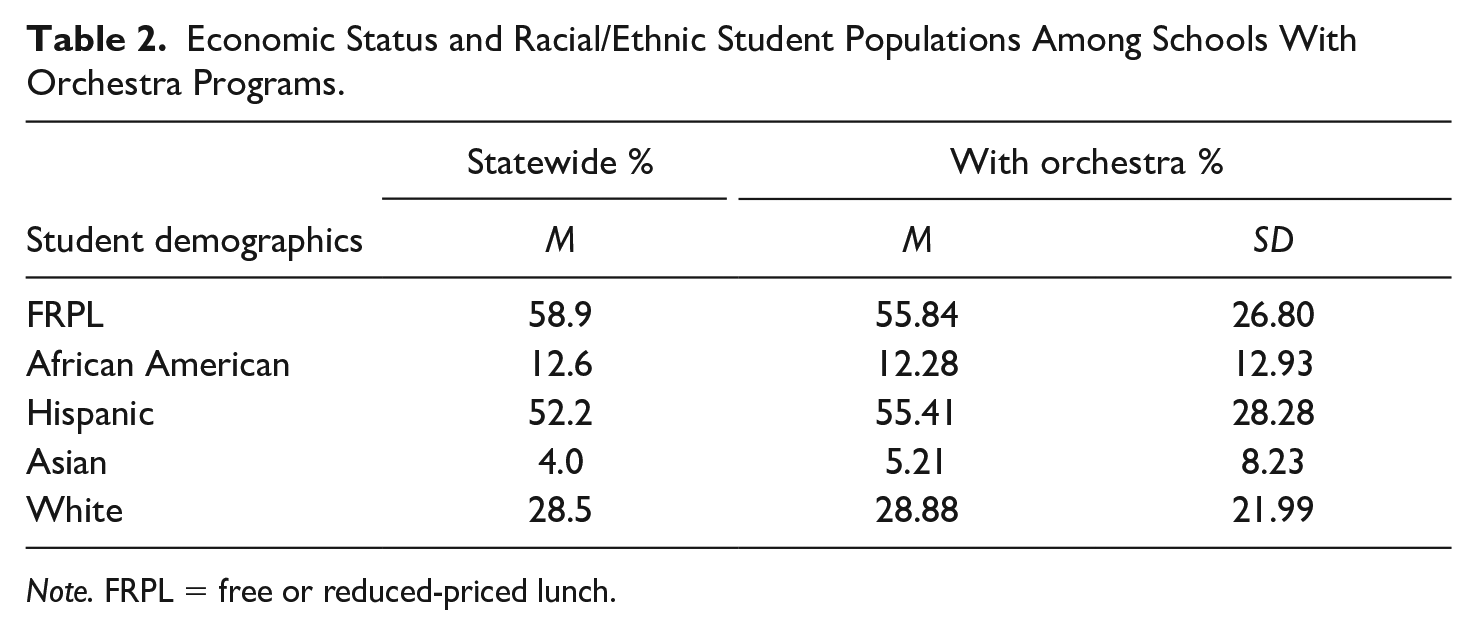
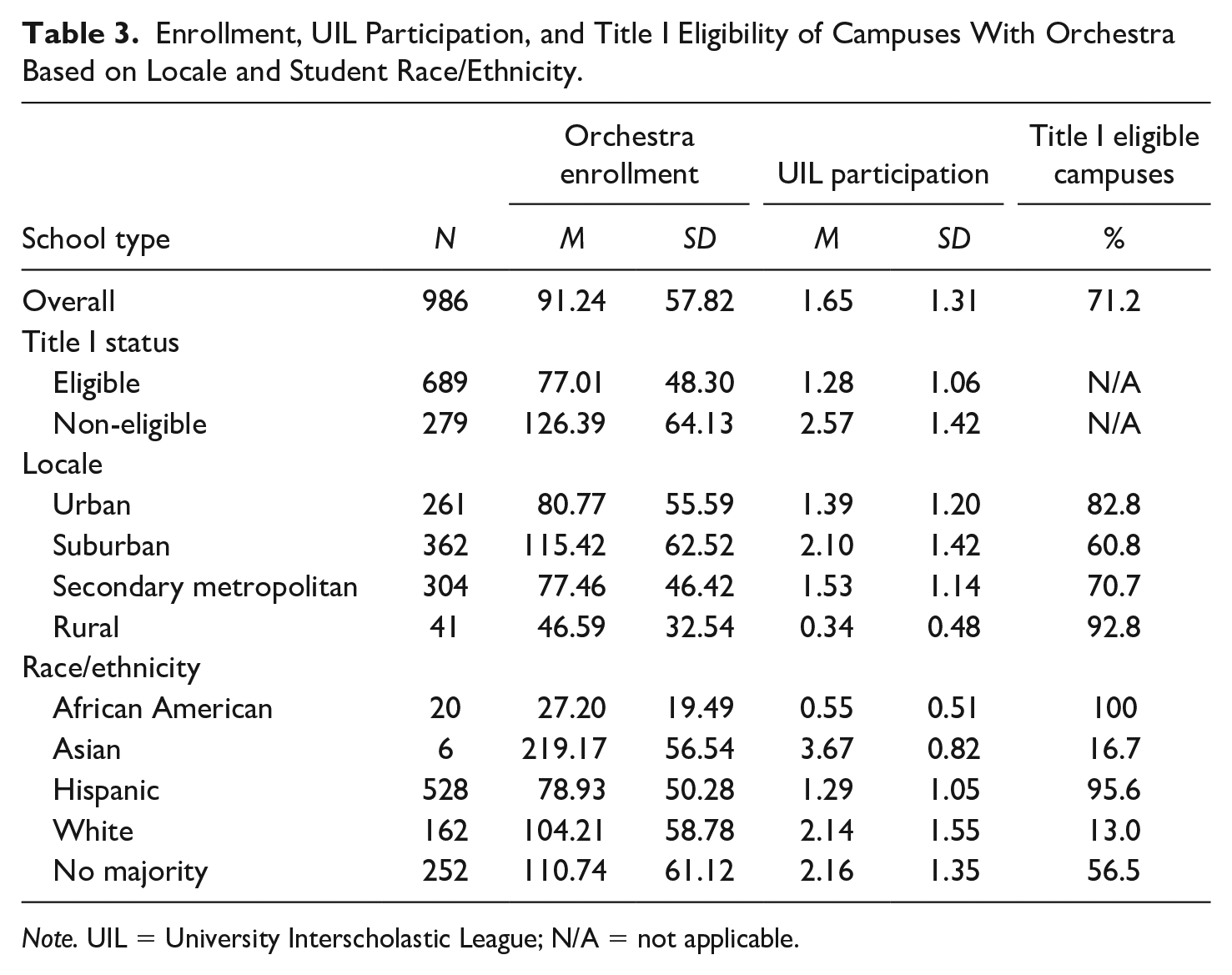
In terms of both race/ethnicity and FRPL eligibility, the representation across schools with orchestra was similar to that of the statewide averages (see Table 2). As seen in Table 3, about 70% of orchestra programs were located on campuses that had a Title I eligible proportion of students and of these programs, nearly 14% were located on campuses in which 90% or more students were FRPL eligible. In contrast, less than 1% of all programs were housed on campuses with fewer than 10% of students receiving FRPL. The 689 Title I eligible campuses were fairly evenly dispersed between urban, suburban, and secondary metropolitan schools, yet were drastically overrepresented within urban schools. Over half of the schools with orchestra programs in Texas were on campuses with a majority Hispanic student population. Less than one-fifth of orchestra programs were located on White-majority campuses and a quarter of programs located in schools with no racial/ethnic majority (see Table 3).
Economic Status and Racial/Ethnic Student Populations Among Schools With Orchestra Programs.
Note. FRPL = free or reduced-priced lunch.
Enrollment, UIL Participation, and Title I Eligibility of Campuses With Orchestra Based on Locale and Student Race/Ethnicity.
Note. UIL = University Interscholastic League; N/A = not applicable.
Orchestra programs were predominantly located in the densely populated areas of the state which are in urban, suburban, and secondary metropolitan areas. The suburban category had the largest number of schools with an orchestra program, making up 37.4% of all schools. Roughly another third (31.4%) of all school orchestras were located in a secondary metropolitan area. Even though schools in urban districts only accounted for 26.8% of the campus total, all 11 urban districts in Texas had orchestra programs in 16 or more of their schools. Despite rural districts being most frequent across the state, rural schools were the least represented, making up 4.2% of the total string programs (see Table 3).
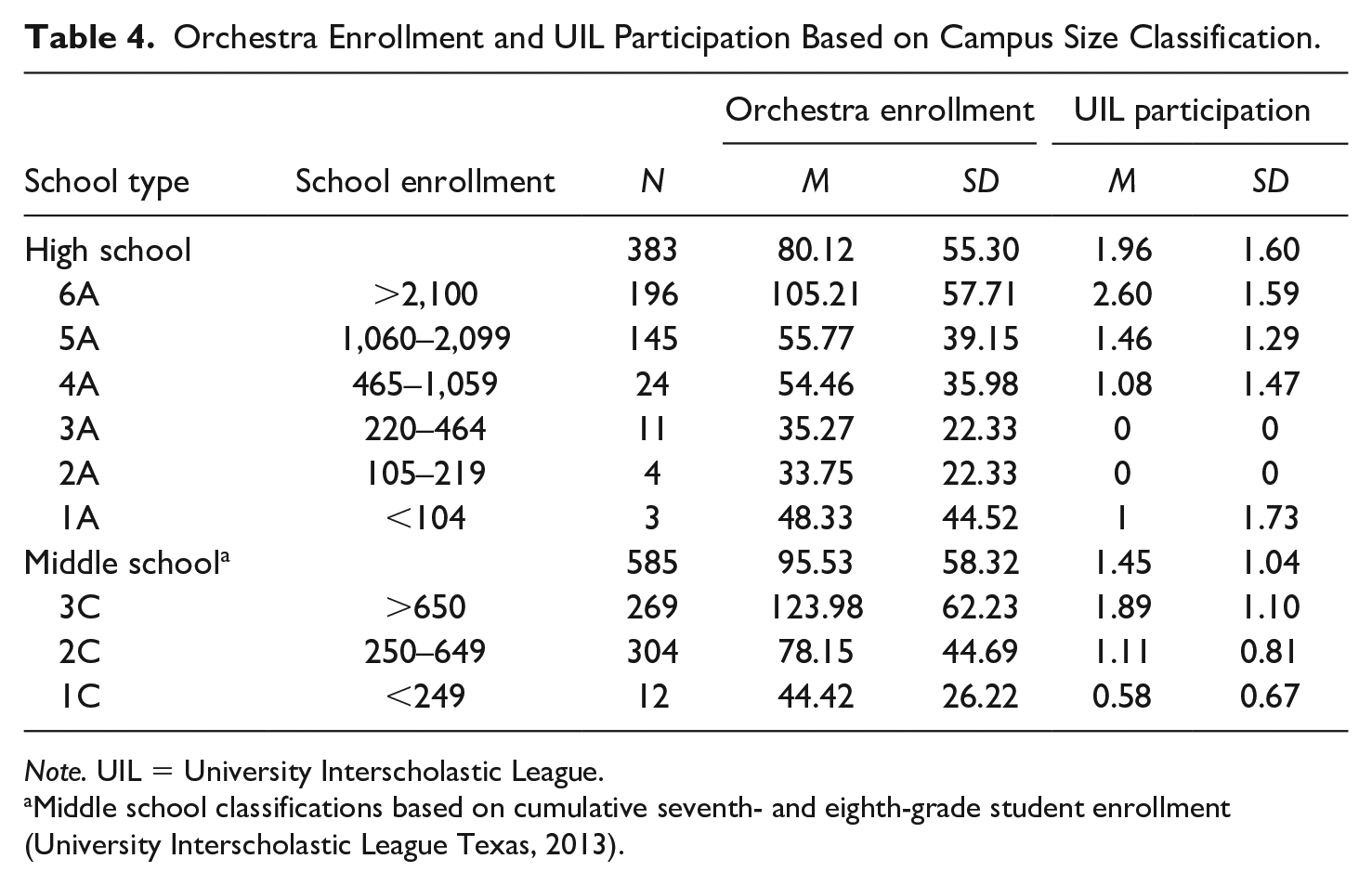
The overwhelming majority of high school programs were located in the two largest school size classifications, accounting for 89% of all high school orchestra programs. A similar trend was found among middle schools, where only 12 orchestra programs (2.1%) were located in the smallest classification, 1C. While the majority of high school programs were located in the largest classification of 6A, middle school orchestras were most likely to be found in the 2C classification (see Table 4).
Orchestra Enrollment and UIL Participation Based on Campus Size Classification.
Note. UIL = University Interscholastic League.
Middle school classifications based on cumulative seventh- and eighth-grade student enrollment (University Interscholastic League Texas, 2013).
RQ3: How Do Program Enrollment and UIL Participation Vary Among These Characteristics?
Statewide, we found large variation in both average student enrollment and UIL C&SR Contest participation among locales, FRPL eligibility, school size, and racial/ethnic population. Among all schools with orchestra programs, the average enrollment in orchestra programs was 91.24. Most schools with orchestra had at least one ensemble participate in a UIL C&SR orchestra event in the 2015–2016 school year (n = 789, 81.5%). Among those schools participating in UIL, 90% had between one and three ensembles perform; of the remaining 10% who registered four or more ensembles, the majority were high school campuses.
Average student enrollment was largest in suburban schools, followed in size by urban, secondary metropolitan, and rural schools (see Table 3). Suburban campuses participated most heavily in UIL C&SR orchestra events, with the largest percentage of participation (87.6%) and the highest average volume of participation—2.1 ensembles per campus. Rural schools had the highest rate of abstention, with only 34.1% of campuses participating with one ensemble. Enrollment in orchestra programs directly mirrored classification sizes, with the largest average enrollment in the 6A and 3C classifications for high school and middle school, respectively (see Table 4). Participation in UIL C&SR Contest also closely paralleled school size, with the highest average participation occurring within the largest middle and high schools.
Orchestra program enrollment, on average, was 64% higher in non-Title I eligible campuses than Title I eligible campuses—M = 126.4 versus M = 77.0, respectively. In parallel with enrollment, UIL C&SR participation was also lower among Title I eligible campuses. Of the school orchestras that did not participate in any of the 2016 UIL C&SR events (n = 179; 18.5%), 91% were housed in Title I eligible campuses. Among schools with one participating UIL group (n = 328), the average percentage of students eligible for FRPL was 66.4%, while campuses with five or more participating orchestras (n = 33) averaged only 26.3% of students receiving FRPL.
As illustrated in Table 3, student enrollment and participation in UIL C&SR orchestra events followed a similar pattern among racial/ethnic categories, with the Asian-majority campuses having the largest enrollment and participating most heavily in UIL. In contrast, African American–majority and Hispanic-majority campuses had the smallest average enrollment and proportion of UIL participation. In addition, the Hispanic-majority and African American–majority campuses were almost entirely Title I eligible campuses. In contrast, 13% of the 162 White-majority campuses met Title I criteria (n = 21).
Discussion
The state of Texas serves a large, racially and economically diverse student population, and this is reflected among the schools offering string orchestra instruction. The vast majority of secondary orchestra programs (71%) are housed on Title I qualifying campuses, and Hispanic students appear to be slightly overrepresented in terms of opportunities to enroll in orchestra. These findings differ dramatically from previous nationwide and state-level research (e.g., Elpus & Abril, 2011; Gillespie & Hamann, 1998; C. M. Smith, 1997; B. P. Smith et al., 2018). Given this difference, future researchers may consider studying Texas orchestra program data to better understand how economically and racially diverse orchestra student populations are being served. In addition, and despite large variation in enrollment within categories of analysis—locale, Title I status, school size, and racial demographics—Texas orchestra programs, in aggregate, outsize previously identified national averages. Within Texas, enrollment continues to grow. Middle school and high school orchestra enrollment each increased by nearly 16,000 since 2004 (Floyd, 2005). Texas orchestra programs also highly engage in the UIL C&SR Contest, with over 80% of programs participating in the statewide assessment. This is a stark contrast with the Schmidt et al. (2006) finding that only 11.2% of Indiana orchestra programs participated in their state-level festival.
In comparison with research that reflects a diminished availability of music education in certain urban school districts (e.g., Salvador & Allegood, 2014), secondary orchestra programs were represented in numerous middle and high school campuses in every urban district across Texas. However, average string enrollment in urban schools was consistently smaller than their suburban counterparts, despite being located in schools with similar overall student enrollment. Similar to findings from Kinney (2010, 2019), in which he identified higher rates of attrition among racially minoritized students and those from “low-income” backgrounds in instrumental music education, we may be observing trends among these urban campuses with higher concentrations of both FRPL-qualifying students and African American and Hispanic students. However, the lower enrollment numbers may also occur as a result of scheduling policies identified in Chappell’s (2013) dissertation in which the examined Title I schools had fewer elective choices and more academic requirements associated with standardized testing than the non-Title I schools.
Despite the comprehensive presence of orchestra in urban districts, just over half of all adjacent suburban school districts in Texas offered orchestra. Even so, suburban orchestra programs accounted for 47.3% of the statewide student enrollment due to the large average enrollment in suburban schools (M = 115.42). Within the secondary metropolitan areas of the state, we observed a similar trend of programming as with urban-suburban relationships. Based on the original TEA classifications, orchestras were offered in approximately three out of four schools in the Other Central City category, whereas only 17% of all schools categorized as Central City Suburban offered orchestra. Much like previous data (e.g., C. M. Smith, 1997), rural orchestra programs in Texas were both small and rare.
Although most orchestra programs were located in Title I qualifying schools, it is important to note that these orchestras engaged less in the UIL C&SR event—registered fewer ensembles, on average, and represented the majority of schools that did not participate at all. Given that several researchers have identified the prominent role that the UIL C&SR evaluation plays in shaping ensemble music education in Texas (Nussbaum, 2022; Powell, 2021; Tucker, 2020), this finding suggests that orchestra programs housed in Title I eligible schools may have more barriers to engage in this normative statewide event than their non-Title I counterparts.
While the data set does not account for demographics among students enrolled within orchestra classes, many campuses represented were predominantly Hispanic-serving schools, suggesting a substantial Hispanic student population within school orchestras across the state of Texas. One in five orchestra programs were located in schools in which 90% or more students identified as Hispanic; within these settings, it is likely that school orchestras had a nearly exclusive Hispanic student membership. However, Elpus and Abril (2019) identified an underrepresentation of Black and Hispanic students in the aggregate high school string enrollment across the United States. Given the Texas student population accounts for 10% of all school-age students in the United States (De Brey et al., 2021), it is likely this underrepresentation would be reflected to some extent within orchestra programs in Texas. Previous qualitative research conducted in areas with substantial Hispanic populations (i.e., Texas and Arizona), reveal that students from minoritized backgrounds often perceive tacit Whiteness within band and orchestra (Brewer, 2010; Escalante, 2019; Nussbaum, 2021). These previous findings may help to explain the observation of smaller string enrollments among campuses with majority Hispanic or African American student populations in this study.
Related, the White-majority and No Majority student racial/ethnic categories shared similar statistics in student enrollment and UIL participation, despite a drastic difference in proportion of Title I eligible campuses—13% versus 56.5%, respectively. In other categories, a higher concentration of Title I eligible schools was often paired with smaller than average orchestra enrollment. Many campuses within the No Majority racial/ethnic category enrolled a plurality of White students. In light of this consideration, the above finding may further indicate the power of Whiteness in shaping school orchestra programs.
Observations among the racial/ethnic categories also reflect the intersectional nature of race and class within the United States. Overall, orchestra enrollment was smaller in campuses with higher proportions of students on FRPL, urban schools, and schools with a majority African American or Hispanic population. Given that 95% of all Hispanic-majority schools in this study qualified for Title I funding, it is likely that individual students within these campuses may have struggled with financial obligations associated with instrumental music instruction. Research also demonstrates that low-income, predominantly African American and Hispanic campuses in Texas are disproportionately impacted by standardized testing systems (Valencia, 2000; Vasquez Heilig & Darling-Hammond, 2008), which can impose upon music instruction in these schools. High-stakes accountability systems have been found to impact music programming by limiting student elective opportunities (Chappell, 2013), requiring teachers to incorporate tested content (West, 2012), and interfering with the staffing and scheduling of music classes (Nussbaum, 2022).
It is clear that most orchestra teachers in the state can expect to serve students with financial need and of varying racial and ethnic backgrounds. Findings provide substantial implications for teacher preparation and in-service teacher professional development. Music education professional organizations within the state (TMEA and Texas Orchestra Directors Association) should also aim to promote and support participation and visibility of string teachers and students in historically underrepresented parts of the state. Professional organizations and teacher preparation programs also have a responsibility to provide more explicit professional development programming on serving students of color and working in schools with higher concentrations of FRPL students.
Limitations
We identified missing enrollment data from schools with known orchestra programs, suggesting a possible underrepresentation of the total count of schools with orchestra and students enrolled statewide. It is also possible that a campus utilized the string orchestra PEIMS number to represent enrollment in a different music course, resulting in a falsely identified orchestra program. Given the use of campus-wide data for school demographics, researchers are unable to identify trends regarding student demographics within orchestra program enrollment.
Future Research
Overwhelmingly, enrollment in orchestra programs across Texas was much larger than previously identified national and state averages (e.g., Add Smith, 1997; Ihas, 2019). More research is needed to understand the historical factors, policies, and circumstances that have contributed to these robust programs in Texas. Researchers who are interested in string program growth and sustainability might consider an examination of staffing allocations, funding, and administrative and community support associated with the large string programs in Texas with special attention to differences among Title I and non-Title I campuses. However, school demographic profiles provide limited information regarding ensemble make-up, and future research should include investigations of the student demographics of specific music ensembles to provide the most accurate answers to questions related to string music education access.
The Texas Education Agency gathers enrollment data for arts education classes, and the Texas Music Education Association has reported on this data since the early 2000s (e.g., Floyd, 2003). TMEA uses this data to track program growth and to provide reports to the state legislature. Other state music education associations might consider requesting their own enrollment data to examine access, chart growth, and better advocate for public school music programs.
Finally, more information is needed about the string teachers of these programs. The demographics, string playing abilities, education, and experience level in relation to program size, location, and UIL C&SR participation would provide a more complete understanding of the status of string music education in Texas.
Footnotes
Authors’ Note
This article has not previously been published in part or in whole and is not in consideration by any other source.
Declaration of Conflicting Interests
The author(s) declared no potential conflicts of interest with respect to the research, authorship, and/or publication of this article.
Funding
The author(s) received no financial support for the research, authorship, and/or publication of this article.
