



Abstract
Transition Design recognises that shifting complex systems towards sustainability and social justice inevitably requires multiple interventions across differing scales and time horizons. Theory of Change is a key element of this, helping transition designers envision, and create pathways to, preferred futures. Much of the Transition Design literature focuses on the transformational power of everyday choices and local-scale community movements, whilst recognising the importance of interconnections between different scales. This requires designers to develop Theories of Change that combine micro-scale changes able to catalyze broader system transitions, with supportive meso-level and macro environments that can sustain micro-scale initiatives. Regenerative agriculture has risen to prominence in several parts of the world in recent decades as a more sustainable approach to farming. Supporting uptake of regenerative agriculture requires a bridging of scales that transition designers can contribute to. While many farming decisions are undertaken individually and enacted at a local farm scale, they are influenced by systems that operate at national or global scales, such as markets, supply chains and regulations, which may have unique local or regional expressions. This tension is reflected in attempts to define regenerative agriculture, which can tend towards either individualistic approaches based around specific practices and farmer mindsets or systemic approaches that emphasise the need for holistic, global-scale changes to our agricultural systems. This article reports on an Australian case study involving ten diverse working groups that helped to inform a Theory of Change for transitioning agriculture to regenerative, equitable, and just futures. The insights generated from working with transition initiatives related to agriculture demonstrate the value of existing frameworks such as Multi-Level Perspective, while also highlighting the importance of the meso scale as an opportunity area in this context and the need to consider scale in a physical and geographical sense within Transition Design frameworks and practices.
Keywords
Introduction
Transition Design represents “an emerging, transdisciplinary field aimed at addressing complex (wicked) problems that manifest in culture and place-specific ways” (Kossoff and Irwin 2022 p. 22). The “systems-shifting” focus of Transition Design (Drew et al. 2021) necessitates a focus on Theories of Change, which is one of the four “influencing areas” for Transition Design identified by Irwin et al. (2015a), alongside vision, mindset/posture, and new ways of designing. According to Irwin et al. (2015a, p. 8), Transition Design practitioners carry with them a Theory of Change “whether it is explicitly acknowledged or not”. Arguing that conventional ideas about change are “outmoded”, they challenge transition designers to draw on diverse disciplines and approaches to better understand the nature of change, including complexity theory, post-normal science, and social ecology.
Theories of Change can manifest in multiple ways (Drabble et al. 2021). For instance, Theories of Change are embedded mental models as well as actual theories (like how change is explained through social ecology). Theories of Change are also encountered as a method or practice that groups can use to set out assumptions and hypotheses about how to impact change, and then document them through a tangible artifact. Transition Designers have a need to work with each of these manifestations of Theory of Change, but in this article we will focus primarily on the use in practice – and specifically the role of scale in developing a Theory of Change for systems-shifting.
While Theory of Change is widely acknowledged as a central element of Transition Design (e.g., Dahle 2019; Sides 2023; Tonkinwise 2023), questions remain about the most effective scales at which to enable transitions, and around the nature of scale itself. Irwin (2019) argues that effective Transition Design requires “ecologies of interventions” aimed at multiple scales and time horizons to catalyze the change necessary to address wicked problems. Similarly, Kossoff and Irwin (2022, 22) argue for “change that is coordinated across multiple societal sectors at multiple levels of scale over long arcs of time”. However, knowledge gaps remain around how interventions at different scales interact to create change. Scale can also be conceptualized in different ways, such as the individual human scale implied by Tonkinwise’s (2023) focus on “everyday practices”, the geographical scale implied by Kossoff’s (2019) “Cosmopolitan Localism” or the social-technical scales and system stability scales underpinning Rip and Kemp’s (1998) concept of Multi-Level Perspective (MLP).
In this article, we explore how Transition Design can enable and integrate action across multiple scales to contribute to system shifts through a case study on regenerative agriculture in Australia. Regenerative agriculture was selected as a prominent example of a sustainability transition that has attracted interest in recent years (Campbell et al. 2017) in which the concept of scale has both socio-technical and biophysical dimensions (Gordon et al. 2021). We present an emergent Theory of Change based on integrated action across multiple scales. In doing so, we respond to Drew et al.’s (2021) call to “provision” the new systems we desire by connecting diverse system actors, sharing knowledge around case study outcomes and developing tools, including emerging models of Theory of Change.
Background: Theory of Change and Issues of Scale in Transition Design
Theory of Change (ToC), as a method and resulting artifact, has been used since the 1990s as a way to systematically conceptualise and evaluate how specific activities can enable desired outcomes within a given context (Drabble et al. 2021). Collaboratively developing a ToC helps groups imagine a set of interconnected activities and interventions and the underpinning logic for how these interventions may contribute to desired outcomes – outcomes which are typically greater than the sum of parts and likely depend on external factors as well. As an artifact, ToC can be represented in several different ways, for instance as a flow chart diagram, a narrative, and as a visual. ToC can offer advantages over a “log frame” (logical framework) approach by more explicitly linking activities to outcomes and showing how various components work together in a causal pathway (De Silva et al. 2014). Nonetheless, many ToC approaches are limited by linear assumptions about cause-and-effect or failure to consider broader contexts, which in turn creates an opportunity for the wider application of Systemic ToC (Murphy and Jones 2021) or “complexity-aware” ToC (Maru et al. 2018), which can include branching, nesting, causal loops and other complex system structures. Such approaches align with the goal of Transition Design to enable “a complete reconfiguration of the socio-technical-ecological systems in which our lives are embedded” (Kossoff and Irwin 2022, 22).
Tonkinwise (2023) argues that Transition Design itself is underpinned by a Theory of Change that positions design as crucial to addressing social and environmental challenges. This in turn requires designers to develop Theories of Change as part of their practice - something that Tonkinwise (2023) argues is generally lacking in design education. Sides et al. (2022) explore ways to enhance ToC capabilities in transition designers, including by providing a set of “prompts” that align with themes of situate (e.g., consider whose expertise is valued), reframe (e.g. allow for multiple lived experiences to emerge) and intervene (e.g., amplify existing work when designing interventions). Illustrating these themes, Sides (2023) highlights specific Theories of Change that have emerged through community-based research for ecosystem restoration, such as the need to share knowledge and examples of restoration success to catalyse further change, and the need to recognize social change and personal transformation as integral to ecosystem restoration.
Dynamics of place, communities, multi-stakeholder relationships, lived experience, expertise, and complex systems are integral to Theories of Change for Transition Design, and questions of scale inevitably arise. In particular, the concept of Multi-Level Perspective (MLP), introduced by Rip and Kemp (1998) and adapted by Geels (2005), has been influential on Transition Design researchers such as Irwin and Kossoff (2017), Gaziulusoy (2018), Dahle (2019) and Tonkinwise (2023). As Gaziulusoy (2018) identifies, MLP is one of the most widely cited models used to conceptualise how transition comes about and can be intentionally influenced. Critically for transition designers, the MLP is effectively a Theory of Change at the conceptual level (representing transitions theory), and which sees innovation (whether via new technologies or re-inventions) as socially embedded, with a key role in sustainability transitions (Geels et al. 2023).
Figure 1 provides two examples to illustrate the three levels of the MLP framework; Geels’ (2005) example of shipbuilding innovation and Dahle’s (2019) Future of Fish research that is explicitly grounded in Transition Design. The MLP framework provides a hierarchy under which “landscape” (macro level) describes the overall socio-technical setting, “regime” (meso level) refers to dominant technological and market incumbency (that often resists change), and niche (micro level) refers to spaces of experimentation that are protected from market forces and able to incubate radical new technologies (Gaziulusoy 2018). The MLP framework has undergone evolution over time, including the inclusion of consumption-production factors within socio-technical systems (Geels et al. 2023) and scholars have suggested many tweaks, including the incorporation of ecological factors, ideologies and mindsets (Wallace 2021). Elements of the multi-level perspective framework (based on Geels 2002) with sample activities at each scale relating to shipbuilding innovation (Geels 2005, left) and sustainable fishing (Dahle 2019, right).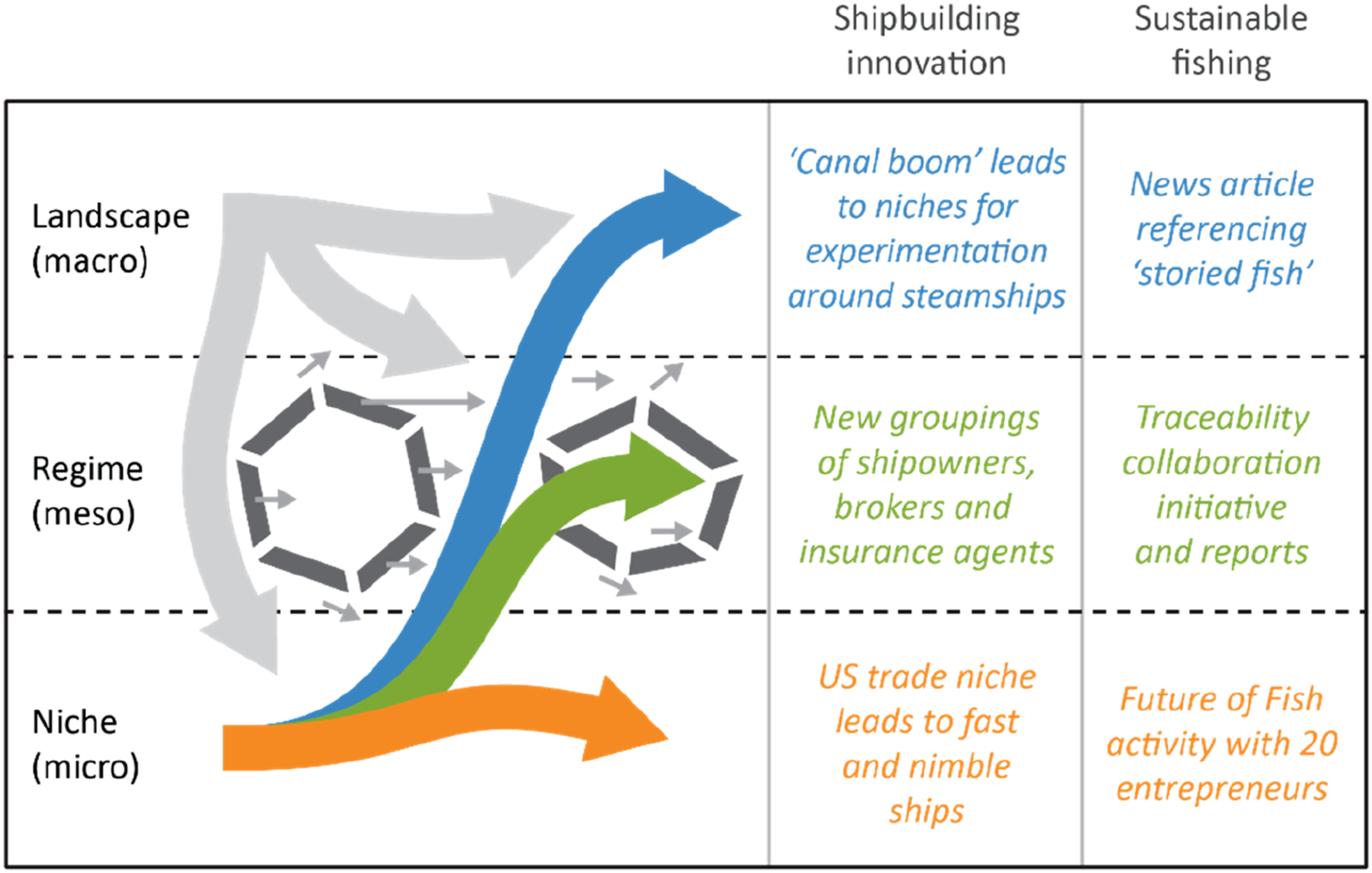
In this article, we use the term “level” to represent different system levels of the MLP, while using the term “scale” to refer to geographical scale and occasionally to size, or extent of perpetuation. However, it is notable that researchers applying the MLP often blur these distinctions. For example, in Dahle’s (2019) work on the “Future of Fish” project, the process of ascending the levels of the MLP is described as the “Path to Scale”. Davis et al. (2022) states that “levels can also be understood as scales of activity where different types of socio-technical activity occur in a nested holarchy” (p. 4). Geels (2011, 37) states that the MLP levels reflect “differences in scale and the number of actors”, while also arguing that the defining features of the levels are not their position in a nested hierarchy, but rather their degree of stability. Under this framing, the landscape level is the most stable and creates “lock-in” mechanisms for the system, while the niche level is least stable and allows for greater innovation.
The regenerative agriculture case that is the focus of this article provides a rich opportunity to explore the relationship between system “levels” and geographic “scales”. While the MLP framework’s “micro” level does not necessarily correspond to local-scale entities like a cluster of neighbouring farms, subsequent authors have highlighted the important role that mobilized communities can play in creating niches at the local level and cultivating grassroots efforts (Dahle 2019; Fraser and Glass 2020; Loorbach et al. 2017). As such, each form of scale is central to the development of effective Theories of Change.
Since its inception, Transition Design has explored how interventions can be conceptualised across multiple levels and scales. Early conceptualizations of Transition Design highlighted local-scale, grassroots initiatives such as Transition Towns (Irwin et al. 2015a), the redesign of “everyday life” (Tonkinwise, 2023), and “Cosmopolitan Localism” (Kossoff 2019), while also recognizing the need for interventions at multiple scales and time horizons (Irwin 2018). Sides et al. (2022) further emphasize this point by arguing that “a theory of change in complex systems is that one lone intervention is unlikely to prevail against the status-quo pressures that keep a system on its current trajectory” (p. 151). They provide an example of a service design initiative aimed at behavioural change at the household level, supported by policy design and communication strategies for reframing and incentivizing the desired behaviour. The “Future of Fish” initiative (Dahle 2019) provides another example, whereby two “levers” of change were selected to help consumers understand where their fish was coming from (tracing technology and storytelling) for which multiple interventions were designed, from individual actions (project champions challenging norms) to attempts to influence social trends (reports and cookbooks) to regime-level change (consulting, financing and institutional partnerships).
In order to enable transitions around a context such as regenerative agriculture, transition designers must develop Theories of Change that link local-level action to global-scale challenges, incorporate multiple interconnected interventions across these scales as well as across nested systems, and consider how everyday life may change as a result of these interventions (and how changes to everyday life can in turn support the desired change). While everyday life takes place at the local level, these daily routines involve materials, skills and meanings that draw on - and sustain – wider systems of production, communication and culture (Shove et al. 2012). The case study introduced in the following section was developed with these objectives in mind.
Case Study: Regenerative Agriculture Transitions in New South Wales, Australia
The case study we will use to explore issues around ToC and scale in Transition Design involves farmer transitions from conventional to regenerative agriculture in the mixed cropping and grazing lands of New South Wales (NSW), Australia (Figure 2). In the context of the MLP framework, regenerative agriculture is a niche innovation that has emerged from decades of other experimental niches that seek more environmentally positive alternatives to the dominant agricultural regime. It is not a unified or monolithic effort but rather a grassroots movement emerging from loosely related, sometimes-affiliated, and not-always-in-agreeance innovators, early adopters, and critics of industrial agriculture. Location of case study: Mixed cropping and grazing zone (orange) within the state of NSW (dark gray).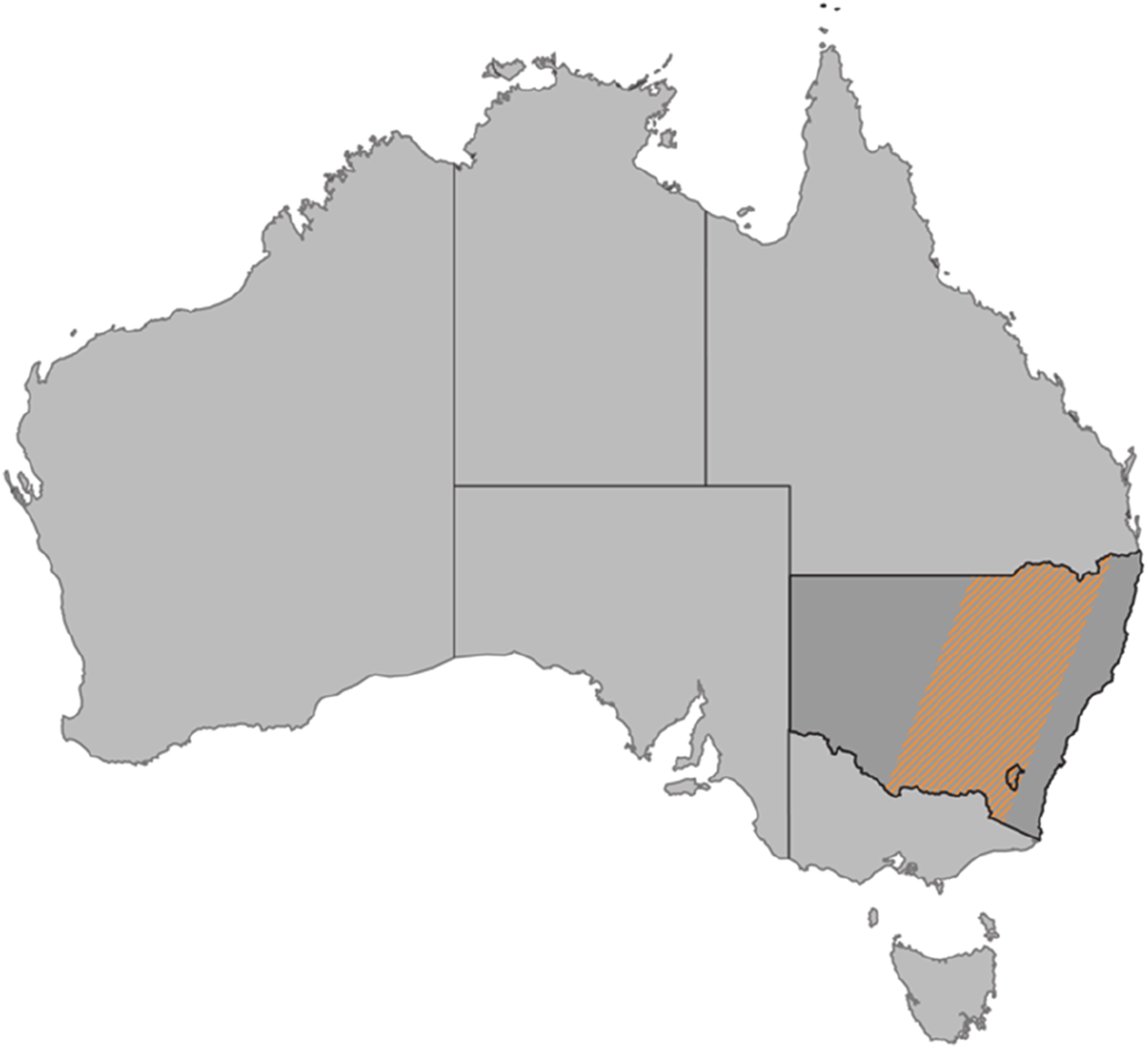
The case study was undertaken as a part of a PhD research project aimed at identifying ways in which Transition Design practice can enable transitions to regenerative agriculture. The central research question was “How might we increase transition to regenerative agriculture by design?”. The project was conceptualised over three phases (Figure 3) to allow sufficient time, within the scope of a PhD, for deep discovery, relationship development, opportunity identification, experimentation through real collaborations, and synthesis of findings. A ToC was developed as one of the final outputs of the project, serving to summarize the many systems change opportunities identified over the course of the case study and to point to future areas of intervention and research. Phases of the regenerative agriculture transition design project (from Miller 2024).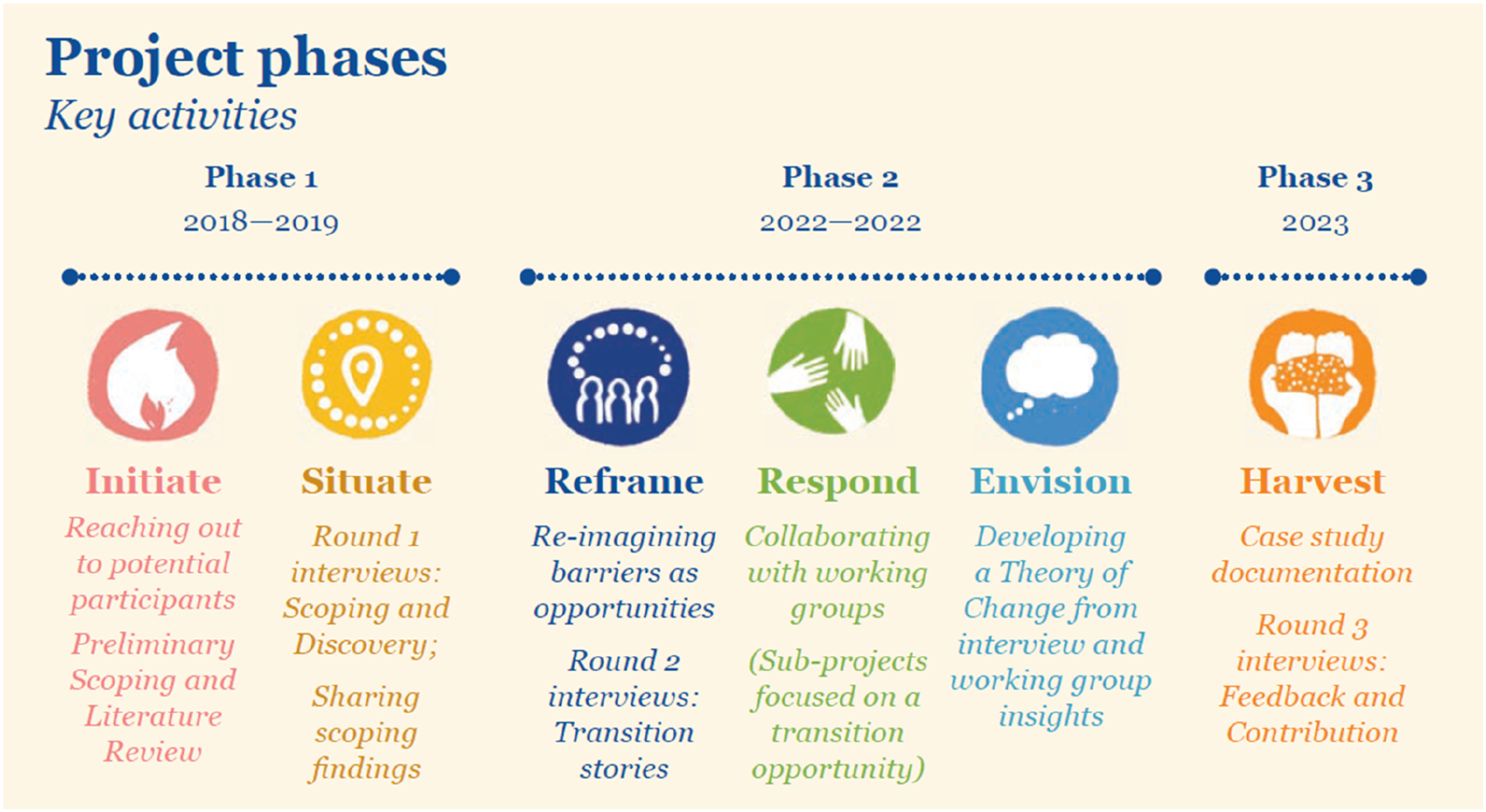
The case study research involved more than 50 interviews and project activities reached more than 300 participants. Interviews were analyzed and coded thematically using an inductive coding approach (Gray 2004; Saldaña 2009). Aside from interviews, insights were gained through ethnographic opportunities to become immersed in the sector through working groups, which will be discussed in the next section. Recruitment was focused on people who had an existing interest in regenerative agriculture (proponents), and participants included farmers, agronomists, extension officers, industry stakeholders, and transitions practitioners. Depending on the phase and research activity, participants were recruited by reaching out to known proponents, snowball methods, social media advertising, and relationship development through ethnographic immersion. For instance, after the first round of interviews for Phase 1 were concluded, findings were developed and key areas for working groups (collaborations) that could address different aspects of the emerging ToC were identified. The findings and topic areas were shared with participants to test them and to invite interest in collaborations. Some participants immediately self-identified collaboration opportunities, whilst other opportunities for collaboration emerged through relationships developed over time.
Interest in transitioning to regenerative agriculture has increased in recent years, both globally and within the case study region, due to growing dissatisfaction with conventional industrial agriculture and the association of its practices with a range of environmental and social harms (Campbell et al. 2017). While it remains a contested concept with varying definitions and practices (Giller et al. 2021, 17; Gordon et al. 2021; Gosnell 2022; Grelet et al. 2021, 7), regenerative agriculture is essentially concerned with enhancing and restoring agricultural systems that are supported by functional ecosystem processes and are able to provide for human needs while also delivering a full suite of ecosystem services relating to soil health, carbon, water cycles and biodiversity (Newton et al. 2020).
Transitions to regenerative agriculture involve multiple actors and scales, with complex interactions across the levels of the MLP framework. Some definitions of regenerative agriculture focus on specific practices adopted by individual farmers or communities of practice, such as multi-species cover cropping, zero or limited tillage, high density rotational grazing, natural/biological inputs like compost, repairing hydrological function and natural pest control (e.g., Burgess et al. 2019; Giller et al. 2021). Other conceptualisations share this focus on local-scale and niche-level action, but instead attend to a shared mindset of openness to alternative thinking rather than specific practices (Gordon et al. 2021). Others highlight the landscape level of the MLP by emphasising the need to not only transition local agroecosystems to a state of increased health, but also ultimately contribute to the broader regeneration of the global environments, society and economy (Gosnell 2022; Grelet et al. 2021). In between these levels are rules, norms and institutions that influence agricultural practices at the local scale, including regulatory structures, markets for food and fibre, and social expectations and identities.
Synthesis of interview and workshop data revealed a definition of regenerative agriculture that describes the mechanism that the farmers saw as key to the success of regenerative methods: farmers in the case study defined regenerative agriculture as working with nature and the self-organising, renewing properties of life. This definition represents an entirely different paradigm as compared to the extractivist, productivist paradigm governing the current agricultural regime. Many farmers in this case study found that taking up regenerative agriculture had transformative flow-on effects for their management, personal life, wellbeing and relationship to community.
The first phase of the project (Initiate and Situate) involved 31 semi-structured interviews to scope out the challenge space and discover key barriers and opportunities. Some of the barriers identified through these scoping interviews included financial risks from transitioning to regenerative agriculture, social pressure to maintain conventional farming, and a lack of workable agricultural models that fit with supply chains and farms of different sizes and types. These barriers largely align with the socio-ecological and political-economic “lock-ins” identified by Iles (2021) that prevent the scaling of agroecological approaches in Australia.
The second phase of the project (Reframe, Envision and Respond), involved reframing the barriers identified in Phase 1 as opportunities, exploring these with 10 different working groups involved in change-making around regenerative agriculture, and developing a Theory of Change. This was influenced by Irwin’s (2019) argument that multiple interventions over multiple time horizons and scales are required to seed and catalyse change in complex systems. Most working groups corresponded to the “niche” level of the MLP framework by increasing farmer capabilities, including a research and knowledge commons concept, a course focused on financial and business training, and a consultancy working to scale landscape and hydrology repair. Others worked at the “regime” level to expand sector capacity, for example by expanding markets for source-separated recycled organics. One working group, a class looking at rewilding a 20-ha section of a city park was focused on influencing narratives, discourses and cultures at the “landscape” level of the MLP framework.
Phase 3 (Harvesting Outcomes) included the development of a field guide for transitions practitioners and its evaluation through a further 20 interviews with working group members and potential users of the guide. The field guide included an overview of Transition Design and its potential role in regenerative agriculture, and presented key aspects of the case study, including the Theory of Change and a series of opportunity areas for future interventions. The field guide was simultaneously a design output collating key insights from the research and a design provocation meant to challenge audiences.
Case Study Insights: Opportunity Areas
Opportunity Areas Identified Through the Case Study Research.
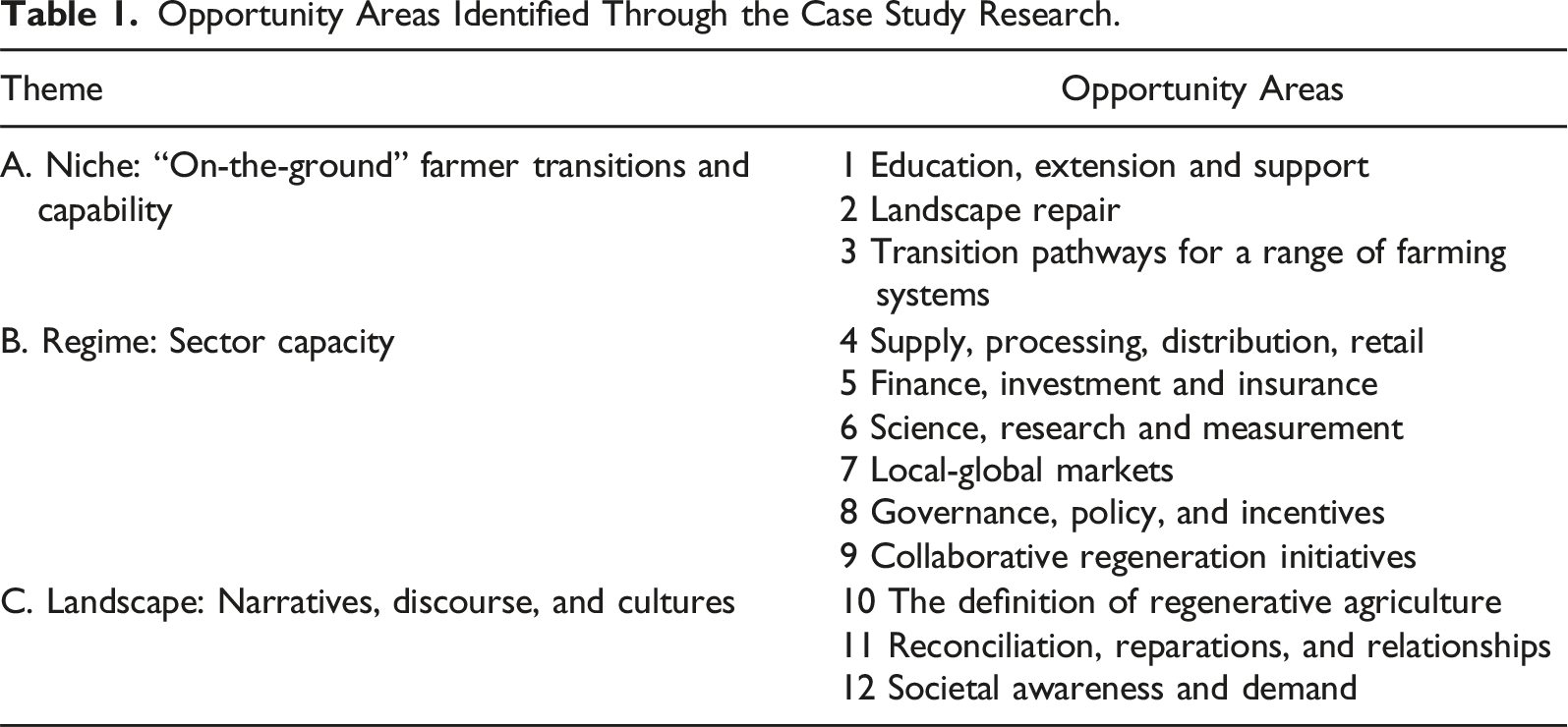
Theme A. Niche: Farmer Transitions and Capabilities
The three opportunity areas identified under this theme stem from several key barriers — and conversely enablers — identified by participants in the first phase of the case study. They each feature a strong “on-the ground” dimension that necessitates action at local geographical scales.
Education, Extension and Support
This recognises that transitions to regenerative agriculture require new mindsets (e.g., learning to work with nature) and capabilities around reading the landscape and holistic decision-making, which in turn require support from educators, trainers, and extension agents. As one participant noted, “If you…have the literacy to read landscapes and [then you] start changing it - it completely changes perceptions once you understand those functions and why things happen” (102 Regenerative Farmer and Author). One working group that explored this opportunity area was TransitionAg (WG1), which tested a startup business model for coaching and peer support that demonstrated the strong need for technical support (e.g., how-to guides and videos for farming methods and financial guidance).
Landscape Repair
This opportunity area is firmly grounded in local scale on-ground action and represents an important pathway into regenerative agriculture for many farmers and land managers. Landscape repair is usually project-based and can be a pathway for learning about landscape function and ecosystem health, reading the landscape, understanding how one’s property fits within the broader landscape, building agroecological skills, and promoting mental health. These interconnections are highlighted in the following quote: “Landscapes are getting worse and mental health is getting worse. That is the lived reality of rural areas as they continue to be simplified by the conventional agricultural approaches. Diversity can be impacted broadly or narrowly and in my backyard there is a small example” (114 Regenerative Farmer).
Transition Pathways for a Range of Farming Systems
This refers to the ways in which regenerative practices can be integrated into communications, education, training and extension activities to form a cohesive and logical progression. This can help to overcome the barrier that can arise from farmers needing to piece together their own transition management approach, including the need to identify capabilities, find support and identify next steps. While these activities can be implemented at regional or national scales, they require tailoring to local scale factors such as farming system, crop/livestock mix, climate zone, soil type, etc. The following quote highlights these linkages between scales: “Your research strikes a chord with me because I am yet to have anyone tell me where to begin, what the financial impact will be and how long it will take to see change and balance the ledger both environmentally and financially. There is a lot of research and practice in the more arid areas of Australia, but it’s not something that is easily translated to a cooler, higher rainfall area [like where we live]” (137 Ethical and Sustainable Farmer).
Theme B. Regime: Sector Capacity
This theme emerged from the barriers that participants identified around policy/regulation, markets, financing, dominant technologies and industry mindsets that favour reductionism, productivism, globalisation and a European agricultural model in the Australian context. These comprise structures at the regime level of the MLP framework and mostly operate at national or global scales in a geographic sense. However, some have regional or local scale expressions, such as farm consolidation in certain regions, innovative approaches to financing, strategic extension services, market niches based on land type or proximity to urban markets and community-led approaches.
Supply, Processing, Distribution and Retail
These factors play a critical role in whether farmers can obtain the equipment and inputs they need to farm regeneratively and whether consumers can purchase regeneratively produced products. Iles (2021) identifies supply chain factors like “growing industry consolidation; dominance of supermarket chains; emphasis on low-cost food” as one of eight system qualities that structurally ‘lock-in’ the existing agricultural paradigm, suggesting that strategies must directly address these lock ins to improve Australia’s “agroecological prospects”. One working group, “Compost as a Catalyst”, targeted this opportunity area by seeking to grow the market demand for high-quality recycled organics through an advice tool, workshops, a demonstration study and field days.
Finance, Investment and Insurance
Participants described a need for financial mechanisms that are fit for all shapes and sizes of operations, spread risk, promote holistic management and reward regeneration (e.g., by valuing carbon and biodiversity). Although participants expressed some caution and scepticism about the accessibility, credibility and long-term effects, mechanisms like carbon credits were seen as a potential way to facilitate transition and encourage regenerative management, “Farmers don’t have financial security because of drought. Carbon farming gives the financial incentive – it relaxes them – they can breathe…” (103 Environmental & Sustainability Advisor).
Science, Measurement and Research
The case study identified a need for farmer-friendly tools and approaches for measuring ecological factors such as soil health and ecosystem function, social factors such as quality of life and community resilience, and economic factors such as financial viability and risk exposure. Participants noted this needed to be different to scientific approaches that commonly feature in industrial agriculture, e.g. “That’s the problem with industrial ag [and the science behind it]: most the time it doesn’t include ecology within its approach” (129 Agroecologist and Extension Consultant).
Local-Global Markets
Intersecting geographical scales is central to this opportunity area. While global markets can create opportunities, over-dependence can also lead to economic and food security challenges and lock-ins (Iles 2021), as the COVID-19 pandemic demonstrated. This creates a ‘push’ towards domestic markets that could be aligned with a growing ‘pull’ from visions of thriving local communities and economies. Seeking to simultaneously nurture local and global markets hearkens to the ideas of Cosmopolitan Localism in Transition Design (Kossoff 2019) and involves the nurturing of local, bio-regional markets, vibrant local economies, strengthened producer-consumer relationships and closed waste loops. The working group on WWF Local Learning Labs focused on this opportunity area by co-facilitating entrepreneurship workshops in three regions where participants were exposed to the Doughnut Economics framework (Raworth 2017), guided through a regenerative business model canvas, and connected with and learned from local Aboriginal elders and entrepreneurs.
Governance, Incentives and Policy
Government mechanisms, operating largely at the state and national scales, have the potential to weaken the “lock-ins” that keep dominant agricultural settings in place and enable transitions to gain a foothold. While Australian farmers wear significant risks, participants indicated no interest in pursuing a subsidised agricultural model as in other industrialised countries. They did, however, see opportunities for policies containing incentives “tied to the beneficial impact of practices on our environment and community” or, rather “incentivising practices that drive towards our goals rather than just judging results - otherwise you can lose the support of good managers who are experiencing bad results [e.g. bushfire] - particularly if the climate is changing quickly” (114 Regenerative Farmer).
Collaborative Regeneration Initiatives
Collaborative regenerative initiatives are community-led and community driven, sometimes with financial, resource, and labour support from government and/or philanthropy. Whereas participants considered farmer-to-farmer collaboration in a highly competitive sector like livestock to be unlikely (121 Independent Agricultural consultant, 120 Holistic Management consultant), even though there were instances of sharing (105 Organic Farmer and Academic), the concept of collective initiatives that still allowed for farmer independence had some resonance. Australia has a history of place-based organising for landscape repair (for example, via local Landcare groups), and this opportunity area builds on that history and capacity. Collaborative regenerative initiatives represent a means of making regenerative agriculture more socially acceptable, building platforms for local action, enabling actions to be better aligned with catchment scales and seasonal patterns, and achieving landscape-scale environmental impact that cannot be achieved within the boundaries of single properties.
Theme C. Landscape: Narratives, Discourse, and Cultures
From the perspective of participants in the case study, the key barriers contributing to this theme operate mostly at national or global scales, including a lack of societal and consumer awareness of regenerative practices and products, historical paradigms around settler colonialism and resource exploitation, and dominant narratives that can prevent change, including “we have to feed the world” and “it’s hard to go green when you’re in the red”. Countering these barriers are enabling mechanisms for increasing awareness, shifting norms, creating new visions, building media campaigns, and starting social movements, and these types of interventions work at the level of the landscape to create deeper societal change. Opportunity areas exist around.
The Definition of Regenerative Agriculture
The case study revealed that this issue is often framed as a “win-lose” dilemma. A broad definition may open regenerative agriculture up to a greater diversity of participants and practices, but this may come at the expense of genuine regenerative outcomes if it translates simply to a “shopping list” of practices (135 Agroecological practitioner). Because the same set of practices do not apply to every location or farming system, the use of principles was supported by some participants, “management will be different but not the principles…Management should reflect the principles” (103 Environmental & Sustainability Advisor). Opportunities exist for further research and experimentation that could overcome this dilemma, achieve “win-wins”, and leave room for ongoing innovation in practices.
Reconciliation, Reparations and Relationships
Regenerative agriculture has the potential to benefit from the inclusion of Indigenous perspectives while also presenting a means for engaging farmers, communities, and traditional custodians in processes of reconciliation and healing. In fact, this case study encountered examples of farmers who reached out to and initiated processes of reconciliation with local traditional custodians in their transition to regenerative agriculture. Multiple participants held a view that Indigenous cultures originated holistic approaches, “Aboriginal people have had [holistic thinking] for tens of thousands of years. They had a universal lore. Social principles. Economic principles. Environmental principles” (103 Environmental & Sustainability Advisor). However, the case study research also revealed concerns amongst some stakeholders as well as Indigenous peoples around how the regenerative agriculture movement had approached issues of colonisation and cultural appropriation (Cultural Survival, 2020). Critics warn that the “lack of recognition of inequities in the agri-food system risks helping to drown out, rather than empower, the marginalised voices” (Bless et al. 2023, 14). This highlights an opportunity area for farmers and communities to forge stronger relationships and collaborations with traditional custodians and Indigenous communities.
Societal Awareness and Demand
While broad societal awareness as well as consumer awareness (e.g., at the point of purchase) of regeneratively produced food and fibre is growing, further opportunities exist around storytelling in marketing, news and media campaigns, education in schools, labelling and certification, improving access, and making hidden environmental costs visible. Participants emphasised the role of consumer and market demand in creating a ‘pull’ for more sustainably produced products, and the most emphasised pathway to demand was not one of engendering fear, but rather through building greater ecological understanding and care, “Human psychology says ‘if you care about something and you’re connected to it, then you will care for it’” (103 Environmental & Sustainability Advisor). The Rewilding Moore Park working group targeted this opportunity area by exposing two cohorts of design students to the concept of rewilding as a regenerative practice.
Questions of Scale
As described earlier in the discussion of ‘scale’ and ‘level’, the MLP framework offers a useful means of considering the sociotechnical system levels at which transitions may be enabled or hindered and the means to grapple with niche mobility in the context of regime and landscape stability. However, it is also important to recognise that, in the context of regenerative agriculture transitions and transitions more broadly, the MLP points to themes or goals for action, but doesn’t translate directly to scales of action. The opportunity areas revealed the following scales of geographical, physical, environmental, and ecological relevance to regenerative farmers: - - - for a farmer and may include sub-elements such as a herd, paddock/field, riparian zone or block of land (e.g., multiple paddocks/fields). It also includes the core people involved in managing these areas, typically a family. - -
These scales highlight the point discussed earlier that the MLP framework does not connect directly to environmental impact (Wallace 2021), which is critical for farmers, for real transformation, and for the ability to address climate change. Furthermore, the scales at which critical system actors think and act may differ from context to context. In urban contexts for example, Gaziulusoy and Ryan (2017) and Zohar et al. (2023) both settled on similar intervention scales, beginning at the scale of a city (e.g., Sydney, Amsterdam) before focusing primarily on two scales - that of an individual building (or garden/park) and that of a “neighbourhood” or “district”. Just as these physical scales represent important sites for experimentation in cities, so too do individual farms and clusters of farmers in the case of agriculture.
While most case study working groups were targeted at the niche level through their focus on farmer capabilities, their activities have the potential to influence regime and landscape level factors such as defining regenerative agriculture and building awareness. The regime level of the MLP framework emerged as particularly important for the case study, with “sector capacity” needs relating to market dynamics, regulatory environments, dominant technologies and social groupings accounting for half of the opportunity areas identified. Compared to niches, regimes possess greater stability, which reinforces persistence (Geels 2011, 37–38). Regime actors are differentiated from niche actors by their level of coordination and their greater exposure to market forces and regulations (Gaziulusoy and Ryan 2017). Shifting systems involves deliberate and careful destabilisation (Hebinck et al. 2022) of regime elements that lock the current system in place (lock-ins) and create resistance to change, and this is accomplished by carefully (re)aligning the system elements that reinforce or perpetuate the system in support of niche maturation – to make room for, incorporate, and promote growing niches (Moallemi et al. 2024). Case study working groups such as the WWF Learning Labs showed how farmer networks and other partnerships are crucial to experimentation and adoption of new practices in Australian agriculture (Lawrence et al. 2007).
The opportunity areas identified for the theme of narratives, discourse, and cultures recognise the importance of shifting norms, values, identities and political-economic models to achieve change at the landscape level (Gaziulusoy and Ryan 2017). This highlights cross-scale and cross-level interconnections and the potential for activities at lower levels to “move into” or “filter up to” higher levels (Dahle 2019; Gaziulusoy and Ryan 2017), as described in Panarchy Theory (Gunderson and Holling 2002). The Compost as a Catalyst working group demonstrated the potential to link individual innovation at the niche level (i.e., on-farm use of compost) to regime-scale change (i.e., building market demand) to landscape factors (i.e., definitions, values, framing and norms). In this manner, a mix of activities (ecologies of interventions) targeted at multiple levels simultaneously can have an “amplifier” effect on system transitions (Conway et al., 2019), and a ToC for Transition Design efforts should feature activities at each of the MLP levels and multiple geographical/physical scales.
Towards an Integrated Theory of Change for Regenerative Agriculture
The case study research resulted in a ToC for regenerative agriculture (Figure 4). This ToC, presented as a logic model, is a response to the question: “How might we increase transition to regenerative agriculture by design?”. It is consistent with Tonkinwise’s (2023) argument that Transition Design itself is underpinned by a ToC that design can help to enable transitions, while also presenting a specific ToC for regenerative agriculture in this context. Framed at the level of broad opportunity areas (the 12 opportunity areas discussed in the previous section), this ToC seeks to avoid being “too instrumentalist” and to stop short of creating a map (so as not to be mistaken for the territory; Tonkinwise 2023). Rather, this ToC opens up opportunity areas for innovation and reinvention and argues for a series of outcomes and intervention types, while refraining from specifying actual “solutions”. It is designed to be read upwards from the set of principles at the bottom, creating a narrative of “Working... [with Principles]; If we... [Actions/Responses]; So that... [Measurable Outcomes]; As a result... [Conditions]; Eventually... [Regime changes]; and Ultimately... [Landscape-level impacts]. Theory of change for regenerative agriculture developed through the case study research (from Miller 2024).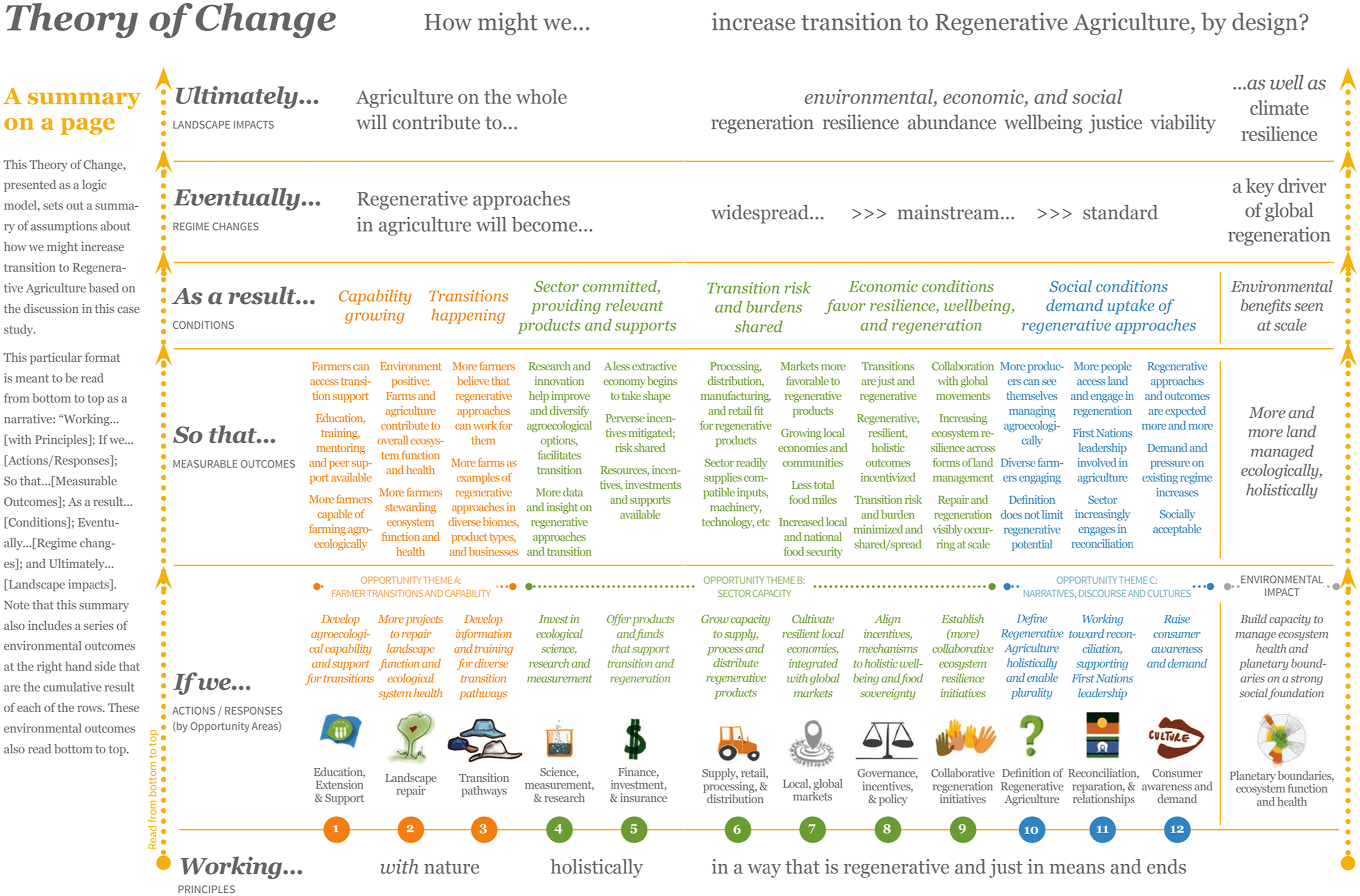
Theories of Change like the one in Figure 4 can help to provide the tools, resources and connections needed for the “provisioning” of new systems (Drew et al. 2021). Holding “increased uptake of regenerative agriculture” as a temporary proxy vision, this ToC addresses factors that “lock in” the dominant regime, promotes ground-up niche scaling, attends to landscape-level change, and embeds opportunities for synergies to emerge.
Our ToC for regenerative agriculture adds to an emerging body of literature on Theory of Change in Transition Design. Similar to the work of Zohar et al. (2023) on ToC in urban transformations, our ToC helps to view change through a systemic lens by showing how specific activities interact with others and create impacts across scales. By showing how the twelve opportunity areas, if acted upon, can lead to desired outcomes that in turn create the necessary conditions for regime changes and landscape impacts, our ToC supports the arguments of Dahle (2019) and Gaziulusoy and Ryan (2017) that actions at the niche level of the MLP framework can “filter up to” higher levels. Our ToC also shares some key characteristics with the Theories of Change documented by Sides (2023) for Ecosystem Restoration Communities (ERC) Notably, Sides’ themes around Personal Transformation and Experiences are also reflected in the theme of Farmer Transitions and Capability in our ToC. Similarly, Sides’ themes around Connectivity/Systems and Generating/Sharing Knowledge overlap with our theme of Sector Capacity. However, there are differences, such as the focus on markets, policy and questions of definition within our ToC, which may be reflective of the different contexts between regenerative agriculture and community-based ecological restoration.
This ToC includes a couple critical modifications to format to incorporate questions of scale. The ToC not only includes niche, regime and landscape interventions, ordered from left to right, but also features opportunity areas from multiple relevant geographical/physical scales. These include training and support (human-scale), measurement (farm-scale), landscape repair (landscape-scale), global environmental cycles (meta-scale) and local-global markets (linking various scales). Additionally, whereas most ToC logic models track in a single direction (for instance, ‘upwards’ only) to intended system outcomes (often social, technological, and economic outcomes), this version also tracks environmental and ecological outcomes in the right-hand column.
The use of a separate section for tracking environmental outcomes is purposeful. Attending separately to environmental outcomes draws attention to the dual scales of systems change and physical/geographical impacts needed for sustainability transitions, highlights that environmental impacts are qualitatively different from systems change, and is intended to help ensure that environmental impacts don’t get lost (or greenwashed) in the effort to bring about sociotechnical transitions. It also emphasises that even small, preliminary changes can have an environmental impact, and that multiple changes across system levels add up to real change – even if we haven’t reached the ultimate or ideal outcome. This helps avoid the trap of ‘perfect’ getting in the way of ‘progress’. While our format modifications are designed to highlight the complexity of interactions between scales and system levels, we acknowledge that this ToC leans in the direction of a ‘classic’ logic model format and does not feature all possible links between components. Although the format choices were purposeful, i.e. for ease of reading and for familiarity among intended audiences (including farmers), there is further opportunity for format innovation in ToC artifacts (see for instance the work of Murphy and Jones 2021).
Conclusion
Transition Design was conceptualised “explicitly [as] a new Theory of Change for designers” (Tonkinwise 2023, 288), and the many requisite dimensions of practice are still emerging. The ToC work presented from the case study provides an example of a designer-practitioner-researcher delving into a context (regenerative agriculture) to understand barriers and opportunities for transition from the perspective of participants, including farmers, extension agents, educators, agroecologists, agronomists, consultants and influencers. While our case study was limited in terms of duration, geographical scale and the challenges of maintaining momentum during the Covid-19 pandemic, it offers a tangible, hands-on version of what it means to engage as designer working for change and working toward “ecologies of interventions” at multiple system levels and geographic scales (Irwin 2019).
Seeking to embed sociotechnical transition theory and experiment with how the intentions of Transition Design might play out in practice, the case study in this research looked for opportunities to create a protected space for the niche (regenerative agriculture) to mature and scale, address regime lock-ins, create conditions for reinvention, and weave synergy among different initiatives (ecologies of interventions), whilst experimenting with specific interventions through working group projects. It pointed to the need for radically different visions of agriculture- for diverse visions of wholly regenerative agricultural and food production (and consumption) systems. As a precursor, the ToC specifically calls for defining regenerative agriculture holistically and enabling a plurality of interpretations as well as future innovations that genuinely deliver on environmental and ecological outcomes.
Tonkinwise (2023) contends that it is the “ambition of Transition Design” to “resource designers in making pattern-breaking, unprecedented versions of change” and this includes Theories of Change that disrupt their current modes of expert practice” (p. 281). As we have seen, the design task (not to mention the broader societal task) is immense. Transitions demand not only significant transformative technological and technical systems innovations, but also myriad social and socio-technical innovations – including reinventing how we live (everyday life). Innovation in the way we work as designers is to be expected as well.
The consideration of geographic scale in this article highlights the distance that can sometimes exist between theoretical frameworks like the MLP, conceptual tools like Theory of Change, and the on-the-ground work of Transition Design in a context such as regenerative agriculture. Future research could focus on bringing additional elements into this mix, such as identifying what Drew et al. (2021) term “objects of design” that could be useful in helping identify what designers might work on. Future research questions include “what categories of propositions are needed?” and “what types of “objects of design” might Transition Design involve?”
Footnotes
Declaration of Conflicting Interests
The authors declared no potential conflicts of interest with respect to the research, authorship, and/or publication of this article.
Funding
The author(s) received no financial support for the research, authorship, and/or publication of this article.
