




Abstract
Futuring methods and tools contribute to societal transitions by supporting the co-articulation and exploration of futures. In this paper, we argue that navigating societal transitions can benefit from engaging communities in uncovering and embracing emerging frictions in their contexts. We advocate for exploring approaches not only for challenging dominant visions but also for fostering value pluralism by creating space for diverse perspectives and alternatives. Inspired by open-source and commons-based technology practices, we analyze a self-developed futuring tool to reflect on how frictions can contribute to the reflection and development of visions for transitions. By reflecting on our experiences in urban transformation and the co-design of futuring tools, we provide a framework for enhancing community involvement and contextualizing knowledge through frictions. We identify three key lessons for practitioners and researchers: (1) frictions offer potential for co-producing flexible transition pathways with communities; (2) the articulation of frictions calls for different modes of engagement and expression; and (3) developing frictional future visions requires a balance of openness and structure. This paper offers insights into the limitations of current futuring practices and opportunities for their improvement, advocating for a shift toward more friction-oriented futuring methods.
Introduction
As cities undergo transformations, there is an urgent need to involve communities in collaboratively envisioning the futures they want to achieve. Often, top-down policies, corporate interests, media narratives, and predetermined research agendas advance abstract visions of circular, digital, or regenerative futures. Despite the proliferation of such visions, there is room for improvement regarding the active involvement of local communities in co-creating these visions and envisioning how these futures will manifest on the ground. In response to this shift, we are witnessing initiatives that seek to engage communities in playing a key role in shaping their futures (Farias et al. 2022; Kawachi 2020; Light 2021).
In this paper, we argue that navigating transitions requires situated engagements with communities and their contexts, uncovering and embracing emergent frictions. In this context, frictions are valuable as they bring to light diverse perspectives and values, which can enrich the transition process if integrated into it. Prior research has underscored the potential of learning and using conflict and opposition constructively in transitions (van de Grift and Cuppen 2022), seeing tensions and frictions as sensitizing devices that support the re-evaluation of practices (Kaljonen et al., 2019). The main premise is that frictions can provide a more context-sensitive understanding of transition politics, contributing to better insights into the role of different motivations and values (Cuppen 2018; Starke et al. 2022).
The challenge is how to support the process of identifying and articulating frictions for communities to co-shape their visions, and imagining alternatives that situate transitions and motivate action. In this context, futuring methods are crucial. They can foster forward-thinking, and facilitate the anticipation of actions that can lead to desirable outcomes (Millett 2006). Previous work focuses on futuring methods and tools that actively involve communities in envisioning transformative futures (Ketonen-Oksi and Vigren 2024) including the exploration of counterfactual futures (Light 2021), the creation of spaces for speculative friction (Tironi 2018), collaborative comic development (Aalders et al. 2020), and participatory sketching (Törnroth et al. 2022), among others. These methods share a common goal: bringing people together to collectively engage in ‘social dreaming’ (Farias et al. 2022).
Futuring methods frequently converge in cultivating capabilities, as outlined by Ahvenharju et al. (2018), such as (1) an awareness of temporal dynamics (time perspective), (2) confidence in one’s ability to influence the future (agency beliefs), (3) a critical examination of established truths (openness to alternatives), (4) acknowledgment of the interconnectedness of human and natural systems (systems perception), and (5) considerations of ethics and responsibility (concern for others). At the same time, methods and tools encapsulate distinct values, perspectives, and frames. Although typically the focus is placed on the outcomes of methods, such as the co-created future scenarios, futuring tools serve as dynamic frameworks that influence how challenges are perceived and guide the identification of desirable courses of action, and thus, futures.
Beyond giving shape to future visions, the tools used in futuring processes convey and steer viewpoints. Thus, we posit that nurturing self-reflective practices on the tools used is essential for more democratic community-led futuring processes. We recognize the importance of nurturing procedural, distributive, and restorative justice within futuring processes, as emphasized by Fitzgerald and Davies (2022). This involves broadening community involvement, addressing power imbalances, and engaging different forms of knowledge and modes of knowing. In this context, there is a pressing need to explore how to embrace frictions, identify the types of frictions that arise and recognize the outcomes of engaging with them in futuring processes. In this paper, we therefore link this focus on frictions to the pluralization of futures, with the goal of making transition pathways more nuanced and context specific as a precursor to action.
Based on this premise, this paper aims to reflect on how to position frictions at the core of futuring processes, fostering spaces where diverse perspectives can be articulated and alternatives can emerge from embracing value pluralism. By describing our experiences and reflecting on our futuring practices, we offer a framework for understanding how these tools can be co-designed to enhance community involvement and relocate knowledge within its original contexts. Through this self-reflection, we identify three key lessons for practitioners and researchers working on transitions: the potential of frictions as a source to co-produce flexible transition pathways with communities, the need for different modes of expression to articulate frictions, and the importance of balancing openness and structure when developing (or ‘choreographing’) frictional visions.
Background
Future Frictions 1.0
Between 2018 and 2022, we participated in a research project that focused on developing methods and tools to stimulate ethical reflection on the impacts of smart city technology on society. The project, entitled ‘Designing for Controversies in Responsible Smart Cities’ was funded by the Dutch National Science Foundation (https://www.responsiblecities.nl/). It resulted in the creation of a toolkit comprising diverse methods and tools to stimulate debate and ethical reflection on smart city technologies, and encourage collaboration among communities to co-shape desirable smart city futures. As part of the toolkit, we developed an interactive scenario-based digital tool called Future Frictions (Baibarac-Duignan et al., 2023; Geenen, 2023; Matos-Castaño et al., 2024).
Future Frictions presents a fictive but relatable neighborhood and provides a quest for the users to decide how smart city technologies should be used in relation to different challenges. As users interact with the tool, they encounter various characters, each presenting unique perspectives on issues at stake in the neighborhood. The users need to decide how the three types of technologies would collect data, including surveillance drones, artificial intelligence and the Internet of Things. Throughout the experience, the users are presented with three speculative scenarios of how their choices could potentially alter the neighborhood’s futures, incorporating the viewpoints of the characters they encounter (Figure 1). Departing from these scenarios, the tool surfaces controversies originating from the use of the illustrated technologies, bringing them closer to the users’ everyday lives.
The type of scenarios involved in the tool were co-created with societal partners of the project’s consortium and reflected their questions and interests at the time around smart cities. These consortium partners included a Dutch municipality, a law firm specializing in privacy issues, and a data brokerage firm, all of whom had different interests, values, and concerns regarding the use of smart technology in cities. The co-creation of scenarios was based on iterative interviews we held with each of these partners, which we transformed in text-based material, and later also visually, with the game designers involved in the coding of the digital tool.
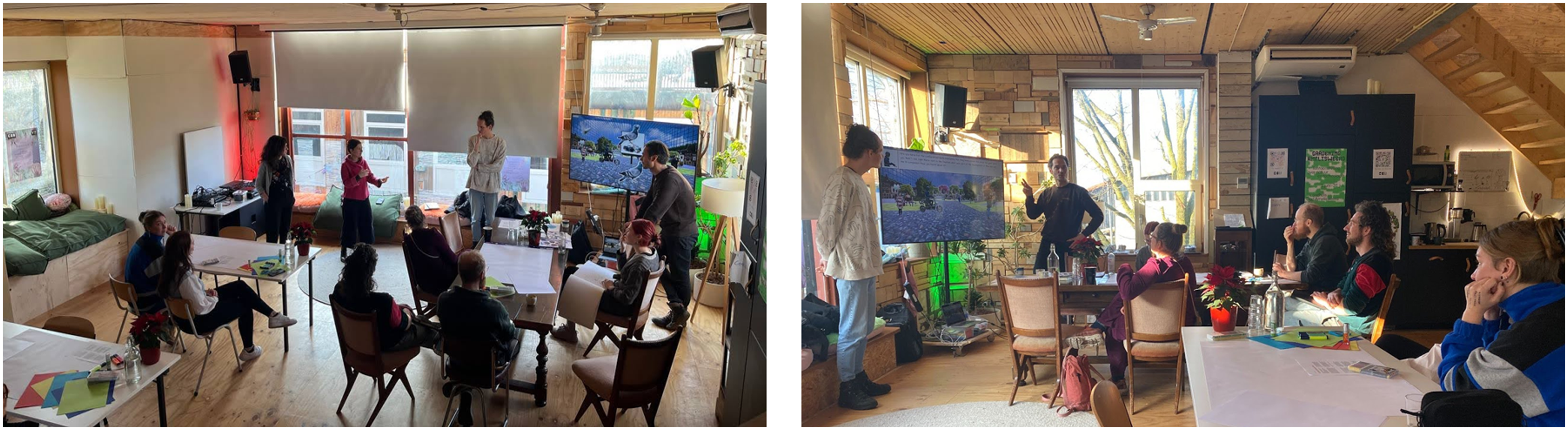
We used the Future Frictions tool on various occasions and with different types of participants, in both virtual and physical workshop formats (the tool development coincided, and was informed, by the COVID-19 pandemic and associated social gathering restrictions) (Baibarac-Duignan et al., 2023; Geenen, 2023; Matos-Castaño et al., 2024). What we observed is that while the tool raised the kinds of debates and reflections we aimed to achieve, participants’ feedback was that they often felt limited, and somewhat ‘framed’ by the options provided. In such circumstances, we encouraged them to imagine an ‘option D’ - that is, a fourth scenario that they provided as an alternative to the three offered by the tool. Moreover, we encouraged participants to relate the background elements with their own neighborhoods as a way to bring future scenarios even closer to their everyday realities and thus enhance ethical reflection.
These empirical observations prompted us to reconsider the original scenarios and their co-creation. As we intended to develop a tool that would help communities in their own contexts to explore critical issues (what we mean here by frictions) that could affect their cities’ futures and their everyday life, such as the use of smart technologies, using predetermined scenarios seemed insufficient for the kind of engagement we sought. What if ‘option D’ became a real opportunity for participants to articulate their own issues of concern and frictions regarding certain topics and enable them to explore potential future implications of taking different courses of action?
To address these research and design questions in the next Future Frictions iteration we looked for domains of practice that could inspire us. To this end, we identified the open-source movement as a relevant domain that offers opportunities for reflecting about our own futuring tools, to allow for the positioning of frictions at the core, and with the goal of deriving lessons that could be applicable to others in the futuring field. We provide a background to this movement and its relevance for futuring approaches in the next section. Impressions from Future Frictions 1.0. Impression of the kick-off of the session, guiding participants through the original Future Frictions 1.0 tool.
Open-Source Production as Inspiration for Analyzing Futuring Tools
The open-source, commons-based production movement emerged in the context of software production, as a critique of proprietary capitalist forms of production, corporate control of knowledge, and tools for innovation (Bradley 2015). Beyond the product (i.e., the software), the open-source movement reflects an ethos of collaboration and is proposed by its followers as an alternative and the beginning of larger societal transformations through peer economies (Benkler 2006). Open-source commons-based technology production principles advocate for the democratization of knowledge and resources. The ethos of these practices emphasizes transparent co-creation, where communities collectively contribute to the development and improvement of shared resources.
While initiated in the context of software production, open-source ideas and practices have expanded into different design fields, such as architecture (e.g., WikiHouse, https://www.wikihouse.cc/), urbanism (Cermeño et al. 2022), in which an ‘open-source production of urban commons’ is seen as a way to democratize urban development (Bradley 2015), as well as participatory design (Botero et al. 2020; Hillgren et al. 2016). Inspired by this, we explore how the ethos of open-source practices could inspire and inform the analysis of futuring tools to foster community ownership not only of the knowledge produced (i.e., future visions and scenarios) but also of the means for their production (i.e., the tools).
What we find particularly significant concerning futuring tools is that the open-source mindset encourages values that are different from the current paradigms centered on efficiency, individualism, or convenience. Instead, it fosters active participation, transparency, collectivity, and shared ownership (Benkler and Helen, 2020), aligning with the goals of creating tools that empower communities to articulate and explore context-relevant issues and future visions. Drawing inspiration from open-source practices, we analyze our self-developed futuring tools as used in different workshop sessions to derive lessons that can be applied by other researchers and practitioners in their futuring processes, emphasizing the central role of frictions.
Analyzing Future Frictions
To analyze the Future Frictions futuring tool and how we used it (its ‘staging’), we describe our empirical experiences in ongoing research projects, started in 2022, which can be seen as a subsequent stage to the original project that led to Future Frictions 1.0. These later projects are connected through a main goal to generate open (digital) tools that can help contextualize societal transitions in neighborhoods, relate them to everyday life, and foster collective capacities for imagination in communities. We first analyze the original Future Frictions 1.0 to derive lessons to place frictions at the core of futuring processes. We then elaborate on how we are applying these lessons to develop Future Frictions 2.0.
Initially, Future Frictions was a ‘monolithic’ entity with limited scope for community adaptation, as it engaged users with predetermined issues and future scenarios. Recognizing this limitation, we reimagined it to allow communities to tailor and use the tool within their unique contexts, addressing their specific needs and concerns. This shift led us to develop a modular, adaptable, and situated framework, or Future Frictions 2.0. The purpose of discussing how this transition came about is twofold: (1) to analyze the tool as a self-reflective practice, and (2) to provide insights into enhancing futuring processes by uncovering frictions.
We based our analysis on a codesign framework developed by Baibarac et al. (2019), which focuses on using digital tools to support local communities in managing and enhancing bottom-up urban sustainability initiatives through commoning. This codesign framework acts as a guide for the development and analysis of tools relevant to a context, local sustainability challenges, and the needs and capabilities of the community of users. Building on open-source principles, the framework also supports acknowledging the tools as a commons by enabling their further development and expansion beyond the initial designer(s) and a specific context, and thus supporting ‘recursive engagement’ in a community (Teli et al. 2015).
The framework proposes three main co-design principles, which we use in our analysis (Baibarac et al., 2019): (1) sociality, (2) modularity, and (3) instability.
Modularity emphasizes the importance of creating digital tools as an assembly of components capable of fulfilling specific needs independently, while also complementing each other when used together. This requires breaking down a system into smaller and self-contained modules that fulfill a specific need, while working together to achieve an overarching goal. For this paper, the main question that this principle allows us to ask is: what are the specific elements of the Future Frictions tool that uncover frictions, and how do they align with the needs of the community?
Sociality acknowledges that the functionality of a digital tool is co-produced within a social context. This means that the outcomes of the tool depend not only on its technical specifications or design features but also on the social context in which it is used and the interactions among its users. By analyzing how a specific tool enables sociality, we can reflect on how it supports the involvement and contribution of social actors within a context. The main question that this principle points to is: how does the social context of using the Future Frictions tool facilitate translating and negotiating values and perspectives to express and explore frictions?
Instability refers to the context-appropriateness of technology and the potential of adapting digital tools to specific contexts and local needs. This emphasizes a tool’s responsiveness and flexibility, and a requirement for the tool components to be modified to suit different environments and communities of users. The main question that this principle allows us to ask is: how can the tool adapt to evolving needs of different participants, ensuring it uncovers frictions across diverse contexts?
In the section below, we describe how we used these three co-design principles as a lens to analyze the Future Frictions tool. To this end, we focus on a specific workshop in which the tool was adapted and ‘staged’ using an analog methodology, alongside analog-to-digital translations. These adaptations helped us derive more widely applicable lessons for futuring tools and processes. The workshop focused on circular transitions, as an entry point into the local context and for engaging with its community involved in an ongoing urban redevelopment process.
Experimenting with Circularity Visions in ‘the Work Track Quarter’, Utrecht
In 2023, as part of the “Seeds for Transitions: Realizing Sustainable Urban Futures from the Bottom Up” project, we collaborated with creative organizations actively engaged in circular practices within ‘het Werkspoortkwartier’ (“the Work Track Quarter”). This is an area undergoing redevelopment into a ‘creative circular manufacturing area’ situated in Utrecht, the Netherlands (https://efro-wsk.nl/). In recent years, it has been embarking on a major transformation, supporting circular practices among its communities. The different backgrounds, perspectives, and expectations of the people living and working in ‘the Work Track Quarter’ have led to conflicting viewpoints on how circular visions and associated futures would, could, and should unfold.
To engage with some of these communities and articulate transformative circular futures, we organized a co-design process in the area in the form of a situated workshop. The workshop involved (1) a research team composed of the two researchers co-authoring this paper and a research assistant, (2) an organization of creative coders located in ‘the Work Track Quarter’ involved in Future Frictions from its outset, and (3) a group of creative practitioners working in the area. The research team initiated and kicked off the project, being responsible for turning the original Future Frictions tool into an analog methodology for the workshop. The creative coding organization, which had played a role in developing the original Future Frictions tool, supported the ‘translation’ of the analog format and its outcomes (e.g., paper collages) into a digital format. Besides, they served as mediators between the research team and the local community, leveraging their dual role as members of ‘the Work Track Quarter’ and of the initial team involved in Future Frictions 1.0.
Located in a part of the Work Track Quarter that hosts different creative practitioners involved in bottom-up circular initiatives (https://www.hofvancartesius.nl/), the creative coders and participants have a strong interest in articulating future visions that better reflect their community. This became an opportunity to address our aim of opening up the futuring tool in a way that allows local communities to formulate their ‘option D’ - here, about context-relevant, circular futures. The workshop took place in December 2023 at the location of the creative coding organization (Figure 2 and 4). It aimed to support reflection on the main elements and functionality of the tool with the aim to co-design it to reflect local contexts, users, and needs. The session had two goals: (1) to discuss frictions in existing circular visions for the area, and (2) to analyze the Future Frictions tool so that it could support the generation of alternative visions of circularity by the communities involved in the visioning process.
In the sections below, we discuss and reflect on the workshop in relation to the three co-design principles introduced above - modularity, sociality, and instability - which we address as intertwined principles.
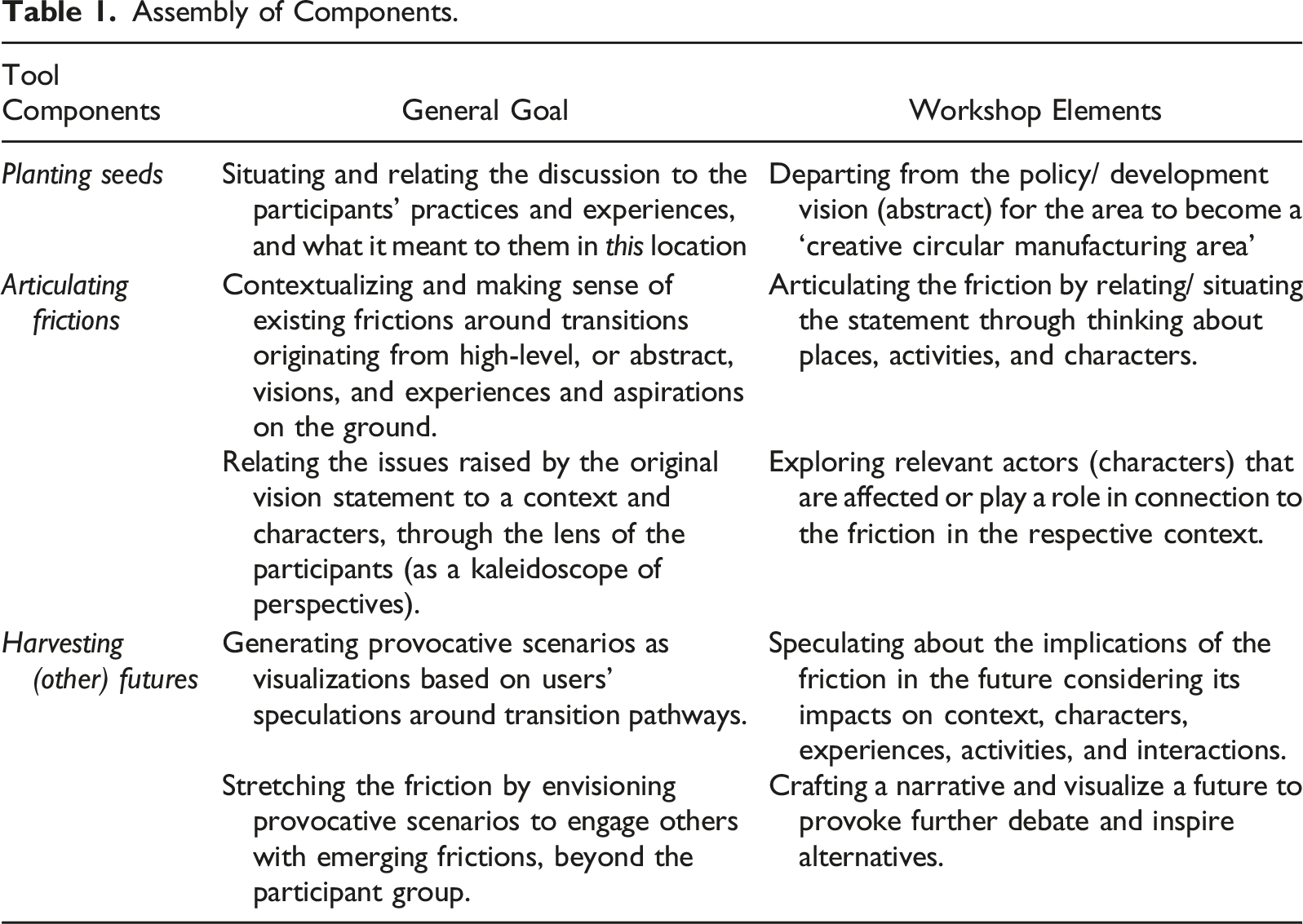
Modularity: Planting Seeds, Articulating Frictions, Harvesting (Other) Futures
Assembly of Components.
Planting Seeds
Departing from an existing policy statement (here, regarding circularity), this component focuses on contextualizing a high-level abstract vision by thinking about a specific context and the actors that would have a ‘stake’ in it.
Through previous site visits and discussions with local communities, we discovered that there were some divergent views on the implications of envisioned circular futures for the area. Recognizing this, we started the session by introducing an extract of an existing policy statement as a starting point for the group discussions (Figure 3). This statement was a quote from the policy vision of circularity issued by the City Deal, a document signed by 9 Dutch cities - including Utrecht - that describes the circular transition goals cities will undergo until 2050. How exactly this vision will come to fruition is still under discussion. Our goal was to initiate engagement and debate to bridge the gap between high-level policy goals and the lived experiences of people in ‘the Work Track Quarter’, encouraging participants to consider the real-world implications of the policy statement. This included reflecting on places or activities that could be influenced by the statement, as well as relevant ‘characters’ (i.e., actors that allowed the participants to explore different potential impacts of the statement). Policy statement introduced during the workshop.
This policy statement elicited diverse reactions from the three different groups, each interpreting it through a unique lens. The participants based their interpretations on their own experiences with the topic and the area, without steering from the facilitators. The first group focused on the role of policies and regulations to enforce circular practices. The second group emphasized the achievement of goals related to circularity, raising concerns about the potential exclusions resulting in this process. The third group focused on the use of technology to quantify circular practices, reflecting on leveraging technological solutions for measuring and monitoring sustainability efforts. These interpretations shaped how the groups articulated frictions and speculated about different futures in the subsequent steps.
Articulating Frictions
This component focuses on making sense of existing issues that might emerge between top-down visions, like the one proposed by the statement above, and local perspectives on transitions, as experienced on the ground, by the participants.
One of the groups articulated a friction originating from the development of two different circular communities in the area. One community envisioned a seamless green utopia facilitated by real estate development, while the other advocated for a future driven by creatives rooted in a do-it-yourself (DIY) culture. Depending on the perspective, achieving ‘progress towards a regional circular economy’ can take different directions. To explore the friction further, this group narrated the experiences of a dumpster diver living in ‘the Work Track Quarter’, an idealist resident, and an upper-middle-class consultant living near the area.
In circular practices, dumpster diving allows collecting materials and resources that could still be reused. This group explored the dilemma of how certain members of the community may aspire to escalate dumpster diving activities to further the progress toward a circular economy, despite the illegality of those practices in reality. As one of the members described (from researcher’s notes): ‘You engage in dumpster diving to assist asylum seekers, sharing knowledge in a very collective manner, yet it is illegal. The friction arises from the conflict between putting ideas into practice and the policy working against you’. Impressions during the co-production session held in December 2023 in the Work Track Quarter.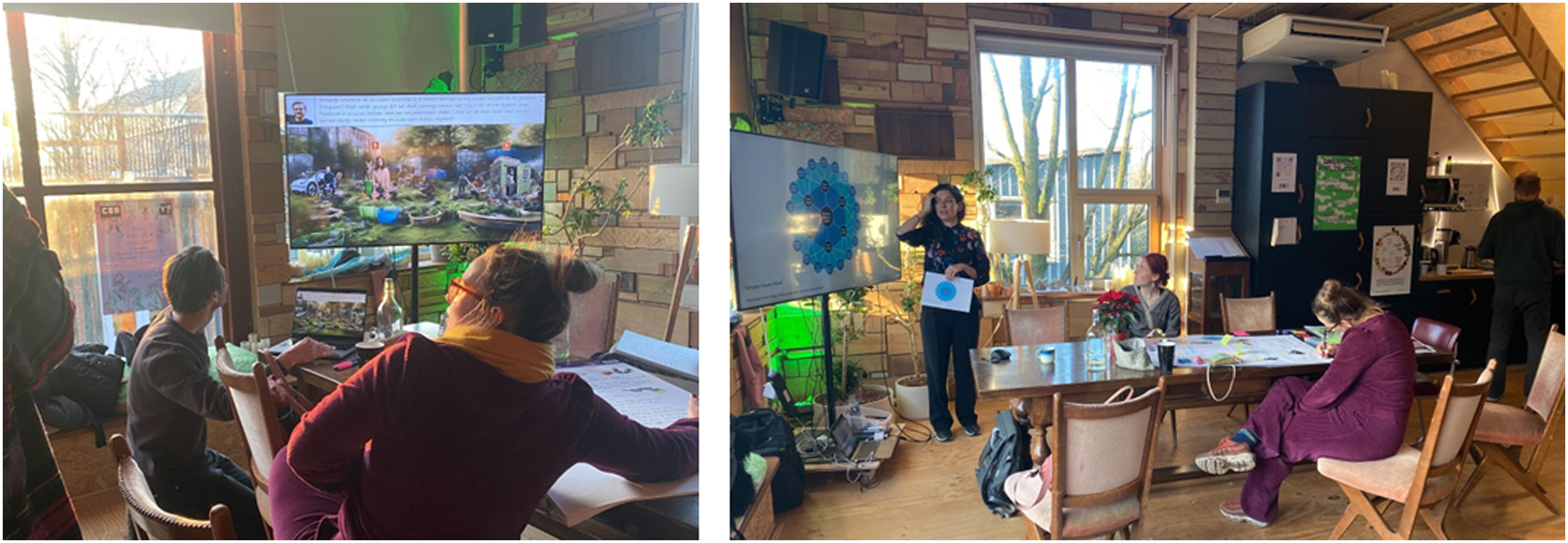
Harvesting (Other) Futures
The third component consists of bringing to life thought-provoking scenarios to engage others with emerging frictions and, in this way, identify alternative visions that acknowledge the frictions.
During this phase, participants speculated about potential future scenarios stemming from the frictions identified in the previous step. They considered the implications of these imagined futures on local contexts, drawing on the characters identified earlier in the process. The objective of this step was not to resolve the friction but rather to make it explicit and tangible, thereby inspiring alternative visions. The participants’ speculations were not meant to be predictive but rather to expose frictions or dilemmas through plausible stories regarding who/what might be affected and how, and thus provoke reflection on the proposed interventions towards achieving circular futures in the Work Track Quarter.
For instance, the previous group envisioned a future to address concerns about the legitimacy of transitioning towards circularity without involving the communities affected. They imagined a scenario where dumpster diving would become legal by 2033, yet the divide between circular communities remains. Legalization could lead to new educational programs and job opportunities, but it might also commodify waste and dilute the core practices of circularity. This speculative future included the emergence of circular-themed shopping malls that attract visitors seeking inspiration but not actively engaging in circular practices.
‘Harvesting (other) futures’ emphasizes that transitions are dynamic and predicting certain pathways might constrain our ability to envision future possibilities and consider their potential implications from various perspectives. This limitation could lead to unexpected, unintended, or undesirable consequences. Ultimately, it might hinder our ability to achieve societal transformations towards circular futures that motivate and inspire communities to take action.
Sociality: Interfacing Frictions through Social Processes
Using the principle of sociality, we analyzed how the social context of using the tool facilitated the negotiation of values and perspectives, thus supporting the expression and exploration of frictions. This principle recognizes that the outcomes of using a digital tool emerge from the relationships, dynamics and engagement of people using it in a given context (Baibarac and Petrescu 2017; Mackenzie 2006). This principle highlights how different actors from various community groups can contribute to the futuring process by bringing their own knowledge and perspectives, without reinforcing a binary relationship among participants. The outcome of the session and the use of the tool become a co-produced process that requires continuous translation and negotiation among different participants. These translations ensure that diverse inputs and interactions enrich the process, leading to more context-sensitive outcomes.
In our case, the ‘originators’—the research team and creative coders behind the initial Future Frictions tool—collaborated with ‘recipients,’ represented by creative practitioners from the local community during a workshop in December 2023. Reflecting on sociality, we designed the workshop to facilitate a process of ‘translation’ between these groups, ensuring that different frictions could be expressed and explored in both analogue and digital formats.
We kicked off the workshop by introducing participants to Future Frictions 1.0, guiding them through its features and scenarios to familiarize them with the tool and its purpose of using frictions in futuring processes. This interaction served as the first translation step, where the ‘originators’ actively engaged with the ‘recipients’ to establish a common understanding right from the beginning.
A second ‘translation’ step in the process involved bridging digital and analog environments (Figures 5–7). The research team prepared a set of activities in an analog format that reflected the functionality of the digital tool, such as the Futures Wheel and collage-making exercises, which mirrored the functionality of the digital tool. These activities allowed participants to explore local issues in a tangible and relatable way, bringing their perspectives and experiences into the futuring process. Analog tools and engagement during the session. Creative coders are mediators between the local community and create a digital interface. Examples of the third form of ‘ranslation’ through the interaction of the creative coders with participants.
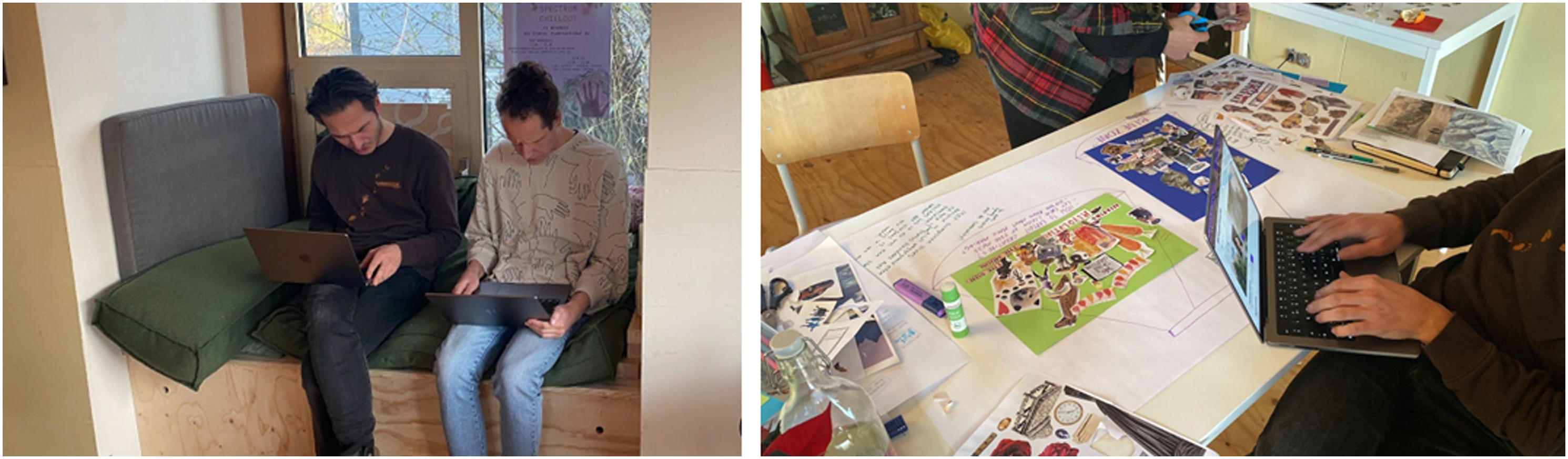
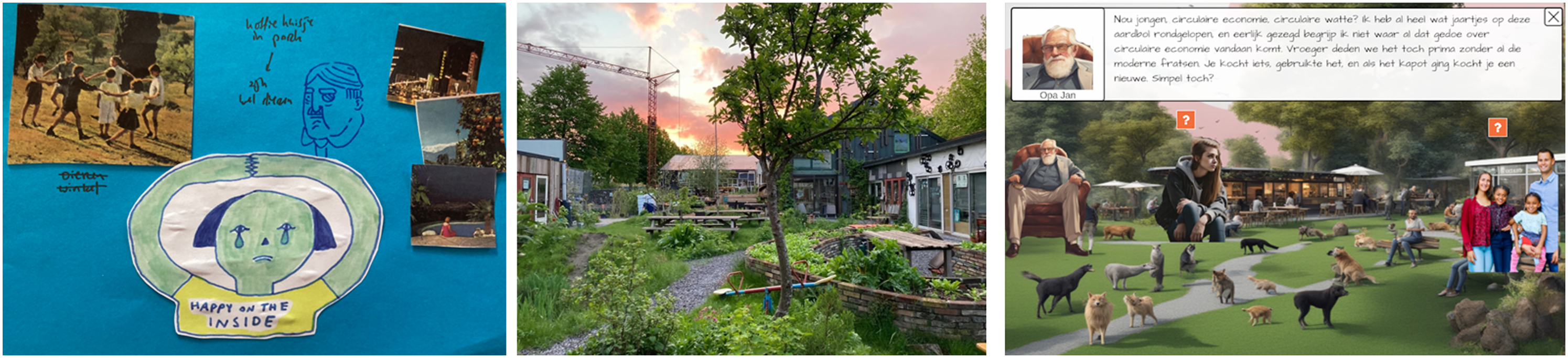
A third ‘translation’ took place as creative coders transformed the participants’ analog representations into digital formats using generative AI tools like Stable Diffusion to convert the collages into digital images, and ChatGPT to create descriptions and dialogues. This process involved direct collaboration between coders and participants, where the former used input from the latter to create digital interfaces and scenarios that reflected the participants’ visions.
For instance, during the session, one group formulated a scenario where the concept of circularity becomes economically unaffordable. The creative coders discussed with participants to understand the underlying message behind a collage depicting scenes from ‘the Work Track Quarter’. Participants envisioned a setting of a ‘coffee shop in a park, people strolling around, and an environment teeming with animals’. Drawing from these visual cues and incorporating a background of the actual area, the creative coders anchored the perspective of this groups within the context of ‘the Work Track Quarter’. Through discussions, the participants brought different characters inhabiting the area to life such as ‘Opa Jan’, portraying him as a wealthy individual who is skeptical about circular practices and is reluctant to change: ‘Just let me keep my old stuff and repair it when necessary. I don’t understand why we always have to strive for change. Sometimes it’s good to just stick to what works, right? Circular economy… don’t make me laugh. Give me the good old days any time.’ They also included a young family who does not have enough time to rethink their ways of life: “Circular economy? My wallet is currently in ‘survival mode’. Let’s talk about sustainability if it doesn’t mean I have to live on instant noodles for the rest of the week.”
At the end of the workshop, the participants, the researchers, and the creative coders discussed the AI visualizations to reflect on how closely they represented the analog scenarios and the group discussions from the scenario-making process.
This type of analog-to-digital ‘translation’ enabled sharing between the groups, further reflections and the articulation of key frictions that mattered to each group, namely: (1) legal and policy frictions, (2) accessibility and equity concerns, and (3) privacy frictions. The first group, involving dumpster diving, reflected on the friction between circular practices and legal barriers that deem such actions illegal. This sparked discussions with the other participants about how policies could better align with circular initiatives to facilitate rather than hinder sustainable practices. The second group reflected on accessibility to circular practices, raising concerns about social inclusion since new circular practices could lead to the ‘gentrification’ of circularity, exacerbating socio-economic disparities. The third group elaborated on a friction around using AI to support circular practices and how technological interventions can negatively influence privacy and autonomy, potentially leading to conflicts between those embracing technological solutions and those preferring more analog, technology-free approaches to sustainability.
Instability: Different Modalities of Expressing Frictions
This principle refers to the potential of adapting tools to specific contexts, by ‘destabilizing’ its functionality, and specifically, that of its various components to better reflect on their potential for adaptability. While analyzing instability, we explore how the tool can adapt to evolving needs, ensuring it uncovers frictions across diverse contexts and types of participants. In our workshop, this adaptability was demonstrated through moments of ‘translation’, as discussed above (e.g., from digital to analog formats and back to digital), when participants articulated frictions and expressed their future visions. These translations highlighted that the potential of the tool lies not in the specific methods used but in its main goal of stimulating the articulation of frictions and alternative visions.
The essence of the tool consists of its three main components - planting seeds, articulating frictions, and harvesting futures. For these components to support the articulation and expression of frictions, they need to be adaptable to different contexts, situations and types of participants. In the workshop, we experimented with both analog and digital formats, including spoken forms of narration, collage-making out of paper cuts, and AI image generation. This experimentation allowed participants to engage with the tool in ways that resonated with their specific circumstances, preferences and creativity.
In addition, reflecting on previous instances in which we used the original Future Frictions tool, we recognized that we had used other forms of expression as support for the different kinds of participants we had in our workshops (Figure 8). These ranged from using Mural.co as a collaborative canvas for generating digital collages during the COVID-19 pandemic (Baibarac-Duignan et al., 2023) to the use of Lego to build neighborhood environments and characters in a transdisciplinary university course, to projected experiences working with participants with low technical skills (Matos-Castaño et al. 2024). Impression of different forms of expression using mural.co (Baibarac-Duignan et al., 2023) and Lego.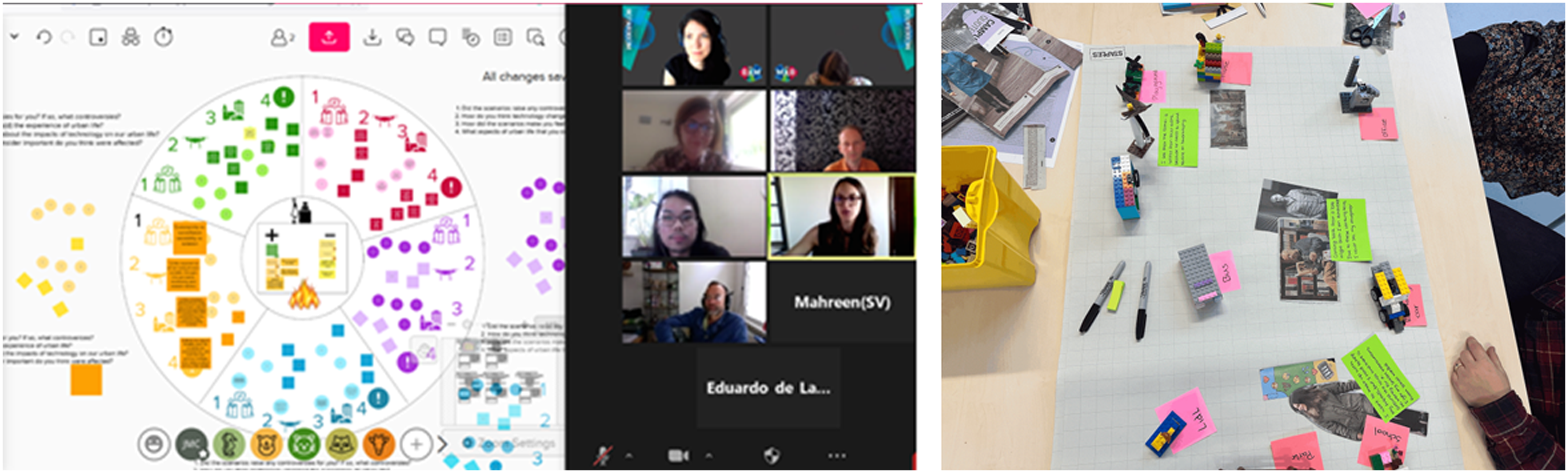
Thus, when analyzing the tool through the principle of instability, what emerges is that the mode of making and expressing frictions and futures does not need to be ‘stable’. Any format or supporting tool could in principle address the same functionality of a component, depending on the different contexts where the tool is used, the users, and their capabilities. This instability creates further opportunities for generating a meaningful diversity of context-relevant visions while opening up possibilities for their expression in ways that best resonate with a community. This quality is an important consideration in thinking about futuring tools as open and flexible toolkits, as discussed in the next section.
Toward Friction-Oriented Toolkits for Co-speculation
Analyzing the Future Frictions tool and its ‘staging’ using the three co-design principles of modularity, sociality, and instability has provided valuable reflections. These reflections not only inform our development of Future Frictions 2.0 but also contribute to a broader rethinking of friction-oriented futuring tools for co-speculation with communities involved in transitions.
First, regarding Future Frictions 2.0, the insights gained from our collaboration at ‘the Work Track Quarter’, as complemented by previous educational and research engagements, have led us towards the development of open hybrid toolkits that provide both digital and analog tools. This approach reflects recent interest among transition designers in creating open-source toolboxes for practitioners, such as tools for organizations working on sustainability issues (e.g., “Transition Design Toolbox”, https://www.falaydesign.com/toolbox). However, it extends this aspiration into the public realm, into neighborhoods and to support communities in imagining and shaping transitions in their areas.
In their next iteration as Future Frictions 2.0, these toolkits will comprise modules reflecting the three main components of the tool —planting seeds, articulating frictions, and harvesting futures—in various analog and digital formats, ensuring accessibility, contextual relevance and portability. As an intermediary open version of the tool, together with the creative coders, we have developed a Future Frictions ‘hub’ that functions as a portal where different local visions can be shared, viewed, or edited while allowing for new collage-based visions to be generated (Figure 9). This intermediary step is intended to foster inspiration among diverse communities to explore frictions and co-create their own vision for their neighborhoods. An open version of Future Frictions (currently under development) resulting from our engagement at ‘the Work Track Quarter’.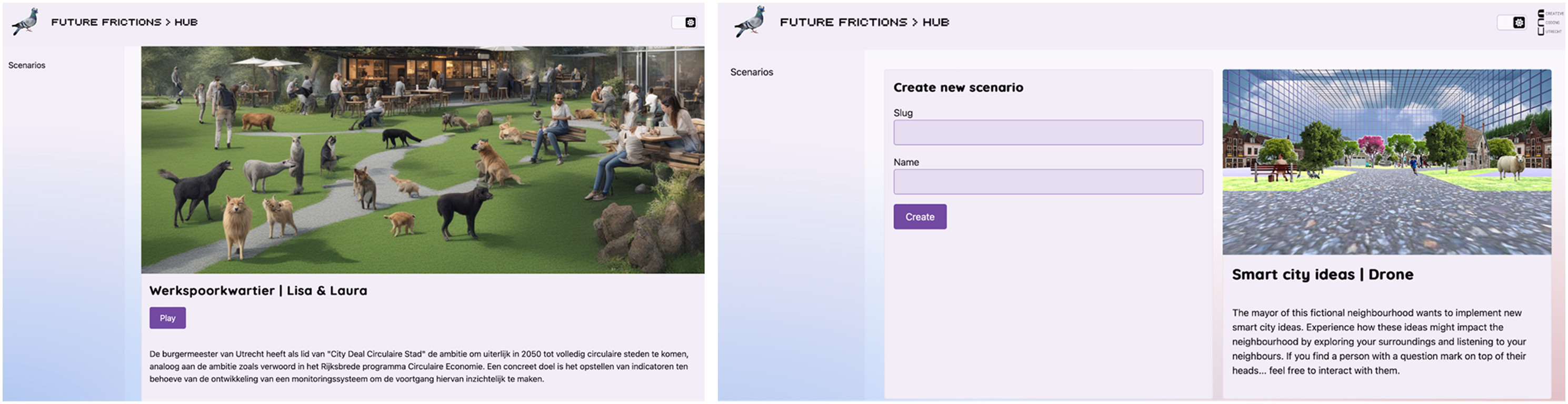
At the same time, reconstructing Future Frictions as an open hybrid toolkit extends beyond the co-development of a digital tool. It encompasses different elements that reflect the three main modules of the tool, such as: a data-walking application to support the contextualisation of visions and frictions, workshop templates, user guides, a physical ‘viewing box’ (kijkdoos in Dutch) conceived as an interactive game, and a portable toolkit (e.g., combining a Raspberry Pi local server and analog workshop components) that can be located in the neighborhoods where the engagement and co-speculation take place (Figure 10). A portable toolkit comprising the digital tool installed on a Raspberry Pi and an analog ‘viewing box’ for making and representing scenarios.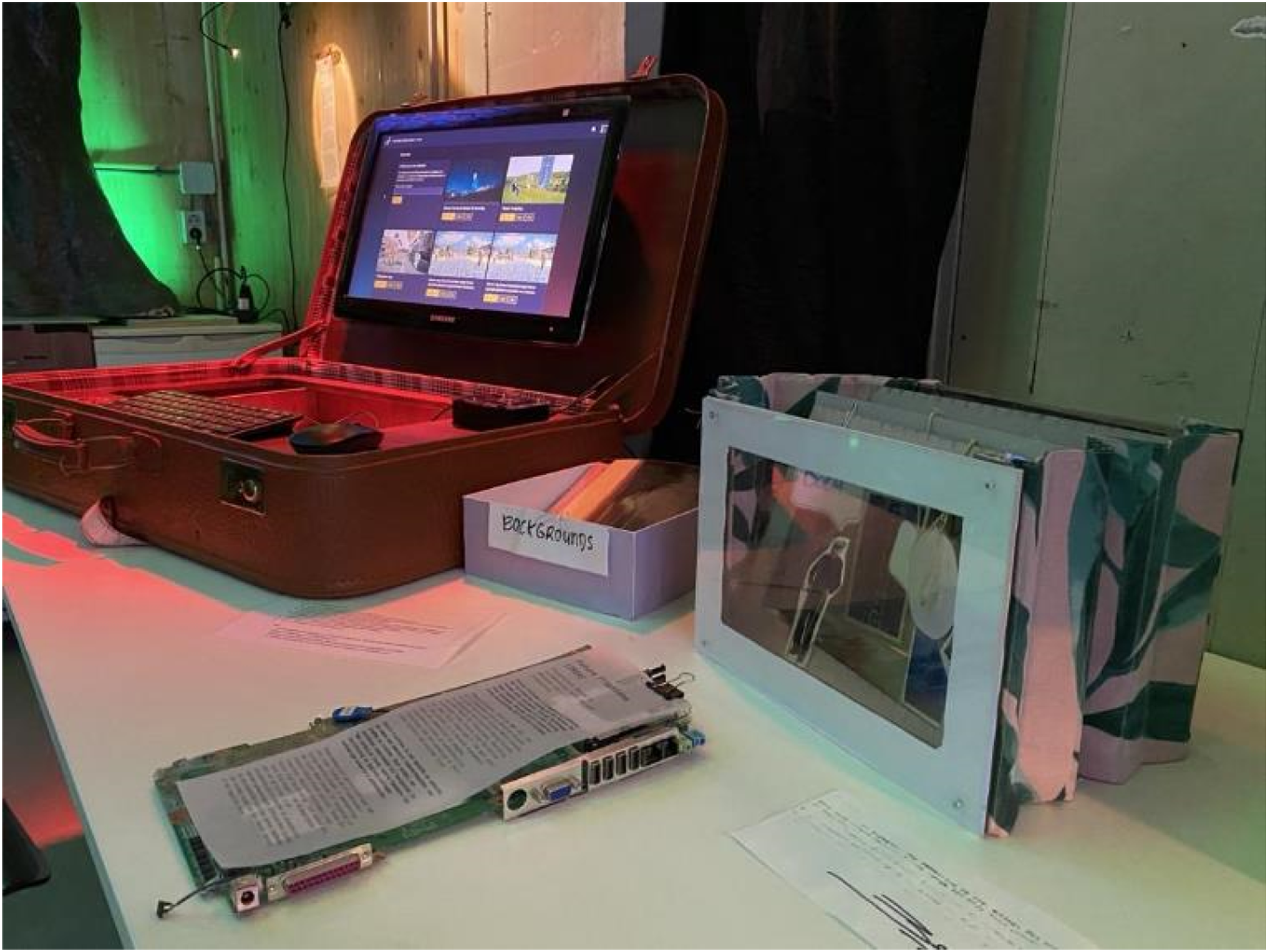
These different digital and analog components will remain open for local adaptations and potential expansions, allowing for flexibility and community ownership shaping both process and outcomes. The aim is for them to be enacted, ordered, and expressed in contextually relevant ways to support communities in articulating issues they find important to consider regarding transitions in their neighborhoods and reimagining futures together. Ultimately, with Future Frictions 2.0, we aim to generate an open prototype that can be adapted and shared locally to stimulate collective capacities for imagination and enable spaces of open exploration in envisioning sustainable futures, inspired by the concept of ‘democratic playgrounds’ (Asenbaum and Hanusch 2021). Thus, rather than aiming for a complete toolkit, we envisage the development of Future Frictions 2.0 as a never-ending prototype—an ongoing journey toward democratized futures facilitated by an open architecture and collaborative toolset.
Beyond informing this iteration as a series of open toolkits for co-speculation, the analysis of the original Future Friction tools along the three co-design principles has allowed us to make further reflections regarding friction-oriented futuring approaches in the context of transitions. These reflections extend therefore beyond ‘outputs’ (i.e., the tools) to a different way of thinking about futuring with communities that are not tied to a specific method or predetermined approach, but are flexible and context-specific, to support community agency in shaping futures. This adds to recent calls in the context of Design for Sustainability Transitions (DfST) to seek the establishment of open-ended projects that place an emphasis on processes rather than outputs (Gaziulusoy and Erdoğan Öztekin 2019).
Moreover, in the context of Transitions Design, our reflections bring up the importance of allowing for a meaningful diversity of transition visions, including the forms in which they are articulated and expressed, shifting focus from ‘designing’ transitions to fostering inclusive processes for communities to identify their desired transition pathways. Designing transitions tends to imply a clear, pre-determined, assumed pathway towards transitions, and solutions that are scalable beyond a context. Through analyzing and reflecting on our design process, we have realized that what is needed is a different way of looking at how transitions are imagined rather than designed, which necessarily entails openness, flexibility, and making room for diversity. In the final section, we identify three main learnings that can benefit transition designers as well as futuring communities, and which address these qualities of co-speculation with communities.
Three Main Learnings for Co-Creating Futures and Transition Pathways Through Uncovering Frictions
Our main aspiration in developing Future Frictions has been to support communities in uncovering frictions and co-creating future visions that reflect the value pluralism in their contexts, the issues they care about, and shared aspirations that transcend singular transition visions and pathways. To assess our outcomes, in this paper we engaged in a reflexive process on our futuring practices, recognizing the significance of the methods employed in shaping visions and, ultimately, futures. Through reflecting on our experiences, we illustrate that designing for transitions should not aim to craft rigid visions but rather to facilitate processes that allow for the development and evolution of meaningful visions that resonate with the diverse realities of communities. This requires openness to serendipitous encounters and letting go of the perceived need to control the collaborative futuring process in transitions to reach certain predefined goals. Letting go is intertwined with the inevitable frictions that arise during open exploration about transitions and related futures. Rather than viewing such frictions as obstacles towards achieving consensus on desirable end-states or pathways, we view them as essential fuel that can drive meaningful transition processes. Embracing the unpredictable and serendipitous nature of frictions, we advocate for harnessing them as catalysts for situated and collective imagination within communities.
Drawing from our experiences and guided by the principles of modularity, sociality and instability, we derive three main learnings for futuring practices, which place frictions at the core. We represent our experiences through the metaphor of a kaleidoscope in Figure 11 below. This kaleidoscope comprises the three components we consider essential in futuring practices: (1) planting seeds, (2) articulating frictions, and (3) harvesting futures. When these components are dynamically applied and adjusted within various contexts, they contribute to achieving the three learnings below linked to co-production, contestation and imagination choreography. Metaphor of a kaleidoscope illustrating our findings and position.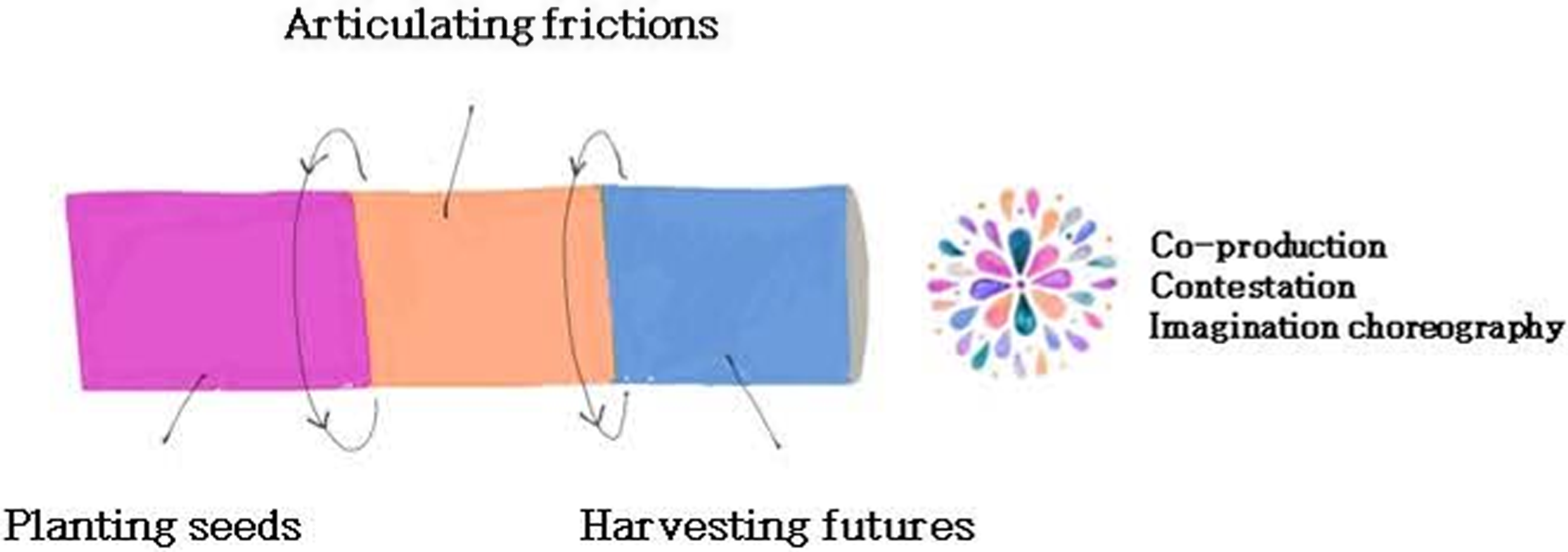
Co-producing Open and Flexible Transition Pathways Calls for Harnessing Frictions
This first learning for practitioners and researchers relates to the importance of recognizing that the tools used in futuring processes related to societal transitions cannot be mere instruments to meet a predetermined goal (i.e., a specific vision of what transitions might entail). Instead, we advocate for futuring tools functioning as ethically significant and open exploration platforms fostering reflection, ideation, and debate among different stakeholders, about issues they find significant in their contexts. This acknowledges transitions not as a goal but as a process that requires flexibility, openness to deviations from predetermined pathways, and in this way, making room for serendipity and unexpected opportunities for change. This became apparent during our experiences at ‘the Work Track Quarter’. While the initial policy statement focused on providing indicators to steer toward a seemingly agreed-upon ‘regional circular economy’, the frictions surfaced during our sessions and began to reveal alternative (forking) pathways. These alternative pathways emphasize the importance of active community involvement in co-creating specific sustainability indicators that reflect the realities and values of the community, rather than assuming communities are passive recipients of predefined futures.
Articulating Frictions Calls for Different Modes of Expression
This second learning refers to how identifying futures, and co-shaping transition pathways calls for incorporating diverse and potentially conflicting perspectives around both current contexts and potential futures. Supporting active collaboration when perspectives differ and fostering meaning-making of those frictions plant the seeds to act on them and realize their generative potential. In this process, futuring tools become essential, as they facilitate diverse modes of engagement, enabling communities to make sense of multiple and contested futures collectively. Therefore, engaging with futuring tools is not just about envisioning a future; it is about giving meaning to frictions, and generating meaningful visions fueled by those frictions that inspire communities to take action. During our experiences in ‘the Work Track Quarter’, the participants incorporated their characters while articulating existing frictions, so they defined the elements that could express them. This helped to assign meaning to the original discussion, fueling co-speculation about futures where, for instance, dumpster diving plays a central role in achieving circular futures and it is not illegal.
Developing Frictional Visions Calls for a Balance of Openness and Structure (or ‘Choreographing’)
This third learning relates to how co-creating meaningful transition visions calls for a careful balancing act between complete openness and facilitating a ‘choreography’ of the imagination. We use the more fluid term ‘choreography’ here instead of the more rigid ‘scaffolding’ because, while collective processes of imagination necessitate guidance, communities still need to interpret tasks based on their unique contexts and capabilities. We call for tools that facilitate this choreography and provide structured frameworks for coordinated actions, enhancing modes of reflection and expression and making visions more meaningful, engaging, and inspiring for communities. In our experiences, this could be achieved by choreographing frictional futures to come to the surface in tangible ways through experimenting with different modes of expression (e.g., shifting from collage-making to generative AI in our workshop) while providing anchoring points. Planting seeds, articulating frictions and harvesting futures as a guiding framework offer such possibilities as part of a looser choreography of the imagination for communities to collectively articulate, imagine and shape desirable transitions and futures.
While designing for transitions, we have experienced the potential of embracing these processes as open, exploratory and frictional democratic playgrounds that can inspire the collective imagination of communities, and action on the ground. We hope to inspire researchers and practitioners to experiment with our learnings and appropriate them to their own practices. By doing so, we aim not only to foster the creation of meaningful visions but also to establish equally significant processes, ultimately guiding communities toward realizing meaningful futures.
Footnotes
Acknowledgements
We would like to thank the community from Het Werkspoorkwartier for exploring future frictions with us. Thanks to Fran Karlovic for his contribution to the project. Special thanks to Creative Coding Utrecht for our continuous collaboration and learning opportunities.
Declaration of Conflicting Interests
The author(s) declared no potential conflicts of interest with respect to the research, authorship, and/or publication of this article.
Funding
The author(s) disclosed receipt of the following financial support for the research, authorship, and/or publication of this article: The work presented here was partly developed in connection to a research project funded by the NWO (De Nederlandse Organisatie voor Wetenschappelijk Onderzoek) titled “Seeds for transitions: Realising sustainable urban futures from the bottom up” led by Corelia Baibarac-Duignan (file number 406.XS.01.092).
