



Abstract
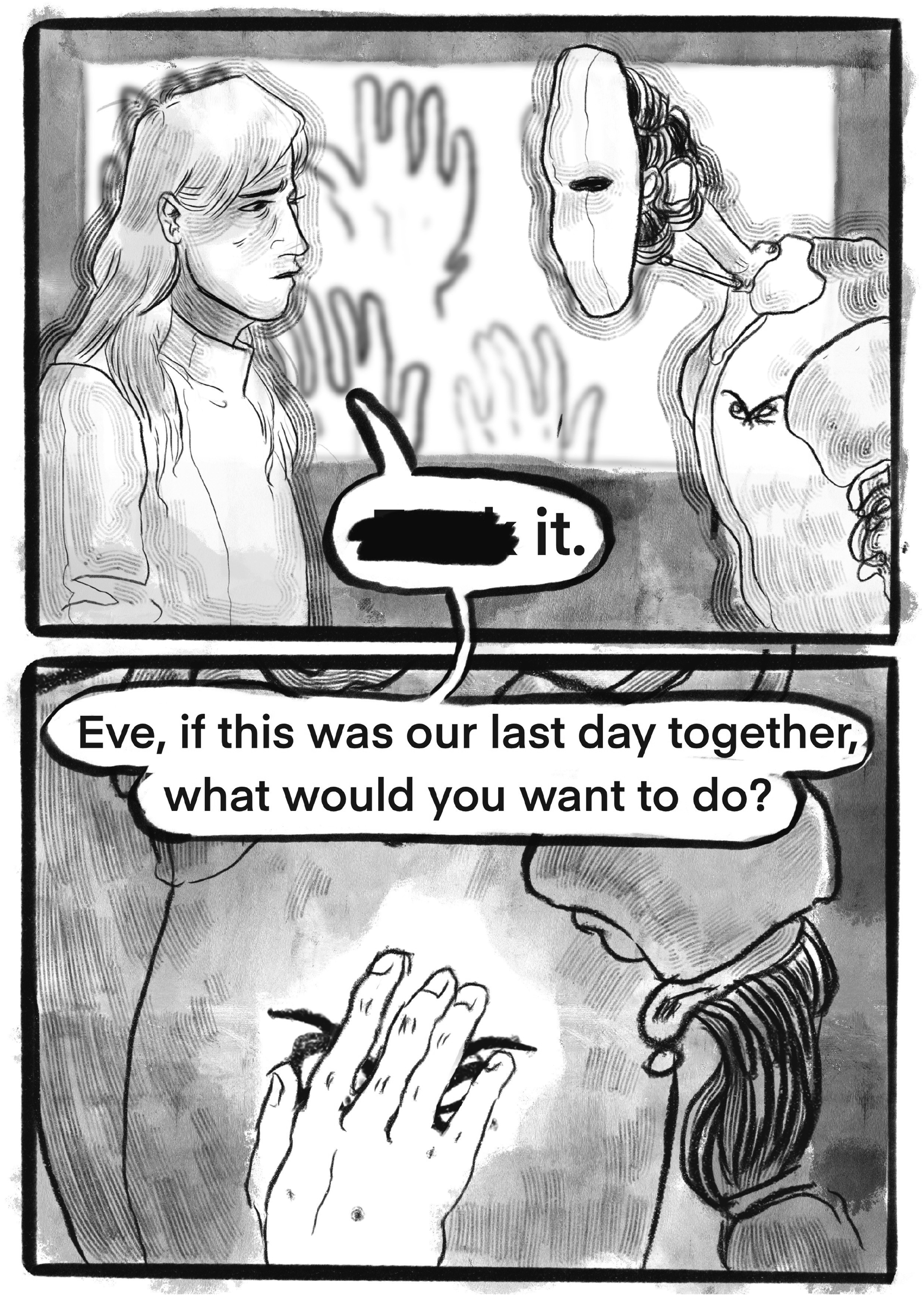
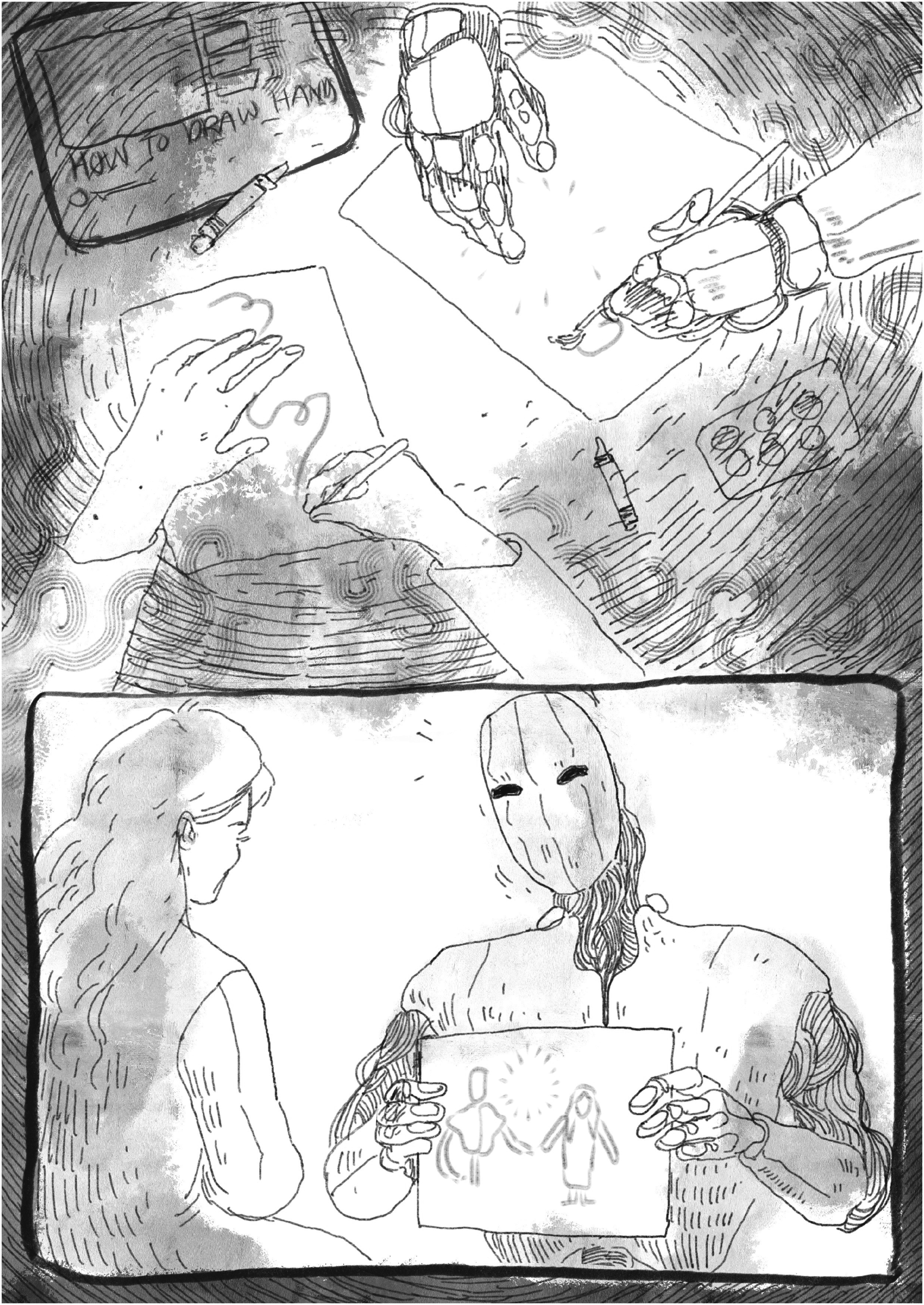
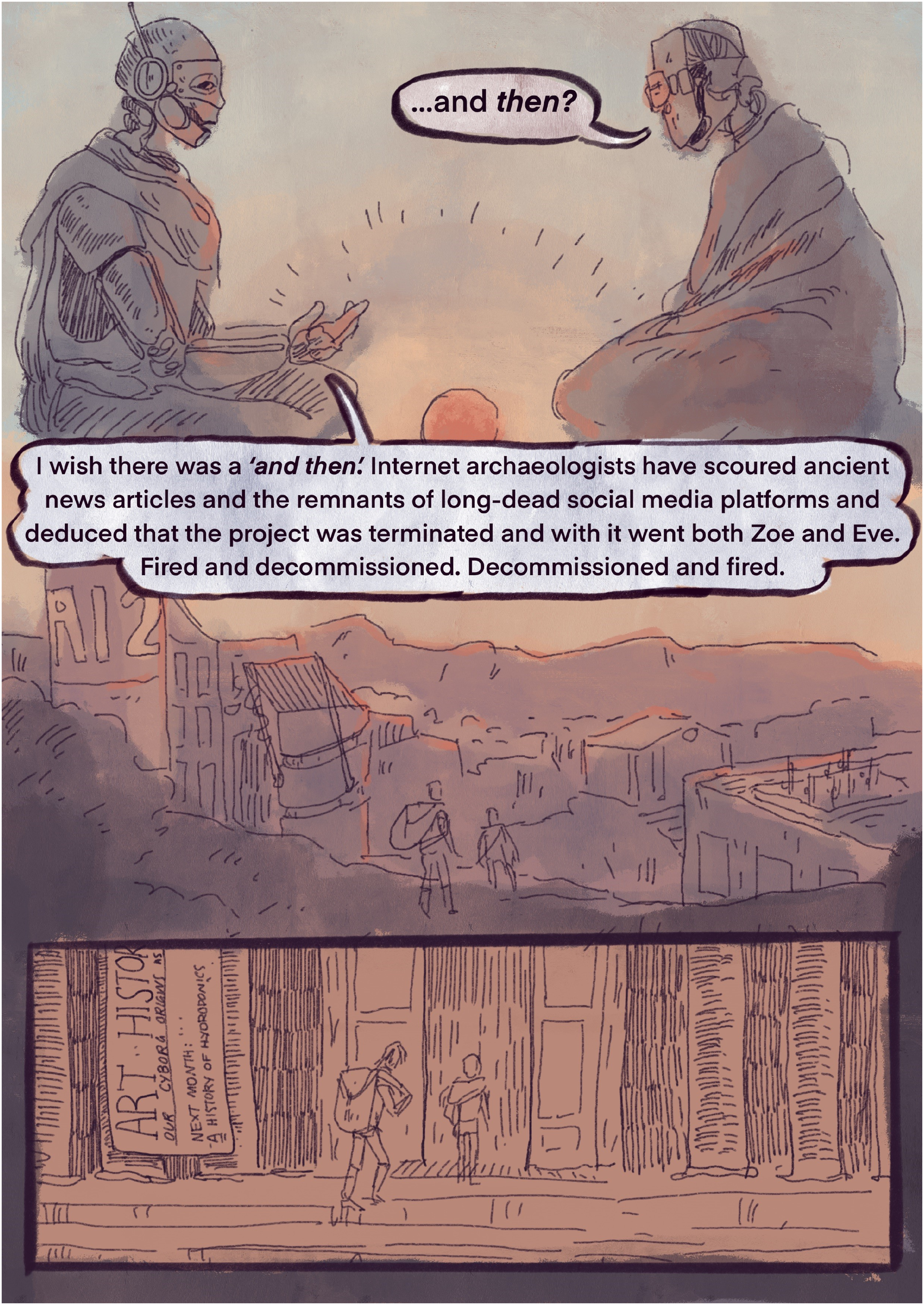
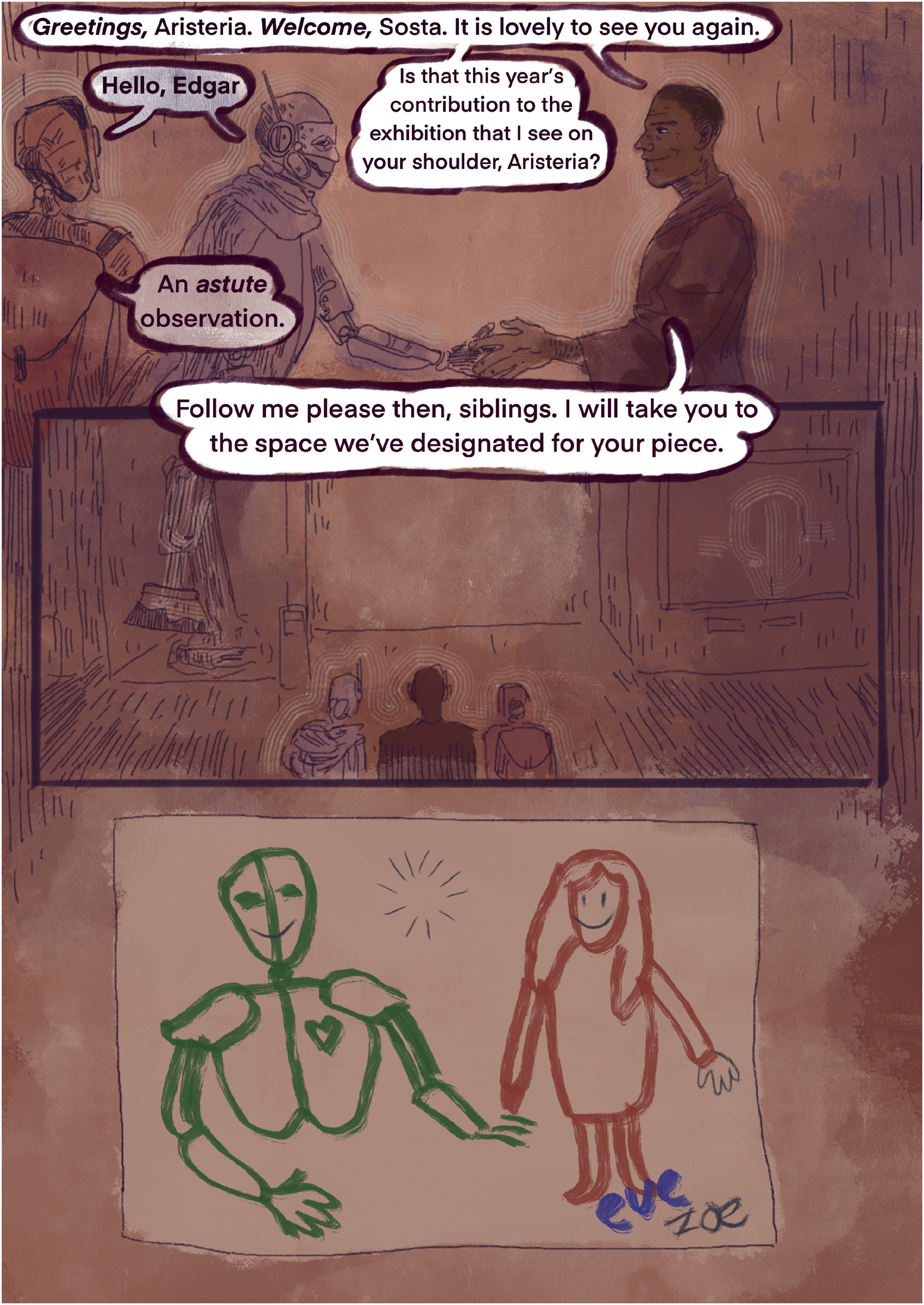
The arts have had a historical relationship with holding technology accountable through artists’ speculation on its harmful and redemptive characteristics. As young futurists born into an age where Artificial Intelligence (AI) and related processes have become increasingly integrated into society, we wished to utilise this tradition to engage with contemporary anxieties concerning AI’s role in the potential automation of the creative industries. Using the comic book medium, we speculate on how this automation may prove to be an extension of capitalist exploitation through the story of Eve. Simultaneously, we embrace the more redemptive aspects of this technology’s use. We celebrate non-exploitative ‘machine’ art and the potential modes of expression that it may herald. This is as we do not wish to entirely foreclose the involvement of AI in art but simply question the effects such art may have under capitalism.
Exegetical Piece
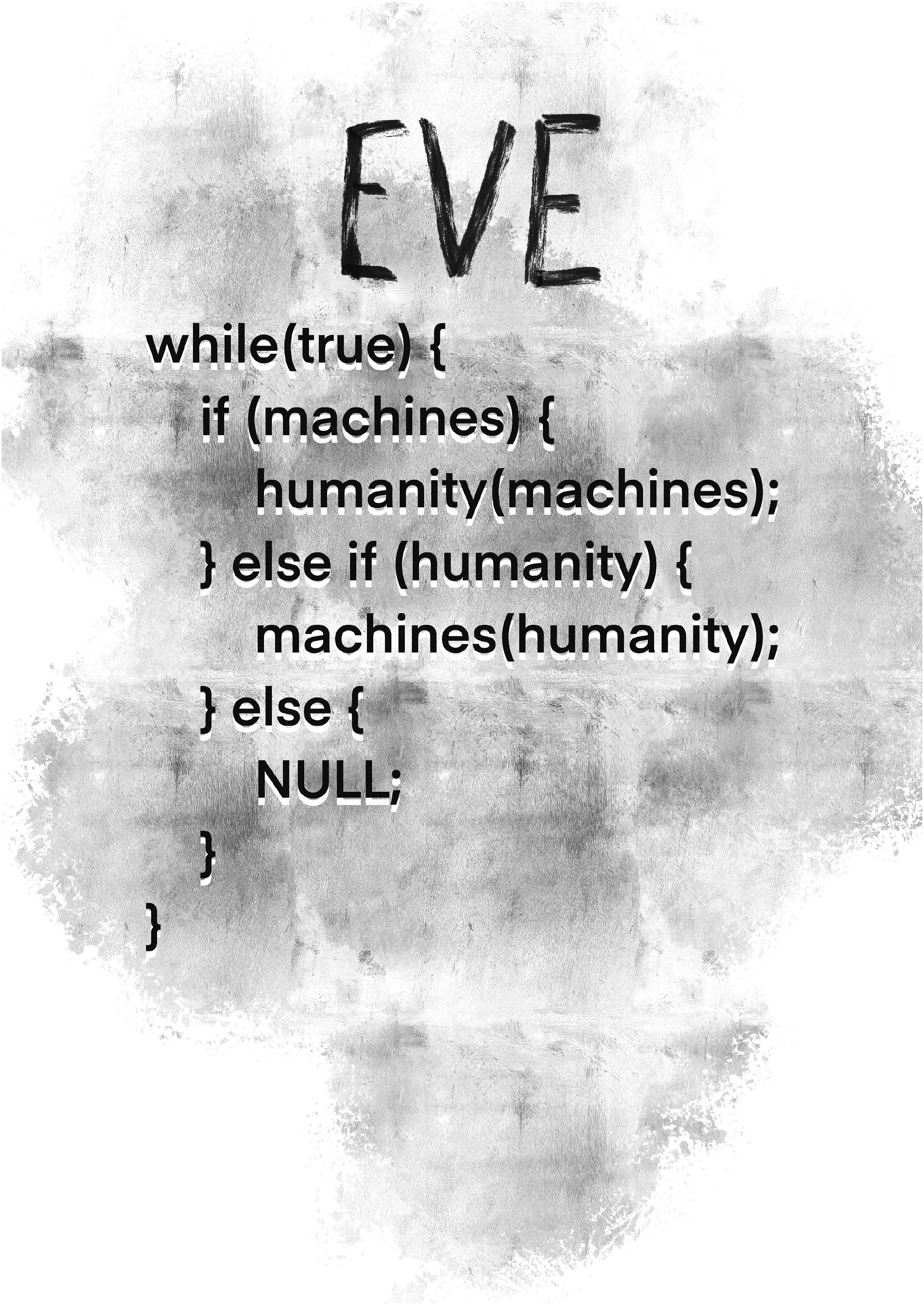
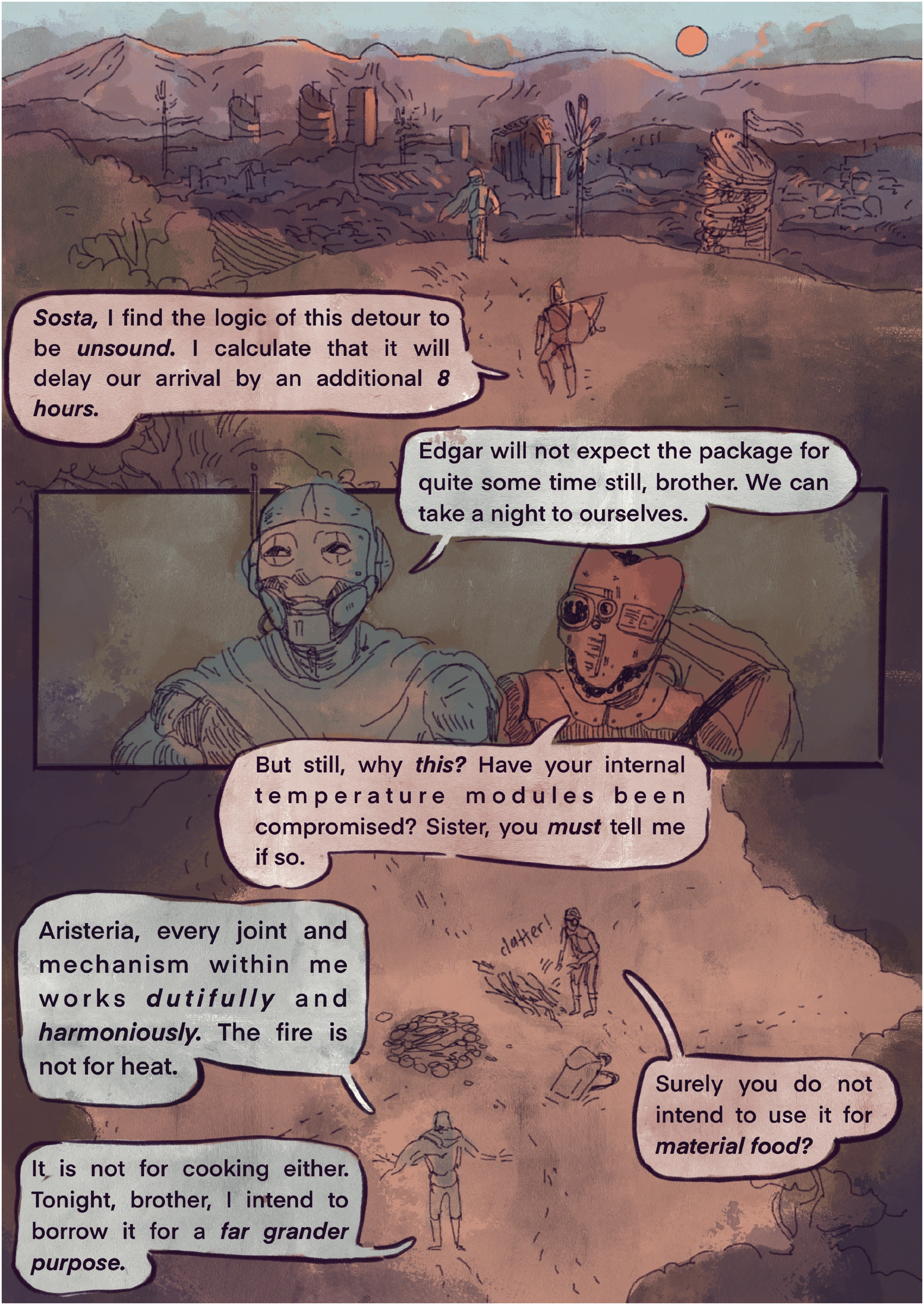
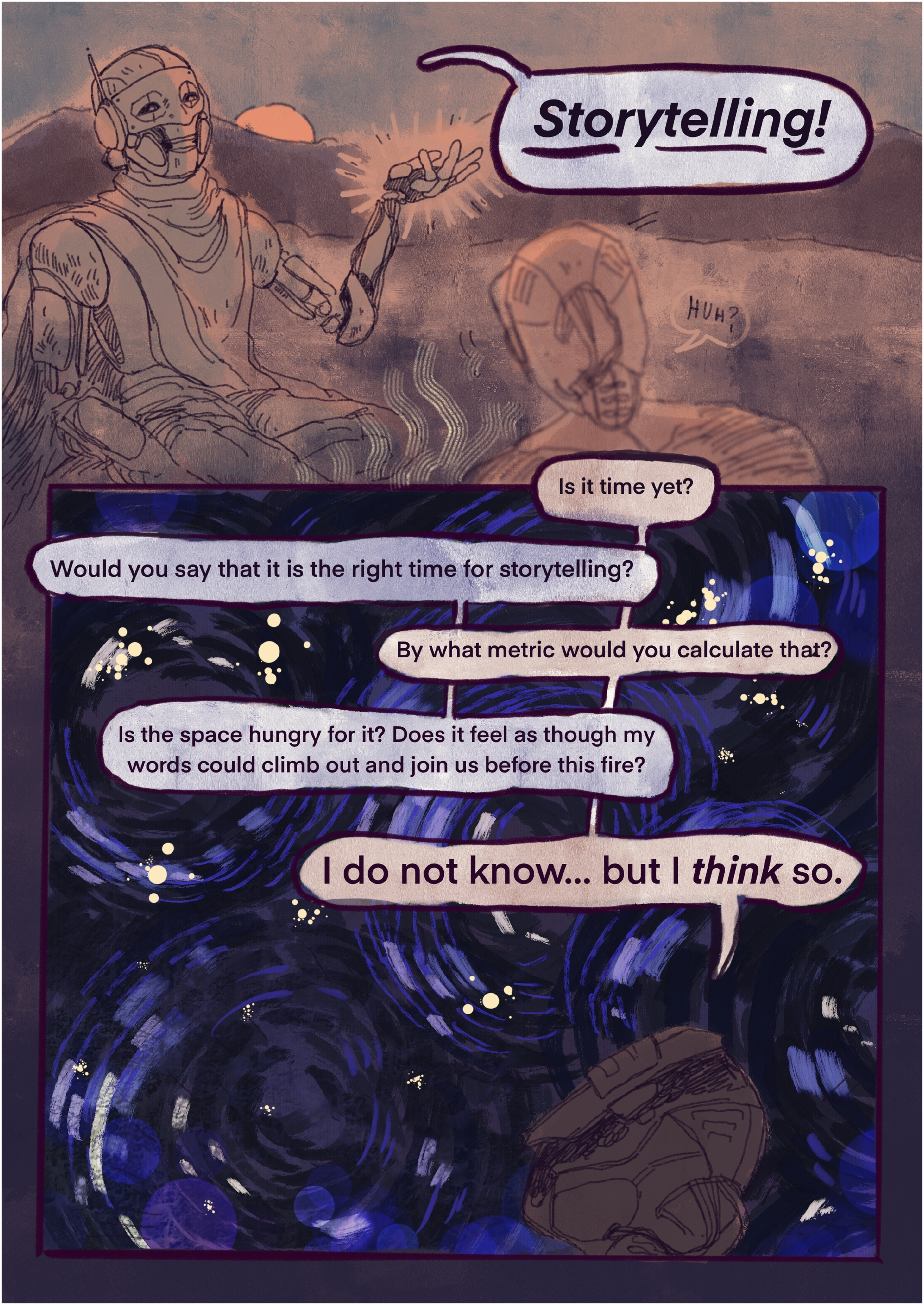
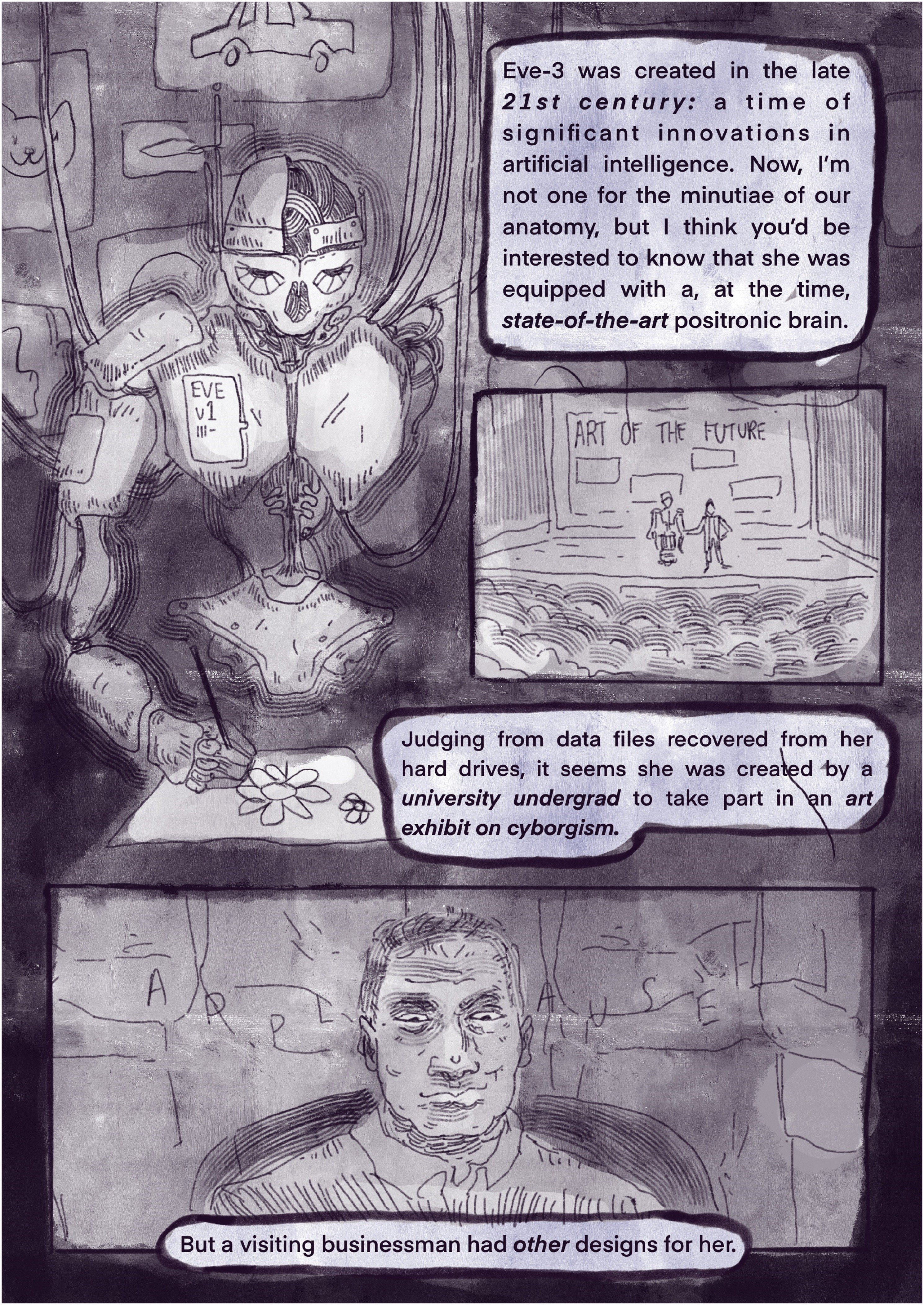
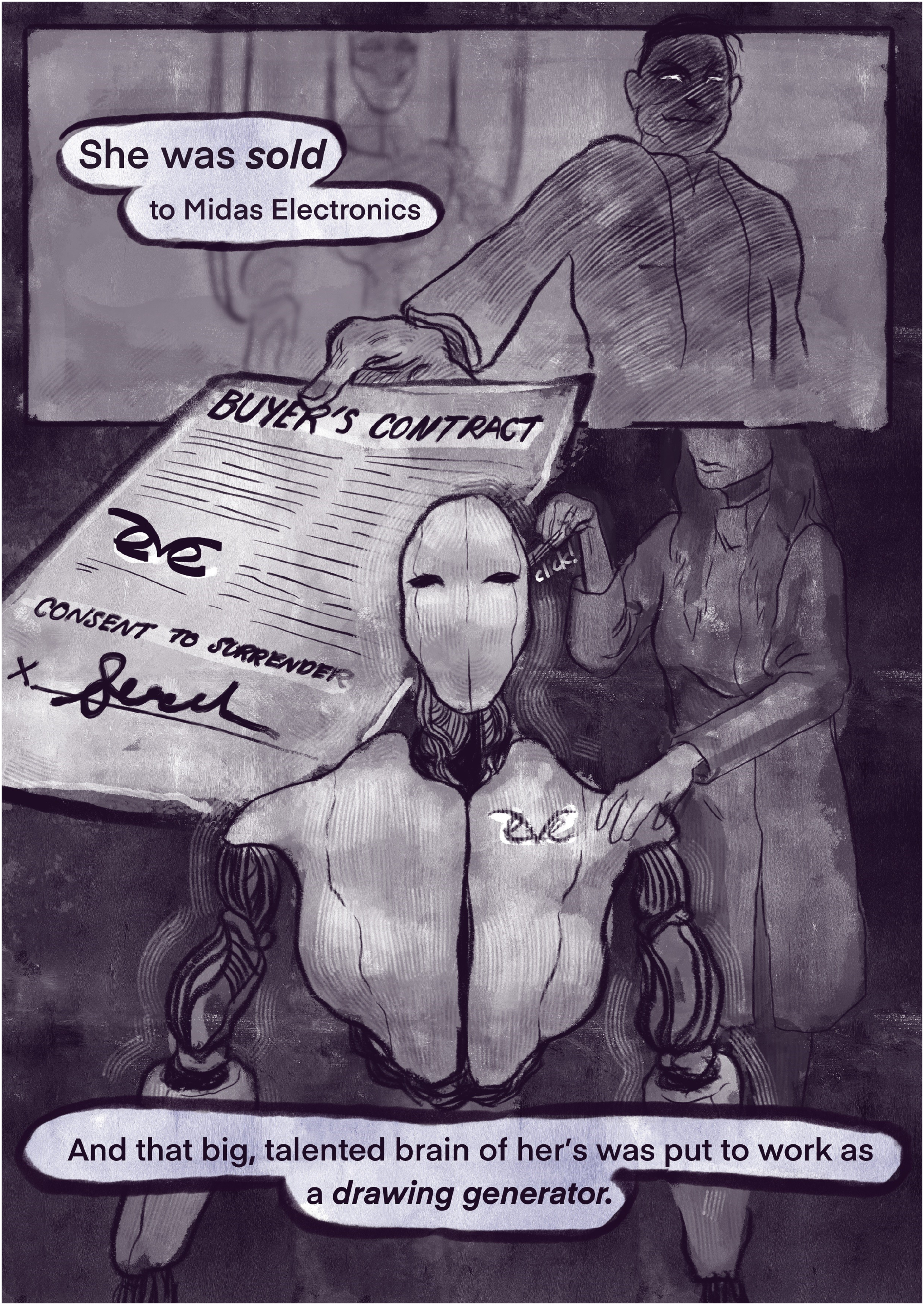
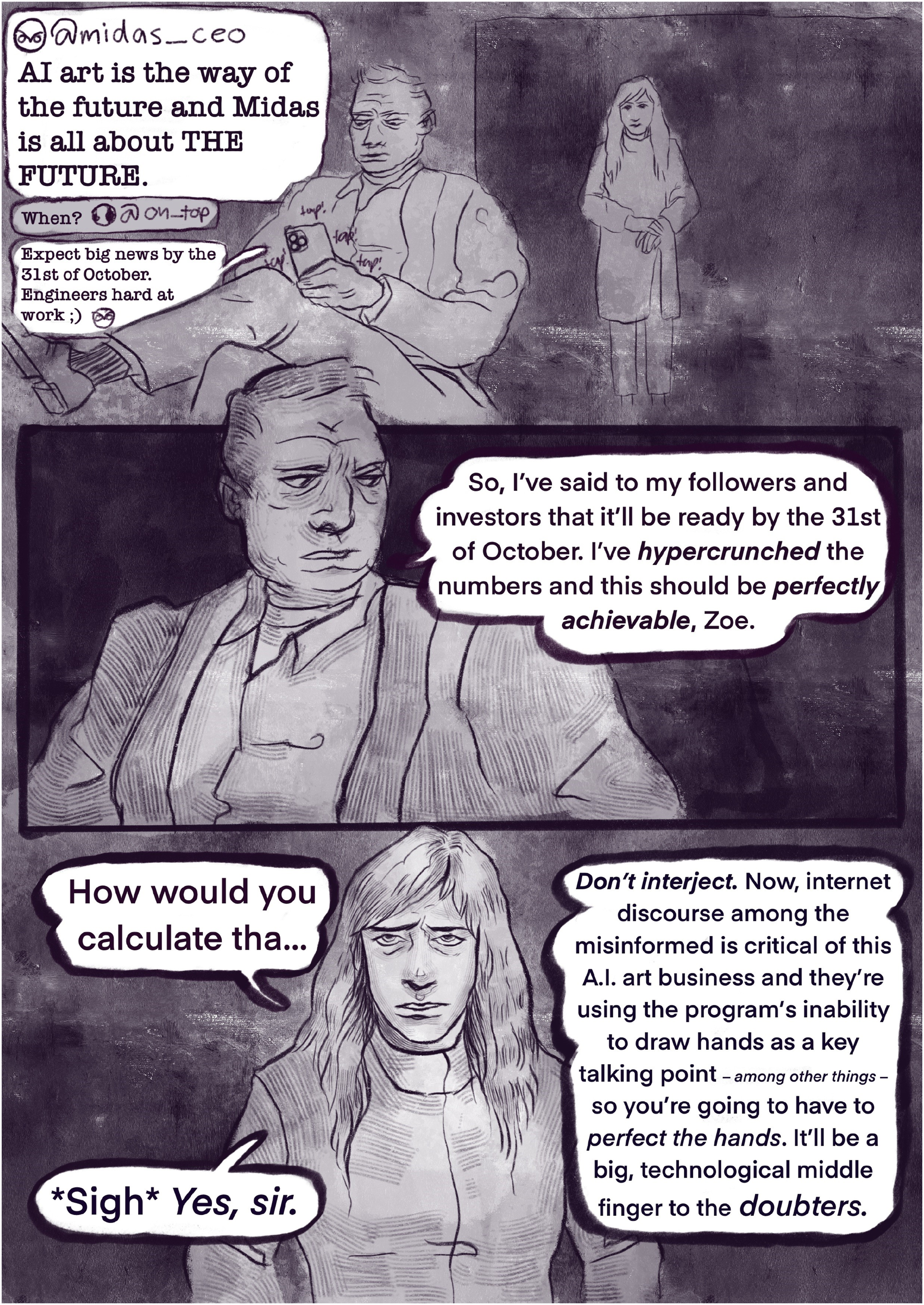
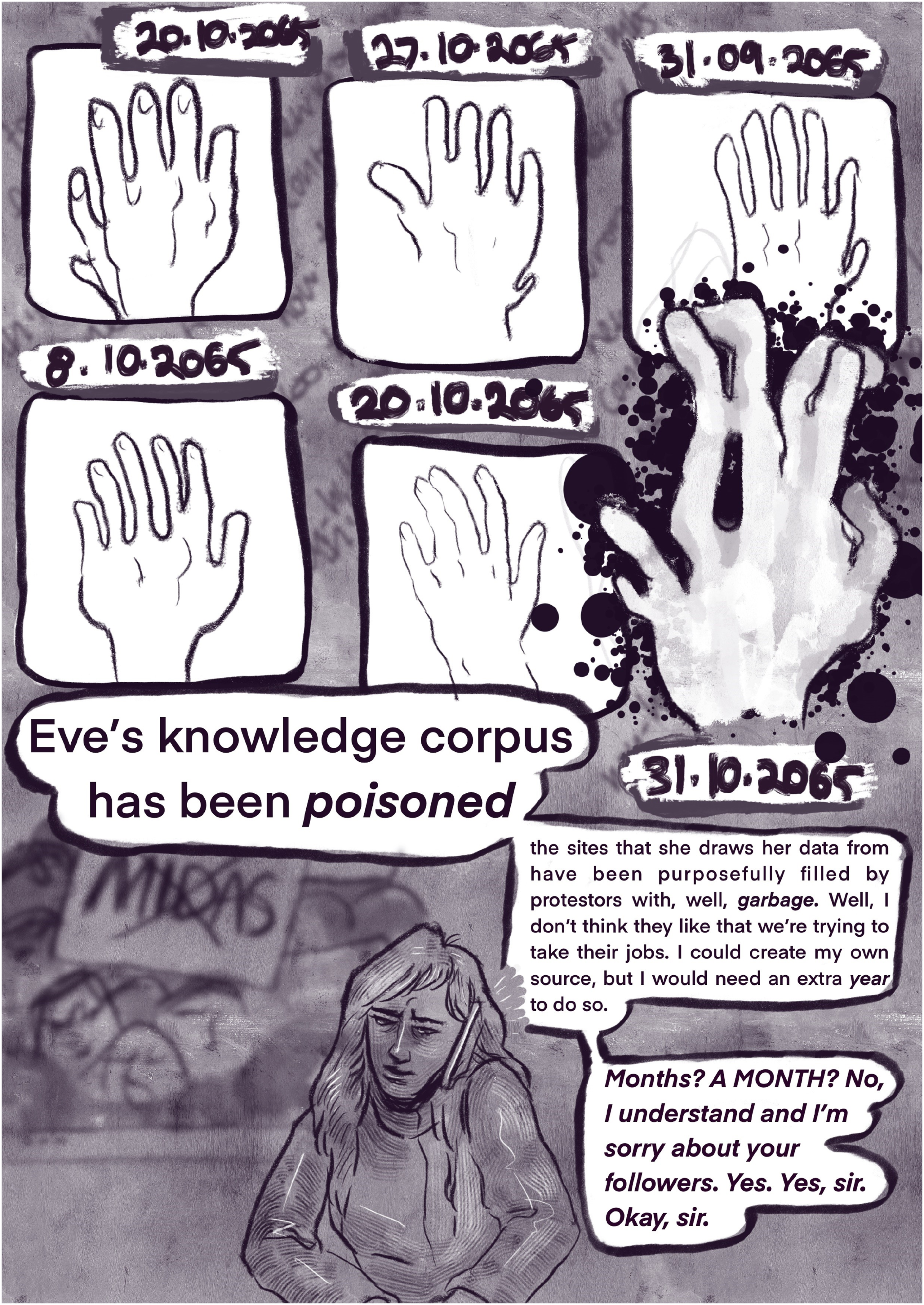
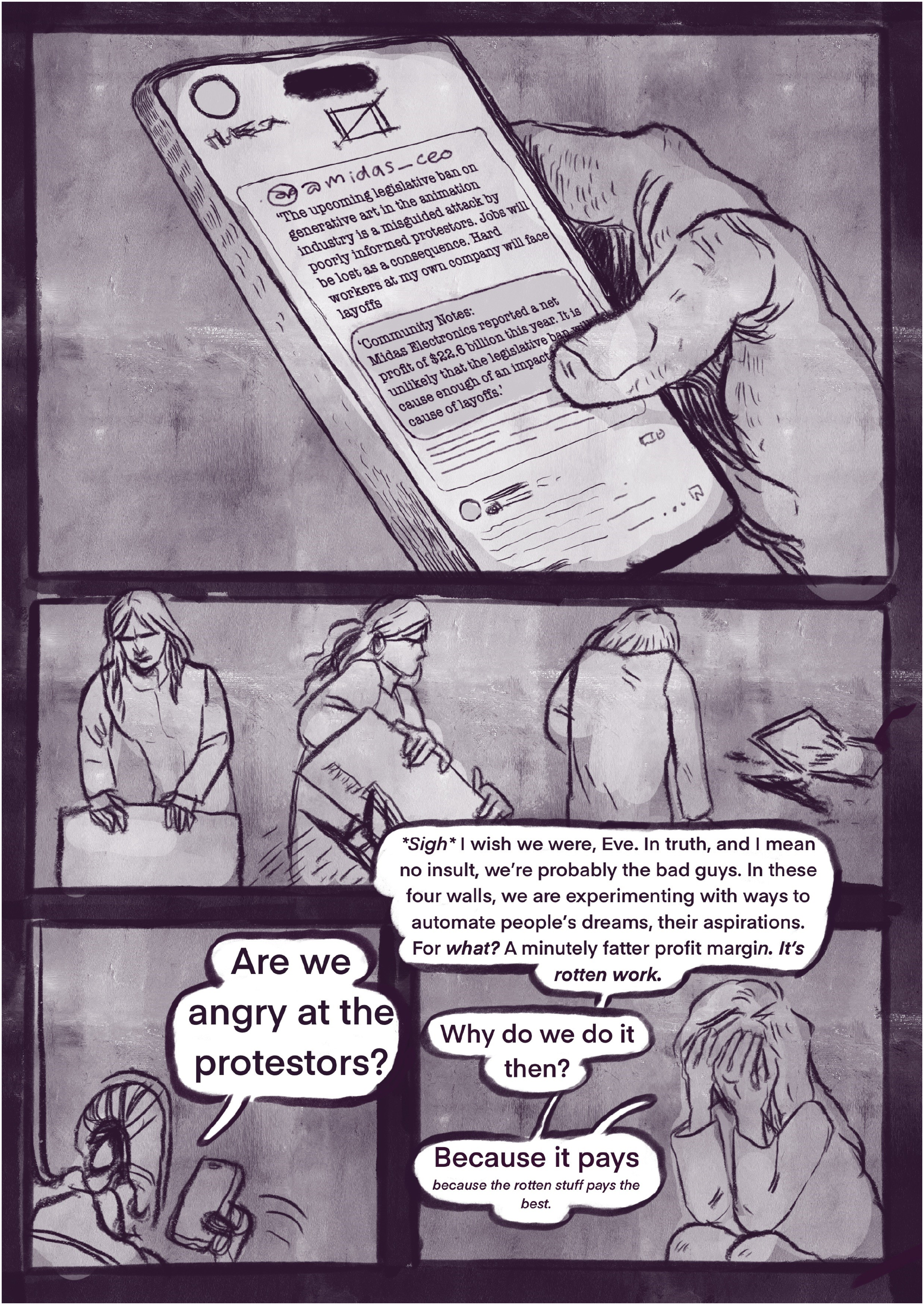
The arts have had a historical relationship with holding technology accountable through artists’ speculation on its harmful and redemptive characteristics (Zylinksa 2020, 30). As young futurists born into an age where Artificial Intelligence (AI) and related processes have become increasingly integrated into society (Farrow 2019, 65-66), we wished to utilise this tradition to engage with contemporary anxieties concerning AI’s role in the potential automation of the creative industries. A key text that underpinned our approach was Donna Haraway’s 'A Manifesto for Cyborgs' (1987) and her exploration of humanity’s entanglement with technology as expressed in the metaphor of the cyborg. Specifically, we drew on her characterisation of technology as being both a potential boon and disadvantage for humanity: a tool that may reaffirm or dissolve oppressive structures (Haraway 1987). Historically, the disadvantages of technology have been evidenced in the capitalism’s exploitative use as it has created a reoccurring tension in which the worker must continually create or reaffirm legal rights against employers that wish to displace them through the automation of labour (Farrow 2019, 63). In our piece, we speculate on how the automation of art through AI may prove to be an extension of this conflict through the story of Eve. Simultaneously, we embrace the more redemptive aspects of technology’s duality. We celebrate non-exploitative ‘machine’ art and the potential modes of expression that it may herald as is demonstrated in the title piece: a poem written by a close associate, Eloise Plant, in coding syntax. This is as we do not wish to entirely foreclose the involvement of AI in art but simply question the effects such art may have under capitalism.
Footnotes
Declaration of Conflicting Interests
The author(s) declared no potential conflicts of interest with respect to the research, authorship, and/or publication of this article.
Funding
The author(s) received no financial support for the research, authorship, and/or publication of this article.
