



Abstract
Pulse oximeters have been essential clinical tools for decades, helping to guide critical clinical decisions across a variety of settings. Despite their seemingly ubiquitous and central role, many clinicians may be unaware of limitations of the technology or ways to improve utility in the clinical settings. In some regions of the world, access to quality oximeters (and oxygen) remains a major challenge. In other regions, issues such as disparate performance and health disparities related to skin color have recently renewed decades old concerns. With upcoming changes to pulse oximeter regulatory frameworks as well as unprecedented amounts of published data on pulse oximeter performance, clinicians and researchers should familiarize themselves with the strengths and limitations of oximetry to ensure optimal implementation to improve safety and outcomes.
This is a visual representation of the abstract.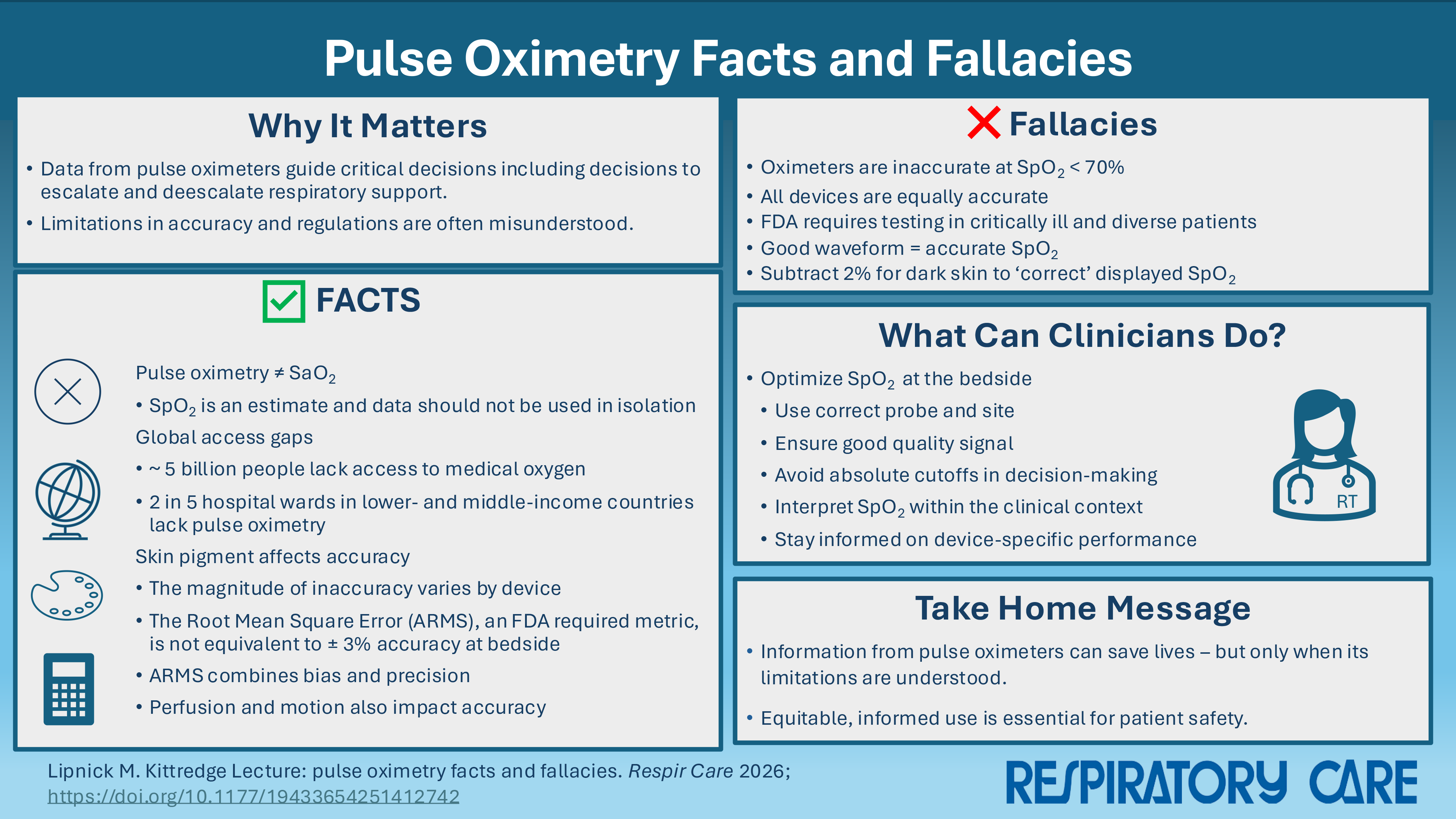
Get full access to this article
View all access options for this article.