




Abstract
A promising response to the college mental health crisis is the development of credit-bearing nature-informed courses supporting student mental health. This has led to improvements in student well-being, while creating gateways for educating undergraduates regarding nature and health. While encouraging, few have utilized courses for fostering mutually respectful dialogue and experiences around diverse epistemological worldviews. Integrating scientific ecological knowledge (SEK) and traditional ecological knowledge (TEK) engages students holistically in the study of mind, body, emotion, and spirit, in addition to field-based practices supporting these complementary knowledge systems. This mixed-methods study examined the effects of a day-long wilderness trip on college student mental well-being over a 4-year period. The experience is nested within a semester-long credit-bearing course designed to teach students the benefits of natural environments. Prior to the trip, students discuss SEK and TEK literature and potential contributing mechanisms. On the day, students participate in a 2.5-hour forest therapy walk, followed by lunch, and self-selected activities. Measures include the Profile of Mood States (POMS) pre-post trip, as well as Photo Stories. From 2021 to 2024, the study found significant decreases in POMS scales of tension-anxiety, fatigue, anger-hostility, depression, confusion-bewilderment, and total mood disturbance and increases in vigor-activity and esteem-related affect. Photo Stories describe students’ growing connections with the natural world via five themes: reciprocity and interconnectedness, discovery, mental well-being, slowness and presence, and cycles. Findings suggest the ability of nature-based courses to not only support student well-being but to bridge gaps in SEK and TEK.
Keywords
Introduction
During the 21st century, the prevalence of mental health disorders among college students has risen globally. From 2009 to 2018, rates of mood, anxiety, and suicide-related outcomes increased alarmingly, with some doubling over the 10-year period (Duffy, Twenge, and Joiner, 2019). Literature indicates multiple contributing factors, including increased urbanization and technology usage. Fifty-eight percent of population globally and 83% in North America live in urban areas (Galan, 2025). Urbanization may result in a corresponding decrease in time in nature, reducing the protective effects of green spaces on mental health (e.g., Gascon, Sánchez-Benavides, Dadvand, et al., 2018; Peen, Schoevers, Beekman, et al., 2010). For example, exposure to outdoor natural environments during childhood is associated with mental well-being during adulthood (Preuß, Nieuwenhuijsen, Marquez, et al., 2019). Haidt (2024) attributes the current mental health crisis to what he calls “The Great Rewiring.” Specifically, Gen Z is the first generation that has gone through puberty with smartphones, becoming more anxious, depressed, self-harming, and suicidal than previous generations (Haidt, 2024). The pandemic compounded this trend, pushing up levels of stress, anxiety, depression, and negative well-being to all-time highs (Zarowski, Giokaris, and Green, 2024).
While recent studies indicate a reversal toward pre-pandemic levels, student rates of mental health disorders remain high, with anxiety (64%) and depression (42%) topping the lists (Center for Collegiate Mental Health, 2024). A Lumina Foundation-Gallup 2024 State of Higher Education Study found that emotional stress (54%) and mental health (43%) were the top two reasons students considered leaving their academic program (Marken, 2024). The Healthy Minds Network (2024) study found that 78% of students said they need help managing their mental health and negative feelings. This may speak to students’ awareness and desire to improve their mental health, even if they are not currently in crisis (Alonso, 2024).
A promising response to the college mental health crisis is the development of credit-bearing, nature-informed courses supporting student well-being. This has led to improvements in student well-being, while creating gateways for educating undergraduates regarding nature and health. For example, Nature Rx courses strengthen students’ belief in the value of spending time in nature, contributing to the reduction of stress and increased social connections (Kiers, Rakow, Parker, et al., 2023). A similar course, The Biology of Stress and Stress Management, utilizes a nature-based ecology of resilience curriculum that significantly decreases students’ perceived stress, while increasing measures of resilience (Nation, Franklin, Cox, et al., 2024). Unlike one-off studies, course-based approaches provide the necessary time and incentive for students to examine the research, while engaging in hands-on, outdoor activities (e.g., Rakow and Ibes, 2022). The 14-week semester also allows students the opportunity to develop their own nature-based practices within a community of learners. While encouraging, few have utilized nature-informed courses for fostering mutually respectful dialogue and experiences around diverse epistemological worldviews. Academic institutions, colleges, and universities emphasize scientific ecological knowledge (SEK) or understandings of ecosystems based on knowledge gained through scientific methods via objective, quantifiable data (e.g., Berke, 2012). In recent decades, the research base around the benefits of natural environments has grown substantially, including experimental studies suggesting that nature exposure plays a causal role in improving short-term affect (e.g., Bratman, Anderson, Berman, et al., 2019; Frumkin, Bratman, Breslow, et al., 2017; White, Alcock, Grellier, et al., 2019). However, within academic spaces, less attention is given to traditional ecological knowledge (TEK) or understandings of ecosystems passed down through generations within indigenous communities, integrating cultural, spiritual, and practical aspects of interacting with the environment (e.g., Berke, 2012). While Kimmerer (2012) cautions against teaching the specifics of TEK due to potential cultural appropriation, the goal is an awareness of TEK as a complementary knowledge base to SEK.
“Exploration of traditional ways of knowing builds capacity for students in regaining a relationship with ecological systems which is based on indigenous principles of respect, responsibility, and reciprocity. It also builds an appreciation for intellectual pluralism, respectful consideration of other ways of framing and addressing a question” (Kimmerer, 2012, p. 319).
This study addresses a gap in previous literature by investigating course-based approaches to nature and well-being that heighten ecological connection by focusing on TEK and SEK as equally valid ways of knowing. Ecological connection is defined as the interdependent, reciprocal relationships and interactions among living organisms and their physical environment (e.g., Odum, 1971; Smith and Smith, 2015). The purpose of this study is to explore how students’ experiences during a day-long visit to a state park support their well-being, while reflecting diverse ways of knowing.
The research questions are:
What effect does a day-long trip to a state park have on college students’ well-being? How does the use of methodologies utilized in SEK and TEK research support diverse ways of knowing?
The Course
Trinity University offers an undergraduate four-credit-hour course, The Natural Environment and Well-Being (see Supplementary Data S1), developed in response to students’ growing mental health needs and the perception that they had “no time” to spend in nature. First offered in 2021, the course carries no prerequisites and contributes toward the major and minor in Environmental Studies, the minor in education, and two general education requirements. This structure affords college students with diverse backgrounds and interests the time and resources to develop meaningful nature practices that support their well-being.
The overarching goal is to improve student well-being by utilizing the benefits of natural environments. Well-being is defined as a positive state of psychological, emotional, and physical health contributing to productive functioning and flourishing (e.g., Benevene, De Stasio, and Fiorilli, 2020; Collie, Shapka, Perry, et al., 2015). The curriculum was designed around two broad questions: What do students need to know (theory), and what do students need to experience (practice) to realize the benefits of natural environments for themselves? This is built on Bandura’s social cognitive theory of learned behavior, with an emphasis on self-efficacy (one’s belief in their ability and skills to succeed in specific environments) and direct reinforcement (learning directly from one’s own behavior via reward or consequence) (Linge, Bjørkly, Jensen, et al., 2021). Tomasso and Chen (2022) suggest that nature engagement and disengagement are multifaceted, learned behaviors, often best learned in supportive social contexts. The sense of community built from common experiences within the course promotes risk-taking, as well as mutual respect for divergent points of view. The theory-practice framework aligns with Kimmerer's (2012) five elements for integrating SEK and TEK: (1) analysis of dual epistemologies, (2) direct, experiential learning, (3) emphasis on intellectual vs. holistic, (4) linking of indigenous knowledge and responsibility, and (5) coexistence of the secular and sacred.
Theory
SEK introduces students to the research based on the benefits of natural environments. This includes four foundational theories around potential mechanisms contributing to the beneficial effects of nature—Biophilia (e.g., Wilson, 1984), Stress Reduction Theory (e.g., Ulrich, Simons, Losito, et al., 1991), Phytoncide Hypothesis (e.g., Andersen, Corazon, and Stigsdotter, 2021; Lew and Fleming, 2024), and Attention Restoration Theory or ART (e.g., Kaplan and Kaplan, 1989). Students discuss examples of original research, including laboratory and field-based studies incorporating correlational and experimental methods. For example, students learn that a 90-min walk in a natural setting reduced self-reported rumination and neural activity in the subgenual prefrontal cortex while a 90-min walk in an urban setting produced no effect (Bratman, Hamilton, Hahn, et al., 2015).
Unlike SEK, TEK knowledge is place-dependent and passed down through generations via tradition and story (Kimmerer, 2013; U.S. Fish and Wildlife Service, 2011). It must also be “authentically generated between people and land” (Kimmerer, 2012, p. 319). Thus, after learning about indigenous knowledge and forest bathing (Page, 2021; Young, 2016), field trips and assignments provide direct experience with the natural world, allowing students to develop their own awareness and understanding. For example, during forest walks, students participate in invitations focused on embodiment and interconnection, ending with a tea ceremony where a cup is returned to the land in reciprocity for the gifts received during the walk.
These dual perspectives are interwoven from the first class. Students discuss stories of the tamed and wild worlds via mother and father archetypes (Page, 2019), then complete an initial “sit spot” on a field trip to a 19-acre tree-covered garden. Sit spots (see Supplementary Data S3) ask students to find a natural space to visit weekly for 30 min, silently noticing nature. For SEK, sit spot benefits focus on restoration from mental fatigue (ART); for TEK, discussion focuses on direct experience as essential for developing an intimate, reciprocal relationship with the land (Page, 2021). Teaching diverse ways of knowing allows students to think critically, viewing SEK and TEK as complementary rather than competing epistemologies.
Practice
Practice is the second aspect of improving student well-being. Emerging adults’ (ages 18–25) natural focus on the self and ongoing identity development creates a lens where knowledge and beliefs are often validated via personal experience rather than secondary sources. It is through experience that students begin connecting with the land and the living world, developing mutual relationships with the earth.
The course provides opportunities for students to spend time in natural environments. Collectively, more than 50% of class time is devoted to field trips to natural spaces. These include four urban parks, a state park, a botanical garden, and a nature preschool; all but the state park are within a 20-min drive from campus. This extended time in nature is possible because of the course structure. The course meets one afternoon a week in a 3-hour block, plus one full day for the trip to the state park. Field trips include a variety of activities designed to mesh theory and practice, while supporting student well-being. Examples include kayaking/canoeing (e.g., White, Elliott, Gascon, et al., 2020), practicing forest bathing (e.g., Park, Tsunetsugu, Kasetani, et al., 2010), walks with foresters (e.g., Passmore, Yang, and Sabine, 2022), and touring a nature preschool (e.g., Roslund, Puhakka, Grönroos, et al., 2020), with all providing a minimum of 120 min of nature contact (White, Alcock, Grellier, et al., 2019).
Outside of class, students complete assignments designed to develop nature-based practices. These include the sit spots described earlier and photo stories, where students take a series of original photos of nature that weave together a visual aesthetic component with linguistic support to demonstrate their growing relationship with the natural world (see Supplementary Data S2). These experiences provide direct reinforcement, helping students develop self-efficacy around the how and why of spending time in natural settings. For example, one student who had spent little time in nature prior to the course wrote, “I have gotten so much more comfortable with getting dirty and getting my feet wet…[and with] the bugs, insects, and animals I come in contact with…I am more of an explorer now, and I have more confidence. I have come to the conclusion that outside walks in nature really do solve everything” (Fall, 2024).
This study explores how students’ experiences of one component of the course, the full-day field trip to the state park, supports students’ well-being and diverse ways of knowing. The inclusion of SEK and TEK as equally valid ecological viewpoints provides an important contribution to the literature. The mixed-methods design supports data collection aligned with SEK and TEK, modeling value and appreciation for dual knowledge frameworks.
Methods
The study took place at a small liberal arts university situated within a large urban context across four 14-week semesters (Fall 2021–24). Combining data from four iterations of the course provides a sample size sufficient to assess the statistical significance of any observed changes in the quantitative measures. Moreover, drawing from multiple semesters of qualitative data ensures that the observed results do not only reflect the experience of a single class of students.
The mixed-methods design utilized participatory action research. Participatory action research is often used in health research where researchers and participants are actively involved in the process together, with the antecedent that “experience can be a basis of knowing and that experiential learning can lead to a legitimate form of knowledge that influences practice” (Baum, MacDougall, and Smith, 2006, p. 854). In this case, students engaged in the study to determine to what extent SEK and TEK research applied to them as a class and as individuals, participating in data collection and interpretation. This design mediated potential challenges of participatory action research, such as bias and engagement, as students were interested in knowing how their own data compared to the literature.
Participants
A total of 111 traditional undergraduate students enrolled in The Natural Environment and Well-Being in Fall 2021–24 and consented to participate in this IRB-approved study. Of these, 74 identified as female, 33 as male, and 4 as nonbinary. The sample included 69 seniors, 24 juniors, and 18 sophomores. The youngest participant was 19 and the oldest was 22.
Location and procedures
The research took place on a day-long field trip to a state park 40 miles north of the university, with 6 hours spent in the wilderness setting. The nearly 2,000-acre park boasts 13 miles of trails and four miles of river frontage lined with century-old bald cypress trees. The park supports a variety of wildlife, including the endangered Golden-cheeked Warbler. The trip occurred on a weekday from late September through late October. During the visits, the park had other visitors but was not crowded, with seasonal temperatures and partly cloudy skies. To ensure confidentiality and minimize potential bias, a member of the research team who does not teach the course visited class prior to the field trip to explain the quantitative data collection and analysis process, which is blinded from the co-instructors. Data were anonymized and stored in compliance with IRB guidelines.
Participants met to complete pre-walk quantitative surveys prior to traveling to the park. Once at the park, they participated in a 2.5-hour forest bathing walk along the river led by Association of Nature and Forest Therapy certified guides, who are also the course co-instructors. Forest bathing is defined as immersing oneself in the forest using the senses (Clifford, 2018; Page, 2021). Both forest bathing and TEK emphasize learning via direct experience and observation to foster deeper understandings and relationships with the natural world. Studies show positive effects of forest bathing on well-being (e.g., Hansen, Jones, and Tocchini, 2017; Song, Ikei, and Miyazaki, 2016). After the walk, lunch was provided, and participants spent the remainder of the day exploring the area. Popular activities included hiking, river wading, relaxing in hammocks, playing frisbee, and reading non-school texts. This self-directed approach supports research on SEK, where studies found benefits of spending time in nature from a plethora of diverse activities (e.g., Frumkin, Bratman, Breslow, et al., 2017; White, Elliott, Gascon, et al., 2020). While at the park, participants were instructed to limit technology usage to taking photos and not bring homework or discuss anything related to school. Before departure, participants completed post-walk quantitative surveys.
Measures
Quantitative and qualitative measures intentionally align with SEK and TEK, allowing descriptions of how each data set does and does not support the other, as well as comparisons to the literature. The Profile of Mood States (POMS) (McNair, Lorr, and Doppleman, 1971), a quantitative instrument with strong reliability and validity, has been used in SEK studies addressing changes in mood in natural settings (e.g., Li, Kobayashi, Wakayama, et al., 2009; Perkins, Searight, and Ratwik, 2011). It is also easily administered and addresses student interest in the effects of nature exposure on anxiety, depression, and stress. On the original 65-item instrument, participants rate items on a Likert scale indicating responses: 0—Not at all, 1—A little, 2—Moderately, 3—Quite a lot, or 4—Extremely. In addition to a general mood indicator, there were six resulting dimensions calculated by summing the ratings for groups of related survey items: Tension-Anxiety (T), Depression-Dejection (D), Anger-Hostility (A), Vigor-Activity (V), Fatigue-Inertia (F), and Confusion-Bewilderment (C). Grove and Prapavessis (1992) validated a 40-item shortened version of the POMS and included a seventh dimension, Esteem-related Affect (E), to capture a more positive aspect of emotion that may not be indicated on the original version. Summing the T, D, A, F, and C subscales and subtracting the V and E subscales generates a total mood disturbance score (TMD). A constant of 100 was added to the TMD score to eliminate negative values (Grove and Prapavessis, 1992). Lower TMD scores indicate a better general mood state.
Qualitative theory and TEK are complementary approaches to understanding the natural world and human–environment relationships; both focus on rich, contextualized, subjective knowledge. For this study, photo story, an adaptation of the research methodology photovoice, was used for the qualitative measure. Photovoice asks participants to take their own images to document, reflect on, and communicate an issue to stimulate social change (Budig, Diez, Conde, et al., 2018). The photo story process is similar, with the end result related less to social than personal change. The name also supports Nabhan’s idea of “restorying” our relationship to the natural world (Kimmerer, 2013). Throughout the semester, participants complete several photo stories. There is no additional prompt for the photo story after the day-long experience, as stories are open-ended, documenting students’ growing connections to the natural world. Students may or may not choose a photo from the full-day park visit, though roughly half do. Photo stories are shared in small groups the week after the trip, mirroring the oral story sharing tradition of many indigenous cultures. From those photo stories focused on the park, 20 anonymized author statements (five from each year) were randomly selected and analyzed using inductive thematic analysis (Braun and Clarke, 2006; Kiger and Varpio, 2020). In place of names, stories were labeled by year and number. For example, 21–3 refers to the third photo story selected from Fall 2021.
Results
Quantitative analysis
Two students did not complete the post-trip surveys and are excluded from the quantitative analysis. Since POMS measures are calculated as the sum of groups of survey items, scores are only available for the students who completed all of each measure’s component items. Of the 109 full participants, 102 answered all 40 questions necessary to calculate the POMS TMD score in both the pre- and post-field trip periods. Sample sizes for the POMs subscales range from 105 to 109. The results presented here reflect the largest possible sample size for each measure, but all results are substantively unchanged when the sample is restricted to the 102 students with complete data for all POMS measures.
Mean scores on the POMS TMD measure and seven subscales were calculated for the pre- and post-field trip periods. Since each participant’s mood is measured at two time points, paired sample t-tests were used to evaluate the statistical significance of the observed difference in pre-post means (alpha = .05). For four of the POMS subscales (Tension-Anxiety, Depression-Dejection, Anger-Hostility, Confusion-Bewilderment), Shapiro–Wilk tests indicate that the distribution of the observed difference in means departs from normality. For these variables, Wilcoxon signed-rank tests were used as a nonparametric alternative to paired sample t-tests.
Hedges’ g for repeated measures was used to evaluate the effect sizes of the pre-post differences. Hedges’ g was selected based on its widespread use in research on adolescent mental well-being (Keller, Chawla, Kayira, et al., 2024). A Hedges’ g value of 0.5 can be interpreted as a 0.5 standard deviation difference in the pre-post POMS measures (Goulet-Pelletier and Cousineau, 2018). A g value of 0.5 is commonly considered to be a moderate effect size, and a g value of 0.8 is considered to be a large effect.
Quantitative results
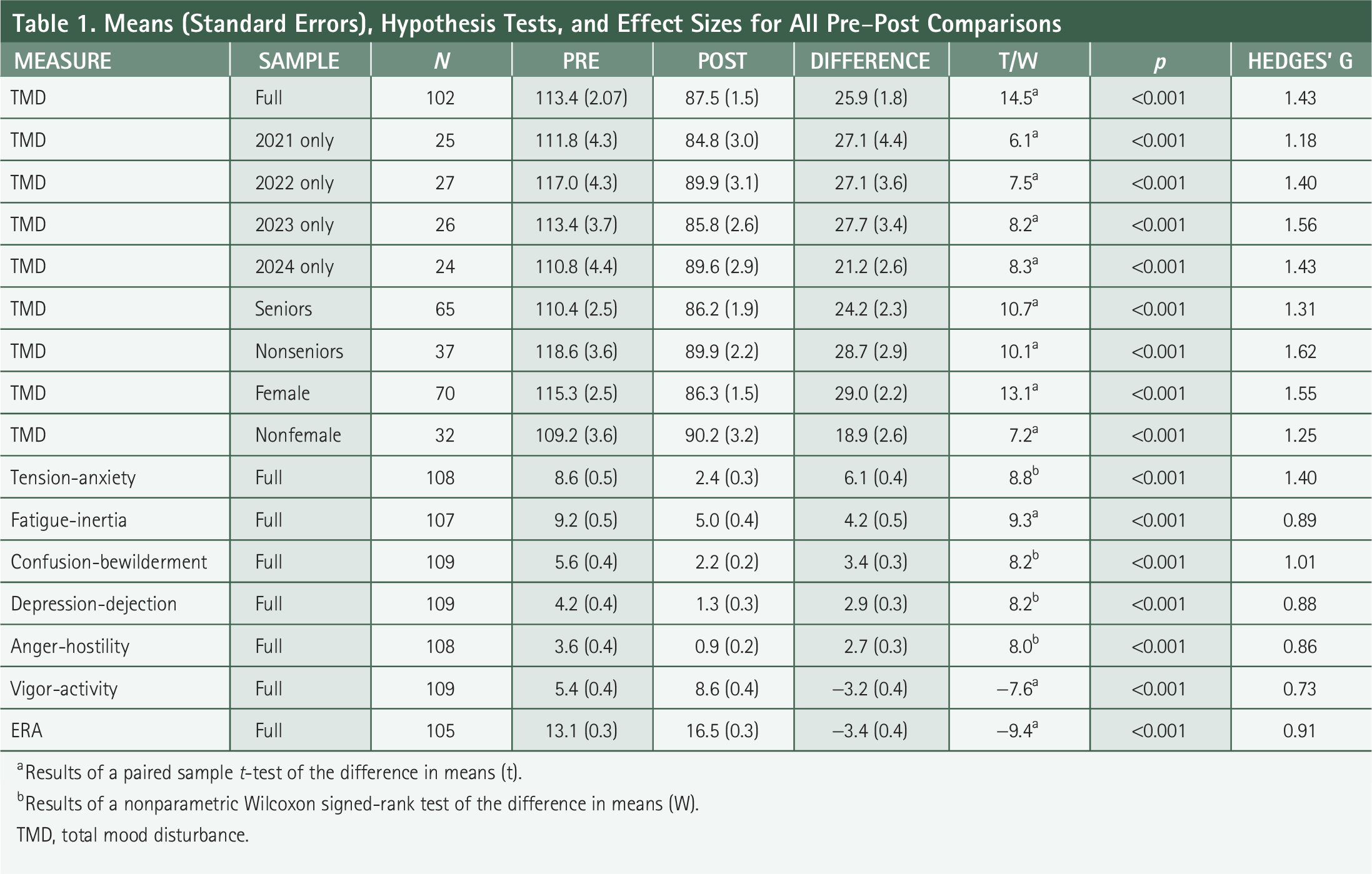
Table 1 displays the quantitative results. Before departing for the field trip, participants’ mean TMD score was 113.4. As illustrated in Figure 1, the mean TMD score decreased to 87.5 at the end of the day-long field trip. This 25.9 point reduction in mood disturbance represents a large effect size (Hedges’ g = 1.43). This difference in means is statistically significant (t = 14.5, p < 0.001). Figure 1 also shows a notable level of consistency in both pre-trip scores, post-trip scores, and pre-post differences across the four semesters of data collection. Overall, 95 of the 102 participants experienced a reduction in TMD after the day-long field trip.
Means (Standard Errors), Hypothesis Tests, and Effect Sizes for All Pre–Post Comparisons
Results of a paired sample t-test of the difference in means (t).
Results of a nonparametric Wilcoxon signed-rank test of the difference in means (W).
TMD, total mood disturbance.
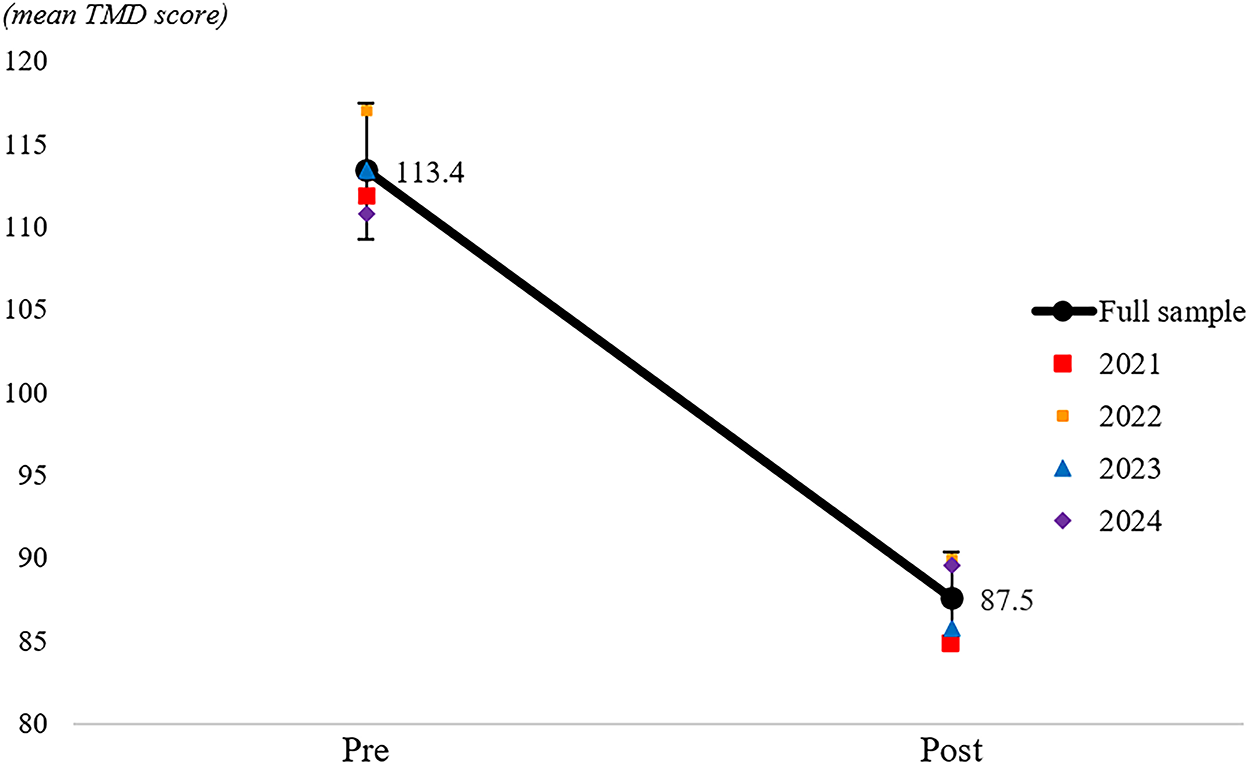
Change in POMS TMD score pre and post field trip (n = 102). Bars represent the 95% confidence interval for the estimated mean TMD scores. POMS TMD, Profile of Mood States Total Mood Disturbance score.
Figure 2 displays the difference in post-minus pre-trip scores for each of the seven POMS subscales. As shown in the graph, participants experienced reductions in Tension-Anxiety, Fatigue-Inertia, Confusion-Bewilderment, Depression-Dejection, and Anger-Hostility. The effect sizes are large, with Hedges’ g ranging from .86 to 1.40. Paired sample t-tests and Wilcoxon signed-rank tests indicate that the observed differences all meet the .05 threshold for statistical significance. Table 1 shows that field-trip participants experienced moderate increases in Vigor-Activity (Hedges’ g = .73) and large increases in Esteem-related Affect (Hedges’ g = .91). Both increases are statistically significant (p < 0.001).
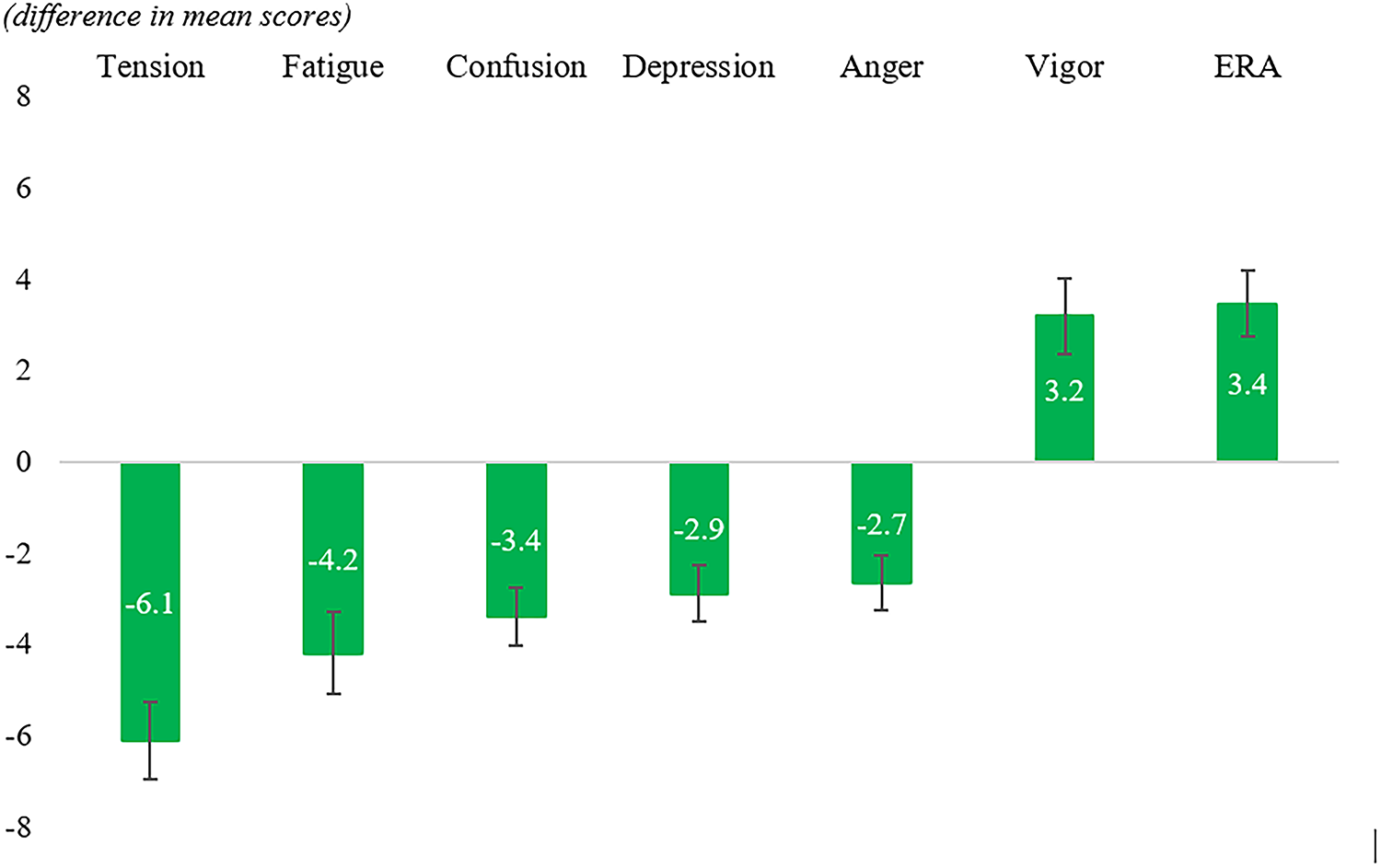
Difference in mean POMS subscale scores (post–pre). Bars represent the 95% confidence interval for each estimated difference in means. POMS, Profile of Mood States.
Sixty-five of the 102 students with complete TMD data are college seniors (64%). It is possible that the benefits of exposure to natural environments vary across student experience levels. To assess this, we control for class year. As shown in Table 1, the pre-post trip change in mean TMD scores is substantively similar for senior and junior/sophomore students (24.2 vs. 28.7). A two-way repeated measures ANOVA test of the interaction between class year and period (pre vs. post trip) shows that there is not a statistically significant difference in the pre-post difference across class years (F(1, 109) = 1.46, p = 0.230).
Female students are overrepresented in the sample (69% of participating students), and so we control for gender identity. Figure 3 displays the pre- and post-field trip change in POMS TMD score for students who identify as female compared to nonfemale students. 1 Before departing for the field trip, female students have a mean TMD score of 115.3, and non-female students have a mean TMD score of 109.2. After the day-long field trip, female students’ mean TMD score is 86.3, and non-female students’ mean score is 90.2. This means that female students experienced a more substantial improvement in TMD than non-female students. A two-way repeated measures ANOVA test of the interaction between gender identity and period shows that this difference is significant at the .05 level (F(1, 109) = 7.31, p = 0.008). This indicates that the estimated effects may be slightly biased by the overrepresentation of female students. However, both female and non-female students experience substantive and statistically significant improvements in mean TMD scores after participating in the day-long field trip (Hedges’ g for female students =1.55, p < 0.001; Hedges’ g for non-female students =1.25, p < 0.001).
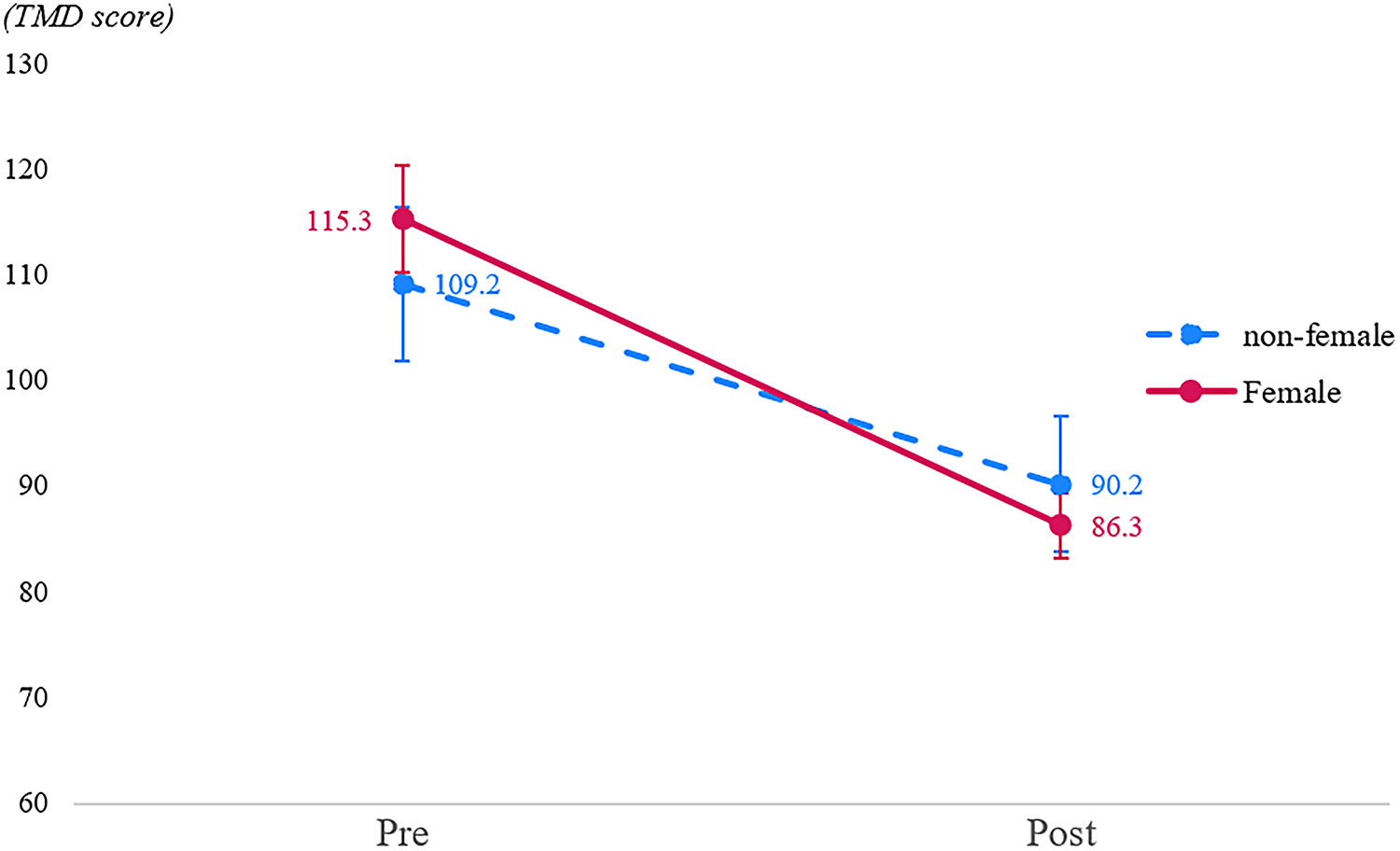
Change in POMS TMD score pre and post-field trip, female (n = 70) vs. non-female students (n = 32). Bars represent the 95% confidence interval for the estimated mean TMD scores. POMS TMD, Profile of Mood States Total Mood Disturbance score.
Qualitative analysis
One course co-instructor and one external research assistant experienced with inductive thematic analysis analyzed the qualitative data. Before beginning, both coded a photo story not selected in the randomization process and discussed key words and phrases leading to each code choice. Once coding was complete, researchers met to identify patterns and themes via discussion and consensus. Given that the photo story prompt was to represent one’s growing connection to the natural world, all 20 selected were coded for connection. Further analysis delved deeper into participants’ descriptions of these connections. Five themes emerged from the data: reciprocity and interconnection, discovery, mental well-being, slowness and presence, and cycles. These were further categorized as primarily focused on SEK, TEK, or a combination.
Qualitative results
Reciprocity and interconnectedness
Reciprocity and interconnectedness were the most common themes, with 75% of participants describing feelings of respect, relationship, reciprocity, and/or interconnection. For example, students shared, “I imagined the joining of land and water as the space between the wild and tamed worlds, highlighting the importance of finding balance…plus the happiness that coexistence brings” (24–3), and “I included a statement about reciprocity because the leaves so easily give back to the land…humans must implement reciprocity in everyday life, as changing roles require responsibility” (21-1). Several referred to the morning forest bathing walk, such as “imagining all those that have stood in the exact place throughout time” (Fig. 4). Six quoted TEK materials from class, with none referring to SEK-related materials.
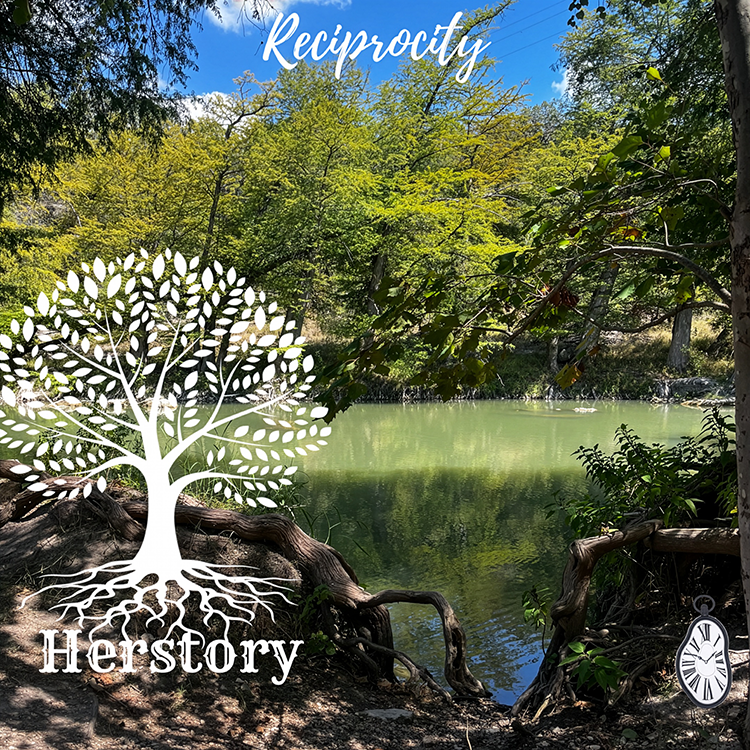
Photo story image, 23-1.
Discovery
Over half of participants’ statements described aspects of discovery. For example, “Being in that hammock and looking towards the water and open space connected me with nature in a way that could not be possible in any of the other parks around [Trinity]” (22-4). A second student noted, “While at the park…I finally understood how important the more-than-human-world is to our mental health and well-being” (22-5). Another discussed “revelations” during the trip that included “the overwhelming connection I felt to all of the history that was attached to the land,” and “[on the forest bathing walk] to imagine roots shooting from our bodies into the ground was a very profound experience for me, and it tied all of my ideas together” (23–1). Of all the themes, discovery touched on both SEK and TEK, with statements sharing discoveries related to self and the more-than-human world.
Mental well-being
Mental well-being, described as both restorative and therapeutic, was mentioned by almost half of participants. For example, rest and restoration produced by the flowing water and natural beauty were credited to soft fascination [ART] (21-4). Another linked a study on creativity and problem solving (Atchley, Strayer, and Atchley, 2012) to their own experience, stating “After spending the day at [park], I went back to working on my engineering problem set and realized I had a lot more ideas on how to tackle each problem” (Fig. 5). Yet another cited a review by Song et al. (2016) on technostress sharing, “By disconnecting from technology, completely turning off my phone, and just sitting there at the park and being in the moment, all my stress disappeared. Becoming one with nature positively impacted my mental well-being and productivity the next week” (22-5). Four referred to specific SEK research, with the only TEK references being the connection to nature.
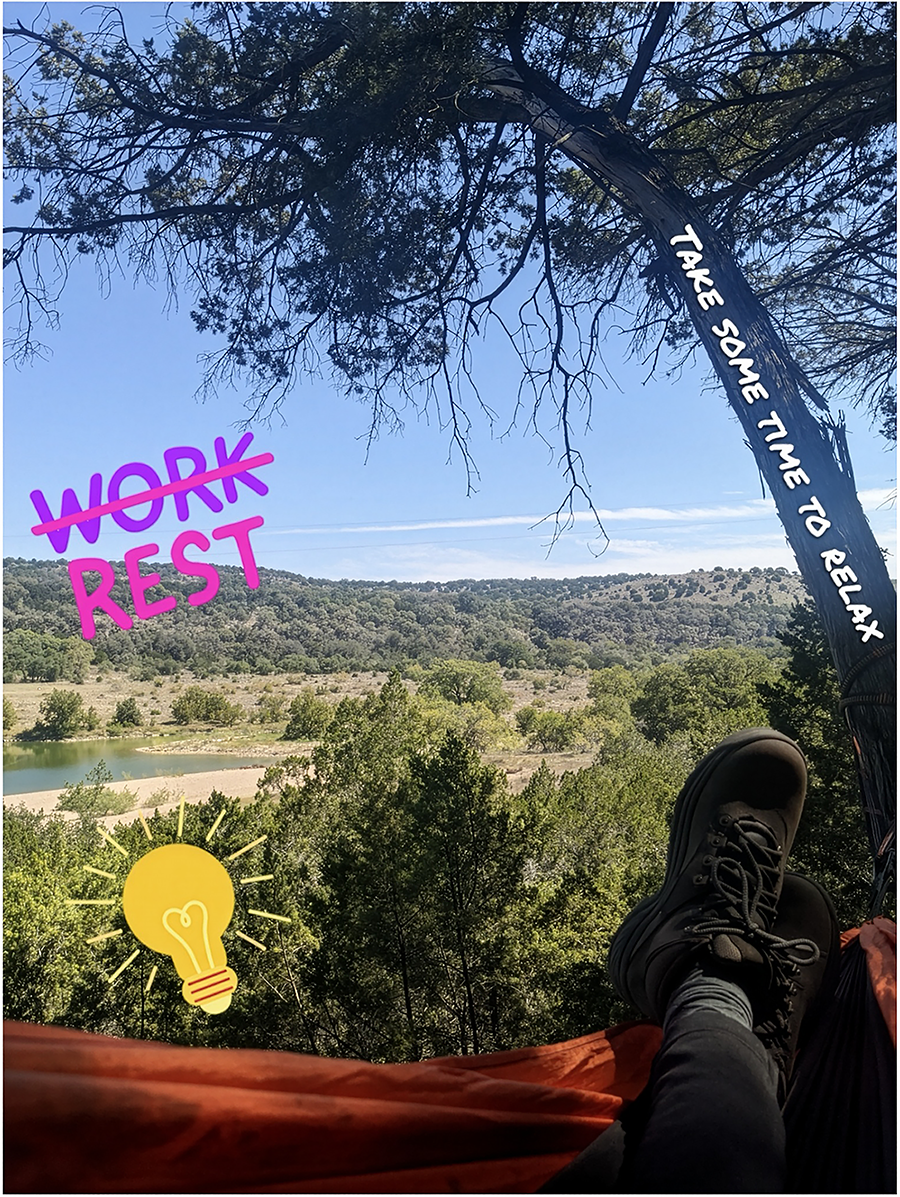
Photo story image, 22-4.
Slowness and presence
Almost half of participants described a sense of slowness and/or presence during the park visit. For example, “the clock represented how warped time felt while I was at the park. It felt as if I had spent an entire day at the park because of how slow everything was moving, but when I got back to campus and everything sped up, I realized there was so much of the day left” (23–1). One student related her photo of a flower floating down the river to “how I have been feeling in nature recently. I have just been present, letting my thoughts and worries wander off…it really is simple. Just go outside and be” (23–2). Slowness and presence are related primarily to TEK, with two statements noting aspects of both SEK and TEK.
Cycles
Just over a quarter of participants referred to cycles. For example, one student described the “celebration of life and death” by hand weaving a quote from the story of the tamed and wild worlds into her image of one green leaf surrounded by brown leaves—“Life and death are bound in an endless cycle and are equally important” (21-1). Similarly, two narrate cycles related to areas of the river, both flowing and dry (21-5; 22-2). Another used arrows to explain the “cycle of connectivity between humans and nature” in the photo (21-2). Cycles related to TEK, with no SEK references.
Discussion
This study examined the impacts of a day-long experience in a natural environment on undergraduate well-being, within a course integrating SEK and TEK. Findings support nature-based pedagogy as a scalable intervention for improving student well-being and fostering ecological awareness. The following summarizes how students’ experiences supported positive mental health outcomes, epistemological shifts, and the integration of TEK with SEK. These findings contribute to the literature and offer important research and practical implications.
Mood outcomes
Quantitative results showed significant reductions in TMD, with a large effect size, indicating improved overall mood after the field trip. Five negative subscales (Tension, Depression, Anger, Fatigue, Confusion) declined significantly, while positive affect (Vigor, Esteem-related Affect) increased. These findings align with Stress Reduction Theory (Ulrich, Simons, Losito, et al., 1991) and ART (Kaplan and Kaplan, 1989), suggesting that natural environments promote emotional recovery and cognitive renewal.
No differences emerged by academic year, indicating broad effectiveness across developmental stages. However, female students showed significantly greater improvements than non-female students, echoing trends in gendered mental health. These outcomes suggest that even a brief, well-structured immersion in nature can yield meaningful mental health benefits.
Epistemological shifts
Qualitative analysis of photo stories identified five emergent themes: reciprocity/interconnectedness, discovery, mental well-being, slowness/presence, and cycles. Reciprocity and interconnectedness, the most frequently cited, reflects students’ ethical and relational framing of nature. These responses drew from TEK-based course readings (e.g., Kimmerer, 2013), indicating a shift toward more-than-human worldviews and away from anthropocentrism (e.g., Page, 2021). Discovery narratives emphasized personal insight and self-efficacy, with students integrating SEK and TEK to make sense of their experiences. This suggests that experiential learning activates both cognitive and affective pathways for ecological understanding.
Mental well-being was a prominent theme, reinforcing quantitative data. Many students cited nature as an avenue for healing and stress relief (e.g., phytoncides, technostress reduction), demonstrating integration of SEK in personal meaning-making. Themes of slowness and presence highlighted the restorative effects of time in nature, aligning with TEK practices emphasizing observation and stillness via direct experience. Gray, Kahn, Lawler, et al. (2025) found that embodied interaction with nature was associated with a greater sense of presence than relying only on visual engagement. This fits with the slowness and presence described in the photo stories. Moreover, students suggested that beginning the day with forest bathing contributed to high doses of nature engagement throughout the day, as the practice helps students slow down and immerse themselves in the present moment. The theme of cycles, though less prevalent, captured reflections on death, transformation, and intergenerational continuity. These narratives drew exclusively from TEK frameworks, suggesting that traditional knowledge supports systems thinking and ecological awareness.
Integration of SEK and TEK
A key finding is how students integrated dual knowledge systems. TEK emerged as the dominant perspective in themes tied to responsibility, presence, and interconnectedness, while SEK often supported physiological and psychological explanations. This suggests that while scientific knowledge lends credibility and explanatory power, TEK offers a relational depth that enhances understanding and ecological awareness. For many students, findings alleviated relaxation remorse or “feelings of guilt for not engaging in work-related demands during off-work time” (Black, DePhillips, and Britt, 2025, p.132). For others, studying the research base in combination with data on their own experiences moved the needle. That said, course evaluations and informal surveys of students who have taken the course over the past 4 years indicate that the day-long trip was the “assignment” from which they learned the most during the semester.
Limitations and future research
One limitation of the study is that students self-register for the course, introducing potential selection bias toward those already engaged with nature. While only 11.7% of enrolled students indicated that they spend “a lot” of time in nature on a pre-course intake survey, it is still possible that students interested in spending more time in natural environments were more likely to enroll. Another potential source of selection bias is the course’s focus on well-being, which could attract students interested or in need of this type of support.
While the observed improvements in mood are consistent with established mechanisms linking exposure to natural environments and well-being, the pre-post design cannot rule out the possibility that the observed results would have been observed even in the absence of the immersive nature experience. This highlights the value of future research that builds on the SEK-TEK framework using a true experimental design. Given the short-term nature of the study, future research should also explore longitudinal outcomes and cross-institutional replication.
Conclusion
Results suggest that nature-based pedagogical interventions can significantly improve student well-being while deepening ecological awareness and connection. The course’s integration of SEK and TEK offers a model for addressing well-being through measurable psychological improvement and the cultivation of relational engagement with the natural world.
Findings indicate that well-designed experiential courses can:
Improve mood and reduce stress across diverse student populations. Promote lasting behavioral shifts such as increased time spent in nature. Introduce epistemological pluralism by valuing both empirical and Indigenous knowledge systems. Encourage affective, cognitive, and somatic engagement through direct contact with nature.
These findings undergird calls for academic institutions to create interdisciplinary, credit-bearing courses that not only serve educational goals but also address critical student health concerns. Creating accessible nature-based courses enhances equity potential, opening doors for all students to encounter nature in a meaningful way.
Authors’ Contributions
Conceptualization and hypothesis by L.A., B.S., C.C., E.B., and J.M.K. Data acquisition by L.A. and C.C. Methodology by B.S., L.A., and C.C. Analysis by B.S. and L.A. Writing by L.A. and B.S. Writing—editing and review by E.B., C.C., and J.M.K.
Footnotes
Acknowledgment
Thanks to Guadalupe River State Park and Texas Parks and Wildlife Department for access to the park for this work.
Author Disclosure Statement
No competing financial interests exist.
Funding Information
Open Access funding was provided by the School of Social Science and Civic Engagement and the D.R. Semmes School of Science at Trinity University.
Supplemental Material
Supplemental Material
Supplemental Material
References
Supplementary Material
Please find the following supplemental material available below.
For Open Access articles published under a Creative Commons License, all supplemental material carries the same license as the article it is associated with.
For non-Open Access articles published, all supplemental material carries a non-exclusive license, and permission requests for re-use of supplemental material or any part of supplemental material shall be sent directly to the copyright owner as specified in the copyright notice associated with the article.
