




Abstract
This scoping review examines how psychology has engaged with environmental justice (EJ) debates over the past 30 years, identifying key contributions, emerging challenges, and future responsibilities for the discipline. Through lexical and temporal statistical analyses of 352 academic publications, the review critically maps the state-of-the-art of psychological contributions to EJ and traces their temporal trajectory. Results reveal that while psychology’s role in EJ has expanded in the last decade, it remains marginal compared with fields such as public health and urban studies. The psychological literature also appears internally fragmented and predominantly framed within health-oriented, distributive paradigms. The review identifies four key contributions of psychology to EJ debates: (1) physical environments, socioeconomic disparities, and subjective experiences; (2) mental health, coping strategies, and the social dynamics of climate change; (3) community engagement, inclusive governance, and participatory research; and (4) transformative, emancipatory, and critical frameworks. Historical trends indicate a recent emergence of climate-related mental health concerns, as well as an increased interest in participatory, qualitative methodologies. Findings also highlight four emerging challenges for psychology: (1) contrasting environmental health risks and social inequalities; (2) healing the psychosocial impacts of environmental crises; (3) fostering socio-ecological equality through participatory research; and (4) acknowledging minoritized voices and vulnerable populations. The review concludes by advocating for psychology to adopt a more politically conscious, culturally responsive, and interdisciplinary stance, actively contributing to the co-construction of just, inclusive, and sustainable futures.
Introduction and Objectives
One of the fundamental responsibilities of psychology is to advance psychological knowledge for the benefit of individuals and society while safeguarding human rights (American Psychological Association, 2021). In recent decades, this mission has expanded to encompass the reduction of various forms of inequality, with the promotion of social justice emerging as a central concern within the discipline (Vasquez, 2012; Arfken, 2013).
This growing interest in social justice inevitably intersects with contemporary environmental challenges, including climate change, pollution, biodiversity loss, and resource depletion. As these challenges disproportionately affect marginalized and vulnerable communities, they raise urgent questions about fairness, equity, and participation. According to Thrift and Sugarman (2019), psychology’s role in these debates can only be understood within the context of its historical relationship with social structures, power, and inequality. (Fraser, 2009) similarly argued that participatory equality—ensuring equitable opportunities for involvement in political, community, and environmental decision making—is essential for addressing contemporary crises.
As a scientific discipline, psychology has long explored the relationship between individuals and their environment, emphasizing the importance of healthy, meaningful connections with the natural world for overall psychosocial well-being (Maddock and Razani, 2024). In recent years, researchers have explored how individuals perceive, experience, and cope with environmental degradation and climate-related threats (Mah, Chapman, Markowitz, and Lickel, 2020; Wang et al., 2023), identifying adaptation processes (Bradley and Reser, 2017) or, conversely, phenomena such as ecological stress (Helm, Pollitt, Barnett, Curran, and Craig, 2018), distress (Wardell, 2020), grief (Cunsolo and Ellis, 2018), eco-anxiety (Clayton, Manning, Krygsman, and Speiser, 2017; Pihkala, 2020), fear (Ojala, Cunsolo, Ogunbode, and Middleton, 2021), and solastalgia (Albrecht, 2006; Albrecht et al., 2007).
In parallel, the concept of environmental justice (EJ) has gained prominence. Since its emergence over four decades ago, EJ has attracted interest from scholars across multiple disciplines and perspectives, gradually establishing itself as a dynamic, multidisciplinary field (Stoett, 2019; Schlosberg, 2013). Early research focused on the unequal distribution of environmental risks and harms among minoritized communities, as well as the broader intersections of environmental issues and social inequality (Walker, 2009, 2012). Over time, the field has expanded to include access to environmental goods, such as green spaces, water, food, and energy resources, as well as analyses of the spatial and power dynamics that shape environmental inequalities (Harris and McCarthy, 2023; Stark, Gale, & Murphy-Gregory, 2023).
Scholars have proposed multidimensional models of EJ to better capture its complexity. Schlosberg (2004, 2007) suggested integrating distributive justice (the fair allocation of environmental goods and harms), recognitional justice (acknowledging the rights and identities of affected communities), and procedural/participatory justice (ensuring inclusive decision-making processes). Further extensions have included restorative justice, which aims to repair harm (Heffron and McCauley, 2017), and capabilities-based approaches, focusing on individuals’ real opportunities to lead meaningful lives in healthy environments (Holland, 2008; Edwards, Reid, and Hunter, 2016). Moreover, diversified subfields of justice with specific foci have developed. Climate justice, for instance, highlights how climate change disproportionately affects marginalized populations, resulting in economic, health, and psychological consequences (Levy and Patz, 2015; Mary Robinson Foundation, 2019). Ecological justice emphasizes the equitable distribution of environmental benefits and harms and critiques exploitative resource use (Clayton, 1996). Energy justice, an increasingly prominent field, addresses inequalities embedded within global energy systems (Jenkins, McCauley, Heffron, Stephan, and Rehner, 2016; Chiara, Terrana, Sarrica, and Brondi, 2025). Spatial justice, especially within urban and green contexts, emphasizes the role of space and special rights in facilitating or hindering social justice (Soja, 2010; Jian, 2021). Each of these perspectives intersects with psychological concerns, as environmental inequalities affect mental health, emotional well-being, and community resilience.
Despite these intersections, recent reviews have highlighted a relative underrepresentation of psychological perspectives within the field. Knoble and Yu (2023), for example, observe that the vast majority of EJ literature is rooted in research areas such as environmental sciences, public health, geography, and law, with limited engagement from psychology. Similarly, our previous work (Brondi, Chiara, and Matutini, 2025) notes the fragmented and peripheral presence of psychological contributions within the broader EJ corpus, identifying it as an area that requires consolidation and conceptual clarity for the future. This article addresses that gap by providing a dedicated, field-spanning review focused specifically on psychology’s contributions to EJ debates. Unlike prior reviews, which either treat psychology tangentially or do not disaggregate disciplinary contributions, this review isolates and analyzes a psychology-specific body of literature.
Specifically, this article builds upon our previous review of EJ literature (Brondi, Chiara, and Matutini, 2025), which analyzed over 7,000 publications spanning diverse disciplines to identify broad thematic pillars within the EJ field and highlight the evolution and multidimensional nature of the concept across academic domains. While that review provided a comprehensive interdisciplinary map of the EJ discourse, the current article narrows the focus to psychology. Drawing on a distinct sub-corpus of 352 psychology-related publications, this review applies lexical and temporal statistical analyses to trace the evolving role of psychology in EJ debates, outlining key contributions, emerging challenges, and future responsibilities. The central objective is to explore how psychological dimensions have entered EJ discourses, when and how this awareness has developed, and what new avenues it may open. It contributes a differentiated understanding of psychology’s unique conceptual framings, highlighting what has been studied and critical blind spots within the broader EJ landscape. In doing so, this review provides a valuable map for psychological scholarship in this domain, thereby orienting future research.
Specifically, it addresses the following guiding research questions:
What are the past and current contributions of psychology to EJ debates? How, and with what implications, does psychological literature on EJ differ from that addressing other justice-related fields (i.e., energy, climate, ecological, green, spatial, urban)? How, and with what implications, does psychological literature on EJ differ from that addressing environmental injustice? Finally, what are the emerging challenges and future responsibilities for psychology within EJ debates?
Data Sources and Methods
To achieve these objectives, this article adopts a scoping review design, as this approach is particularly well-suited to mapping broad, interdisciplinary research landscapes, identifying conceptual boundaries, and highlighting knowledge gaps (Arksey & O’Malley, 2005; Peters et al., 2021). While incorporating techniques that are still relatively uncommon in scoping reviews as innovative tools for synthesis (i.e., lexical and temporal statistical analyses), the primary aim remains consistent with the goals of scoping reviews to explore the extent, range, and nature of psychological contributions to EJ debates.
This scoping review solely relied on the Scopus database as a source for identifying relevant records, for several reasons ( Atkinson, 2018). First, Scopus offers extensive multidisciplinary coverage, including publications across diverse fields, making it more suitable for an interdisciplinary review than domain-specific databases such as PsycINFO for psychology or BioOne for environmental sciences. Second, Scopus is widely recognized for its reliability in indexing authors and sources, offering greater precision than open-access search engines such as Google Scholar. Third, previous research (e.g., Wolsink, 2018) has highlighted that Scopus exhibits fewer systemic errors compared to other broad-scope databases such as Web of Science. Finally, Scopus provides more comprehensive journal coverage, particularly for recent publications, which aligns well with the temporal focus of our review. Thus, given the inherently interdisciplinary nature of the topic and the aim to capture psychological contributions published beyond psychology-specific journals, Scopus provided an appropriate and efficient platform for identifying relevant records across a wide range of disciplines.
The search strategy included broad justice-related terms (i.e., environmental, climate, ecological, energy, green, spatial, urban justice, or injustice) in combination with the root “psycho,” referring to the field of psychology. 1 The search targeted titles, abstracts, and keywords of English-language publications, from the earliest available records to May 2024. The first relevant works were published in 1994.
This approach was adopted to balance specificity and manageability in retrieving a focused corpus of literature related to psychology within EJ debates. Both theoretical and data-driven considerations motivated the choice to include publications addressing both “justice” and “injustice,” as well as works focused on the “environment” or related to other subfields with different foci, such as energy, climate, ecology, spatial, and urban justice. Theoretically, as previously mentioned, EJ literature reveals important nuances among this dynamic and broad field (Stoett, 2019; Schlosberg, 2013). From a data-driven perspective, this choice was supported by co-occurrence analysis and observed recurring patterns within the corpus, which revealed significant differences in retrieved records according to specific search terms. Particularly, among 352 publications, 297 focus on justice, 32 on injustice, and 23 on both; moreover, 265 publications deal with the environment, while 75 other subfields, most notably climate (35), followed by spatial (17), ecological (12), energy (7), green (2), and urban (2) justice-related issues. Only 12 publications cover both domains: eight explore environment and climate, three explore environment and ecology, and one explores environmental and space. Thus, this choice contributed to a more precise understanding of how psychology engages with various dimensions of EJ debates, thereby highlighting potential differences in thematic focus, perspectives adopted, and disciplinary approaches.
The initial search conducted in Scopus returned a total of 359 records. After removing duplicates and records with inaccessible metadata, a total of 352 publications were included in the final corpus: 73.6% journal articles (259), 10% reviews (35), 9.5% book chapters (33), 3.4% books (12), 2% conference papers (7), and 0.5% each for editorials (2), notes (2), and short surveys (2).
Specifically, the publications come from 199 distinct journals and 49 books or conference proceedings. The most recurring journal is the International Journal of Environmental Research and Public Health, with 16 publications, followed by Environmental Justice, which is explicitly focused on the topic under investigation, and Sustainability, both of which have seven publications. Then, Environmental Health Perspectives has six publications, and Energy Research and Social Science, as well as Social Science and Medicine, each have four publications. Interestingly, only 27 journals, less than 15%, explicitly contain the word “psychology” in their title, covering 43 of the 352 publications considered. Examples of these are the American Journal of Community Psychology, Community Psychology in Global Perspectives, Journal of Community Psychology, and Psychoanalytic Study of the Child, each with three publications, as well as American Psychologist, Clinical Psychology Forum, Current Opinion in Psychology, Journal of Environmental Psychology, Journal of Social and Political Psychology, South African Journal of Psychology, and Translational Issues in Psychological Science, each with two publications. Although other journals may adopt a predominantly psychological perspective, regardless of their title (e.g., Group Processes and Intergroup Relations), this preliminary overview of the corpus provides an initial indication of the potentially marginal role of psychology in the literature on EJ.
The temporal distribution of the publications (Fig. 1) shows a progressive increase over time, particularly in the last decade and since 2021.
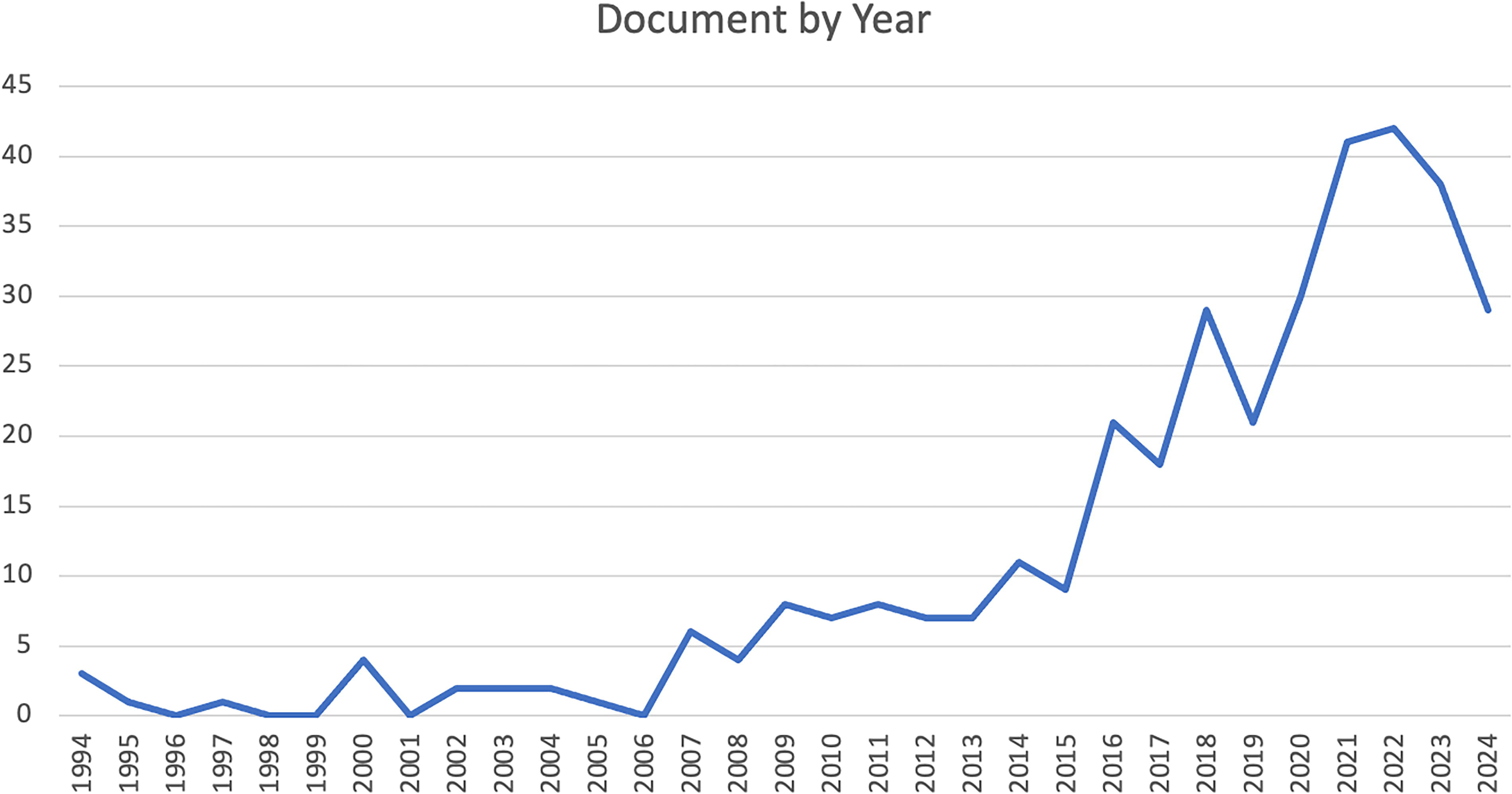
Publications by year.
This review employs an innovative combination of lexical and temporal statistical analyses, which are not commonly found in traditional scoping reviews. These methods are particularly suited to analyzing large, interdisciplinary corpora where thematic boundaries are fluid and not always clearly delineated, helping identify dominant discursive trends and latent patterns. They enable a multidimensional, fine-grained, data-driven mapping that can capture conceptual diversity and epistemic shifts within an evolving, fragmented field, providing both diachronic and thematic insights. These methodological choices therefore reflect a balance between innovation and rigor, aiming to enhance transparency and replicability in examining an underexplored research area.
The abstracts were analyzed using IRaMuTeQ, a software for textual data analysis widely applied in psychological and environmental research (Camargo and Justo, 2013). Abstracts were chosen because they concisely convey a publication’s main objectives, methods, and findings while maintaining standardized linguistic structures, thus making them suitable for lexical statistical analyses (Tuzzi, 2010).
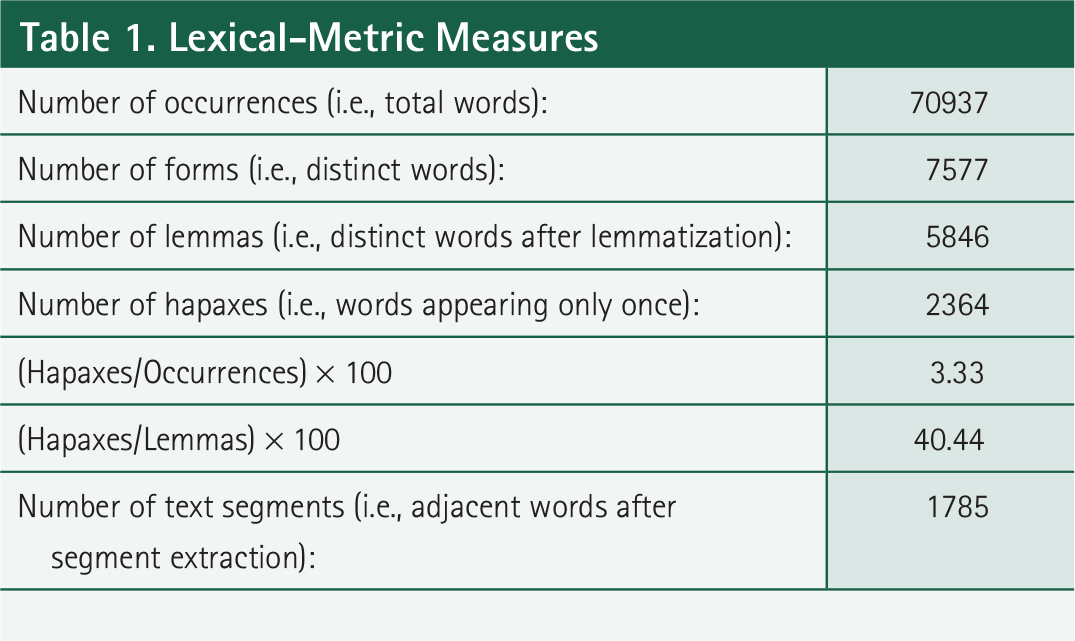
The corpus underwent preprocessing, including normalization (removal of graphical duplicates), lemmatization (conversion of words to their root forms), and segment extraction (identification of recurrent word sequences) (Table 1).
Lexical-Metric Measures
A descending hierarchical classification was performed following the Reinert method (Reinert, 1983). This technique identifies semantic classes based on word co-occurrence patterns, visualized through a dendrogram (Ratinaud and Pascal Marchand, 2012).
Then, a specificities analysis (Bolasco, 2010) allowed for identifying the characteristic words of specific partitions of the corpus with respect to the total corpus. In this case, the partitions represented diverse foci of this review: we compared literature addressing justice versus injustice issues and publications discussing the environment versus other subfields (i.e., energy, climate, ecological, green, spatial, and urban).
Furthermore, a temporal analysis was conducted using a custom R package (Ratinaud, 2014) to visualize the presence of semantic classes and their annual overrepresentations.
Finally, a correspondence analysis (Benzécri, 1973) was conducted to map relationships among semantic classes within the factorial plane.
Results
Key contributions for psychology in EJ debates: The state-of-the-art
The descending hierarchical classification identified nine semantic classes, which classified 91.20% of the text segments (1628), thus capturing thematic consistencies across the corpus. The dendrogram (Fig. 2) illustrates their mutual arrangement and relative weights. Individually, each class represents a thematic area within psychology and EJ discourses. However, examining the dendrogram’s hierarchical structure (i.e., branching and proximity among classes) reveals how these areas are either closely connected, even semantically, or more distant from one another. Observing this structure enables the interpretation of classes within broader groupings, which we have chosen to read as four key contributions of psychology to EJ debates. The first, clearly distinct, includes Classes 1 and 8, which are the largest in terms of the number of text segments. The remaining seven are split into three contributions: the second with Classes 5 and 6; the third with Classes 3, 4, 7, and, though more detached, Class 9; and the fourth composed solely of Class 2. To mitigate personal bias in these interpretative steps, both authors independently reviewed the classes and their broader groupings and discussed any discrepancies until consensus was reached. Each thematic area and key contribution are detailed in the Supplementary Appendix, which lists typical sources, related disciplinary areas, and representative publications.
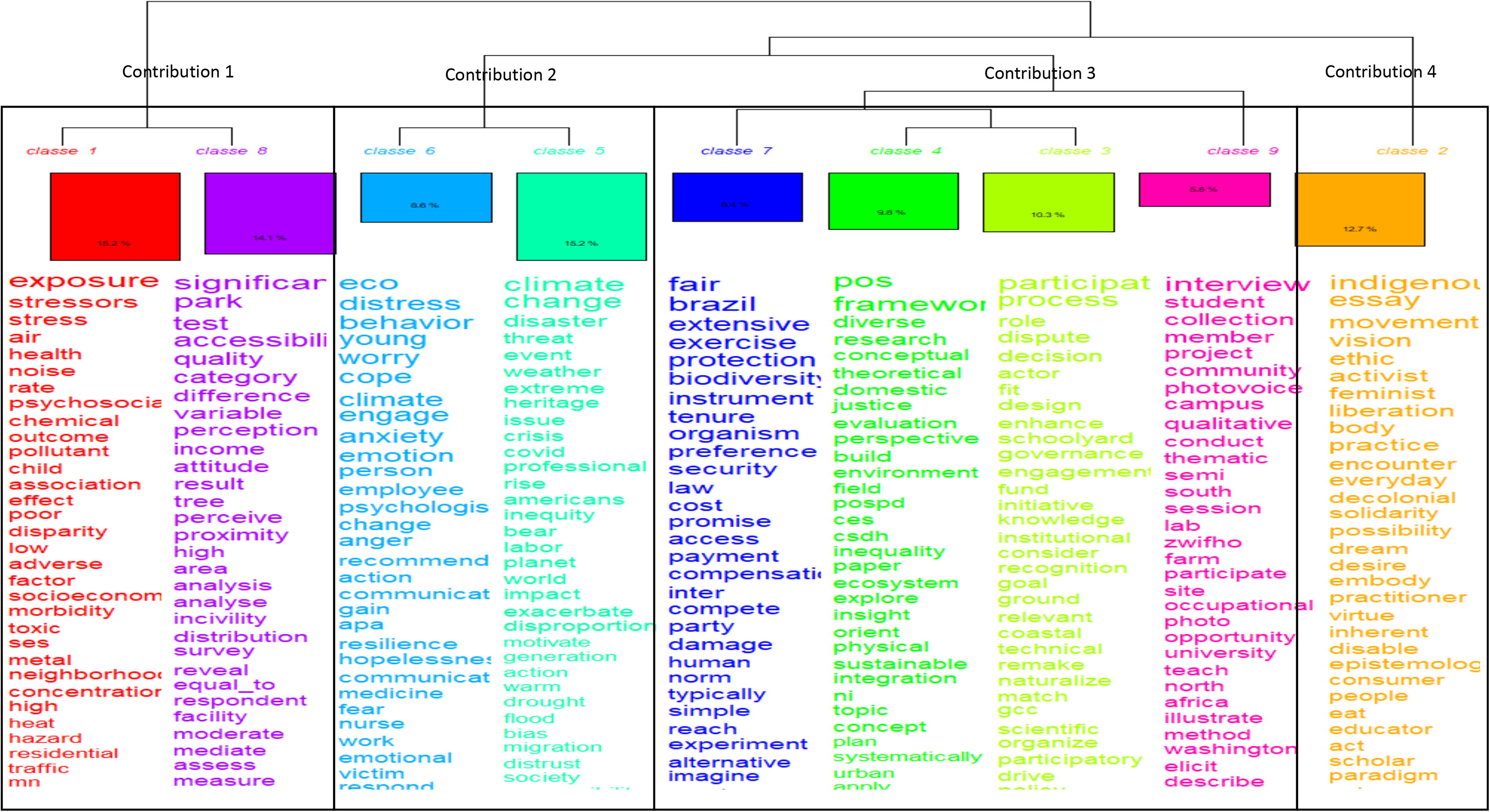
Dendrogram summarizing semantic classes and key contributions. For each class, the percentage indicates the proportion of text segments included. The listed words are the most representative, as determined by the chi-square test.
Contribution 1: Physical environments, socioeconomic disparities, and subjective experiences
This contribution analyzes how both objective and perceived environmental inequalities affect physical and mental health, particularly in vulnerable and socioeconomically disadvantaged groups, addressing the intersection of material and symbolic EJ dimensions. Psychology acts as a mediator between the environment and health, connecting environmental conditions with individual experiences and well-being, and offering insights into the cognitive, emotional, and perceptual dimensions of exposure and access. Specifically, this grouping consists of Class 1 (Exposure to environmental stressors and health disparities) and Class 8 (Perceived environmental quality and social disparities), as detailed in the Supplementary Appendix.
Contribution 2: Mental health, coping strategies, and social dynamics of climate change
This contribution articulates psychosocial and sociocultural dimensions of environmental and climate crises. It acknowledges the importance of mental health and emotional dimensions in environmental experiences, especially among youth and other vulnerable populations, as well as the need for culturally and socially situated analyses of the structural processes that drive the unequal distribution of environmental risks and resources for response. Psychology serves as both a promoter of clinical and mental health and a social and cultural actor. Its role is to recognize emotional distress, to support adaptive coping strategies, and to understand the broader sociocultural dynamics of climate anxiety and resilience. The psychology’s contribution is also to frame collective narratives and enhance social cohesion in times of environmental disruption. This contribution includes Class 6 (Emotional and psychological responses to climate change) and Class 5 (Extreme consequences and related social impacts of climate change).
Contribution 3: Community engagement, inclusive governance, and participatory research
This contribution explores how individuals, communities, and institutional actors engage in EJ decision-making and everyday practices. It also highlights the importance of qualitative, visual, and participatory methods in investigating lived experiences, perceptions, and local agency. Community psychology research that focuses on environmental issues supports participatory methodologies, values subjective experiences and relational dynamics, and interprets cognitive, emotional, and identity processes. Psychology thus contributes to inclusive governance, participatory action, and the co-construction of knowledge in EJ contexts. In detail, in Class 7 (Human–nature relationship in legal and governance frameworks), in Class 4 (Conceptual frameworks and theoretical perspectives on urban spaces), in Class 3 (Participatory governance and community-led environmental decision making), and in Class 9 (Participatory and qualitative approaches for voicing inequalities).
Contribution 4: Transformative, emancipatory, and critical frameworks
Finally, this contribution brings together publications informed by decolonial, feminist, and Indigenous epistemologies. It challenges mainstream paradigms, advocates for epistemic justice, and promotes alternative ways of knowing and acting in relation to environmental issues. Here, psychology is invited to critically reflect on its assumptions and to support emancipatory practices and collective agency in marginalized communities. This contribution includes Class 2 (Decolonial, feminist, and Indigenous epistemologies).
Key contributions based on specific foci: Justice versus injustice and environment versus other subfields
Further insights emerge from an in-depth corpus analysis based on the presence or co-occurrence of the terms used in document retrieval. While all selected publications reference psychology in the title, abstract, or keywords, the search combined two additional sets of terms, representing the distinct foci of this review: justice or injustice and environment or other subfields such as climate, ecological energy, green, spatial, and urban justice-related issues.
The specificity analysis identified the words that are statistically more frequent in one subset than in another. In “justice” literature, characteristic words include climate, green, relate, population, issue, promote, disparity, change, noise, vulnerability, urban, and health, reflecting subfields such as climate and urban justice, population inequalities, and health promotion. In “injustice” literature, terms evoke relational (sex, breastfeeding, partner), temporal (age, youth), and systemic inequality dimensions (disadvantage, inequity, systemic, social), focusing on unequal access to work, food, and safe conditions. Notably, this literature engages more with psychological dimensions, featuring terms such as stress, trauma, awareness, and experience.
As shown in Figure 3, the justice-oriented literature is broadly distributed across the nine semantic classes, with a slight peak in Class 7 (Human–nature relationship in legal and governance frameworks) and Class 9 (Participatory and qualitative approaches for voicing inequalities), and a marked underrepresentation in Class 2 (Decolonial, feminist, and indigenous epistemologies). The injustice-oriented literature shows the opposite pattern—albeit with some differences in chi-square values—concentrated in Class 2 and less present in Classes 7 and 9.
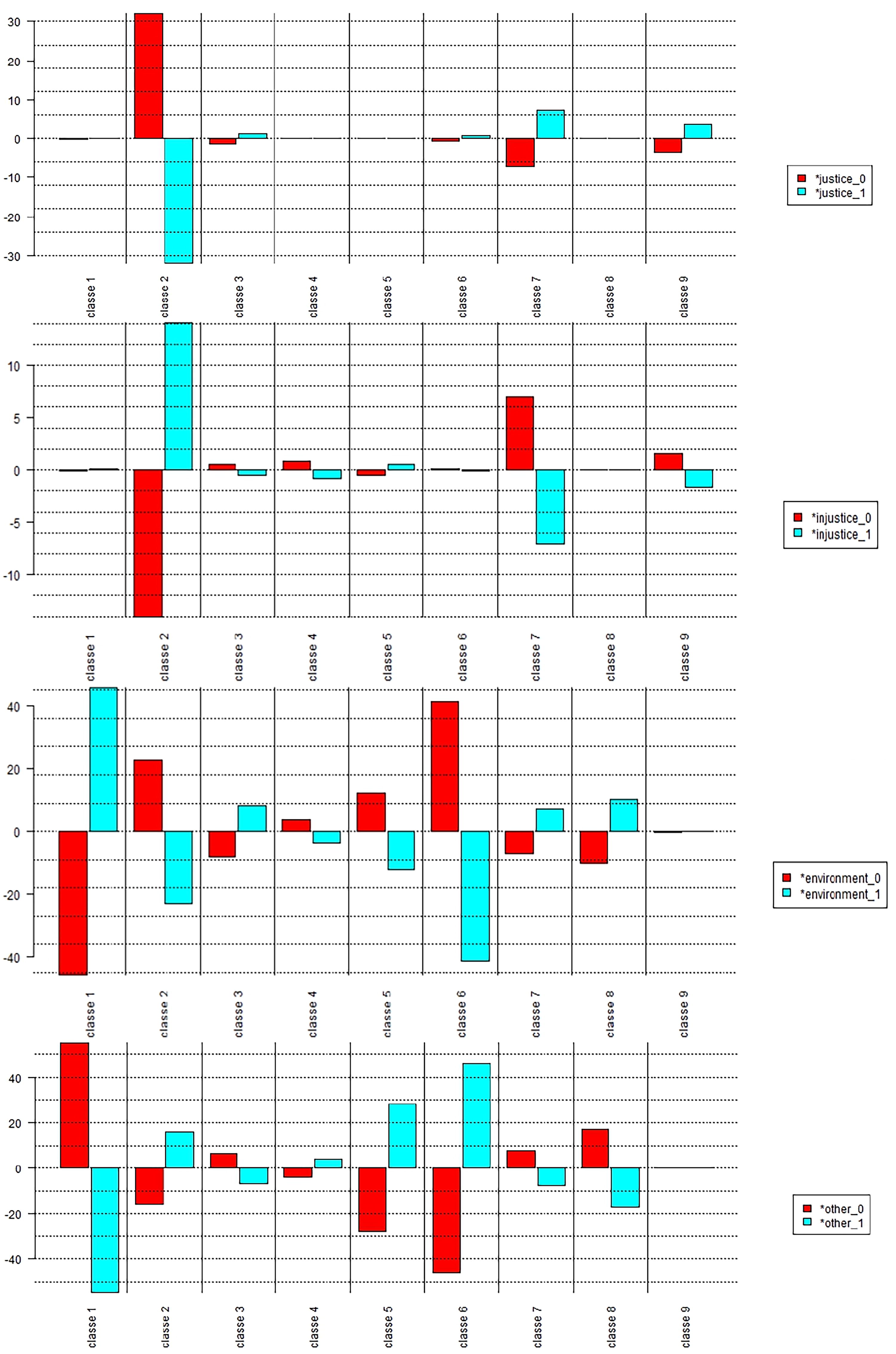
Specific foci in the review across semantic classes. Each of the four graphs displays the statistical weight of under- or overrepresentation of a specific focus within each class. This is done by comparing publications that include the focus (indicated by a 1) to those that do not (indicated by a 0).
Further distinctions arise when comparing publications addressing the environment with those in other subfields. The characteristic words of the environment-focused literature reference indicators to assess place quality (e.g., environment, environmental, quality as well as air, water, noise, pollution, tree, park, green, chemical, toxic, and more broadly, stressor), alongside terms related to their measurement (study, outcome, assessment, percent, value, datum, rate, compare) and to risks, actual or perceived, associated with exposure to environmental hazards (exposure, risk, hazard), with particular attention to health outcomes (health, disease, asthma). The theme of justice is less salient, emerging through terms such as equity, disparity, difference, disproportionately, and cumulative, and is typically framed within a distributive perspective that is attentive to vulnerable socioeconomic or ethnic groups (community, neighborhood, resident, socioeconomic, poor, census, racial, color). By contrast, the characteristic words of publications addressing other subfields are sector-specific (climate, change, spatial, energy, ecological, carbon, global, space, pos—referring to public open space), alongside justice-related terms (justice, right, inclusive, responsibility, inclusion, diversity). This body of literature also highlights specific social groups, especially individuals with disabilities (disability) and young people (youth, young, student), emphasizing their agency (voice, action, activism, protest), typically within a recognition-based justice perspective. Notably, this subset also includes explicit psychological references, with terms such as psychologist and psychological, which, alongside anxiety, point to the clinical dimensions of the discipline.
In terms of semantic classes (Fig. 3), the environment-oriented literature shows a marked overrepresentation in Class 1 (Exposure to environmental stressors and health disparities) and—to a lesser extent—in Class 8 (Perceived environmental quality and social disparities), Class 3 (Participatory governance and community-led environmental decision making), and Class 7 (Human–nature relationship in legal and governance frameworks). In contrast, the other subfields-oriented literature is noticeably overrepresented in Class 6 (Emotional and psychological responses to climate change) and—less firmly—in Class 5 (Extreme consequences and related social impacts of climate change), Class 2 (Decolonial, feminist, and indigenous epistemologies), and Class 4 (Conceptual frameworks and theoretical perspectives on urban spaces).
Emerging challenges for psychology in EJ debates: A temporal trajectory
The temporal analysis traces the historical evolution of the abovementioned contributions and identifies emerging challenges for psychology within EJ debates (Fig. 4).
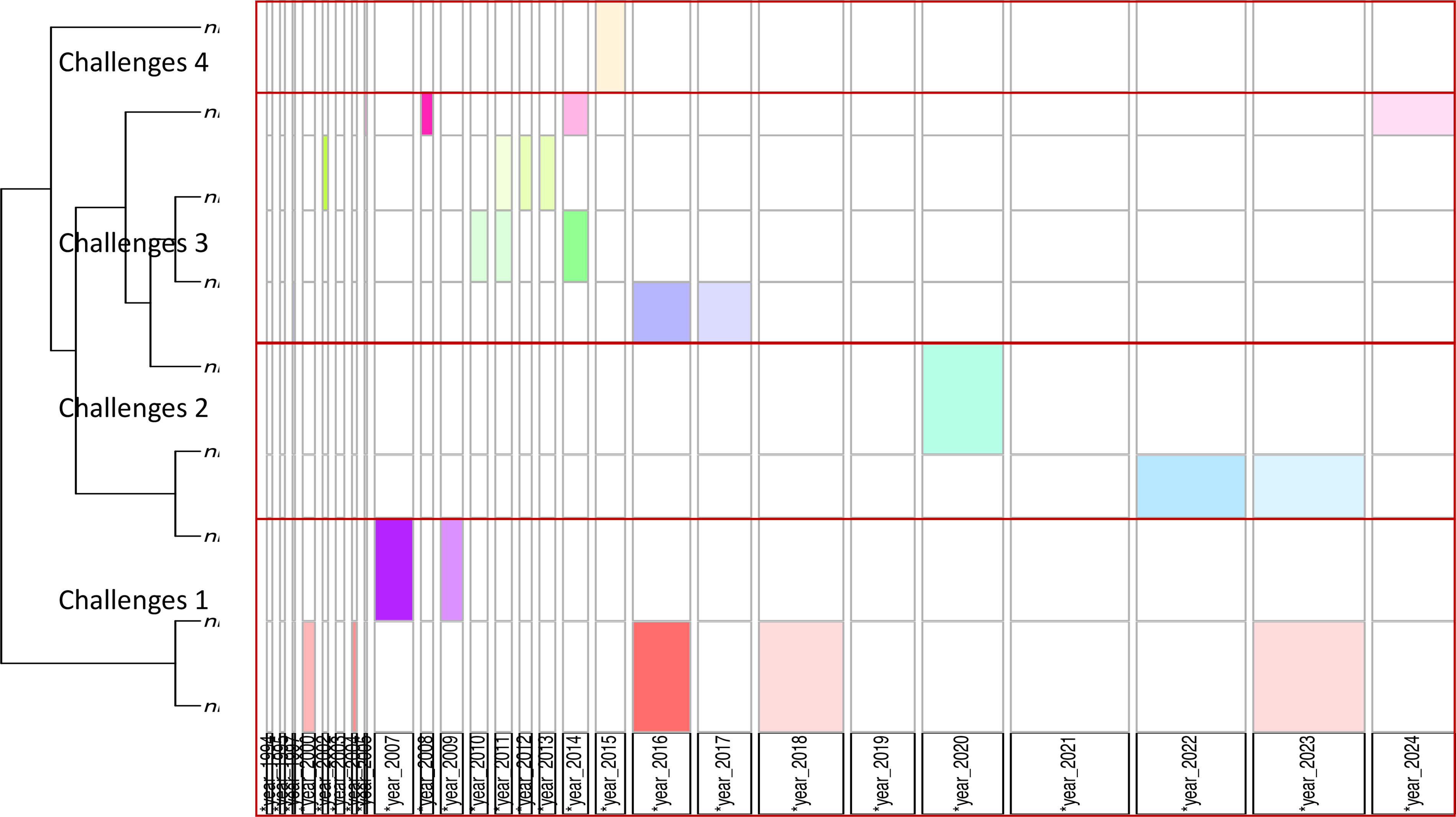
Overrepresentation of semantic classes by years. For each class, the height of the bars corresponds to the presence of text segments contained. The width of the cells reflects the frequency of abstracts each year, while the color shading indicates the strength of the association between the class and the year.
The only perspective qualifying as an actual emerging challenge is the second one—focusing on mental health, coping strategies, and the social dynamics of climate change—as both its classes (5 and 6) have appeared predominantly in the last 5 years. Nevertheless, further insights can be drawn regarding the other three contributions, which, while more consistently present over the three decades, still represent evolving challenges.
Challenge 1: Contrasting environmental health risks and social inequalities
The first contribution on physical environments, socioeconomic disparities, and subjective experiences has remained central within the EJ literature, although with shifting emphases. The focus on perceived environmental quality and social disparities (Class 8) peaked in 2007 and 2009, while attention to exposure to environmental stressors and health disparities (Class 1) rose in 2000 and 2004, resurged in 2016 and 2018, and has returned in 2023.
This pattern reveals a persistent scholarly focus on distributional EJ and the psychosocial impacts of unequal exposure. For psychology, this entails not only documenting health disparities but also deepening the understanding of how risk perception, chronic stress, and environmental adversity shape individual and collective well-being. It also demands engagement in developing interventions, community-based risk communication strategies, and advocating for equitable health policies. The recent resurgence highlights the need for psychology to reaffirm and expand its role amid escalating environmental crises.
Challenge 2: Healing the psychosocial impacts of environmental crises
The second contribution on mental health, coping strategies, and the social dynamics of climate change has emerged prominently only in recent years. Focus on emotional and psychological responses to climate change (Class 6), including eco-anxiety, emotional distress, and the capacity to develop cognitive, emotional, and behavioral coping strategies, grew in 2020, while broader attention to the extreme consequences and related social impacts of climate change (Class 5), such as displacement, social conflict, and collective trauma, rose in 2022 and 2023.
This trend reflects growing recognition of the urgent mental health and social well-being challenges posed by environmental crises. Psychology is thus positioned not only as a discipline of individual care but also as a key actor in fostering collective resilience, community support, and culturally sensitive interventions. This contribution emphasizes the restorative dimension of EJ, highlighting psychology’s role in healing personal and societal wounds and addressing relational, affective, and existential aspects of climate change through co-created, transformative responses.
Challenge 3: Fostering socio-ecological equality through participatory research
The third contribution on community engagement, inclusive governance, and participatory research has evolved unevenly. The human–nature relationship in legal and governance frameworks (Class 7) gained visibility in 1997 and 2016–2017; participatory governance and community-led environmental decision making (Class 3) in 2002 and 2011–2013; and conceptual frameworks and theoretical perspectives on urban spaces (Class 4) in 2010, 2011, and 2014. These emphases later receded. In contrast, participatory and qualitative approaches for voicing inequalities (Class 9), initially prominent in 2005, 2008, and 2014, have resurged in 2024, becoming the only overrepresented class that year.
This renewed interest signals psychology’s increasing commitment to methodological innovation and integrating communities and stakeholders within knowledge production.
It highlights psychology’s responsibility to prioritize participatory dimensions of EJ, engaging actively in coproducing situated knowledge, supporting inclusive decision-making processes, and fostering collective agency. This challenge urges the discipline to transition from observer or assessor to facilitator, partner, and advocate for socioenvironmental transformation.
Challenge 4: Acknowledging minoritized voices and vulnerable populations
The fourth contribution, rooted in transformative, emancipatory, and critical frameworks, centers on decolonial, feminist, and Indigenous epistemologies (Class 2). It received notable attention in 2015 but has remained largely underexplored since then.
Its marginal presence signals a critical gap that psychology is increasingly called to address. This challenge invites deeper engagement with the recognition dimensions of EJ, questioning dominant paradigms and integrating diverse ways of knowing, being, and relating to the environment. Moving forward, it represents a crucial area for expansion, calling on psychology to foster epistemic justice, amplify silenced voices, and promote culturally grounded, participatory, and emancipatory approaches to environmental and social transformation.
Future responsibilities for psychology in EJ debates: A critical map
The factorial plane (Fig. 5) reveals two main dimensions structuring the literature, suggesting distinct yet interconnected responsibilities for psychology.
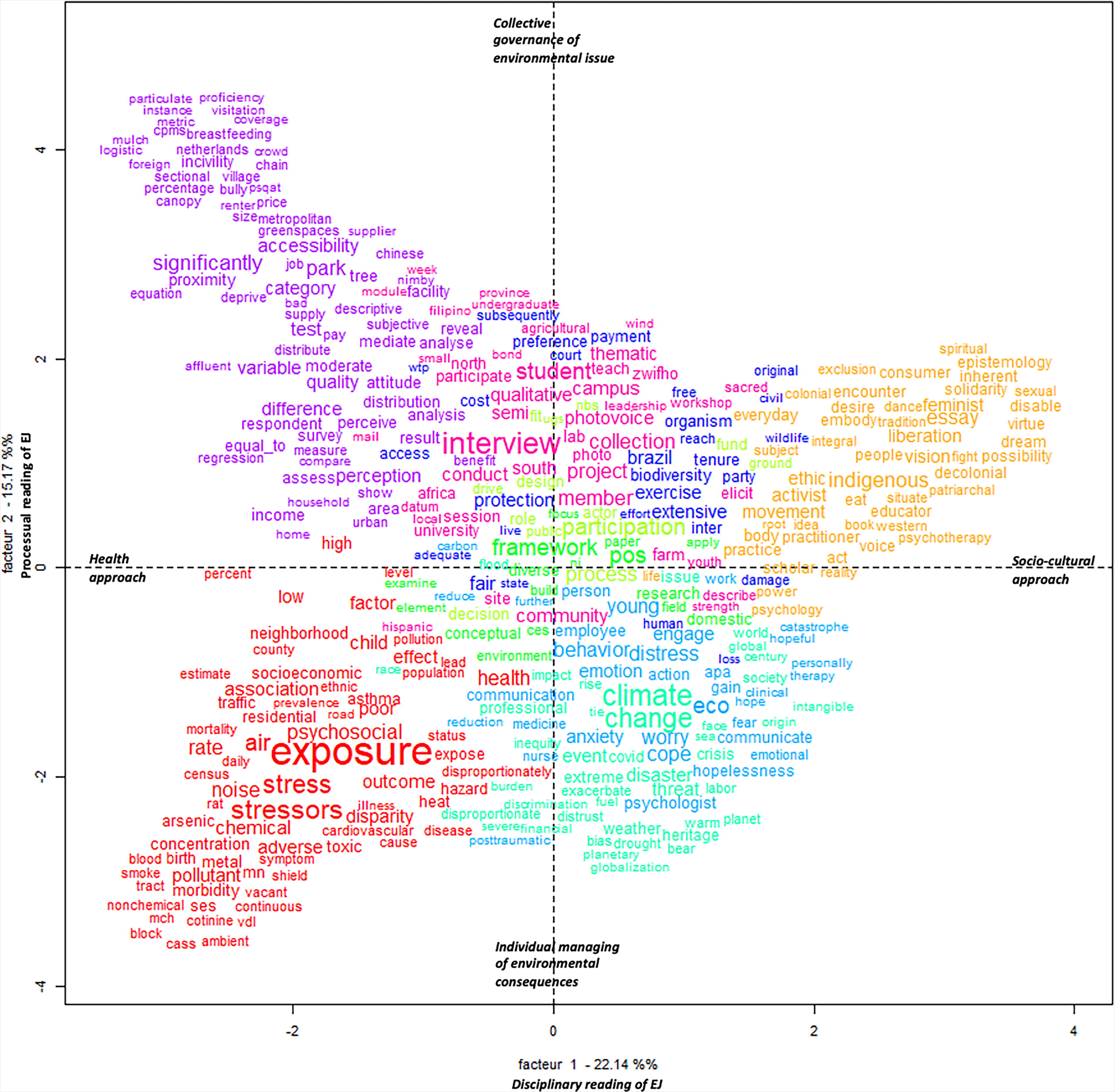
Factorial plane from correspondence analysis. Only the words with the strongest statistical weight are displayed, as determined by the chi-square test.
Factor 1 (x-axis) provides a disciplinary reading of EJ, opposing an epidemiological, health-oriented, and quantitative approach, where psychology collaborates with public health (Health approach—negative semiaxis—Classes 1 and 8), to a relational, sociocultural, and participatory orientation, where psychology aligns with critical social sciences (Sociocultural approach—positive semiaxis—Classes 2, 3, 4, 5, 6, 7, and 9).
Psychology is increasingly invited to position itself within this second orientation, assuming an intersectional role. This highlights the growing need to move beyond documenting impacts and disparities, towards actively fostering the co-construction of critical, situated knowledge.
Factor 2 (y-axis) provides a processual reading of EJ, contrasting a focus on individual, clinical, and material consequences of environmental crises, where psychology acts as a discipline of care and emotional containment (Individual management of environmental consequences—negative semiaxis—Classes 1, 5, and 6), with a collective, political, and governance-oriented perspective, where psychology contributes to empowerment, agency, and resilience (Collective governance of environment issues—positive semiaxis—Classes 2, 3, 4, 7, 8, and 9).
Here, psychology is urged to adopt a transformative role, moving beyond individual care in emergency contexts to actively participating in inclusive governance processes.
Overall, this factorial plane suggests that the psychology’s future responsibilities in EJ debates cannot be limited to documenting the psychological effects of environmental injustices. It must adopt an interdisciplinary, politically aware, and culturally sensitive approach: collaborating with marginalized communities, employing participatory and narrative methods, challenging dominant paradigms, and promoting epistemic justice. Psychology is thus called to navigate between impact analysis, the co-construction of situated, interdisciplinary, and socially transformative knowledge, and active participation in inclusive governance processes.
Discussion and Conclusions
This scoping review provides a comprehensive synthesis of how psychology has engaged with EJ debates over the past 30 years, identifying key contributions, emerging challenges, and future responsibilities for the discipline. Through lexical and temporal analyses of 352 academic publications, this review has examined the state-of-the-art and historical trajectories of psychology within this evolving field, highlighting conceptual gaps and reflecting on new areas of potential.
One of the central findings concerns the still peripheral presence of psychology in the broader multidisciplinary EJ debate, despite a gradual expansion over the past decade. Although there has been increasing attention, psychological perspectives remain marginal compared to contributions from fields such as public health, urban studies, and environmental policy (Schlosberg, 2013; Mohai and Saha, 2015). One notable finding of our review is the predominance of psychology-related EJ research published outside of core psychology journals. This pattern may reflect a historical and ongoing marginalization of EJ topics within mainstream psychology publishing venues. Several factors could contribute to this phenomenon. First, traditional psychology journals have often prioritized experimental, quantitative, and individual-level research, which may not align well with the critical, interdisciplinary, and participatory approaches typical of EJ scholarship. Second, the inherently interdisciplinary nature of EJ research often leads scholars to publish in journals aligned with public health, urban studies, environmental policy, or sociology, where EJ is more firmly established and recognized. This diffusion may also suggest a disciplinary boundary that psychology as a field has yet to fully cross, potentially limiting psychology’s direct contributions and visibility within EJ debates. This situation signals a potential need for psychology to broaden its epistemological frameworks and publishing practices to better incorporate EJ perspectives. It also challenges the field to critically reflect on its priorities, methodologies, and openness to diverse approaches that are crucial for addressing complex socioenvironmental issues.
Furthermore, this review demonstrates that the psychological literature on EJ is internally fragmented, differing notably from work produced in adjacent subfields, such as energy, climate, ecological, green, spatial, and urban justice, as well as research explicitly addressing issues of injustice. While these latter areas more frequently integrate psychological perspectives and recognition-based justice positions, the majority of EJ publications tend to assign psychology an accessory role within a broader health-oriented framework, privileging distributive over participatory and relational dimensions.
Overall, the findings delineate four key contributions through which psychology has entered EJ debates: physical environments, socioeconomic disparities, and subjective experiences; mental health, coping strategies, and the social dynamics of climate change; community engagement, inclusive governance, and participatory research; and transformative, emancipatory, and critical frameworks. Each of these contributions reflects a distinct way in which psychological knowledge has been applied to understand and intervene in EJ issues, ranging from epidemiological assessments of risk perception and stress to the development of participatory methodologies and the recognition of alternative epistemologies. While the four key contributions identified are not exclusive to psychology and can indeed be found across disciplines such as public health, education, urban studies, and sociology, this review highlights how they are framed, operationalized, and developed within the context of psychological research. In some cases, these categories emerge precisely through interdisciplinary dialogues, reflecting psychology’s integration into broader discourses. The analysis thus focuses on the distinctive ways in which psychological concepts, methodologies, and epistemologies contribute to, and are shaped by, EJ debates, regardless of whether they overlap with broader thematic concerns.
Moreover, the temporal analysis of these contributions reveals that psychology’s role in EJ has followed distinct and evolving trajectories, gradually expanding beyond health- and risk-oriented approaches toward more critical, participatory, and context-sensitive frameworks for addressing social and environmental inequalities. Notably, recent years have seen the emergence of new concerns. The growing prominence of ecotherapy (Bodnar, 2023), eco-anxiety, solastalgia, and the psychosocial impacts of climate change position psychology as an increasingly relevant discipline for addressing the mental health dimensions of environmental crises. Simultaneously, the growing use of participatory and qualitative methodologies reflects a shift toward more inclusive, dialogic, and community-based approaches within EJ research.
In particular, the four emerging challenges—ranging from contrasting environmental health risks and social inequalities to healing the psychosocial impacts of environmental crises, fostering socio-ecological equality through participatory research, and acknowledging minoritized voices and vulnerable populations—outline an agenda for the discipline’s future role.
First, psychology is called to strengthen its engagement with the health impacts of environmental hazards while also integrating ecological, cultural, and relational dimensions of well-being (cf. also Dory, Qiu, Qiu, Fu, and Ryan, 2017). Second, the discipline is encouraged to actively address the psychosocial consequences of climate change through clinical, community, and educational interventions (cf. also Verplanken, Marks, and Dobromir, 2020; Brophy, Olson, and Paul, 2023). Third, the review emphasized the importance of adopting participatory, coproduced, and culturally grounded methodologies, reflecting psychology’s potential to act not only as an analytic discipline but also as a facilitator of inclusive, empowering, and situated knowledge production within EJ processes (cf. also Collins et al., 2018). Finally, and perhaps most critically, the review calls for psychology to open more decisively to decolonial, feminist, and Indigenous epistemologies (Spires, 2019; Fisher, 2019) that challenge hegemonic narratives of human–nature relations (cf. also Watkins, Ciofalo, and James, 2018). This requires interrogating its own paradigms, amplifying marginalized voices, and contributing to epistemic justice in environmental debates (Medina, 2013; Fricker, Graham, Henderson, Pedersen, and Wyatt, 2020). Although this contribution remains underrepresented in the literature, it represents a vital avenue for rethinking psychology’s role in EJ—shifting from a discipline historically focused on individual-level interventions to one actively engaged in fostering resilience, EJ, and transformative socio-ecological change.
Methodologically, this review also contributes to advancing evidence synthesis practices within psychology and EJ by effectively combining scoping review principles with innovative lexical and temporal analytical techniques. These techniques provided a systematic, replicable, and data-driven strategy for tracing conceptual evolution over time and across subfields, which would have been challenging to capture using traditional approaches alone. However, they also come with limitations: their interpretative nature inherently involves subjective judgment, and the results should be considered indicative rather than definitive. Moreover, they require a series of methodological decisions that must be carefully justified to ensure the validity, reliability, and interpretability of the findings. Among these, some of the most significant choices relate to the construction of the corpus, which deserve critical reflection as they also represent potential limitations of the study.
A first decision concerned the source for retrieving records. Although Scopus offered broad multidisciplinary coverage, this single-source approach may have limited the scope of the review by excluding relevant publications indexed elsewhere (e.g., Google Scholar, Web of Science, PsycINFO). Future reviews may benefit from incorporating multiple databases to further enhance comprehensiveness and minimize selection bias.
A second decision regarded the nature of the data source. Our analysis focused exclusively on the abstracts of publications rather than their full texts. Abstracts provide a standardized and concise summary of research aims and outcomes, suitable for lexical statistical analysis, but may omit critical nuances and detailed contextual information. Therefore, the analysis may not capture the full depth and complexity of individual studies.
A third constraint stems from the keyword-based search strategy. We employed the keyword root “psycho” to identify psychological perspectives. While intended to capture a wide array of psychological research, this choice may have limited the inclusiveness of the search, potentially overlooking relevant studies that do not explicitly use this term in titles, abstracts, or keywords. Future works may benefit from expanding the search vocabulary to include a broader range of psychological terms, thereby capturing a more inclusive set of publications.
Despite these limitations, the analytical approach adopted here provides a coherent and robust foundation for capturing the complexity and fragmentation of psychological contributions to EJ, and it has proven to be a valuable model for further interdisciplinary dialogue and future research development.
In conclusion, this review suggests that psychology’s role in EJ debates is at a pivotal juncture. While historically limited, the discipline is increasingly acknowledging the necessity of addressing the social, emotional, and political dimensions of environmental inequalities (cf. also American Psychological Association Task Force on the Interface Between Psychology & Global Climate Change, 2010). Moving forward, psychology must adopt a broader, more critical, culturally responsive, and politically conscious perspective, one that is capable of contributing to the complex entanglements between environmental harms, social inequalities, and subjective experiences. The discipline is invited to expand its epistemological boundaries, embracing plural, situated, and intersectional approaches while actively collaborating with marginalized communities and interdisciplinary networks to develop theoretical models that link subjectivity to broader sociopolitical processes.
Moving forward, psychology must not only deepen its engagement with the psychosocial dimensions of EJ but also actively foster interdisciplinary collaborations. By working alongside environmental scientists, public health experts, urban planners, and social justice scholars, psychology can enrich holistic understandings of environmental inequalities and codevelop innovative interventions. This integrative approach will be crucial for addressing the multifaceted and systemic nature of EJ challenges, ensuring that psychological perspectives are embedded within broader socioenvironmental frameworks. Future research should prioritize cross-disciplinary methodologies and participatory models that bring together diverse expertise and community voices.
Only by shifting from a marginal to a transformative role, and from a fragmented to an intersectional reading of EJ, psychology can meaningfully contribute to the co-creation of more just, inclusive, and sustainable futures, in alignment with the Sustainable Development Goals of the United Nations 2030 Agenda.
Authors’ Contributions
G.C.: Conceptualization, data curation, formal analysis, investigation, methodology, validation, visualization, writing—original draft, and writing—review and editing. S.B.: Conceptualization, funding acquisition, methodology, project administration, resources, software, supervision, validation, writing—original draft, and writing—review and editing.
Footnotes
Author Disclosure Statement
The authors declare that the research was conducted without any commercial or financial relationships that could be construed as a potential conflict of interest.
Funding Information
This study was carried out within the JUST4WHOM project—boosting “full” EJ and resilience in communities facing transitions and received funding from the European Union’s Next-GenerationEU—National Recovery and Resilience Plan—Mission 4, Component 2, Investment 1.1 Fondo per il Programma Nazionale di Ricerca e Progetti di Rilevante Interesse Nazionale—CUP N. H53D23009850001. This article reflects only the authors’ views and opinions; neither the European Union nor the European Commission can be considered responsible for them.
Supplemental Material
Supplemental Material
References
Supplementary Material
Please find the following supplemental material available below.
For Open Access articles published under a Creative Commons License, all supplemental material carries the same license as the article it is associated with.
For non-Open Access articles published, all supplemental material carries a non-exclusive license, and permission requests for re-use of supplemental material or any part of supplemental material shall be sent directly to the copyright owner as specified in the copyright notice associated with the article.
