




Abstract
This conceptual and practical paper aims to expand understanding of imagination in ways that have direct implications for leadership education and research. First, imagination is conceptualized as soil, an analogy that can address misconceptions about imagination and broaden understanding of the multiple ways it contributes to leadership. Next, an educational theory called Imaginative Education (IE) is introduced that offers theoretical understanding of imagination and practical tools for its development. Finally, what imagination yields in terms of individual and collective leadership processes is described along with specific “cognitive tools” that may be used to cultivate imagination in school leadership.
Introduction
My internet search for “images of imagination” resulted in 12 pictures: three had light bulbs floating near human heads, three involved painting with bright, swirling colors, three focused on ideas flowing through the air, two represented fantasy story, and one showed a young child joyfully soaring through the sky in a box held afloat under five vividly red balloons.
It is hard to see how floating light bulbs, colorful paintings, and fantasy play have anything to do with the theoretical or practical worlds of leadership or leadership education. These images reflect certain “myths” about imagination that help to perpetuate misconceptions about it and also shape how it is conceptualized in leadership: that imagination is of most importance and relevance to children or artists, that it is always unruly and purposeless, that it is only “in the mind,” that it is a static or endowed attribute (quality, trait), that it is always extraordinary, and that it is largely a “mystery” and, therefore, something that cannot be taught (Asma, 2017; Egan, 1997, 2005; Liu & Noppe-Brandon, 2009). Pair these dominant views of imagination with the perceived risk imagination involves to individuals and to organizations (Hopkins, 2019; Patriotta, 2019), the discomfort it can cause (Hopkins, 2019), the tendency to privilege research of things that are readily observable (Simpson et al., 2017) and measurable, and it may come as no surprise that imagination has been the subject of little leadership research (Judson, 2020). Ultimately, imagination is mentioned far more than it is studied in leadership theory or conceptualized in practice (Judson, 2020). These nods to imagination do not represent the full range of leadership processes, capacities, and activities that are rooted in imagination.
This conceptual and practical paper advances and expands understanding of imagination in ways that have direct implications for leadership education and research. Aiming to address misconceptions about imagination in leadership, Section One proposes an ecological metaphor for imagination that brings imagination down to Earth. Conceptualizing imagination as soil can inform a broader understanding of the range of leadership processes growing out of imagination. Section Two introduces an educational theory called Imaginative Education (IE) (Egan, 1997, 2005) that can both advance theoretical understanding of imagination in leadership and provide practical tools for its development. IE theory describes how human imaginations grow and change, providing insight for all leaders into the shapes of their own imagination, the imaginations of their community members and of their community overall. IE identifies a range of “cognitive tools” that engage and cultivate the imagination, offering leaders practical tools they can use to develop this capacity in themselves and in all stakeholders within their communities. Applying the theory of IE to leadership can help debunk a romanticized view of imagination (Liu & Noppe-Brandon, 2009) by clearly showing how it develops and how it can be learned. Section Three’s review of leadership scholarship extends the earthy metaphor introduced in Section One, describing what imagination yields in terms of individual and collective leadership processes, capacities, and actions. Section Three looks at the context of educational leadership in particular and includes examples of specific cognitive tools that may be used to support school leaders in (a) understanding what is and what could be; (b) forming inclusive communities; (c) increasing engagement and meaning-making in school culture. In addition to being an individual capacity for all leaders to develop, this literature review suggests that imagination may usefully be considered the terrain of relational leadership theory and practice, supporting the diverse contextual, emotional, and processual features and values of this theoretical perspective (Clarke, 2018; Uhl-Bien, 2004, 2006; Uhl-Bien & Arena, 2018). Overall, by offering a grounded conception of imagination and outlining practical pedagogical strategies that educational leaders may employ to enhance imagination within their schools, this paper advances understanding of imagination in the field and can engage and inspire further exploration of the terrain of the possible among leadership researchers and educators.
Section One: An Earthy Metaphor for Imagination
How can I stand on the ground every day and not feel its power? How can I live my life stepping on this stuff and not wonder at it?
– Arborist William Bryant
To address the misunderstandings about imagination in leadership and, ultimately, to bring imagination to a more central position in leadership discourse and leadership education, this work offers a new way of thinking, talking about, and educating the imagination. I was inspired by Liu and Noppe-Brandon’s (2009) text Imagination First: Unlocking the Power of Possibility and, specifically, the following passage: “The quality and durability of any creative act depend in great measure on the fertility and force of the imagination that feeds the act. This is where it all begins. We reap what we sow” (Liu & Noppe-Brandon, 2009, p. 21). I realized the multiple ways we might think about imagination like soil. Of course, this may sound odd at first; it is so unlike the ways in which we currently talk about imagination. This metaphor for imagination is grounded and ordinary rather than surreal and extraordinary. It returns imagination to the realm of everyday engagement and also to everyone rather than the gifted few.
Understanding imagination as soil can bring needed clarity to what imagination is and does in the context of leadership. It can help differentiate words like “creativity” and “innovation” that are often, and wrongly, used synonymously with imagination (Judson, 2020; Liu & Noppe-Brandon, 2009; Robinson, 2017). It may correct misconceptions around imagination being solely of value for children, or of utility for artists. Instead, we may see imagination as the fecund terrain of possibility from which we reap a range of leadership capacities and outcomes. This is an ecological understanding of imagination—pointing both to the relationships that generate it and that it supports, but also the contexts in which it works. What emerges is a sense of how imagination is the terrain of contextual, collective, and emergent leadership practices. Of course, while metaphors can be useful for bringing to the fore features of something that are too often ignored, they do not have unlimited value or applicability. Comparing imagination to soil is used here only to highlight certain features of imagination, not to suggest more general nor literal similarities. What follows is a consideration of how imagination is the origin of many fruits of leadership, is contextual, universal, and may be enriched with cultivation.
Imagination Comes First: Life Depends on Soil
Know Soil, Know Life is a publication of the American Society of Agronomy that outlines the myriad ways in which life on Earth depends upon soil (Lindbo et al., 2012). Though one may experience more pleasure in a harvest or in the fruit of one’s labor, these depend on the soil. The harvest has roots in the soil. The same can be said for imagination: All novel ideas, products, and actions—all creations and innovations—find their roots in the terrain of the possible. Imagination comes first (Asma, 2017; Egan, 1997, 2005; Liu & Noppe-Brandon, 2009). Imagination comes before the will to act (Liu & Noppe-Brandon, 2009). We first imagine the change we want to see in the world (Hopkins, 2019). In this way, soil represents the potential, the possible, where the seeds of future, tangible actions take root.
Lui and Noppe-Brandon (2009) note how people tend to conflate imagination with creativity and innovation, preferring to speak of creativity or innovation rather than imagination. Like the soil beneath our feet, there is an invisibility to imagination that often leaves it ignored. Walking along a forest path, we more often stop to view the flower than to consider what holds it up. The same goes for imagination: the underlying, largely invisible and often unconscious processes of the imagination are hidden from direct observation and examination. We infer imagination indirectly from the bold, finished creations or innovations that it produces (Asma, 2017). Liu and Noppe-Brandon (2009) differentiate imagination, creativity and innovation as follows: imagination is the ability to conceive of the possible or “what is not,” creativity is “imagination applied: doing something or making something, with that initial conception” and innovation happens “when an act of creativity has somehow advanced [a] form” (p. 19). Understanding imagination as soil—as the originating source—is a useful way to visualize how creativity and innovation depend upon imagination. As they succinctly put it, “Although imagination matters most, it gets the least ink” (p. 20).
Imagination is Contextual: We Reap What We Sow
Thinking about imagination as soil can help to address the misconception that it is limitless, purposeless, and unrestrained (Asma, 2017; Egan, 1997; Liu & Noppe-Brandon, 2009). First, just as sunlight, water, and nitrates feed healthy soil, knowledge, emotion and experience feed the imagination. Imagination is, thus, bounded; it is shaped by our body’s engagement with the world, what we know, and what we can uniquely create with that knowledge (Asma, 2017; Egan, 1997). Emotion, knowledge and experience are interconnected in the terrain of the imagination. Just as healthy soil is rich in nutrients and life, the imagination thrives on biodiversity: “Our imagination needs diversity. It expands or contracts—or plummets, as the case may be—in response to it” (Hopkins, 2019, p. 56). The more we know and have experienced, the more our imaginations can produce.
This emphasis on knowledge contradicts beliefs that the imagination is somehow antithetical to the learning and reason we equate with adulthood (Blenkinsop, 2009; Egan, 1992). In fact, if knowledge is fodder for the imagination, then imagination grows with age, given the right conditions. It is not something we necessarily lose with adulthood but is something we can enrich and make more fertile. Egan challenges the misconception that imagination and knowledge, or reason, are mutually exclusive. He contends that imagination and reason are not incompatible, but, rather, as Wordsworth (1850) famously said in The Prelude, reason may be better understood as imagination “in her most exalted mood” (l. 192). Understanding imagination as soil and enriched with learning and experience, indicates how knowledge is, in fact, essential for the products and processes we value as adults.
Imagination is culturally-bound, shaped by particular, contextual, beliefs, values, and knowledge (Asma, 2017; Egan, 1997; Sutton-Smith, 1988). Though soil supports growth, not all that grows supports healthy communities. Similarly, our visions for what is possible can, at best, end up being ineffective (Patriotta, 2019), and, at worst, can be immoral (Asma, 2017). As Sutton-Smith (1988) remarks, “Hitler was imaginative and so was Shakespeare” (p. 19). Soil supports both desired crops and invasive species. Like thinking in general, then, imagination: “is neither good nor bad in [itself] but become[s] so within the context of particular values. . .The difference doesn’t lie in the function of “what if-ing” but in the ends to which it [is] devoted” (Sutton-Smith, 1988, p. 19).
Like Sutton-Smith, Asma (2017) says we can see “imagination as the great engine of change and progress” but it is necessary to evaluate all decisions against an unwavering commitment to what is ethical (p. 261). To produce and sustain ethical communities, leaders must be dedicated to intentionally and continually sowing seeds of equity, diversity and inclusion, and nurturing these priorities with unwavering moral purpose.
Imagination is Universal: Soil Supports Us and Connects Us
Human beings are Earth-bound; gravity pulls our feet down to Earth. The ground beneath each one of us holds the roots of our individually expressed stories, learning, choices, empathy, and insights. Thinking about imagination as soil addresses the misconception that imagination is a possession—a gift—of the few, rather than a feature of all human minds (Liu & Noppe-Brandon, 2009; Robinson, 2017). While imagination may be used with varying degrees of effectiveness and is, as we shall see later, something to intentionally develop, it is universal. The ground supports us all. Everyday. So too does imagination. What understanding imagination as soil can do is elucidate the individual and collective nature of imagination.
In the context of leadership currently, imagination is often identified as an individual quality or attribute of the visionary, transformational and charismatic leader (Curtis et al., 2017; Curtis & Cerni, 2015; Patriotta, 2019; Ylimaki, 2006). These conceptions reflect leader-centric theories and what Hosking (2000) would consider an entitative understanding of imagination. From an entitative perspective, imagination is an attribute, “the some thing some one has” (Hosking, 2000, p. 147). While valuable for our overall understanding of what imagination offers leadership, this conception of imagination and its associations tends to reinforce understanding that imagination is an exceptional attribute of the few. As a result, it offers a partial view of imagination. Understanding of imagination’s roles in leadership may be advanced if scholars also consider how our shared, collective understanding, stories and meanings, are rooted in imagination. These stories and shared meanings represent the shared space of collective imagination, the common ground under our feet that unites us across small and large distances.
From a “post-Heroic” leadership perspective (Sobral & Furtado, 2019), imagination may be repositioned and researched from the individual, to with, and among, the many. Thinking about imagination through relational constructionist ontological and epistemological lenses opens up opportunities to explore how imagination develops between and among stakeholders through processes of relating. This perspective builds on our understanding of imagination not only in terms of what we do and have as humans but would also as “the adaptive meeting place between the organism and the environment” (Asma, 2017, p. 4). Imagination may be conceived at least in part as the terrain of Relational Leadership Theory, what Uhl-Bien (2006) offers as “an overarching framework for the study of the relational dynamics that are involved in the generation and functioning of leadership” (p. 667). As we see in more detail in Section Three, the imagination as soil is the source of “tools of relationship” including understanding the self and other, empathy, trust and respect (Clarke, 2018). Cunliffe and Eriksen (2011) suggest leadership is “embedded in the everyday interactions and conversations—the relational practices—of leaders” (p. 1428). It is possible to see how relational leadership practices are embedded in practices of imagining. Identifying imagination as soil, the fertile source and generative force supporting much of the relational work school leaders do within their schools and communities, opens onto a terrain for constructionist relational leadership research and understanding that is contextual, historical, relational collaborative, and processual (Cunliffe & Eriksen, 2011; Hosking, 2011; Uhl-Bien, 2006; Uhl-Bien & Ospina, 2012).
Imagination Must Be Developed: Cultivating Soil Increases its Fertility
Soil is not always or equally fertile. For example, soil requires a certain pH level, essential nutrients and organic matter to be productive. Certain climatic and geographical conditions support soil fertility. The same variations are true for imagination. The previous section illustrated that imagination has certain requirements for productivity; it is fed by knowledge, emotion, and experience. It is fed, moreover, by diversity in that knowledge and experience (Hopkins, 2019). As author Macfarlane (2018) notes, the imagination does not thrive when our basic physiological, safety, and belonging needs are not met. Cultures must therefore be inclusive of all stakeholders to allow for the most imaginative growth. Imagination thrives in diverse cultures that allow for the play-full (low-stakes) exploration of ideas, that embrace “mistakes” as part of learning and growth, and that encourage and celebrate curiosity among all stakeholders. Even though not all soils are fertile, the good news is that with different interventions and cultivation, soil fertility will increase. The same goes for imagination: cultivating imagination increases its productivity.
Imagination researchers Asma (2017), Egan (1997, 2005), and Liu and Noppe-Brandon (2009) argue that all humans can develop imagination and must actively work to do so. Robinson (2017) also equates imaginative growth with training: “Innovation may be the aim, but it has to begin with imagination and creativity. Aiming straight for innovation, without developing the imaginative and creative powers on which it depends, would be like an athlete hoping for gold but with no intention of exercising beforehand” (Robinson, 2017, pp. 187–188). In short, education matters. Without education to enrich it, little can grow from imagination.
In summary, conceiving of imagination as soil helps to address misconceptions about imagination and, ultimately, will expand research and practice to better understand leadership imagination and its possibilities. This metaphor makes visible key elements of imagination including: how it comes first—generating the acts of creativity and innovation we see in the world; how it is contextual—shaped by our beliefs, values, and knowledge; how it may support ethical organizations if it is informed by unwavering commitment to equity, diversity and inclusion; how it is the source of our individual stories, learning, and ideas but also grounds the relational spaces between us, giving life to collective ideas and understanding; and how it becomes more fertile with knowledge, experience, collaboration, diversity and a climate that encourages exploration of the possible. The next section introduces an imagination-focused pedagogical theory and set of tools that may be used by leaders to cultivate their imaginations and the imaginations of those in their communities.
Section Two: A Pedagogical Toolkit for Cultivating Leadership Imagination
The fruits of improvising, composing, writing, inventing and discovering may flower spontaneously, but they arise from soil that we have prepared, fertilized, and tended in the faith that they will ripen in nature’s own time. (Nachmanovitch, 1990, p. 151)
Leadership education scholars recognize the need for imaginative pedagogies to support the development of leadership imagination (Cranston & Kusanovich, 2013, 2014; Enlow & Popa, 2008; Klein, 1999; Odom et al., 2015; Paustian, 2017). Specifically, scholars suggest that decision-making and problem-solving skills, empathy and moral imagination may be developed through the use of pedagogical activities that include story, imagery, role-play, drama, film, and music. Rowsell (2019) suggests learning contexts that support imagination in leadership should be playful, free-thinking, and creative. A general acknowledgment of the value of “imaginative” pedagogy for developing leadership imagination is not new. What is currently missing, however, is a theoretical framework and pedagogy that brings these seemingly disparate activities together, provides theoretical support for why these activities grow imagination, and offers practical tools to routinize the engagement and growth of leadership imagination through education. Imaginative Education (IE) can help fill this gap.
Imaginative Education Theory and Practice
Imaginative Education is a socio-cultural theory of education that pairs a theoretical conception of imagination and understanding of its role in intellectual development with a comprehensive set of practical strategies for engaging and growing imagination (Egan, 1997, 2005; Egan & Judson, 2015). IE offers a theoretical framework and practical language for understanding the imaginative pedagogies currently used in the leadership education field such as role-play, story-telling, and image-making, and expands what is possible by outlining additional tools for cultivating leadership imagination.
IE is based on the premise that in order to understand our intellectual development we must understand the role played by the “intellectual tools” provided by our culture (Egan, 1997). This premise brings IE in line with the work of psychologist Vygotsky (1962, 1978) who suggests that in the process of intellectual development different features of one’s cultural environment (especially different capacities of language) are internalized. These capacities of language are “mediating tools” that in turn profoundly influence the kind of sense one makes of the world. While acknowledging how cultures have created a range of intellectual tools to think with, Egan’s focus is on the intellectual tools of language in various forms. He identifies “degrees of culturally accumulated complexity in language” starting with oral language, then written language, followed by abstract, theoretic forms of language, and finally highly reflexive uses of language (p. 30). According to Egan (1992, 1997, 2005) our imaginations engage differently in the world as we acquire these different forms of language. Moreover, these different linguistic forms provide us with “sets” of learning tools or what Egan, following Vygotsky, calls, “cognitive tools” that shape specific imaginative understandings of the world.
Cognitive tools are “aids to thinking developed in human cultural history and learned by people today to enlarge [their] powers to think and understand” (Egan, 2005, p. 219). The “set” of cognitive tools that come along with oral language include intellectual activities such as use of story, dramatic oppositions, rhyme/rhythm/pattern, and a sense of mystery. Some of the cognitive tools in the “set” that accompanies literacy include identification of transcendent qualities, humanization of meaning, sense of wonder, revolt and idealism, and change of context. Egan also outlines how our understanding of theory impacts our imaginative lives. For adults immersed in academic contexts, theoretical concepts can engage and grow the imagination. Some of the cognitive tools that come with theoretical thinking include interest in general schemes and anomalies, the search for certainty, and a sense of agency.
Cognitive tools, in Egan’s formulation, bring together three components: the epistemological, the psychological, and the emotional. So not only are cognitive tools tied up with knowledge and central to our psychological development, they also engage our emotions and imaginations. By using a cognitive tool, we can learn knowledge in a particular way, and can engage our emotions in the process. Our bodies, intellects, and emotions work together. More than temporarily evoking imagination, cognitive tools actually grow imagination (Egan, 1997).
Consider the use of the imagination as soil metaphor in this paper. Metaphor, like all cognitive tools, is a powerful tool for learning because it connects particular knowledge with emotion and imagination. The emotional dimension of this metaphor (and of all cognitive tools) is what supports memory and meaning-making. It has, in this case, helped teach about the scope of imagination’s value. It has likely stimulated images in your mind and may linger with you as you think more about imagination.
In the context of classrooms and education, Egan argues that we can more effectively educate students if we can maximize their imaginative capacities through the use of cognitive tools. The aim of IE is to maximize students’ abilities to use the full array of cognitive tools available to them and, therefore, enable them to flexibly and routinely envision the possible in their own lives. To date, the use of IE has been most thoroughly developed and researched in the context of education. A range of empirical, peer-reviewed research in K-12 and post-secondary learning contexts indicates how this pedagogy increases learners’ engagement and supports learning (e.g., Ellis et al., 2015, 2020; Emjawer & Al-Jamal, 2016; Hadzigeorgiou, 2016; Hadzigeorgiou et al., 2012; Hagen, 2015; Hrennikoff, 2006; McAuliffe et al., 2011; McKellar, 2006; Pearson, 2009; Stewart, 2014). Application of IE’s cognitive tools to the context of leadership is new and offers many opportunities for future research.
IE offers a theoretical explanation for why and how cognitive tools like stories, vivid images, dramatic tensions, rhythms and patterns, and mysteries appeal to the human imagination. These tools are ubiquitous in our culture—and therefore evident in our leadership practices too. IE brings into focus for leaders and leadership education a range of cognitive tools for cultivating leadership imagination. By using cognitive tools in practice, with their communities, effective leaders may enrich their own imaginative capacities but can also enrich the imaginative capacities of others. Using cognitive tools in leadership education may help to maximize leaders’ abilities to use the full array of cognitive tools available to them so they may flexibly and routinely envision the possible in their leadership.
The next section returns to the imagination as soil metaphor. It offers a review of leadership literature indicating what imagination yields in terms of leadership activities, processes, and goals, and outlines how cognitive tools may be employed to increase imagination’s impact in these areas within the context of school leadership.
Section Three: Leadership Activities Rooted in Imagination
Research looking specifically at imagination’s contributions to leadership reveals a range of interconnected roles. For the sake of clarity and to offer practical pedagogical examples of how IE may support leadership imagination, this section indicates what imagination yields in terms of understanding what is and consideration of what may be, the formation of inclusive communities, and engagement and meaning-making. Along with a discussion of what imaginations produce, a few cognitive tools are provided that school leaders may use to cultivate imagination in their communities.
Presented in the form of guiding questions, the cognitive tools listed in Tables 1 through 4 can be used by school leaders to engage and grow imagination in ways that support leadership in their communities. For example, the tools may be employed in ongoing encounters and conversations that leaders have with teachers, parents, or staff. They may be used more formally in staff or department meetings. They may be used in electronic or printed text communications. They may be used by leaders individually for critical self-reflection, to deepen and broaden understanding of issues, or to generate new ideas. They may also be used in small or large group contexts to generate conversation and encourage a shared process of envisioning alternatives for teaching, learning, leadership, and policy in the school. (Judson (2018) describes how seven school leaders employ cognitive tools in relation to different aspects of their work.) The examples provided align specifically with some of the key responsibilities of school leaders. These responsibilities include identifying and creating a school vision, creating inclusive and equitable learning-focused communities, improving instruction, and managing ongoing processes, policy implementation, and community needs.
Imagination Yields Understanding of What Is and What Could Be
Research in leadership connects imagination with learning and understanding the self, others, issues, and concepts. Imagination supports leadership planning, decision-making, and problem-solving as it generates new possibilities, novel ideas, and actions.
In Exploring the Connections Among Adaptive Leadership, Facets of Imagination and Social Imaginaries, Stephenson (2009) outlines specific ways in which imagination allows leaders to understand themselves and others. He employs Charles Taylor’s notion of “imaginaries” and Foucault’s “episteme” to refer to the ways in which people make sense of the world. Our own individual worldviews—the stories we tell ourselves about our lives and experiences—are our personal “imaginaries.” Stephenson suggests that leaders’ self-knowledge is also a product of a rich imagination. Effective leaders are able to fit their own sense of the world or context with those of the others they serve and the collective “imaginary.” Stephenson’s (2009) work suggests that self-knowledge provides a strong foundation for empathizing and knowing others as well as enables more global awareness of multiple perspectives.
Stephenson (2009) suggests imagination is required by leaders to understand the “social imaginaries” held by people in their organizations/communities. The dominant social imaginary is the dominant “story” in an organization; it is the “status quo.” According to Stephenson, leaders must have the capacity to understand the ways of knowing of those they serve; they must be able to understand other points of view, and other experiences in order to fully understand the complex “forces at play” within their environments (p. 418). Effective leaders are able to understand overarching stories within the organizations.
The essential attribute the imagination contributes to this relationship-building, is the possibility to empathize, to not only understand a different perspective, but also to care (Greene, 1995; Guare, 1999). As Greene famously says: One of the reasons I have come to concentrate on imagination as a means through which we can assemble a coherent world is that imagination is what, above all, makes empathy possible. It is what enables us to cross the empty spaces between ourselves and those we teachers have called “other” over the years. If those others are willing to give us clues, we can look in some manner through strangers’ eyes and hear through their ears. That is because, of all our cognitive capacities, imagination is the one that permits us to give credence to alternative realities. It allows us to break with the taken for granted, to set aside familiar distinctions and definitions. (Greene, 1995, p. 3)
Greene (1995) contends that it is imagination—the ability to envision the possible—that enables us to feel another person’s point of view. Imagination allows us to “take on”—to some small degree—another person’s perspective. Root-Bernstein and Root-Bernstein (1999) describe empathy as a thinking tool of the creative imagination that is required to deeply understand any situation: “We have found that practitioners of every art, science, and humanistic profession use empathy as a primary too, for it permits a kind of understanding that is not attainable by any other means” (p. 187). Through imagination’s access to other perspectives, we can experience the world differently and we have the capacity to connect in meaningful ways with near (and distant) neighbors (Barlosky, 2005; Greene, 1992, 1995; Judson, 2019; Stephenson, 2009). Clarke (2018) identifies empathy as one of the “tools” of the relational leader, stating that it should be part of leadership education.
Effective leaders do not just have an understanding of individual meanings and perspectives, however. They must have the capacity to step back and take a much broader view of the landscape. In Nuance, Fullan (2018) argues that effective leaders are systemic thinkers. They understand networks, systems, and patterns based on detailed knowledge of their contexts, adaptability, and strong personal relationships with others. They see “below the surface, grasp hidden patterns, find new pathways to alter and shape better outcomes” (Fullan, 2018, p. 11). Through what Stephenson calls the “cognitive imagination,” an effective leader understands the interconnectedness of multiple stakeholders, issues, and the implications of these relationships: Meta-level analysis suggests that leaders are not only expected to grasp and wrestle with complexities and to make sense of them, but also to stand above them in order to be able to describe in compelling ways their warp and woof and relationships to allied concerns. That is, they must make plain to their constituents their understanding of how the issues under consideration should be viewed and why in convincing ways. Addressing that imperative requires strong cognitive reasoning. (Stephenson, 2009, p. 427)
This broad understanding is a practice of identifying individual pathways on an overall map of an organization’s landscape (Stephenson, 2009).
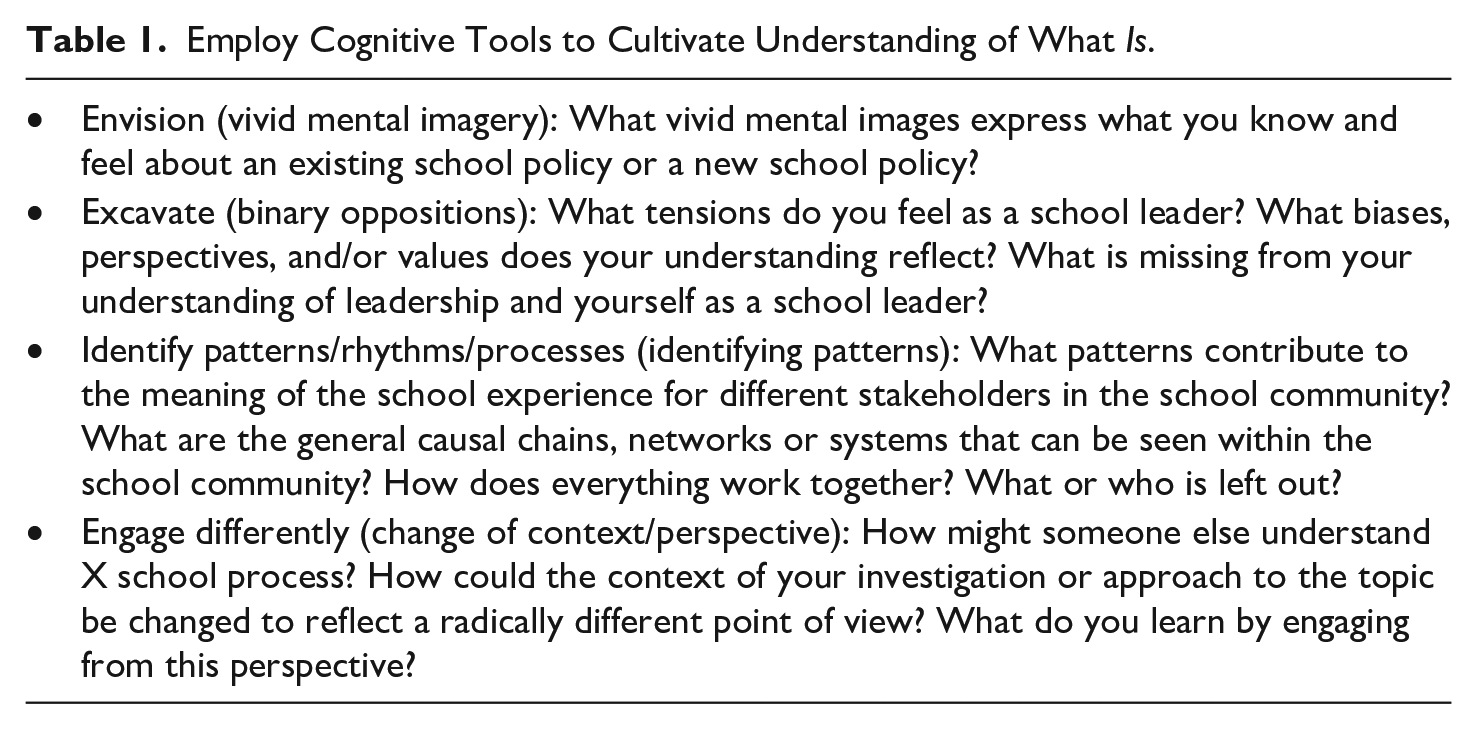
Table 1 offers examples of cognitive tools that school leaders can employ to engage imagination in understanding the processes and policies shaping their school communities, understanding themselves as leaders, and understanding community needs.
Employ Cognitive Tools to Cultivate Understanding of What Is.
We see learning about self, other and system as rooted in imagination. Imagination’s role does not stop there, however, as imagination supports what leaders do with the knowledge they have and, as needed, how they generate new knowledge, whether methodically over time or in-the-moment. In school leadership, this can inform a range of work, from creating school vision and shared meaning around that vision, to ongoing problem-solving.
I recently asked a high school principal what he saw as the connection between imagination and his leadership work. He responded: “It’s in problem-solving. That’s where I see imagination most.” (Pusic, personal communication, February 8, 2020). Leadership researchers agree. The ability to imagine the possible is identified as supporting problem-solving (Millward, 1998) and decision-making (Cranston & Kusanovich, 2014). Imagination is considered important for dealing with the complexity of our communities/organizations, the dynamic nature of knowledge-based society, and the ambiguity of real-world situations (Patriotta, 2019). Asma (2017) suggests that imagination “prepares and enhances action” (p. 269) in all aspects of life: “It supplements and improves perception and action. It can rehearse previous memories, but also be a mental workspace to build innovate behavior, tools and narratives” (p. 269). Imagination is, thus, a rehearsal space for decision-making, for playing with ideas and outcomes and generating new ideas.
Asma (2017) suggests that we do not recognize how much of our lives is lived in the realm of the possible and how much we are always connecting what is to what if. He states: “We live in a world that is only partly happening. We also live in co-present simultaneous worlds made up of ‘almosts’ or ‘what ifs’ and ‘maybes’” (pp. 2–3). Improvisation is “the main activity, method, or operation of the imaginative faculty” (p. 4). He describes how improvisation plays out continually for humans in all contexts: as we work at one task, we run options or possibilities in our mind that could alter, improve, or modify a situation. We see something and enter future- or other-thinking about what it could be. This “mental improv” is universal (Asma, 2017, p. 6). It takes two forms: the “hot,” high-stakes improvisation of a new process or policy in a pandemic, or the calmer, “cooler” form of improvisation involved in designing a school policy. In both cases, Asma illustrates how the improvising imagination is embodied and relational, drawing on “internal resources” including feeling, thoughts, experiences, actions, knowledge, and “environmental resources” including objects, others, and whatever is necessary to support a goal or address a situation (Asma, 2017, p. 4).
Asma’s description of the improvisational imagination aligns with the adaptability and flexibility Uhl-Bien and Arena (2018) identify as necessary for leading with/in complex systems. They confirm that adaptability is required across organizations and among stakeholders if organizations are going to be “flexible, agile and adaptive in response to changes associated with a volatile and often unpredictable world” (p. 89). Along the same lines, Patriotta (2019) argues that those who adopt a flexible “playfulness” in their decision-making, through seeking novelty and engaging imagination, enable leadership to become “a platform for discovery and experimentation” (p. 1759). In addition to understanding what is, imagination supports the generation of what could be in the form of new ideas and possibilities (diYanni, 2015).
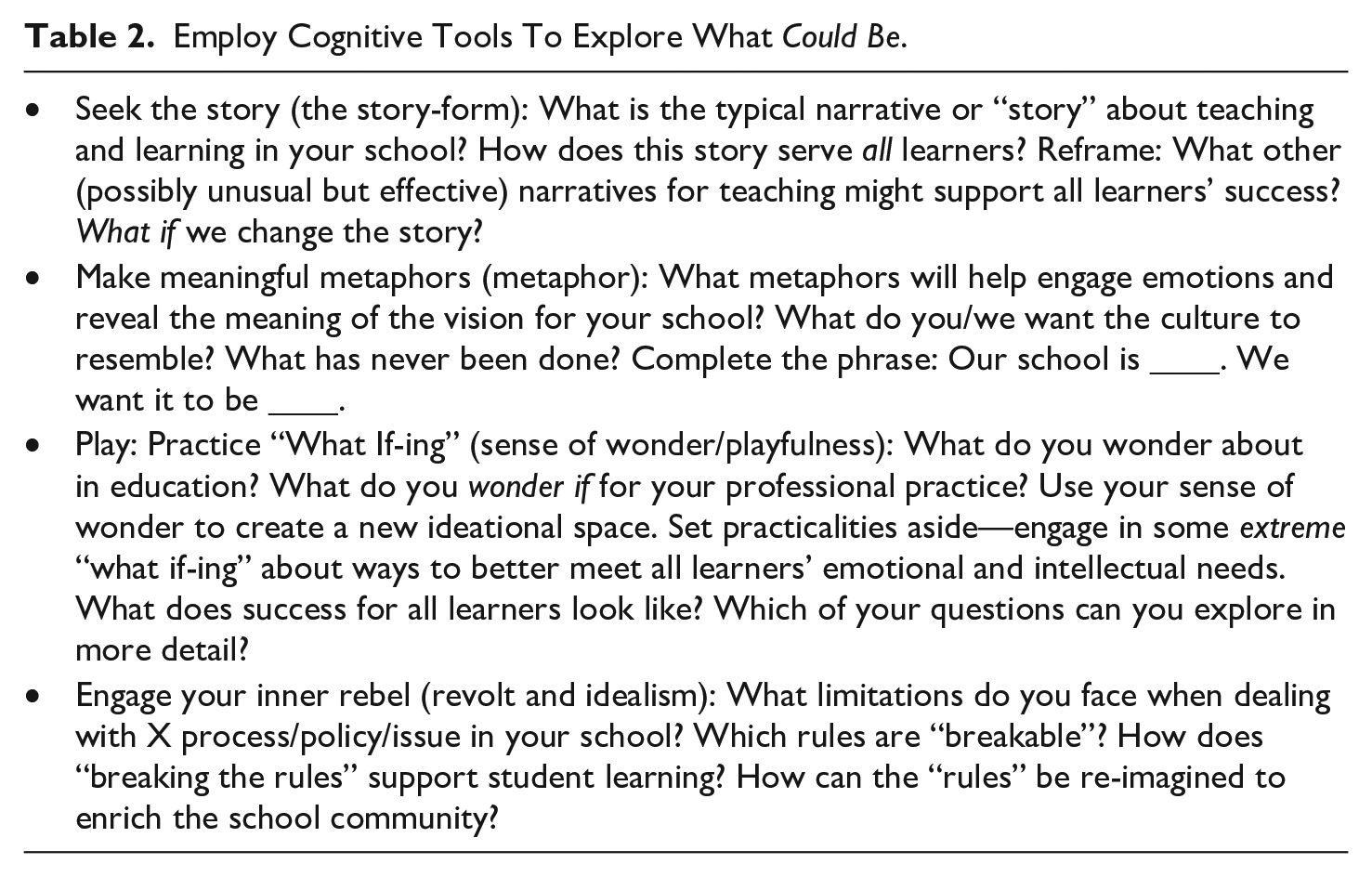
Table 2 outlines specific cognitive tools school leaders can employ to support the creation and enactment of school vision, create learning-focused school cultures that nurture possibility for all educators and learners, and to be flexible in their ongoing work and decision-making.
Employ Cognitive Tools To Explore What Could Be.
Whether the slow and methodical design of a new policy, or on-the-spot and in-the-moment problem-solving, leadership decisions and actions that shape organizations originate in imagination.
Imagination Supports the Growth of Inclusive and Ethical Communities
Our willingness and capacity to re-imagine and re-invent relationships, institutional cultures, and social governance practices will be central to whether, how, and when inclusive equality emerges. (Sheppard, 2011, p. 5)
The roots of inclusive and socially just communities lie in imagination—first, in the ability to understand the perspective of the other and, importantly, the ability to think systemically; and second, guided by a commitment to equity, in the ability to make decisions that support all members. Asma (2017) notes that we first imagine the better society we desire and work from these ideas to make them happen: “the imagination is the important meeting place between remembered experiences, cultural narratives, and future planning. This meeting place is where norms are hatched and spread” (p. 250). By shaping our ethical lives in ongoing ways, imagination “plays a substantial role in ethical thinking and moral communities” (p. 244).
Philosopher Werhane’s (1998, 2002, 2006) conception of moral imagination connects imagination, emotion, morality, and management decision-making. Werhane’s work illustrates that in order to be moral leaders, we need imagination. Without it we will not be able to make decisions that extend past our personal worldviews or “mental models.” Leaders with moral imagination are critically self-reflective about their practices and positionality. They are able to identify their personal stance and the “mental model” or “script” shaping it, and then “disengage” from their personal stance to identify potential moral conflicts or points of tension resulting from that perspective. They are able to envision possibilities that are novel and may stem from different perspectives. Importantly, they are also able to evaluate the moral dimensions of existing and new ideas. She states: “Moral imagination helps one to disengage from a particular process, evaluate that and the mindsets which it incorporates, and think more creatively within the constraints of what is morally possible” (Werhane, 2002, p. 34).
Similarly, Odom et al. (2015) suggest that the role of the moral imagination in the decision-making process is first and foremost to be able to step back and take a “bird’s eye” view of one’s own perspective and the beliefs or theories shaping it. Practicing the moral imagination involves being able to reframe a problem or issue or decision from multiple perspectives and, ultimately, to be able to envision and bring into reality novel and morally justifiable solutions to problems (Yurtsever, 2006). Moral imagination “helps [leaders] to disengage from a particular process, evaluate that and the mindsets which it incorporates, and think more creatively within the constraints of what is morally possible” (Werhane, 2002, p. 34). Moral imagination allows leaders to intentionally identify and acknowledge theories that they may not be initially aware of and also to step outside these theories, as much as possible, to understand or interpret meaning in different and ethical ways (Odom, et al. 2015; Werhane, 1998, 2002, 2006).
Of course, imagination is not necessarily ethical or inclusive (Asma, 2017; Egan, 1997; Sutton-Smith, 1988). Stephenson (2009) argues that leaders must employ imagination in generating criteria to judge the value of old and new ideas, stories, and claims. Imagination yields knowledge and meaning that can allow leaders to create evaluative standards for their decisions. This evaluative piece is essential, as imagination feeds on and reflects the culture in which it resides. This suggests that in leadership, imagination may generate inclusion and morality if these are underlying and unwavering values within organizations, feeding all explorations of the possible and tangible actions.
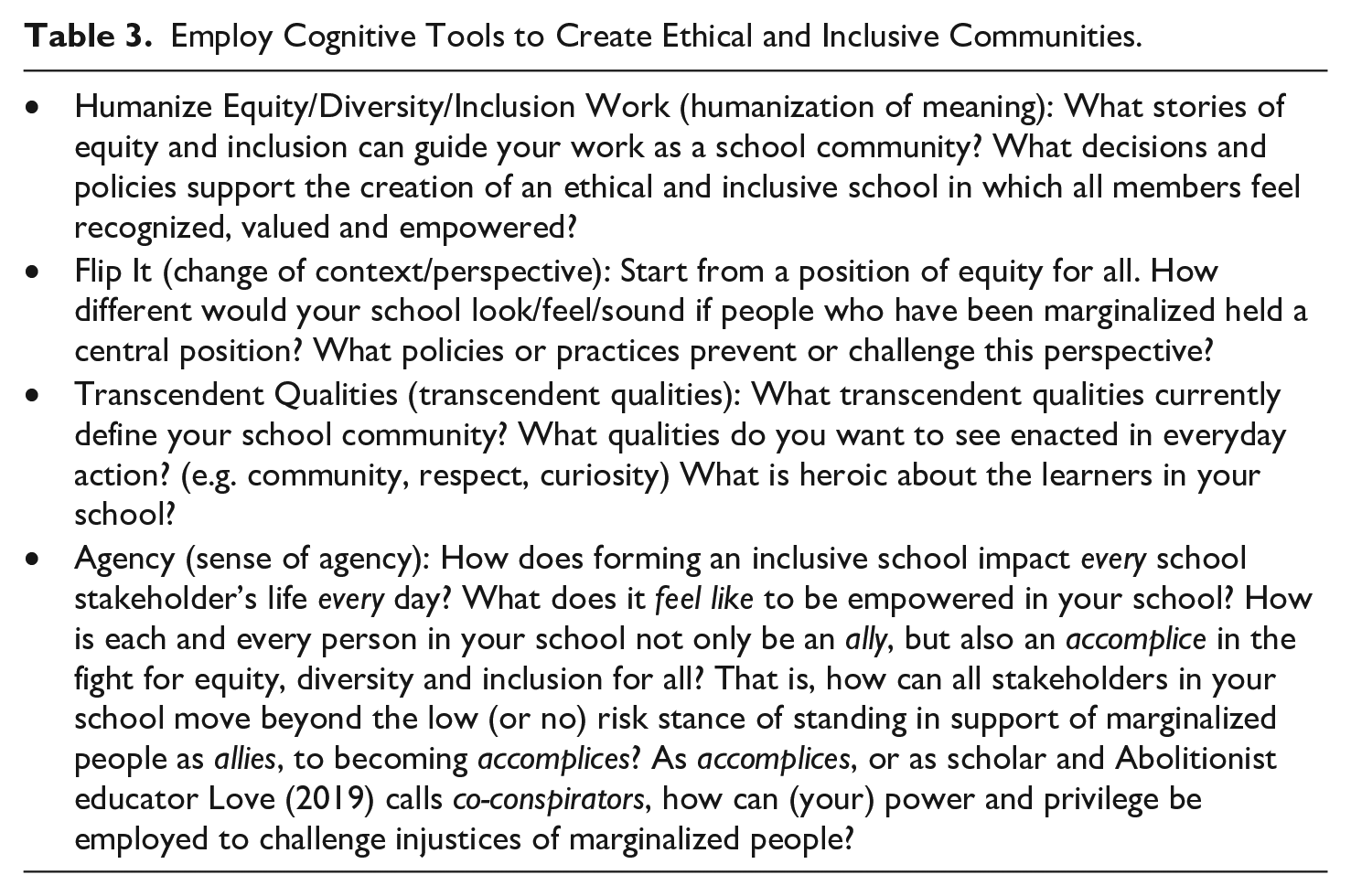
Table 3 provides practical strategies for school leaders seeking to re-imagine their school communities and to create inclusive and learning-centric spaces for all.
Employ Cognitive Tools to Create Ethical and Inclusive Communities.
In an analysis of research on Culturally Responsive School Leadership (CRSL), Khalifa et al. (2016) indicate that in order to bring social justice, inclusion, equity, and advocacy to the heart of schools, a culturally responsive school leader “critically self-reflects on leadership behaviors,” “develops culturally responsive teachers,” “promotes culturally responsive/inclusive school environments” and “engages students, parents and indigenous contexts” (p. 1283; see also Khalifa, 2018). IE provides a theoretical framework and specific tools that can foster these leadership practices. Imagination is the soil in which the work of culturally responsive school leaders is rooted: it is the source of critical self-knowledge and understanding the other; it allows perspective-taking, empathy, vision-making, story-listening, and story-telling; it supports the flexible responsiveness of ongoing daily interactions; it is the source of new approaches to community advocacy and connection. Cognitive tools can be used in ongoing ways in schools to support these dialogic, empowering, vision-focused conversations and action. Culturally responsive school leaders can employ cognitive tools to generate both personal and contextualized narratives that are democratic and inclusive of all people.
Imagination Yields Engagement and Meaning-Making: The Power of Story
Good leaders know stories can capture imaginations, illustrate ideas, arouse passions, and inspire creativity in ways that go far beyond the presentation of facts and data. (Conrad, 2016, p. 44)
Through history, storytelling has been one of the main ways in which imagination has developed across cultures (Asma, 2017). Human beings are storytelling animals; story is our currency (Asma, 2017; Egan 1997, 2005; Guajardo et al., 2011; Pink, 2005). In this research, story is defined is a way of shaping information that brings out its emotional dimensions. Story makes the listener or reader feel (Egan & Judson, 2015). Story evokes emotion and engages imagination—giving meaning to our own experiences, transporting us metaphorically to other times, places and perspectives. It is this emotional dimension—the connection of emotion to content—that makes story a cultural and historical power tool for passing on knowledge and meaning (Asma, 2017; Egan, 1997, 2005; Simmons, 2015). Not surprisingly, story is frequently identified as contributing to effective leadership (Burgess & Houf, 2017; Conrad, 2016; Guajardo et al., 2011; Guajardo et al., 2016; Godt, 2010; Heath & Heath, 2007; Patriotta, 2019; Simmons, 2015; Stephenson, 2009).
Stephenson (2009) describes the “aesthetic imagination” as the ability to create and communicate meaning to others in ways that are understood and remembered. Leaders need to be able to “capture in a few words or a brief narrative or symbol a complex reality in order to obtain a connection and shared aspiration with those with whom they are engaged” (p. 426). In short, leaders need to be storytellers.
Stories allow leaders to engage their communities: How can leaders make points in compelling ways that inspire managers and staff to create, innovate, and achieve excellence? Tell stories. To be clear, tell good, meaningful, short, realistic, and interesting stories that not only capture and sustain attention but compellingly make the key points you need to deliver. (Conrad, 2016, p. 44)
Guajardo et al. (2016) situate story at the heart of a process for building community partnerships called Community Learning Exchange, or CLE. They show how story connects people, Place, and history in cultural context to help solve local issues (Guajardo et al., 2016). Story is also a vehicle of the imagination that makes knowledge stand out (Conrad, 2016; Godt, 2010). Writing about teacher-leaders, Godt (2010) asks, “How can teacher leaders pass along information to teachers and others in ways that will be remembered?” (p. 56). The answer: Story.
In leadership, the stories leaders tell shape meaning and feeling; they can inspire or discourage, they include and exclude. Between stakeholders in organizations, storytelling is a process of negotiating meaning (Clarke, 2018). Simmons (2015) argues that belonging and trust are most effectively builtin organizations through story: “Sharing true stories is more (time and cost) effective for increasing trust in an organization than ice breakers, trust falls, ropes courses, or group hugs” (p. 225). In Wenger’s (1999) view, imagination supports belonging and can yield shared meaning through creative, collaborative processes: “The creative character of imagination is anchored in social interactions and communal experiences. . . . it is a mode of belonging that always involves the social world to expand the scope of reality and identity” (p. 178). Wenger’s work is a powerful illustration of how the stories we tell include or exclude. Changing the story changes meaning. Changing the story in an organization can increase or decrease understanding, ignite passion or extinguish it.
Besides the story-form, leadership scholars point to practices that engage the emotions of others. For example, Godt (2010) explores how leaders can use story along with music, imagery, role-play, metaphor, and change of context to engage educators. Aponte-Moreno (2017) shows how use of case studies combined with drama, change of context, and role-play in the context of leadership education allows pre-service leaders to analyze dilemmas from the outside and experience them from within. Specifically, transforming the context and internalizing characters through practices of imagining scenarios can be used to foster decision-making and ethical decision-making skills. All of these practices for engaging others and for making knowledge meaningful grow out of imagination.
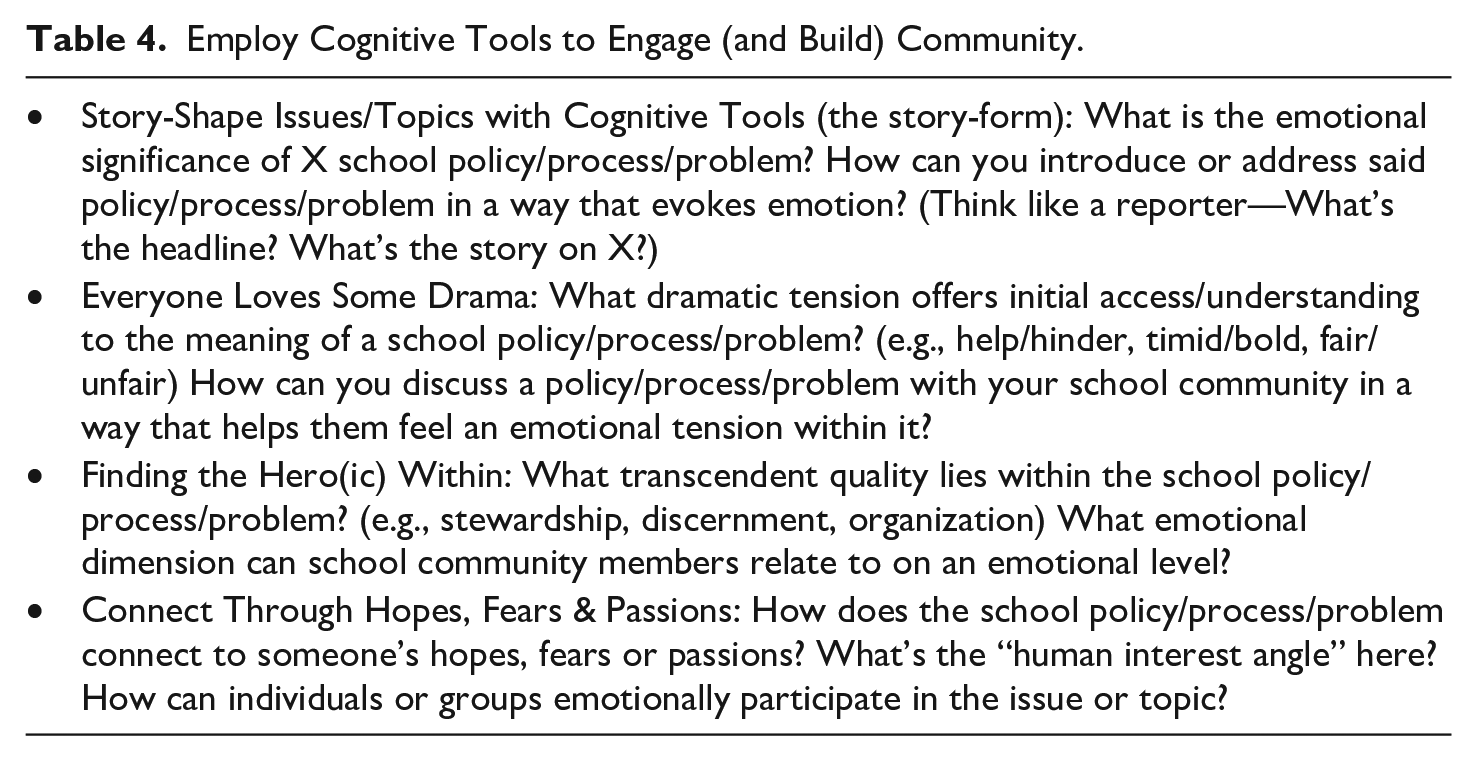
By exploring the cognitive tool activities in Table 4, school leaders can shape information they may need to communicate into a story-form that evokes emotion and imagination. What is particularly powerful about school leaders employing cognitive tools in their daily leadership is that they are demonstrating tools that can support improved instruction; they are demonstrating Imaginative Education practices and in so doing offer engaging experiences to the educators they lead. Table 4 shows how educational leaders can use the cognitive tools with members of the school community to support understanding or generation of new ideas.
Employ Cognitive Tools to Engage (and Build) Community.
This brief overview indicates the different features of leadership work rooted in imagination. Overall, we can see all of these facets of leadership as products of imagination. The produce of imagination is emotional; our own emotional engagement and our affective connections with other people, ideas, and concepts are crucial to bountiful, fruitful organizations. The produce of imagination is relational as it connects us with ourselves (self-awareness), others (empathy, inter-personal relationships), ideas (learning), and future outlooks (creativity, innovation). By showing the potential use and value of cognitive tools for growing school leadership imagination, this section has aimed to justify centralizing imagination conceptually in leadership discourse and practically in leadership education. Cognitive tools cultivate imagination, increasing its productivity at both individual and collective levels. The cognitive tools described in Tables 1 through 4 represent valuable strategies school leaders can employ to bring emotion and imagination to the heart of their daily practices and school cultures.
Given the scope of this paper, the strategies introduced relate to one specific context: school leadership. However, the cognitive tools themselves will be of value for leaders in any context. Cognitive tools may be used by pre-service or practicing leaders, in professional development or formal leadership programs. [A comprehensive description of cognitive tools can be found in Judson (2021), on the Centre for Imagination in Research, Culture, and Education (CIRCE) website: (www.circesfu.ca) or on the imaginED website (www.educationthatinspires.ca)]. How to employ cognitive tools in organizations across leadership domains and how to effectively employ them in formal leadership education are important areas of future research. In the context of school leadership, future research could examine how leaders employ specific cognitive tools in practice. For example, it could analyze the kinds of images, stories, patterns (and other cognitive tools) they employ to make meaning of and address school issues or policies within their communities.
Recommendations and Conclusions
This paper has aimed to unearth and reveal the myriad ways in which good leadership is rooted in and ultimately depends upon the ability to envision the possible. To support this goal it outlined the ways in which we might bring imagination down to Earth, thinking about how it is like soil, supporting and generating many leadership practices. Imaginative Education and cognitive tools were also introduced as theoretically valuable for expanding understanding about the nature of the human imagination and as practically valuable for growing leadership imagination in formal and informal educational settings.
Kaser and Halbert (2009) assert that leaders that transform organizations have learning mindsets. They specifically identify Imaginative Education and cognitive tools as offering a powerful learning disposition for educational leaders. They argue that using cognitive tools represents a mindset that is focused on engaging others, on possibility, and on transformation. In the spirit of the possible and learning, I urge readers to what if with me. What if leaders in all contexts intentionally employ cognitive tools to cultivate understanding of imagination and growth of imaginations in their communities? What if leaders support the stakeholders in their communities in growing imagination by intentionally using cognitive tools to understand what is, to generate new ideas about what could be, to champion ethical and inclusive communities and to engage? What if leadership education employs cognitive tools to develop improvisational decision-making capacities?
In addition to offering direct and practical pedagogical tools for leadership education, the ecological metaphor of imagination as soil broadens opportunities for research. Specifically, research reflecting constructionist, relational perspectives may enrich and expand our understanding of imagination’s roles in leadership (Clarke, 2018; Cunliffe & Eriksen, 2011; Uhl-Bien, 2004, 2006; Uhl-Bien & Ospina, 2012). This kind of research would reflect a “post-heroic” perspective in which leadership is understood to emerge among many stakeholders, and in particular contexts and relationships (Cunliffe & Eriksen, 2011; Sobral & Furtado, 2019). Future research must look at the role of imagining in the spaces between stakeholders where leadership resides in process and in collaboration. Researchers might consider these facets of leadership: how leaders experience imagining together and individually; how imagining possibilities informs leadership choices; what influences different processes of imagining in leadership; how power plays out in shared spaces of imagination as stakeholders interact around leadership issues; or, how imagining within organizations and among stakeholders contributes to individual and collective identity, and how this process is affected by race and gender. Better understanding of imagination, specifically the improvisational imagination and improvising, may be one way to respond to Uhl-Bien and Arena’s (2018) call for research on understanding the ways in which leaders can enable and develop adaptive responses and “adaptive space” (p. 99).
To advance understanding of imagination we might usefully think about Imaginative Leadership not only as involving solo leaders who stand out from others with their novel thinking and/or transformational successes, but also in terms of leadership with and among stakeholders that is grounded in the terrain of the possible. Imaginative Leadership may be understood to involve the intentional cultivation of individual and collective imagination with the use of cognitive tools. Empirical research into leadership imagination could usefully focus on how using cognitive tools for storytelling and storylistening helps leaders to grow empathy, to build relationships, and to understand the individual and shared emotional patterns and meanings in their organizations. In addition, by applying IE to leadership education we may grow leaders’ imaginations so they not only have strong imaginations themselves, but also an understanding of how imagination works in their organizations, what leadership processes it produces, and how they may facilitate its cultivation.
Footnotes
Declaration of Conflicting Interests
The author declared no potential conflicts of interest with respect to the research, authorship, and/or publication of this article.
Funding
The author received no financial support for the research, authorship, and/or publication of this article.
