



Abstract
Workplaces can positively or negatively shape employee health and sense of well-being. Employees who feel well are more productive, engaged, and present at work. The effects of the COVID-19 pandemic added to an already stressed work environment for educators. Student success is dependent on educators who are healthy and present. Employee wellness programs have the potential to improve the well-being of employees and now, more than ever, should be a priority in schools. The purpose of this article is to provide the school nurse with evidence-based resources to assist in the creation and implementation of an employee wellness program in the school setting.
Employee Well-Being
Work is a social determinant of health because it affects employee safety, health, and well-being (National Institute for Occupational Safety and Health, 2020). When an employee feels physically and emotionally ready to work, job performance is enhanced (Edem et al., 2017). The feeling of well-being can be affected by a variety of factors inside and outside of the work environment. Gallup (2023) and Kaiser Permanente (n.d.) posit that people must be thriving in five areas of their lives over which they have control:
Career—finding daily enjoyment in one’s job;
Social/Emotional—experiencing meaningful relationships in personal and professional life;
Financial—feeling secure with one’s financial situation;
Physical—feeling energetic and productive;
Community—feeling safe and happy in the environment in which one lives.
The State of School Staff Well-Being
Concerns about career well-being among employees in the school setting existed prior to the COVID-19 pandemic. Teacher shortages and turnover related to job stress have been highlighted in research. Causes of teacher stress include poor leadership, student behavioral problems, difficult parents, high-stakes testing, and lack of decision-making power (Robert Wood Johnson Foundation, 2016). Educators experience high levels of stress that can lead to burn out and turnover as they try to attend to students’ diverse learning needs while supporting their social, emotional, and behavioral needs (Gray et al., 2017), and turnover is higher in schools serving low-income students and students of color (Carver-Thomas & Darling-Hammond, 2017).
Much attention has been placed on the social-emotional well-being of school staff during the COVID-19 pandemic. Once schools were closed, educators were forced to pivot to online education, which was a novel task that did not have the structural supports to ensure its effectiveness. Inequities in access to internet and technology made it difficult for educators to provide instructional services and led to feelings of isolation and anxiety (Kim et al., 2022; Kush et al., 2022). Teachers and related service providers experienced compassion fatigue (a reduced capacity for empathy due to working with people who have experienced trauma) and secondary traumatic stress (the result of helping or wanting to help a traumatized or suffering person) as they obtained a clear picture of the conditions in which their students lived while teaching remotely (Ormiston et al., 2022).
School nurse well-being was in jeopardy prior to the pandemic as well. Shortages of school nurses and job stress were attributed to incivility from staff members as a result of the misunderstood role and scope of practice of the school nurse (Peters et al., 2021). Jameson and Bowen (2020) identified that school nurse burnout related to depersonalization and workload has the potential to negatively impact the quality and safety of student care. As the only healthcare provider in school, the well-being of school nurses was significantly affected by the pandemic. School nurses were faced with the novel tasks of protecting the health of the school community without adequate training or consistent guidance. Workload was already a burden, and the lack of additional human resources to conduct case management and contact tracing affected school nurse mental well-being during the pandemic (Chen et al., 2023).
Another factor that affects all school staff well-being is the threat of violence in schools. Although relatively rare, the increasing incidence of school shootings force educators to be cognizant of the safety of students in addition to ensuring quality education (Combe & Cogan, 2023; Education Week, 2021). Various levels of assault deterrents in the school setting have the potential to decrease injury and death, but the risk to staff and students remains (Feda et al., 2023). Violence, cyberstalking, and verbal aggression against school personnel from parents and students have led to a desire of many staff members to leave the profession (McMahon et al., 2022).
Concern for physical well-being is not exclusive to educators. The leading causes of death and disability in Americans are chronic diseases such as heart disease, cancer, and diabetes (Centers for Disease Control and Prevention [CDC], 2022). Modifiable behaviors such as tobacco use, poor nutrition, physical inactivity, and alcohol use contribute to the development of chronic disease. In general, less than 25% of Americans meet the guidelines for aerobic activity and muscle strengthening and 25% report the lack of engaging in any leisure time physical activity (CDC, n.d.). The school setting provides for a sedentary lifestyle at work, with very few opportunities to leave the classroom. For many educators, the lunch break is often spent on providing students with extra help, answering parent emails, or attending meetings, leaving little time for a nutritional break. School initiatives that increase employee activity before, during, or after school have the potential to reduce the risk of chronic disease among educational staff.
The Importance of Employee Wellness Programs
Employee wellness programs are supported by national organizations in the United States. As identified in the goals of Healthy People 2030, the health and wellness of the U.S. workforce is central to the strength of the economy, and workplace wellness programs are recommended (U.S. Department of Health and Human Services [DHHS], n.d.). Module 9 of the CDC’s School Health Index (SHI) and the Whole School, Whole Community, Whole Child (WSCC) model emphasize the need for employee wellness and health promotion (CDC, 2018, 2021). The principles of leadership and community/public health within the National Association of School Nurses’s (NASN, 2016) Framework for 21st Century School Nursing PracticeTM support the health of not only the students, but also the employees.
The Role of the School Nurse in Employee Wellness Programs
School nurses are healthcare providers and can positively influence the health of school employees. The role of the school nurse in employee wellness is supported by two competencies in School Nursing: Scope and Standards of Professional School Nursing Practice (NASN, 2022). The school nurse “respects and promotes structures and processes that reflect that people are the most valuable asset in an organization” and “serves in key roles in the school and work settings by participating on and leading committees” (NASN, 2022, p. 83). The nurse’s knowledge of health promotion and disease prevention is valuable in the development and implementation of an employee wellness program. School nurses are vital to the success of employee wellness programs and initiating policy changes to positively impact employee health (Wood et al., 2019).
Barriers to Employee Wellness Programs
Organizational barriers to wellness programs can include financial, physical, and human resources with which to implement programs. Employee barriers can be caused by programs that require fees or memberships, programs that are held outside of work hours, and those that are held at inconvenient locations. Measures to reduce barriers include the utilization of organizational experts and community partners to reduce costs and increase access. Obtaining employee input during program development is valuable in planning the times and locations of the program components.
Effectiveness of Employee Wellness Programs
It may be argued that the effectiveness of wellness programs is difficult to quantify in cost savings to employers in terms of healthcare spending, employee absenteeism, and job performance (Corbett et al., 2022; Song & Baicker, 2021; Vargas-Martinez et al., 2020). The ultimate goal of wellness programs is to improve employee health, thereby reducing healthcare costs and worker’s compensation claims (Wisconsin Department of Health Services et al., 2018). However, employers may need to be content with offering programs simply to improve the health, morale, and retention of their employees (Baid et al., 2021). Historically, employee wellness programs have focused on exercise and nutrition, but the needs of school staff have changed since the pandemic experience.
The school is a worksite, and its employees are its greatest asset. A major portion of a district’s budget is spent on personnel, and it makes sense to invest in the well-being of the employees. Full-time employees, including school staff, spend approximately 8 hours per day 5 days per week at work, making the work place the ideal setting to promote the health of American adults (CDC, 2016). A well-rounded wellness program in the school setting supports the physical, social-emotional, and career wellness needs of the employee. The school nurse is often the only healthcare provider in schools and is poised to influence employee health. The purpose of this article is to provide the school nurse with evidence-based guidance and resources to share with the school team in the implementation or improvement of an employee wellness program.
Development of an Evidence-Based Wellness Program
After the decision is made to create a wellness program, the journey to achievement closely mirrors the nursing process of assessment, planning, intervention, and evaluation. The steps to developing a wellness program are summarized in Figure 1.
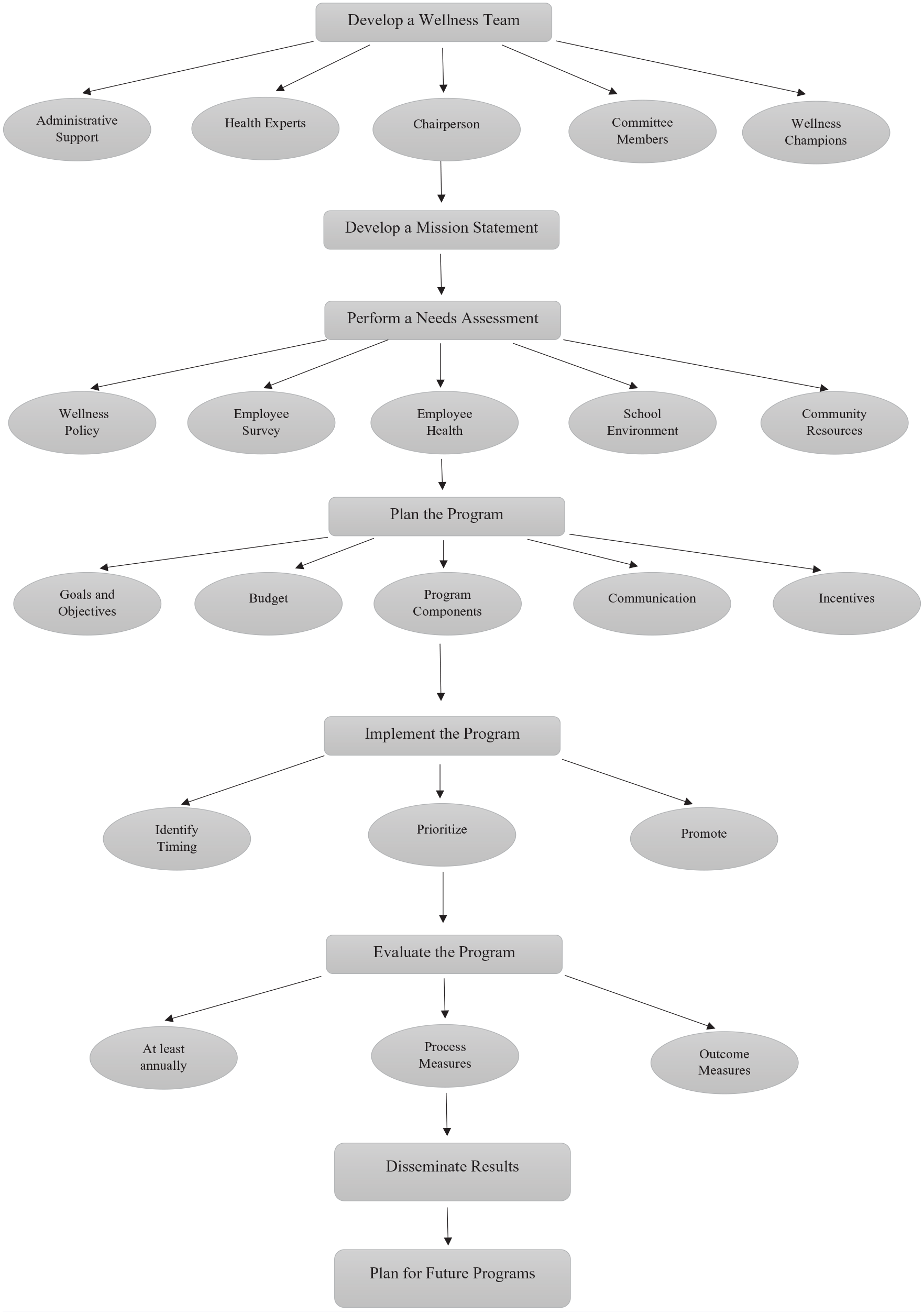
Steps to Develop a Wellness Program
Develop a Wellness Committee
Developing a diverse wellness committee is the first step in creating a program. Administrative support is the most important element of the team to provide for a top-down approach to wellness. The presence of an administrator on the team is vital because decisions about resource allocation and policy development require administrative approval. Identifying an administrator who is passionate about their own well-being is more likely to serve as a role model while creating a contagious trend to improve work–life balance among the staff (Townsley et al., 2021). Other key members of the wellness committee are the school nurse, health teacher, and physical education teacher as they are the health experts and possess the knowledge and experience to create the framework for the program components.
To be productive, the wellness committee should consist of no more than 10 members (National Association of Chronic Disease Directors [NACDD], 2018). The wellness committee chairperson, whether an administrator or an employee, should be someone who is enthusiastic about wellness, a strong communicator, committed to building a healthy workplace, and skilled in delegation (Kaiser Permanente, 2021b). Committee members should allow for representation from all organizational levels, and not just individuals who are active and healthy (Anthem, n.d.). Employees from food service, transportation, maintenance, human resources, employee benefits, and clerical staff should be included in program decisions.
In large school districts, a leader in the form of a wellness champion could serve to instill motivation at the building level. Wellness champions do not have to be committee members, but should be individuals who are generally intrinsically motivated and passionate about health (Mitchell et al., 2021; NACDD, 2018). The wellness champion’s role is to assist with the dissemination of health information, encourage peer participation, and serve as an accessible wellness expert in the school (Wood et al., 2019).
Develop a Mission Statement
The development of a mission statement is vital to the design of the program. The mission statement encompasses the organization’s vision of wellness and what they want to accomplish. An example of a mission statement is to provide a culture that supports employee physical, social-emotional, and career well-being and motivates employees to prioritize their health and improve their quality of lives.
Assessment
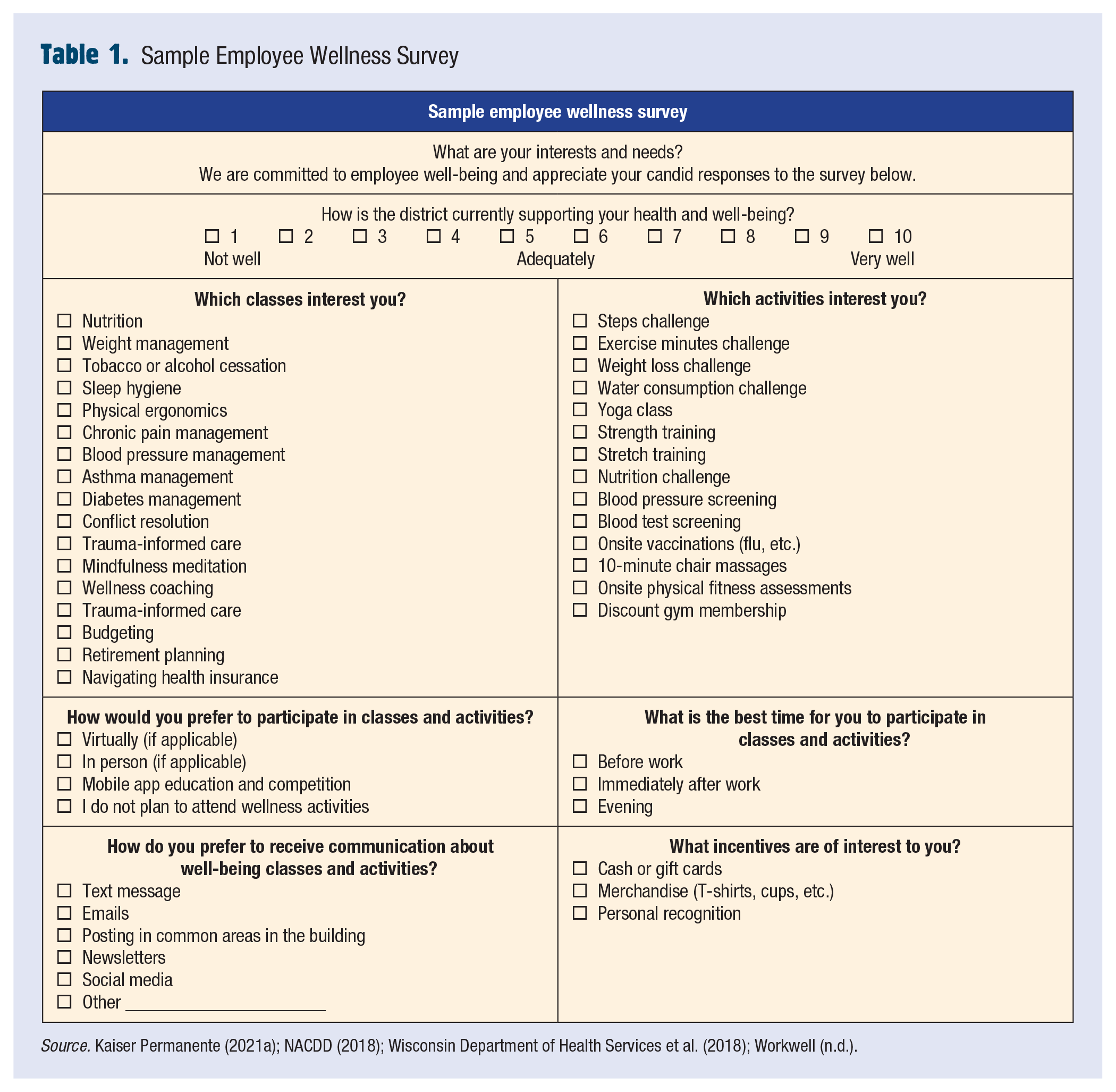
To identify the health initiatives, a formal data collection process should occur. An organizational needs assessment can be conducted using Module 9 of the CDC’s (2017) SHI or the Worksite Health ScoreCard (CDC, 2019) to determine what areas of employee well-being are already being supported. The Alliance for a Healthier Generation (n.d.) and Module 1 of the SHI (CDC, 2017) can provide the information to review and refresh the school’s wellness policy. Determining the specific interests of the staff can be assessed using an employee wellness survey. A survey is the most practical way to assess employee interests for programming, preferences for locations and times of initiatives, opinions about how wellness information should be communicated, and the choice of incentives that may support employee engagement. Surveys should be confidential, absent of individual identifiers, and brief. They can be disseminated by paper, SurveyMonkey, or Google Forms (Kaiser Permanente, 2021a). See Table 1 for a sample employee wellness survey.
Sample Employee Wellness Survey
A general snapshot of employee health can be obtained by reviewing insurance claims data from the district’s employee benefits and worker’s compensation insurance providers. Aggregate data on preventive care, health, and pharmacy claims data will be useful in assessing the general health of the employee population (Shannon & Haynie, 2019; Wisconsin Department of Health Services et al., 2018). Employee absenteeism rates that are beyond what is expected provide a snapshot of employee well-being, whether it be related to health or social-emotional causes.
The committee should assess the school environment and policies and their impact on employee wellness. Module 1 of the SHI (CDC, 2017) is an excellent tool to assess staff development on emergency preparedness, chronic health conditions, and prevention of occupational-related infection. Using Module 4 of the SHI (CDC, 2017), the nutritional content of the food available for employees outside of the cafeteria such as after-school events, during meetings, and in vending machines can be assessed. Environmental conditions in the school such as air and water quality, safety, cleaning, maintenance, and pest management practices can be assessed with Module 8 of the SHI (CDC, 2017). Employees’ ability to take physical breaks during the school day, designated space for mental health breaks, and lactation privacy support should be assessed (NACDD, 2018).
Finally, the identification of school and community resources should be assessed to determine how programs can be implemented. The physical facilities of the school and the expertise of staff to conduct classes and lead fitness challenges may be readily available and affordable. The school gymnasium, track, swimming pool, and classrooms are resources that may provide convenient, low-cost spaces for programming. Resources within the community include local hospitals, fitness centers, park district facilities, and outdoor spaces. Some community organizations may provide access to their facilities for free or reduced cost to support employee health.
Plan the Program
Develop Goals and Short-Term Objectives
Program design can begin by aligning the needs of the employees with the mission of the program. The committee should analyze the needs assessment data and set long-term goals. Long-term goals describe what the district intends to achieve over a 2- or 3-year period and help drive the decisions for program components. The purpose of the long-term goals is to address individual behavior modification through an increase in healthy habits, to initiate changes within the school environment, and to develop or modify policies to support employee health (NACDD, 2018; Wisconsin Department of Health Services et al., 2018). Short-term objectives are written to measure the individual program components. They describe what will be measured over a period of weeks, months, or a year. Specific deadlines can be used to measure success and plan for the future program components. The objectives should be written in SMART format: Specific, Measurable, Attainable, Realistic, and Timely (Kaiser Permanente, 2021b). See Figure 2 for examples of program component sample goal and objectives.
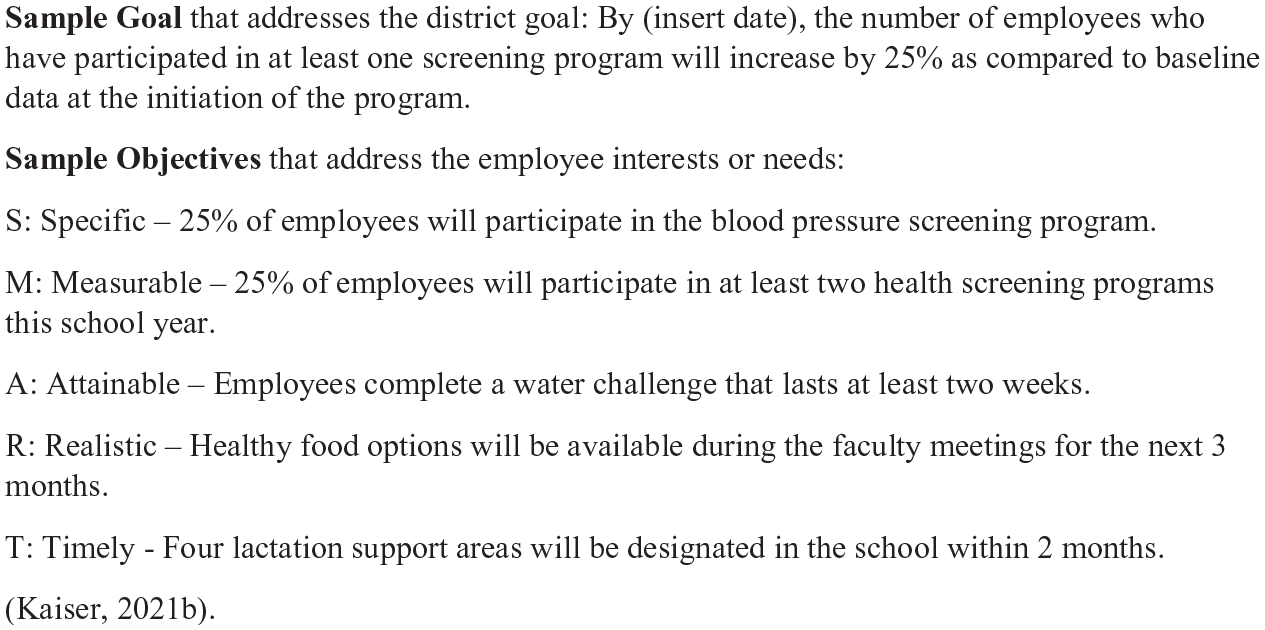
Sample Goal and Objectives
Create a Program Budget
A program budget is the next step. Summarizing data from school and community resources assist in the development of a budget. Funding for the program can be solicited from healthcare organizations that serve the community, local businesses, fundraisers, incentives from health insurers, district funds, and grants from nonprofit organizations (Shannon & Haynie, 2019). Partnerships with community health organizations such as the local health department, hospitals, and healthcare providers allow for opportunities to offer convenient, affordable preventive care (NACDD, 2018; Shannon & Haynie, 2019). Small fees may be collected from program participants if necessary. Gymnasiums, swimming pools, outdoor tracks, and classrooms are excellent internal resources to use for fitness activities and classes. In addition to physical resources, human resources are needed to conduct wellness initiatives. Volunteers are ideal, but the committee may suggest stipends for faculty willing to share their expertise. Seek out the help of health experts from community partners as well. Partners may be able to offer health education and resource materials, training and support, instructors for classes, discounts on programs, and health assessment screenings (NACDD, 2018).
Identify Program Components
Program components are identified from the assessment data, the goals, and the objectives of the program. Program components can be categorized to address physical, social-emotional, and career well-being. The rights of persons with disabilities must be considered when identifying program components to ensure accessibility for all employees. Programs need to comply with Title I of the Americans with Disabilities Act, Title II of the Genetic Information Non-discrimination Act, the Health Insurance and Portability and Accountability Act, and the Affordable Care Act (Federal Register, 2016). The laws require that wellness programs must be voluntary, accessible to all, and make provisions for the employees’ privacy rights. Review of these laws during the planning process is recommended.
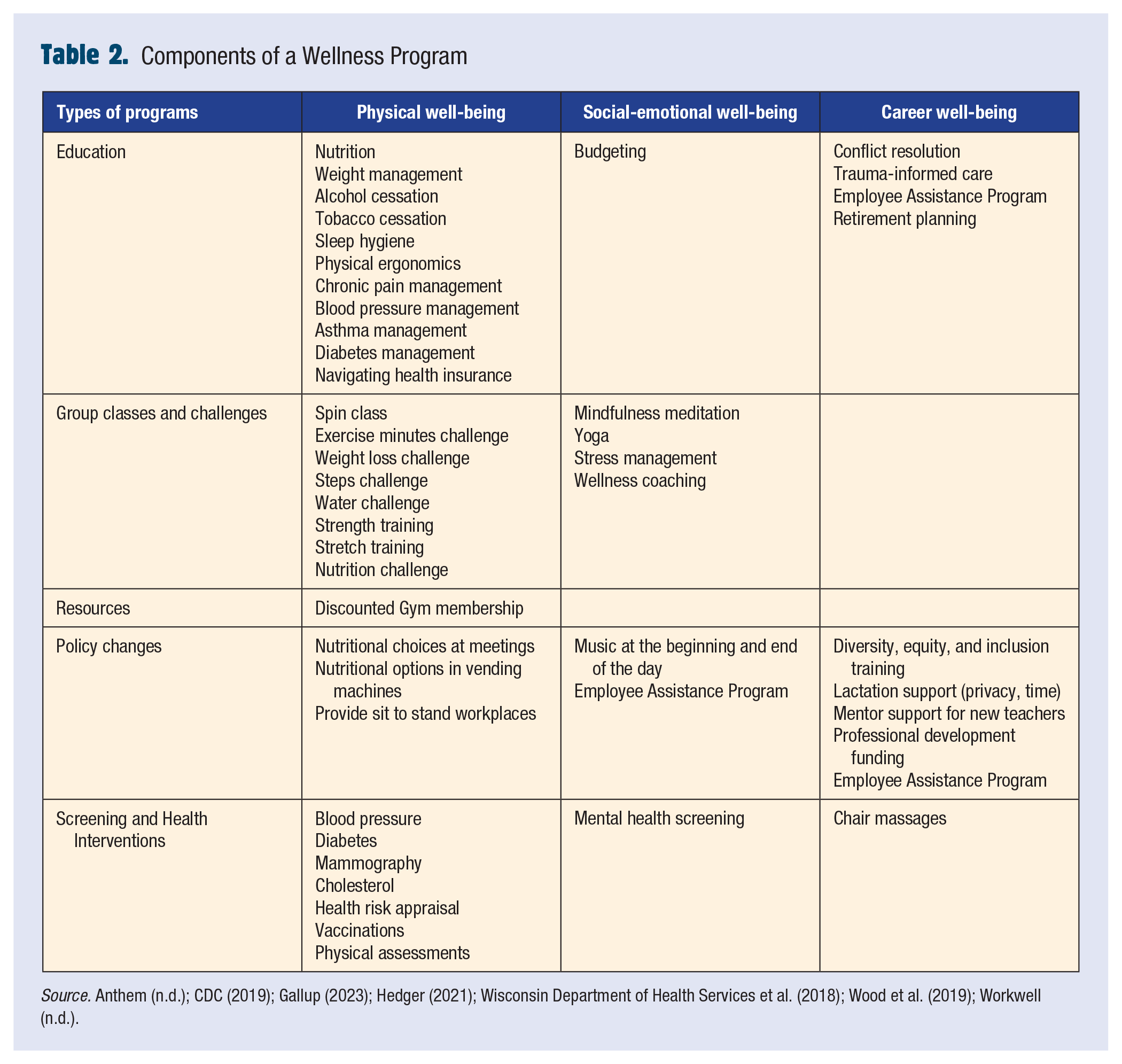
Prioritizing two or three initiatives is a good place to start to ensure that the budget and human resources are available. It may be best to identify low-, medium-, and high-resource activities to prioritize activities that can be quickly implemented and have minimal cost in terms of staff and financial resources (Wisconsin Department of Health Services et al., 2018). See Table 2 for examples of wellness program components.
Components of a Wellness Program
Communicate the Program
Captivating the attention of the employees with effective communication can increase participation. Identifying a team of communicators with a designated method of communication will ensure that the messaging is consistent and clear. Promote the potential benefits that the employee may feel or experience as a result of participation in the activity instead of simply promoting the event (Wisconsin Department of Health Services et al., 2018). Branding the initiative with a color scheme and logo makes communication materials more recognizable and attractive (NACDD, 2018; Wisconsin Department of Health Services et al., 2018). Forms of communication will vary based on the intended audience, but common methods in the school environment include the use of flyers, announcements, email, social media, text messages, and bulletin boards.
Incentivize the Program
Although some people are intrinsically motivated to care for their well-being, creating extrinsic motivation with incentives may boost program participation. Ideally, employees who are attracted by the incentives will develop more intrinsic motivation after feeling positive effects from the programs (Wisconsin Department of Health Services et al., 2018). Commonly used incentives include T-shirts, water bottles, lanyards, lunch bags, wristbands, gift cards, and other merchandise. It is recommended that participants receive incentives for both participation and achievements (NACDD, 2018). When searching for low-cost incentives, include the resources that community partners may be willing to donate. Keep in mind that laws limit the value of incentives. Recognition of program participation can be achieved by posting photos on social media and within the halls of the school, by holding celebrations before or after school, and by presenting awards during faculty meetings.
Implement the Program
After the committee determines the components of the program, it is time to decide when and where to start. Initiating the program at the beginning of the school year makes logical sense, but it may be difficult to launch a school year and a wellness program at the same time. It is best to launch the program as early in the year as possible to leave time for evaluation and modification of the program for the following school year. It may be best to start with a program that is short in duration to ease into the process (Anthem, n.d.). Prioritization of the programs with the biggest impact is a good place to start and focusing on a few activities to start can provide some early success, ensuring program expansion in the future (Wisconsin Department of Health Services et al., 2018). A multimodal robust promotion will ensure that all employees are aware of the program components. A kick-off event with the presence of leadership will draw attention and instill employee motivation (Anthem, n.d.; Wisconsin Department of Health Services et al., 2018).
Evaluate the Program
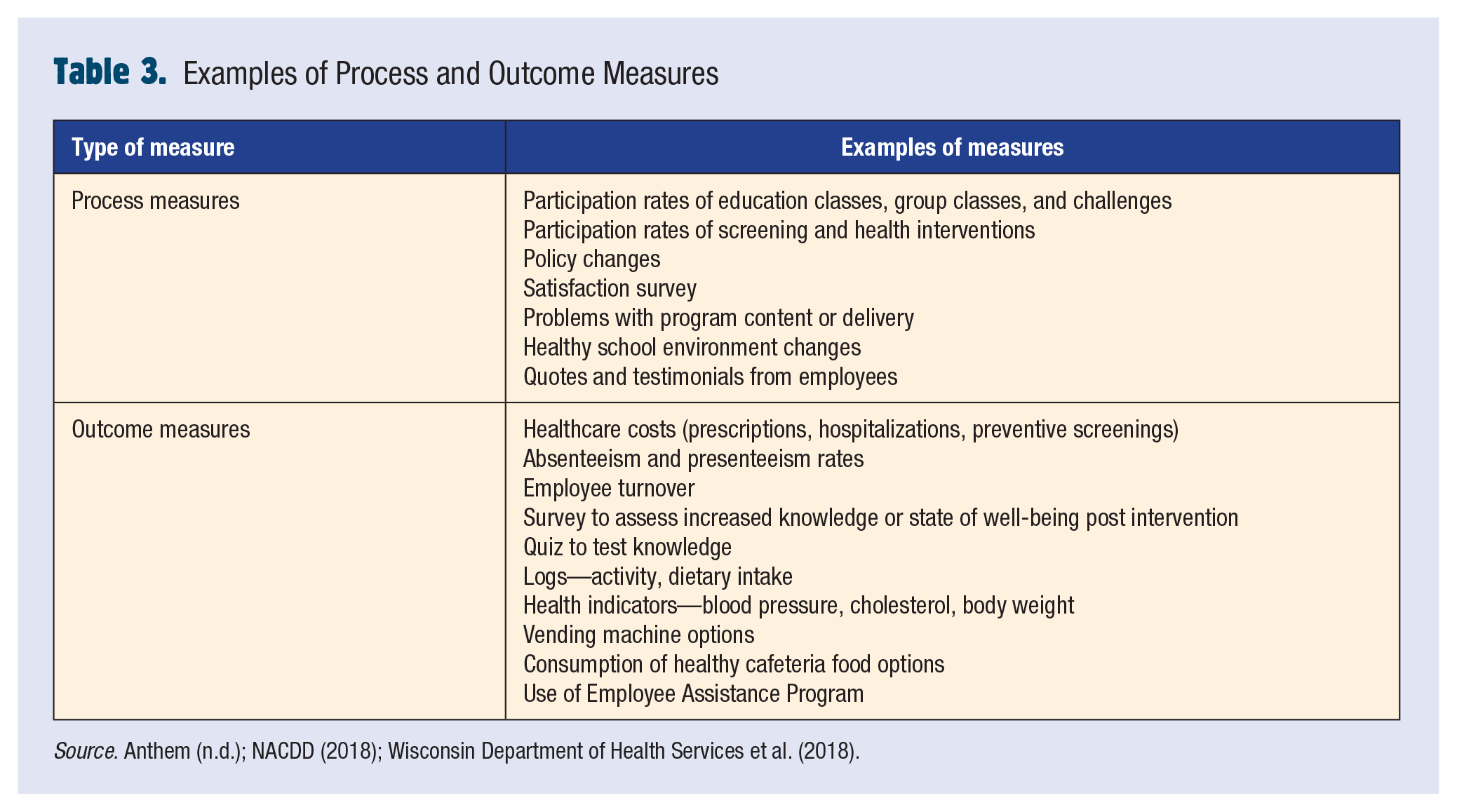
Evaluation of the wellness program is important to validate the time, energy, and money invested in the employees. Programs should be thoroughly evaluated at least annually with a comparison of metrics and employee input. Conducting a formal evaluation will assess whether the program is meeting the goals of improving employee well-being. Methods of wellness program evaluation should be determined in the planning stage and conducted on a regular basis throughout program implementation. If the SHI (CDC, 2017) or the Worksite Health ScoreCard (CDC, 2019) were used in the initial assessment, they can also be used post assessment. Evaluating program success can best be accomplished by measuring process and outcome measurements (Anthem, n.d.; NACDD, 2018; Wisconsin Department of Health Services et al., 2018).
Process measures provide an assessment of how the program is implemented to assure or improve the quality of delivery (NACDD, 2018). A comparison with pre- and postintervention data determines whether the participants experience a change in knowledge or skills as a result of the program components. The data also help the committee to identify what is working and what needs to be changed in future programming.
Outcome data measure the impact or benefits of the program on employee well-being. Measurements include changes in knowledge, attitude, mental health status, and a reduction in risk factors (Wisconsin Department of Health Services et al., 2018). A comparison of the data pre- and postintervention is also required in outcome assessments and may take months or years to demonstrate. It is easier and faster to collect process measures, but it is important to be patient enough to wait for outcome measures to make any major shifts in programming. See Table 3 for examples of process and outcome measures.
Examples of Process and Outcome Measures
Disseminate Results and Plan for Future Programming
The outcomes of the wellness program should be shared with stakeholders on a regular basis. Methods of dissemination to the school population can include reports, success stories, social media posts, and newsletters. Professional presentations are appropriate for administrators, school board members, and other key decision makers. The ability to see data at a glance through charts, graphs, and images can present a clear, powerful message and can be posted throughout the building (NACDD, 2018). Messages that link employee wellness to student can be impactful when included in the communication. In the long term, continuing to offer successful programs over several years is acceptable if they continue to have a positive impact, but introducing novel programs will keep the momentum going (NACDD, 2018). Continued reflection, recruiting new committee members and champions, and initiating program revisions will keep the program growing in a positive direction (NACDD, 2018). Just as in any nursing intervention, the steps of assessment, planning, intervention, and evaluation should be ongoing to ensure wellness program success in the long run.
Summary
Students across the globe suffered a loss of quality education and increased social-emotional stress during the pandemic, which makes the job of educators even more challenging than the pre-pandemic period. The well-being of educators was a concern prior to the pandemic and now, more than ever, it is time to support them. Schools have the opportunity to make a positive impact on the career, social-emotional, and physical well-being of school staff through comprehensive employee wellness programs. School nurses are experts in health promotion and disease prevention and can assist in improving employee health by being a member of the interdisciplinary team that develops and implements an employee wellness program (NASN, 2016). An employee wellness program that thoroughly addresses the needs of the employees, is supported by school administration, and is led by individuals who are passionate about health has the potential to improve not only employee well-being, but also educational trajectory of students.
Footnotes

References
Supplementary Material
Please find the following supplemental material available below.
For Open Access articles published under a Creative Commons License, all supplemental material carries the same license as the article it is associated with.
For non-Open Access articles published, all supplemental material carries a non-exclusive license, and permission requests for re-use of supplemental material or any part of supplemental material shall be sent directly to the copyright owner as specified in the copyright notice associated with the article.
