



Abstract
Background:
Associations of youth sport participation patterns, health, and social-environmental factors with subsequent participation in the National Basketball Association (NBA) have not been investigated systematically. Prior studies suggest that high-performing athletes who achieve the world-class level of adult sport engaged in less organized training in their primary sport, participated in more multisport practice and competition, and incurred fewer injuries as youths compared with lower-performing adult national-class athletes.
Hypothesis:
Players who sign an NBA player contract engaged in less organized basketball, demonstrated more multisport practice, and incurred fewer injuries as youth athletes compared with non-NBA peers.
Study Design:
Cross-sectional study.
Level of Evidence:
Level 4.
Methods:
Top-ranked male high school basketball players (n = 627, 16.6 ± 1.3 years old) attending invitational events in the United States in 2018 and 2019 completed a questionnaire regarding participation in coach-led and nonorganized basketball and other sports, injuries, academic progress, residence relocation, and scholarship or funding. Of this sample, 40 (6%) signed an NBA player contract by age 22 years. These 40 players were matched by age, birth month, playing position, and national youth player ranking with 40 peers who did not reach the NBA. Matched-pairs analyses included χ2, unpaired t tests, U tests, and binary-logistic regression (BLR).
Results:
Youth athletes who later became NBA players reported more organized participation in sports other than basketball until age 14 years (90.0% vs 52.5%), began playing on select teams and focusing exclusively on basketball at older ages (10.7 ± 2.4 vs 9.1 ± 2.5 and 12.9 ± 2.2 vs 9.6 ± 2.5 years), and spent less time in organized and nonorganized basketball than matched non-NBA peers. NBA players also reported fewer severe injuries at ≥14 years (25.0% vs 47.5%) and were less likely to stay back in school, relocate residence, and receive scholarships/funding, respectively. BLR correctly classified 85.0% of NBA and non-NBA players.
Conclusion:
Participation in approximately 2 other sports, later specialization, less coach-led and nonorganized basketball, fewer injuries, and less disruption to academic and home life were characteristic of top-ranked youth players who later played in the NBA.
Clinical Relevance:
This is the first study to investigate youth basketball participation patterns associated with reaching the NBA among top-ranked U.S. high school basketball players.
Keywords
In 2016, the National Basketball Association (NBA) and USA Basketball expanded their partnership to facilitate new work in several areas, including certain issues in youth basketball in the United States (US). As part of this initiative, a multidisciplinary team of scientific and medical advisors was convened to form a “Player Health and Wellness Working Group” and collaborated to develop guidelines for youth basketball participation.21,48 The guidelines, published in October 2017, promote multisport participation until the age of 14 years or older and provide age- and grade-specific recommendations for the avoidance of excessive organized basketball participation (in both games and training) as well as adequate time for rest and recovery.
The working group has continued to investigate issues relevant to youth basketball, including an effort to understand participation patterns, aspects of players’ social environments, and several specific outcomes related to health, wellbeing, and performance. 45 Building on this work, the present study considers factors during youth that are associated with later becoming an NBA player.
Earlier research has considered several outcomes of youth sport, including youth and adult performance, psychosocial wellbeing, and health, along with their associations with youth participation patterns, birthplace, and date of birth.1,2,4 -6,8,11,17,36,37,41,43,47,54,57,58 In addition, position papers have also considered participation patterns in the context of optimizing benefits and reducing negative outcomes regarding performance, health, and wellbeing.7,20,42
Many current youth sport programs have expanded to include national- and international-level championships for youth athletes as young as 11 to 15 years of age. 36 Looking specifically at basketball in the US, there are national championship events for divisions as young as age 7 years and national rankings published online for players as young as 8 years old.49,55 These trends can result in a youth sport experience that emphasizes early competitive success—sometimes associated with the pursuit of scholarships—via an early start, early single-sport specialization, increased sport-specific practice, and early participation with select teams and talent promotion programs.4,14,25,26,31,37 Such a youth sport approach is typically associated with increased demands on time, frequent travel, intense schedules of practice and competition, and increased chronic sport-specific workload.6,37,57 These may lead to unintended negative outcomes, including reduced time for other important developmental activities such as school and academic pursuits, time with family, friends, and community, hobbies, declining academic performance, and increased risks of later overuse injuries and burnout—all factors that may compromise a youth athlete’s career.6,37,57 Moreover, the families of many youth athletes often feel compelled to disrupt home and/or academic life to pursue the prospects of the youth’s athletic career (eg, changing to a different school, altering academic class standing, and/or changing residence),12,27,33,52 which may impose additional sacrifices on the youth athlete.
However, a pattern that intensifies early acceleration of performance rarely leads to senior success. 36 Recent meta-analyses synthesized the available evidence on associations of both youth and adult performance with participation patterns.4,31,37 Two observations were consistent across Olympic sports. First, higher youth performance is associated with a younger age to start one’s main sport, accelerated early performance progress, younger involvement in talent promotion programs (youth sport academies, federations’ under-age selection teams), larger cumulative amounts of organized main-sport practice, and reduced or no practice in other sports. Second, however, predictors of peak performance at the senior level (ie, in the highest, open-age category, typically athletes in their 20s to 30s) contrasted those of youth performance. Senior world-class athletes (comprising medalists and top 10 at the Olympic Games and World Championships), compared with less-accomplished senior national-class athletes (top 10 at national championships and/or playing national premier league, but not world class), began participating in their main sport at a later age, had more gradual performance development in their early years, began participating in talent promotion programs at older ages, and accumulated less childhood/adolescent organized practice in their main sport but more practice in other sports.4,31,37
The evidence has been discussed in association with 3 explanatory hypotheses.4,31,37,44,50 First, the “Search-and-Match” hypothesis suggests that athletes’ childhood/adolescent experience with 2 to 3 sports increases the odds of finding an optimal sport match, and thereby of developing enduring interest and engagement.15,39 Second, the “Enhanced-Learning-Capital” hypothesis suggests that the learning experiences with different sports, implying varied learning tasks, situations, and methodologies, enhance athletes’ learning capital for subsequent long-term sport-specific learning at a high level.4,9,37 Third, the “Limited-Risks” hypothesis suggests that youth athletes’ multisport participation is associated with reduced risks of career-hampering factors such as later overuse injuries, burnout, or excessive opportunity costs (the lost benefit of foregone other activities).6,8,11,57 Youth athletes who find an optimal sport match, enhance their learning capital, and have reduced risks of career-hampering factors are more likely to develop exceptional adult performance.
Although many discussions of youth sports and elite youth athletes are focused on sport programs in the US, studies of US elite athletes are under-represented in the scientific literature.4,31,37 In particular, no studies to date have considered youth predictors of achievement among adult elite basketball players in the US. Given this background, the purpose of this study was to compare youth sports participation patterns and social-environmental factors of top-ranked youth basketball players in the US who eventually signed a player contract with an NBA team and their peers who did not reach the NBA (subsequently labeled as NBA players vs non-NBA players).
Based on available evidence on developmental factors of success among senior elite athletes,4,31,37 it was hypothesized that, as children and adolescents, NBA players engaged in less organized youth basketball, participated to a greater extent in other organized sports, and were less likely to incur basketball-related injuries than their non-NBA peers. Directed a priori hypotheses regarding indicators of disruption of academic and/or home life of players and financial support were not formulated, given the lack of relevant research.
Methods
Participants
A questionnaire was administered to 627 male participants at several invitational basketball events in the US that involved youth players in 2018 and 2019 (16.6 ± 1.3 years of age [mean ± SD]). 45 Those who eventually became NBA players (n = 40) were identified by matching publicly available data with individual survey responses. Specifically, publicly available rosters of the invitational youth events at which the survey was administered were linked with the survey data of birth year and month, height at the time of the survey, and the State in which the player’s high school and club teams were based.
The 40 NBA players were contracted at ages 19 to 21 years; 25 were first-round and 14 were second-round NBA draft picks, while 1 was a nondrafted player. The players had been involved in 2.7 ± 1.1 NBA seasons by the end of the 2023-2024 NBA season. They had played 18.4 ± 9.7 minutes per game in 64.3% of their team’s games during the seasons they had been NBA players. The latter correspond to the 64th and 59th percentile of all NBA players drafted in the same respective seasons.
Following the procedures of previous studies of elite athletes, 29 a matched non-NBA player was identified for each NBA player. Matching was based upon national youth player ranking at the time of the survey, playing position, age (within ±1 year), birth month (within ±2 months), and complete data for the relevant variables. If an NBA player had >1 match, a random process was used to extract a single match for each NBA player. 29 This occurred for 8 NBA players. The procedure resulted in 2 subsamples of 40 matches of an NBA and a non-NBA player (n = 80) who were identical in youth player ranking and playing position and quasi-identical in age and month of birth (Table 1). The subsamples also did not differ significantly in height at data collection (P = 0.33) or in type of high school attended (public or private, P = 0.35; Table 1). This total sample of players was 16.9 ± 1.0 years of age at the time of the survey.
Characteristics of matched NBA and non-NBA players
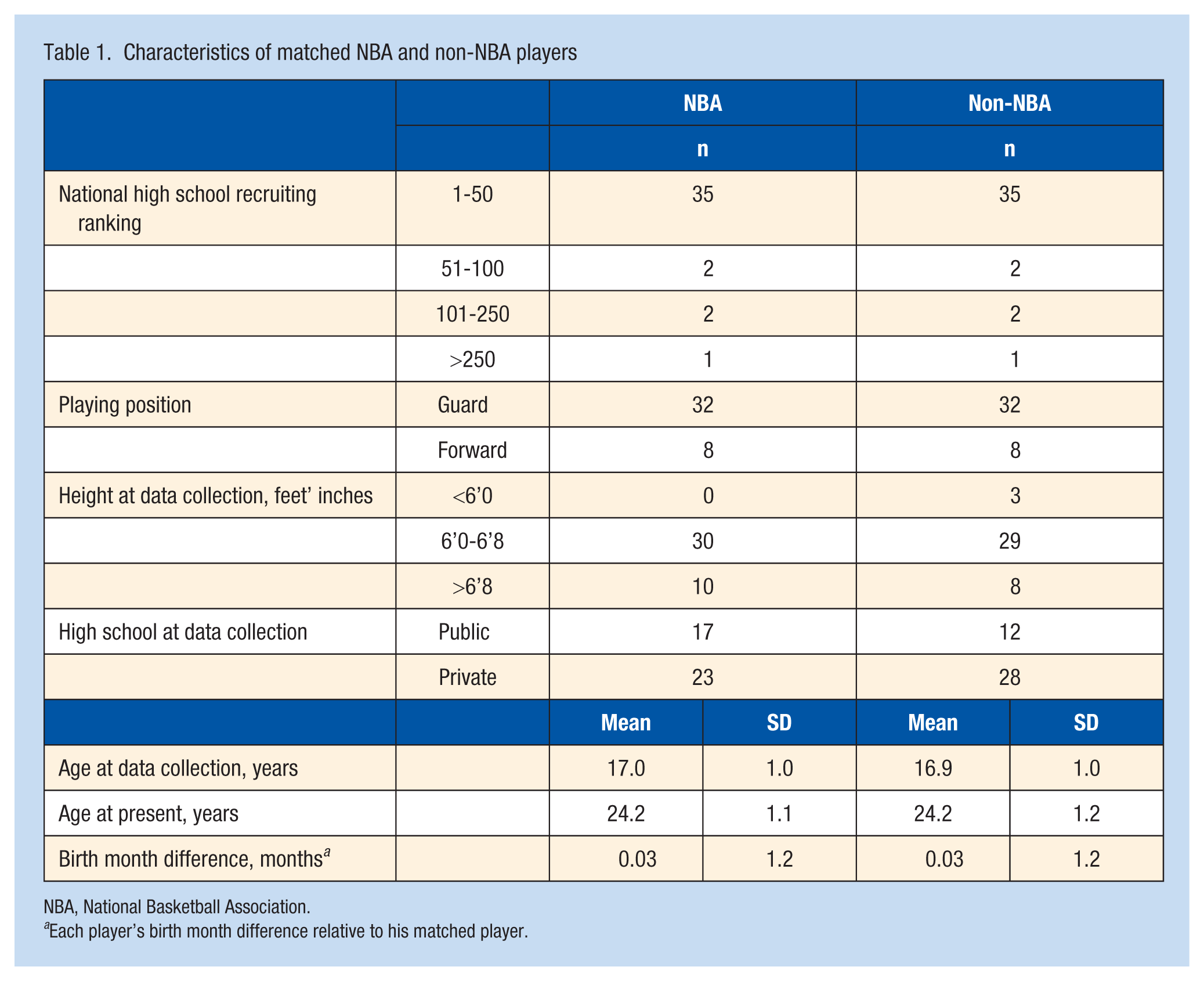
NBA, National Basketball Association.
Each player’s birth month difference relative to his matched player.
Data Collection
Players completed an online questionnaire using tablets during off-court sessions of the basketball events they attended. Only NBA research staff (none of whom were coaches of the players) were present during the completion of the questionnaire and provided assistance as needed. It took, on average, 22.1 ± 11.7 minutes to complete the questionnaire.
The questionnaire assessed aspects of childhood/adolescent developmental history that have been shown to meet the criteria of reliability and validity in athlete questionnaires and interviews.16,34,40 The questions included age at starting to play on a select basketball team; participation in organized sports other than basketball; age when focusing exclusively on basketball; occurrence of any severe basketball-related time-loss injuries (defined as injuries that required the player to sit-out for a month or longer) 13 ; staying back a grade in school to pursue basketball; moving to a different residence to promote their basketball career; and receiving a scholarship/financial funding to attend a private high school because of the player’s basketball ability. The questionnaire also assessed basketball-specific activities in 4 seasons (winter, spring, summer, and fall) in the year of the survey. This included the number of full-length 5 vs 5 games and weekly hours of coach-led basketball practice (team practice, strength and power training); self-led skills practice; and peer-led (pick-up) basketball (using ordinal scales, respectively).
Questions regarding aspects of players’ birthplace, family structure, parental and sibling sport participation, rest and time away from basketball, sleep habits, and perceptions of physical and mental exhaustion were also included. Sibling and parental sport participation and perceptions of exhaustion were added in later versions. Select findings from the latter questions were reported in a previous publication. 45 The study was approved by the institutional review board of the Hospital for Special Surgery, New York.
Data Analysis
The data reported at the time the questionnaire was administered were compared between later NBA and non-NBA players. Group comparisons included χ2-tests, unpaired t-tests, and, for skewed data, distribution, and ordinal-scaled variables, U-tests. To estimate each basketball activity across the entire year of the survey, the ordinal-scaled amounts of each player for each defined activity type were summed across the 4 seasons, and the sum for each player was converted to his rank among all players (ranks 1-80), providing formal equidistance across scales. To evaluate potential multivariable interactions, a binary logistic regression (BLR) analysis was used (dependent variable: NBA vs non-NBA, stepwise conditional forward inclusion method).
Effect sizes are reported as ϕ or Cohen’s d. 14 A value of P < 0.05 was considered statistically significant.
Results
Developmental factors in youth participation and injury history that differentiated between NBA and non-NBA players are summarized in Table 2 and Figure 1; the effects of corresponding basketball activities in the year of the survey are summarized in Table 3; and social-environmental factors are highlighted in Table 4.
Childhood/adolescent participation and injury history that differentiated between NBA and non-NBA players
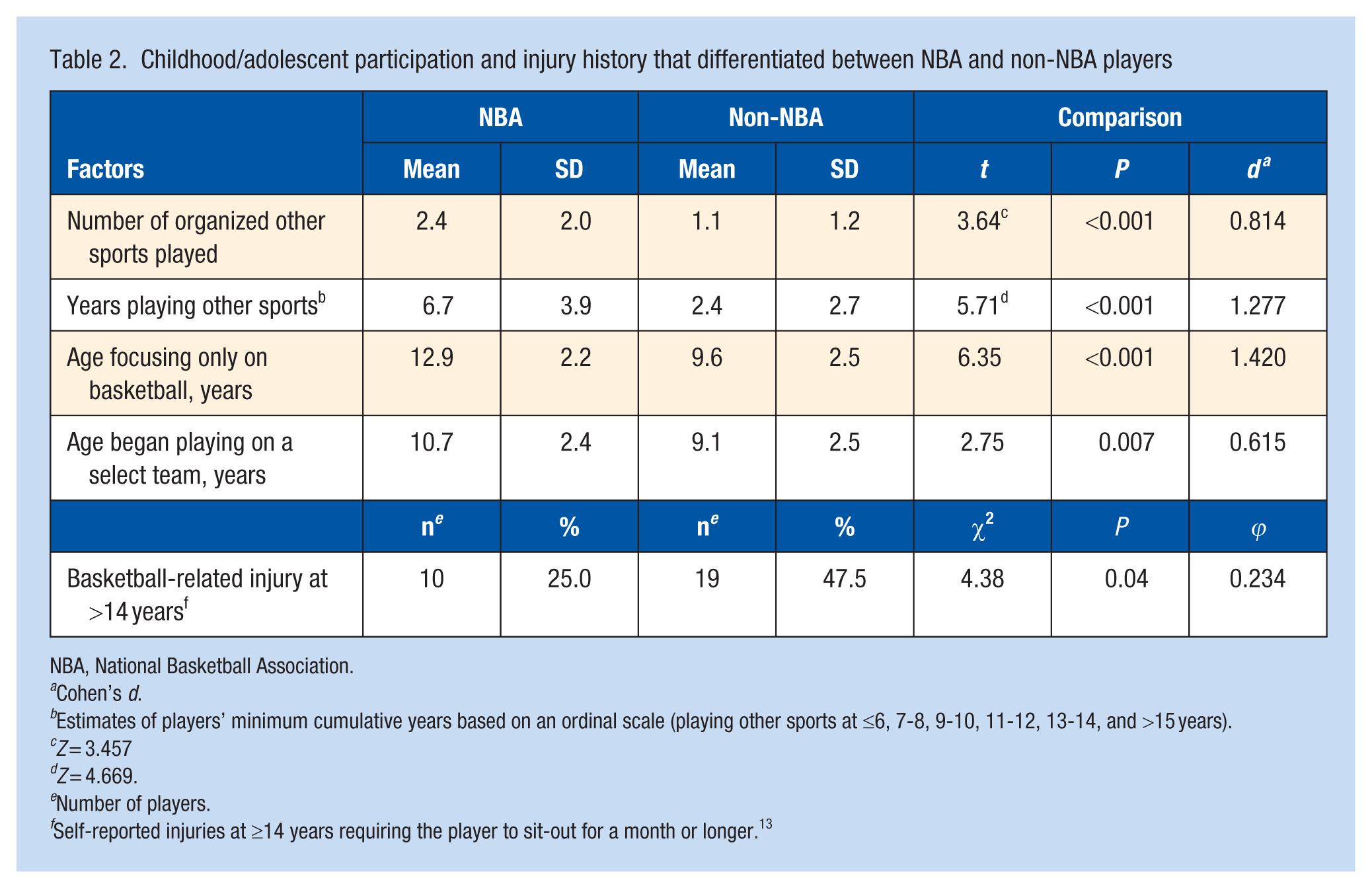
NBA, National Basketball Association.
Cohen’s d.
Estimates of players’ minimum cumulative years based on an ordinal scale (playing other sports at ≤6, 7-8, 9-10, 11-12, 13-14, and >15 years).
Z = 3.457
Z = 4.669.
Number of players.
Self-reported injuries at ≥14 years requiring the player to sit-out for a month or longer. 13
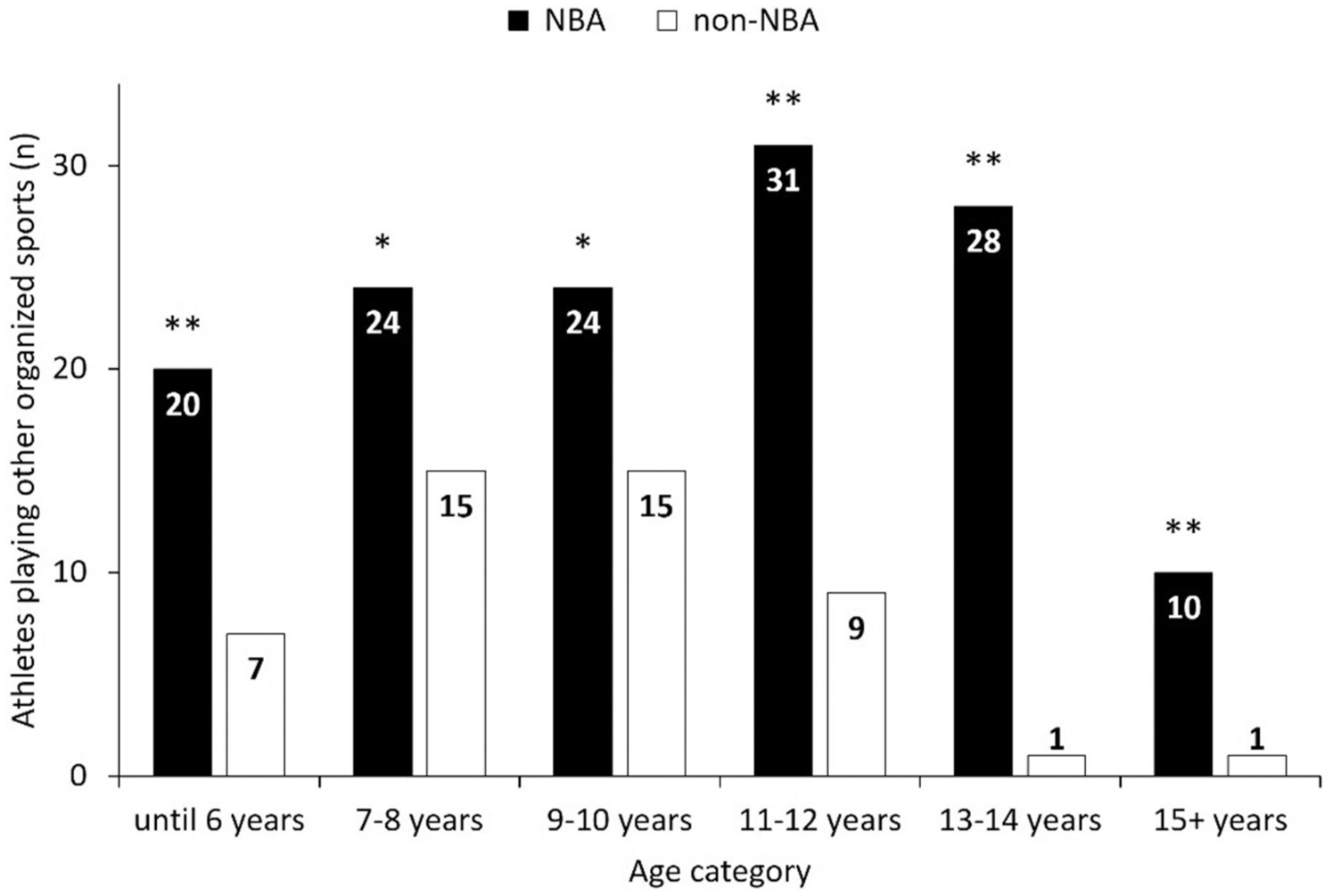
Numbers of NBA (n = 40, filled bars) and matched non-NBA (n = 40, open bars) players engaging in sports other than basketball in organized settings in childhood and adolescence by chronological age group. Group difference: *P < 0.05, **P < 0.01; effect sizes: ≤6 years ϕ = 0.344; 7 to 8 years ϕ = 0.225; 9 to 10 years ϕ = 0.225; 11 to 12 years ϕ = 0.550; 13 to 14 years ϕ = 0.702; >15 years ϕ = 0.327. NBA, National Basketball Association.
Basketball activities at the time of data collection (age 16.9 ± 1.0 years) that differentiated between NBA and non-NBA players
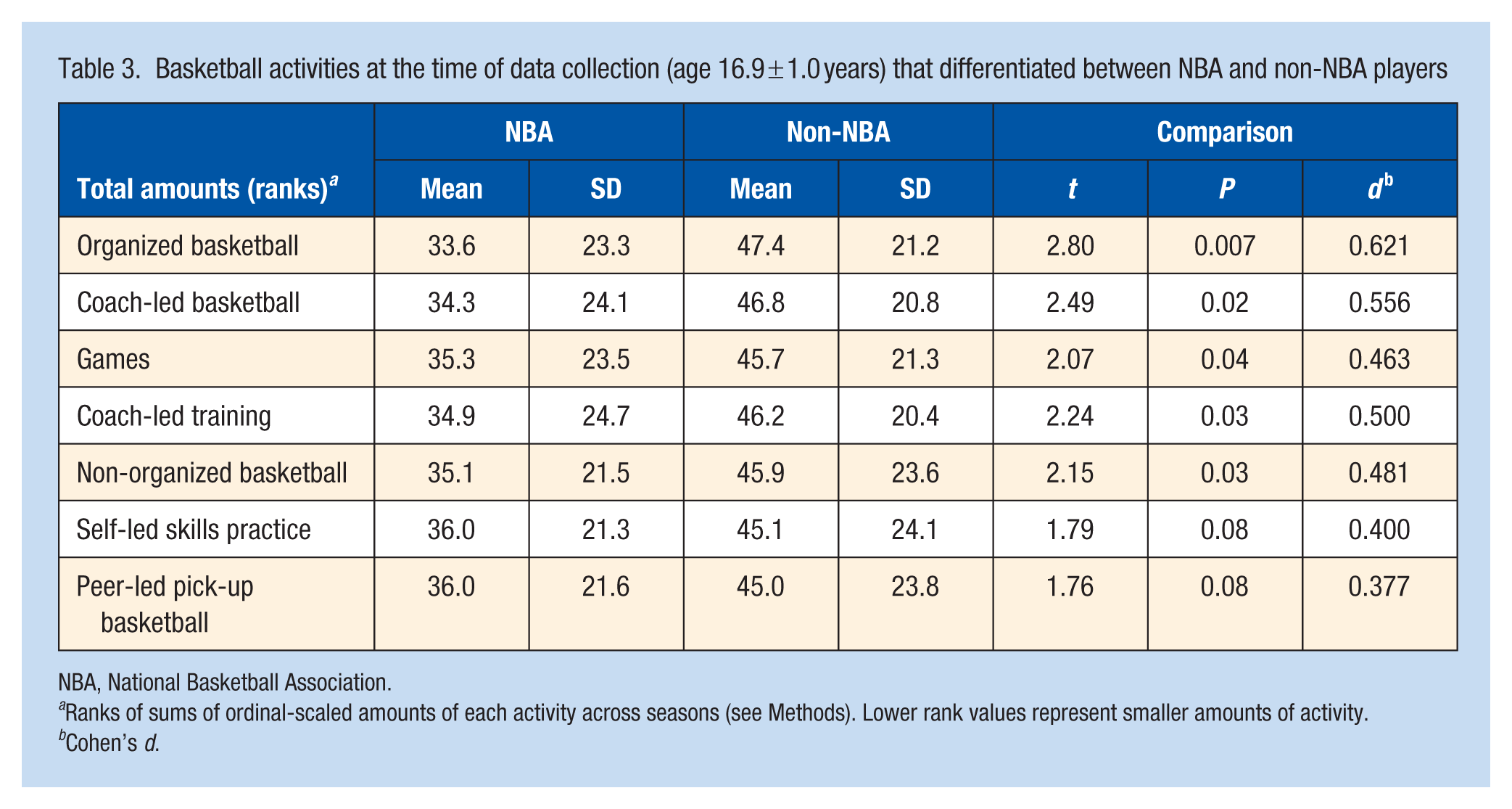
NBA, National Basketball Association.
Ranks of sums of ordinal-scaled amounts of each activity across seasons (see Methods). Lower rank values represent smaller amounts of activity.
Cohen’s d.
Indicators of disruption in academic and home life and of financial support during childhood and adolescence that differentiated between NBA and non-NBA players
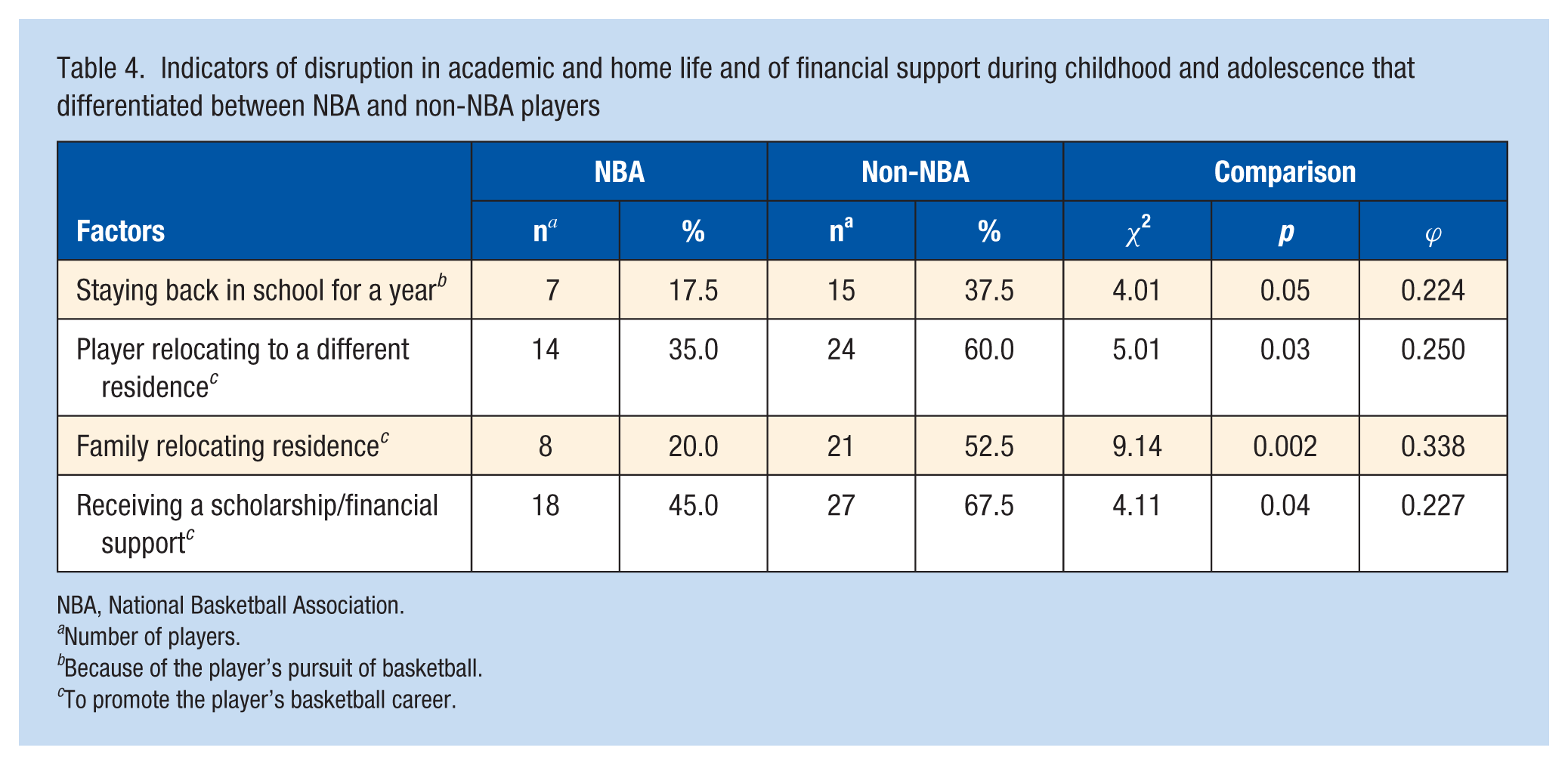
NBA, National Basketball Association.
Number of players.
Because of the player’s pursuit of basketball.
To promote the player’s basketball career.
Participation and Injury History
More NBA than non-NBA players engaged in sports other than basketball in organized settings (90.0% vs 52.5%, χ2 = 40.06, P < 0.001, ϕ = 0.708). For both groups, the most common other sports were American football (n = 35), baseball (n = 25), soccer (n = 18), and track and field (n = 17), although participation in gymnastics, golf, ice hockey, lacrosse, rugby, swimming, tennis, and volleyball was also reported by smaller numbers of players (2 ≤ n ≤ 7). There was no significant group difference in participation in team versus individual sports (P = 0.46) or game versus nongame sports (eg, football, baseball, soccer vs track and field, gymnastics, swimming; P = 0.68). However, the NBA players participated in a larger number of different organized sports, engaged in other sports for a longer period of time, and focused on only basketball at an older age compared with non-NBA players (Table 2). The NBA players also began playing on a select team at an older age. In addition, compared with non-NBA players, only about half as many NBA players reported basketball-related injuries that required them to sit-out for a month or longer at ≥14 years (Table 2).
The distribution of players engaging in other organized sports across age categories is illustrated in Figure 1. In every age group, more NBA than non-NBA players engaged in other sports. The non-NBA players who engaged in other sports typically ceased participation in those other sports during childhood (10 years of age), whereas most NBA players continued playing other sports through adolescence, with the largest effect noted at 13 to 14 years of age (Figure 1).
Basketball Activities
All NBA and non-NBA players engaged in sizeable amounts of basketball activities over multiple years. Of the total sample, 63% began playing on a select team by 10 years of age, 56% participated in ≥9 hours of coach-led team practice weekly at the time of the survey, and 74% participated in >50 full-length 5 vs 5 games annually.
Differences in basketball activities at the time of data collection among later NBA and non-NBA players are summarized in Table 3. Compared with their non-NBA peers, NBA players participated in significantly less total annual basketball play at the time of the survey. NBA players reported fewer organized games and smaller amounts of both organized coach-led practice and nonorganized informal basketball (Table 3).
Indicators of disruption in the academic and home life and of financial support of youth athletes that differentiated between later NBA and non-NBA players are summarized in Table 4. Fewer NBA than non-NBA players stayed back a year in school to pursue basketball, relocated to a different residence to advance their basketball career, and received a scholarship or financial assistance to attend a private high school because of their basketball ability until the time of the survey (Table 4). It is relevant that, in this select sample of top-ranked youth players, obtaining a scholarship/financial support was associated with relocating residence (χ2 = 4.36, P = 0.04) and attending a private school (χ2 = 4.09, P = 0.04), but not with participants’ adolescent playing level (χ2 = 1.42, P = 0.49), age to begin playing on a select team (Z = 0.97, P = 0.33) or amount of basketball (t = 0.68, P = 0.50).
BLR Analysis
Results of the regression analysis indicated that player classification (NBA vs non-NBA players) was best predicted by a combination of 5 factors:
(1) age to begin playing on a select team (B = 0.791, SE = 0.236, Wald = 11.245, P < 0.001, Exp(B) = 2.205);
(2) amount of organized basketball at the time of the survey (B = –0.039, SE = 0.020, Wald = 3.835, P = 0.05, Exp(B) = 0.0962);
(3) number of years playing organized sports other than basketball (B = 0.726, SE = 0.184, Wald = 15.512, P < 0.001, Exp(B) = 2.066);
(4) incurring a severe basketball-related injury at ≥14 years (B = –1.727, SE = 0.827, Wald = 4.364, P = 0.04, Exp(B) = 0.178); and
(5) obtaining a scholarship/financial support (B = –2.596, SE = 0.889, Wald = 8.533, P = 0.003, Exp(B) = 0.075) (constant = –7.097).
Each of the 5 variables significantly improved the model (4.775 < Δ–2LLp < 45.296), while other variables were excluded from the model (P > 0.10). The model was significant (–2LL0 = 78.554, –2LLp = 46.784, likelihood ratio χ2 = 64.300, P < 0.001), possessed good fit (Nagelkerke’s R2 = 0.735), and classified 68 of the 80 NBA and non-NBA players correctly (total sample, 85.0%; NBA players, 85.0%; non-NBA players, 85.0%).
Discussion
Four key observations were apparent in the characteristics of matched pairs of top-ranked youth basketball players who later did or did not become NBA players. First, more NBA than non-NBA players engaged in organized sports other than basketball over more years through childhood and adolescence. NBA players also specialized in only basketball and began playing on select teams at older ages than their non-NBA peers. Second, although highly active in the sport, NBA players participated in relatively fewer overall basketball activities in both organized and nonorganized settings at age 16.9 ± 1.0 years than non-NBA players. Third, fewer NBA than non-NBA players reported severe basketball-related injuries at ≥14 years of age. Fourth, as of the time of the survey, fewer NBA than non-NBA players reported having altered their academic pursuits for basketball, relocating to a different residence, and/or receiving financial support to promote their basketball career. As the study was based on a matched-pairs design, the findings are not attributable to age, month of birth, individual player ranking achieved at the time of the survey, playing position, or height.
These results for US basketball players are consistent with observations from recent reviews and meta-analyses addressing participation patterns of higher- and lower-performing senior athletes in a variety of sports and countries.4,31,37 These included consistent evidence from European professional male soccer—a sport similar in popularity and commercialization to NBA basketball.28,31,35,40,53 Among other things, consistent with the present observations, higher-performing senior soccer players remained with their home/local teams until a later age, while early involvement in youth academies and selection teams was correlated negatively with long-term senior success (consistent with other sports in several countries).3,30,31,32,38,46
Theoretical and Practical Implications
Given that both groups in the present study were matched on playing level at the time of the survey based on national rankings, the evidence suggests that the NBA players had greater subsequent performance improvement into adulthood, ie, their development showed greater sustainability. From a theoretical perspective, the observations for elite basketball players are consistent with the explanatory Search-and-Match, Enhanced-Learning-Capital, and Limited-Risks hypotheses.
Overall, the relatively resource-preserving, cost-reducing and risk-buffering childhood/adolescent participation pattern apparent among the NBA players yielded greater long-term benefits in terms of later adult playing level. In contrast, attempts to intensify early acceleration of performance through an early focus on only basketball, expansion of games and basketball-specific training, early involvement in travel teams, while foregoing multisport engagement, appears less sustainable. They increase youth athletes’ (immaterial) costs and risks (demands on time, disruption to academic and home life, increased chronic sport-specific workload, overuse injuries) but not their long-term adult success.
Notably, several characteristics of the NBA players’ early development—multi-sport engagement, reduced basketball practice and games, and indicators of less disruption of home and academic life—resemble factors suggested to foster positive youth development. 18 For example, Busseri et al 10 highlighted the importance for youth to participate in a breadth of activities at varying intensities to promote enhanced wellbeing, academic standing, and the formation of stronger interpersonal relationships. As such, childhood/adolescent participation in multiple sports may contribute to positive experiences that ultimately enhance both young players’ positive youth development and long-term performance achievements as adults.
From a practical perspective, the present findings provide basketball-specific evidence substantiating the approaches of the youth player guidelines of the NBA and USA Basketball.21,48 In a recent descriptive study, many top-ranked youth basketball players in the US focused only on basketball and began playing on a select team by 10 years of age, played >50, 5 vs 5 full-length games annually, and experienced ≥1 severe basketball-related injuries. 45 Such practices may be fostered by persistent ideas of some coaches, parents, and other stakeholders that early youth sport success is a prerequisite for obtaining high school and college scholarships and for long-term sport success, including professional reward.22,24,28,31 The subsample of non-NBA players in the present study appeared to generally follow this trend. In contrast, most of the NBA players, although also involved in substantial youth basketball activities, deviated from this trend. Current policies and practices that foster early specialization in only basketball, playing on select teams already during childhood, playing large numbers of games annually, along with disruption in home and/or academic life, likely increase the costs and risks for youth players. Such policies and practices are, however, inconsistent with the present evidence regarding developmental factors associated with becoming an NBA player.
Given that predictor effects on early youth performance and on long-term senior performance are different and partly contradictory,4,31,36,37 policies and practices that incentivize attempts to intensify the early acceleration of specialized performance should be discouraged, and families of youth players, specific leagues, governing bodies, and organizations should facilitate evidence-based policies and practices and take meaningful steps to protect youth athletes against the motivations mentioned above. In this context, even in highly commercialized and professionalized sports such as basketball in the US or soccer in Europe, strategies to promote long-term sustainable athletic development together with health, psychosocial wellbeing, and academic achievement should be implemented.6,8,11,56,57
Limitations and Future Directions
The present study is unique in that it included a matched-pairs design with a select sample, a combination of cross-sectional and retrospective data with a prospective follow-up, as well as several factors that have not been commonly studied before. Nevertheless, the study also had several limitations. First, it was observational. Although temporal precedence is suggestive, it does not permit causal inference. Second, the sample had a power of β < 0.80 to detect effects of d ≥ 0.20 (G*Power Version 3.1.9.7); however, as emphasized by, eg, Döring and Bortz, 23 smaller-sample studies have value when they consider theory-based, empirically substantiated hypotheses. The power was also strengthened by controlling for several potential confounders through the matched-pairs design. Third, while several objective criteria were used for matching players, the matching relied, among other things, on national rankings at the time of the survey, specifically a grouping of rankings 1 to 50. Youth player rankings are partly subjective and may not have reflected perfect alignment of the NBA and non-NBA matched pairs in terms of playing level at the time of the survey. Fourth, the study design did not allow for analysis of success beyond entry into the NBA (such as a long and/or high achieving NBA career). It is also possible that some in the present subsample of non-NBA players may become an NBA player in the future. Fifth, all participants were top-ranked high school players. It is possible that factors associated with future performance differ in more heterogeneous or lower-level samples. Sixth, the study involved only male players. Seventh, basketball-specific activities were recorded only for the year of the survey. It is thus conceivable that differences between the matched pairs could have varied in previous and/or subsequent years. However, evidence suggesting that the effects of the amount of basketball activities at, for example, 16 ± 1 or 18 ± 1 years of age differ from those at 17 ± 1 years is not available. Eighth, several variables were recorded with nominal scales (injuries, academic impediment, relocating residence, financial support, NBA involvement). Ninth, answers were self-reported by the athletes and thus injury data in particular lacked validation by clinical personnel. 13 Finally, the study did not consider other potential factors that may moderate effects of participation patterns and stable home and academic life, including parental genetic and socialization effects, socioeconomic status, the physical and behavioral environments in which players were reared and social dynamics (eg, with coaches and peers).1,19,51
Future research should continue to monitor youth basketball and evaluate predictors of health, wellbeing, and performance of both youth and NBA players during childhood and adolescence. This research may be fostered specifically through prospective cohort designs. In this context, objective and subjective, material and immaterial costs, risks and benefits of elite youth players and NBA players may be recorded with continuous scales. Player interviews exploring their subjective perception and valuation of material and immaterial childhood/adolescent costs, risks and benefits also merit consideration.
In addition, parental effects—by genetics, socialization, and their interplay—also warrant further research specifically in basketball. Another research priority is to investigate whether effects of youth participation patterns and home and academic life on later adult elite performance are moderated by other factors that affect young athletes’ immediate experiences and seasonal and long-term development on and off the playing field. Such an approach may consider proximal and more distal environments over time. 19 For example, the roles of families, coaches, schools, sports clubs, and communities in contemporary trends in youth sport and the potential impact of these trends on long-term youth athlete development both on and off the court merit particular attention. Finally, specific to the US, with the June 2021 implementation of the name, image, and likeness (NIL) policy allowing National Collegiate Athletic Association athletes to benefit financially from NIL opportunities, including the opportunity to be directly paid, further research is warranted to understand the potential impact such policies may have on youth sports.
Footnotes
Acknowledgements
The authors thank the NBA and USA Basketball’s partners who support and endorse the Youth Basketball Guidelines and allowed us to administer the survey at key youth basketball events. They are grateful for the participation of the youth basketball players without whom this research would not be possible.
The following authors declared potential conflicts of interest: P.M. and J.D. are employees of the National Basketball Association.
