



Abstract
Background:
Concussion nondisclosure and poor management after a concussion are a concern in Irish collegiate sports. How athletes perceive concussions and appraise their own concussion may affect their decisions and behaviors after a suspected concussion. However, this has yet to be examined in an Irish context. This study aimed to (1) establish concussion perceptions and associated anxiety in Irish collegiate athletes; (2) examine how sex, concussion, and mood disorder history influenced their perceptions; and (3) investigate factors associated with higher anxiety perceptions.
Hypothesis:
Irish collegiate athletes will display negative concussion perceptions and anxiety related to concussion, especially in female athletes and those without a concussion history.
Study Design:
Cross-sectional study.
Level of Evidence:
Level 3.
Methods:
Irish collegiate athletes [n = 268 (141 women,127 men), mean age = 21.5 ± 2.2 years] from high-risk sports completed a survey including the Perceptions of Concussion Inventory for Athletes (PCI-A), demographics, diagnosed concussion history, self-reported mood disorder history, and a concussion knowledge assessment. Differences in concussion perceptions by sex, concussion history, mood disorder history were examined using Mann-Whitney U tests, and factors associated with anxiety-related concussion perceptions were identified using multivariate logistic regression.
Results:
Over half (53.0%, n = 142) of participants reported concerns regarding concussion. The thoughts of sustaining a concussion made participants feel upset (63.4%, n = 170), fearful (47.7%, n = 128), and anxious (35.1%, n = 94). Women reported significantly higher anxiety (P < 0.01, r = 0.23), effects (P = 0.04, r = 0.12), and clarity (P = 0.01, r = 0.16) perception scores. Participants with a diagnosed concussion history displayed greater symptom variability perception scores (P = 0.04, r = 0.12), but lower anxiety (P = 0.03, r = 0.13) and treatment (P < 0.01, r = 0.19) beliefs on the PCI-A. No differences were observed for those with a history of a mood disorder (P > 0.05). A significant multivariate model was established (χ2 = 55.44, P < 0.01), with female sex [odds ratio (OR) = 1.53], concussion history (OR = 0.63), effects (OR = 1.31), and treatment (OR = 1.15) subscales associated with greater anxiety.
Conclusion:
Concerns about sustaining a concussion are prevalent in Irish collegiate athletes. Women displayed more negative perceptions and those with a concussion history displayed fewer perceived benefits of treatment.
Clinical Relevance:
The findings support the need for concussion awareness campaigns to provide accurate concussion information to mitigate anxiety-related concussion perceptions and injury belief misconceptions.
Concussions are an important public health concern. 47 Concussions can lead to short-term physical, cognitive, and emotional symptoms, and in collegiate athletes can negatively affect both their academic and sporting performance.38,45,48 A small number of athletes may also experience persisting symptoms beyond the expected recovery time.16,31 However, ensuring timely assessment, targeted treatment, and academic adjustments may minimize the risks of the negative effects of concussion, ensure safe participation in sport, and successful return to sport and learning.3,21,31 Notwithstanding the fact that appropriate concussion management may improve recovery, 3 nondisclosure of concussions to coaches and medical staff is commonly reported.6,29 One in 4 Irish collegiate athletes report that they have previously not reported a concussion, 34 and their rate of nondisclosure was found to be higher than both American and Jordanian athletes. 8
Much of the previous concussion research has focused on athletes’ knowledge of and attitudes toward concussions.4,6,17,23,36 There is recent, growing attention on how athletes perceive concussions in general and appraise their own concussion. It is of particular interest how their perceptions might impact on their decisions and behaviors after a suspected concussion and their ultimate recovery.22,40 According to Leventhal’s Self-Regulatory Model,26-28 a person’s beliefs about the threat of their illness or injury can influence the physical, physiological, and behavioral outcomes. Thus, consideration of an individual’s concussion experience, including their perceptions surrounding concussion and how they internalize the injury, may be a vital step in optimizing athlete concussion education, minimizing the occurrence of nondisclosure, and developing person-centered management approaches.
Concussion perceptions have previously been examined using the Perceptions of Concussion Inventory for Athletics (PCI-A), originally adapted from the Illness Perception Questionnaire Revised (IPQ-R). 40 The PCI-A has been found to be an acceptable and reliable measure of examining concussion perceptions in US collegiate athletes. 40 This tool examines 6 factors relating to concussion perceptions, including anxiety surrounding the concussion, effects (consequences or impact of a concussion), clarity (understanding of a concussion), treatment (their beliefs on whether treatment can impact outcomes), control (their perception of how much control they have over the concussion), and symptom variability after a concussion. The information gleaned from the PCI-A can inform our understanding of concussion culture in athletes.
Concussion perceptions have been found to be impacted by other related factors. Previous history of concussions has been found to affect how people respond after a concussion and their perceived risk of concussions. Irish collegiate athletes with a history of concussion were 2.6 times more likely to not report a future concussion. 34 In addition, collegiate American football players who sustained a previous concussion believed that they would sustain a future concussion and that their likelihood of long-term health complications was high. 5 This perceived risk actually increased as the number of diagnosed concussions the person had received increased. Concussion perceptions have also been demonstrated to differ between sexes. While US female collegiate athletes displayed greater anxiety surrounding concussions, they also presented with a greater understanding of concussion, were more cognizant of the fact that concussion symptoms can change throughout recovery, and that their own decision making and actions can influence their recovery. 40 Beyond concussion, female athletes report greater anxiety symptoms and a higher prevalence of anxiety disorders than male athletes.32,33 In addition, women have greater concerns about sports injuries and how they may affect their health in the future.19,41 The presence or history of a mood disorder, such as anxiety or depression, may also impact concussion perceptions. Research has found that a history of anxiety or depression can increase the likelihood of an athlete experiencing persistent symptoms after a concussion.24,39 Therefore, it is plausible that having a history of a mood disorder may influence how one perceives this injury. Thus, consideration of factors that may influence concussion perceptions should be undertaken.
Concussions in sport are prominent in the media at present, 1 with increased emphasis on the potential long-term effects of concussion and repetitive head impacts.9,35 This information can lead to positive developments, such as greater concussion awareness and knowledge of the importance of immediate removal from play and a graded return to sport. 35 However, this information could also lead to athletes developing worry and concern about sustaining a concussion during sport. Anxiety surrounding concussion has been reported to be prevalent in US collegiate athletes, with high proportions indicating that they are upset, worried, fearful, or anxious about concussions. 7 Women, athletes with a greater belief that concussions can lead to long-term negative effects, and those with a greater perception that they can impact concussion outcomes report higher anxiety-related concussion perceptions in US collegiate athletes. However, little is known about concussion perceptions in countries and athletes outside of the US.
Researchers have yet to examine concussion perceptions among Irish athletes. In addition, just 1 previous study 7 has examined anxiety-related concussion perceptions in the collegiate population, and this was conducted in a US sample only. Cross-cultural differences in concussion awareness, understanding, and reporting behaviors have been observed in different geographical regions. 8 Thus, how athletes perceive concussions and respond when they become injured may also vary between cultures given the differing levels of exposure to concussion awareness and sports medicine resources. The primary purpose of this study was to investigate Irish collegiate athletes’ concussion perceptions and associated anxiety and examine how sex, concussion history, and mood disorder history influenced these perceptions. It also aimed to investigate factors associated with higher anxiety perceptions. The authors hypothesize that Irish collegiate athletes will present with negative concussion perceptions and anxiety related to concussion, particularly in women and those without a history of a diagnosed concussion.
Methods
Participants
A cross-sectional study design was employed. Irish adult male and female collegiate athletes who took part in sports with a high concussion risk (eg, rugby, soccer, Gaelic football, hurling, Camogie, Ladies Gaelic football, etc) were recruited. Concussion risk for a sport was defined according to previous research on injury rates. 49 Participants were eligible if they currently took part in sport at the collegiate level within an Irish higher education institution and were 18 years or older. Exclusion criteria included if they had a concussion in the previous 3 months, current concussion symptoms or were undertaking treatment for prolonged issues relating to a concussion, as a recent or ongoing concussion may have led to biased responses to some of the survey items.
Instrumentation
An anonymous survey (available on request from the authors) was utilized, as part of a larger project on concussion in Irish collegiate athletes. The total survey took between 15 and 20 min to complete. Screening questions to determine eligibility were included at the start of the survey. The survey components relevant to this study included sex, age, diagnosed concussion history, and presence of a diagnosed mood disorder such as depression and/or anxiety. Concussion knowledge was examined using a tool described by Beidler et al 6 originally adapted from Register-Mihalik et al. 36 This examined general concussion knowledge along with their recognition of 34 concussion symptoms, and detailed results of this have been reported previously. 34 The scale had acceptable internal consistency (Cronbach’s alpha = 0.83). The 21-item PCI-A was utilized to examine participants’ concussion perceptions. 40 The factor structure of the PCI-A was originally established in a collegiate sample, and acceptable internal consistency was observed for the current sample (Cronbach’s alpha = 0.72). For each item, participants rated their agreement to the statement on a 5-point Likert scale (strongly disagree to strongly agree). Six outcome variables were then created from the tool including anxiety (4 items, score range 4-20), effects (4 items, score range 4-20) control (3 items, score range 3-15) clarity (4 items, score range 40-20) treatment (3 items, score range 3-15), and symptom variability (3 items, score range 3-15). The individual statement items are listed in Table 1.
PCI-A individual items and subscales
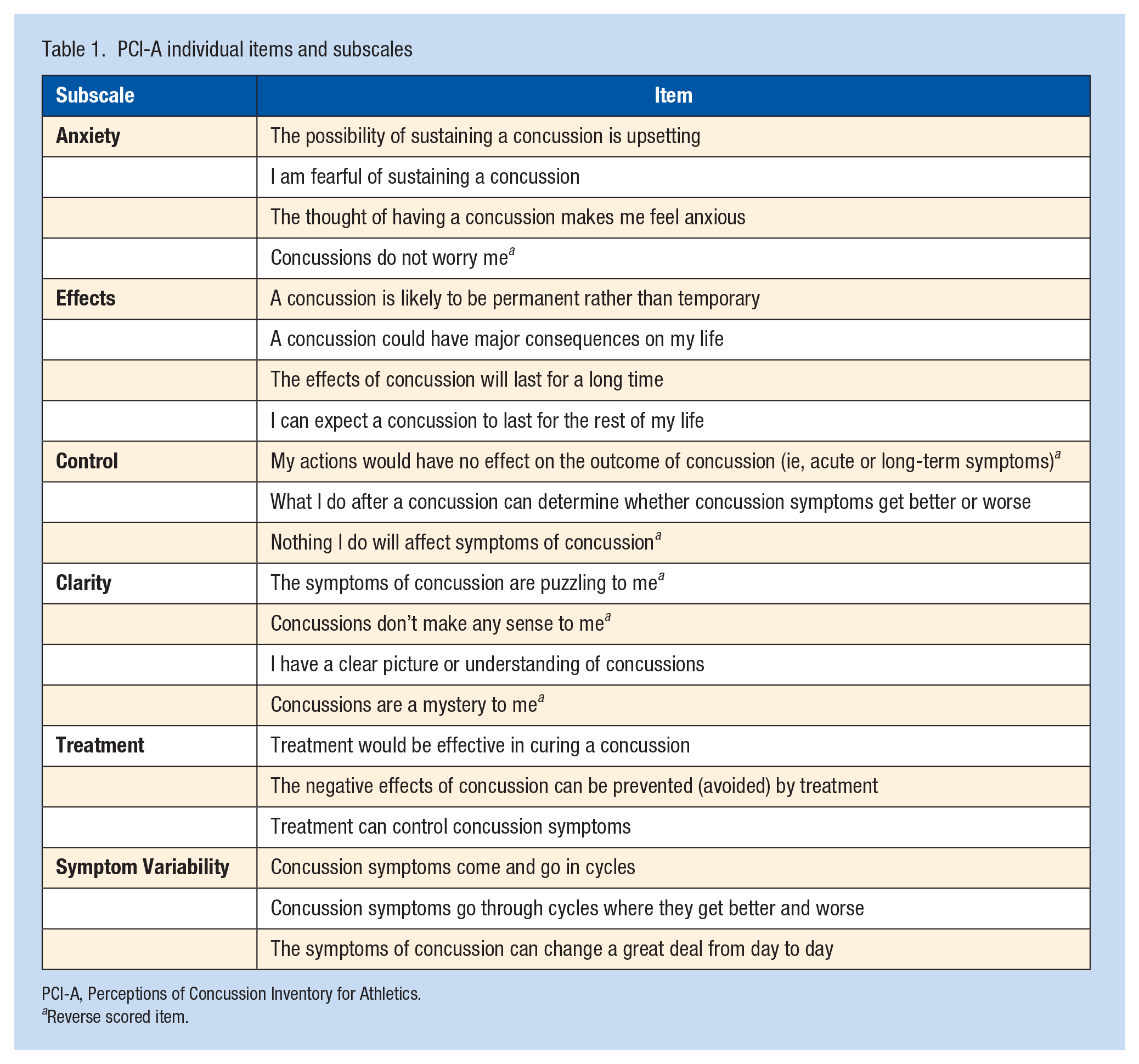
PCI-A, Perceptions of Concussion Inventory for Athletics.
Reverse scored item.
Procedures
Ethical approval was granted by Dublin City University’s research ethics committee. Participants were required to provide informed consent at the beginning of the survey. Face validity was established by 2 concussion experts and piloted on 10 adult collegiate athletes. Convenience sampling was employed, and participants completed the survey online via SurveyMonkey or in a paper format. Contact details for collegiate club contacts at all higher education institutions in Ireland were gleaned from their websites, and the survey was emailed to each of these contacts for them to distribute among their collegiate players. If paper surveys were requested, they were posted to participants. In addition, social media and word of mouth was used to advertise the survey. The survey was available from January to April 2018.
Data Analysis
Descriptive statistics [percentages, frequencies, means, SDs, medians, and interquartile ranges (IQRs)] were calculated for variables. A chi-square test was utilized to examine if any differences for prevalence of sex, concussion history, and mood disorder history were observed between those identified as having low or high anxiety perceptions relating to concussion. The median score of the PCI-A anxiety subscale was calculated, and a dichotomous outcome was calculated for high and low anxiety based on the median (above and below the median). Data were nonnormal, so a Mann-Whitney U test also examined differences in age between respondents defined as having low and high anxiety.
Mann-Whitney U tests were used to compare the differences for each PCI-A subscale (anxiety, effects, clarity, treatment, control, and symptom variability) between sex, concussion history, and mood disorder history. Effect sizes were classified as small (r = 0.1), medium (r = 0.3), and large (r = 0.5). 13
Univariate logistic regression was completed to examine whether sex, concussion history, mood disorder history, concussion knowledge, PCI-A effects, PCI-A control, PCI-A clarity, PCI-A treatment, and PCI-A symptom variability subscales were associated with anxiety-related concussion perceptions. Odds ratio (OR), 95% CI, and P value for each variable were then reported. Any variables with a P value less than 0.10 in the univariate analysis were then entered into the multivariate analysis. No multicollinearity was noted with variance inflation factors of <10, tolerance of >0.10, and no high correlations observed. A multivariate logistic regression was then conducted, and the overall sensitivity, specificity, classification of cases, and statistical significance of the model was reported. All statistical significance was set at P < 0.05. Data were analyzed using SPSS version 27 (IBM Corporation) and Microsoft Excel 2016.
Results
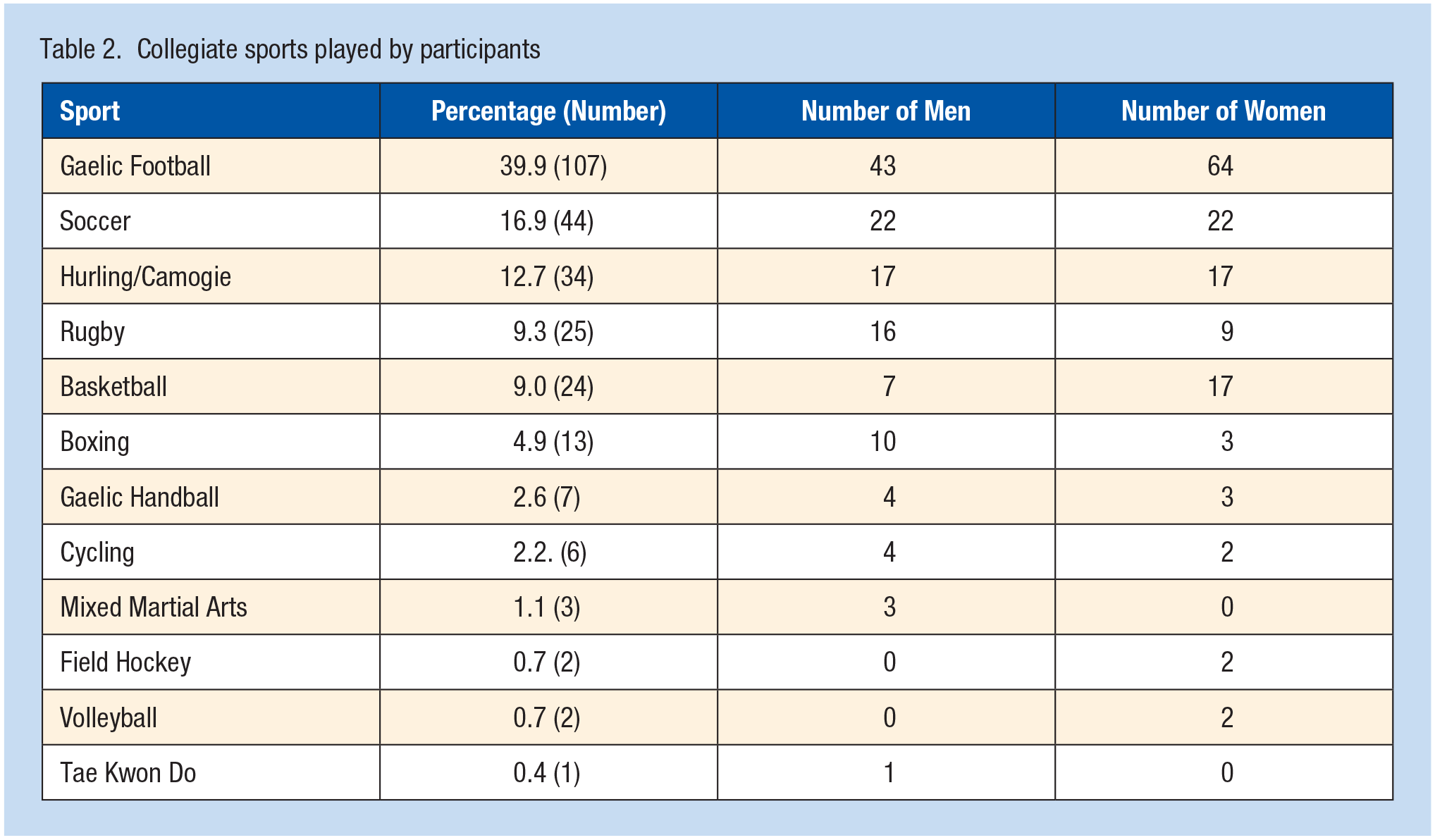
In total, 268 [52.6% (141) female and 47.4% (127) male] Irish student collegiate athletes, with a mean age of 21.5 ± 2.2 (range, 18-29) years were included in the survey. Table 2 lists the collegiate sports played by the participants. A mood disorder (such as depression or anxiety) was reported by 5.6% of respondents. Just under a third of respondents (31.3%) were diagnosed with a previous concussion.
Collegiate sports played by participants
Concussion and Anxiety Perceptions
Table 3 lists the results for the individual PCI-A items. With regard to anxiety-related concussion perceptions, 63.4% (n = 170) strongly agreed or agreed that the possibility of sustaining a concussion was upsetting, 47.7% (n = 128) agreed that they were fearful about receiving a concussion, and 35.1% (n = 94) agreed that it was anxiety provoking. In total, 53.0% (n = 142) of respondents strongly disagreed or disagreed that concussions did not worry them. Most respondents strongly agreed or agreed that a concussion could have major consequences on their life (68.7%, n = 184). With regard to concussion symptoms, 46.6% (n = 125) found concussions were puzzling to them, and 69.4% (n = 186) perceived that concussion symptoms changed a great deal from day to day. The max score of the PCI-A was 105, with a median score of 69 and an IQR of 10 observed.
PCI-A items and responses
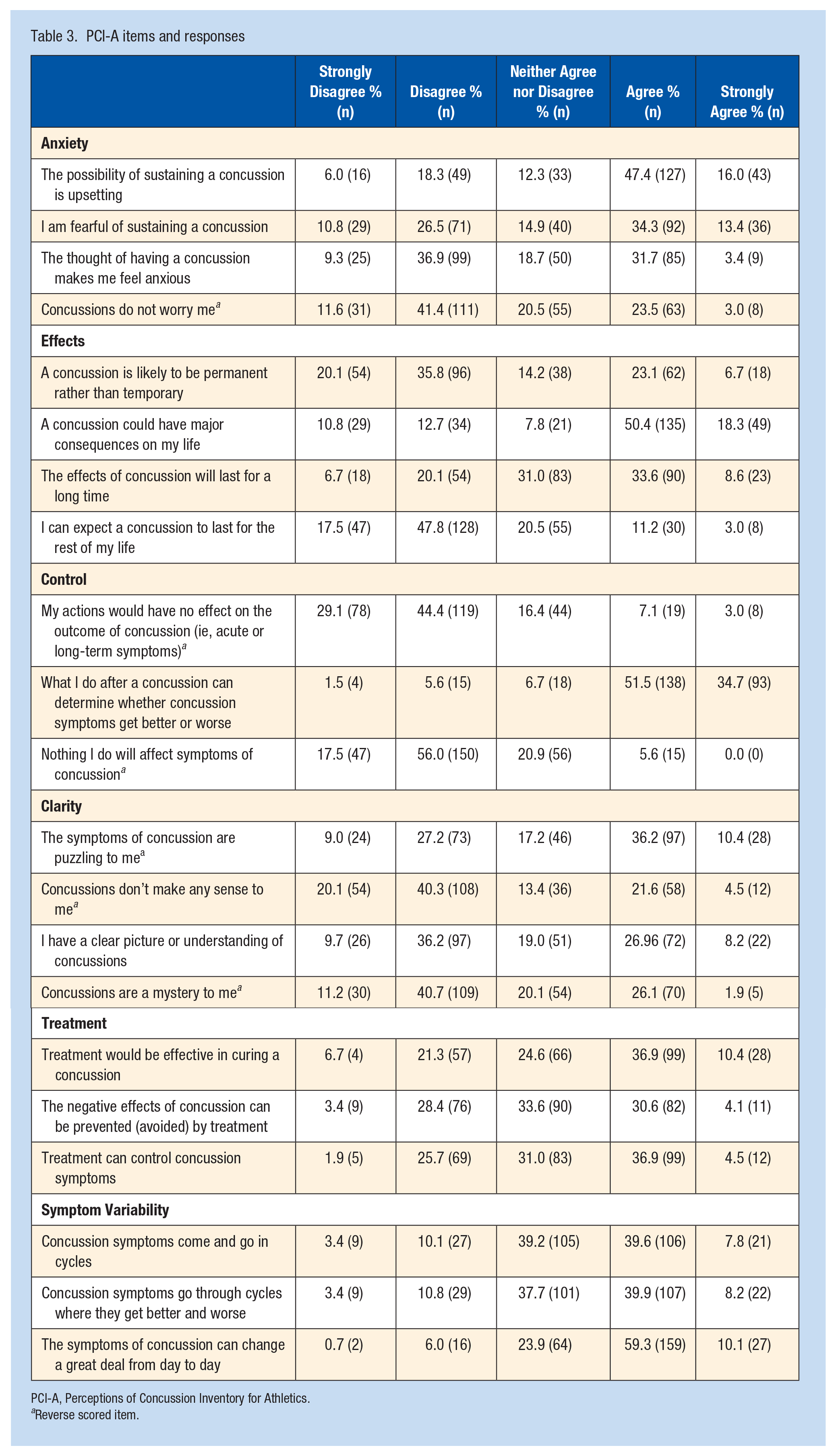
PCI-A, Perceptions of Concussion Inventory for Athletics.
Reverse scored item.
Role of Sex, Concussion History, and Mood Disorder History
Female athletes presented with significantly higher anxiety, effects, clarity subscale results, with a small effect size compared with male athletes (Table 4). Those with a concussion history displayed significantly higher symptom subscale scores than those without with a small effect size. In contrast, those without a concussion history presented with significantly higher anxiety and treatment subscale scores also with a small effect size. No differences in total PCI-A score or any of the subscales was found between those with or without a history of a mood disorder.
Descriptive and comparative statistics of pci-a total score and subscales
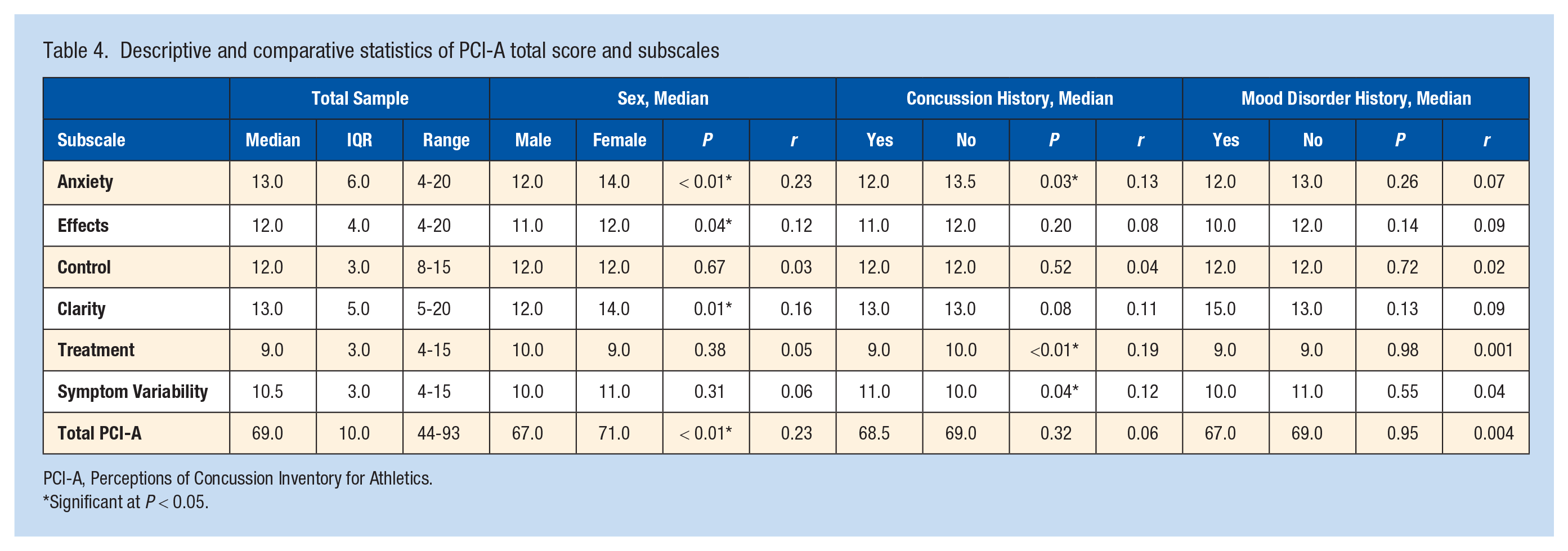
PCI-A, Perceptions of Concussion Inventory for Athletics.
Significant at P < 0.05.
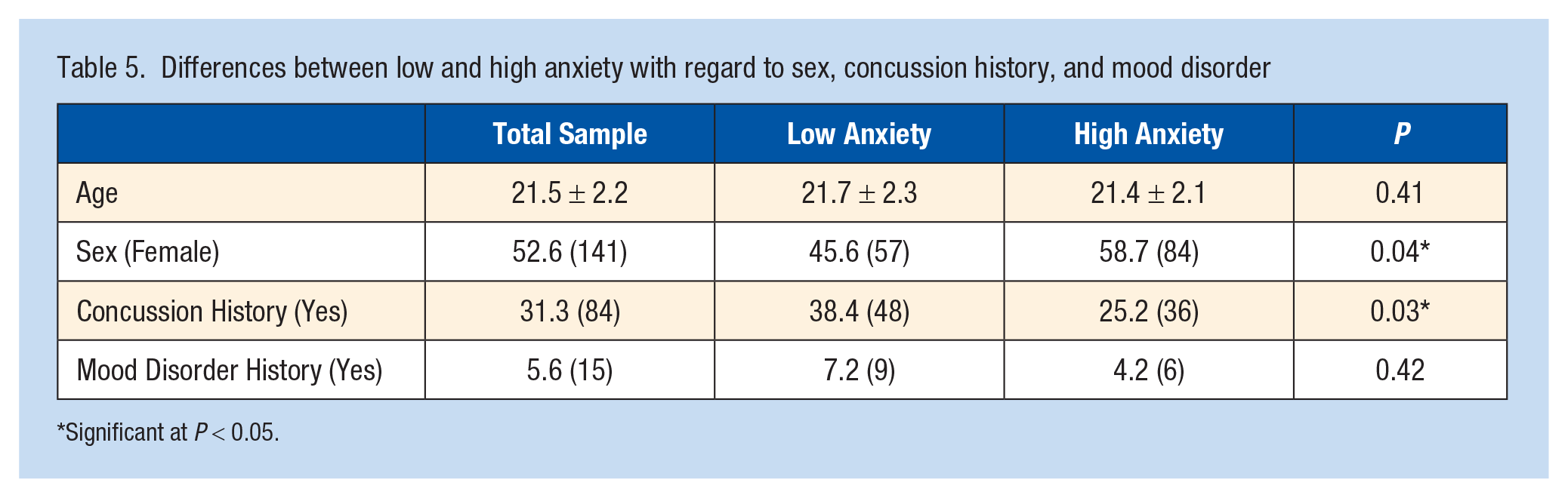
Of the sample, 53.4% (n = 143) were identified as displaying high anxiety. Table 5 lists the differences observed between those with low or high anxiety for age, sex, concussion history, and mood disorder history. Female athletes (P = 0.04) and those without a history of concussion (P = 0.03) were more frequently defined as having a higher anxiety perception related to concussion. A higher anxiety perception was not observed in those with a history of a mood disorder (P > 0.05).
Differences between low and high anxiety with regard to sex, concussion history, and mood disorder
Significant at P < 0.05.
Factors that Influence Anxiety Perceptions
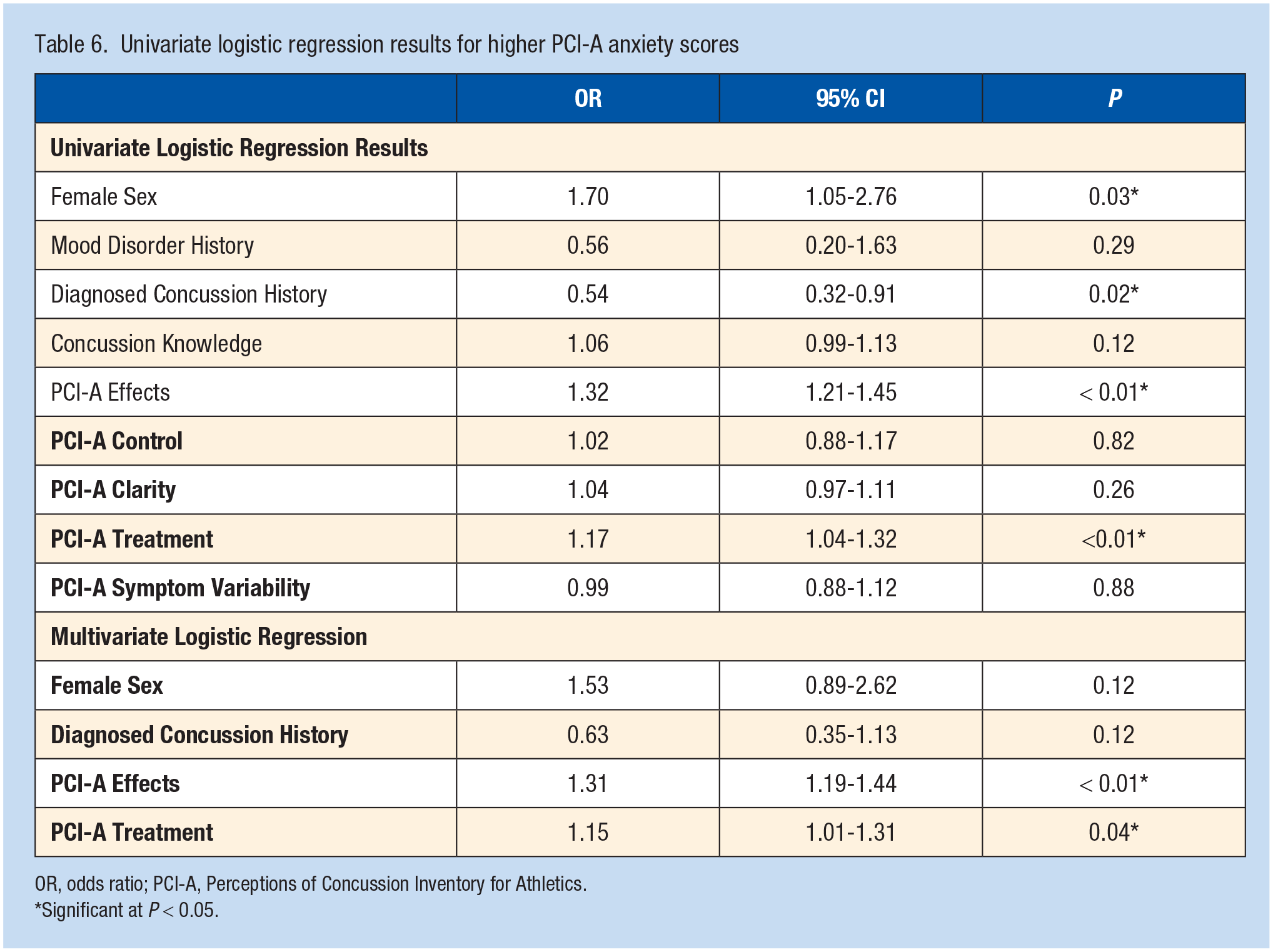
A median score of 13 (IQR = 6) was noted for the PCI-A anxiety subscale. Table 6 lists the univariate logistic regression results. Female sex (OR = 1.70), no previous history of a diagnosed concussion (OR = 0.54), higher effects subscale score (OR = 1.32), and treatment subscale score (OR = 1.17) were significantly associated with higher anxiety-related concussion perception. Variables with a P value of less than 0.10 were entered into a multivariate logistic regression analysis. The final model was statistically significant (χ2 = 55.44, P < 0.01), and the individual predictors are listed in Table 5. The model had a sensitivity of 69.2%, specificity of 59.2% and, as a whole, explained between 18.7% and 25.0% of the variance in anxiety-related concussion perception. The model correctly classified cases.
Univariate logistic regression results for higher pci-a anxiety scores
OR, odds ratio; PCI-A, Perceptions of Concussion Inventory for Athletics.
Significant at P < 0.05.
Discussion
Negative perceptions of concussion can affect patient outcomes and contribute to poor recovery, as has been demonstrated in mild traumatic brain injury patients.22,46 Understanding athletes’ perceptions of concussion can allow us more fully to understand their concussion experience. In this study, a high proportion of Irish collegiate athletes expressed concern regarding concussions and presented with some negative perceptions surrounding this injury. This knowledge can inform our educational interventions before injury to promote the development of a positive concussion reporting culture, as well as to allow us to develop ways to support our athletes adequately after a concussion and in their postinjury management.
Over half of Irish collegiate athletes in this study worried about concussions, with 63%, 48%, and 35% finding the possibility of a concussion upsetting, fearful, and/or anxiety provoking, respectively. They also predominantly believed that a concussion could have major consequences on their lives and two-fifths agreed that the effect of a concussion can last a long time. Thus, educating athletes that concussions are treatable, and that while a small proportion may experience persistent symptoms after concussion, most collegiate athletes typically recover and return to play by 21 days is important. 11 Welcomingly, the vast majority of Irish athletes recognized that they have some control over their concussion recovery. Belief in the control a person has over their injury, illness, or symptoms is important. 20 It has been linked to cognitive reappraisal (an emotional regulation strategy in which we change the way we think about a potentially emotional provoking event such as a concussion), expressing our emotions, utilization of problem-focused coping strategies, adaptive outcomes of our wellbeing and is negatively associated with psychological distress. 20 However, participants’ understanding of the benefits of treatment was limited. For example, just two-fifths believed that treatment can control concussion symptoms and a third agreed that the negative effects of concussion can be avoided by treatment. Targeted treatment interventions can improve concussion outcomes. 15 Thus, education to ensure collegiate athletes are aware of the benefits of concussion treatment could help improve concussion management by promoting disclosure, engaging with a healthcare professional after concussion and maximizing buy-in to treatment and rehabilitation.
Previous research has examined the PCI-A in US collegiate athletes. 8 While effects, treatment, and symptom variability subcomponents were similar in both Irish and US collegiate athletes, Irish participants presented with more worry regarding concussions and fewer of them reported that they had a clear understanding or picture of concussion. In the US, regulatory mandates ensure that all National Collegiate Athletic Association collegiate athletes must annually receive concussion information. 44 However, in Ireland, no such mandatory education exists and collegiate institutions do not have a cohesive concussion management guideline. Instead, concussion guidelines are sport specific and as concussion education is not mandatory, uptake may be low. For example, just 15% of adult Gaelic games players were aware that for Gaelic games, specific concussion resources were available. 25 In addition, previous research has found that Irish collegiate athletes are less likely than their US counterparts to receive concussion education from a healthcare professional and receive informal concussion from nonreputable concussion sources. 8 In contrast, Irish athletes in the current study believed to a greater extent that they had more control of their concussion recovery and fewer of them reported that concussions were puzzling, a mystery to them or did not make sense to them. This finding is of note, as previous research has found that Irish collegiate athletes had poorer concussion knowledge than a US collegiate athlete sample, 8 indicating that while Irish collegiate athletes may believe they are knowledgeable about concussion symptoms and management, their actual ability to recognize a concussion accurately, and actions to take after a concussion may not be ideal and could lead to mismanagement. This again could be linked to the lack of high quality mandatory standardized education for Irish collegiate athletes. Thus, concussion education strategies need to be improved in Ireland at the collegiate level, and standardized mandatory concussion education programs for all collegiate athletes across sports should be developed and implemented.
Sex differences were observed between some PCI-A subscales with a small effect size. Female athletes presented with greater clarity on concussion symptoms than male athletes. In US 30 and Canadian 18 collegiate athletes, women demonstrated greater concussion knowledge. However, in an Irish context, no significant concussion knowledge differences have been observed between the sexes in collegiate athletes, 34 high school students, 43 or adult Gaelic games players. 25 Women also presented with more negative perceptions regarding the consequences of concussion and the effect it would have on their function. More negative perceptions regarding the consequences of illness/injury is linked to worse outcomes 10 and poorer psychological wellbeing, social functioning, vitality, and avoidance. 20 While no sex differences in the effects’ subscale was observed in US collegiate athletes, 40 previous research has found that after a concussion, female athletes presented with significantly poorer quality of life, felt they were less recovered, more impaired, and were more likely to report that concussion had significantly disrupted their lives compared to male athletes. 12
Previous concussion experiences may impact how an individual perceives a future concussion. Irish collegiate athletes with a history of concussion were more aware that symptoms may fluctuate, indicating their previous concussion experiences may have informed their awareness of the variability of concussion symptoms. However, worryingly, those with a previously diagnosed concussion history displayed fewer perceived benefits of treatment. This may indicate that collegiate athletes with a history of diagnosed concussion would be less likely to report a concussion or engage with a medical professional for concussion treatment as they may feel they can recognize a concussion and that treatment is of limited benefit. In fact, previous research in US collegiate athletes has found that a diagnosed concussion history is associated with concussion nondisclosure. 2 While cognitive and physical rest was previously prescribed for concussion, this is no longer the case, and prescribed individual active rehabilitation is recommended alongside support from a multidisciplinary team.14,15 It is essential that clinicians who deal with injury in collegiate athletes in Ireland (including general practitioners, sports and medicine physicians, certified athletic therapists, and physiotherapists) are aware of and can implement the treatments available that can aid concussed athletes. Practitioners dealing with concussions should engage with concussion treatment continuous professional development, and specialized healthcare professionals trained in current concussion treatment are required. In addition, dissemination that concussions are treatable to the collegiate athlete population is recommended to remedy this misconception. Similar to previous research, 7 no differences in concussion perceptions were observed between those with or without a history of a mood disorder. However, a low representation of participants with a mood disorder (n = 15) was included in this study and future research with greater numbers is required in order to generalize these findings to the wider athlete population.
Anxiety related to concussion was reported in Irish collegiate athletes. Being a woman, having no history of a previously diagnosed concussion, greater belief in the negative consequences of concussions, and treatment control of concussions were associated with an increased likelihood of anxiety. Different recovery perceptions and symptomology may be experienced after a concussion in women. Women are more likely to present with heightened emotional symptoms, more physical and somatic symptoms, poorer quality of life during recovery, and higher likelihood of poorer recovery than men.12,42 In addition, higher anxiety was observed in female athletes. 37 This, combined with their different concussion experiences may consequentially affect female athletes’ ultimate anxiety surrounding concussion. Those who have never previously sustained a concussion may not be knowledgeable about concussion outcomes and have no previous experiences regarding the benefits of concussion treatment. Thus, the potential impact concussion could have on their quality of life and on their sports participation may elicit anxiety. A greater belief in the long-term effects a concussion could have was also associated with higher anxiety in US athletes, 7 highlighting the importance of education focusing not just on concussion symptoms, but also on ultimate concussion outcomes and treatment benefits. While the finding that those with greater beliefs on the impact treatment could have on concussions leading to great anxiety may seem counterintuitive at first glance, and this finding was not found in US collegiate athletes, 7 there may be Irish context-specific reasoning for this. In US collegiate institutions, full-time athletic trainers are hired to attend all sporting events and clinics are available on-campus daily for athletes to attend and receive free assessment, treatment, and rehabilitation. In Ireland, however, collegiate institutions do not have this system in place, and most collegiate sports may at best have a medical professional present at games only, and even this is not commonplace across all sports and teams. This leads to cultural healthcare access inequities and treatment barriers in Irish collegiate athletes that may provoke anxiety due to the costs and time requirements related to management and recovery. In addition, unlike US collegiate athletes, Irish athletes may not have a clear idea of who to go to in order to seek treatment, as they may not have an assigned athletic therapist to assist them or direct them to treatment options.
Limitations
A convenience sampling strategy was utilized; therefore, participants self-selected to complete the survey. This may have led to a recall bias and issues with honesty and accuracy of responses. We were also unable to determine the response rate of the survey. While this survey provides a valuable contribution to the literature, as it offers a perspective into concussion perceptions among Irish collegiate athletes for the first time, future qualitative research would be useful to delve deeper into their concussion perceptions. The findings of this study’s generalizability to other populations, such as Irish secondary school students, may also be limited, so future research is indicated on these populations. As this study focused on a healthy participant sample, another avenue for future direction of inquiry is to establish the relationship of concussion perceptions and anxiety to recovery and return to participation.
Conclusion
Anxiety related to sustaining a concussion was commonly reported by Irish collegiate athletes. This finding suggests that concussion anxiety may be universal across cultural sport contexts. The findings also indicated that Irish collegiate athletes who reported lacking a clear understanding of concussion presented with greater worry about this injury. Concussion awareness to this point has largely focused on injury identification and the importance of immediate removal from play. Ultimately, this approach may lack important context that athletes need to gain a full understanding of this complex, invisible injury. Perhaps more comprehensive messaging that clearly and accurately outlines the benefits and risks of sport participation and concussion is needed better to inform athletes’ perceptions. While Irish collegiate athletes displayed some similar concussion perceptions as US collegiate athletes, differences were apparent, supporting the need for concussion awareness that is sensitive to the cultural context of athletes. Moving forward, the results of this study provide a foundation to support more targeted concussion awareness campaigns that provide accurate information about this injury.
