



Abstract
Deeply embedded cultural protocols and family commitments often prevent Australian Aboriginal people from engaging in worker roles in remote community services and agencies. This prevents agencies and programs from engaging local people in work which they consider meaningful and which meet the needs of their communities. This paper describes how innovative multi-modal participatory action research (p)AR methods, creatively adapted by remote Aboriginal women, enabled them to enact, reflect and describe their experience as “workers.” In essence, the article describes how methods of community-based action research enhanced the livelihoods of a group of remote Aboriginal-Australian women and their community by foregrounding local Indigenous experience. It outlines how the unique, emergent, participant-led research methods grounded in lived experience enabled the evolution of effective, enjoyable, and cultually safe ways to do work and be a worker. Their activities provide an example of how agencies and services can meaningfully engage remote Aboriginal people in employment and provide the basis for more appropriate policy and program development. The story which will unfold in this paper provides an example of how (p)AR methods enable the incorporation of community-led, pragmatic and democratic processes for change that may influence policy and popular perceptions.
Keywords
Introduction—Developing the Program of Work
The cultural and linguistic distinctiveness of remote Aboriginal-Australian communities and their geographical distance from major urban centers inhibits the inclusion of their voices in the development of programs and services ostensibly developed for their use (Davis, 2023; Kennedy, 2013). 1 Mainstream Australian political power, dynamics, and practices grounded in colonial attitudes typically result in the marginalization of Indigenous people from decision-making on the assumption they should comply with mainstream ways of “doing and being” (Sullivan et al., 2023; Behrendt, 2001). A consequence is that government policies and programs continue to fail to meet the significant needs of many remote Aboriginal people, as reflected in the abysmal statistics in annual government reports relating to their life expectancy, education, health, justice, incarceration, housing, and employment (Australian Government Productivity Commission, 2023).
Despite continual efforts and millions of dollars spent by state and federal governments to develop more effective programs and services, there remains a stark disparity in measures of employment and income security between remote Indigenous and non-Indigenous Australians. Launched in 2008, the federal Closing the Gap program set a target to halve the gap in employment outcomes between Indigenous and non-Indigenous Australians within ten years. Yet, in 2018, the unemployment rate was 75% for remote Indigenous Australians and 35% for non-Indigenous Australians (Australian Government, 2020, p. 65).
Between the years of 2008 and 2014, a group of Ngaanyatjarra minyma (women) in the remote community of Warburton (Milirrtjarra 2 ) in Western Australia initiated and implemented a program of activities which they referred to as their waark (work). They customized their work and worker role in a way that fit within the fabric of their social and cultural lives, while also providing the income security required to enhance their livelihoods in contemporary times. Initially responding to community concerns about school attendance they initiated a school breakfast program, which subsequently became the basis for an expanded program of work activities. Their delivery of a range of extended services to the community fulfilled government policy guidelines by engaging the women in work they clearly saw as productive and meaningful. The women involved became known as the Warburton Breakfast Minyma (women) (hereafter referred to as the Minyma), and the name they chose for their program was Mirlirrtjarra Kuurl Mirrka Palyalpayi (Making Good Food at Warburton School) (see The West Australian Indigenous Storybook, 2013, pp. 41–43 for more detail, and ARACY, 2009, for a short video). Although the scope of the Minymas’ activities extended beyond the school, this name for their program endured. The group’s creative ways of establishing and enacting worker roles fitting their social and cultural context contrasts markedly with sensationalized media accounts of disengagement and ill-informed assumptions of “disinterest in work” in remote Aboriginal communities (Abbott, 2002; Rothwell, 2013).
The Ngaanyatjarra Lands and People
In 2011, the Australian census data indicated that the population of Warburton was 474 with 84% of people identifying as Aboriginal, making it the largest of 12 communities in the Ngaanyatjarra Lands, an area that makes up approximately 3% of Australia’s land mass (Australian Bureau of Statistics, 2011). The Ngaanyatjarra Lands are both remote and disadvantaged (Australian Bureau of Statistics, 2024). From the perspective of Ngaanyatjarra people, who have had uninterrupted occupation and management of their land for an estimated 12,000 to 35,000 years, this area is the “centre of their universe” (Brooks, 2011; Brooks, pers. comm., 2012). Warburton’s closest regional towns—Mparntwe (Alice Springs) and Kalgoorlie—are 1000 km northeast and southwest, respectively, and the closest capital city, Perth, is 1500 km away. For 600 km in and out of Warburton, the road is predominantly unsealed (unpaved) (Figure 1). Map indicating the location of Warburton in relation to the two closest major towns and capital city as used in the breakfast story book produced by the Minyma (source: Lawson et al., 2010).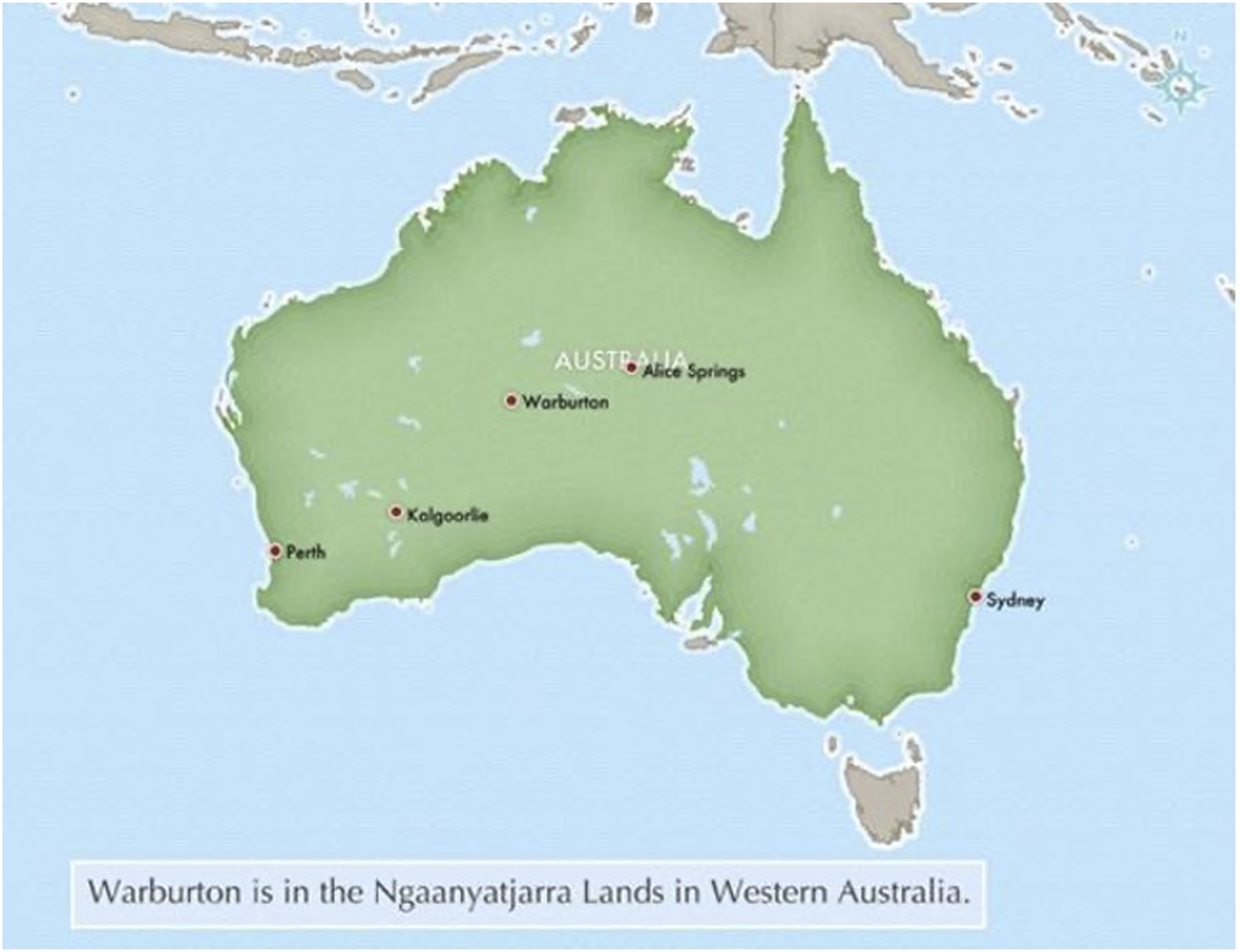
Established by the United Aboriginal Missionaries in 1930, which instigated a gradual transition from a nomadic to a sedentary life for Ngaanyatjarra people, Warburton was the first refuge for Aboriginal people in the area. Most Ngaanyatjarra people refer to themselves as Yarnangu, meaning “body of a living person”; an identifier which excludes themselves from non-Indigenous people (Newberry et al., 2003, p. 551). While a number of languages are spoken, the first for most Yarnangu in Warburton is Ngaanyatjarra.
“Work” in Warburton: A Brief Overview
The significance of the women’s engagement in their work is situated in the historical and contemporary context of work participation in remote Australian Indigenous communities. While traditional livelihoods for Aboriginal people included undertaking a myriad of activities for survival, such as hunting and gathering, the absence of a word for “work” in many Aboriginal languages is reflective of the fact that it was not seen as something separate to the “other ingredients of living” (McRae-Williams, 2008, p. 185) and was thus deeply enmeshed within all aspects of nomadic subsistence life.
As is the case in many remote communities, for decades Yarnangu in Warburton have endured a plethora of mission and government employment policies and programs that have had varying levels of “success.” Overall, missionary accounts and government reports indicate very low levels of participation in the community due to resistance to missionary-dictated work activities. What is clear and in sharp contrast to Aboriginal worldviews, contemporary understandings of “work” for remote Aboriginal people have been shaped by external mission and government programs for which work is viewed as a social institution independent of other aspects of life, reflecting a desire to instil a western “work ethic” within Indigenous populations.
What was and is still rarely recognized is that the European social construct of “work” and the associated “work ethic” simply did not align with the social organization of Ngaanyatjarra people. While Aboriginal people adapted to settlement life to some extent, the pressure to adopt non-Indigenous work habits did not readily fit with existing Ngaanyatjarra priorities, activities and cultural patterns. This can be seen in clashes between “meanings of commodities and cash, and time-space of Aboriginal life, [which] were markedly at variance with values of market society and its forms of governance” (Austin-Broos, 2006, p. 2).
Although the Breakfast Minyma enthusiastically recalled stories about their parents and grandparents being “good workers” in missionary times, there is little doubt that efforts to engage people in regular, paid work did not come to fruition. There was never sufficient funding to put new enterprises on a productive footing. Agricultural, pastoral and copper mining projects lasted only a few years before collapsing (Angus, 2023). This problem was recognised in a report commissioned by the Department of Native Welfare in the 1970 which noted, “Aborigines at the mission had never had more than occasional work, most were illiterate, and the potential workforce was both unskilled and unaccustomed to work” (Scott WD & Co. (1970) p. 1.2).
The introduction of the Federal Government’s Community Development Employment Program (CDEP), which was grounded in the policy rubric of the self-determination era in the late 1970s, saw a turning point for Ngaanyatjarra people regarding work. The CDEP incorporated community development principles, provided on-the-job training and practical opportunities, acknowledged the cultural obligations of community members, and enabled local councils to determine work activities and control the distribution of funds. Rather than being seen as a stepping-stone into “real employment” (which has been the case with subsequent iterations of work engagement policy), CDEP participants were “formally defined as working” (Jordan & Altman, 2016, p. 3) even when engaging in their own culturally relevant livelihood practices. By 2008 when the Minyma commenced their activities, there was little presence of local workers in any of the agencies and services operating in Warburton. In 2011, 16% of residents were non-Indigenous, nearly all of whom were there on a semi-permanent basis to administer and deliver local services (Australian Bureau of Statistics, 2011). However, it was funding through the CDEP which provided the Minyma with their income. They were paid hourly rates for participation in program activities, and also received income from agencies that contracted their services through their program of work.
Researcher Standpoint
My interest in working with indigenous communities in Australia stems from a non-Indigenous upbringing in Tasmania with a retrospectively notable absence of discussion about colonization and its devastating impacts on Indigenous Australians. Most education about Australian Indigenous people in my 1980s/1990s upbringing was categorized as “history,” as if they were only part of distant narrative. My worldview was challenged when I had the privilege of visiting northeast Arnhem Land on an undergraduate fieldtrip, where I had my first glimpse into an “entirely different social reality in a country where I thought I’d mastered the social and cultural “norms”” (Beadle, 2023). The richness of cultural knowledge and ways of living, combined with the unacceptable social and living conditions I witnessed, fed my thirst for work in social justice and influenced the variety of work I’ve done alongside Indigenous Australians to date. Twenty years later, I have returned to Arnhem Land with my family where we are now in our fourth year of living and working (applying many of the teachings the Breakfast Minyma so generously shared with me).
My work with the Breakfast Minyma began when I arrived in Warburton in 2009 following 10 years of working in Indigenous and international development initiatives. I went to Warburton to join a community-initiated program for which the local women were seeking additional support. My role developed over time in response to the Minyma’s needs, primarily to enable the women to navigate elements of non-Indigenous systems alongside which their program needed to operate, for example, applying for funding, driving a vehicle (until the women themselves gained licenses), using computers and other technology, and writing relevant reports. Under the mentorship of other support workers, I became increasingly skilled in non-directive, developmental community work, a practice which takes a solutions-based and strengths-focused approach to build on capacity, skills, and cultural imperatives of local people (Kelly & Burkett, 2008; Kelly & Westoby, 2018). This “developmental approach” contrasts with typical service delivery practices whereby outsiders position themselves as the expert agents of government service provision (often via private provider or NGO proxies).
Over a 5-year period, my deep and prolonged engagement with the women allowed us to develop relationships grounded in trust, openness and an insight into each other’s lifeworlds; likewise, with each other. An environment of trust and respect enabled the women to share and develop collective stories about their previous and new working lives. The women shared their stories with each other and more widely in a variety of media, reaching many audiences locally, regionally, and across a range of stakeholders. Noting the potential impact of their experience on work engagement policy for remote Indigenous peoples, I offered to support the Minyma to extend their audience to the academic and policy arena by capturing their stories in my PhD research and dissertation. We took significant measures to ensure the research process was ethically grounded within the best interests of the Minyma, including having a community reference group to whom I reported, and regular communication with the local Aboriginal authority who vetted and monitored all research that took place in the region (see Beadle, 2018 for more detail). Over the next three years my support worker role became synonymous with my research role, and together the women and I drew upon existing storytelling techniques, as well as instigating new ones to capture and share their stories as “data” using a framework of community-based participatory action research.
Practice Framework
Working as a non-directive community development facilitator in response to the women’s approach to initiating and implementing their activities, I used a modified version of Stringer and Ortiz Aragón’s (2021) “Look - Think - Act” Action Research Interacting Spiral as a practice framework. The women identified the areas of concern which they wanted to address (Look), undertook activities (Act), and regularly reviewed and reflected on their actions (Reflect/Think) in an ongoing cyclical manner (see Figure 2). Look - Act - Reflect action research cycle.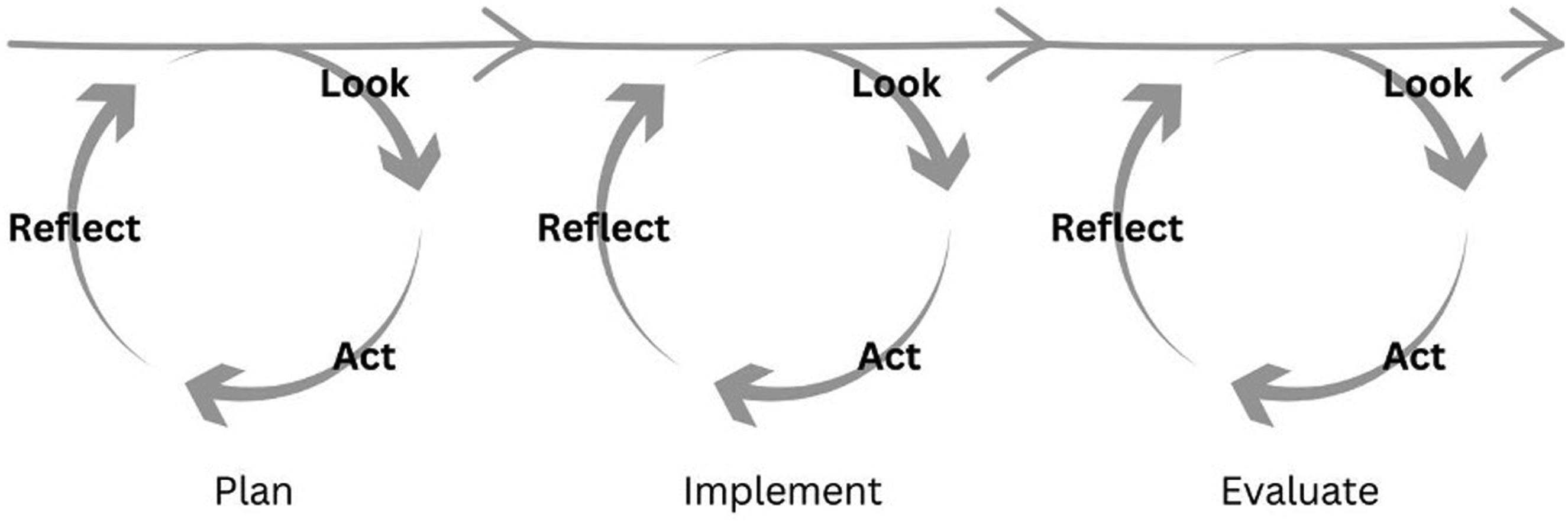
Conversations, descriptions and narrative accounts arose within cycles of action-reflection driven by the Minymas’ agendas and interests. In this way, the study drew upon the meanings the Minyma gave to their activities in real time. Consequently, the women made sense of their experiences from their own perspectives and described and represented their activities in verbal and written descriptions, photos and photo captioning, graphics, and sand art—ways that were familiar, comfortable, and enjoyable within the context of their everyday lives.
The question which guided the focus of my PhD—How do remote Aboriginal women enact and describe their experience of being workers? —emerged toward the end of the data collection period in response to the pride in work which arose in the Minymas’ accounts. Its framing was also influenced by significant changes in federal work engagement policy taking place toward the end of the study period which had detrimental impacts on the Minymas’ work. The active participation of the Minyma in the development and implementation of their program, reflection on their activities and the recording of their descriptions and representations of their activities, ensured their voices, experiences, and “local situated knowledge” (Genat, 2009) are privileged and at the centre of the research findings.
Sharing Stories About Our Work: An Example of Storytelling and Reflection
Regular review and reflection on their activities based on the Look - Act - Reflect cycle of action research enabled the women to recognize their impact on the wellbeing of their families, community, and themselves. This reflection occurred both informally over cups of tea, during car trips, when out bush for hunting, and formally, at weekly meetings and planning sessions, or with audiences following presentations. The pride and self-esteem that emerged with their newly found identity as workers prompted the women to encourage other family members to join them, to present to and inspire school children and to inform non-Aboriginal audiences about their capabilities.
The women adopted a variety of mediums to inform their diverse audiences: story books, posters, documentaries made into short videos, paintings (as examined in greater detail below) and PowerPoint presentations for children in school classrooms, women in other communities, and agency and government staff in regional centers and cities. Their stories captured the positive impact of their work on the wellbeing of their family and community, and the importance they attributed to doing work and being workers. Telling their stories in these ways became a critical means of reflecting on their activities, both through the processes of developing and sharing of the resources and responding to feedback from different audiences.
As an illustration of applying a familiar means of storytelling embedded in the traditional lives of many of the women to share their accounts, Olive Nyalypingka Lawson painted the story of the Mirlirrtjarra Kuurl Mirrka Palyalpayi program in June 2012 (Figure 3). Olive is one of the “original” grandmothers who initiated the school breakfast program in 2008 and was considered by the Minyma the most senior worker or the “boss” of their work. She is also an artist. Applying her artistic skills to her work was typical of the way the women organized themselves as workers: by drawing on existing strengths to enhance their activities.
Sitting in the red desert sand at a place of cultural significance east of the community, and next to a fire ready to cook the desert foods they procured that afternoon, Olive and two other Minyma presented their interpretation of the painting. In their local language, Ngaanyatjarra, they reflected on the important milestones and events that contributed to the development of their work. Filmed by a fourth Minyma, this account was made into a short film about the program and later transcribed by Olive’s daughter who was competent in written Ngaanyatjarra and English.
While Olive was the main spokesperson in this film, in group situations the women regularly spoke for each other, co-constructing their accounts in a way that described their collective experience. This reflects Moreton-Robinson’s description of Indigenous women’s texts being “the product of collaborative lives” where “experience is fundamentally social and relational, not something ascribed separately within the individual” (2000, pp. 1–2). This collective telling of stories was enmeshed in most of the data collection techniques that evolved, guided by the Minyma.
The following sections draw on the women’s collective story about the painting. I present the women’s descriptive representations of their experience and the meanings they brought to their activities using both their words and “voice.” This illustrates to the reader how I as the researcher, with the Minyma, wove together the text of the research findings. This is the way the women described their activities.
Mirlirrtjarra Kuurl Mirrka Palyalpayi (Making Good Food at Warburton School): Utilizing Local Representations of Experience to Develop an Authentic Account
Olive’s painting and the women’s collective narrative explaining the painting illuminate how the participatory action research practices both enabled the women to successfully pursue a highly engaging community worker role on their own terms with multiple positive impacts, and its use as the source of an authentic written account representing the collective experience of the Minyma. The women’s account of the painting, Mirlirrtjarra Kuurl Mirrka Palyalpayi, outlines: • How the activities emerged in response to community concerns. • The emergence of local, context-sensitive solutions. • The use of kin networks to cohere relationships and extend workforce capacity that accommodated the Minymas’ other family, social and cultural obligations. • The Minymas’ initiation, self-directedness and governance of activities. • The manner they grew their project and repertoire of activities from a small beginning. • The way they structured their work and worker roles to make working possible and meaningful within their own local social and cultural context.
Each section below regarding Olive’s painting opens with an excerpt in Ngaanyatjarra language from the painting story which was later translated into English. Mirlirrtjarra Kuurl Mirrka Palyalpayi painting by Olive Nyalypingka Lawson. Training for a certificate I in kitchen operations, April 2012.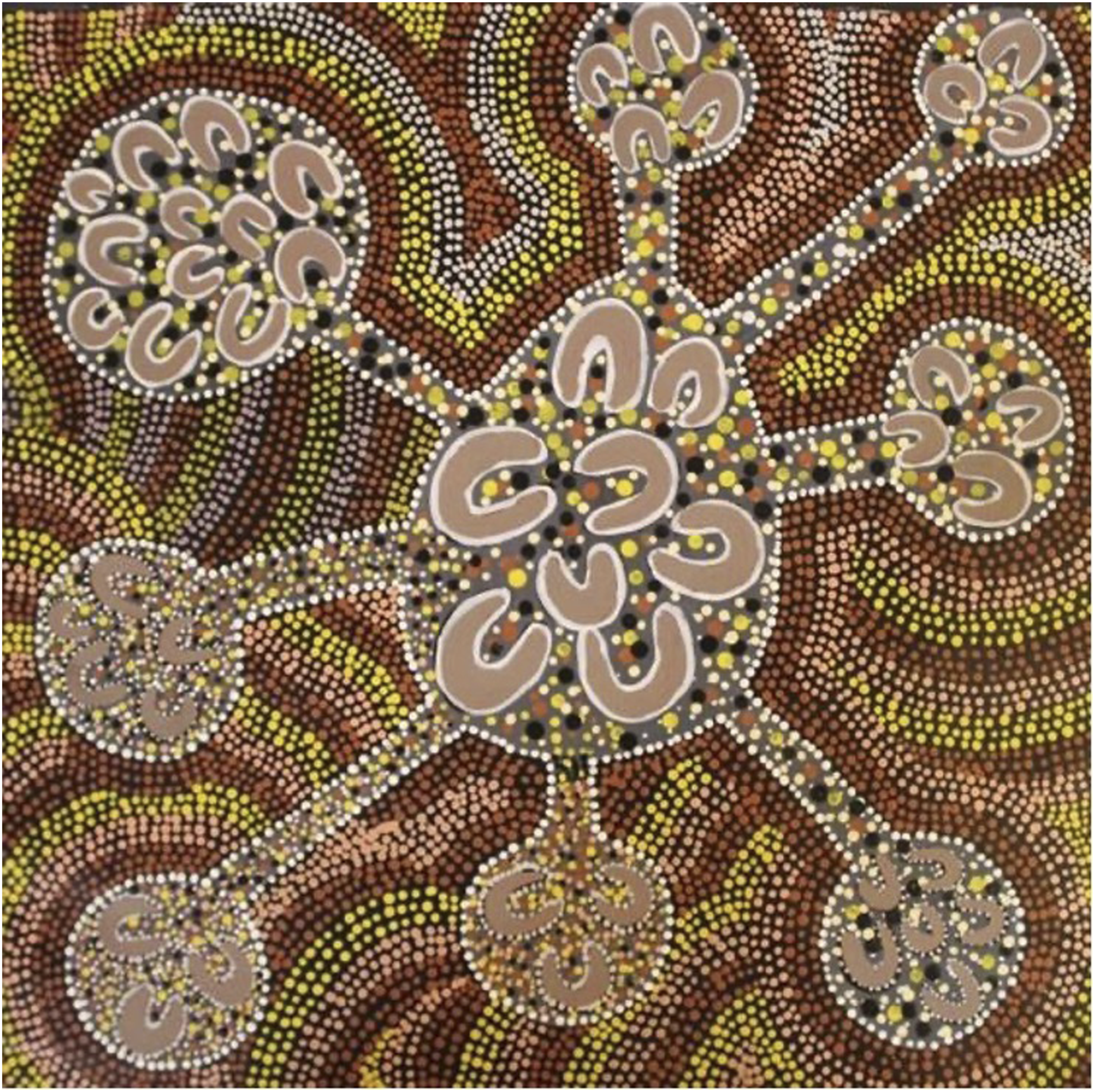
Introducing the Painting
Olive Lawsontu Paintingpa ngaanya palyarnu. Tjiinya tjukurrpa Mirlirrtjarrala Minymalu-ya mirrka palyalpayi.
This painting is by [me], Olive Lawson. The story is about the Warburton Breakfast Minyma and their work. The program is called Mirlirrtjarra Kuurl Mirrka Palyalpayi. This means Making Good Food at Warburton School.
“We were worried for the tjitji (kids)”: Developing programs grounded in community concerns
Kurranyulu kaparli kutjarra-kutjarralu-ya mirrka palyarnu kuurlta tjilkulu-ya mirrka walykumunu pitjala ngalkulatjaku. Minymalu-ya mirrka palyalpayi Mirlirrtjarra kuurlta. Palunyalu-ya tjapirnu “Mirlirrtjarra kuurlpa mirrka palyalpayinya.” Nyangka tjilku pirnirringu pitjapayi mirrkaku.
School breakfast started in 2008. Four grandmothers made breakfast for the kids. They wanted the kids to come to school and be healthy. They were called the Warburton Breakfast Minyma. Lots of kids came to school for breakfast.
Local initiation of the program meant that the community responded to issues that were of immediate concern to them, rather than problems determined by outsiders from a non-local standpoint. In 2008, leaders and elders in the community determined that low school attendance was a concern, and they worked with local grandmothers to find a solution: to provide school breakfast to the kids “so they can stay in school and be ninti walykumunu (good and smart)” (Breakfast Minyma, 2010, pers. comm. in Beadle, 2018, p. 69). Typically, in Indigenous settings non-Aboriginal staff of service agencies who are not local to the community, design, manage and deliver school breakfast programs (Food Bank staff, pers. comm., 2010). At the time, the Minymas’ program emerged, and the school staff were primarily non-Indigenous, highly transient and struggled to engage the students.
The Minyma drew upon their tacit knowledge of family and community life to design the breakfast program in a way that suited the parameters of community life. Their presence at the school each day “offered a sense of familiarity and safety which attracted kids to come to school and stay in class” (Beadle et al., 2023). The Minymas’ understanding of the cultural and social background of the students contributed to their success in engaging the kids: Now the kids they know, “Oh ladies there,” and…they get up quick…and they go to school. If their mummies work as breakfast ladies they go to school with them…kids close by see those ladies going to school so they know that breakfast will be ready soon and they follow them (Breakfast Minyma, 2012, pers. comm. cited in Beadle, 2018, p. 70).
“We are Good Working Together”: Workplace Structure Reflects Centrality of Kinship
Minyma pirnirringu waarka palyaranytja.
More ladies started working.
Commencing with a small group of grandmothers, the women soon actively recruited other women to support the growing program. Recruitment occurred within their extensive kinship networks, encouraging their sisters, daughters, and daughters-in-law to come and work. These existing supportive relationships—reflective of the centrality of kinship to Ngaanyatjarra existence (Brooks, 2016; Ellis, 2016; Liberman, 1982; Myers, 1991; Tonkinson, 2007)—were the foundation for the women to work in a harmonious and productive work environment where relationships were characterized by familiarity and trust.
The values, underlying assumptions, and objectives of the Minymas’ “human-resource management” contrasts with some non-Indigenous workplace organizations and cultures that are typified by “transactions among strangers” (Davies and Maru, 2010, p. 25), with workers recruited according to merit rather than strategically determining their potential to build networks of relationships to cohere a productive workplace. Working alongside their family members and being on the same “wave-length” contributed to the success of the program in two important ways. It enabled the emergence of a self-governance process whereby the planning and decision-making procedures fitted local relationships of seniority and kinship and cultural protocol; and it enabled a supportive work environment where workers had sufficient knowledge of each other’s personal circumstances to understand existing family, social and cultural obligations, and the realistic scope of their potential work commitment.
A myriad of circumstances often prevented the women from committing to their Minyma activities every day: attending funerals, caring for the sick and elderly, parenting of their children and relatives, escorting family for health appointments, visiting family in other communities or towns, and attending cultural ceremony, as well as subversive pressure from male partners. To sustain the expansion of their work activities, the women established a large “pool” of workers, with 51 women participating over six years. This pool acted as an “agency,” allowing the women to work when available and also meet the many family and cultural obligations that constituted the composition of their remote lives. The Minyma established a work environment and routine which accommodated these happenings and enabled each to attend work as life allowed, “There are lots of different Minyma helping, comes and goes. It’s good way, another one goes and another one comes in” (Susan, 2012, pers. comm. cited in Beadle, 2018, p. 70).
“From a Small One, It Grew Bigger”: Self-Directedness of the Minyma’s Work Enhances Confidence and Self-Esteem Enabling a Growing Suite of Activities
Minyma pirnilu-ya waarka kutjupa puru palyaranytja. Ngarnmanytju-ya palyaranytja tjilku pirniku kuurlpa pirningkatjaku – Dust Upku, Theme daysku Open dayskutarrartu.
Then the ladies started to do more work. First, they cooked for lots of kids at the Desert Dust Up sports carnival. They also cooked at School Theme Days and Open
Days.
Palunyalu-ya paaranytja Tamalalanguru Wanarntakutu. Puru-ya mirrka yirringkara palyaranytja Ngaanyatjarra Councilku barbeque.
They cooked for everyone on a walk from Tamala to Wanarn. Then they did a barbeque at the Ngaanyatjarra Council meeting.
Kurlunytjanu mapurlkarringu Minymalu-ya kutjupa-kutjupa pirni palyaranytja.
From a small thing, the program grew bigger. The Breakfast Minyma made food for lots of different events!
Mirrka HACC-pa palyaranytja kilinikingka. Palunyatjanu HACC-lu tjapirnu Minyma pirninya, “Palya-munta-yan palyanma?” Nyangka yuwarnmanu.
The HACC [Home and Community Care] meals used to be cooked at the clinic. One day the HACC worker asked the Breakfast Minyma, “Is it all right if you mob do the HACC food?” They said, “Yes.”
Kutjupa Wednesday Minymalu-ya kungka nintipungkupayi palyaratjaku kutjupa-kutjupa - mirrka paalpayi-ya, mangka palyalpayitarrartu.
Every Wednesday night the ladies still help with Kungka (teenage girls) Nights at the Family Place. Kungkas come for activities like hairdressing, make up, art and cooking.
Minyma pirnilu-ya purtikutu yankula mirrka palyalpayi. Palunyalu–ya mitjitji nintitjura nyakulatjaku.
The Minyma like to go out bush and do cooking. Sometimes they take
[non-
Aboriginal]
visitors and show them how to make a damper and cook on a
fire.
The success of the school breakfast program and the positive impacts of the Minymas’ self-directedness provided the Minyma with enhanced confidence, self-esteem, and agency to expand their repertoire of activities. The Minymas’ implicit understanding of the local context continued to ensure that their suite of programs reflected the needs of the community, such as improving the daily meals provided for the elderly and delivering a weekly support program for teenage girls. The Minyma continued to develop a style of work engagement that was grounded in the social reality of Ngaanyatjarra people which made it meaningful to both them and those accessing the services. Collectively, as their confidence grew, so too did their willingness to challenge themselves with taking on other new skills such as public speaking and contributing to non-Aboriginal learning and understanding of their lives and the circumstances that led to their motivation to work.
“It's Important for Us to Learn [Teach] Them”: Incorporating Mentoring and Learning into Their Worker Role
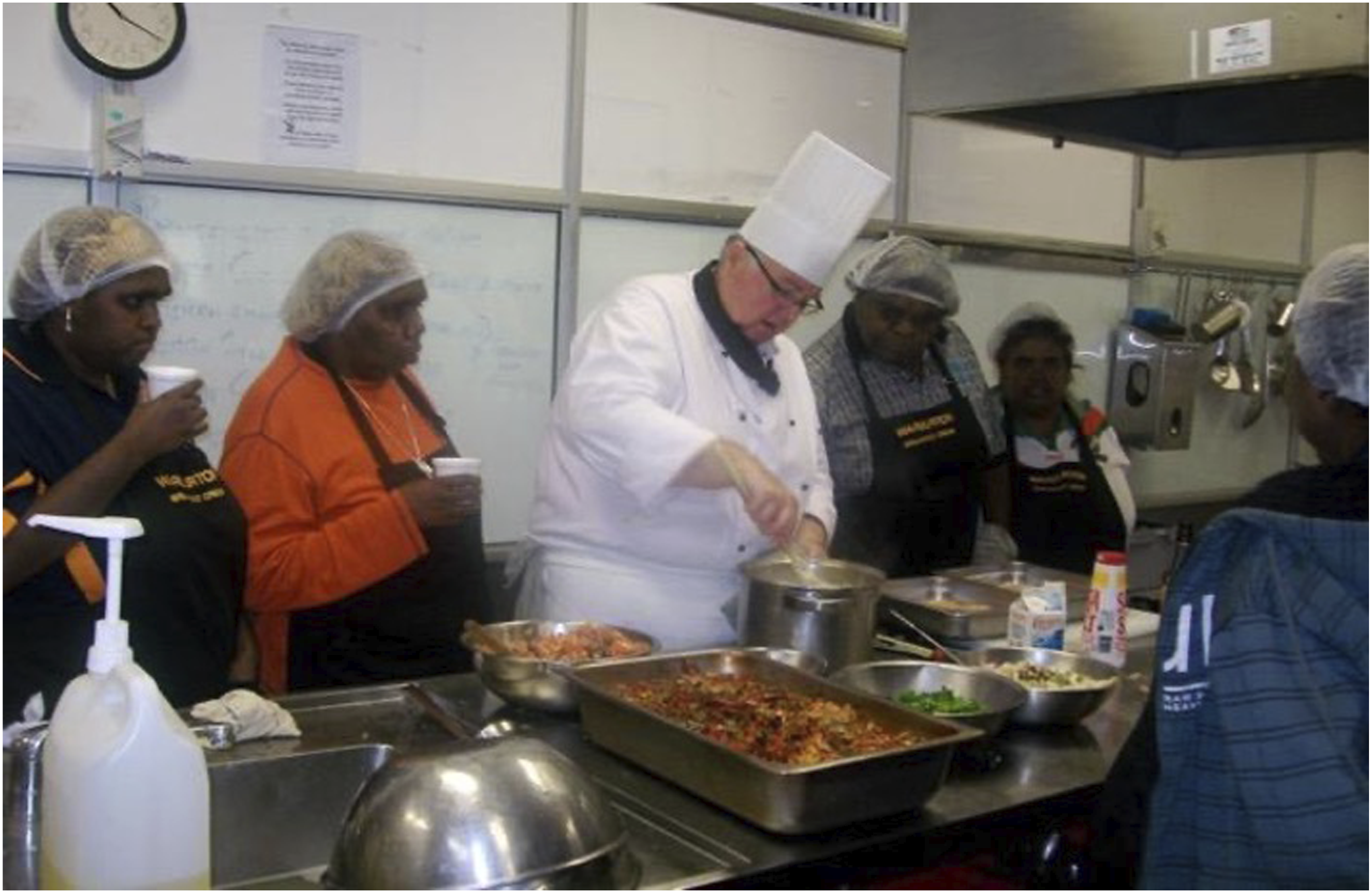
Minymanya-ya yanu Perthku. Palunyalu-ya mirrka paaranytja kitchen purlkanyangka. Palunyalu-ya trainingmanu, certificatepa mantjirnu (Figure 4).
The Minyma have been to Perth for cooking training in a big kitchen and received certificates.
Palunyatjanulu-ya high school kungkalu-ya school lunch palyaranytja tjilku pirniku – sandwichpa puru fruitpa.
The Minyma also worked with the high school girls to make school lunches of sandwiches and fruit for all the
kids.
In the shaping of their work, the women drew on skills gained at high school. Like many students from rural and remote locations in Australia, they had attended high school for a year or two in a more central location. Most girls in that era would take school classes in “domestic science,” but also engage in relevant work experience within the community or in the hostels where they lived. Acting as mentors and role models, the Minyma shared these skills with each other and younger women and girls in the day-to-day delivery of the program. Over time, they engaged in additional learning activities that complemented their program, including formal accredited training which they accessed both on the job, and through trips to training institutes in urban areas, an opportunity that broadened their skills and cultural competence for navigating city life.
The teaching of younger women and girls, their daughters, and granddaughters fit within Ngaanyatjarra culture, valuing respect for elders, and elders’ roles as mentors within inter-generational kinship relationships. The Minymas’ experience also demonstrates how the replication of family-based learning styles endemic to the local context is essential to build capacity and confidence in remote Aboriginal communities (Minutjukur & Osborne, 2014; Tjitayi & Osborne, 2014). Within their mentoring, the women incorporated traditional “look and learn” training techniques, rather than formal didactic instruction. When a new minyma comes and wants to work we say, “Yuwa (yes), you can help.” They watch us for a while and we show them how to do things the right way like putting out the mirrka (food) and cleaning up after breakfast (Breakfast Minyma, 2012, pers. comm. cited in Beadle, 2018, p. 174).
“The Family Place Is like a Magnet Pulling Them Kids”: Autonomy and Empowerment Fostered through Having Their Own Space to Work
Kurranyu-ya palyarnu school buildingka. Palunyatjanu 2010-ta-ya matjarrpangu Family Placetja palunyalu-ya kutjupa-kutjupa walykumunu palyaranytja.
When the program started the women worked in the old school home economics room. In 2010
they moved to their own building, the Family Place where they did more things like sewing and using computers.
Minymalu-ya tjarrparra classroompa tjukurrpa palunyaku waarkatjarra watjalpayi. Nyangka tjilku-ya nintirriku palunyalu watjalpayi “Ngayuku ngunytju, kaparli waarka palyalpayi.” Palunyalu-ya pukurlarripayi yungarrapirti waarka palyaranyangka.
The Minyma go into the classrooms to tell stories about their work. The kids learn from these stories and say, “My nanna, auntie and mother are workers.” They feel good and are proud to look at pictures of their families working.
Originally operating out of the school home economics room, the Minyma moved into their own workspace in 2010. This became their autonomous domain from which to pursue their work. It removed previous constraints associated with the school’s agenda. Operating on their own “institutional turf” (Eversole, 2012, p. 36), the Minyma used the “Family Place” to relax, chat with each other, convene meetings, and plan, discuss, and reflect on their activities. In contrast to other facilities in their community, this venue was a place where they were free to develop and initiate activities and structure their worker role on their own terms, absent of external pressures, and the cultural alienation and power dynamics provoked by some non-Indigenous supervisors and managers. Under this system of local governance, the Minymas’ increased personal and collective agency contributed to their empowerment which trickled down to impact their families and the community more broadly.
Additionally, the presence of a local community-controlled domain on the school grounds and its close proximity gave the school children more confidence and strengthened local community engagement in the school which further encouraged attendance. The Family Place is like a magnet pulling them kids. It’s really good that those kids hang around…At recess and lunchtime the kids run to the Family Place to be with their families. That’s making them hang about at school instead of going home…If they go home, they’ll go one way [not come back] (Breakfast Minyma, 2012, pers. comm. cited in Beadle, 2018, p. 90).
As illustrated by the Minymas’ explanation of Olive’s painting, their story demonstrates the impact of their work on addressing issues of wellbeing in the community, and on their quality of life in their new role as workers. In summary, the key organizational elements conducive and supportive of the ongoing and sustained engagement of these remote Aboriginal-Australian women with their work included: • Initiating their own activities that responded to community and family concerns. • Structuring their workforce to maintain the centrality of kinship within the organization of the workplace. • Organizing themselves such that they could be employed workers while maintaining their many other commitments as Ngaanyatjarra women. • Developing structures of governance that fitted comfortably within their existing modes of leadership and decision-making. • Integrating inter-generational skill sharing within workplace organization and the scope of their worker roles. • Gaining income security that contributed toward the livelihoods of themselves and their families. • Operating with autonomy in relative independence of existing agencies and services to organize their work and worker role.
As demonstrated through the Minymas’ account of Olive’s painting outlined above, within the particular participatory action research approach described here, the specific methods employed to develop an authentic, collaborative text that enabled the emergence of emic representations and interpretations in the “voice” of the participants, included: 1. Foregrounding local participants’ language and voice. 2. Engaging in an overall research question that fits with issues identified by and of deep interest to the local participants. 3. Collaborating with participants in ways that recognized and supported existing kinship networks and social relationships. 4. Building shared confidence and trust in the research relationship by engaging in, and growing meaningful activities from a small scale. 5. Enabling and supporting existing participant social and cultural roles and expectations such as respect for elders and inter-generational mentoring and learning within the research methods. 6. Enabling participant autonomy and self-governance within the research methodology ideally from a workspace controlled by the local participants.
The Look - Act - Reflect model collectively applied in an ongoing and cyclical basis throughout the Minymas’ pursuits ensured that there was scope to extend, improve, and report on their activities in ways that suited the Minyma. This process led to the delivery of a culturally safe wellbeing enterprise, and the careful devising of a way of working that provided the women with self-efficacy, empowerment, esteem, and increased financial security.
Conclusion
Many programs and services continue to fail to provide for the needs of remote Australian Aboriginal people because they are based on the implicit assumption that Indigenous people should aspire to the same goals, trajectories, and aspirations as non-Indigenous Australians. This renders the standpoints, values, and logics of local Aboriginal people not only invisible, but also invalid. Employing participatory action research processes in the planning and implementation of programs and services as described above embraces local ways of knowing, being, and doing (Martin & Mirraboopa, 2003). Such methods affirm local identity and thereby enhance wellbeing. Collaborative engagement with participants regarding methods co-creates innovative, appropriate ways to initiate action and reflection cycles, record stories, and write-up research. The report of the Warburton Breakfast Minymas’ experiences demonstrates a practice of how researchers ensure Aboriginal people are both the authors (authorities) and central agents in enhancing the wellbeing of their own families and communities.
Footnotes
Acknowledgments
I pay my respects and give gratitude to the Ngaanyatjarra Minyma (women) who generously provided me with a rich insight into their lives. Their permission to share these important stories can support non-Indigenous people to comprehend the injustices of colonisation and ways to support Indigenous peoples to apply their own expertise and skills to better the wellbeing of their families and community. Special thanks to Olive Nyalypingka Lawson, Myra Richards, Marie West, Tahlia West, Cherelle Robertson, Jasmine Lawson and Melissa Holland.
Declaration of Conflicting Interests
The authors declared no potential conflicts of interest with respect to the research, authorship, and/or publication of this article.
Funding
The authors received no financial support for the research, authorship, and/or publication of this article.

Notes
Author Biography
For the last 20 years, Rosalind Beadle has worked in Indigenous health and wellbeing in areas including the Torres Strait Islands, central and western Australia, and the Top End of the Northern Territory. Through her work in culturally diverse contexts, she has developed an expertise in community development and participatory action research. Her passion lies in supporting local people to work and deliver programs in ways that are compatible with the social and cultural context of their lives. In taking this approach, Rosalind has seen significant participation and engagement from both local staff and program participants. Currently Rosalind is living in Galwin’ku (Northern Territory) where she is supporting a team of Yolŋu staff to design, develop and deliver a health program which is taking a novel and Yolŋu-centred approach to preventing and slowing down chronic disease in the community.