




Abstract
CANI-net (Collaborative Artful Narrative Inquiry Network) has evolved over the last thirty years from being a research center and network at the University of Bristol to holding online monthly “open inquiry space” sessions attended by scholars, educators, and artists around the world. The sessions are flexible, encouraging the presentation of work in progress, ideas just emerging, middling, in a warm, friendly, supportive atmosphere with students and academics and others engaging, collaborating, and offering feedback to one another. Each session usually offers the opportunity for those present to write into the shared space, and to then share that writing. In the sharing, other spaces are opened up; the emergent writing is sometimes crafted into a journal paper. This article is an exemplar of CANI-net’s increasing publications. The writing in this paper is inspired by a session facilitated by Laurinda Brown. With three “calls and responses,” not all participants could share their writing for each call in the session. With no obligation to share, some responses remain absent. The responses in this paper appear together for the first time, thus exemplifying how participants riff off the work of others in these CANI-net sessions.
Introduction: Mary Before the Open Space Session starts
Feeling slightly nervous preparing to join this evening’s online “open space” session, I switch on cat and fox lights, stroke Saffie who, curled up asleep, looks likely to be staying for at least some of the session, search for a favourite pen, make a coffee, and stop the CD of Finzi’s clarinet concerto playing in the background. Gilles Deleuze and Félix Guattari’s (2015) concept of “assemblage” comes to mind. In a moment, this “assemblage” will shift as the laptop joins the Zoom meeting. It is because of Covid-19 that these lovely people appear on the laptop screen on the first Monday of most months; until the pandemic, they met in person in Bristol which would be too far for me to travel for ninety minutes. I have known of CANI-net for a while, and attended an online inaugural lecture in January 2020 presented by my then Director of Studies, Ken Gale (also a member of CANI-net); his doctoral studies were supervised by Jane Speedy (who has co-ordinated the group from the beginning). Ken introduced me to CANI-net, and I began to join the “open space” sessions last Summer. Already enjoying “writing to” and “with” (Wyatt & Gale, 2018), I love the group's history of writing with other theorists as well as to the emergent theories of its participants. In addition to being inspired by someone else’s work/practice, we write together and then share our writing. It is amazing what is generated within such a short space of time. Having felt “lost” since the end of my doctoral studies, this group has become a post-PhD lifeline, a way of continuing those artful conversations, and of continuing writing and researching in a community of like-minded people. It is great sharing this space with people from as near as Cornwall and as far as Australia, and to hear about their research. To have the chance to write collaboratively with them is wonderful, and not knowing who will be there, or how the session will be structured, adds to the excitement of each event. Reading the abstract (see next section), this session, Using Fragments to Uncover Connections Through Call and Response, Resonance and Dissonance, sounds fascinating. I am drawn to “fragments,” “resonance,” and “dissonance,” and to the not knowing in advance what will happen, to glimpsing perhaps the not yet known. The session sounds really exciting, but, what if I don’t know what to write? What if my responses to the calls are not quick enough? What if there is no “resonance” or “dissonance” with the calls? Clicking on the link leads to a warm welcome from Melissa and Laurinda, and, holding a pen, there is a sense of relaxation, although I am troubled by a strange, luminous green light within my Zoom box …
Open-Space Session Abstract
Laurinda has retired as an academic mathematics educator at the University of Bristol, School of Education, where she mainly supported those people becoming and being mathematics teachers and was a member of the Bristol Collaborative Writing Group. In August, she gave a plenary keynote at her last Psychology of Mathematics Education conference in Alicante, Spain (her first of these annual conferences was in 1994!) entitled “Stories of observing, interviewing and researching in collaborative groups to develop mathematics teaching and learning.” The focus in that keynote was comparing and contrasting the first three papers she ever wrote with the final three to uncover a story arc as a retrospective of her career. She is currently working on a book that will fill in the middle!! However, she has been returning to the idea of “Fragments” that was the focus of an earlier presentation in an open space and she would like to explore this idea further. She imagines the session being her telling of a fragment of a story from her working life followed by some writing and sharing followed by another fragment followed by some writing as time permits—like call and response. There will be time at the end to tell fragments of arcs of our own fragments in writing.
The Session: Opening Words
Laurinda: How will this work? The fragments that I tell will be one of two sorts. Some texts are crafted, telling what happened, written then read out. These are extracts that are brief but vivid in that they do not have context, judgement, or moral. At other times I will tell a story in the present, talking directly to you. In both cases, the task is to pay attention to what is arising for you, resonance or dissonance. Mary: All stories will have been written before being spoken in the session, and subsequently appearing here in writing. Fragment 1 is a story told in the present; it was not written down to be read from in the session.
The Session: Fragment 1
Laurinda: Fragment 1 is me telling a story in the present about the first narrative conference I went to: I had been told that I had to publish in more fields than mathematics education when a feminist researcher, an ex-colleague, gave a seminar. She told us about a conference coming up at OISE, Toronto, called the qualitatives. I decided to put in a paper entitled becoming a mathematics teacher educator. Not knowing what I was going to I found myself in a group of three researchers presenting their papers in the same session. I was third. The second was a crafted piece of writing from an established researcher into AIDS. He had decided to volunteer on one of the wards. His paper was his feelings in the first few minutes working with patients. He said that he learnt more in those two minutes than in his time as an objective researcher. As I stood looking at the members of the audience when it was my turn I said, How do you follow that? What I did is what I will offer you now but you can respond with anything that stays with you, including an image of acting out or writing about your image of being in a mathematics classroom. Bring to mind an image of a mathematics classroom when you were at school. What were you doing? What was the teacher doing? What were you feeling?
Responses to Fragment One
Melissa: Crafted versus uncrafted… the story is crafted and at times in the present… that is, I am crafting it as I go. 1. Images of mathematics class The first image is the last word in Maths. Mrs O’Reilly seems sharp but then you realise, she just loves Maths. She goes quickly but the ride, if you can keep up, keep up with her, is to share her perverse thrill at the algebraic call and response, x’s squared oh I don’t remember but I do remember how, at the end of each long roller-coaster process working through an equation, foam would have accumulated at the edges of her mouth. I braced in case it should start flying. Keep up, keep up or she’ll be disappointed! And the day she announced her engagement: “now girls, I know you won’t be able to concentrate with the sight of this ring on my finger, distracting ye. So I’m going to pass it round, so each of you can have a good look at it, then we can get back to work.” Marian: Mostly I enjoyed maths – it was interesting and challenging, and I could work it out, and mostly get it right. But when it came to differential equations, I just couldn’t see it. The teacher (Miss Beard) asked, “What don’t you understand?” “Everything, Miss Beard.” I thought it was a stupid question because if I’d been able to answer it, I would have understood. That’s what is so puzzling about maths – it’s not just logic, you have to “see” it to get it. One day I just “got” differential equations, and then it was OK. But I have no idea how I got there. Artemi: I’m in my final year at school in Athens, also working on Maths and Further Maths A levels, because I want to study in England and need to get my A levels – my Greek school-leavers’ qualification won’t count for very much. I attend A-level maths classes after school twice a week – or was that three times a week? – Mr Leaman has recently arrived in Athens from England to teach us and all 17-year-old girls (or was that just two of us?) are in love with him. A big difference from our previous Greek teacher trying to teach us maths A-level failing on basic English because he would say μεζιούραμεντ instead of measurement. Next thing I know, I have had a foot operation, missed a lot of school, and my parents have arranged for Mr Leaman to come home and give me 1:1 lessons. Donata: Feeling small, feeling lost, feeling I had to perform, to achieve something bigger than me. Feeling somehow…discriminated…outside my words, my elements, lost in numbers…it felt like climbing a huge mountain, struggling. Eventually reaching the top. Carol: I was in a school in Singapore. My teacher put us into groups around desks pushed together and encouraged us to solve the problems with each other. I learnt so much through conversation that by the time I moved back to a school in England, I was ahead of most of the class. The new school placed me into additional maths one year early. The teacher in this school was dull and unimaginative and all learning stopped. I scraped through additional maths with what I had learned in the old school. Not one more morsel of maths penetrated my brain in the following years and the joy of maths that I’d experienced around the tables seeped away. Mary: I think of my time as a PGCE (post-compulsory) student teaching Literacy / English: the comma and Charles Dickens’ Hard Times; I am managing to stay one step ahead of the students. My mentor comes into the room: “I’ve got a Level 1 Numeracy class that needs covering for the rest of the term. ‘Sally’ is teaching the same lesson to a different class at 11 o’clock. You can observe that session and then teach the content to the other class this afternoon.” My heart is racing – I last “did” Maths twenty years’ ago: I started an A level in Pure Maths at the local Further Education college; I gave up after a couple of months because the lecturer spoke to the board, and I couldn’t follow the numbers which rapidly appeared there. I made the excuse of my full-time job in insurance wanting me to study for the Chartered Institute of Insurance’s exams … I liked Maths until I started my GCSEs and then I didn’t get on with the teacher. How am I going to teach Maths? Focus – what can you remember? I know my times tables well … Almost trembling, I attend the lesson sick with fear at what I might have to teach in three hours’ time. It’s ratio and I can’t remember anything. My heart is pounding, how will I teach this? Who am I to teach this – my specialist subject is German! Listen, make notes, focus … Laurinda. My response to responses: We copied what the teacher wrote on the board and then did examples that were exactly the same. I was prepared to do that – others weren’t. At the OISE conference one woman went to the chalkboard turned her back to the group and started writing meaningless hieroglyphics. A common shared experience of learning mathematics.
The session: Fragment 2
Laurinda: Fragment 2 is a crafted story read out. The title of many papers that I write, usually collaboratively, includes the word, “story.” What comes to mind when you think of this word? Many years ago, on reading a draft of a proposed “Psychology of Mathematics Education” paper, written by myself and Alf Coles, “The story of silence: Teacher as researcher – researcher as teacher” (Brown & Coles, 1996), Dick Tahta (now deceased), a member of this group and a mentor of mine, commented that the title needed to be changed because readers would think the paper was fictional. We decided not to because, through reading “Steps to an ecology of mind” (Bateson, 2000) as a mathematics undergraduate in 1972, for me the word “story” had a technical meaning. In “Mind and nature,” Bateson (1979) talks about the “pattern which connects” (p. 8) and that “A story is a little knot or complex of that species of connectedness which we call relevance” (p. 13). I have also been influenced by Bruner’s talk of framing in “Acts of Meaning” (1990), which provides a means of “constructing” a world, of characterising its flow, … what does not get structured narratively suffers loss in memory both individually and within cultures. I am in Oxford reading “Steps” in the early 1970s as it came out in the Paladin series. It felt possible to read everything in those days. I was reading for a degree in mathematics and, in that book, I experienced a move away from a world of certainty to dwelling in process. I could not have been the teacher I am now if I hadn’t read Bateson.
Responses to Fragment Two
Melissa - Mind and Nature – Bateson: “a story is a little knot or complex of that species of connectedness which we call relevance.” Resonance v dissonance Is there also relevance to you? Bruner’s talk of framing in Acts of Meaning “which provides a means of constructing/structuring a world, of characterising it’s flow” “what does not get structured narratively suffers loss, both individually and culturally.” 2. The narrative flow The frame, the structure, the thing that needs re-narrativising, that lives within, without, the without-within. The interim Third Why is this immersed so? I think of 3rd-ness. Of thirdness, all this intersubjective gobbledigookness. I think of gobbledigook – so good to speak So much meaning in the inflecting In call and response In yes and no In zeroes and ones In binary And something beyond… that third position, that fourth wall broken That Wink from Phoebe Waller-Bridges I’ve stopped for a while To consider the Idea of Narrative as a framing device Not the frame as container - pressing edges that propel energy in one direction -for words to flow But the flow of the words themselves as the frame that shapes possibility. Is this delight I feel? Foaming at the mouth at the thrill of seeing it? Ending Now Margaret Atwood’s poem in Anthropocene (Atwood, 2018) Everything becomes irrelevant “Steps into an Ecology of Mind” Bateson: Everything is Process That Paladin Series—one could read it to become an intellectual. Carol—And the railway line fell into the sea. The railway line just past the atmospheric pumping station at Star Cross built for Brunel’s failed atmospheric railway, along from the red rocks, below the Pleistocene cliffs at Dawlish. I walked this stretch alongside the railway, gathered words from signposts dotted all along the edge, and wove the words into fragments of poetry. I considered storytelling and how the word is framed, looked at the way the words convey danger and caution, and how they suggest rivalry between the contesting parts of the landscape, Keep Off and Keep Out—the golf course, the pleasure park, and the bird sanctuary. Each sign conferred importance. Here at the edge between railway line and sea, waves splash right up to the windows of the trains as they pass along. A whale was beached, washed up already lifeless; people walked in long hushed lines to see its great body, tail still moving in the swash of the waves, a curious pilgrimage as the sky slowly dimmed to dusk. Marian—Thank goodness I offered my story last time as I didn’t understand what was going on/ what the issues are. Relevance, resonance, dissonance? Onomatopoeia? I also remember not liking story writing at school because I had no ideas. It was agonizing. Maths was easier, I could just get on with the problems. With Maths homework I often got stuck, so I tried to start it as soon as I got home, to leave enough time to have another go every evening till it was due to be given in. Donata—A story for me is a line of thinking and acting, being, words in action, and thoughts in movement. It’s a sharing moment, here and now encompassing past and future. A moment of becoming. A dialogue between presence and absence, memories and dreams, reality and fantasy. It is a story, a fluid becoming of words, of experiences, a creative magical moment of being. Togetherness. A small unknown that gently becomes known. Artemi—I like stories too. I’d happily load all of the abstract theories on to the train that falls into the sea, and just keep stories for us to share with one another. My stories, your stories, narrating our experience, putting into words—crafting into words—little snippets of what happens to our flesh and our blood, our mind, and our spirit. And sharing these with one another, so we can all hear about, and learn from, one another’s stories. If the human sciences are about understanding the human condition, what better raw materials to use than the very experiences of you, me and A N Other. Someone, somewhere, conjured up the beginnings of a hierarchy which labeled subjectivity as a flaw. It’s not just Stonehenge. People write books about all sorts of things that we know very little about. I have been intrigued with the disc of Phaistos, studied by countless scholars in the four millennia of its existence. When I had tried to find out more about it, I had marveled at the reams and reams written about it, most of it descriptive (of the material, or of the size or positioning of its symbols) or sheer speculation and guesswork. Mary—True story, fiction, both, does it matter? So what? Only the writer knows the relevance, but it could resonate / create distance for you. Storying does something for everyone. In storying, we might tell our stories, tell how the world appears to us, but what moves us to write, to story? Why write a story? I’ve written several since submitting my PhD thesis: between submitting the thesis and the viva, I wrote stories of preparing for the viva and, at various times since then, I have written about life without a PhD to write, to story: stories of absence perhaps, stories of loss. Would they resonate or create distance? They sit in a folder on the laptop, going nowhere, staying between us: me the writer, the PhD years, continuing the story of a PhD thesis after submission perhaps?
Fragment 3: The Story of Silence Conference Paper
This writing was crafted as a conference paper. Alf: Reflecting back on the first year of teaching had produced a feeling of inadequacy akin to despair – looking back over all that time, looking for the lessons which had been “good” from which to start to build next year they had seemed rare. No lesson really seemed to match up to my ideal image of what seemed possible and there was a strong sense of a gap between where my philosophy lay and the day-to-day practice of what was actually happening in the classroom. Travelling in a car, with Alf’s attention partly taken up by driving, Laurinda asked whether he could bring to mind particular moments or times during a part or parts of lessons which had felt closest to his ideal. This provoked two “brief-but-vivid” (Mason, 1994) anecdotes: Anecdote 1: During an A-Level lesson on partial fractions I was going through an example on the board, trying to prompt suggestions for what I should write. Some discussion ensued amongst the students, which ended in disagreement about what the next line should be. I said I would not write anything until there was a unanimous opinion. This started further talk and a resolution amongst themselves of the disagreement. I then continued with the rule of waiting for agreement before writing the next line on the board. Anecdote 2: Doing significant figures with a year 9, I wrote up a list of numbers and got the class to round them to the nearest hundred or tenth, …. Keeping silent, I wrote, next to their answers, how many significant figures they had used in their rounding. Different explanations for what I was doing were quickly formed and a discussion followed about what significant figures were. Without any prompting from Laurinda there was suddenly an energetic statement of “It’s silence, isn’t it? It’s silence.” Bits of writing in a silence paper where we each wrote about silence and commented on it to the other are read out. I am still unsure about the use of silence – ethical issues of sharing so much of ourselves in that paper, especially as Alf is now a professor in mathematics education at the University of Bristol, School of Education. “One discipline that has come out of the work is that of ‘staying with the story’. In my notes on teaching in the first year, the observations are in general distant - about whole classes - with observation and analysis all mixed in … forcing myself to hold back the analysis and stay just with stories about individuals or groups the analysis from this data then has the possibility of throwing up something I had not been aware of before” (Alf, 3/12/95). There is a shift from being taught mathematics in a silent classroom to Alf being silent …
Responses to Fragment Three—What Does Silence Mean to Us?
Carol: There is silence in waiting, she says. I am disturbed by silence. I break the silence with voices; the radio, a phone call, a zoom, a conversation, background babbling even as I sleep, falling to the sound of a story as the words seep into my dreams. Sometimes desperate to stop the words infiltrating my mind, I shout out angrily and wake. I wonder what would happen on a silent retreat, would I lose my mind? Lose my self. Would I hear voices? Would the silence deafen? Donata: Silence has meaning and has power. It is frightening, absence, void, fear, and loss. I miss you, your voice breaking that silence. Silence is also comforting, peaceful, restful, and full of voices, memories, and stories. Full of you in your absence. I learnt to be in silence in peace, to listen to its many resonances, dissonances, meanings, or lack of meaning….just stay with and in it, staying with the unknown, the yet to come. You are in my silence. Marian: I was on teaching practice (one day per week) in a junior high school in Leicestershire. My practice teacher was called Mike Poulter. He spent all his time criticizing me and telling me I was absolutely useless. He didn’t give me any tips on what to do differently, just left me feeling I was no good and would never make a good teacher. Our strange PGCE course focused on myths and legends, with a few Euclid theorems thrown in—but nothing about how to teach. In my probationary year there was no help either, as my classes ran riot round the room, and the next-door teacher Mrs/Miss Harris enjoyed telling me how useless I was. The head teacher signed off my probationary year because he was a kind man. Mary: Silence usually pervades when I’m reading, writing, and thinking, although music in the later stages of a PhD was really important: I wrote the “Readers’ Guide” letter to the examiners in my thesis to Simon and Garfunkel’s Sound of Silence. Silence. Music. People talking. Traffic. Tapping on keyboards. An audience coughing and sneezing. Saffie purring, miaowing, and “clicking” her flap to be let in through the back door. My clarinet. A television. A radio. Why am I listing things that make a noise that resonate with me? Silence is golden—the name of another song … I like silence, but sometimes my thoughts are too loud, I “do my own head in,” overthinking … as bad as too loud music when I want to think, but how often is it actually silent? Silence. A rare and precious thing … Melissa: The rule of waiting for agreement before writing each line on the board. Room for discussion – about what? It’s silence, isn’t it? Response – I am with the realisation that the content of my mind is irrelevant and there is only the process of eliciting meaning-making in the minds of others. I am confused. And frightened. Should I tell [my psychotherapy client] that I’m frightened too, and don’t know what this is all for? Sometimes the edges feel hard like diamonds. I mean tough and unforgiving, cold and impenetrable. I hope to be able to choose the means and time of my own ending. That would be the kindest thing. And the selfishness of letting go presses back at me. But it can then be managed. I can hold to the end and… Give the gift of a good parting. [Something important]… in the allowing of things not dreamed and fantasised but real and needed. Like a good boy. Like a cat. The teacher’s silence creates the children’s voices.
Story Arcs
Laurinda: Final invitation to write. There is obviously an arc in the three stories I presented, my story of stories, otherwise I would not have chosen them. I am interested in whether responding to these fragments brings forth a story of stories arc for you. Melissa: Crafting/not crafting. Am I becoming a teacher? I am becoming a teacher. I am in the act, through the act (Manning) of becoming a teacher as I teach, as I presence the next lesson, contemplate what is to be imparted and how. And now I think of how a teacher can begin with the words of those present—let the lesson begin organically out of what there is—emergent—as long as the frame can be inserted within.. through… words…. The frame will come through the students’ experiencing What resonates? Where is dissonance? What am I going to do with these? I feel that too – I don’t. I’m going to mark-make these knots, accentuate them, look to them for meaning. What works? What words? Marian: Retirement Fragments: “Making Meaning from Fragmentary Activities” (from Margaret’s piece) I like this phrase – How do we make meaning or Meaning? Supervising a young social worker at a hospice, She said, “What is the meaning of it all, when we die, And some so soon, my age even.” Why are some things meaningful and others Empty of all meaning? Is it about enjoyment or fun or feeling alive? Is it about having others to relate to? Retirement is hard work because We have to weave the fabric, find the pattern, The warp and weft In which the fragmentary activities can Find a home and be part of something Larger than themselves Artemi—Are we looking at arcs trying to create meaning? What kind of meaning and for what purpose? I can see no connection between my three pieces of writing, and yet I could easily sit here and ponder on temporal relationships, alternative perspectives, and hidden meanings. Maybe if I tried hard enough I could write 500 words on this, maybe more. Would it be useful? If we try to find something to say, I am sure we always will. I am not sure, however, what use it might be. For what it’s worth, here is a thread I just conjured up linking my three pieces of writing: they follow a trajectory from being an impressionable teenager, later becoming a lover of stories, and then arriving at a sense of suspicion towards conventional ways of “knowing.” Carol—Building a bridge between the three responses. The first is a memory, a simple description, the second bounces playfully from the words uttered. The third is a silence, or lack of silence, a fear of silence. Gathering up all the spoken words I can find. Speaking aloud to myself. Speaking out loud. Donata—Getting lost into numbers, words, feeling small; disappearing into the unknown…then re-emerging, finding a voice, floating, a fragmented small voice. Maybe unframed, scattered, not clear, not loud, yet a voice. A becoming of words, silences, memories, and dialogues. Missing you as my interlocutor, missing our stories, our little being together, continue to imagine stories with you, in my silences. Mary—An “arc,” a bridge between…. Three pieces written in response to a call, calls, two explicitly featuring the PhD—writing stories after submitting the thesis, storying about submission day—a phone call from my Director of Studies in the evening interrupting my panic, my thinking about whether to submit or not(!), would I just fail, would I have time to rewrite the “Readers’ Guide”?! Stories of loss, of absence, of the PhD, stories from a becoming-post-PhD life about the International Autoethnography Conference in Bristol. Silence and the PhD, reading, writing, thinking in silence, sometimes writing with music …. The first is also implicitly connected with the PhD since the PhD was originally intended to be about Maths as well as English teaching and learning but eventually focused on English, specifically writing, because otherwise it would have been too wide …. Perhaps there will be another PhD focusing on Maths teaching and learning? How I came to teach Maths is the subject of that first piece of writing this evening, how I hadn’t wanted / envisaged teaching Maths, and how I had to learn Maths again to teach it and actually I enjoyed teaching Maths, especially on the specialist diploma in teaching Maths program, and I enjoyed being a PhD student ….
Coda: Mary
After the session, struck by the sudden silence and the blank laptop screen, I pause for a few minutes reading over the words on the pages, and thinking about the conversations which have taken place. I am relieved that something was written for each call, and surprised at the connections, the arc, through the three responses: I feared the ending of the PhD, and yet it is still very present - middling rather than ending - almost one year later, still pervading writing. Intrigued by the writing so easily flowing this evening, I wonder again about writing in immanence (Gale, 2020, 2023). There was no knowing in advance what each call would concern, and yet the writing simply flowed in response to each one. I wondered if I should slow it down, think more about the words appearing on the page, choose which words to use, try to be more “academic,” but there was no stopping the writing. With the pauses always timed, the writing rarely had more than five minutes to fall onto the page and so there was no real wish (or time) to interfere in its emergence. I wonder nonetheless whether controlling the writing would lead to “better” writing, but then I think of Brian Massumi’s (2002) encouragement to accept the risk of writing “sprouting deviant” (p. 18), and Erin Manning’s (2016) suggestion that “writing only really knows what it’s after once it has begun to make its way into the world” (p. ix), and I relax into the wonder of seeing what was created in the calls and responses, in the riffing off of other writing … It is not long after joining CANI-net that I am invited to participate in the collaborative writing of this journal paper. I am keen to read the network’s previous publications and discover a book (Kirkpatrick et al., 2021): this paper resonates with “Chapter three. Riffing off Tami: Tami Spry’s Performative Call and our Collaborative Responses.” Being part of a similar venture, creating a text from a “live” session, exemplifies for me what collaborative artful narrative inquiry can do. This paper is just one exemplar arising from one session of how members of the network are constantly innovating ways of writing together. This paper also serves as part of an ongoing inquiry into what it means to inquire collaboratively, and to bring ourselves artfully into the story together. Creating this paper offered me the opportunity to have further conversations with Laurinda. She elaborated that what she was exploring in the session was whether fragments of stories meaningful to different periods of her life, connected with an arc, could trigger something in others. Whilst this was not true, and would not be expected to be, for all the participants in the session, it was true for the majority, indicating that this may be worth exploring as a methodology.
A response from Jane Speedy
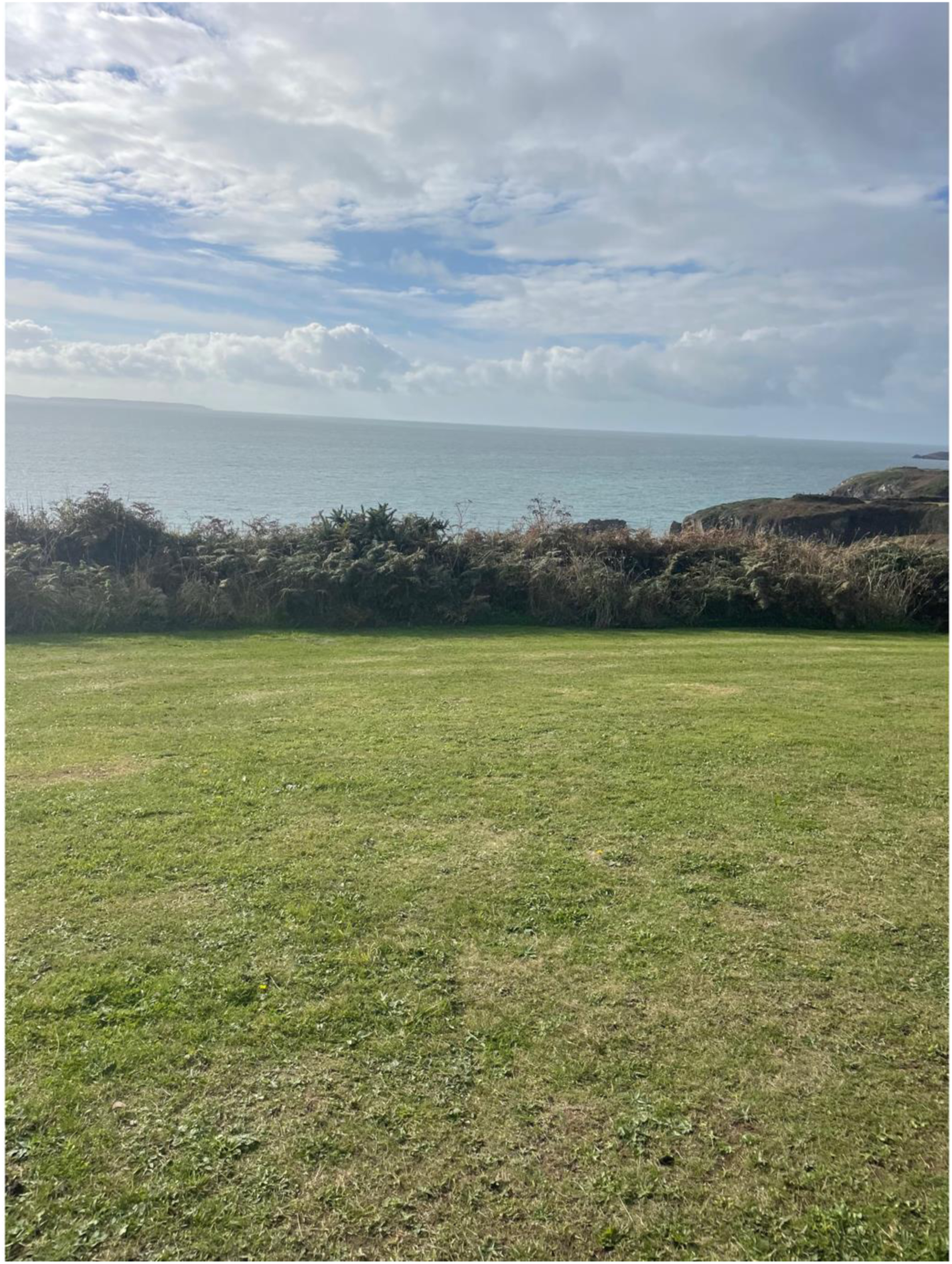
I was not at this open space, so it is not as open to me…. I am opening up a “closed” pouch of words that have all come tumbling out, written by some people I know and some I don’t. I have read this all through once. I don’t quite understand how this was constructed, but I am writing this response in that state of not quite knowing, rather than reading everything through another time….I do what I usually do…. Read the paper, and then go away and get on with the rest of life and see what is still left with me and how I have been thinking with these words and fragments of stories…what am I left with? I am left thinking about teachers who relate to black and white boards…and not to their students… like my chemistry teacher: Rocky Hill. I am left with Maths at school. I was officially “no good at maths” …. My older brother had been a Maths whizz and I was constantly asked by incredulous Maths teachers whether I was I am left with story—with story as a way of moving through the world. I notice these writers quote Massumi and Manning, both of whom are big on mo(ve)ment and worlding. Storying and worlding have more or less the same meaning in my lexicon. I am left with silence… and how silent retreats are often openings to different more-than-human kinds of noisiness. I am left writing this response in a place of retreat…. I am in the meadow outside the chapel at St Non’s retreat in Pembrokeshire. A place of retreat from humans, but not a place of silence. I live part-time down the lane, and when I am here, come here to St Non’s on my mobility scooter, light a candle in the chapel (I am a Jewish atheist—what else would I do?), and stare out to sea, almost every day…. I sit and listen to the raucous sounds of seagulls and of the incoming westerly winds and the waves crashing onto the rocks below…
Footnotes
Declaration of Conflicting Interests
The author(s) declared no potential conflicts of interest with respect to the research, authorship, and/or publication of this article.
Funding
The author(s) received no financial support for the research, authorship, and/or publication of this article.
