




Abstract
This study explores the challenges of realizing the emancipatory potential of transdisciplinary research and methodology through a case study involving researchers from the Federal University of Bahia and the community of Siribinha Brazil. The project aimed to prioritize community perspectives, critical reflexivity, and dialogue between diverse knowledge systems to address social-environmental challenges. However, three core challenges emerged: 1) Power inequities often persist despite calls for participation and collaboration; 2) critical theoretical reflections do not always translate into practical actions that challenge these inequities; and 3) bridging theory and practice necessitates developing interpersonal skills and fostering care. This research highlights the fragility of transdisciplinary methodologies and emphasizes the need to address power imbalances, bridge theory and practice, and cultivate interpersonal skills and care. It contributes to discussions on implementing transdisciplinary approaches that not only address epistemic challenges but also fulfill the political ambition of benefiting disenfranchised communities.
Keywords
Introduction
Knowledge coproduction and transdisciplinarity have become widely endorsed in debates about social-environmental challenges such as environmental and social justice, biodiversity conservation, food security, or public health (Lawrence et al., 2022; Lieberknecht et al., 2022). While academic expertise is crucial for addressing these challenges, so is the expertise of many other actors including, for instance, Indigenous communities, farmers, and educators. Exclusive reliance on academic expertise often produces epistemically deficient and politically unjust interventions because they are based on limited evidence and largely reflect dominant interests in academia (Ludwig et al., 2022).
Transdisciplinarity has not only been embraced as a remedy for epistemic shortcomings but also as a framework for political emancipation centered on the epistemic practices and material interests of disenfranchised communities. Transdisciplinary research and related methodological frameworks such as “participatory action research” (Bacon et al., 2005; Buckler, 2013; Chevalier & Buckles, 2019; Smith et al., 2010; van der Riet, 2008) or “community-based research” (Suarez-Balcazar et al., 2022) have therefore been mobilized as foundations for alternative and emancipatory forms of inquiry, recognizing that science for the people ultimately has to be science with the people (Editorial Collective, 2022). Collaborations that give prominence to the knowledge and interests of disenfranchised communities become positioned as counter-models to colonial and paternalistic modes of knowledge production that have been challenged by scholars and activists from a wide range of fields (Chevalier & Buckles, 2019; Mavhunga, 2017; Parker et al., 2018; Pollock & Subramaniam, 2016; Smith, 1999; van der Riet, 2008).
Yet, as transdisciplinarity has become increasingly mainstreamed in academia, it becomes crucial to reflect on the reality of transdisciplinary research and its methodology. Many transdisciplinary projects do not have emancipatory goals but are framed in terms of “multi-stakeholder interactions” that may, for example, involve the “triple helix” of academia, business, and government instead of centering on disenfranchised communities (Russell et al., 2008). And even when transdisciplinary research is carried out with explicitly emancipatory ideals, it encounters a methodologically messy reality, in which differences in power, positionality, and knowledge practices between collaborating groups can challenge emancipatory promises of doing science together (Chevalier & Buckles, 2019) or decolonizing the academy (Smith, 1999; Stanton, 2014; Parker et al., 2018). Scientists who embrace critically reflexive theories often still struggle to navigate the tensions of moving from talking about emancipatory science and meaningful participation to the actual embodied skills needed for such collaborations. It is difficult to determine a common way of practicing methods that deal with the political dimensions and dynamics in place.
This study follows the promises and struggles of a critically minded group of researchers from the Federal University of Bahia (UFBA) in a transdisciplinary project in the artisanal fishing village of Siribinha, in the northern coast of Bahia, Brazil. Rather than imposing scientific perspectives on issues such as biodiversity conservation or education, the project focuses on community perspectives and critical reflexivity about collaboration and dialogue between diverse knowledge systems and worldviews. Although this project has brought various benefits to the community, the researchers also encountered a messy reality that limited the integration of emancipatory methods in their daily work. By analyzing the encounters between UFBA researchers and the Siribinha community, this study scrutinizes the emancipatory potential of the methods used in a community-based transdisciplinary research project.
Three core challenges are highlighted for realizing emancipatory ambitions through community-based transdisciplinary work. First, well-meaning appeals to participation or collaboration can obscure deeply entrenched power inequities. Second, critical theoretical reflections that respect knowledge diversity and acknowledge inequities do not always translate into practices that effectively challenge these inequities. Third, moving emancipatory ambitions from theory to practice requires embodied interpersonal skills and care that often remain underdeveloped among academics (Maguire, 1996; Tronto, 1993). Inspired by the mangrove forests surrounding Siribinha, the article concludes with a synthesizing perspective of research as a mangrove in which different worlds come together: the sea and the land, sweet and saline waters, and those that can breathe under and above water. Mangroves are great mediators between these different worlds. Similarly, in transdisciplinary research, many worlds come together with different interests, knowledges, and emancipatory ideals. Like a mangrove, this research context encounters a reality of complex relations full of material limitations, intellectual tensions, and (dis)embodied practices that need to be navigated and mediated. Emancipatory science does not simply derive from employing transdisciplinary methods. Instead, emancipatory science is best understood as a fragile practice that is imperfectly established through careful engagement with power inequities between collaborators, building links between critical theory and practice, and nurturing embodied interpersonal skills and care.
Materials and Methods
The Siribinha Community and the UFBA Team
This article explores promises and struggles of transdisciplinary research through a qualitative study of a community-based research project of the Federal University of Bahia (UFBA) in the fishing village of Siribinha, Bahia (Figure 1), henceforth referred to as “the UFBA project.” The village itself, with a population of around 500 people, still conserves a threatened artisanal fishing culture from the Brazilian shore and is situated in one of the best-preserved estuaries in the North coast of Bahia, with mangroves still showing a good conservation status and holding a diversity of local knowledge and fauna, including endangered species (Félix et al., 2022; Guimarães et al., 2020). Due to its isolation, their fishing culture has changed less rapidly than in other communities in the North coast of Bahia that have been disrupted by rapid development of mass tourism. Still, decreasing fishing stocks are affecting Siribinha’s fishers while they have been also threatened by several other problems arising from modernist development such as gentrification and a gradual increase in environmental impacts. The growing concern of the community with increasing tourism and other developmental changes situates Siribinha as a potentially good space for collaborations. Yet, truly considering the community’s needs, interests, and livelihoods while conserving the local ecosystems is a complex challenge (Bollettin, Ludwig and El-Hani, 2023). Siribinha can be understood as a village at the crossroads where effort and conflict over conservation and development meet. Therefore, the encounters that take place between a research group with a critical lens to education, development and conservation, and the population of this village create a unique case to study the challenges of transdisciplinary research with emancipatory aims. Itapicuru Estuary and location of Siribinha (Photo José Amorim Reis Filho, reproduced under permission).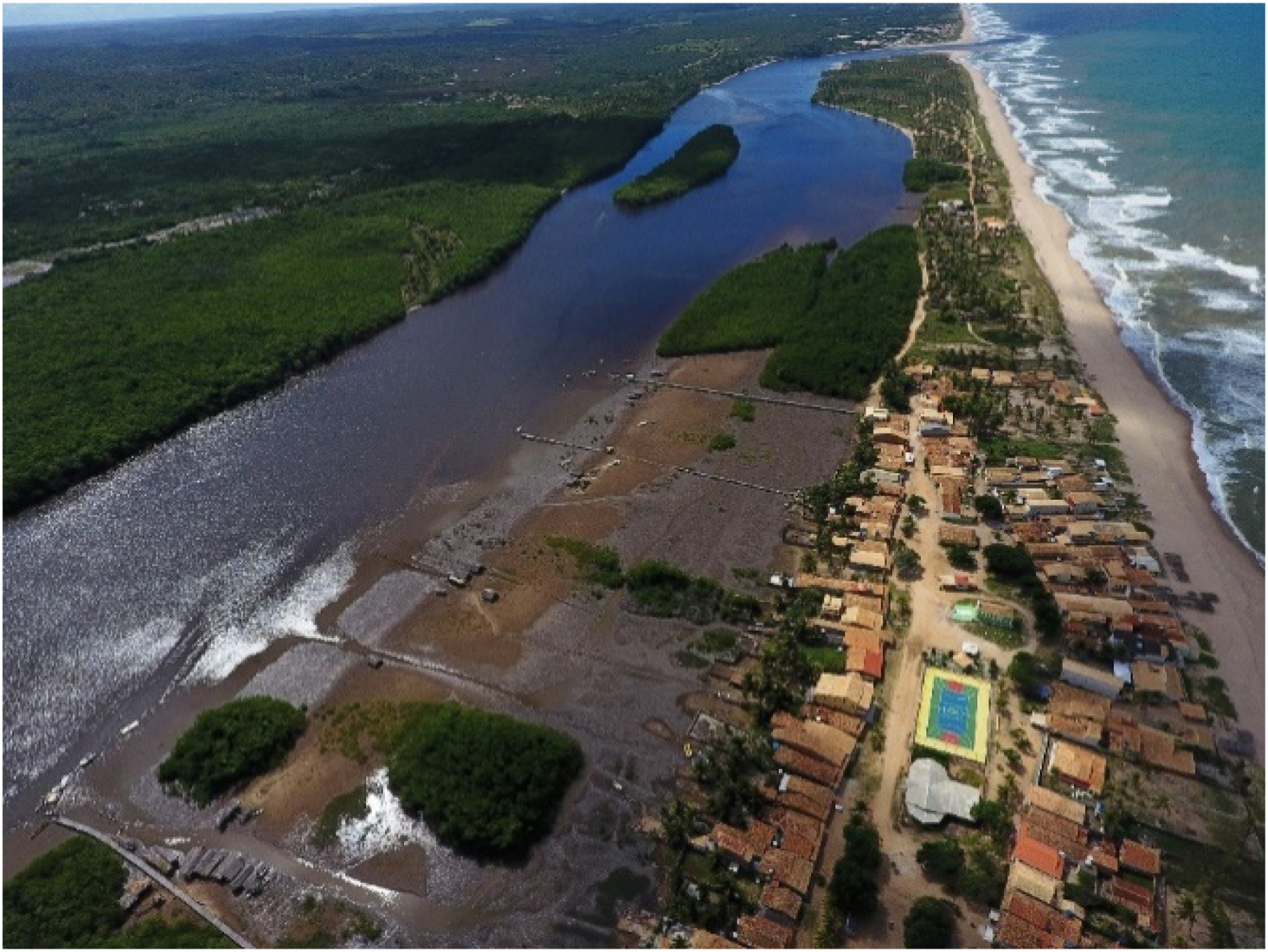
The UFBA team initiated an intercultural science education project that grew into a transdisciplinary project with researchers from various fields, including anthropology, museology, ecology, conservation, science education research, philosophy, political sciences, and ethnobiology. Their research consists of many smaller interconnecting and intersecting subprojects that take place in both Siribinha and Poças, a neighboring fishing village. The subproject analyzed in this study focused on the research engagements in Siribinha led and initiated by the head professor. One of their major aims is to do more participatory research that is empowering to the community. By focusing on systematically studying the artisanal fishing knowledge system and critical reflection about knowledge diversity, while at the same time engaging in conservation efforts with the community in the Itapicuru estuary, the project attempts to stimulate transdisciplinary collaboration.
Methods for Studying Transdisciplinary Interactions
The study of transdisciplinary interactions in the UFBA project was carried out over 1.5 years with the field researcher staying in Brazil for seven months. Her supervisor collaborated for some years already with the leading professor of the UFBA project, and this is how she, coming from the privileges of a European university, ended up researching transdisciplinary interactions in this project. The expectation was to stay a year, but Covid-19 interrupted this plan. During this period, the field researcher accompanied the UFBA team in Salvador and during its fieldwork in Siribinha. Additionally, research was conducted with the community separately, when the UFBA team was not present. For four months, the researcher moved back and forth between the UFBA research laboratory in Salvador and Siribinha, allowing participatory observation and collaboration with both the researchers and community members. The iterative process of moving back and forth between questions, methods, results, and theory (Fine & Torre, 2019) allowed for knowledge to be adapted to the specific contexts of Siribinha and the UFBA laboratory.
In Siribinha, the study included people of all ages, ethnicities, occupations, (power) statuses, and genders, including shellfish gatherers, fishers, hotel or pousada owners, restaurant owners, local politicians, and teachers. Sixty-five community members took part in this study from which 45 were interviewed in open-ended ways, 23 men, 21 women, and one non-binary. Those who were not interviewed took part in group discussions, focus groups, or shorter informal talks. From the UFBA team, we selected those researchers engaging in the research work in Siribinha most intensely, among them 5 master students (4 women and 1 man), 1 PhD (man), 2 post-doctoral researchers (both women), and 3 professors (2 men and 1 women).
All interviews lasted 45–90 minutes. For the community, questions were themed around the relationship with and attitude toward the UFBA team, reflections on this team’s work, the community members’ motivation for participating or not in the research, their needs and interests in more general terms, and in-group dynamics. In interviews with the UFBA team, the questions were themed around conceptions of participation and conservation, their relationship with the people from Siribinha, reflection on their work in Siribinha, personal motivations and interests for engaging in this project, attitude toward the community, in-group dynamics, and relationship with the head professor.
During the 4-month period, the summed-up time in the community was roughly 8 weeks. The field researcher accompanied participatory workshops carried out by the UFBA team and took part in cleaning the beaches and mangroves with the community after a disastrous oil spill that affected it in 2019–2020. Additionally, she followed the daily routines of different community members, making participant observations. The different interviews were carried out together with three unstructured open focus groups with several community members. Other ethnographic methods such as hanging around and storying (San Pedro & Kinloch, 2017) gave more depth and context and created affective and trustful relationships with the community members. Getting together while telling and receiving stories created spaces where relationships developed (Caxaj, 2015; San Pedro & Kinloch, 2017), allowing the research to open up more to the community and vice versa.
By summarizing the interviews and focus groups, and by listening to the audios two and sometimes three times, thematic statements were gathered and linked to the different categories that had been used to prepare for the interviews. At the same time, special attention was given to the information and statements that appeared more than once, and when these pointed to a new theme, a new code was created afterward. For example, one community member stated that “I have no idea what they do this for, what the UFBA project really is about or what happens to the information” (M69), while different UFBA researchers stated “I explained what my research was about shortly” (M33), and “I think the community has no idea about what happens with the data” (F29). These statements were coded together under “understanding the UFBA project.”
Since the interviews differ in timespan, the length of the summaries also varies. On average, 2-page summaries were written for 1-hour interviews. After having collected, organized, and structured all the data according to themes, and added notes of the logbook, and other observations and reflections, an inductive and deductive coding process was conducted (Fereday & Muir-Cochrane, 2006). From listening to the data, some themes already envisioned based on familiarity with participatory action research (PAR), feminist and decolonial methodologies were complemented by new themes that where not formed before the interviews. In the field, initial but major results were validated in the form of informal conversations with 9 (4 men, 4 women, and 1 non-binary) community members to see if the outcomes were still sustained. In the quotes included here, names of researchers and community members were anonymized with pseudonyms and codes (M for male, F for female, and X for non-binary followed by age).
Results
Reflecting on the Project Ambitions
Relations between the UFBA project and the Siribinha community reflect a heterogenous landscape of both success and failure in moving toward more emancipatory forms of research. While the project established inclusive epistemic practices for co-construction that took local knowledge seriously, it struggled across three core dimensions of (1) addressing power inequities in participation, (2) connecting critical theory with practice, and (3) developing embodied skills of care.
Epistemic and Ontological Difference
The project succeeded in addressing epistemic diversity and highlighting the importance of local and Indigenous knowledge. As researchers respected and valued local knowledge very much while interacting with the community, the project also contributed to some community members embracing and revaluing their own knowledge. As Nadasdy (1999) states, knowledge integration processes can reinforce hierarchies through extractive relations in which local knowledge is forced into academic frameworks by being treated as data for academic consumption. Not only the awareness of the UFBA team but also the way this awareness guided actions on the ground show how collaborations between different knowledge systems can happen without devalorizing local epistemologies (Mendoza, 2010). As one community member explained: “If I am able to respond to the questions, I feel good about sharing because they come all the way from there (Salvador) to here to interview you. So, I think they value what I say (…) I feel like I am more special. Higher than others” (F60). Or, as a different community member confessed: “I didn’t know that those things that they were asking had importance (to other people), now I feel special” (F54). The way the researchers interacted and showed genuine admiration for the community’s knowledge did not only help to revalue knowledge spread within the community and cultivate pride around it, but some interactions had implications for personal lives beyond knowledge revaluation. One of the most skilled fisherwomen narrated: “I was a very shy woman (…) I used not to talk with any stranger or new person. Sometimes even within the community itself I would not talk at all. Now with so many researchers asking me questions and about what I do, how I do it, and what I know, I have become more confident. I am not so shy anymore, that is really great” (F50).
Epistemic and ontological differences were treated with great caution, avoiding external judgment about “what is true and not” (M51) and respecting what the local members said, even if scientific information differed from it. As a result, some community members experienced the exchange of local and scientific knowledge as complementary to each other. A young community member stated “They have been adding something to our lives as well as we to theirs (…) So, it is an exchange, one learns from the other. We both win” (M22).
He also showed that the new generation in the community had confidence their local knowledge was very relevant and even more real than some academic knowledge: You guys have more theoretical knowledge and that is good. But we, we have actual practical knowledge. It is real knowledge because we use it every day, we know it is real. Let’s say, our knowledge is to some extent closer to reality than those theories that might be or might not be.
The valuation of epistemic diversity in community-university interactions was also accompanied by practices of embracing ontological diversity. Transdisciplinary knowledge integration often leads to epistemic assimilation or extraction when local knowledge is expected to fit into a dominant academic ontology while local ontologies are made invisible or treated as invalid (Ludwig & El-Hani, 2020). The UFBA team consciously aimed at minimizing the effects of ontological domination (Blaser, 2013) and adjusted their behavior and attitudes accordingly. Even when community members did not think the researchers agreed or believed them, because of this attitude many experienced the various researchers as being respectful. “I don’t know if they believe in it, but they respect haha, they respect…I don’t think they believe most of it,” one fisherman (M42) said. Overall, the aim of respecting knowledge diversity and exchanging different kinds of knowledge was put into practice to a high degree, creating several benefits for the community, as described above.
Other benefits were also nurtured during the encounters of researchers and community members. For example, local fishermen learned about endangered birds and how to receive and guide birdwatching tourists that have been visiting the region, as a consequence of bird surveys carried out by the project. The fishermen involved in these trainings were all quite positive about this training program offered by two of the researchers. Furthermore, the community recognized that the participatory workshops organized by two other researchers in the team motivated more collaboration, unity, and collective action among community members: “since the UFBA is here we are becoming more united” (X27), one said emotionally. For example, collective actions were organized by the community members as an outcome of the participatory workshops to collect solid waste from the mangroves and beaches.
Struggling With Engagement
Despite these positive responses, the research team had difficulties in engaging and involving community members in the project as a whole and within some subprojects. Encouraging community members to come to meetings was very difficult for the team. Bacon et al. (2005), Stanton (2014), and Reason and Bradbury (2006), as experienced PAR practitioners, address the importance of the initial stage of research, and how vital it is to treat research as something common from the very beginning. For participation to succeed, the community itself should be partly initiator of the project, or at least guide the initial steps, questions, and aims of the research (Stanton, 2014). Even with best intentions, it is difficult to shift power toward community members after research projects have materialized, because a sense of ownership and agency over the process is hard to cultivate at a later stage (Reason & Bradbury, 2006). Part of the demotivation of some community members seemed to be provoked by a feeling of exclusion, as one fisherman stated: “their research is good for them” (M41). The research was often not seen as benefitting the community as another fisherman’s assertions illustrate: You know what I think Esther, we have had many researchers before this group. We had people from Sergipe, Sertão, Salvador and in the end, it is good for them. They learn about research etc. The only true beneficiaries are they themselves. But for me, it doesn’t matter. If I can help them, I will (M47).
Only a handful of community members stayed engaged collaborating with the research team on the different subprojects on the long run. Those who did were mostly motivated to keep working together and had a positive attitude toward the UFBA team. Yet, those community members who engaged more sporadically had overall less motivation to work together. Many of those who did not get involved felt left out from the project and, as a result, had more neutral or even negative attitudes toward the researchers. All community members were, however, invited to join the meetings and workshops organized by the different researchers; yet, for various reasons, many of them did not show up at those meetings. Even with this invitation they felt excluded when noticing, after time, that some community members had tighter relationships with the researchers and, therefore, benefited more from the subprojects than those who did not engage as much.
In connection with these findings, it is important to consider an aspect pointed out by many scholars, namely, that benefits for communities are more likely to develop when they can take part in framing the questions driving research (Chevalier & Buckles, 2019; Stanton, 2014). To horizontalize forms of collaborations in academia-community settings, researchers need to take community members seriously as agents and drivers of research (Gerlach, 2018; Schinke & Blodgett, 2016; Swantz, 1996). Therefore, it seems that lack of participation by part of the community members can be related to the fact that they did not take part in framing the research questions of the UFBA team.
The lack of engagement of a substantial part of the community was also linked to the limited understanding that many had about the research project. Not only did most of the community not know what the project entailed, but many also had no idea about the motivations, goals and ambitions of the individual researchers. This is not to say that the goals of the project were not communicated or discussed with community members, as they were approached door to door, but often only those that were in sight, sitting in a public space or outside their front door. Besides, these conversations would be more superficial in terms of explaining goals and motivations of the project. It is also important to note that community members were invited to come and discuss the project. Yet, they could only participate if they would physically come to the meetings organized in a public but closed space. Routine work, diverting fishing times, and care labor throughout the week would make it difficult for some community members to be physically present, as it was hard for the researchers to find a common timeslot that would work for men and women due to a pronounced gender division in labor. Overall, it became obvious that although energy was put into inviting community members and explaining the goals of the project, the means of communication had not reached a substantial part of the community. Therefore, most community members did not grasp the why and what of the project.
Unsuccessful communication led to some community members distrusting some of the researchers and questioning the intrinsic motivation and interests driving the research. At first glance, many community members would speak with affection about the researchers, but after several weeks, when the field researcher grew closer to the community, many confessed they thought the researchers were doing research only for their own gains. While some stated that “the only ones who benefit are the researchers themselves, but I don’t care, they are nice so I like them anyway” (M47), others were less consenting: “I think they care more about the environment and preserving nature than they care about us, they don’t understand that we live from this” (M56) (referring to fishing practices), or “they have money to come here and do all that work. I believe if they come it is because they get something from it, right?” (F51), referring to power inequities and unevenly divided benefits. Others were more outspoken: “well I can tell you, I believe that we do more for them than they do for us” (M45), one said with a yell, while another said with a sarcastic laugh, “If I feel they care about us? Hahaha they care way more about their work than us!” (M53).
Power Inequities and Participation
While the UFBA team aimed at transdisciplinary research, it remained challenging to fully address power inequities on the ground, despite political consciousness about them. The status of university research was often intimidating for community members. In a community with significant levels of illiteracy and low levels of access to formal education, the university evokes authority and status that are often difficult to deconstruct (Dodson et al., 2007; Wallerstein et al., 2020). Even if researchers do not think of themselves as more valuable or knowledgeable per se, the tensions that this inequity brings can silence many opinions (Wallerstein et al., 2020). While in the same room, it is easy for community members to just nod at anything that comes their way from the researchers, despite efforts to prevent this dynamic. The proposal for collaboration presented to the community did provoke some community members to address questions about their interests and worries about the challenges they were facing. The setting of these group meetings often did not foster an atmosphere in which community members felt at ease to openly ponder over the topics discussed or question the presence of the UFBA team in the community itself.
Prioritizing Community Values and Interests
The power inequities that arise when researchers enter a fishing community exposed yet another challenge for moving from community-based to emancipatory transdisciplinary research, namely, that of prioritizing community values and interests above (or next to) academic interests (van der Riet, 2008). In some cases, researchers working in Siribinha did not fully explain the motivations for their work nor what their research was entirely about, or all the implications it could have for the community, because of lack of time and also because giving all this information could alter the answers given in the interviews, therefore making the data less objective. “As you know, I work with fish and birds, so what do you know about the breeding season of the Cavala? (local fish)” (M33), one asked directly skipping any conversation about why the research was done or his motivations for engaging in it. Afterward when the field researcher asked this investigator why the sharing of information was only limitedly done, he replied “of course I cannot share too much with them what the end goal or aim of the research is because then they might answer in a certain way, and their answers might become biased, right?” (M33). In a later conversation, the community member who had talked with this researcher confessed he was worried the information he gave might in the end show he should not receive anymore the Brazilian government funds for obeying the fishing closed seasons: Remember that day with Pedro? He started to talk about shrimps, and there I told him I was receiving money for the closed period for shrimp. Afterwards, that troubled my mind because I used to fish shrimp but I am not doing that anymore, so therefore maybe I should not even receive the closed period, do you get me?
Hearing the researcher talk about the motivations for engaging in this study and having a better understanding of the goal of the project in the first place could have probably avoided this suspicion by the fisherman interviewed.
Researchers in the team were motivated by their own academic careers and material needs but many also shared ambitions related to community struggles. In fact, some researchers’ main motivation to stay in academia was the hope to contribute to the agency of communities like Siribinha: “These communities are often left on their own by the government, but the challenges of an ever-changing world do come knocking on their door” (F55), one said; “I come from the countryside myself and experienced how much beauty exists in these more isolated communities, but also the struggle for making a living” (F28), another explained. Or as yet another one said, “I’ve come here all my life with my father, this place and its people are very dear to me” (M24). Contributing to community struggles seemed to be a driving force to work on this project for many, even for those who primarily worked on issues related to estuarine ecosystems conservation. Be that as it may, many of these concerns for the community were not openly shared with community members. In the case of Siribinha, the pressure of the individual researchers of the UFBA team to complete their study and their academic requirements pushed these critical self-reflections to the background.
In terms of guidance in these transdisciplinary contexts, results also show that, although the head professor often voiced worries about power inequities to the team, these theoretical considerations hardly transformed into practical advice on how to deal with these dynamics on the site. Even if some researchers were motivated to do more thoroughly participatory work with the community, reflecting about power inequities is one thing, knowing how to deal with them in practice is another (Dodson et al., 2007; Stanton et al., 2014). While these issues are connected, they are also different enough to require distinct approaches. As a result, in spite of the UFBA team’s egalitarian intentions, unequal power relations between academics and local communities led to encounters that did not create a collective of equals, and therefore sometimes legitimized existing academic practices and dominant academic timelines and interests.
A Practice Gap in Critical Social Theory
The limitations (Ludwig & Boogaard, 2021; Pollock & Subramaniam, 2016) and legitimizing effects (Lyons et al., 2017) of superficial participation and the impact of power dynamics in transdisciplinary encounters have been pointed out by many scholars from various fields such as critical development studies and feminist philosophy of science (Escobar, 2011; Dodson et al., 2007; Longino, 1993; Maguire, 1996; Mavhunga, 2017) and qualitative research more generally. The UFBA team is well-positioned to engage with this critical literature. Based at the Institute of Biology, the team brings together researchers from the School of Education, the Department of Social Sciences, and the Graduate Studies Program in Museum Science. The coordinating laboratory is known for its progressive and critical positioning, dealing with issues of knowledge diversity, science education, conservation, ethnobiology, anthropology, and philosophy of biology. Most other laboratories at the Institute of Biology have a much more disciplinary profile based solely on methods in the biological sciences (Rocha et al., 2020). However, it is precisely against the backdrop of this engagement with critical theory that challenges of transdisciplinary practice become especially salient. Critical thinking about collaboration is not sufficient to create better or even emancipatory practices. In fact, a focus on theory can even obscure the material requirements of collective action.
Prioritizing Critical Theory Over Interpersonal Skills
While the UFBA team cultivated critical reflection about transdisciplinary research, many theoretical reflections were difficult to translate into practice. Critical theory that employs exclusive academic discourses about epistemology (Mendoza, 2010) and ontology (Blaser, 2013; Escobar, 2011) can create further distance from the community rather than shifting agency toward horizontal collaboration on the ground. This is not because one contradicts the other or cannot co-exist but rather because very different skills are needed for shifting power in the research process and creating relationships of trust and care compared to theoretical reflections about epistemological and ontological justice.
Some researchers explained to have difficulty making contact with community members because of shyness: “I don’t know what to say or how to address a group like that, I get uncomfortable” (M34). Both shy and not so shy researchers showed to have difficulty to get personal and create deeper bonds: “I don’t want to make them feel uncomfortable so I don’t get too personal with my questions, except with some like Antônio. We really talk about life as well, I consider him a friend” (M25). While it is unrealistic for researchers to cultivate deeper relationships of trust and care with all community members, these statements show how being open about oneself, one’s own research and motivations was a great challenge for many researchers. One researcher addressed this issue by stating “It doesn’t really matter what kind of research you do, when it involves humans, it becomes personal” (F29). Yet, another researcher clearly pointed out these limitations within the team: “It seems some people of the team are unable to construct an affective relationship with the community members…or maybe they just don’t care. I feel, unfortunately, that most of the team does not have those priorities” (F26). At the same time, these researchers struggling with developing truly sustainable, trustful and open relationships with the community found it easier to talk and act in ways that respected ontologies and epistemic practices. Something about those interactions seemed less personal and, therefore, less scary and ambiguous, as some researchers explained “it’s easier to talk about ethnobiological models than something personal, especially when you are a shy person like me” (M33).
Soon the team started to receive feedback that made it clear that the community did not know what the project was really about, that many did not feel part of the research, and that some thought that collaborating with the university could only bring them trouble. To some extent, the research team had not been able to live up to its transdisciplinary and emancipatory ambitions. Showing critical theoretical reflection on transdisciplinary work in communities did not naturally translate into transdisciplinary actions and practices among the team. Often, the default mode to deal with the failure of their own emancipatory ambitions was to read more articles about the odds of participation. Especially the head professor, who was seriously preoccupied with this feedback, would address one article after the other and talk about theoretical concepts relevant for creating more emancipatory research, for example, about the risk of paternalizing the relationships with the community. It even became the topic for new articles to be written (as, for instance, this very article); yet, writing new articles about how to engage in emancipatory transdisciplinary research does not automatically translate in different practices on the ground.
Even if the disparities between theory and practice were addressed by the head professor in the team meetings, researchers in the field still had difficulty picturing what this would mean in their individual work and ways of communicating with the community. One of the researchers complained that the head professor “has been preaching about it, but preaching alone won’t help. We need actual practical guidance to do so” (F29). “Focus on theory will not solve our problems with the community” (F26), another researcher stated, who argued that theory and individual research interests “get in the way of improving the participatory research” (F28). Aiming for the community to be empowered through participatory practices is one thing, knowing how to have open conversations with the community about these issues and achieving such aims in the field is another, for which the researchers were often unprepared.
Critical theorizing is important for moving beyond superficial forms of participation toward emancipatory research, as it allows for better reflection on researchers’ positionality, the power of science and knowledge, and the collaborators’ different ontologies. At the same time, attention for fashionable academic jargon of critical theory risks increasing distance from community members and becoming disconnected from the social reality and social ambitions that are to be achieved in the community. Addressing this through academic reflection, in meetings or through articles, risks to invert and actually obscure what needs to happen on the ground in a more practical way. Setting research goals and questions collectively, putting our own research questions more in the background and trying to take the concerns of the people seriously, even when there is no direct link to the project, are politically important. The same way practices of care are essential as, for example, hanging out with the community, establishing deeper relationships of care and trust, stepping out of one’s academic role, and connecting with community members as human beings rather than purely academics.
The Need for Embodied Skills and Care
Both the power inequities and disconnections between theory and practice link to a third challenge, which reflects difficulties in creating relationships based on care, trust, and reciprocity with the community. Open self-reflexivity about issues like positionality, privilege, and personal motivations turned out to be essential but were often also avoided, not only with the community but also within the UFBA team itself. Yet, open self-reflexivity can be liberating instead of only awkward (McNamee, 2010), while creating the trust and reciprocity needed in such collaborations. Contributing to the struggles of a fishing community like Siribinha requires embodied and interpersonal skills that are rarely taught in academic settings.
Making Discomfort Discussable
One researcher argued that it takes a while before someone trusts you enough to give her or his opinion about anything, especially in smaller communities. Spending time with and in the community and cultivating close and trustworthy relationship is crucial in this aspect: “Even more if you want their honest feedback on the research process and direction itself. It is something I understand very well because I am quite shy myself until I get to know someone” (F29). The field researcher of this article experienced herself moments of friction and discomfort when some community members got into an argument over resources during one of her workshops. After sharing her hassle with this situation in a one-to-one conversation with one of these members, they themselves settled the case. She was only able to do that because a mutual relationship of trust and care had been established by hanging around in the community for a long time. Most importantly, having talked about her gains, privilege and personal motivations more clearly and letting the community get to know her as a person rather than only as a researcher helped creating this relationship (Maguire, 1996; van der Riet, 2008). Aside from many dilemmas, doubts and mistakes she made in the field, several community members seemed to better relate to her than to some UFBA researchers working there for a long time, even if it meant understanding how different they were. Mutual affect and care can lead to more reciprocity (Smith et al., 2010).
With the field researcher’s presence, the unequal power relations were still there but open self-reflexivity about positionality allowed making them explicit in building interpersonal relations. Rather than remaining in awkward silence about privileges or solely centering on her own insecurity and discomfort regarding positionality, such a process allowed to highlight and address community experiences of unequal relations. Interpersonal care and openness made the relationship more interdependent despite power differences (Stanton, 2014) and, therefore, more resilient to the different conflicts that can arise in the risky business of interacting and collaborating with a community (Maguire, 1996; Smith et al., 2010).
As researchers, our methodological competencies are often developed to guide data collection and analysis toward academic outputs. In contrast, the embodied and interpersonal skills for community-based work are at best soft skills in the background of academic training. However, the community was expected to share their views on delicate topics like livelihood practices, their impact on conservation, or their interests and dreams for the future. As the engagement of the field researcher showed, the spaces of examination, friction, or discomfort turned out to be constructive and productive spaces of encounter. As Fine and Torre (2019, p. 436) put it: “Participatory contact zones ignite the catalytic insights produced when very differently positioned people join together to critically examine what is, and to creatively imagine what could be.” Reflecting on the research relationship involves examining one’s relationship to the other, our conceptual baggage, and how the dynamics of these relationships influence framing questions and goals of research as well as certain responses to these questions, actions, and shared experience (Gerlach, 2018). Smith and colleagues point out that academic curricula and practices fall short of preparing for dialogues about personal issues, arguing that these dialogues entail an openness and an interpersonal vulnerability to which university researchers may be unaccustomed vis-a-vis other research participants; moreover, this is an ongoing part of the work, and researchers should not be let by idealized conceptualizations of mutuality and trust (Smith et al., 2010, p. 422).
The community needed to get to know the researchers, understand where they came from, and what their motivations were for being in Siribinha. They needed to hang out together and have moments of bonding without the objective of gathering data. Those community members who developed stronger and deeper relationships with the researchers felt more confident and secure to share feedback, and to be honest about their opinions on the project. This is the case, for example, of the community member who confessed after many weeks of interaction with the field researcher that he did not think he benefited at all, but he still liked the researchers and was open to help them out. Yet, most of the community members stayed at a rather superficial level and, therefore, the openness with which the different subprojects could be evaluated declined as well, and with it, the ability to work together. Following Smith et al. (2010), researchers should aim to connect as humans with others involved in research not merely as researchers. As Lykes (1997, p. 729) puts it: “Participatory research should mirror the readiness to risk entering to someone else’s life and therefore granting that other person to enter one’s own.”
UFBA Team and Getting Personal
The interviews with the UFBA team showed diverging attitudes in the group regarding interactions with the community. Often the discourses during the lab meetings shed light on the importance of not sharing information that could be seen as controversial by the community: “We don’t want to enter the community with a T-shirt with Lula [now current, but then ex-president of Brazil] on it” (M51). Although it is understandable that researchers did not want to provoke any conflict with community members, or make very strong comments that could insult them, this also created distance between researchers and community members, which did not help cultivating more caring relationships of trust. One senior research stated “I formally present myself as a researcher” (F55) and, when asked why she would not get personal with the community, she explained: “I don’t get into personal things, because I don’t see the use of it.”
But was getting close to the community and showing yourself as much as you ask others to show themselves really something that excluded the opportunity for the community to take ownership over their own actions? Other researchers had a very different opinion about this. “The process of getting to know the other is very important I think, and therefore you can only really bring some return to the community when you get to know the other,” one explained. Another shared an experience that also demonstrated a very different attitude and practice: The moment you start to speak about personal things, you break through something. I for example was with a fisher, he started to share stories about spiritual moments he had had in the past, another woman next to him as well, what am I supposed to do? Not share? You turn into another member of the community sharing your experiences. You don’t need to be attacking or say all of it (for example with controversial stuff) but sharing connects as well. For example, Bruna brought her children to the village the last time, how can you act as if it is not personal, it is personal! If it isn’t personal it becomes empty as well (…) Besides, otherwise it would be very unfair. “Tell me everything about you,” but I will not share anything (F29).
Besides reflexivity itself, these open conversations needed very practical interpersonal social skills, which allow for others to get to know you, your motivations, your aims, even when you are shy (being shy could actually even be a quality for creating trusting relationships with some community members). Yet all of these skills have no prominence in academic training, assessment or even in discussions about methodology in general. Despite this unpreparedness, many scholars and practitioners highlight the importance of such open conversations from decolonial and feminist perspectives (Harding, 2015; Maguire, 1996; Smith, 1999; Smith et al., 2010; Swantz, 1996). As one of the senior researchers stated very nicely, “I think moments of tension are the key moments for building trust” (M39). Making relations between community and researchers more personal (McNamee, 2010), rather than staying out or being impartial, can create more reciprocal relations and facilitate developing more affective and more horizontal relationships across the participatory process (Gerlach, 2018; Hall & Tandon, 2017; Reason & Bradbury, 2006; Wallerstein et al., 2020).
Academic Settings Getting in the Way
Researchers had limited time to stay in Siribinha, which often very much constrained the possibility to develop deeper and closer relationships with the community. This was mostly a result of lack of funding for long-term stays and the professors’, teachers’, and students’ duties related to university demands. Most field trips were organized with maximum ten researchers staying for one week in the community. Academic culture, which demands competition for restricted resources to finance research projects, drives academic timelines and often leads to prioritizing conventional academic methodological values (Parker et al., 2018). This created pressure for the researchers to collect data efficiently rather than hanging around and sharing daily routines to create relationships, affect, and care. One researcher complained about another team member: For example, Pedro, you could see in the way he did his quantitative research he was so focused on getting the data he needed, he did not seem to even care about how he himself was perceived by the community (…) yet this is more a reflection of academia than it is of him personally. The often hardcore science-focused Ecology program sometimes also disables someone to work in a different way, as might have been the case for Pedro (F29).
The structural limitations present in academia, with fixed procedures, rusty criteria, and accreditation systems based on how research has always been done, leaves little room for flexibility and sensibilization for collaborating with the community while doing research (Boser, 2007). This affects the probability that relationships of trust, reciprocity, and care be cultivated and that research projects become emancipatory.
Conclusion
Siribinha is located on a small strip of land between the Atlantic Ocean and the mangrove forests of the Itapicuru River estuary. The mangroves provide the livelihood basis for the community, through fishing and shellfish collection during the low tide. However, it is also easy to get lost in the mangroves and the community shares stories of the Caipora, a master of animals, a protector of the forests who can lure careless fishers into the thickets. In conclusion, we offer “research as a mangrove” as a synthesizing metaphor for the complexities of transdisciplinary research and the messy reality of collaboration. Transdisciplinary research has the potential to provide meaningful benefits for communities by taking local knowledge and their material and political interests into account. This kind of research can function as a mangrove and bring very different worlds together (the land and the sea, the sweet and saline water world, and life above and under water). At the same time, transdisciplinary research is a messy process once you get inside of it (like a mangrove), and careless engagement creates countless risks of getting stuck or lost and therefore not living up to the emancipatory ambitions transdisciplinarity can offer.
Understanding research as a mangrove articulates a complex diagnosis of the relations between transdisciplinarity and emancipation. Despite epistemic and political promises, transdisciplinarity does not provide an easy route to emancipatory science. Egalitarian ideals of collaborative knowledge production in the service of community struggle face a much more complex non-ideal reality of (1) deeply entrenched power inequities, (2) disconnections between theory and practice, and (3) lack of embodied skills of care.
The efforts and struggles of the UFBA team resemble the paths of many other research groups that aim for more emancipatory and relevant research with society. The difficulty of challenging deeply entrenched hierarchies and power inequities remains even with the use of participatory practices or transdisciplinary approaches. Although this does not come as a surprise, there still is no simple blueprint for dealing with them, and little attention is given to the praxis of being in the field (Freire, 1970). To horizontalize forms of collaborations in academia-community settings, researchers need to take community members seriously not only as subjects holding knowledge but also as agents and drivers of research, and as people that have the right to demand research that is relevant for them. We learn to relate in new ways to each other by exposing and discussing rather than staying silent about power, positionality, and difference. In this way, engaging with care in transdisciplinarity has the potential of creating more emancipatory research that addresses both material and immaterial interests of the people we work with.
As the case in Siribinha exemplifies, researchers in university settings are not trained to navigate these difficulties in practice; yet, they are crucial for realizing emancipatory ambitions of research that is not only informed by the knowledge of communities but centered on their material and political interests. Fixating on theoretical ways of dealing with these issues can drive much-needed focus away from practical manners of establishing equity in transdisciplinary processes. In the UFBA team, the chase for working together and coproducing knowledge could sometimes obscure the need for actions that openly address dynamics of power in transdisciplinary settings. Researchers getting stuck in that theoretical mode often fail to create better participatory practices by not focusing enough on the embodied, relational and practical aspects needed, showing that a theory-practice gap is also present in critical social sciences. To be clear, it is not that the academic debates themselves are risky, but rather the ease with which they replace the focus on more practical, embodied and caring research. This challenge is not particular to this research group but is rather a risk that lurks around the corner of many transdisciplinary research projects with emancipatory aims, especially in university-community contexts or community-based projects.
Challenges of transdisciplinary research have also been noticed by other researchers and fed into laments about an alleged “tyranny of participation” (Cooke & Kothari, 2001) and a backlash against “community-driven development” that legitimizes top-down control of dominant actors as more efficient than community engagement (Shapland et al., 2021). We think these responses are deeply misguided. Transdisciplinary research does not provide a simple path to emancipatory science because there is no simple path to emancipatory science. The answer is not to cut down the mangroves for the construction of an externally imposed highway of top-down science and development. Instead, any genuine answer needs to embrace and learn how to live with the complexity of the mangroves. Emancipatory science is not established by following any predefined and externally imposed research method but is best understood as a fragile practice that is imperfectly established through careful engagement with power inequities between collaborators, links between critical theory and practice, and nurturing of embodied interpersonal skills and care.
Footnotes
Acknowledgments
We wish to thank the Siribinha community and the UFBA research team for sharing their time, knowledge, and experience and welcoming us with open arms.
Declaration of Conflicting Interests
The author(s) declared no potential conflicts of interest with respect to the research, authorship, and/or publication of this article.
Funding
The author(s) disclosed receipt of the following financial support for the research, authorship, and/or publication of this article: DL thanks the support by an ERC Starting Grant (851004 LOCAL KNOWLEDGE) and a NWO Vidi Grant (V1.Vidi.195.026 ETHNOONTOLOGIES). CNEH is thankful to CNPq (grant 465767/2014-1) and FAPESB (grant INC0006/2019) for their support to INCT IN-TREE, and to CNPq for support of project on intercultural relations between knowledge systems (grant 423948/2018-0) and productivity in research grant (grant 307223/2021-3).
