



Abstract
This study investigates how news flows have shaped the mediated conversations among BRICS countries by examining aspects such as news geography, underlying topics, authorship attribution, and references to media sources. The authors conducted a quantitative manual content analysis of 3,945 discursive articles that were published between 2011 and 2019 by leading newspapers in BRICS countries, which covered ten dailies in four languages. The findings reveal that the most discussed countries reflected the traditional structure of international news, which includes trade partners, neighboring countries, and elite nations. Among the BRICS member states, China and Russia received the most media attention. China-related issues often intersected with economic topics, while articles on Russia predominantly centered around violent conflicts and security. Conversely, Brazil, India, and South Africa had limited visibility, with Brazil and South Africa often being discussed within the BRICS framework. Notably, South Africa led with the highest share of articles on the BRICS states altogether (19%), surpassing the share of U.S.-related articles (13.41%). Correspondent-authored articles on BRICS countries were comparatively recurrent in Chinese and Russian newspapers. Moreover, Chinese and Russian media footprints were scarce. More balanced coverage and denser news flow across BRICS media systems remain necessary to boost South–South communication and convey BRICS as more than a Chinese-Russian alliance “plus others.”
Introduction
The current geopolitical landscape, which is characterized by the rise of a multipolar order (Stuenkel 2016), has reignited interest in the intersection of global communication and the North–South divide (Thussu 2018; Wasserman 2018). This topic is prominently addressed in the MacBride Report (MacBride et al. 1980). This interplay between media and geopolitics manifests in the structure of foreign and international journalism. While foreign journalism involves the practice of covering and understanding “the reality outside the nation-state,” international journalism is “characterized by the drive to cover and understand the relations between two or more countries” (Hellmueller and Berglez 2022: 16). Both forms of cross-border journalism not only depict geopolitical issues through their output (international news) but are also structurally affected by them (Hafez and Grüne 2022). This influence becomes apparent when considering that select major media players from the Global North have shaped how media systems gather information. Consequently, these players have impacted global news flow dynamics and the salience of specific country-related issues in the media agenda (Golan 2006; Segev 2019; Thussu 2022). As Thussu and Nordenstreng (2015: 11) note, “there are various types of new media flows, some reinforcing old colonial patterns [. . .], while others are emerging from the BRICS nations.” By building on this framework, this study quantitatively explores news flow dynamics across all five BRICS (Brazil, Russia, India, China, and South Africa) countries.
“BRICS” has evolved from a market-focused acronym to a political platform that features official institutions (Stuenkel 2020) and expansion ambitions. 1 Beyond its geopolitical significance, the group serves as a framework that offers insights into media and communication dynamics in the Global South (de Albuquerque and Lycarião 2018). Notably, BRICS media groups have met to discuss collaboration projects to improve mediated conversations among the five countries (Pasti and Ramaprasad 2018b). The understanding of news flow interconnections among BRICS nations primarily stems from studies examining media relations and discourses from the perspective of individual or paired member states (Bomfim 2016; Wasserman 2015; Zavyalova and Akhmetshin 2018). To the best of our knowledge, no study has quantitatively explored media coverage across all five BRICS countries.
To provide quantitative insights into BRICS cross-border journalism, we assessed how news flow dynamics have shaped mediated conversations across all BRICS countries. First, we identified the most frequently featured countries in the media agendas of BRICS states. Second, considering that “national media systems make use of international communication flows generated by news agencies, foreign correspondents, imports/exports, and so on” to produce international news and facilitate global mass communication (Hafez and Grüne 2022: 51), we traced authorship and references to media sources to ascertain the origin of intra-BRICS discourses. To this end, we utilized manual quantitative content analysis to examine 3,945 discursive articles with an international scope from newspapers from each BRICS country. We also conducted correspondence analyses on a subset of the data.
The BRICS Framework in Media Studies
In 2001, economist Jim O’Neil created the acronym “BRIC” to highlight the burgeoning market potential of Brazil, Russia, India, and China (O’Neill 2001). Amid the global financial crisis, BRIC gained traction and was embraced by the four countries’ leaders, which culminated in their first summit in 2009 in Russia. This summit marked BRIC’s evolution into a political platform that fosters South–South cooperation in diverse fields and advocates for a balanced global power structure (Freire 2020; Stuenkel 2016). South Africa’s inclusion in 2011 transformed the platform into BRICS and solidified its role as a global alliance capable of speaking “on behalf of the emerging world,” particularly Africa (Stuenkel 2020: 57). The institutionalization of BRICS was further marked by the establishment of the New Development Bank and Contingent Reserve Arrangement in 2015 (ibid.). Recently, due to China’s growing influence and the Russia-Ukraine war’s economic ramifications, BRICS has cultivated closer ties with other countries in the Global South, which has strengthened its pursuit of legitimacy (Hagemann 2023; Wahl 2023).
BRICS’ rise has spurred scholarly inquiry across various disciplines, including media and communication studies. Scholars employing a BRICS framework have examined news media coverage of BRICS member states and the group itself (Wasserman 2015), compared their media systems (de Albuquerque 2016) and journalistic practices (Pasti and Ramaprasad 2018a), and investigated how cultural content produced in BRICS countries serves public diplomacy and soft power purposes (Rai and Straubhaar 2016; Zavyalova and Akhmetshin 2018). Additionally, scholars have explored the potential of BRICS media to challenge the Western-centric global communication order (see Thussu and Nordenstreng 2020). By focusing on the BRICS framework, many of these researchers have established correlations among BRICS media alone rather than evaluating them “in function of their greater or lesser distance to Western standards and rankings” (de Albuquerque and Lycarião 2018: 2880).
As de Albuquerque and Lycarião (2018: 2881) suggest adopting a BRICS framework provides a window into communication practices and processes within the Global South. The authors support this argument by highlighting that the BRICS constellation includes countries from different continents and has a multifaceted cultural and sociopolitical landscape. While this heterogeneity is sometimes perceived as the group’s weakness (Sparks 2015), both scholars recognize it as a strength since it contributes to a multipolar and de-westernized orientation in international media studies. Notably, this interpretation refrains from imposing normative guidelines, “apart from the struggle for recognition and defense of multipolarity” (de Albuquerque and Lycarião 2018: 2884).
Furthermore, the BRICS framework does not always align with the formal actions of the group (de Albuquerque and Lycarião 2018). That is, interactions among these countries are not exclusively tethered to their BRICS membership. Their media systems are influenced by a comprehensive spectrum of macro-, meso-, and microlevel factors (Hafez 2007; Hafez and Grüne 2022; Quandt and Scheufele 2011). Consequently, intra-BRICS communication flows can develop separately from official BRICS initiatives. Still, efforts within the group to boost communication channels among its members exist.
News Media Relations and Exchanges Among the BRICS States
Intra-BRICS cooperation is commonly associated with foreign and economic policies. The latter was the founding raison d’être of the grouping and remains an essential issue in the group’s negotiations (Stuenkel 2020). Nonetheless, the BRICS agenda has broadened to encompass diverse themes such as agriculture, technology, the environment, and education, as evidenced by joint statements and working groups (ibid.).
Media and communication also play a role in BRICS cooperation. In 2014, Xinhua News Agency’s president, Congjun Li, urged BRICS media to jointly counter challenges posed by new technologies. Li further stated that BRICS media “should exchange experience among them with the purpose of safeguarding the images of their countries.” 2 A year later, the BRICS Media Forum was established per Xinhua’s suggestion. This forum has since recurrently gathered an array of media entities that represent all BRICS countries. In 2023, the forum’s theme was “BRICS and Africa: Strengthening Media Dialogue for a Shared and Unbiased Future.” During the event, Iqbal Surve, the executive chairman of Independent Media of South Africa, emphasized that “the diverse cultures of the BRICS nations enrich the global conversations, and the BRICS media advocate for an inclusive, cooperative and just new world order.” 3 Accordingly, the forum seeks to amplify South–South discourses in tune with a multipolar world.
Concrete measures have materialized through negotiations within the BRICS Media Forum. For instance, Russia established a BRICS school for young journalists in 2015, which united media organizations from all the member states (Pasti and Ramaprasad 2018b). In the same year, the Brazilian media conglomerate Grupo Bandeirantes and China Global Television Network forged a cooperation agreement, which was subsequently expanded to encompass China Media Group (CMG) in 2019 (Morales 2022). Similarly, Brazil Communication Company partnered with CMG in the same year (ibid.). Another initiative, which included a three-month training program, was held in 2022 for journalists from the BRICS countries. 4
Media dynamics within BRICS extend beyond the group: each member pursues independent internationalization trajectories (see Straubhaar 2015). Notably, China and Russia have globally expanded their news outlets as soft power assets (Boyd-Barrett 2011; Grincheva and Lu 2016; Morales 2018). Chinese media, in particular, has achieved a significant global footprint through China’s “going out” strategy (Thussu et al. 2018). This strategy recognizes China’s need to control its own international narrative as a rising global power by actively spreading news about its development and worldview (Zhou and Wu 2018).
While Russian and Chinese global news outlets have expanded, researchers, particularly those who have studied China’s growing media presence in South Africa, have indicated that this development may not equate to influence (Bailard 2016; Madrid-Morales 2021; Wasserman 2018). Wasserman (2018: 149) contends that South African media “have been far from a passive recipient” in this scenario to emphasize that the limited impact of Chinese media “on local journalistic practices and news discourses is still relatively limited.” Three factors explain this limitation: South African journalists (a) prefer Western media sources, (b) express reluctance toward Chinese sources due to credibility concerns, and (c) inconsistently deem stories on China newsworthy or compelling enough “to enter local news agendas” (Wasserman 2018: 150).
The North–South Divide Paradigm in Global News Flows
The potential strengthening of BRICS media relations is rooted in the broader dynamics of news flows and contraflows (Wasserman 2018). “Flows” denote the “dominant flows” that mainly originate from the U.S. media industry (Thussu 2010, 2022). The MacBride Report and empirical studies underscore that Global North organizations, especially news agencies, have shaped worldwide news circulation (Boyd-Barrett 2011; MacBride et al. 1980; Segev 2019). Consequently, asymmetry exists in news production and distribution. Developed countries with substantial international influence typically wield control over global news flow (McQuail and Deuze 2020). Conversely, “contraflow” emphasizes the idea “that global traffic is not just one way—from the West [. . .] to the rest of the world” (Thussu 2010: 23). Instead, the export of media content from countries beyond the center has increased, which is challenging the top-down distribution of news and entertainment content (Thussu 2010). Given BRICS states’ potential to produce contraflows (Straubhaar 2015; Thussu 2022), exploring their presence in news flows, especially across the South, has become crucial.
Two key approaches can be used to uncover international news flows: identifying the most-covered countries and identifying the actors shaping reporting (Cazzamatta 2020; Segev 2019; Wu 2000). The first tactic aligns with first-level agenda-setting, which assesses the salience of specific issues (and country-related issues) to the public agenda (McCombs 2014). Scholars have stressed that unidirectional news flows paint a fragmented world picture and often sideline developing countries (Golan 2010; Hafez and Grüne 2022). Countries that are more likely to attract media attention include, for instance, those (a) that are involved in conflict, negativity, or impactful events (event-oriented approach) and/or (b) those that possess geopolitical relevance or economic/geographic proximity to the reporting country (contextual approach; Galtung and Ruge 1965; Golan 2010). Consequently, issues that are tied to superpowers, conflict zones, neighboring countries, and close trade partners of the reporting country tend to receive more media attention (ibid.). Within the BRICS framework, Wasserman (2015) found that South African media dedicated more attention to China—a global player and crucial trade partner of South Africa—than to other BRICS countries between 2011 and 2012.
The geographical focus of South African media presumably differs from that of other BRICS countries mainly due to the distinct external policies and media system models that these states exhibit. Thus, to explore the salience of country-related issues across the press in BRICS countries and to uncover how frequently they discuss one another, we asked the following question:
RQ1. Which country-related issues garnered the most attention from BRICS national news media from 2011 to 2019?
The second approach intertwines with a transnational intermedia agenda-setting process wherein a country’s media outlets influence other nations’ media agendas (Guo and Vargo 2020; McCombs 2014). Essentially, editors and journalists may decide what to report based on content from “leading media” (Jandura and Brosius 2011). International media organizations with certain quality standards are likely to be perceived as political opinion leaders (Nafroth 2002). Global news agencies (e.g., Reuter, AFP, AP) and other prominent press networks (e.g., CNN, The New York Times, the BBC) that are rooted in the Global North have traditionally shaped media agendas worldwide (Thussu 2022).
New players, including news agencies and networks from China and Russia, have introduced a South-oriented dynamic to the global news flow (Thussu 2022). The footprints of these new players have been empirically observed (Madrid-Morales 2021; Segev 2019). For instance, Serwornoo (2021) researched the Ghanaian press’ significant reliance on the BBC World Service for foreign coverage. Among news agencies, Xinhua is used slightly more frequently than Reuters and AFP but less frequently than AP. In another study, Madrid-Morales (2021: 147) observed varying transnational intermedia agenda-setting effects in the coverage of COVID-19 in Africa, “with former colonial powers holding a higher degree of influence than media from China.”
Within the BRICS framework, all BRICS countries, except for Brazil, have international news agencies 5 (Aguiar 2016). The question is whether an intermedia agenda-setting process that has been fostered by these news agencies and other BRICS media outlets exists. Notably, news outlets have increasingly relied on news agencies as a cost-effective alternative to maintaining foreign correspondents (Hafez 2007; Segev 2019). Economic and technological factors have contributed to a decrease in the number of correspondents (Nothias 2020; Sambrook 2010; Thussu 2004). Thus, to trace who shapes intra-BRICS-mediated conversations, this study unpacks (a) authorship attribution and (b) references to media sources. Both variables offer insights into the influence of international media and news agencies on newsgathering. However, the manner and frequency of their utilization are not entirely ascertainable, given that journalists may not always explicitly attribute these sources while selecting topics to cover (Cazzamatta 2022). Drawing on these aspects, we asked the following questions:
RQ2. Who were the authors of news articles on BRICS countries that were published by the BRICS national media from 2011 to 2019?
RQ3. To what extent were BRICS news media organizations referenced as media sources in articles on BRICS countries?
Method
Sampling Scheme
We employed a quantitative and longitudinal content analysis to address the research questions. Our data were sourced from daily newspapers that represent each BRICS country: Brazil (O Globo and O Estado de São Paulo), Russia (Rossiyskaya Gazeta and Kommersant), India (Times of India and The Hindu), China (People’s Daily and Southern Metropolis Daily), and South Africa (The Star and Sowetan). 6 We selected these newspapers based on their high circulation. Moreover, to modestly ensure our sample captures the diverse perspectives within each BRICS media system, we chose publications with opposing political leanings or distinguishable ownership structures.
The analysis spanned articles that were published between 2011 (the year South Africa first participated in the BRICS summit) and 2019 (the year preceding the onset of the COVID-19 pandemic). This timeframe provided a longitudinal perspective that allowed us to observe how media attention toward BRICS countries fluctuated over time. To constrict the dataset, we used the constructed week sampling technique—stratified random sampling anchored in the cyclical pattern of daily newspaper production (Riffe et al. 1993; Song and Chang 2012). This technique involves selecting specific days of the week to create a sample that represents weekly content variations (ibid.). We designed two constructed weeks for each year of analysis. Within each half-year period, we randomly assigned a day of the week to each month, excluding Sundays. 7 This approach yielded 18 constructed weeks.
Using PressReader and the newspapers’ online archives, we obtained the digital editions that were published on the predefined dates. For the Southern Metropolis Daily, we used the WiseSearch database. Because this database provides access to individual articles rather than complete newspaper issues, we crafted a search string 8 to capture international news. This comprehensive approach allowed us to review complete newspaper editions and thus identify articles that were relevant to coding within our defined parameters.
Articles had to meet three criteria to be eligible for coding. First, they had to focus on international news—that is, articles on foreign countries, individuals, organizations, or issues—regardless of their connections to the reporting country or BRICS state involvement. We utilized this approach to provide a comparative perspective on the salience of country-related issues. Second, articles needed to address subjects that aligned with BRICS cooperation fields or were outlined in its communiqués. These subjects included economics/finance, politics, social issues (climate change, migration, public health, demonstration, and press), security/justice, and international affairs/diplomacy (Stuenkel 2020). This thematic focus aimed to restrict the analysis to topics that were more likely to foster intra-BRICS communication exchanges. Finally, the articles had to fall into the category of discursive content (i.e., articles featuring statements, justifications, interpretations, or argumentative backing; see Wessler et al. 2008: 201–202). We emphasized these criteria because such articles are dialogue-like and would align with our focus on mediated conversation.
We curated a final sample of 3,945 articles by adhering to these criteria.
Coding Process and Content Variables
The “project language procedure” was used to navigate the multilingual nature of the sample. This approach allowed us to establish a lingua franca for codebook development and coder training while enabling coders to work in their native languages (Rössler 2012: 463). English served as our lingua franca, and we selected three coders based on their language expertise: Coder 1—English and (advanced)/Portuguese (native); Coder 2—Russian (native); Coder 3—Chinese (native). Their linguistic fluency and grasp of the cultural context surrounding the analyzed content contributed to the precision of the coding process.
To ensure consistent coding, we conducted training sessions (Neuendorf 2002) based on the codebook instructions. Each coder independently coded a subsample of 150 articles (12.9%) that were drawn from English-language newspapers. We subsequently calculated Krippendorff’s alpha coefficient (Hayes and Krippendorff 2007) to assess intercoder reliability. The reliability values and respective variables are presented below:
News geography (α = 0.86): This variable examines each article’s geographical focus. The coders recorded the countries or world regions related to each article’s primary topic. Up to five countries/regions were documented according to their order of appearance.
BRICS focus (α = 0.95): This variable was used to assess the centrality of the BRICS group in the articles. The coders classified articles using the following categories: (0) No focus: absence of the BRICS acronym; (1) Partial focus: BRICS is mentioned, but it is not directly relevant to the main issue; (2) Central focus: BRICS is at the heart of the reported issue.
Topic (α = 0.69): This variable was used to capture each article’s core topic. The coders identified the main issues based on each headline, subheadline, and initial paragraph. The topics were established based on the previously mentioned subjects and pretests.
Attributed authorship (α = 0.70): The coders categorized the articles as internally produced (by office editors/journalists), written by international correspondents (including traveling journalists), derived from news agencies, or obtained from other media outlets (BRICS or non-BRICS).
News agencies (α = 0.70): This variable applied if “attributed authorship” was coded as a news agency. The coders recorded up to three news agencies from BRICS countries and three from non-BRICS countries.
References to media sources (α = 0.84): This variable was used to capture references to news media outlets throughout the articles. The coders documented up to three media outlets in the order of their appearances.
Data Analysis
We conducted a correspondence analysis, which is a multivariate statistical technique for exploring relationships in categorical data, to address RQ2. This procedure transforms patterns from large contingency tables into a visual representation by examining the residuals between observed and expected values (see Greenacre 2017). The resulting plot groups have similar residuals, which aid in the identification of similarities and differences. The distance between single variables (e.g., authorship and reporting countries) indicates their distinctiveness. When evaluating the relationship between row and column labels (authorship × country), one must consider two indicators: (a) the distance between the column and row from the origin, and (b) the angle between the two lines. A greater distance between the origin and smaller angles that are formed signifies a stronger connection between variables. The plot does not depict the absolute values but illustrates the relative (residual) differences. The first dimension (horizontal axis) and the second dimension (vertical axis) of the biplot capture the maximum amount of variation in the data (Beh and Lombardo 2014). In our analysis, the first map (Figure 4) explains 90 percent of the variance within the data set. The second plot (Figure 5) accounts for 81 percent of the variance.
Findings
In the dataset of 3,945 articles, Brazilian newspapers led with 1,451 articles from O Estado de S. Paulo (831) and O Globo (620). The Chinese press followed with 1,138 articles from People’s Daily (604) and SMD (534). India secured the third spot with 774 articles from The Hindu (455) and The Times of India (319). The South African press came fourth with 382 articles from The Star (337) and Sowetan (45). The Russian media had the least representation with 200 articles divided between Kommersant (109) and RG (91).
News Geography: Salience of Country-Related Issues (RQ1)
When evaluating the comprehensive sample, we identified the countries and world regions that were most frequently discussed. Consistent with prior studies on foreign coverage, Table 1 indicates that articles that featured the United States were predominant since they captured attention shares ranging from 11.13 percent (in Russia) to 21.77 percent (in India). Among the BRICS, China and Russia emerged as the most discussed countries. Conversely, India, Brazil, and South Africa appeared less frequently in the newspapers. In general, Table 1 illustrates how the top-ranked countries and regions fall into three main categories: (a) traditional and emerging economic-political global players (e.g., the United States, UK, and China; Cordesman 2023), (b) neighboring countries, and (c) conflict regions (e.g., Syria). This corroborates previous studies on news geography (Sreberny-Mohammadi and Grant 1985; Tiele 2010).
Top Ten Countries in International News Discourse by BRICS Newspapers (2011–2019).
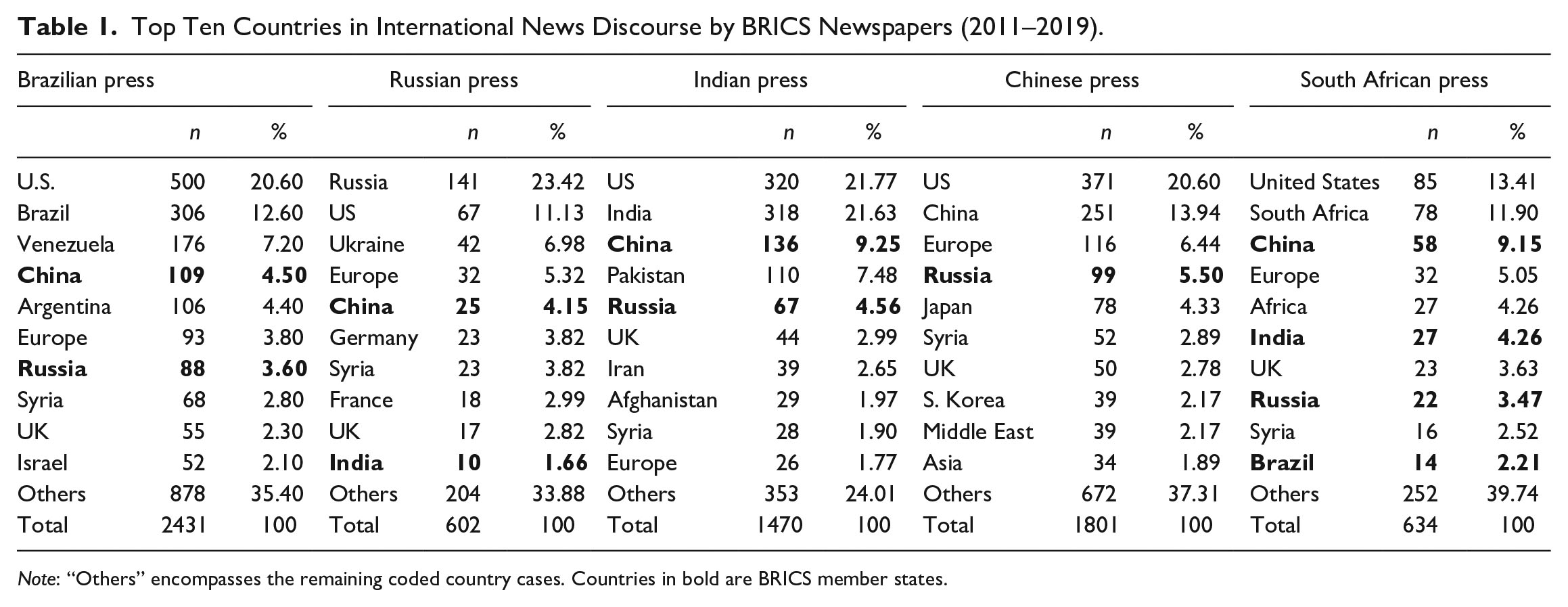
Note: “Others” encompasses the remaining coded country cases. Countries in bold are BRICS member states.
By aggregating the percentage of articles that related to each BRICS country, we observed that South African (19%) and Indian (15%) newspapers allocated the largest share of their international discourse to the BRICS states. Notably, South Africa was the only country whose articles involving BRICS countries (19%) surpassed the percentage of US-related articles (13.41%). Conversely, Chinese (10%), Brazilian (9.70%), and Russian (6.80%) media discussed fellow BRICS members less frequently.
When evaluating only the data regarding intra-BRICS coverage (articles that relate to at least one BRICS country), we observe, as Figure 1 illustrates, the notable prominence afforded to China and Russia in contrast to other BRICS states. China garnered the most attention in the Indian (60.98%) and Russian (60.97%) media. Russia enjoyed the greatest share of visibility in the Chinese press (52.94%). Notably, the South African press deviates from this trend, with India (22.31%) slightly surpassing Russia (18.18%) for the second spot. This finding aligns with Wasserman’s (2015) analysis of the 2011–2012 period, although the relative focus on Russia and Brazil has changed. Furthermore, Table 1 and Figure 1 demonstrate that China garnered substantial coverage from its partners while reciprocating minimally. Russia is the only BRICS nation among China’s top ten most-discussed countries (Table 1).
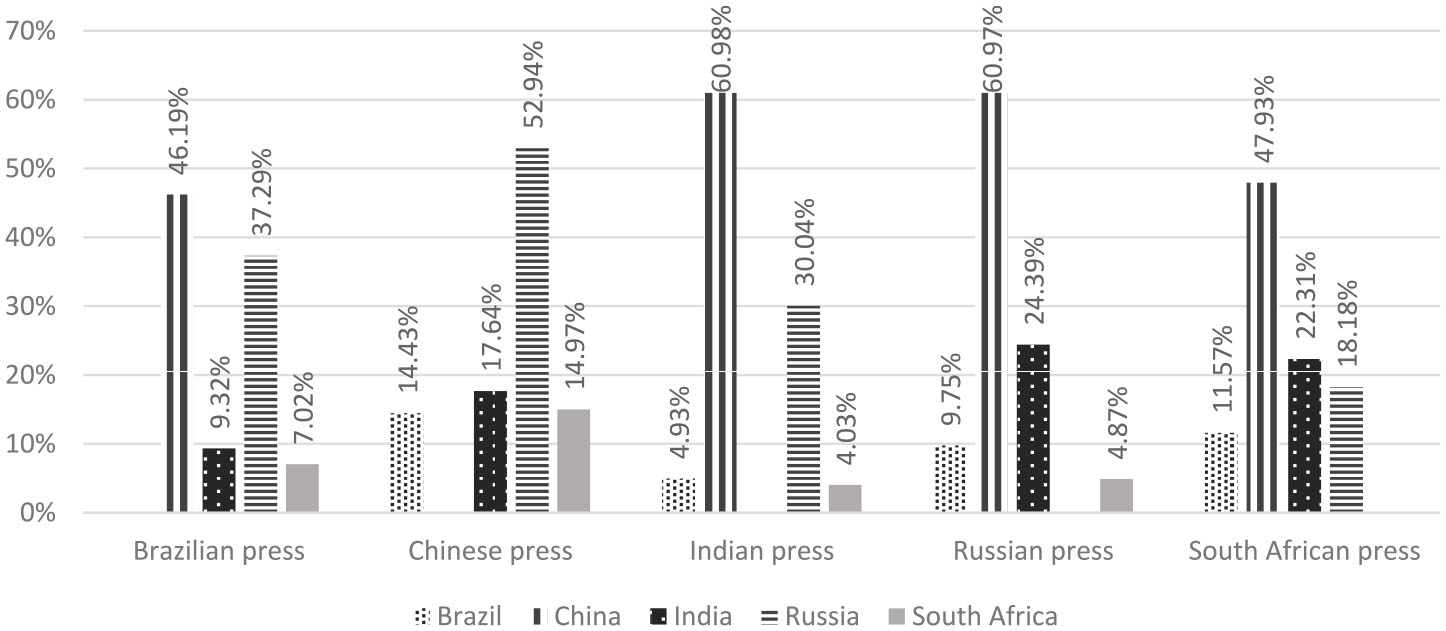
Distribution of media attention concerning intra-BRICS coverage (2011–2019).
To trace the evolution of articles involving BRICS countries, we analyzed their temporal distribution (Figure 2). We examined the percentage of articles related to each of these countries within each year of analysis. Figure 2 reveals a few notable features. First, the share of Russia-related articles jumped from 28.22 percent in 2011 to 51.72 percent in 2014. This 2014 peak involving Russia likely associates with the coverage of significant events such as the annexation of Crimea. Additionally, China-related articles exhibit a distinct pattern, fluctuating over time and peaking in relative frequencies from 2017 (58.46%) onward. Notably, China’s recurrent presence in the dataset for 2018 and 2019 coincides with the development of the United States–China trade war. Finally, India reached its peak visibility in 2015 (17.24%), coinciding with the Indian general elections that year.
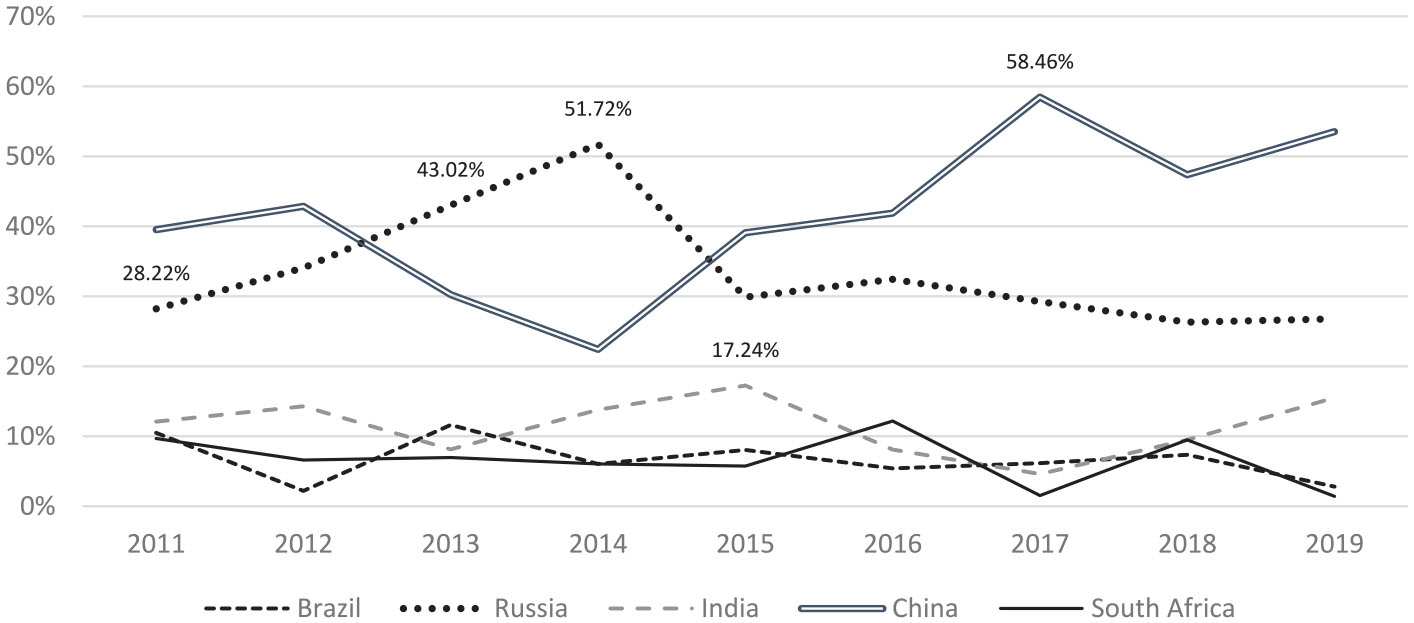
Temporal distribution of articles related to BRICS countries considering all newspapers (2011–2019).
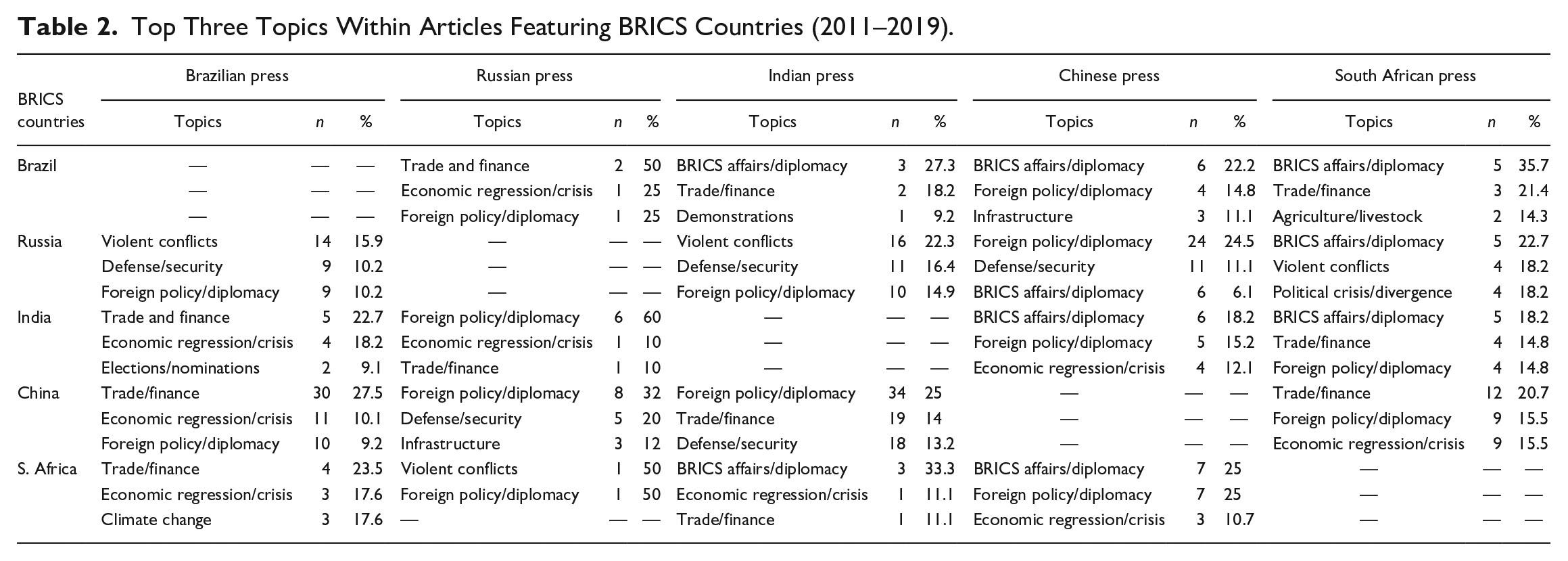
To elucidate our findings (RQ1), we examined the centrality of the BRICS group itself in the articles (Figure 3), as well as the main topic of each article involving at least one BRICS country (Table 2). Figure 3 reveals that, in India, most articles concerning Brazil (54.5%) and South Africa (66.7%) were situated within the BRICS context. Similarly, half of the Brazil-related articles in South African dailies were framed within the BRICS group. Moreover, 41.2 percent of South Africa-related articles in Brazilian media were directly linked to the group. These findings suggest that the BRICS framework serves as a driver of visibility, particularly for Brazil and South Africa.
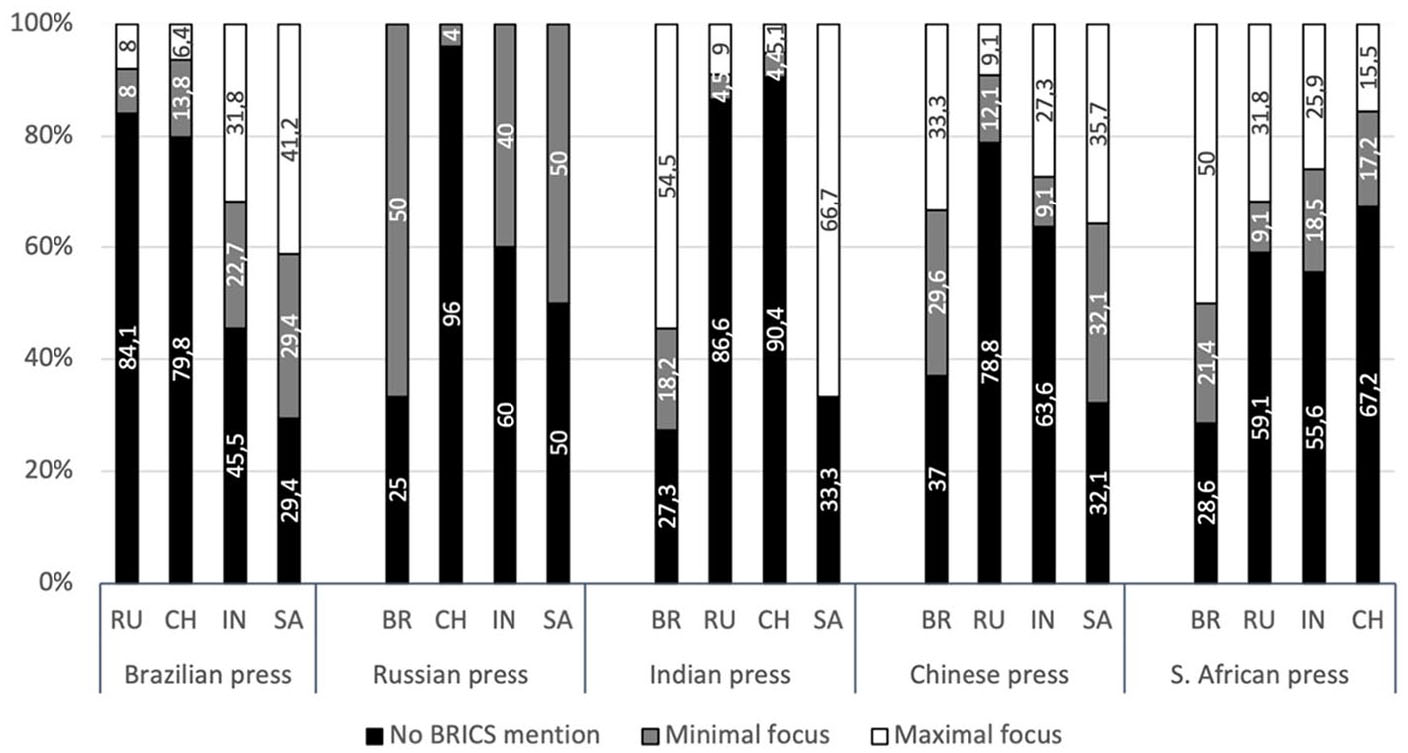
Distribution of articles by percentage based on their focus on the BRICS grouping.
Top Three Topics Within Articles Featuring BRICS Countries (2011–2019).
Conversely, China and Russia appeared to be less dependent on BRICS for media coverage. Across Russian, Indian, and Brazilian outlets, most China-related articles (79.8% to 96%) lacked any BRICS association. A similar pattern emerged for Russia: Indian and Brazilian newspapers rarely featured Russia within a BRICS context (84.1% and 86.6%, respectively). Notably, the Russian press itself lacked any BRICS-centric articles.
Regarding the thematic analysis, Table 2 illustrates the top three recurring topics associated with each BRICS member state across the scrutinized media systems. China, the most-discussed BRICS nation, was mainly portrayed through an economic lens. Brazilian and South African newspapers consistently linked China to trade/finance and economic regression/crisis. The Indian press, while acknowledging China’s economic dimension (14% trade/finance), primarily linked its neighbor to foreign policy/diplomacy (25%) and defense/security (13.2%).
Table 2 demonstrates that Russia was chiefly associated with violent conflicts and defense/security issues. Notably, violent conflicts were not among Chinese newspapers’ top three Russia-related themes. Concerning articles on India, the country was frequently associated with economic matters, particularly in the Brazilian press. In the Chinese and South African media, India was primarily associated with BRICS affairs/diplomacy (18.2% for both). As suggested in Table 2, BRICS affairs/diplomacy dominated much of the discourse on Brazil, especially in Indian (27.3%), Chinese (22.2%), and South African (35.7%) media. Notably, South Africa frequently appeared alongside both BRICS and economic themes, except in Russian media.
Intra-BRICS Conversations: Authorship Attribution (RQ2)
As outlined in the “Data Analysis” subsection, we conducted correspondence analyses to address RQ2. This procedure visually represents a contingency table, allowing us to explore the association between two categorical variables. To interpret these visualizations, one should consider the proximity between variables, their distance from the center (where greater distance indicates a stronger association), and the angle formed between variables (where a smaller angle indicates a stronger association).
First, we considered the relationship between reporting countries and attributed authorship (Figure 4—see Table A1 in the Supplemental Information File for the corresponding contingency table). Brazil and India, which are close to each other in the plot, show similar tendencies with a higher attribution to “national newsroom” in articles involving BRICS nations. Thus, the three variables are clustered together. The Brazilian and Indian press attributed authorship to “national newsrooms” in 36.90 percent and 45.40 percent of cases, respectively. Conversely, China and South Africa demonstrated a high reliance on news agencies (22% and 37.90%). Russia is situated near “correspondents” in the plot, and the angle formed between the two variables is also small, which indicates that the Russian press primarily relied on their journalists abroad (including parachute journalists; 51%) and, subsequently, on newsroom contributions (45.40%), with no declared agency usage. This absence, however, must be interpreted cautiously. This result might be attributed to the common practice of media outlets using news agencies to gather information without transparent attribution (Cazzamatta 2022).
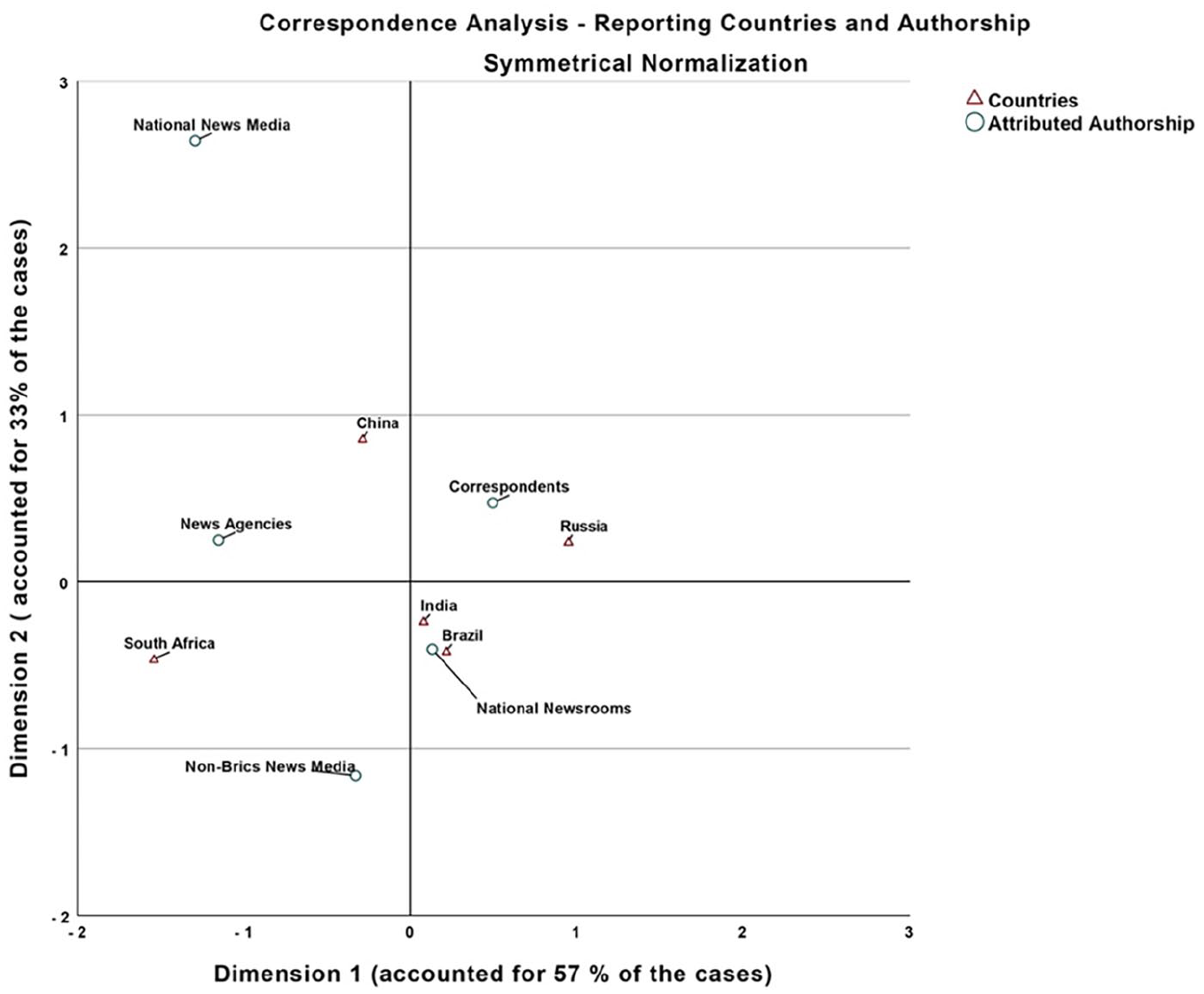
Correspondence analysis of reporting countries and authorship attribution (intra-BRICS discourses).
South Africa lacked articles authored by correspondents/parachute journalists. Conversely, it exhibited the highest percentage of articles sourced from news agencies (38%). This finding might relate to the much-debated crisis in cross-border journalism. With the emergence of digital technologies, news media has significantly scaled back its foreign correspondent networks due to budget constraints (Archetti 2012; Sambrook 2010; Thussu 2004). Moreover, the absence of articles authored by correspondents in South Africa indirectly explains why discourses frequently originated from news offices (34.80%). Hence, one can infer that international news agencies have significantly shaped the agenda of South African newspapers. If not, how then could journalists from The Star and Sowetan cover the BRICS nations without the support of correspondents, traveling journalists, or fixers?
China (35.50%) and Russia (51.30%) led correspondent-authored articles, followed by Brazil (26.70%) and India (25.10%). However, these percentages do not necessarily imply an equitable distribution of correspondents among the BRICS states. To ascertain whether the examined newspapers relied on journalists in the BRICS countries, we recorded each correspondent’s name and their reporting country. From 2011 to 2019, People’s Daily had reporters in Russia, India, and South Africa. Southern Metropolitan Daily had one journalist in Brazil. Regarding Russia, only the privately owned Kommersant had journalists reporting from other BRICS member countries (India and China). O Estado de S. Paulo had one correspondent in China. Similarly, both Indian newspapers had correspondents in China. The Times of India had one journalist reporting from Brazil, and The Hindu had one based in Russia (see Table 3). Indeed, these foreign correspondents covered vast territories, which suggests the media organizations’ reliance on news agencies and the possibility that correspondents who authored articles on BRICS members may also have been stationed elsewhere.
Identified BRICS Journalists Reporting From BRICS Countries (2011–2019).
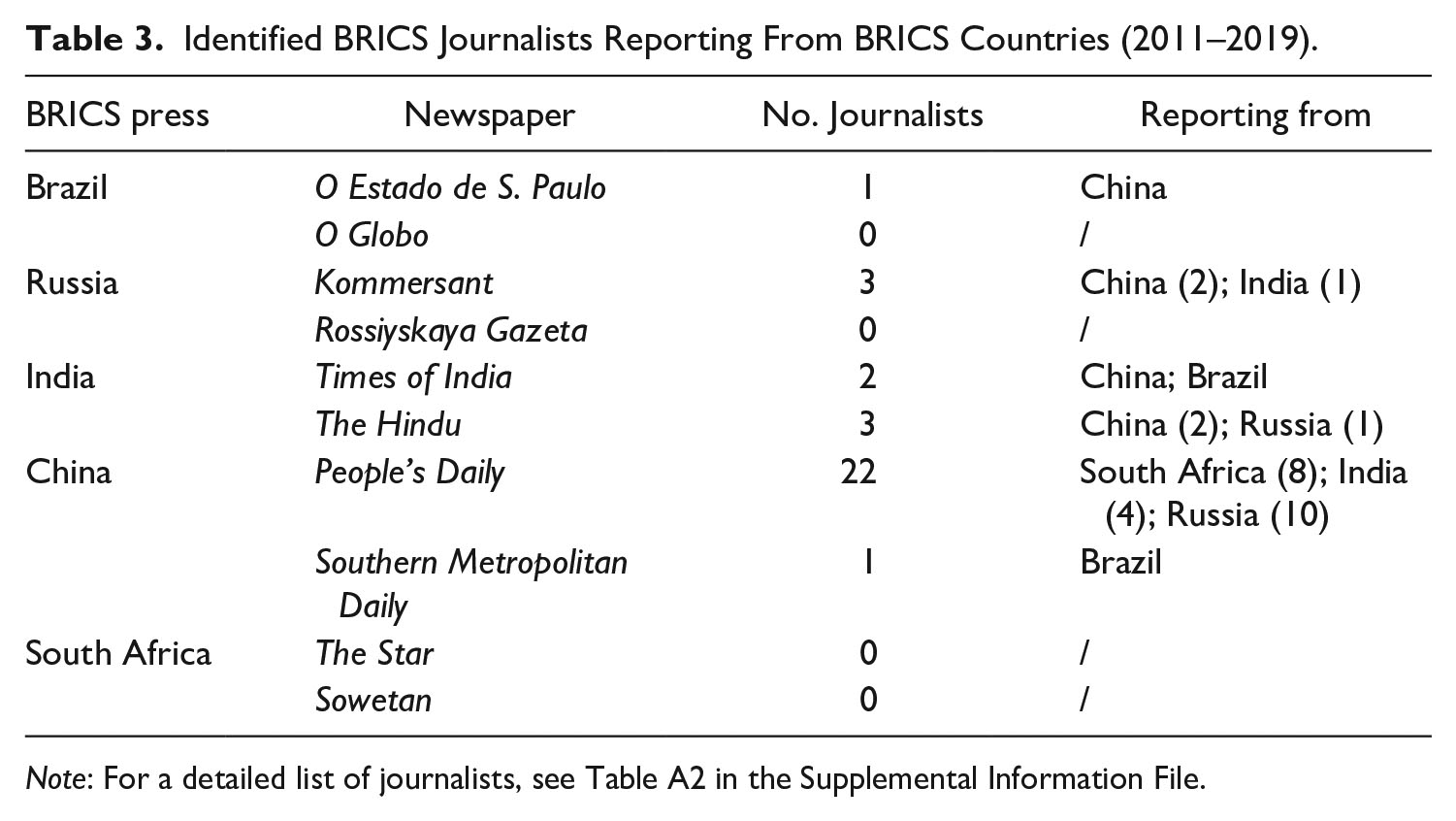
Note: For a detailed list of journalists, see Table A2 in the Supplemental Information File.
Figure 4 also reveals China’s relatively high authorship attribution to news agencies (22%). Notably, Chinese newspapers frequently relied on Xinhua News Agency (93.8%) and China News Service (6.3%; see Table 4). This preference for domestic agencies to produce foreign news may seem contradictory, but it aligns with Xinhua’s global operations and its pivotal role as a supplier of international news for the domestic market. Xinhua’s influence is further underscored by China’s media control mechanism, where “the media houses are often required to only use reports from the state news agency Xinhua and not to send their own reporters to the scene” (Abels et al. 2022: 429). Furthermore, Figure 4 illustrates a robust association between China and attributing authorship to “national news media.” This is evident from the greater distance from the origin on the graph and the smaller angle between the variables. In essence, the authorship attribution patterns observed in the Chinese press indicate a general reliance on domestic news sources to produce news discourses on the BRICS nations.
Percentage of Authorship Attributed to Non-BRICS and BRICS News Agencies (Intra-BRICS Discourses).
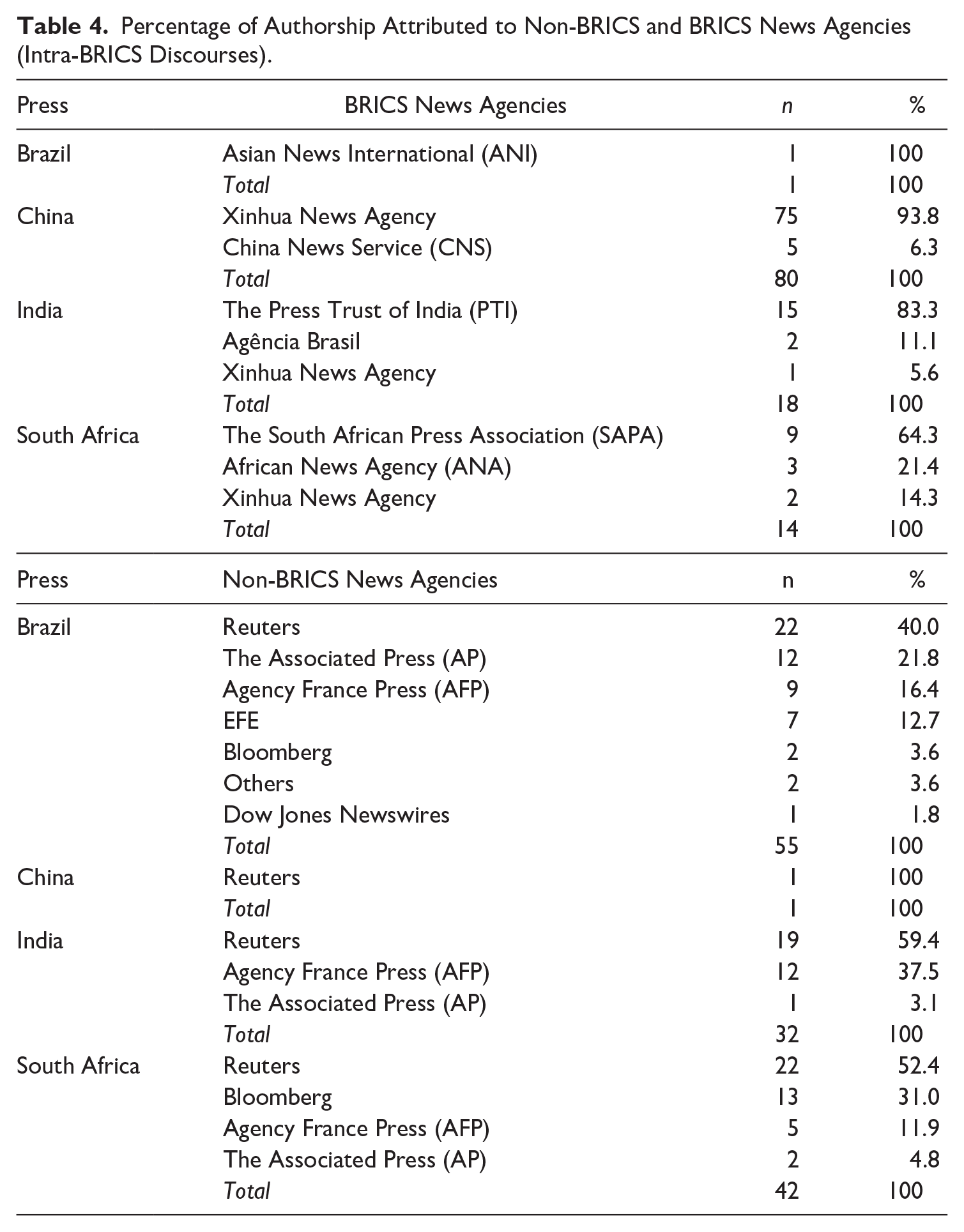
South African newspapers also sourced discursive pieces from domestic news agencies: The South African Press Association (SAPA; 64.3%) and the African News Agency (ANA; 21.4%). Xinhua’s modest influence (14.3%) was also identified. A closer examination of Table 4 reveals that Reuters (52.4%) and Bloomberg (31%) were most frequently credited in BRICS-related articles by South African outlets. This outcome aligns with Wasserman’s study (2018), which highlights South Africa’s preference for Western media sources. Nonetheless, one must remember that our data represent verbatim copies in which newspapers explicitly indicated the agency origin of the articles. As mentioned, various undisclosed agency uses may exist.
Finally, we conducted a secondary correspondence analysis to explore the association between newspapers and attributed authorship. The model explains 81 percent of the data variance. Figure 5 illustrates discernible similarities (see Table A3 in the Supplemental Information File for the corresponding contingency table). The cluster comprising Russian newspaper Kommersant (72.5%), the Chinese Communist Party’s People’s Daily (57.4%), and the Indian title The Hindu (34.4%) suggests a tendency toward attributing authorship to correspondents. Moreover, Figure 5 reveals similarities among Rossiyskaya Gazeta (66.7%), Sowetan (70%), and The Times of India (59.6%) in publishing articles that were written by their newsrooms. Southern Metropolis Daily (44.6%) and The Star (41.1%) relied heavily on news agencies. Since Southern Metropolis Daily displayed a minimal percentage of articles that were authored by correspondents (1.4%), it sourced discourses on BRICS mostly from Xinhua (92.1%). Conversely, The Star mainly retrieved articles from Western agencies such as Reuters (52.5%) and Bloomberg (32.5%).
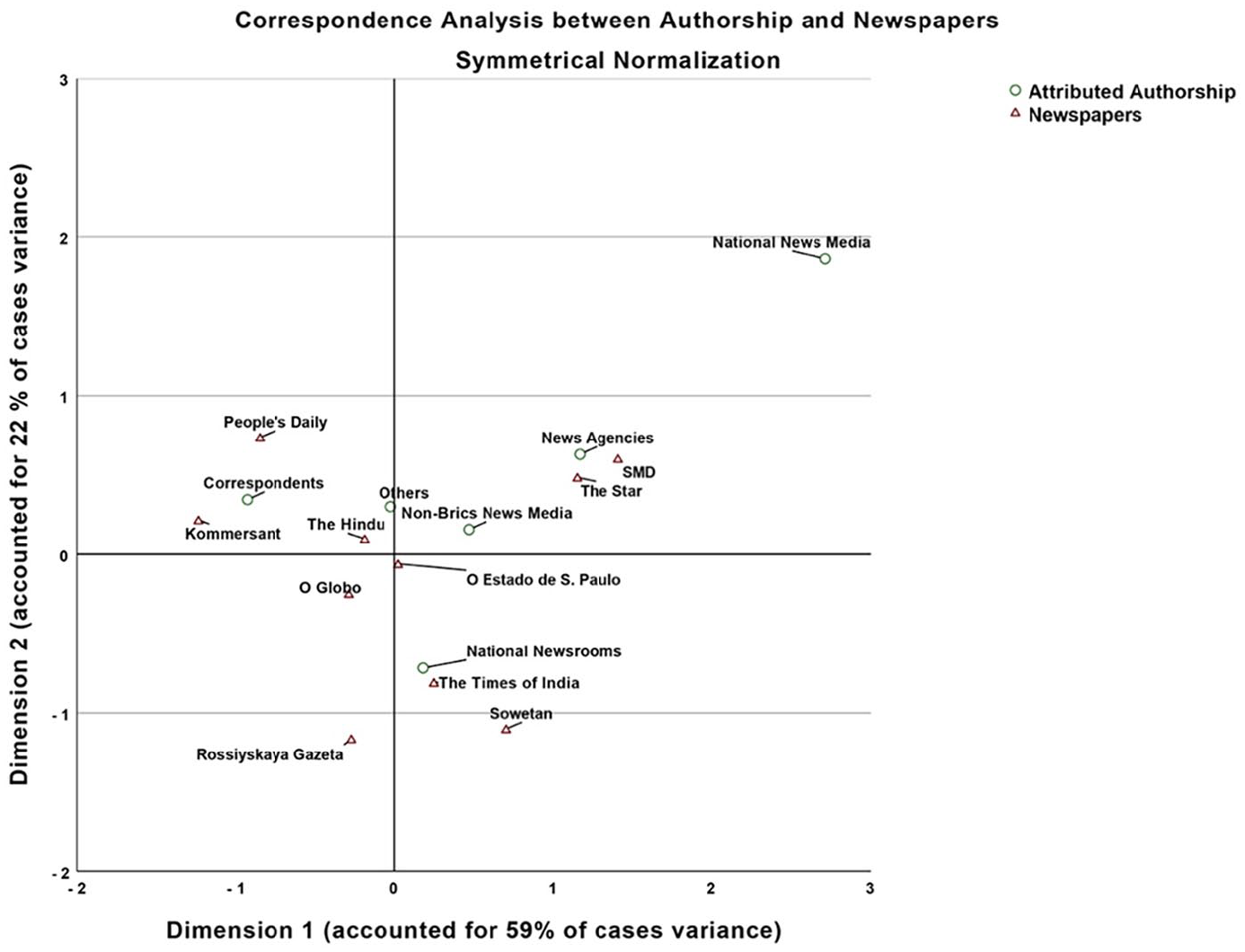
Correspondence analysis of newspapers and authorship attribution (intra-BRICS discourses).
Intra-BRICS Conversations: References to Media Sources Throughout the Text (RQ3)
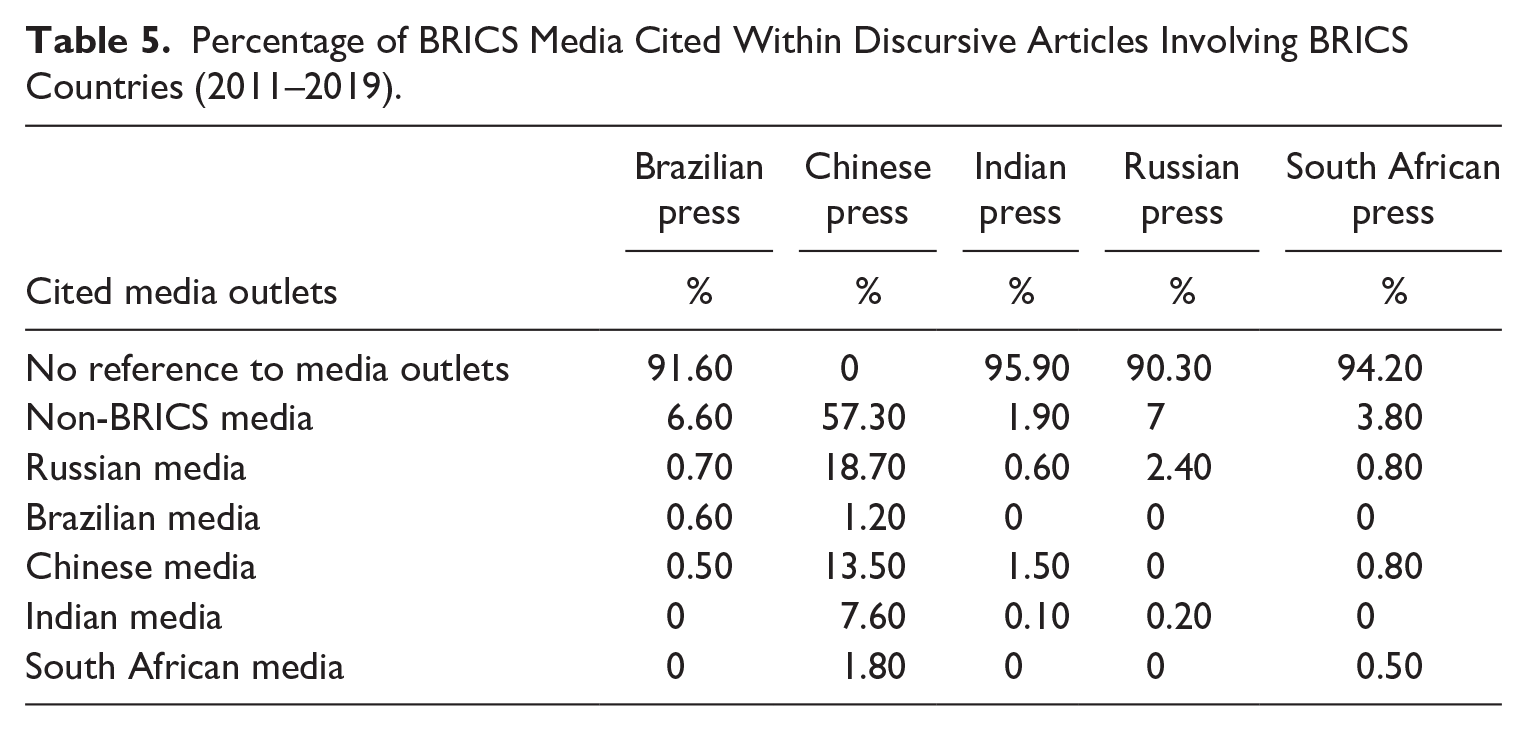
Table 5 demonstrates that Chinese newspapers were the ones that most frequently cited media outlets from other countries when reporting on the group’s member states. The Chinese press often mentioned non-BRICS (57.30%), Russian (18.70%), and Indian (7.60%) media. In contrast, most articles by newspapers from Brazil (91.60%), India (95.90%), Russia (90.30%), and South Africa (94.20%) did not include references to international media sources. Overall, BRICS journalists frequently resorted to non-BRICS media when writing about BRICS countries. Only India displayed a similar low proportion of references to non-BRICS (1.90%) and Chinese media (1.50%).
Percentage of BRICS Media Cited Within Discursive Articles Involving BRICS Countries (2011–2019).
Discussion and conclusion
Building on BRICS’ formal efforts to revamp media relations and flows within the group and considering China and Russia’s global media expansion, we designed this research to quantitatively assess news flows that have shaped mediated conversations among BRICS countries. Specifically, we examined news geography structures, underlying topics, authorship attributions, and media source references across the five member states.
Within news geography, China-related issues were central among BRICS countries and exhibited the least connection to the group itself. The thematic analysis reinforces this observation by revealing a frequent association between China and economic topics, especially in Brazilian and South African newspapers. These findings imply that economic proximity might be a contextual factor that drives media attention toward China. Notably, Beijing is a critical trade partner for Brazil, Russia, India, and South Africa (Stuenkel 2020) and contributes to 70 percent of BRICS’ GDP (United Nations 2023). However, Indian and Russian media focused on China in the realms of foreign policy/diplomacy and defense/security, which suggests the influence of factors beyond economics. For instance, regarding India, geographical proximity and intricate territorial disputes with China (Stuenkel 2020) could be interpreted as additional factors that have shaped China’s heightened salience. Finally, the relatively high frequency of China-related articles in 2018 and 2019 coincides with the period of the United States–China trade war, which was often coded under trade/finance in our analysis. Major economic events such as this one, which involves rivalry and has the potential to affect other nations (Li et al. 2018), tend to attract significant media attention (Fogarty 2005; Hafez 2007). Therefore, it is reasonable to assume that the trade war contributed to further amplifying the media visibility of China.
Conversely, Russian-related articles are generally disconnected from economic matters. This might stem from the limited economic ties between Russia and most other BRICS members, despite some improvement over time (Koval and Dantas 2019; Stuenkel 2020). Moreover, akin to China, Russia-related articles were often detached from the BRICS framework. Our data suggest that specific events are more likely to drive media attention toward Russia. The 2014 peak in articles, alongside the frequent link between this country and topics such as violent conflicts and security/justice, indicated that the annexation of Crimea played a central role in shaping the media focus on Russia that year.
This study reveals limited attention toward Brazil, India, and South Africa. We observed that articles that cover these three countries, unlike those that focus on China and Russia, exhibited a stronger association with the BRICS framework. BRICS membership contributes to the exposure of these three countries in the press of all BRICS nations; however, our longitudinal analysis demonstrates that this contribution has yet to lead to a continuous increase in the focus on BRICS countries over time.
Furthermore, only the South African press’ aggregate percentage of articles that feature at least one other BRICS country (19%) surpasses the percentage of U.S.-related articles (13.41%). This finding resonates with another: the South African newspapers primarily discussed Brazil, Russia, and India within articles about BRICS affairs/diplomacy. One potential explanation for this observed emphasis on the BRICS grouping lies in the significance that BRICS membership holds for South Africa. Shubin (2020) highlights that post-apartheid South Africa’s foreign policy has pursued closer ties with the developing world, which has made BRICS membership desirable not only in economic terms but also in terms of the opportunity it offers to shape a fairer global system.
Overall, the geographical focus of BRICS media often tended toward established and emerging powers (e.g., the United States, UK, China; Garzón 2017). Moreover, the prominence of country-related issues in BRICS media appeared, unsurprisingly, to be organized around traditional determinants of international news, such as economic and geographic proximity, conflict centrism, and so forth (Galtung and Ruge 1965; Golan 2010). Consequently, the sparse coverage of other BRICS nations, especially Brazil and South Africa, underscores a persistent imbalance in cross-border journalism, which challenges the assertion of a multipolarity in news geography.
Regarding authorship attribution, our findings underscore China’s and Russia’s participation in South–South media relations and flows. For instance, these countries exhibited the highest shares of articles by correspondents (35% and 51.30%, respectively). Within China, a disparity exists between state-owned and commercial media. While 57.4 percent of the People’s Daily’s items on BRICS countries originated from correspondents, 1.4 percent did so in the Southern Metropolis Daily. The People’s Daily’s investment in journalists that were situated within or dispatched to BRICS countries seemed to concentrate on South Africa, India, and Russia, as evidenced in our documentation of journalists’ reporting locations. While traditional Western news organizations have faced financial challenges in sustaining foreign correspondents (Sambrook 2010; Archetti 2012), Chinese state-owned media outlets have thrived due to the government’s investment in internationalizing the sector (Zhou and Wu 2018). Conversely, in Russia, the privately owned Kommersant (72.5%) exhibited a higher share of correspondent-authored articles than the state-owned Rossiyskaya Gazeta (27.80%).
Aside from deploying journalists across a few BRICS countries, Russia and China operate broadcasting and news agency services worldwide. However, BRICS journalists rarely utilize them for producing news discourse on the group’s member states. This is illustrated by the fact that Brazil, India, and South Africa hardly refer to Russian or Chinese media outlets when reporting about BRICS members (see Table 5; RQ3). It is noteworthy that even rarer is the occurrence of BRICS journalists transparently using Brazilian, Indian, or South African news media as sources of information.
What becomes evident is that, while some BRICS news agencies operate internationally (Aguiar 2016), their cross-border reach remains limited. For instance, Xinhua is more utilized in China than abroad, especially by the Southern Metropolis Daily (92.1%). We used two factors to interpret this result: reluctance among journalists, particularly in South Africa, to use Chinese or Russian media sources due to credibility concerns (Wasserman 2018) and the notion that China’s global media footprint does not necessarily denote influence (Madrid-Morales 2021). Our data corroborate this by demonstrating that non-BRICS news agencies, especially Reuters and Bloomberg, are more likely to shape South African discourse on BRICS. Thus, transnational intermedia agenda-setting among the BRICS media systems seems limited. Even in mediated conversation, this communication exchange appears to have been significantly shaped by media actors outside the group, mainly from the Global North.
Collectively, our research suggests two main aspects regarding intra-BRICS-mediated conversations. First, BRICS media provides unbalanced attention distribution regarding some BRICS members. Nevertheless, it is remarkable that BRICS membership appears to act as a driving force that has underlain the visibility of Brazil, South Africa, and, to a lesser extent, India across BRICS media systems. Second, BRICS media has displayed a limited ability to exchange communication flows, particularly in specific directions. For instance, although O Estado de S. Paulo relies on a correspondent stationed in China, the overall influence of BRICS media sources in the Brazilian press is minimal.
As evidenced by this study, the disparities in foreign news coverage highlighted decades ago in the MacBride Report appear to persist within the BRICS media framework, with little improvement. Even rising powers such as Brazil, India, and South Africa remain nearly invisible on the news agendas of their fellow BRICS members. Moreover, when the press in BRICS countries (excluding China and Russia) do discuss each other, they often rely on Western news agencies and seldom cite other BRICS outlets in their reporting. Against this backdrop of the ongoing dominance of the Global North in news flows, the potential for counter-flows from BRICS nations to truly facilitate South–South mediated communication, as envisioned by the BRICS Media Forum, remains a challenge. While Russia and China confront the task of establishing credibility for their international news organizations, Brazil, India, and South Africa must find ways to expand their own news media footprints on the global stage. As Thussu (2022: 1587) points out, India’s “almost negligible presence in the global news space” is particularly “ironic,” given its status as the world’s largest democracy and its robust English-language news sector. Thus, deeper engagement in cross-border journalism is crucial. A robust network of correspondents across member states could bridge the discursive gap among these countries. This ambitious undertaking holds the potential to weaken the dominance of Global North mediation and amplify the voices of Brazil, India, and South Africa within BRICS media spheres. Such an intensified and balanced flow of information within BRICS could prove instrumental in strengthening its internal recognition and dispelling the perception of the group being solely driven by China and Russia (Dwyer and Arifon 2019; Zondi 2022). Furthermore, a more inclusive media agenda and diversified international newsgathering process would uphold the principles outlined in the MacBride Report and align with BRICS’ aspirations for multipolarity.
This investigation focused on specific types of media outlets and news formats. Future researchers should explore BRICS-mediated communication across other media platforms and examine non-English content in multilingual systems, such as those found in India and South Africa, to identify potential variations in news flow patterns.
Supplemental Material
sj-docx-1-hij-10.1177_19401612241269835 – Supplemental material for Who Shapes Mediated Conversations Among Rising Global Powers? Examining News Geography, Authorship, and Media Sources Within the BRICS Framework
Supplemental material, sj-docx-1-hij-10.1177_19401612241269835 for Who Shapes Mediated Conversations Among Rising Global Powers? Examining News Geography, Authorship, and Media Sources Within the BRICS Framework by Augusto Santos and Regina Cazzamatta in The International Journal of Press/Politics
Footnotes
Declaration of Conflicting Interests
The author(s) declared no potential conflicts of interest with respect to the research, authorship, and/or publication of this article.
Funding
The author(s) disclosed receipt of the following financial support for the research, authorship, and/or publication of this article: This research was supported by the Coordenação de Aperfeiçoamento de Pessoal de Nível Superior (CAPES) under the CAPES/DAAD scholarship program [grant number 88881.199741/2018-01].

Supplemental Material
Supplemental material for this article is available online.
Notes
Author Biographies
References
Supplementary Material
Please find the following supplemental material available below.
For Open Access articles published under a Creative Commons License, all supplemental material carries the same license as the article it is associated with.
For non-Open Access articles published, all supplemental material carries a non-exclusive license, and permission requests for re-use of supplemental material or any part of supplemental material shall be sent directly to the copyright owner as specified in the copyright notice associated with the article.
