



Abstract
The reach of illiberal international propaganda outlets rests on citizens in democratic countries as recipients and potential disseminators. However, little research has scrutinised the audiences for such platforms. Why do audiences in democratic states consume content from such outlets, and how far do they actually align with it ideologically? The present research seeks to address this gap. Building on and extending the recent research findings of a large-scale survey, interviews with Swedish media consumers were conducted between 23 March and 13 April 2022, providing a unique close-up on a group of media consumers who stated that they consumed, among other alternative media, the Russian state-sponsored media outlets RT and Sputnik as part of their media diet. The findings, elicited through interviews and the Q-sort method, challenge previous research that presents this audience in a one-dimensional way. First, we investigate their alignment with different political narratives, identifying three different profiles. Although only one profile generally aligned with the RT/Sputnik messaging, almost all the participants appreciate the content and share it on social media. Secondly, we examine their rationale for consumption, revealing a diverse array of motivations, and leading us to theorise four distinct consumption profiles: Distant Observers, Reluctant Consumers, Media Nihilists and Establishment Critics. We interpret these results and discuss their broader implications, before reflecting on the complexities of characterising audiences consuming authoritarian international broadcasting.
Introduction
Authoritarian states are increasingly targeting audiences in democracies through overt media outlets such as Press TV (Iran), CGTN (China) and RT (Russia), which contain seemingly normal journalistic content (Rawnsley 2015; Saunders et al. 2022). Nevertheless, despite research into the strategies of (Elshehawy et al. 2021; Elswah and Howard 2020) and user engagement with (Crilley et al. 2022; Saunders et al. 2022) such outlets, there is a striking lack of knowledge about the audiences. We address this gap by deriving empirical evidence from a unique close-up on a group of Swedish media consumers who reported consumption of news targeting Sweden, from RT and/or Sputnik, outlets that publish in English or other foreign languages. Respondents were invited to share their political views and narratives and to give their reasons for consuming and spreading the content of RT, Sputnik, and other alternative media.
On February 27, 2022, President of the European Commission Ursula von der Leyen announced the controversial decision to ban RT and Sputnik from the European media space, citing the outlets’ attempts to ‘to spread their lies to justify Putin's war and to sow division in our Union’ (European Commission 2022). In the face of considerable criticism from different media institutions, the Commission's commitment to the decision – the outlets were officially banned days later – evidences the seriousness with which politicians take the perceived problem with authoritarian states’ international broadcasting. This is mirrored in recent research that conceptualises state-sponsored international broadcasting that interferes in democracies as, among other things, illiberal communication (Elshehawy et al. 2021), geopolitical culture jamming (Saunders et al. 2022) and state-funded overt influence operations (Bradshaw et al. 2022). In lack of ideal labels, this article employs the term ‘propaganda’ (Lasswell 1927), which has been defined ‘deliberate, systematic attempt to shape perceptions, manipulate cognitions, and direct behaviour to achieve a response that furthers the desired intent of the propagandist’ (Jowett and O’Donnell 2014: 7). Oates (2016: 399) describes propaganda in the present age as ‘rewired propaganda’: ‘a commitment to disinformation and manipulation, when coupled with the affordances of the new digital age, give particular advantages to a repressive regime that can proactively shape the media narrative’. In this article, propaganda denotes international broadcasting aimed at affecting a target population's beliefs and which is characterised by heavily skewed reporting that often contains, but is not limited to, disinformation.
Scholars have discussed that the Russian state finances media outlets that broadcast in English and other languages, to influence elections or to instigate other kinds of harm, such as societal division and disruption and undermining trust in governmental institutions (Bradshaw et al. 2022; Elswah and Howard 2020; Wagnsson and Barzanje 2021). Other states also use state-backed international multilingual broadcasting for self-serving purposes, yet journalists working for Al Jazeera English, BBC World Service Radio, and other state-backed outlets try to distance themselves from Russian RT, referring to its ‘false’ state ‘propaganda’ (Wright et al. 2020: 623). Nevertheless, additional research is needed to determine whether they project such propaganda themselves.
Evidence from experimental studies in the United States (Carter and Carter 2021; Fisher 2020; Peterson and Allamong 2021) and large-scale surveys in Ukraine (Onuch et al. 2021; Peisakhin and Rozenas 2018) indicates that Russian broadcasting can affect the political attitudes of media consumers in other countries. One study, for example, showed that exposure to RT content about U.S. foreign policy had an impact on U.S. citizens’ on discussed topics, with effects persisting even after respondents were informed that the media outlet was backed by the Russian Government (Carter and Carter 2021). There is thus some evidence of impact, yet research about this is still needed (Hoyle et al. 2021).
The appeal of such authoritarian state-backed broadcasting among audiences in democracies is puzzling. It is vital to unearth what motivates citizens to engage with, and spread, such content. Most research on reception is based on quantitative data. It typically presents a monolithic view of audiences and highlights susceptible target groups (Bradshaw et al. 2022; Elshehawy et al. 2021). Along with other scholars (Crilley et al. 2022; Elswah and Howard 2020), we recognise the need for a closer examination of audiences. The relevance of research that more closely scrutinises the audiences for Russian state-sponsored media has been underscored by the above-mentioned EU ban. While decisions on the banning of RT and Sputnik are complex, a deeper understanding of who engages with these outlets, and their motivations for doing so, can also inform the debate around the appropriateness of the EU's response.
Audiences for State-Backed International Broadcasting
This article treats authoritarian state-sponsored media outlets as a type of ‘alternative media’. This is in line with Holt et al.'s definition (2019: 862) of alternative media as all media are presented/viewed as an alternative to mainstream media. Authoritarian state-sponsored broadcasters typically oppose mainstream national media, report critically on the establishment in the target state, and cultivate partisan attitudes (Müller and Schulz 2021).
U.S. and European media consumers politically affiliated with right-wing, conservative agendas have been particular target audiences of Russian broadcasting (Carter and Carter 2021; Elshehawy et al. 2021; Saunders et al. 2022). This does not necessarily mean that they are especially pulled to Russian outlets. Little is known about audiences that consume authoritarian state-backed broadcasting. Some clues can be found in research on audiences for national alternative media, which demonstrates that individuals with low levels of trust in institutions and mainstream media are overrepresented among consumers of alternative or unreliable sources of information (Noppari et al. 2019; Thorbjørnsrud and Figenschou 2020; Zimmermann and Kohring 2020). Schulze (2020) established that scepticism toward news, and a lack of trust in public service broadcasting, were predictors of alternative right-wing media consumption in four European countries. Schwarzenegger (2021, 2022) found that alternative media consumers distrusted the state, mainstream media and the elites. Feelings of marginalisation, dissatisfaction and lack of representation have also been identified as drivers of consumption (Müller and Schulz 2021; Noppari et al. 2019).
More recent research has shown that RT's international Twitter followers are diverse, often do not engage with the message content, and follow multiple news sources, which indicates that they might be seeking alternative perspectives on events (Crilley et al. 2022). Warning of generalisations and depictions of RT audiences as politically extreme, Crilley et al. (2022) call for additional research. Taking up the challenge, we sought to design a study that allowed for a fine-grained and exploratory analysis, asking: who are the consumers of Russian state-sponsored media? We break this question up into two dimensions: the degree to which consumers align themselves with Russian political narratives (political alignment profiles); and how they rationalise their consumption and sharing of alternative media content (consumption profiles).
The Current Study
Sweden has been a particular target of Russian broadcasting (Deverell et al. 2021; Ramsay and Robertshaw 2019). Until the ban in 2022, RT and Sputnik articles in English and other foreign language were available to Swedes online. Remarkably, though, Sputnik also maintained a short-lived Swedish language version 2015–2016, demonstrating an apparent perceived relevance of the Swedish language population. Furthermore, Sweden has unusually high levels of consumption and awareness of right-wing anti-immigration alternative media, compared to other northern and Central European countries (Ihlebæk and Nygaard 2021; Schulze 2020). At the same time, Swedish media audiences score highly on trust in established media and public service broadcasters (Newman 2021), as well as in societal institutions (Esaiasson et al. 2021). These contradictory tendencies make Sweden a relevant case.
We anchor our investigation around the findings from a recent study (Wagnsson 2022) that demonstrates that 7 percent of Swedes had consumed RT/Sputnik. Among these, there was an overrepresentation of young men and supporters of a non-parliamentary political party, the conservative nationalist party, the Sweden Democrats, and the Left Party. They expressed slightly less trust in news media, politicians and public agencies compared with non-consumers, and were more prone to spread news, even when mistrustful of the sources. Furthermore, RT/Sputnik audiences aligned slightly more than non-consumers with RT/Sputnik illiberal narratives and RT/Sputnik narratives about Swedish national security. The most frequently stated explanation for consuming RT/Sputnik was ‘for pleasure’ (40 percent). However, 31 percent gave a reply that indicate that they were drawn to RT/Sputnik because these outlets provide important news. Using this survey investigation as a point of departure, the present research sought more detailed knowledge of the audience members’ alignment with Russian messaging and their incentives for consumption and sharing.
Methodology
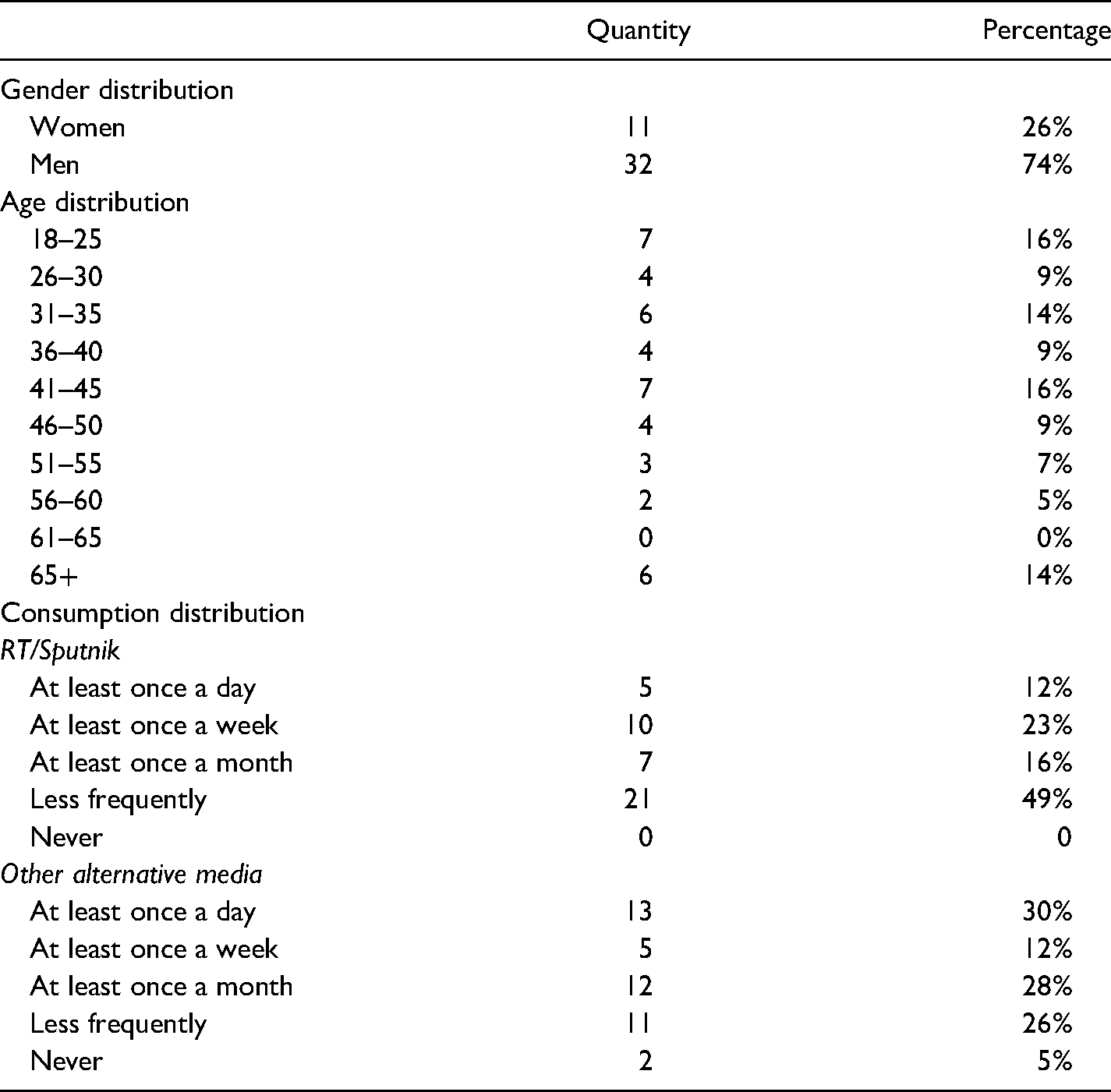
We interviewed RT/Sputnik consumers digitally in a sixty-minute session, using Zoom and the Q Method Software. The interviewees were recruited between March 15 and April 8, 2022, and interviews were held between 23 March and 13 April. Respondents were recruited through the leading Swedish analysis and research agency, Novus, using its Sweden Panel, consisting of approximately fifty thousand randomly recruited panel members from the entire country, with no possibility for self-registration. Four thousand invitations, including a survey to assess respondent suitability, were sent to a randomly selected number of panel participants. The recruitment survey screened for people with an interest in news and society. Of the 861 people who completed the survey, 181 met our criteria of (a) being an RT/Sputnik consumer and (b) reporting an interest in participating. Selecting participants among the 181, we aimed to match the age and gender distribution identified in the aforementioned study (Wagnsson 2022), and for a variation of daily, weekly, monthly and sporadic consumers (see Table 1). We booked interviews until reaching forty-six. Three interviewees were omitted as they, despite stating consumption in the recruitment survey, indicated that they did not consume alternative media. Our final sample size was, therefore, forty-three interviews.
The respondents participated under terms of full confidentiality and informed consent. The interviews were held in Swedish and led by one of the authors, with a second author present at several interviews to ensure that interviews were conducted similarly. For this article, the authors translated questions and quotes into English.
The interviews were structured as follows:
Step 1: Introductory interview Step 2: Q-sort session, including follow-up questions Step 3: Questions about drivers for consumption and dissemination
Aiming to gain a first impression, unaffected by the other steps, we began with a short introductory interview, inviting respondents to tell their own stories about how things are going in Sweden. The results were used to supplement and illustrate the results of the factor analysis. We then moved on to the Q-sort session, which aimed to gain a better understanding of RT/Sputnik consumers as a group.
Q-sort is a mixed-methods approach developed in the 1930s by psychologist William Stephenson that qualitatively measures respondents’ opinions and viewpoints and facilitates interpretation using factor analysis techniques (Shemmings and Ellingsen 2012). Respondents indicate how much they agree with randomly presented statements about a topic by ranking them and placing them into a predetermined grid in relation to other statements. Through means of a Q-factor analysis, the respondents are then statistically grouped based on the similarities and differences of these subjective viewpoints. This analysis provides a structure of ‘factors’ that characterise respondents who share similar opinions and viewpoints. In this way, the Q-sort approach provides a hybrid blend of qualitative and quantitative methods, bringing a gap between these two approaches that are frequently noted in audience research (Davis and Michelle 2011). The Q-sort method has been particularly promoted in audience research as it offers rich and detailed insights into an audience's subjectivities, while also providing a more objective and reliable method of interpretation than in most qualitative research (McKeown and Thomas 2013). It is also especially suited to small populations of respondents where the research goal is exploratory (Davis and Michelle 2011), making it very appropriate for the current study.
Statements for the Q sort are collected from what Q methodologists call the concourse. It is the ‘volume of discussion’ (Brown 1986: 58) or ‘universe of statements’ (Shemmings and Ellingsen 2012: 417) on the topic of interest. The method of identifying the concourse is of less importance, as long as it captures the ‘true debate’ surrounding a topic, including ‘conflicting and overlapping areas of thought’ (Molenveld 2020: 336). The relevant concourse, in this case, was the central themes brought up in RT/Sputnik, as well as the broader mainstream media debate, or discourse, on these themes in Swedish society.
To delineate this concourse, we first examined English language articles published on Sputnik.com. RT and Sputnik are similar. Comparative research showed that over 80 percent of the coverage of eight European countries focused on societal or political conflict, democratic deficiencies or failures of public bodies (Ramsay and Robertshaw 2019). Strategies differ in some ways; Sputnik re-prints more articles from other outlets (Ramsay and Robertshaw 2019: 18) and publishes more articles on Sweden. Yet, the content and style of articles are similar, commonly highlighting dysfunction and division. Some articles are close to identical (Wagnsson 2022). Colliver et al. (2018: 10) demonstrate that both support far-right groups in their reporting on Sweden, in a ‘concerted international smear campaign against Sweden, portraying it as a country in crisis, verging on civil and ethnic war --- perhaps unmatched by any other far-right smear campaign in its longevity and consistency’. Although heavily slanted or even false, the content of RT and Sputnik resembles normal journalism, which reflects a strategy to emulate regular media outlets (Crilley et al. 2020). Nordic media consumers commonly mistake Russian state-backed media content for Swedish domestic right-wing alternative media or mainstream media content (Edenborg 2021).
To cover the broader societal debate, we analysed Swedish mainstream media content from the online versions of Aftonbladet (independent social democratic) and Expressen (liberal), the two most visited online newspapers with a greater reach than all other online Swedish newspapers combined. Articles were collected from two time periods – October 2019 and October 2021. Previous research has shown that Sputnik has reported similarly on Sweden from 2014 to 2019 (Wagnsson and Barzanje 2021). Building on this knowledge, we decided that a satisfying sample of media coverage would encompass one month during this period. We chose October 2019, which was viewed as an ‘ordinary’ month, without any particularly noteworthy political events. We added a sample from October 2021, to ensure relevance and hopefully stimulate respondents’ thinking and reasoning on topical statements during the Q-sort.
We focused our selection of statements on typical RT/Sputnik topics, as identified in previous research: controversial political topics focusing on for instance political dysfunction and societal division, migration, crime, exaggerated liberalism – including gender issues – and attitudes to national security, including views on Russia (Deverell et al. 2021; Edenborg 2021; Hellman 2021; Wagnsson and Barzanje 2021). Previous research demonstrated how almost every article fitted into and strengthened a master narrative of an unduly liberal country in a state of decline (Deverell et al. 2021; Wagnsson and Barzanje 2021). We carried out the first reading of all articles published in Sputnik, Expressen and Aftonbladet during the selected period, to screen for relevant articles. A second reading of the selected articles was followed to collect representative statements to form a Q-sample. Through this procedure, we identified three distinct origin narratives building up the Q-sample: one slightly left-leaning, progressive, liberal narrative (number 1), one centrist, fairly hopeful and pragmatic narrative (number 2), and one that represented Sputnik's narrative (number 3). From each narrative, we selected 13 statements. Heeding the words of Q-sort methodologists, we used direct quotes as far as possible (Brown 1980). A few statements were slightly edited to give them the form of concise and subjective opinions.
During the Q-sort, the statements were presented in random order to respondents, who were asked to sort the statements into a grid from −4 to +4 that best reflected their own opinion. We used a fixed grid with a forced inverted quasi-normal distribution due to the controversial nature of the topics (see Figure 1).
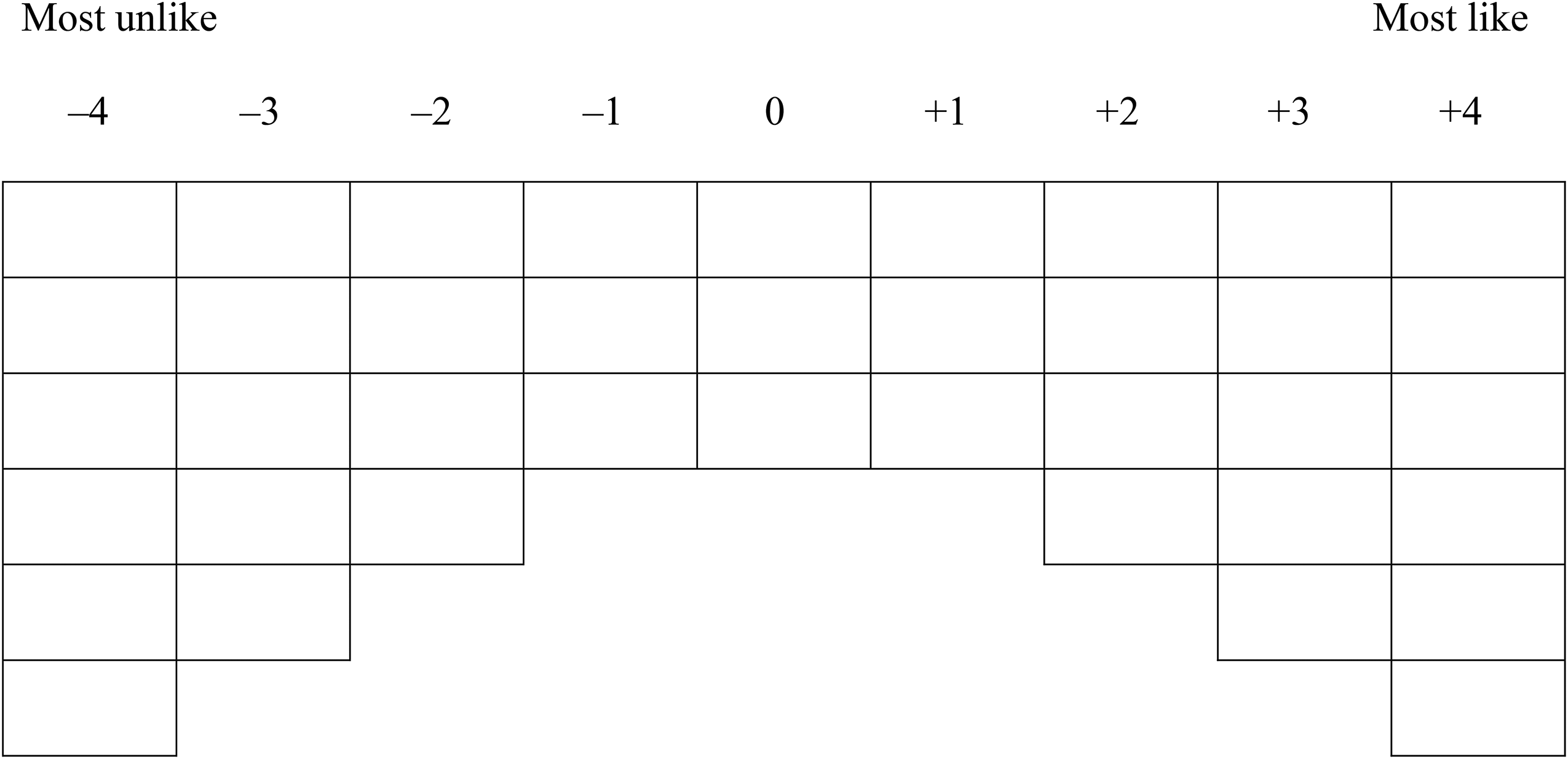
Grid used during Q-sort.
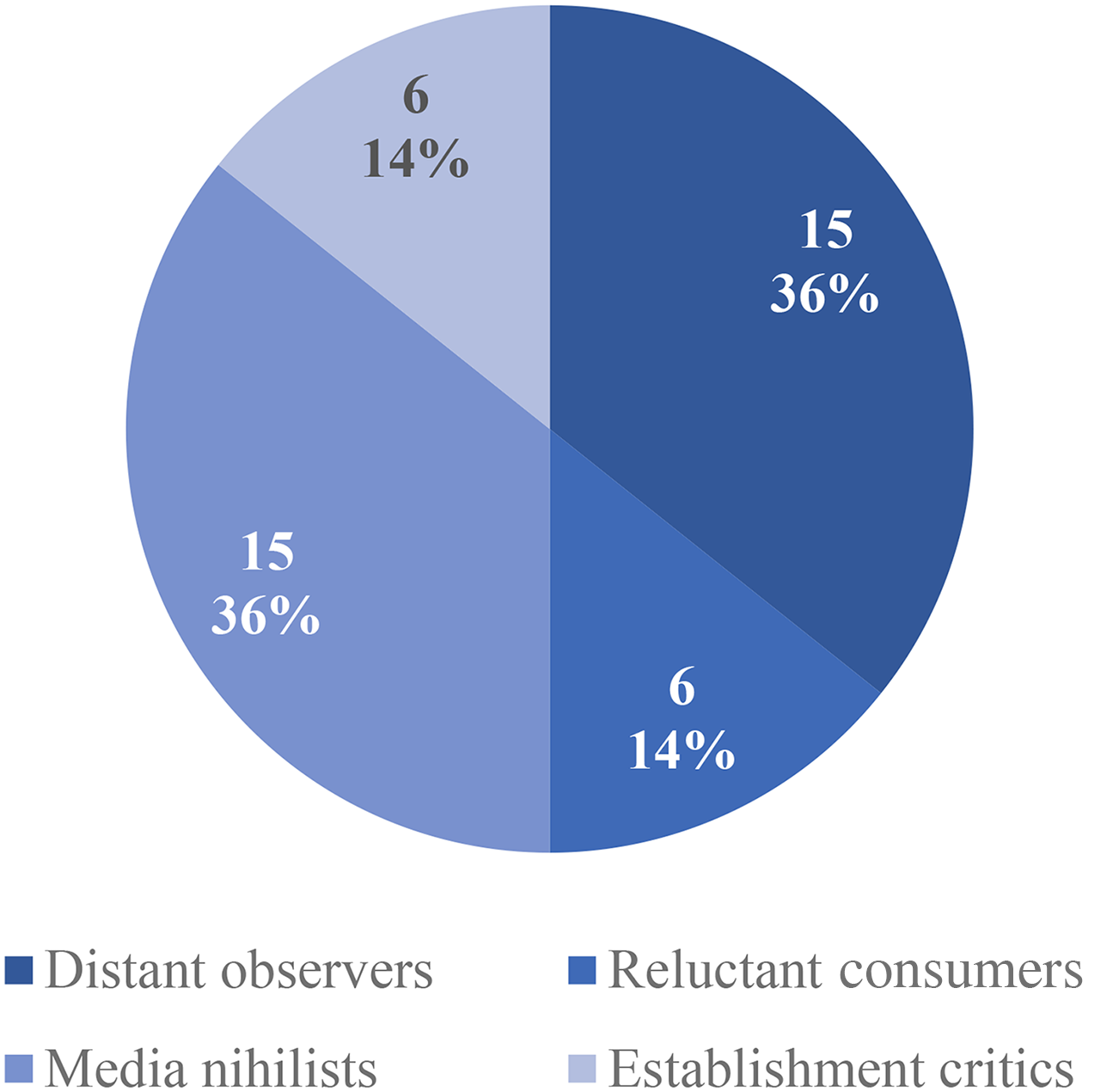
Consumption distribution.
The final part of the interview dealt with reasons for consumption and dissemination. Russia's invasion of Ukraine, and the consequent ban of Russian state-sponsored media, just a few weeks before meant that direct questions about the consumption of Russian media were likely to be met with hesitance or even denial. It is likely that participants were, to a degree, reluctant to immediately disclose their use of and feelings towards these media outlets. To try to remedy this, we asked about alternative media consumption in general, and explicated RT and Sputnik as examples of such outlets. Nonetheless, all the respondents had confirmed RT/Sputnik consumption during the recruitment process, and some spontaneously mentioned them during the interviews.
Results
In the following section, we present two parallel aspects of our results. Firstly, we focus on the ‘political alignment profiles’, which aid us in investigating the degree to which consumers of RT and Sputnik align themselves with different political narratives. These insights are mainly born from the Q-sort procedure. Secondly, we describe results pertaining to the participants’ ‘consumption profiles’, using insights derived from the respondents’ answers to questions about consumption and sharing behaviour. These profiles help us understand the motivations and rationales for accessing RT and Sputnik.
Alignment with Political Narratives
To identify participants with similar statement rankings and assess alignment with the political narratives, we conducted a principal component analysis with oblimin rotation using the ‘Q-sort method’ package (Zabala 2014) in R. This analysis allows for the identification of a number of factors, or ‘profiles’, that explain the variance in the data in a succinct manner.
A three-factor solution was selected as the most suitable, accounting for 42.70 percent of the total variance, as it fulfilled statistical criteria: each factor had eigenvalues above one, a minimum of two loading participants, and their inter-factor correlations indicated that they were appropriately distinct from one another. Moreover, the interpretation of the three-factor solution was deemed the most coherent and sensible by the researchers. The first profile, characterised as an Anti-Woke profile, explained 14.52 percent of the variance in the data. The second, a Progressive Woke profile, explained 14.21 percent of the variance. Lastly, there was a Confident Pragmatist profile that explained 13.96 percent of the variance. The three factors were quite evenly represented, with similar amounts of respondents loading on each (14, 15 and 11 respectively). Three of the respondents did not significantly load on any of the profiles, meaning their opinions could not be meaningfully attributed to a particular political alignment profile.
Table 2 displays the factor array resulting from this analysis. The factor array is a representation of the average ranking of the statements based on Q-sorts of the participants loading on each of the three factors, weighted by their factor loading. It is considered the most important aspect of the analysis, as it depicts the overall opinion trends of participants in the study. The higher the weighted average for each factor on a particular statement, the more representative it is of the factor.
P-set Demographics.
List of Statements and Factor Scores.
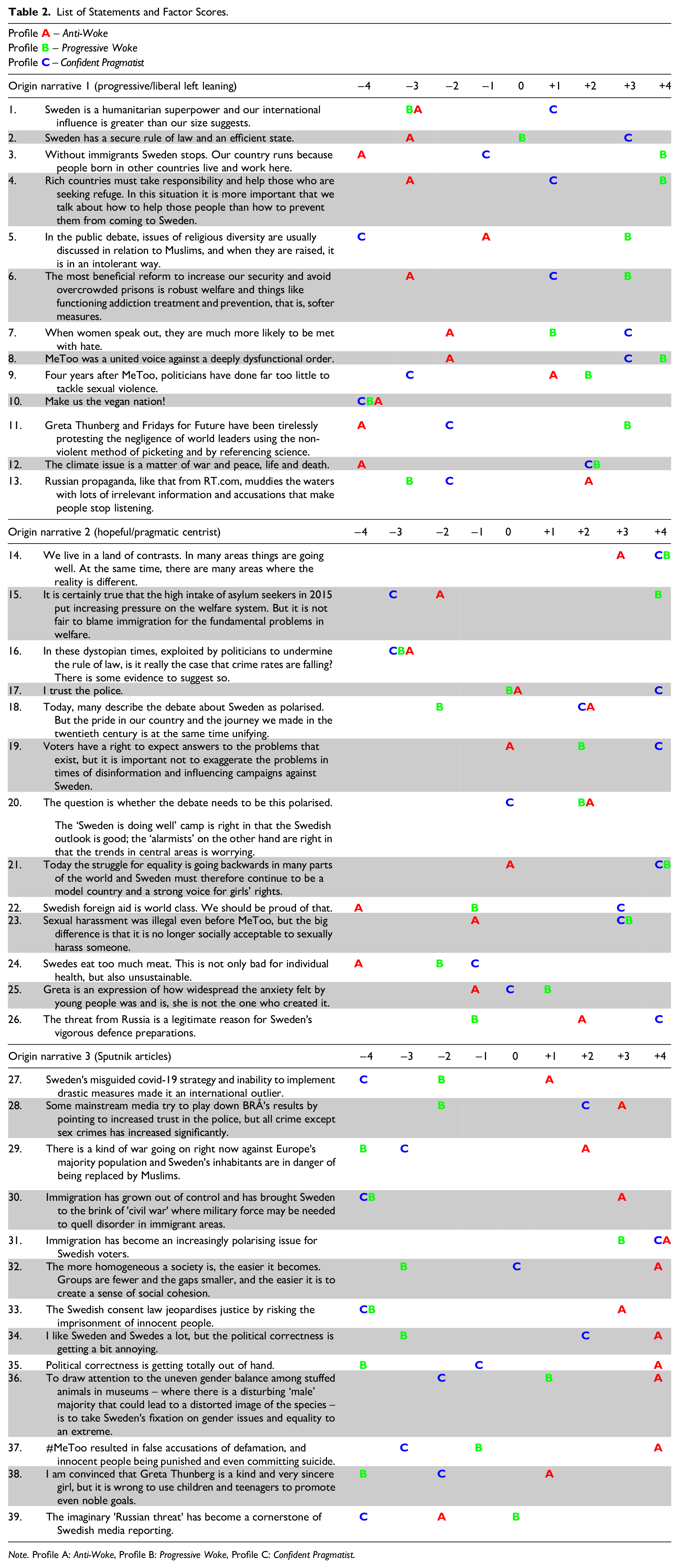
Note. Profile A: Anti-Woke, Profile B: Progressive Woke, Profile C: Confident Pragmatist.
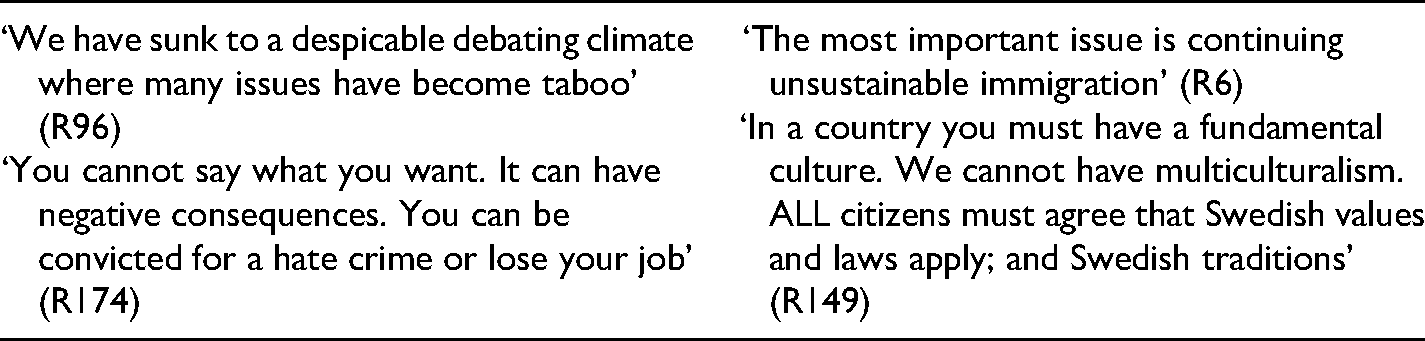
The Anti-Woke profile strongly overlaps with many of the statements arising from the Sputnik narrative. All six of the statements that strongly agreed with (+4) are quotes found in Sputnik articles. The respondents with this profile most prominently favour statements opposing political correctness, but also agree with statements promoting societal homogeneity and criticising the Swedish consent law. Conversely, the Anti-Woke most strongly disagree (−4) with statements from the liberal left origin narrative about immigration and climate issues, but also some statements from the centrist origin narrative. Interestingly, while the Anti-Woke profile seems to generally align with the main talking points found in the Sputnik narrative – criticism of immigration, gender equality and political correctness – it does not signal any pro-Russian sentiment. It even ‘mostly disagrees’ (−2) with a statement about the ‘imaginary “Russian threat”’ and, most strikingly, ‘mostly agrees’ (+2) with the statement ‘Russian propaganda, like that from RT.com, muddies the waters with lots of irrelevant information and accusations that make people stop listening’. This is paradoxical and indicates both a strong agreement with the opinions expressed in Sputnik and RT while also a scepticism towards these news websites. This demonstrates that while participants may seemingly share a lot of ideological standpoints with the content of Sputnik, they are not blind followers and still maintain a degree of distance from such sites. Table 3 lists some quotes from the introductory interview that align with the distinguishing statements of the Anti-Woke profile.
Illustrative Quotes for the Anti-Woke Profile.
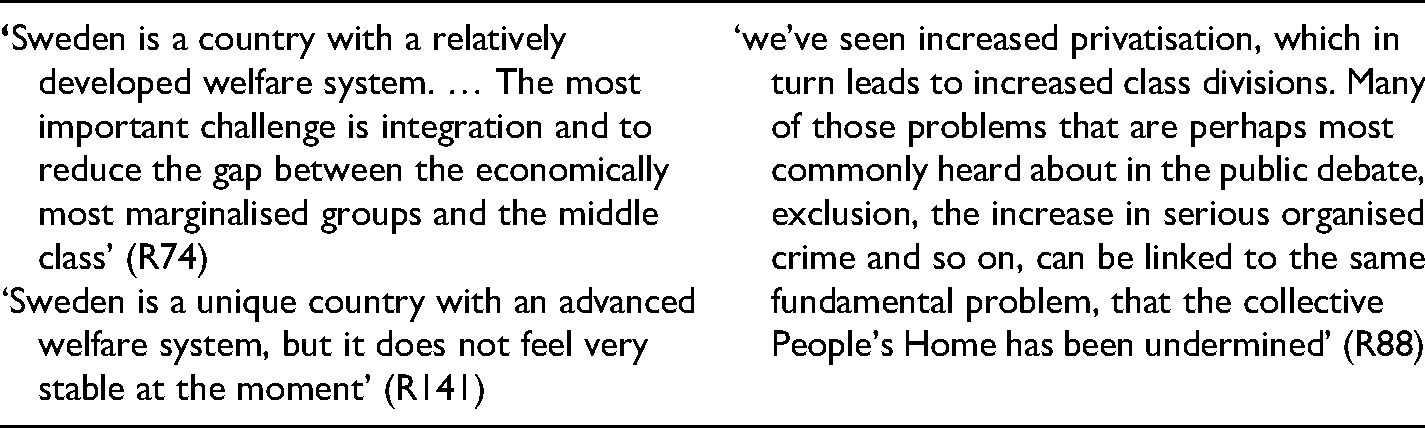
In contrast to the Anti-Woke profile, the Progressive Woke profile is distinguished by positive statements on immigration and gender equality. However, this profile is less radically liberal than the progressive/liberal left origin narrative, from which it takes the majority of its strongest held (+4) opinions. This group also favours several statements from the centrist origin narrative that indicate a more nuanced and pragmatic view of society. The progressive profile is thus liberal in its pro-immigration and equality stance, but at the same time acknowledges existing problems in these areas, especially concerning failed integration. Nonetheless, it refuses to place the entire blame for the fundamental problems of the welfare state on integration. That said, the progressive side of these respondents becomes more prominent when looking at its least agreed statements (−4), and the profile directly opposes the Anti-Woke profile on two statements, on immigration and political correctness. The Progressive Woke is the most progressive of the three but at the same time does not completely correlate with the most radically progressive of the origin narratives. Table 4 presents some quotes from the introductory interview that align with the distinguishing statements of the Progressive Woke profile.
Illustrative Quotes for the Progressive Woke.
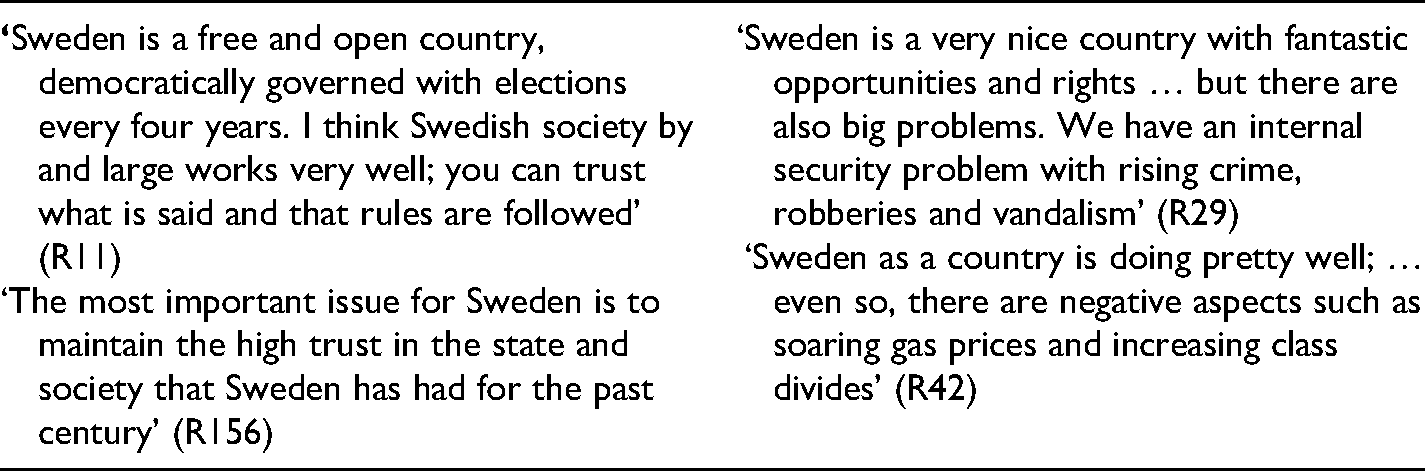
Lastly, the Confident Pragmatist profile is characterised by pragmatic, somewhat nationalist views, a nuanced view of Sweden's problems and a concern with security and gender equality. The respondents roughly correspond with the centrist, hopeful/pragmatic origin narrative identified in our initial analysis of the three media outlets – with five statements from this origin narrative in its ‘strongly agree’ category (+4). At the same time, they also favour statements expressing trust in the authorities, and a belief in Swedish greatness and the importance of defence, giving the profile a nationalist, security-oriented streak. Lastly, the Confident Pragmatist favours several statements about gender equality, indicating that this is the most important liberal issue for this group. The ‘strongly disagree’ category (−4) further reinforces these trends. It shows that the Confident Pragmatist does not agree with the critique of Sweden's Covid-19 strategy, which underlines their nationalism, with criticism of Sweden's consent laws (on gender equality) or with statements that the Russian threat is ‘imaginary’. Table 5 presents some quotes from the introductory interview that align with the distinguishing statements of the Confident Pragmatist profile.
Illustrative Quotes for the Confident Pragmatist.
Consumption Profiles.
Illustrative Quotes for the Consumption Profile Distant Observers.
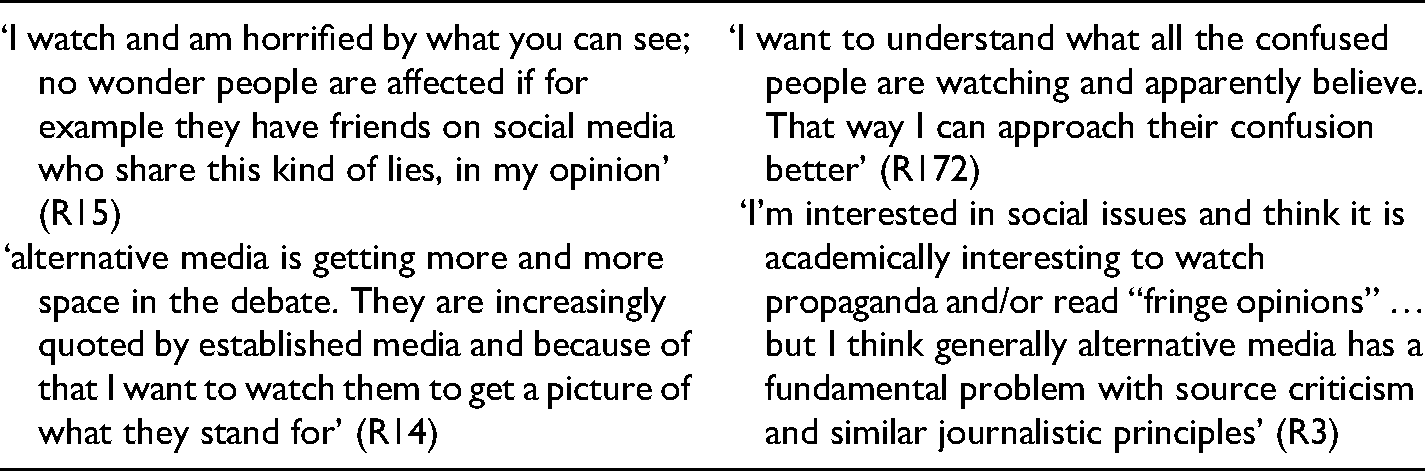
Illustrative Quotes for the Consumption Profile Reluctant Consumers.
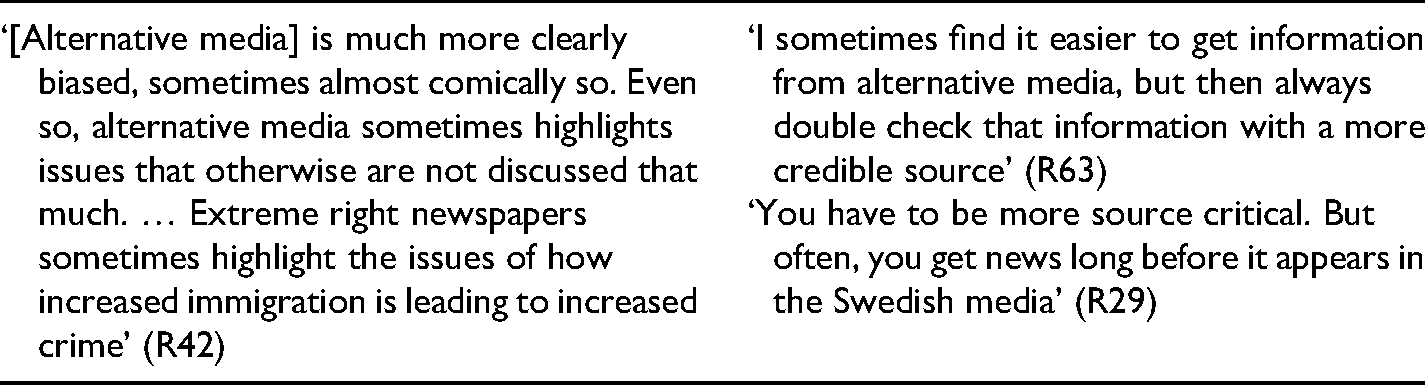
Illustrative Quotes for the Consumption Profile Media Nihilists.
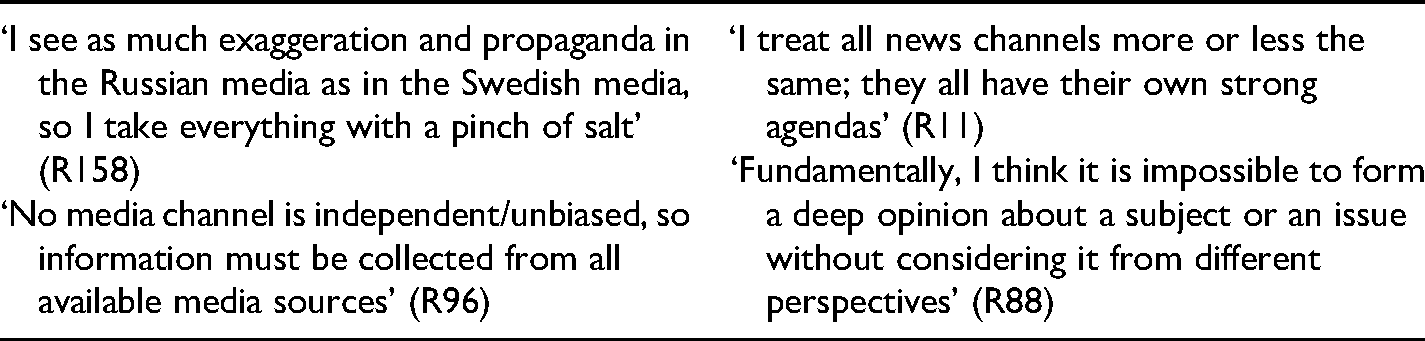
Illustrative Quotes for the Consumption Profile Establishment Critics.
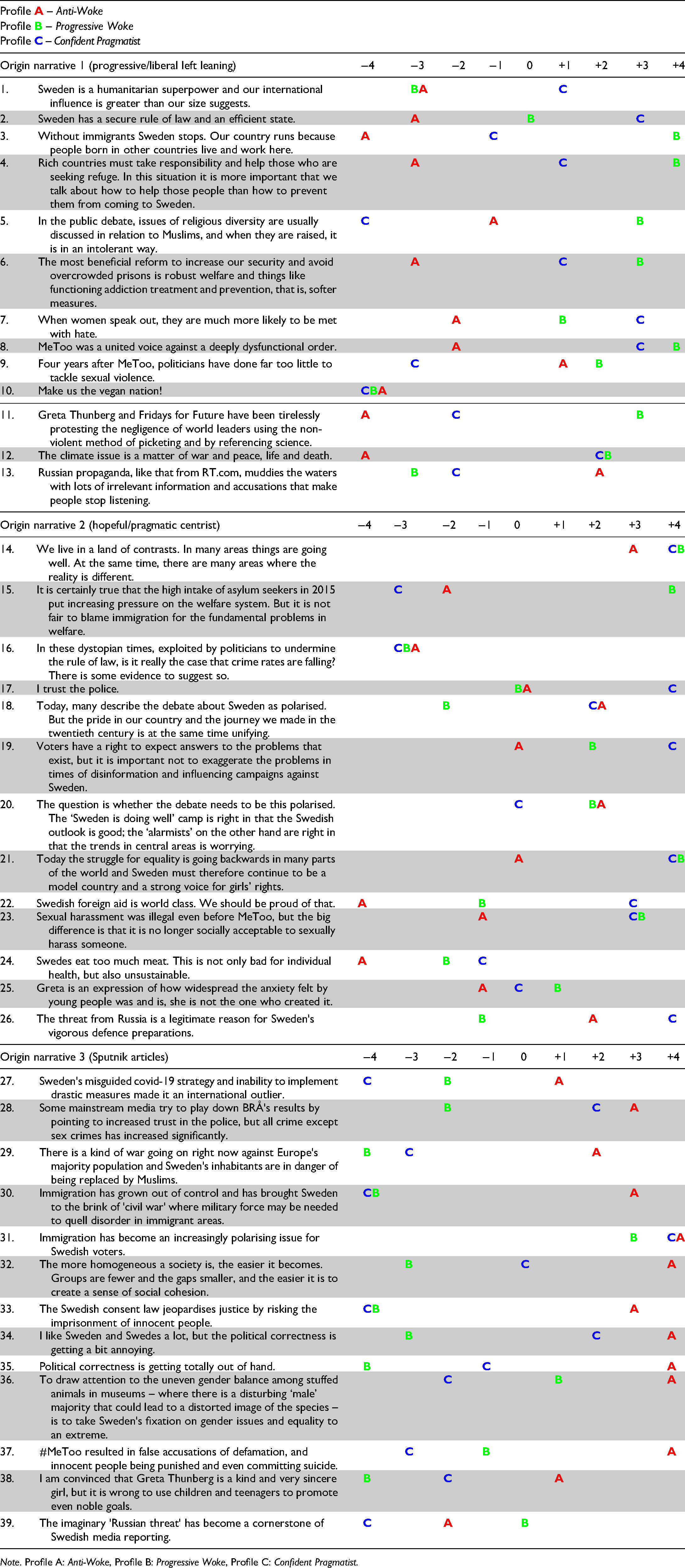
Inspecting the statements that our analysis indicated distinguish each factor, three statements (opinions) united all profiles. First, no profile agrees strongly with any of the statements about climate change or meat eating, which might indicate a common lack of interest in the climate issue. Second, all the profiles agree that the societal issues are not necessarily black or white, and that both problems and benefits arise from Swedish society. Third, regardless of their stance on immigration, all profiles agree that the issue is polarising the nation.
Reasons for Consumption and Sharing
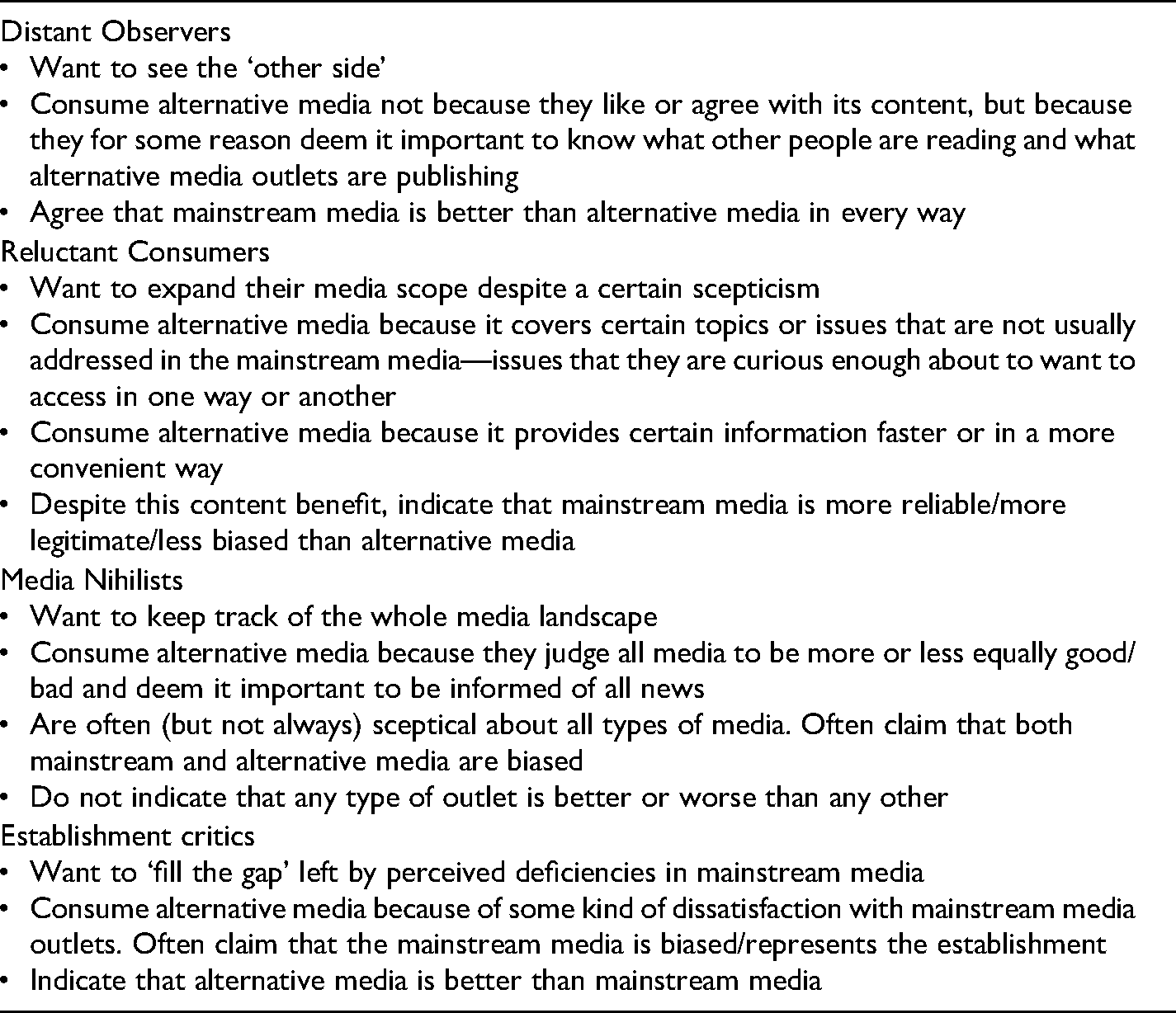
Turning to the results on consumption and sharing, a close reading of respondents’ explanations for consumption led to the identification of four consumption profiles (see Figure 2). Thus, the profiles were derived inductively. This was done with the help of two authors coding the entire material independently one of another, in reference to attitudes to consumption. It was found that each consumption profile presented different reasons for engaging with such content (see Table 6).
Respondents in the first consumption profile, the Distant Observers (see Table 7), are the least interested in the actual content of alternative media but seem to be mostly focused on what other people are consuming. At the same time, they do not agree with the content or journalistic practices of alternative media. Some were highly critical of other readers of alternative media, or even frightened of them. On the other hand, some were a bit more understanding of people with different opinions.
Respondents with the second consumption profile, the Reluctant Consumers (see Table 8), seemingly begrudgingly consume some alternative media in search of a specific kind of content. They are all seeking information that cannot be found in the mainstream media, while at the same time making it clear that they do not trust alternative media as a legitimate news source. Alternatively, they use alternative media for its perceived convenience and speed.
The third consumption profile, Media Nihilists (see Table 9), considers all media to be more or less equal and thus equally watchable or readable. Most respondents with this profile are generally sceptical about all media. Some are very extreme in their scepticism, whereas others seem to be more relaxed, claiming that each side simply provides a different viewpoint. Common to all respondents, however, is the view that the only way to get unbiased information is to consume all available news media and then form an independent opinion.
Respondents in the last consumption profile, the Establishment Critics (see Table 10), perhaps best correspond with the stereotypical alternative media consumer. These respondents see alternative media as a superior alternative to the mainstream, which they view as corrupt, biased and too politically correct. Some participants with this profile not only expressed their dislike of the content on the mainstream media, but even charged it with suppressing certain information. Others could see the flaws in alternative media but still preferred it to mainstream alternatives because of the greater freedom of opinion.
Finally, we asked about dissemination habits. Wagnsson (2022) found that RT/Sputnik consumers shared media content somewhat more frequently and carelessly than non-consumers. This was also illustrated in this study. All respondents except two stated that they disseminate alternative media content and reported that they do so because they consider the content to be important, interesting, or in some way significant. Three out of four explained that they share to engage with others, to start a discussion, or to present another perspective on the topic, and one-third claimed that they share for fun or a reason in some other way linked to entertainment.
Discussion
This article has researched the allure of English-language state-funded international broadcasters for audiences in democratic states. The investigation was triggered by a research puzzle: previous research has established that RT/Sputnik spread hostile narratives, but who consumes, believes and spreads them?
The article makes two distinct but related contributions to knowledge about the identity of audiences for alternative media. First, we set out to more closely examine if and how consumers ideologically align with Russian state-sponsored messaging. Here, converging with findings of previous research (Wagnsson 2022), the study confirmed that a segment of the Swedish RT/Sputnik audience mainly aligns with the outlets’ messaging (the Anti-Woke). However, others were attracted despite not aligning ideologically. While some (the Confident Pragmatists) indicated varying levels of agreement in some respects, one profile directly opposed most of RT/Sputnik's output (the Progressive Wokes).
While a large contingent did fit the stereotypical image of anti-establishment alt-right media consumers, they were not the majority. The largest segment of RT/Sputnik consumers only partially or barely agreed at all with the output, and only some themes, such as rising crime or political correctness, appeared to pick up (slight) levels of agreement across all profiles. Interestingly, those who most strongly agreed with the ideas projected – the Anti-Woke – were also those who most strongly admonished the outlets as muddying the information space, showing that while there is a high degree of ideological overlap, they are not uncritical followers of the outlets. In this, these findings support Crilley et al. (2022), who emphasise the diversity and fragmentation of Russian state-sponsored media consumers.
Second, the research identified four media consumption profiles: Distant Observers, Reluctant Consumers, Media Nihilists and Establishment Critics. These are ideal types characterised by overlapping views. Nevertheless, sorting consumers into one of these groups aids in understanding the variety of motivations for consumption. Establishment critics are the ‘hardcore’ consumers who align with the messaging and turn to these outlets because they are critical of traditional media and the establishment. More surprisingly, the investigation brought to light readers who do not align themselves with Russian messaging and recognise the doubtful quality of the platforms but still choose to engage. This indicates that Russia has, at least to some extent, succeeded in its ambition to make state-backed propaganda appear like attractive and normal journalism (Rawnsley 2015).
The prevalence of Media Nihilists among Swedish consumers resonates with Schwarzenegger's (2021) identification of consumers who recognise the biases in alternative media but trust in their own abilities to filter them out. Media nihilists resemble Schwarzenegger's Completists, a type with rather low trust in both legacy and alternative media, who strives towards a fuller picture through broad and varied consumption. Alternatively, these Media Nihilists could be a sign of source criticism being applied partially or halfway; some consumers might feel confident viewing all media with scepticism, without going a step further by trying to differentiate between news outlets that simply provide alternative content, on the one hand, and genuine state propaganda, on the other. The Reluctant Consumers, in turn, partly mirror a profile identified by Noppari et al. (2019) who occasionally browsed counter-media websites for pleasure, or as a source of supplementary information. The present study, however, found what appeared to be more active consumers who are not necessarily discontented, but turn to alternative media for other reasons, including practical ones, despite an awareness of their downsides. They differ from Media Nihilists in clearly recognising the poor quality of alternative media. Finally, a particular contribution is the identification of Distant Observers, who view themselves as a sort of control function, seemingly experiencing satisfaction and taking pride in keeping an eye on the other side. They differ from reluctant consumers by placing a value on understanding ideas that they do not support themselves. For example, one distant observer stated: ‘I think that it is academically interesting to read propaganda and fringe opinions. It is interesting beyond what I think myself. It says something about the world. A development in society. An indication of currents of ideas in society’ (R3). This finding parallels and confirms Schwarzenegger's (2022) identification of the ‘reconnaissance user’ among German consumers of alternative media, a user-driven by a ‘peculiar’ motivation to learn about what is going on amongst people of opposing opinions, striving for ‘insight and overview’, and sometimes a lust to confront or a will to sincerely understand others.
The prevalence of Distant Observers and Reluctant Consumers is interesting in light of the heavy Swedish reliance on preventive measures, including source criticism (Sundin 2015). These measures might have made Swedes adept at evaluating unreliable media content. On the other hand, if overconfident about their skills, consumers risk being caught in a false belief that they can consume alternative media without being deceived or influenced. Recent research demonstrates that audience attitudes on some issues can be altered towards the narrated stance by messaging from Russian-affiliated news sources, even after being informed of the messaging's origin and likely hostile intent (Carter and Carter 2021; Fisher 2020; Saunders et al. 2022). Furthermore, research has shown that even a single exposure to a false statement on Facebook increases the probability of it being believed when it is repeated (Pennycook et al. 2018). Thus, even consumers intending to ‘keep an eye on the other side’, or a view to broadening their media repertoire to achieve comprehensive knowledge, risk being unwittingly persuaded.
In addition to revealing the diversity of RT/Sputnik consumers, our findings might provide a clue as to what makes authoritarian state-funded international broadcasters effective. Specifically, they indicate that they do not need to be seen as legitimate; only as legitimate enough. For Media Nihilists, RT and Sputnik do not need to hide their pro-Russian bias to be included on their list of sources, as all media is considered biased anyway. They only need to be seen as established enough to be taken as (not-)seriously as other media. Among Distant Observers and Reluctant Consumers, RT and Sputnik need only be considered equal to domestic alternative media to be considered read/watchable, because although this audience is sceptical about the content, they undeniably consume it. Thus, the success of RT and Sputnik and similar outlets might lie in their ability to disguise their connection to the Russian government – to be seen as just another alternative media outlet with alternative opinions and a natural part of the public discourse, rather than Russian state propaganda. The extent to which authoritarian state-sponsored media outlets have become a normal part of the media diet for audiences in democratic states remains to be seen in future research. Nonetheless, as stated above, previous research indicates that normalisation has at least been a key aim of RT (Crilley et al. 2020).
In further assessing the extent to which English-language state-funded international broadcasters can threaten democratic states, our research draws attention to audiences as disseminators. Our findings confirm that many respondents are attracted to RT/Sputnik for the sake of entertainment (Saunders et al. 2022). Nonetheless, most found significant value in the media content beyond sheer distraction. In contrast with Crilley et al. (2022), this study indicates that consumers actively engage with RT/Sputnik content and see it as valuable in some sense, to the extent that they like to share important information from their consumption with others.
In discussing our results, it is important to critically reflect on aspects of our methodology. Firstly, the study examines a small sample size, which is both in its favour and detriment. Analysis of a smaller sample afforded us the ability to more granularly scrutinise the alignment and consumption profiles of a pertinent group of media consumers, which was ultimately the intention of the research. However, analysing such a small group also limits the finding's generalisability, both nationally in Sweden, and internationally. Yet, given the centrality of national political culture and national media consumption patterns, these findings need to be substantiated in future research in other democratic states. One might plausibly predict that our conclusions may map onto other countries; research by Reuters Institute, for example, has revealed that many of the motivations for consumers to access alternative media are consistent across nationalities (Newman et al. 2018). However, studying countries with larger Russian-speaking populations or who have stronger cultural links to Russia, such as the Baltic states or certain countries in the Balkans, may confer different results regarding audience motivations to access specifically Russian state-sponsored media.
The research also took place at a contentious time geopolitically, with Russia invading Ukraine mere weeks before data collection. These developments likely had at least some impact on the candour of the respondents, something impossible to avoid despite participation being anonymous. It is therefore not unreasonable to speculate that the extent of their consumption could be higher, and their motivations perhaps slightly different, than that disclosed during the study due to these contextual factors.
However, even considering these methodological reflections, recognising that there are nuances in what motivates citizens to engage with and then spread content from hostile Russian media is important, and provides valuable findings that are crucial for developing effective policies or countermeasures to address the potential damage. Our results underscore that it is vital that RT/Sputnik audiences are not approached as a monolith of like-minded consumers, but recognised as a patchwork of motivation and engagement profiles. This diversity should be mirrored in the initiatives or measures created by practitioners to address Russian influence. For example, while both Establishment Critics and Distant Observers engage with antagonistic Russian content and are at risk of being influenced by this content, the disparity in their profiles means that different approaches are likely to be needed. Research such as the current study should motivate the development of methods of engagement with the audiences that are tailored to the specific characteristics of the different consumption profiles. In sum, in response to scholars who called for a better understanding of audiences for Russian international broadcasting, this article has revealed a multifaceted Swedish RT/Sputnik audience that either willingly or reluctantly consumes and helps to boost Russian messaging. We have also underscored the risk of being influenced, regardless of intention.
Footnotes
Declaration of Conflicting Interests
The author(s) declared no potential conflicts of interest with respect to the research, authorship, and/or publication of this article.
Funding
The author(s) received no financial support for the research, authorship, and/or publication of this article.
