



Abstract
Background and Research Aims
Biodiversity loss is a recent global crisis largely due to intense anthropogenic pressures. A study was conducted in Wenchi highlands in the late 2020 and early 2021 to explore the major challenges and opportunities for biodiversity conservation.
Methods
Data were collected using semi–structured questionnaires, focus group discussions and direct observations from four relatively accessible highland villages. The questionnaires were administered to 395 randomly selected household farmers based on their accessibility, presence of natural forest remnants and proximity to an iconic Lake Wenchi.
Results
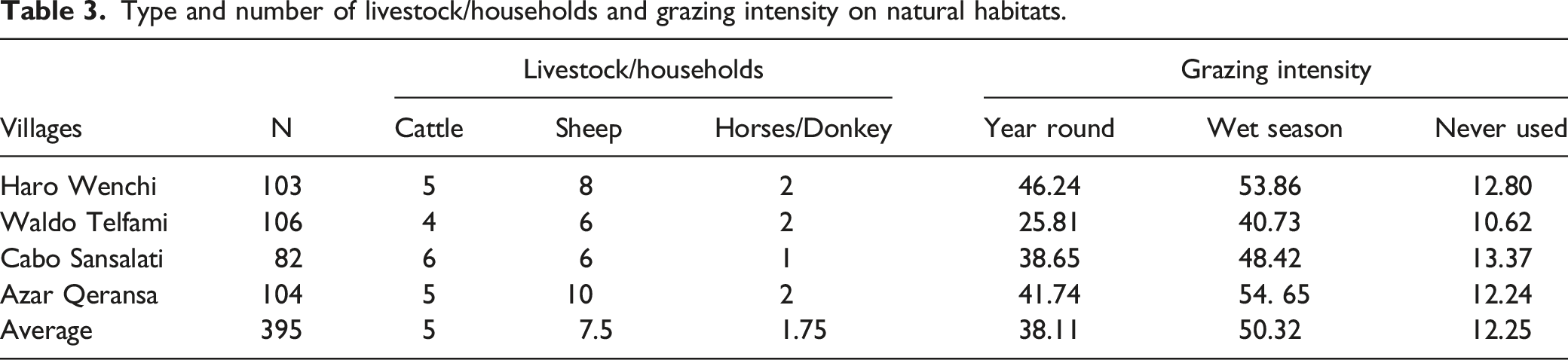
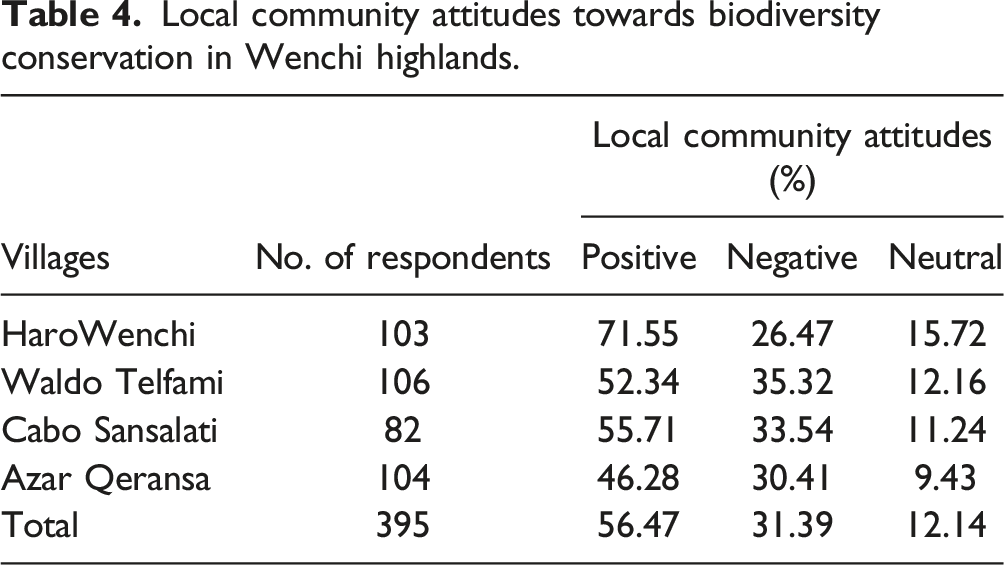
The types of natural resource utilizations (χ2=87.94, df=4, P < 0.05) and the attitudes of the local community varied among the respondents (χ2=110.92, df=2, P < 0.05). The majority of the respondents used the natural resources as sources of firewood (70.19%) and for cattle grazing (63.51%). Most of the community members (56.47%) had a positive attitude towards biodiversity conservation. Only 12.14% had no idea about biodiversity conservation. The study also identified land-use changes, exotic plantations, soil erosion, illegal land grabbing, and burning of ericaceous belts as the major conservation challenges in the area. The severity level of conservation threats also varied significantly (χ2=243.519, df=6, P < 0.05). Overgrazing, firewood collection and land-use changes were the most serious biodiversity challenges. A unique topographic beauty, rich floras and faunas, recent global and regional recognitions, positive outlooks of the local people, and ecotourism development projects in the area were the main possible conservation opportunities.
Conclusion
Anthropogenic activities severely threatened Wenchi montane forests and wildlife therein. Potential conservation opportunities in the area, however, opens up the door for future conservation actions.
Implications for conservation
Wenchi highlands face severe conservation threats and need urgent conservation priorities and actions.
Keywords
Introduction
Biodiversity loss is increasing at an alarming rate across the globe (Mamabolo et al. 2020). Many of the pristine environments are long gone through habitat degradation and fragmentation (Martin et al. 2012; Torre et al. 2014). Thus, mosaics of agricultural land interspersed with remnant forest patches are now the norm in many tropical countries (Garcia et al. 2009), and preventing further biodiversity loss is one of the most pressing challenges of mankind (Pozo et al. 2021). Habitat fragmentation attracted worldwide public concern because it modified most of the natural habitats through habitat isolation and reducing habitats, and led to the rapid loss of biodiversity (Mesquita & Passamani, 2012).
African biodiversity is largely concentrated in human-dominated landscapes (Tyrrell et al. 2020). Most of the natural habitats in the Ethiopian highlands have also a high level of mammal endemism though they are threatened by intense and irreversible anthropogenic impacts (Abune, 2000; Fekadu et al. 2015; Lavrenchenko & Bekele, 2017). These anthropogenic pressures either fragmented or destroyed numerous natural wildlife habitats and their biodiversity (Musyoki et al. 2012; Kasso & Bekele, 2014; Petros et al. 2016; Legese et al. 2019; Abrehe et al. 2020). Many of the endemic mammals of the country in particular are heavily threatened (Lavrenchenko & Bekele, 2017). Such problems are much higher in areas outside protected areas (PAs). Although there is a consensus that protected areas alone are insufficient for conservation, conservation activities in the continent are still only focused on these (Garcia et al. 2009; Debby & Dick, 2012; Tyrrell et al. 2020).
In recent days, conservation advocates such as Convention on Biological Diversity (CBD) are pressing hard for the recognition of conservation initiatives beyond PAs (CBD, 2018; Tyrrell et al. 2020; Alves-Pinto et al. 2021). This has led to a shift in conservation measures, and the provision of equal conservation weights for natural habitats outside protected areas (Caro, 2001, 2002; Debby & Dick, 2012). Such conservation approach gained a momentum as it recognizes farmers as stakeholders in conserving biodiversity and actively solicits them as partners (Garcia et al. 2009; Pozo et al. 2021).
Wenchi highlands are among the pristine environments that are facing stiff conservation threats, and require thorough assessments for biodiversity conservation challenges, opportunities and other related studies. The montane forests around Lake Wenchi offer a natural habitat to various birds and mammals (Shale et al. 2014). However, these highland environments faced severe environmental degradation that threatened the health and livelihoods of the nearby community (Shale et al. 2014). As a result, natural forests are fragmented into numerous patches, and most of the medium to large-bodied mammals are pushed out from the remaining forests. The survival of species in modified habitats depends on the species ability to use available fragmented landscape units (Martin et al. 2012).
The wildlife conservation of Ethiopia is facing an intricate and complex challenge that needs to be addressed (Abune, 2000). Filling conservation knowledge gaps and improving conservation predictions are persistent technical challenges in conservation sciences (Hoffmann, 2021). Thus, making conservation information publicly available is the first step to solve this problem. However, there is no scientifically documented information on the challenges for biodiversity conservation in Wenchi highlands. Assessing the existing conservation opportunities has also far-fetching significance for conservation measures. Therefore, this study was aimed to document major conservation challenges and opportunities for biodiversity preservation in Wenchi highlands.
Methods
Study area description
The study was conducted in Wenchi highlands, southwest Shewa Zone, Oromia region of Ethiopia. The area is located between Ambo and Waliso towns, 155 km away from the capital, Addis Ababa (Figure 1). It is positioned between 2,810 to 3,386 m asl altitudinal ranges. The area is characterized by highland sub-humid climate with an average annual rainfall of 1410 mm (Shale et al. 2014; Tufa et al. 2020). The area receives unimodal rainfall type with a longer rainy period from May to September. The peak rainfall occurs in July and August, while the cold–dry season occurs between October and January (Tufa et al. 2020). The temperature of the area varies between 14 to 26oC during the day and falls below 10oC at night (Degefu & Schargel, 2015). It also varies between 18oC to 25oC during the wet and dry seasons, respectively (Degefu et al. 2014). Map of the study area (Adopted from Tufa et al. 2022).
Lake Wenchi is among the few remaining fairly pristine high–mountain crater lakes in the central highlands (Degefu & Schagerl, 2015; Tufa et al. 2020). The area also owns the 15th century Monastery, mineral waters and hot springs (Degefu et al. 2014; Shale et al. 2014). Lake Wenchi watersheds are characterized by a sub-afro alpine vegetation type. The area is one of the popular tourist attractions and interesting ecotourism destinations of the country. As a result, the government of Ethiopia has launched ecotourism development initiative at Lake Wenchi watershed in 2021 as part of Gebete Lehager projects. Albesa Forest is another natural forest patch located outside Wenchi Lake escarpment in Cabo Sansalati village.
The main livelihoods in the area are mixed agriculture – crop cultivation and livestock rearing, small and micro-enterprises, and ecotourism (Shale et al. 2014; Tufa et al. 2022). The average land holding size for a single household is 0.5 ha, and the major crops grown in the area are enset (Ensete ventricosum), barley (Hordeum vulgare), wheat (Triticum species), and potato (Solanum tuberosum) (Shale et al. 2014). Like other highland farmers of the country, Wenchi highlands are a highly populated areas in the district (District Land Administration Office, 2020 unpl.), and farming and harvesting is performed by traditional technologies.
Ethical statement
The study adhered to the legal requirements of Ethiopia, and permission to carry out the study was obtained from the Department of Zoological Sciences, Addis Ababa University. Informed consent has been obtained verbally from all individuals included in this study. The study participants were also guaranteed that their responses are confidential and only used for this study.
Data collection
Primary and secondary sources of data were used to collect information about biodiversity conservation challenges and opportunities in Wenchi highlands. Primary data were collected using semi–structured questionnaires, focus group discussions, and direct observations. Secondary sources of data included journal articles, websites, and reports.
Wenchi district contains a total of eight highland villages – Haro Wenchi, Shagag Gafare, Waldo Telfami, Damu Dagale, Azar Qeransa, Cabo Sansalati, Merega Abayi and Odo Fura. Of these, four highland villages: Haro Wenchi (856 households), Waldo Telfami (783), Azar Qeransa (860) and Cabo Sansalati (681) were considered for this study because they are relatively accessible, contain natural forest remnants, and neighboring to an iconic Lake Wenchi. Haro Wenchi is a classic highland ecosystem with the highest elevation at Mount Wenchi (3,386 m asl), and Wenchi crater lake.
Household samples were computed using the formula,
A semi–structured questionnaire was designed in the way that enables the collection of relevant information. Both open and closed ended questions were prepared in English and administered using the local language, Afan Oromo. Each interview was conducted by one of the researchers and his field assistant for approximately 30 min in the late 2020 and early 2021. The questionnaire was composed of three parts. In the first part, demographic profiles, such as age, number of family members and level of education of the respondents were collected. The second section gathered information on the kind of natural resource used from the forests, and the attitudes of the local community towards the conservation. In the last part, conservation threats, their severity levels, and other related questions were presented.
Focus group discussions were conducted with key informants (village administrators, agricultural extension workers and selected farmer representatives) in the study villages to strengthen the information gathered through questionnaires. In the study villages, from 5 to 10 individuals participated in FGD. In addition to the above informants, ecotourism guides also participated in Haro Wenchi FGD. Focus group discussions were led by the researcher, and informants were encouraged to share their ideas openly and freely. Participatory discussions were made based on the summary of the semi-structured questionnaire that was prepared and filled in the interviews. Discussions were made on the dynamics and importance of the forest remnants, why the local people rely on its natural resources, the knowledge and attitudes of the local community towards biodiversity conservation, the prevailing conservation challenges and possible conservation opportunities and measures.
Moreover, direct field observations were carried out in order to personally confirm and document the specified prevailing conservation threats and opportunities in interviews and FGD. The number of firewood exploiters were also recorded during the direct observations. Individuals that were directly engaged on firewood collection, heading to forest with firewood collecting instruments such as ropes and axes, and carrying firewood were considered as firewood exploiters.
Data analyses
Quantitative data obtained from semi–structured questionnaires were analyzed using appropriate statistical methods such as percentage, and Chi–square test. Chi–square (χ2) tests were used to verify the possible variations in the socio-economic profiles and the responses of the participants. All statistical data were analyzed using SPSS version 21 (SPSS, Inc. USA), and probability values were considered statistically significant when P–value is
Results
Sociodemographic profiles
Socio-demographic profiles of the study participants.

Most (84.8%) of the respondents supported their livelihoods through mixed farming practices. Only 15.2% of the respondents in Haro Wenchi village generated additional income through ecotourism. There were significant differences in the perceptions of the local community towards biodiversity conservation with respect to their level of education (χ2=411.79; df=2, P < 0.05), economic activity (χ2=36.26; df=1; P < 0.05), farmland size (χ2=140.21; df=2, P < 0.05) and family size (χ2=88.43, df=2, P < 0.05). However, there were insignificant differences with respect to age (χ2=2.79, df=3, P > 0.05), sex (χ2=0.109; df=1, P > 0.05), and duration in the area (χ2=2.791; df=2, P > 0.05).
Responses on natural resource utilizations
Types of natural resource utilizations by the local people in Wenchi highlands.

Type and number of livestock/households and grazing intensity on natural habitats.
Local community attitudes towards conservation
Local community attitudes towards biodiversity conservation in Wenchi highlands.
Biodiversity threats with their severity levels in Wenchi highlands (N= 395; HW = Haro Wenchi).

Conservation challenges from FGD
The key informants recognized the importance of the forest remnants to the local community as a source of firewood, construction materials, grasses for thatching and animal fodder, and livestock grazing areas. The discussants also believed that the forest coverage of the area is alarmingly shrinking, many wild animals are exterminated and the climatic conditions of the area is changing with time. They suggested that these problems are the consequence of irresponsible and unsustainable use of the natural forests by the local people. Firewood collection, farmland expansions, human settlement and overgrazing were the predominant biodiversity threats identified by the discussants. Exotic plantations, construction materials and human induced fire were the remaining conservation challenges raised during FGD. The discussants consider illegal land grabbing along the lake shores as a good opportunity than a threat to biodiversity.
Conservation challenges from field observations
Direct field observations confirmed the biodiversity threats mentioned by the respondents and key informants. Soil erosion, illegal land grabbing around lakeshores, insufficient information and monitoring, and household poverty due to small land size were additionally recorded conservation challenges to Wenchi biodiversity. Fuelwood collection, farming land expansions and overgrazing were relatively the most commonly observed biodiversity threats with varying intensity among the forest remnants. The area on the entry to Lake Wenchi and downstream forests is dominated by the matrix of Hagenia trees and absorbs maximum anthropogenic pressures as it is at proximate distance to the residential areas. It was constantly accessed by the local communities for fuelwood collection and cattle grazing. This area is also threatened by fragmentation and soil erosion (Supplemental B).
Qibate Forest was impacted by systemic firewood collection, overgrazing and extraction of forest products for other purposes. The claims by the local communities and some key informants that this forest is rarely exploited and local militias inspect the exploitations was false. In contrast, individuals were routinely observed carrying forest products intended for construction purposes and firewood during the study periods. Furthermore, grounded trees for firewood exploitation and construction uses were also encountered in the forest (Supplemental A). On average, more than ten firewood exploiters were seen in this forest during the wet season.
Albesa Forest was the second most exploited natural habitat, while Erica shrubland was the least. Firewood exploiters were either for home consumption or as a source of income by selling it to the urban residents who are in much need of it, particularly in the winter seasons. The former usually carry on their back to satisfy their household needs, while the latter were observed in numbers and assisted by children and donkeys. Lakeshore forest was also threatened by firewood extraction where firewood collections were aided by locally made boats. There was also an incident of charcoal production at the outskirts of Albesa Forest, which was the first observation in Wenchi highlands.
Conservation actions and opportunities
The respondents in Haro Wenchi village claimed that there is a relatively suitable conservation practices and an increase in the local community awareness after the establishment of ecotourism association in the area. There is also job creation in this village. According to these informants, cutting of live and indigenous trees, and exploitations of forest products for construction materials from Qibate Forest are prohibited as a means of forest conservation. They also suggested that local militias are responsible to inspect and control such malpractices.
The participants also recognized the needs of conservation priorities for the forest remnants through integrated conservation and development project options such as ecotourism. They also recommended that the regional and federal governments should develop conservation laws and directions, introduce initiatives of replanting certain areas, demarcate some of the areas either as forest priorities or reserve area, scale up environmentally friendly investments, create conservation awareness, and increase the local community involvements. Any conservation and ecotourism activity should be implemented in the ways that it can improve both the sustainability of the natural habitats and the living standard of the local community. The construction of terracing in the uplands through community participation was an encouraging effort in reducing the effects of erosion and fragmentation in the lower grounds. Such soil conservation activities should also be scaled up to the remaining areas.
Possible conservation opportunities for Wenchi highlands biodiversity.

Discussion
Local people in Wenchi highlands acquire different natural resources from the forest remnants either as recreation and enjoyment, income source, grazing area, source of construction materials or fuelwood. Countless forms of natural resource utilizations by the local community even from PAs is widely documented in different parts of Ethiopia (Yihune et al. 2009; Petros et al. 2016; Wale et al. 2017; Alemkere, 2018; Biset et al. 2019; Kiros & Bekele, 2021). Nonetheless, the unwise use of natural resources and other anthropogenic activities are responsible for a global biodiversity crisis (Frick et al. 2019).
Information obtained from the selected households, focus group discussion, local administrations and direct observations revealed that overgrazing, land-use changes, firewood collection, replacements of natives by commercial exotic plants, human induced fire, and illegal land grabbing were the major biodiversity threats in Wenchi highlands. Most of these threats were also reported across Ethiopia from both protected areas (Berihun et al. 2016; Petros et al. 2016; Mekonen et al. 2017; Kiros & Bekele, 2021) and outside these areas (Kasso & Bekele, 2014; Legese et al. 2019), and elsewhere (Munns, 2006; Imre & Derbowka, 2011). Several anthropogenic activities have threatened biodiversity through habitat loss and modifications (Musyoki et al. 2012; Kasso & Bekele, 2014; Legese et al. 2019). This is exacerbated by the rapid population growth, and the rise in demands of natural resources in most African countries including Ethiopia (Wale et al. 2017; Alemkere, 2018).
Land–use changes for agricultural production and human settlement are the main biodiversity threats in Wenchi highlands. This is in agreement with several reports in Ethiopia (Abune, 2000; Abrehe et al. 2020; Kiros & Bekele, 2021) and elsewhere (Mamabolo et al. 2020). The conversion of natural habitats for agricultural expansion is one of the most significant land-use changes in the world (Frick et al. 2019), and is primarily associated with higher crop productivity of these areas than farmlands (Kiros & Bekele, 2021). A very small land holding size of the study area farmers (0.5 ha per household) might force the farmers for additional farming areas (Shale et al. 2014).
Firewood collection is one of the major biodiversity threats in Wenchi highlands. Similar findings were also reported from different parts of Ethiopia (Legese et al. 2019; Abrehe et al. 2020). This is because the majority of the rural communities do not obtain electricity, and rely on fuelwood as sources of energy. Poor people also have no alternative income sources and use firewood and charcoal production as the best means of revenue generation (Legese et al. 2019; Kiros & Bekele, 2021). The proximity of urban areas to forested areas has also increased the intensity of forest destruction by fuelwood collection. Continuous livestock grazing is also a predominant biodiversity threat in Wenchi highlands. Overgrazing is known to affect the demography, population structure, spatial range of individuals and species, changing the community structure (Kasso & Bekele, 2014; Abrehe et al. 2020).
Human induced fire occurs in ericaceous belts of Lake Wenchi watershed. Burning was associated with the local communities’ agricultural farming land expansions. This result agrees with the finding of Horncastle et al. (2019). However, it was for pasture management, to discourage hazardous wild animals, to create human or livestock pathways, to reduce tsetse fly infestations and for wild honey collection in Gibe Sheleko National Park (Kiros & Bekele, 2021). Soil erosion associated with forest clearings, farming of uplands and infrastructural developments in the area has posed a serious existential threat to the forests and their biodiversity through fragmentation. This is exacerbated by the nature of soil of the area, which is easily erodible by a simple flood. A continuous livestock grazing of these habitats also further exacerbates this problem. Overgrazing by domestic livestock is the major cause of land degradation, and may affect the quality of the wildlife habitats (Horncastle et al. 2019; Umuziranengea et al. 2021). Conflict between the interests of livestock production and wild herbivore conservation is an increasing global challenge (Pozo et al. 2021).
In the study area, natural vegetation clearings and replacement by exotic commercial plants and the expansion of Eucalyptus spp. may have a negative impact on the vegetation structure of the area and its biodiversity. The same threatening factor was observed in Entoto Natural Park and Escarpments (Esayas & Bekele, 2011), and elsewhere across the world (Garcia et al. 2009; Kumar & Chhaya, 2015). According to Mekonen et al. (2017), wildlife resources of Ethiopia are under ongoing pressure due to replacement of the local varieties. The expansion of commercial exotic plants may be related to the rising market demands, and a better market pricing of these exotics than the native plants (Garcia et al. 2009). There was aggressive land grabbing and encroachments around the lakeshores. Similar problem has been reported by Degefu and Schargel (2015).
Insufficient information and poverty were among the challenges of biodiversity in Wenchi highlands. It is challenging to convince both the citizens and politicians about the need of conservation, and acquire funding with insufficient data (Hoffmann, 2021). According to Kideghesho et al. (2013), poverty is one of the root causes of biodiversity loss. Poverty affects funding of the sector, and forces the local people to use resources in unsustainable and ecologically damaging ways to cope up with it. It also restricts electric energy access and usage (Kideghesho et al. 2013).
Human–wildlife conflict was not such a major problem in the present study. This finding is against several reports from different parts of Ethiopia (Megaze et al. 2017; Kiros & Bekele, 2021), where human-wildlife conflict is a serious problem. The most likely reason for this might be the availability of a limited number of crop raiders. Crested porcupines and mole rats were the only reported crop raiders in the area. Other crop raiders, particularly medium to large-bodied mammals, are pushed out from the forest fragments. Yihune et al. (2009) have also reported less crop damaging impact of crop raiders due to their low population size in northern Ethiopia.
The majority of the respondents in the present study had a positive attitude towards the conservation of Wenchi highlands and their wildlife. Similar findings are documented by other reports from different PAs in Ethiopia (Biset et al. 2019; Kiros & Bekele, 2021), and Rwanda (Umuziranengea et al. 2021). Tufa et al. (2022) also documented similar findings from the current study area. A conservation friendly attitude of the public has a paramount importance for the success and sustainability of conservation efforts in a particular area. It is a golden opportunity that can be used as a potential resource for future conservation interventions. However, the willingness of farmers to conserve biodiversity is not sufficient in itself (Garcia et al. 2009).
The attitudes of the local community towards conservation efforts and wildlife are shaped by several intricate factors that the local people see and experience. It is principally based on the cost and benefit they experience (Tufa et al. 2022). Local people that obtain some benefits develop positive attitudes towards the conservation efforts (Biset et al. 2019; Kiros & Bekele, 2021). The positive attitudes of the locals in Wenchi highlands might be associated with 1) the absence of wildlife threats that could incur costs to them 2) a strategy they have used to avoid administrative hassles though they debark and selectively kill trees and systematically remove natural vegetation, and 3) the financial benefits they are gaining from the existing ecotourism association in the area.
Local people in Haro Wenchi in particular generate some benefits and incomes from the natural resources as a tour guide, renting horses, selling fuelwood, sharing ecotourism revenues and in the form of recreation and enjoyment. Local communities in Bale had also similar benefits (Petros et al. 2016). According to Wenchi Ecotourism Association policy, about 8% of the revenue and half of the entrance fee from ecotourism go to the community (Tufa et al. 2022). Similarly, there are cases when a percentage of the revenue from tourism is returned back to the community (Umuziranengea et al. 2021). Those individuals who had a negative attitude may consider the challenges associated with the scarcity of land for farming, human settlement and livestock grazing in the area and the prohibition of resource exploitation such as cutting of trees. Crop damage, livestock depredation, limitation of awareness, lack of benefit sharing may also lead people to develop negative perceptions towards conservation efforts (Megaze et al. 2017; Kiros & Bekele, 2021).
Wenchi highlands have striking and unique topographic features excelled by Lake Wenchi. The area also hosts diverse and unique plants and animals (Shale et al. 2014; Tufa et al. 2020, 2022; Legese & Bekele, 2023). According to Tufa et al. (2020), 90% of the woody plant species in Lake Wenchi watershed were indigenous, of which 16.7% were endemic to Ethiopia. Legese & Bekele (2023) also identified 17 small mammal species in these montane forests. More than half of these mammals were endemic to the country. There are also significant number of birds including the endemic Yellow-fronted parrot (Poicephalus flavifrons) and Blue-winged goose (Cyanochen cyanoptera), and many more that need further identifications. These make the area among the most popular ecotourism destinations in Ethiopia.
The government of Ethiopia has recently launched three nationwide ecotourism development projects which included Lake Wenchi and its adjacent landscape. This project has raised the reputation of the area both at national and international arenas. Consequently, the area was selected as the best national tourism destination area in the region by Oromia Tourism Commission, and the best tourist village of 2021 by UN world tourism organization in the same year (UNWTO, 2021). Such national and global recognitions can be used as an opportunity for the conservation of biodiversity in the area. The initiative has also led the government to take legal measures on illegal land grabbers along the lake shores that was a problem for a long time (Degefu et al. 2014; Degefu & Schagerl, 2015). On the other hand, development projects are also risky and may return unwanted results on biodiversity unless they are carefully planned and executed (Musyoki et al. 2012). Natural habitats in Wenchi highlands are not gaining equal conservation opportunities. Hereafter, any conservation practitioners and activities that are willing to conserve the natural environments should give equal opportunities for all the forest remnants.
Conclusion
Wenchi montane forests and their wildlife are severely threatened by several anthropogenic activities. Illegal land grabbing, overgrazing, overexploitation of natural resources, human settlement and farmland expansions, replacement of natives by exotics, and a seasonal burning of the ericaceous belt are some of the prevailing threats to Wenchi highland ecosystem, and the wildlife it hosts. However, recent global and regional recognitions of the area, positive attitudes of the local people, topographic beauty and rich flora and fauna, and ecotourism development project in the area are some of the promising opportunities that could serve as a springboard for its conservation.
Implications for conservation
The biodiversity in Wenchi montane forests is threatened by several human induced factors. This implies the need for urgent conservation priorities and actions in the area in order to safeguard these resources from local extinction. Furthermore, the presence of potential opportunities for the conservation of biodiversity of Wenchi highlands welcomes conservation initiatives and suggests their potential successes.
Supplemental Material
Supplemental Material - Assessment of challenges and opportunities for wildlife conservation in Wenchi highlands, central Ethiopia
Supplemental Material for Assessment of challenges and opportunities for wildlife conservation in Wenchi highlands, central Ethiopia by Kabeta Legese and Afework Bekele in Tropical Conservation Science
Footnotes
Acknowledgements
The authors are grateful to Wolkite and Addis Ababa Universities for their financial support, and Malela Shiferaw for his support during data collection. We are also indebted to acknowledge the local people and administrations for their participation and cooperation.
Declaration of conflicting interests
The author(s) declared no potential conflicts of interest with respect to the research, authorship, and/or publication of this article.
Funding
The author(s) received no financial support for the research, authorship, and/or publication of this article.

Supplemental Material
Supplemental material for this article is available online.
References
Supplementary Material
Please find the following supplemental material available below.
For Open Access articles published under a Creative Commons License, all supplemental material carries the same license as the article it is associated with.
For non-Open Access articles published, all supplemental material carries a non-exclusive license, and permission requests for re-use of supplemental material or any part of supplemental material shall be sent directly to the copyright owner as specified in the copyright notice associated with the article.
