




Abstract
Natural beekeeping is an alternative livelihood for poor people in rural areas with poor accessibility and important for maintaining the balance of the ecosystem. We set out to answer the following two questions: (a) Can beekeeping really provide a significant contribution to local people’s income generation? (b) Do beekeepers have a strong willingness to protect natural forest? To do this, we systematically sampled and interviewed 60 beekeepers and 60 nonbeekeepers from 12 villages in three districts of Oudomxay Province, Lao PDR. We found that beekeeping households have a significant marginally higher income compared with nonbeekeeping households. Meanwhile, beekeepers also showed a significant concern for forest protection. Factors constraining the sustainability of beekeeping include chemical pesticide use, lack of technology, and several others. Governmental agencies and conservation organizations thus could promote natural beekeeping in rural areas for both a partial income source and regional biodiversity conservation.
Beekeeping has a long history. It was practiced in ancient Egyptian, Greek, and Roman civilizations, and parts of the Middle East and Asia have a long history of beekeeping for the purpose of harvesting honey and other bee products. In these ancient civilizations, honey was a staple food during the winter, and it was also used for medicinal purposes (Crane, 2013). Over the past three centuries, the common honeybee has been introduced to all habitable continents. Outside Asia, beekeeping with Apis mellifera constitutes an integral part of modern agricultural systems with bees pollinating crops and producing honey and beeswax (Akratanakul, 1990; Famuyide et al., 2014; Munthali & Mughogho, 1992).
Several Asian countries have reported on the commercial viability and likelihood of a profitable economic return from beekeeping with A. mellifera (Famuyide et al., 2014; Richards & Kevan, 2002). This species, however, is facing population decline in several countries (e.g., the United States and Nepal) and is being exposed to multiple diseases because it is an exotic species now living outside its native geographic location. Declining pollinator populations impact not only the sustainability of rural families’ livelihoods but also that of plant biodiversity (Potts et al., 2010). Thus, rather than just providing food and additional income, apiculture also plays an important role in maintaining the health of ecosystems. Tropical regions have a diversity of potential pollinator bees in their ecosystems and agroecosystems.
Beekeeping has been practiced in some rural areas of Lao People’s Democratic Republic (PDR) because honey has become an important nontimber forest product (NTFP) for the local villagers. Beekeeping is a sustainable source of income that does not damage the environment (Oluwole, 1999). Practicing beekeeping requires little land, and the quality of the land is inconsequential, as the beehives are placed on trees. This enterprise serves to empower small-scale farmers who are required to make only modest capital investments (Famuyide et al., 2014), and in these communities, a sustainable source of income could alleviate or even eradicate poverty (Terry & Ousseynou, 2004). However, although 80% of the population in Lao PDR engages in agriculture, beekeeping is not widely practiced by young people, as those with a poor education and few communication channels encounter difficulties implementing modern techniques (Nielsen & Chanhsomphou, 2006). It appears that the bees’ adaptability, appropriate access to beekeeping technology (Ahmad, Gurung, Khan, & Partap, 2010), a better understanding of the ecology, and the socioeconomic suitability of this activity are among the most important factors underlying the successful development of beekeeping with the common honeybee (Hilmi, Bradbear, & Mejia, 2011; Pettis, Johnson, & Dively, 2012).
Various outcomes are possible when apiculture forms part of people’s livelihood strategies (Joshi, Ahmad, & Gurung, 2002; Hilmi et al., 2011). These outcomes include generating income and creating material goods (Chantawannakul, Petersen, & Wongsiri, 2004). Beekeeping may also be perceived as a “hobby” or as a “sideline activity” (Ahmad et al., 2010; Krantz, 2001; Masuku, 2013), and though these descriptions may often be true, a resilient livelihood—one that keeps people out of poverty—has been considered a priority by the government (Chazovachii et al., 2013). In this case, apiculture and the related trades can provide a valuable source of income to countless rural people. Rather than being viewed as a hobby, beekeeping could be regarded as an important occupation and component of rural life. In rural communities, where there are limited opportunities to earn incomes, small-scale beekeeping can contribute significantly to a secure livelihood. Beekeeping also provides honey as a source of food and improves the welfare of beekeepers due to its production as new sources of income (Baumgärtner et al., 2001). Traditional beekeeping is complementary to other farming activities, and it creates diverse socioeconomic benefits by reducing the risks associated with depending solely on conventional crops and animal production for one’s income (Sunderlin et al., 2008). Although residents have mixed perceptions of what constitutes the overuse of resources, tropical rural community members strongly prefer to engage in practices that are sustainable (e.g., beekeeping), and so ensure that natural products will continue to be available in the future (Swierk, & Madigoskyc, 2014; Wunder, Angelsen, & Belcher, 2014).
The widely forested areas of Lao PDR are favorable for the small-scale beekeeping practices that have developed in the northern provinces, where some mountainous communities do not have access to the country’s transportation and communication infrastructure. Under these circumstances, migratory beekeeping with A. mellifera becomes a very expensive, vulnerable, and high risk undertaking (Joshi, Ahmad, Gurung, Ya, & Tulachan, 2003). Stationary beekeeping with Apis cerana works well in these locations and supports the livelihoods of the local people. Natural beekeeping (local beekeepers have hung beehives in or nearby forest with A. cerana in the traditional hives) has been practiced in the region, and small apiculture industries have been set up near the forest and in beehive logs close to a rice store (Figure 1). Over time, the beekeepers have learned when and how to harvest honey, and their familiarity with harvesting techniques has enabled them to avoid the phenomena of desertion (Sengngam & Vandame, 2005). A recent estimate indicates that Oudomxay Province (one of the provinces located in northern Lao PDR) can produce about 1,422 liters of honey and sell it to the market at a price of 80,000 Laotian Kip (about USD 10) per liter. Thus, beekeepers earn an income of more than 113,760,000 Laotian Kip, with each participating household averaging about 342,000 Laotian Kip (Chansouk, 2013). However, to date no quantitative analysis has been undertaken to evaluate the economic significance of beekeeping in this area. We conducted this study using a mixed approach and conducted both a survey and interviews to gather data for this study. The following questions were asked: Does beekeeping provide a significant contribution to household incomes? Do honey-hunting traditions influence the locals’ attitudes toward biodiversity conservation? Does beekeeping enhance the locals’ awareness of the importance of protecting the forest?
Photos showing beekeepers locating beehives nearby/within natural forestT; (a) Hanging beehives in the forestT; (b) Small apiculture near the forestT; (c) Set beehive logs surround rice storeT; (d) apiculture hut inside forest.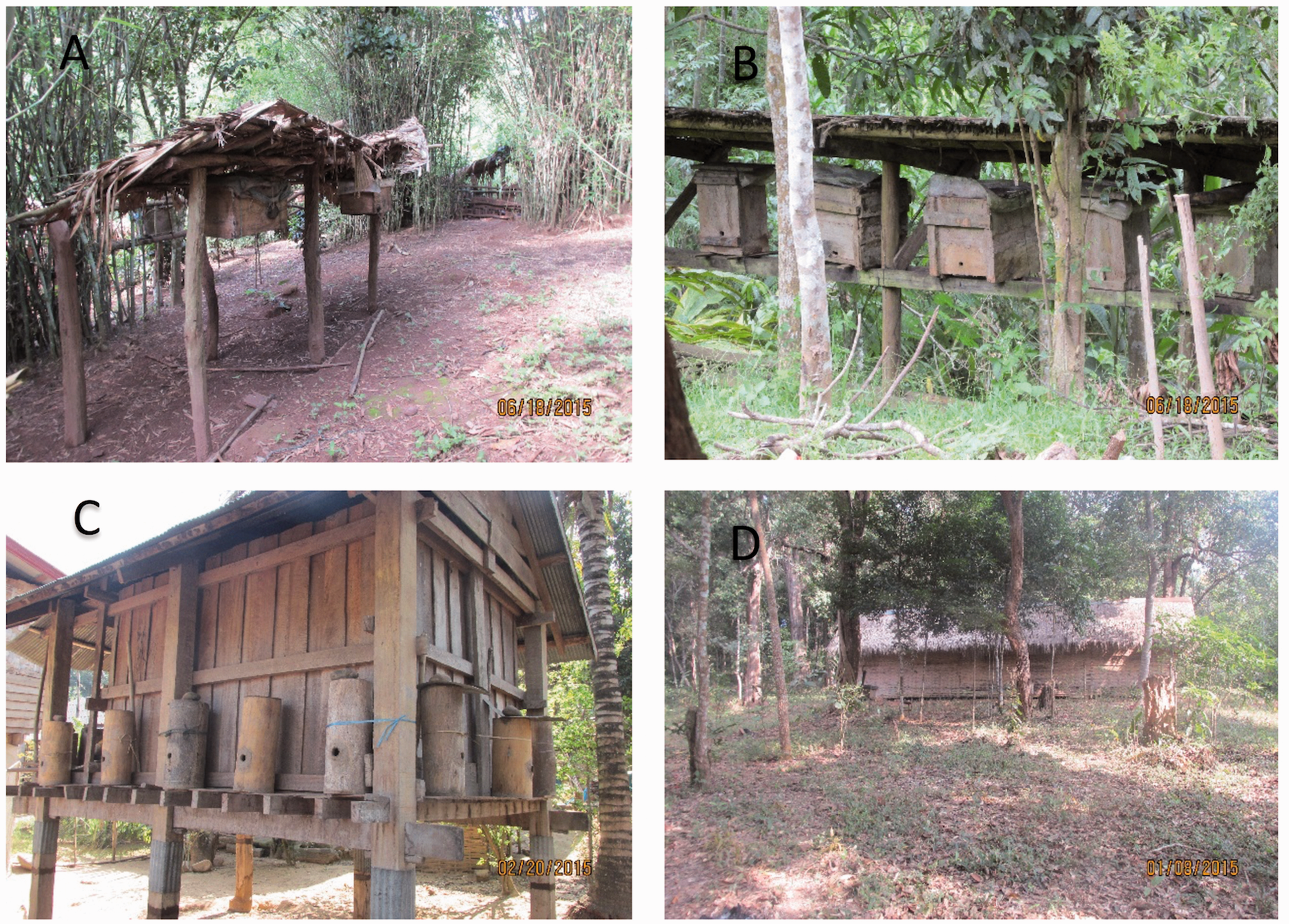
Method
Study Area and Apiculture
Oudomxay is a province in northern Lao PDR that extends over 15,370 km2, which is approximately 6% of the total area of Lao PDR (Figure 2). The Mekong River flows through the south of Oudomxay along part of the Louang Phabang and Sayaboury border. This province comprises seven districts (Figure 2) and has a population of 299,935 (Bouahom, Douangsacanh, & Rigg, 2004). The altitude in this province ranges from 300 m to 1,800 m, and the climate is moist tropical to subtropical, with high seasonal temperature variations from a maximum of 33℃ to a minimum of 7℃. Its annual mean temperature ranges from 18℃ to 20℃. The tropical rain forest and secondary forest combined cover about 32% of the total province (Horst, 2003). The potential of the apicultural flora in Oudomxay included Lithocarpus, Acacia, Amomum, and many other tropical tree species. There are several provincial protected areas, which totally take 47% of the whole province without national protected area. Furthermore, many of the forestland were practiced by the slash and burn for upland rice. There are 12 ethnic groups in this province with total population 307,622, and among them, the three major groups are the Laolum (account for 65%), the Laoteng (25%), and the Laosong (15%).
Lao People’s Democratic Republic map and the distribution of study sites.
In most of the remote Oudomxay villages, the A. cerana is the bee species used for producing honey (Chansouk, 2014). Coupled with their beekeeping experience, the local people also have extensive indigenous knowledge of beekeeping, which encompasses information on the availability of bee forage plants and the traditional practice of using log hives. Some recent projects have supported beekeeping for local households. Most people in this region practice slash-and-burn cultivation for upland crops and harvest NTFP (e.g., collecting mushrooms, animals, or parts of trees). It has been reported that the sale of bee products has made a significant contribution to the cash incomes of those living in Lao PDR’s remote and isolated communities (Horst, 2003).
Sampling Villages and Households
Household Sample Size.

Data Collection
Structured and semistructured questionnaires and personal interviews were used to collect data for the study. The structured questionnaires were designed to obtain demographic information that included the following: age, gender, educational level (primary school, secondary school, and technical school), family size, number of laborers, occupation, and years of beekeeping experience. Seven items in the questionnaire related to attitudes toward biodiversity conservation (e.g., cutting the forest is a good for keeping bees; I often convince people not to cut the trees in the forest; see Supplementary Material for details). Participants were asked to respond to these questions as follows: “disagree,” “no comment,” or “agree.” Since the original Lao language had been translated into English, this intervention may have influenced the participants’ responses. To mitigate that possibility, we validated our questions by ensuring that when the questions were asked in the local language, they were not asked in a leading way, by confirming that the questions were understood and verifying that the interview environment was suitable and comfortable for the participants.
Questions related to the household’s economic situation were organized into two sections. The first section gathered data documenting the income generated from honey products (1 USD = 8,194 Laotian Kip; January 2017, Lao PDR’s monetary unit) and asked how much honey (in kilograms) the household produced in 1 year and what price (Laotian Kip) per kilogram was paid for it in the local market. We then calculated the total income earned from honey (Laotian Kip). The net income from honey was estimated using the total income earned from selling honey, less the annual costs associated with the hives and equipment. The second section gathered information on the income earned from other NTFPs (e.g., animals and trees that rural people can collect to sell or consume, and crops planted). Finally, we calculated the total income generated by the sale of honey and other NTFPs for beekeeping households.
The study area was remote and inaccessible. However, because the first author came from the area and was able to communicate with most of the villagers, the researcher was able to conduct interviews with the local people to learn about the purpose of beekeeping, its benefits, the main problems encountered, and other factors that affected beekeeping. Open-ended questions were used to collect this information (e.g., Are you going to enlarge your apiculture practices? Why or why not?). Informed consent was obtained from all the heads of households interviewed. They agreed orally to participate in our survey and written down their name in the interview form. The interviews often lasted 4 to 6 hr per household, with 120 days being spent in the field from January to July 2015 (a span of 7 months).
Data Analysis
GLM Model Analysis of Which Factors Affected Villagers’ Total Honey Income Generation (1 USD = 8,194 Laotian Kip; January 2017).
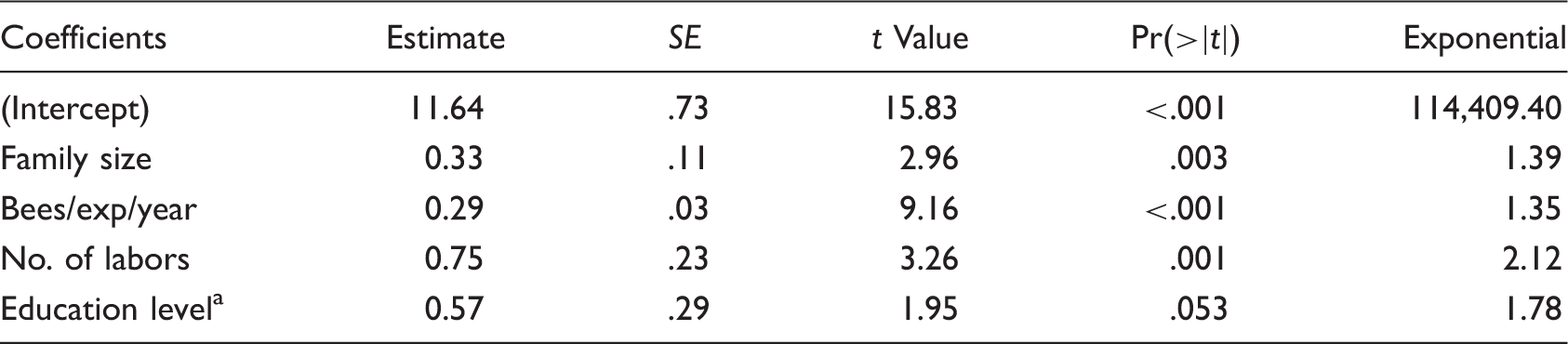
Note. Total honey income amount was calculated based on the GLM model (Y = 114,409.40 × (1.39^X1 + 1.35^X2+ 2.12^X3 + 1.78^X4). X indicated the values of factors (family size, beekeeping experiences year, no. of labors, and education levels, respectively) affecting villagers’ total honey income. GLM: Generalized Linear Models.
aPeople with secondary school education have more total honey income generation than the people with primary school education.
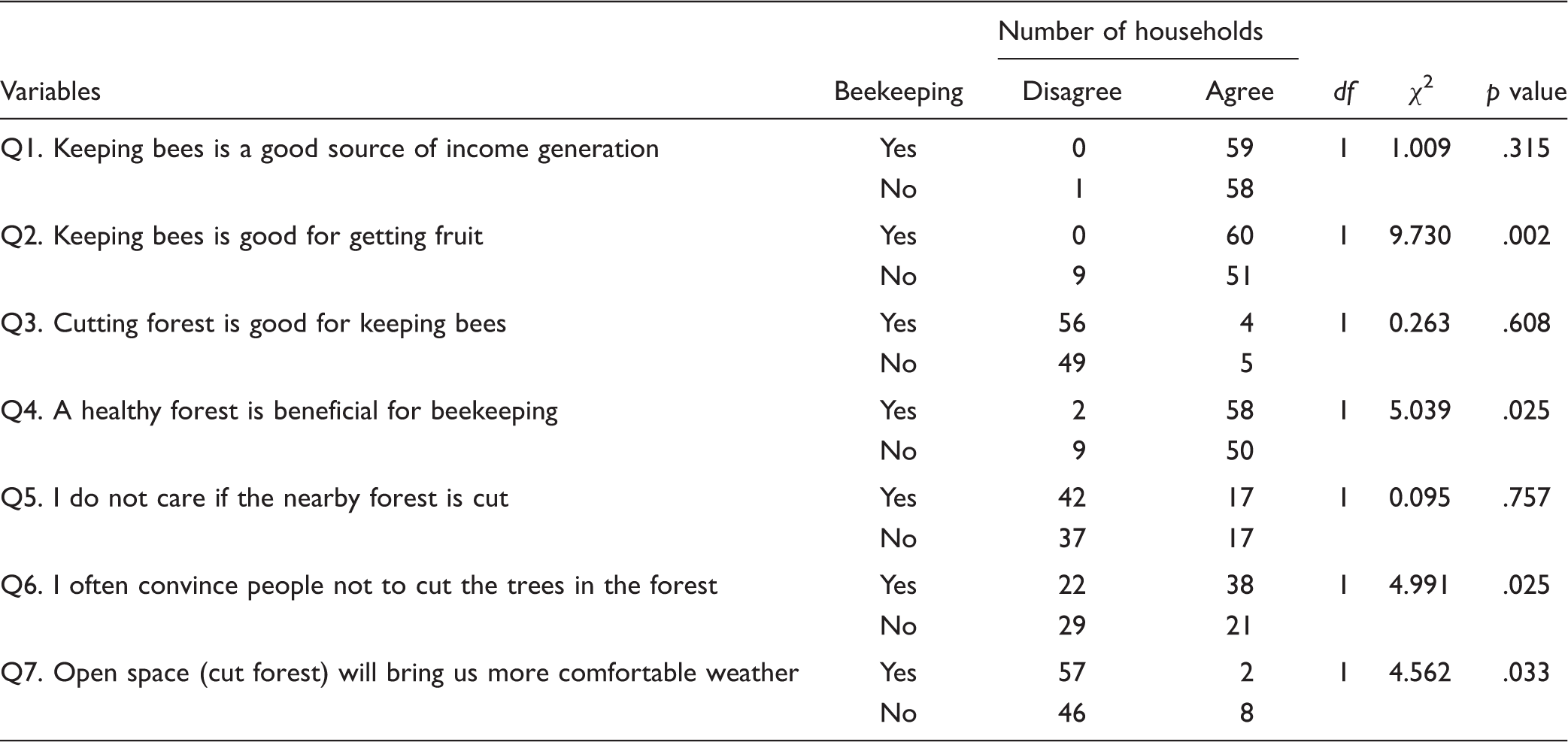
Since the participants who had responded to conservation attitudinal items with a “no comment” had thereby indicated that they had ambiguous attitudes, we excluded these participants from our analysis. We then used Pearson’s χ2 test to analyze the relationships between becoming a beekeeper and an individual’s attitude toward forest conservation, due to both constructs being category data (Agresti, 2007). The GLM models were used to test the effects of total income generation, and whether being beekeepers (as predicted variables) had an effect on their attitudes toward forest conservation (as a dependent variable), with a binomial distribution (agree or disagree with each question related to forest conservation). Since the low Cronbach α coefficient (<.60) reliability of these questions and the interitem correlation (<.40, except for the correlation coefficient between Q3 and Q4) were not enough to construct a conservation attitudes index, we used the GLM model to analyze the responses question by question.
As for the interview data, we translated and transcribed the qualitative interviews. Data were analyzed using inductive analysis, whereby key themes became apparent through the coding process. Initial analysis involved reading the transcripts multiple times, identifying themes (e.g., loss of bees to predators, use of chemical products, and lack of information). We further divided these themes into subcategories, using interviewers’ quotes as evidence.
Results
Characteristics of Beekeepers and Apiculture Size.

aThe apiculture size.
Although both beekeepers and nonbeekeepers had large variations in household incomes, beekeeping families had a marginally higher net income from honey production (Mean = 1,402,300 Laotian Kip) than nonbeekeepers’ had from other NTFPs (Mean = 686,000 Laotian Kip), F(1, 118) = 3.36, p = .06, with a 51.1% higher income in the mean value (Figure 3(a)). We also found significant differences for beekeeping households between their net incomes from honey compared with their income from other NTFPs’ (t = 3.31, df = 59, p = .002; Figure 3(b)). Family size, the number of laborers, educational levels, and years’ of beekeeping experience also affected total honey income generation. Households with bigger family sizes, more laborers, more experience, and with secondary school educations had higher total honey incomes amount (Mean = 2,270,523 Laotian Kip). According to the exponential value in Table 2, if a villager increased his or her beekeeping experience by 1 year, involved more family members, or acquired a higher educational level, the possibilities of making more money increased 1.35 times over the baseline income, and they increased 1.78 times over what people with a primary school education earned (Table 2).
Comparing beekeepers’ net honey income and nonbeekeepers’ income (1 USD = 8,194 Laotian Kip; January 2017) from other nontimber forest products.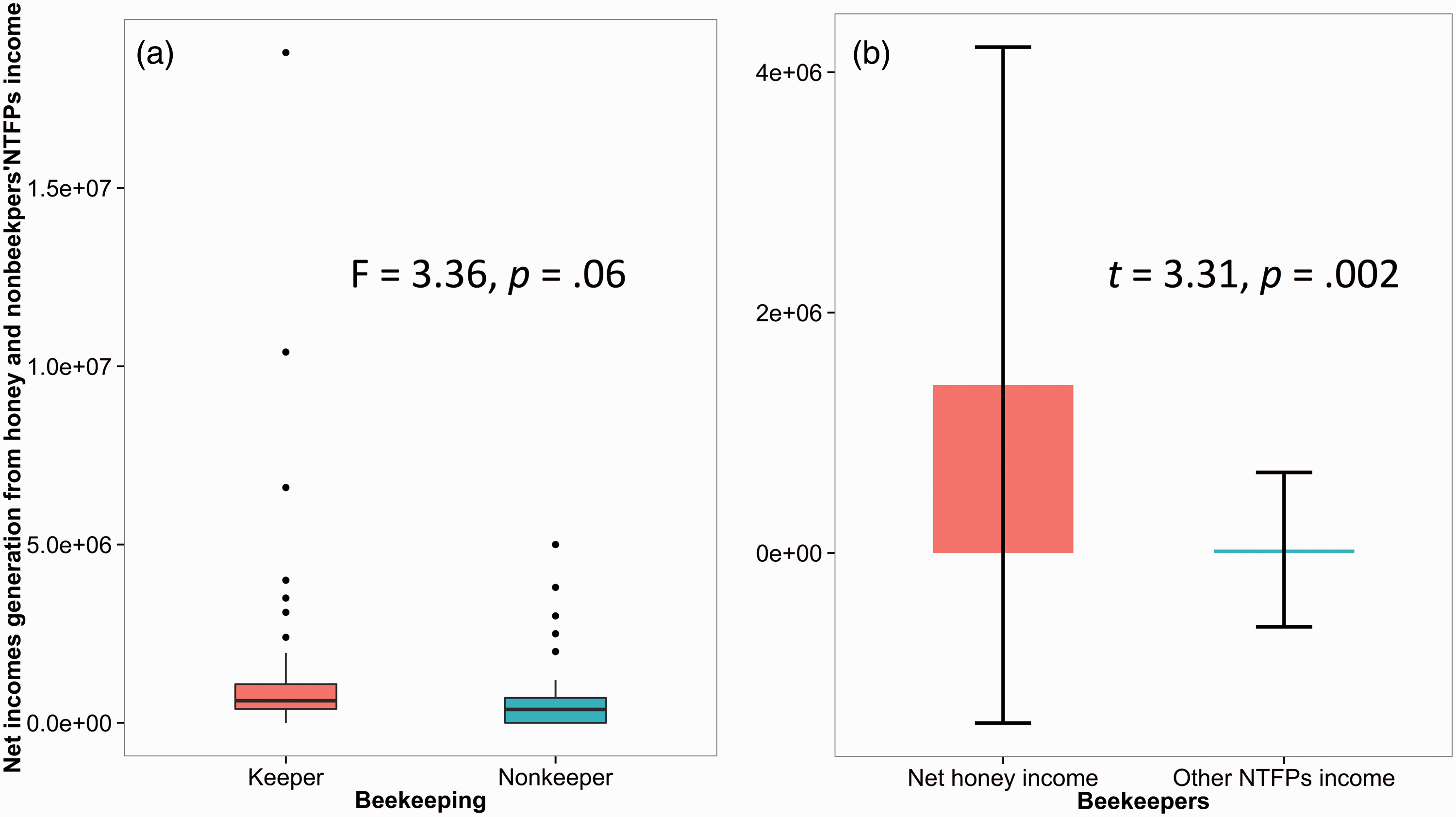
χ2 Test Analysis of Whether Beekeepers and Nonbeekeepers Have Different Attitudes Toward Forest Conservation.
The Impacts of Households’ Total Income From Honey and Other nNontimber Forest Products (NTFPs) and Whether Beekeeping Affects Conservation Attitudes.
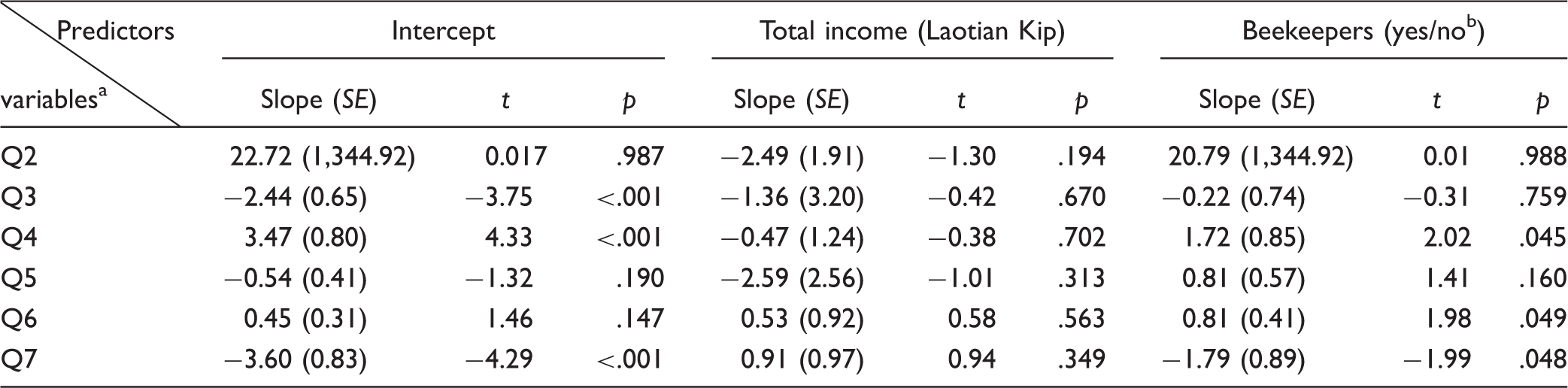
aThe dependent variables were the numbers of households agree or disagree the following questions as binary variable: Q2 = keeping bees is good for getting fruit; Q3 = cutting forest is good for keeping bees; Q4 = a healthy forest is beneficial for beekeeping; Q5 = I do not care if the nearby forest is cut; Q6 = I often convince people not to cut the trees in the forest; Q7 = open space (cut forest) will bring us more comfortable weather.
bNonbeekeeper was set as a reference category in the GLM models. Total income include honey income and income from other NTFPs. (1 USD = 8,194 Laotian Kip; January 2017). The positive number in slope indicates that the villagers who have more income or are beekeepers will be more likely to agree with the corresponding questions/statements. Not all of the interactions were between total incomes and whether beekeeping was significant, so it was removed from the table.
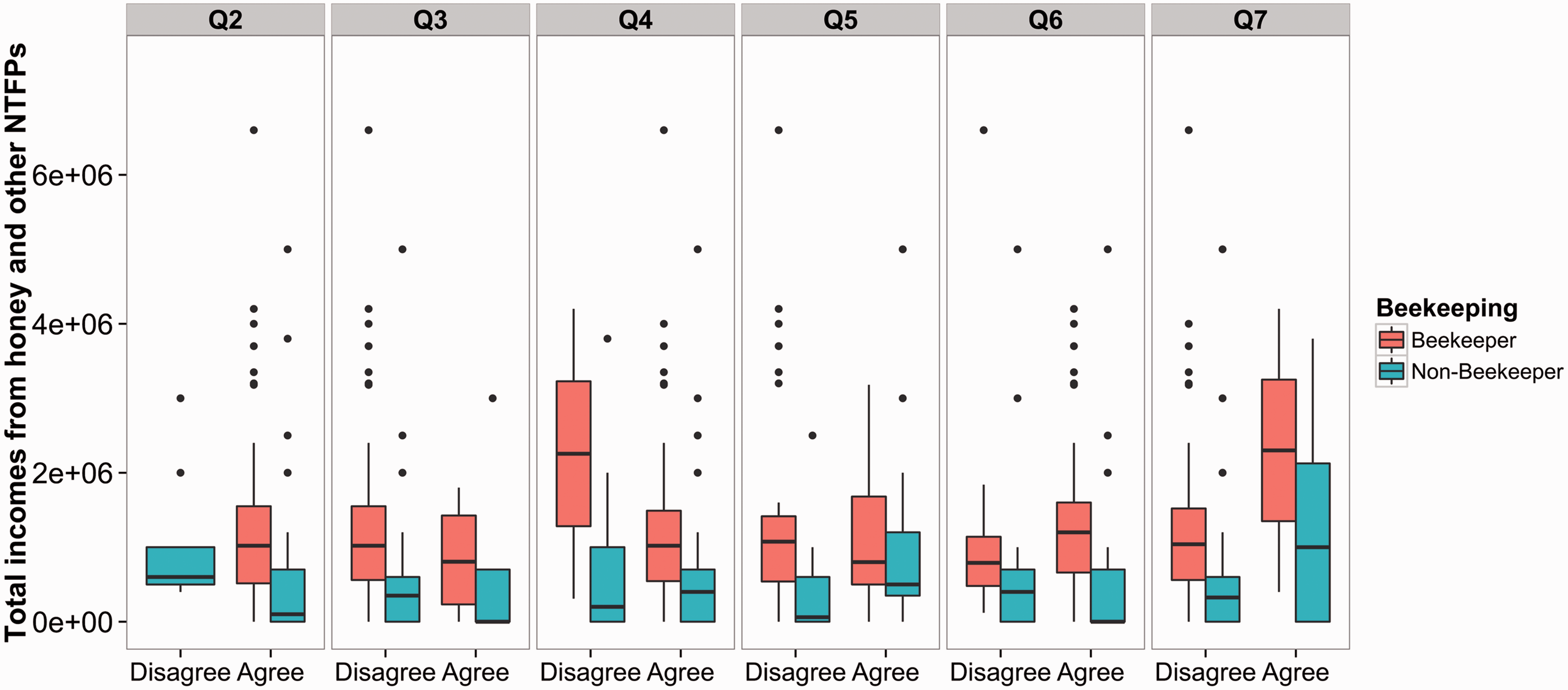
Comparison of forest conservation attitudes between beekeepers and nonbeekeepers, with total incomes (1 USD = 8,194 Laotian Kip; January 2017). Note. The income differences are between people who agree or disagree with the corresponding statements about forest attitudes. The impact of total incomes (including total honey income and other income from nontimber forest products) on forest conservation attitudes was not significant. All p values >.05. Q2–Q7 indicated the variables that all the households agree or disagree the forest conservation statements.
Problems Mentioned by Beekeepers in Oudomxay Province Concerning the Development of Beekeeping.

Discussion
Harvesting honey from native bees has been widely adopted as an alternative livelihood in Asia’s mountainous rural areas (International Programme on the Elimination of Child Labour, 2011). Understanding how beekeeping contributes to local people’s livelihoods and income sources and how the practice affects people’s attitudes toward forest conservation is critical. This study found that local households do indeed generate a more significant income by collecting honey than from other NTFPs. Furthermore, beekeepers also tend to have proenvironmental attitudes toward forest conservation. Beekeeping can therefore be regarded as a valuable commercial industry that is also protective of the forests; it both alleviates poverty and promotes forest conservation programs in these mountainous areas.
Most natural beekeeping in Oudomxay Province is conducted on a rather small scale, but it does provide an alternative livelihood for poor rural people, and it can generate a subsistence income for families. Beekeeping does not have high entry barriers, and local materials can be used to produce the equipment required for keeping bees. Beekeeping is also related to biodiversity conservation, since beekeepers understand the bees’ dependence on natural flowers for sources of nectar and pollen, so beekeeping is an important source of both income and biodiversity conservation (International Programme on the Elimination of Child Labour, 2011). It is logical that many of the beekeepers who participated in our study commented that keeping bees was good for producing fruit. Their indigenous knowledge of bees and the benefits of beekeeping have fostered the development of positive attitudes toward the forest during their long-term interactions with bees (Schmitt, 2010). Therefore, as this study confirmed, most beekeepers hold the view that sustainable forest management practices are good for beekeeping, and they are willing to convince other people not to disturb the forests. These results are consistent with a previous study that involved the cultivation of the xaté palm (Chamaedorea ernesti-augusti) in Belize; local farmers’ knowledge and attitudes toward xaté encouraged their cultivation practices (Williams, Jones, Clubbe, & Gibbons, 2012). Other studies have also demonstrated that socioeconomic factors, such as gender, distance to forest, and farming occupation, positively influence the cultivation of nonwood forest products in southern Nigeria (Chukwuone, 2009).
In our study, most beekeepers were male; men were more likely to keep bees than women. This is probably because women often do not own land in these areas, and they are less likely to make investments in apiculture. Beekeepers had larger incomes than nonbeekeepers, and these economic incentives may drive positive attitudes toward forests, which in turn promote conservation of the natural forests (Munthali & Mughogho, 1992). An incentives strategy was found to be effective for forest conservation in Kenya (Jackson & Naughton-Treves, 2012). However, our study did not demonstrate that income had a direct effect on forest conservation attitudes. This may be due to our use of a systematic sampling approach and categorizing the households in our study into rich, midrange, and poor, based on their annual incomes. This systematic selection of beekeepers and nonbeekeepers may show that total income has no effect on forest conservation attitudes. On the other hand, the factors influencing people’s conservation attitudes are very complex and include the costs and benefits of these attitudes, social norms, emotions, role models, habits, and cultural backgrounds (Kollmuss & Agyeman, 2002). We also need to acknowledge that the data gathered from the completed questionnaires represents reported conservation attitudes rather than actual attitudes; social desirability may have affected the households’ responses and added noise to the results (Crowne & Marlowe, 1960; Holtgraves, 2004). Income may affect whether villagers become beekeepers, with a greater perception of the forests’ value for apiculture mediating their positive forest conservation attitudes. This inference is supported by a study of the uses and management practices of the licuri palm in Brazil. That study found that income from the licuri palm changed local people’s attitudes toward the protection and conservation of endangered species (de Andrade et al., 2015).
We have been unable to disentangle the direction of the relationships between beekeeping, income generation, and conservation attitudes, as we have not tested for causation. Future studies may determine whether beekeeping is actually a profitable endeavor and whether it affects beekeepers’ conservation attitudes and behaviors toward local biodiversity. Since a diversity of bees contributes significantly to healthy agriculture, the conservation of honeybee species in Southeast Asia is an urgent matter. Addressing this matter requires more than having local people cultivate single honeybee species from both an income generating and biodiversity conservation perspective. Some studies have suggested that native bees are priorities for protection because exotic bee species introduce a high risk that the balance of the local ecosystem will be altered, increase the dissemination of diseases and parasites, and increase the competition for food (Chantawannakul et al., 2004). A possible alternative is the development of beekeeping that relies on other species that remain in their beehives, such as stingless bees. These social bees have characteristics that enable them to pollinate multiple plant species and especially the noncrop species in natural habitats (Kato, 1996). Nevertheless, the numerous constraints associated with beekeeping using native species in traditional hives—such as the fragile quality of the honey obtained because of its high moisture content and bees deserting their hives—have dissuaded many potential beekeepers. This may account for our finding of a marginally difference of beekeeping activity providing higher incomes than that provided by other activities in which nonbeekeepers are engaged. Therefore, agricultural activities should be diversified (e.g., cash crop plantations) to generate enough income for the people in local communities (Roberts, 2015).
Indigenous bee species have been subjected to external pressures, such as agricultural activities (e.g., the use of pesticides and insecticides, deforestation, and especially slash-and-burn agriculture), tourism, and the introduction of exotic species. These are the main threats to the conservation of native bee species in rural areas in northern Lao PDR, where slash-and-burn agriculture for rice cultivation is the main farming activity, and the application of new technologies for agricultural activities involves the extensive use of chemicals to increase yields (Lambin & Meyfroidt, 2011). In the current context, it is difficult for local farmers to reduce their use of pesticides. Meanwhile, factors such as the lack of technology available for apiculture and lack of information about the honey market constrain the development of beekeeping. Consequently, we have to acknowledge that it will be difficult to convince large numbers of people in rural areas to undertake beekeeping to generate substantial incomes. This situation is also characteristic of other tropical areas such as Colombia, where demands for green markets and certification are slowly beginning to encourage palm oil cultivation and biodiversity conservation (Pardo Vargas, Laurance, Clements, & Edwards, 2015).
Implications for Conservation
At this time, it may be advisable to maintain beekeeping in Oudomxay Province at traditional local levels because there is no strong evidence to suggest that it is a very profitable activity. In many places across mainland Southeast Asia, development and conservation policies are promoting complete conversion of the slash-and-burn landscape to monoculture plantations (Xu, Lebel, & Sturgeon, 2009). Both governmental agencies and nongovernmental organizations could facilitate the practice of apiculture by solving those problems, since even the relatively small incomes earned from beekeeping could contribute to the livelihoods of the rural poor and promote local regional forest conservation.
Footnotes
Acknowledgments
The authors thank the Xishuangbanna Tropical Botanical Garden of the Chinese Academy of Sciences and the Construction of Chinese Botanical Garden Alliance for financial support. The authors also would like to express their gratitude to the members of the Ecology Evolution Plant and Animal Interaction Lab (EEPAI) for their input during our discussions, to S. K. Dayananda for making the maps for this study, and to the four anonymous reviewers for their constructive comments on a previous version of this article. Thanks are also extended to the Oudomxay Natural Beekeeping Association, for providing information, and to all the villagers interviewed, for their time and kindness.
Declarations of Conflicting Interests
The author(s) declare that there are no potential conflicts of interest with respect to this research, authorship, and/or the publication of this article.
Funding
The author(s) disclosed receipt of the following financial support for the research, authorship, and/or publication of this article: This research was funded by the CAS 135 Program (XTBG-F03) and the Construction of Chinese Botanical Garden Alliance (KFJ-1W-NO1-11).