




Abstract
Through the lens of Hope-Action Theory (HAT), this study explores a career development program, EmploymentWorks Canada (EWC), offered to individuals with autism spectrum disorder (ASD) that utilizes an ecosystem approach to increase their employment opportunities. This study investigated the influence of the program on the participants’ employment, well-being, life skills, and hope-action competencies. Findings confirmed the positive effects of this career development program. The employment status of participants prior to the start of the program and 3 months after program completion increased from 14% to 38%. In addition, positive changes were noted in relation to the participants’ well-being, life skills, and hope-action competencies such as hopefulness, self-clarity, goal setting and planning, implementing, and adapting. This study also confirmed that the results were aligned with the content addressed during the program. By reviewing EWC through the lens of HAT, and by measuring the impact using the Hope-Action Inventory, this study provides suggestions that can further enhance the program. Implications for human resource development (HRD) research and practice are discussed along with the limitations of the study and future recommendations.
Introduction
Autism spectrum disorder (ASD) is a complex and heterogeneous neurodevelopmental disability that involves persistent challenges in verbal and nonverbal communication, and social interaction, repetitive behaviors and restricted interests (American Psychiatric Association, 2018; Kapp et al., 2011). It is a heterogeneous condition that encompasses a wide range of skills and abilities (Charman et al., 2011). In the United States, approximately one in 31 children is diagnosed with ASD (Centers for Disease Control and Prevention, 2024). Each year, approximately 50,000 individuals with autism spectrum disorder (ASD) transition to adulthood in the United States (Roux et al., 2017), and in a next decade, a growing population of individuals with ASD will transition into adulthood (Hensel, 2017; Lizotte, 2018), often referred to as Generation A (Johnson & Williams, 2022). However, the employment rate of individuals with ASD is notably low, even compared to individuals with other disabilities, with majority of them struggling to secure employment (Cederlund et al., 2008; Hensel, 2017; Johnson, 2022; Johnson & Williams, 2022; Whitehouse et al., 2009). According to the 2017 Canadian Survey on Disability, only 33% of individuals aged 20 to 64 with ASD are employed, compared to 79% of individuals in the same age group without disability (Statistics Canada, 2018). This employment rate is on par with very severe disability cases (31.3%), indicating the significant challenges that individuals with ASD face in gaining and maintaining employment.
Approximately, half of individuals with ASD have average or above average IQ (Hensel, 2017). Furthermore, these individuals tend to possess strengths in math, memory, cognitive, spatial, artistic and musical areas (Caron et al., 2004; Hillier et al., 2007). The unique traits and skillsets of these individuals enable them to demonstrate their capabilities for tasks requiring technical skills, attention to detail, intense focus for extended period of times, consistency and accuracy, and creativity (Johnson, 2022; Skibell, 2017). However, when compared to their neurotypical peers, individuals with ASD who are capable of working independently or with minimal one-on-one supports tend to lack exposure to vocational experiences even from adolescence (Kapp et al., 2011), and have limited participation in career planning activities (Briel & Getzel, 2014). This sub-group of individuals with ASD also experiences challenges in seeking jobs and obtaining employment, as completing complex job applications and participating in interviews with potential employers can be challenging (Baldwin et al., 2014; Berney, 2004). Furthermore, maintaining employment often presents the greatest challenges (Kapp et al., 2011). Although these individuals are highly capable, they often struggle with the social and communication demands of their workplace. Accordingly, they tend to be underemployed—not working in positions that match their potential abilities or qualifications—and struggle to sustain long-term employment due to their social challenges, cognitive inflexibility, and insufficient supports available at the work site (Geller & Greenberg, 2010; Gerhardt & Lainer, 2011; Kapp et al., 2011). Employer support, such as modification of working conditions and environment, behavioral and social support, job coaching and mentoring, and disability awareness training for colleagues (Burt et al., 1991; Keel et al., 1997; Lawer et al., 2009) can facilitate more success in jobs for adults with ASD. However, not all employers know how to effectively utilize relevant accommodations (Lindsay et al., 2021).
While these challenges exist, it is important to reemphasize that ASD is a heterogeneous condition that includes a wide range of severity and combinations of symptoms per individual. Lately, employers have been hiring autistic individuals for their strengths in concentration on repetitive tasks and pattern recognition, retention of large amounts of information, and mathematical and coding skills (Alsop, 2016; Noguchi, 2016). An increasing number of organizations recognize the unique talents and potentials of individuals with ASD and hire them; however, unemployment or underemployment of individuals with autism continues to be a widespread reality (Howlin & Magiati, 2017) that needs attention. In this paper, we showcase how a career development program for individuals with ASD was implemented to develop skills and competencies relevant to employment and, in turn, contributed to their employment status.
The Role of Human Resource Development (HRD) for Individuals with ASD in the Workplace
As part of critical HRD, scholars have voiced the role of HRD scholarship and practice to support marginalized groups in organizations (Boyle, 1997; Johnson, 2022; Kwon, 2021; Michna et al., 2017; Procknow et al., 2017; Bierema, 2010; Yoon, 2020a). It is the responsibility of HRD to facilitate building equitable organizations by “understanding challenges of marginalized populations and advocating for their needs and voices” (Yoon et al., 2021, p. 1). Making intentional efforts in this direction is imperative given the prevalence of ableism in the workplace, which is the way that organizations have been structured and operated to favor less hiring and working with individuals with disabilities (Kwon, 2021; Procknow et al., 2017). As stated in the Standards on Ethics and Integrity by the Academy of Human Resource Development (AHRD, 2018), general principles that clearly guide HRD professionals should “respect the fundamental rights, dignity, and worth of all people,” be “aware of cultural, individual, and role differences that include differences,” “try to eliminate the effect on their work or biases based on those factors,” and “not knowingly participate in or condone unfair discriminatory practices.” Indeed, a grounding value of HRD should be human flourishing to aim at the human development of all individuals in their organizations (Kuchinke, 2010). However, the scholarship on disability in HRD is still in early development despite an increased attention to workplace diversity (Johnson, 2022; Procknow & Rocco, 2016).
As for the employees with ASD, only a few papers published in HRD journals called for attention to this topic and provided valuable insights for building equitable organizations through HRD. Johnson et al. (2020) introduced workplace success strategies for individuals with ASD within an HRD setting through an integrative review of the literature. They emphasized that HRD professionals must play more active roles in supporting individuals with ASD in the workplace in the following four domains. The first is to facilitate meaningful collaborations between agencies, including corporations and vocational rehabilitation centers. The second is to provide training and development opportunities to individuals with ASD, which can include on-the-job training, technology-assisted training, and virtual reality training. The third is to organize mentoring and coaching to employees with ASD. Peer mentors and job coaches can help them improve social interactions and work independently. The fourth is to enhance organizational support factors by involving co-workers and supervisors and by creating customized employment through a customized job description and on-the-job support. Another paper (Farkas et al., 2020) demonstrated the efficacy of an employment-focused peer support group, the Autism Work Peer Support Group (AWPSG) program for autistic job seekers. The participants in this study reported positive experiences regarding the effect of the program on their self-esteem, social connection, positive employment outlook, and confidence in finding and sustaining employment. In a more recent paper, Johnson (2022) advocated for a strengths-based approach to support individuals with ASD to enhance their employment and work outcomes. She highlighted the diverse and significant talents of individuals with ASD, emphasizing their potential to contribute positively to organizational performance. Johnson discussed the use of the appreciative inquiry to leverage their strengths and skills, exploring factors that can facilitate or hinder this approach. Additionally, she discussed the application of four stages of the appreciative inquiry process—discovery, dream, design, and destiny—in promoting better employment outcomes for individuals with ASD.
Despite these valuable contributions, HRD research focusing on individuals with ASD remains limited. The few existing studies have primarily focused on workplace strategies, peer support programs, and strengths-based approaches. This research gap is particularly notable given the increasing prevalence of ASD and the critical role HRD can play in creating inclusive workplaces. The present study addresses this gap by examining the effectiveness of a career development program specifically designed for individuals with ASD, offering insights that can inform both HRD research and practice.
Hope-Action Theory
This study employs Hope-Action Theory (HAT; Niles et al., 2019), as a theoretical framework to understand career development interventions for individuals with ASD. HAT is particularly relevant for understanding marginalized populations facing employment barriers, as it emphasizes both individual agency and environment support—two critical elements for successful career development of individuals with ASD. As an emerging theory in the fields of career development and organization development, HAT has demonstrated effectiveness with various marginalized populations including Syrian refugees (Yoon et al., 2019), unemployed adults (Amundson et al., 2018), and other immigrants, including North Korean defectors (Ahn, 2018; Clarke et al., 2018).
The theory’s emphasis on hope is especially pertinent, as research shows that having hope enables individuals to be highly engaged in activities that they desire and enjoy, leading to success across multiple domains such as academic performance (Yoon et al., 2015), job performance (Combs et al., 2010; Luthans et al., 2007; Peterson & Byron, 2008), job satisfaction (Yoon et al., 2019), and workplace happiness (Youssef & Luthans, 2007). Notably, Smith et al. (2014) found that individuals with significant barriers can develop high levels of hope through support from family, friends, and other sources—a finding that aligns with recent research on successful employment interventions for individuals with ASD (Farkas et al., 2020; Johnson et al., 2020). This connection between hope, support systems, and meaningful employment outcomes makes HAT particularly valuable for examining career development programs for individuals with ASD.
HAT was developed by integrating three theories—Snyder’s (2002) hope theory, Bandura’s (2001) human agency theory, and Hall’s (1996) career metacompetencies—into one theory involving seven hope-action competencies within an open system framework. Snyder’s hope theory consists of goals, pathways thinking, and agency thinking. In HAT, hope was placed at the center of the diagram because goals, pathways, and agency contribute to developing hope. Bandura’s (2001) human agency theory has four core features, namely, self-reflectiveness, forethought, intentionality, and self-reactiveness, which were renamed to self-reflection, visioning, goal-setting and planning, and implementing in HAT. Bandura’s emphasis on three modes of agency—personal agency, proxy agency, and collective agency—provides the foundation for being utilized as an HRD theory (Al Balushi et al., 2025, Yoon, 2019). Hall’s career metacompetencies are identity and adaptability, which were converted to self-clarity and adaptability. As the title metacompetency indicates, these two elements are central to one’s career development. The seven competencies that synthesized the aforementioned theoretical constructs are:
Hope: Developing a positive expectation about one’s future.
Self-reflection: Reflecting on one’s thoughts, feelings, and unique characteristics.
Self-clarity: Clarifying essential components of the self (e.g., values, interests, life roles, and identity).
Visioning: Envisioning desired future status building upon self-clarity.
Goal-setting and planning: Developing goals and plans that can help achieve the desired future.
Implementing: Translating goals and plans into action.
Adapting. Adjusting plans and actions when necessary (Niles et al., 2019).
In addition to these seven competencies, HAT takes environment into consideration as a main mechanism that influences the individual psychological process. Figure 1 depicts the mechanism of HAT. While the use of competencies could proceed in a linear fashion, there is a great emphasis on the dynamic nature of the interactions among the hope-action competencies as a response to environmental factors. Just as the blades of a pinwheel spin clockwise or counterclockwise in response to the wind direction, the competencies can be applied to environmental change responsively without a particular order (Yoon, 2020b). In addition, HAT depicts the interactions between the individual and the environment. In one’s career development process, the seven HAT competencies are exercised while interacting with the environment.
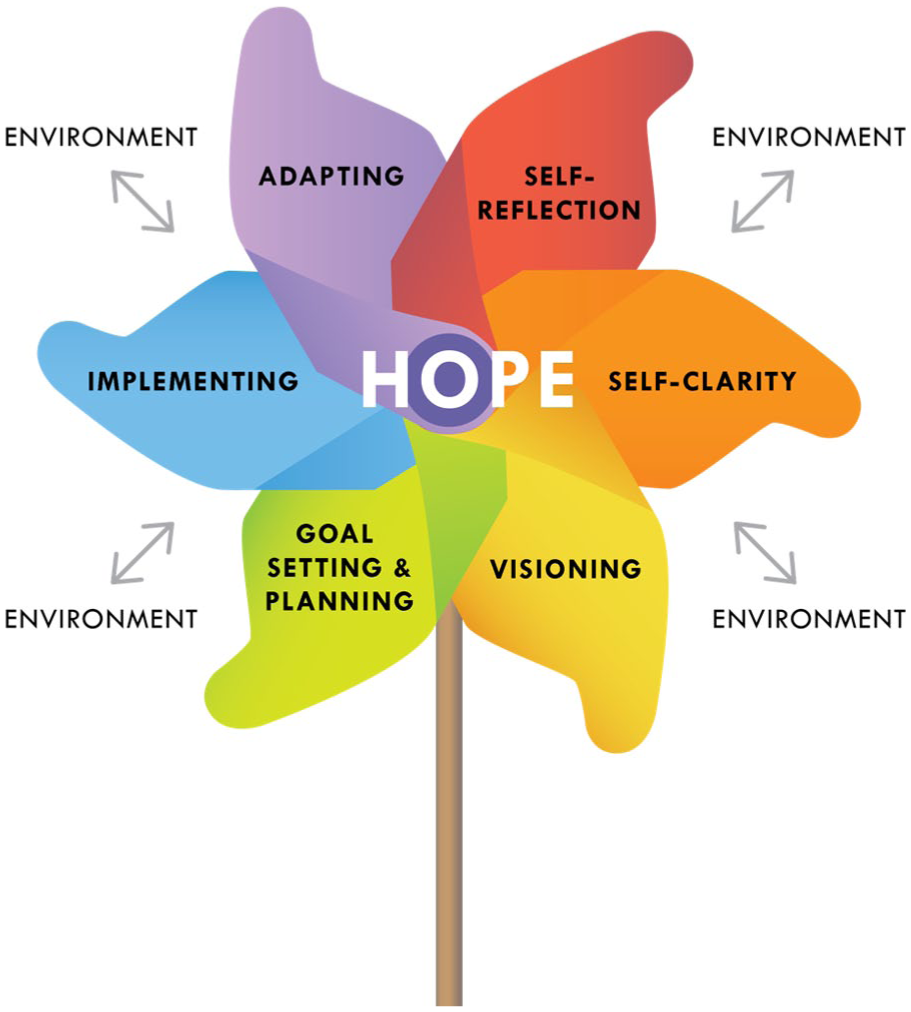
Hope-Action Theory.
Research shows that applying HAT-based interventions had an impact on the participants’ job search clarity (Yoon et al., 2019), hope-action competencies (Ahn, 2018; Amundson et al., 2018; Clarke et al., 2018; Yoon et al., 2019), self-efficacy (Amundson et al., 2018; Yoon et al., 2019), work engagement (Yoon et al., 2019), career decision self-efficacy (Ahn, 2018), vocational identity (Ahn, 2018; Amundson et al., 2018), licensure attainment (Clarke et al., 2018), and employment (Yoon et al., 2019). In the Organization Development (OD) field, Yoon (2020b) proposes the use of HAT for organizations, framing it as an open systems model that takes the interactions between the environment and the agent into consideration while addressing the importance of nurturing hope at both the individual and organizational levels. The COVID-19 pandemic has presented unique challenges for career development. Yoon et al. (2021) applied HAT to examine mechanisms for fostering hopeful employee career development during the pandemic. This body of research collectively demonstrates the versatility of HAT in addressing career development issues across various contexts and populations.
Due to the popular use of Hope-Action Theory with marginalized populations in Canada, the first author was asked by the Sinneave Family Foundation to review the effectiveness of their nationwide program for individuals with ASD, by utilizing the Hope-Action Inventory (HAI; Currie et al., 2024; Niles et al., 2010), which captures core competencies addressed in HAT.
Employment Training Programs for Individuals with ASD
Individuals with ASD are a marginalized population with employment challenges (Engström et al., 2003; Holwerda et al., 2012), particularly for transition age youth and young adults (Newman et al., 2011; Roux et al., 2013; Shattuck et al., 2012, Wei et al., 2015). Roux et al. (2013) found only 53.4% of those between 21 and 25 years of age with ASD had ever worked for pay outside the home since leaving high school with only 33.6% of the sample indicating that they were employed at the time of the interview. Likewise, Shattuck et al (2012) found that over 50% of youth with ASD who had left school in the preceding 2 years did not participate in paid work or post-secondary school. In Canada, only 21.5% of individuals with ASD between 15 and 64 years of age reported engagement in the labor force (employed or seeking employment) with the vast majority being between 15 and 24 years of age (Zwicker et al., 2017).
Thus, it is imperative to develop and offer support mechanisms that empower individuals with ASD by effectively addressing these employment challenges. Interventions such as career development programs and supported employment programs have been developed and offered resulting in positive vocational outcomes (e.g., Bennett et al., 2013; Berkell, 1987; Keel et al., 1997; Nicholas et al., 2018). For example, the Treatment and Education of Autistic and related Communication Handicapped Children and Adults (TEACCH) program in collaboration with the Autism Society of North Carolina and North Carolina Vocational Rehabilitation Services provides a supported employment program to individuals with ASD who require significant support. The program identified an appropriate job match, provided relevant training, and offered long-term support that resulted in paid employment opportunities and sustained employment (Keel et al., 1997). Wehman et al. (2020) studied youth with ASD between the ages of 18 to 21 to evaluate the effectiveness of the Project SEARCH plus ASD Supports program, which is tailored to meet the unique needs of individuals with ASD through training in social communication that allows them to address visual cues, seek behavioral support, and develop self-regulated strategies. Participating in this community-based intensive employment training for about 9 months in a school year that involved a 10-to-12-week internship resulted in a significant difference between the treatment and control groups. One year after the program, 73.4% of the treatment group achieved competitive employment at minimum wage or above, whereas only 17% of the control group achieved employment.
For individuals who require less one-on-one support, there are employment programs that have focused on specific elements of employment. For example, Smith et al. (2015) provided a virtual reality interview training program to individuals with ASD, and participants demonstrated a greater chance of being offered a position compared to the control groups. Similarly, Strickland et al. (2013) conducted a randomized study with adolescents (16–19 years old) with high functioning ASD by providing an employment training program, (JobTIPS) consisting of a web-based interview skills program and interview response practice sessions using a virtual reality environment. The findings revealed that the intervention group showed significantly more effective verbal content skills than the non-intervention group. In summary, studies report the importance of providing training and career development in order to help individuals with ASD be prepared for obtaining as well as maintaining employment.
Research Purpose and Questions
This study explores the impact of EmploymentWorks Canada for individuals with ASD on their hope-action competencies, well-being, life skills, and employment. Accordingly, the following research questions guided the post-hoc analysis of the data:
Method
Research Design
This study employed a pretest-posttest design to examine the effectiveness of the EmploymentWorks Canada (EWC) program for individuals with ASD. Data were collected at multiple time points: before program start (T1), immediately after program completion (T2), and at 3-month (T3), 6-month (T4), and 12-month (T5) follow-ups. This design allowed us to assess changes in hope-action competencies, well-being, life skills, and employment status over time following program participation.
Research Sites and the Intervention
The EWC program takes an ecosystem approach by involving key stakeholders including family members, agencies, community partners, and the workplace representatives (Nicholas et al., 2018). Established as part of Canada’s Economic Action Plan in 2014, the program aimed to expand vocational training programs in centers across Canada in order to create employment opportunities for individuals with ASD (Government of Canada, 2014). From 2015 through March 2019, EWC served 547 young adults with ASD through nine service delivery sites spanning seven provinces: Alberta, British Columbia, Newfoundland, Nova Scotia, Ontario, Quebec, and Saskatchewan. The program was developed to assist individuals with autism who wanted to develop skills to obtain meaningful and sustainable paid employment.
Five core elements guide the instructional approach of EWC: mentorship and engagement as co-workers, video utilization to support reflection and learning, social skills intervention in conjunction with task analysis and reinforcement, self-management, and self-advocacy. The program runs for 12 weeks with two sessions every week: a structured learning component implemented in a classroom-type setting and an experiential/applied learning component implemented at a worksite. Each session comprises 2.5 hr; hence the program spans 60 hr with 30 hr of structured learning and 30 hr of work experience.
Nicholas et al. (2018), in their case study, illustrated the participants’ positive experiences with EWC. They appreciated the support provided by program staff, influencing the choice of activities during structured learning and gaining work site experience. It also illuminated participants’ perceived outcomes such as gaining employment skills and developing vocational interests, as well as the program’s impact on co-workers and employers, such as rectifying stereotypes about persons with ASD, raising awareness, and creating new employment possibilities. The EWC program had a robust evaluation focused on pre-employment skills, social communication skills, life skills, and well-being.
Review of EWC Through the Lens of Hope-Action Theory
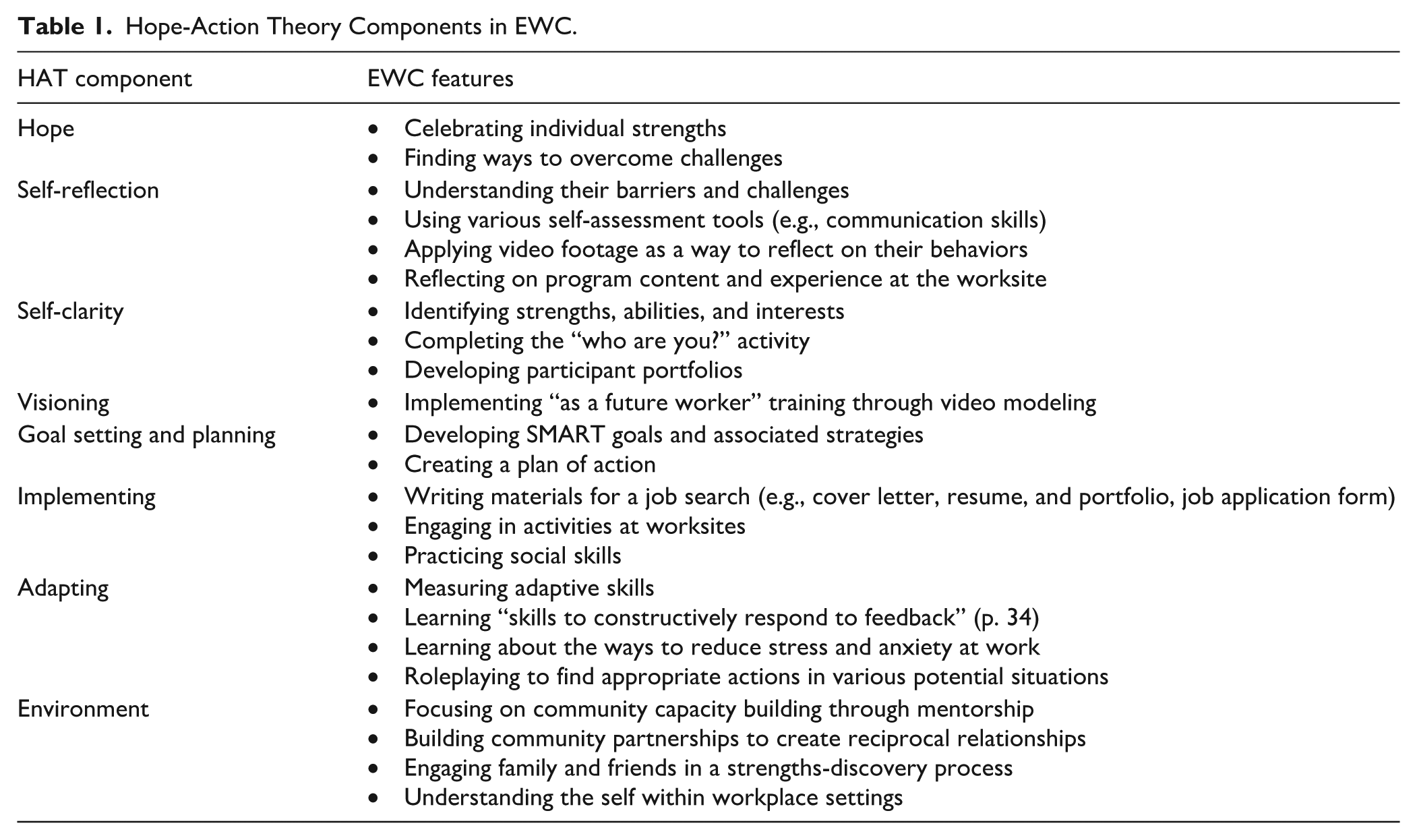
This study looks at EWC and its effectiveness through the lens of HAT. The first and second authors reviewed the content of the EWC manual (Nicholas et al., 2015) and confirmed that the EWC program involves a number of components that are relevant to HAT (see Table 1).
Hope-Action Theory Components in EWC.
Participants
The participants in the EWC program met the following criteria: (a) diagnosed with ASD, (b) ages 15 to 29, (c) legally eligible to work, (d) not a current recipient of employment insurance benefits, (e) available for 14 weeks for program participation and follow-up, (f) independent toileting possible, and (g) able to secure their own transportation (e.g., private or public transportation) to the work site. Other functional factors such as emotional and medical stability were also considered. These criteria were established by the program developers based on prior research and practical considerations for program success, and were assessed through initial screening surveys.
A total of 212 individuals from five different provinces in Canada participated in the program during the study period (July 2017 through June 2019). For analyses of Hope-Action competencies, well-being, and life skills measures, we included 171 participants whose receptive vocabulary scores as measured by the Peabody Picture Vocabulary Test (PPVT-4; Dunn and Dunn, 2007) met the threshold (age equivalency score of at least 13 years) necessary to reliably complete these self-report measures. The exclusion of 41 participants with lower PPVT-4 scores from these specific analyses was methodologically necessary to ensure the validity of self-report data, as these measures require a minimum level of reading comprehension.
However, for employment outcome analyses, we included data from all 212 participants to provide a comprehensive assessment of the program’s effectiveness across the full spectrum of verbal abilities. This approach allowed us to examine program impacts on concrete employment outcomes for all participants while maintaining the integrity of our self-report measures. Complete employment data was available for 188 participants at program completion (T2), 149 participants at 3-month follow-up (T3), 105 participants at 6-month follow-up (T4), and 40 participants at 12-month follow-up (T5).
The age of the participant group ranged from 16 to 29 (M = 21.16, Mdn = 20.00). Male participants accounted for 70.8% of the sample. Seventy percent self-identified as Caucasian or white, 7% identified themselves as a visible minority, 7% declined to answer, and 15.8% did not provide a response. As for employment status, 13.2% indicated that they were employed when they completed the pre-program survey. Employment positions were entry level (e.g., kitchen staff, food server, office clerk, and receptionist).
Measures
To assess the impact of the EWC program, we used the following measures:
Hope-Action Inventory (HAI)
HAI (Niles et al., 2010) measures seven core capabilities that drive career development: hopefulness, self-reflection, self-clarity, visioning, goal-setting and planning, implementing, and adapting. The current form of HAI is intended for those who have an 8th grade reading level (Yoon, 2017). HAI provides an overall composite score along with subscale scores: (Cronbach’s alphas for both pretests and posttests are indicated in parentheses): hopefulness (.85/.83), self-reflection (.71/.78), self-clarity (.73/.69), visioning (.75/.81), goal setting and planning (.78/.79), implementing (.78/.78), adapting (.72/.81), and HAI overall (.91/.92). Sample items are: “I am hopeful when I consider my future” (hopefulness); “I think about things that have happened to me” (self-reflection); “I can list at least five things that I am good at” (self-clarity); “I often imagine possible future events in my life” (visioning); “I make a plan before taking action” (goal setting and planning); “I take action once I have clear goals” (implementing); and “I change my plans when needed in order to reach my goals” (adapting). Responses are obtained using the following options: 1 = definitely false to 4 = definitely true.
WHO Well-Being Index
The WHO Well-Being Index (World Health Organization, 1998) was used to assess participants’ psychological well-being asking about their recent mood, vitality, and general interests. This 5-item measure includes questions such as “I have felt cheerful and in good spirits” with response options ranging from 0 = at no time to 5 = all of the time. Cronbach’s alphas with the current data were .85 (pretest) and .84 (posttest). The scores range from 0 to 25.
Life Skills
A modified Ansell Casey Life Skills Assessment IV (ACLSA-IV; Ansell and Casey Family Programs, 2005) was used to evaluate essential capabilities for independent living and workplace success. The EWC program adapted the original 112-item assessment to reduce participant burden, retaining 44 items most relevant to the program. The modified ACLSA assessed the following life skills, and Cronbach’s alphas with the pretest-posttest data are in parentheses: daily living (DL; .69/.77), self-care (SC; .66/.69), relationships and communication (RC; .72/.78), work and study life (WSL; .86/.84), career and education planning (CEP; .82/.83), and looking forward (LF; .88/.88). Sample questions are as follows: “I know where to go to get on the internet” (DL); “I brush my teeth daily” (SC); “I can speak up for myself” (RC); “I know what the information on a pay stub means.” (WSL); “I know how to find work-related internships” (CEP); and “I believe I can influence how my life will turn out” (LF). Participants were asked to answer to what extent these statements are like them using the following scale: no (1), mostly no (2), somewhat (3), mostly yes (4), and yes (5).
Employment Status
The dataset included participants’ employment status (employed or not employed) at five different time points: before program start (T1), program completion (T2), 3-month follow-up (T3), 6-month follow-up (T4), and 12-month follow-up (T5). For employed participants, the data contained information about their employer, job duties, and position title to document the nature of their employment.
Data Analysis
To examine the effect of the program on participants’ hope-action competencies, well-being, and life skills, a series of paired t-tests were conducted to compare pre-program (T1) and post-program (T2) outcomes. Paired t-tests were selected as the most appropriate analytical approach for examining within-subject changes over time in a pretest-posttest design. Effect sizes were calculated using Cohen’s d to determine the magnitude of program impact, with values of .20, .50, and .80 representing small, medium, and large effects, respectively (Cohen, 1988).
For employment outcomes, paired t-tests were similarly conducted to compare employment status between T1 and each subsequent time point (T2, T3, T4, and T5). These analyses included all program participants (N = 212) to provide a comprehensive assessment of employment outcomes. The employment data were coded dichotomously (0 = not employed, 1 = employed), allowing for direct comparison of employment rates across time points.
Missing data were handled using pairwise deletion to maximize the available data for each analysis while maintaining the integrity of the paired comparisons. This approach means that sample sizes vary across analyses depending on the specific measures and time points being compared. All statistical analyses were conducted using SPSS version 26.0, with a significance level of p < .05 adopted for all tests.
Results
The Impact of the Program on Hope-Action Competencies (RQ1)
In order to determine whether Hope-Action competencies improved over the course of the program, we implemented paired t tests for all subscales as well as the overall scale (see Table 2). There was a significant effect on the overall HAI scale, t(170) = −3.58, p = .000, Cohen’s d = .17. In terms of subscales, implementing (t[170] = −3.92, p < .000, Cohen’s d = .23), adapting (t[170] = −2.31, p = .022, Cohen’s d = .15), goal setting and planning (t[170] = −2.33, p = .021, Cohen’s d = .13), self-clarity (t[170] = −2.20, p = .029, Cohen’s d = .13), and hopefulness (t[170] = −2.23, p = .027, Cohen’s d = .11) turned out to have statistically significant differences between pretest and posttest results. Considering Cohen’s (1988) guidelines, the magnitudes of the effect of the program on these measures including the overall scale were low. The program had no statistically significant effect on self-reflection and visioning.
The Program’s Impact on Hope-Action Competencies.
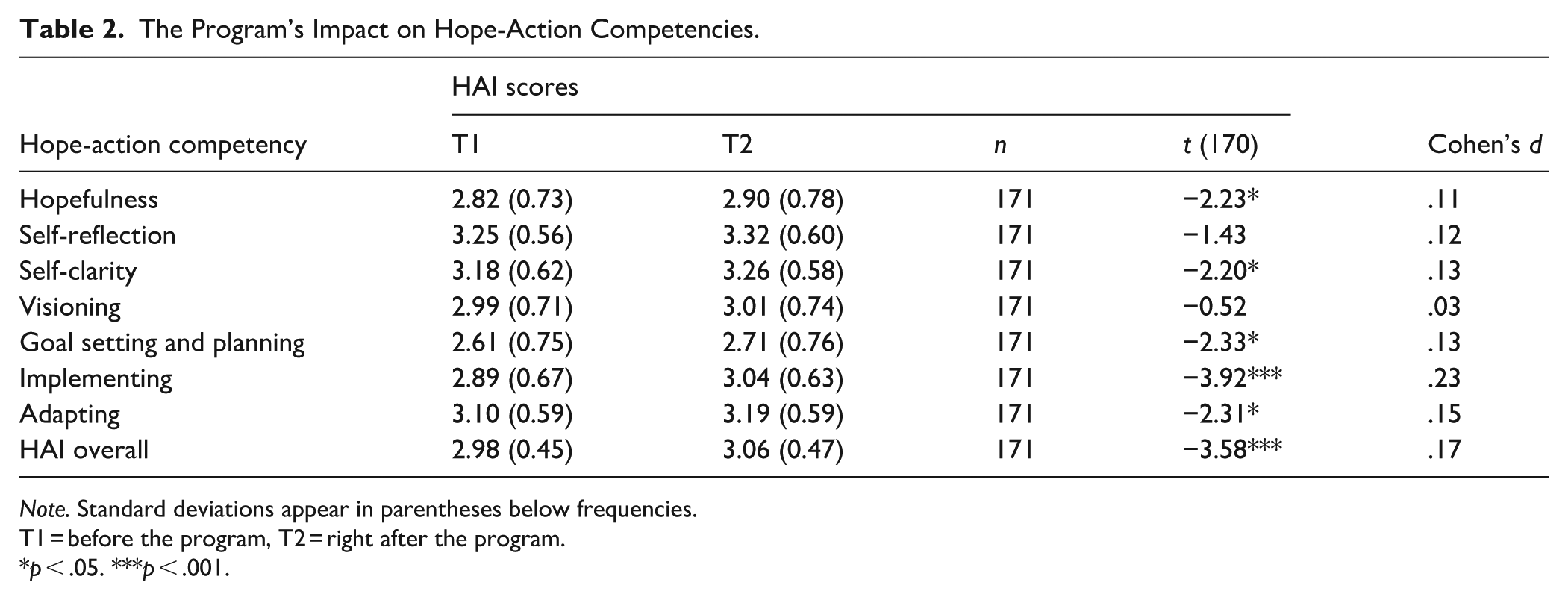
Note. Standard deviations appear in parentheses below frequencies.
T1 = before the program, T2 = right after the program.
p < .05. ***p < .001.
The Impact of the Program on Well-Being and Life Skills (RQ2)
To examine the effect of the program on the participants’ well-being and life skills, a series of paired t-tests were conducted to compare pre- and posttest outcomes (see Table 3). For well-being, there was a significant difference between T1 (M = 15.01, SD = 5.65) and T2 (M = 16.29, SD = 4.90); t(166) = −3.99, p = .000, Cohen’s d = .24. This suggests that the program had a positive impact on the participants’ well-being with a low magnitude. Looking at statistical differences in life skills measured by ACLSA-M, all skills turned out to have improved, except for daily living. Looking at the t-score, the highest effects were visible in work and study life (t[154] = −8.08, p = .000, Cohen’s d = .53) and Career and education planning (t[143] = −7.33, p = .000, Cohen’s d = .54), confirming a moderate impact. Other skills such as relationships (t[158] = −4.16, p = .000, Cohen’s d = .27), looking forward (t[153] = −4.28, p = .000, Cohen’s d = .26), and self-care (t[161] = −2.38, p = .014, Cohen’s d = .27) had low effect sizes.
The Program Impact on Participants’ Well-Being and Life Skills.
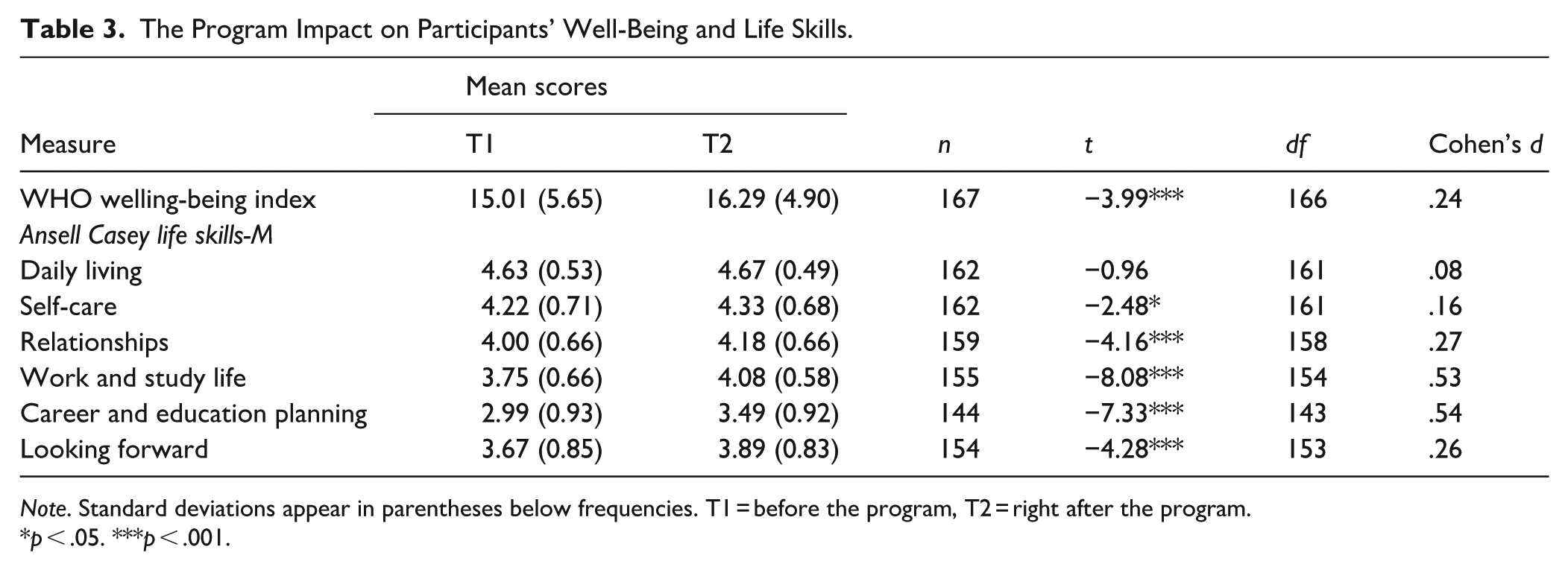
Note. Standard deviations appear in parentheses below frequencies. T1 = before the program, T2 = right after the program.
p < .05. ***p < .001.
The Impact of the Program on Employment Status (RQ3)
Comparisons of employment status across all time points revealed significant positive changes following program participation (see Table 4). The employment rate increased from 14% at baseline (T1) to 21% immediately after program completion (T2), 36% at 3 months post-program (T3), 37% at 6 months (T4), and reached 50% by the 12-month follow-up (T5). The mean differences were statistically significant for all time point comparisons. The program showed a small immediate effect on employment (d = .18) at program completion, with effects strengthening over time to medium effect at 3 and 6 months (d = .50 and d = .51, respectively), and a large effect (d = .80) by the 12-month follow-up. These results indicate that the employment benefits of the program not only persisted but continued to strengthen over time.
Employment Status.
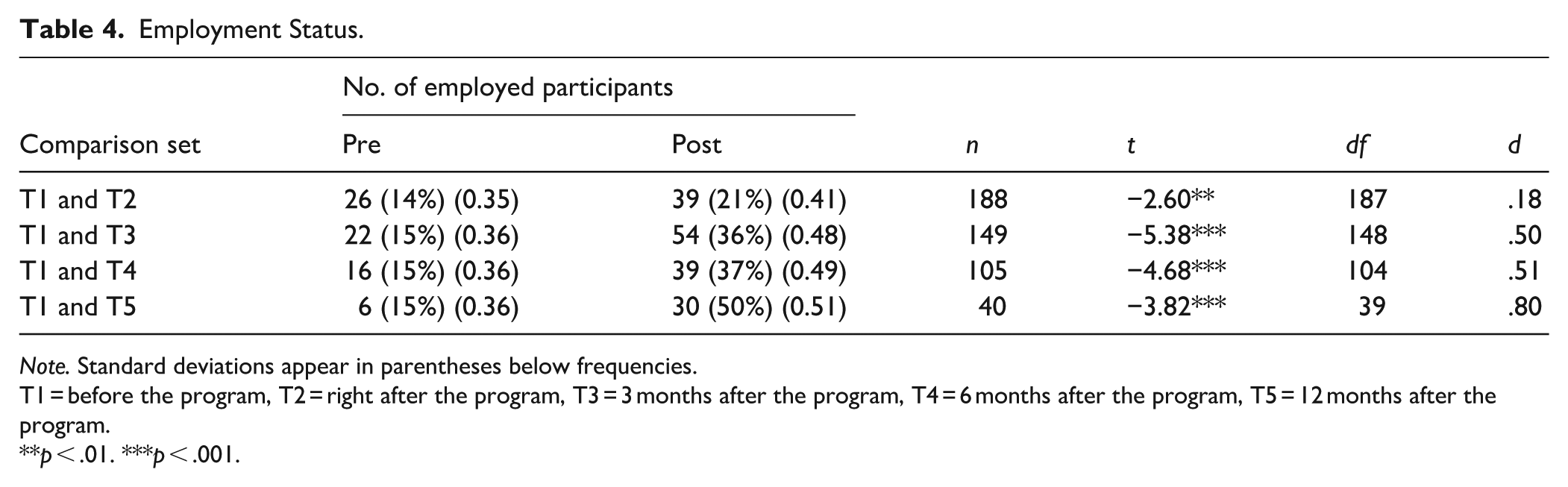
Note. Standard deviations appear in parentheses below frequencies.
T1 = before the program, T2 = right after the program, T3 = 3 months after the program, T4 = 6 months after the program, T5 = 12 months after the program.
p < .01. ***p < .001.
Discussion
The findings from this study demonstrate the effectiveness of EWC in supporting the career development of individuals with ASD. To better understand how different program elements contributed to participant outcomes, we synthesized our findings into an integrated model (see Figure 2). This model illustrates how EWC’s ecosystem approach activated multiple pathways for participant development.
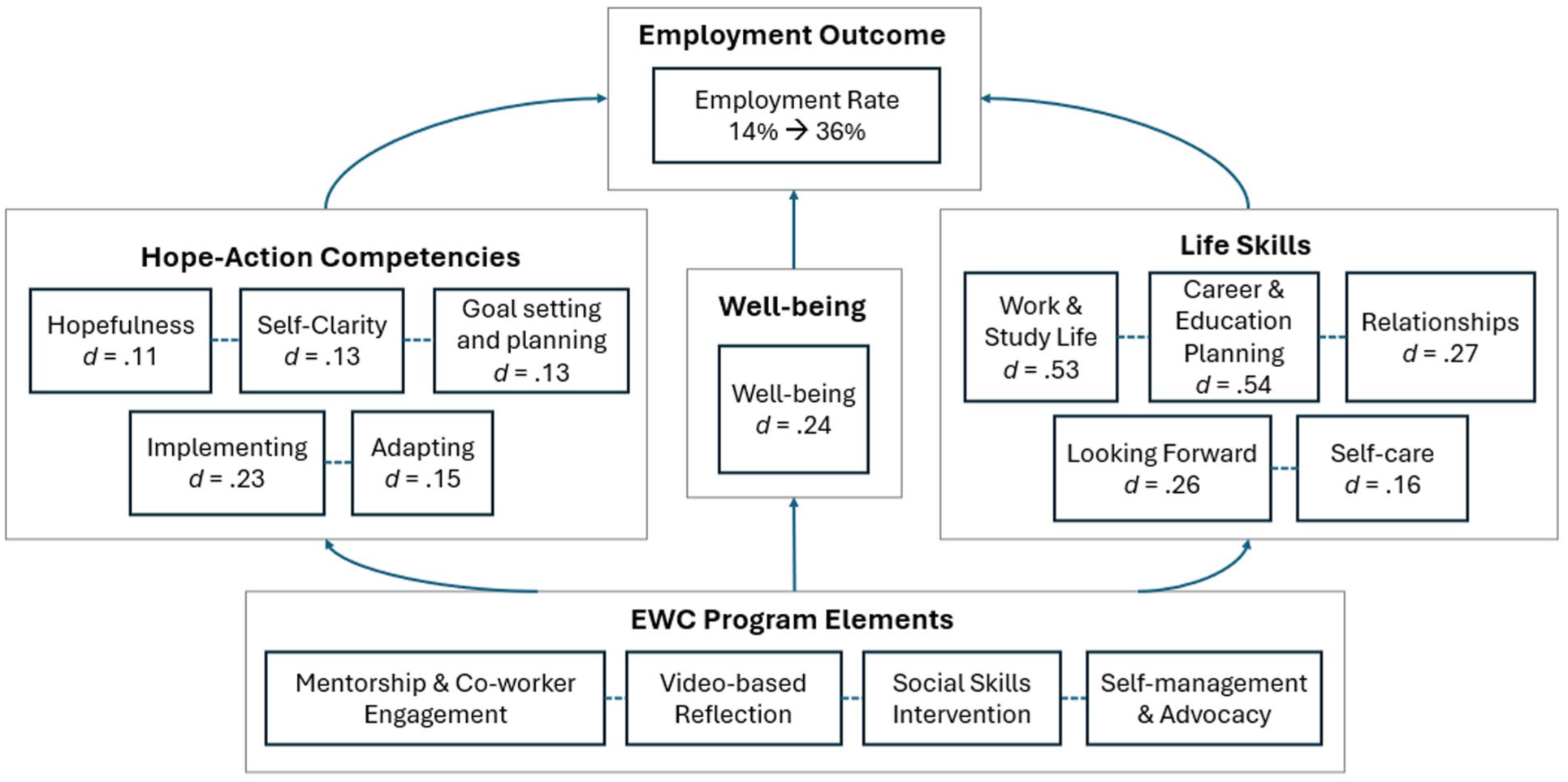
Integration of EWC program elements and participant outcomes.
First, specific program elements directly enhanced participants’ hope-action competencies. For instance, the significant improvements in implementing (Cohen’s d = .23) and adapting (Cohen’s d = .15) align with EWC’s emphasis on workplace experience and social skills intervention. The program’s use of video-based reflection and mentorship appears to have contributed to gains in self-clarity (Cohen’s d = .13) and hopefulness (Cohen’s d = .11).
Second, the ecosystem support structure of EWC fostered improvements in well-being (Cohen’s d = .24) and life skills. The most substantial gains were seen in work and study life (Cohen’s d = .53) and career and education planning (Cohen’s d = .54), reflecting the effectiveness of the program’s combined structured learning and workplace experience components. The involvement of family, community partners, and workplace mentors likely contributed to improvements in relationships and communication (Cohen’s d = .27) and looking forward (Cohen’s d = .26).
Perhaps most importantly, these developed competencies and skills translated into meaningful employment outcomes. The dramatic increase in employment rates from 14% to 36% 3 months after program completion suggests that the combination of enhanced hope-action competencies, improved well-being, and developed life skills effectively prepared participants for workplace success.
The Impact of EmploymentWorks Canada on Hope-Action Competencies
The HAI has been used for diverse groups of the workforce including immigrants, refugees, and the unemployed. For this study, the HAI was used for exploratory purposes to see if it is valid for individuals with ASD, even though EWC was not developed based on HAT. Given the initial interest, finding statistically significant differences in some HAI competencies (hopefulness, self-clarity, goal setting and planning, implementing, and adapting) before and after the EWC intervention is encouraging. The non-significant results with visioning might be due to the program’s limited focus on engaging participants in long-term visioning activities other than the immediate future in a work setting. Other studies also show challenges in increasing self-refection and visioning (e.g., self-reflection in Amundson et al., 2018; visioning in Clarke et al., 2018; self-reflection and visioning in Yoon et al., 2019). Nevertheless, it is not an impossible task to undertake, as there is evidence that self-reflection and visioning were positively affected by a program, as in the online group in Amundson et al. (2018) for both self-reflection and visioning and in Clarke et al. (2018) for self-reflection.
It is important to note that the effect sizes reported in this study are lower—demonstrating low to medium effect—than those reported by Clarke et al. (2018) and Amundson et al. (2018) with immigrants and the unemployed, respectively, which had medium to high effect. There can be two possible reasons. The first explanation is due to the characteristics of ASD that may make improvement in self-reflection and visioning challenging. However, compared to the unemployed adult group (Amundson et al., 2018), the ASD group’s pre-test scores of self-reflection and visioning were slightly higher, which implies that the ASD group does not lack those competencies compared to a neurotypical group. The second explanation is that EWC was not designed through the lens of HAT. For example, if EWC followed HAT, it would have had a component that asked the participants to envision their long-term future based on their unique strengths. In EWC, participants were asked to reflect on their immediate work experience and consider whether or not they could envision themselves working in such an environment. Although this task addresses visioning, it is more immediate rather than long term.
The Impact of EmploymentWorks Canada on Well-Being and Life Skills
This study illuminates the positive impact of the program on well-being and life skills with the exception of the daily living subscale of ACLSA-M. The daily living subscale consists of four items. Looking at the item content, those items address basic computer literacy such as accessing the Internet, searching for information on the Internet, using an email account, and working on computer documents, which was not part of the program curriculum. All other dimensions of life skills were integrated into the program. With regard to well-being, distress and emotional regulation of individuals with ASD are often reported as concerns (e.g., Mazefsky, 2015; Weiss, 2014). Due to their unique social, communication, and behavioral characteristics, these individuals might also experience an increased level of distress during their employment, as the workplace is a new environment with relatively little accommodation. However, it is notable that there was a significant difference in participants’ perceived well-being before and after the program along with increased employment success.
The Impact of EmploymentWorks Canada on Employment Status
This study confirms the significant impact of this program on the participants’ employment status after they had completed the program. Also, the study findings indicated that the program using an experiential approach based on an ecosystem framework also had a positive effect on the employment status 3 months beyond the completion of the program. While employment and retention are known challenges of individuals with ASD, this positive program outcome is encouraging. Previous studies also report positive employment outcomes of individuals with ASD who participated in a vocational preparation program (e.g., Keel et al., 1997; Strickland et al., 2013). In summary, it is crucial to establish partnerships between high schools and local providers so that, as individuals with ASD graduate from high schools and leave their Individual Education Plans, they can make a smooth and relevant transition to participating in training programs to prepare them for employment, helping them to become more independent and contribute as members of their communities.
Implications for HRD Practice
This study confirms that participation in a training program supporting specific employability skills increases the chance for employment for individuals with ASD. EWC demonstrated its effectiveness in increasing well-being, life skills, and hope-action competencies. The positive impact that EWC had was, in part, due to the integration of key stakeholders, such as employers, families, co-workers, and mentors in providing the intervention, which confirms the need to break organizational barriers for people with disabilities (Procknow & Rocco, 2016). In addition, this demonstrated that the use of structured socialization programs that involve mentors and other support mechanisms without relying on training alone (Kulkarni, 2012) resulted in positive outcomes. To translate the ecosystem approach into organizational settings, it can be equated to developing stakeholder partnerships along with strong supervisor support and mentoring relationships.
This study confirmed that clearly defined objectives and effective implementation induce participants to achieve the desired results such as improved well-being and life skills, and ultimately, employment status. Because the core purpose of the EWC was not to develop hope-action competencies, it was natural to see some non-significance in its subscales, which supports the need for content relevance (Burke & Hutchins, 2007) for effective training transfer. To advance the life conditions of individuals with ASD beyond attaining entry-level positions, training programs from different perspectives such as long-term subjective career success could be considered. For example, Yoon et al. (2019) employed long-term measures, such as hopeful career state, work engagement, and job satisfaction, for the participants who secured employment by the time of a 9-month follow-up and confirmed that a HAT-based career development program showed a significant impact on these variables, compared to typical employment programs. It is possible that an employment program for the ASD population can also demonstrate a significant effect on long-term outcome measures if the program intends to achieve them.
Contributions to HRD Theory and Scholarship
This study marks the first application of the HAI to individuals with ASD, providing valuable insights into how career development programs for this population could be strengthened from a HAT perspective. The good internal consistency of HAI with the autism population suggests its potential as a reliable outcome measure in career development studies focusing on individuals with ASD. This aligns with recent research by Currie et al. (2024), who found that the HAI demonstrated satisfactory psychometric properties, including good internal consistency reliability and convergent validity evidence, when used with individuals with substance use issues.
The use of HAI opens up possibilities to expand ASD research towards a long-term, psychologically successful career development perspective. This aligns with recent applications of HAT in various contexts, such as its use in understanding career adaptability during the COVID-19 pandemic (Yoon et al., 2021) and its application in organizational settings (Yoon, 2020b). Furthermore, this study bridges autism research and career development research, utilizing an emerging theory in the field of career development.
The ecosystem approach demonstrated in this study, as well as in Nicholas et al.’s (2019) research on the positive effects of EmploymentWorks Canada on employers, showcases the impact that an agent can make on the environment. This approach, benefiting multiple stakeholders while helping the target population, aligns with Bandura’s (1986) triadic reciprocal determinism among personal, behavioral, and environmental determinants. The recent change in HAT’s visual representation to include bidirectional arrows between the agent and the environment (Niles et al., 2020) is consistent with the findings of this research, emphasizing the reciprocal nature of these interactions.
Limitations
While this study provided positive results, caution needs to be used when interpreting the results. First, this study adopted a pre-and posttest design, which does not involve a control group. The participants might have had natural growth that may not be explained by their program participation. Second, there was low participation for posttests for employment status. Data, especially at T5, should be interpreted with caution. Second, this study cannot be generalized to all individuals with ASD as the program had many factors used for screening, such as greater independence and reading levels. Third, the self-care subscale of ACLSA-M exhibited low internal consistency, falling below .70 for both pre-and post-tests, which makes it difficult to accept that the items are measuring the same concept. On a related note, the ACLSA scores cannot be compared with other ACLSA scores obtained using ACLSA-IV as many items were removed and the equivalency of the modified ACLSA is not established.
Another limitation is the potential for response bias in our longitudinal employment data. Participants who secured employment may have been more likely to respond to follow-up inquiries than those who remained unemployed. This differential response pattern could result from social desirability bias, with unemployed participants potentially feeling reluctance to report their status. Such bias could lead to an overestimation of employment rates, particularly at later follow-up periods where response rates declined substantially (n = 40 at 12-month follow-up). Future research should implement strategies to mitigate this bias, such as providing participation incentives regardless of employment status and using multiple contact methods to reach non-responders. This limitation should be considered when interpreting the employment outcomes observed in this study.
Future Research Directions
Building on this study’s findings, limitations, and theoretical implications, several directions for future research emerge. First, an experimental study with a delayed treatment group should be considered to fully isolate the impact of the program and address the limitations of the current pre-post design. Second, considering the non-significant effect of the program on self-reflection and visioning, future studies should develop and evaluate HAT-based programs specifically designed for individuals with ASD. Such programs should incorporate content focusing on long-term subjective career success, allowing participants to deeply reflect upon themselves, identify core strengths and desires, and envision their best future scenarios beyond immediate work settings.
Given the limited longitudinal data on career development for individuals with ASD, future research should track long-term career trajectories beyond initial employment, examining how hope-action competencies evolve over time in workplace settings. Studies should also investigate organizational support mechanisms, including comparative analyses of different workplace accommodation strategies and mentoring approaches. The effectiveness of various training program designs represents another crucial area for investigation, particularly comparing traditional job training approaches with those incorporating hope-action competency development.
Methodologically, future researchers who modify the ACLSA scale must carefully consider including more items from the original scale to strengthen its reliability. Additionally, developing and validating ASD-specific modifications to hope-action measures could enhance our understanding of successful employment outcomes. Given the promise of the ecosystem approach, future studies should examine how different configurations of stakeholder involvement affect employment outcomes and assess employer readiness and adaptation strategies.
HRD researchers can lead these future research efforts by collaborating with scholars from various disciplines to help stakeholders in an ecosystem reach a clear understanding of the needs of individuals and organizations. Through partnerships with government, educational, and community agencies, HRD professionals can create ecosystems that accommodate the transition and success of talented individuals with ASD (Johnson et al., 2020). Such interdisciplinary collaboration will be crucial for expanding organizational capacity and creating more inclusive workplace environments that embrace neurodiversity. Given the projected growth in the ASD population entering the workforce, these research directions are essential for developing evidence-based practices in HRD that effectively support workplace neurodiversity.
Conclusion
This paper addressed the impact of a career development program for individuals with ASD. Diversity is “a vital responsibility” of the HRD field; accordingly, managing diversity in organizations is our “key competency” (Bierema, 2010, p. 565). As manifested in the increasing demographics of individuals with ASD, we claim that neurodiversity, such as ASD, should be included as an important area of HRD research and practice for diversity.
Footnotes
Acknowledgements
The authors acknowledge The Sinneave Family Foundation for permitting the use of the EmploymentWorks Canada program data for analysis and publication.

Funding
The authors received no financial support for the research, authorship, and/or publication of this article.
Declaration of Conflicting Interests
The authors declared no potential conflicts of interest with respect to the research, authorship, and/or publication of this article.