




Abstract
Virtual collaboration is now common, yet the everyday realities of Women of Color (WoC) in virtual teams remain underexamined. This study investigated how WoC experience virtual teamwork, the barriers they face, and the strategies that sustain performance and well-being. A basic qualitative design was used. Purposeful sampling yielded 13 WoC in the United States, ages 25 to 49, working across banking, oil and gas, retail, healthcare, and higher education. Semi-structured Zoom interviews of approximately 45 min were recorded and transcribed. Analysis followed a reflexive thematic approach supported by NVivo, with credibility strengthened through transcript verification, member checking, and analytic triangulation. Five themes emerged: (1) intersectional barriers intensify online, shaping access, belonging, and advancement; (2) marginalization produces recurring emotional and psychological strain; (3) virtual practices can obscure contributions, creating visibility and recognition gaps; (4) participants mobilize resilient tactics such as asserting presence, setting boundaries, building relationships, and amplifying ideas, alongside women for women support; and (5) structural and social supports, especially inclusive leadership, mentoring networks, and confidence building, enable fair participation and growth. Overall, virtual work can magnify inequities while also revealing practical levers that organizations can use to improve psychological safety, make contributions visible, and create equitable paths to advancement for WoC in distributed teams. Implications for Human Resource Development (HRD) include auditing visibility practices in virtual workflows, aligning evaluation with collaborative outputs, and targeting supports where inequities cluster.
Introduction
What I want young women and girls to know is: You are powerful and your voice matters. You’re going to walk into many rooms in your life and career where you may be the only one who looks like you or who has had the experiences you’ve had. But you remember that when you are in those rooms, you are not alone. We are all in that room with you applauding you on. Cheering your voice. And just so proud of you. So you use that voice and be strong. —U.S. Vice President Kamala Harris encouraging the women of color to amplify their voices and recognize their strength in challenging environments (Harris, 2020, para. 20).
Gender equity has been a long-standing concern for researchers and corporations, yet progress toward achieving true gender equality remains slow. According to estimates from organizations like the United Nations, it may take up to 300 years to reach global gender parity (The Guardian, 2023). This challenge is particularly pronounced for women of color (WoC)—individuals who identify as women and belong to historically marginalized racial or ethnic groups, including Black, Latina, Asian, Native American, and Indigenous womebrnarn. These women face unique barriers shaped by the intersection of gender, race, and cultural identity (Collins, 2000; Merriam-Webster, n.d.; Thompson, 2002). This intersectionality amplifies the discrimination and marginalization experienced by Black women, extending deeply into workplace contexts and perpetuating systemic inequities in professional environments (Collins, 2000; Crenshaw, 1989).
Despite incremental progress, WoC continue to face significant underrepresentation in leadership roles and STEM fields across the United States. As of 2024, WoC hold only 7% of C-suite positions, compared to 22% for White women and 56% for White men, highlighting persistent disparities in corporate leadership (LeanIn.Org & McKinsey Company, 2024). The “broken rung” phenomenon remains a critical barrier; for every 100 men promoted to manager, only 81 women are promoted overall. When disaggregated, promotion rates are 99 for Asian women, 89 for White women, 65 for Latinas, and 54 for Black women, indicating systemic challenges in career advancement for WoC (LeanIn.Org & McKinsey Company, 2024).
In the STEM workforce, WoC underrepresentation is equally pronounced. Women constitute 35% of the STEM workforce, with Latina, Black, and Indigenous women collectively making up less than 10%, despite representing 17% of the U.S. population (National Girls Collaborative Project, 2024). Specifically, Black women account for less than 9% of the STEM workforce and under 7% of doctoral candidates in science and engineering fields (Omotade, 2024). These statistics underscore the ongoing need for targeted interventions to address the systemic barriers that hinder the advancement of WoC in both corporate leadership and STEM domains.
Research on intersectionality has often centered on models designed to illuminate the persistent inequities faced by individuals with multiple marginalized identities. The double jeopardy model, for instance, posits that individuals representing multiple subordinate-group identities such as WoC who may also be single mothers or immigrants are more likely to experience heightened levels of prejudice and discrimination compared to those with a single subordinate identity, such as men who are racial minorities but not immigrants (Beale, 1979; Hancock, 2007; Reid, 1984). This concept is often framed through an additive model, which suggests that the accumulation of marginalized identities leads to cumulative discrimination (Almquist, 1975; Epstein, 1973).
Alternatively, the interactive model contends that the impact of these identities is not merely additive but is shaped by the ways in which subordinate identities interact to produce unique lived experiences within the social context (Hancock, 2007). Both models, despite their differences, highlight the profound influence of social group membership and social identity in shaping individual experiences of marginalization and discrimination. These models reinforce the importance of considering intersectionality within the broader context of social identity to fully understand and address the inequities faced by historically marginalized groups.
At the heart of social identity theory lies Tajfel’s (1972) foundational definition: “individual knowledge that [one] belongs to certain social groups together with some emotional and value significance to [this] group membership” (p. 292). Social identity is shaped by membership in social groups, influencing how individuals see themselves, what they value, and how they behave (Hogg, 2016). These social groups not only provide a sense of belonging but also position individuals within societal structures that often reflect power dynamics and systemic inequities.
Building on the foundation of social identity, Collins’ (2000) matrix of oppressions (MOP) offers a complementary lens by emphasizing how multiple forms of oppression—such as racism, sexism, and classism—intersect and interact, forming a complex web of perceived inequality. This intersectional framework highlights the unique and multifaceted challenges faced by WoC, whose social identities are shaped by overlapping systems of marginalization (Rivera, 2023). Together, social identity theory and MOP provide a theoretical basis for understanding how social group membership and intersecting oppressions converge to create distinct experiences of inequity.
Moreover, these frameworks underscore the importance of social contexts in shaping the coping strategies employed by WoC as they navigate systemic barriers (Patole et al., 2025). Social identity informs the ways individuals draw on their group affiliations for emotional support, collective resilience, and resource-sharing, while the MOP framework situates these strategies within a broader understanding of structural inequalities. Recognizing the interplay between these social contexts and coping mechanisms is essential for developing interventions and organizational practices that address the compounded challenges faced by WoC and promote equity in workplace environments. This integrated understanding fosters a more holistic approach to supporting WoC in the workplace, addressing both individual experiences and structural conditions.
Despite the relevance of these perspectives, there is scant research exploring how these frameworks apply specifically to the experiences of WoC in virtual work teams. As virtual work continues to reshape organizational dynamics (Yilmaz, 2024), it is crucial to examine the intersectional challenges faced by WoC in these settings. Virtual team environments introduce unique dynamics that can amplify existing inequities, yet the specific experiences of WoC in these contexts remain largely understudied. This lack of research not only limits our understanding of the systemic barriers WoC face and how they cope in virtual environments, but also perpetuates their marginalization by leaving critical issues unaddressed. We believe addressing this gap is essential for fostering equitable and inclusive virtual work environments that account for the diverse experiences and needs of all virtual team members. Accordingly, this study was led by the following research questions:
(1) What challenges did women of color encounter in virtual team environments?
(2) What coping mechanisms did women of color employ to navigate these challenges?
Literature Review
Virtual Work Teams
Virtual work teams, composed entirely of remote members, depend on digital platforms for structured collaboration, while hybrid teams combine physical and remote participation, each introducing unique equity-related concerns (Choudhury et al., 2021; Gibson & Gibbs, 2006). The structure and functioning of virtual teams demand a nuanced understanding of team composition, diversity, and the social dynamics that arise in these environments (McWhorter, 2023). Team composition should include team members the requisite skills to complete the team’s assigned tasks (Turner & Patole, 2024).
Virtual work teams have become an increasingly prevalent feature of modern organizations, yet they present unique challenges, particularly for WoC (Villamor et al., 2023), whose experiences are shaped by the intersection of gender, race, and cultural identity. In the United States, 35% of employed people worked at home on the days they worked in 2023, up from 24% in 2019, underscoring a durable shift toward hybrid and remote arrangements (Bureau of Labor Statistics, 2024). Virtual work teams may obscure the contributions of those already marginalized by identity-based hierarchies.
Cross-national policy synthesis emphasizes the need for consistent definitions and comparable metrics for telework to avoid misinterpretation of global survey evidence (Touzet, 2023). Scholarship from the UK higher-education sector documents persistent visibility gaps and leadership barriers for Black women, underscoring the need for context-specific inclusion in remote and hybrid settings (Showunmi, 2023). South African qualitative evidence with female public-service managers finds that remote work brings valued flexibility alongside intensification, boundary blurring, and control concerns (Chinyamurindi, 2022).
Survey research with women professors in Brazil reports workload intensification and heightened role conflict during telework even where flexibility is appreciated (Boehs et al., 2024). U.S. pipeline data show women of color remain underrepresented at senior levels even as flexible work expands, sharpening the case for inclusion safeguards in hybrid settings (LeanIn.Org & McKinsey Company, 2024). Therefore, understanding how team structure, technology, and identity intersect is a key to advancing effective Virtual Human Resource Development (VHRD) strategies (Bierema, 2009; McWhorter et al., 2008; Yoo et al., 2025).
Team Composition
Team composition relates to the “configuration of team member attributes and characteristics within a team that subsequently influence team processes and outcomes” (Zhu et al., 2021, p. 1283). Beyond the composition of team members skills for an assigned task, the design of a team must also involve a diverse make up of members in the areas of background, demographics, experience, nationality, gender, and organizational division or position to only name a few. Team diversity, which includes surface-level (e.g., race, gender), deep-level (e.g., values, attitudes), and functional diversity (e.g., departmental representation), significantly impacts team effectiveness (Mathieu et al., 2019). For WoC, who often navigate intersecting marginalizations, diverse teams can provide an opportunity for greater inclusion, yet they may also expose these individuals to systemic biases and stereotypes, particularly in environments where psychological safety is lacking (Clark, 2020; Edmondson & Roloff, 2008; Weiner et al., 2021).
Psychological Safety
The concept of psychological safety is central to fostering equitable work teams, including in virtual contexts (Weiner et al., 2021). Psychological safety allows team members to express ideas, raise concerns, and contribute without fear of harassment or retribution (Clark, 2020). Diverse teams, when supported by high psychological safety, can enhance information sharing, shared cognition, and overall team performance (Clark, 2020; Edmondson & Roloff, 2008). However, for WoC, the lack of psychological safety in team environments often exacerbates feelings of isolation and exclusion (Shore et al., 2018). In such cases, biases within teams can disproportionately burden WoC, requiring them to perform above expectations to gain acceptance or recognition.
Leadership Dynamics
Leadership dynamics further complicate the experiences of WoC in virtual teams. Leadership prototypes—culturally constructed norms of how a leader should behave—tend to favor masculine characteristics, disadvantaging minorities and women (Eva et al., 2021), particularly WoC, who do not fit these prototypes. In virtual teams, where shared leadership models are often employed, these biases can result in WoC being unfairly penalized for perceived underperformance, regardless of actual contributions. The absence of inclusive leadership exacerbates in-group and out-group dynamics, where WoC are frequently relegated to out-groups (Beins, 2015), limiting their influence and opportunities for meaningful participation.
The intersectional challenges faced by WoC in virtual work teams reflect broader systemic inequities rooted in social identity, power dynamics, and marginalization. Virtual work settings present unique obstacles, including amplified biases, a lack of psychological safety, and exclusion from leadership dynamics, which can further marginalize WoC and perpetuate inequalities. Addressing the research gap requires a focus on understanding the nuanced experiences of WoC and using these insights to develop equitable and inclusive practices in virtual work team environments.
Method
Research Design
We adopt a basic qualitative research design to focus on understanding how individuals make sense of their lives and experiences (Merriam & Tisdell, 2016). Creswell (2014) describes that qualitative research provides a powerful tool for exploring the lived experiences of individuals, offering a platform to amplify voices that might be overlooked in more quantitative approaches. By embracing principles such as depth, contextuality, and emergent exploration, researchers employing qualitative methodologies contribute to a more holistic understanding of the intricate phenomena that shape human experiences. This research heavily relies on the participants’ viewpoints and insights regarding the subject being examined (Creswell, 2014, p. 8).
Utilizing a qualitative research approach offers the flexibility required for participants to articulate their thoughts about a subject, offering a descriptive account of the phenomenon rather than delving into causation and explanation (Creswell, 2008). Qualitative research also acknowledges the importance of context, recognizing that meaning is often context-dependent and shaped by specific social, cultural, and historical factors. Creswell (2008) explains this contextual awareness enhances the validity and authenticity of the research findings, ensuring that the interpretations consider the broader environment in which participants operate. Ashworth (2008) emphasizes that in qualitative research, the emphasis lies on the participants’ perceived reality, and the use of qualitative methods enables an exploration of the experience’s meaning (Cooper & Schindler, 2007).
Participant Recruitment
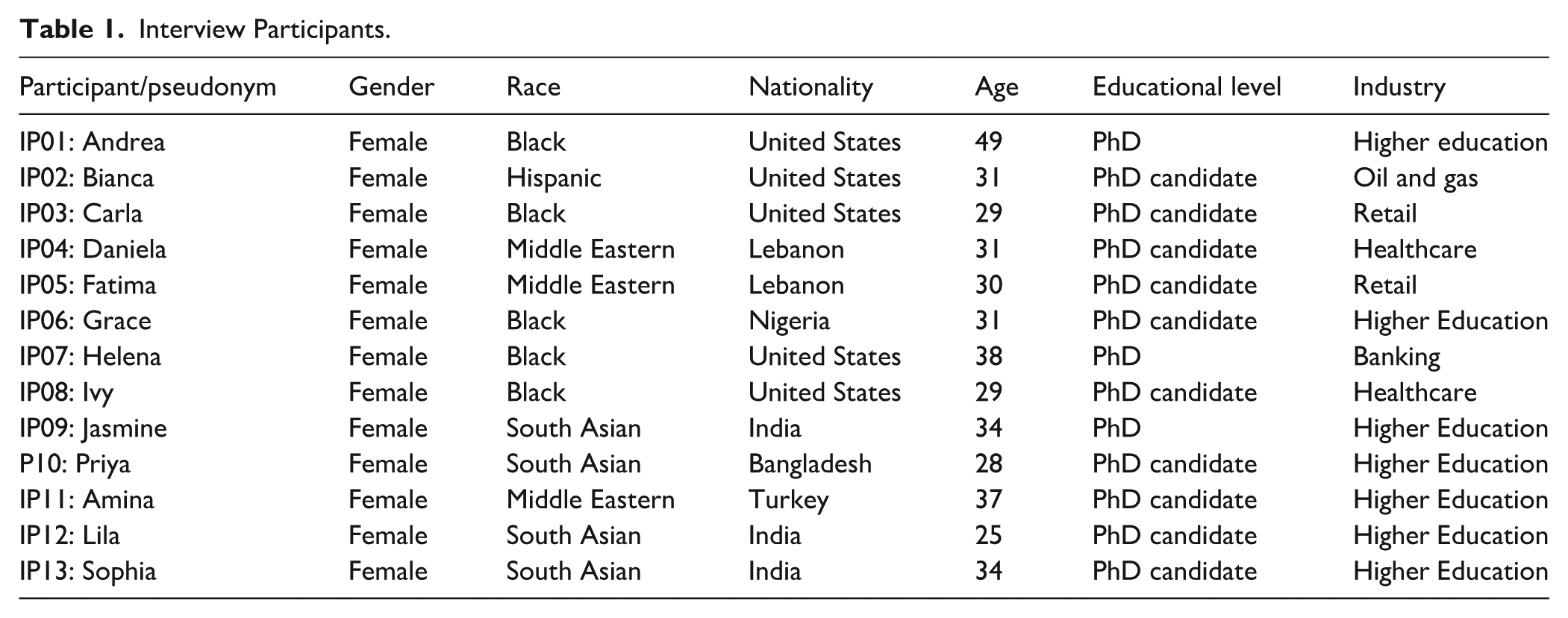
To capture the nuanced realities of WoC in virtual work settings, we employed purposeful sampling to select 13 participants (Table 1) from diverse professional and personal backgrounds (Bernard, 2017). The participants, aged 25 to 49, represent a range of industries: banking (1 participant), oil and gas (1), retail (2), healthcare (2), and higher education (7). All participants are highly educated, with three holding PhDs and ten currently pursuing their doctoral degrees. Selection criteria ensured participants (a) identified as female, (b) worked in teams of more than two individuals, (c) were minorities in their teams due to intersecting identities such as gender, national origin, color, or race, (d) resided in the United States during the study period, and (e) willingly provided informed consent. Efforts were made to include diversity in terms of seniority, years of experience, team size, and composition. The deliberate approach of purposeful sampling (Bernard, 2017) helps to highlight the complexity of challenges faced by WoC in virtual teams, enriching our understanding of their barriers, coping strategies, and resilience across a wide array of industries and career stages.
Interview Participants.
Data Collection
Prior to data collection, we received Institutional Review Board (IRB) approval from The University in September 2024. Interviews were semi-structured and guided by an interview protocol that included main questions and follow up questions (Merriam & Tisdell, 2016). Main questions included background information (e.g., What is your age? How do you identify yourself in terms of nationality, race, gender?), work experience (e.g., Can you describe your work experience? How would you describe your position within your team?) and questions about working in virtual teams:
What is your typical mode of interacting with teams (virtual, in-person, or hybrid)?
Do you face any challenges related to your identity during virtual collaborations?
What kinds of challenges do you encounter while working in teams?
Have you experienced any form of discrimination while working within your team or with other teams at large?
Follow-up questions were employed to elicit additional details and clarify responses to the main interview questions. Each interview lasted approximately 45 min on average and was conducted via the Zoom online platform, allowing for audio-video recording at a time agreed upon by the researcher and participants.
Data Analysis
Following each interview, the lead researcher documented reflections, decisions, and communications with participants (Braun & Clarke, 2019). Professional transcriptionists transcribed all recorded interviews, and the first author meticulously reviewed these transcripts to ensure data accuracy (Creswell & Creswell, 2017). To maintain transparency and enhance the reliability of the data, the interviewer shared the transcripts with participants for validation. Member checking (Motulsky, 2021) was employed as a reliability measure, enabling participants to review and verify the accuracy of their interview content.
Feedback from participants resulted in no significant changes, apart from minor spelling corrections. To ensure anonymity, each participant was assigned a pseudonym. Numbers were initially allocated to participants, and these were then randomly converted into names using a pseudonym generator via ChatGPT. This approach-maintained confidentiality while preserving the individuality of participants in the analysis and reporting process. The rigorous combination of transcription validation, member checking, and anonymity ensured the credibility, integrity, and ethical standards of the data used for analysis.
The first step in the data analysis process was acquiring the auto-generated recording and transcript facilitated by Zoom (Bokhove & Downey, 2018). The transcript serves as a fundamental data source, capturing the essence of the interview sessions. In the next step, the first author (principal investigator) performed an exhaustive cleaning procedure, which includes an examination of the transcript line by line, concomitant with attentive listening to the audio recording of each interview. This approach ensured the rectification of any inaccuracies or discrepancies present in the auto-generated transcript, thus enhancing the accuracy and reliability of the transcribed data.
Once the transcripts were cleaned and validated for precision, we employed the principles of thematic analysis (Braun & Clarke, 2019) to systematically analyze the data, identifying patterns and complex meanings within participants’ responses, enabling a deeper understanding of their lived experiences (Lester et al., 2020). The analysis began with an initial reading of the transcripts and research notes to identify meaningful statements, shared concepts, and potential coding categories. Using NVivo 12 for data management and coding, in the process of identifying unique codes that encapsulated various facets of participants’ experiences.
These codes were iteratively refined through six cycles of review and categorization, ultimately resulting in five coherent themes that reflected the most salient aspects of the data. To enhance the credibility and rigor of the findings, triangulation was employed throughout the analysis (Jonsen & Jehn, 2009). The lead author’s thematic analysis was cross verified by the co-principal investigator and qualitative expert, to ensure consistency and reliability (e.g., Carpenter et al., 2022).
Trustworthiness of Data
Throughout the process, we adhered to the transparency and clarity principles outlined by Lester et al. (2020), ensuring that the research findings were grounded in a thorough and systematic exploration of the data. This approach minimized the potential for bias and reinforced the credibility and validity of the study’s outcomes. The resulting themes represent meaningful patterns, recurring topics, and underlying ideas that emerged from the participants’ responses, offering rich insights into the intersectional challenges and resilience strategies of WoC in virtual work settings.
Research Positionality
The principal investigator of this study acknowledges the positionality influencing the research process and interpretation of findings as a 37-year-old person of color, working in the United States as a high skilled immigrant worker in tech, pursuing doctoral studies. The commonality in the lived experiences navigating systemic structures, workplace dynamics, and intersectional challenges inform the deep empathy toward the experiences of WoC working in virtual teams. Sharing salient experiences related to race, migration, and navigating minority status in professional spaces motivates the purpose of this research to provide platform to the underrepresented voices. These experiences heighten the researcher’s sensitivity to power dynamics, cultural nuances, and systemic inequities, approached with reflexivity throughout data collection and analysis. This study is committed to amplifying participants’ voices authentically and respectfully by recognizing my insider–outsider positioning, with critically aware of the biases.
Findings
Five themes emerged from this research, reflecting the nuanced experiences of WoC in virtual team environments: (1) intersectional barriers in virtual work environments, (2) emotional and psychological impacts of marginalization, (3) dynamics of virtual teamwork related to visibility and recognition, (4) strategies for resilience and advocacy, and (5) the role of structural and social support. Participants highlighted the emotional toll of navigating intersecting biases and systemic inequities in virtual settings, where their contributions were often undervalued or invisible. These experiences shaped their coping strategies and reliance on support systems, illustrating both the barriers they faced and the resilience they demonstrated. The findings emphasize the need to address equity for WoC in virtual workplace practices (Figure 1).
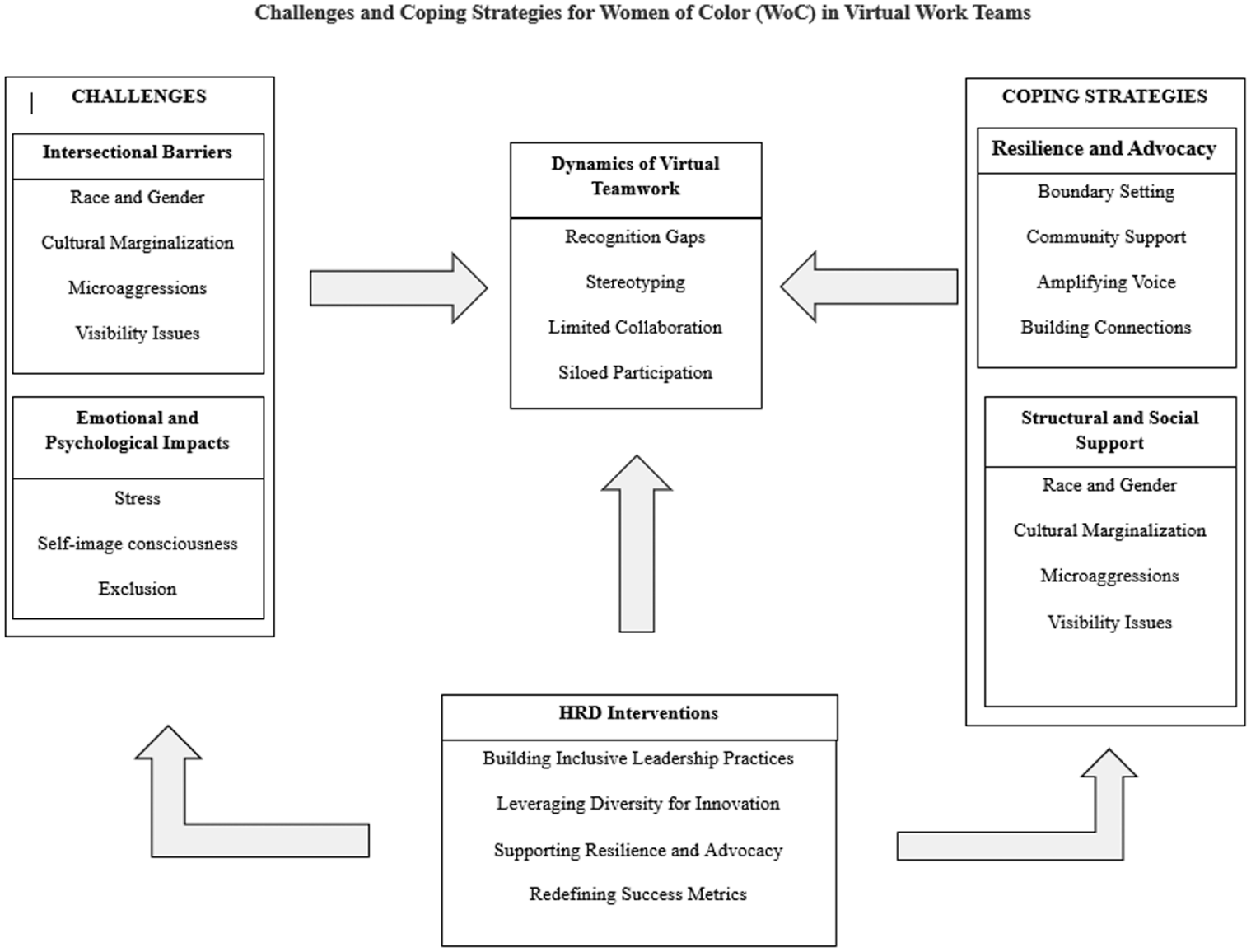
Challenges and coping strategies for women of color (WoC) in virtual work teams.
Intersectional Barriers in Virtual Work Environments
Participants’ narratives vividly captured the compounded challenges they faced in virtual team environments, shaped by the intersection of their race, gender, socio-economic status, and other marginalized identities. These barriers, rooted in systemic inequities, were further exacerbated in virtual settings, where limited physical presence amplified biases, invisibility, and marginalization (Rivera, 2023). Drawing on Crenshaw’s (1989) framework of intersectionality and Collins’ (2000) matrix of oppression, these experiences underscore how overlapping systems of marginalization converge to create distinct and intensified obstacles for WoC. Manifesting as systemic inequities, microaggressions—including microinsults, microassaults, and microinvalidations—and pervasive stereotypes, these barriers highlight the ways virtual environments reduce accountability, limit visibility, and reinforce biases. WoC’s lived experiences reveal how structural and interpersonal dynamics in virtual spaces demand significant emotional and professional labor to navigate and overcome these inequities.
Systemic Inequities
Participants highlighted the systemic inequities embedded in virtual team environments, reflecting how the intersection of race, gender, and socio-economic status shaped their experiences. Andrea shared, “It’s a lot of heavy burden to be the only Black person, especially taking on those instances.” This need to overcompensate was echoed by Grace, who described feeling micromanaged compared to her counterparts: “I feel like I get micromanaged compared to my counterpart because of my ethnicity and because of my gender.” These accounts draw attention to how virtual work settings can mirror and perpetuate existing systemic biases, placing an undue burden on WoC to prove their competence. The emotional and intellectual labor required to navigate these dynamics reflects broader structural inequities that disadvantage individuals with intersecting marginalized identities.
Microaggressions
Microaggressions were a pervasive aspect of participants’ experiences in virtual teams, often taking the form of microinsults, microinvalidations, or subtle exclusionary behaviors. Amina recounted the difficulty of being understood in virtual meetings, stating, “Sometimes, maybe at the beginning of our virtual meetings, I can say, people do not understand me exactly what I am saying.” And Lila reflected “That was a challenge where it was often like, if you have ideas, but you are thinking twice, thrice in your mind whether you want to speak up or not, because you’ll be clarifying the same point again and again.” These microinvalidations highlight how virtual environments can obscure individual contributions, leaving WoC feeling unheard and undervalued. The lack of accountability in virtual settings often exacerbates these dynamics, allowing microaggressions to persist unchecked and fostering a sense of exclusion among WoC.
Pervasive Stereotypes
The persistence of stereotypes further compounded the challenges faced by participants, with many describing the pressure to avoid reinforcing negative perceptions about their identities. For immigrant WoC, this included grappling with linguistic and cultural biases. Fatima’s insight offered: “If you’re wearing a hijab, they have certain assumptions of you… but you can just by showing up the first time with a good impression and the good work.” Jasmine shared how immigrant status shaped her approach to visibility: “Over the past 10 years, being an immigrant in a foreign country, you get conditioned to live in a way that you’re not always very visible to a lot of people, because you don’t want to attract negative attention.” Carla also noted the additional effort required to counter stereotypes in virtual settings: “I must go the extra mile to smile or to grin, or to make them [other attendees] feel comfortable…also making sure that when I’m communicating, because it is virtual, they can’t see a lot of my body language.” These narratives reveal how stereotypes, often amplified in virtual environments, place disproportionate burdens on WoC to manage perceptions and assert their presence.
Emotional and Psychological Impacts of Marginalization
The emotional and psychological toll of navigating systemic inequities in virtual team environments emerged as a significant theme in participants’ narratives. Participants described profound emotional stress resulting from the persistent challenges of workplace exclusion, harassment, stereotypes, and heightened self-image consciousness in virtual settings. These experiences reflect the deep psychological effects of marginalization, aligning with social identity theory (Tajfel, 1972), which highlights the critical role of belonging and recognition in shaping individual well-being. In virtual environments, the dynamics of exclusion are often intensified by the absence of direct interaction and the reliance on mediated communication, exacerbating feelings of isolation and self-doubt. These findings emphasize the critical need for organizations to address the systemic barriers and interpersonal dynamics that perpetuate emotional strain for WoC in virtual teams.
Emotional Stress
Participants described the significant emotional stress they experienced navigating systemic inequities in virtual team environments. The persistent need to overcompensate and assert their competence in the face of biases created an ongoing psychological burden. From Jasmine’s perspective “Over the past 10 years, being an immigrant in a foreign country, you get conditioned to live in a way that you know you’re not always very visible to a lot of people, because you don’t want to attract negative attention.” This stress was exacerbated by the limited opportunities for informal interactions and non-verbal communication in virtual settings, which often left participants feeling invisible and undervalued. Lila shared, “That was a challenge where it was often like, if you have ideas, but you are thinking twice, thrice in your mind whether you want to speak up or not, because you’ll be clarifying the same point again and again, and after that you kind of get exhausted.” These accounts highlight how emotional stress is not only tied to systemic inequities but is also amplified in the digital dynamics of virtual teams, where interactions often lack the immediacy and nuance of in-person communication (Bennett & McWhorter, 2021).
Harassment
Instances of harassment, both subtle and overt, further compounded the challenges faced by WoC in virtual teams. Participants described being ignored, dismissed, or subjected to behaviors that undermined their professional standing. Helena recounted, “The man was like ignoring me, not paying attention to anything I was saying.” Grace shared a similar experience, saying, “I’ve not been taken…seriously based on my gender and based on my nationality, because sometimes I’ve had people make a kind of a joke.” Such incidents were often more difficult to address in virtual environments, where the lack of physical proximity and informal oversight created space for harassment to persist unchecked. These experiences stress the need for inclusive mechanisms to ensure accountability and address inappropriate behavior in digital workspaces.
Stereotypes
Stereotypes, particularly those tied to race and gender, significantly shaped participants’ experiences in virtual teams. These stereotypes often influenced how participants’ contributions were perceived and valued, placing an additional burden on them to counteract negative assumptions. Carla remarked, “I feel like I get micromanaged compared to my counterpart because of my ethnicity and because of my gender.” Bianca described similar challenges in corporate settings: “Being a woman of color is so rare in certain industries, but especially like just corporate America.” These narratives reveal how pervasive stereotypes not only diminish opportunities for recognition but also reinforce the systemic biases that WoC must navigate daily. In virtual settings, where contributions are mediated by digital tools, these stereotypes can further obscure the impact of WoC’s efforts, creating an uneven playing field.
Self-Image Consciousness in Virtual Settings
The virtual nature of work introduced unique pressures related to self-image consciousness, as participants often felt scrutinized during video interactions or judged based on superficial characteristics. Carla noted, “I must go the extra mile to smile or to grin, or to make them [other attendees] feel comfortable…also making sure that when I’m communicating, because it is virtual, they can’t see a lot of my body language.” Jasmine added, “So when I’m already in a room filled with like tall people, I feel like they are judging me whether they do or not.” These accounts illustrate how the reliance on video conferencing heightened participants’ awareness of how they were perceived, often prompting them to expend additional emotional labor to manage these dynamics. This heightened self-consciousness, coupled with the limitations of virtual tools to convey authenticity, added another layer of complexity to the challenges faced by WoC in virtual teams.
Dynamics of Virtual Teamwork: Visibility and Recognition
The participants frequently expressed that the dynamics of virtual teamwork introduce distinct challenges that affected the visibility and recognition of their contributions. Virtual work challenges, such as asynchronous communication and reliance on video conferencing, often limit opportunities for individuals to assert their presence and showcase their efforts effectively (Olson & Olson, 2012). Team composition needs to consider the aggregate of skills at the team level of analysis rather than individual team member skills. Team composition has been positively associated with social integration shared cognition (Fisher et al., 2012), information sharing (Randall et al., 2011), and team performance (Bell, 2007). Therefore, Team composition impacts—particularly in teams with limited diversity—can further exacerbate the barriers, with systemic biases shaping how contributions are valued.
The nature of the industry also plays a critical role, as industries with deeply entrenched hierarchies or traditional norms may struggle to adapt to inclusive practices in virtual settings. Video technology, while a key tool for virtual collaboration, influences connections in ways that can disadvantage WoC, particularly when video norms amplify issues of self-image or create additional performance pressures. By comparison, participants noted that some in-person work advantages—such as informal interactions and clearer visibility of effort—are often lost in virtual environments. Without mechanisms to promote psychological safety and inclusive leadership (Edmondson & Roloff, 2008; Mathieu et al., 2019), virtual settings risk perpetuating inequities, limiting the recognition and engagement of WoC within teams.
Virtual Work Challenges
Participants described virtual work environments as inherently challenging due to their reliance on asynchronous communication and the limited ability to convey nuance through digital tools. This lack of immediacy often hindered the ability of WoC to effectively assert their presence or contribute meaningfully. Jasmine shared, “Over the past 10 years, being in a foreign country, you get conditioned to live in a way that you’re not always very visible to a lot of people, because you don’t want to attract negative attention.” This invisibility was magnified in virtual settings where communication was primarily text-based or video-mediated, reducing opportunities for informal conversations and spontaneous interactions that could foster recognition. Participants highlighted that these challenges often led to feelings of frustration and exclusion, as virtual work structures lacked the immediacy needed to bridge communication gaps effectively.
Team Composition Impact
The composition of virtual teams significantly influenced participants’ experiences of inclusion and recognition. Teams with limited diversity or unequal power dynamics often felt siloed (Silberman et al., 2022) and amplified systemic inequities, leaving WoC to navigate biases alone. Grace recounted, “I feel like I get micromanaged compared to my counterpart because of my ethnicity and because of my gender.” This experience points out how team composition that does not prioritize diversity can reinforce hierarchical structures, diminishing opportunities for WoC to contribute equitably. Participants also noted that diverse teams with inclusive practices tended to offer greater psychological safety, although such examples were less common. The lack of intentional efforts to design inclusive team structures often placed disproportionate burdens on WoC to bridge gaps in communication or foster collaboration, roles that frequently went unrecognized.
Industry Nature
The nature of the industry further shaped participants’ experiences within virtual teams. Industries with rigid norms or traditional hierarchies often exacerbated exclusionary practices, particularly in virtual environments. Bianca observed “Being a woman of color is so rare in certain industries, but especially like just corporate America.” And Ivy felt bias that “She’s young, you know, trying to wonder like, who is this girl? You know, she’s not white, and she’s not old” Participants from male-dominated fields described being overlooked or excluded during critical decision-making processes, a challenge that was heightened in virtual contexts. Grace’s reflection: “I’ve not been taken seriously based on my gender and nationality, because sometimes I’ve had people make a kind of a joke” adds to the examples illustrate how industry norms can perpetuate biases that limit professional growth and visibility for WoC, making it even harder to establish credibility or achieve recognition in virtual teams.
Video Influencing Connections
Video conferencing, a cornerstone of virtual collaboration, was both a tool and a barrier for participants. While video calls enabled face-to-face interactions, they also introduced pressures related to self-presentation and perceived performance. Carla shared, “I must go the extra mile to smile or to grin, or to make them [other attendees] feel comfortable…also making sure that when I’m communicating, because it is virtual, they can’t see a lot of my body language.” Participants noted that video norms often demanded additional emotional labor, as they felt compelled to monitor their expressions and tone to avoid reinforcing stereotypes. For some, video use was also tied to feelings of vulnerability, particularly when team members focused on superficial aspects rather than substantive contributions. These dynamics illustrate how video technology, while essential for connection, can inadvertently reinforce biases and intensify the challenges of being visible and recognized (McWhorter, 2023).
In-Person Work Advantages
Many participants reflected on the advantages of in-person work that were often absent in virtual settings. Informal interactions, opportunities to build rapport, and the ability to observe and adapt to team dynamics were cited as significant benefits of physical presence. Andrea noted, “You might be the only woman in the room, and you know I felt like people were like: Oh, you write on the board so they could watch me do it!” While this example reflects a dual-edged sword of visibility, participants often preferred the clarity and spontaneity of in-person environments over the constraints of virtual work. Priya added, “When I moved to the U.S. to work on my MBA degree, I couldn’t understand others’ English and others couldn’t understand [my] English,” highlighting how in-person interactions provided more opportunities to bridge language barriers and build mutual understanding. For WoC, the loss of these advantages in virtual settings meant fewer opportunities to form meaningful connections and assert their contributions.
Strategies for Resilience and Advocacy
Participants consistently reported employing a variety of coping mechanisms in virtual team environments to navigate systemic inequities and assert their presence effectively. These strategies included boundary setting to protect their emotional well-being, amplifying their voices to ensure their contributions were acknowledged, and building connections with colleagues to foster inclusivity and support. Participants also emphasized the importance of community support and solidarity among women, particularly in leveraging shared experiences to counteract exclusion and marginalization. These practices align with coping frameworks in social identity theory (Tajfel, 1972), which highlight the role of group affiliation in fostering resilience, and Silva et al.’s (2021) concept of leveraging community cultural wealth as a resource for empowerment. Together, these strategies illustrate how WoC actively advocate for their inclusion and recognition in virtual workspaces, creating pathways for both individual and collective resilience.
Boundary Setting
Participants frequently emphasized the importance of establishing boundaries as a coping mechanism to protect their emotional well-being and maintain focus in virtual team environments. Boundary setting allowed participants WoC to safeguard their energy while navigating systemic inequities. Carla described this as a necessity: “I must go the extra mile to smile or to grin, or to make them [other attendees] feel comfortable…also making sure that when I’m communicating, because it is virtual, they can’t see a lot of my body language.” By setting clear limits on their availability and emotional labor, participants managed the heightened expectations placed upon them in virtual settings. This approach aligns with Silva et al.’s (2021) framework of community cultural wealth, highlighting how marginalized individuals deploy strategies to sustain their resilience in inequitable systems.
Asserting Presence
To counteract invisibility in virtual team environments, participants often employed strategies to assert their presence and ensure their contributions were recognized. Lila shared, “That was a challenge where it was often like, if you have ideas, but you are thinking twice, thrice in your mind whether you want to speak up or not… after that, you kind of get exhausted.” Despite these challenges, participants actively sought ways to claim their space in discussions, with many leveraging assertiveness to challenge biases. For instance, Amina described how she adapted her communication to make her voice heard, even when others misunderstood her: “Sometimes, maybe at the beginning of our virtual meetings, I can say, people do not understand me exactly what I am saying.” These efforts reflect the considerable emotional and professional labor required to overcome systemic barriers and maintain visibility in virtual teams.
Building Connections
Building connections within teams emerged as a critical strategy for fostering inclusivity and overcoming feelings of isolation. Participants highlighted how forming relationships with colleagues provided both emotional support and professional validation. Bianca noted, “Being a woman of color is so rare in certain industries, but especially like just corporate America.” This rarity often motivated participants to seek out allies and mentors, even in virtual spaces, to create a sense of belonging. Jasmine emphasized the value of cultivating relationships with colleagues who shared similar experiences: “Over the past 10 years, being in a foreign country, you get conditioned to live in a way that you’re not always very visible…but you find ways to connect.” These connections not only helped participants navigate workplace dynamics but also served as a buffer against systemic inequities.
Amplifying Voice
The act of amplifying their voices was another vital coping mechanism participants used to counteract marginalization. This involved actively speaking up during meetings, advocating for their ideas, and addressing instances of exclusion. Andrea shared, “There were times when I’d be in a meeting and clearly be speaking just as I am, and someone else of a different identity would just start talking.” To address such dynamics, participants often employed strategies to reassert their ideas and ensure their contributions were not overshadowed. Carla noted, “I have to go the extra mile, especially because I’m the only Black person on my team—the only Black woman.” Amplifying their voices required both confidence and persistence, reflecting participants’ determination to be heard and recognized despite systemic barriers.
Women Supporting Women
Solidarity among women, particularly WoC, was a recurring theme in participants’ narratives. They described how mutual support among female colleagues provided a critical source of encouragement and advocacy in virtual team environments. Helena recounted, “It was a supervisor who denied me to apply for a leadership organization but supported my white colleague,” highlighting the importance of finding allies within the workplace. Participants also emphasized the role of mentorship and peer support in navigating challenges. Bianca noted, “Some people are rooting for you, and then some people get intimidated by that as well,” illustrating the dual-edged nature of relationships in virtual settings. These narratives highlight the transformative potential of collective advocacy and community building, which empower WoC to challenge systemic inequities and create more inclusive workspaces.
The Role of Structural and Social Support
Participants stressed that structural and social support systems play a critical role in addressing the systemic inequities faced by WoC in virtual team environments. Organizational practices such as inclusive leadership, peer support networks, and mentorship programs are pivotal in fostering equity and promoting professional growth. Participants highlighted the significance of women leadership support, emphasizing the impact of leaders who champion diversity and inclusion. Community support also emerged as a vital resource, with participants leveraging networks to navigate challenges and build resilience. Additionally, projecting confidence was seen as an essential strategy for overcoming barriers and asserting their presence in virtual teams. This theme aligns with Collins’ (2000) matrix of oppression and scholarship on fostering inclusivity in diverse teams, underscoring the importance of intentional structural and social interventions to create equitable and empowering virtual workspaces.
Women Leadership Support
Participants emphasized the pivotal role of supportive leadership, particularly from women leaders, in addressing systemic inequities and fostering inclusivity within virtual teams. Leaders who actively prioritized diversity and empowered team members created environments where WoC felt valued and supported. Helena highlighted the impact of a leader’s decisions: “It was a supervisor who denied me to apply for a leadership organization but supported my white colleague.” This absence of equitable leadership reinforced exclusionary practices, underscoring the need for leaders who actively champion equity. Conversely, participants described instances where women leaders served as advocates, offering mentorship and creating opportunities for professional growth. These descriptions align with scholarship on inclusive leadership, which demonstrates that leaders who prioritize diversity and foster psychological safety improve team dynamics and outcomes (Edmondson & Roloff, 2008). Women leadership support not only amplified participants’ contributions but also provided a critical buffer against the systemic inequities inherent in virtual work environments.
Community Support
Community support emerged as a vital coping mechanism for participants, offering both emotional sustenance and practical resources to navigate the challenges of virtual work. Building networks of peers and allies enabled participants to share experiences, seek advice, and collectively address workplace barriers. Jasmine recounted, “Over the past 10 years, being in a foreign country, you get conditioned to live in a way that you’re not always v-ery visible…but you find ways to connect.” This sentiment underscores the importance of social networks in creating a sense of belonging and mutual encouragement. Community support also allowed participants to challenge systemic inequities collectively rather than in isolation, reflecting Silva et al.’s (2021) concept of leveraging community cultural wealth. Through collaboration and solidarity, participants not only navigated virtual team dynamics more effectively but also worked to create more inclusive environments for themselves and others.
Projecting Confidence
The ability to project confidence was a critical strategy employed by participants to counteract stereotypes and establish credibility in virtual team environments. For WoC, this often meant managing perceptions and asserting their expertise in ways that transcended biases. Carla shared, “I have to go the extra mile, especially because I’m the only Black person on my team—the only Black woman,” illustrating the persistent need to exude confidence to overcome systemic barriers. Amina noted, “Sometimes, maybe at the beginning of our virtual meetings, I can say, people do not understand me exactly what I am saying,” yet she adapted her communication strategies to ensure her voice was heard. This effort to project confidence reflects the dual challenge of navigating both internalized and external biases. Research on leadership prototypes (Eva et al., 2021) supports the idea that confidence is often misinterpreted or undervalued in individuals who do not align with traditional leadership norms, further demonstrating the need for WoC to continuously assert their competence and presence.
Discussion
This study sheds light on the complex experiences of WoC in virtual team environments, revealing significant challenges stemming from systemic inequities, intersectional barriers, microaggressions, and stereotypes. These findings also illuminate the strategies of resilience and advocacy employed by WoC, emphasizing the role of community and organizational support in navigating these challenges. The results offer valuable insights into how the dynamics of virtual work environments can amplify pre-existing inequities, underscoring the importance of targeted interventions to create equitable and inclusive virtual workplaces (Figure 2).
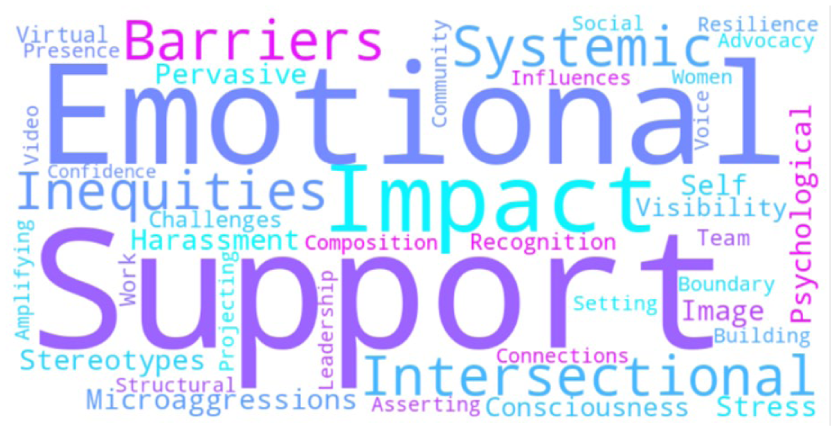
Word cloud for themes representing challenges and coping strategies for women of color (WoC) in virtual work teams.
The findings align with existing research on intersectional invisibility (Purdie-Vaughns & Eibach, 2008), wherein individuals with multiple marginalized identities experience compounded challenges in being both invisible and hyper-visible. Participants recounted the emotional toll of navigating these inequities, particularly in virtual settings where visibility and acknowledgment were already limited. This duality—being rendered “hyper-visible” due to racial or cultural markers like accents (Zhao & Biernat, 2017) while simultaneously feeling unseen in terms of their contributions—reinforces the systemic nature of these barriers. The phenomenon of “out-of-the-loop” exclusion (Jones & Kelly, 2009) and linguistic ostracism (Hitlan et al., 2006) further compounds the struggles of WoC, eroding psychological safety and diminishing their sense of belonging. Addressing systemic inequities in virtual settings requires organizations to implement structural reforms that enhance psychological safety and create visibility for marginalized contributions. Such efforts should include bias-aware performance evaluations and diversity-focused team composition strategies to mitigate the disproportionate burden placed on WoC.
The pervasive microaggressions reported by participants mirror prior research (Sue et al., 2007), highlighting the enduring impact of microinsults, microassaults, and microinvalidations in the workplace. These subtle, yet harmful, behaviors undermine professional relationships and contribute to a hostile environment, especially in virtual settings where informal accountability mechanisms are weaker. Participants shared instances of being interrupted or dismissed during meetings, reflecting broader patterns of exclusion that align with workplace ostracism (Ferris et al., 2008). For example, Andrea’s experience of being ignored mid-conversation illustrates how microaggressions erode confidence and reinforce systemic barriers. Organizations must develop anti-microaggression training and implement clear reporting mechanisms to address exclusionary behaviors in virtual settings. Leadership accountability and peer advocacy are critical to fostering an environment where microaggressions are actively challenged and rectified.
The dynamics of visibility in virtual teams emerged as a central theme, with participants navigating the tension between being hyper-visible and invisible. Participants described the unique challenges of being seen for their identity rather than their contributions, aligning with research on in/visibility (Lewis & Simpson, 2012). For example, the hyper-visibility of foreign accents or names (Milkman et al., 2012) often overshadowed professional competence, creating additional hurdles to recognition. These dynamics illustrate how virtual settings can amplify the inequities rooted in stereotypes and biases. Organizations must address the visibility challenges in virtual teams by prioritizing inclusive leadership practices and leveraging technology to enhance equitable participation. Regular feedback loops and collaborative tools that highlight individual contributions can mitigate the disproportionate invisibility faced by WoC.
Participants demonstrated remarkable resilience in navigating the systemic barriers of virtual teams, employing strategies such as boundary setting, asserting presence, and building community connections. These findings align with Silva et al.’s (2021) framework of leveraging community cultural wealth, which emphasizes the role of shared experiences in fostering resilience. By amplifying their voices and supporting one another, WoC created spaces for advocacy and empowerment, countering exclusionary workplace dynamics. For instance, Carla’s emphasis on “going the extra mile” to be recognized reflects both the burden of marginalization and the agency employed to overcome it. Supporting the resilience strategies of WoC requires organizations to establish mentorship programs, promote peer networks, and provide resources for leadership development. These initiatives can amplify the voices of marginalized employees and foster a culture of advocacy within virtual teams.
The role of structural and social support systems in addressing inequities was a recurring theme. Participants underscored the importance of women leadership support and community networks in mitigating the effects of marginalization. Research suggests that inclusive leadership can counter the stereotypes and biases that disproportionately affect WoC (Edmondson & Roloff, 2008). Helena’s experience of a supervisor undermining her opportunities highlights the absence of structural support, while other participants emphasized the value of solidarity among women in navigating workplace challenges. Organizations must embed structural support mechanisms, such as leadership accountability and community-driven initiatives, into their frameworks. By fostering environments where WoC can rely on social and professional networks, organizations can enhance both individual resilience and collective inclusion.
This study contributes to the growing body of literature on intersectionality and virtual work dynamics, offering a nuanced understanding of the systemic barriers and coping strategies experienced by WoC. The findings underscore the importance of addressing systemic inequities, visibility challenges, and microaggressions in virtual settings while amplifying the resilience and advocacy of WoC. By implementing targeted structural reforms and fostering inclusive leadership practices, organizations can create equitable environments that empower all team members to thrive.
Implications for HRD Research
The evolution of collaborative digital platforms has been driven by the COVID-19 pandemic (Bennett & McWhorter, 2021). Digital technologies support communication and coordination within various team forms, particularly in virtual teams (Morrison-Smith & Ruiz, 2020). Virtual teams introduce unique equity-related concerns (Choudhury et al., 2021; Gibson & Gibbs, 2006). Moreover, WoC working in virtual teams experience unique challenges related to collaboration, equity, and the role of technology (Gibson et al., 2023) in comparison to the in-person teams advantages with high social presence and rich communication cues (Maznevski & Chudoba, 2000).
While digital formats offer flexibility and expanded access, they also bring new obstacles for HRD, particularly regarding trust-building, team cohesion, and inclusive participation (Bennett & McWhorter, 2021; Edmondson & Lei, 2014). Virtual teams, conversely, may obscure the contributions of those already marginalized by identity-based hierarchies. Understanding how team structure, technology, and identity intersect is key to advancing effective Virtual Human Resource Development (VHRD) strategies (Bierema, 2009; McWhorter et al., 2008). Therefore, this study makes a nuanced contribution to the HRD scholarship by addressing the unique experiences of WoC in virtual work environments.
As virtual work expands in the post-pandemic era (Shockley et al., 2021), this research fills a critical gap by integrating intersectionality with team science, offering key insights into the systemic barriers and coping strategies that shape WoC’s experiences in these settings. The systemic inequities and microaggressions identified in this research underscore the importance of exploring how organizational structures and virtual team dynamics exacerbate exclusionary practices. Carter and Sisco (2022) highlight the limited access WoC have to social networks and mentors, further compounded by the structural challenges of virtual collaboration. These barriers limit career advancement opportunities and hinder the formation of critical relationships needed for professional growth.
Our findings align with this literature and emphasize the need for HRD scholars to address how virtual work environments shape these inequities. Additionally, the resilience strategies demonstrated by participants, such as boundary setting, amplifying voices, and leveraging community support expand the existing knowledge base in VHRD. McWhorter and Bennett (2010, 2020), McWhorter et al. (2008), Bennett (2009), Carpenter et al. (2023), and other HRD scholars, have emphasized the role of technology in unleashing human expertise. Thus, our study contributes to the HRD by revealing the gaps in current frameworks that fail to account for the intersectional challenges faced by WoC.
Integrating these findings into HRD scholarship can help develop more inclusive practices and technologies that promote equity in virtual collaboration. Accordingly, HRD researchers should prioritize the following areas:
Intersectionality in virtual teams: Investigate how intersecting identities influence team dynamics, decision-making, and leadership perceptions in virtual settings.
Inclusive technology design: Explore how digital tools can be adapted to reduce biases, enhance visibility, and promote inclusive interactions for marginalized groups.
Resilience and advocacy strategies: Further study the mechanisms that empower WoC to navigate systemic barriers and how organizations can support these practices.
Equity in team composition: Examine the impact of team diversity on psychological safety and performance outcomes, particularly in virtual work contexts.
By addressing these areas, HRD scholars can advance the theoretical and practical understanding of equity in virtual workplaces, ensuring that future frameworks are inclusive and actionable.
Implications for HRD Practice
For HRD practitioners, the study emphasizes the need for systemic interventions to address the inequities experienced by WoC in virtual teams. As the U.S. workforce grows increasingly diverse (Bureau of Labor Statistics, 2021), organizations must adapt their practices to reflect this reality and promote inclusion at every level. Our findings point to several critical areas where HRD practitioners can make meaningful changes.
Building Inclusive Leadership Practices
Inclusive leadership is a cornerstone of fostering equitable virtual workplaces. Leaders must actively challenge systemic biases, support diversity initiatives, and create environments where all voices are heard. For example, mentorship programs specifically designed for WoC can address the gaps in access to professional networks and career advocacy highlighted by Krivkovich et al. (2021). Training programs that focus on anti-bias education and psychological safety (Edmondson & Roloff, 2008) are essential for equipping leaders with the skills needed to address microaggressions and promote equity.
Leveraging Diversity for Innovation
The systemic barriers faced by WoC also highlight the untapped potential of diverse teams. Research consistently shows that gender and racial diversity positively impact innovation, engagement, and productivity (Brammer et al., 2009; Yang et al., 2022). HRD practitioners should focus on optimizing team composition by ensuring representation from diverse backgrounds, fostering collaboration, and implementing conflict resolution mechanisms to address tensions that may arise in heterogeneous teams (Davcheva & González-Romá, 2022; Patole, 2024).
Supporting Resilience and Advocacy
The coping strategies identified in this study—such as community support and amplifying voices—offer valuable lessons for HRD practice. Organizations should provide platforms for peer support, encourage the formation of employee resource groups, and facilitate cross-functional mentorship opportunities. These initiatives not only empower WoC to navigate workplace challenges but also build a culture of collective advocacy and resilience.
Redefining Success Metrics
Traditional success metrics often fail to capture the contributions of marginalized employees, particularly in virtual settings. HRD practitioners should develop evaluation frameworks that account for intersectional experiences, ensuring that WoC are recognized for their efforts and impact. This includes designing feedback mechanisms that emphasize collaboration, equity, and inclusion as core components of team success.
Limitations and Future Scope
This study’s scope can be broadened by including a larger and more diverse sample of WoC participants representing varying degrees and layers of intersectionality. The current participant pool predominantly comprises individuals pursuing or holding PhDs, which may limit the generalizability of findings to WoC with different educational backgrounds or professional experiences. Future research should aim to include WoC across a broader spectrum of education levels, industries, and socioeconomic contexts to capture a more comprehensive understanding of their experiences in virtual team environments. Such diversification would provide richer insights into the intersectional challenges faced by WoC and the strategies they employ to navigate them.
Conclusion
Savitribai Phule, a 19th century Indian social reformer remarked, “Break the chains and walk free, you are stronger than you think.” This study provides actionable insights for advancing HRD research and practice by addressing systemic inequities and fostering resilience in virtual work environments as echoed in. By amplifying the voices of WoC and illuminating the intersectional barriers they face—such as microaggressions, visibility challenges, and a lack of structural and social support. This study contributes a nuanced understanding of their experiences and strategies for empowerment. Furthermore, this research highlights the resilience and advocacy of WoC, shedding light on systemic challenges while inspiring transformative action toward equitable virtual workspaces. By sharing these stories of strength and persistence, the study calls on WoC and allies alike to foster a collective commitment to breaking barriers and building inclusive futures in the evolving landscape of work. It underscores the critical role of HRD scholars and practitioners in driving intentional structural reforms, championing inclusive leadership, and implementing equity-focused interventions to create virtual workplaces that are not only diverse but also inclusive and empowering.
Footnotes
Acknowledgements
I express sincere gratitude towards every participant representing the voice of Women of Color, for sharing their experiences. Their courage and strength inspire and shape up this rigorous research endeavor which will surely motivate the readers. I am also thankful to Dana Gorbett, IRB Coordinator for the Institutional Review Board at The University of Texas at Tyler for guiding us through the process.

Ethical Considerations
The study is The University of Texas at Tyler, Institutional Review Board approved vide IRB # 2024-140-UT Tyler.
Consent to Participate
Written consent to participate was obtained from each participant.
Consent for Publication
There is no identifying personal information (such as name, contact information, etc.) revealed from the information obtained from the participants.
Author Contributions
Author 1 served as the principal investigator, leading the research initiative and overseeing data collection, data analysis, and initial manuscript drafting, while also contributing practitioner insights. Author 2, as the co-principal investigator, was responsible for data analysis, methodological validation, and initial draft writing, bringing expertise in Virtual HRD and gender studies. Author 3 contributed to manuscript drafting, data analysis, and findings validation, leveraging industry experience to enhance practical relevance. Author 4 played a key role in manuscript drafting, contributing specialized knowledge in Team Science scholarship. Author 5 contributed to manuscript drafting, offering practitioner expertise and scholarly insights in Diversity, Equity, and Inclusion.
Funding
The authors received no financial support for the research, authorship, and/or publication of this article.
Declaration of Conflicting Interests
The authors declared no potential conflicts of interest with respect to the research, authorship, and/or publication of this article.