



Abstract
Background:
Personal care products (PCPs) are a significant source of environmental chemical exposures among women of color. Prior studies suggest that individuals may reduce their exposures by avoiding certain ingredients while shopping; however, the efficacy of this strategy has not been evaluated in Black and Hispanic/Latina women.
Methods:
Through a community-academic partnership, 70 Black and Hispanic/Latina women living in South Los Angeles (1) reported product selection strategies, (2) documented their product use for 1 week using a smartphone app, and (3) provided urine samples that were analyzed for 28 chemicals commonly found in PCPs. We investigated associations between product selection strategies (e.g., avoiding products with fragrances) and urinary chemical concentrations.
Results:
We detected phthalate metabolites, benzophenone-3, parabens, and chlorinated phenols in nearly all participants. Black women (100%) were more likely than Hispanic/Latina women (66%) to report selecting products based on ingredients. Fragrance was reported as the most avoided ingredient among all women followed by parabens among Black women and bisphenol A among Hispanic/Latina women. Avoiding chemicals while shopping was associated with lower urinary concentrations of certain chemicals. For example, Black women who reported avoiding fragranced products had significantly lower median concentrations of monoethyl phthalate, a metabolite of fragrance ingredient diethyl phthalate, than women who did not report avoiding fragranced products (avoider = 95.0 ng/mL; non-avoider = 276 ng/mL; p = 0.03).
Conclusion:
While individual-level behavior change can help shift chemical exposures among Black and Hispanic/Latina women, advocacy for safer chemicals and ingredient transparency is needed to achieve health equity.
Keywords
INTRODUCTION
Personal care products (PCPs) are an important source of exposure to synthetic chemicals including phthalates, parabens, triclosan, and benzophenone-3 (BP-3). These chemicals act as scent retainers, preservatives, antimicrobials, and sun protectants. A growing body of evidence indicates these chemicals can disrupt hormone regulation, interfere with healthy reproduction and development, and promote cancer.1,2 Since PCPs are used across the life course, exposures can be chronic in duration and adverse impacts may be magnified during critical windows of human development. 3
Environmental justice efforts highlight the unique vulnerability of women of color due to their disproportionate use of certain PCPs. Black, Asian, and Hispanic/Latina women use more hair products, menstrual/intimate care products, and cosmetics than White women.4,5,6,7 This higher use can, in part, be attributed to the environmental injustice of beauty, a framework that emphasizes discriminatory social and economic systems that have codified a hierarchy of beauty norms, which glorify physical features aligned with White femininity. 8 Consequently, real or perceived benefits of conforming to racialized beauty standards are important drivers of PCP use and environmental health disparities.9,10,11,12
Multiple studies demonstrate that Black and Hispanic/Latina women have higher urinary concentrations of parabens and phthalate metabolites than White women across the life course.13,14,15,16,17,18
Moreover, product use is associated with higher urinary concentrations of non-persistent PCP chemicals in Black and Hispanic/Latina women. For example, a study using nationally representative data found that reproductive-age women who used vaginal douches had higher concentrations of monoethyl phthalate (MEP) than nonusers and that Black–White differences in douching partly explained Black–White differences in MEP. 19 Among Latina teens, recent use of sunscreen, toothpaste, and certain cosmetics was associated with higher concentrations of phthalates, parabens, BP-3, and triclosan. 20 Lastly, the use of multiple PCPs was associated with phthalate and phenol biomarkers in a sample of Black women from Detroit, Michigan.21,22,23
Given racial and ethnic inequities in chemical exposures and the critical role of PCPs in shaping exposures, there has been significant interest in understanding whether “shopping your way to safety” might be one avenue for reducing exposures. 24 Researchers have hypothesized that modifying individual-level PCP use could be one way to mitigate health inequities in the absence of manufacturer responsibility or improved federal chemical policy.25,26,27 Behavioral changes focused on reading labels and shopping strategies to avoid products with certain ingredients have become popular with the rise of consumer-facing tools (e.g., Environmental Working Group Skin Deep Database) and retailer-supported efforts (e.g., Target Clean). Avoiding products that do not list specific ingredients has led to exposure reductions in certain populations. For example, urinary concentrations of BP-3 and methyl and propyl paraben significantly decreased in Latina teens when they used low-chemical PCPs for 3 days as part of an intervention study. 28 Exposures to parabens, triclosan, and BP-3 were significantly lower among those reporting to choose products without certain ingredients compared with those who reported no such behavior in a study of mostly White, highly educated U.S. adults. 29
Shopping for “cleaner” products seems like an easily accessible and widely applicable strategy to reduce exposure to PCP chemicals, particularly considering that PCPs are largely underregulated at the federal level. However, although efforts to understand whether differential purchasing can limit exposures have been of long-standing interest, the limited work in this space has focused on primarily White populations. 30 As a result, it is unclear whether this strategy is an appropriate and effective recommendation for communities of color. Shopping for safer products can be complicated by social-structural factors, including the higher cost of “safer” products compared with regular products. 31 These “safer” products are often less available in neighborhoods of color and low socioeconomic status due to retailer redlining. 32 Furthermore, more toxic products are often targeted for sale in these marginalized communities, who often experience intersectional discrimination and the highest pressures to use these products.33,34 As a result, these communities need effective solutions aimed at helping to reduce their exposure to chemicals in PCPs.
We launched the Taking Stock Study (TSS) in 2018 to understand the role of consumer product use and chemical exposures as an underexamined dimension of environmental justice. Our central research neighborhoods are situated in South Los Angeles, populated by predominantly low-income Black and Latinx families. Over 90% of residents are people of color (self-identify as Latinx/Hispanic, Black, Asian, and/or a race other than White), and approximately three-quarters of residents live below 200% of the poverty line. 35 According to CalEnviroScreen, California’s environmental justice screening tool to identify highly vulnerable communities, this area is among the top 10% most disproportionately environmentally burdened in the state. 36 These neighborhoods, when compared with the state, fall into the bottom 20% for educational attainment and among the top 15% for poverty. Our current study objective is to share data on self-reported product selection strategies based on ingredients and their relationship with short-term product use and urinary chemical concentrations.
METHODS
Community-science study overview
The TSS is a community–academic partnership co-led by University of California Santa Barbara (research team formerly at Occidental College) and Black Women for Wellness (BWW) with local promotores de salud (community health workers), Silent Spring Institute, and Columbia University. 37 BWW has a decades-long history of organizing and supporting environmental and reproductive justice efforts for Black Women and Girls in Los Angeles, and LA Grit Media, an organization of local promotores de salud with strong health justice connections to Los Angeles residents. A promotor de salud is a community member who is linked with the cultural and neighborhood connection and in this local, networked approach provides health education and community outreach for improved health.38,39
BWW supported the recruitment of 35 women (referred from this point as Black women). BWW recruited Black women through their networks, including reaching out to their existing members, tabling at events in Los Angeles, and advertising the study on their social media pages. LA Grit Media and their team of promotores de salud recruited 35 women (referred from this point as Hispanic/Latina women). Together, they partnered with several local nonprofit organizations, community groups, universities, and libraries, which assisted in distributing study information, such as sharing recruitment flyers via email listservs and social media or at in-person community events. As part of the recruitment process, both organizations explained to the potential participants the purpose of the study, which aimed to understand chemical exposures from PCPs commonly used by Black women and Latinas. All participants had to identify as women, live in South Los Angeles, and be between 18 and 49 years old.
Seventy participants documented daily consumer product use over the course of a week using a smartphone app developed for the study, provided urine samples for chemical analysis at the end of the week, and completed surveys at the start (baseline) and end (post) of the week (Fig. 1). Data collection methods are described in detail below. The study protocol was reviewed and approved by Occidental College’s Institutional Review Board.
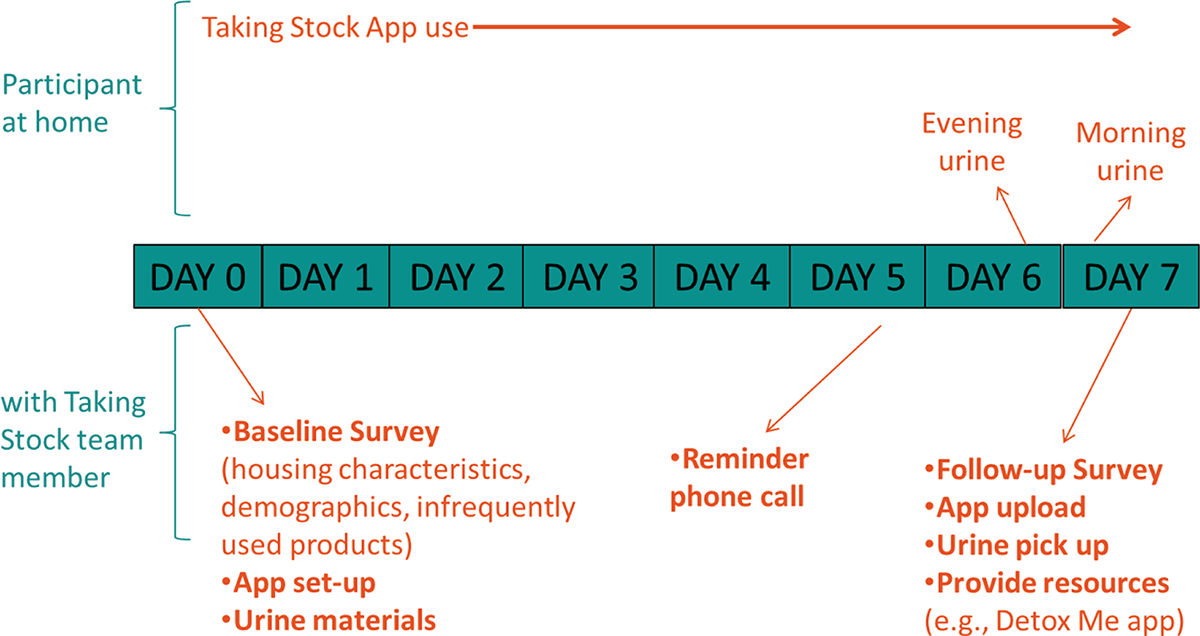
Diagram of the weeklong Taking Stock Study community-science phase for 70 women from South Los Angeles.
The study was designed as a community-centered study where research team members would support data collection and teach participants to use the app through home-based meetings; however, with the onset of the COVID-19 pandemic, the community–academic team pivoted to a fully remote study. To ensure adherence, our study team communicated with participants via phone and scheduled meetings over video chat or outdoors based on participant preference. Our research team adhered to the Los Angeles County Department of Public Health COVID-19 protocols in place at the time of the study. We also completed a video tutorial that would guide participants on how to use the app. All on-the-ground research team members were provided with personal protective materials, including masks and latex gloves. We reduced in-person interaction to a minimum.
Participant characteristics and product selection strategies
At baseline, we gathered information about general product use, demographics, and health. We also asked questions about product selection strategies. Participants were asked how often they select products based on ingredients and could select one of the following responses: never; rarely [maybe for 1 or 2 products], sometimes [for a few products], often [for most products], always [for every product], or prefer not to answer. Participants who selected anything except “never” were asked, separately, if they avoided products with parabens, phthalates, triclosan, fragrance, bisphenol A (BPA), BP-3, or products described as antimicrobial/antibacterial. Participants could select one of the following responses: I don’t know what [each chemical] is; I know what [chemical] is but I never avoid these products/I never avoid these [fragranced or antimicrobial/antibacterial] products; sometimes [for a few products]; often [for most products]; always [for every product purchased]; and prefer not to answer. The survey was available in both English and Spanish and could be self-administered online or administered by or with the assistance from a study team member, as preferred by the participant.
Taking Stock smartphone app to document product use and ingredients
We developed the TSS app to obtain comprehensive data about product use. The app, created with the functionality and product database based on Silent Spring’s Detox Me app, was made available in both English and Spanish for both iOS and Android devices. We generated unique codes for each participant that granted participant access to create personal product inventories by scanning product barcodes, manually entering product information (i.e., product name and category), and taking photos of product labels and ingredient lists. Each recorded product use was date and time stamped. When products were added to a personal inventory, they were also added to a study-wide product database. We assessed product ingredient labels using optical character recognition to create a dataset of ingredients.
Community-science data
At the beginning of the week, we asked participants to complete a baseline survey, assisted in setting up the TSS product app, and gave instructions and materials for urine collection. Over the course of a week, participants documented use of cosmetics, hair, personal care, menstrual/intimate care, pest control, air fresheners, and household cleaning products (Fig. 1). Participants could contact a study team member via text message or phone if they faced challenges. All participants were contacted by a study team member on the fourth day of logging products for a check in (Fig. 1). We have learned from prior community-based research that study engagement when using technology such as a phone is improved with a mid-week check in from a research team member. 40
Urine collection and analysis
Participants collected two urine samples, one on the evening of day 6 and a second on the morning of day 7. Participants stored urine samples in their home freezers and a study team member picked them up within 1–2 days and transported them to a −20°C freezer located in a secure biology lab at Occidental College. Samples were stored at Occidental College until they were shipped overnight to NSF International analytical laboratory (Ann Arbor, Michigan) for analysis. Each participant’s two samples were composited (equal volumes) and analyzed for the following 28 chemicals commonly used in PCPs: ortho-phthalate metabolites (mono-n-butyl phthalate [MBP], mono-benzyl phthalate [MBZP], mono-carboxy isononyl phthalate [MCNP], mono-carboxy octyl phthalate [MCOP], mono-[3-carboxypropyl] phthalate [MCPP], mono-[2-ethyl-5-carboxypentyl] phthalate [MECPP], mono-[2-ethyl-5-hydroxyhexyl] phthalate [MEHHP], mono ethylhexyl phthalate [MEHP], mono-[2-ethyl-5-oxohexyl] phthalate [MEOHP], MEP, mono-isononyl phthalate [MINP], and mono-isobutyl phthalate [MIBP]); metabolites of non-ortho-phthalate plasticizers (cyclohexane-1,2-dicarboxylic acid mono hydroxyisononyl [OH-MINCH], cyclohexane-1,2-dicarboxylic acid mono carboxyisooctyl ester [CX-MINCH], mono-2-ethyl-5-carboxypentyl terephthalate [MECPTP], and mono-2-ethyl-5-hydroxyhexyl terephthalate [MEHHTP]); phenols (BP-3, BPA, bisphenol F, bisphenol S, 2,4-dichlorophenol [2,4-DCP], 2,5-dichlorhophenol [2,5-DCP], triclosan, and triclocarban), and parabens (butyl-, ethyl-, methyl-, and propyl paraben).
Urine samples were analyzed using methods similar to those used by Centers for Disease Control and Prevention’s Environmental Health Laboratory and to those described previously. 41 Briefly, samples underwent a solid-phase extraction followed by analysis by high-performance liquid chromatography-isotope dilution tandem mass spectrometry, operated in negative ion mode. Analyte recovery was verified on a sample-to-sample basis using isotopically labeled surrogate standards.
We implemented several quality control measures to assess the accuracy and reliability of our data. Detailed information about the QA/QC data and procedures is provided in the Supplementary Data (Supplementary Table S1). Briefly, accuracy, which was assessed with laboratory control spikes, was good (within 80%–115% for all diluted and undiluted spikes). We did not find any detectable levels in any of the blank samples; however, we blank corrected concentrations for 5 phenols (BP-3, BPA, triclosan, and ethyl and methyl paraben) due to low level estimated detects (reported but below the limit of detection [LOD]) in all the blank samples. Relative percent difference between detectable levels in split samples was below 30%, indicating good precision.
The lab provided specific LOD for each analyte and reported values as detect, non-detect, or estimated detect. Values reported as detect that were below LOD and all non-detects were replaced with a value equal to the LOD divided by 2. 42
Data analysis
We stratified all analyses by recruitment group (i.e., Black women and Hispanic/Latina women) because they had distinct demographic characteristics, including income levels and educational profiles. We calculated descriptive statistics for the urinary concentrations. Geometric means were only calculated for chemicals that were detected in at least 60% of samples. Chemicals that were not detected in at least 60% of samples were dropped from the remaining analyses. We calculated the molar sums of di(2-ethylhexyl) phthalate metabolites and methyl and propyl parabens (see Supplementary Data for calculation details).
We used heat maps to characterize product selection strategies by recruitment group. Household income can be an important driver of product purchasing; we also show product selection strategies further stratified by household income categorized into three groups: less than $25,000, $25,000–$49,999, and $50,000 and higher. We used Fisher’s exact test to investigate the association between product selection strategies and income. We categorized participants’ responses about product selection strategies into two groups: avoider (always, sometimes, often, rarely or selects products based on ingredients) and non-avoider (I know what [each chemical] is but I never avoid products, I don’t know what [each chemical] is, or I never avoid these products, never select products based on ingredients).
We further categorized participants’ responses about product selection strategies into two or three groups: frequently (always or often), infrequently (sometimes or rarely), and never select products based on ingredients. We used the non-parametric Wilcoxon test and Kruskal–Wallis test to assess significant differences in urinary concentrations across product selection strategies.
We compared the urine concentrations based on product selection strategies around products with phthalates, parabens, BP-3, and BPA. We also assessed whether fragrance avoidance was associated with MEP, a metabolite of diethyl phthalate (DEP; common fragrance ingredient). For these analyses, we categorized participants into two groups: avoid (always, sometimes, or often) or non-avoider (I know what [each chemical] is but I never avoid products, I don’t know what [each chemical] is, or I never avoid these products). Hispanic/Latina participants who said that they never select products based on ingredients were also classified as “non-avoiders.” We used the Wilcoxon test to assess significant differences in urinary concentrations across avoidance groups. Analyses were conducted in R version 4.2.2. 43
RESULTS
Characteristics of study participants
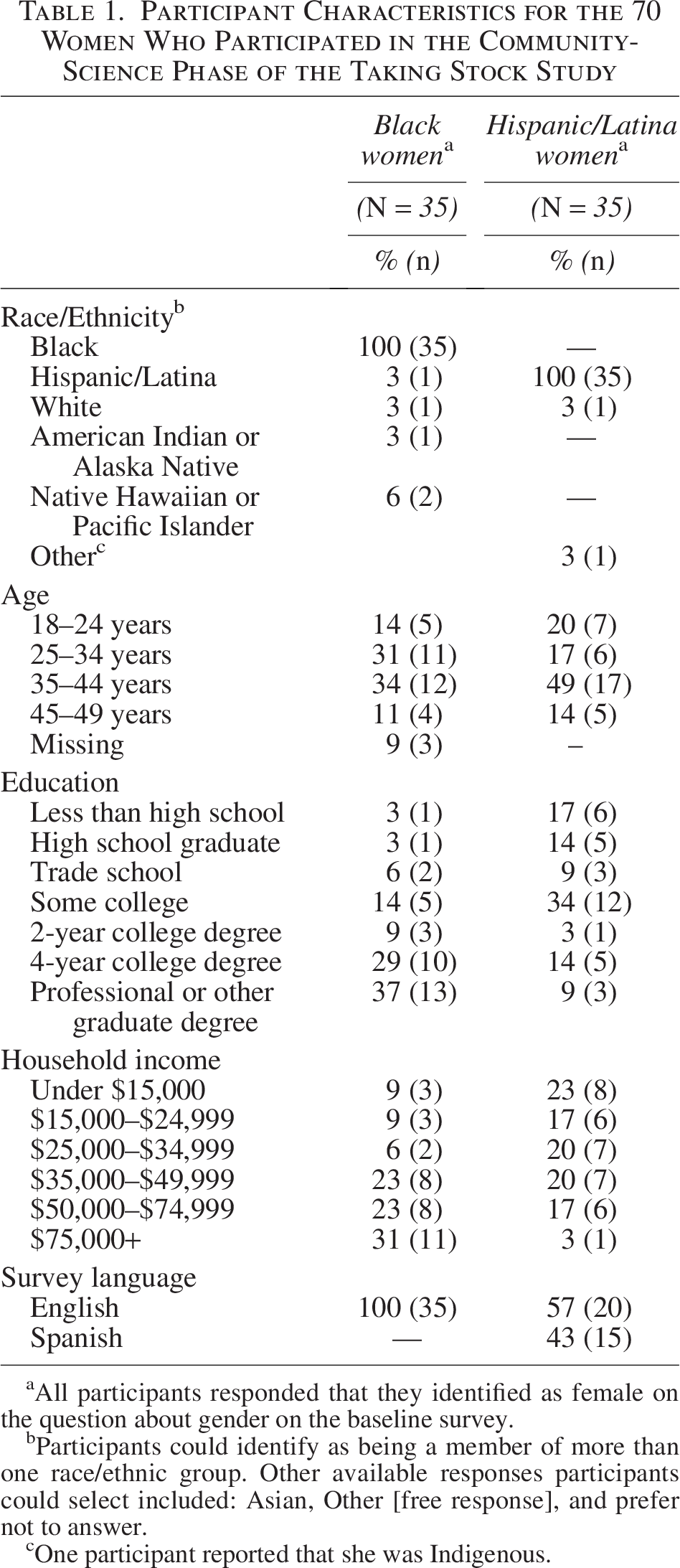
Among women recruited by BWW, all self-identified as Black or African American, with one woman also identifying as Hispanic/Latina, White, American Indian or Alaska Native, and Native Hawaiian or Pacific Islander. Another woman identified as Black and Native Hawaiian or Pacific Islander. This group was mostly within the 25–34 or 35–44 year age-groups (31% and 34%, respectively), had household incomes of at least $75,000 (31%) and 37% had professional or other graduate degrees (Table 1).
Participant Characteristics for the 70 Women Who Participated in the Community-Science Phase of the Taking Stock Study
All participants responded that they identified as female on the question about gender on the baseline survey.
Participants could identify as being a member of more than one race/ethnic group. Other available responses participants could select included: Asian, Other [free response], and prefer not to answer.
One participant reported that she was Indigenous.
Among women recruited by LA Grit Media, all self-identified as Hispanic/Latina, with one woman also identifying as White and Indigenous (Table 1). About half (49%) were within the 35–44 years age-group. About one-third (34%) had attended some college and 40% had household incomes of $25,000-$49,999. Forty-three percent of Hispanic/Latina women completed the study protocols primarily in Spanish.
Product selection strategies based on ingredients and product use
All Black women and 66% of Hispanic/Latina women reported considering product ingredients while shopping (Fig. 2). Fragrance was the most avoided ingredient among both groups (Black: 89%; Hispanic/Latina: 49%). Parabens and BPA were the second most avoided ingredient for Black and Hispanic/Latina women, respectively. Other chemicals were not as well known; 86% of Black women and 63% of Hispanic/Latina women reported that they did not know about triclosan. Similarly, most women reported that they did not know about phthalates and oxybenzone/BP-3 (Black: phthalates = 69%; oxybenzone = 83%; Hispanic/Latina: phthalates = 57%; oxybenzone = 60%) (Fig. 2). Household income was not associated with product selection strategies, and we observed similar trends when we looked at product selection strategies by household income groups (Supplementary Figs. S3 and Figs. S4).
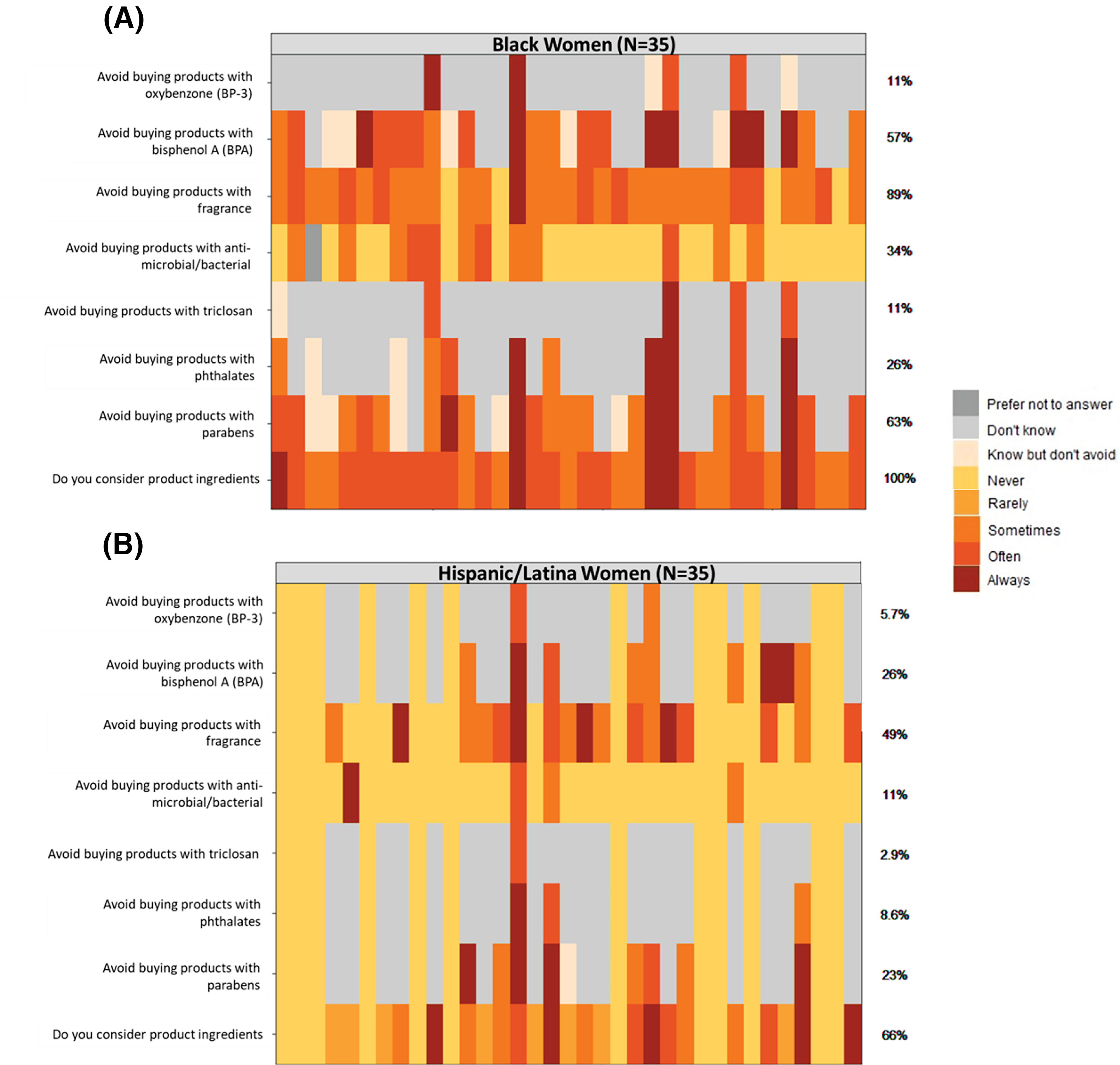
Heat maps characterizing self-reported product selection strategies as recorded in the baseline survey. Black women (N = 35)
Urinary chemical concentrations
Ten phthalate metabolites, three non-phthalate plasticizer metabolites, methyl paraben, propyl paraben, BPA, BP-3, and 2,5-DCP were detected in at least 90% of all samples. Among Black women, MEP was detected at the highest concentration of all chemicals (Table 2). Among Hispanic/Latina women, methyl paraben was the highest. The following chemicals were detected in less than 60% of all women (triclosan, triclocarban, BP-S, BP-F, butyl paraben, ethyl paraben, CX-MINCH, and MINP), or one specific subgroup (Hispanic; OH-MINCH) and were not included in further analyses.
Limits of Detection (ng/mL), Detection Frequencies (%), and Summary Statistics of Concentrations (ng/mL) for 28 Chemicals Targeted in Composite Urine Samples from 70 Black and Hispanic/Latina Women
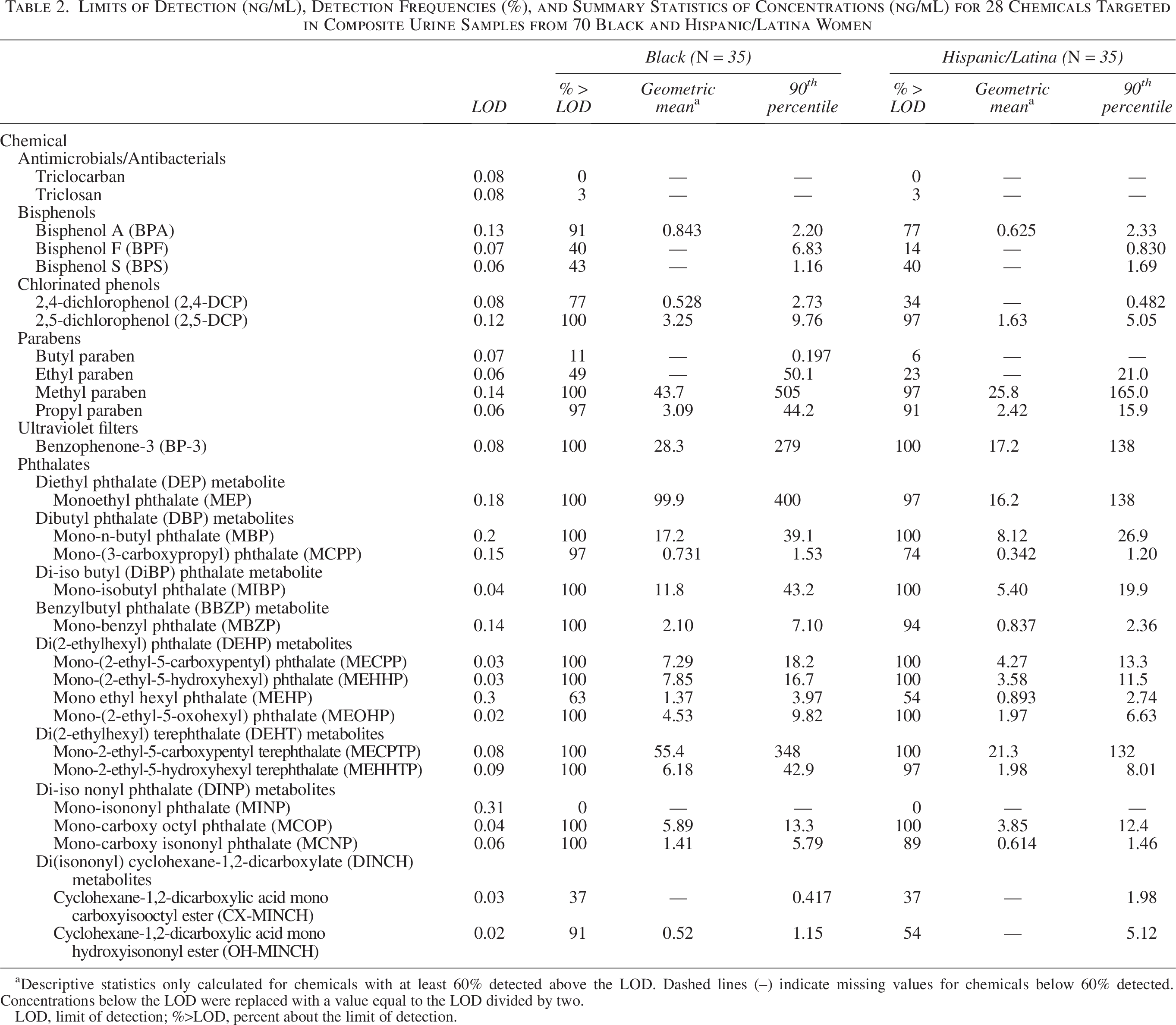
Descriptive statistics only calculated for chemicals with at least 60% detected above the LOD. Dashed lines (–) indicate missing values for chemicals below 60% detected. Concentrations below the LOD were replaced with a value equal to the LOD divided by two.
LOD, limit of detection; %>LOD, percent about the limit of detection.
Product selection strategies and biomonitoring data
Black women who frequently selected products based on ingredients had significantly lower median concentrations of MEHHTP than Black women who reported that they infrequently consider product ingredients (frequently = 3.29 ng/mL; infrequently = 12.4 ng/mL; p = 0.01) (Table 3, Supplementary Fig. S1). We found a similar association with MBP that was marginally significant (frequently = 16.5 ng/mL; infrequently = 23.5; p = 0.05) (Table 3).
Median Urinary Concentrations (ng/mL) by Participants’ Self-Reported Selection of Products Based on Their Ingredients. Participants’ Responses from the Baseline Survey Were Categorized into Frequently, Infrequently, or Never Select Products Based on Ingredients (for Hispanic/Latina Women Only)
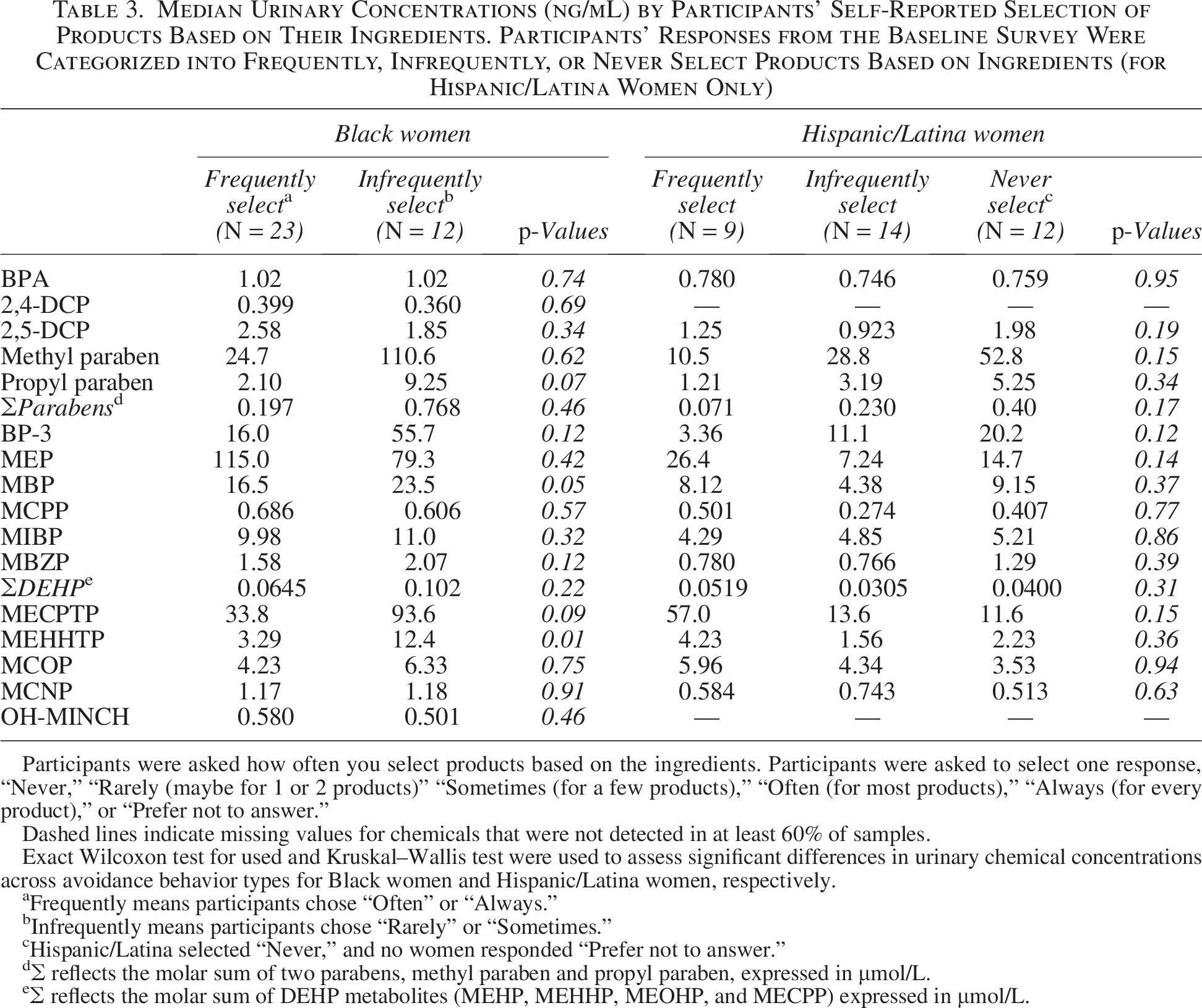
Participants were asked how often you select products based on the ingredients. Participants were asked to select one response, “Never,” “Rarely (maybe for 1 or 2 products)” “Sometimes (for a few products),” “Often (for most products),” “Always (for every product),” or “Prefer not to answer.”
Dashed lines indicate missing values for chemicals that were not detected in at least 60% of samples.
Exact Wilcoxon test for used and Kruskal–Wallis test were used to assess significant differences in urinary chemical concentrations across avoidance behavior types for Black women and Hispanic/Latina women, respectively.
Frequently means participants chose “Often” or “Always.”
Infrequently means participants chose “Rarely” or “Sometimes.”
Hispanic/Latina selected “Never,” and no women responded “Prefer not to answer.”
∑ reflects the molar sum of two parabens, methyl paraben and propyl paraben, expressed in µmol/L.
∑ reflects the molar sum of DEHP metabolites (MEHP, MEHHP, MEOHP, and MECPP) expressed in µmol/L.
Black women who reported avoiding products with phthalates had significantly lower median concentrations of MBZP than women who reported not avoiding (avoider = 1.06 ng/mL; non-avoider = 2.07 ng/mL; p = 0.02) (Table 4). Similarly, Black women who reported avoiding fragranced products had significantly lower median MEP concentrations than women who reported not avoiding these products (avoider = 95.0 ng/mL; non-avoider = 276 ng/mL; p = 0.03). Hispanic/Latina women who reported avoiding products with oxybenzone/BP-3 had lower median concentrations of BP-3 than women who reported not avoiding (avoider median = 1.96 ng/mL; non-avoider median = 12.7 ng/mL; p = 0.03). Methyl and propyl paraben concentrations were approximately two times lower among all women who reported avoiding products with parabens than those who did not avoid these products, but those differences did not reach statistical significance (Table 4, Supplementary Fig. S2).
Median Urinary Chemical Concentrations by Participants’ Self-Reported Avoidance of Products with Phthalates, Benzophenonone-3, Bisphenol A, and Parabens
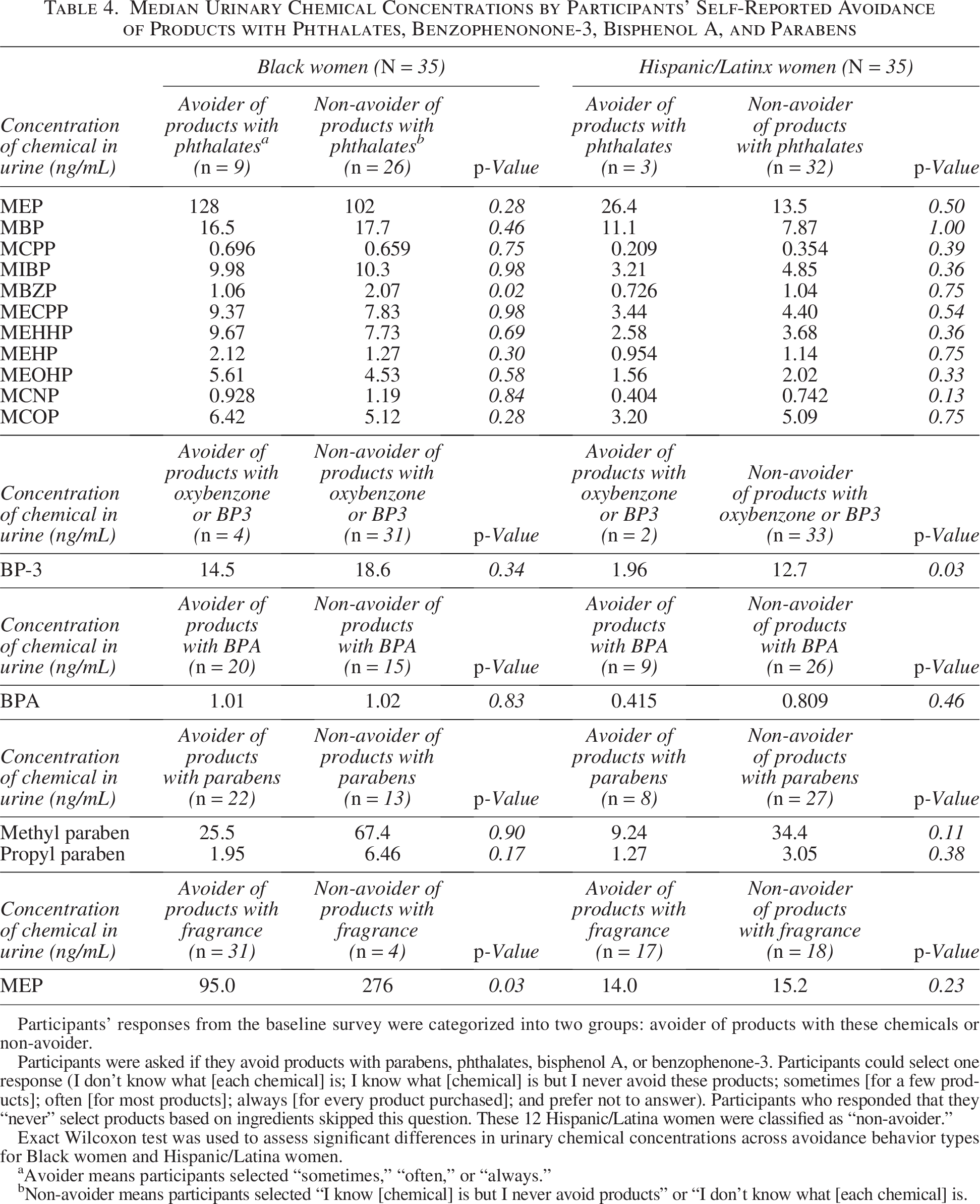
Participants’ responses from the baseline survey were categorized into two groups: avoider of products with these chemicals or non-avoider.
Participants were asked if they avoid products with parabens, phthalates, bisphenol A, or benzophenone-3. Participants could select one response (I don’t know what [each chemical] is; I know what [chemical] is but I never avoid these products; sometimes [for a few products]; often [for most products]; always [for every product purchased]; and prefer not to answer). Participants who responded that they “never” select products based on ingredients skipped this question. These 12 Hispanic/Latina women were classified as “non-avoider.”
Exact Wilcoxon test was used to assess significant differences in urinary chemical concentrations across avoidance behavior types for Black women and Hispanic/Latina women.
Avoider means participants selected “sometimes,” “often,” or “always.”
Non-avoider means participants selected “I know [chemical] is but I never avoid products” or “I don’t know what [each chemical] is.
DISCUSSION
Since the 1980s, the environmental justice movement has sought to interrupt systemic inequities in exposure to environmental hazards. Now, advocates and researchers are increasingly focused on addressing the disproportionate burden of PCP-related exposures among women of color, a field now known as “beauty justice.” In this community-based study centering Black and Hispanic/Latina women living in an environmental justice neighborhood of South Los Angeles, we found that most women reported selecting products based on ingredients. More Black than Hispanic/Latina women in our study reported selecting products based on ingredients and avoiding fragrances. Among Black women, avoiding fragranced products resulted in significantly lower concentrations of MEP, a metabolite of DEP, which is commonly used as a solvent and fixative in fragranced products. We found additional evidence of a relationship between product selection strategies and lower concentrations of certain urinary chemicals such as BP-3, MBZP, and MEHHTP. Overall, our results suggest that individual-level product selection strategies can have some impact on reducing exposures.
Our biomonitoring data showed that several phthalates, BP-3, parabens, and chlorinated phenols were present in nearly all women. Similar to the California’s Regional Exposure Study’s (CARES-LA) biomonitoring data of adult women living in Los Angeles County in 2018, 44 we did not detect triclocarban, bisphenol F, butyl paraben, and ethyl paraben in a majority of participants. Our study’s concentrations of propyl and methyl paraben were one and two orders of magnitude lower than CARES-LA, respectively. We collected our data in 2021, after CARES-LA, so it is possible that our levels are lower because of lifestyle changes linked to the COVID-19 pandemic. Also, the lower paraben levels in our study might suggest a market shift away from parabens, possibly due to public pressure. Indeed, a California study reported a decline in urinary paraben concentrations between 2007 and 2014.45,46
Our data on self-reported product selection strategies shared some similarities to prior research. In a community-based study of Black, Latina, Vietnamese, and White women recruited across five counties in California, researchers reported that fewer Latina women reported avoiding ingredients in PCPs than Black women. 47 This is comparable with our finding that more Black women considered ingredients when selecting products than Hispanic/Latina women. Moreover, the researchers reported that both groups of women listed fragrance/perfume as an ingredient they try to avoid, which is consistent with our study.
To our knowledge, only one other study has investigated the relationship between product selection strategies and urinary chemical concentrations. Dodson et al. reported that avoiding certain products and reading labels to avoid ingredients was most effective for reducing exposures to methyl paraben, ethyl paraben, propyl paraben, triclosan, and BP-3, but not bisphenols, among a crowdsourced population of highly educated primarily non-Hispanic White women. 48 Similar to Dodson et al., we found that avoiding products with BP-3 was effective at reducing exposure to BP-3 among Hispanic/Latina women. Furthermore, we found that women who avoided products with parabens had lower concentrations of parabens than women who did not avoid products, although those differences were not statistically significant.
Another key takeaway was that few women in our study were knowledgeable about BP-3, phthalates, and triclosan, suggesting the need for increased education about chemicals in PCPs. However, this is complicated by the fact that the ingredient composition of PCPs is constantly shifting with little to no transparency from the industry. Some of these chemicals are appearing less on product labels or being used less often in the PCP industry. For example, ortho-phthalates may still be present in fragrance mixtures (but masked by incomplete labeling regulations) or they may be present in packaging. As companies move away from using chemicals such as ortho-phthalates or triclosan, consumers may also inadvertently expose themselves to unfamiliar replacement chemicals. We advocate for policy changes that prioritize transparency in labeling requirements and ensure ingredient safety, allowing consumers to avoid chemicals effectively and intentionally.
Individual-level strategies to reduce exposures to chemicals in products that rely on consumers reading labels are often a popular solution, particularly in the absence of robust chemical policy. Our results suggest that these strategies can work to reduce exposures in this population of Black and Hispanic/Latina women. However, “shopping clean” might not be an effective long-term strategy for multiply marginalized communities, such as the communities in South Los Angeles. “Clean” consumer products, typically defined as products with fewer toxic chemicals, are more expensive than traditional products. 49 Individual- or household-level factors like education and income can be barriers towards “shopping clean” as individuals may not be aware of the concerns or have the income to choose safer alternatives. Although we did not report significant associations between product selection strategies and income, these are still important factors that can make “shopping clean” an unequitable strategy for reducing exposures to consumer product chemicals.
In addition, it is important to consider how neighborhood-level factors could make well-intended advice difficult to implement. In addition to affordability, “clean” consumer products might be less accessible in neighborhoods like South Los Angeles.50,51 While we wait for stronger chemical regulations for products, we call for community-led approaches to finding strategies to reduce exposure. For example, BWW facilitates Curls & Conversations, quarterly workshops designed for and by Black women to share resources on how to style hair with fewer chemicals. These workshops also help to raise awareness about harmful ingredients and empower women to make healthier purchasing choices, while providing community infrastructure.
Our study has several important strengths and warrants a larger follow-up. The success of this community-science study is a credit to the dedicated work of BWW, LA Grit Media, and local promotores de salud who went to great lengths to carry out the study during the COVID-19 pandemic. We used a strong community-based framework to gather rich survey, product use, and biomonitoring data from Black and Hispanic/Latina women, two groups who are often underrepresented in research studies. The use of the newly developed TSS app offered a convenient solution for gathering extensive real-time product use data, encompassing comprehensive ingredient information, thereby reducing potential recall bias and exposure misclassification.
Our study also has some limitations. Our modest sample size and focus on Black and Hispanic/Latina women living in South Los Angeles limits our generalizability. Most of our product labels were in English, and 43% of our Hispanic/Latina participants completed the entire study protocol in Spanish. We did not ask participants how the language may play a role in understanding product labels which could affect their product selection strategies. BWW regularly engages with its network on beauty justice topics; therefore, Black women in our study may have a greater knowledge of chemicals of concern in PCPs than other groups. This study was conducted in 2021 during the COVID-19 pandemic and related shutdowns, so product use and purchasing strategies may be atypical during this period for some participants. Also, we did not adjust for urinary dilution; however, we asked participants to collect samples at standardized times and composited samples prior to analysis to mitigate this potential issue. Finally, self-reported data on product selection strategies may be subject to recall bias or social desirability bias.
CONCLUSION
Using TSS data on overburdened and understudied populations, we found that product selection strategies centered on avoiding certain ingredients can be partially effective at reducing exposures to PCP-related chemicals among Black and Hispanic/Latina women. However, “shopping your way to safety” should only be one piece of a more wholistic intervention strategy, which considers underlying structural and racial inequality. Policy changes that specify labeling requirements and create an industry-standard definition for “clean” are needed to advance beauty justice and health equity.
AUTHORS’ CONTRIBUTIONS
L.E. and C.L.C. jointly designed the statistical analysis plan and completed the data visualizations. C.L.C. performed all the final statistical analyses and helped prepare the article for publication, and L.E. led the writing and preparation of the article for publication. B.C. helped clean the data and performed the initial statistical analyses and data visualizations. R.E.D. and E.T.F. led the data curation. A.R.Z., B.S., E.T.F., and R.E.D. contributed to the statistical analyses and development of the final results. A.W., J.R.F., R.E.D., A.R.Z., S.N., and B.S. were part of the team that conceptualized the study and contributed to the study methodology. A.W., J.R.F., B.S., and S.N. led the community-science portion of the study, including recruitment and data collection. R.E.D., J.R.F., A.R.Z., and B.S. secured funding for the research study. All authors contributed to the writing and editing of the article and read and approved the final article.
Footnotes
ACKNOWLEDGMENT
The authors would like to thank the study participants and promotores de salud for their dedication to this study and their flexibility as the authors had to pivot the study procedures because of the COVID-19 pandemic.
AUTHOR DISCLOSURE STATEMENT
The authors declare no competing interests.
FUNDING INFORMATION
This study was funded by California Breast Cancer Research Program (B28TP5728, 23UB-651), Passport Foundation, Forsythia Foundation, National Institute of Environmental Health Sciences (P30 ES009089), and charitable contributions to Silent Spring Institute.
Supplemental Material
Supplementary Material
Please find the following supplemental material available below.
For Open Access articles published under a Creative Commons License, all supplemental material carries the same license as the article it is associated with.
For non-Open Access articles published, all supplemental material carries a non-exclusive license, and permission requests for re-use of supplemental material or any part of supplemental material shall be sent directly to the copyright owner as specified in the copyright notice associated with the article.
