



Abstract
Hotel companies often offer consumers fee-based product upgrades to support capacity utilization and revenue goals. Three upgrading models—Guaranteed, Conditional, and Bid—dominate industry practice, but little is known about their relative efficacy in driving performance. Using a mixed-methods approach, this research suggests that Conditional and Bid models are superior to the Guaranteed model. Despite the high degree of perceived outcome uncertainty associated with Conditional and Bid models, consumers find these upgrade models more attractive than the Guaranteed model, translating to higher upgrade intent. Since consumers are starting from a point of satisfaction with their already-purchased base (room) product, they are willing to trade outcome certainty (i.e., their upgrade request being denied) for the perceived savings they can gain on the upgraded product (vs. the Guaranteed model). While the perceived savings associated with the Conditional model are easily evaluated, the Bid model operates like a sealed-bid auction. However, perceived autonomy over price allows consumers to evaluate savings based on their true valuation of the upgraded product. Although both the Conditional and Bid (vs. Guaranteed) models yield more favorable attractiveness and upgrade intent ratings, the range of bid amounts observed in this research suggests that the Bid model holds greater revenue potential.
Keywords
Introduction
Fee-based upgrading, whereby a firm charges the consumer a fee to upgrade from a purchased product or service category to another more expensive one, is a frequently employed revenue-generating strategy by hospitality firms that apply revenue management (e.g., airlines, car rental, hotels). 1 This type of upgrading, distinct from complimentary upgrading, which is typically used to reward specific customers or customer segments (e.g., elite loyalty program members), can support both capacity utilization and incremental revenue goals. Fee-based upgrading enables firms to monetize unsold premium inventory without broadly discounting base products, thereby protecting brand integrity and rate structures. It also enhances profitability by capturing consumer surplus—guests willing to pay more for added comfort, convenience, or ancillary products—while maintaining flexibility in inventory allocation.
The three most frequently employed online fee-based upgrade models (i.e., consumers are provided the option to upgrade their selected base product at the online point of purchase) in the hotel industry include Guaranteed, Conditional, and Bid. Under the Guaranteed model, the consumer is guaranteed an upgrade to a higher-quality product at a fee set by the firm (i.e., if the consumer pays the fee at the point of purchase, the upgrade is fulfilled immediately). With the Conditional (also known as standby) model, the consumer is offered a conditional upgrade to a higher-quality product at a discount off the Guaranteed upgrade fee. The upgrade is not fulfilled until the time of consumption (e.g., hotel check-in) and only if higher-quality products are still available, at which time the consumer is charged the upgrade fee. Finally, the Bid model allows the consumer to bid to upgrade to a higher-quality product, with some mechanism typically provided to guide the bid amount (e.g., the Aerlingus strength gauge). The consumer is not informed if their bid was successful until several days before, or on the day of, consumption, and the consumer only pays the bid amount if their bid is successful.
Prior research has examined fee-based upgrading models from a number of perspectives including the development of optimal upgrade prices for Conditional models (see, for example, Cui et al., 2018; Yilmaz et al., 2017), the effects of price differences (base option vs. upgrade) on upsell acceptance (see E. Lee et al., 2024), consumers’ reactions to Guaranteed upgrade models (see, e.g., Ahn et al., 2022; Guillet et al., 2022), the characteristics of consumers who bid to upgrade (Guillet, 2020), the effects of upgraded amenities on bid volume (Guillet, 2020), and the effect of psychological distance on consumers’ willingness to bid to upgrade (Guillet & Mohammed, 2024). 2
Despite the significant capacity management and revenue benefits of fee-based upgrading, the literature is silent regarding the relative attractiveness of the three upgrading models (i.e., Guaranteed, Conditional, and Bid) among consumers. Prior research suggests a positive relationship between attractiveness and purchase intent (Z. C. Lee & Yurchisin, 2011). Furthermore, researchers have demonstrated that purchase intentions serve as a proxy for actual purchase behavior (Armstrong et al., 2000). Thus, the objectives of this work are twofold. First, we seek to examine the relative effects of Conditional and Bid (vs. Guaranteed) upgrading models on the perceived attractiveness of the upgrading option, and ultimately upgrade (i.e., purchase) intent. Second, we explore the psychological mechanisms underlying any potential differences in perceived attractiveness of the upgrading model and upgrade intent across the upgrading options. We address these two objectives using a two-study series. In Study 1, a qualitative study, we explore the mechanisms underlying consumer preferences among the three upgrade models. In reality, consumers may opt for the status quo (i.e., no upgrade). By accommodating this reality, Study 1 also yields insights into consumers’ preferences for the status quo. In Study 2, we empirically examine the mediating effects of the four main variables extracted from Study 1—consumers’ perceptions of (a) autonomy over the price paid to upgrade, (b) savings, (c) outcome certainty, and (d) perceived upgrade model attractiveness—on the upgrade model-upgrade intent relationship.
Research Background
Fee-Based Upselling: Current Landscape
As hospitality firms seek new ways to monetize premium inventory and increase consumer spend on ancillary products, upselling strategies have evolved beyond static, guaranteed upsell offers. Conditional and Bid models are gaining traction, driven by a combination of technology advancement and a strategic shift post-pandemic to monetizing all of the firm’s revenue streams.
While all models (Guaranteed, Conditional, and Bid) can increase capacity utilization and revenue, the architecture of Conditional and Bid models has the potential to yield superior benefits (vs. Guaranteed). First, they capitalize on unsold premium inventory, allowing properties to generate ancillary revenue while minimizing displacement risk—a limitation of the Guaranteed model. Second, unlike the one-size-fits-all Guaranteed model, fully automated Conditional and Bid models leverage dynamic pricing algorithms to adjust upgrade offers in real time, ensuring prices reflect current demand, inventory availability, and individual guest profiles for maximum revenue and personalization—without staff intervention. Bid models can also enhance pricing efficiency by capturing heterogeneous willingness to pay.
Reported returns from the application of Conditional and Bid models in the hotel sector are impressive. For example, Choice Hotel’s Radisson Americas brands use a Conditional model, with properties averaging 17% in incremental upsell revenue over booked rates per transaction in 2023 (“Oracle Hospitality Hotel Merchandising Solution . . .,” 2024). Great Wolf Lodge saw double-digit percentage point revenue growth after implementing a Conditional Bid solution (“Great Wolf Lodge Gains Seamless . . .,” 2025). In their latest release of performance results, Mayfair House Hotel and Gardens, Miami, reported a conversion rate of 15% of total arrivals using a Bid model, with 95% of all upsells concentrated on highly profitable room upsells (UpsellGuru, 2024). Evidence from related tourism sectors underscores the revenue potential of Bid models. For example, a European flag carrier saw a 225% increase in upgrade revenue in the first year of implementing a bid model (Plusgrade, n.d.-a), while a cruise line company reported that, after upgrading through a Bid platform, 18% of customers booked the class they were upgraded to on their next trip, 4% booked an even higher class, and 23% placed a higher bid (Plusgrade, n.d.-b).
It is against this backdrop that this research seeks to understand consumer preferences among the three upsell models (Guaranteed, Conditional, and Bid) and the psychological mechanisms underlying the upsell model-upgrade intent relationship.
Study 1
In this study, participants were presented with an upgrade scenario and three upgrade offers (Guaranteed, Conditional, and Bid). They were then asked to choose from among the three upgrade options or the status quo (no upgrade) and explain their motivations for their choice in their own words, and from within their own sense-making frameworks. This qualitative approach allowed us to capture rich data from a large participant pool (vs. other qualitative techniques such as interviews; Toerien & Wilkinson, 2004) and ensured that participants’ responses were not biased by or limited to prescribed answer options (Schuman & Presser, 1996).
Data Collection and Experimental Design: Study 1
We recruited 248 participants via the online research platform, Prolific. 58.5% (n = 145) of the participants were female, and the average age among participants was 38.6 (SD = 11.93). Most participants had a college or graduate degree (72.9%; n = 181), with 65% (n = 161) having a household income higher than $60,000. The majority of participants had booked (63%, n = 156) and stayed (71.8%, n = 178) in a hotel at least three times in the 36 months prior to completing the survey.
Prior to completing the survey, participants were asked three screening questions: the frequency of personally booking and staying in a hotel for leisure in the last 36 months, and their color blindness status. Since the bidding condition used color to distinguish the strength of offers, any individual who was color blind was excluded from the study, as were individuals who had not personally booked or stayed in a hotel for leisure in the last 36 months.
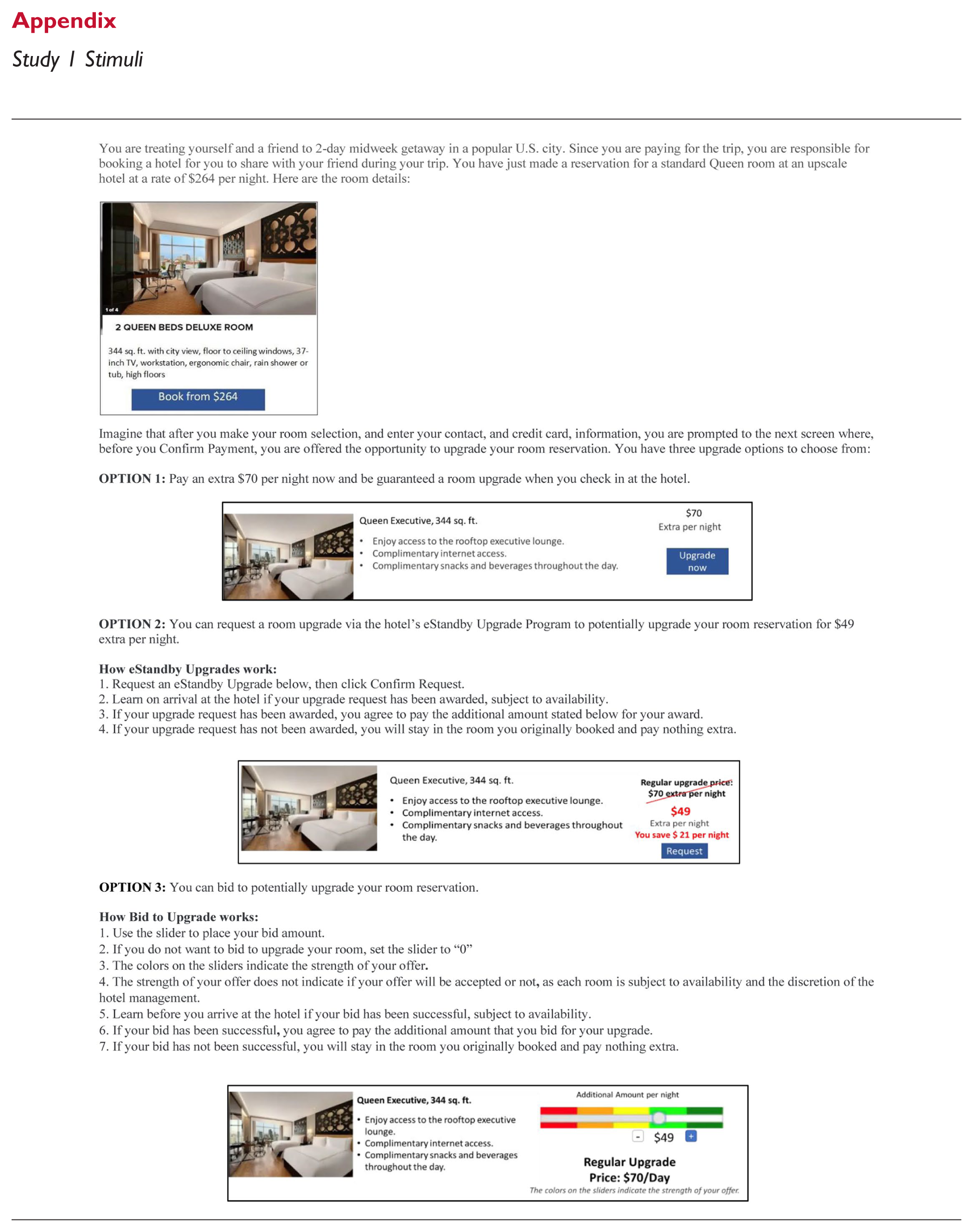
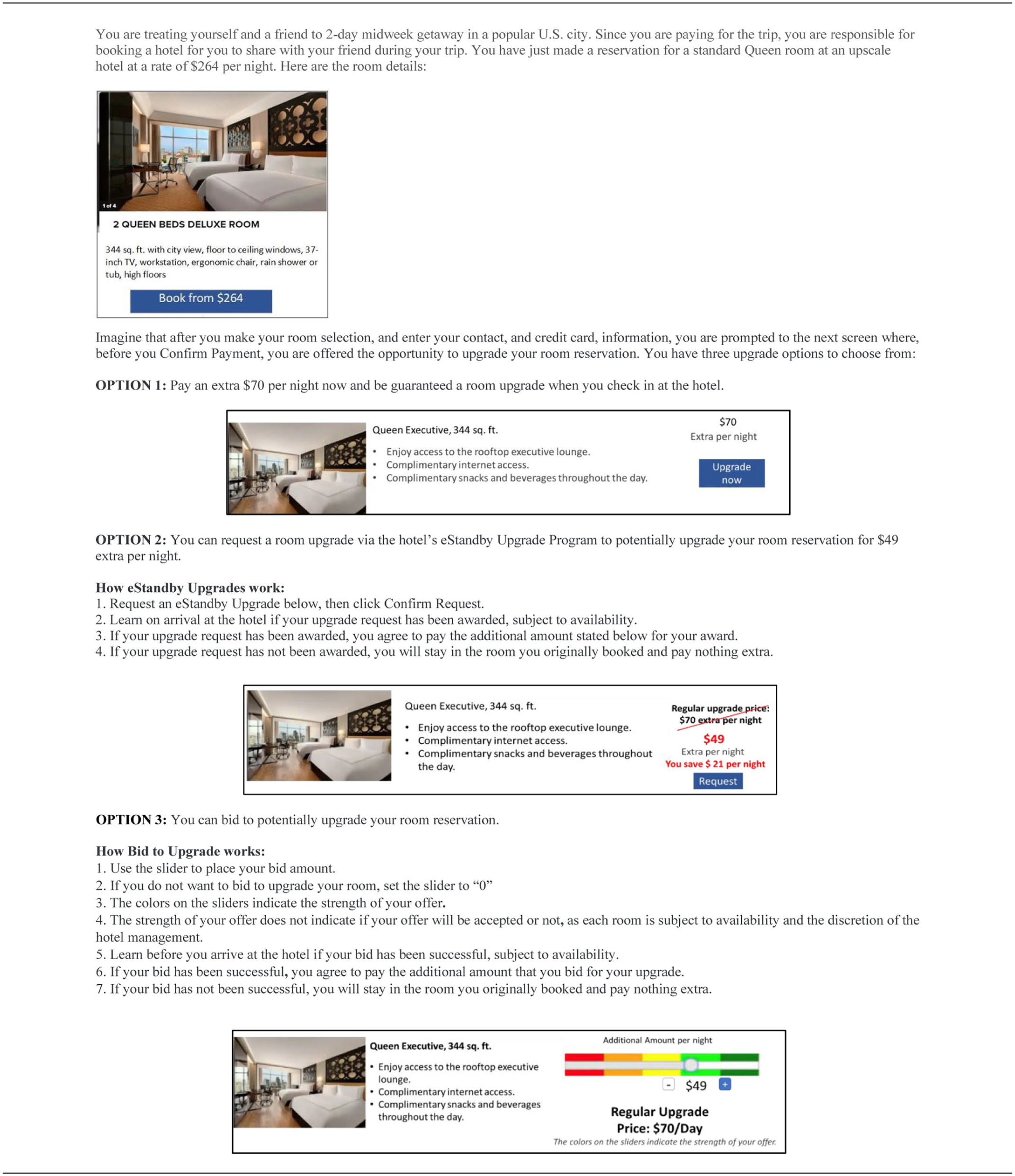
In the survey, participants were first asked to imagine treating themselves and a friend to a 2-day midweek getaway in a popular U.S. city. They were then informed that they had just made a reservation for a standard Queen room at an upscale hotel at a rate of $264 per night (based on published rates at the time of the study). Room details and a photograph of the room were provided. Participants were told that after they made their room reservation and before they confirmed payment, they were prompted to the next screen, where they were offered the opportunity to upgrade their room reservation or remain with the status quo. After making their selection, participants answered the following open-ended question: Please elaborate on the reason for your choice.
The prices for the upgrade offers were set in consultation with hotel industry revenue management executives, and the format and content of the upgrade offers mirrored industry practice. Specifically, the price of the Guaranteed upgrade was set at $70 per night. The Conditional upgrade was offered at a discounted price of $49 per night, and consistent with industry practice, we shared the Guaranteed upgrade price as a reference point (i.e., a strikethrough on the guaranteed upgrade price of $70) and instructions on how a conditional upgrade works. In line with industry practice, the default strength of the bid offer (Bid condition) was set in the light green (i.e., good offer strength) zone, with a corresponding bid amount of $49. As with the Conditional offer, the guaranteed upgrade price of $70 and instructions on how bidding to upgrade works were provided. See the appendix.
Results: Study 1
In total, 91 (36.7%) of the participants chose the status quo. The remaining 157 chose to upgrade, with 61 opting for a Conditional upgrade, 56 opting to Bid to upgrade, and 40 favoring a Guaranteed upgrade. Conventional content analysis was employed to analyze participants’ responses to the open-ended question regarding their upgrade choice (inter-rater reliability: Cohen’s k = .89). Below is a summary of the key themes that emerged by choice category.
Status Quo
Four themes dominated the responses from participants who chose not to upgrade:
Satisfaction with the base product (i.e., standard room; n = 55) [e.g., “The room looks luxurious already, so I wouldn’t change it”].
Negative perceptions of the value of the upgraded product (n = 32) [e.g., “The upgrades weren’t worth the extra money to me”].
Price resistance (n = 18) [e.g., “$264 is already a lot of money per night . . . I wouldn’t want to pay more than what I’m already paying”].
Perceived unattractiveness of Conditional and Bid upgrade models (n = 16) [e.g., “I would just prefer to keep the room that I have than play games with promotions”; “I don’t want the stress of the bidding or waiting to see if I get it by standby”].
Guaranteed Upgrade
Three themes dominated the responses from participants who chose the Guaranteed upgrade:
Perceived outcome certainty (n = 44) [e.g., “I like the fact that it is a for sure option”].
Positive perceptions of the value of the upgraded product (n = 16) [e.g., “By choosing the guaranteed upgrade I think that it strikes an optimal mix of investment and knowledge: allows me to have a great and memorable visit, while not having to worry about whether this will happen. Even if it costs me a pretty penny, this option makes for the best getaway”].
Perceived unattractiveness of Conditional and Bid upgrade models (n = 4) [e.g., Even if it was $21 less, I would be a bit disappointed if I chose the option where the upgrade was not guaranteed and it did not happen”; “The gamble or risk isn’t worth not getting what I want for a lower price”].
Conditional Upgrade
Three themes dominated the responses from participants who chose the Conditional upgrade:
Perceived savings (n = 49) [e.g., “The guaranteed $70 upgrade is more expensive than the eStandby option, which costs $49 more every night. If the upgrade is granted, the total savings for the two-night stay would be $42”].
Perceived unattractiveness of Bid upgrade model (n = 41) [e.g., “If I get an upgrade for $49, great. If not, it is not a big deal, and not worth the hassle of the bidding process”; “I feel like choosing a set plan made by the hotel would increase my chances of getting the upgrade vs. setting an amount myself”].
Satisfaction with the base product: Willingness to trade outcome certainty for savings (n = 22) [e.g., “I would be fine staying in the original room booked, but should an upgrade be available at a potentially discounted price that would be great”; “I feel like the room I booked was nice enough for what I would need. I would take the chance on getting a room upgrade if I only had to pay a bit more. I feel like if it was meant to be it will be”].
Bid to Upgrade
Three themes dominated the responses from participants who chose the bid to upgrade option:
Perceived autonomy over price paid: Fit with value perceptions (n = 38) [e.g., “I like the flexibility to bid and really say how much do I think an upgrade is worth to me”; “I wouldn’t pay $70 a night for that particular upgrade but I would be willing to pay $30, so might as well see if they’ll let me”].
Satisfaction with the base product: Willingness to trade outcome certainty for savings (n = 24) [e.g., “An upgrade is always nice, but the original room was perfectly fine. Bidding allows me to offer a lower price with the possibility to get an upgrade, but I am okay with the original room if we don’t get it”; I think there is no risk of bidding since I will get my original room if I do not get it but I would get a good value upgrade if I did bid.”].
Perceived savings (n = 23) [e.g., “If I can get an upgrade cheaper than what they are offering, I would upgrade and feel like I got a real deal”].
Several insights can be drawn from these results. First, the majority of participants who chose the status quo expressed their satisfaction with the base product. Likewise, many participants who selected the Conditional and Bid upgrade models were willing to trade outcome certainty for savings because their starting point was satisfaction with the base product. Second, autonomy over price was attractive to those who chose to Bid to upgrade as it allowed them to place their own value on the upgraded product. Third, while many of the participants who chose the status quo indicated that they did not feel that the value of the upgraded product was worth the investment (under any of the upgrade models), participants who chose the Guaranteed option saw value in the upgraded product and were willing to pay the full upgrade cost to acquire it. Furthermore, while not explicitly noted by participants who selected the Conditional and Bid upgrade options, they arguably perceived sufficient value from the upgraded product to choose those options. Fourth, participants demonstrated differences in how they perceived the attractiveness of the Conditional and Bid upgrade models. While we can assume that the participants who selected these models found them attractive, some of those who did not explicitly spoke to their lack of appeal in terms of the uncertainty of the outcome (savings were not worth the risk), and the effort and stress relating to the autonomy over the bid price (autonomy is not always a good thing!).
In sum, the findings of this study are in line with the behavioral pricing literature, which suggests that consumer responses to pricing are not solely driven by economic considerations, as psychological factors also influence price perceptions (Bolton & Chen, 2024). Building on this, we designed Study 2 to empirically assess the relative effects of perceived savings, perceived autonomy over the price paid and perceived outcome certainty, on consumers’ perceptions of upgrade model attractiveness—Guaranteed, Conditional and Bid—and ultimately their upgrade intentions. 3
Study 2
Effects of Perceived Savings and Perceived Autonomy over Price on Upgrade Model Attractiveness and Upgrade Intent.
Prospect theory suggests that decisions are often made based on perceived gains and losses relative to a reference point rather than absolute outcomes (Kahneman & Tversky, 1979). Since the Conditional and Bid upgrade models used in the hotel industry typically disclose to the consumer the price of a Guaranteed upgrade in the Conditional or Bid to upgrade offer, the price of a Guaranteed upgrade becomes the consumer’s reference point. The Conditional or Bid to upgrade offer is evaluated from that reference point.
By virtue of the discount offered on the Conditional upgrade, the price of the Conditional upgrade (vs. the price of a Guaranteed upgrade) can be considered a gain. Price research suggests that price discounts have a positive effect on perceived savings (e.g., J. E. Lee & Chen-Yu, 2018). Thus, we logically assume that when the price of a Guaranteed upgrade is presented alongside the discounted price of a Conditional upgrade in a Conditional upgrade offer, the Conditional model will yield significantly higher ratings for perceived savings than the Guaranteed model. Prior research also suggests that discounts can increase the perceived attractiveness of a product or bundle (Khan & Dhar, 2010). Thus, we expect that consumers’ perceptions of the savings associated with the Conditional upgrade model will positively influence their perceptions of the attractiveness of the Conditional (vs. Guaranteed) upgrade model.
Finally, we suggest that upgrade model attractiveness will positively impact upgrade intent. A number of researchers have demonstrated the positive outcomes of attractiveness. For example, Gonzalez-Benito et al. (2008) found that brand attractiveness has a positive effect on market share, whereas Z. C. Lee and Yurchisin (2011) found support for a positive effect of website attractiveness on the degree to which consumers interact with the website and ultimate purchase intent.
In sum, we propose the following:
Regarding the Bid model, in practice, the starting point is like that in the Conditional model. Consumers are informed of the price of a Guaranteed upgrade before they place their bid. From there, the Bid model operates like a sealed-bid auction. Bidders have no information about the firm’s threshold price, nor do they know how many other bidders there are or their bid amounts. Considering this dearth of information to support the bid decision, the Bid model encourages bidders to bid according to their perceptions of the true value of a given upgrade offer. We suggest that perceived autonomy over price (i.e., bid amount) can facilitate this value-based approach to bidding. Perceived autonomy is the subjective feeling that individuals can make and implement decisions according to their own will, free from external influences imposed by other agents (Zwebner & Schrift, 2020). It is distinct from perceived control in that control refers to an individual’s ability to influence outcomes through their actions and choices, while autonomy is their freedom to initiate behavior regardless of their ability to impact the outcome (Wertenbroch et al., 2020). In the bidding context, the bidder has no control over the outcome of their bid, but they have the autonomy to set the bid amount. Indeed, bidding mechanisms, such as name-your-own-price or upgrade bidding platforms, exemplify behavioral pricing strategies that heighten perceived autonomy. Thus, we suggest that perceived autonomy over the bid amount helps bidders to achieve their goal: setting a bid that reflects their perceived value of the upgrade. In doing so, bidders avoid the pitfalls of loss aversion. They are less likely to overbid out of fear of missing the upgrade and less likely to underbid to avoid overpaying.
Furthermore, we expect perceived autonomy over the bid amount to enhance perceived savings. Previous research provides support for positive autonomy-related outcomes (e.g., Kalleberg et al., 2009; Kalra et al., 2021). In general, autonomy results in favorable consumer responses due to the “choice is better” heuristic (Botti et al., 2022). Building on this, we suggest that since autonomy over price allows the bidder to offer a bid amount that aligns with their perceptions of the true value of an upgrade, they will perceive that whatever bid amount they have offered will yield savings (vs. Guaranteed price). Therefore, we posit:
Also, in line with the idea that perceived savings positively influence upgrade model attractiveness and purchase intent, we propose:
Thus far, we have considered the gains associated with the Conditional and Bid models relative to the Guaranteed model. While one can expect that these gains will lead to preferences for the Conditional or Bid (vs. Guaranteed) models, is that sufficient to drive upgrade intent when there are also losses looming? In other words, will the potential savings gain outweigh the potential losses associated with the upgrade request being denied? Next, we examine the role of outcome certainty on upgrade intent for the Conditional and Bid (vs. Guaranteed) models.
Effect of Perceived Outcome Certainty on Upgrade Intent
In line with the principles of behavioral pricing, cumulative prospect theory (Tversky & Kahneman, 1992) proposes that consumers respond to prices not just rationally, but psychologically. Specifically, cumulative prospect theory posits that people integrate their value and probability weighting functions, allowing for independent weighting schemes for gains and losses. Within cumulative prospect theory (Tversky & Kahneman, 1992), value and probability weighting functions are integrated, allowing for independent weighting schemes for gains and losses. The pattern of risk attitudes under cumulative prospect theory reflects two key principles: the certainty effect and the possibility effect. The certainty effect suggests that in high-probability situations, the probabilities of gains and losses are underweighted. Thus, individuals will be risk-averse for gains due to fear of disappointment but risk-seeking for losses because of the hope of avoiding them (Lin et al., 2023). Conversely, the possibility effect captures the behavior of individuals when they believe that there is even a small possibility of a large gain or a large loss. In other words, in low-probability situations, individuals overweigh the probabilities of gains and losses (Kahneman, 2011). They are risk-seeking in relation to gains in the hope of larger gains, and risk-averse toward losses due to a fear of larger losses.
Applying the possibility effect to the upgrade decision, we argue that the Conditional and Bid models represent low-probability situations in that the consumer has no guarantee that an upgrade request will be awarded. In this instance, the consumer is likely to overweigh the probability of the gains (i.e., perceived savings) and will risk opting for these non-Guaranteed upgrade options in the hope of realizing those gains. Furthermore, we suggest that the low-stakes nature of the upgrade decision will encourage this risk-taking. In other words, as suggested by the findings of Study 1, the consumer has already selected—and is satisfied with—a base product, so the upgrade represents a nice-to-have but not essential purchase.
Thus, while we expect that the Guaranteed model will yield significantly higher ratings for outcome certainty than the Conditional and Bid models, we do not expect that the lack of outcome certainty will influence consumers’ perceptions of the attractiveness of the Conditional and Bid models.
The conceptual model for Study 2 is provided in Figure 1.
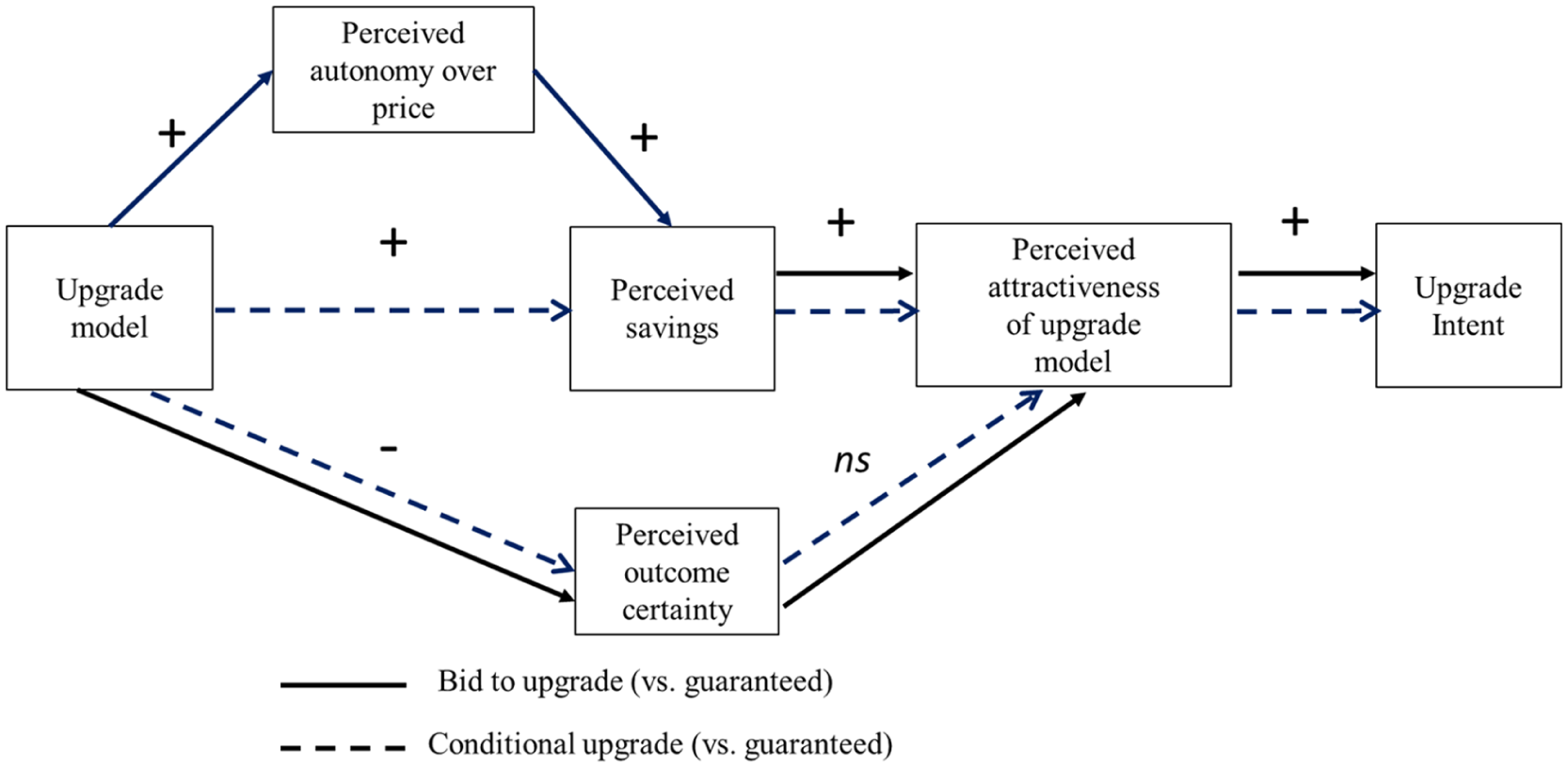
Conceptual Model for Study 2.
Data Collection and Experimental Design: Study 2
As with Study 1, in Study 2 we recruited participants via Prolific, 140 in total, with an approximately equivalent number of participants across the experimental conditions (Guaranteed = 48, Conditional = 46, Bid = 46). Approximately 56% (n = 79) of the participants were female, and the average age among participants was 40 (SD = 14.01). Most participants had a college or graduate degree (61%; n = 85), with 53% (n = 74) having a household income higher than $60,000. In total, 39% (n = 54) of participants had booked and stayed (48%, n = 67) in a hotel at least three times in the 36 months prior to completing the survey.
Participants were presented with the same scenario as in Study 1. However, consistent with actual hotel industry practice, they were presented with only one upgrade model: Guaranteed, Conditional, or Bid. Participants were randomly assigned to one of three experimental conditions. After reading their assigned scenario, participants completed a survey that captured their perceptions of autonomy over price (Wang et al., 2022; r = .82, p < .01), perceived savings (Tangari & Smith, 2012; Cronbach’s α = .91), perceived outcome certainty (Viglia et al., 2019), perceived upgrade model attractiveness (Khan & Dhar, 2010) and upgrade intent (Maxwell, 2002; Cronbach’s α = .97).
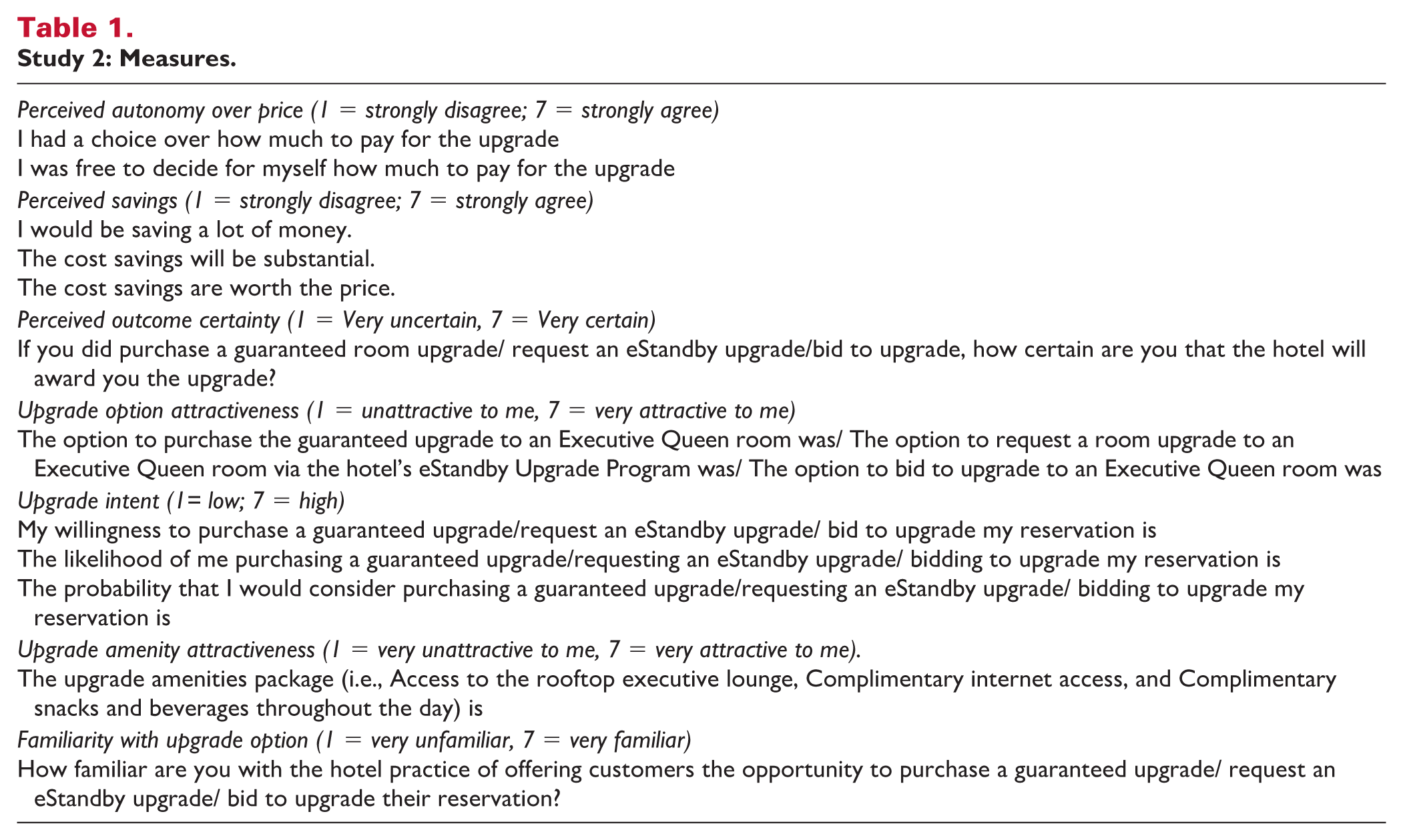
Given the potential for the attractiveness (or lack thereof) of the amenities included in the upgrade offer to influence upgrade intent, we controlled for upgrade amenity attractiveness in our analyses. We also controlled for the potential impact of participants’ familiarity with the upgrade option that they were presented (Wirtz & Kimes, 2007). Participants presented with the option to bid to upgrade were asked how much they would bid. See Table 1 for all scale items. The survey also included attention and realism checks. There were no significant differences in realism rating across experimental conditions (Guaranteed: M = 5.54, SD = 1.25; Conditional: M = 5.7, SD = 1.49; Bid: M = 5.09, SD = 1.64; F = 2.14, p >. 1).
Study 2: Measures.
Results: Study 2
The mean bid amount for the Bid model was $31.63, with a standard deviation of $15.63 (Minimum: $5; Maximum: $60). The cell means for the variables of interest are provided in Table 2. Analysis of variance (ANOVA) results showed a significant difference between the three upgrade models for perceived autonomy over price (F = 509.50, p < .001), perceived savings (F = 39.91, p < .001), perceived outcome certainty (F = 107.91, p < .001), upgrade model attractiveness (F = 5.93, p < .005) upgrade intent (F = 7.21, p = .001), and familiarity with upgrade model (F = 21.80, p < .001). There were no significant differences in upgrade amenity attractiveness across upgrade models (F = 1.92, p = .15).
Study 2: Cell Means and Standard Deviations.
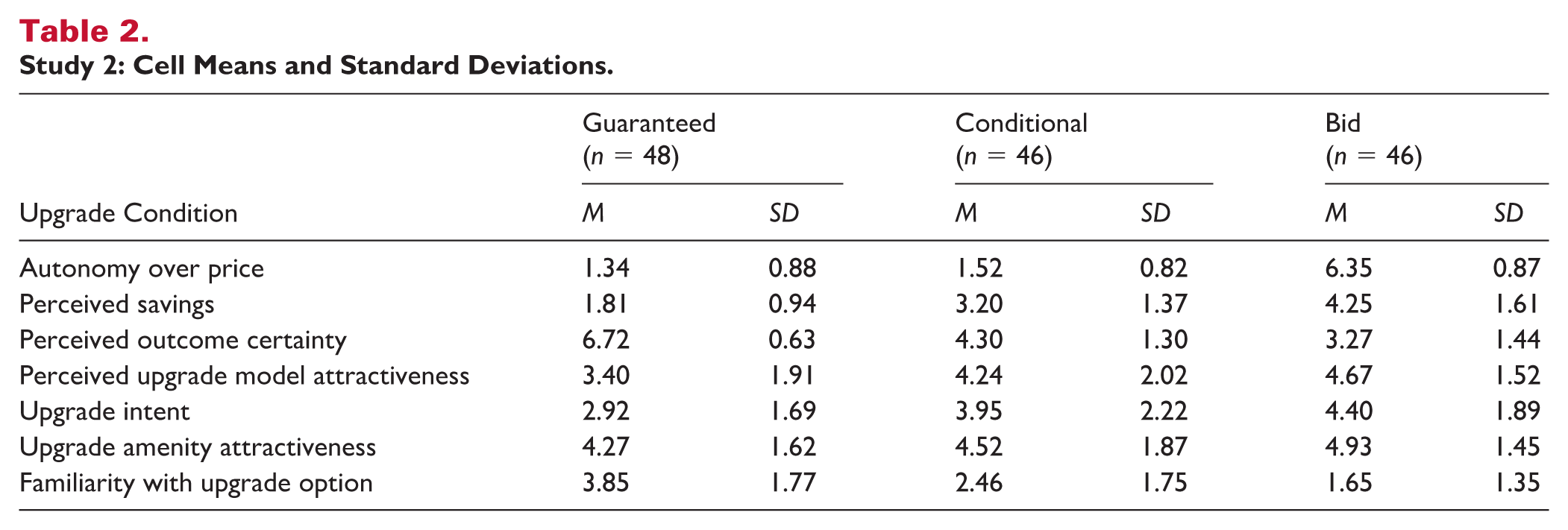
Planned contrasts indicated the following significant differences across upgrade models. Perceived savings were significantly higher for Bid than for Guaranteed (t = −8.89, p < .001) or Conditional (t = −3.82, p < .001). As expected, they were also significantly higher for Conditional than for Guaranteed (t = −5.04, p < .001). Similarly, ratings for perceived autonomy over price were significantly higher for Bid than for Guaranteed (−28.32, p < .001) or Conditional (t = −27.02, p < .001). As expected, perceived outcome uncertainty ratings were significantly higher for Guaranteed than for Conditional (t = 10.01, p < .001) or Bid (t = 14.28, p < .001). They were also significantly higher for Conditional than for Bid (t = 4.23, p < .001). Ratings for upgrade model attractiveness were significantly higher for Bid (t = −3.38, p < .001) and Conditional (t = −2.23, p < .05) than for Guaranteed. Similarly, ratings for upgrade intent were significantly higher for Bid (t = −3.69, p < .001) and Conditional (t = −2.58, p = .001) than for Guaranteed. Familiarity with the upgrade model was significantly greater for Guaranteed than for Conditional (t = 4.13, p < .001) or Bid (t = 6.51, p < .001).
We used a customized PROCESS model macro in SPSS to formally test the study’s hypotheses (Hayes, 2017). This procedure used an ordinary least squares path analysis to estimate the model’s coefficients to determine the direct and indirect effects of the upgrade model on upgrade intent. We specified a B matrix to reflect the hypothesized indirect effects of the upgrade model on upgrade intent through (a) perceived savings and upgrade model attractiveness and (b) perceived autonomy over price, perceived savings, and upgrade model attractiveness. The Guaranteed upgrade condition served as the reference group in the analysis. Due to the potential effects of upgrade amenity attractiveness and familiarity with upgrade options on upgrade intent, we specified a C matrix. Bootstrapping was implemented in these analyses to obtain bias-corrected 95% confidence intervals (CIs) for making statistical inferences about specific and total indirect effects (see Preacher & Hayes, 2008).
The results of the analysis are presented in Table 3. As expected, Conditional yielded a significantly greater positive effect on perceived savings than Guaranteed (β = 1.33, CI = [0.79, 1.86]). The direct effect of Bid on perceived savings (vs. Guaranteed) was insignificant (β = .83, CI = [−0.56, 2.23]). Bid had a significantly greater positive effect on perceived autonomy over price than the Guaranteed condition (β = 5.01, CI = [4.65, 5.35]). Conditional did not have a significantly greater positive effect on perceived autonomy over price than Guaranteed (β = .18, CI = [−0.17, 0.53]). Perceived autonomy over price had a significant, positive effect on perceived savings (β = .32, CI = [0.06, 0.58]). Guaranteed had a significantly greater effect on perceived outcome certainty than Conditional (β = −2.41, CI = [−2.89, −1.94]) or Bid (β = −3.44, CI = [−3.92, −2.97]).
Study 2: Results.
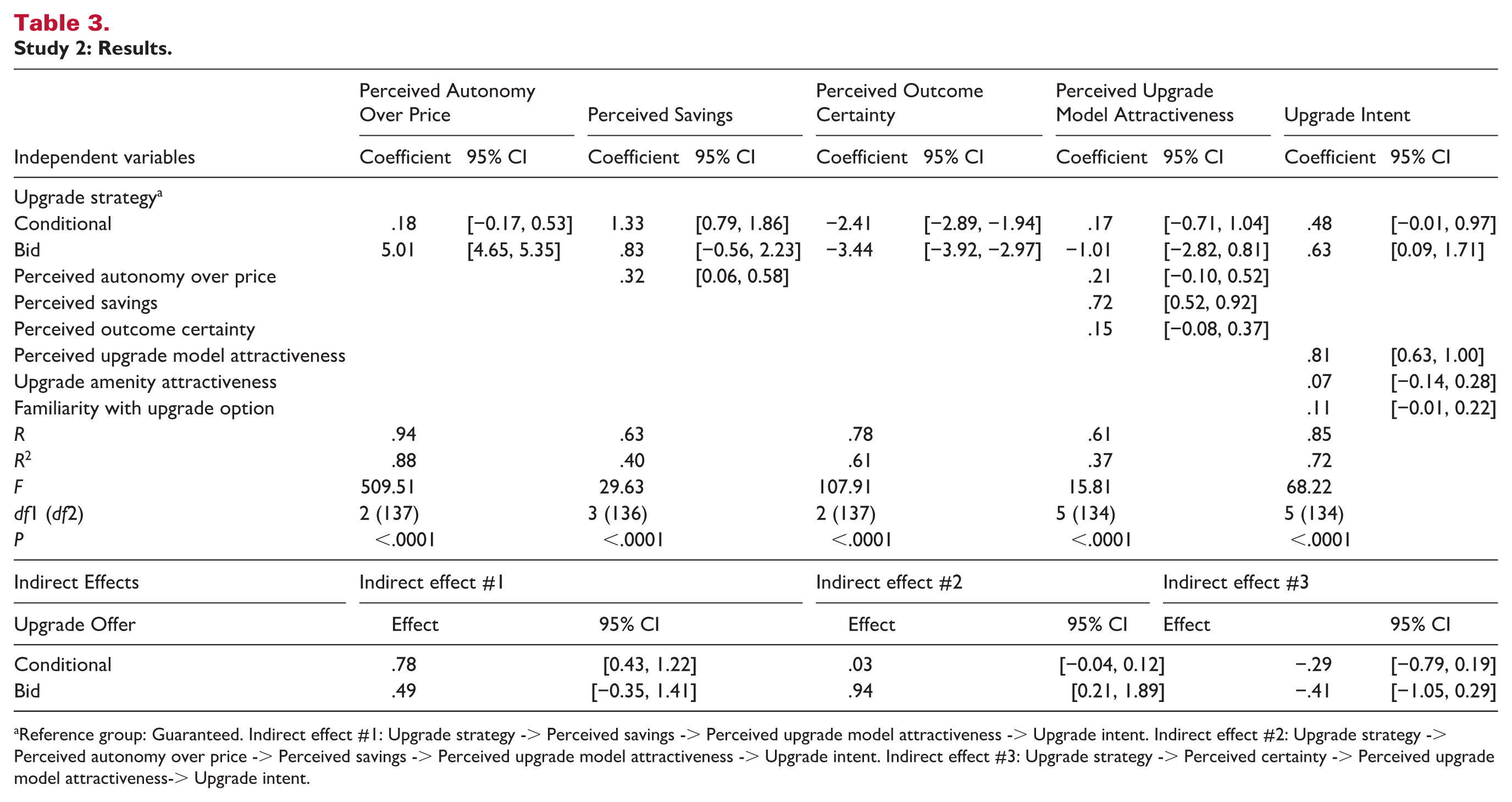
Reference group: Guaranteed. Indirect effect #1: Upgrade strategy -> Perceived savings -> Perceived upgrade model attractiveness -> Upgrade intent. Indirect effect #2: Upgrade strategy -> Perceived autonomy over price -> Perceived savings -> Perceived upgrade model attractiveness -> Upgrade intent. Indirect effect #3: Upgrade strategy -> Perceived certainty -> Perceived upgrade model attractiveness-> Upgrade intent.
Perceived savings had a direct effect on perceived upgrade model attractiveness (β = .72, CI = [0.52, 0.92]; supporting H1a), while perceived outcome certainty did not (β = .15, CI = [−0.08, 0.37]). The direct effect of the upgrade model on upgrade intent was insignificant (F = 2.92, p>.5). Perceived upgrade model attractiveness had a significant and positive effect on upgrade intent (β = .81, CI = [0.63, 1.00]). Neither upgrade amenities attractiveness nor familiarity with the upgrade option had a significant effect on upgrade intent: β = .07, CI = [−0.14, 0.28] and β = .11, CI = [−0.01, 0.22], respectively.
Relative to Guaranteed, the indirect effect of upgrade model on upgrade intent through perceived savings and perceived upgrade model attractiveness was significant for Conditional (Conditional: β = .78, CI = [0.43, 1.22]; Bid: β = .49, CI = [−0.35, 1.41]), while the indirect effect of upgrade model on upgrade intent through perceived autonomy over price, perceived savings and perceived upgrade model attractiveness was significant for Bid (Bid: β = .94, CI = [0.21, 1.89], Conditional: β = .03, CI = [−0.04, 0.12]). Thus, H1b, H2a, and H2b were supported. The indirect effect of the upgrade model on perceived upgrade model attractiveness through perceived outcome certainty was not significant for either Conditional or Bid relative to Guaranteed (Conditional: β = −.29, CI = [−0.79, 0.19]; Bid: β = −.41, CI = [−1.05, 0.29]), supporting H3.
In sum, Study 2’s results provide support for a superior effect of the Conditional and Bid (vs. Guaranteed) models on perceived model attractiveness and ultimately upgrade intent, despite the significantly lower levels of familiarity associated with the two upgrade models. For Conditional, perceived savings and perceived upgrade model attractiveness serially mediated the upgrade model–upgrade intent relationship (vs. Guaranteed), whereas for Bid, perceived autonomy over price, perceived savings, and perceived upgrade model attractiveness serially mediated the relationship.
The insignificant difference in ratings for upgrade intent between Conditional and Bid suggests that implementing either model might yield equally favorable results in terms of the volume of upgrade requests. However, the range of bid amounts reported for Bid ($5 through $60) suggests that, by selecting bidders at the higher end of the bid range, firms may capture more revenue using a Bid model (vs. Conditional: discounted rate of $49).
Discussion
Fee-based upgrading allows hotel companies to optimize capacity utilization, boost incremental revenues, and foster consumer engagement with the firm, both prior to and during the consumption experience. Despite these benefits, the literature is silent regarding the relative attractiveness of the different upgrading models—Guaranteed, Conditional, and Bid—among consumers, and the psychological mechanisms underlying the upgrade model-upgrade intent relationship. This research sought to address this gap.
Study 1 explored why consumers choose to pay for an upgraded product (vs. the status quo). Prior research suggests that consumers compare an upgrade with the status quo and choose to upgrade only if the perceived utility of the upgrade warrants such action (Chernev, 2004; Sela & LeBoeuf, 2017; Weaver & Frederick, 2012). This was supported by Study 1’s findings. Participants who did not perceive sufficient value in the upgraded product opted for the status quo. When the upgraded product was highly valued (Guaranteed), participants were willing to pay the full price for the upgrade in return for the certainty of receiving it. When the upgraded product was less highly valued (Conditional and Bid), participants were willing to opt for an upgrade that would yield savings and, in the case of the Bid model, the freedom to name a price based on what they thought the upgrade was actually worth. Participants were satisfied with the status quo, so they considered the possibility of not being awarded the upgrade as low risk.
Building on Study 1’s findings, Study 2 extended the literature by empirically examining the mediating effects of perceived autonomy over price, perceived savings, perceived outcome certainty, and perceived upgrade model attractiveness in the upgrade model–upgrade intent relationship. As expected, and in line with prospect theory, the savings gained from the Conditional (vs. Guaranteed) model prompted greater perceptions of savings, which transferred to perceived attractiveness and, ultimately, upgrade intent (J. E. Lee & Chen-Yu, 2018). The savings associated with a Bid model are not so obvious. Analogous to a sealed-bid auction, bidders have no information about competing bids or thresholds. However, they do have the autonomy to name their own price based on their true value for the upgrade. Research on perceived autonomy is scarce, despite its significant role in consumer choice (Wertenbroch et al., 2020). This research sheds light on its effects on consumer decision-making, demonstrating that autonomy over price has a positive effect on perceived savings. Indeed, greater perceived savings for the Bid (vs. Conditional) model underscores the power of perceived autonomy.
This work also advances the application of the possibility effect to explain Study 2’s findings in relation to consumers’ responses to the uncertainty associated with the Conditional and Bid models (Kahneman, 2011). When consumers are satisfied with the status quo, the decision to upgrade is low stakes. In this context, they are likely to overweigh the gains (i.e., savings) associated with the upgrade, and willingly risk potential losses if the upgrade is not awarded.
From a managerial perspective, this research provides insights that can support hotel companies’ selection of online fee-based upgrade models. First, context matters. The findings of this research indicate that there is no one size fits all. Individual participants displayed different preferences across the three upgrade models. Thus, a hotel’s choice of upgrade model should be guided by its primary target market segments’ characteristics and related preferences. For example, a property catering primarily to families may determine that they are likely to respond best to Conditional upgrades that emphasize savings with low perceived risk, while another property may determine that a Bid model will fit best with their price–sensitive, engagement–oriented Millennial market. It is important to note that, since hotels have to contract with Conditional and Bid upgrade solution providers for at least 12 months, and those solutions integrate with existing systems (e.g., Upsell Guru integrates with property management and revenue management systems), a property cannot simultaneously offer Conditional upgrades to one segment and Bid upgrades to another. Therefore, the choice between Conditional and Bid solutions should be guided, not only by market segment upgrade model preferences, but also by the volume of demand, average spend, profitability, and growth potential of the key market segments that the property serves. Also, given the promising results regarding bid amounts in Study 2, where the bid amount oftentimes exceeded the default bid amount (i.e., Conditional upgrade price), a hotel operator may be drawn toward implementing a Bid model. However, if their primary market segment’s preference is for the less cognitively demanding Conditional upgrade approach, the Bid model may not yield expected returns.
And, what about the guest who is not price–sensitive and values outcome certainty (e.g., special occasion travelers)? Recall our participants (n = 40) in Study 1 who opted for a Guaranteed upgrade because they valued the offer and it was a “sure thing.” How can a hotel make upgraded products available at full price for this type of guest? If the guest is truly seeking an upgraded experience—without discounts—they will arguably be willing to select such a product during the room search process. Thus, it is important that hotels display the upgraded product as an option on the list of alternatives they present to the guest during search so that they optimize upgrade revenue from that guest. The hotel can then layer a Conditional or Bid model on top of this (choice dependent on key target segment) to capture discounted upgrade revenue from more price–sensitive customers.
Second, timing matters. Hotel operators need to know when to leverage Conditional and Bid models. During high demand, for example, a hotel might prioritize the display of the upgraded product on the list of alternatives offered to the guest during the room search process and limit, or set blackout dates, for Conditional/Bid upgrade offers. During low demand, hotel operators should employ the Conditional/Bid model to drive incremental spending from existing reservations. Note that since Conditional and Bid systems support dynamic pricing, the automated generation of a discount (Conditional model) or bidding range (Bid model) will reflect day of week and seasonal patterns, in addition to the discount and bidding thresholds set by the hotel operator.
Third, messaging matters. How can a hotel operator maximize appeal and subsequent conversion rates? With Guaranteed upgrades, the goal is to make the upgraded product stand out on the list of alternatives. For example, the operator could add appeal to a suite product label (e.g., rather than tag the room type listed beside a photo of the room and the room price as “2 bedroom 2 King Suite,” tag it as “Indulge in the exceptional: 2 bedroom 2 King Suite”). For Conditional upgrade offers, frame them as a gain with low risk (e.g., “Save $60 on a suite—only charged if available”) and/or provide them with a reference price (e.g., Regular upgrade price $70. Your price $49”). For the Bid offer, emphasize autonomy and guide savings (e.g., “Name your price for a suite. Most accepted bids $35–$55. You keep your current room if not accepted”). It is important that hotel operators experiment with different copy to see which maximizes conversion (e.g., A/B test subject lines: “Secure your suite today” (loss frame) vs. “Save up to $60 if available” (gain + low risk) to see which increases uptake, especially among less familiar customers).
Fourth, know what the customer values. The idea that consumers determine the value of an upgraded product underscores the importance of understanding what product attributes different market segments value. Study 1’s qualitative data indicated that some participants did not value the amenities included in the upgraded product. Therefore, to maximize the likelihood of conversion, regardless of the upgrade model implemented, the hotel operator needs to be able to clearly identify the attributes valued by their target market and design upgraded products accordingly.
Fifth, measure results. Hotel operators should track upgrade conversion, incremental RevPAR, and GOPPAR from upgrades, and customer satisfaction indexes for upgraded (vs. non-upgraded) customers. They should also consider longer-term effects of upgrading (e.g., will a guest who upgrades on one visit pay full price for the upgraded product the next time?).
Limitations and Future Research Directions
As with any research, our findings should be interpreted with caution. A controlled experiment allowed us to test precise predictions derived from theory while holding all else constant. A field study that examines actual choice behavior is merited to complement the findings of this research and expand its generalizability across populations and settings (e.g., spas, car rentals, cruises). Moreover, given that the focus of this work was on the psychological mechanisms underlying the differential effect of upgrading models on upgrade intent, we held customer segment (leisure), room type (queen), hotel type (upscale), and prices (i.e., price of base product, price of Guaranteed and Conditional upgrades) constant in Study 2. Further work that manipulates these situational factors is merited. For example, a field experiment, leveraging the pricing algorithms in existing conditional upgrade solutions, would enable testing of the potential effects of discount depth on conversion rates. In addition, we controlled for consumers’ familiarity with the upgrading models in Study 2. Future research should also examine the effects of other individual traits on upgrade intent (e.g., frequency with which consumers pay for upgrades, age).
Study 1’s findings suggest that consumers exhibit differences in the perceived ease of applying for an upgrade via the Conditional and Bid models. Examining the user experience during the upgrade decision, including ease of use and other factors such as engagement, could yield valuable insights for designing the upgrade offer interface. Study 1’s findings also suggest that consumers perceive the success rate of the Conditional and Bid models differently. Future research could probe the effects of success on upgrade decisions. For example, what impact do past upgrade request successes (or failures) have on consumers’ reactions to new Conditional or Bid upgrade offers?
Footnotes
Appendix
Study 1 Stimuli
|

Funding
The authors received no financial support for the research, authorship, or publication of this article.
Declaration of Conflicting Interests
The authors declared no potential conflicts of interest with respect to the research, authorship, or publication of this article.