



Abstract
Many hotel organizations were helping their employees remain engaged in the workplace during the pandemic. From the perspective of social exchange theory, the antecedents and outcome of this engagement were explored in two studies. A qualitative interview investigation of U.K. hotel employee engagement as reported by Senior Managers (n = 9) was carried out in Study 1 from which a theoretical model to investigate the antecedents and outcome of this engagement was developed, and tested with U.K. hotel employees (n = 163) in Study 2, with both studies conducted sequentially during the pandemic. Study 1 found that the emergence of new methods and styles of communication, the provision of and increased access to training, and employees’ adaptation to changes positively facilitated employee engagement through the pandemic. Results of Study 2 suggested that employee resilience, perceived communication quality, and workplace health and safety training are positively related to employee engagement, which in turn improves employee performance. This research enhances the theoretical understanding of the personal factor (i.e., employee resilience) and situational factors (i.e., perceived communication quality, and workplace health and safety training) that help enhance employee engagement and ultimately improve performance. The practical implications of the study propose means of effective communication with employees, mechanisms to bolster employee resilience and proactive health and safety training and reinduction of employees ahead of their return to work with guests during times of extreme turbulence.
Keywords
Introduction
Employee engagement activities have long been employed strategically by organizations to improve key areas such as motivation, well-being, and employee performance (Hughes & Rog, 2008). While human resource management is pivotal in facilitating employee development, engagement itself cannot simply be mandated (Smythe, 2016). However, it is widely recognized that culture and leadership are critical antecedents that can create an environment where employees are more likely to engage and thrive, ultimately leading to enhanced work performance (Emmett et al., 2021).
Resilience, defined as “effective coping and adaptation although faced with loss, hardship, or adversity” (Tugade & Fredrickson, 2004, p. 320), has been explored widely over the past decade with some studies defining it as a survival technique in turbulent times (Mitsakis, 2020; Sobaih et al., 2021). While there has been some debate as to whether resilience can be defined simply as a skill, or whether it is considered a behavior, there is evidence to suggest it poses a disparity between employees in the hospitality industry where age and years of experience are influential factors (Colmekcioglu et al., 2022). It is well recognized that the hospitality workforce is diverse and has a high composition of young adults who may respond differently to adverse climates and working conditions to those of experienced professionals who have dealt with crisis management or organizational instability before (Goh & Lee, 2018; Murray et al., 2017).
The emergence of the coronavirus (COVID 19) in 2020 affected industries and companies globally, and that of workforces whose working lives became disrupted in a debilitating business environment, coupled by the crisis plan which the U.K. Government implemented to mitigate the spread of COVID 19 (Sobaih et al., 2021). Evidently, resilience was no longer a trait, but a lifestyle many hospitality employees were expected to adapt to given many hotels and service organizations retracted headcount and imposed redundancies on the workforce as a survival technique (Cox, 2020; Mitsakis, 2020). In many cases, hospitality companies furloughed eligible employees to prevent high turnover rates and a tarnished employer brand (Deloitte, 2021a). Resilience was required in employees which lost their job status, security, career development, and total rewards (Hamouche, 2021; Hameed at el., 2024), but equally employees that remained employed, but had to either cope or adapt their job or working hours, and nevertheless remained concerned about how the pandemic may affect their future career in the hospitality industry (Caligiuri et al., 2020).
Combatting the COVID-19 pandemic, many HR professionals responded by focusing on the quality of communication with employees as guided by the Chartered Institute of Personnel and Development (CIPD, 2021b) who provided frameworks or best practice on communication quality and frequency. This is closely related to social exchange theory, which posits that social behavior is the result of an exchange process to maximize benefits and minimize costs (Cropanzano & Mitchell, 2005). Effective communication fosters trust, cooperation, and mutual respect among staff, which are essential elements in this exchange. Remote working practices presented a unique challenge for work-life balance as more and more furloughed employees were working outside usual hours to stay connected and to cope with business and family demands (Cañibano, 2021; Jang et al., 2020), in addition to engaging with remote working practices for the first time (Lee et al., 2021). To aid employees in their welfare, well-being resources including employee assistance programs were widely circulated across workforces, accompanied by e-learning platforms as HR professionals attempted to keep distant employees engaged and supported virtually (Caligiuri et al., 2020; Hamouche, 2021).
As companies planned their recovery strategy back to normality following the easing of national restrictions by the U.K. Government, many HR professionals were responsible for compliance and amendments to health and safety policies (Pinsent Masons, 2020). Guided by the Health and Safety Executive (HSE), U.K. Companies were expected to implement changes to corporate offices and physical premises, which included the enforcement of social distancing measures (Health and Safety Executive, 2021). To aid furloughed employees with a smooth transition back to their physical work address, HR professionals had to deliver approved courses via e-learning platforms to communicate and upskill remote employees on social distancing measures and personal protective equipment (CIPD, 2021a). However, many furloughed employees who were guided by their line or departmental managers on their return to work, and changes in service delivery expressed their concerns, as the HSE admitted that over 50% of all reports in 2020 were whistle-blower reports from unhappy or anxious employees who believed their employers were failing to act responsibly in the implementation of social distancing, and that communication quality was poor (Stuart et al., 2021). The situation described highlights the importance of social exchange theory and employee engagement in the context of health and safety training and effective communication. Social exchange theory suggests that employees evaluate their relationships with employers based on the perceived balance of contributions and benefits. The reports indicate a lack of mutual respect and support, which are critical for maintaining positive exchanges and employee engagement. Effective training and communication are essential to uphold the social contract and foster a committed, engaged workforce (Chen & Wu, 2017).
In summary, we aim to examine (a) the antecedents of employee engagement that include personal factors such as employee resilience and situational factors such as communication quality and workplace health and safety training, and (b) the influence of employee engagement on their performance. Addressing these research questions is of vital importance, given the salience of the pandemic to the hospitality industry. From the perspective of social exchange theory, employees engage and perform well for their organizations in exchange for support at work, which can result in a mutual and rewarding relationship (Cropanzano et al., 2017). Social exchange theory is thus a helpful lens for analyzing the factors that enhance their engagement and performance (Alfes et al., 2013). Results in this research will not only contribute to the employee engagement literature in hospitality management, but will also provide insights for the practitioners to retain invaluable talents in the long term.
Literature Review
Social Exchange Theory
Social exchange theory has been valuable in understanding and explaining human interactions in various settings which emphasize actors in the exchange (individual or organizational), what is exchanged (material or symbolic resources), and relationships between actors (Cropanzano & Mitchell, 2005; Li et al., 2017; Molm, 2003). Social exchange theory is applied to understand interactions within organizational contexts, including leader–member exchange (LMX), team–member exchange (TMX), and organization–member exchange (OMX). The literature suggests that positive OMX or LMX could lead to positive staff work performance, or vice versa (Li et al., 2017; Martinaityte & Sacramento, 2013). In TMX, relationship-oriented TMX (value relationship and personal sharing) could lead to higher quality of communication, stronger support to peers than task-oriented TMX (share tangible resources to complete work tasks) (Liao et al., 2010; Tse & Dasborough, 2008). High quality of TMX could lead to stronger commitment to the organization, job satisfaction, organizational citizenship behaviors, and better job performance (Dasgupta, 2024; Love & Forret, 2008).
According to social exchange theory, employees engage in social relationships and interactions based on the expectation of reciprocity and mutual benefit. Hospitality organizations that invest in their employees by offering fair compensation, opportunities for growth, and a positive work environment are more likely to receive reciprocal engagement from them (Guan et al., 2020). When employees feel valued and supported, they are more likely to reciprocate by putting in greater effort and dedication into their work (Qi et al., 2020).
Employee Engagement
Job engagement refers to the extent to which employees are eager to wholeheartedly immerse themselves in work tasks on physical, cognitive, and emotional levels (He et al., 2021). Studies have been examining the role of employee engagement during crisis and the COVID pandemic in particular. For example, Liu et al. (2022) investigated the relationship between employee engagement and performance in the hospitality sector. They found that organizational empowerment, leadership, and collaboration fostered employee engagement. Moreover, employee engagement positively impacted individual and organizational performance, mediated by organizational innovation culture. The study underscores the importance of fostering employee engagement through supportive leadership, collaboration, and fair treatment, which leads to enhanced organizational performance and innovative culture. Vakira et al. (2023) examined the relationship between inclusive leadership and employee engagement in the hospitality industry in Zimbabwe. Results show that inclusive leadership directly influences employee engagement, with psychological safety partially mediating this relationship. They highlighted the importance of inclusive leadership for enhancing engagement and productivity in the hospitality sector. Despite the significant potential and ongoing evolution of employee engagement within the hospitality industry, there remains a necessity for a deeper comprehension of the mechanisms behind employee engagement in the hospitality sector, especially during crises (Liu et al., 2022).
In this article, our goal is to unpack the phenomenon of employee engagement, its antecedents and impact, during the pandemic, using social exchange theory. We undertook two studies, one inductive and one deductive, to accomplish this goal. To gain insight into the factors that impact the dynamics of hotel employees’ engagement in the workplace, we coded interview data from nine in-depth semi-structured interviews with Senior Hotel Managers, explained in further detail in Study 1. In Study 2, we developed hypotheses by integrating themes identified from the first qualitative study and tested a framework of employee engagement among hotel employees in the United Kingdom. We conclude by outlining the theoretical contributions of this study for research in employee engagement and by highlighting important practical implications for employees, managers, and organizations in the hospitality industry.
Study 1
In Study 1, we aimed to explore the various types of communication and engagement policies and practices adopted by hotels amid COVID-19, and, importantly the dynamics of hotel employees’ engagement with their workplace as reported by Senior Managers. The exploratory nature of Study 1 results in the adoption of qualitative research design.
Method (Study 1)
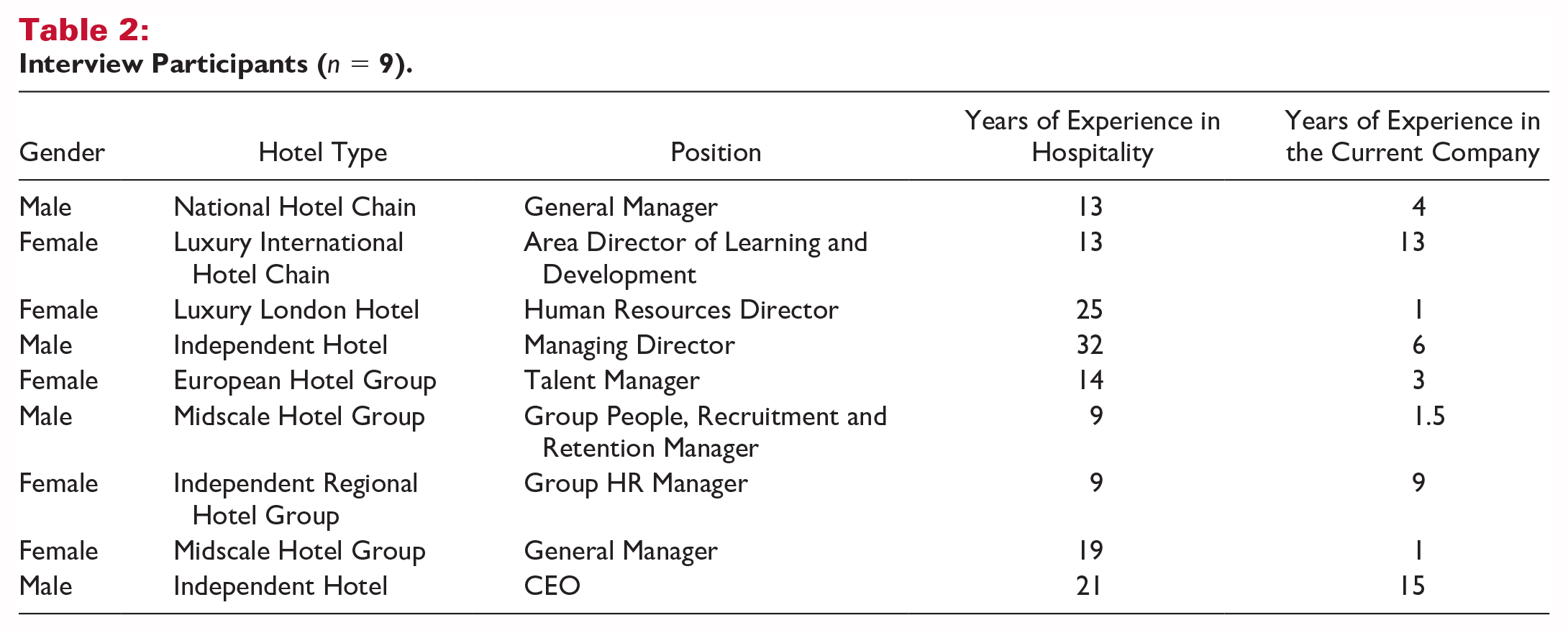
In-depth semi-structured interviews were employed to collect rich data from nine Senior Managers who were working in different hotels in the United Kingdom in 2020 amid the pandemic. A combination of convenience and snowball sampling methods were used to select the participants (Marshall, 1996) who must meet the two sampling criteria. These are (a) Senior Managers who were still working in the hotel at the time of the pandemic and (b) Senior Managers who had full knowledge about the communication and engagement policies and practices used in their hotel (expert informants). The sampling process started with one of the authors reaching out to former colleagues working in hotels in the United Kingdom at the time during the pandemic. Subsequently snowball sampling was adopted to reach out to more participants who matched the sampling criteria. All the nine participants, five females and four males, hold the position of either a General Manager or a departmental director mostly the Human Resource Department—please see Table 2.
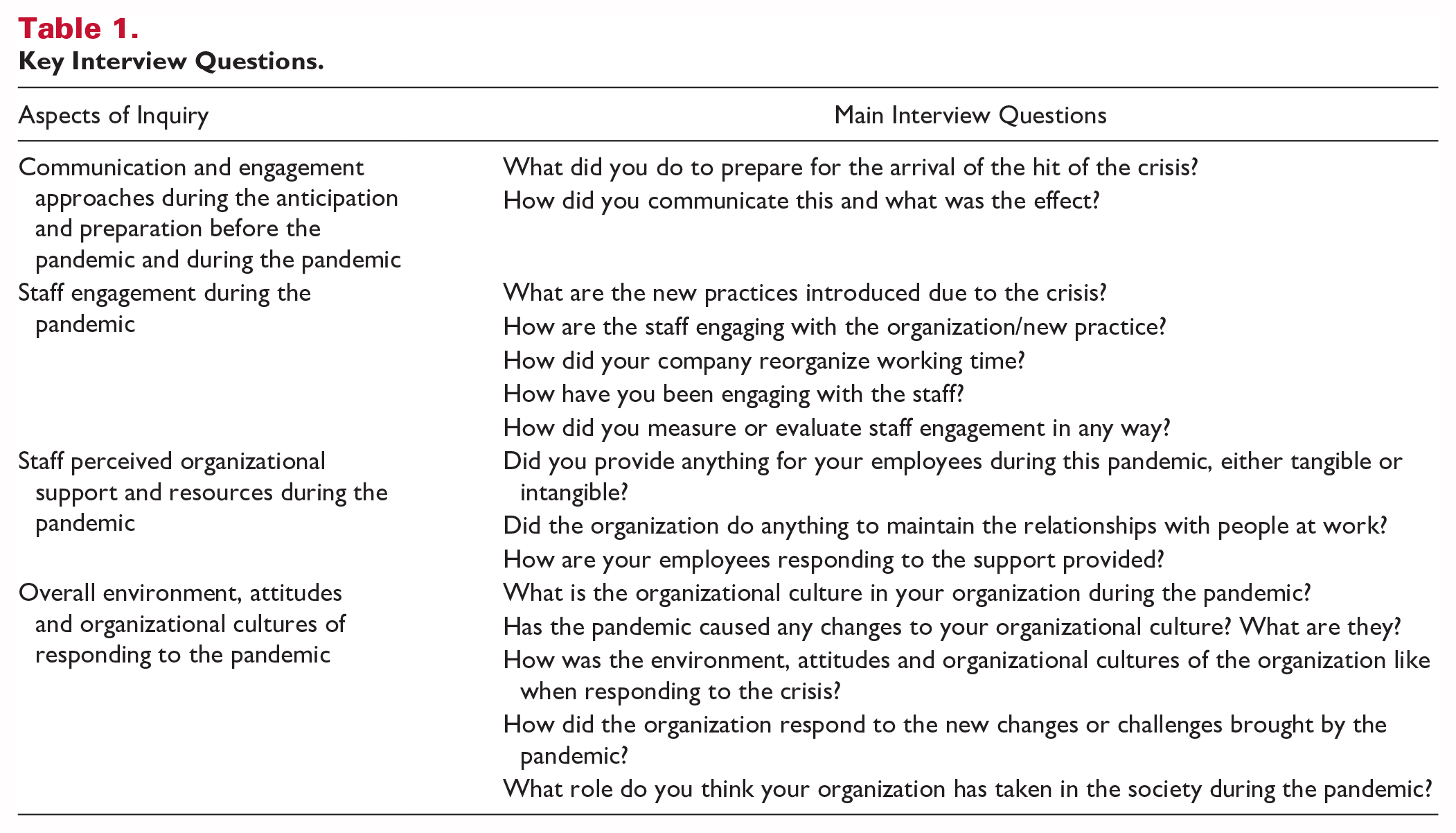
The in-depth semi-structured interviews contain four major aspects: (a) what communication and engagement approaches were used and the effects during the anticipation and preparation stage leading up to the pandemic and during the pandemic lockdown and their effect; (b) how were the staff engaged with the organization/new practice during the pandemic lockdown; (c) the organizational support and resources staff received during the pandemic; and (d) the overall environment, attitudes, and organizational cultures of responding to the crisis. Table 1 lists the key interview questions in relation to these key aspects, which are adapted from existing literature on employee engagement (e.g., Kaushik & Guleria, 2019; Marchington & Kynighou, 2012; Teague & Roche, 2014; Van Rooy et al., 2011; Yang et al., 2010), crisis management and resilience (e.g., Cartier & Taylor, 2020; Duchek, 2020; Williams et al., 2017).
Key Interview Questions.
Having considered relevant ethical considerations and followed institution approval, all the interviews were conducted online and recorded. The majority of the interviews were around 1-hour long with some lasting up to one and a half hours. Signs of data saturation emerged when the ninth interview was completed—where no new information emerged from the interview. The interviews were transcribed by auto-transcription and the author conducting the interviews.
The interview data were then analyzed following thematic analysis method supported by NVivo. The data analysis complied with Braun and Clarke’s (2006) thematic analysis procedures which involved data coding, grouping codes into theme clusters, and then analyzing the relationships between them. A snapshot of the thematic analysis coding is presented in Figure 1.
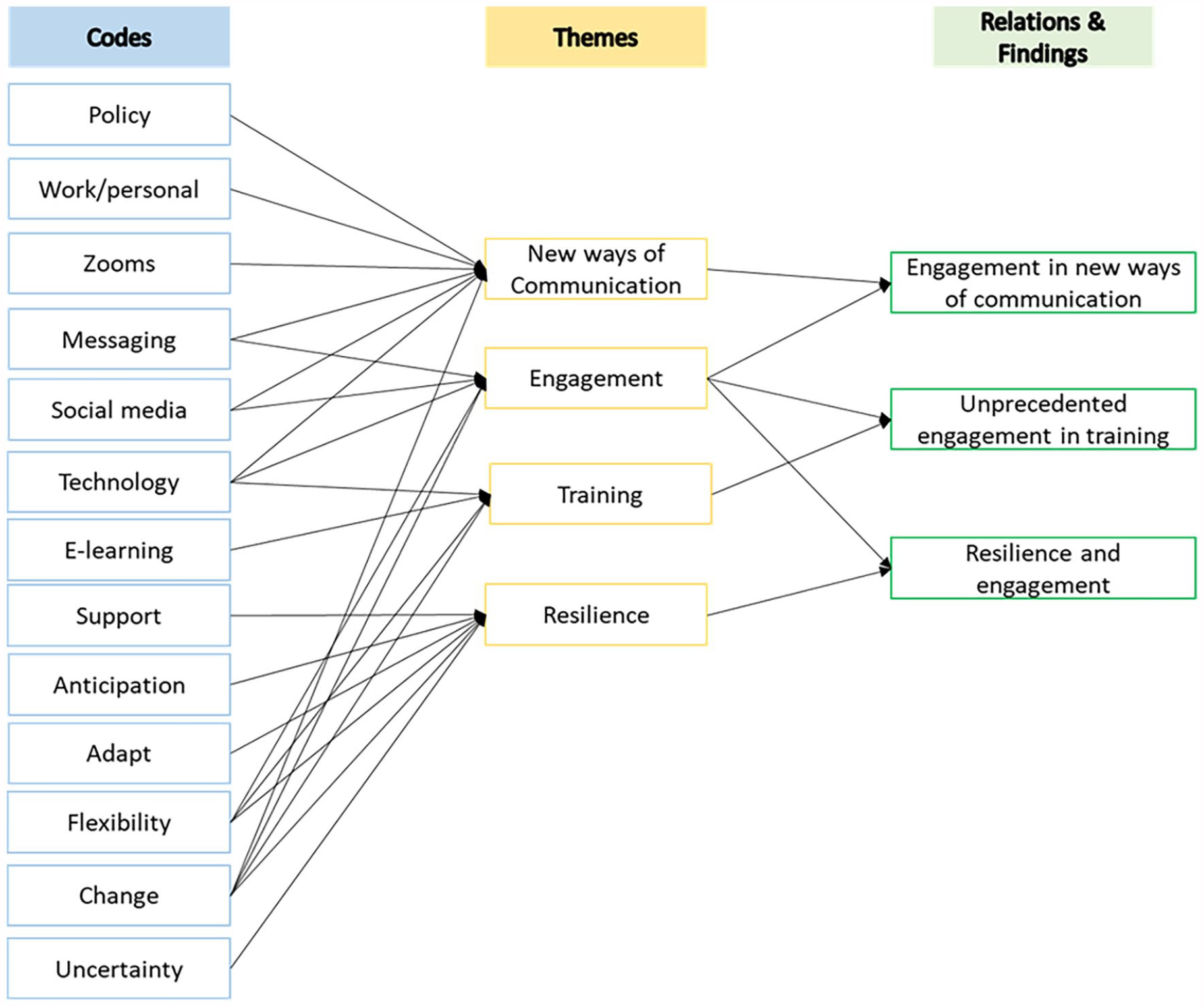
Snapshot of Coding and Theming.
The method of investigator triangulation was also employed to ensure credibility of the analysis and interpretation of the data (Korstjens & Moser, 2018). Two authors conducted thematic analysis of the data individually. Then interpretations from each of them were compared with test consistency. While most interpretations came congruently, minor differences in the labeling of codes were discussed until the two authors mutually agreed on a label that best presented the meaning of the data (Korstjens & Moser, 2018).
Findings (Study 1)
The interview data from the nine expert informants (see backgrounds in Table 2) reveal a novel and interesting hospitality workplace and dynamics in the new pandemic climate. Findings emerged to inform how employee engagement has changed under the restriction and impacts. We will discuss the key findings which inform our second study in the following section.
Interview Participants (n = 9).
Engagement in New Ways of Communication
One key change brought by the pandemic to hotels’ communication practices is the emergence and adoption of new ways of communication. With furlough being implemented, many staff were not actively engaged in the business, this led to the change of communication style between the hotels and furloughed staff changed from business contacts to personal contacts, and from work engagement to social engagement. While social media was not recommended as a professional business practice in the past due to its rather personal nature, under such circumstances, it became a quick and effective resolution to staff communication, when the usual, official channels were ineffective. For example: We’re not allowed to because you know, this furlough. You can’t ask an employee who is on furlough to join a zoom call, for example. But we do a daily zoom calls on the different departments and people can join if they want, but we’re not talking business we’re talking different things. We got on the Friday we have an event lip Friday; we call it. So, everybody who wants to join the zoom call has to wear red lipstick. (Interviewee #5) You can kind of communicate more regularly. So, in the UK, we do share it. But it’s all optional and we do it through social media platforms which we would not normally do, but it’s in a way to show that it’s a social engagement, rather than a work-based engagement. (Interviewee #2) It would land in everyone’s personal emails and if it was more kind of frivolous stuff, it would happen on the WhatsApp channel. And believe that quite a lot of activity . . . We think strange enough will come together better and tighter as a result of this. (Interviewee #9) In terms of the style of content is probably a little bit more personal. And so, for example, we’re doing on a Friday and people’s pets. So, it’s every Friday so people like a lot of people obviously now invested in puppies and cats, because they’ve got more time at home. So, we’ve had people sending through their photos. So, we’re sharing those. That’s not something we would have done before felt it was probably too close and not potentially on-brand, but you know, this is a channel that marketing doesn’t check . . . We’d never thought to do that before it would, it just felt a little bit too close to people’s home life but now those two have merged so much that I think we’ve got a bit more flexibility. (Interviewee #8)
It can be seen from the data that the changes to more personal communication with the adaptation to social media led to unprecedented new ways of communication and level of engagement. As suggested by the social exchange theory, higher particularistic and socio-emotional resources including love, attention and caring are more likely to develop long-term and positive exchange relationship than merely economic resources such as money, information, goods and services (Ohtsubo et al., 2014; Ziakas & Costa, 2010). The new and more personal and social communication adopted during the Covid pandemic allowed more opportunities for the exchange of higher particularistic and socio-emotional resources, and consequently stronger person to person engagement and attachment. The necessity and beauty of human touch in this very specific context is revealed in the following: One property had started making masks, so they started making masks. One company had suggested doing a fitness challenge, one did a gardening. And what they did is this property was so engaged with all these different programs that they collated this, and it was this video just to showcase to kind of the wealth, what they had been doing. And it was pretty impressive to see because it’s a property that you wouldn’t necessarily think engages so much joy. And it was beautiful to see. (Interviewee #5) We have a closed Facebook group, which we have started to post lots of different things on that. So, we’ve driven engagement through there . . . [The GM] she has that link with the team. And so, she writes lovely emails and we send them out for her through tweet, said, you know, get on our Facebook page . . . We want to see all the lovely things you and the team have really taken that on board. And they’ve been posting lots of great things . . . for instance, tonight we’re having a barbecue in the car park. So, we will take some photos of that and post it because it’s coming up to the bank holiday and it’s some buddy’s birthday, and we want to celebrate . . . our marketing team has put something together, which is it’s all about the team. It’s not about the hotel or driving revenues because it’s really not happening. But it’s about how we can support you. If you’re remote working, top tips, how we can support your mental well-being, . . . So, it’s more how you look after yourself during these times . . . And it was just funny and just actually highlighted, you know how our lives have been changed by all of this, but it was amusing. And then everybody started creeping in making comments. And it was really, it was good interaction and good linking . . . we spend an hour and a half chatting to each other, how are you doing? What’s going on? And then we play our quiz. And we have a giggle. And that’s going on around all our teams as well. And then from there, if there are any potential worries, concerns, then they let me know and I can contact them, and I can talk to them and make sure that people are okay. (Interviewee #4)
The new ways of communication bring out a new emphasis in staff communication and engagement, which spotlights the staff, the human, rather than the business, the performance. As suggested by the social exchange theory, relationship-oriented TMX (value relationship and personal sharing) could lead to higher quality of communication, stronger support to peers than task-oriented TMX (share tangible resources to complete work tasks) (Liao et al., 2010; Tse & Dasborough, 2008). The more personal ties that developed through these new communications between staff contribute to a deeper level of interaction and engagement, which is more emotional and affectionate, and less functional. It can be seen from these data that the more human focused interaction was received very positively, and particularly in the pandemic context where isolation and distance has totally changed people’s lives. The positive and enhanced engagement and responses from staff are also reflected below: I love the engagement; it would be through the Facebook channel. So, I did actually have a look. The other day, and screenshot, some of the stats. I can give those to you. Actually, you just give me one moment. So that way we can at least see the engagement came back through the other ways we can gauge the engagement is in terms of the number of us have pets video, the number of people that actually viewed the video, the whole way through. A number of people that we have been logged into flow on a weekly basis, considering. They’re not having the email alerts have been turned off. So, they’re not getting prompted they’re not being chased to go on and complete any training that choosing to do that. And in terms of the sign up for the master classes. So, who’s actually clicking through to that and that would probably the main ways we can see engagement from that, but also as in Facebook. (Interviewee #8) Within the last 28 days. Our engagements that the okay so post engagement increased by 2,300%. I mean had 150% increase in the number of page likes. That’s not a big star, actually, because it was only 10 but still in comparison to the number of followers. So decent, but we reached 3,700 people over the period of time, which is a 459% increase on the month previous, so engagement is high. (Interviewee #8)
Unprecedented Engagement in Training
Due to the restrictions of the pandemic, hotels were closed following the U.K. lockdown policies and majority of the employees were furloughed (HR Magazine, 2021). During this difficult time, the U.K. Government, together with many other organizations, have made lots of training accessible for furloughed staff free of charge adopting the online format (GOV.UK, 2021). A significant and also unprecedented consequence of these initiatives was the “gap time” and resources employees had during their furlough, which, provided them the time and environment to engage in training. As some interviewees said: In this new world and the level of engagement with the learning has been incredible. And I should I know I will be biased because I’m learning, but the online learning is normally a struggle. As you can imagine, like we are people faced we thrive off these face-to-face conversations but this online learning platform that we utilized has been incredible . . . So, we launched a 2020 challenge and that challenge we have been so surprised by that uptake because they have time and usually, they’re on the floor. (Interviewee #2) And we’ve also offered to training and so we teamed up with the training and we’ve offered funded courses for anyone who wants to do some training while they’re furloughed. And I think that’s made a massive difference. We’ve had a really good uptake of that . . . the government are giving us all this money. We can do lots of courses you can do more than one course. So there’s courses and things like team leading; customer service; business administration; allergy awareness; mental health awareness; that’s been a big leg up taking that yeah. (Interviewee #7)
It can be seen that a high level of engagement occurred in relation to the unprecedented uptake of training which was provided by institutional support and resources. The provision of such highly accessible resources (free and online) has provided a channel for employees to be in touch with their workplace, their colleagues, and to continue to develop their own career.
Resilience and Engagement
The data also show that employees were trying to survive the pandemic crisis and recover from its unprecedented impacts. They were responding to the challenges and adapting to the changes. Such development of resilience was facilitated by their engagement within their organizations. Some shared that As long as they know, and they do know that they’ve got support, and they can talk to anybody and everybody, whoever they want to pick up a phone to, or have a WhatsApp chat with, and there’s always somebody around to help them pick them up, talk it through. And I’ve done that with a few people. You know, and I’ve admitted I’ve had a few bad days along the way, and I live on my own. So, a lot of the time I’m on my own, and that’s incredibly difficult. So, I enjoy coming to the hotel to see the team because even for my own mental well-being is huge. (interviewee #4) You know, when you talk about a company that’s built on people and connections and something that we’re so proud of and the way the teams have responded, the way the teams have supported each other, you know, the creativity that the teams have had to try and, you know, stay connected and even the way that they’ve tried to elevate guests experiences that are quite it’s quite, you know, it’s quite stringent right now. You know, and they’re still trying to go that above and beyond. So, I think for me, that’s where you see the, the beauty of the team members that we have in place . . . And this is for you to engage with. If you wish, you know, whereas in other properties and in other jurisdictions, we were able to create really tailored communications biweekly newsletters that we created as a corporate team. That would share best practices, it would share tailored learning based on what we think the team needed. So, you know, if one week. We knew that there was real. Just like disruption. What let’s give them some support and change management, you know, if they are working at home. Let’s give them the tools to understand how to set up their time at home. Many of these team members have never worked at home before. So, let’s equip with them to know, okay, how does a daily routine work like this. (Interviewee #2)
It can be seen that the opportunities to engage with colleagues and senior management, the interaction with teams, the talk and the response in their engagement, supported their well-being, emotions, and daily new norms. It brought them the positivity and company they needed to adapt to the unexpected differences caused to their lives and progress to recover from the pandemic trauma. Furthermore, the engagement in the various resources provided, such as learning, training, advice and guidance, contributed to the development of their resilience by equipping and enhancing the functional and practical sides of their adaptation to new ways and different demand of working.
Study 1 Summary
Study 1 explored and investigated antecedents of employee engagement during the most restricted time of the Pandemic. The findings of Study 1 reveal key aspects that influenced employee engagement in the hospitality context. Predominantly, new means of communication and the offering of free and flexible training strongly affected how employees engaged together and how much they engaged with their workplaces.
While the environmental infrastructure (i.e., policies and resources) provided access and flexibility to employees to remain engaged with their jobs and workplaces through training, the adoption of new communication methods led to more complex impacts on employee engagement. When the original business-oriented channels such as work emails were changed to more personal- and social-oriented channels such as social media, this allowed for higher particularistic and socio-emotional exchanges (such as love, caring, and attention) between employees and organizations, which, as social exchange theory suggests, could result in deeper personal engagement and attachment (Li et al., 2017; Ohtsubo et al., 2014; Ziakas & Costa, 2010). While the usual business-and-performance focused communication often leads to task-oriented TMX, the novel staff-and-people focused communication style led to the development of relationship-oriented TMX, which, according to the social exchange theory, contributes to deeper engagement (Liao et al., 2010; Tse & Dasborough, 2008).
It is also found in Study 1 that employee engagement played a significant role in their development of resilience on various dimensions. Functionally and practically, the engagement in training developed their resilience by enhancing their work capability in a new environment. Emotionally and mentally, the engagement with peers and organizations contributed to sound mental health and well-being which is important to them coping with challenges and recovering from the trauma caused by the pandemic.
Study 2
Themes generated from Study 1 depict a complex phenomenon: employee engagement can be impacted by many aspects, from individuals (e.g., resilience) and managers and organizations (e.g., communication and training). Drawing from these findings, we sought to explain how these various factors may yield effects on employees’ engagement, which in turn, can influence employees’ performance. Relatively little attention is given about the factors predicting employee engagement in the workplace in the hospitality industry during the pandemic (Ahmed et al., 2020). Drawn from Study 1, we focus on three indicators of employee engagement: perceived communication quality, employee resilience, and workplace health and safety training, and how these are related to employee performance, based on social exchange theory.
The applications of the social exchange theory and the reciprocity norm (i.e., feeling obligated to return favors) to hospitality and tourism organizations have been supported in prior literature (e.g., de Souza Meira & Hancer, 2021; Wu et al., 2021). The perceptions of organizational support for their employees, such as providing workplace health and safety training and enhanced communication quality, can create employee obligation and engagement to provide treatment favorable to the organization in return. Indeed, Huang et al. (2016) applied social exchange theory to investigate safety climate, and they found that organizational support for workplace safety played a role in the social exchange dynamics, and employees tended to behave more positively when they perceived a higher level of managerial commitment to workplace safety. In addition, Cooke et al. (2019) suggested that engaged employees are more competent in adapting to the changing environment in the business world, because personal qualities, such as resilience, enable them to effectively control their workplace environment.
Furthermore, based on the social exchange theory, when individuals psychologically anticipate that investing higher job engagement would obtain higher organizational rewards or that investing lower job engagement would obtain lower organizational rewards, the relationship between employees and the organization is based on a social exchange relationship (Yin, 2018). Consequently, employees who are highly engaged are more inclined to exert greater effort and dedication in their roles. This heightened engagement often translates into enhanced performance outcomes, as they strive to meet and exceed organizational goals and expectations (Inam et al., 2023). Therefore, the relationship between employee engagement and performance is intricately linked through the lens of the social exchange theory. By fostering an environment where employees feel their efforts are valued and rewarded, organizations can cultivate higher levels of engagement, ultimately leading to improved performance across various metrics. Thus, employees who are engaged actively are likely to generate higher performance.
Based on the argument above, employee engagement serves as a crucial mediator in the interplay between perceived communication quality, employee resilience, workplace health and safety training, and employee performance. By mediating the relationship between perceived communication quality, employee resilience, workplace health and safety training, and employee performance, engagement becomes a pivotal factor in driving organizational success. Organizations that prioritize fostering engagement through effective communication, resilience-building initiatives, and comprehensive training programs are likely to experience enhanced employee performance and overall effectiveness. From the conceptual model illustrated in Figure 2, we propose the following hypotheses:
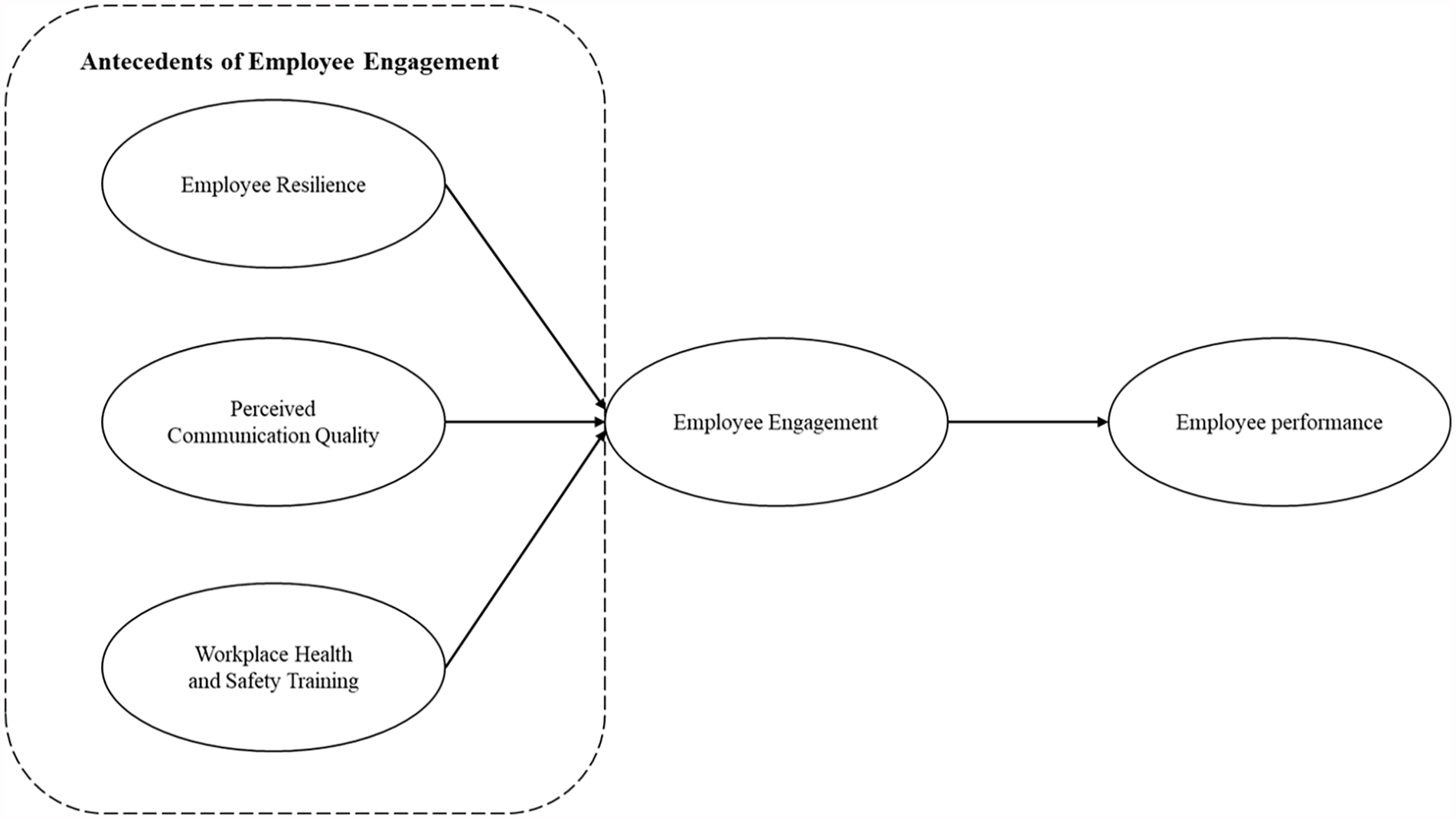
The Research Conceptual Framework.
Method (Study 2)
Research Design
An online quantitative survey was designed to examine the mediation model. The major variables derived from Study 1 including employee resilience, perceived communication quality, workplace health and safety training, employee engagement, and employee performance were captured. At the end of the questionnaire, demographic information of the respondents was captured. Using convenience sampling of the second and fourth author’s professional links, the researchers chose current employees at all levels who were working in the hotel industry in the United Kingdom. The survey was distributed both using the professional social media platform LinkedIn and via Human Resources Managers in hotels distributing the link to their employees. Study 2 followed Study 1 and while it took place during the Pandemic period, employees had returned to work before it was distributed. A total of 163 valid responses were returned. The majority (40%) of the respondents were 18–29 years old, followed by 30–39 years old (24%), and 40–49 years old (23%). Among all respondents, 50.5% were female; 28% of the respondents have worked for more than five years in the current organization, followed by 1–2 years (21%), up to 1 year (20%), 2–3 years (15%), 3–4 years (9%), and 4–5 years (8%).
Measurements
The measurement items for the focal constructs were adopted from prior literature. Seven-point Likert-type scales were used ranging from 1 = strongly disagree to 7 = strongly agree. Resilience was measured by the scale developed by Smith et al. (2008) (Cronbach’s alpha = .86). A sample item includes “I tend to bounce back quickly after hard times.” Perceived communication quality was captured using three items from Den Hartog et al.’s (2013) study (e.g., “My managers provide a sufficient amount of information to me”; Cronbach’s alpha = .89.). Workplace health and safety training was measured using five items from Chi et al. (2020). A sample item includes “My company gives comprehensive training to employees in workplace health and safety issues” and Cronbach’s alpha = .92. Jung and Yoon’s (2018) study was used to measure employee engagement (e.g., “I find the work that I do full of meaning and purpose”; Cronbach’s alpha = .93). Finally, job performance was measured from Chiang and Hsieh (2012) (e.g., “Meet performance standards and expectations of the job” Cronbach’s alpha = .81).
Results (Study 2)
The mean values, standard deviations (SDs), and inter-correlation estimates for the key variables of the current study are shown in Table 3. The correlations show that communication quality, resilience, and workplace health and safety training are positively related to employee engagement (r = .56, p < .01; r = .24, p < .05; r = .55, p < .01; respectively). In addition, employee engagement is positively correlated with employee performance (r = 46, p < .01). These findings provide preliminary support for the hypotheses.
Descriptive Statistics and Correlations Among the Key Variables.
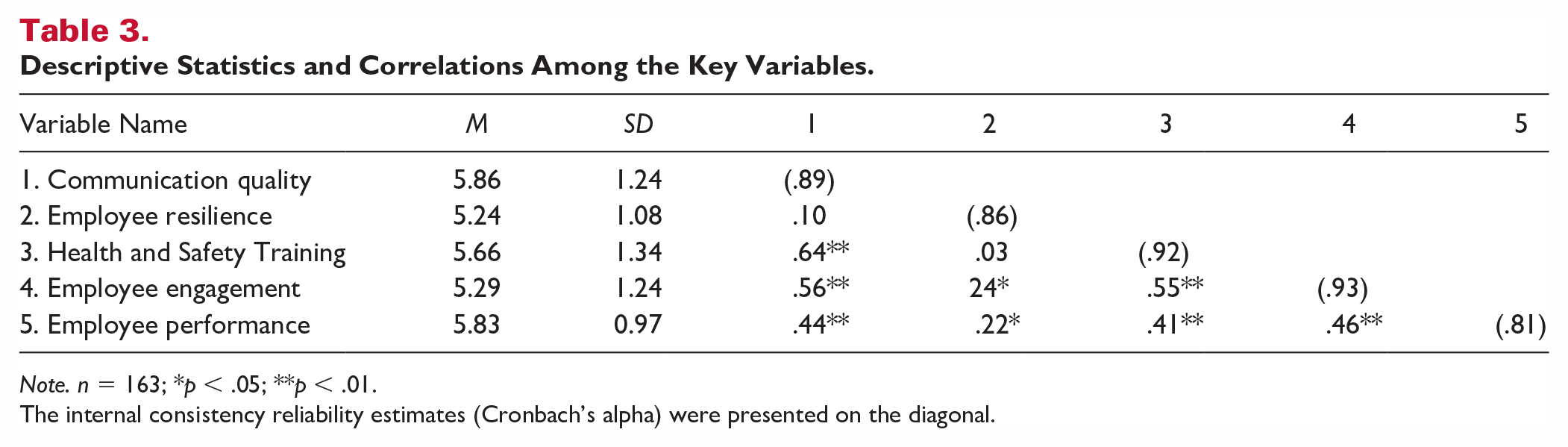
Note. n = 163; *p < .05; **p < .01.
The internal consistency reliability estimates (Cronbach’s alpha) were presented on the diagonal.
Model Testing
Before testing the hypotheses, it is crucial to evaluate the quality of the conceptual model (Hair et al., 2020). We utilized confirmatory factor analysis (CFA) to assess a series of key metrics such as factor loadings, Cronbach’s alpha, composite reliability (CR), average variance extracted (AVE), heterotrait–monotrait ratio (HTMT), and Fornell–Larcker criterion, to ensure the conceptual model has adequate reliability and validity.
In this study, the five constructs (i.e., Employee resilience; Perceived communication quality; Workplace health and safety training; Employee engagement; and Employee performance) all have reflective structures. As shown in Table 4, after removing several items with standardized factor loadings lower than .40, the loadings of remaining items are almost all greater than .60, which means that the items load up well on these constructs and indicates good indicator reliability (Hair et al., 2020). In addition, the calculated values of CR and Cronbach’s alpha for the constructs are all above .70, signifying sufficient internal consistency reliability of the scales (Hair et al., 2020).
Convergent Validity Assessment.
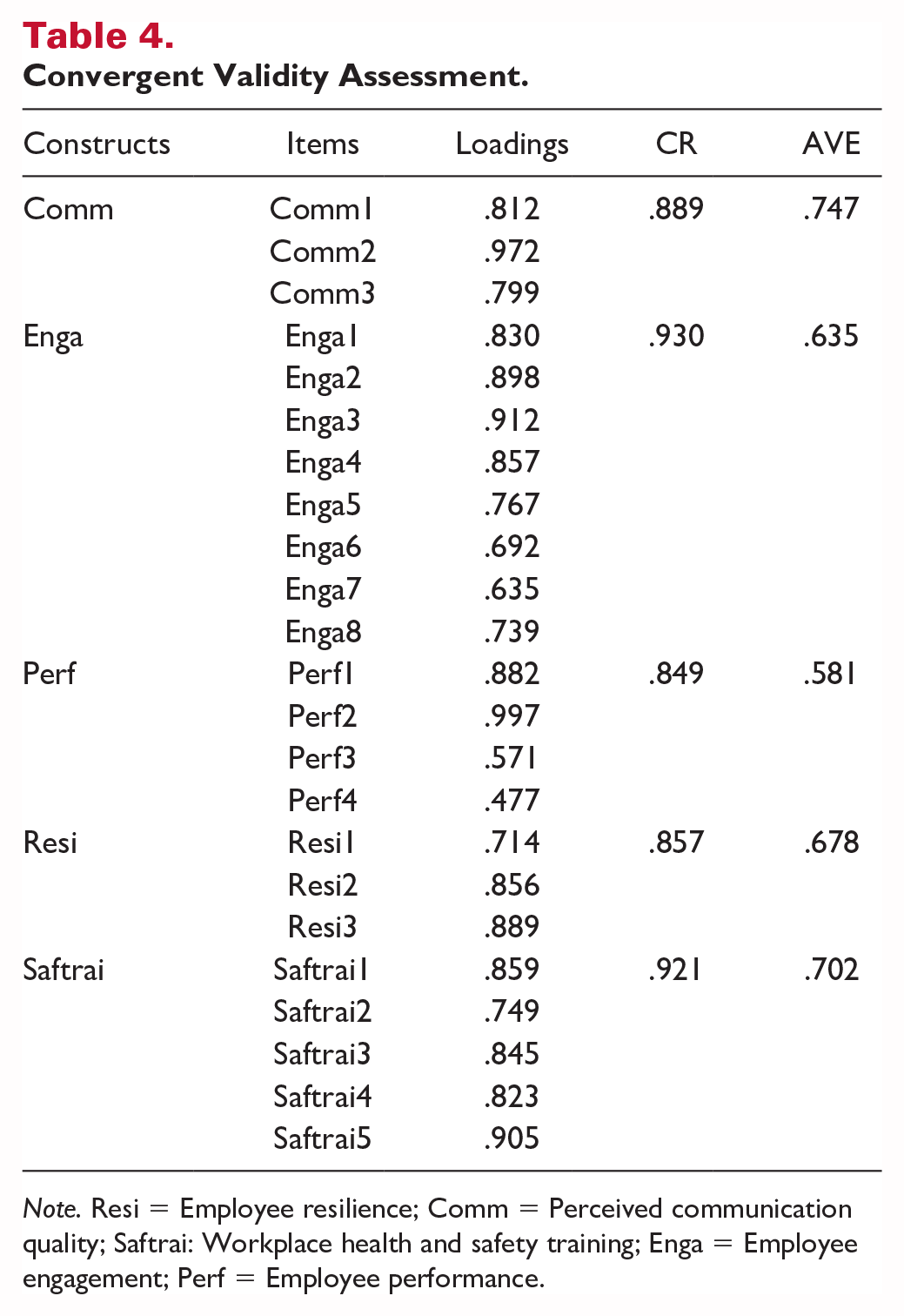
Note. Resi = Employee resilience; Comm = Perceived communication quality; Saftrai: Workplace health and safety training; Enga = Employee engagement; Perf = Employee performance.
Then, the model’s validity was examined. First, the average variance extracted (AVE) values were calculated for assessing the convergent validity. Table 4 demonstrates that the minimum AVE value (.64) in this model is .64, which exceeds the threshold of .50 recommended by Chin (1998), suggesting good convergent validity. For discriminate validity, both the HTMT and Fornell–Larcker criterion were deployed. According to Table 5, the HTMT values of the five constructs range from .12 to .61, below the critical value of .85 (Kline, 2011). Table 6 also shows that the square root of AVE values for each construct are higher than their correlations with other constructs, which illustrates the constructs have enough discriminated validity (Fornell & Larcker, 1981). The various statistical tests confirmed that the conceptual model in this study possesses satisfactory reliability and validity.
Discriminant Validity Assessment: Heterotrait–Monotrait (HTMT) Ratios.
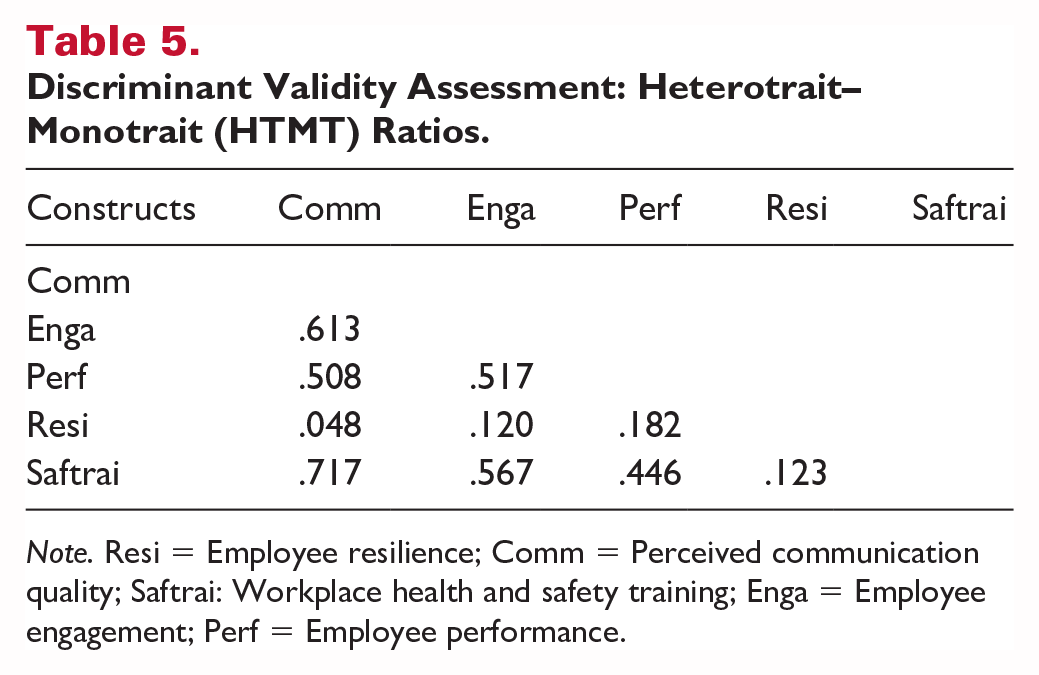
Note. Resi = Employee resilience; Comm = Perceived communication quality; Saftrai: Workplace health and safety training; Enga = Employee engagement; Perf = Employee performance.
Discriminant Validity Assessment: Fornell–Larcker Criterion.
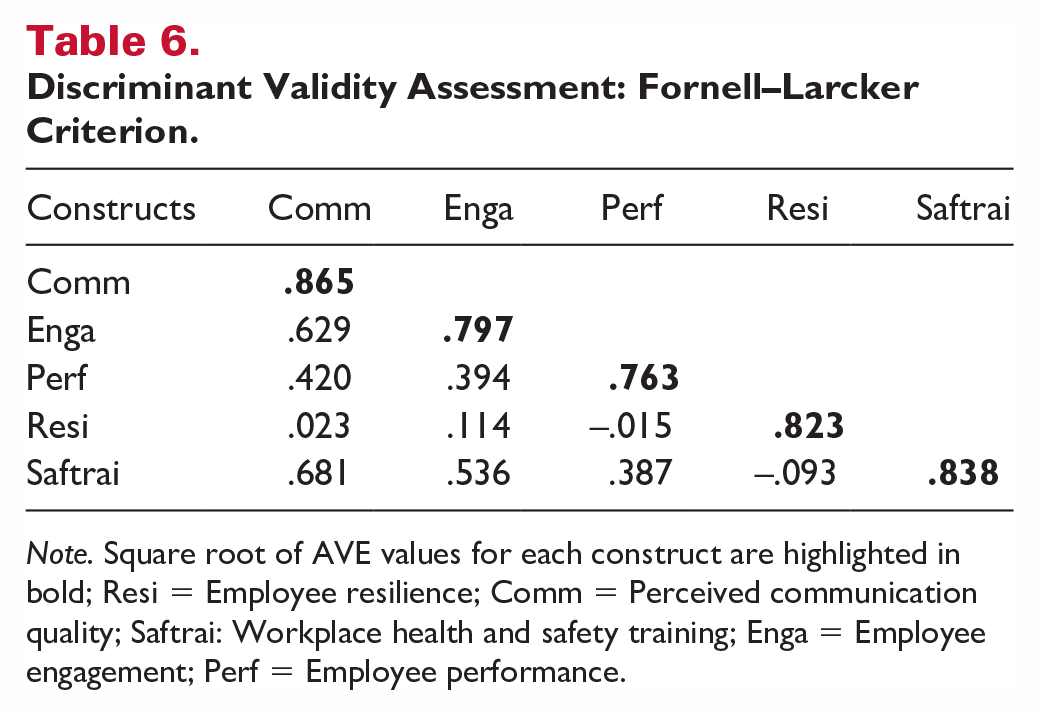
Note. Square root of AVE values for each construct are highlighted in bold; Resi = Employee resilience; Comm = Perceived communication quality; Saftrai: Workplace health and safety training; Enga = Employee engagement; Perf = Employee performance.
Hypotheses Testing
In the proposed conceptual model depicted in Figure 2, perceived communication quality, employee resilience, and workplace health and safety training are the independent variables, employee engagement is the mediator, and employee performance is the dependent variable. Hayes’s (2013) PROCESS Modeling was used to examine the proposed mediation model.
The results of hypotheses testing were demonstrated in Figure 3. The findings revealed that significant positive relationships exist between communication quality and employee engagement (b = .56, p < .001), employee resilience and employee engagement (b = .27, p < .05), workplace health and safety training and employee engagement (b = .50, p < .001), supporting Hypotheses 1a–c. Hypothesis 2 proposes that employee engagement is positively related to their performance. The result showed that the relation between employee engagement and performance is statistically significant (b = .36, p < .001), supporting Hypothesis 2.
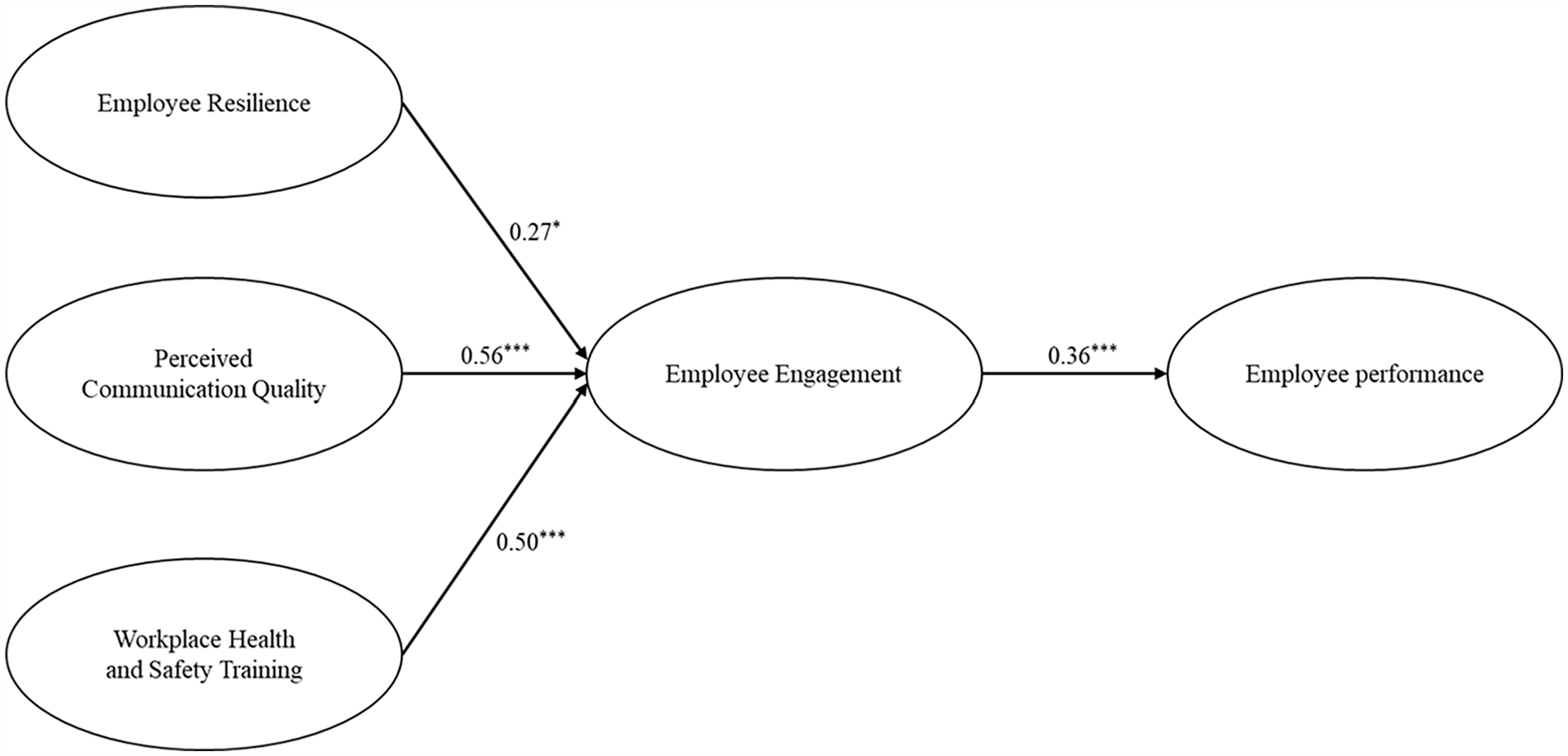
The Results of Hypotheses Testing.
Hypothesis 3 proposes that employee engagement mediates the relation between perceived communication quality, employee resilience, workplace health and safety training and employee performance. Hayes’ (2013) PROCESS Modeling was then used to examine the mediation models and the indirect effects. When perceived communication quality was entered as an independent variable, we found that the indirect effect was significant (the mean effect = .14, SE = .07, 95% CI [.03, .28]). Likewise, when the employee resilience was entered at the independent variable, the findings also revealed a significant indirect effect (the mean effect = .09, SE = .07, 95% CI [.01, .28]); a significant indirect effect was also found for workplace health and safety training (the mean effect = .13, SE = .09, 95% CI [.01, .33]). Therefore, Hypothesis 3 is supported, such that employee engagement mediates the relation between perceived communication quality, employee resilience, workplace health and safety training and employee performance.
Discussion
Using a mixed-methods research design, aided by both qualitative and quantitative analysis, this study identified the dynamics between employees and their workplaces showing how adjustments of organization communications and provisions of resources influenced employee engagement and their adaptation to the pandemic disruption. The study then examined how the pandemic influenced hotel employees’ engagement and performance, how management teams responded, and what important lessons were learned in the coping process. Our study provides empirical evidence that supports a mediation effect of employee engagement in the relation between employee resilience, perceived communication quality, workplace health and safety training, and employee performance. The results from this research offer valuable theoretical and practical implications.
Theoretical Implications
This study enriches the literature of employee engagement in the hotel industry by uncovering the antecedents of employee engagement in the context of the pandemic, contributing to social exchange theory (Cropanzano & Mitchell, 2005). Many hotels furloughed their staff or asked their staff to be on unpaid leave, which is a short-term resolution financially speaking. Amid the furlough or unpaid leave, it is likely that staff quit their organizations and sought other career opportunities. Yet, when the business is back on track, it would be costly to engage with the employees again. This study highlights that more resilient employees exhibit greater engagement with the current organizations during the pandemic. Thus, strengthening employees’ resilience with considerable support including enhancing communication quality and implementing health and safety training is vital to engage talents and improve their job performance during the uncertain times. Based on social exchange theory, the decision to engage with work is influenced by relational inducement, including job-related support (Lee et al., 2021). Employees are more likely to engage with their work and perform better when they feel that their work effort is supported by their managers and organizations (Shuck et al., 2011). Social exchange theory also suggests that positive LMX, TMX, and OMX could lead to could lead to higher quality of communication, stronger commitment to the organization, job satisfaction, organizational citizenship behaviors and better job performance (Liao et al., 2010; Love & Forret, 2008; Martinaityte & Sacramento, 2013; Tse & Dasborough, 2008). Our findings support the literature and show positive relations between employee engagement, communication quality, training support, and job performance. Furthermore, the exchange of higher particularistic and socio-emotional resources (e.g., caring and love) is more likely to develop long-term and positive relationships than economic resources (e.g., information, money) (Ohtsubo et al., 2014). This study reveals that the particularistic and socio-emotional resources exchanged in this specific context played a vital role in facilitating employee engagement and their recovery from the pandemic disruption. Such significant influences revise our previous interpretation of the power of affectional and emotional social exchange.
We investigated employee resilience, perceived communication quality, and workplace health and safety training as important predictors of employee engagement in the theoretical model, based on social exchange theory. Although the hospitality literature suggests that many constructs can influence employee engagement, such as workplace spirituality (Milliman et al., 2018), leadership satisfaction (Book et al., 2019), and service climate and psychological capital (Kang & Busser, 2018), relatively little attention has been paid to systematically investigate the predictors of employee engagement during the pandemic using a mix-method design. This study has filled this gap by identifying the personal factors and situational factors as important antecedents of employee engagement. This research answers the research question of how employee resilience, perceived communication quality, and workplace health and safety training predict employee engagement, which in turn is related to employees’ performance. Given the value of employee engagement to the hotel companies (Jung & Yoon, 2018), it is anticipated that the results can be generalized to other service sectors, including theme parks and restaurants as well as to other future crises.
Practical Implications
The findings from this research have important practical implications that can help hospitality managers identify opportunities to enhance employee engagement and ultimately enhance employee performance, particularly during times of extreme turbulence and business interruption in the future.
The quality of communications between the company and its employees is a crucial factor in engaging employees, and managers should consider how they can rapidly adapt their communication procedures, while adhering to any imposed restrictions such as furlough schemes without damaging brand expectations. Managers can implement secure and, crucially, timely communications at different hierarchical levels in the organization, with both formal and informal tones, using an omni channel approach to keep all employees both informed and engaged. While top managers may deliver regular formal “state of the nation”/“town hall”-type communiques by email or video message, mid-level departmental managers may provide opportunities to bring teams together online synchronously using software such as Zoom or Teams and better facilitate two-way communication between the company and the employees and help manage issues and problems (Papagiannidis & Marikyan, 2020). Peer-to-peer communication should also be encouraged within teams and can be hosted through more informal mechanisms such as closed team social media sites such as Facebook or messaging groups using platforms such as WhatsApp. By providing a rich variety of opportunities for all employees to engage with company communications, both serious and informal messages can be imparted and shared in a tailored and engaging way to keep workforces up to speed, in touch and maintain the key sense of community/family/fun that is prevalent in so many hotel teams.
Of equal importance for managers is to encourage and facilitate employee resilience moving beyond necessary communication initiatives. Top Managers should demonstrate visible leadership both in the physical hotel and through online means and also empower middle managers to be equipped with the skills needed to support employees in times of great uncertainty. Managers should also highlight the availability of any employee assistance schemes (both formal, external and informal, internal) that they have available to their teams and consider how they can upskill their employees to be more resilient and better cope with remote working and the restrictions of lockdowns. Providing wide ranging, free (online) training opportunities to employees, both related to their specific role and beyond, can also help broaden skill sets and drive engagement (Agarwal, 2021). Importantly, managers can encourage team members to support each other’s interpersonal needs and provide informal, fun opportunities for them to do so (thorough such means as quizzes, cook-a-longs and virtual tours), ultimately building resilience through greater camaraderie (Lee et al., 2021; Schinoff et al., 2020; Singh & Kishore, 2018).
Beyond considering employee resilience, the importance of managers planning proactive health and safety training for team members ahead of their return to work with guests, with the consideration of all stakeholders is also of utmost importance. Managers must pay attention not only to employees (and guests) physical safety but also their psychological safety too. A proactive and rapid re-evaluation of standards and procedures for cleaning and service may be required, and these may need to go beyond advice provided in any one geography depending on the expectations of an individual hotel’s guests who may be from other territories. The training of new standards and procedures will also be key along with explanations of any new equipment that may be in place or deemed necessary such as Personal protective equipment (PPE) and protective screens (Bonfanti et al., 2021). The timeliness of the training and provision of a thorough explanation of reasoned changes to normal routines will be essential to ensuring team members are reassured, confident and comfortable for when guests return. Finally, where prolonged absences have been necessary for some employees, managers may also consider the reinduction of these team members that goes beyond health and safety training, but also reaffirms company values, brand standards, and more general expectations of employees in a new normal situation.
Limitations and Future Research Directions
There are some limitations in this study that could provide promising areas for future research. First, we used the self-rated performance scale. This can provide information about how employees assess their own performance, and thus, we may not conclude that the performance ratings are the reflection of supervisor’s evaluation of job performance. Nonetheless, as this research focuses on the relations among the factors measured from the employees’ own perspectives, the use of self-rated job performance is indeed reasonable (Aguiar-Quintana et al., 2021). This was also our best effort to gather the timely information during the imposed lockdown in the United Kingdom. Nonetheless, one recommendation for future studies is to investigate job performance from the managerial or organizational perspectives. In addition, longitudinal studies can be conducted to capture the key outcomes such as engagement and performance post the pandemic.
In addition, further research on employee engagement is warranted. In the current study, we examined three predictors, employee resilience, perceived communication quality, workplace health and safety training, and how these link to employee performance through the mediating role of employee engagement. Future research is needed to identify other predictors or consequences of employee engagement. In addition, although we reached data saturation in the qualitative Study 1 using convenience and snowball sampling, the samples are restricted in boutique or higher end hotels. It is possible that findings from study don’t reflect a comprehensive dynamic of workplace in lower end or chained hotels during this specific period. We recommend future studies look at hotels with different natures, features or background. Finally, the study sample was composed exclusively of United Kingdom employees working in the hospitality industry; this could limit the generalizability of the findings. Although prior literature has not found significant cross-cultural difference in employee engagement (Li et al., 2021), researchers would need to replicate this research with samples from other cultural settings.
Footnotes
Declaration of Conflicting Interests
The author(s) declared no potential conflicts of interest with respect to the research, authorship, or publication of this article.
Funding
The author(s) received no financial support for the research, authorship, or publication of this article.
