



Abstract
This article examines the effect of user review ratings and sentiment in review comments on restaurant profitability. In addition, the effects of sentiment in review comments in a local versus a foreign language are compared. User sentiments are mined from 63,904 Dutch and 42,980 English TripAdvisor review comments for restaurants in Flanders (the Dutch-speaking region of Belgium). The article exploits the availability of detailed firm-level financial reports, which are mandatory for all Belgian companies. This facilitates the investigation of bottom-line profitability, which is the ultimate measure of success, and at the same time, the inclusion of firm-specific control variables in the regression analyses. Findings suggest positive sentiment toward restaurants in general and that variations in sentiment impact profitability. Sentiment in review comments is highly significant and has a larger impact than review ratings. In addition, comments in the local language (Dutch) are more impactful than comments in a global language (English). Overall results suggest that, rather than focusing solely on quantitative ratings, restaurateurs should focus on users’ qualitative review comments, actively managing them to help drive restaurant performance. To the authors’ knowledge, this is the first study to empirically assess how review ratings, sentiment in review comments, and language of review comments impact bottom-line restaurant performance, adding to the literature supporting proactive online reputation management.
Introduction
Adoption of the internet as an information source has encouraged consumers to consult online reviews before purchasing (Mudambi & Schuff, 2010). User-generated content (UGC) typically provides rich, topical, and relevant feedback about product features and user experiences (Valdivia et al., 2017) and, due to its perceived lack of vested interest, is considered more credible than brand content (Colicev et al., 2019; O’Connor, 2008). As a result, UGC has been shown to influence the consumer decision-making process in multiple ways (Jang et al., 2012; Vermeulen & Seegers, 2009), including by increasing brand awareness (Yang et al., 2015; Zhang et al., 2010), reducing price sensitivity (Lynch & Ariely, 2000), influencing customer satisfaction (Radojević et al., 2017), and driving top-line sales (Chevalier & Mayzlin, 2006; Zhu & Zhang, 2010).
Peer-generated user reviews are one of the most notable forms of UGC (Estrella-Ramón & Ellis-Chadwick, 2017). By consulting such feedback, potential customers can develop an understanding of product/service quality, influencing their purchase decisions (Mauri & Minazzi, 2013). Such input is considered particularly important in hospitality and tourism, where intangibility and geographical distance prevent potential customers from experiencing a product prior to purchase (Ranga et al., 2022).
Online user reviews consist generally of two components: quantitative review ratings and qualitative review comments (Alaei et al., 2019). While ratings signify overall customer satisfaction levels in an easy-to-understand, summative format (Xie et al., 2016), qualitative comments can potentially reveal richer detail on users’ experiences and stories (Weismayer et al., 2018). However, most extant research on the relationship between user reviews and firm performance in the tourism sector has focused on the quantitative aspects, omitting the effect of the arguably more powerful pool of qualitative comments (Agnihotri & Bhattacharya, 2016; Liu et al., 2019; Neirotti et al., 2016; Wang et al., 2021; Xie et al., 2014; Xie & So, 2018). Furthermore, most research has focused on associating user review characteristics with top-line measures of firm performance such as brand awareness, consideration, purchase intent, or sales revenues (Vermeulen & Seegers, 2009; X. Zhang et al., 2020; X. Zhao et al., 2015; Y. Zhao et al., 2019), with few investigating their relationship with the arguably more important profitability metric. Finally, few studies to date have addressed the restaurant sector, whose highly experiential nature implies that reviews and their comments have potentially even greater effect (N. Li et al., 2022). However, due to the difficulty in obtaining firm-level financial data to carry out empirical studies, to date, few studies have taken this further and examined the relationship between reviews and profitability, with none examining the impact of both review ratings and sentiment in review comments on profitability in the restaurant sector. Thus, a substantial gap remains in our understanding of the effect of online reviews on firm performance.
Our study addresses this deficiency by empirically investigating the association between review characteristics (specifically review rating and sentiment in review comments) and firm profitability in the context of the restaurant sector in Flanders, thereby exploiting the availability of detailed firm-level financial reports, which are mandatory for all Belgian companies, including Small and Medium sized enterprises (SMEs). This allows to investigate bottom-line profitability, which is the ultimate measure of success, and at the same time, to include firm-specific control variables in our regression analyses. In addition, we exploited 106,884 TripAdvisor reviews on 1,750 Flemish restaurants. Textblob, a lexicon-based sentiment analysis package, is used to assess the sentiment of the comments. Through regression analysis, the impact of review ratings and sentiment on firm-level restaurant profitability (return on assets [ROA]) is assessed. Comparative analyses are also performed to gauge whether the (presumed) impact on profitability differs between (1) review ratings and sentiment in review comments and between (2) comments written in a local versus a global language.
The findings suggest that, in line with prior studies, ratings and sentiment in review comments toward restaurants are generally positive. The regression analysis showed that both review ratings and sentiment are significantly positively associated with profitability when both variables are included separately in consecutive regressions, the statistical significance being higher for sentiment. When both ratings and sentiment are included simultaneously in one regression, only sentiment turned out to be significant. However, as could be expected, there was a strong correlation between ratings and sentiment scores, which caused (1) a concern for multicollinearity when both regressors were included and (2) omitted variable bias when only one of these regressors was included. To address this, we orthogonalized ratings and sentiment scores using the Gram-Schmidt procedure (Saville & Wood, 1991). We found a significant effect on profitability for orthogonalized sentiment, but not for orthogonalized ratings. Regarding our comparison between the effects of comments in a global (English) versus a local language (Dutch), we found that, although review comments in a global language have a broader outreach, comments in the local language have a significantly higher impact.
This research extends the literature on UGC and user reviews by demonstrating the association between both the valence and sentiment of reviews and restaurant performance. While prior studies have demonstrated an association between certain, for the most part quantitative, review characteristics and top-line metrics such as consideration, purchase intent, sales, or satisfaction, this study takes the analyses to a deeper level, demonstrating their association with bottom-line profitability and confirming that efforts by restaurants to drive positive reviews are justified. Furthermore, in contrast to extant research, this study not only considers quantitative metrics such as review rating but examines the deeper sentiment of qualitative review comments, revealing that it is these that have the more substantial effect on restaurant success. The approach of orthogonalization, using the Gram-Schmidt procedure, deals with the obvious correlation between ratings and sentiment in review comments and allows to consider the idiosyncratic effect from both of these.
As such, the study has important implications for theory and practice, providing novel insights into the influence of online reviews; deepening our understanding of which aspects of online reviews are important; as well as identifying an alternative approach to managing reviews and maximizing firm profitability. Findings imply that managers should not only work on driving positive ratings but also pay close attention to encouraging customers to leave positive review comments. Furthermore, analyses of the differences in the impact of reviews in alternative languages suggest that feedback in the local language is most powerful and should receive proper attention.
The remainder of this article proceeds as follows: First, the background and theoretical foundations of the study are discussed, and research hypotheses are developed. The research methodology is then described, the analyses and research findings are discussed and finally, the conclusions, implications for further research, and limitations are presented.
Theoretical Background
Contextual Background
Searching for information and evaluating alternatives are essential steps on the consumer’s path to purchase (Colicev et al., 2019; De Bruyn & Lilien, 2008). This need is heightened with experience-based products (e.g., restaurant meals) as their inherent intangibility creates information asymmetry, making them difficult to evaluate prior to consumption (Gao et al., 2022; X. Hu & Yang, 2021). This increases risk, encouraging potential customers to seek out reliable information to inform their purchase decision (Alaei et al., 2019). In today’s digital marketplace, firsthand information about experiences posted on peer review sites has developed into an important source of electronic word of mouth (eWOM) and forms an important input into consumer purchase decisions (Filieri et al., 2018; Zhu & Zhang, 2010). eWOM reflects the “wisdom of the crowd” and has been shown to increase awareness, create familiarity, build trust, and help potential customers gain a virtual sense of product quality (Xu & Pratt, 2018). According to Gretzel and Yoo (2008) and Stringam et al. (2010), almost 90% of travelers find reviews helpful in the consumer decision-making process for travel (O’Connor, 2008).
Travel is among the most discussed subjects on social networking sites (Neidhardt et al., 2017). Through both dedicated online review sites and user reviews posted on online travel agency sites, travelers share their experiences, search for insights to inform future purchases, and/or get involved in peer discussions. With over 43 million unique monthly users in 2022, TripAdvisor is one of the largest online travel communities (About Tripadvisor, 2022). A key feature is its peer review system, which enables users to leave feedback on listed services in two ways: using a numerical review rating supplemented by a series of freeform textual comments.
Review Ratings (Valence)
Quantitative review ratings give a brief, easy-to-understand, indicator of customer satisfaction and are widely used on online review systems (Fang et al., 2016). The positive association between ratings and top-line metrics of firm performance has already been extensively researched in both business (Babić Rosario et al., 2016; Chen et al., 2019; Chevalier & Mayzlin, 2006) and the hotel sector (Vermeulen & Seegers, 2009; Yang et al., 2018). For example, J. Lee et al. (2008) show that ratings are positively associated with attitude toward the hotel, while Sparks and Browning (2011) demonstrate that positive ratings drive booking intent. Viglia et al. (2016) examined the impact of reviews on hotel occupancy in Rome, finding that a one-point increase in rating was associated with a 7.5-point occupancy increase. Zhu and Zhang (2010) and Chevalier and Mayzlin (2006) demonstrate the association between ratings and hotel sales revenues. Similarly, Ye et al. (2011) found that a 10% increase in ratings increases online bookings by over 5%, while J. J. Zhang and Mao (2012) demonstrated that a one-point increase in ratings allows prices to be raised, leading to a 9% increase in average daily revenue. Research in the restaurant sector is more limited, with Zhang et al. (2010) showing that consumer-generated ratings are positively associated with online popularity, and Aureliano-Silva et al. (2021), Ha et al. (2016) and Park et al. (2021) all demonstrating the association between restaurant rating and future visit intent, plus, Kim et al. (2016) showing the positive impact of rating on performance in terms of net sales, guest count, and average check.
Review Comments (Sentiment)
Review comments provide a rich source of information that is difficult to assess solely from review ratings (Bigne et al., 2021). Customers like to read both comments and ratings (Y. Zhao et al., 2019); however, the information deduced from each can differ (Stratigi et al., 2019), considering that ratings report the “what,” while the more detailed textual information uncovers the “why” (Zhang et al., 2016). Despite the proven impact of review ratings, many researchers maintain that the sentiment conveyed by review comments potentially has a greater influence on firm performance (Fong et al., 2017; Wu et al., 2015).
While a recent study by Han and Anderson (2020) found that customers with extremely negative experiences were more likely to post reviews, this pattern is strongest among first-time reviewers and moderated as consumers became more familiar with online reviews. It remains though that most researchers agree that the Likert-scale-like approach typically used by rating systems provides limited information and results in overtly positively biased scores (Pera et al., 2019). In contrast, qualitative review comments contain more in-depth information, typically conveying a sentiment and a description of an experience, and therefore potentially appeal more intuitively to readers than ratings (Pavlou & Dimoka, 2006). For example, one customer might write: “The food quality is astonishing. I recommend the veal tongue. Venue is as good as possible as the room allows. A couple less tables would be nice. People are super nice despite a little lack of experience from waitresses. 50 euros for two people. Very decent” and give a rating of four bubbles. Another might write: “Great place to enjoy a coffee and enjoy one of their homemade cakes! Also great for brunch—lunch—dinner! Would definitely recommend it” and also leave four bubbles. While the valence of these two reviews is equal, their informational content is substantially different. The first gives detailed information about the food, environment, staff, and price, while the second talks about the food and recommends it. Clearly, the numeric rating of 4 bubbles in each case is not as helpful as the detailed text and sentiment of the associated comments.
This in-depth information can be quantified using text analysis techniques to understand the sentiment in the review comments (Kirilenko et al., 2018; Stepchenkova et al., 2009). Such techniques have been widely used in business in general, particularly to help predict stock returns from user discussions on social media (Ranco et al., 2015; Sul et al., 2017). However, with certain exceptions, it has been less applied in tourism/hospitality. Several studies, such as, for example, Berezina et al. (2016), G. Li et al. (2015), and Xu and Li (2016), leveraged text analysis to gain a deeper understanding of the qualitative portion of online reviews to help identify the basis of satisfied/dissatisfied customers. In the context of online hotel booking sites, Tang et al. (2022) investigated the effect of qualitative user review characteristics on conversion rates (the percentage of visitors that actually makes a booking), establishing the positive association between these two metrics. In the restaurant context, Vu et al. (2019) examined review sentiments to explore consumer dining preferences in Australia, while Gan et al. (2017) leveraged text analysis to examine the relationship between qualitative aspects of restaurant reviews and their corresponding review ratings, demonstrating that consumer sentiment about food, service, and context explained differences in ratings, and establishing the interconnectivity of the qualitative and quantitative elements of user reviews. Examining premium and budget properties in Goa (Geetha et al., 2017) showed that rating and sentiment in review comments are indeed correlated.
Reviews and Profitability
Investigating the association between online reviews and profitability is important. As highlighted earlier, most prior studies have focused on top-line metrics, primarily because of the difficulty in accessing reliable and detailed financial data to carry out empirical analyses (Basuroy et al., 2003; Wang et al., 2021). As a result, many focus on abstract, user-measurable metrics such as awareness or purchase intent, although a small number have used financial metrics such as sales revenues. For example, in a 2012 study, Öğüt and Taş (2012) examined the impact of ratings on hotel room sales and price, finding that higher ratings significantly increased online sales and allowed hotels to charge higher prices. Another example is the study by Lu et al. (2013), who, in the context of restaurant review sites in China, established that online reviews have a significant effect on subsequent sales, with this effect extenuated by the use of both coupons and online advertising.
Despite the utility of understanding the relationship between review characteristics and top-line metrics, driving positive reviews is expensive, both in terms of the higher spending required to provide increased value to the customer to drive satisfaction and actively managing the review process by soliciting reviews from customers, posting management responses, and so on. With firms trying to return profit to their shareholders, an important question is whether such efforts pay off in terms of more profitable operations. To date, few studies have addressed this issue, particularly in tourism.
One example of an article that considers a bottom-line measure is the one by Wang et al. (2021), examining the effect of reviews on restaurant profitability in Iowa. However, their study only examined performance at the group aggregate level due to challenges in accessing appropriate financial data for individual restaurant units. They found that review volume (Vol) and review rating positively contribute to restaurant profitability. In contrast, Abdullah et al. (2022) found no association between review rating, volume and variability, and restaurant profitability. Another study is by Anagnostopoulou et al. (2020) who used latent semantic analysis to search for patterns in hotel review comments that affect profitability and found that themes contained in positive, but not negative, reviews are significantly associated with financial performance. Furthermore, Wu et al. (2015) utilized counterfactual experiments on data from a Chinese review website to estimate the monetary benefit of online reviews and found that favorable reviews lift restaurant profitability by an average of 12%. However, the study’s profitability conclusions are based on assumptions of restaurant profitability rather than empirical data, rendering their conclusions theoretical rather than practical.
In conclusion, for the hospitality sector in general, more extensive and comprehensive evidence on the association between, on the one side, review ratings and sentiment in review comments and, on the other side, firm-level profitability is needed as evidence of this essential relationship remains largely absent from the literature.
Hypotheses Development
Like many articles on user reviews, our research draws on the well-established perspectives of consumer information processing theory and rational choice theory to build an understanding of the effects of review characteristics on firm performance. Consumer information processing theory argues that UGC such as user reviews has two effects on consumers: an informative effect and a persuasive effect (Colicev et al., 2019). While the informative effect makes consumers aware of a brand’s existence, the persuasive effect helps convince them to buy its products (Zhu & Zhang, 2010). Rational choice theory, however, postulates that customers will only make their purchase if their expected benefits outweigh their costs. Both theories combined to form the basis behind the supposed benefits of user reviews, with positive signals received from positive reviews helping convince consumers to complete the transaction (Liang et al., 2020). In addition, peer-generated user reviews’ source credibility, both in terms of trustworthiness and expertise, enhances this persuasive effect (Harmon & Coney, 1982), implying that review ratings and sentiment in review comments have persuasive effects on consumers at each stage of their customer journey, ultimately driving sales (top-line revenues).
What remains unclear, however, is whether the increased effort, and resultant costs, of driving and managing reviews are in fact merited. Ensuring customer satisfaction implies costs, both in terms of additional spending on operational issues to deliver higher value, as well as increased management effort to proactively manage online reputational and drive positive reviews. An unanswered question is whether these additional costs result in sufficient revenue increases to be justifiable. With the literature largely silent on this issue, we adopt a grounded theory approach to explore whether these additional costs are merited or not and hypothesize that:
Sentiment in review comments is believed to be more influential than ratings (N. Hu et al., 2012). Pavlou and Dimoka (2006) found that information in review comments can help better explain the variance in price premium (R2 = 50%) than numerical ratings (R2 = 20%–30%). Besides, as discussed in the Review Comments (Sentiment) section, ratings have some constraints when determining users’ perceptions and opinions. Apart from being positively biased, ratings limit users’ feedback to an interval scale. Because comments more comprehensively describe user experiences and feelings, drawing on the persuasive effect of consumer information processing theory, we believe comments should have a larger appeal at a more intuitive level than ratings. Hence, we hypothesize that:
Review comments can be written in the local language, that is, the language of the restaurant’s location, or in a foreign language, most often English. Local customers can get information from many sources to inform their purchase decisions. Foreign customers, on the other hand, are more reliant on online sources, and in particular, UGC, to inform their choices. In addition, as English is widely understood, local customers can also benefit from comments in that language, implying that, thanks to their more extensive outreach, English comments should be more impactful than those in a local language. To investigate the relative impact of English comments on restaurant’s profitability, we hypothesize that:
Research Methodology
Sample and Data
Review characteristics of Flemish restaurants on TripAdvisor were combined with financial data to determine the impact of user opinions on profitability. As the largest source of user-generated reviews in the travel sector, TripAdvisor has been extensively used in prior studies on user reviews (Ayeh et al., 2013; Lee & Ro, 2016; Stringam et al., 2023; Taecharungroj & Mathayomchan, 2019; Valdivia et al., 2019), with Han and Anderson (2021) highlighting the utility of such data for addressing exploratory research problems where the research question has not previously been examined in detail. Flanders was selected as the context because all Belgian companies with limited liability must disclose detailed financial reports in a fixed format, giving access to the detailed restaurant-level financial information needed to investigate our hypotheses. As the local language of Flanders is Dutch, reviews in Dutch were considered to represent the opinions of locals, with those in English representing the opinions of others (in particular, ex-pats and travelers).
A unique data set was constructed by combining two sources. First, details of all Flemish restaurants were collected from TripAdvisor in September 2020 using Python. This included the restaurant name, address, review rating, individual review comments, and the date of each review. Reviews in languages other than Dutch or English were discarded. Next, the name, address, and financial information of Flemish firms with Nomenclature statistique des activités économiques dans la Communauté européenne Belgique (NACEBEL) principal code 561 (representing firms earning 50% or more of their revenues from the eatery business) were collected from financial database Belfirst. These two sources were then matched based on name and address. To facilitate the comparative analysis of language, only firms with at least one Dutch and one English review in a year were retained. Similarly, firms with insufficient financial information were discarded. This process resulted in 1,750 matched firms, representing 106,884 reviews (63,904 Dutch and 42,980 English) over 11 years (2009–2019), totaling 5,549 firm-year observations.
Sentiment Analysis
Sentiment analysis is the process of recognizing and classifying emotions expressed through a piece of text (Aakash & Aggarwal, 2022). It uses natural language processing to detect, extract, and categorize subjective information, such as opinion and attitudes from language, as well as determine its contextual polarity (positive or negative) (Ma et al., 2018). While not perfect (Kirilenko et al., 2018), sentiment analysis has been widely used as a research technique (Fan et al., 2017), also within the hospitality/tourism literature (Duan et al., 2016; Geetha et al., 2017; Ma et al., 2018; Y. Zhao et al., 2019). There are two common approaches: Lexicon-based methods use rules and a dictionary of words with pre-determined values, while machine learning methods need to be trained on labeled data (Alaei et al., 2019). While some tourism studies (see, for example, Nieto-Garcia et al., 2019; Sim et al., 2021) have attempted to carry out such training using the quantitative rating on user review sites as a satisfaction indicator, research shows that reviewers often give high ratings but write negative comments, and vice versa (Valdivia et al., 2017). With such contradictory signals, a machine-learning-based approach was thought unlikely to be successful, prompting the use of a lexicon-based method.
The lexicon-based sentiment analysis package used was “Textblob,” an established tool built upon Natural the Language Toolkit (NLTK; Kunal et al., 2018). Its rule- and lexicon-based technique assigns sentiment scores (between −1 and +1) to text and can be used in various languages, including Dutch and English (Loria, 2018). Several studies have previously used it for sentiment analysis (see, for example, Laksono et al., 2019; Rustam et al., 2021; Saura et al., 2022).
Data preparation is broadly in line with the recommendations of Mehraliyev et al. (2022). After preparing the text for analysis by correcting spelling and removing stop words (e.g., “the,” “an,” “a,” “is” etc.), reviews were loaded into Textblob. The resulting text was then analyzed using Textblob’s rule-based technique and dictionary to assign a sentiment score within the range of [−1.0, 1.0] to each sentence. Finally, the sentiments of all sentences are averaged to generate an overall sentiment score for each review.
Regression Model
The following regression models were used to test the hypotheses:


More specifically, Equation 1 was estimated to test the hypotheses H1, H2, and H3, while Equation 2 was used to test H4.
Dependent Variable
ROA is a widely acknowledged measure of firm performance that has been used in several studies (Abdullah et al., 2021; Anagnostopoulou et al., 2020; Ben Aissa & Goaied, 2016; De Schoenmaker et al., 2013; Penman, 2009) as it represents a firm’s ability to generate profits from assets (Athanasoglou et al., 2008). In addition, as opposed to return on equity, it is not mechanically affected by leverage and represents a good indication of operational efficiency and effectiveness (Abdullah et al., 2021).
Test Variables
The numeric rating (Rating) was scraped from each review and averaged for each restaurant for each year based on review date, with Rating representing the average annual review rating for each restaurant.
User opinions were mined with the help of “TextBlob,” which assigned a sentiment score (Score) to each review comment. Sentiment scores were then averaged for each restaurant for each year, based on review date, with Score representing the average annual score for each restaurant. Score_DU and Score_EN represent the average annual sentiment scores from Dutch and English reviews, respectively.
All test variables were converted to z-scores to facilitate comparison.
Control Variables
A number of control variables, including Vol, Age, Size, Leverage, Liquidity, and the lag of the dependent variable (ROAt-1) are also introduced to capture the confounding effects potentially caused by the characteristics of the restaurants studied (Abdullah et al., 2022).
Estimation Technique
The regression models are estimated using the two-step system GMM (Blundell & Bond, 1998), as it is one of the most efficient methods to estimate models with lagged dependent variables. Moreover, two-way fixed effects (firm and year) are also used to control for unobservable invariable firm and time characteristics.
Results
Descriptive Statistics
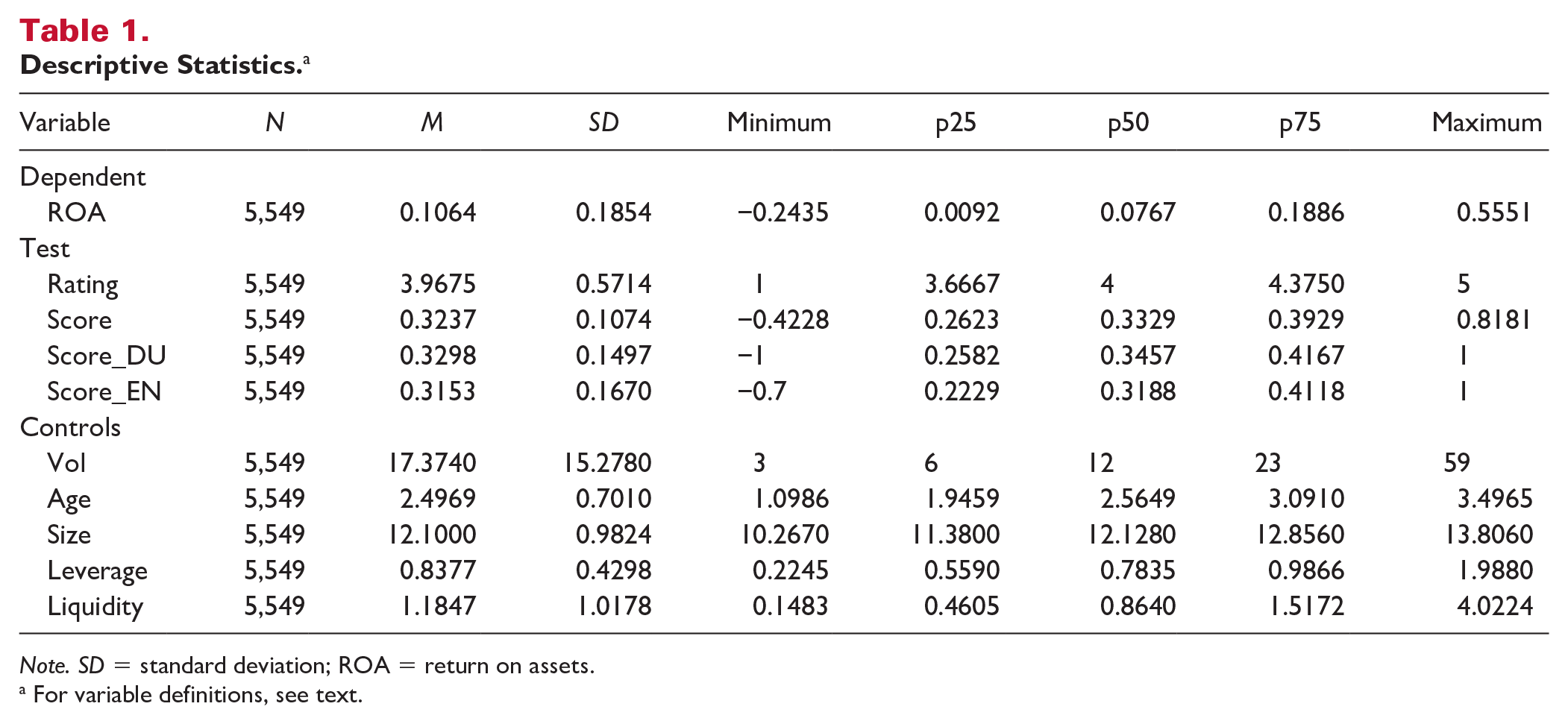
Table 1 presents the descriptive statistics. The variables ROA, Age, Size, Leverage, Liquidity, and Vol were winsorized at the 5th and 95th percentile to minimize the effect of outliers. The mean ROA was 10.64%, with the average age of restaurants being 11 years. Average firm assets are valued at 179,952 EUR, and the average ratios of leverage and liquidity are 0.84 and 1.18, respectively. The average yearly number of reviews is around 17, with an average of 10.66 and 6.01 in Dutch and English, respectively (not tabulated). Figures 1 and 2 portray an image of the most common words written by reviewers in Dutch and English, respectively.
Descriptive Statistics. a
Note. SD = standard deviation; ROA = return on assets.
For variable definitions, see text.
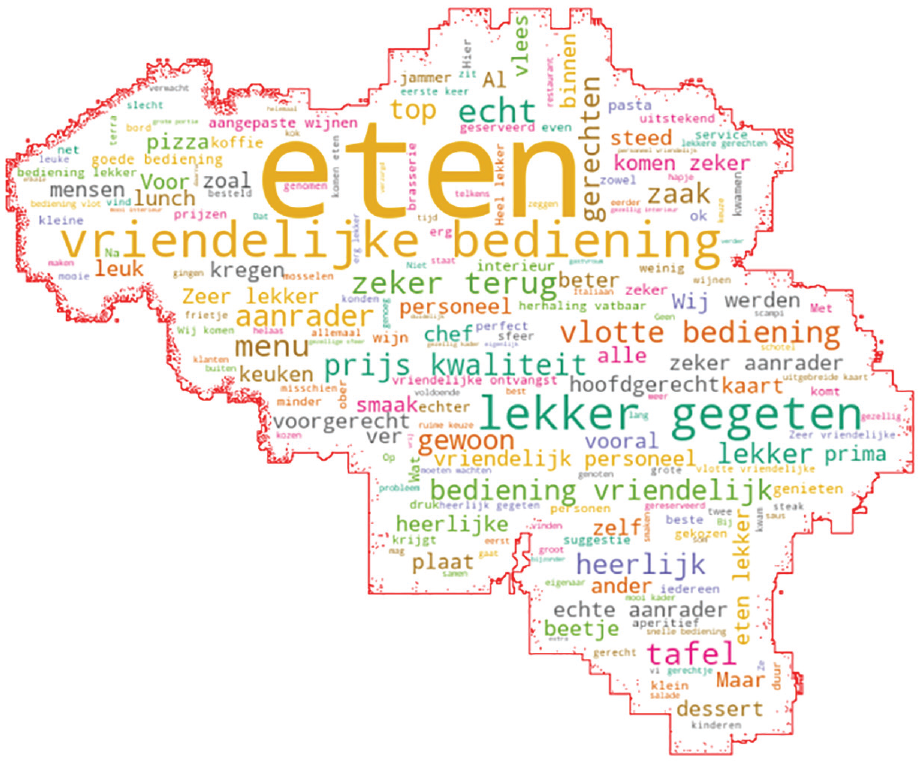
Most common words used in Dutch reviews.
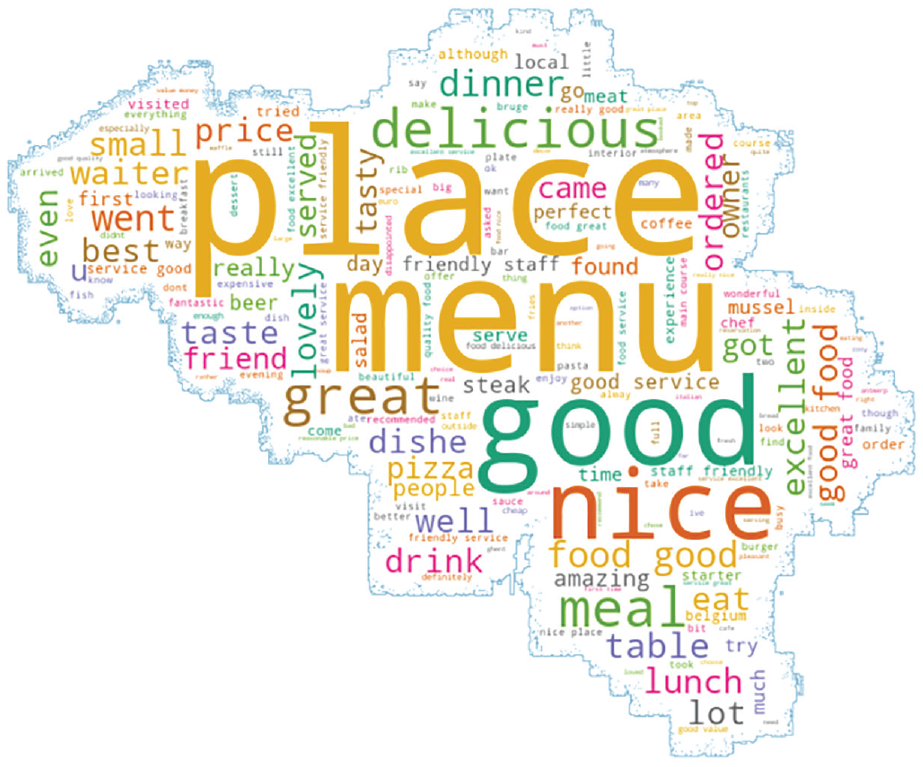
Most common words used in English reviews.
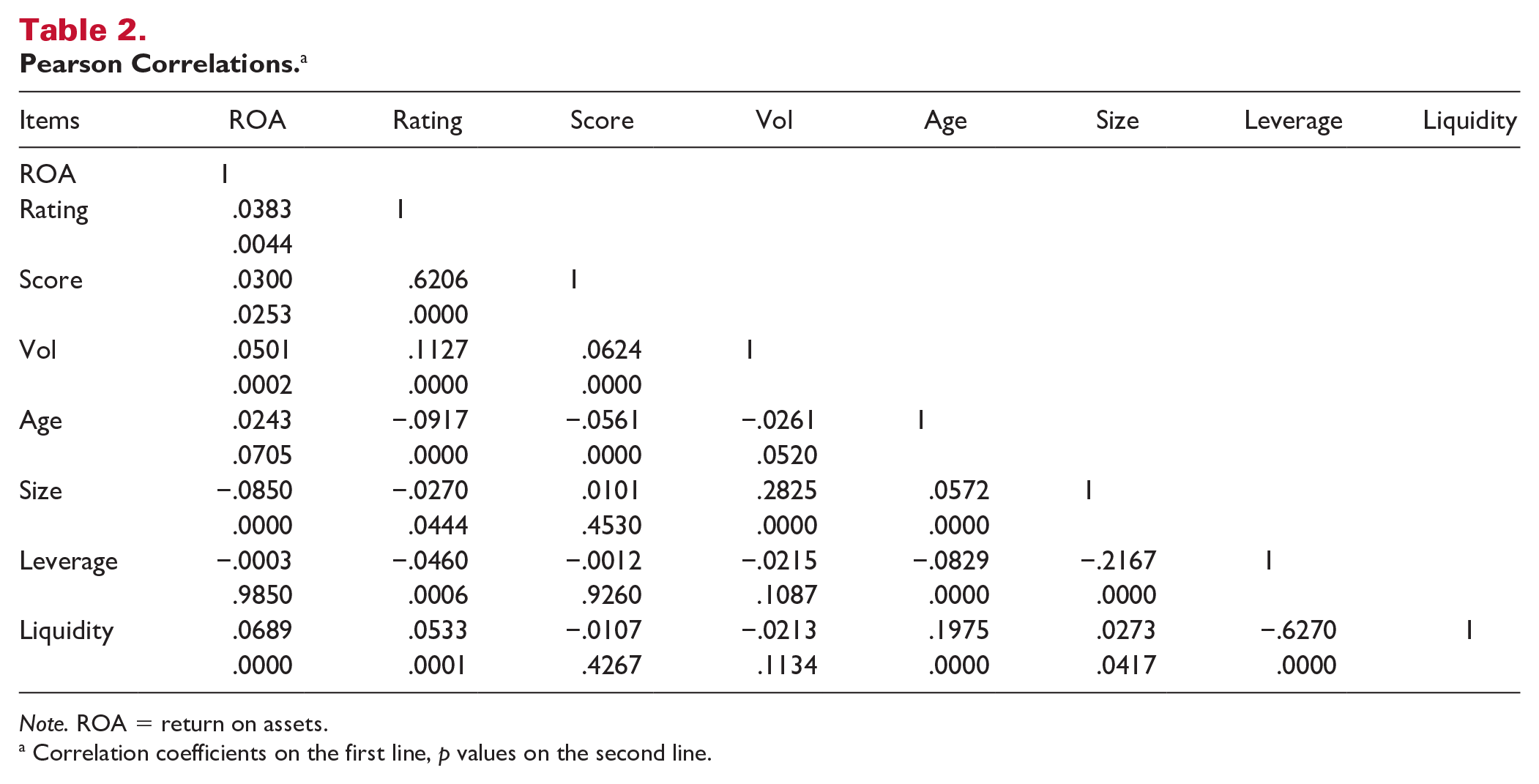
Consumer attitude toward restaurants was assessed in two ways: through the quantitative TripAdvisor review rating (Rating) and through sentiment analysis of their qualitative review comments (Score). As can be seen from Table 1, the mean rating score was 3.97, suggesting a high degree of satisfaction and reconfirming prior research that rating scores are positively biased (Valdivia et al., 2017; Woodman & Min-Venditti, 2016). Similarly, the global mean sentiment score was 0.32, again confirming a positive attitude toward restaurants in review texts. As might be expected, these two metrics were strongly, although not perfectly, correlated (see Table 2), suggesting the existence of cases where rating and sentiment are not in accord. Post hoc examination revealed 984 firm-year observations (984/5,549 firm-years = 17.74%) where Rating was greater than its median value, but the corresponding value of the sentiment Score was less than its median value, suggesting a disconnect between the rating and the sentiment score of the review.
Pearson Correlations. a
Note. ROA = return on assets.
Correlation coefficients on the first line, p values on the second line.
Effect of the Numerical Rating and Sentiment Score
Table 3 displays the results of the regression analysis. Column 1 presents Equation 1, testing the association between Rating and Score on ROA. The coefficient of Rating is insignificant (p = .359), but that of Score is positive and significant at the 5% level (p = .025). However, when tested individually (Columns 2 and 3), Rating is positive and significant at the 5% level, and Score is positive and significant at the 1% level, supporting prior research on the positive effect of user reviews on performance and suggesting a positive association between both variables (individually) and profitability.
Regression Summary. a
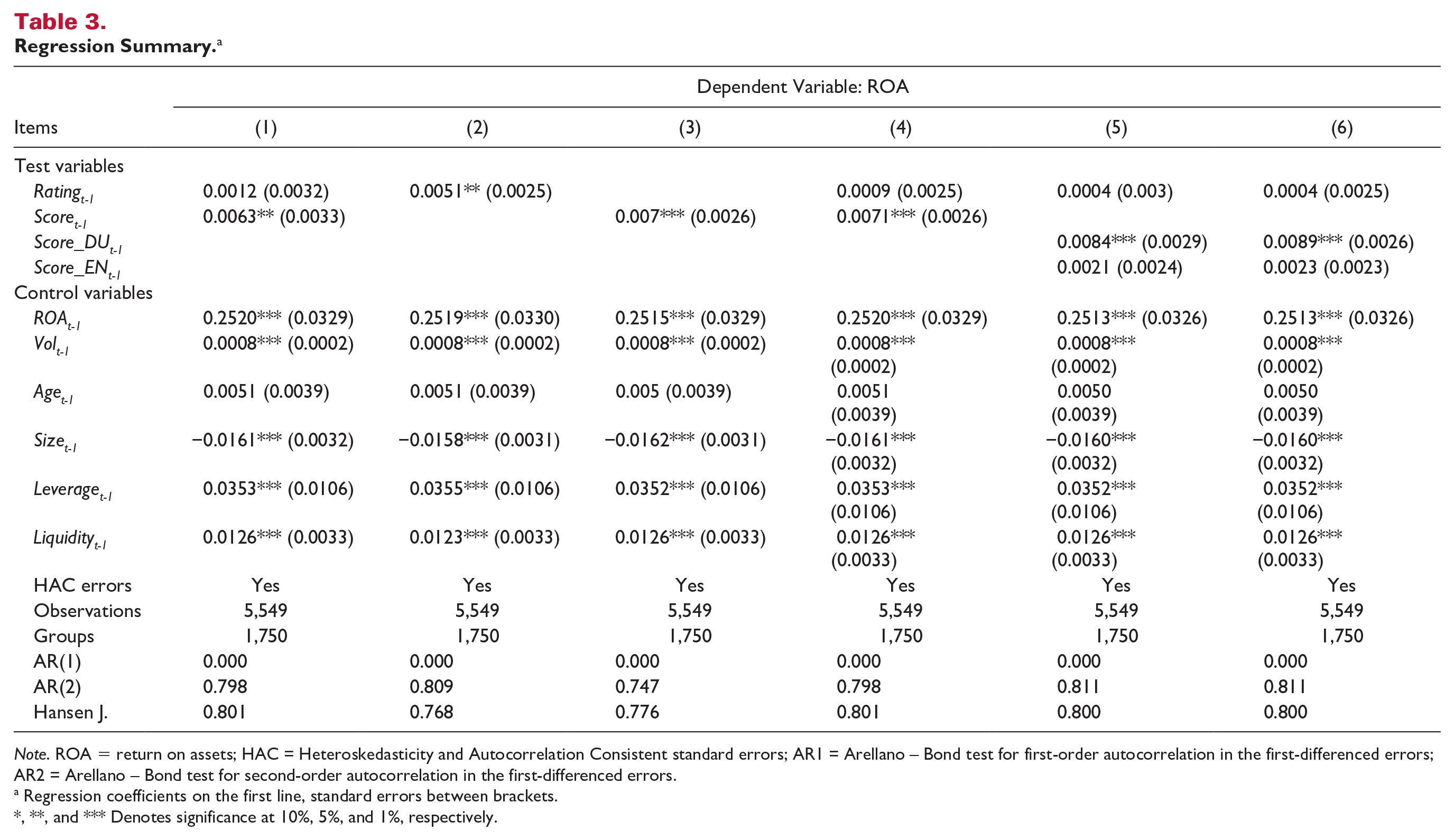
Note. ROA = return on assets; HAC = Heteroskedasticity and Autocorrelation Consistent standard errors; AR1 = Arellano – Bond test for first-order autocorrelation in the first-differenced errors; AR2 = Arellano – Bond test for second-order autocorrelation in the first-differenced errors.
Regression coefficients on the first line, standard errors between brackets.
, **, and *** Denotes significance at 10%, 5%, and 1%, respectively.
A deeper examination of the data suggested a case of omitted variable bias. When Score (or Rating respectively) is excluded from the regression, the coefficient of the remaining variable appears to pick up the effect of the excluded variable to the extent that the variables are correlated (0.62; see Table 2). The coefficients of Score and Rating are higher when they are included separately (i.e., without the inclusion of the other variable) than when they are included together.
To undo this correlation effect, we orthogonalized Score and Rating by replacing their observations with the estimated residuals of the regression of Score on Rating and Rating on Score, respectively. By construction, these residuals are uncorrelated, allowing the isolation of that part of Score that is not reflected in Rating and vice versa. Regressing ROA on these orthogonalized variables permits the evaluation of the effect of unique data in the values of Rating and Score, respectively. To partial out the common variance between Score and Rating, we used the Gram-Schmidt procedure (Saville & Wood, 1991). Results can be seen in Column 4. The coefficient of the orthogonalized Score is significant, but that of the orthogonalized Rating is not. In effect, this implies that the part of Score that is idiosyncratic (i.e., not related to Rating) or, otherwise stated, the info that is unique to review comment sentiment is meaningful in explaining ROA, but that the info that is unique to review rating is not, supporting H3 that sentiment in review comments has a greater impact on profitability than numerical ratings.
The Effect of Local vs Global Language
Regarding the relative impact of reviews in a global language versus reviews in a local language (H4), Columns 5 and 6 contain the results from Equation 2 with standardized variables and with orthogonalized variables, respectively. The results of these columns are at odds with what we have hypothesized. The coefficient of Score_EN is not significant, while the coefficient of Score_DU is positive and significant. These contrasting results show that sentiment in review comments in a local language has a stronger impact on restaurants’ profitability than sentiment in review comments in a global language. Contrary to the theory, local customers do seem to make use of review comments (notwithstanding that they have many alternative sources of info). And considering that review comments written in the local language are written by local customers, locals may find these review comments more convincing than those of non-locals.
Discussion & Conclusion
In today’s digital world, consulting user-generated reviews is an essential part of the customer shopping journey (Estrella-Ramón & Ellis-Chadwick, 2017). User reviews are typically composed of two interrelated components: a quantitative review rating accompanied by a series of qualitative review comments detailing richer opinions about the experience. While prior research has demonstrated the association between both variables and top-line metrics such as purchase intent, sales revenue, and corporate reputation, few studies to date have investigated their effect on bottom-line profitability. Satisfying customers also implies higher costs, and whether this expenditure is justified or not has until now remained largely unexplored.
Addressing this research gap, this study attempts to gain a more comprehensive understanding of the impact of user reviews on firm performance by using linear regression analysis on firm financial data combined with review data from TripAdvisor to investigate the impact of review ratings and sentiment in review comments on restaurant profitability. Supporting prior research findings, the study suggests that when examined in isolation, a positive association can be found between both review rating and sentiment in review comments with restaurant profitability (ROA). However, when both are considered simultaneously, the effect is less clear-cut. While the association between sentiment in review comments and profitability is positive and significant, the influence of review rating becomes insignificant. A possible reason for this is that while these two variables are correlated (0.62), this correlation is not perfect, suggesting a mismatch between the quantitative rating and the richer insights gleaned from qualitative review comments. The overwhelmingly positively skewed nature of review ratings (which can be observed both in the literature and in the study) also seems to suggest that reviewers tend to leave positive ratings while perhaps revealing their true, less positive, feelings in review comments.
To better understand the relative effect of ratings and reviews, their interrelation was decoupled using orthogonalization and the effect of each variable isolated. This deeper analysis confirmed that sentiment in review comments, rather than rating, is positively associated with restaurant profitability. As will be discussed in the following sections, this has important implications for how restaurants manage their online reputation and drive online reviews. The relative effect of reviews in a local versus a global language was also investigated. The analyses show that reviews in a local language have a more positive impact on profitability suggesting that while customers may be able to read reviews in English, content written in a local language is more influential.
User reviews are an important source of consumer information, particularly for intangible products and services where they form a key input into the consumer decision-making process, prompting much research into how to leverage them efficiently (Xiang & Gretzel, 2010). While the effect of quantitative metrics such as volume and valence has been previously well established in the literature, the limited capacity of such metrics to accurately represent consumer opinion and the seeming disparity between rating scores and textual remarks are potential issues in studies related to the impact of user-generated reviews.
This study, in addition to re-examining and revalidating these quantitative metrics, also makes use of qualitative data, namely the text of user-generated reviews, to address this limitation. Using artificial intelligence-based text analysis techniques, this study assesses the financial impact of user reviews on the bottom-line performance of restaurants, empirically establishing the predominant association between sentiment in review comments and restaurant performance for the first time.
This study, therefore, has the following theoretical implications. First, this study contributes to the extant literature, and our understanding of the importance of user reviews, by clarifying the complex inter-relationship between review rating and sentiment in review comments. While both variables have previously been shown to affect performance, both in the wider hospitality context and, to a lesser degree, in restaurants, this study decouples their relative contribution, revealing sentiment in review comments as the more powerful influence on restaurant success. Second, the study extends prior studies that consider only top-line performance metrics by investigating the relationship between ratings and sentiment on the more meaningful bottom-line profitability of restaurants, confirming that it is the richer sentiment scores that are associated with better performance. To the authors’ knowledge, this is the first study to examine the impact of both review ratings and sentiment in review comments on bottom-line profitability in the restaurant context and thus considerably extends and enhances our understanding of online reviews’ role, effect, and importance. Finally, the study isolates the effect of reviews in a local versus a global (foreign) language, demonstrating that the sentiment in review comments written in a local language has a higher association with restaurants’ financial success.
The study has important implications for practitioners. While the importance of eWOM has been demonstrated in terms of driving revenues, corporate reputation, and a range of other top-line issues, this study for the first time empirically demonstrates that having favorable reviews, despite the potential additional costs involved, is positively associated with higher restaurant-level profitability. Furthermore, in contrast to prior studies that focus on review ratings, this study confirms that users make use of qualitative review comments and that their sentiment has a significant impact on profitability. Therefore, in addition to focusing on driving review ratings from satisfied customers, restaurants should work on encouraging reviewers to leave detailed, rich, feedback in their comments. Furthermore, since in contrast to expectations, review comments in a local language are more impactful, restaurants should by no means neglect driving reviews from locals. Competitions, raffles, or prizes for benefits on a subsequent visit for locals posting reviews might be an interesting way of encouraging such behavior.
As with all research, this study suffers from limitations that offer opportunities for future research. First, we used a lexicon-based sentiment analysis tool, which, by definition, has a limited dictionary. Repeating the study with an alternative/more comprehensive database, or using a machine learning approach, might result in different findings. Second, many languages qualify as global languages, but since most non-Dutch reviews for the restaurants studied were in English, this was used in this study. Results may be different when an alternative language is used. Third, due to their narrative nature, reviews contain more than a single sentiment, integrating both positive and negative comments into a single post (Tsai et al., 2020). Sentiment analysis typically uses a global polar scale to summarize these comments, arriving at a single (positive or negative) sentiment score (Kasper & Vela, 2012; N. Li et al., 2022). Emerging research (e.g., Agnihotri & Bhattacharya, 2016; Baker & Kim, 2019) on measuring multifaceted emotions offers an interesting area of exploration, taking analysis to the fine-grained phrase level, as well as allowing additional dimensions rather than sentiment to be measured. Fourth, this study only uses a single source (TripAdvisor), potentially causing platform and/or data bias. Future studies could collect data from other/multiple websites to help develop a more comprehensive picture and increase generalizability. Fifth, the research was conducted in Belgium to exploit the availability of comprehensive restaurant-level financial data. Expanding to other countries would help reconfirm results. Finally, most online review sites allow users to rate different attributes of a service/product, for example, quality, value for money, cleanliness, food, and so on. Reviewers also frequently talk about these aspects in reviews. Future research could apply aspect-based sentiment analysis techniques to identify sentiment toward each of these aspects and investigate their impact on financial performance.
Footnotes
Declaration of Conflicting Interests
The author(s) declared no potential conflicts of interest with respect to the research, authorship, or publication of this article.
Funding
The author(s) disclosed receipt of the following financial support for the research, authorship, and/or publication of this article: Funding and support for this project were provided by The Higher Education Commission of Pakistan (grant number HEC/ HRD/AHBP/B-II/OS/17/547) and The Hercules Foundation (grant number AUGE/17/01).
