




Abstract
Casinos operate in a competitive environment. Relationship marketing has become a central focus of casino marketing practice. However, the literature lacks any clearly identified marketing strategies for customer acquisition and retention. This article employs a systematic literature review method to identify and delineate acquisition and retention strategies for the casino sector. The findings revealed measures and antecedents for customer acquisition, retention, casino consumption, and loyalty. The study draws on these findings to present a conceptual model that categorizes customer acquisition and retention strategies. Suggestions and recommendations are highlighted for practitioners and researchers.
Introduction
The casino sector operates in a dynamic and competitive environment. Casino developments continue to expand in the Asia-Pacific regions and North America. This has led to geographic competition, casino saturation (Scavette, 2022), and gambling revenue stagnation (Lambert, 2023). The COVID-19 pandemic also meant customers saw online gambling as being more convenient and safer (Klebanow, 2021). These changes have made it challenging for casino marketers to attract customers to casino venues and have intensified competition. Research has demonstrated that the acquisition of new customers is expensive, and the costs often outweigh the gains. Acquiring new customers is regarded as less profitable for casino operators (Prentice & Wong, 2015) in comparison with targeted customer retention and loyalty strategies, which have become imperative for business growth and sustainability.
Organizations have focused increasingly on customer retention to boost customer loyalty and profitability (Reichheld & Sasser, 1990). Firms applying relationship-based strategies may realize higher returns on marketing investments and greater profitability (Kumar et al., 2009). Casino marketers have focused on relationship marketing practices to generate business traffic (Kilby et al., 2005; Klebanow, 2009) and to establish and maintain customer relationships (Prentice & King, 2011; Legg et al., 2022). Retention and loyalty creation have also gained more attention within the casino gaming literature. However, authors still consider customer acquisition necessary (see Ang & Buttle, 2006; Goodwin & Ball, 2003). Min et al. (2016) indicated that for market leaders, in a competitive and mature business environment, maintaining market leadership requires investment in customer acquisition, despite being costly.
With the central focus on customer loyalty and retention in relationship marketing practice, acquiring the right customer segments is essential for the retention of profitable customers. Research has indicated that balancing marketing resources for acquisition and retention (Kumar & Rajan, 2009) and applying innovative strategies within these processes is crucial (Prentice & Wong, 2015). In practice, relationship marketing involves several processes, particularly customer acquisition and retention. According to Thomas (2001), the customer acquisition process starts with initial interaction and progresses through the first and second purchases, while the retention process begins after the second purchase and endures until the end of the relationship.
Despite the abundance of casino marketing research, no precise classification of customer acquisition and retention strategies is evident. The factors explored and examined in the literature center more on customer loyalty and retention. For example, casino scholars have investigated customer loyalty antecedents (e.g., Ji & Prentice, 2021), gaming revenues and gaming volumes (e.g., Lucas & Bowen, 2002; Suh & Lucas, 2011), brand-customer experiences in integrated resorts (IR; e.g., Ahn & Back, 2018a, 2018b), and service quality (e.g., Wong & Fong, 2010). These studies have implications for an understanding of the role of marketing strategies in building customer relationships within the casino sector. Research related to the attainment of customers and the classification of acquisition and retention strategies appears fragmented.
This study conducted a systematic literature review of the casino marketing research to identify specific marketing strategies and delineate those for customer acquisition and retention. The study determines the measures and antecedents of customer acquisition and retention in the context of casinos. The review contributes to casino and gambling research by developing a conceptual model for customer relationships in casinos, guided by customer journeys with defined acquisition and retention strategies. The review has implications for casino marketers and stakeholders, to develop more appropriate marketing strategies for business profitability and sustainability. The following section describes the review method undertaken and the main findings. A discussion of the research implications follows, and the limitations of the study concludes the article.
Method
The review follows a systematic approach suggested by Tranfield et al. (2003) and Pickering and Byrne (2014). The systematic review process helps investigate novel and imminent trends within a specific topic (Pickering & Byrne, 2014). Effective literature reviews provide evidence from which researchers can draw robust conclusions (Siddaway et al., 2019).
Searching
The keywords guided a database search for relevant casino marketing literature. Keywords should identify pertinent literature as closely as possible and not stray too far into irrelevant areas (Pickering & Byrne, 2014). Casino marketing papers were scoped before the final search, and early casino marketing works were identified. These early studies provided a broad picture by highlighting initial casino marketing strategies and by identifying keywords used in these studies. Based on these early casino marketing works and in consultation with casino research experts guided keyword selection. Three categories of keywords were used. Category A contains keywords related to “casino,” category B for “marketing strategies,” and category C for customer “acquisition” and “retention.” Keywords used in this review were not broad (e.g., the keyword “gambling” may include other gambling activities in other areas) and were not specific to a particular marketing concept or strategy. The keywords “land-based casino” and “integrated resort” were added to specify and avoid the inclusion of the internet or online casinos, which are different settings. The term “promotion” was added as an alternative to “marketing.” Initially, the articles were checked for their outcome variables to identify keywords for acquisition and retention and words related to customer attraction and loyalty were added as keywords for category C. Table 1 shows the three categories of search keywords and an example of the search string used.
Search Keyword Categories and Search Strings.
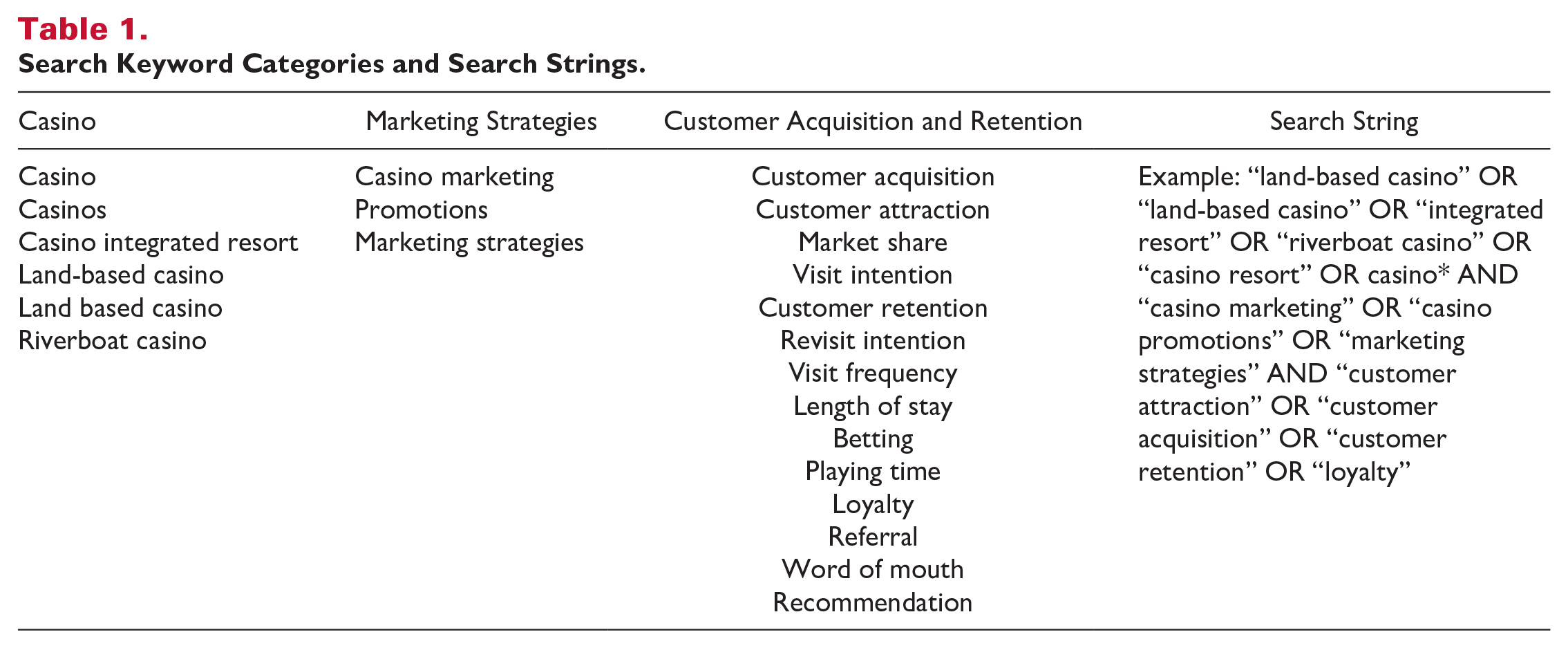
Searches were conducted in different academic databases, including Scopus, EBSCOhost, and Emerald, and two further databases were added—ProQuest Central and Google Scholar. The academic databases and search engines were scoped for peer-reviewed journal articles using the keywords or search strings using “AND” or “OR.” Since 1990, changes to the casino industry structure have been more prominent leading to more reach interest (Ahn & Back, 2018b); hence, only recent articles published between 1990 to 2022 were included.
Screening
The articles highlighted in the search process were exported to Endnote software and an Excel spreadsheet for data management. The initial search resulted in 1,399 papers, this included 782 duplicates that were removed, leaving a total of 617 articles. The screening stage involved a preliminary screening of the title, abstract, and keywords to determine if the articles were relevant. Other criteria included a requirement for the article to be peer-reviewed journal, that it was an empirical or conceptual study, and was written in English. Inclusion and exclusion criteria used for screening are shown in Table 2.
Inclusion and Exclusion Criteria.
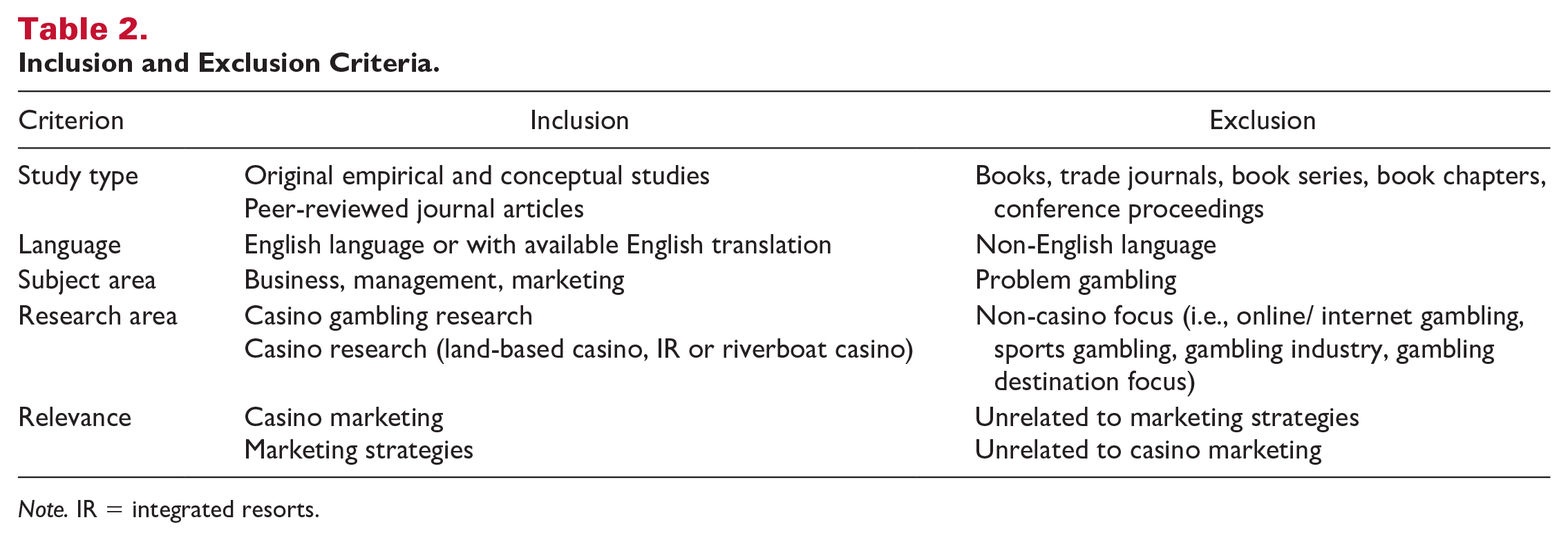
Note. IR = integrated resorts.
Extraction and Synthesis
Of the 617 identified articles, 443 were excluded based on the screening criteria, leaving 174 generated from the screening process. A further review of the full texts of these 174 articles determined eligibility for inclusion in the final synthesis process. After reviewing the full text, a further 46 papers were excluded as the research area and relevance did not comply with the inclusion criteria. For example, studies were excluded when the marketing strategies conducted were not exclusive to casinos or included other gambling venues and gambling customers in general. The final screening resulted in 128 peer-reviewed journal articles for the synthesis process. A flowchart of the stages from identification, screening, eligibility, and inclusion in the review and the corresponding number of articles for each stage is presented in Figure 1.
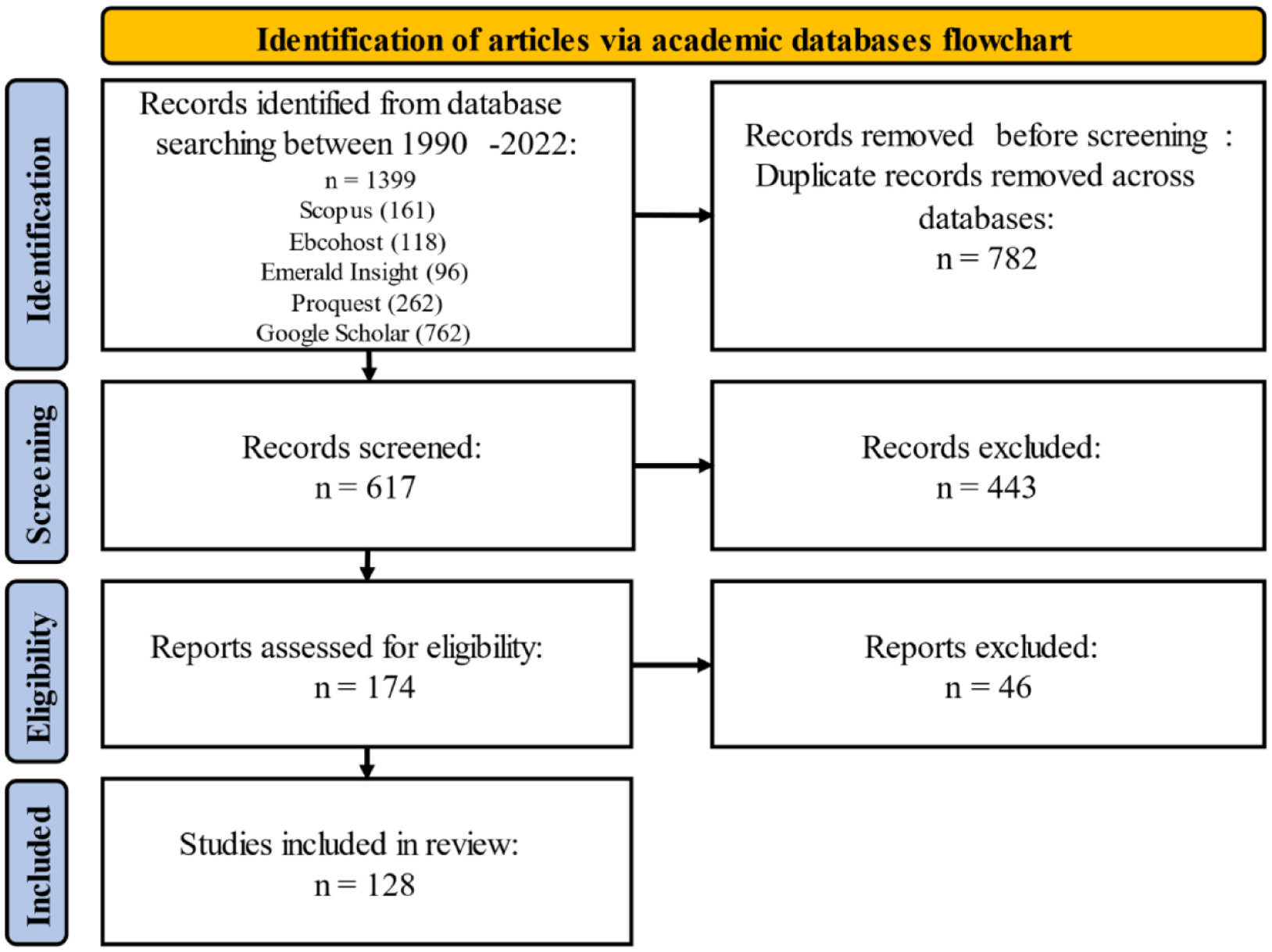
Prisma Flowchart.
Content analysis was employed in this study to analyze the 128 peer-reviewed articles. The article database was created in Microsoft Excel and the articles were tabularized based on the different categories. The database was set up to include additional information from the papers, such as author information, the publication details (e.g., article title, year published, journal title, and publisher), main research foci, variables (e.g., dependent, mediating, moderating, and independent variables) studied in empirical studies, and marketing strategies identified or discussed.
Analysis
The 128 peer-reviewed journal articles were analyzed based on the variables (for quantitative studies) and insights (for qualitative studies) to address the research aims of this study. Conceptual articles were evaluated based on their propositions. The outcomes or dependent variables studied were examined to identify customer acquisition and retention measures. To determine if measures were determined to be customer acquisition or retention, we drew on Thomas’ (2001) definition. Dependent or outcome variables pertaining to encouraging first-time visitation to a casino would be determined as a measure of customer acquisition. To determine customer retention, measures that indicated repeat visitation to a casino were included. For quantitative survey studies, individual scales under each variable were checked, including the respondent’s profile if it indicated first-time customers or repeat customers.
Antecedents were determined by the independent, mediating, and moderating variables studied that lead to customer acquisition and retention measures. Antecedents of customer acquisition and retention were analyzed and categorized using Booms and Bitner’s (1982) 7Ps marketing mix framework for the service industry as a guideline. Kilby et al. (2005) suggested improving marketing strategy by combining and considering essential elements or marketing elements such as the 4Ps or 7Ps marketing mix elements.
Results
From the 128 peer-reviewed journal articles, authorship was narrowed to six key authors (based on lead authorship): Anthony Lucas (United States), Jiseon Ahn (Malaysia and United States), Ki-Joon Back (United States), Eunju Suh (United States), Catherine Prentice (Australia), and Ipkin Anthony Wong (China), all of whom made core contributions to the casino marketing literature. Casino marketing research experienced steady growth, with the first contribution published in 1994. This was a conceptual study that focused on casino marketing to premium clients (Makens & Bowen, 1994). Despite early momentum in the area, 106 of the 128 studies were published after 2009. Articles were published in hospitality, tourism, marketing, and gaming journals. The top journals that published most of the included articles are the International Journal of Hospitality Management, International Journal of Contemporary Hospitality Management, Journal of Travel and Tourism Marketing, UNLV Gaming Research and Review Journal, and the Cornell Hospitality Quarterly. Empirical articles dominate the literature. Most used quantitative methods, followed by qualitative methods, with the remaining applying mixed methods. The analysis also revealed that casino marketing research was conducted in concentrated settings in the United States, China (Macau), South Korea, Australia, and Malaysia.
Measures of Customer Acquisition and Retention
Measures of Customer Acquisition
The systematic literature review found that different customer acquisition and retention measures were used in casino marketing studies. During the analysis, limited studies that investigated first-time visitation to a casino were found. The investigation was widened to include customer attraction and the visit intentions of non-users to an IR casino (i.e., Song et al., 2021), segmented markets for a newly established casino (i.e., Hong & Jang, 2004), and studies that discussed desire to visit (i.e., McCartney & Su Man, 2020). Results suggest that five measures used to explore customer acquisition include “brand switch,” “customer attraction,” “willingness to pay/visit,” “desire to visit,” and “intention to visit.” These measures integrate customers based on attracting or encouraging customers to visit the casino, in contrast to revisiting the casino. Measures found for customer acquisition and article sources are found in Table 3.
Measures of Customer Acquisition.
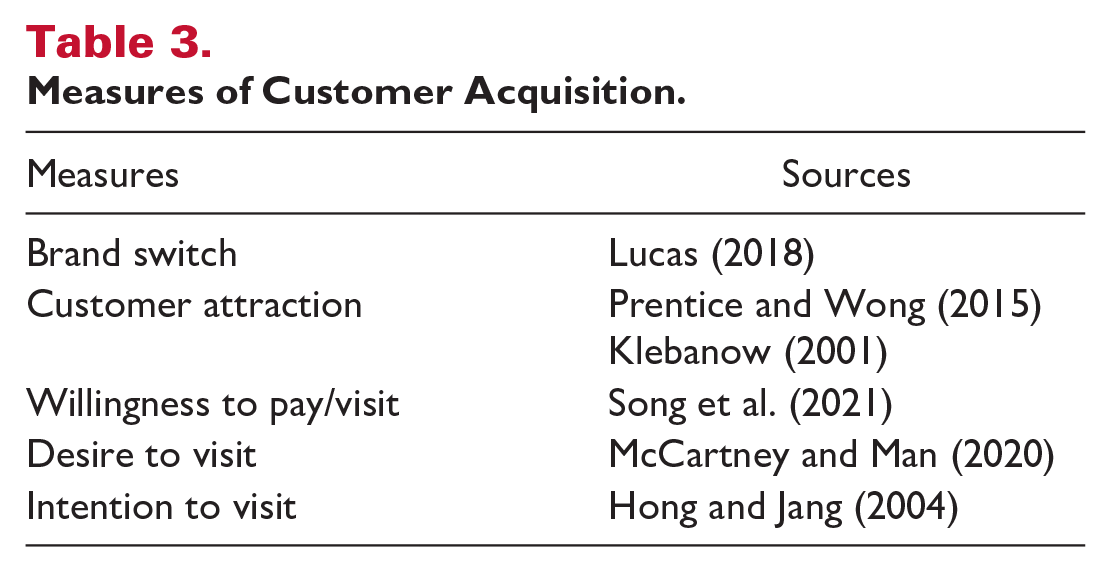
A brand switch is often seen as the opposite of brand loyalty or preference as customers move from one brand to another. However, customers who are labeled as brand switchers from a competitor’s perspective are seen as an acquired segment (Lucas, 2018). Therefore, a brand switch was also considered a measure of customer acquisition as it denotes an inclination to target a specific group of casino customers.
Attraction and acquisition have been used interchangeably in the marketing literature. However, attracting customers has been widely used in the casino marketing literature. Prentice and Wong (2015) in a mixed methods study, identified acquisition strategies by gaining insights from the factors that attracted Macau customers to visit casinos. Klebanow’s (2001) conceptual paper presented three casino marketing stages—attract, capture, and induce to return—suggesting the attract stage would include targeting and drawing in the desired market segments, specifically, profitable segments, toward a casino.
In quantitative studies, different authors have used measures of willingness to visit and pay, desire to visit, and intention to visit a casino as an indicator of casino visitation. Song et al. (2021) investigated potential South Korean customers and their preferences and willingness to spend/pay in two IR casinos. Hong and Jang (2004) compared identified groups of South Koreans (the visited group, the intention to visit group, and the non-interest group) and their attitudes toward a newly built small casino. The variable of desire to visit was also used by McCartney and Man (2020) to determine a customer’s likelihood to visit a themed IR, with or without the offer of a Batman-themed ride.
Measures of Customer Retention
Customer retention signifies the second purchase or visit to a succeeding purchase or visit, until the end of the relationship (Thomas, 2001). The results show that customer retention has been widely studied in the casino marketing literature. Findings revealed that 11 measures have been used in relation to customer retention. These measures include “customer loyalty,” ‘frequency of visit, “length of stay,” “spending budget,” “word of mouth,” “behavioral intention,” “revisit intention,” ‘willingness to pay more,” “usage of other products,” “commitment and trust,” and “support for existing casinos.”
Customer loyalty is one of the most common outcome variables studied in the casino marketing literature and is distinguished between behavioral and attitudinal loyalty (Baloglu, 2002). Behavioral loyalty is associated with frequent purchases or visits (e.g., retention), while the attitudinal loyalty of customers includes emotional attachment, commitment, and trust in a preferred casino. Often, authors preferred customer loyalty as an outcome variable rather than visitation frequency.
Behavioral loyalty was measured by the frequency of customer visits to a casino over a period. Other terms included purchase frequency or the number of visits. Sui and Baloglu (2003) used the term the “proportion of visits” rather than frequency, to assess customers’ ratio of visits to a preferred casino with other casinos, enabling a comparative measurement (Baloglu, 2002). Another measure was the length of stay (average), indicating how long a customer stays within the casino during each visit. Substitute measures were “hours per visit,” “time spent on premises,” and “duration of stay.” Scholars also specified the length of stay to include a specific activity, such as “time spent gambling.” Length of stay intentions were measured using the indicator of a “desire to stay longer.” Table 4 indicates the measures of customer retention.
Measures of Customer Retention.
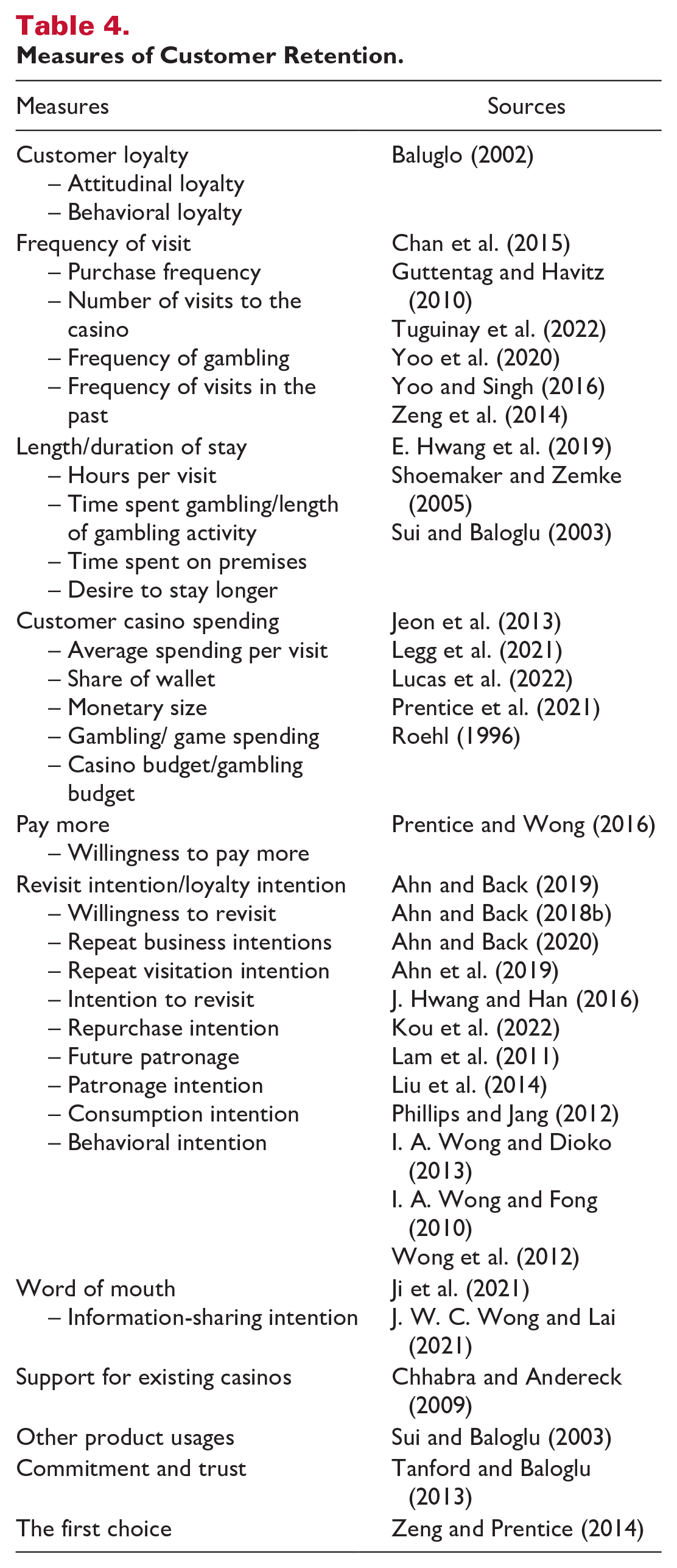
Revisit or loyalty intentions have been used as outcome variables related to customer retention. The measure has been applied to understand a customer’s inclination and likelihood to patronize a casino or to purchase offered components in the future (Liu et al., 2014; Wong & Fong, 2010). Different terminologies include “behavioral intention,” “willingness to revisit,” “repeat business intentions,” “repurchase intention,” “repeat visitation intention,” “future patronage intention,” and “future consumption intention.” Anh and colleagues (see Ahn & Back, 2018a, 2019, 2020; Ahn et al., 2019) used individual scales such as “planning to go,” “willingness to go,” and “to make an effort to go to this casino” in relation to behavioral intention.
Casino spending or budget was also determined to be a loyalty measure. Indicators of this measure include “average spend per visit,” “customer spending budget,” “share of wallet,” “monetary size,” “gambling spend,” and “gambling budget.” The difference between actual spending and budget is that spending equates to actual customer casino expenditure, compared with an estimate of what customers might be willing to spend. Spend is also determined based on a customer’s “willingness to pay” more if the preferred casino prices increase and may indicate a customer’s cooperation to changes in casinos.
The measure of word of mouth or sharing positive recommendations for the casino among customers has been viewed as an indicator for loyalty evaluation and is considered profitable (Wong & Lai, 2021). “Information-sharing intention” may also be an alternative indicator that may occur online through social media advertising (Ji et al., 2021).
Other measures from the results include “product usage” which may suggest a longer time spent in casinos (Sui & Baloglu, 2003). Results show “support for existing casinos” as a measure related to customer loyalty, which is associated with customers’ perceptions of casino gambling and support for casino development (Chhabra & Andereck, 2009). Although related to loyalty, “support for existing casinos” has not been widely used as an outcome variable.
Attitudinal loyalty has been linked to customers’ emotional attachment to preferred casinos. Commitment and trust were widely studied as indicators of attitudinal loyalty (Baloglu, 2002). Customers’ strong feelings toward a preferred casino, build loyalty, and retention. The “first-choice” measure is found to indicate repeat patronage and a preference for a particular casino. For example, Zeng and Prentice (2014) included the item, “I always consider this casino as my first choice to play.”
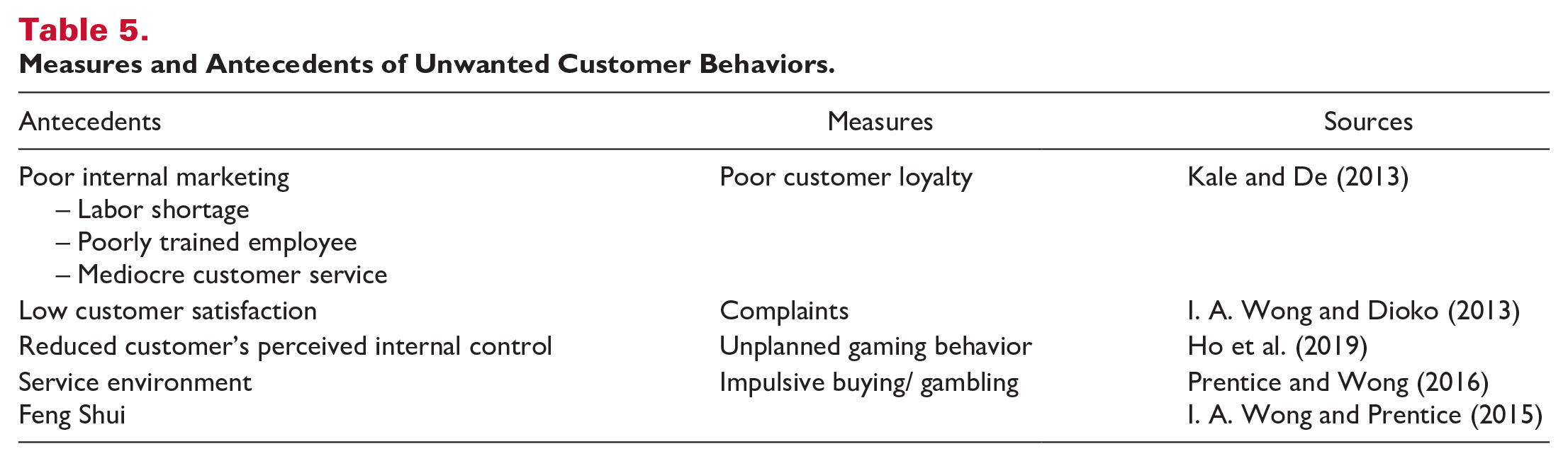
Understanding undesirable customer behaviors also exists in the literature. Behavior outcomes include poor customer loyalty and increased complaints, which may lead to customer attrition or switching to other casinos. These behaviors have been attributed to poor internal marketing and low customer satisfaction. Unplanned gambling behaviors and their links to casino marketing (Ho et al., 2019) and marketing strategies and gambling behavior (Prentice & Wong, 2015) have also been investigated. A link between the casino service environment and customer gambling impulse was also established in three studies (Ho et al., 2019; Prentice & Wong, 2016; Wong & Prentice, 2015). Prentice and Wong (2015) also found that problem gamblers were significantly more likely to be attracted to Feng Shui. Measures and antecedents of unwanted customer behaviors are summarized in Table 5.
Measures and Antecedents of Unwanted Customer Behaviors.
Antecedents of Customer Acquisition and Retention
Antecedents of Customer Acquisition
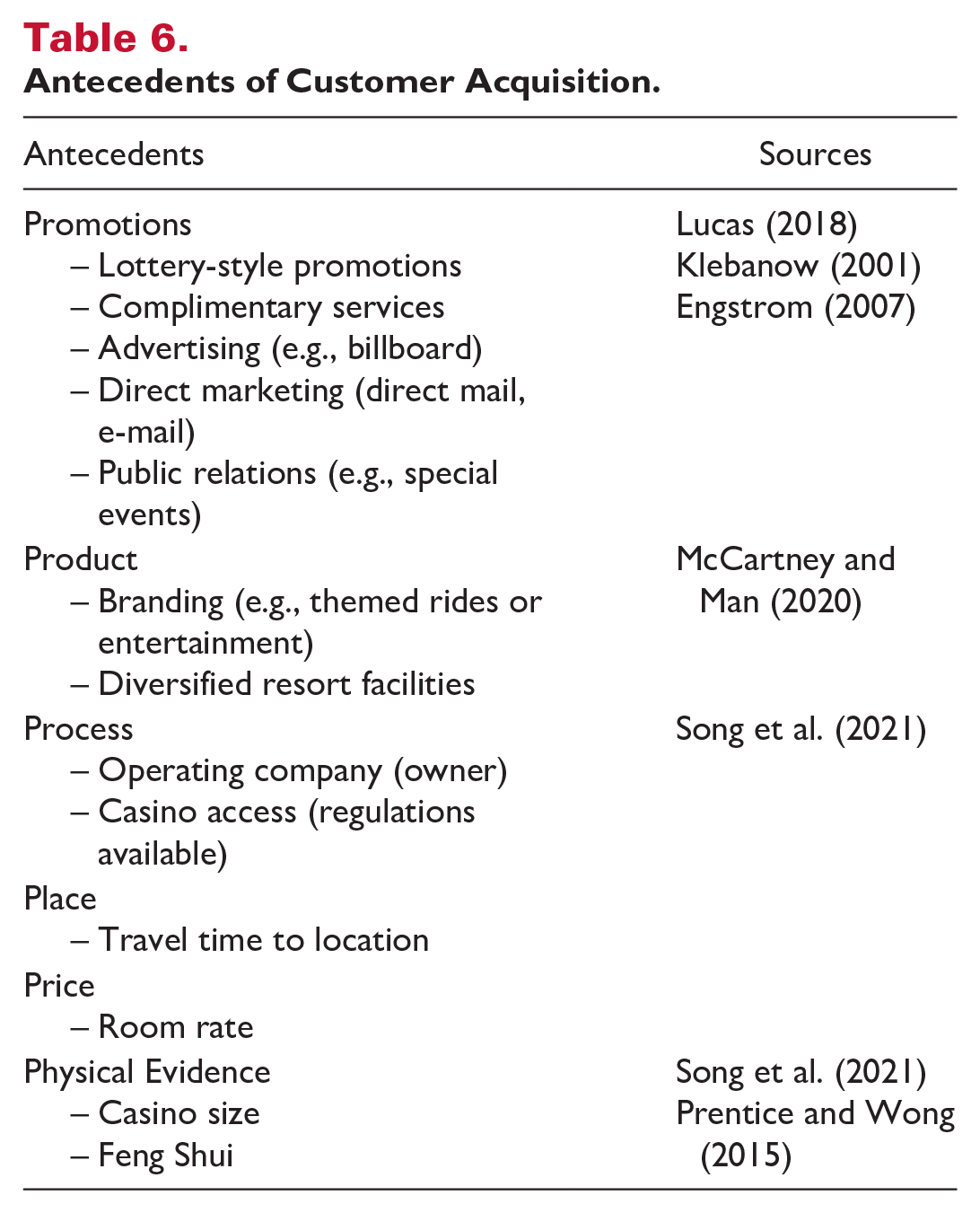
The review found several antecedents of customer acquisition, which were grouped as promotions, product, place, process, and physical evidence. Casino promotion was found to be a significant antecedent for customer acquisition and was associated with affordable room rates. “Advertising” in different mediums and channels is a standard marketing activity that provides casino information and attracts new customers. Complimentary services also attract casino visitation (Prentice & Wong, 2015). Direct marketing practices through “direct mail,” ‘e-mail,’ and public relations, such as “creating special events,” also effectively capture customers. Planning these activities leads to success (Klebanow, 2001). “Lottery promotions” are likely to influence brand switchers (Lucas, 2018).
The product antecedent of customer acquisition comprises the casino’s expanded offerings and unique selling points to attract potential customers’ attention. Product diversification is a strategy many casinos practice to generate sales and improve firm performance (Kang et al., 2011). This extends to geographical and brand diversification allowing casino operators to widen access to potential customers.
Song et al. (2021) indicated that the operating company (owner), casino regulations related to locals (process antecedent), travel times (place antecedent), casino size (physical evidence antecedent), and room rates (price antecedent) were customer acquisition antecedents. It was found that South Korean customers were willing to pay for casinos without regulations on casino entrance fees. This also applies to local casinos with entrance fees for locals. Customers also preferred casinos with family recreation opportunities. McCartney and Man (2020) found that themed rides influenced IR attractiveness; however, customers would still visit despite the absence of themed rides. How the casinos environment conformed to the principles of Feng Shui (associated with good luck) was also a critical antecedent. Prentice and Wong (2015) suggested that Feng Shui attracted Macau casino visitation. The six antecedents of customer acquisition with examples and sources are outlined in Table 6.
Antecedents of Customer Acquisition.
Antecedents of Customer Retention
Studies have identified several antecedents of customer retention and loyalty: product, promotions, place, price, physical evidence, people, casino experience, and casino service quality. Casino offerings are a significant antecedent of customer retention and loyalty. Product diversification also enables casinos to cater to different market needs. The product antecedents found included casino gaming services and amenities, which influence customer spending (Lucas, 2013) and visitation to casinos (Liu et al., 2014). The features of casino automated games, such as sensory, user-friendliness, and efficiency, were also found to indirectly influence word of mouth and visit frequency (Tuguinay et al., 2022). Branding influences the positioning of a casino as an establishment. Liu et al. (2014) found that when casinos demonstrate corporate social responsibility, this enhances customer perceptions and brand preference, which increases loyalty intention.
Promotional antecedents of customer retention include “advertising,” “personal selling,” “public relations,” “direct marketing activities,” “various sales promotions,” and “loyalty program offerings.” To stimulate and impress, casinos tend toward artful and intricate advertisements (McMullan & Miller, 2010) through a mixture of traditional channels, such as billboards (Engstrom, 2007), and interactive channels, such as online advertisements and social media (Lei et al., 2017). Ji et al. (2021) found that social media advertising influenced customer sharing intention (word of mouth). Loyalty programs are often discussed in the literature (Barsky & Tzolov, 2010; Baynes, 2011; Hendler, 2008), as they are a common casino marketing strategy. Casino customers are encouraged to become members by signing up for casino’s loyalty programs or membership programs. Casinos use this information to create customer databases for promotional activities.
Complimentary services offered by casinos include bus programs, travel reimbursement, free parking, food and beverage packages, discounted hotel rooms (Lee & Jang, 2014), complimentary show or events tickets (Suh & Tanford, 2012), gifts (Moseley et al., 2003), and free plays and coupons (Lucas et al., 2022; Lucas & Spilde, 2017; Suh, 2012). Other casino promotions were identified as prizes in the form of lottery or draw promotions. Prizes for casino lottery promotions may include cash prizes (Lucas & Bowen, 2002) and non-monetary prizes, such as cars, electronic goods, and gadgets (Suh et al., 2014).
Junkets or all expenses paid gaming programs were categorized under place antecedents. Individual junket operators mediate between casinos and casino players. These operators organize and manage high-end player visitation through junket programs (Makens & Bowen, 1994). To retain junket operators, casinos will offer higher commission rates than other competitors (Kale & Spence, 2009).
A price antecedent relates to pricing and packages offered by casinos to customers, from minimum prices for casino games to discounts for non-gaming offerings. The casino environment, as physical evidence antecedent, was found to influence customer preferences. Casino designs, specifically exterior and architectural styles, were critical factors that influenced Macau customers’ choice of casino to visit or revisit (Wan, 2013). Casino employees fall under the people antecedent and include non-gaming and gaming staff. Gaming marketing executives, managers, and VIP hosts provide personal assistance to gaming customers during their stay in casinos. Service excellence and emotional empathy were influential factors that influenced customers’ future patronage (Prentice, 2013).
From the analysis, the casino experience has been frequently studied in the casino marketing domain and is an influential factor in customer retention and loyalty. “Service experience” was therefore categorized as a separate antecedent although the experience can be encountered within other antecedents. Casino experiences include sensory, intellectual, behavioral, and cognitive experiences that influence the behavioral intention of customers who have visited a casino (Ahn & Back, 2018a). It has also been noted that casino security perceptions influence the overall attractiveness of casino destinations (Ji & Yang, 2022).
Casino service quality is another antecedent of customer retention and loyalty. Like the casino experience, service quality can be incorporated into the antecedents already discussed. However, service quality is treated as a separate group as it refers to the overall quality of casino services, from product offerings to employees. Casino service quality was also scrutinized in the literature. Researchers have adopted service quality (SERVQUAL, Parasuraman et al., 1988) and service firm performance (SERVPERF, Cronin & Taylor, 1992) scales to study casino services. These measures identify the dimensions of casino service quality. Examples include Chinese customer satisfaction and loyalty intentions (Wong & Fong, 2010), Macau first-time and repeat casino customers (Ji et al., 2017), the retention of tiered segments (Prentice, 2013; Prentice et al., 2012), evaluation of service quality of casino members and non-members (Shi et al., 2014), and U.S. casino patrons’ perceptions of winning (Jeon et al., 2013). Wong and Fong (2010) developed and refined casino service scale (CASERV) as a measure of casino service quality. Researchers have applied this measure to investigate the relationship between service quality and behavioral intentions of casino customers in Macau (I. A. Wong et al., 2012; Wu, 2014) and the United States (J. Hwang & Han, 2016). Table 7 summarizes the seven antecedents of customer retention.
Antecedents of Customer Retention.
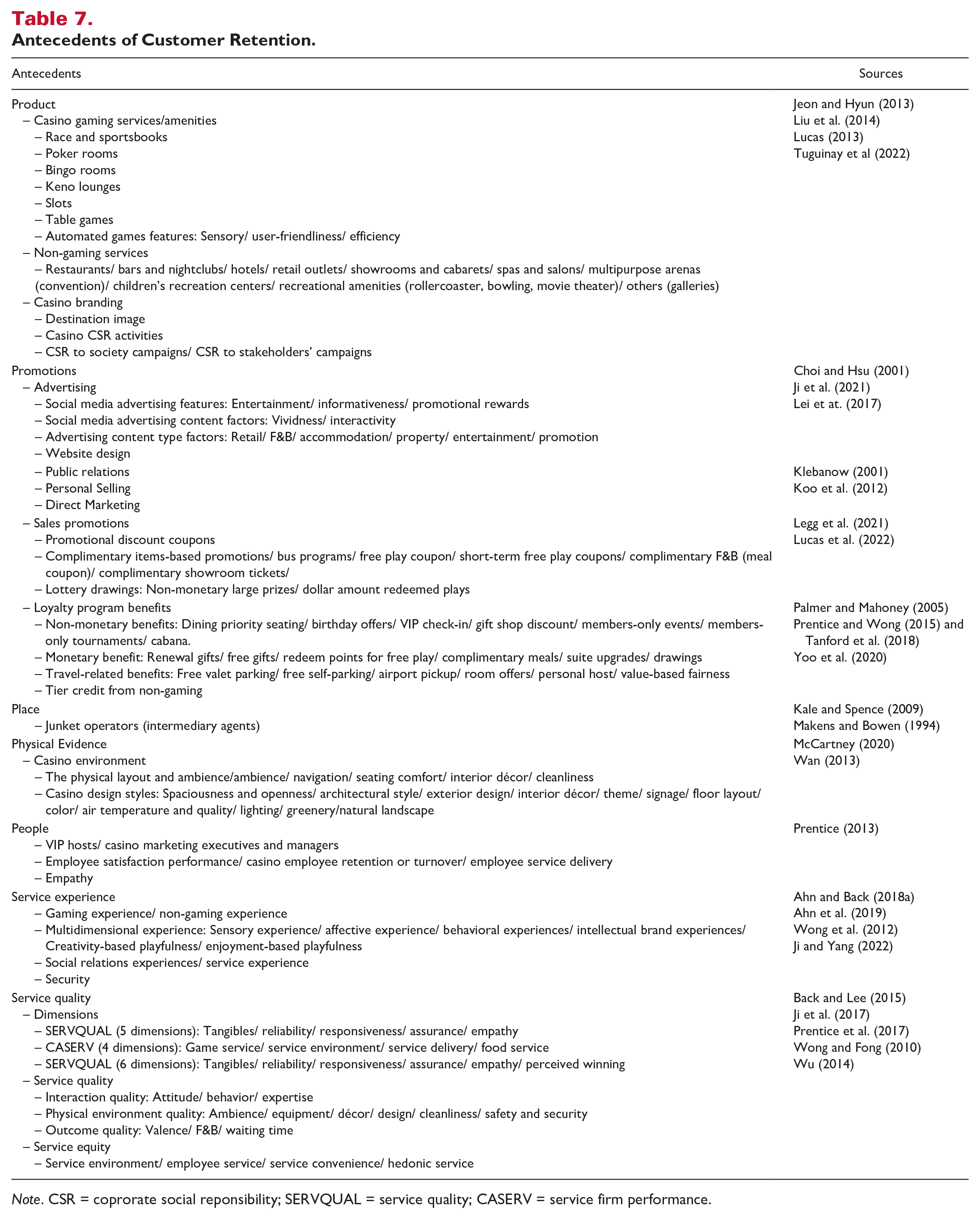
Note. CSR = coprorate social reponsibility; SERVQUAL = service quality; CASERV = service firm performance.
Mediators and Moderators
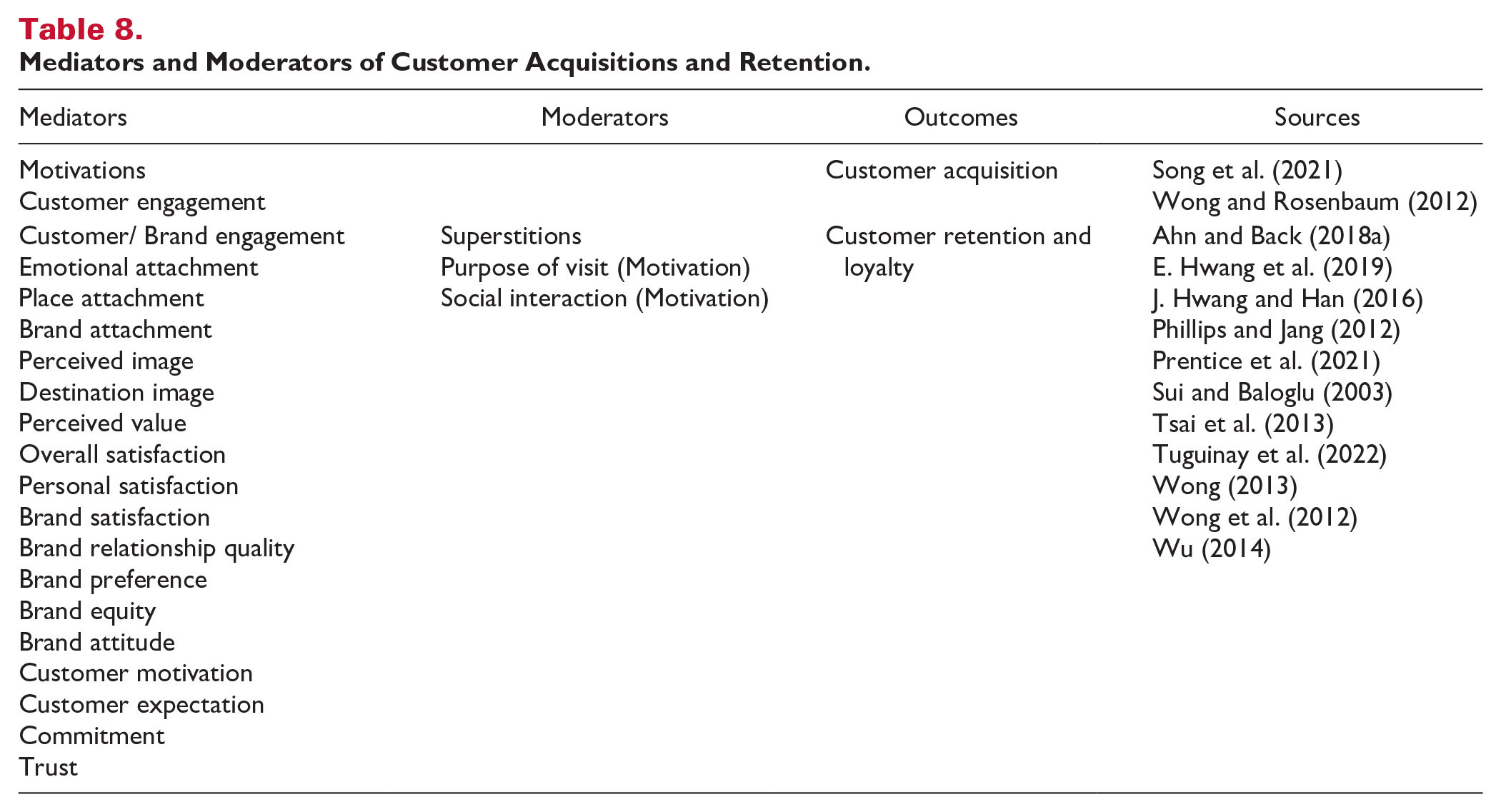
The review also analyzed the mediator and moderator variables within the casino marketing literature that led to customer acquisition and retention. Mediators mediate the relationships of independent variable to outcome variables. Mediators identified for customer acquisition includes “customer motivation” and “engagement,” while no moderator variable identified. In customer retention studies, several mediators were applied to mediate the relationships of the independent variables to customer loyalty and retention. The most common were “motivation,” “attachment,” “image,” “satisfaction,” “brand equity,” “attitude,” and “preference.” Moderators that heighten or dampen the relationships or the effects of independent variables were “superstitions,” “purpose of visit,” and “social interaction.” Customer demographics were often used as moderators within casino marketing multigroup analysis. The purpose of visit and social interaction were motivators of casino visitation and could be interchangeably used as a mediator. Commitment and trust, as indicators of customer loyalty, were also applied as mediators. Moderator and mediator variables found for customer acquisition and retention are tabulated in Table 8.
Mediators and Moderators of Customer Acquisitions and Retention.
Measures and Antecedents of Casino Revenue
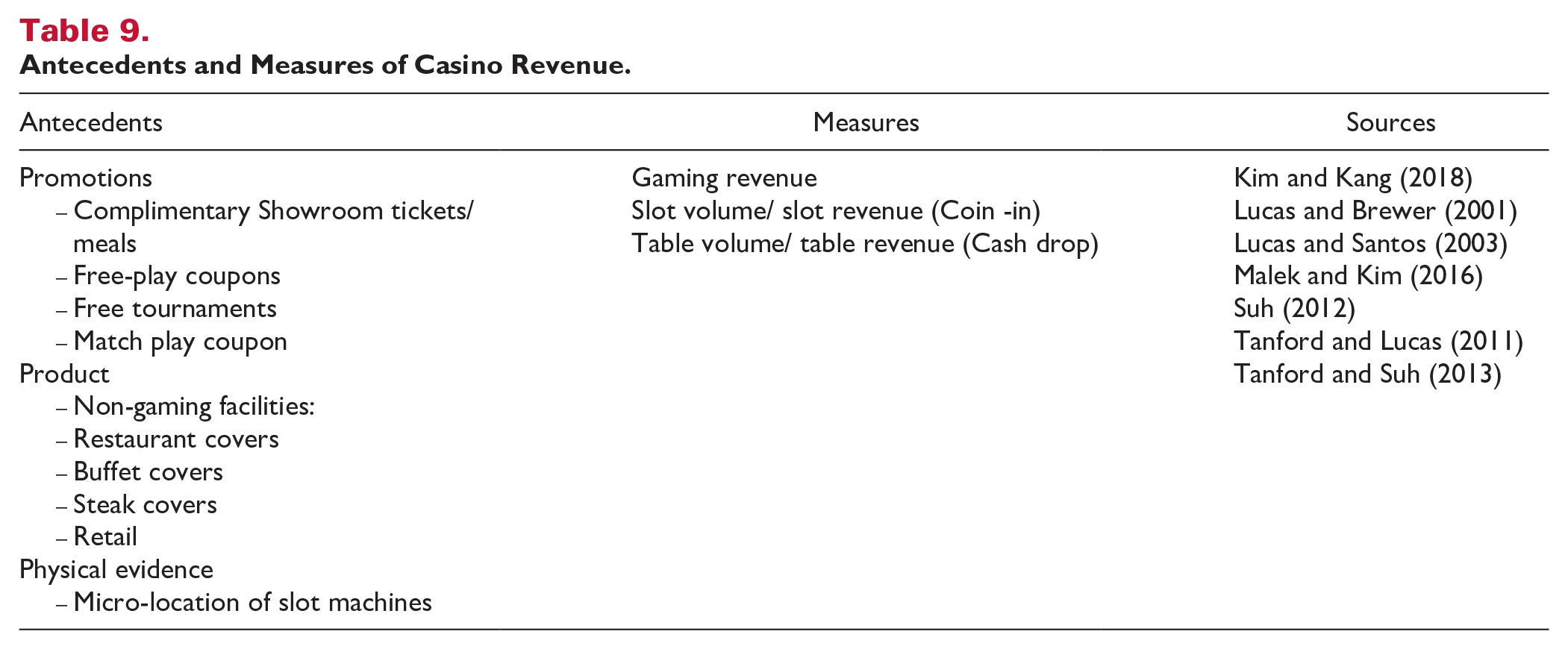
Further analysis of the data led to the detection of one outcome variable related to customer retention—casino revenue. An output of customer retention is higher casino consumption, which related to revenue and profitability. The literature has investigated the effectiveness of several marketing strategy variables related to casino revenue rather than customer behavior. Most investigations were guided by the paradigm of full-service theory, where the key assumption is that casino amenities capture customers and lead to gaming volume and revenue (Lucas, 2013). Casinos utilize aggressive marketing strategies based around non-gaming amenities (e.g., restaurant discounts). Lucas (2013) highlighted that customers will also visit the gaming halls and contribute to gaming profits. Promotions such as match play coupons (Lucas, 2005), draw or lottery promotions (Lucas, 2018; Suh et al., 2014), and complimentary meals (Suh et al., 2014) were tested to establish the impact on gaming volume. Tanford and Suh (2013) demonstrated that food and beverage offerings, such as steakhouse houses, casual dining, and buffets, predicted slot gaming volume for different customer segments. Other studies have investigated the relationship between the presence of casino amenities and gaming volume and revenue. Lucas et al. (2006) found that bingo rooms failed to support a significant relationship between slot profit and gaming volume. The same was found for poker rooms (Lucas, 2013). Malek and Kim (2016) investigated the effect of convention attendance on slot and table gaming volume in two South Korean casinos. The findings indicated that convention attendance failed to significantly affect slot and table game volume. Table 9 presents the antecedents and measures of casino revenue.
Antecedents and Measures of Casino Revenue.
Discussion
A systematic review of 128 peer-reviewed articles from the casino marketing literature was undertaken to identify the measures and antecedents of customer acquisition and retention. The analysis identified the mediators and moderators that influence customer acquisition and retention. There was also ample evidence of the effectiveness of marketing strategies on casino profitability. The review highlighted the measures and antecedents of casino profitability through gaming revenue and the antecedents and measures of negative customer behavior. Theoretical and practical implications are now discussed.
Theoretical Implications
The review indicates that customer retention, rather than new customers, was more commonly studied. Marketing strategies and factors that influenced customer retention and acquisition were also extensively investigated. This study delineated customer acquisition and retention strategies and presented a conceptual model describing the casino customer relationship process by categorizing these strategies into the 7Ps framework (Figure 2).
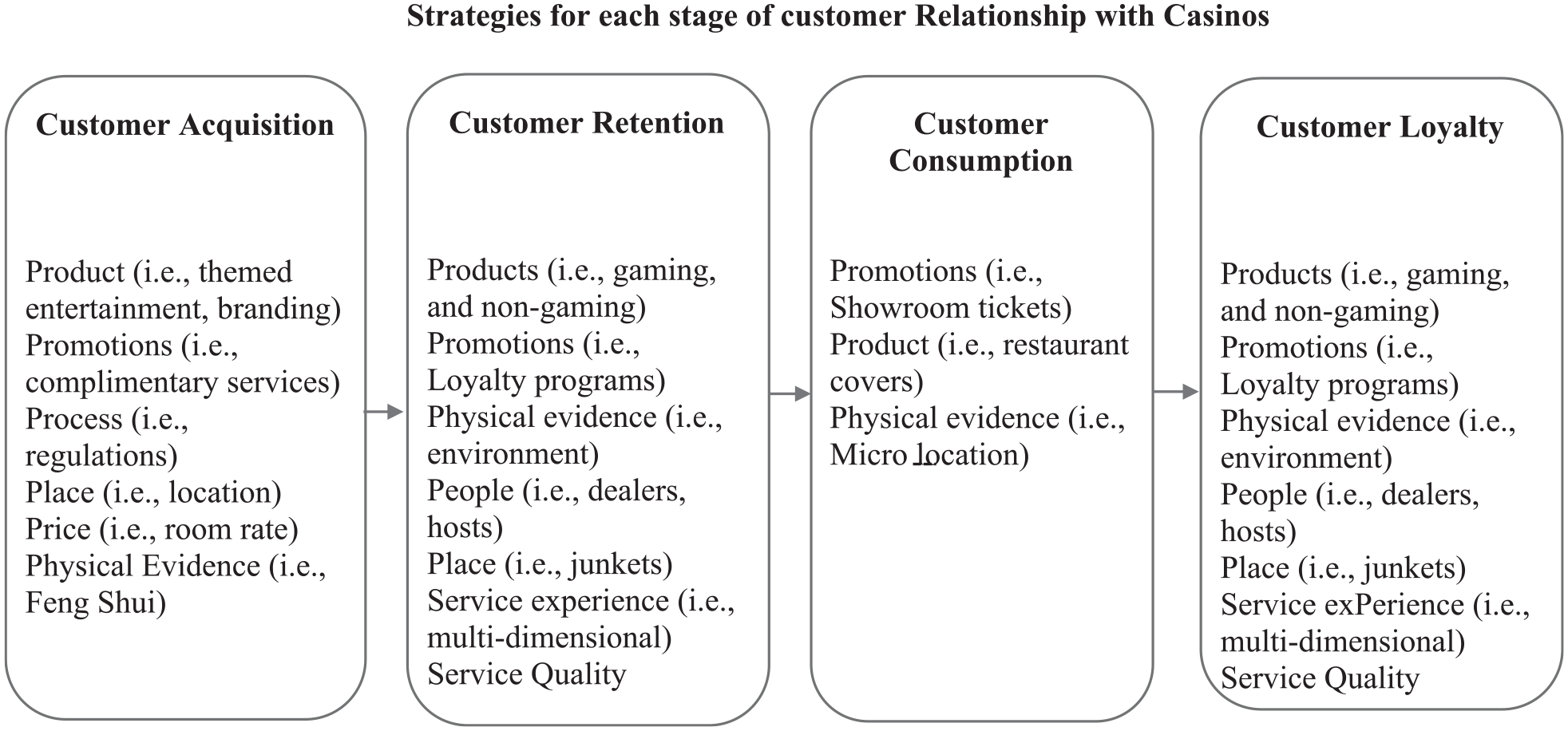
Customer Relationship in Casinos.
This conceptual model maps out casino customer relationships, from customer acquisition to retention, and extends to customer consumption and customer loyalty. Other customer behaviors were included as part of the model to signify the outcomes that may result during the relationship. The model presents strategies that influence different stages of the customer relationship. This review contributes to the consumer behavior and casino marketing gaming research by further exploring the relationships within customer acquisition and retention. A discussion of the model and identified gaps follows.
Strategies for Customer Acquisition
Customer relationships in casinos start with customer acquisition. Customer acquisition has been described as efforts made to attract potential customers to a particular casino and to encourage first-time visitation or purchase (Thomas, 2001). The review found that customer acquisition has been studied in the casino marketing literature, with particular attention paid to customer attraction. Customer attraction has been used to indicate acquisition with additional outcomes such as willingness, desire, and intention to visit. Limited customer acquisition strategies were evident within the six Ps of marketing: product, promotions, process, place, price, and physical evidence. Figure 2 summarizes the strategies for each stage of customer relationship with casinos using the 7P marketing framework.
The measures found in the review do not explicitly differentiate the acquisition of first-time casino customers. A potential problem of customer acquisition is the challenge of who is acquired (Ang & Buttle, 2006; Blattberg et al., 2001). It is suggested that strategies focus on people who need or want the offerings, those who may be unaware but may benefit from the offerings, and those who may express an interest in the offerings (Skarphéðinsson & Mohan, 2017). Studies have categorized casino customers into non-visitor and intention groups (Hong & Jang, 2004). However, acquisition and attraction studies did not explore the right groups of people to acquire.
Casino resorts aim to attract a broad range of customers, which often results in incoherent marketing (Kale & Spence, 2009). The review provides evidence of casino strategies implemented under the six “Ps” of marketing. Blattberg et al. (2008) suggested that price and promotion strategies were essential for customer acquisition, which may be the case in marketing tangible products. The combination of promotion and product strategies may be more influential than the price strategy for customer acquisition in casinos which is considered a service industry. The importance of having non-gaming product offerings helps to deconstruct the negative notion of casinos as purely gambling establishments.
Price may be a poor indicator of customer acquisition due to the nature of gambling as a risky entertainment activity, which is often associated with “the house always wins” and where players are at a disadvantage. However, price in relation to promotions (i.e., food and accommodation discounts) played a critical role in customer acquisition strategies. The role of the individual or participant was seen to be a missing antecedent.
In the model, casino regulation was categorized as a process element that involves procedures, mechanisms, and flow that influence casino service (Booms & Bitner, 1982). Regulations, such as entrance fees for local customers, are imposed on casinos to discourage local visitation (Ng, 2006). In jurisdictions where entrance fees are commonly charged, low or subsidized entrance fees may induce local visitation, although they may also be seen as additional customer expenditure. The role of casino employees and other customers in customer acquisition was not explored well in the literature. Further investigation into strategies to convert likelihood-to-visit measures into actual visitation was also lacking.
Customer motivation and engagement were effective mediators and mediated between casino strategies and desired outcomes. Most studies indicated that aligning marketing strategies with customer motivation will assist in attracting potential and retaining existing customers. Despite an abundance of knowledge relating to casino customer motivations, there is a lack of understanding of what motivates those who do not visit casinos. To further the acquisition of casino customers, further investigation of those who do not visit would be of benefit. No moderators were found in the literature reviewed, therefore a greater understanding of casino customer acquisition moderators should be explored.
Strategies for Customer Retention
After a customer’s first visit to a casino, the next challenge in the customer relationship is encouraging second and future visits. The outcomes of retention include the frequency of visits and revisit intention and loyalty. Strategies that influence the frequency of customer visitation fall under seven elements: product, promotion, physical evidence, people/participant, place, service experience, and service quality. Service experience and service quality were identified as separate strategies from the other elements as they cannot be categorized under a singular element.
Junkets were also antecedents and were classified under place strategy. The “place” element has been associated with the distribution function of products or services where intermediaries are considered a place element (Rafiq & Ahmed, 1995). Strategies appropriate to process and price were missing from the literature, and these elements could be further explored. For example, the process of membership sign-up for casinos is the first step toward engaging customers in loyalty rewards or programs. In addition to loyalty program benefits, the ease of the membership sign-up process may influence customer decisions and behaviors. Consumers prefer easily accessible loyalty programs (Catchings, 2021) as it was found that complication may hinder customer engagement (Noble & Phillips, 2004).
Several mediators and moderators for customer retention were also identified. However, moderators that influence the effects between antecedents and mediators on customer retention were limited. In addition, motivation could be used as a mediator of customer retention and as a moderator (i.e., the purpose of the visit).
The findings also show a crossover in customer acquisition and retention antecedents and mediators. Product and promotion strategies used in casinos may also attract new and old customers. The motivation was another crossover indicating that customer motivations influence behaviors. Customers’ reasons for visiting a casino for the first time may differ from the reason they visit a second or third time. Specific motivations for first and second visits could be further delineated to identify strategies that may address separate motivations.
Strategies for Customer Consumption
A third process presented in the customer relationship model is casino customer consumption. Harker (1999) found that output (i.e., profit) is a category in the relationship marketing process, a reward from which a casino–customer relationship may be realized. This review found that retention is related to casino profitability. As customers continue to revisit casinos, they continue to consume offerings and spend, indicating beneficial effects for profitability. Compared to other service industries, outcomes expected under casino gaming consumption are the extended length of stay, buying other casino products, actual spending and budget, length of play, and gaming revenues. Demand consumption of non-gaming facilities and services is also based on gaming consumption. To illustrate, a longer casino stay may lead to food and beverage consumption or a stay at the hotel. The review also highlighted studies investigating the effectiveness of marketing strategies to gaming revenues in the form of slot and table games revenues. The findings of these studies suggested antecedents that influence increased casino consumption through promotions, products, and physical evidence. Despite the influence of non-gaming facilities on customer behavior and gaming revenue, limited empirical studies explored non-gaming customers and how their consumption affected casino profitability. Understanding this may further inform and justify investment in non-gaming facilities.
Strategies for Customer Loyalty
The fourth stage in casino customer relationships is customer loyalty. Customer loyalty has been applied as an extended measure of customer retention and was frequently used in casino marketing studies as a desirable outcome. Ravald and Grönroos (1996) highlighted that the primary goal of relationship marketing is customer loyalty that leads to enhanced long-term connections. The difference delineating customer retention and loyalty was customers’ emotional commitment beyond repetitive visitation, which indicates a customers’ preference for one casino over others. Customer loyalty and retention measures were often combined in the one study. Unlike customer retention, loyalty outcomes encompass a willingness to pay more, positive word of mouth, support for existing casinos, commitment, trust, and first choice. From the findings, there is a greater emphasis on the first-choice variable among other outcomes of customer loyalty. Retention or frequent visitation may not always indicate loyalty (e.g., recommendation or first choice); however, loyal customers will repeatedly visit or purchase from a preferred casino. The antecedents, mediators, and moderators used in customer loyalty were similar to customer retention as loyalty and retention measures were commonly used together. However, the variables of commitment and trust were formidable mediators for other loyalty measures.
Other Behaviors
Undesirable customer behaviors in the casino–customer relationship were an emerging issue in the literature. Undesirable customer behavior includes poor customer loyalty and complaints, which may lead to disloyalty or discontinuation of the relationship, brand switching, or customer churn. Within service industries, brand switching may have many causes, with core service and service encounter failures having the highest incidence (Keaveney, 1995). This review highlights the impact of poor employee service and low satisfaction. Behaviors, such as impulse buying and unplanned gaming, were not considered unwanted as these activities relate to casino spending. Despite this, when behaviors are uncontrolled, they may indicate gambling-related problems, which need to be mitigated. The service environment and customer’s reduced perceived internal control have been identified as triggers. Understanding other causes of these unwanted behaviors may further assist in the development of strategies to prevent unwanted behaviors. Table 10 summarizes the foci of marketings strategies in casinos compared with traditional marketing.
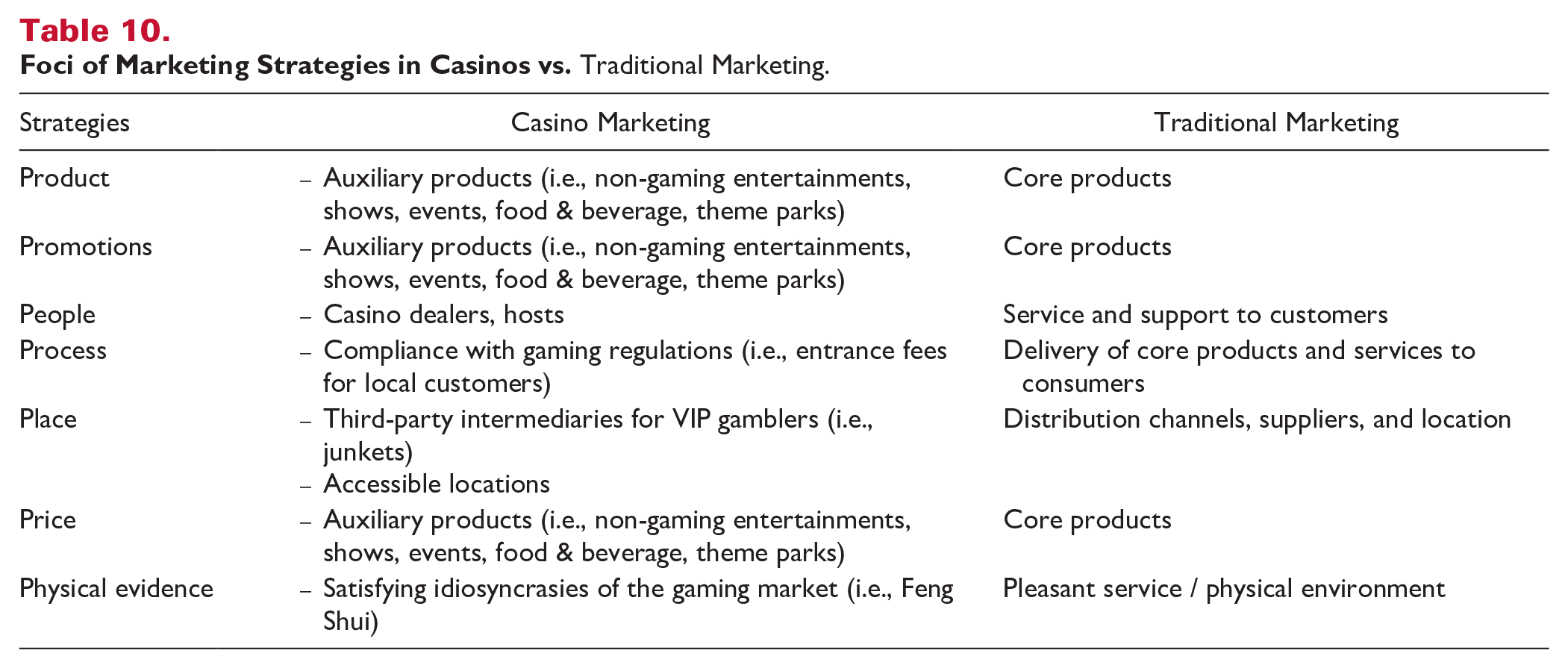
Casino Marketing Versus Non-Gaming Marketing Strategies
The review highlights that marketing strategies employed in the casino industry differ significantly from those applied in other businesses (see Table 10). Land-based casinos primarily provide gaming products as a core offering with additional non-gaming entertainment (e.g., hotel accommodations and food and beverage services) as supplementary or auxiliary products. Applying the 7Ps of the service marketing framework, the study suggests that casino product, promotion, and place strategies tended to be focused on auxiliary offerings rather than core products like other industries. Under the people strategy, casinos emphasized the attitudes and behaviors of casino hosts and dealers. Regarding the process strategy, rather than highlighting service delivery like other service businesses, casinos place significant importance on compliance with industry regulations. The study also indicates that place strategy in casinos tends to focus on junket operations rather than conventional distribution channels, suppliers, or physical location considerations. In a physical evidence strategy, while many businesses focus on the creation of a pleasant service environment, casinos primarily tailor their physical settings to cater to the gaming market’s idiosyncrasies. The differences in marketing strategies can be accounted for by the nature of gaming, which is the focal business of casinos. In practice, casino marketing strategies must consider problem gambling and implement responsible gaming to comply with jurisdictional regulations.
Practical Implications
This study provides guidance for casino marketing practitioners and operators, for the delivery of practices that induce customer acquisition and retention. The review suggests that casino operations place greater emphasis on customer retention, casino consumption/profitability, and loyalty and a lesser focus on customer acquisition. However, it is necessary to continuously look for ways to improve activities that efficiently and effectively influence acquisition and retention. The finding that limited strategies are in place to acquire first-time customers indicates that there are opportunities for casinos to improve strategies under the people/participant and product elements. This may include increasing casino frontline employees’ efficiency to attract and acquire potential customers, first-time visits, and brand switchers. This study also presents the potential attributes customers look for when deciding which casino to visit, such as less regulation, as in entrance fees for locals, lower room prices, and promotions. Addressing these criteria could attract more local visitation. By rewarding customers for recommendations, casino practitioners may attract new customers through word of mouth. Themed entertainment is another acquisition strategy. Casinos should include themed non-gaming entertainment activities to attract customers. Regularly changing themes creates fresh and new activities for customers. In addition, casinos should not overlook or avoid ambivalent or disinterested groups. Understanding the needs of these groups may lead to potential new customers.
The finding that extends customer retention to casino consumption and customer loyalty suggests that casinos should maintain relationships with customers and members. The importance of the mediators and moderators found in this study should be considered by casino employees to strengthen customer relationships. Improved service encounters with customers may reduce customer loss. Service encounter training and appropriate employee customer rations are key issues for casino management. The early detection of problem gambling by staff is also important from a responsible gambling perspective. Identifying the causes of impulse gambling may be determined by monitoring customer spending. The review also highlights the importance of non-gaming facilities, theming, and branding of casinos, as these features can attract customers. Grandiose designs and architectural structures also attract and retain casino customers.
Limitations and Future Research
This systematic literature review is limited by the key search terms and the scoping of the articles to be included. Search terms were limited to casino, marketing strategy, and customer acquisition and retention, as informed by early casino marketing research. Another limitation of this review was the restriction to peer-reviewed academic journals written in English or with English translations. This restriction may have overlooked or excluded relevant research published in other languages or non-peer reviewed journals such as books, book chapters, case studies, trade journals, academic papers, dissertations, and theses. Based on the limitations and findings from the review, this study proposes areas for future research.
Future reviews in the casino marketing literature could include publications other than peer-reviewed articles. Selection criteria could also include non-English language academic journals. A broader scope of publications included in the database, such as case study books, book chapters, and casino trade journals would further a study’s reach.
Casino marketing research should continue to explore measures for customer acquisition and the differentiating measures for first-time visitation to a casino as compared with general attraction. Investigation of “people/participant” strategies and their link to customer acquisition is also encouraged. Exploration of additional mediators and moderator variables will also strengthen links between customer acquisition antecedents and outcomes. Research to understand the needs of non-interest groups may help to determine strategies to encourage visitation.
There is also a need to further understand the relationship between retention antecedents for casino consumption as this process is directly related to casino revenue. Several mediators and moderators were found to influence customer behaviors such as frequent visitation and customer loyalty, however, few, if any, investigated the role of these mediators on casino revenue. The role of price strategies could be further studied to increase customer retention. Research is also needed to explore the cause of casino disloyalty. More studies could explore the profitability of non-gaming customers in casinos. Finally, the COVID-19 pandemic has impacted upon casinos and marketing strategies, future studies should consider investigating different customer acquisition and retention strategies post pandemic. Addressing these potential research directions will further enhance an understanding of customer relationships in casinos and the casino marketing literature.
Footnotes
Declaration of Conflicting Interests
The author(s) declared no potential conflicts of interest with respect to the research, authorship, or publication of this article.
Funding
The author(s) received no financial support for the research, authorship, or publication of this article.
