




Abstract
When studied independently subordinate perceived supervisor support and abusive supervision have unequivocally contrary effects on subordinate outcomes that are critical to the performance of hospitality organizations. Although both supportive and abusive supervisor behaviors occur in the subordinate–direct supervisor exchange relationship, the simultaneous effects of these two constructs have yet to be illuminated. Drawing on the within-domain exacerbation hypothesis and the whiplash effect, we propose a conceptual framework that captures both the independent and interactive effects of subordinate perceived supervisor support and abusive supervision on hotel employees. Using a sample composed of 194 direct subordinate-supervisor pairings from 119 hotel property departments and 18 Chinese hotel properties, we illuminate the contrary, relative, and interactive effects of perceived supervisor support and abusive supervision on subordinate hotel employees’ job stress as well as their (supervisor-rated) individual-oriented organizational citizenship behavior. Implications and limitations of the current study and avenues for future research are discussed.
Keywords
Introduction
The extant hospitality management research has identified supportive supervision (e.g., Gordon et al., 2019; Quratulain & Al-Hawari, 2021) and abusive supervision (e.g., J. Park & Kim, 2019; Shi et al., 2023; Tews & Stafford, 2020; Xu et al., 2018; Yu et al., 2020) as critical management styles with contrary consequences. By focusing on supportive and abusive supervision, past research seems to be implying that supervisor behaviors are either constructive or destructive. The demarcation is a naïve notion as many may oscillate between constructive and destructive behaviors (Chénard-Poirier et al., 2022; Nahum-Shani et al., 2014). Through their nuanced use of both constructive and destructive behaviors, they may fly “under the radar” and cause considerable and persistent harm to their direct subordinates without being detected (Chénard-Poirier et al., 2022). Scholars have, thus, stressed the importance of considering both constructive and destructive management style constructs to yield novel insights into the ways by which supervisors can influence their subordinates (Chénard-Poirier et al., 2022; Duffy et al., 2002; Schyns & Schilling, 2013). Yet, scant attention has been paid to examine the influences of supervisors who exhibit both constructive (i.e., supportive) and destructive (i.e., abusive) behaviors toward their subordinates (cf. Wang & Xu, 2021). The research aims to close this gap by investigating the effects of the combined exposure to supervisor supportive and abusive supervision on subordinate job stress and individual-oriented organizational citizenship behavior (OCBI) which, according to extant hospitality literature, may be both more complicated and impactful.
There are a number of characteristics associated with hospitality organizations that may decrease the likelihood of supportive supervision but increase that of abusive supervision, exacerbating the consequences for the subordinates. First, hospitality organizations such as hotels are labor intensive (Xu et al., 2020; Yu et al., 2020) and employees (both the supervisor and subordinate) have highly defined roles and responsibilities. As a result, hierarchical structures in which control is centralized prevail in hospitality organizations such as hotels (Øgaard et al., 2008; Yen & Teng, 2013) and thus accentuate the power imbalance between subordinates and supervisors (Yen & Teng, 2013; Yu et al., 2020). Moreover, the majority of the labor force (subordinates) in restaurants and hotels are entry/lower-level employees who either quit in a short-term or are employed on a temporary/contingent basis (Xu et al., 2022; Yu et al., 2020). Consequently, not only are subordinates less likely to receive supportive behaviors from their supervisors (Gordon et al., 2019; Quratulain & Al-Hawari, 2021; Tews & Stafford, 2020; Yoon & Thye, 2000) but they are also particularly at risk of abusive supervision as their supervisors recognize that temporary employees do not tend to speak up or seek help due to the precarious nature of their employment (Yu et al., 2020).
Second, the pace of work in hospitality is often frenetic in order to provide services to customers in a timely manner and this intensive work often occurs in confined spaces (kitchens, back-of-house, et cetera) where employees are required to work “cheek to jowl,” creating a highly charged and intense work environment that is unconducive to supportive supervision but may facilitate abusive supervision (Altinay et al., 2019; Dogantekin et al., 2022). Ironically, research showed that supportive supervision can mitigate the negative effects of highly stressful hospitality jobs on subordinate’s psychological well-being such as emotional exhaustion and job stress (see H. Chen et al., 2023; R. Park & Jang, 2017; Quratulain & Al-Hawari, 2021).
Furthermore, the requirement in many hospitality organizations for frequent and high-quality interactions with customers, where customer-contact staff have to carefully control their emotions (Xu et al., 2020), may also lead to more frequent abusive supervision. Given that it is not acceptable to demonstrate negative behaviors toward customers, supervisors may transfer their frustration with demanding customers onto their subordinates (Xu et al., 2020; Yu et al., 2020). Under these circumstances, hospitality organizations such as hotels, and those who work for them, may customarily condone an abusive environment because it is often viewed as a necessary part of the training and socialization process in the profession and hotel industry (Bloisi & Hoel, 2008; Tews & Stafford, 2020).
Past research on abusive supervision that focused on the hospitality industry consistently show (refer to Yu et al., 2020 for a review) both (a) its hindering effects on key positive subordinate outcomes including service performance (Cho et al., 2016; Hon & Lu, 2016; Jian et al., 2012) and organizational citizen behavior (Lyu, Zhou, et al., 2016; Lyu, Zhu, et al., 2016; Zhao & Guo, 2019) and (b) its augmenting effects on key negative subordinate outcomes including service sabotage (J. Park & Kim, 2019), withdrawal behaviors (Tews & Stafford, 2020; Xu et al., 2018), burnout (X. Li et al., 2016), and silence behavior (Yu et al., 2020). Recent studies (Duffy et al., 2002; Tews & Stafford, 2020) have also identified factors such as attachment with/support of coworkers (e.g., Tews & Stafford, 2020; Xu et al., 2018), perceived organizational support (e.g., X. Li et al., 2016), and customer orientation (see Yu et al., 2020) may alleviate the negative effects of abusive supervision on subordinates. Moreover, one study examined the influences of abusive supervision on the abuser (i.e., supervisor) and found it led to embarrassment and compensatory behaviors including apology and exemplification (Shi et al., 2023). Nevertheless, existing studies have yet examined the influences on the subordinate when supervisors compensate their abusive supervising behaviors by also being supportive.
The current study, thus, looks at the combined use of supportive and abusive supervision and their interactive impacts on the subordinates. By doing so, we forward a more nuanced understanding of supervisors who display two seemingly opposing behaviors and their behavioral repertoires in the hospitality industry. This research will shed light on questions that remain unanswered in past research such as whether the known positive and negative effects of subordinate perceived supervisor support (PSS) and abusive supervision, respectively, simply cancel out each other or unexpectedly amplify one or the other? Does a supervisor who is perceived to oscillate between supportive and abusive behaviors yield any additional benefits? If so, for whom (i.e., the supervisor, the subordinate, etc.)? To sum up, we propose two different mechanisms through which abusive and supportive supervision would interactively influence subordinate job stress and OCBI. Congruent with the within-domain exacerbation hypothesis (Major et al., 1997), we first postulate that the combined effect of subordinate PSS and perceived abusive on subordinate job stress would be negative. The second mechanism is underpinned by the whiplash effect (Yu & Duffy, 2021), which predicts that the same combined effect on subordinate OCBI would be, counterintuitively, positive.
Given the importance of subordinate employee psychological well-being to hospitality subordinate employee performance, the current study addresses the call of Yu and colleagues (2020) and further examines the relationship among supportive and abusive supervision on psychological well-being in the hospitality industry as well as their independent and interactive effects on subordinates’ extra-role behaviors which benefit their supervisor and co-workers; that is, OCBI. Methodologically, to examine the simultaneous effects of subordinate PSS and subordinate perceived abusive supervision, this study sampled subordinate—supervisor dyads composed of 194 pairs of subordinates—direct supervisors from 18 Chinese hotel properties; that is, the sampled subordinates and supervisors are all Chinese and thus are considered to be individuals from a high-power distance country culture (Bhattacharjee & Sarkar, 2022; Ng et al., 2012; Wang & Xu, 2021). Extant research (e.g., Hon & Lu, 2016; Li et al., 2022; Wang & Xu, 2021; Yu et al., 2020) has underscored that employees from high-power distance cultures such as China may view abusive supervision differently than their more egalitarian Western (low-power distance) counterparts. Thus, the current study yields important new insights concerning the (independent and interactive) effects of supportive and abusive supervision on subordinate hotel employees by examining whether theories and findings of research largely emanating from Western contexts and which has examined these two opposing supervisor behaviors (i.e., subordinate PSS and perceived abusive behavior) independently, generalize to a labor-intensive, service-focused, high-power distance context (i.e., Chinese hotel properties).
Conceptual Model and Hypotheses
The Contrary Effects of Supportive and Abusive Supervision on Subordinate Job Stress
The concept of supportive supervision emerged from organizational support theory (Eisenberger et al., 1986, 2002; Shanock & Eisenberger, 2006; Stinglhamber & Vandenberghe, 2003) and concerns a subordinate’s belief that their supervisor cares about their well-being and recognizes and values their contributions (H. Chen et al., 2023; Gordon et al., 2019). Supervisor support can be exercised (and measured) in different contexts including social support (interpersonal relationships between supervisors and subordinates; Nahum-Shani et al., 2014; Quratulain & Al-Hawari, 2021) and career support (career strategies and behaviors for career success; Greenhaus et al., 1990; Kang et al., 2015). Congruent with organizational support theory (e.g., Eisenberger et al., 1986) and hospitality research (e.g., H. Chen et al., 2023; Gordon et al., 2019; Kalidass & Bahron, 2015; R. Park & Jang, 2017; Quratulain & Al-Hawari, 2021), in the current study, we focus on job-related supervisor support and conceptualize it as PSS. PSS refers to the subordinate’s view of their supervisor’s constructive support and the recognition they receive from their supervisor in exchange for their efforts (Vandenberghe et al., 2019) including the provision of accurate feedback, fair evaluation, and sufficient help and assistance in the accomplishment of their work (Nahum-Shani et al., 2014). In contrast, abusive supervision, destructive supervisor behavior that is aimed at subordinates (Chénard-Poirier et al., 2022; Einarsen et al., 2007; Yu et al., 2022), is delineated as a subordinate’s perception of their direct supervisor’s sustained exhibition of nonphysical hostile behaviors directed toward them (J. Park & Kim, 2019; Tepper, 2000, 2007; Tews & Stafford, 2020) including belittling, displaying anger, breaking promises, and making negative or rude comments, among others (see Tepper, 2000, pp. 189–190).
The extant research supports the contention that abusive supervision can cause harm by engendering negative subordinate psychological outcomes such as job stress and by reducing positive subordinate behavioral outcomes such as the engagement in discretionary, extra-role organization citizenship behavior (Al-Hawari et al., 2020; Li et al., 2022; Lyu, Zhu et al., 2016; Mackey et al., 2017; Tepper et al., 2017; Yu et al., 2020; Zhang et al., 2019). Conversely, the extant research indicates that subordinate PSS can reduce these same negative subordinate psychological outcomes and encourage these same positive subordinate behavioral outcomes (C. Chen & Chiu, 2008; H. Chen et al., 2023; Gordon et al., 2019; Kuvaas & Dysvik, 2010; J. Li et al., 2017; Nahum-Shani et al., 2014; R. Park & Jang, 2017; Quratulain & Al-Hawari, 2021; Shanock & Eisenberger, 2006). In sum, when studied independently, the contrary effects of subordinate PSS (see H. Chen et al., 2023; Gordon et al., 2019; R. Park & Jang, 2017) and subordinate perceived abusive supervision (see Al-Hawari et al., 2020; Fischer et al., 2021; Li et al., 2022) on undesirable (negative) subordinate psychological well-being outcomes such as subordinate job stress (i.e., subordinate job anxiety and emotional exhaustion) are evident in the extant research. Consequently, we hypothesize:
The Interactive Effects on Subordinate Job Stress: Within-Domain Exacerbation
We further postulate that the interactive effects of subordinate PSS and subordinate perceived abusive supervision on negative subordinate psychological well-being outcomes such as job stress will be governed by different theoretical processes as predicted by the within-domain exacerbation hypothesis (Duffy et al., 2002; Major et al., 1997). In contrast with the cross-domain buffering hypothesis (see Duffy et al., 2002; Major et al., 1997; Tews & Stafford, 2020) and some recent studies on abusive supervision conducted within the hospitality industry (e.g., Tews & Stafford, 2020; Xu et al., 2018), the within-domain exacerbation hypothesis refers to the same source (the same supervisor) and holds that exposure to supervisors who display a combination of constructive (supportive) and destructive (abusive) behaviors illicit more negative consequences for subordinates than exposure to those who predominately act one way or the other (Duffy et al., 2002; Nahum-Shani et al., 2014). That is, when a supervisor’s behavior is perceived to be abusive (destructive), perceived supportive (constructive) behavior from that same supervisor will worsen (exacerbate) the harmful effects of perceived abusive supervision on their subordinates, rather than mitigate them (Chénard-Poirier et al., 2022).
Existing evidence on within-domain exacerbation as it pertains to subordinate well-being has been demonstrated with social undermining; that is, behavior intended to hinder, over time, the ability to establish and maintain positive interpersonal relationships, work-related success, and favorable reputation (Duffy et al., 2002). For example, the simultaneous display of supportive and undermining supervisor behaviors was found to be negatively related to (found to reduce) subordinate self-efficacy and organizational commitment (Duffy et al., 2002) and increase their job strain (Nahum-Shani et al., 2014). However, the within-domain exacerbation effects in relation to abusive supervision have yet to be illuminated. Although social undermining and abusive supervision are similar, they differ in their assumed outcomes (Hershcovis, 2011). Acts of supervisor undermining are directed at harming a subordinate’s performance with respect to workplace relationships, success, and reputation (Duffy et al., 2002; Nahum-Shani et al., 2014). Abusive supervision, however, is oriented toward the individual that may not necessarily have work-related bearings (Tepper, 2000). Consequently, we hypothesize (see H2) that the hindering effects of subordinate perceived abusive supervision will be manifested in subordinate job stress. Therefore, consistent with the within-domain exacerbation hypothesis (see Duffy et al., 2002; Major et al., 1997), we postulate that the combination of subordinate PSS and subordinate perceived abusive supervision will engender higher subordinate job stress than subordinate perceived abusive supervision alone. Thus, we hypothesize:
The Contrary Effects of Supportive and Abusive Supervision on Subordinate OCBI
A central tenet of the PSS concept (Eisenberger et al., 2002; Shanock & Eisenberger, 2006; Tang & Tsaur, 2016) and organizational support theory (Eisenberger et al., 1986) is that a subordinate will reciprocate (Eisenberger et al., 2001) their supervisor’s positive treatment by engaging in behavior that benefits the supervisor and that contributes to the supervisor’s goals and/or augments the supervisor’s performance. Prior research has emphasized the critical role of supervisor care and appreciation in terms of creating high-quality relationships that ultimately impact positive subordinate attitudes and behaviors (Cheung et al., 2008). It is also the case that supportive supervisors can increase the likelihood that their direct subordinates will engage in positive behaviors by signaling to them that they will be supported in carrying out their tasks and in managing stressful situations (Sguera et al., 2018). Hence, subordinates who perceive higher levels of supervisor support are likely to experience a felt obligation to reciprocate their supervisors’ positive treatment by engaging in positive, discretionary behavior, in the form of OCBI that benefit the supervisor and their co-workers (J. Li et al., 2017; Shanock & Eisenberger, 2006; Tang & Tsaur, 2016).
Conversely, we contend that subordinate perceived abusive supervision will reduce the likelihood that the subordinate will engage in positive, discretionary behaviors such as OCBI and we base this contention on fairness theory (Folger & Cropanzano, 2001). Fairness theory draws on social exchange theory (Blau, 1964) and construes abusive supervision as a manifestation of injustice as it constitutes a violation of a subordinate’s assumptions about equitable exchange (Zhang et al., 2019). Due to the negative reciprocity norm, this hostile treatment from a supervisor is posited to engender undesirable subordinate behaviors (Bhattacharjee & Sarkar, 2022). That is, abused subordinates may seek to restore justice through negative behaviors that are directed toward their supervisor and others in the workplace (Zhang et al., 2019). Similarly, an abused subordinate may seek to correct the injustice by withholding positive behaviors (Folger, 1993) that are directed toward their supervisor such as OCBI.
Meta-analysis (Mackey et al., 2017) and recent systematic reviews of abusive supervision (Bhattacharjee & Sarkar, 2022; Fischer et al., 2021) have all positioned abusive supervision as an antecedent of OCBI. Although scholars have cautioned that the assertions concerning abusive supervision and subordinate behavioral outcomes such as OCBI may not be generalized to subordinates from hospitality organizations (see Yu et al., 2020), congruent with the above assertions and drawing on conservation of resources theory (Hobfoll, 1989), prior research studies indicate that employees under abusive supervision experience resource depletion which (as a way of protecting or restoring their depleted resources) can lead to greater negative employee behavioral outcomes (see Tews & Stafford, 2020; Xu et al., 2018) and lower positive employee behavioral outcomes (see Al-Hawari et al., 2020; Lyu, Zhu et al., 2016). Similarly, from a justice perspective (Zhang et al., 2019), abusive supervision is reflective of a low-quality subordinate–supervisor exchange relationship, where the subordinate does not feel obliged to engage in positive extra-role behaviors such as OCBI. Furthermore, given the discretionary nature of OCBI, withholding such behaviors is not punishable and represents a relatively low-risk response by the abused subordinate to restore equity to the subordinate–supervisor exchange relationship. Thus, we hypothesize the following:
The Interactive Effects on Subordinate OCBI: The Whiplash Effect
Past research examining the combination of constructive and destructive supervisor behaviors on undesirable subordinate behaviors have found effects that are congruent with the within-domain exacerbation hypothesis. Since supervisors who oscillate between being constructive and destructive may send inconsistent messages, they create a sense of uncertainty and unpredictability for their subordinates (Tepper et al., 2017), leading to undesirable subordinate behaviors. Indeed, research has indicated that inconsistent signaling, involving supervisor support and undermining, leads to subordinate counterproductive behaviors such as workplace pilfering and taking longer breaks (Duffy et al., 2002). However, Lian et al. (2012) found that inconsistent signaling, involving leader-member exchange (constructive supervisor behaviors) and abusive supervision (destructive supervisor behavior) was positively related with organizational deviance. Moreover, Chénard-Poirier et al. (2022) found that subordinates exposed to inconsistent supervisor behaviors; i.e., the combination of transformational leadership and petty tyranny (constructive and destructive supervisor behaviors), displayed lower levels of behavioral empowerment and thriving than destructive supervisor behaviors alone.
Although these studies have proffered insights into the interactive influences of inconsistent signaling and inconsistent supervisor behaviors on undesirable subordinate behaviors (e.g., counterproductive behaviors and organizational deviance), research concerning their influence on desirable subordinate behaviors is limited. Congruent with the within-domain exacerbation hypothesis (see Duffy et al., 2002; Major et al., 1997), the constructive-destructive supervision (the subordinate PSS and the subordinate perceived abusive supervision) combination may be expected to augment negative subordinate behaviors and diminish positive subordinate behaviors. However, we postulate that the combined, interactive effect of subordinate PSS and subordinate perceived abusive supervision on desirable subordinate behavioral outcomes such as OCBI will be positive.
As shown in previous studies, abusive supervision does not invariably elicit undesirable behaviors (e.g., supervisor-directed deviance); it may also generate desirable ones (e.g., supervisor-directed OCB) (Li et al., 2022; Yu & Duffy, 2021). This is because supervisor abusive behaviors are sometimes perceived by their subordinates as means to motivate them to work hard and to reduce mistakes in their work and to promote their performance (see Ferris et al., 2007; Isaacson, 2012; Li et al., 2022) and is dubbed the whiplash effect; i.e., “abusive supervisors can be seemingly appreciated and motivational” (Yu & Duffy, 2021, p. 754). The whiplash effect (Yu & Duffy, 2021) forwards the notion that whether abusive supervision leads to deviant behavior or organizational citizenship behavior depends on how the subordinate attributes motivation of the abuser. If the subordinate attributes the motive as a “tough love” approach to drive (augment) their work performance (Bies et al., 2016; Isaacson, 2012), they would assume that the abuse is caused by their own subpar performance, which leads to guilt (Tangney et al., 2007), and in turn, counterintuitively, induce positive, discretionary, extra-role behaviors directed at the abuser (see Li et al., 2022; Yu & Duffy, 2021) such as OCBI.
Given that the current study’s sampled subordinate—supervisor dyads are composed of subordinate Chinese hospitality workers who are accustomed to high-power distance and are more abuse tolerant and are therefore more likely to interpret abusive supervision as “tough love” and respond by displaying OCBI (see Li et al., 2022; Yu et al., 2020). Consequently, we propose that the combination of subordinate PSS and perceived abusive supervision, instead of projecting an inconsistent signal or seen as inconsistent supervisor behaviors as forwarded by the within-domain exasperation hypothesis (see Chénard-Poirier et al., 2022; Duffy et al., 2002; Lian et al., 2012), will instead as forwarded by the whiplash effect (see Yu & Duffy, 2021) be seen as consistent supervisor behaviors that are oriented toward motivating and enhancing subordinate work performance (see Ferris et al., 2007; Isaacson, 2012; Li et al., 2022; Yu & Duffy, 2021), which we posit will elicit greater subordinate (supervisor-rated) OCBI than either subordinate PSS or subordinate perceived abusive supervision alone. Thus, we hypothesize:
Method
Sample and Procedures
Based on each hotel property’s staffing structure and department size, surveys were sent to a randomly selected matched set of 216 direct subordinate—direct supervisor pairs from 18 Chinese hotel properties that were managed by a single hotel management company. Responses were received from 204 subordinates (94% response rate) and 194 supervisors (90% response rate) and resulted in a final sample composed of a matched set of 194 direct subordinate–direct supervisor pairs from 119 hotel property departments and 18 Chinese hotel properties. The current study’s sample size (n = 194 direct subordinate-direct supervisor dyads) exceeded the minimum required sample size of 154 (α = 0.05; power = 0.80; effect size = 0.40) indicated by power analysis.
The direct subordinate survey was used to obtain data concerning subordinate hotel employee perceived direct supervisor support (PSS) and abusive supervision, and subordinate hotel employee (self-reported) job stress, while the direct supervisor survey was used to obtain data concerning direct subordinate employee (direct supervisor-rated) OCBI. Therefore, within each dyad, the subordinate respondent (Individual 1) rated the direct supervisor respondent’s (Individual 2’s) supportive and abusive behavior whereas the direct supervisor respondent (Individual 2) rated the direct subordinate hotel employee respondent’s (Individual 1’s) OCBI.
Each item included in the current study’s surveys was drawn from published measures and was translated into Chinese by four translators. That is, all four translators individually translated each item (from English to Chinese) and then compared notes with each other over multiple revisions. Once the most appropriate translation had been agreed upon by the four translators, the translated item was included in this study’s surveys. Response options for all of this study’s focal multi-item measures ranged from 1 (strongly disagree) to 5 (strongly agree).
Measurement
Similar to recent hospitality research (e.g., Gordon et al., 2019; J. Li et al., 2017; Quratulain & Al-Hawari, 2021), based on the work of Eisenberger and colleagues (Eisenberger et al., 1986, 2002; Shanock & Eisenberger, 2006), each subordinate assessed their direct supervisor’s support with the Eisenberger et al. (2002) eight-item PSS scale. A sample item is “My direct supervisor really cares about my well-being.”
Congruent with recent hospitality research (e.g., Wang & Xu, 2021), each subordinate assessed abusive supervisor behavior with 12 items taken from Tepper (2000). A sample item is “My direct supervisor is rude to me.”
Prior to creating the two-way PSS × Abusive Supervision interaction term (Mean = −0.35, SD = 0.92), PSS and abusive supervision were standardized using Z-score transformations to limit multicollinearity, which might otherwise bias the coefficients. This interaction term was included in the ordinary least squares (OLS) regression models used to test H3 and H6 (see Table 3, Model 3 and Table 4, Model 3, respectively).
The current study includes measures of both the job anxiety (feelings of nervousness or uneasiness about work) and the emotional exhaustion (feeling emotionally worn-out and drained as a result of a long period of constant/accumulated stress from ones work life) aspects of job stress (Xie & Johns, 1995). Congruent with the extant hospitality management research (e.g., Dogantekin et al., 2022; Raza et al., 2021), each subordinate employee respondent assessed their own (a) job anxiety (Raza et al., 2021) with five items taken from Parker and DeCotiis (1983); a sample item is “I have felt fidgety or nervous as a result of my job” and (b) emotional exhaustion (e.g., Dogantekin et al., 2022) with six items taken from Maslach and Jackson (1981); a sample item is “I have felt emotionally drained from my work.” The confirmatory factor analysis (CFA) of the first-order, two-factor (job anxiety and emotional exhaustion) job stress measurement model demonstrated a good fit with the data (n = 194 direct subordinate-direct supervisor dyads): χ2 43 = 137.75, p < .001; NCI (χ2/df) = 3.20; standardized root mean square residual (SRMR) = 0.05; CFI (comparative fit index) = 0.92; IFI (incremental fit index) = 0.93. In addition, the Cronbach’s alpha coefficient, composite reliability (CR), and average variance extracted (AVE) for this five-item job anxiety scale were 0.85, 0.85, and 0.53 (Mean = 2.45, SD = 0.78), respectively, whereas the Cronbach’s alpha coefficient, CR, and AVE for the current study’s six-item emotional exhaustion measure were 0.88, 0.89, and 0.57 (Mean = 2.10, SD = 0.74), respectively. Following Xie and Johns (1995) we combined the five-item job anxiety scale and six-item emotional exhaustion measure to form a two-factor job stress measure (Mean = 2.28, SD = 0.73; Spearman-Brown coefficient = 0.89; see Table 1).
OCBI refers to discretionary, extra-role employee behavior that benefits the employee’s supervisor and colleagues in the workplace (J. Li et al., 2017; Weikamp & Göritz, 2016; Williams & Anderson, 1991; Yen & Teng, 2013). Each subordinate–supervisor dyad’s direct supervisor respondent assessed their direct subordinate’s (supervisor-rated) OCBI with three items taken from Williams and Anderson (1991). A sample item is “This employee assists me (their direct supervisor) with my work (when not asked).”
Finally, extant studies conducted with hotels (e.g., Gordon et al., 2019; Quratulain & Al-Hawari, 2021; Tews & Stafford, 2020) indicate that there are individual factors such as age, gender, tenure, and highest education level as well as dyad department (e.g., subordinate—supervisor dyads from front office versus food and beverage departments) that may influence the hypothesized relationships tested in the current study. Hence, we control for subordinate age (years), gender (1 = male, 0 = female) and tenure (years employed at hotel property) as well as highest level of education completed (rank ordered from 1 [some high school] to 6 [master’s degree]). In addition, the subordinate-supervisor dyad’s department was taken from company data and controlled for with six department dummy codes (see Tables 3 and 4). Together the controls explained significant variance in subordinate hotel employee job stress (R2 = 0.12, p < .05) and subordinate hotel employee (direct supervisor-rated) OCBI (R2 = 0.12, p < .01). Nevertheless, we conducted robustness checks for the employed controls. These robustness checks indicate that the pattern of results for subordinate job stress (see Table 3, Model 3) and subordinate (direct supervisor-rated) OCBI (see Table 4, Model 3) were consistent when the controls were included in the OLS regression models (see Tables 3 and 4) and when the controls were not included in the OLS regression models. The OLS regression results for subordinate job stress (see Table 3) underscore that different subordinate-supervisor dyad departments have different effects on subordinate hotel employee job stress. However, the OLS regression results for subordinate (supervisor-rated) OCBI (see Table 4) underscore that different subordinate-supervisor dyad departments have different effects on subordinate hotel employee OCBI as well as the negative effect of subordinate age and the positive effect of subordinate tenure on subordinate hotel employee OCBI.
Analyses
Descriptive statistical analysis, including frequency and means, were used to delineate this study’s subordinate hotel employee respondents (see below and Table 1). Reliability analyses coefficients including Cronbach’s alpha or Spearman-Brown coefficients (see Table 1) and CR values were used to assess the reliability of the study’s focal multi-item measures (see Table 2). The current study’s data were analyzed in two steps (McDonald & Ho, 2002): (a) measurement model assessment and (b) hypotheses testing. First, CFA via AMOS 28 (IBM SPSS Amos 28, 2022; AMOS 28 (Computer Software). Armonk, NY: IBM Corp) was used for measurement model assessment (see Table 2). Then, OLS regression analyses were used to test the hypotheses (see Tables 3 and 4).
Descriptive Statistics and Correlations for OLS Regression Models’ Variables.
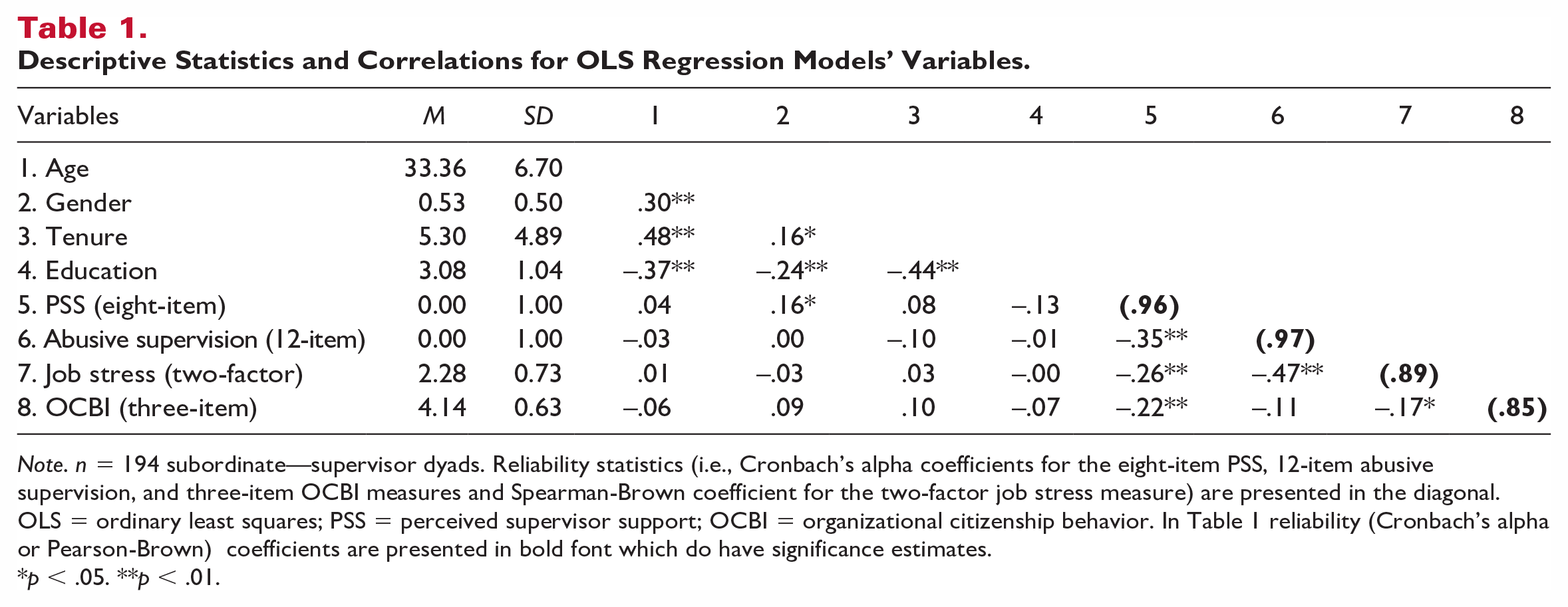
Note. n = 194 subordinate—supervisor dyads. Reliability statistics (i.e., Cronbach’s alpha coefficients for the eight-item PSS, 12-item abusive supervision, and three-item OCBI measures and Spearman-Brown coefficient for the two-factor job stress measure) are presented in the diagonal. OLS = ordinary least squares; PSS = perceived supervisor support; OCBI = organizational citizenship behavior. In Table 1 reliability (Cronbach’s alpha or Pearson-Brown) coefficients are presented in bold font which do have significance estimates.
p < .05. **p < .01.
Measurement Model and Convergent and Discriminant Validity Assessment Results.
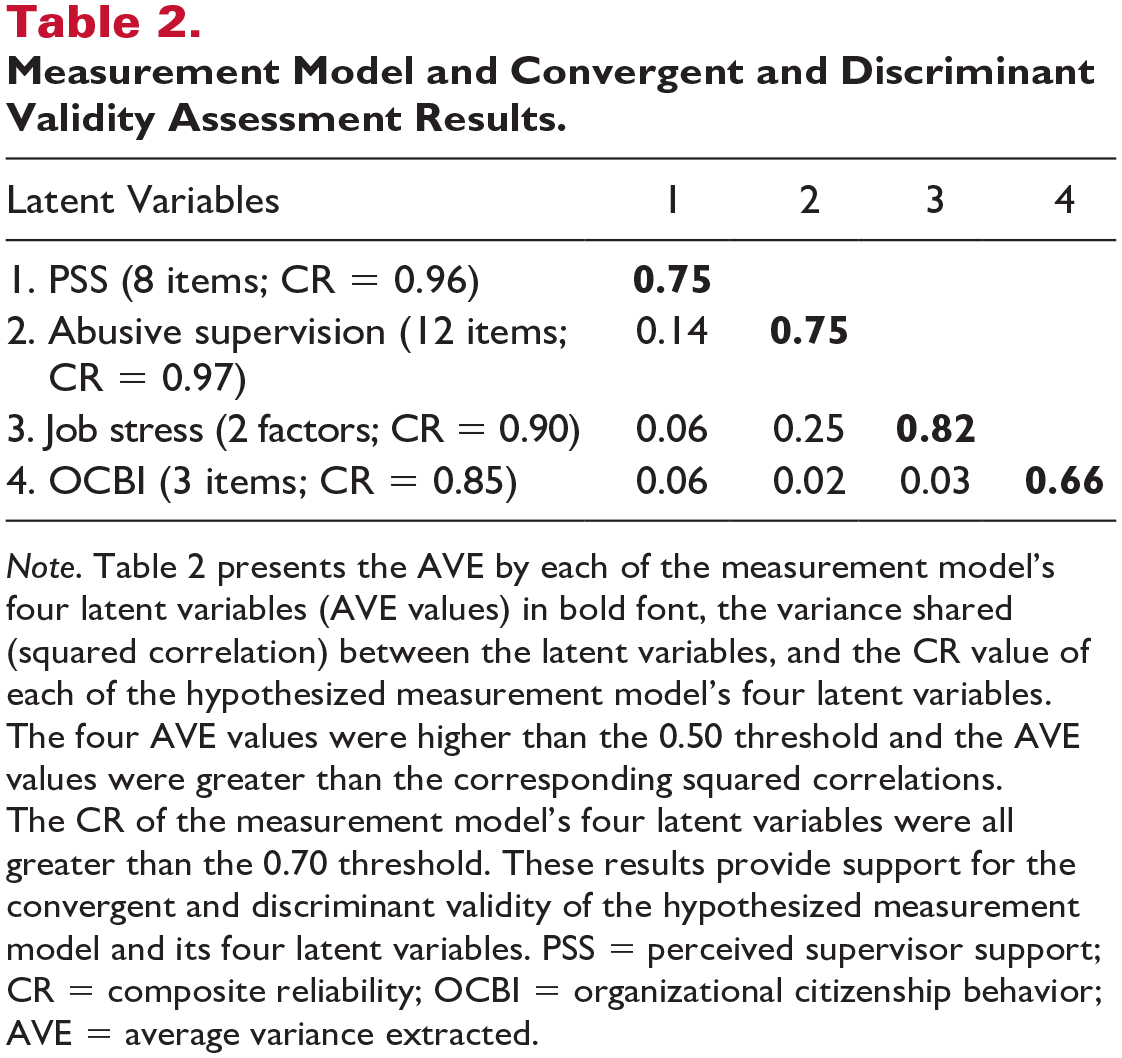
Note. Table 2 presents the AVE by each of the measurement model’s four latent variables (AVE values) in bold font, the variance shared (squared correlation) between the latent variables, and the CR value of each of the hypothesized measurement model’s four latent variables. The four AVE values were higher than the 0.50 threshold and the AVE values were greater than the corresponding squared correlations. The CR of the measurement model’s four latent variables were all greater than the 0.70 threshold. These results provide support for the convergent and discriminant validity of the hypothesized measurement model and its four latent variables. PSS = perceived supervisor support; CR = composite reliability; OCBI = organizational citizenship behavior; AVE = average variance extracted.
OLS Regression Results for Subordinate Hotel Employee (Self-Reported) Job Stress.
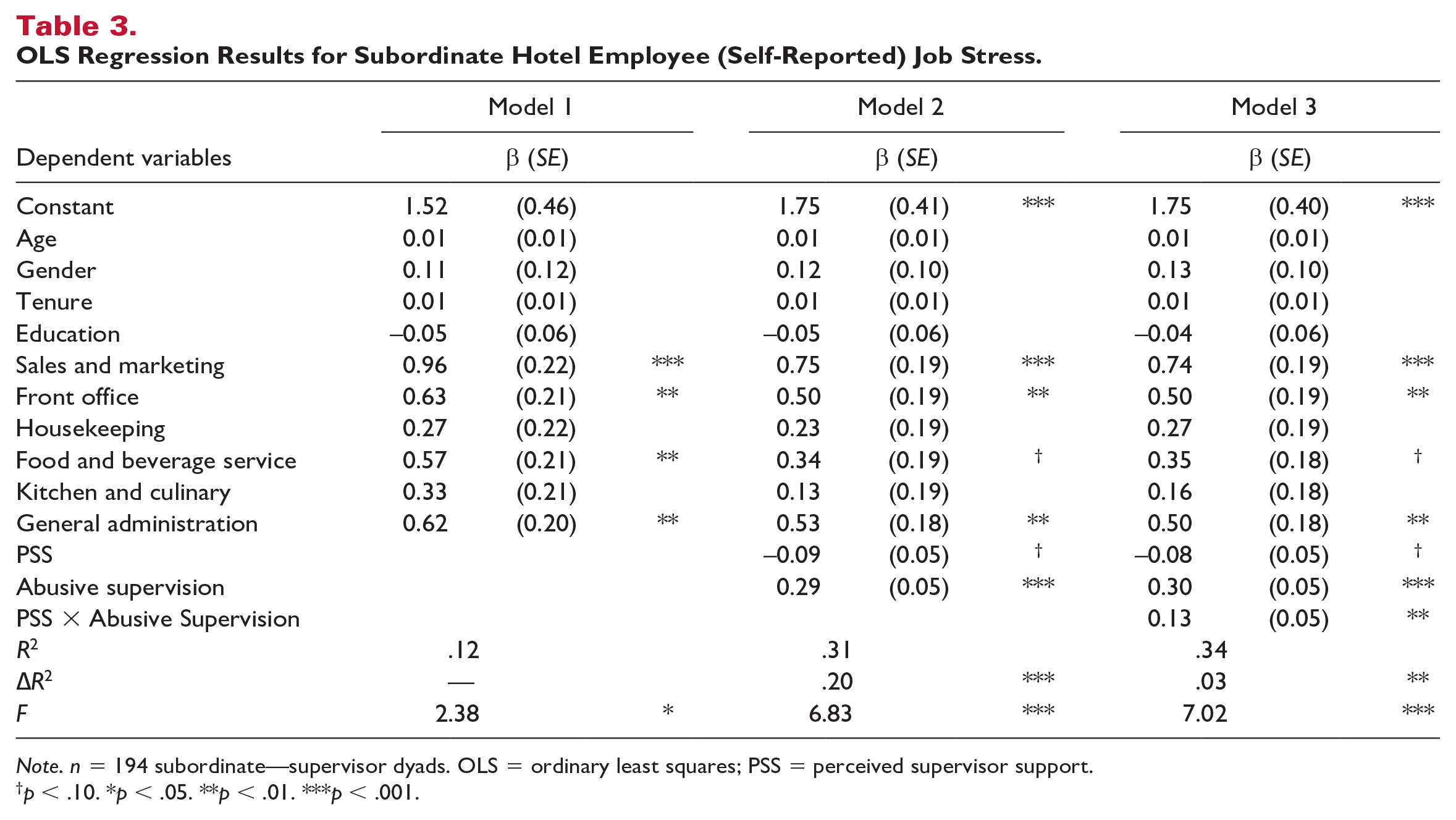
Note. n = 194 subordinate—supervisor dyads. OLS = ordinary least squares; PSS = perceived supervisor support.
p < .10. *p < .05. **p < .01. ***p < .001.
OLS Regression Results for Subordinate Hotel Employee (Direct Supervisor-Rated) OCBI.
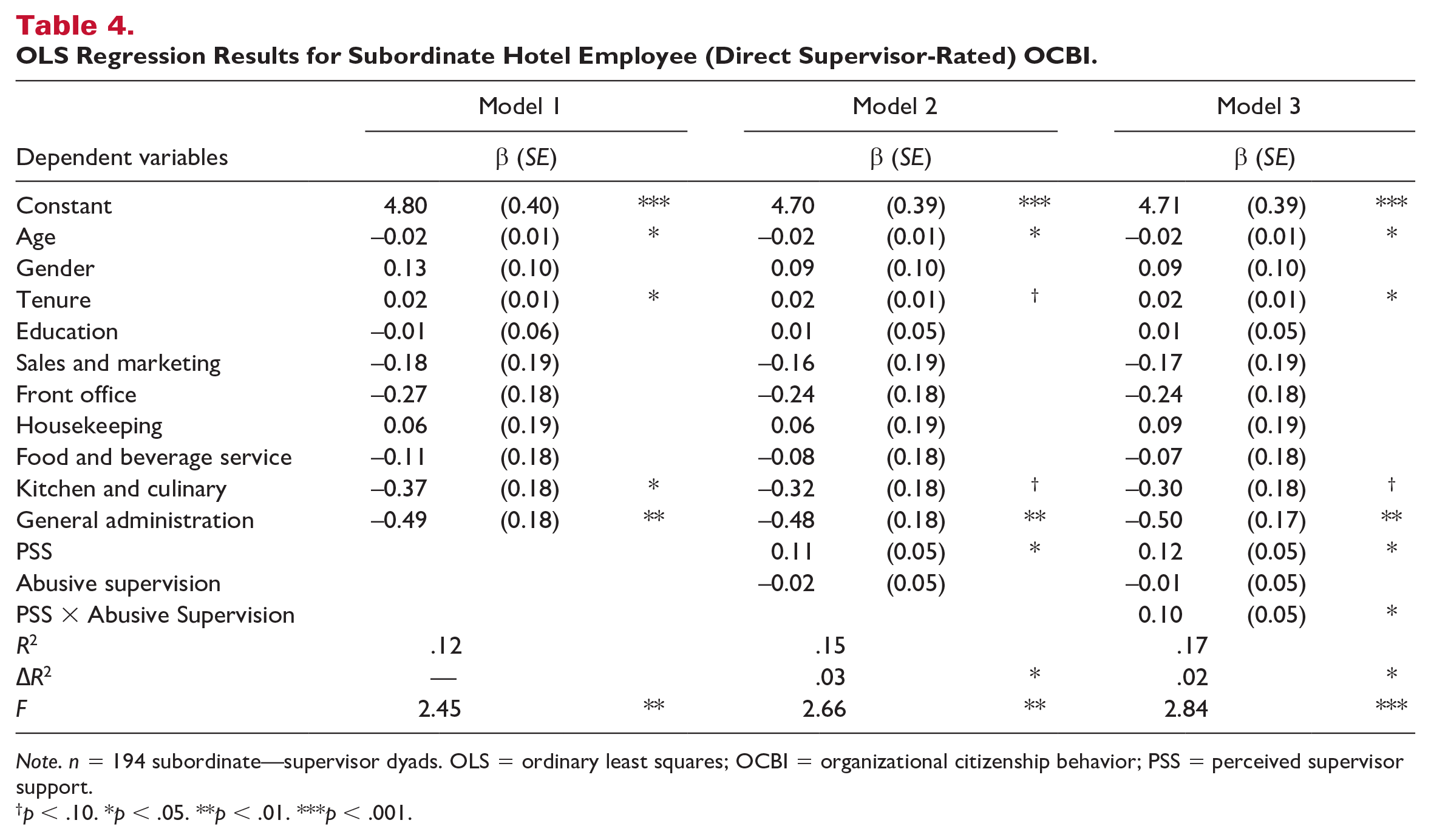
Note. n = 194 subordinate—supervisor dyads. OLS = ordinary least squares; OCBI = organizational citizenship behavior; PSS = perceived supervisor support.
p < .10. *p < .05. **p < .01. ***p < .001.
Results
Descriptive Statistical Analysis
Among the sampled subordinate respondents, 33 was the median age (Mean = 33.36), 102 (52.58%) were male, and 92 (47.42%) were female, 5.30 years was their average tenure at the hotel property, the highest education level for 56 of these 194 subordinates (28.87%) was high school graduate or equivalent, 63 (32.47%) had some college/university, 55 (28.35%) had an Associate or Bachelor degree, and 13 (6.69%) had a Master’s degree or some postgraduate education, and all 194 were Chinese nationals. Concerning subordinate—supervisor dyad departments, 31 (15.98%) were from sales and marketing, 30 (15.46%) were from front office, 30 (15.46%) kitchen and culinary, 30 (15.46%) general administration, 27 (13.92%) food and beverage service, and 23 (11.86%) subordinate—supervisor dyads were from housekeeping. Descriptive statistics including means, standard deviations, and correlations for the study’s OLS regression models’ key variables are presented in Table 1. As shown in Table 1, the Cronbach’s alpha coefficients for the eight-item PSS (0.96), 12-item abusive supervision (0.97), and three-item OCBI (0.85) variables—and the Spearman-Brown coefficient for the two-factor job stress variable (0.89)—all exceeded the 0.70 threshold.
Confirmatory Factor Analysis
The CFA via AMOS 28 (IBM SPSS Amos 28, 2022) of the hypothesized measurement model (PSS, abusive supervision, job stress, OCBI) demonstrated a good fit with the data (n = 194 direct subordinate–direct supervisor dyads): χ2269 = 771.80, p < .001; NCI (χ2/df) = 2.87; SRMR = 0.05; CFI = 0.90; IFI = 0.90.
Convergent and Discriminant Validity
As shown in Table 2, the CR values for this study’s hypothesized measurement model’s four latent variables all exceeded the 0.70 threshold (Fornell & Larcker, 1981; Turner et al., 2017; Wu et al., 2021). Furthermore, in support of the convergent validity of the hypothesized measurement model’s four latent variables, the standardized regression weight (SRW) estimates between PSS and its eight items ranged from 0.83 to 0.91, between abusive supervision and its 12 items ranged from 0.71 to 0.94, between job stress and its two factors were 0.83 and 0.97, and between OCBI and its three items ranged from 0.77 to 0.86; i.e., all 25 of the measurement model’s SRW values exceeded the 0.70 threshold (Xiong et al., 2023). Discriminant validity of the measurement model, as shown in Table 2, was supported by the measurement model’s four AVE values being greater than the 0.50 threshold and their corresponding squared correlations (Bagozzi & Yi, 1988; Chung & Petrick, 2013; Fornell & Larcker, 1981; Turner et al., 2017). Together the results presented above (also see Table 2) provide support for the convergent and discriminant validity of this current study’s hypothesized measurement model and the model’s four focal latent variables (Turner et al., 2017).
Hypothesis Testing
Table 3 presents the OLS regression results for subordinate hotel employee (self-reported) job stress. As shown in Table 3, the controls were included in Model 1 (R2 = 0.12, p < .05), subordinate PSS and subordinate perceived abusive supervision were added in Model 2 (ΔR2 = 0.20, p < .001), and the subordinate PSS × Abusive Supervision interaction term was added in Model 3 (ΔR2 = 0.03, p < .01). In support of H1 and H2, the results shown in Model 2 indicate that subordinate PSS was negatively related (albeit marginally) and subordinate perceived abusive supervision was positively related to subordinate job stress (H1 and H2, respectively). 1 Consistent with H3 and the within-domain exacerbation hypothesis, as shown in Model 3, the subordinate PSS × Abusive Supervision interaction term was positively related to subordinate job stress. 2 Thus, H1 to H3 were supported (see Table 3).
Figure 1 depicts the interactive effects of subordinate PSS and subordinate perceived abusive supervision on subordinate two-factor (job anxiety and emotional exhaustion) job stress. Figure 1 indicates that when subordinate PSS was high (+1.00 SD), subordinate job stress was estimated to be 1.82 when abusive supervision was low (−1.00 SD) and 2.66 when abusive supervision was high (+1.00 SD); that is, a 0.84 increase (+1.16 SD) in subordinate job stress. However, when subordinate PSS was low (−1.00 SD), subordinate job stress was estimated to be 2.23 when abusive supervision was low (−1.00 SD) and 2.57 when abusive supervision was high (+1.00 SD); that is, a 0.34 increase (+0.47 SD) in subordinate job stress. Hence, consistent with the within-domain exacerbation hypothesis and H3, the positive relationship between subordinate perceived abusive supervision and subordinate job stress was intensified (exacerbated) when subordinate PSS was high versus low.
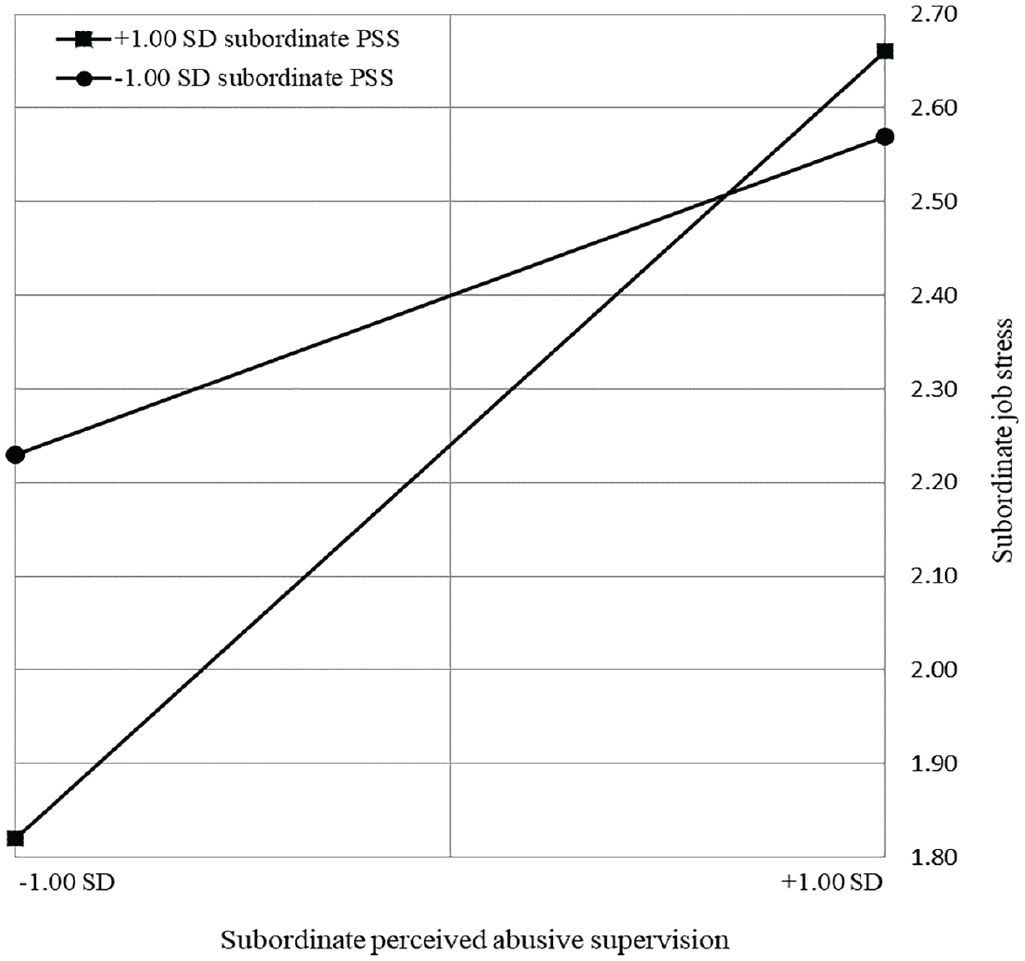
Subordinate Job Stress and the PSS × Abusive Supervision Interaction.
Table 4 presents the OLS regression results for subordinate hotel employee (direct supervisor-rated) OCBI. As shown in Table 4, the controls were included in Model 1 (R2 = 0.12, p < .01), subordinate hotel employee PSS and perceived abusive supervision were added in Model 2 (ΔR2 = 0.03, p < .05), and then the subordinate hotel employee PSS × Abusive Supervision interaction term was added in Model 3 (ΔR2 = 0.02, p < .05). In support of H4, as shown in Model 2, subordinate PSS was positively related to subordinate (supervisor-rated) OCBI; whereas, subordinate perceived abusive supervision was not related to subordinate (supervisor-rated) OCBI and thus in contrast with the extant research on positive-negative asymmetry effects (see Baumeister et al., 2001; Einarsen et al., 2007), H5 was not supported. Finally, as shown in Model 3, consistent with Yu and Duffy’s (2021) research and findings concerning the whiplash effect and H6, in addition to subordinate PSS’ positive effect (H4), the subordinate PSS × Abusive Supervision interaction term was positively related to subordinate (supervisor-rated) OCBI. In sum, the above results provide support for H4 and H6 but not for H5 (see Table 4).
Figure 2 depicts the interactive effect of subordinate hotel employee PSS and subordinate perceived abusive supervision on subordinate hotel employee (direct supervisor-rated) OCBI. As shown in Figure 2 consistent with Yu and Duffy’s (2021) research and findings concerning the whiplash effect and H6, the highest estimated subordinate (supervisor-rated) OCBI value of 4.37 was when both subordinate PSS and subordinate perceived abusive supervision were high (+1.00 SD); whereas, the second highest estimated subordinate (supervisor-rated) OCBI value of 4.20 was when subordinate PSS was high (+1.00 SD) and subordinate perceived abusive supervision was low (−1.00 SD) and the lowest estimated subordinate (supervisor-rated) OCBI value of 3.95 was when subordinate perceived abusive supervision was high (+1.00 SD) and subordinate PSS was low (−1.00 SD). The above results are consistent with the whiplash effect (Yu & Duffy, 2021) but not the within-domain exacerbation hypothesis (Chénard-Poirier et al., 2022; Duffy et al., 2002; Nahum-Shani et al., 2014). In particular, the positive counterintuitive interactive effect of subordinate PSS and subordinate perceived abusive supervision on subordinate (supervisor-rated) OCBI predicted when subordinate perceived abusive supervision was high (+1.00 SD) was substantively reduced (i.e., the whiplash effect pretty much disappeared) when subordinate perceived abusive supervision was low (−1.00 SD). In sum, H6 was supported (see Table 4 and Figure 2).
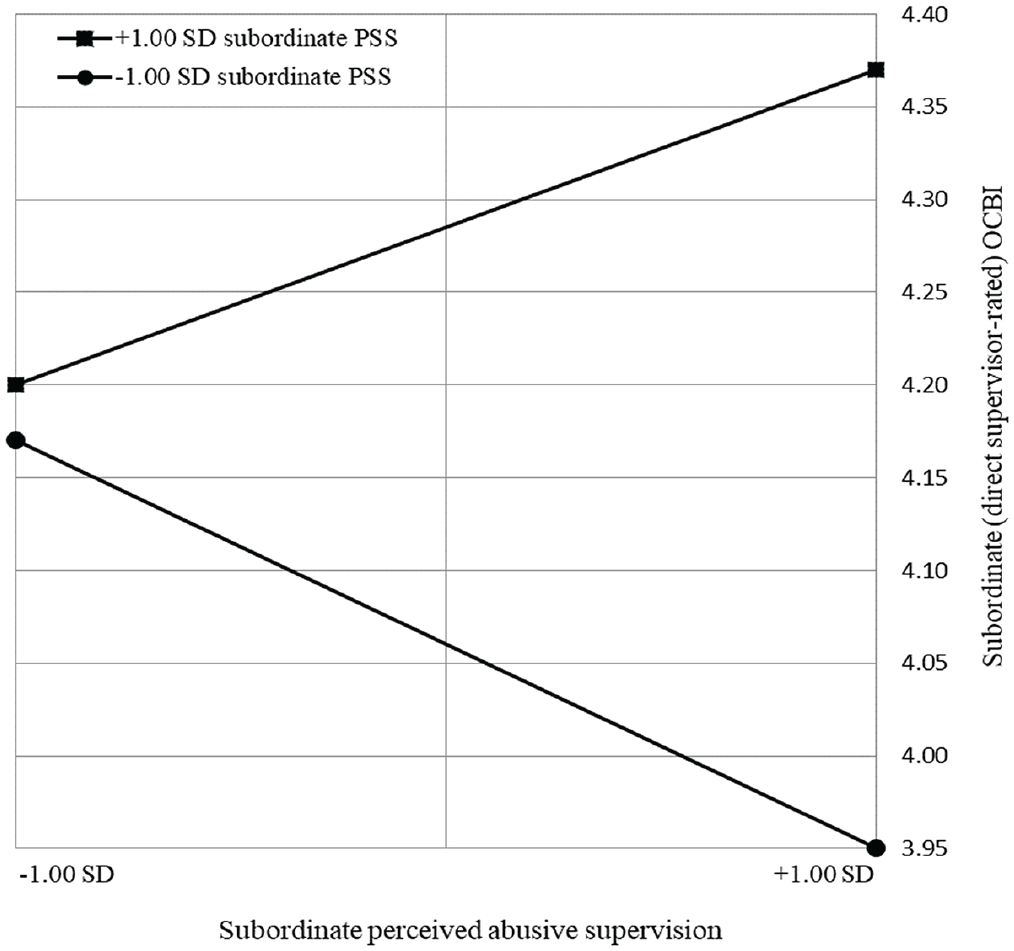
Subordinate OCBI and the PSS × Abusive Supervision Interaction.
Discussion
Although hospitality management studies have, in recent years, underscored the importance of supportive (e.g., Quratulain & Al-Hawari, 2021) and abusive supervision (e.g., Dai et al., 2019), they have afforded little insights into their simultaneous effects. This current research, thus, contributes to theory and practice by examining nuanced profiles of supervisor behaviors, rather than focusing on discrete variables, which has been the dominant approach in extant literature (Arnold et al., 2017). Answering the call of Yu and colleagues (2020), the current study proffers novel insights into the ways in which hospitality supervisors can affect their subordinates and the results illuminate the independent and interactive effects of subordinate PSS and subordinate perceived abusive supervision on both subordinate hotel employee job stress and OCBI. Particularly notable findings are that subordinate hotel employees who perceive (observe) that their direct supervisor demonstrates a combination of both supportive and abusive behaviors will engender more (a) negative psychological well-being outcomes (e.g., job stress and anxiety) from subordinates than if they had perceived (observed) that their direct supervisor consistently demonstrated abusive behaviors and (b) more positive, discretionary extra-role behavioral outcomes such as OCBI which benefit the direct supervisor and their co-workers from subordinates than if they had perceived (observed) that their direct supervisor either consistently demonstrated supportive behaviors or abusive behaviors. In general, the current study’s findings not only contribute to the hospitality literature on supportive and abusive supervision but also to the research concerning the within-domain exacerbation hypothesis and the whiplash effect. Furthermore, the current study proffers practical implications for the hospitality industry and hospitality leaders concerning how supervisor behaviors affect employees’ well-being.
Theoretical Implications
Although our results regarding the relationships between PSS and subordinate job stress and PSS and subordinate OCBI are consistent with organizational support theory (e.g., Eisenberger et al., 1986) and the extant PSS literature (Eisenberger et al., 2002; Nahum-Shani et al., 2014; Shanock & Eisenberger, 2006), those for abusive supervision have yielded new insights into existing theories. The extant abusive supervision research focused on negative behavioral outcomes (e.g., counterproductive work behaviors; Zhang et al., 2019); therefore, intuitively, one would expect abusive supervision to have only negative effects. However, we found that abusive supervision was positively associated with subordinate job stress, but its impact on subordinate (supervisor-rated) OCBI was counterintuitively positive. Our research has, thus, extended our understanding on abusive supervision by delineating the effects of abusive supervision on organizationally relevant negative psychological outcomes (e.g., job stress and job anxiety) and a positive behavioral outcome (i.e., OCBI) for subordinate hospitality employees. The positive influence of abusive supervision on OCBI was particularly significant as it challenges the fairness theory (Folger & Cropanzano, 2001) to illustrate how subordinates may react differently under an abusive supervisor.
More specifically, based on fairness theory (Folger & Cropanzano, 2001), we hypothesized that abusive supervision would undermine perceptions of justice and fairness and therefore reduce the likelihood that subordinates would engage in discretionary, altruistic behaviors that benefit their supervisor in order to restore equity (Zhang et al., 2019). Our results did not support this hypothesis. An explanation for this nonsignificant finding may be that not all employees withdraw from OCBI when confronted with abusive supervision. Although some may do so to restore equity, others may engage in OCBI to ingratiate themselves to their abusive supervisor. However, discretionary behavioral outcomes such as OCBI are also more distal than psychological outcomes and therefore other more proximal factors may matter more.
Our research findings provided empirical evidence for the notion that subordinates may exhibit conflicting reactions to abusive supervisor on the proximal, psychological level vs. the distal, behavioral level. It is noteworthy that meta-analyses examining the consequences of abusive supervision have reported low associations between abusive supervision and organizational citizenship behavior and in particular OCBI and these associations are typically weaker when compared with relations between abusive supervision and other outcomes (Mackey et al., 2017).
Our findings also challenge the assumption of organizational support theory scholars that support buffers the negative psychological outcomes of a stressor (see Nahum-Shani et al., 2014). In line with the within-domain exacerbation hypothesis (Duffy et al., 2002; Major et al., 1997), results suggested that when support is provided by the same source as the stressor, the negative consequences for the individual are particularly acute. In this regard, the current study provided new insights into extant organizational support theory through examining stressor and support via the same source (i.e., supervisor) as posited by the within-domain exacerbation hypothesis. Although prior studies have tested the within-domain exacerbation hypothesis by examining interactions between social support and social undermining (Duffy et al., 2002), supervisor support and supervisor undermining (Nahum-Shani et al., 2014), or transformational leadership and petty tyranny (Chénard-Poirier et al., 2022), we extend the bandwidth of within-domain exacerbation by examining supportive and abusive supervision in terms of their combined effects on both negative subordinate psychological well-being and positive subordinate behavioral outcomes.
Finally, the empirical evidence in support of the whiplash effect (Yu & Duffy, 2021) indicates that abusive supervisors, who simultaneously display supportive behaviors, are more likely to be perceived as a motivator by the subordinate and thus will elicit from the subordinate discretionary, extra-role behaviors that benefit the supervisor (OCBI). At face value, these results are consistent with the Tepper (2007) delineation of abusive supervision and the notion forwarded by Ferris and colleagues (2007) that abusive supervision is a type of destructive management style that may be adopted as a strategic approach to change subordinates’ behavior and to produce positive consequences (also see Li et al., 2022 concerning the potential positive effects of abusive supervision on positive subordinate behavioral outcomes). However, our findings also illuminate the costs of abusive supervision as it pertains to the diminished psychological well-being (higher job stress and job anxiety) of subordinates. Therefore, while the combined effects of supportive and abusive supervision benefit the aggressor (supervisor), it has costs for the abused subordinate. In our study, the aggressors (i.e., supervisors) rated their subordinates’ OCBI directed at them and their co-workers and ironically revealed how their use of support and abuse benefited them (i.e., subordinate OCBI). Thus, we contend that the simultaneous use of supportive and abusive supervisor behavior is a form of unethical supervision as while it creates a benefit for the supervisor, it has negative consequences for subordinates. This important finding is novel as it has not been previously delineated or examined in the extant research literature.
Practical Implications
Our findings provided evidence that abusive supervision and its joint effects with supportive supervision on subordinates are indeed pertinent in the hospitality industry. We further caution that the results concerning the effects of abusive supervision on subordinates may be understated. This is because our study’s subordinate respondents were from a high-power distance country culture (i.e., China) in which subordinates may view abusive supervision differently and are more tolerant of abusive supervision than their than more egalitarian Western counterparts (Li et al., 2022; Ng et al., 2012; Vogel et al., 2015; Wang & Xu, 2021; Yu et al., 2022), and they were also from a customer-focused, labor-intensive work context (hotels) which increased the likelihood of abusive supervision occurring and exacerbating its negative consequences (Lian et al., 2012; Ng et al., 2012; Vogel et al., 2015; Wang & Xu, 2021; Yu et al., 2020). Hence, it may be that the current study’s Chinese subordinates and their supervisors were more inclined to view abusive supervision as a way to change behavior and to engender positive consequences (Ferris et al., 2007; Li et al., 2022).
Since hospitality organizations (i.e., hotels) often have international presence and a multinational workforce, our findings imply that these companies may need to pay specific attention to employees from high-power distance cultures. On one hand, abusive supervision may be much harder to detect and deter in cultures that are more receptive of abuse from the authorities. As a result, organizations must implement systems and procedures for employees to voice their opinion safely and directly to top management rather than always relying on middle management or immediate supervisors for communication. Creating a climate characterized by psychological safety (Newman et al., 2017) where employees feel that they are able to speak up and report instances of abusive supervision to senior management without fear of retribution, would be helpful in achieving this. However, organizations may also define abusive supervising behaviors more clearly and inform both the supervisors and subordinates that the organizations would have zero tolerance for such behaviors. Doing so may eliminate any misbeliefs that abusive supervising behaviors are acceptable in the organizational culture.
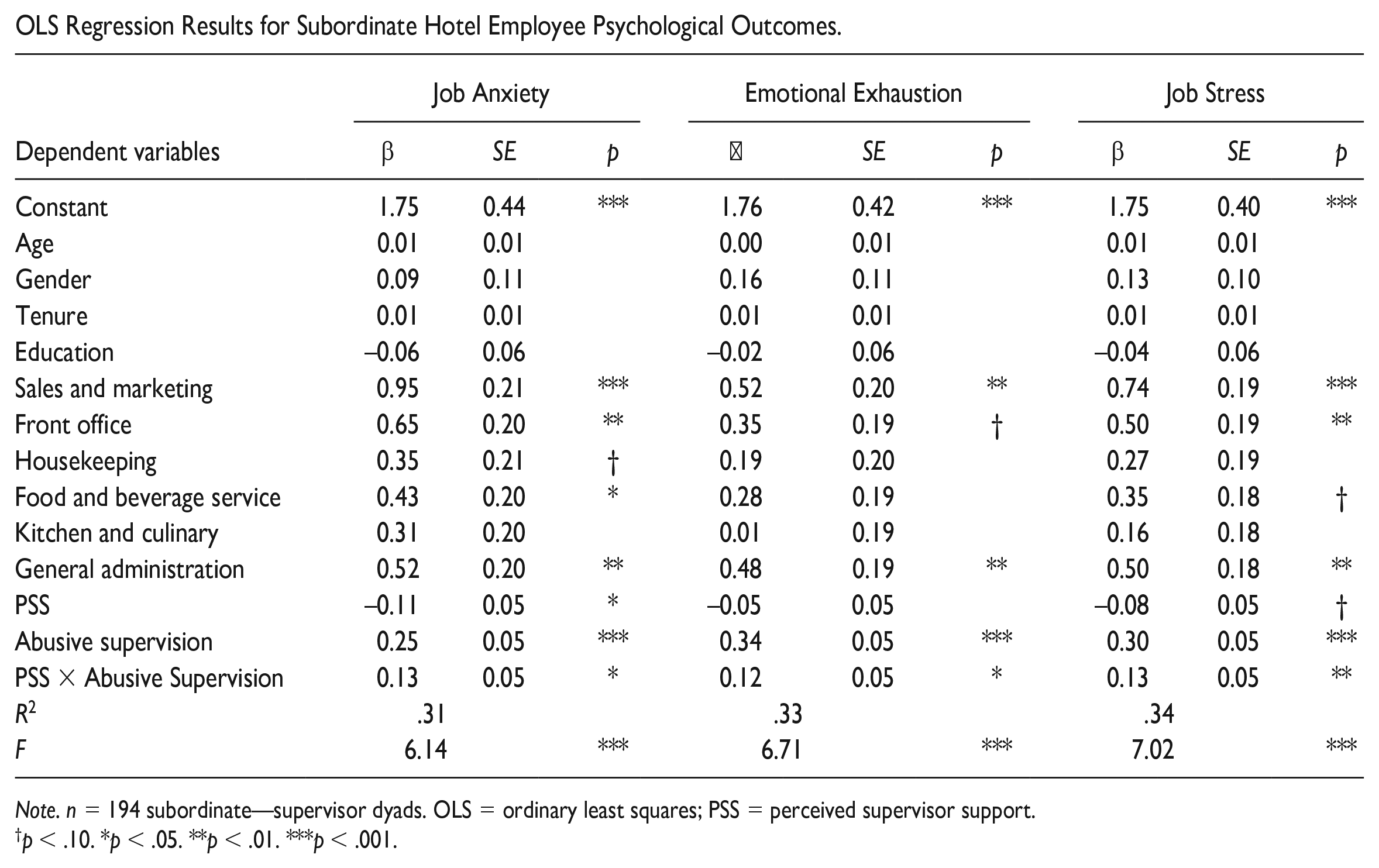
Although this current study’s findings indicate that their interactive effects on subordinate (supervisor-rated) OCBI can be positive, the combined positive effects of supportive and abusive supervision on critical negative subordinate psychological outcomes (see Appendix 1) were also highlighted. That is, this study’s findings underscore that organization supervisors who display a combination of supportive and abusive behaviors will not only heighten their direct subordinates’ job stress and anxiety, but we caution that there is a substantive body of empirical evidence (Cocchi, 2022; Ginger, 2021) that indicates that by amplifying their subordinates’ job stress and anxiety, they will also likely undermine both their direct subordinates’ and their organizations’ productivity and performance. Consequently, we suggest that the simultaneous use of supportive and abusive supervisor behavior is a form of unethical supervision which we recommend that hospitality organizations and their managers, especially those from high power distance cultures, should discourage, rescind, or even introduce punitive measures in order to avoid its potential negative effects on organization productivity and performance.
Limitations and Future Research
As with all empirical research studies, the current study’s findings should be viewed in consideration of its limitations. Congruent with recent hospitality research on abusive supervision (e.g., Wang & Xu, 2021), in the current study, subordinate perceived abusive supervision was assessed by each subordinate—supervisor dyad’s direct subordinate respondent with 12 items taken from the Tepper (2000) scale. Given that abusive supervision scores may not be objective (Tepper, 2000) and subordinates’ perceptions may be affected by many factors, including the subordinates’ innate characteristics and subordinate—supervisor relationship (Bhattacharjee & Sarkar, 2022), we suggest that to overcome the subjectivity associated with abusive supervision scores, future research could obtain abusive supervision data from multiple raters; e.g., the supervisor’s direct subordinate, direct supervisor, and boss. Furthermore, a strength of this current study is that the key independent (subordinate PSS and perceived abusive supervision) and dependent variables (subordinate OCBI) were derived from data obtained from each subordinate—supervisor dyad’s direct subordinate respondent and direct supervisor respondent, respectively. Although common method variance (CMV) cannot be ruled out, we did not rely solely on single-source data and CMV cannot account for this study’s statistically significant interactive effects (Podsakoff et al., 2012). We also acknowledge that there is the possibility for reverse causation in terms of our hypothesized relationships. However, we developed our hypotheses based on well-validated and mature theories that position supportive and abusive leader behaviors as antecedents and job stress and OCBI as outcomes (consequences). Moreover, as we outlined above, our finding concerning the subordinate perceived abusive supervision—subordinate OCBI relationship is consistent with the meta-analytic research (e.g., Mackey et al., 2017) that found a weak, negative association between abusive supervision and subordinate OCBI. Nevertheless, this study’s cross-sectional research design prevents us from inferring causality. Hence, we encourage future studies to use additional subordinate behavioral outcome variables (e.g., subordinate voluntary turnover) and a longitudinal cross-lagged research design to replicate and extend upon our findings.
Conclusion
This research detailed characteristics of the hospitality industry that may render supportive and abusive supervision more impactful and complicated. First, even though people in the profession may customarily accept abusive supervision as a necessary part of the training and socialization process, our results showed that it nevertheless increased employee job stress. Second, by investigating supervisors who exhibited supportive and abusive behaviors, this study revealed that those who oscillated between the two behaviors were more likely to receive help from their subordinates. Taken together, this research illuminated that the combination of both supportive and abusive supervision may be advantageous for the supervisor and their co-workers, while taking a toll on the individual employee’s well-being. By all measures, hospitality organizations, especially those in high power distance cultures, should prevent such behavior from flying “under the radar” and undisputedly discourage abusive supervision.
Footnotes
Appendix 1
OLS Regression Results for Subordinate Hotel Employee Psychological Outcomes.
| Job Anxiety | Emotional Exhaustion | Job Stress | |||||||
|---|---|---|---|---|---|---|---|---|---|
| Dependent variables | β | SE | p | Β | SE | p | β | SE | p |
| Constant | 1.75 | 0.44 | *** | 1.76 | 0.42 | *** | 1.75 | 0.40 | *** |
| Age | 0.01 | 0.01 | 0.00 | 0.01 | 0.01 | 0.01 | |||
| Gender | 0.09 | 0.11 | 0.16 | 0.11 | 0.13 | 0.10 | |||
| Tenure | 0.01 | 0.01 | 0.01 | 0.01 | 0.01 | 0.01 | |||
| Education | –0.06 | 0.06 | –0.02 | 0.06 | –0.04 | 0.06 | |||
| Sales and marketing | 0.95 | 0.21 | *** | 0.52 | 0.20 | ** | 0.74 | 0.19 | *** |
| Front office | 0.65 | 0.20 | ** | 0.35 | 0.19 | † | 0.50 | 0.19 | ** |
| Housekeeping | 0.35 | 0.21 | † | 0.19 | 0.20 | 0.27 | 0.19 | ||
| Food and beverage service | 0.43 | 0.20 | * | 0.28 | 0.19 | 0.35 | 0.18 | † | |
| Kitchen and culinary | 0.31 | 0.20 | 0.01 | 0.19 | 0.16 | 0.18 | |||
| General administration | 0.52 | 0.20 | ** | 0.48 | 0.19 | ** | 0.50 | 0.18 | ** |
| PSS | –0.11 | 0.05 | * | –0.05 | 0.05 | –0.08 | 0.05 | † | |
| Abusive supervision | 0.25 | 0.05 | *** | 0.34 | 0.05 | *** | 0.30 | 0.05 | *** |
| PSS × Abusive Supervision | 0.13 | 0.05 | * | 0.12 | 0.05 | * | 0.13 | 0.05 | ** |
| R 2 | .31 | .33 | .34 | ||||||
| F | 6.14 | *** | 6.71 | *** | 7.02 | *** | |||
Note. n = 194 subordinate—supervisor dyads. OLS = ordinary least squares; PSS = perceived supervisor support.
p < .10. *p < .05. **p < .01. ***p < .001.
Declaration of Conflicting Interests
The author(s) declared no potential conflicts of interest with respect to the research, authorship, or publication of this article.
Funding
The author(s) received no financial support for the research, authorship, or publication of this article.
