



Abstract
While providing economic benefits, tourism also contributes to environmental problems. Besides regulatory measures to mitigate tourism’s impact on the environment, voluntary changes in the behavior of tourists are needed to encourage environment-friendly behavior. This research examines religious tourists’ pro-environmental behavior (PEB) by using the value-belief-norm (VBN) theory and the concept of religious beliefs. Data were collected through on-site and online surveys of 391 tourists who visited religious destinations and analyzed using partial least squares (PLS)-structural equation modeling. The results confirmed the relationships between tourists’ values, beliefs, and personal norms that predicted PEB. This study also found that religious beliefs strengthen the effect of personal norms on PEB. This research contributes to improving the understanding of religious tourists’ PEB and offers suggestions for destination management organizations (DMOs), religious center authorities, and policymakers to encourage the PEB of tourists in religious destinations.
Introduction
Most environmental issues are anthropogenic and the result of irresponsible human behavior. Aside from legislative efforts, correcting human behavior in environmentally sustainable ways would alleviate such concerns (H. Han, 2020; Steg & Vlek, 2009). Over the past few decades, academia, industry, and policymakers have given increasingly more attention to the critical topic of encouraging consumers’ pro-environmental behavior (PEB). PEB literature is multiperspective, and researchers have investigated the impacts of various factors on PEB in a variety of settings, including tourism, hospitality, education, household consumption, electric vehicles, biodiversity, transportation, workplace climate, and natural resources (Lu et al., 2023). Because tourism-related activities are one of the main causes of environmental deterioration, pollution, and waste generation worldwide (Arbulú et al., 2015), the issue of PEB is becoming more important than ever in the contemporary tourism industry. According to the United Nations Environment Program, if policies and business practices do not significantly change, the predicted increase in tourism will consume 154% more energy and 152% more water, emit 131% more greenhouse gases, and thus, result in a 251% increase in solid waste by the year 2050 (cited in Tkaczynski et al., 2020). The United Nations World Tourism Organization (UNWTO, 2019) forecasted that tourism would reach 1.8 billion in 2030, which would cause an increase in environmental harm from travel. This rapid tourist growth has a significant negative impact on the environment worldwide. This calls for immediate mitigation of environmental problems. Economic incentives, regulatory interventions, and technological developments can all be used to mitigate this issue. However, voluntary changes in the behavior of tourists and businesses could promote more eco-friendly tourism.
The adoption of PEB is proven to promote a destination’s sustainability (T. H. Lee et al., 2013; Wang et al., 2019), but it is still difficult to persuade tourists to operate sustainably. Promoting PEB among tourists is essential to reducing the negative effects of increased tourism activities at destinations (Esfandiar et al., 2019; J. Han et al., 2016; Sharma & Gupta, 2020), especially in religious destinations where there is a powerful human relationship to natural and environmental resources. Religious tourism is one of the important facets of tourism. As per UNWTO WT Barometer 2019, one third of 1.4 billion international tourists visited destinations for religious motives (cited in Munro, 2020).
There are many rich religious tourism destinations in India with more than 3,500 years of history. According to Mr. K. J. Alphons, a former minister of state for tourism in the Indian government, approximately 60% of Indian tourists traveled for religious purposes in 2018 (Alphons, 2018). In addition, according to information from the Indian Ministry of Tourism (2019), domestic tourism accounted for 232.98 million travelers. Thus, it can be deduced that approximately 139 million domestic tourists traveled exclusively for religious reasons. This is a significantly high number of religious tourists. A recent study by Kala (2021) also reinforced that in the post-COVID period, Indians would go to a religious place to express gratitude to God, reenergize, and pray for a prosperous future. Given the large number of tourists who visit religious sites, maintaining sustainability at these locations requires the attention of all tourism stakeholders.
Tourist behaviors, often knowingly or unknowingly, harm the ecosystems of tourist destinations (T. H. Lee et al., 2013). Some tourists’ inappropriate behaviors and some tourism service providers’ misuse of resources also results in environmental damage at popular tourist destinations (Briassoulis, 2002). Because many religious centers are located in the mountains, on riverbanks, or in the middle of nature, tourists can create or strengthen their connections with the environment, which may motivate them to participate in PEBs (Martin et al., 2020; Sharma & Gupta, 2020). Religious tourists should also be motivated to partake in environment preservation activities to safeguard the ecological integrity of religious destinations (Su et al., 2020; Weaver & Lawton, 2017). The environmental preservation initiatives of stakeholders are linked inextricably to the long-term growth of religious tourism sites. Poor management of religious and natural resources will eventually impede the long-term growth of religious destinations. Although religious tourism is one of the important facets of tourism in India, a few studies on environment-friendly behavior at religious destinations have been conducted in the Indian context. Most studies on the relationship between religiosity and PEB have been conducted in the context of the U.S. and Western religions. Thus, expanding such studies at religious centers in countries with a large tourism potential is warranted. Given the dominance of religions and their powerful influence on psychological and behavioral inclinations (Cohen, 2015), it is important to examine how religion shapes Indians’ behavior toward environmental problems.
To examine PEB, this study uses the value-belief-norm (VBN) theory (Stern et al., 1999) and religious beliefs to predict the PEB of Indian religious tourists. VBN theory has been used in the context of responsible tourism to describe how tourists make environment-friendly decisions, with values and beliefs forming PN that affect PEB (Song et al., 2012; Stern, 2000). In a variety of contexts, including hospitality (Choi et al., 2015; H. Han, 2015), national parks and protected areas (Amornwitthawat & Phongkhieo, 2019; Goh et al., 2017; Sharma & Gupta, 2020), and religious tourism (Yan & Jia, 2021), scholars have used the VBN theory to understand PEB and validated it. Despite the successful application of VBN theory in environmental and sustainable tourism studies, there has been little research on religious tourists’ PEB. Thus, there is a gap between the real world and the academic arena. This study has two primary objectives: (a) to examine religious tourists’ PEB by testing various relationships among the variables of the VBN model and (b) to determine whether religious beliefs moderate the relationship between pro-environmental personal norms (PPN) and PEB. This study offers theoretical and managerial implications. The research theoretically contributes to the PEB of tourists, particularly in the context of religious tourism. From the managerial perspective, by encouraging travelers to act sustainably, the research assists stakeholders in religious tourism in designing and implementing policies linked to eco-friendly and sustainable religious destinations.
Literature Review
PEB
PEB refers to a person’s responsible behavior to preserve the environment (Kiatkawsin & Han, 2017). This behavior causes the least amount of damage to the environment and may even improve the environment (Steg & Vlek, 2009, p. 309). It is sometimes used synonymously with environmentally responsible behavior, sustainable behavior, tourist ecological behavior, and conservation behavior. PEBs are considered the proactive measures taken by people and/or organizations to safeguard the environment by developing empathy for nature and resolving environmental problems (T. H. Lee et al., 2013; Stern, 2000). It relates to people’s willingness to use environmental-friendly goods and services, sustainable use of resources, and giving time and money to such endeavors (Miao & Wei, 2013; Ramkissoon et al., 2013).
PEBs range from volunteer behavior to location-specific best practices to protect environmental quality and natural resources (Zhang et al., 2014). Tourism-related activities are temporary in nature and undertaken in a setting different from home (Li & Wu, 2020). Therefore, practicing PEB in the tourism context largely demands some sacrifices (the sacrifice of comfort) and extra effort (requiring extra time, money, and resources). However, some researchers (Dolnicar & Leisch, 2008; Li & Wu, 2020; Perkins & Brown, 2012) believe that PEB is an altruistic activity as it enhances the destination’s environmental qualities and the experience of other tourists. Steg and de Groot (2010) argued that environmental protection is a social issue requiring all people’s engagement. Indeed, the collective participation of several stakeholders, including governmental organizations, tourists, locals, and management organizations, is necessary for the environmental conservation and protection of a tourist destination. Following the logic of collaborative activity, an individual would decide to participate in PEB only if they are confident that others will contribute and that their own effort will have a positive impact (Fehr-Duda & Fehr, 2016).
VBN Theory
Individuals’ everyday actions either directly or indirectly contribute to environmental problems, and hence, protecting the environment should be a top priority when making decisions (Stern, 2000). The VBN theory describes how a person’s values influence the formation of beliefs (such as knowledge of consequences and assigning blame) and PN, which sequentially affect behavior (Stern, 2000). The five variables of the theory that are connected in a causal chain are values; new ecological paradigm (NEP); awareness of consequences (AC); ascription of responsibility (AR); and PN.
Value is the main factor that significantly decides an individual’s attitude. In the context of this study, we have identified two types of values: altruistic and biospheric. Altruistic values describe human welfare for others (Stern, 2000; van Riper & Kyle, 2014). Individuals with high altruistic values prioritize the well-being of others, even at their own expense (Choi et al., 2015). Biosphere values denote the significance of the biosphere and the ecosystem in protecting nature (S. Lee et al., 2021; Stern, 2000). This study did not include the third value of VBN theory, that is, egoistic value. There are three reasons for this choice. First, some recent studies have found an insignificant link between egoistic value and NEP (Kiatkawsin & Han, 2017; Sharma & Gupta, 2020). Second, owing to the negative impact of egoistic value on sustainability, several studies that employ the VBN theory omitted it for more accurate results (Gkargkavouzi et al., 2019; Le et al., 2021). Third, religious destinations do not highly value social dominance, money, the ability to influence others, and authoritative power. Several scholars have studied the values of religious tourists in religious destinations (Huang et al., 2020; B. Kim et al., 2016; B. Kim & Kim, 2018). These studies confirmed that personal happiness, enhancement of faith and spirituality, self-satisfaction and self-fulfillment, a sense of religious belonging, compassion for people, and enlightenment from nature are primary values of religious tourists. None of the studies mentioned the social dominance, wealth, or power associated with visiting religious destinations. As a result, this study did not take egoistic value into account.
The NEP reflects individuals’ beliefs regarding their ability to disturb the equilibrium of mother earth, the existence of limits to growth for human civilization, and peoples’ rights to command the rest of nature (Dunlap et al., 2000; Dunlap & Van Liere, 1978). A person’s awareness of the adverse consequences for others or for other objects that he or she values when not behaving pro-socially is referred to as AC (Steg & de Groot, 2010). AR outlines the extent to which a person is accountable for the activities’ outcomes (Steg & de Groot, 2010). PN are described as an individual’s sense of moral obligations to perform or refrain from activities in a particular situation (Schwartz & Howard, 1981, p. 191). PN are an important factor that influences and promotes environmentally responsible behavior (Steg & de Groot, 2010). In Figure 1, the constructs of the VBN theory model have been depicted diagrammatically (Figure 1).
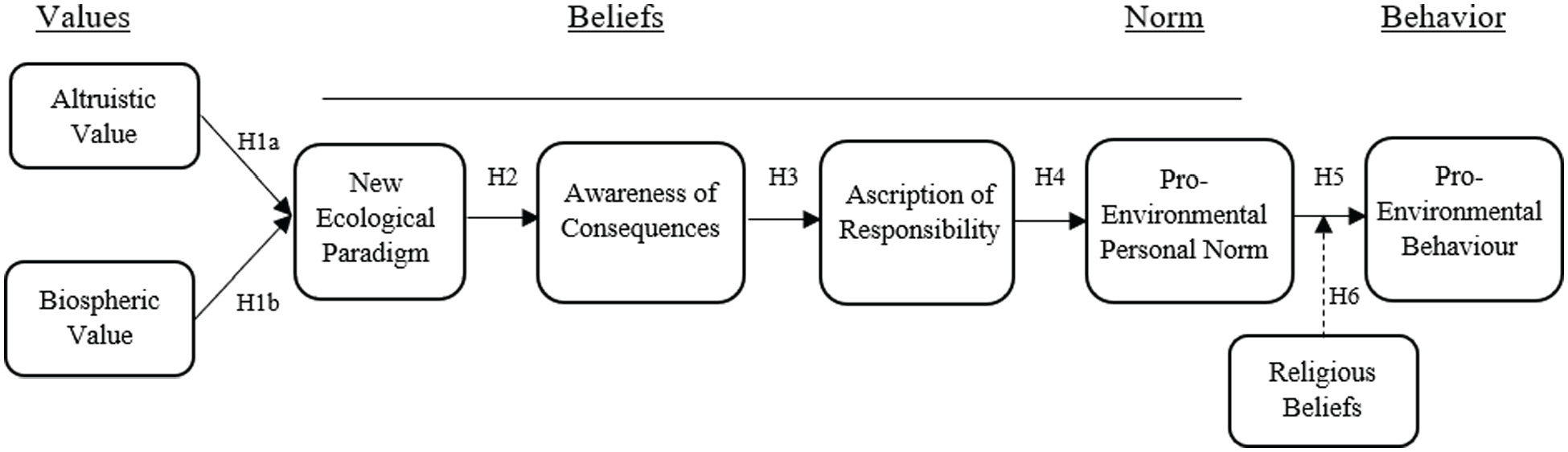
Conceptual Model Using VBN Theory.
Conceptual Framework and Hypothesis Development
As shown in Figure 1, the current research examines tourists’ PEB in religious destinations. The VBN theory serves as the proposed research model and foundation for the study hypotheses.
Relationship Between Values and NEP
Value systems significantly influence an individual’s belief structures (Bonn et al., 2021). NEP refers to individuals’ beliefs about the environment related to significant interactions between nature and human behavior. According to empirical studies in the field of PEB, values are crucial in the formation of NEP (Cleveland et al., 2005; E. Park et al., 2018; Sharma & Gupta, 2020). H. Han (2015) also demonstrated the strong association between an ecological worldview and an individual’s biospheric values. In the context of young and nature-based tourists, studies by Kiatkawsin and Han (2017) and Sharma and Gupta (2020) reported that biospheric and altruistic values favor the NEP. Yan and Jia (2021) also revealed that, in the context of religious tourism, biospheric and altruistic values have a favorable influence on the NEP. A recent study by C. Y. Park et al. (2022) also attested that the biospheric value and altruism considerably and positively reinforce the environment-friendly behavior of volunteer tourists. In the context of PEB, the previous studies by Zhang et al. (2014), H. Han (2015), Lind et al. (2015), H. Han et al. (2017), and H. Han et al. (2018) have reported similar results in various tourism and hospitality settings. Thus, the following hypotheses were framed.
Relationship Between NEP, AC, and AR
When people are worried about environmental problems, they become aware of the adverse effects of environmental issues (Stern et al., 1999). In other words, the NEP promotes the development of another kind of belief—awareness of the consequences of environmental preservation (Kiatkawsin & Han, 2017). H. Han (2015) noted that tourists’ beliefs regarding the connections between humans and nature affected their awareness of environmental issues, suggesting that individuals’ environmental interests are closely related to potential environmental harm (Steg et al., 2005). van Riper and Kyle (2014) discovered that NEP positively influences AC while studying travelers’ eco-friendly behavior. According to E. Park et al. (2018), when tourists are sensitive to nature, they become aware of the adverse effects of environmental issues and feel responsible for protecting the environment. While examining the effect of eliciting awe on the PEB of religious tourists, Yan and Jia (2021) found that NEP positively influences AC, and AC positively influences AR. In the context of volunteer tourists, C. Y. Park et al. (2022) also supported the positive association between AC and AR. In many settings, including national parks (Sharma & Gupta, 2020), green lodging (Choi et al., 2015; H. Han, 2015), and young tourists’ environmental behavior (Kiatkawsin & Han, 2017), existing research studies have found a favorable relationship between AC and AR. Thus, the following hypotheses were framed:
Relationship Between AR, PPN, and PEB
AR is a belief possessed by an individual on whether a human can either prevent or magnify the possibility of expected negative consequences (H. Han, 2020; Kiatkawsin & Han, 2017). Thus, the AR must strongly shape the PN toward sustainable practices. Several researchers (Choi et al., 2015; H. Han, 2015; Steg et al., 2005) revealed that when people feel responsible for an adverse environment due to ill-natured behaviors, they frequently display a strong sense of moral responsibility. Hence, it is confirmed that AR positively affects tourists’ PPN in tourist destinations (H. Han et al., 2017; Sharma & Gupta, 2020; Yan & Jia, 2021). A PN is a moral obligation to perform or refrain from specific actions (Schwartz & Howard, 1981), including pro-environmental actions. It represents individual, societal rules that specify how a person should act and behave in accordance with their beliefs (Kiatkawsin & Han, 2017). PN was further found to favorably affect environmentally responsible behavior (J. S. Kim & Han, 2019; Megeirhi et al., 2020; E. Park et al., 2018). The results infer that tourists who feel strongly about environmental concerns are more inclined to act environmentally responsible. Klöckner (2013), Zhang et al. (2014), Gupta and Sharma (2019), and Yan and Jia (2021) found that PN was a strong predictor of PEBs. The findings of C. Y. Park et al. (2022) confirmed that AR positively affects PPN that predict the environment-friendly behavior of tourists. PPN significantly support environmental policies and behavior in tourism activities undertaken in nature-based destinations and protected areas (J. S. Kim & Han, 2019; Sharma & Gupta, 2020). Thus, the following hypotheses were framed:
Moderating Effect of Religious Beliefs
Religious belief has been a stable and influential factor in human culture. Religious beliefs have maintained human behavior, mental health, and well-being for thousands of years, and supported human relationships. These represent a deeply rooted set of principles and customs associated with the Divine Power and symbolic attachment to the religious destination (Kala, 2021). Religious beliefs also promote the ecological worldview, which holds that nature does not exist for humans but that humans are a part of the system and use natural resources sustainably. Almost all religions believe that humans have the role of stewards responsible for taking care of the world created by a god, including the natural environment. For example, Christianity highlights God’s ownership of the world and all living things and his command for humans to look after it (e.g., Genesis 2:15; Leviticus 25:23; Psalm 24:1) (Hall, 1990). Similar principles also appear in Islam, which emphasizes that humans are Allah’s Khalifa (successors and stewards) on the earth. (Qur’an 6:165; 2:60) (Saniotis, 2012). In Hinduism, the Atharva Veda, one of the four primary Indian scriptures, has mantras reminding Hindus to behave respectfully toward “Mother Earth” by being careful with their activities to avoid hurting mother earth’s body, or appearance (Dwivedi, 2009).
Pro-environmental beliefs and actions are favorably correlated with religious stewardship (Leary et al., 2016). Eom et al. (2021) investigated the effects of religious beliefs on the environmental behavior of Christians in the United States. They found that stewardship belief positively correlated with environmental guilt, which increased pro-environmental support. Pearson et al. (2018) revealed that scholars often significantly underestimated religious people’s environmental concerns in the United States compared with what religious people actually stated. Yan and Jia (2021) found that perceived religious ambiance is an element that fosters awe and may influence tourists’ PEBs through VBN theory’s mediators. Hope and Jones (2014) examined the impact of religious values and beliefs on the NEP of three communities—U.K. Christian, Muslim, and secular (nonreligious)—including the connection between humans and nature. They found that there was a significant impact of religious values and beliefs on NEP, but this was more evident in the secular than in the religious groups. Several studies on the relationship between religiosity and environmental behavior have presented mixed evidence (Johnson et al., 2017; Muñoz-García, 2014; Shin & Preston, 2021). Religious destinations are considered the home for spiritual activities; abodes of deities; places of worship; divine ancestors; and sources of blessings, inspirations, revelation, and transformation (Bernbaum, 1997; Kala & Barthwal, 2020). It is believed that religious tourists will behave responsibly to maintain the sanctity and spiritual supremacy of the destination. Hence, it is anticipated that PN and religious beliefs will significantly affect PEB. That is, the influence of PPN on PEB is strengthened because of religious beliefs. Therefore, the following hypothesis was framed:
Research Methodology
To test the conceptual model, data were gathered from tourists who had visited at least one of the following religious destinations in the Northern Indian state of Uttarakhand: Haridwar, Rishikesh, Badrinath, and Kedarnath. Rishikesh, located in northern India’s Himalayan foothills, is also known as the “Yoga Capital of the World.” It appeals to domestic and international tourists for religious, yoga, meditation, and other forms of nature-based tourism. Haridwar is an ancient city, the host city of Kumbh Mela—the world’s largest peaceful gathering of Hindu pilgrims and an important Hindu pilgrimage site situated at the bank of the holy River Ganga. Badrinath is the most celebrated and important shrine in India’s Char-Dham (four abodes) pilgrimage. It is dedicated to Lord Vishnu (one of the trinities of Hindu gods). Kedarnath is one of the most important locations for worshipers of Lord Shiva (one of the trinities of Hindu gods). Kedarnath temple is one of the 12 Jyotir Lingams (a devotional representation of the Hindu God, Lord Shiva).
The primary data for this study were gathered from Indian tourists using a structured questionnaire to understand the PEB of tourists while visiting religious destinations. A questionnaire comprising two sections was developed for data collection. To test the proposed model, the eight constructs were adapted from existing literature (Figure 1). The measurement variables were obtained from prior research that used the VBN theory in different contexts. Specifically, altruistic value (three items), biospheric value (three items), NEP (five items), AC (three items), the AR (three items), PN (three items), and PEB (eight items) were obtained from previous studies (H. Han, 2015; H. Han et al., 2017; Kiatkawsin & Han, 2017; E. Park et al., 2018; C. Y. Park et al., 2022; Sharma & Gupta, 2020; Stern, 2000; Stern et al., 1999; Yan & Jia, 2021). Three items adapted from Kala (2021) were used to measure the “religious beliefs” construct. Each item was assessed using a 5-point Likert-type scale (1 = strongly disagree; 5 = strongly agree). Some statements were modified and edited for content validity and to emphasize study objectives. These actions were taken to improve response quality and reduce errors. In the second section, respondents were asked to provide demographic information. The language of the questionnaire was English.
The initial questionnaire was pretested on a convenience sample of 20 tourists for 7 days. The results of the pilot test revealed no issues with item readability. To verify content validity, a panel of five experts (two tourism professors, one expert from the travel firm, and two tourists) evaluated and validated the initial survey instrument. Surveys (on-site and online) were performed among tourists between May and June 2022. The on-site surveys were given to tourists at selected religious destinations. For online surveys, prospective respondents were contacted through social media posts with hashtags related to selected religious destinations of the study (e.g., #uttarakhand, #haridwar, #badrinath, #kedarnath, #rishikesh) posted on Instagram and Facebook. The researchers contacted prospective respondents and provided information about the objectives of the study. When participants in the on-site survey had trouble completing the questionnaire, researchers assisted by explaining it. In the case of an online survey, participants—who agreed to take part in the study—were sent a questionnaire (Google Forms), using email and mobile chat applications (WhatsApp). A nonprobability convenience sampling and a snowball sampling technique were applied to conduct on-site and online surveys.
We collected 423 responses (283 on-site and 140 online). Excluding 32 incomplete responses, 391 responses were utilized for analysis. The value of Cronbach’s alpha (.782, pilot test and .896, full survey) showed the appropriate reliability of the questionnaire. Partial least squares-structural equation modeling (PLS-SEM) was used to analyze the data using Smart PLS 3.0. Discriminant validity and internal consistency reliability were used to evaluate the measurement model. The standard criteria were used to evaluate the structural model.
Common Method Bias
When data were collected simultaneously from the same participants for both dependent and independent variables, common method bias (CMB) could be a problem. It is argued to be a main concern in the questionnaire survey. To reduce the likelihood of bias, the order of items was mixed well while collecting data from respondents. We conducted two distinct tests to check for any potential bias. Initially, we performed Harman’s single-factor test, which revealed that there was no CMB because the variance explained by the single component (about 46.75%) fell below the 50% threshold (Harman, 1976). Second, we applied the approach proposed by Kock (2015), where factor-level variance inflation factor (VIF) values ≥3.3 indicate the presence of CMB. The VIFs for all constructs were between 1.000 and 2.698 (Table 4). These findings imply that CMB is unlikely to cause severe concern.
Data Analysis and Results
Demographic Profile
Table 1 demonstrates that the sample comprised 53.5% men and 46.5% women. Respondents of the 21- to 30-year age group accounted for 26.09% of the sample, followed by those who were in the age group of 31 to 40 years (23.79%), 51 to 60 years (18.16%), 41 to 50 years (17.14%), up to 20 years (7.93%), and above 61 years (6.91%). More than half of the respondents (53.5%) were males. Nearly one third of the respondents (32.48%) were graduates, 29.16% were professionally qualified, 19.95% were postgraduate, and 18.41% were educated up to 10+2. The majority of the respondents (46.55%) were salaried. Regarding monthly income in Indian rupees (INR), 27.88% of respondents were from an income range of 50,001 to 75,000. It was followed by an income range of 75,001 to 100,000 (24.55%); above 100,000 (18.41%); 25,001 to 50,000 (20.97%); and up to 25,000 (8.18%) (Table 1).
Demographic Profile (N = 391).
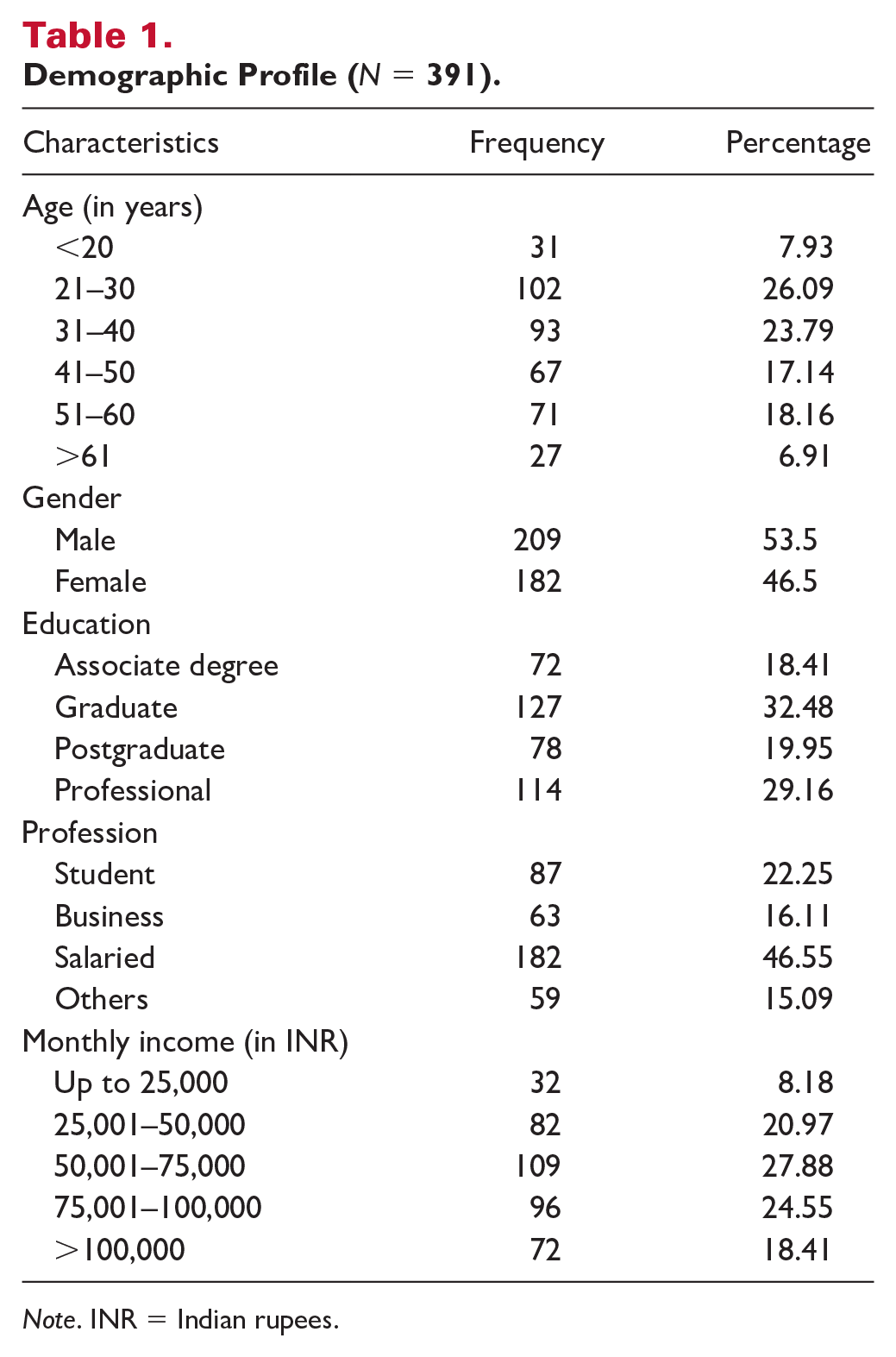
Note. INR = Indian rupees.
Descriptive Statistics
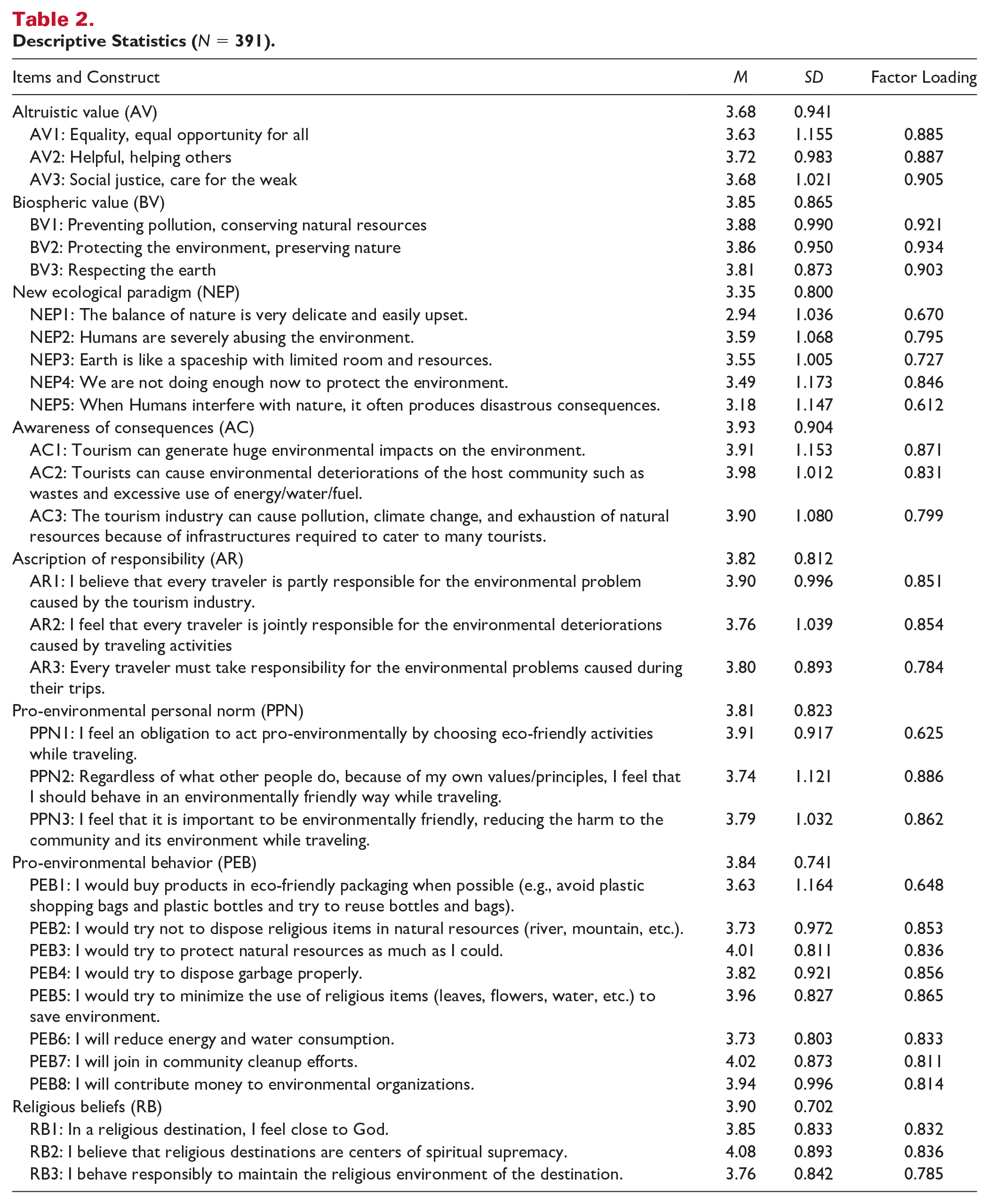
Data presented in Table 2 indicate the descriptive statistics of constructs and items. As presented in Table 2, the VIF values were smaller than the value of 5 and verified the requirement of the normal distribution. The mean, which fell between 3.35 and 3.93, was good but not quite high. This shows that religious tourists showed a fair interest in the environment. Table 2 indicates that the “awareness of consequences” construct has the highest mean (3.93), and the “new ecological paradigm” has the lowest (3.35). Item “RB2” has the highest mean (4.08), whereas item “NEP1” secured the lowest mean (2.94). The factor loadings, which ranged from 0.626 to 0.967, were higher than the cutoff value (λ = 0.6). (Table 2).
Descriptive Statistics (N = 391).
For convergent validity to be established, the average variance extracted (AVE) value should be higher than 0.5 (Hair et al., 2017). The values of AVE of all the constructs were more than 0.50 (0.538–0.893), confirming convergent validity. For reliability, Cronbach’s alpha (.755–.940) and composite reliability (CR) (.852–.962) values were higher than the cutoff value (0.7), confirming that the measurement model’s internal consistency was appropriate (Hair et al., 2017). The Fornell–Larcker criterion of cross-loading indicators was used to assess the discriminant validity of the measurement model (Hair et al., 2017). The model’s discriminant validity is confirmed by the fact that the square root of all AVEs was higher than their corresponding squared interconstruct correlations (Table 3).
Construct Reliability and Validity.
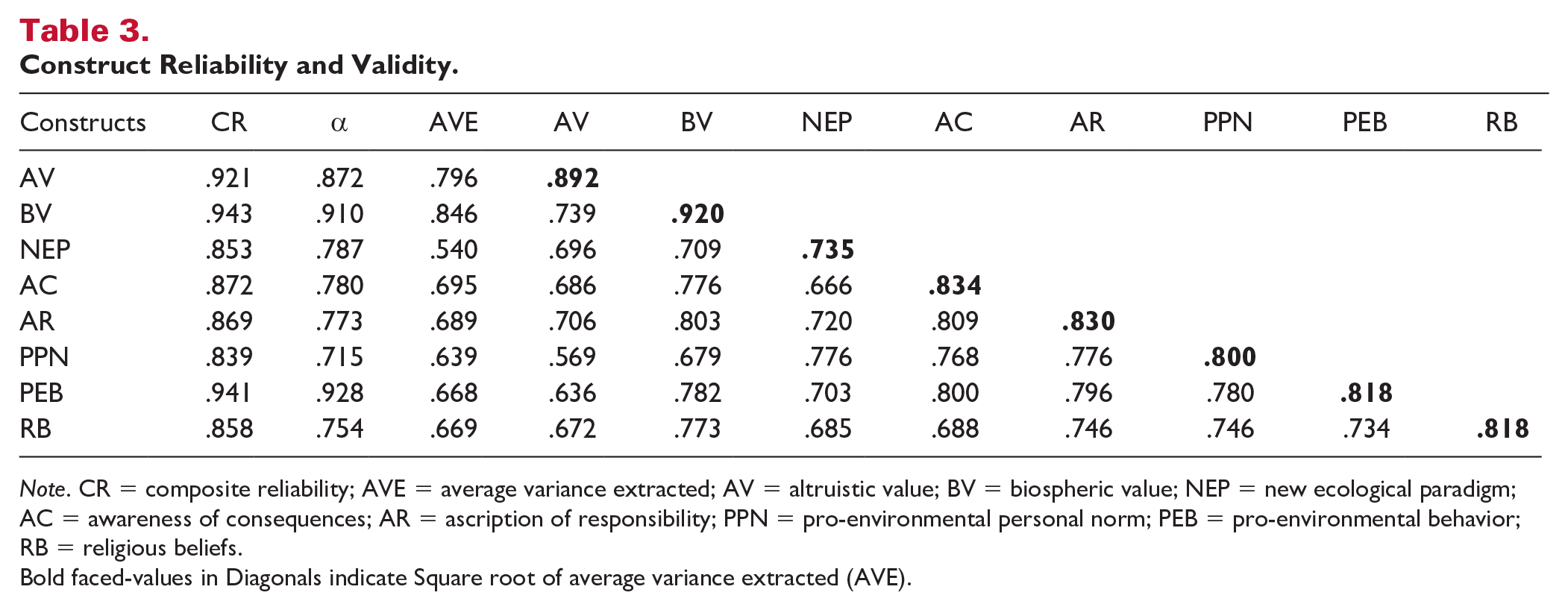
Note. CR = composite reliability; AVE = average variance extracted; AV = altruistic value; BV = biospheric value; NEP = new ecological paradigm; AC = awareness of consequences; AR = ascription of responsibility; PPN = pro-environmental personal norm; PEB = pro-environmental behavior; RB = religious beliefs.
Bold faced-values in Diagonals indicate Square root of average variance extracted (AVE).
Structural Model
The fitness of the structural model was evaluated by VIF, R2 (coefficient of determination), and Q2 (predictive suitability). The values of VIF were in the range of 1.000 to 2.698 (<5), implying that multicollinearity did not exist. The explanatory power for the R2 (coefficient of determination) was between 0.441 and 0.816. At the level of 0.01, each standardized path coefficient was statistically significant. The proposed structural model showed a predictive fit, as indicated by the predictive fit Q2, which was in the range of 0.299 to 0.501 (>0). (Hair et al., 2017). Hence, the results of these criteria verified that the structural model was suitable and acceptable (Table 4).
Fitness of PLS-SEM Structural Model.
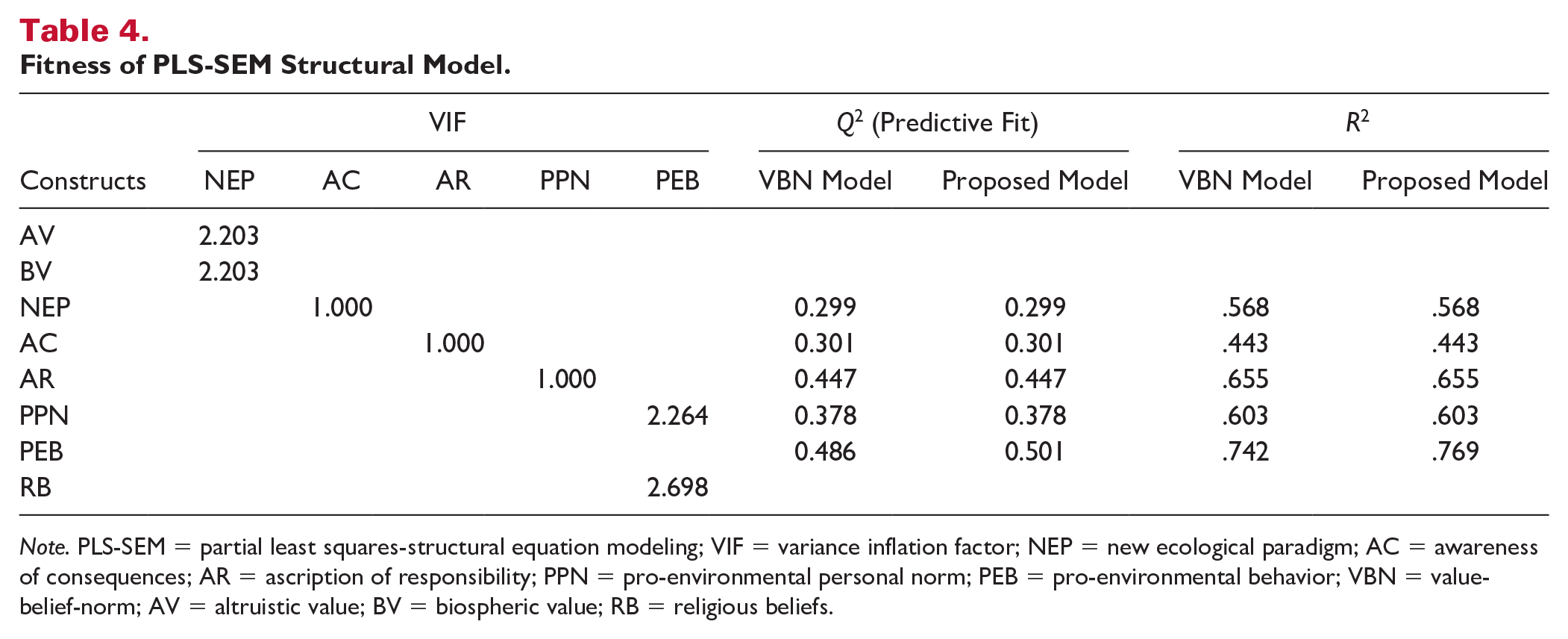
Note. PLS-SEM = partial least squares-structural equation modeling; VIF = variance inflation factor; NEP = new ecological paradigm; AC = awareness of consequences; AR = ascription of responsibility; PPN = pro-environmental personal norm; PEB = pro-environmental behavior; VBN = value-belief-norm; AV = altruistic value; BV = biospheric value; RB = religious beliefs.
The path coefficients and p values of all proposed hypotheses are shown in Table 5 and Figure 2. Altruistic values and biospheric values significantly and positively affected NEP (βAV→NEP = .241, βBV→NEP = .352, p < .001), supporting H1a and H1b. NEP significantly and positively affected AC (βNEP→AC = .664, p < .001), which significantly affected AR (βAC→AR = .774, p < .001), confirming H2 and H3. AR also showed a significant and positive impact on PPN (βAR→PPN = .794, p < .001), supporting H4. Finally, personal pro-environmental norms significantly and positively affected PEB (βPPN→PFB = .903, p < .001). Thus, H5 was supported (Table 5).
Result of the Structural Model.
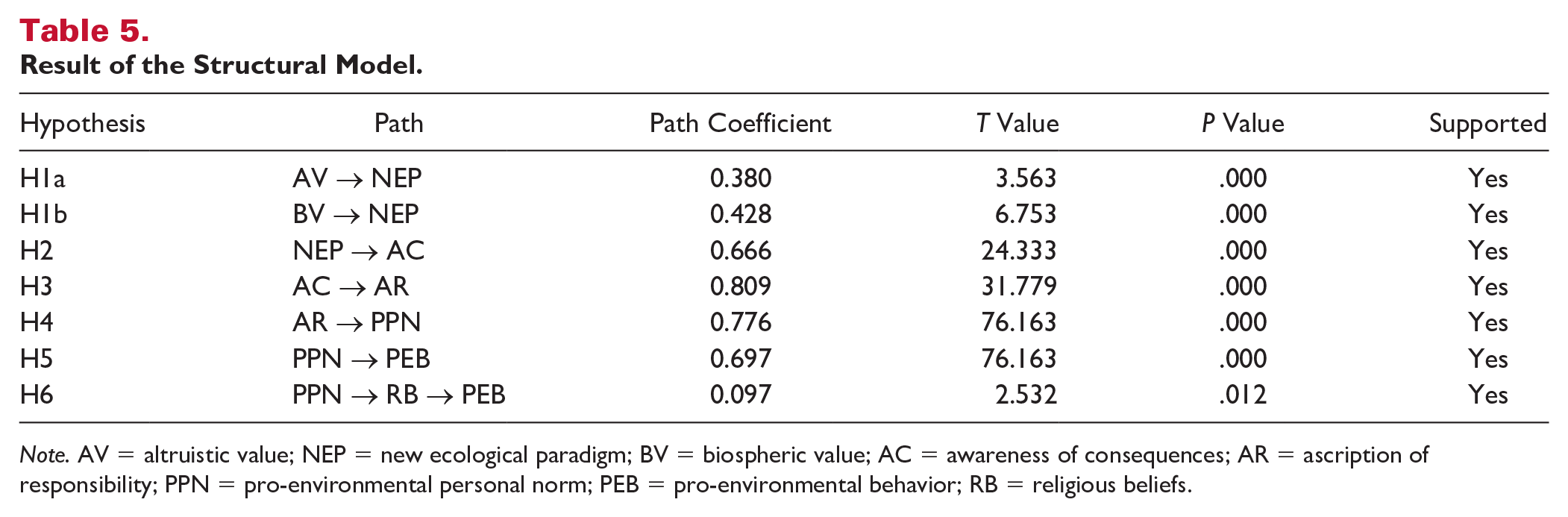
Note. AV = altruistic value; NEP = new ecological paradigm; BV = biospheric value; AC = awareness of consequences; AR = ascription of responsibility; PPN = pro-environmental personal norm; PEB = pro-environmental behavior; RB = religious beliefs.
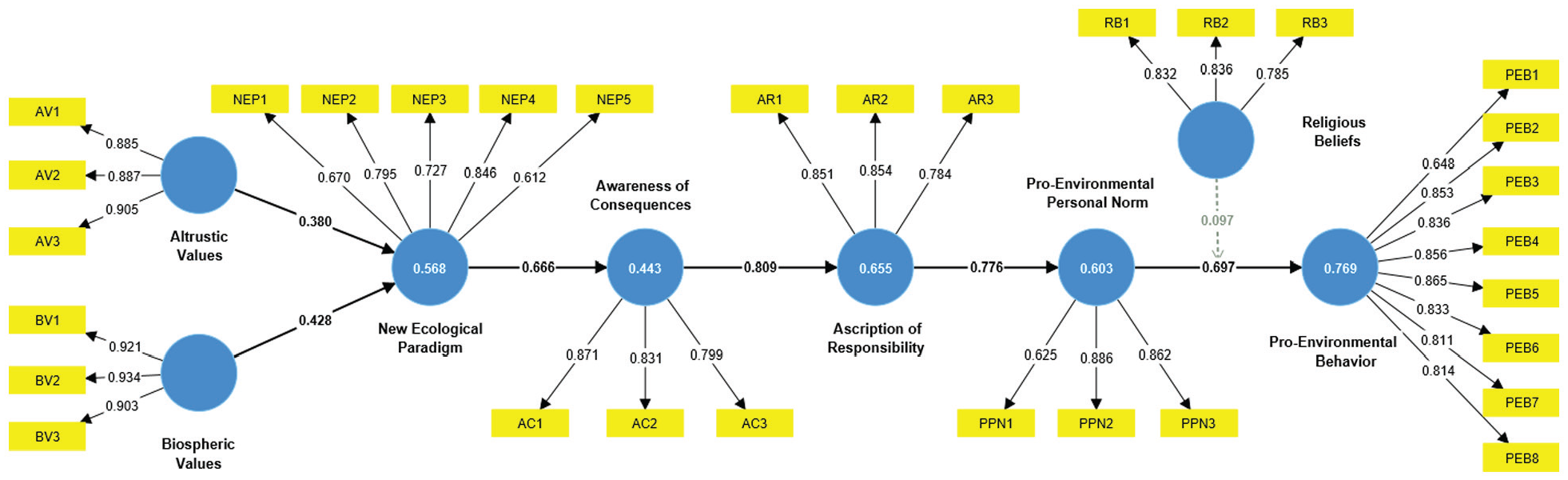
The Structural Equation Model.
Moderation analysis showed that religious beliefs significantly moderated the relationship between PPN and PEB (βPPN*RB→PEB = .097, t = 2.532, p = .012), supporting H6. When Q2 and R2 of PEB were compared between the VBN model and the proposed model, the proposed model outperformed the VBN model when religious views were incorporated (refer to Table 4). This implies that when “religious beliefs” was added as a moderator, the proposed model’s explanatory power and predictive suitability improved. The finding suggests that the influence of PPN on PEB increases with the strength of religious beliefs.
Discussion
The study’s main objective was to understand the PEB of tourists in religious destinations in India by using the VBN theory as the guiding concept. VBN theory was proven to explain the PEB of tourists (Choi et al., 2015; H. Han, 2015; Sharma & Gupta, 2020; Yan & Jia, 2021), as reflected in this study. Adding religious beliefs as a moderator to explain the PEB of religious tourists in India can be considered the novelty of this research to some extent. Incorporating a new construct tested in this study would help increase the predicting power of VBN constructs in understanding religious tourists’ PEB. This extension produces a fitting contribution to the tourism, environment, and sustainability research discipline and the knowledge of religious tourists’ PEB. The relationships between constructs of VBN theory and PEB were hypothesized and examined using PLS-SEM, and all six hypotheses were found to be valid. The relationships found among the constructs in this study not only identify antecedents of PEB but also suggest possible ways for increasing tourists’ involvement in managing destination environmental sustainability.
The study results indicate that values have a considerably favorable impact on PEB through new ecological worldviews, AC, AR, and PN. This validates the widely accepted view that values are the primary drivers of human behavior. The relationship between values and PEB was established in that both biospheric and altruistic values were found to be important indicators of PEB. These findings align with the earlier literature regarding the driving role of values in environmental sustainability and PEB (Choi et al., 2015; H. Han, 2015; Kiatkawsin & Han, 2017; Lind et al., 2015; E. Park et al., 2018; C. Y. Park et al., 2022; Sharma & Gupta, 2020; Yan & Jia, 2021). In the light of VBN theory, the results suggest that tourists who place a superior value on nature consider that tourism harms the ecosystem, and their responsible behavior can preserve it. There could be three possible reasons for such environmentally responsible behavior of tourists.
First, religious centers are considered places for supreme power and abodes of gods and goddesses; tourists behave appropriately due to fear and devotion. Second, because a majority of religious centers in the study area are located in mountainous locations, the sense of moral obligation to protect the environment becomes more important. Third, besides natural attractions, religious destinations are cultural and historical resources for society (Kala & Barthwal, 2020; Yan & Jia, 2021). Thus, protecting the sacredness, majesty, and authenticity of religious destinations is the moral obligation of tourists.
AC positively affected the AR; in turn, the AR affected PPN, which then affected PEB. Similar to previous studies, these results suggest that PN will be triggered and consequently influence PEB if people believe their actions and behavior have direct adverse consequences for objects and resources they value. It has been revealed that PPN favorably influences PEB. Past studies, including Choi et al. (2015), J. S. Kim and Han (2019), Megeirhi et al. (2020), E. Park et al. (2018), Sharma and Gupta (2020), Yan and Jia (2021), and C. Y. Park et al. (2022) also attested to this relationship. The results suggest that tourists with a high degree of moral obligation to environmental problems are more inclined to display PEB. These norms significantly affect the PEB intention that consists of the willingness to buy eco-friendly products, recycle plastics and bottles, minimize the use of natural resources, properly dispose trash, contribute to community cleanup efforts, and provide financial support to environmental organizations working in preserving the religious environment. These efforts will minimize environmental harm and encourage others to behave sustainably in religious destinations. These results show that strong PN among tourists might be a significant factor in encouraging PEB.
Furthermore, the study revealed that religious beliefs, a factor that drives tourists to visit religious destinations, moderated the relationship between PPN and PEB. Echoing the findings of Yan and Jia (2021), this study suggests that tourists’ PEB will be improved when there is an interplay between religious beliefs attached to religious centers and PN to preserve the environment of religious centers. To be precise, religious beliefs play an important role in strengthening the effect of PPN on PEB. Moreover, integrating religious beliefs as a moderating variable to the VBN theory validated the increased strength of the proposed model as it increased both Q2 and R2 of PEB. According to the propositions of the VBN model, it was found that tourists were aware of the consequences of environmental problems, they were willing to accept personal responsibility for the environment and religious destinations, and consequently, they felt obliged to partake in PEB. To conclude, these findings have various implications for different stakeholders, which are discussed in the next section.
Theoretical Implications
This research proposes theoretical contributions in the fields of tourism and environmental psychology to increase our understanding of PEB. First, this research offers a theoretical understanding of how religious tourists take part in pro-environmental actions in a rational and orderly manner by validating the relationships between values, beliefs, and PN. The theoretical approach offers evidence in favor of the important role that religious beliefs play in preserving the nature and environment of tourist destinations. As a result, the study adds to our knowledge of PEB at religious destinations and expands the literature on religious tourism. Second, this study included another research perspective by effectively proving the VBN theory’s application to tourists’ intentions to behave sustainably while visiting religious sites. The findings give strong evidence for studying the PEB of tourists at religious centers in the context of the VBN theory and provide justification that religious tourism should be practiced as sustainable tourism.
Third, this research is one of the first efforts to add religious beliefs as a moderator in the VBN model. By revealing the moderating impact of religious beliefs on the relationship between PN and PEB, this research clarified how religious beliefs could work with PN to shape sustainable behavior. Specifically, the moderating effect emphasizes religious beliefs as important in reinforcing PEB at religious destinations. Although religion is a significant social element that influences values that affect individuals’ judgments and lives, there is little research on how religion affects environmental psychology. Even though developing countries like India have strong religious traditions that are ingrained in their cultural heritage, most research on the relationship between religion and consumption has largely focused on understanding Western civilization. This study deepens our understanding by shedding light on the relationship between religion and PEB in a non-Western society. Thus, the study contributes to the body of knowledge about religious beliefs and their role in encouraging PEB and sustainable religious tourism.
Managerial Implications
From a managerial viewpoint, the findings of this study provide significant insights into sustainable tourist behavior for destination management organizations (DMOs), religious center authorities, and policymakers. As tourists’ values strongly determine PEB, tourism stakeholders must consider emphasizing the environmental aspects in marketing communications. Communication strategies should focus on biospheric and altruistic values to encourage tourists to enjoy nature and cultural resources in a more environmentally friendly manner. First, biospheric values may be triggered by describing how PEB benefits society and the environment and how a small effort is required to protect the environment. Second, AV may be encouraged by communicating the possibility of preserving surroundings worth living in and religious centers spiritually pure for future generations through PEB. Tourism stakeholders can create advertisements, social media campaigns, or promotional videos collaboratively to highlight the relevance of the environmental value of religious destinations. For instance, a video about waste and pollutants in the River Ganga and River Yamuna can draw attention to raise tourists’ perception of responsible behavior.
Based on the current findings, it is essential to inform tourists of the adverse consequences of their irresponsible behavior and to highlight the responsibility of everyone. As the impact of AC is significant on the AR, tourism stakeholders (government, nongovernment organizations [NGOs], religious destination authorities, and public institutions) should educate residents and tourists about the urgency of environmental problems to increase AC so that locals and tourists can make informed, responsible, and sustainable decisions (Eom et al., 2016). Educational programs, workshops, and awareness programs should be organized to develop a sense of responsibility and provide stakeholders with knowledge of PEB’s what, why, and how. Communication strategies should emphasize the threats environmental littering poses to flora, fauna, and cultural resources to motivate tourists and thus preserve a clean environment. Social media platforms can be used effectively to encourage tourists to behave responsibly and contribute to pro-environmental practices. For example, the photos of tourists participating in environmental protection activities (e.g., picking up waste in religious locations, using dustbins for garbage, and cleaning natural resources) on social media can inspire others to emphasize environmental problems, participate in such initiatives, and display PEB. This will eventually bring about environmental problems. In addition, programs with an environmental education focus that are targeted at tourist groups like families, friends, and peers can be created to encourage personal PEB intentions through the influence of group norms and viewpoints (C. Y. Park et al., 2022). Educational videos can be played at common meeting areas, entry gates, and major eating areas. Celebrity-endorsed educational videos can be used to raise environmental awareness.
Religious tourism destinations and DMOs should make clear indications of their pro-environmental initiatives to encourage tourists to act sustainably. They should provide clear and simple instructions for sustainable practices (like garbage disposal, use of eco-friendly accommodations and products, avoiding polythene usage, conserving natural resources, using sustainable transportation facilities, and consuming locally produced food and souvenirs). A “thank you” note for adopting environmental-friendly practices may encourage tourists to act pro-environmentally. Increasing the supply of sustainable tourism products and developing eco-friendly infrastructure may shape the pro-environmental norms of tourists (Bilynets & Cvelbar, 2022). Byerly et al. (2018) suggest that “nudging” (making good behavior simpler, using positive reinforcement, providing environmental awareness education, and community participation) can inspire PEBs. These sustainable interactions created through authentic religious, functional, cultural, and environmental experiences will certainly develop an emotionally engaged relationship between tourists and the destination (Kandampully et al., 2022).
The moderating effect of religious beliefs, which has been confirmed in this research, suggests that emphasizing the religious perspectives in which tourists are prompted to conduct PEBs could be an appropriate intervention. Religious beliefs may be activated by illustrating sustainable religious practices and principles in a pro-environmental way. Policymakers and other tourism stakeholders should educate people (tourists and residents) to abandon old unsustainable religious practices, adopt opportunely new practices, change the practices considering the pressure on the environment, and develop the mindset for PEB. Religious leaders must play a significant role in promoting PEB. They can explain the right connection between human life and nature in their preachings. They can also share the correct interpretation of mythological scriptures and practices to promote PEB. Due to their strong follower base, religious leaders can raise environmental awareness, motivate people to reduce their consumption of natural resources, emphasize time-appropriate religious beliefs, and promote sustainable ways to dispose religious waste.
Overtourism is another challenge in religious destinations. The religious destinations can witness a heavy crowd post-COVID. Policymakers should work collectively with tourism stakeholders, especially locals, and businesses, to gain their support in restricting the number of tourists visiting the destinations (Kala, 2021). This will reduce the overutilization of natural resources, garbage, traffic, pollution, and irresponsible waste management. Realizing the acceptance of emerging technologies such as virtual and augmented reality, virtual religious tours can be created and promoted for sustainable tourism among the younger generation, older citizens, and persons with comorbidity and disability.
Limitations and Future Directions
Here are some limitations and a few suggestions for future research. This study only focuses on some selected popular Hindu religious destinations in the Uttarakhand state of India. Hence, the findings of this study might not apply to other geographical areas, religious groups, or tourists. To broaden the findings and ensure the results are generalizable, it is advised to research other tourist places/settings and various tourist groups, including international tourists. Second, despite being statistically satisfactory, the study’s generalizability is constrained by the sample size, which is quite small. Third, there is a drawback in assessing tourists’ specific and general PEB. This study measured only the intentions rather than behavior. Intention reflects the genuine behavior of tourists, but they may sometimes answer dishonestly. There is always some variation between measurement and reality. Next, this study examined the moderating influence of religious beliefs on PEB. The direct influence or moderating effect of other factors, such as psychological variables (learning, attitudes, social influence, and reference groups) and demographics, must be investigated. Furthermore, the model can also be tested in the future by comparing the PEB of tourists and residents.
Footnotes
Declaration of Conflicting Interests
The author(s) declared no potential conflicts of interest with respect to the research, authorship, or publication of this article.
Funding
The author(s) received no financial support for the research, authorship, or publication of this article.
