



Abstract
Despite growing international awareness and legislation, the hospitality and tourism industries are still hot spots for modern slavery due to the nature of their businesses. The purpose of this study is to explore corporate social responsibility (CSR) disclosures of firms in the U.S. hospitality and tourism industry and to examine what actions they have incorporated regarding protecting human rights and preventing modern slavery. Using content analysis, this study provided a benchmarking assessment from a sample of hospitality and tourism companies that were top ranked for their human rights and supply chain performance by CSRHub. A total of 30 code instruments have been classified into three main themes on combating modern slavery including formal guidelines and resources, company-wide compliances and policies, and actions.
Introduction
Modern slavery is a global scourge. It is an imperative social problem that has progressively grasped the attention of all people including civil society, policymakers, and business leaders (Caruana et al., 2021). According to The Global Estimates of Modern Slavery report (International Labor Office, 2017), modern slavery encompasses forced labor, debt bondage, forced marriage, other slavery and slavery-like practices, and human trafficking. In 2016, an estimated 40.3 million people were victims of modern slavery across the world (International Labor Office, 2017). As of 2022, the number of victims of modern slavery has increased to about 50 million people worldwide (International Labor Office, 2022a). Within the 50 million people, about 27.6 million people (55.2%) are in situations of forced labor, 22 million people (44%) are in situations of forced marriage, and the rest 0.4 million people (0.8%) are in the form of debt bondage (International Labor Organization, 2022). Modern slavery is also one of the human rights violations that received worldwide condemnation unanimously (Mende & Drubel, 2020). However, due to irregular legislation and regulation, slavery or slavery-like conditions continue to exist (Landman, 2018; Schwarz & Allain, 2020). In the current complex global economies where supply chains interlace with production networks, along with corporations gaining resources, social status, and influence, policymakers, civil society, and states are urging business corporations to halt modern slavery (Mende & Drubel, 2020). This need has been fueling the rising attention of research in business responsibility regarding modern slavery (Fransen & LeBaron, 2019; Gold & Schleper, 2017).
The hospitality and tourism industries are at a high risk of modern slavery and are impacted the most by human trafficking and forced labor, which has contributed to serious violations of human rights (Kyriazi, 2023). The semi-anonymity provided by the frequent turnover of guests lets trafficking victims slip undetected in hotels and airports (Dunyak, 2021). For example, hotels are used as places where human trafficking victims are exploited, and hotel staff members may be victims of forced or bonded labor (Respect, 2020). Tourism destinations are used for commercial sex purposes, notably sex tourism (Carolin et al., 2015). At the same time, the hospitality and tourism industries hold great potential to provide a significant impact on efforts to fight against modern slavery. Many companies have made commitments to address these human rights violations publicly by developing human rights policies as part of their CSR disclosure (Bauer, 2017). For example, Hilton Worldwide has publicly responded to questions about migrant worker rights violations in Qatar such as “Hilton has publicly available policies that reflect our commitment to respect human rights in our operations and throughout our business relationships. These policies specifically address workers’ rights and reference relevant human rights standards,” and Hilton requires hotel property owners and subcontractors in Qatar to comply with our human rights and other rights-related policies and procedures. Hotel owners and vendors acknowledge the human rights policy when completing the due diligence questionnaire and contracts with subcontractors include our Responsible Sourcing Policy (Business & Human Rights Resource Centre, 2021). In 2020, Hilton assessed ethical business practices and published the results in their corporate responsibility report. Hence, the purpose of this proposed research is to explore CSR disclosures of the firms in the U.S. hospitality and tourism industry and to examine what actions they have incorporated regarding protecting human rights and preventing modern slavery.
Modern slavery is considered a human rights violation, and with the growth of CSR worldwide since the 1990s, there is a rapid expansion in the realm of human rights of nongovernmental governance mechanisms, namely corporate self-regulation (Wen, 2016). The United Nation’s 2011 report of the Guiding Principles on Business and Human Rights refined the nature of businesses’ social responsibility in human rights as a social standard over and above “compliance to laws and regulations.” Hence, companies’ social reporting practices have represented this reflexive law tactic. Drawing upon legitimacy theory, a company’s legitimacy is often anticipated and required by the company’s stakeholders. So, the reasons that this study focuses on analyzing CSR disclosure are threefold: First, policymakers, civil society, and states push the discussion on business responsibilities for modern slavery through the lens of CSR. It has been suggested that the power of companies has placed companies in crucial roles and responsible actors in society (Mende, 2020). Therefore, it is necessary to communicate antimodern slavery activities with stakeholders and to achieve social expectations (Podnar, 2008). Second, many mandates have stimulated companies to disclose their antimodern slavery policies, for example, California’s Transparency in Supply Chains Act of 2010, the 2019–2020 “Transparency in agricultural supply chains act (SB5693),” and the S.533-End Modern Slavery Intuitive Act of 2015. Third, to the best of my knowledge, no prior research in the hospitality and tourism discipline has linked modern slavery combat and CSR disclosure.
Literature Review
The Definition of Modern Slavery
The history of slavery can be traced back thousands of years ago to Mesopotamia and Egypt, and the early era of Greco-Roman (Byerly, 2012; Crane, 2013). The term slavery is historically referred to as labor exploitation, in which indigenous people were recruited for labor or traded as slaves (Dottridge, 2005). In the 1926’s Slavery Convention, the League of Nations notably described slavery as “the status or condition of a person over whom any or all of the powers attaching to the right of ownership are exercised” (Allain, 2009). This is the first time that the definition of slavery has been formalized, which provided a premise for modern slavery (Crane, 2013). This definition of slavery also acknowledged that modern slavery is educed on the exercise of specific powers (Allain, 2009). In addition, the exercise of “powers attaching to the right of ownership” encompassed a scope of human bondage, including human trafficking and forced marriage, as well as various forms of forced and bonded labor, which sparked further discussion about modern slavery (Azmy, 2002; Weissbrodt & Anti-Slavery International, 2002). The 1956 United Nations Supplementary Convention on Abolition of Slavery, the Slave Trade, and Institutions and Practices Similar to Slavery has legally categorized four practices with chattel slavery, namely debt bondage, serfdom, servile marriage, and exploitation that involves transferring children (Quirk, 2010). Entering the 21st century, new sources about modern slavery have developed. The International Labor Organization (ILO) has devoted many resources to quantifying the scale and distribution of modern slavery (Quirk, 2010). According to the ILO et al. (2017), modern slavery encapsulates “situations of exploitation where the victim cannot refuse or leave; victims may be coerced through threats, violence, abuse of power, and deception.” Today, modern slavery mostly sorts into four categories: human trafficking, bonded labor, forced marriage, and forced labor (Gold et al., 2015; Haynes, 2016; Walk Free Foundation, 2018).
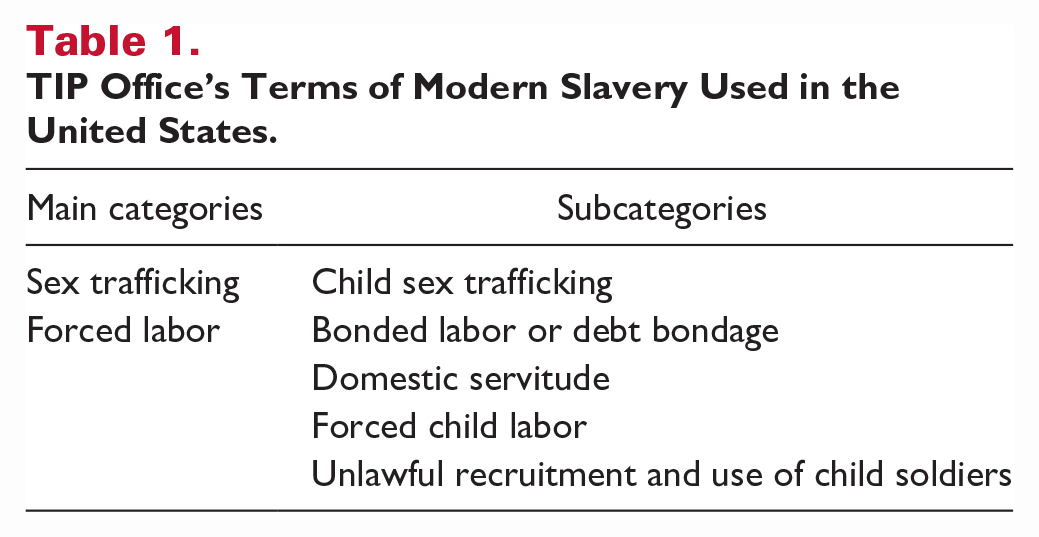
In the United States, the terms “human trafficking,” “trafficking in persons,” or “modern slavery” are used as the same overarching terms to refer to both sex trafficking and bound labor (Traffick in Persons, n.d.). The trafficking in persons (TIP) office is established by the U.S. Department of State to lead the U.S. global effort to combat human trafficking consistent with the Palermo Protocol, which refers as the “United Nations Protocol to Prevent, Suppress and Punish Trafficking in Persons, Especially Women and Children, supplementing the United Nations Convention against Transnational Organized Crime” (United Nations, 2000). Based on the Palermo Protocol, the TIP office categorized modern slavery into two broad categories—sex trafficking and forced labor which contain five subcategories. Table 1 summarizes the TIP office’s terms of modern slavery used in the United States. There are two main categories of modern slavery in the United States: sex trafficking and forced labor. Traffick in Persons (n.d.) defined sex trafficking as when an adult engages in a commercial sex act, such as prostitution, as the result of force, threats of force, fraud, coercion, or any combination of such means, that person is a victim of trafficking. Under such circumstances, perpetrators involved in recruiting, harboring, enticing, transporting, providing, obtaining, patronizing, soliciting, or maintaining a person for that purpose are guilty of sex trafficking of an adult. Child sex trafficking is a subcategory of sex trafficking, which is when a child (below 18 years of age) is recruited, enticed, harbored, transported, provided, obtained, patronized, solicited, or maintained to perform a commercial sex act, proving force, fraud, or coercion is not necessary for the offense to be prosecuted as human trafficking. Forced labor, also described as labor trafficking, includes a group of activities from recruiting and transporting to providing and obtaining when “a person uses force or physical threats, psychological coercion, abuse of the legal process, deception, or other coercive means to compel someone to work.” Under forced labor, there are four subcategories (Traffick in Persons, n.d.). One form of coercion used by traffickers is the imposition of a bond or debt, which is referred to as bonded labor or debt bondage. Domestic servitude is another form of human trafficking where “a domestic worker is not able to leave the employment and is abused and underpaid.” Children can also be enslaved to work and sometimes be unlawfully recruited through force, fraud, or coercion as combatants.
TIP Office’s Terms of Modern Slavery Used in the United States.
As stated by International Labor Office (2022b), the number of victims of modern slavery has increased to about 50 million people worldwide, with about 27.6 million people (55.2%) in situations of forced labor, and 22 million people (44%) in forms of forced marriage. Under the global estimate of forced labor and forced marriage, the Americas account for about 3.6 million people (13%) and 1.5 million people (0.6%), respectively. Asia and the Pacific region have the greatest number of people impacted by both forced labor and forced marriage. Although the United States does not have the highest number of people suffering from forced labor and forced marriage, the United States is ranked as one of the worst countries for human trafficking with estimated 200,000 cases every year (World Population Review, 2023). Approximately 2,200 people were referred to the United States. Attorney for human trafficking offenses in 2020, representing a more than 60% increase from 1,360 people in 2011. The number of people prosecuted for human trafficking increased by 84%, from 739 in 2011 to 1,343 in 2020 (Bureau of Justice Statistics, 2022). The U.S. Department of Justice (DOJ) also reported statistics on human trafficking. DOJ has provided an antitrafficking assistant program across the United States and reported more than 10,000 open trafficking client cases between 2020 and 2021, of which 61% of clients were victims of sex trafficking, and 23% were victims of labor trafficking (Office to Monitor and Combat Trafficking in Persons, 2022).
Modern Slavery and CSR
Slavery is a despicable global phenomenon and though it is a criminal practice under international law, it still provides some forms of financial gains to businesses (Banerjee, 2021). Hence, he argued that modern slavery is a natural and logical outcome of our current political-economic system, and eradication of modern slavery is challenging (New, 2010). Modern slavery is considered a human rights violation, so many scholars have paid attention to what corporations as “responsible citizens” can do to eliminate modern slavery (Banerjee, 2021; Pinnington et al., 2022). With the growth of CSR worldwide since the 1990s, there is a rapid expansion in the realm of human rights of nongovernmental governance mechanisms, namely corporate self-regulations (Wen, 2016). The United Nation’s 2011 report of the Guiding Principles on Business and Human Rights refined the nature of businesses’ social responsibility in human rights to respect all parties that impacted their business operations as a social standard over and above “compliance to laws and regulations.” This concept has inspired a regulatory move from formal legislation to a reflexive law that encourages social self-regulation and autonomous adjustment (Wen, 2016). In the case of combating modern slavery, companies’ social reporting practices have represented this reflexive law tactic. Likewise, in the past few years, more researchers have paid attention to companies’ CSR disclosure regarding antimodern slavery policies (Christ et al., 2019; Nersessian & Pachamanova, 2022; Rao et al., 2022).
CSR viewed corporations as citizens with social responsibilities from their role as part of society (Carroll, 1999). To explain why and how companies voluntarily disclose their CSR performance including their actions on antimodern slavery, legitimacy theory has been adopted by many scholars (Christ et al., 2019; Flynn, 2019; Flynn & Walker, 2020). Suchman (1995) defined legitimacy as “the actions of an entity are desirable, proper, appropriate with some socially constructed systems of norms, values, beliefs, and definitions.” He also described that a company’s legitimacy is often anticipated and required by the company’s stakeholders. Furthermore, organizational legitimacy theory incorporated two points of view that motivate companies’ voluntary disclosures institutionally and strategically. From an institutional standpoint, companies’ legitimacy is governed by pressure from institutional actors, such as the states or civil society (DiMaggio & Powell, 1983). Companies would change their behavior to align with institutional expectations. From a strategic perspective, companies can act proactively to influence the assessment of their legitimacy (Milne & Patten, 2002; Oliver, 1991; Pfeffer & Salancik, 1978). Suchman (1995) furthermore pointed out companies rely on communication to transmit information on their legitimate policies between institutional actors and companies’ stakeholders, which induces companies’ CSR reporting.
Modern Slavery and the Hospitality and Tourism Industry
The hospitality and tourism industries are at a high risk for modern slavery such as human trafficking and forced labor, which have contributed to serious violations of human rights (Kyriazi, 2023). Armstrong and Matters (2016) summarized that modern slavery impacted the hospitality and tourism industries in two key channels:
Directly within an organization or establishment or its supply chain—notably in the form of bonded or forced labor;
The infrastructure of the industry—transport and accommodation in particular—being used by perpetrators to facilitate and carry out offenses such as human trafficking, forced prostitution, and abuse.
The hospitality and tourism industries are fundamentally labor-eccentric and labor-intensive, providing ideal environments for potential wrongdoings that force human exploitation, especially concerning labor and human rights (Cheer, 2018). For example, the tourism industry is known for its diverse employment across many subsections, such as travel facilitations, food services, and transportation, within small, medium, and large corporations, both domestically and internationally (Baum & Hai, 2019). Many tourism sites are geographically dispersed and often located in remote areas in the world that lack of qualified and skilled labor force; hence, the tourism industry involves a high level of workforce mobility through exploitative employment of migratory labor (Duncan et al., 2013; Janta et al., 2012). Research has also identified some characteristics of the tourism industry that explained why the tourism industry is vulnerable to modern slavery: poorly paid wages and lack of social respect (De Beer et al., 2014), hostile workplace (Bergene et al., 2015), low skilled work environment (Ladkin, 2011), and illegal and unethical employers (Poulston, 2008). All the above could potentially push the tourism industry to engage in exploitative employment including child labor or forced labor (Armstrong & Matters, 2016). Similarly, the hospitality sector is also at risk of modern slavery. For instance, The United States National Human Trafficking Hotline (2019), following spas and brothels, hotels/motels are the third most likely locations for sex trafficking. Hotels are used as places where human trafficking victims are exploited, and hotel staff members may be victims of forced or bonded labor (Eurostat, 2015; Respect, 2020). Many hospitality and tourism companies have committed to addressing these human rights violations publicly by developing human rights policies as part of their CSR disclosure. Such as, the American Hotel and Lodging Association (AHLA, 2019) initiated No Room for Trafficking (NRFT) campaign in 2019 which build upon four core pillars:
Elevate issue awareness through increased education, resources, and training for all hotel employees;
Assess protocols, procedures, and technologies to confirm training effectiveness and employee vigilance;
Educate by developing strategic intervention and disruption strategies to identify and report suspected trafficking situations; and
Support by furthering partnerships with leading national human trafficking and law enforcement organizations to establish industry standards and support survivors.
The campaign attracted more than 27,000 members to combat human trafficking in the hospitality and tourism industry (Gasienica, 2020). In Hilton’s 2022 Environmental, Social, and Governance (ESG) report, it has stated that Hilton “committed to grant $500,000 to the AHLA Foundation’s No Room for Trafficking (NRFT) Survivor Fund over the next 3 years to continue to combat human trafficking” (Hilton, 2022). Another example is, in Caesars Entertainment’s 2021–2022 CSR report stated: In 2021, we revisited our multiyear plan, articulating our specific objective of creating a best-in-class antitrafficking program, addressing risks and upholding antitrafficking practice, which allowed Caesars Entertainment properties to combat, intercept, and respond to incidents of human trafficking effectively and proactively. Our new programming continues to run under the guidance of our long-standing expert partner, Dr. Halleh Seddighzadeh, forensic traumatologist, and advisor in sex and labor trafficking. (Caesars Entertainment, 2022).
Thus far, modern slavery in the hospitality and tourism industry has drawn little attention in the literature, especially in the United States. Research on modern slavery mostly focused on the United Kingdom in light of its 2015 Modern Slavery Act (MSA) (Armstrong & Matters, 2016; French, 2018; Jones & Comfort, 2021; Paraskevas, 2020). Also, most research has empirically made recommendations on how hospitality and tourism companies combat modern slavery (Trasatti & Miller, 2019). However, no research has investigated what actions have been taken at the industry level analytically. This study examines what are specific antimodern slavery practices that are adopted by a sample of successful hospitality and tourism companies. The goal is to develop a systematic list of antimodern slavery initiatives and practices that could benefit other companies in the field who are seeking practical guidance.
Method
Sample Data
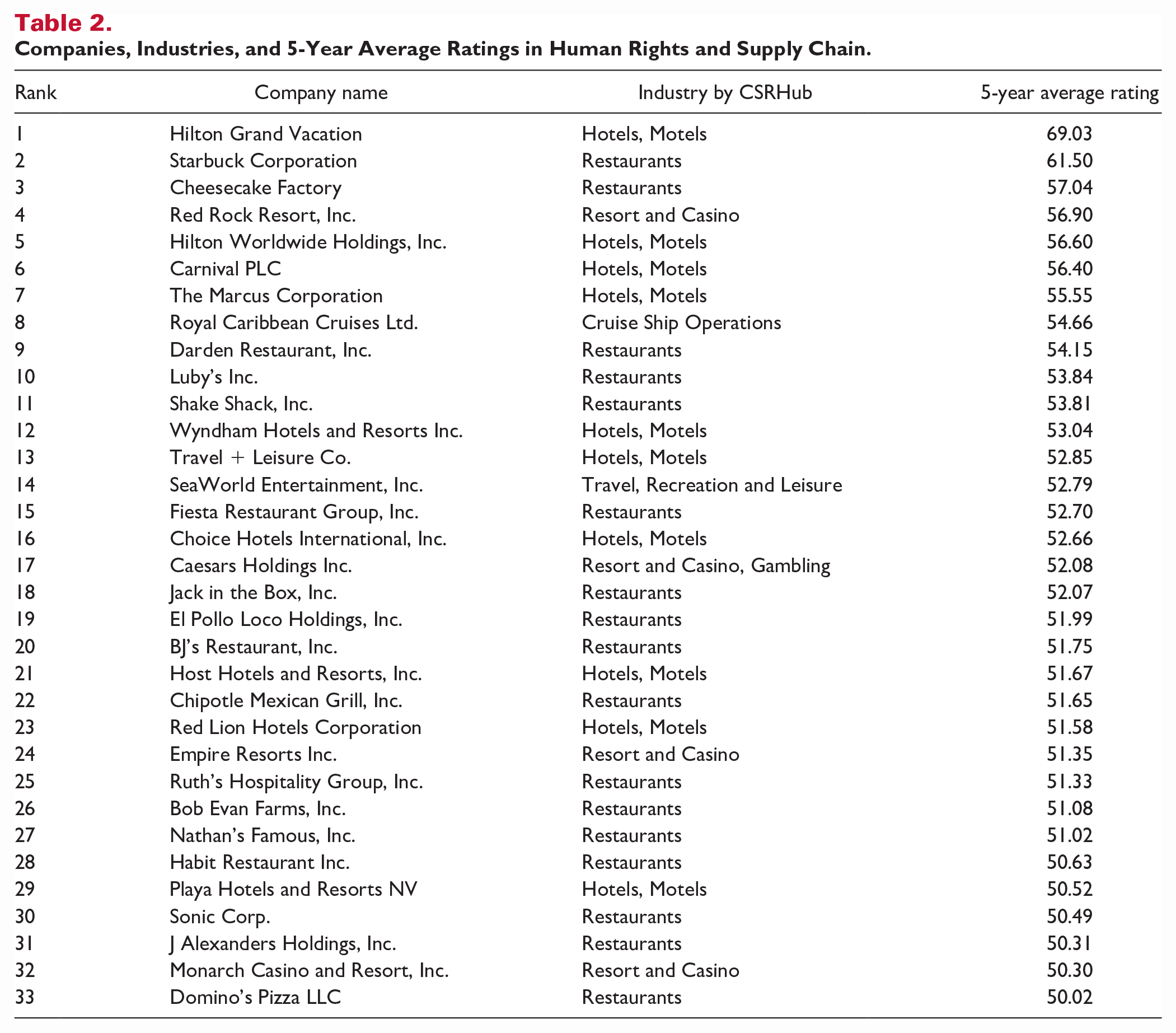
All the U.S. hospitality and tourism companies available (178 companies) in the human rights and supply chain category from the CSRHub database were initially selected for the year 2017 to the year 2022. According to Todres and Diaz (2021), the COVID-19 pandemic has amplified the risk of human trafficking from increased homelessness and child maltreatment to job losses. The 5-year range allowed us to capture the impact of the COVID-19 pandemic. The CSRHub database is a leading CSR/ESG ratings and comprehensive social information database offering data on more than 51,000 companies in 154 countries (CSRHub, 2022) and claimed to be the world’s largest corporate sustainability ratings database. This database provides monthly CSR rating and ranking on four main categories and 12 subcategories: Community (community development and philanthropy, human rights and supply chain, product), employees (compensation and benefits, diversity and labor rights, training, safety and health), environment (energy and climate change, environment policy and reporting, resource management), and governance (board, leadership ethics, transparency and reporting). This study utilizes the human rights and supply chain subcategory, which measures “a company’s commitment to respecting fundamental human rights conventions, its ability to maintain its license to operate by supporting freedom of association and excluding child, forced or compulsory labor” (CSRHub, 2022). The rating is a numerical indicator that ranges from 0 to 100, which higher number means a higher rating. After removing companies that are partially rated, 107 companies were left in the sample. An average score was calculated from January 2017 to June 2022 for each company. Sorting all 107 companies from the best rated to the lowest, the overall rating in human rights and supply chain categories ranges from 64.9 to 34.7, with an average of 49.8. The top 33 companies in the final sample with 5-year average rating scores above the overall average score were kept to further investigate their antimodern slavery policies. Table 2 shows the name of the companies, industry, and their 5-year average score in the human rights and supply chain subcategory.
Companies, Industries, and 5-Year Average Ratings in Human Rights and Supply Chain.
Procedure for Conducting Content Analysis
Content analysis was used to synthesize what actions have been taken to address the blight of modern slavery by firms within the hospitality and tourism industry (Baker & Kim, 2018; Hsieh, 2012; Kim & Baker, 2020; Legendre & Baker, 2021; Nyahunzvi, 2013). Content analysis can be broken down by word, clause, sentence, paragraph, or page to assess the meaning of a document (Weber, 1985). Krippendorff (2018) described that content analysis is a “research technique for making replicable and valid inferences from texts (or other meaningful matter) to the contexts of their use,” and it is one of the most utilized tools in CSR disclosure and policy literature to evaluate the scope and quality of disclosures (Guthrie & Abeysekera, 2006; Hooks & van Staden, 2011). Following Stemler’s (2001) coding protocol, each report is analyzed clause by clause to capture codes embedded within a single sentence. Weber (1990) stated that accurate and appropriate categorization for disclosures is crucial for content analysis.
CSR disclosures regarding antimodern slavery policies from each of the 33 companies left in the sample were collected more than 5 years. Previous scholars have relied on a company’s annual report to evaluate its CSR disclosure to the public (Guthrie & Parker, 1989). More recently, attention has shifted to adopting content analysis on a wider collection of reports or sources (Unerman, 2000), because companies tend to use multiple media mediums to cover different information (De Aguiar & Bebbington, 2014). Hence, there are multiple sources for collecting CSR disclosure. First, this study searches hospitality and tourism companies’ CSR reports. If the company does not issue a standalone CSR report, then this study checks sustainability reports, annual reports, supplementary reports, company announcements, news releases, and so on. Table 3 shows a summary of report types collected from the sample companies. Among all 33 companies more than 5 years, 65 standalone sustainability reports, 100 annual reports, 50 human rights statements/policy reports, and 35 modern slavery statements were collected, indicating not all 33 release these types of reports. A total of 165 suppliers’ codes of conduct and 165 codes of ethics were gathered, representing all 33 companies that issued these two types of reports more than the 5 years. A total of 580 reports were collected. Figure 1 shows the percentages of reports collected from each industry.
Summary of Reports Collected From Sample Companies.

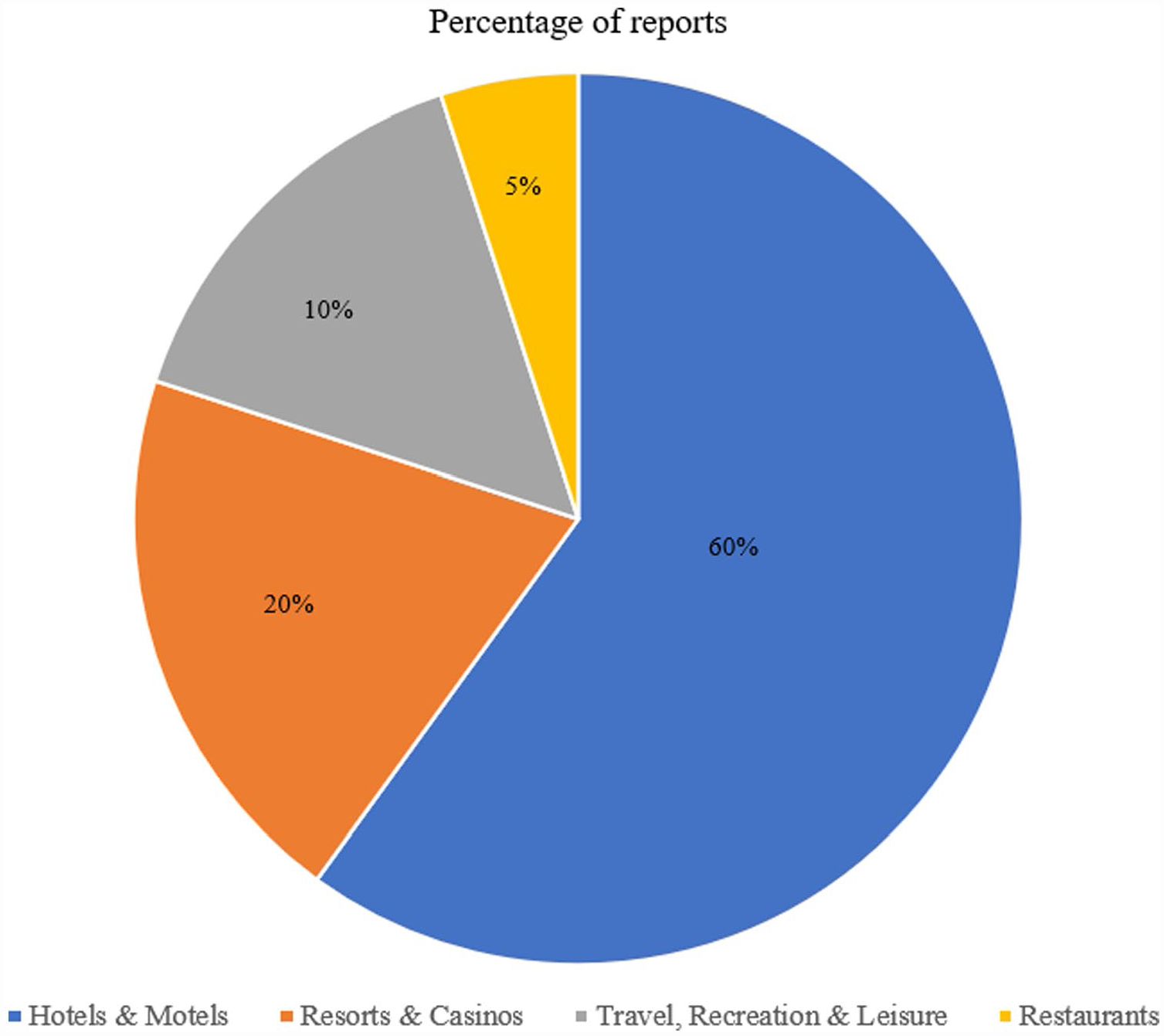
Percentage of Reports from Each Industry.
CSR: corporate social responsibility.
Second, following research instruments established by Christ et al. (2019), this study used developed instruments specific to modern slavery as keywords to search all relevant contents of modern slavery prevention policies and disclosures from all 580 reports and logged in a searchable Microsoft Excel document. The keywords concluded by Christ et al. (2019) are child labor, forced labor, human trafficking, minimum wages, human rights, safety, abuse, screening, assessment, and diversity. After investigating modern slavery literature focused on the United States (Crane, 2013; Landman, 2020; Whitaker & Hinterlong, 2008) and the definitions provided by the TIP office, this study adds keywords: sex, child, victim, crime, survivor, trafficking, fraud, coercion, servitude, involuntary, peonage, exploitation, and bondage in the search. This study then follows multiple coders’ procedures to ensure reliability. Two independent research assistants performed the coding activity separately. To minimize bias, the coders were not informed of the intent of the study. Recommended by Milne and Adler (1999), the two coders and the author randomly selected several sentences from the sample to make sure we were in full agreement. Cohen’s Kappa for inter-rater reliability is calculated to assess inter-rater agreement, and the result shows 0.87, which exceeds the acceptable level of 0.70 and indicates good reliability and agreement between coders (Stemler, 2001). The methodological process is summarized in Figure 2.
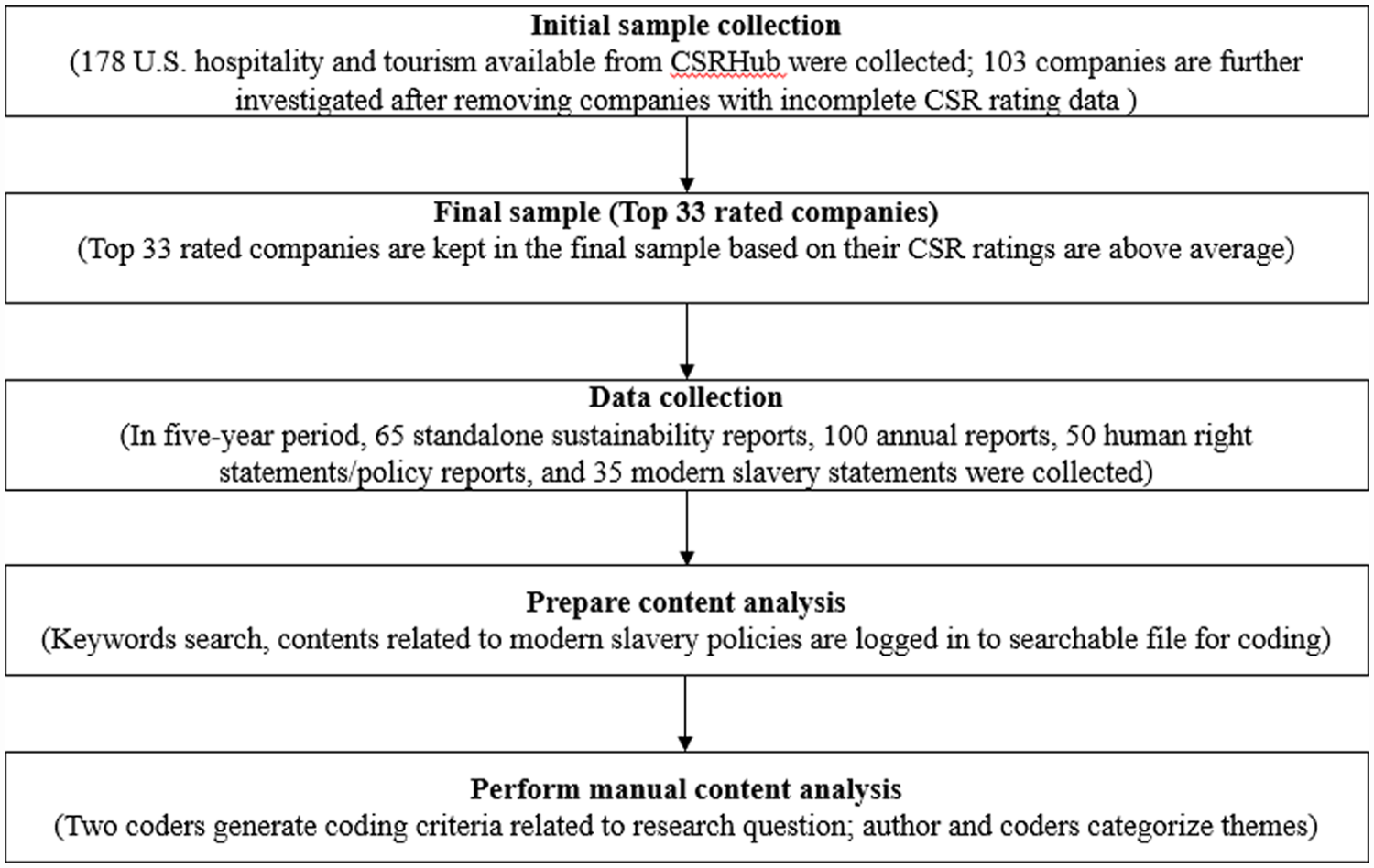
Methodological Framework.
Coding Criteria
The purpose of using manual content analysis for this study is to capture disclosures of actions used by the hospitality and tourism companies in the United States. After all relevant contents of modern slavery prevention policies and disclosures from all 580 reports have been logged in a searchable file, two codes use the file to perform manual content analysis. There are two steps in the procedure. First, coders read data from the file line by line and code them into analytic pieces (Bailey et al., 2020). For example, in one statement, “. . . acknowledges the human right of its employees throughout the globe and endeavors to provide a safe and health working environment for of its employees. . . . supports the elimination of all forms of forced, bonded or compulsory labor,” protection was coded as its label. In another statement, “we have remained proud supporters of ECPAT,” “global campaign” and “ECPAT” are assigned as the code. Another example, “we strive to raise awareness about threats to human rights within the organization to avert risks of forced labor, trafficking, modern slavery, or other human rights issues,” one coder labels as “awareness” and the other one codes as “education.” In this case, the author and both codes revisit the statement and eventually agree on keeping both codes which can be useful for refining into themes in the next steps. Cohen’s Kappa for inter-rater reliability is again calculated to assess inter-rater agreement, and the result shows 0.92, which exceeds the acceptable level of 0.70 and indicates good reliability and agreement between coders (Stemler, 2001). After the coding is completed, coders and the author started categorizing the codes into a broader theme. During the categorization process, the author and coders compared the codes continuously to polish them. Table 4 summarizes the final code instruments and themes. Through the author and coders’ discussion and re-visiting the statements, a total of 30 codes are developed and categorized into three main themes: (a) global guidelines; (b) internal policies; and (c) identify, assess, and action.
Codes and Themes.
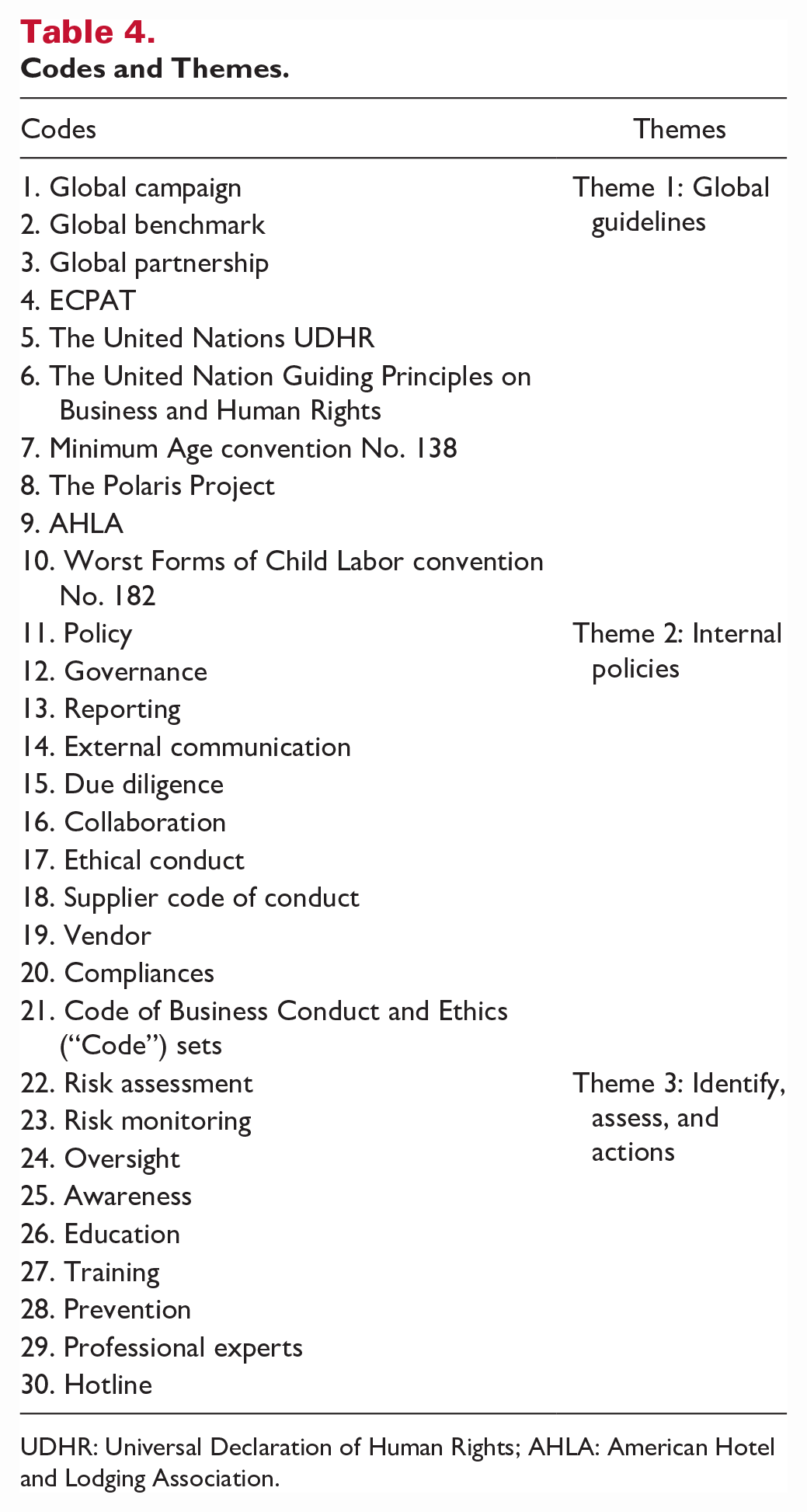
UDHR: Universal Declaration of Human Rights; AHLA: American Hotel and Lodging Association.
Results
This study systematically explores modern slavery-related guidelines and actions adopted by the U.S. hospitality and tourism companies and aims to provide a source of information for companies that need to understand modern slavery and recommendation for combating modern slavery.
Theme 1. Global Guidelines
One of the founding global guidelines is the United Nations Universal Declaration of Human Rights (UDHR, 1949), a momentous essay in the history of human rights. The UDHR contains 30 different articles that recognized the right of human beings. For instance, Article 4 especially condemns slavery as “No one shall be held in slavery or servitude; slavery and the slave trade shall be prohibited in all their forms”. One that applied to the hospitality and tourism industry is Article 24, as “Everyone has the right to rest and leisure, including reasonable limitations of working hours and periodic holiday with pay.” This article is also emphasized at the General Assembly of the World Tourism Organization in September 1985 as the tourism bill of rights and tourist code (World Tourism Organization, 1985). About 50% of the sample companies have mentioned the UDHR as the cornerstone for their human rights policies and procedures. For example, Travel + Leisure Co. in their most recent ESG report stated that the UDHR “outlines our commitment to the rights of all humans, including nondiscrimination, the right to freedom of peaceful assembly and association, the receipt of fair wage, and the prevention of exploitation of children, forced labor, modern slavery, and human trafficking”
Another global guideline is the United Nations Guiding Principles (UNGPs, 2011) on Business and Human Rights, a set of 31 guidelines providing the United Nations, States, and companies the framework of “Protect, Respect, and Remedy” on issues of human rights abuses committed in corporations and business operations (UNGPs, 2022; Wikipedia, 2022). They were proposed by the special representative of the Secretary-General (SRSG) and UN special representative on business and human rights, John Ruggie, and endorsed unanimously by the UN Human Rights Council in June 2011. These guidelines were the first worldwide standards that rest on three pillars to recognize the importance of protecting human rights in the context of business activity “Protect: state duty to protect human rights; Respect: the corporate responsibility to respect human rights; Remedy: access to remedy victims of business-related abuses” (UNGPs, 2011). Arguably, corporations and business enterprises can deliver vital support for human rights principles such as improving workplace conditions and raising local minimum wages (U.S. Department of State, 2021).
The International Tourism Partnership (2014) issued a publication in 2014 on “Know How Guide: Human Rights & the Hotel Industry” and identified several key human rights issues in hotels. For instance, hotel operators should consider labor conditions issues (are your employee well-treated) and forced labor (how well are your employees treated). It was then highlighted on the UNGPs should be the starting point for hotel operators to incorporate in their human rights policies about modern slavery. Acting as another fundamental principle along with the UDHR, the UNGPs served as keystones for about half of the companies in our sample.
About 25% of the hotel companies in the sample stated that they have partnered with End Child Prostitution in Asian Tourism (ECPAT) to prevent children from trafficking. Launched in 1990, the ECPAT was developed to combat child sexual exploitation with an initial focus on Asia (ECPAT, 2022b). With the support of UNICEF and many organizations from across the world, in 1997, ECPAT campaign was formally turned into an international NGO and its focus has changed to the whole world. According to ECPAT USA (ECPAT, 2022c), the United States is the main destination country for child trafficking. ECPAT USA issued reports on stamping out exploitation in travel that benchmark the U.S. travel industry on human trafficking, especially child exploitation. Traffickers took advantage of the travel industry’s service and structure, committing crimes against children using all kinds of hotel accommodations (Adams & Guelbart, 2022). The report also suggested that companies in the travel industry play a vital role in preventing child trafficking by recognizing their responsibility. As of 2018, more than 60 U.S.-based travel business enterprises are signatures to The Tourism Child-Protection Code of Conduct (The Code). More than half of all hotels in the United States have training programs on how to identify and respond to child trafficking, one-third of which have specific ECPAT USA training (Adams & Guelbart, 2022).
Hotel companies in our sample who reported that they are partners with ECPAT also acknowledge their partnership with the Polaris Project. Founded in 2002, the Polaris Project has been serving one goal: “a world without slavery” (The Polaris Project, 2019). The Polaris Project operates the National Human Trafficking Resource Center (NHTRC) Hotline (later became the U.S. National Human Trafficking Hotline), facilitates training, and pushes for better federal and state laws (The Polaris Project, 2019). It developed a top direct service program to help trafficking victims in the country with a 24-hr a-day on-call crisis response team. Case managers work with every victim and help with building their lives back together with emotional support, accommodations, safety, and job training. Since 2007, the Polaris Project has handled close to 1,500 cases in hotels and motels that were reported to their NHTRC, with more than 1,800 victims identified (The Polaris Project, 2015). It has developed a trafficking indicator to help hotel operators to identify victims. For example, “extended stay with few possessions,” “exhibits fearful, anxious or submissive behavior,” and/or “dresses inappropriately given the climate” are indicators to pay attention to sex trafficking. Possible indicators for labor trafficking are “forced to turn over wages” and/or “living and working on-site” (The Polaris Project, 2015).
Our sample companies across restaurant, lodging, and cruise sectors, such as BJ’s Restaurant, Playa Hotel & Resorts NV, and Royal Caribbean Cruises Ltd, all followed the ILO Standards Outlined in Convention Nos. 138 and 182, which reflected the importance of this guideline. The ILO has done seminal work on modern slavery by defining of modern slavery in 2017: Modern slavery covers “situations of exploitation where the victim cannot refuse or leave; victims may be coerced through threats, violence, abuse of power, and deception.” Till today, the ILO oversees more than 180 conventions covering various labor rights issues, such as discrimination and child labor. Particularly, two ILO conventions on child labor that are the 1973 No. 138 convention on Minimum Age and the 1999 No. 183 convention on the Worst Forms of Child Labor (ILO, 2022). These convent required under the ILO Declaration on Fundamental Principles and Rights at Work which requires all ILO member States to “respect, promote and realize the abolition of child labor” (ILO, 2022). Minimum Age convention No. 138 (1973) provides a framework to prescribe a minimum age to work. In developed countries, 13 years, 15 years, and 18 years are required to be for employment in light work, regular work, and hazardous work, respectively. Subsequently, Worst Forms of Child Labor convention No. 182 (1999) requires governments must position eliminating the worst form of child labor as their priority for all children below the age of 18, including:
All forms of slavery—including the trafficking of children, debt bondage, forced and compulsory labor, and the use of children in armed conflict; the use, procuring, or offering of a child for prostitution, for the production of pornography or for pornographic purposes;
The use, procuring, or offering of a child for illicit activities, in particular the production and trafficking of drugs; and
Work which is likely to harm the health, safety, or morals of the child because of its nature or the circumstances under which it is carried out.
Finally, although only applied to the lodging industry, it is worth mentioning the NRFT campaign developed by the AHLA and AHLA Foundation. Launched on August 13, 2019, the campaign is designed specifically to train all types of hotels and motels to “raise awareness around human trafficking prevention, identify best practices and provide educational resources, and train employees on ways they can play a role in preventing human trafficking” (AHLA, 2019). Partnering with the Polaris Project and ECPAT USA, the campaign collected data from scholars and industry as well as gathered recommendations from human rights leaders, established a five-component action plan as “1. Training staff on what to look for and how to respond. 2. Displaying human trafficking indicator signage. 3. Establishing a company-wide policy. 4. Ongoing coordination with law enforcement. 5. Sharing success stories and best practices” (AHLA, 2019).
Theme 2. Internal Policies
Global guidelines that encompassed formal guidelines and resources provide direction to hospitality and tourism companies. Global resources acted as references which hospitality and tourism companies can build upon. While those guidelines are educational and practical, it is up to each company whether and what they choose to follow. Hence, the internal policies that include individual companies’ compliances and policies are equally vital to combat modern slavery.
A Code of Business Conduct and Ethics is an internal guide of principles intended to help organizations practice business with honesty and integrity (Investopedia, 2022). Commonly, employee relations, bribery, insider trading, and social performance are issues covered under the Code of Business Conduct and Ethics. In the sample companies, all have a Code of Business Conduct and Ethics (other names could be Code of Ethics or Code of Conduct), but not all of them covered their principles on antimodern slavery under their Codes. While laws and guidelines like UNGPs establish basic ethical standards for business enterprises, it is largely contingent upon a business’s management to design its code of business conduct and ethics. For instance, Chipotle Mexican Grill, Inc., has a detailed code of ethics, covering topics like supplier responsibilities and human rights statements. Ruth’s Hospitality Group details wage and hours reporting requirements in its code of ethics. Aside from the Code of Business Conduct and Ethics, some companies issued separate reports like the Human Rights Principles, Human Rights Policy Statements, or Human and Labor Right Policies as supplementary documents. BJ’s Restaurant Inc., Hilton Grand Vacation, Hilton Worldwide, Carnival Corporation & PLC, Playa Hotel & Resorts, NV, and Travel + Leisure, Co all have standalone policy statements on combatting modern slavery.
Armstrong and Matters (2016) proposed several ways that hospitality and tourism companies can take effective actions in modern slavery prevention, two of which are related to supply chains in the industry. They suggested, “mapping and managing supply chains will contribute to better overall risk assessment and management” and “build more sustainable business relationships with, for example, suppliers, business partners, subcontractors, trade unions, and governments” (Armstrong and Matters, 2016). The hospitality and tourism industry’s labor supply chain integrates a large number, range, and tier including service providers, operators, sourcing, and distribution channels (Ţigu & Călăreţu, 2013). Sachdev (2016) characterized that the hospitality and tourism industry used outsourcing models that “subcontract recruitment to agencies, who in turn may use other recruiters, paving the way for forced or coerced labor. Often the management is unaware of their staff’s terms of employment because their due diligence process only extends as far as the first tier of the recruit.” Consequently, management would be responsible for those liabilities that they should have known within their supply chain (Armstrong and Matters, 2016). Hence, it is recommended that companies outline policies with internal and external stakeholders to address modern slavery issues, namely supplier code of conduct or vendor policy. Moreover, best practices in modern slavery reporting required companies to undertake due diligence and report on efforts to recognize and eliminate modern slavery in their operations (Christ & Burritt, 2021).
All companies in the sample have their version of the supplier/vendor code of conduct and have required due diligence from their suppliers/vendors/partners. For example, Chipotle Mexican Grill, Inc., separated its suppliers’ code of conduct into four categories: forced labor and violence against workers, child labor, wages and working hours, and immigration compliance, which include requirements such as “The use of forced or prison labor and any form of indentured servitude by a supplier and its subcontractors is forbidden,” “If the country in which the supplier is doing business does not define ‘child’ for purposes of a minimum age of employment, the minimum age shall be 15 years of age,” “Suppliers shall comply with all laws and with industry standards on the number of hours worked per day or week and consecutive days worked,” and “Suppliers shall comply with immigration laws” (Chipotle Mexican Grill, Inc., 2022).
Theme 3. Identify, Assess, and Act
Global guidelines and internal policies are not new concepts. They have been developed and serve as a fundamental support for companies. Following those principles and from our analysis, companies’ actions are derived to provide more explicit guidance on how hospitality and tourism companies can use these already implemented initiatives to formulate their antimodern slavery programs. For example, with the knowledge of global guidelines, modern slavery definitions are available so that companies can identify and trace modern slavery risks. Internal policies such as supplier/vendor code of conduct assist companies to pay attention to their supply chains and act proactively to potential modern slavery risks.
The need to identify modern slavery risks becomes more crucial for the hospitality and tourism industry. With the impact of the COVID-19 pandemic having transformed the industry into a “new normal,” there has been a surge in travel demand. The hospitality and tourism industry has experienced a labor shortage since the pandemic, and the rapidly accelerated travel demand poses challenges from hiring staff to supply chain disruptions, which could lead to additional industry-specific risks in human rights violations. Ahmed et al. (2022) suggested that risk assessments contained an understanding of actual and potential modern slavery risks on a routine and nonroutine basis. For example, Marriott International identifies and assesses that the COVID-19 pandemic could lead to modern slavery risks in human trafficking, labor exploitation, online child sexual exploitation, and unethical recruitment. Then, several actions can be implemented.
All companies in the sample have implemented training programs to help raise awareness of modern slavery. The most recent training program is developed by the AHLA, the AHLA Foundation, the ECPAT USA, and Marriott International in early 2020. This new training program titled “Recognized and Respond: Addressing Human Trafficking in the Hospitality Industry” is free to the hotel industry (ECPAT-USA, 2022). Over a year after it was launched, more than 500,000 hotel employees have been trained through the program. The number was significant, considering the hotel industry suffered and is still recovering from the COVID-19 pandemic. The CEO of AHLA Chip Rogers believed that the number has shown a promising commitment of the hotel industry to modern slavery prevention.
Before the introduction of the AHLA training program that opened to all hotels in the industry, many hotel companies operated their training program. Hilton Grand Vacation has its training program through the UFirst education platform and is an annual requirement for all front-line employees including managers (Hilton Grand Vacation, 2020). The Blue Campaign endorsed by the Department of Homeland Security is designed to educate the public, law enforcement, and industry partners on possible modern slavery cases (DHS, 2022). Using the Blue Campaign as a foundation, Choice Hotel International (2021) offers educational programs to its employees via Choice University to drive awareness of modern slavery. Another example is Accor Hotel Group’s We Act Together for Children (WATCH) program. The WATCH program, launched in 2014, designated to combat sexual exploitation of children. The program requires awareness training at the direct contact employees’ level (front desk and housekeeping staff) and the responsible level (managers). It develops classroom-based training and distance learning modules every year (ECPAT, 2021).
In addition, Royal Caribbean Group (RCG) is the world’s second-largest cruise company. RCG created the Compliance and Ethics “Address Wrongdoing as Responsible Employees” (AWARE) Hotline to encourage employees and suppliers to report any known or suspected illegal or unethical activities. AWARE also provides a resource for confidential and anonymous reporting of concerns or violations (Royal Caribbean Cruises, Ltd., 2022). The hotline is accessible by phone or via the Internet and is available 24 hr a day, 7 days a week. Wyndham Worldwide Corporation used the Dun and Bradstreet Human Trafficking Risk Index to better manage its supply chain. The index was designed to help assess a company’s risk of being involved in any way in human trafficking (Dun & Bradstreet, 2016).
Conclusion, Implications, and Limitations
Despite growing international awareness, even with federal and state laws, policies, alliances combating trafficking, law enforcement, and media attention, modern slavery continues to thrive in the hospitality and tourism industry in the United States, due to the industry’s characteristics (George & Smith, 2013; Kotecha & Hargrove, 2019). Using top-ranked hospitality and tourism companies, this study has developed and refined a set of references to serve as resources for best practices in combating modern slavery in the hospitality and tourism industry.
This study, first, contributes to the modern slavery literature by systematically synthesizing and evaluating what actions have been done by top-ranked companies in the domain of human rights and supply chain from their CSR disclosure. To our knowledge, this study is one of the first research to connect modern slavery to CSR disclosure. By investigating the actual modern slavery disclosure from CSR reporting, this study provides an opportunity to validate hospitality and tourism companies’ human rights engagements with organizational legitimacy theory, in which companies rely on communication to transmit information on their legitimate policies between institutional actors and companies’ stakeholders, which induce companies’ CSR reporting. Second, while we acknowledge that global guidelines are commonly known and publicly available to any business organization, they have served as fundamental principles that help companies identify modern slavery. No prior study has analytically and methodologically provided a singular point of reference for hospitality and tourism companies. The results of this study provide a frame for recommendations in combating modern slavery.
Practically, based on the results, a set of antimodern slavery initiatives have been formally identified and developed based on the most well-performing companies in the field. The results establish a set of references to measure the progress that other organizations in the hospitality and tourism industry can use as a standard and model for antimodern slavery policies. Especially for smaller hospitality and tourism companies that do not have sufficient resources to partner with antimodern slavery foundations or projects, they can turn to several internal actions such as training to improve awareness about modern slavery. It is also important to emphasize the presence of hospitality and tourism companies in the samples. They have made significant contributions to push forward the movement of combating modern slavery.
In closing, this study is not free from limitations. First, hospitality and tourism companies that remained in the sample are publicly traded companies. They have the responsibility to report to various stakeholders and especially their shareholders. Future research can replicate this study by shifting to private companies. Second, this study examines narrative disclosure that used measurements such as words and sentences. Generally, the non-narrative disclosures (pictures, tables, charts, graphs) are excluded (Christ et al., 2019; Guthrie & Abeysekera, 2006) due to the complexity of converting them into text format for content analysis.
Footnotes
Declaration of Conflicting Interests
The author(s) declared no potential conflicts of interest with respect to the research, authorship, or publication of this article.
Funding
The author disclosed receipt of the following financial support for the research, authorship, and/or publication of this article: This work was supported by the University Small Research Grants from Kansas State University.
