



Abstract
Purpose
This review aimed to identify the environmental factors impacting wayfinding by people with sensory impairment (SI) and the perceived barriers and facilitators of those factors. In addition, the review explored design recommendations to improve the accessibility of built environments for this population.
Background
Wayfinding design is frequently misconceived as the implementation of signage, whereas it also involves spatial planning to facilitate intuitive navigation. Individuals with visual and hearing impairments face multiple accessibility challenges that could be tackled through user-centered design.
Methods
A scoping review was conducted using standard methodology. Electronic databases were searched (Medline, Embase, APA PsycINFO, SCOPUS, Web of Science) from January 2000 to August 2023. Independent duplicate screening was performed for 10% of sources. The extracted data was analyzed using content analysis. A conceptual framework was developed to map the key environmental factors impacting the individual's wayfinding with SI.
Results
From the 3,716 records identified, 41 studies were included. Results were categorized into three domains of architectural, graphical, and sensory elements. Frequently cited architectural barriers included complex layouts, unclear circulation, nonstandard stairs, and the presence of obstacles. Regarding graphical elements, the nonstandard design or placement of signage was common. Key sensory challenges were related to insufficient lighting, low visual contrast, and the inappropriate selection of materials.
Conclusions
This review highlighted multiple environmental factors that influence wayfinding for people with SI. Policymakers, architects, and designers could use these results to eliminate barriers in the built environment and develop evidence-based design interventions addressing the access needs of this population.
Introduction
Sensory impairment (SI), particularly visual and hearing impairments, affects many people worldwide, and this is exacerbated by the global rise in aging populations. Globally, around 2.2 billion people have some form of visual impairment (VI) (WHO, 2022), and hearing impairment (HI) affects more than 1.5 billion people (one in five people) (WHO, 2023). Since both senses are crucial for effective wayfinding, their impairment or loss can significantly hinder a person's capacity for spatial orientation and localization (Xiong et al., 2023). Reduced mobility and orientation negatively impact quality of life, especially for older adults with SI (Tseng et al., 2018). This places additional strain on caregivers, and the existing infrastructure becomes unsuitable when designed without accessibility in mind (Beach et al., 2023).
Navigation, spatial orientation, and wayfinding are related concepts often used interchangeably. Navigation refers to traveling along a chosen route (Karimi, 2015) to reach a destination. Spatial orientation is one's ability to determine their location in a setting (Arthur & Passini, 1992, p. 23), focusing on the cognitive processes of understanding spatial layout. This article adopts the definition developed by Arthur and Passini (1992) that wayfinding is “spatial problem-solving” encompassing the interrelated processes of decision-making, decision execution, and information processing. Wayfinding performance is typically assessed using a combination of objective and subjective indicators, including efficiency (time taken, travel distance, and speed rate), accuracy (reaching the intended destination and the number of errors), as well as behavioral and cognitive measures (O’Neill, 1992; Ruddle & Lessels, 2006).
Wayfinding design involves two dimensions of spatial planning and environmental communication (through visual, auditory, and tactile cues). This is also linked to the concept of cognitive mapping, which involves forming a mental image of a spatial layout. Lynch (1960) identified five key elements—regions, edges, nodes, paths, and landmarks—that people use to construct a cognitive map of a city. Wayfinding design is of growing importance in the domain of architectural and urban design. Previous literature reviews have studied the accessibility needs of people with SI (Chidiac et al., 2024; Seetharaman et al., 2024), but their main focus was the outdoor environment. Jamshidi et al. (2020) explored the relationship between indoor wayfinding and environmental factors; however, they excluded individuals with impairments in this study. A gap remains in the holistic understanding of the dynamics between the wayfinding behavior of people with SI and environmental design. Addressing this knowledge gap could inform architects and designers to design spaces that promote greater independence and accessibility for people living with SI alongside other users.
A gap remains in the holistic understanding of the dynamics between the wayfinding behavior of people with SI and environmental design.
Review Aims and Objectives
The scoping review aimed to map scholarly evidence and identify gaps related to: (a) the environmental factors affecting navigation and wayfinding for individuals with SI and (b) design recommendations that promote accessibility of built environments for this population.
Methods
The scoping review protocol reflects the current JBI (Joanna Briggs’ Institute) methodology (Pollock et al., 2023) and the Preferred Reporting Items for Systematic Reviews and Meta-Analyses extension for Scoping Reviews (PRISMA-ScR) guidelines (Tricco et al., 2018). The protocol was registered on the Open Science Framework on June 19, 2023 (Zali et al., 2023).
Eligibility Criteria
The inclusion criteria were developed based on the Population, Concept, Context (PCC) framework (Peters et al., 2020). Studies were included if they involved people living with visual, hearing, or dual impairment (Population), addressed the barriers, facilitators, and design strategies for navigation and wayfinding (Concept) within the built environment, including both indoors and outdoors (Context). Studies about wayfinding technologies not applicable to the built environment (such as wearable assistive devices, smart canes, and smartphone apps) were excluded. Empirical studies using any study design were included. Studies were excluded if they reported secondary data, e.g., reviews. Studies were included only if the full text was available. No geographical or language restrictions were applied. The initial protocol stated that grey literature would be included. Due to the volume of empirical data identified, grey literature was not included in this review.
Search Strategy
The search strategy was constructed using a combination of keywords, MeSH (Medical Subject Heading) terms, and Boolean operators related to the review objectives and tailored to each database. The strategy was peer-reviewed by experienced librarians. Five bibliographic databases were searched from January 2000 to August 2023, including Medline [Ovid], Embase [Ovid], APA PsycINFO, SCOPUS, and Web of Science [Core Collection]. The search strategy used for Medline (Ovid) is provided in the Supplementary Materials.
Selection of Sources of Evidence
Search results were imported into EndNote 20 (Clarivate Analytics, PA, USA) reference management software and then imported into CADIMA (JKI - Julius Kühn-Institut, n.d.), to remove duplicates and assist the screening process. Non-English papers were translated using Google Translate before screening. One reviewer (PZ) conducted a three-stage screening (title, abstract, full text) for all sources. At each stage, another reviewer (KC) performed independent duplicate screening of 10% of sources. Disagreements were resolved through discussions. Reasons for exclusion were recorded at the full-text stage.
Data Extraction and Critical Appraisal
A data extraction form was developed in Microsoft Excel, including the citation details of evidence, elements of the PCC framework, study design, main findings, and findings related to each review question. This form was shared and discussed with the team during the extraction process to ensure it was accurate and captured the required information. When the extraction form was modified, the data extraction was repeated for all sources so that the final version had up-to-date data. During the data extraction, authors were contacted for missing data and/or for clarification. Critical appraisal was conducted to assess the risk of bias and credibility of the results using the Mixed Methods Appraisal Tool (MMAT) (Hong, Pluye et al., 2018).
Data Analysis
Content analysis was undertaken to address the review objectives using inductive and deductive approaches. A conceptual framework was developed to map the extracted data. The process started with reviewing the evidence sources and open coding of the extracted data to identify potential categories. An initial coding structure was developed in response to review objectives. Theories and models of wayfinding were used to inform the framework, including Arthur and Passini's (1992) classification for wayfinding design and Lynch's (1960) environmental factors in wayfinding (regions, edges, nodes, paths, and landmarks). The framework was finalized by combining the results of the two stages and re-mapping the extracted data (Figure 1).
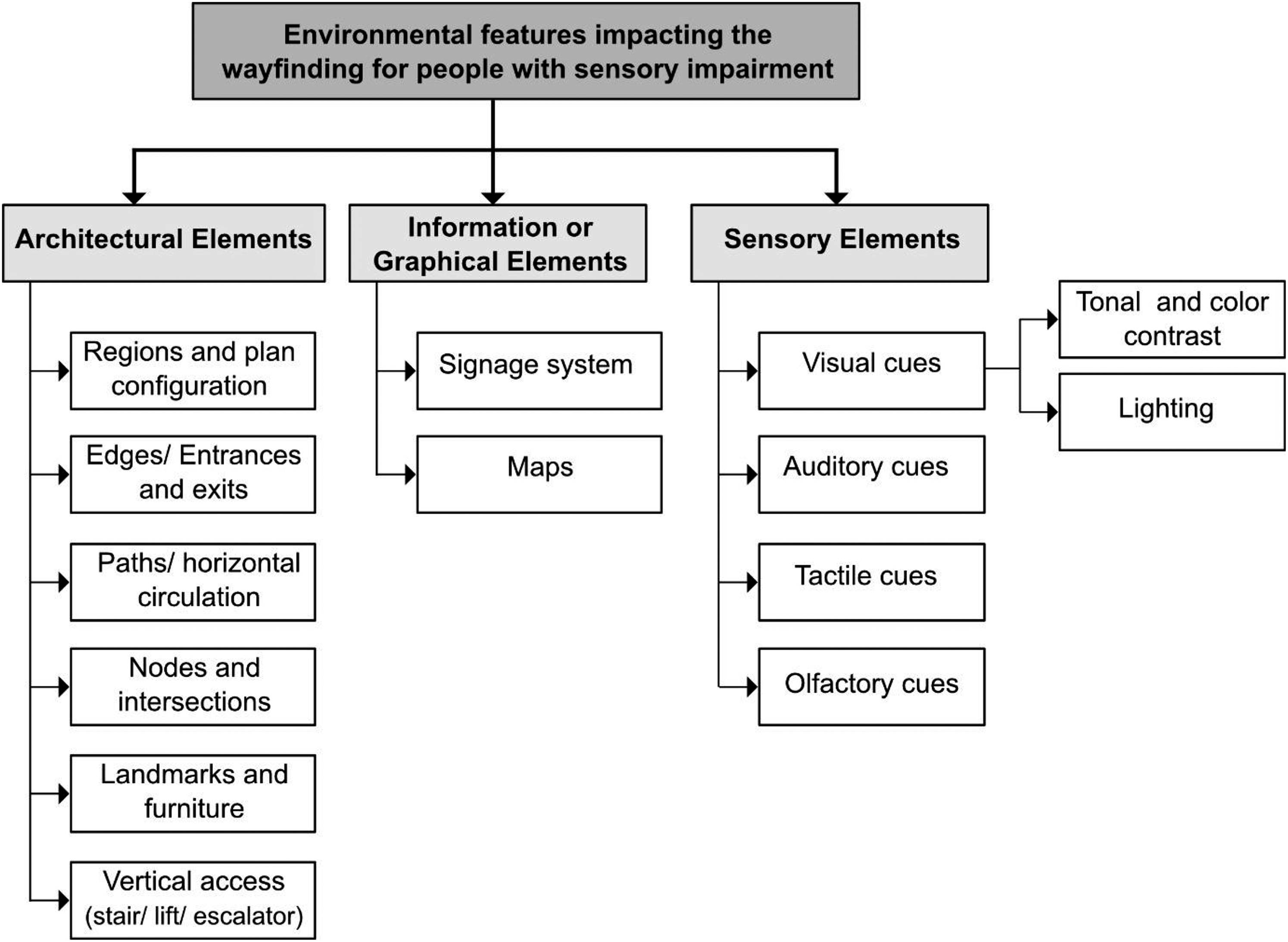
The Conceptual Framework Illustrating Key Environmental Features That Impact Wayfinding for People With Sensory Impairment.
Results
In total, 3,716 records were identified, and after duplicate removal, 2,309 record titles, 919 abstracts, and 104 full texts were screened. In total, 41 studies were included in the review (Figure 2).
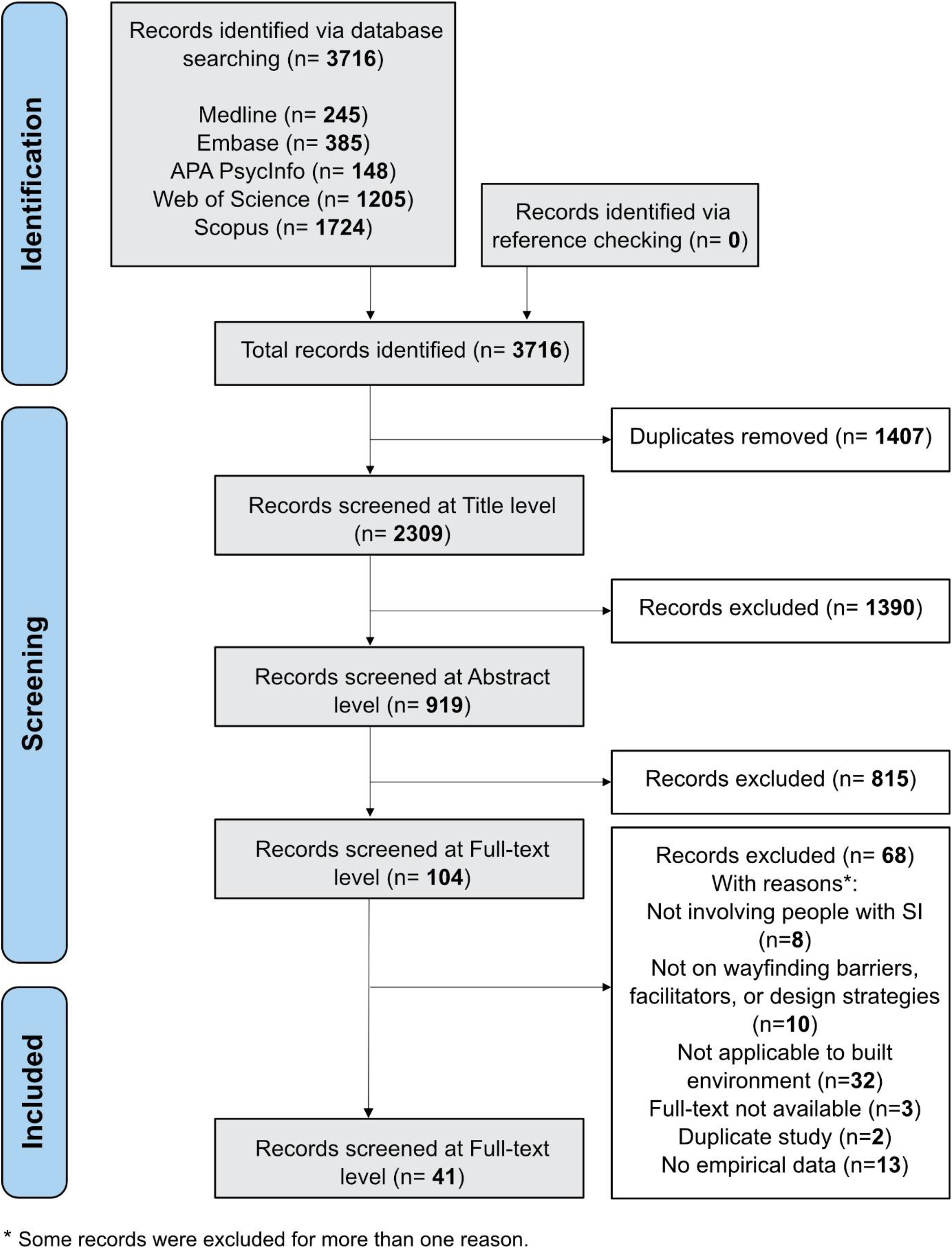
Flow Diagram of Scoping Review Data According to the Preferred Reporting Items for Systematic Reviews and Meta-Analyses Extension for Scoping Reviews (PRISMA-ScR).
Description of Studies
The studies were conducted in 19 countries: USA (7), United Kingdom (5), Turkey (4), Greece (4), Italy (3), Australia (3), Japan (2), Germany (2), and Malaysia, South Korea, Slovakia, Taiwan, France, Thailand, Israel, Prague, Russia, Mexico, and Portugal accounted for one study each. All the included studies involved people with visual impairments, including three that involved healthy adults with simulated visual impairment (Belir, 2018; Belir, 2021; Rousek & Hallbeck, 2011b). While most studies (n = 29) focused solely on visual impairment, the remainder (n = 12) involved multiple impairments (hearing/ mobility/ cognitive impairments, older adults) and other stakeholders (such as built environment experts, ophthalmic professionals, and orientation and mobility officers) (Figure 3). Participants with hearing impairment were involved in three studies with multiple user groups (Gupta et al., 2020; Han et al., 2020; Morag et al., 2016), but none of the studies focused on their orientation needs and challenges.
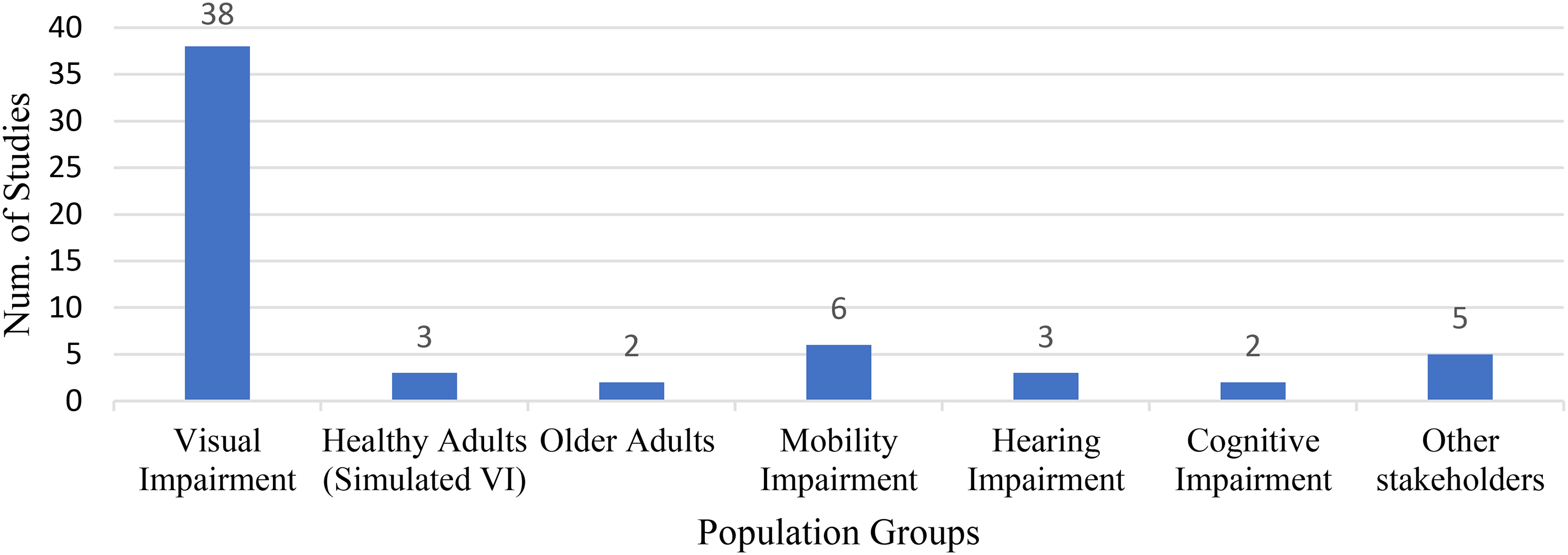
Distribution of Population Groups Among Included Studies (n = 41).
The context of studies included diverse settings within the built environment. Many studies (n = 16) examined urban spaces, and 13 explored built environments in general without specifying indoors or outdoors. The 12 remaining studies focused on buildings and indoor environments. Among these, four studies explored healthcare settings, and the remainder explored public buildings (n = 4), transport buildings (n = 1), educational settings (n = 1), and music venues (n = 1). For the purpose of this article, the 25 studies exploring built environments or indoors are discussed (Table 1). A summary of the remaining 16 studies on urban spaces is presented in the Supplementary Materials (Appendix II).
Characteristics of Included Studies on the Built Environment and Indoors (N = 25) (Ordered Chronologically).
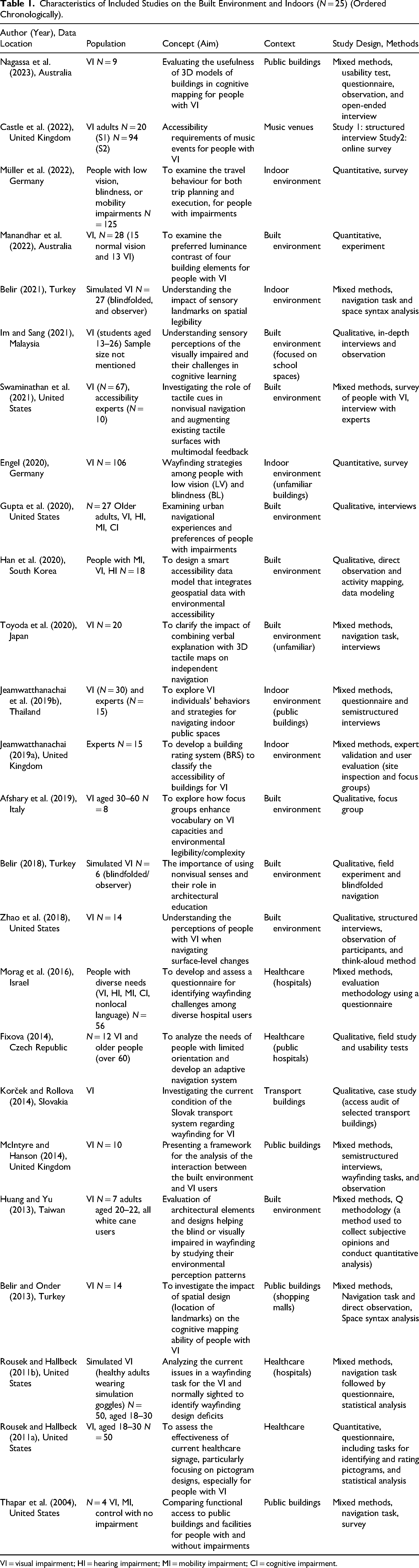
VI = visual impairment; HI = hearing impairment; MI = mobility impairment; CI = cognitive impairment.
Critical Appraisal
Studies were assessed based on the quality criteria specific to their methodology in MMAT by one researcher (PZ). Overall quality scores were calculated based on the percentage of corresponding criteria met (Hong, Fàbregues et al., 2018), and the results are presented in the Supplemental Materials (Appendix III). Only five studies met all quality criteria for their respective designs, one of which had a quantitative design (Manandhar et al., 2022) and the other four used a qualitative design (Cushley et al., 2022; Han et al., 2020; Rey-Galindo et al., 2020; Zhao et al., 2018). The quality of 10 studies (see Supplementary Materials, Appendix III) could not be assessed, mainly due to the lack of clear research questions.
Summary of Findings
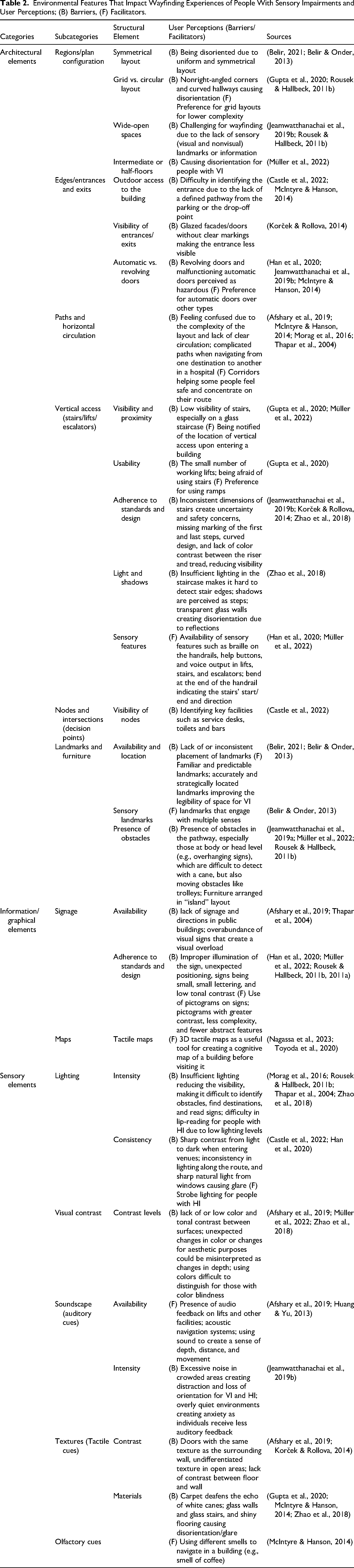
The review highlights the key environmental factors impacting wayfinding and navigation among individuals with SI, perceived barriers and facilitators, and design strategies to enhance access for this population. The findings related to urban accessibility are not reported in this article. According to the conceptual framework (Figure 1), the results are presented in three main categories: architectural elements, information/ graphical elements, and sensory elements (see Table 2).
Environmental Features That Impact Wayfinding Experiences of People With Sensory Impairments and User Perceptions; (B) Barriers, (F) Facilitators.
Architectural Elements
The plan configuration and layout of the building are discussed in several studies as having a significant impact on wayfinding, particularly for people with VI. Symmetrical layouts were found to be confusing because their uniformity made it difficult to distinguish one area from another for individuals with sight loss (Belir, 2021; Belir & Onder, 2013). Similarly, circular layouts and those with curved hallways posed challenges for users to maintain their orientation and navigate effectively (Rousek & Hallbeck, 2011b). Several participants in a study, including people with VI and older adults, preferred grid layouts over curved ones as grid layouts were easier to understand and more intuitive to navigate for them (Gupta et al., 2020). Wide-open spaces such as lobbies and open plazas were problematic, as they lacked sufficient landmarks or sensory cues that are essential for orientation with SI (Jeamwatthanachai et al., 2019b; Rousek & Hallbeck, 2011b). Additionally, features like intermediate or half-floors were perceived as highly challenging for users with VI, often leading to confusion and increased disorientation (Müller et al., 2022).
The approach to the building, entrances, and exit doors is another important factor involved in wayfinding. A common barrier found was the lack of a disabled parking area and a clearly defined route from the parking area or drop-off point to the entrance, which can make locating the entry point challenging (Castle et al., 2022; McIntyre & Hanson, 2014). The entrance or exit doors should be clearly marked. Korček and Rollova (2014), found that the use of glazed facades or doors without adequate markings poses barriers for people with VI and suggested using a colored line to frame the glazed door or eye-level graphical markings to improve their visibility. The type of door mechanism also affected accessibility; revolving doors and malfunctioning automatic doors were perceived as unsafe or difficult to use. Automatic doors were preferred and generally seen as more accessible for users with VI (Han et al., 2020; Jeamwatthanachai et al., 2019b; McIntyre & Hanson, 2014).
Several studies addressed the accessibility of paths and the horizontal circulation of the building. Locating destinations in a building without a clear circulation was confusing for several participants (Afshary et al., 2019; Thapar et al., 2004). However, corridors helped a few users with VI to feel safe and concentrate on their wayfinding (McIntyre & Hanson, 2014). Within a hospital setting, Morag et al. (2016) found that locating multiple destinations was complicated and time-consuming for participants (including users with VI and HI), and they were unable to follow the colored arrows.
The vertical access points, including stairs, lifts, and escalators, were frequently discussed in the literature, presenting both barriers and facilitators for individuals with VI. A significant barrier was the low visibility of the stairs, particularly glass staircases, where the stair edges can be difficult to detect. This can be compounded by insufficient lighting and misleading shadows that may be perceived as steps (Müller et al., 2022; Zhao et al., 2018). The inconsistent dimensions of stairs, lack of color contrast between risers and treads, and absence of markings on the first and last steps further contribute to uncertainty and safety concerns (Jeamwatthanachai et al., 2019b; Korček & Rollova, 2014). Functional issues, such as a limited number of operational lifts and anxiety related to stair use, also hindered accessibility and resulted in a preference for ramps (Gupta et al., 2020). However, certain design features acted as facilitators. This included high-contrast stripes on step nosing, consistent lighting to improve the visibility of stairs, and avoiding curved stairs (Zhao et al., 2018). Braille signs on handrails could communicate the floor numbers, and the bend at the end of the handrail signified the end of the staircase. Furthermore, the availability of help buttons and voice output systems in lifts increased the accessibility and safety for VI users (Han et al., 2020; Müller et al., 2022).
Finally, decision points (nodes) and landmarks were other key architectural features in wayfinding with SI. In a study by Castle et al. (2022), visually impaired users reported problems with locating key facilities (e.g., service desks, toilets, and bars) in public music venues. While inconsistent or insufficient placement of landmarks constituted a barrier, the presence of predictable and strategically located landmarks enhanced the spatial legibility, especially those that engaged with multiple senses. Additionally, the placement of structural and sensory landmarks along main pathways helped improve cognitive mapping for visually impaired users (Belir, 2021; Belir & Onder, 2013). The presence of obstacles within the pathway further compounded the challenges of navigation for this population. Barriers included static obstacles (such as pillars or information boards), objects at body or head level (such as overhanging signs or furniture), which are often undetectable by a white cane, as well as moving objects like trolleys (Jeamwatthanachai et al., 2019a; Müller et al., 2022; Rousek & Hallbeck, 2011b).
Information and Graphical Elements
The literature highlighted several considerations regarding the signage. A recurring barrier identified was the inconsistency in signage availability, with some public buildings lacking adequate directions while others present an overwhelming abundance of signs, leading to visual overload (Afshary et al., 2019; Thapar et al., 2004). In terms of signage design, barriers included improper illumination, unexpected placement, limited tonal contrast, high placement, and small lettering, all of which reduce the legibility of the signs (Müller et al., 2022; Rousek & Hallbeck, 2011b). Han et al. (2020) found that the use of pictograms on signs is beneficial for Deaf individuals who rely on sign language services and might have low literacy levels. Rousek and Hallbeck (2011a) recommended consistency and standardization in signage design across healthcare facilities, emphasizing the use of human-based figures to enhance comprehension, minimize complexity, and maximize color contrast.
Tactile maps and 3D models of buildings were found to be effective for enhancing the cognitive mapping of users with VI. Incorporated into orientation and mobility (O&M) training, they allowed users to build a mental representation of an environment before physically visiting it (Nagassa et al., 2023; Toyoda et al., 2020).
Sensory Elements
The sensory features of the environment, including the visual, auditory, tactile, and olfactory cues, have a profound effect on the wayfinding experience of individuals with SI.
In the visual domain, lighting was discussed as a primary concern. Studies found that low lighting levels reduced the visibility of obstacles and signage and impeded communication for individuals with HI who relied on lip-reading (Morag et al., 2016; Rousek & Hallbeck, 2011b; Thapar et al., 2004; Zhao et al., 2018). Additionally, inconsistencies in lighting, such as sudden transitions from bright to dark areas or glare from windows, can disorient users and disrupt the continuity of their navigation. Therefore, evenly distributed lighting is a key factor in wayfinding, especially for users with impaired vision. Also, targeted lighting interventions, such as strobe lighting, might help people with HI by providing nonverbal directional signals (Castle et al., 2022; Han et al., 2020).
Complementing these findings, visual contrast was determined to be crucial, particularly for people with some residual vision. Low color and tonal contrast reduced the visibility of surfaces for users with VI. Studies suggested that contrast should be used intentionally; sudden or purely decorative changes on floors could create confusion and be misinterpreted as level changes and increase the risk of falls and trips, especially in older adults (Afshary et al., 2019; Müller et al., 2022; Zhao et al., 2018). Manandhar et al. (2022) evaluated the efficiency of the current Australian requirement of 30% luminance contrast for building elements (Australian Standard, 2021), equivalent to the 30-point Light Reflectance Value (LRV) contrast requirement in the UK (BS 8300-2:2018). They emphasized the need to increase the luminance contrast levels in building elements such as door frames and light switches, going beyond the current 30% requirement to around 65% for better visibility for those with severe VI.
The auditory environment or soundscape further contributes to the navigational experience. Facilitators included the presence of auditory cues, such as audio feedback in lifts, acoustic navigation systems, and ambient sounds that help users perceive spatial depth and movement (Afshary et al., 2019; Huang & Yu, 2013). While overly quiet environments may fail to provide necessary auditory feedback, excessive ambient noise in crowded areas can be overwhelming and disorienting for people with SI (Jeamwatthanachai et al., 2019b).
Tactile elements are equally essential in wayfinding, especially for users with severe sight loss. Changes in materials, textures, and terrain slopes provide tactile cues for wayfinding (Huang & Yu, 2013), and tactile paving could be used to guide users towards key features like staircases (Korček & Rollova, 2014). A lack of tactile contrast—such as doors blending into walls or floors that do not differ in texture from surrounding areas—impairs spatial perception (Korček & Rollova, 2014). Improper selection of surface materials poses barriers; for example, carpets can dampen the auditory feedback from mobility aids, and shiny surfaces can cause visual disorientation or glare (Gupta et al., 2020; McIntyre & Hanson, 2014; Zhao et al., 2018).
Lastly, olfactory cues, though less commonly discussed in literature, show promise of facilitating wayfinding. Familiar and distinct smells (e.g., the scent of coffee near a café) can serve as effective spatial markers for people with VI (McIntyre & Hanson, 2014).
Discussion
The results of this review illustrate the multidimensional nature of wayfinding design and highlight the specific access needs of people with visual and/or hearing impairments. These can provide a robust evidence base for updating the key accessibility standards, such as the British Standards (BS 8300-2:2018) and the Americans with Disabilities Act (ADA) Standards (Department of Justice, 2010). The findings reinforce the principles within current accessibility guidelines (British Standards Institution, 2021), underscoring the necessity of integrating wayfinding design throughout the entire building lifecycle. This holistic approach demands that wayfinding be a key consideration from the earliest stages of conceptual design and business case development, through construction and post-occupancy assessments. The results of this review illustrate the multidimensional nature of wayfinding design and highlight the specific access needs of people with visual and/or hearing impairments.
The conceptual framework emerging from this review encourages stakeholders to shift their perception of wayfinding design from solely reliance on signage to a holistic approach that fully integrates the architectural and spatial, graphical, and sensory characteristics of the built environment.
Of particular importance is the impact of spatial design and layout on user orientation, a factor that remains under-addressed in many accessibility guidelines. The evidence indicates a strong preference among people with VI for predictable, grid-based layouts over curved designs. To mitigate the disorientation caused by uniform and symmetrical spaces, designers should incorporate distinct identifying features, such as high-contrast colors, clear graphics, or tactile markers. Similarly, wide-open spaces require the integration of sensory landmarks to provide crucial orientation cues. Building on these findings, further research is warranted to investigate how various architectural layouts impact the wayfinding behaviors of people with SI. Of particular importance is the impact of spatial design and layout on user orientation, a factor that remains under-addressed in many accessibility guidelines.
Regarding signage design, while the high placement and small lettering were recognized as barriers, no empirical evidence was provided to determine the optimal lettering size and location of signs for people with reduced vision. The ADA guidelines (U.S. Access Board, 2010) mandate a mounting height of 48–60 inches (approximately 122–152 cm) for tactile signs, and specify that character height for visual signs should be based on viewing distance to ensure legibility. Nevertheless, these standards may not sufficiently accommodate the needs of older adults, who represent a majority of visually impaired users. Given the natural tendency for a lower eye level and downward gaze in older people, the efficacy of the current standards is questionable. Therefore, empirical research is needed to validate or refine these guidelines, focusing specifically on accessible signage for this population.
Regarding sensory features, although visual contrast is found to be essential in facilitating navigation, its effectiveness is affected by the level of contrast and quality of light (British Standards Institution, 2021). Reliance on color contrast alone is not sufficient, as it excludes individuals with color vision deficiency or severe VI. Therefore, tonal contrast—often defined by the LRV of the surfaces—should be prioritized and complemented with tactile elements such as braille and embossed features.
Directions for Future Research
This scoping review highlights significant gaps regarding the participant groups studied. Notably, the specific wayfinding needs and experiences of individuals with HI remain largely underexplored, with only three studies involving this group and none focusing on them exclusively. Future research can investigate the experiences and wayfinding challenges of people with HI and design factors supporting their orientation and mobility. Furthermore, the exclusion or underrepresentation of older adults, mainly due to recruitment difficulties, presents a critical knowledge gap. Given that sensory deterioration is often an inevitable part of the aging process, research targeting older adults is essential to understand their unique accessibility requirements and ensure wayfinding strategies cater to this growing demographic.
Given that sensory deterioration is often an inevitable part of the aging process, research targeting older adults is essential to understand their unique accessibility requirements.
The existing body of literature mainly focuses on identifying barriers encountered by individuals with SI during wayfinding. While understanding these is crucial, there is a pressing need for future research to shift toward exploring and validating design solutions. Experimental studies are required to examine the efficacy of specific design elements (e.g., circulation systems, placement of landmarks, levels of lighting) on the wayfinding performance of people with SI, which can lead to developing evidence-based guidelines and interventions.
Finally, this review identified limited evidence regarding the role of tactile and olfactory cues in wayfinding for individuals with SI, despite providing crucial information for navigation. Future research should delve into how people with SI use tactile and olfactory cues to develop a mental map of the building.
Strengths and Limitations
This study is, to our knowledge, the first scoping review presenting the wayfinding needs of people with SI. The developed conceptual framework, grounded in established theories (Arthur & Passini, 1992; Lynch, 1960) and enriched through content analysis, integrates environmental features with subjective user perceptions, offering a holistic perspective to enhance built environment accessibility. The research strategy was not limited to any specific languages or locations, so it provides a comprehensive global overview of the available scholarly knowledge on this topic. Despite these strengths, the review is subject to certain limitations. While the search strategy did not include gray literature, the results are discussed in relation to the current guidelines. Critical appraisal, although not an essential component of this scoping review, was performed by one researcher. Finally, as with any review process involving qualitative synthesis, an element of researcher interpretation is unavoidable, although efforts were made to ground this systematically in the review process.
Conclusion
This scoping review systematically mapped the scholarly evidence on the environmental factors that influence wayfinding for individuals with visual and/or hearing impairments. It also identified key design recommendations to improve built environment accessibility for this population. A central contribution is the conceptual framework presented, which organizes key environmental features that impact wayfinding for people with SI. The framework invites stakeholders, including interior designers, architects, and policymakers, to consider wayfinding design from a holistic perspective as an interplay between architectural and graphical components and the sensory needs of users, moving beyond relying solely on signage. These findings highlight the importance of various environmental features in wayfinding design and inform the development of accessibility guidelines for people with sensory loss alongside all users. The framework invites stakeholders, including interior designers, architects, and policymakers, to consider wayfinding design from a holistic perspective as an interplay between architectural and graphical components and the sensory needs of users, moving beyond relying solely on signage.
Implications for Practice
Wayfinding design requires a holistic approach that integrates the architectural, graphical, and sensory characteristics of the built environment.
Empirical evidence indicates a strong preference among the visually impaired for grid-based layout over curved designs.
Given the tendency of a downward gaze in older adults, current standards for mounting heights of signage may not adequately accommodate the needs of this population.
Reliance on color contrast alone is insufficient and designers should prioritize tonal contrast.
Supplemental Material
sj-docx-1-her-10.1177_19375867251391361 - Supplemental material for A Scoping Review of the Impact of Environmental Design on Wayfinding for People With Sensory Impairment
Supplemental material, sj-docx-1-her-10.1177_19375867251391361 for A Scoping Review of the Impact of Environmental Design on Wayfinding for People With Sensory Impairment by Parastoo Zali, Lori B. McElroy, Mario Ettore Giardini, Kullapat Chaiyawat and Margaret Watson in HERD: Health Environments Research & Design Journal
Footnotes
Acknowledgments
The authors would like to thank Alasdair Stewart and Elaine Blair, librarians at the University of Strathclyde, for their guidance in developing the search strategy.
ORCID iDs
Ethical Considerations
Not applicable.
Consent for Publication
Not applicable.
Author Contributions
Conceptualization: PZ, LM, MG, MW; methodology: PZ, LM, MG, MW; data screening: PZ, KC; data extraction: PZ; data analysis: PZ, LM, MG, MW; writing (original draft): PZ; writing (review and editing): PZ, LM, MG, KC, MW; supervision: LM, MG, MW.
Funding
The authors disclosed receipt of the following financial support for the research, authorship, and/or publication of this article: This work was supported by the Vivensa Foundation (formerly Dunhill Medical Trust) with grant reference number PDM2202\29. The funding body did not have any input into the paper.
Declaration of Conflicting Interests
The authors declared no potential conflicts of interest with respect to the research, authorship, and/or publication of this article.
Data Availability
The protocol for this scoping review has been registered on the Open Science Framework (OSF) and is available at [ ]. The full dataset generated and analyzed during this scoping review will not be made publicly available at this time, as it comprises synthesized information from existing published literature. However, access to the included articles is available through the respective publishers.
Supplemental Material
Supplemental material for this article is available online.
References
Supplementary Material
Please find the following supplemental material available below.
For Open Access articles published under a Creative Commons License, all supplemental material carries the same license as the article it is associated with.
For non-Open Access articles published, all supplemental material carries a non-exclusive license, and permission requests for re-use of supplemental material or any part of supplemental material shall be sent directly to the copyright owner as specified in the copyright notice associated with the article.
